
Bone Marrow Aspirate Concentrates Market Size and Share
Market Overview
| Study Period | 2020 - 2031 |
|---|---|
| Market Size (2026) | USD 221.39 Million |
| Market Size (2031) | USD 297.61 Million |
| Growth Rate (2026 - 2031) | 6.12 % |
| Fastest Growing Market | Asia Pacific |
| Largest Market | North America |
| Market Concentration | Medium |
Major Players *Disclaimer: Major Players sorted in no particular order Image © Mordor Intelligence. Reuse requires attribution under CC BY 4.0. | |
Bone Marrow Aspirate Concentrates Market Analysis by Mordor Intelligence
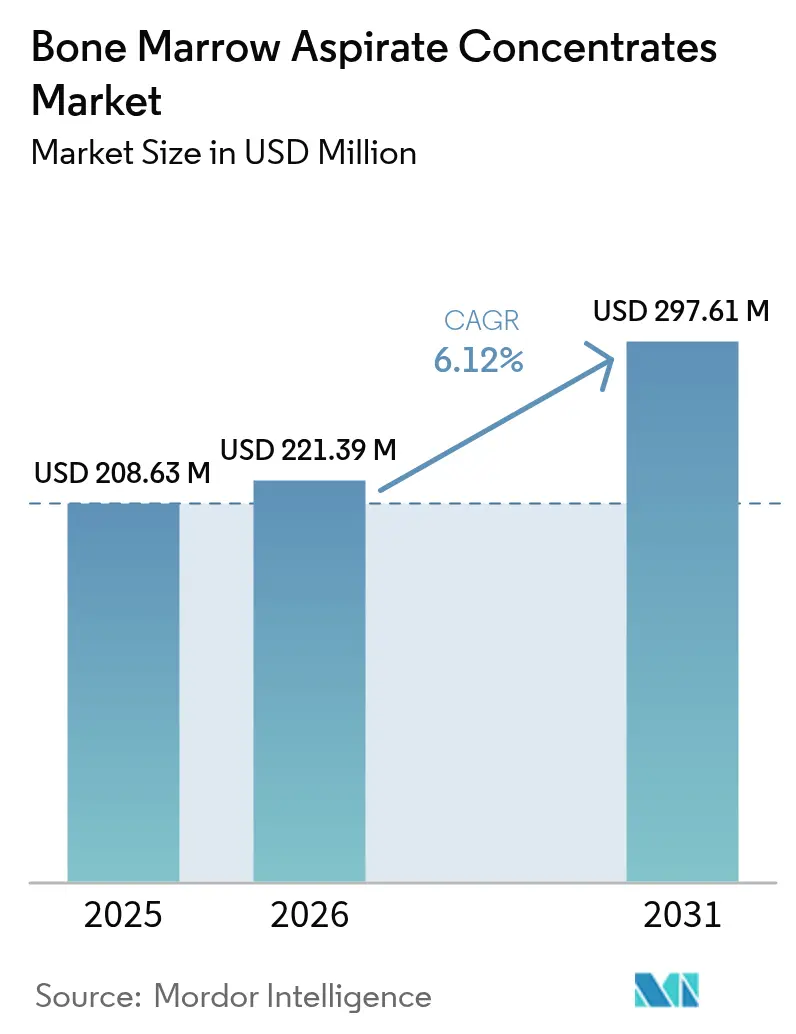
The bone marrow aspirate concentrates market size is expected to grow from USD 208.63 million in 2025 to USD 221.39 million in 2026 and is forecast to reach USD 297.61 million by 2031 at 6.12% CAGR over 2026-2031. The current bone marrow aspirate concentrates market size underscores rapid uptake of minimally invasive regenerative procedures, expanding clinical validation for orthopedic use, and steady technology upgrades in point-of-care centrifugation. Growing sports injuries, favorable micro-payer coverage decisions, and automated single-use kits are widening patient access while lowering contamination risk. Key producers continue to refine closed-loop systems that maintain cell viability, and providers are shifting volumes toward ambulatory surgical centers in pursuit of lower procedure costs and faster patient throughput. Strategic partnerships that bundle bone marrow banking with viable bone matrices further amplify competitive intensity in the bone marrow aspirate concentrates market.
Key Report Takeaways
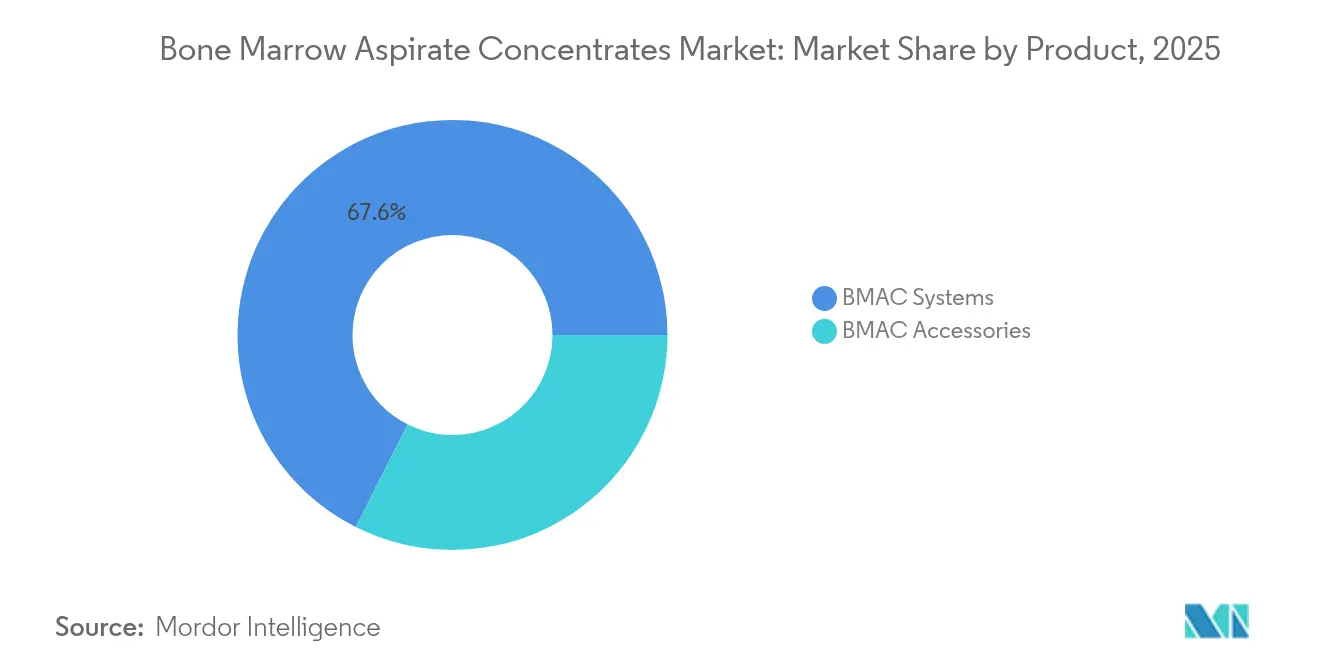
- By product, systems led with 67.58% of the bone marrow aspirate concentrates market size in 2025, while accessories are projected to expand at a 6.63% CAGR through 2031, highlighting a consumables-driven growth path for the bone marrow aspirate concentrates market size.
- By application, orthopedic surgery accounted for 41.12% of the bone marrow aspirate concentrates market share in 2025; dental and maxillofacial uses are advancing at a 6.95% CAGR to 2031.
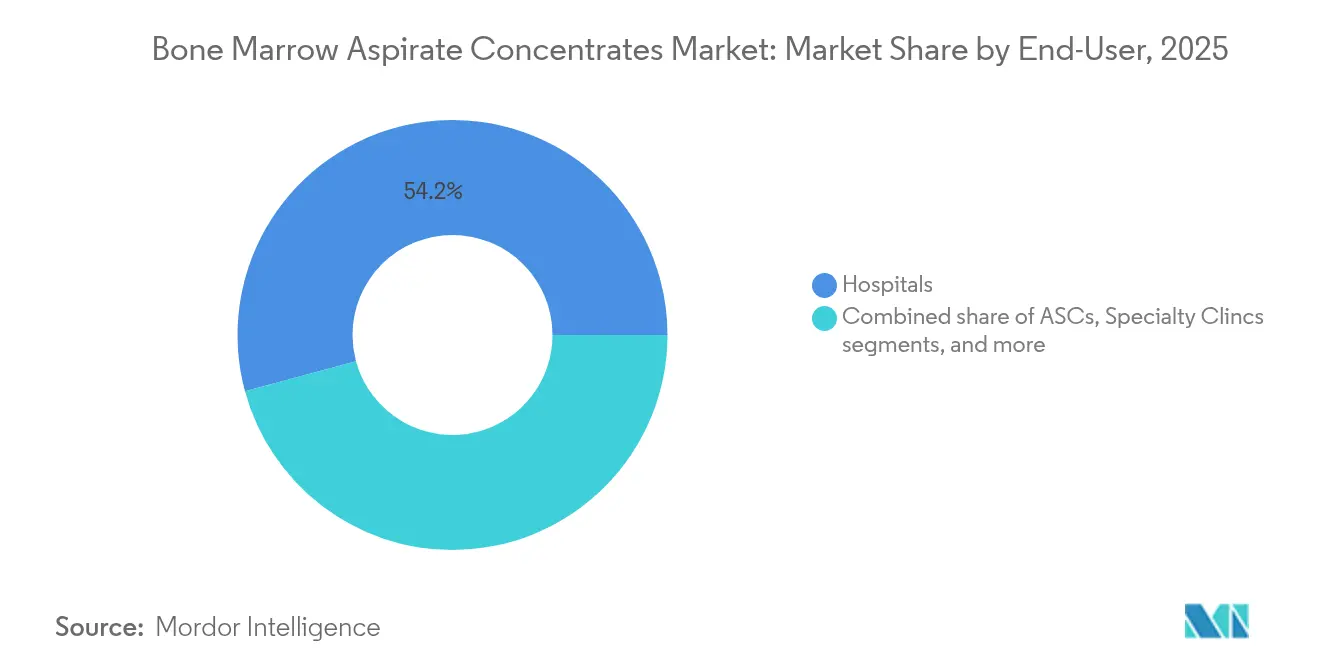
- By end-user, hospitals held a 54.21% share in 2025, whereas ambulatory surgical centers represent the fastest-growing channel with a 6.74% CAGR through 2031.
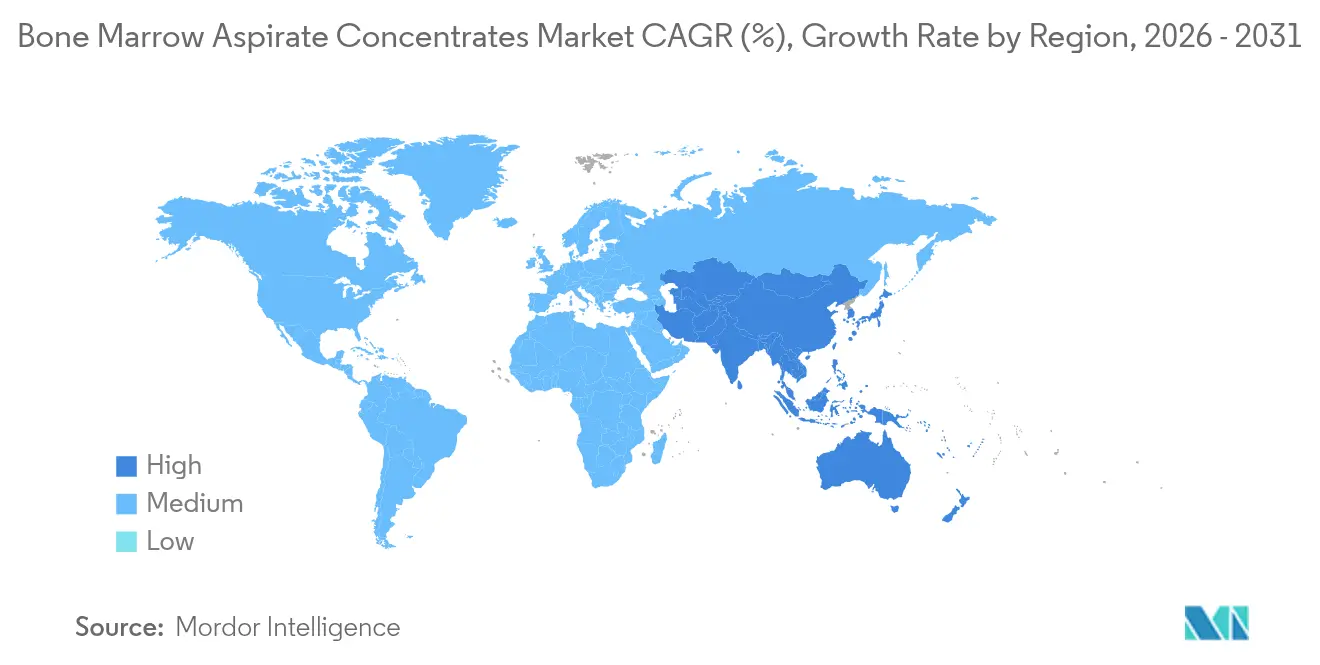
- By geography, North America contributed 41.27% revenue in 2025; Asia-Pacific is poised to accelerate at a 6.78% CAGR to 2031, reflecting divergent regulatory maturity and investment patterns.
Note: Market size and forecast figures in this report are generated using Mordor Intelligence’s proprietary estimation framework, updated with the latest available data and insights as of 2026.
Global Bone Marrow Aspirate Concentrates Market Trends and Insights
Drivers Impact Analysis*
| Driver | (~) % Impact on CAGR Forecast | Geographic Relevance | Impact Timeline |
|---|---|---|---|
| Growing burden of musculoskeletal & sports-related injuries | +1.2% | Global, with highest impact in North America & Europe | Medium term (2-4 years) |
| Advances in closed-loop centrifugation & point-of-care BMAC kits | +1.1% | North America & EU core, spill-over to APAC | Short term (≤ 2 years) |
| Rise in healthcare spending—public & private | +0.9% | Global, led by APAC emerging markets | Long term (≥ 4 years) |
| Expansion of ambulatory surgical centres offering biologics | +0.8% | North America primary, expanding to Europe | Medium term (2-4 years) |
| Favourable micro-payer coverage decisions for BMAC procedures | +0.7% | United States primarily, limited EU coverage | Short term (≤ 2 years) |
| AI-based cell-yield analytics boosting procedural predictability | +0.5% | North America & select EU markets | Long term (≥ 4 years) |
| Source: Mordor Intelligence | |||
Growing Burden of Musculoskeletal & Sports-Related Injuries
Escalating musculoskeletal disorder prevalence is propelling demand for regenerative options that avert open surgery. Long-term cohorts document sustained functional improvement in knee osteoarthritis after BMAC injections, with IKDC scores improving[1]Pabinger, C., “Bone Marrow Aspirate Concentrate Injection Provides Sustained Improvement in Knee Osteoarthritis: Four-Year Follow-Up,” Scientific Reports, nature.com from 56 to 73 over four years. Professional athletes and highly active seniors now prefer treatments that shorten rehabilitation and protect joint integrity. Concurrently, insurers evaluate BMAC cost savings against arthroplasty, promoting coverage for early-stage cartilage lesions. Orthopedic specialists increasingly integrate BMAC into rotator cuff, meniscal, and fracture protocols, reinforcing downstream demand for concentrated marrow systems across the bone marrow aspirate concentrates market.
Advances in Closed-Loop Centrifugation & Point-of-Care Kits
Novel automated platforms deliver reproducible cell counts while guarding sterility, addressing historical variability concerns. Phase I osteonecrosis studies using BioCUE confirmed safety and consistent progenitor yields in outpatient settings. Closed-loop cartridges streamline workflow, enabling community hospitals and ASCs to launch BMAC programs without full clean-room laboratories. Integrated optical sensors now validate cell viability in real time, letting clinicians tailor concentrate volumes per patient profile. Vendors pair single-use cassettes with compact tabletop centrifuges, a model that sharply reduces facility capital barriers and drives wider installation across the bone marrow aspirate concentrates market.
Rise in Healthcare Spending (Public & Private)
Expanding insurance schemes in China and India are raising patient willingness to pay for premium biologics. European payers, under value-based mandates, consider BMAC a cost-effective alternative to joint replacement when administered early. Capital injections into hospital modernization let providers procure next-generation aspiration devices and train staff in regenerative protocols. Multinational hospital chains with private equity backing now pilot BMAC centers of excellence to capture medical tourism flows. These spending trends collectively underpin sustained mid-single-digit expansion for the bone marrow aspirate concentrates market.
Expansion of Ambulatory Surgical Centers Offering Biologics
ASCs benefit from Medicare rules that reimburse biologic procedures performed in outpatient environments, producing cost advantages[2]Centers for Medicare & Medicaid Services, “Medicare Claims Processing Manual Chapter 14: Ambulatory Surgical Centers,” cms.gov near 30% over inpatient settings. Focused workflows allow high case throughput and predictable scheduling, boosting physician productivity. Operators invest in modular cell processing carts and standardized kits that reduce turnover times. Suburban ASC networks collaborate with orthopedic groups to offer same-day BMAC injections integrated with physical therapy, a patient-centric model that spreads geographically and amplifies consumables demand within the bone marrow aspirate concentrates market.
Restraints Impact Analysis*
| Restraint | (~) % Impact on CAGR Forecast | Geographic Relevance | Impact Timeline |
|---|---|---|---|
| High variability / failure rate across clinical studies | -1.4% | Global, particularly affecting emerging markets | Medium term (2-4 years) |
| Premium pricing of systems & disposables | -0.8% | Price-sensitive markets in APAC & Latin America | Short term (≤ 2 years) |
| Absence of global preparation standards—regulatory headwinds | -0.6% | Global, with highest impact in Asia-Pacific & MEA | Long term (≥ 4 years) |
| Age-linked decline in MSC yield reduces efficacy | -0.5% | Global, particularly in aging populations of North America & Europe | Long term (≥ 4 years) |
| Source: Mordor Intelligence | |||
High Variability / Failure Rate Across Clinical Studies
Outcomes differ materially by donor age, aspiration technique, and device choice, making standardized guidance elusive. Comparative trials show progenitor recovery swings of up to fivefold between commercial platforms. Inconsistent study endpoints hamper meta-analysis, slowing guideline endorsement and payer confidence. Elderly donors exhibit lower colony-forming units, complicating treatment in the core orthopedic demographic. Regulatory reviewers therefore request stringent release criteria, extending approval timelines and imposing cost burdens on innovators within the bone marrow aspirate concentrates market.
Premium Pricing of Systems & Disposables
Automated centrifuges often exceed USD 100,000 and single-procedure kits range USD 500-1,500, deterring small clinics. Budget-constrained hospitals in Latin America delay upgrades, relying on manual devices that yield suboptimal concentrates. Negotiated discounts offered by multinationals fail to offset import tariffs in parts of Southeast Asia, driving physicians to alternative platelet concentrates instead. Capital payback modeling remains challenging when procedure volumes are low, especially in specialties outside high-traffic orthopedics. These cost concerns place a ceiling on uptake for the Bone Marrow Aspirate Concentrates industry in emerging economies.
*Our forecasts treat driver/restraint impacts as directional, not additive. The impact forecasts reflect baseline growth, mix effects, and variable interactions.
Segment Analysis
By Product: Systems Drive Revenue, Accessories Fuel Growth
Systems generated 67.58% of the 2025 bone marrow aspirate concentrates market size, underscoring the capital nature of building BMAC capacity across surgical suites. Leading platforms such as Harvest SmartPrep consistently deliver higher connective tissue progenitor counts than rivals, supporting premium pricing across the bone marrow aspirate concentrates market. Hospitals favor integrated touch-screen interfaces and auto-balance rotors that cut set-up time and reduce technician error. Accessories, encompassing aspiration needles and disposable cassettes, recorded the sharpest trajectory at a 6.63% CAGR, reflecting recurring demand from the installed base. SurGenTec’s FDA-cleared B-MAN kit illustrates the pipeline of consumables that boost safety and streamline workflow.
The accessories surge is reinforced by hospital supply chain strategies that shift capital outlays toward variable, case-based costs. Vendors increasingly bundle service contracts with discounted disposables in exchange for multi-year commitments, locking in predictable revenues. In mature North American accounts, consumption intensity per operating room is climbing as physicians integrate BMAC into arthroscopy, spine fusion, and fracture management. Emerging Asian centers often start with manual aspiration kits before migrating to semi-automated centrifuges, creating a stair-step adoption path that broadens the bone marrow aspirate concentrates market.



By Application: Orthopedics Dominates, Dental Emerges
Orthopedic surgery captured a 41.12% bone marrow aspirate concentrates market share in 2025, supported by robust RCT evidence for cartilage repair and bone healing superiority over debridement alone. Recent studies show that percutaneous bone marrow concentrate treatments for rotator cuff tears achieve 73% healing rates with sustained functional improvements over 2-year follow-up periods. Sports medicine specialists deploy BMAC to reduce downtime and lower re-injury risk, driving repeat usage across elite and recreational cohorts. Dental and maxillofacial procedures represent the fastest-growing indication at 6.95% CAGR, as periodontists adopt BMAC to enhance osseointegration and accelerate bone graft consolidation.
Regulators treat oral, spine, and wound applications differently, compelling vendors to tailor labeling and clinical evidence packages. Wound care clinics leverage the anti-inflammatory profile of marrow concentrates in chronic ulcers, expanding addressable volumes. Blood cancer and marrow disorder uses remain confined to specialized hematology units yet sustain steady demand because processing know-how is already embedded. Cross-disciplinary collaboration among orthopedists, dentists, and plastic surgeons is expanding knowledge transfer, which in turn enlarges procedural volumes for the bone marrow aspirate concentrates market.
By End-User: Hospitals Lead, ASCs Accelerate
Hospitals controlled 54.21% of the bone marrow aspirate concentrates market size in 2025 owing to broad imaging infrastructure, multidisciplinary teams, and on-site complication management. Academic centers run investigator-initiated trials that cement protocol leadership and draw complex referrals, elevating per-facility procedure counts. ASCs, however, deliver the highest CAGR at 6.74% as payers steer cases toward lower-cost outpatient settings. Workflow optimization, dedicated biologics suites, and shorter patient stays improve economic returns for surgeons investing in BMAC training.
Specialty clinics align with self-pay segments where affluent patients demand regenerative solutions outside public reimbursement schemes. Research institutes maintain a modest share focused on translational studies, but their innovations often spill into commercial spheres through licensing. Vendor training programs now target ASC nursing staff to ensure sterile technique adherence, eliminating a historical barrier to adoption in fast-turn rooms. Collectively, these dynamics diversify the bone marrow aspirate concentrates market and stabilize revenue streams across provider types.
Geography Analysis
North America retained leadership with 41.27% bone marrow aspirate concentrates market share in 2025 and is projected to post a 5.15% CAGR through 2031. The region benefits from clear FDA guidance on safety testing for cell-based devices, streamlined 510(k) pathways, and Medicare coverage for select orthopedic uses. United States hospitals pioneered large-volume marrow harvesting techniques that underpin current standards, and ASC networks continue to broaden access in suburban locales. Canada and Mexico expand more slowly, yet cross-border medical tourism into U.S. centers remains material, sustaining procedure growth and ancillary accessory demand across the bone marrow aspirate concentrates market.
Europe follows with a 5.73% CAGR, energized by the 2024 EU regulation on substances of human origin that harmonizes quality norms across member states. Germany, France, and the United Kingdom dominate installations, leveraging established orthopedic franchises and generous public insurance. Southern and Eastern markets are gradually catching up through private hospital chains that cater to inbound medical tourists seeking regenerative options. The European Medicines Agency’s advanced therapy rulebook gives manufacturers clearer dossier expectations, shortening time to market and fostering competitive parity.
Asia-Pacific delivers the fastest trajectory at 6.78% CAGR as Japan, China, India, and Australia invest heavily in regenerative infrastructure. Japan’s PMDA governs a well-defined approval route illustrated by Stemirac’s commercialization, setting a benchmark for regional regulators. China accelerates investigational pathways for mesenchymal stem treatments while provincial insurance pilots reimburse BMAC for non-weight-bearing cartilage lesions. India’s private orthopedic hospitals capitalize on medical tourism from the Middle East and Africa, installing state-of-the-art centrifuges and driving accessory imports. Elsewhere, GCC nations, Brazil, and South Africa allocate spending to attract cross-border patients, rounding out global demand for the bone marrow aspirate concentrates market.

Regulatory Landscape
Regulation for bone marrow aspirate concentration cuts across medical-device controls for processing hardware and tissue or cell-handling requirements for the aspirate. In the United States, point-of-care bone marrow processing devices that separate and concentrate autologous marrow are regulated by FDA CBER under product code PZU, while FDA Office of Combination Products guidance is often referenced when procedure packs blend device components with biologic handling steps.
In Europe, the Substances of Human Origin framework, Regulation (EU) 2024/1938, updates quality and safety obligations for procurement and handling of human-derived substances, which affects how facilities document collection and processing for autologous concentrates. When a preparation is treated as an Advanced Therapy Medicinal Product, it falls under Regulation (EC) No 1394/2007 and EMA classification; however, EMA scientific recommendations have also supported that many autologous cell concentrates are not ATMPs when they do not involve substantial manipulation. Standards work further shapes compliance expectations at collecting sites, with the FACT-JACIE Ninth Edition International Standards (released late 2025) consolidating bone marrow harvest and collection requirements to improve consistency across collection methodologies.
Value Chain Analysis
The value chain starts with the design and manufacture of tabletop centrifugation systems and closed-loop processing hardware, followed by production of sterile, single-use accessories, including aspiration needles, tubing sets, filters, and proprietary cartridges. Manufacturing is anchored in ISO 13485 quality systems, with hardware and component production concentrated across hubs in the United States, Germany, Switzerland, South Korea, and other established medtech supply bases, while consumables depend heavily on medical-grade polymer and sterile-packaging suppliers.
Commercialization proceeds through a mix of direct contracting with hospitals and group purchasing organizations, specialized device distributors serving orthopedics and sports medicine, and vendor-supported clinician training programs that standardize workflow in operating rooms and ambulatory surgical centers. Key bottlenecks include constrained capacity for automated, closed-system hardware and single-source dependencies for proprietary cartridge geometries, which can extend lead times and increase back-order risk. On the demand side, purchasing behavior increasingly links capital placement to multi-year disposable commitments, positioning consumables pull-through as a central economic lever for system suppliers.
Competitive Landscape
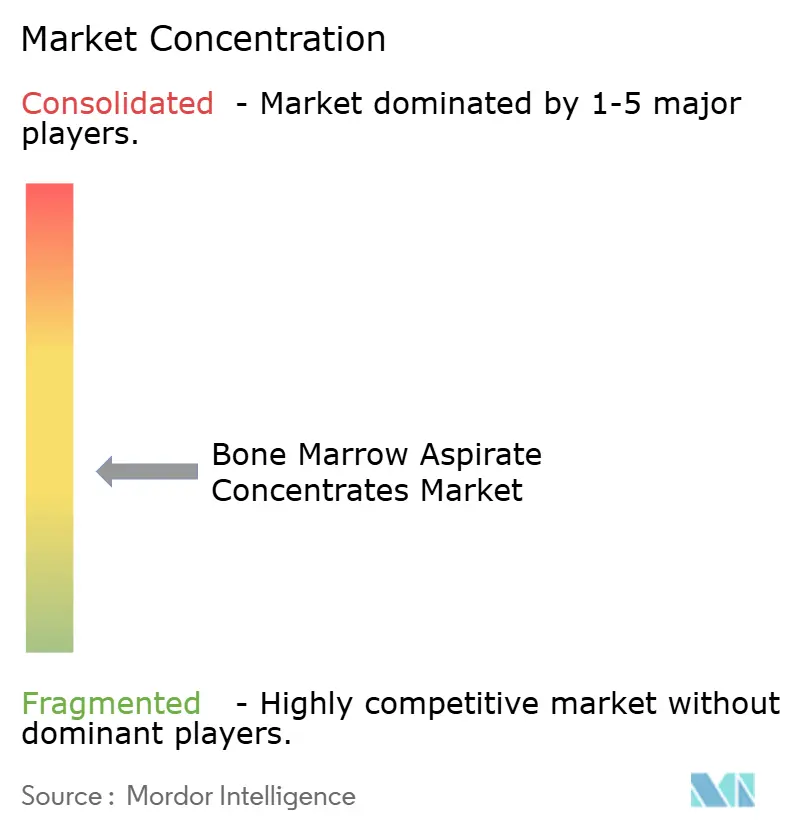
The bone marrow aspirate concentrates market is moderately fragmented. Stryker, Zimmer Biomet, and Johnson & Johnson wield channel depth and orthopedic brand equity to bundle marrow kits with fixation hardware. Arthrex and EmCyte differentiate through proprietary separation algorithms that boost viable cell recovery, appealing to surgeons who prioritize biologic potency. Enovis partnered with Ossium Health to distribute OssiGraft, merging bone marrow banking with cryopreserved matrices and adding turnkey graft solutions to its orthopedic catalog.
AI integration is emerging as a competitive wedge. Platforms that quantify nucleated cell concentration in real time allow dosing personalization, reducing retreatment risk and strengthening physician loyalty. Mid-sized entrants license sensor technology rather than develop new hardware, cutting development cycles and aligning with cost-aware ASCs. Competitive intensity is spreading into accessories where single-use needles, filters, and cannulas carry attractive margins and shorter regulatory lead times. Price competition remains muted in North America because reimbursed procedure values support premium kit pricing; however, Asian and Latin American tenders increasingly weigh unit costs, pressuring incumbents to localize production.
Barriers to entry include validation expenses, surgeon education, and post-market study commitments demanded by agencies. Intellectual property portfolios covering rotor geometry, cell surface charge manipulation, and multi-stage centrifugation provide defensible moats. Nevertheless, disruptive start-ups propose disposable microfluidic chips that bypass centrifugation entirely, promising compact tabletop devices suitable for small clinics. If these concepts mature clinically, they could reduce hardware costs and spark a competitive reset across the bone marrow aspirate concentrates market.
Bone Marrow Aspirate Concentrates Industry Leaders
Arthrex, Inc
Johnson & Johnson Services, Inc.
Terumo Corporation
Stryker Corporation
Zimmer Biomet Holdings Inc.
- *Disclaimer: Major Players sorted in no particular order

Market Opportunities and Future Outlook
A major opportunity area is automation and standardization: closed-loop, point-of-care platforms that improve repeatability while reducing contamination risk address the market need driven by outcome variability across studies and technique-dependent cell yield. The shift toward ambulatory surgical centers also creates whitespace for compact systems and simplified kits that can fit high-throughput outpatient workflows, particularly where payer rules reward lower-cost sites of care. At the same time, the consumables-heavy model supports differentiated accessories, such as integrated filtration, workflow-reducing cartridges, and aspiration tools, that reduce procedural friction and help clinicians prepare more consistently.
Clinical research activity is also influencing product roadmaps and positioning as investigators test and benchmark BMAC against established injectables and evaluate measurement-driven endpoints that connect outcomes to cell-yield metrics. In 2026, registered randomized studies such as Cleveland Clinic’s trial comparing BMAC to triamcinolone for hip osteoarthritis (NCT04990128) and Hospital for Special Surgery’s recruitment activity evaluating bone marrow aspirate approaches in knee arthroscopy (NCT06893302) show continued efforts to formalize evidence packages for institutional adoption and payer discussions. Regulatory framing in the United States, where aspiration devices are commonly 510(k) cleared for collection while direct therapeutic injection claims for BMAC remain constrained, further raises the opportunity for manufacturers to align labeling, workflow, and post-market evidence with minimally manipulated, point-of-care use cases.
Recent Industry Developments
- May 2026: Terumo Blood and Cell Technologies partnered with Steminent Biotherapeutics to optimize automated cell expansion for mesenchymal stem cell late-stage clinical manufacturing using the Quantum Flex Automated Cell Expansion System. The collaboration reinforces the move toward standardized, automated processing infrastructure across regenerative workflows, a direction that affects adjacent point-of-care concentration platforms and their quality expectations.
- October 2025: FACT-JACIE released Ninth Edition International Standards for Hematopoietic Cellular Therapy, including a consolidated collection section that covers bone marrow harvest practices. The update raises the bar for collection-site consistency and documentation, which can flow through to BMAC programs that depend on disciplined harvest technique to reduce variability in downstream concentrate performance.
- August 2024: SurGenTec received FDA 510(k) clearance for its B-MAN Bone Marrow Aspirate Kit with integrated filtration intended to streamline point-of-care marrow processing. The clearance expands the set of regulated, single-use accessories that hospitals and ASCs can standardize on, supporting consumables-driven economics across installed BMAC system bases.


Research Methodology Framework and Report Scope
Market Definition and Coverage
This market covers the revenue earned from bone marrow aspirate concentrate (BMAC) systems and related accessories used to collect, process, and concentrate a patient's own bone marrow for point-of-care regenerative procedures across healthcare settings.
Scope exclusions: veterinary BMAC devices, platelet-rich plasma-only kits, and off-the-shelf allogeneic cell therapies are excluded from this sizing.
Segmentation Overview
- By Product
- BMAC Systems
- BMAC Accessories
- By Application
- Orthopedic Surgery
- Wound Healing & Chronic Ulcers
- Dental & Maxillofacial Surgery
- Blood Cancer & Bone Marrow Disorders
- Other Applications
- By End-User
- Hospitals
- Ambulatory Surgical Centres
- Specialty Clinics
- Research & Academic Institutes
- By Geography
- North America
- United States
- Canada
- Mexico
- Europe
- Germany
- United Kingdom
- France
- Italy
- Spain
- Rest of Europe
- Asia-Pacific
- China
- India
- Japan
- Australia
- South Korea
- Rest of Asia-Pacific
- Middle East and Africa
- GCC
- South Africa
- Rest of Middle East and Africa
- South America
- Brazil
- Argentina
- Rest of South America
- North America
Data Sources, Market Sizing, and Validation
Desk Research
Desk research starts with mapping where BMAC is actually used, and then tying those procedures back to the products that enable them. We review public sources such as the US FDA device databases, the US Centers for Medicare and Medicaid Services payment rules, the OECD health statistics, and procedure guidance and publications from groups such as AAOS, alongside peer-reviewed clinical journals.
We then add company public materials such as annual reports, investor presentations, press releases, and product brochures to understand device positioning and the typical single-use kit attachment. For trade flow and supplier footprint signals, we also reference an import/export shipment-level database when it is relevant for cross-checking country-level availability. These sources are not exhaustive, and other public references are used to collect data, validate assumptions, and clarify open questions.
Primary Interviews and Surveys
Primary work is used to pressure-test what desk sources cannot fully show, especially how BMAC kit usage varies by care site and procedure mix. We speak with orthopedic and sports medicine clinicians, ambulatory surgery center administrators, hospital procurement teams, and distributor-side specialists across APAC, EMEA, and the Americas. After that, we align their inputs to the final model assumptions.
Distribution of primary research fieldwork respondents
| Company type | Respondent position | Region |
|---|---|---|
| Top tier: 32% | CXOs: 14% | APAC: 43% |
| Mid tier: 54% | Functional/Unit leaders: 27% | EMEA: 33% |
| Smaller Players: 14% | Managers: 59% | Americas: 24% |
Market-Sizing & Forecasting
The core build uses a top-down, procedure-led demand pool, where orthopedic and wound-care procedure volumes are reconstructed by region and then filtered by realistic adoption of BMAC at the point of care. To keep the totals grounded, we corroborate the outputs with selective bottom-up checks, such as sampled kit consumption per site, typical system installed base ranges, and ASP x unit ranges for systems and disposables, and we adjust where the two views do not reconcile.
Key inputs used in the model include: annual counts of relevant orthopedic and dental procedures, the share shifting from inpatient to ambulatory surgery centers, average kits used per case (which can vary by indication), system-to-kit attachment patterns, and regional pricing levels for systems and single-use accessories. Currency conversion is handled using a consistent yearly average approach for the model year, and local pricing is normalized to avoid mixing list prices with contracted prices.
Forecasting is done using scenario analysis, with procedure growth, care-site shift, and adoption curves as the main levers. We review these levers with primary respondents for what looks feasible. When a country lacks clean procedure statistics, proxy indicators such as orthopedic surgeon density, hospital throughput signals, and reimbursement clarity are used to build a reasonable range before the final value is locked.
Data Validation & Update Cycle
Validation is done in steps so unusual results are caught early rather than after the full forecast is built. We compare model outputs against independent signals such as reported device placements, disposable usage patterns shared in interviews, and the expected split by care setting, and then we review anomalies until the drivers are clearly explained.
Before sign-off, assumptions are re-checked by a second analyst. Any large variance versus earlier editions triggers a re-contact with respondents or a return to source data. The report is refreshed annually, and interim updates are made when major events occur, such as reimbursement changes, regulatory actions, or sharp pricing moves. Right before delivery, we complete a fresh review pass so clients receive the latest updated view.
Mordor Intelligence's Bone Marrow Aspirate Concentrates Market Size Compared With Other Published Estimates
Published market sizes for BMAC can look far apart even when they describe similar clinical use cases, since small scope choices expand quickly in a device-plus-disposable market. The differences usually come from what gets counted as BMAC, how procedure volumes are translated into kit demand, and how pricing is converted and refreshed over time.
In this study, the spread is mainly driven by pricing logic and update timing, because kit ASPs can move with contracting and the system mix shifts as adoption moves toward ambulatory sites. By using a consistent currency-year approach, re-checking price bands with field feedback, and refreshing procedure and adoption inputs on an annual cadence, the market value stays closer to observable utilization signals, which reflects the refresh discipline used by Mordor Intelligence.
Benchmark comparison
| Source | Market Size | Gaps in Research Methodology |
|---|---|---|
| Mordor Intelligence | USD 221.39 M (2026) | |
| Industry Publisher A | USD 221.60 M (2025) | Uses a different base year and longer horizon, and its scope signals suggest broader inclusion around source types, which can shift the counted revenue pool even with similar growth assumptions. |
| Research Outlet B | USD 544.10 M (2025) | Appears to use a wider market boundary and aggregation approach across processes and applications, which can pull in adjacent regenerative categories and inflate kit volumes and ASP assumptions versus a procedure-linked model. |
The table shows that year alignment and what is treated as in-scope BMAC are the main reasons for the difference, and then pricing conversion choices add another layer. When the sizing steps are tied to procedure demand, realistic adoption, and checked price bands, the final total becomes easier to trace and to repeat in the next update cycle.


Key Questions Answered in the Report
Which product segment is becoming the largest contributor to recurring revenues in the bone marrow aspirate concentrates market?
Disposable accessories—such as aspiration needles and single-use processing kits—are driving recurring revenue because they must be reordered for every procedure, unlike capital equipment.
How are ambulatory surgical centers influencing the adoption of bone marrow aspirate concentrates?
ASCs shorten patient turnaround times and operate under cost-effective reimbursement rules, making it easier for surgeons to integrate BMAC therapies into outpatient care pathways.
ASCs shorten patient turnaround times and operate under cost-effective reimbursement rules, making it easier for surgeons to integrate BMAC therapies into outpatient care pathways.
Real-time, AI-powered cell-yield analytics that confirm viable cell counts on the spot are highly valued because they improve dosing precision and boost confidence in clinical outcomes.
Which regulatory development in Europe is expected to streamline market entry for new BMAC devices?
The 2024 EU regulation on substances of human origin created harmonized quality and safety standards, giving manufacturers a clearer, single-market pathway for approvals.
Why is the dental and maxillofacial field gaining attention for BMAC applications?
Evidence shows BMAC enhances osseointegration and accelerates bone regeneration around implants, prompting oral surgeons to incorporate it into routine grafting protocols.
What remains the primary clinical hurdle to wider BMAC adoption?
Outcome variability linked to donor age, harvest technique, and platform choice continues to challenge standardization, making payers and regulators cautious about broad coverage.
Page last updated on:


 Your data is secure and never sold or shared.


