
Hair Serum Market Size and Share
Market Overview
| Study Period | 2021 - 2031 |
|---|---|
| Market Size (2026) | USD 1.43 Billion |
| Market Size (2031) | USD 1.85 Billion |
| Growth Rate (2026 - 2031) | 5.23 % |
| Fastest Growing Market | Asia-Pacific |
| Largest Market | Asia Pacific |
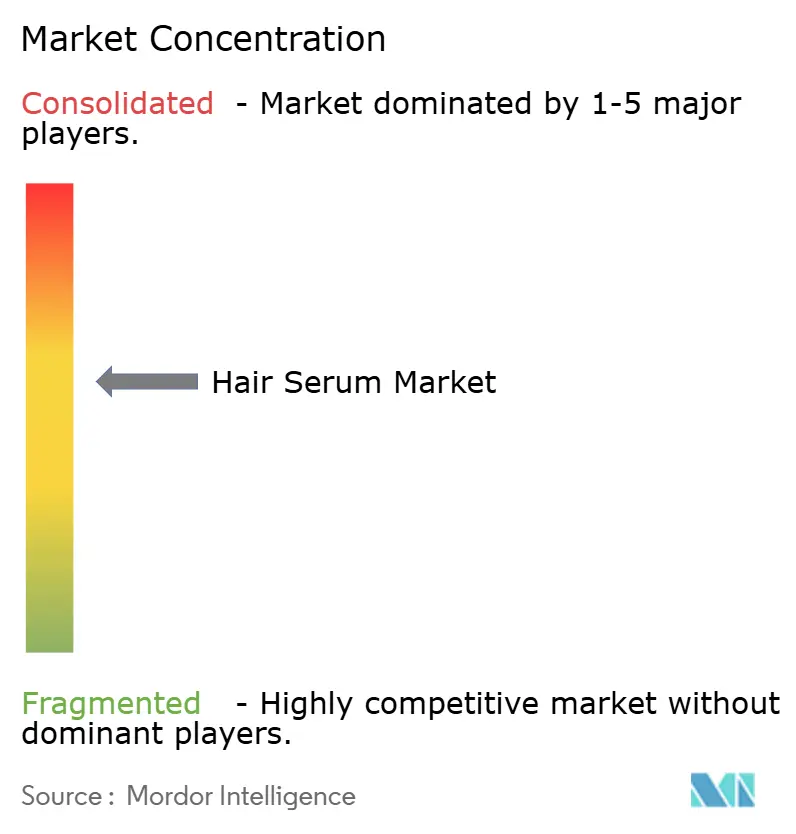
| Market Concentration | Medium |
Major Players *Disclaimer: Major Players sorted in no particular order Image © Mordor Intelligence. Reuse requires attribution under CC BY 4.0. | |
Hair Serum Market Analysis by Mordor Intelligence
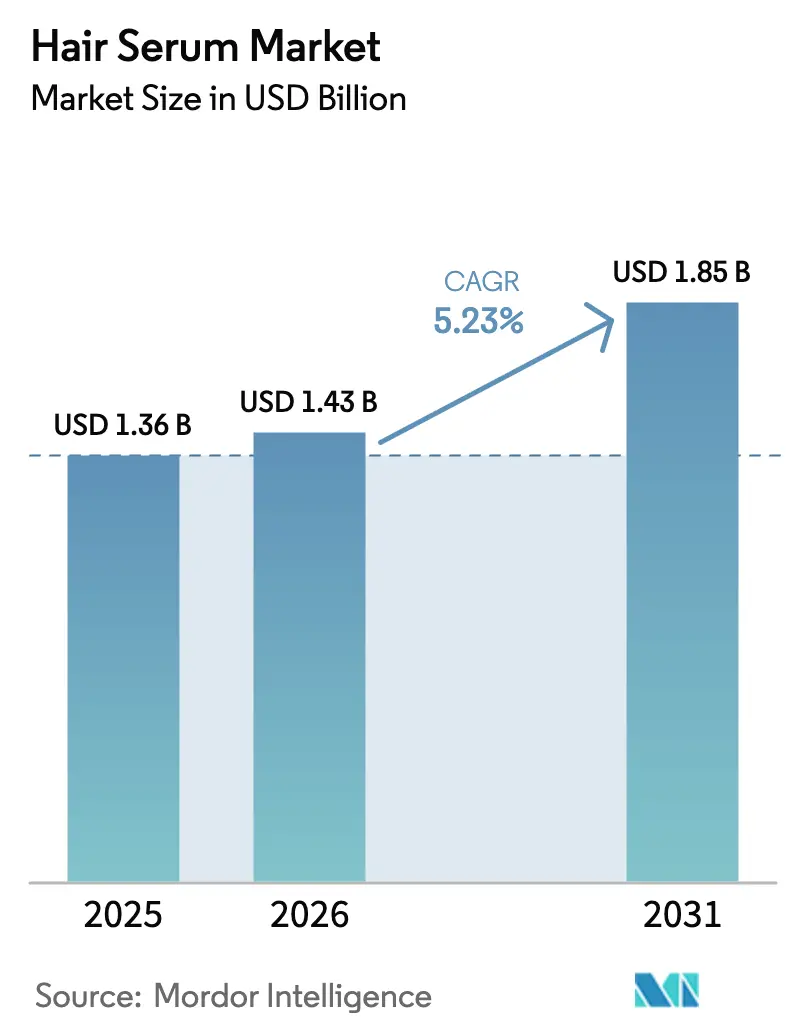
The hair serum market size was valued at USD 1.36 billion in 2025 and estimated to grow from USD 1.43 billion in 2026 to reach USD 1.85 billion by 2031, at a CAGR of 5.23% during the forecast period (2026-2031). This growth highlights the market's shift from being primarily a styling product to a platform focused on scalp health. Factors such as increased urban pollution, exposure to hard water, and UV stress are influencing ingredient innovation, with research focusing on components like ectoin, moringa extract, and chelators to address mineral buildup. The rise of online social-commerce platforms is shortening the discovery-to-purchase process, enabling rapid scaling for independent brands. Additionally, professional salons are transforming into diagnostic centers, offering personalized serum recommendations based on trichoscopy and water-hardness analysis. Regulatory changes in the European Union and the United States are driving silicone-free reformulations and requiring brands to validate hair-growth claims through randomized trials. Efforts to combat counterfeit products on platforms like Amazon and Alibaba are enhancing brand protection, though challenges persist in emerging markets.
Key Report Takeaways
- By product type, treatment serums captured 65.94% of hair serum market share in 2025, while styling serums are trailing as treatment formats post a 6.41% CAGR through 2031.
- By ingredient type, conventional formulations held 73.31% of the hair serum market size in 2025, whereas organic variants are expanding at a 6.01% CAGR to 2031.
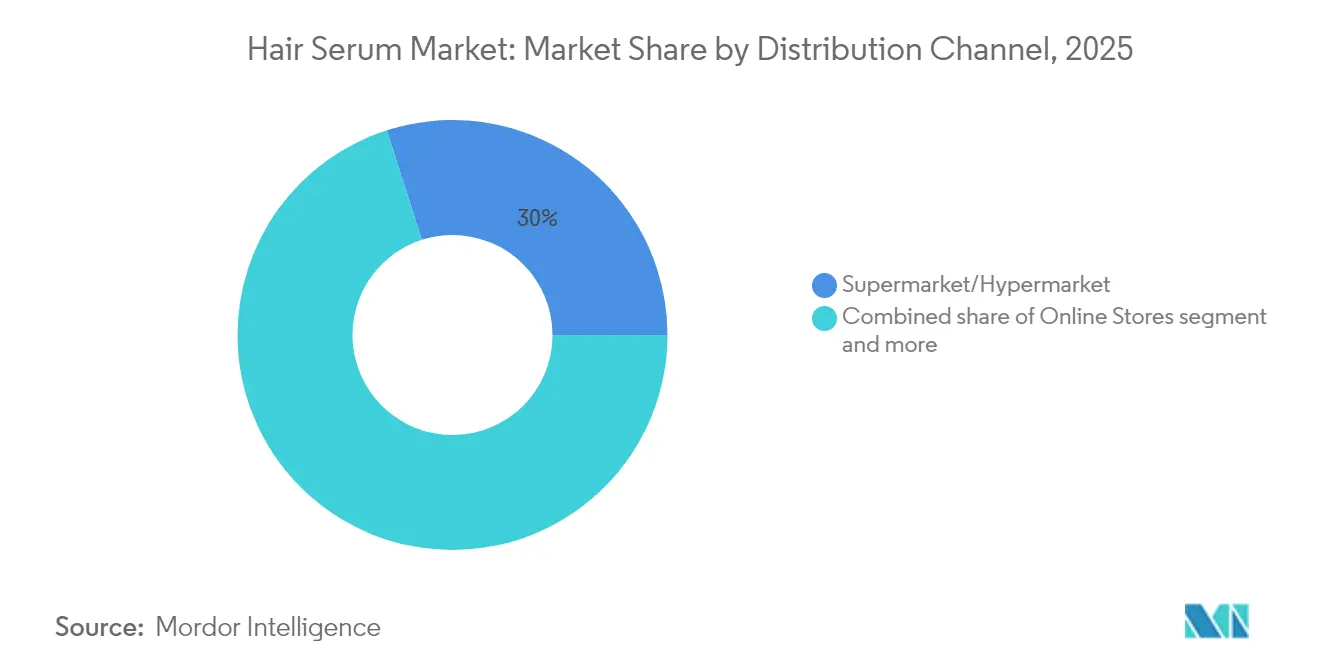
- By distribution channel, supermarkets and hypermarkets accounted for 29.95% revenue share of the hair serum market in 2025, but online stores are advancing at a 6.08% CAGR through 2031.
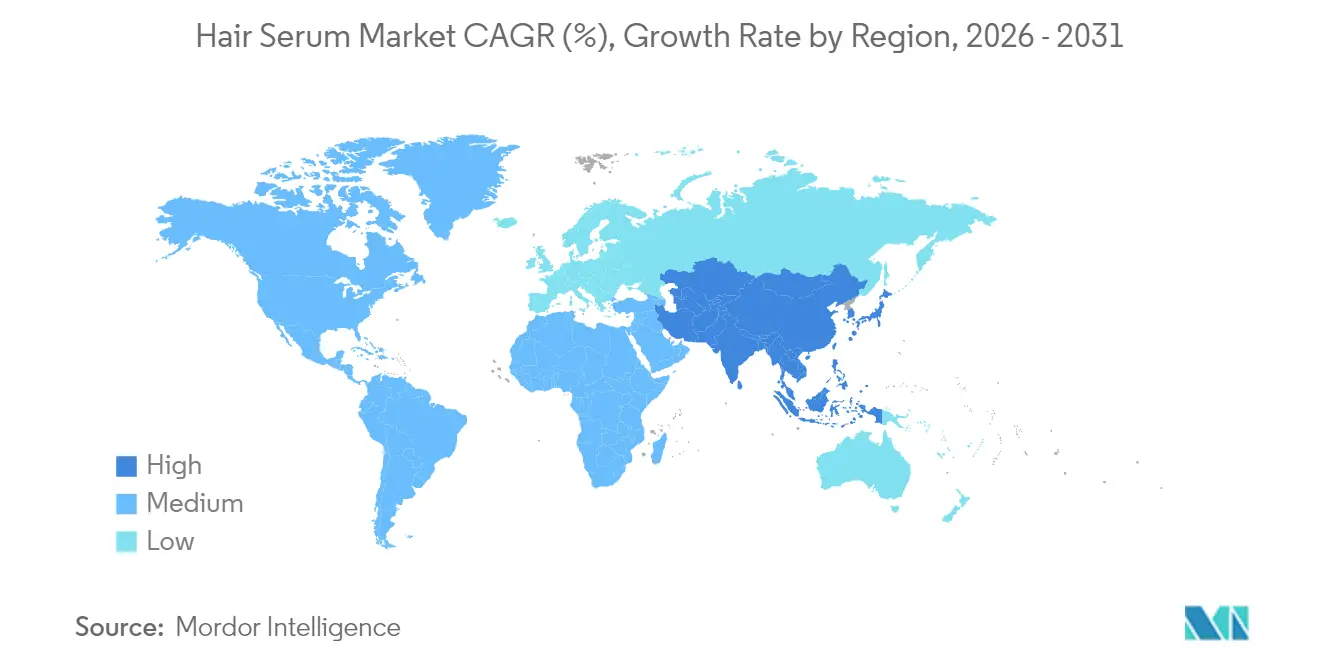
- By geography, Asia-Pacific commanded 38.45% of global hair serum market share in 2025 and is forecast to grow at a 5.86% CAGR to 2031.
Note: Market size and forecast figures in this report are generated using Mordor Intelligence’s proprietary estimation framework, updated with the latest available data and insights as of 2026.
Market Trends and Insights
Drivers Impact Analysis of Hair Serum Market*
| Driver | (~)% Impact on CAGR Forecast | Geographic Relevance | Impact Timeline |
|---|---|---|---|
| Rising incidence of hair damage from pollution, UV, hard water, and environmental stressors | +1.2% | Global, with acute impact in Asia-Pacific (Delhi, Beijing, Jakarta) and urban North America | Medium term (2-4 years) |
| Growing demand for scalp-focused serums targeting microbiome balance, dandruff, sensitivity, and follicle health | +1.5% | North America, Europe, Asia-Pacific core markets (South Korea, Japan) | Long term (≥ 4 years) |
| Expansion of professional salon and spa channel | +0.9% | North America, Europe, with spillover to premium urban centers in Asia-Pacific and Middle East and Africa | Medium term (2-4 years) |
| Rapid product innovation and line extensions | +0.8% | Global, led by North America and Europe research and development hubs | Short term (≤ 2 years) |
| Shift toward advanced, functional ingredients | +1.0% | North America, Europe, with adoption lag in South America and Middle East and Africa | Medium term (2-4 years) |
| Growing focus on holistic self-care and at-home beauty rituals | +0.7% | Global, accelerated by post-pandemic behavior shifts | Long term (≥ 4 years) |
| Source: Mordor Intelligence | |||
Rising Incidence of Hair Damage from Pollution, UV, Hard Water, and Environmental Stressors
Urban air quality deterioration is significantly influencing hair-care priorities, as particulate matter becomes embedded in the scalp's lipid matrix, initiating inflammatory responses that compromise the strength of follicle anchors. Major urban centers, including Delhi and Beijing, experience particulate matter (PM2.5) levels far above the thresholds recommended by the World Health Organization (WHO) [1]Source: World Health Organization, “WHO Global Air Quality Guidelines,” who.int. This has led to a noticeable rise in consumer demand for anti-pollution serums formulated with ingredients such as moringa peptides and ectoin, which are known to neutralize free radicals before they can oxidize keratin disulfide bonds. Additionally, hard water, which contains high levels of calcium and magnesium, deposits mineral scale on hair shafts, leading to reduced elasticity and increased susceptibility to breakage. Chelating serums incorporating ethylenediaminetetraacetic acid (EDTA) or phytic acid are becoming increasingly popular in areas where water is supplied from limestone aquifers, such as certain regions in the United States and Southern Europe [2]Source: U.S. Geological Survey, “Hardness of Water,” usgs.gov. Furthermore, ultraviolet (UV) radiation, particularly UVA wavelengths that penetrate deep into the hair cortex, causes degradation of melanin and structural proteins. Serums enriched with UV filters like ethylhexyl methoxycinnamate or natural alternatives such as red algae extract are being positioned as essential leave-in photoprotection solutions. The combined effects of these environmental stressors have transformed serums from optional styling products into critical barrier-defense solutions, encouraging brands such as Moroccanoil and Living Proof to reformulate their existing product lines to include advanced anti-pollution complexes.
Growing Demand for Scalp-Focused Serums Targeting Microbiome Balance, Dandruff, Sensitivity, and Follicle Health
The scalp microbiome, consisting of species such as Cutibacterium, Staphylococcus, and Malassezia, has become a focus for therapeutic interventions, as its imbalance is associated with conditions like seborrheic dermatitis, folliculitis, and telogen effluvium. Serums containing postbiotics, such as lactobacillus ferment, and prebiotics, like inulin, are being used to regulate microbial populations while preserving commensal flora. These formulations provide a gentler alternative to traditional treatments like zinc pyrithione or ketoconazole. Brands such as Briogeo and Virtue Labs have introduced scalp serums featuring ingredients like Centella asiatica (CICA), which reduces pro-inflammatory cytokines, and niacinamide, which enhances the epidermal barrier and minimizes transepidermal water loss. Additionally, follicle-health products now incorporate biomimetic peptides, such as Capixyl—a combination of biochanin A and acetyl tetrapeptide-3—that inhibit 5-alpha reductase and extend the anagen phase, offering a solution for androgenetic alopecia without the systemic side effects associated with finasteride. The industry is shifting from symptom management to addressing root causes, gaining support from dermatologists and driving investments in clinical trials. For example, several brands are pursuing Food and Drug Administration (FDA) over-the-counter monograph pathways for hair-growth claims, which require randomized controlled trials to demonstrate statistically significant improvements in hair density [3]Source: United States Food & Drug Administration, “Is It a Cosmetic, a Drug, or Both? (Or Is It Soap?),” fda.gov. This trend is expected to drive growth over the long term, supported by the adoption of personalized scalp diagnostics, such as trichoscopy and sebum pH testing, in premium salons across North America, Europe, and developed Asia-Pacific markets.
Expansion of Professional Salon and Spa Channel
Professional channels are shifting from being purely transactional retail points to becoming experiential consultation hubs. Stylists now use diagnostic tools, such as digital scalp cameras and moisture analyzers, to recommend serums tailored to individual factors like hair porosity, sebum levels, and water hardness. Salon-exclusive brands, including Redken, Pureology, and Olaplex, maintain their premium pricing by combining in-salon treatments with take-home serums, fostering recurring revenue and strengthening brand loyalty. The collaboration between Glamsquad and Olaplex highlights how brands are extending salon services into consumers' homes, addressing needs that physical salon locations cannot fulfill. Stylists are increasingly incentivized through commission-based structures tied to product sales, encouraging them to educate clients on serum layering techniques and ingredient compatibility. Training academies operated by Wella, L'Oréal Professional, and Schwarzkopf are integrating serum application methods into their certification programs, positioning serums as essential service offerings rather than supplementary retail products. This expansion of professional channels is expected to drive growth, with the medium-term impact primarily concentrated in North America and Europe, where salon density and per-visit spending are highest, and gradual growth anticipated in premium urban areas across Asia-Pacific and the Middle East.
Shift Toward Advanced, Functional Ingredients
Formulators are shifting from traditional silicones and mineral oils to bioengineered actives that provide clear performance benefits, such as bond repair, cuticle sealing, and follicle energization. Peptides like acetyl tetrapeptide-3 and copper tripeptide-1 are designed to penetrate the hair cortex, promoting keratinocyte proliferation and collagen synthesis. Furthermore, plant stem cells derived from edelweiss and sea fennel offer antioxidant protection and support cellular regeneration. Adaptogens, including ashwagandha, rhodiola, and holy basil, are being integrated to address cortisol-induced hair thinning, focusing on the psychodermatological aspects of hair loss. Nano-encapsulation technologies are enabling hydrophobic actives, such as retinol and tocopherol, to remain stable in aqueous serums, overcoming previous formulation challenges that limited ingredient diversity. Exosome-based serums, which deliver micro ribonucleic acid (microRNA) and growth factors derived from plant or stem-cell cultures, represent an emerging area in regenerative hair care. However, regulatory uncertainty regarding their classification as either cosmetic or biologic products remains unresolved. The Ordinary's introduction of multi-peptide hair serums at accessible price points is increasing consumer access to functional ingredients, compelling legacy brands to justify premium pricing through clinical validation. This trend is expected to drive growth in the medium term as ingredient costs decrease and regulatory frameworks stabilize in North America and Europe, followed by adoption in the Asia-Pacific region and gradual market penetration in South America and the Middle East.
Restraints Impact Analysis of Hair Serum Market*
| Restraint | (~)% Impact on CAGR Forecast | Geographic Relevance | Impact Timeline |
|---|---|---|---|
| Stringent cosmetic regulations on ingredient safety | -0.6% | Europe (EU Cosmetics Regulation), North America (FDA), Asia-Pacific (ASEAN Cosmetic Directive) | Medium term (2-4 years) |
| Ongoing safety concerns around certain silicones, preservatives, and synthetic actives | -0.4% | Global, with heightened scrutiny in Europe and North America | Medium term (2-4 years) |
| High complexity and cost of formulating stable, multifunctional serums with natural actives | -0.3% | Global, with acute impact on indie brands and emerging market players | Long term (≥ 4 years) |
| Widespread presence of counterfeit and grey-market serums online | -0.5% | Global, with acute impact in Asia-Pacific and emerging markets | Short term (≤ 2 years) |
| Source: Mordor Intelligence | |||
Stringent Cosmetic Regulations on Ingredient Safety
Regulatory agencies are increasing oversight of cosmetic claims and ingredient safety, requiring brands to perform comprehensive toxicological assessments and clinical trials before product launch. The European Union's ongoing updates to the Cosmetics Regulation are expanding the list of restricted substances and mandating safety evaluations for nanomaterials, which are increasingly utilized in serums to enhance penetration. In the United States, the Food and Drug Administration has issued warning letters to brands making unsupported hair-growth claims, demanding randomized controlled trials that adhere to pharmaceutical-grade standards—a requirement that smaller brands often find challenging without venture capital support. The Association of Southeast Asian Nations' harmonized Cosmetic Directive seeks to simplify ingredient approvals across member states; however, varying implementation timelines create compliance challenges for multinational product launches. Environmental concerns regarding certain silicones, such as cyclopentasiloxane and cyclohexasiloxane, classified by the European Union as substances of very high concern due to their environmental persistence, are driving reformulations toward plant-based alternatives like hemisqualane and caprylic/capric triglyceride. These alternatives, however, often underperform in sensory attributes and require more expensive stabilization. Additionally, preservative systems are under scrutiny, with phenoxyethanol and parabens being replaced by multifunctional ingredients such as caprylyl glycol and ethylhexylglycerin. While these alternatives provide antimicrobial efficacy, they also narrow the formulation window.
Ongoing Safety Concerns Around Certain Silicones, Preservatives, and Synthetic Actives
Consumer advocacy groups and environmental organizations continue to question the safety of commonly used serum ingredients, creating reputational challenges for brands and prompting reformulations, even in the absence of regulatory restrictions. Silicones, such as dimethicone and cyclopentasiloxane, are criticized for their environmental persistence and potential to bioaccumulate in aquatic ecosystems, despite their effectiveness in providing slip, shine, and heat protection. The Environmental Working Group's Skin Deep database assigns hazard scores to cosmetic ingredients based on toxicity studies. High scores, even when derived from precautionary principles rather than conclusive evidence, can lead to consumer boycotts and retailer delistings. Preservatives like methylisothiazolinone and formaldehyde-releasing agents have been associated with contact dermatitis in sensitive individuals. As a result, brands are increasingly adopting preservative-free formulations or natural antimicrobial alternatives, such as radish root ferment and honeysuckle extract. However, these alternatives often reduce shelf life and necessitate cold-chain logistics.
*Our forecasts treat driver/restraint impacts as directional, not additive. The impact forecasts reflect baseline growth, mix effects, and variable interactions.
Hair Serum Market Segment Analysis
By Product Type:
Treatment Serums Anchor GrowthHair treatment serums accounted for 65.94% of market revenue in 2025 and are projected to grow at a compound annual growth rate (CAGR) of 6.41% through 2031. This growth is expected to outpace that of styling serums, as consumer preferences increasingly shift toward addressing hair health concerns such as bond repair, keratin reconstruction, and scalp fortification, rather than focusing solely on achieving a cosmetic finish. These treatment formulations are designed to tackle structural damage at the molecular level by leveraging advanced ingredients such as biomimetic peptides, plant stem cells, and postbiotics. These components work to repair disulfide bonds that are often fractured due to chemical processing, heat styling, and environmental oxidation. A notable example is Olaplex's bis-aminopropyl diglycol dimaleate technology, which has set a benchmark in the market by effectively reconnecting broken keratin chains. Competitors are striving to replicate or innovate beyond this standard by utilizing alternative crosslinking agents, including maleic acid derivatives and polyquaternium complexes, to deliver comparable or enhanced results.
Scalp-treatment serums are also gaining traction, particularly those targeting issues such as follicle miniaturization and seborrheic dermatitis. These products are increasingly incorporating 5-alpha reductase inhibitors, such as saw palmetto and pumpkin seed extract, as well as anti-inflammatory botanicals like Centella Asiatica (CICA) and licorice root. These ingredients are formulated to regulate the hair growth cycle, reduce shedding, and address underlying scalp conditions. This growing demand reflects a broader consumer trend of reframing hair care as a form of preventive dermatology. Treatment serums are now being positioned as daily-use interventions that support long-term hair and scalp health, rather than being viewed as occasional remedies for specific issues.




By Ingredient Type:
Organic Gains MomentumConventional formulations accounted for 73.31% of the market share in 2025, primarily due to their affordability, reliable sensory performance, and stable formulation characteristics. These attributes make them a preferred choice for a wide range of consumers. However, organic variants are steadily closing the gap, growing at a compound annual growth rate (CAGR) of 6.01%. This growth is fueled by the rising influence of clean-beauty mandates and increasing consumer demand for ingredient transparency. Organic serums, certified by recognized organizations such as the United States Department of Agriculture (USDA) Organic, COSMOS (Cosmetic Organic and Natural Standard), or Ecocert, avoid synthetic preservatives, silicones, and petrochemical-derived emollients. Instead, they incorporate natural ingredients such as cold-pressed oils (e.g., argan, marula, rosehip), plant extracts (e.g., aloe, chamomile, green tea), and natural emulsifiers (e.g., lecithin, xanthan gum). These formulations resonate with environmentally conscious consumers who value sustainability, biodegradability, and minimal environmental impact. This trend is particularly evident in North America and Europe, where clean-beauty retail standards—such as Sephora's Clean at Sephora and Credo Beauty's Dirty List—prohibit the use of numerous ingredients considered harmful or ethically questionable.
Despite their growing popularity, organic serums face several formulation challenges. These include a shorter shelf life due to the absence of synthetic preservatives, a higher susceptibility to oxidation and rancidity, and variability in active ingredient concentrations caused by inconsistencies in agricultural sourcing. To address these challenges, brands are adopting innovative solutions such as airless packaging, nitrogen flushing, and the incorporation of natural antioxidant systems (e.g., tocopherol, rosemary extract). These measures help extend product stability while ensuring compliance with organic certification standards. By leveraging these advancements, brands aim to meet consumer expectations for high-quality organic products without compromising on performance or sustainability.
By Distribution Channel:
Online Surges AheadIn 2025, supermarkets and hypermarkets accounted for 29.95% of market revenue, highlighting the widespread presence of the grocery channel and the influence of impulse purchases. However, online stores are growing at a CAGR of 6.08%, driven by the integration of social commerce, influencer-led product discovery, and subscription models that transform one-time buyers into repeat customers. E-commerce platforms such as Amazon, Sephora.com, and Ulta.com utilize algorithmic recommendations, user-generated reviews, and virtual try-on tools to minimize purchase barriers. These platforms also allow consumers to review ingredient lists and clinical claims before making a purchase decision.
Social commerce platforms, including TikTok Shop, Instagram Shopping, and YouTube Shopping, streamline the process from product discovery to checkout. Influencers play a key role by demonstrating product applications, such as serum usage, in real time and embedding purchase links directly within video content. Subscription services like Ipsy, Birchbox, and FabFitFun introduce consumers to premium serums through discounted trial sizes, encouraging full-price purchases after users experience the products' effectiveness. Additionally, direct-to-consumer brands such as Divi, Briogeo, and Virtue Labs bypass traditional retail channels by leveraging their own websites and social media platforms. This approach helps them build brand communities and collect first-party data for personalized marketing strategies.
Geography Analysis
APAC Hair Serum Market
Asia-Pacific led the global market in 2025, holding a 38.45% share, and is expected to grow at a steady rate of 5.86% through 2031. This growth is driven by South Korea's advancements in scalp health, including trichoscopy clinics, pH-balancing serums, and CICA (Centella Asiatica)-infused treatments. Brands like Amorepacific's mise-en-scène and LG Household & Health Care have introduced innovative products such as cushion applicators and fermented botanicals to improve active ingredient absorption. Japan's minimalist approach, featuring lightweight serums with tsubaki (camellia) oil, rice water, and yuzu extract, appeals to consumers prioritizing ingredient purity and multifunctionality. Meanwhile, China's cross-border e-commerce platforms, such as Tmall and Douyin, enable international brands to bypass traditional import barriers, while local players like Proya and Chando gain traction by tailoring products to regional water hardness and humidity. In India, urban consumers are adopting Western-style treatment serums, while rural and semi-urban segments prefer Ayurvedic brands like Forest Essentials and Kama Ayurveda, which incorporate traditional ingredients such as bhringraj, amla, and brahmi oils.
The Americas and EMEA Hair Serum Market
North America and Europe represent significant market shares, with North America focusing on clinical efficacy and clean-beauty certifications. United States. consumers prefer serums backed by clinical trial data and dermatologist endorsements, favoring brands like Olaplex, Living Proof, and Virtue Labs, which publish peer-reviewed studies or white papers validating their claims. The professional salon channel remains robust, with stylists recommending serums based on individual hair porosity, chemical damage, and styling habits. In Europe, sustainability and regulatory compliance are key drivers. Consumers prioritize eco-certifications such as COSMOS (COSMetic Organic Standard), Ecocert, and Natrue, along with biodegradable packaging. This has increased demand for refillable serum bottles and waterless formulations that reduce carbon footprints. The EU's Cosmetics Regulation modernization is pushing brands to reformulate with plant-based alternatives, meeting stringent safety and environmental standards. Specialty retailers like Sephora and Douglas dominate distribution in both regions, offering curated assortments and in-store consultations that justify premium pricing. However, North America's growth is tempered by market saturation and competition, while Europe's trajectory is shaped by regulatory challenges and a shift toward circular economy models emphasizing product longevity and recyclability.South America, the Middle East, and Africa present emerging opportunities. Brazil leads South American demand with its vibrant beauty culture and preference for keratin-based treatments. In the Middle East, the UAE and Saudi Arabia drive growth through luxury retail channels and expatriate populations seeking international brands. In Africa, Nigeria and South Africa anchor the market, with local brands incorporating indigenous botanicals such as shea butter, baobab oil, and marula oil, which resonate with consumers seeking culturally relevant formulations. Despite challenges like inconsistent cold-chain logistics, limited e-commerce penetration, and currency volatility, these regions offer untapped potential as urbanization accelerates and beauty retail modernizes. Brands entering these markets must balance global brand equity with localized formulations tailored to regional hair types, climate conditions, and ingredient preferences. Collaborating with local distributors who have market knowledge and regulatory expertise is often critical for success in these regions.

Regulatory Landscape
Hair serums are generally regulated as cosmetics, but products marketed for hair growth, anti-hair loss, or therapeutic scalp outcomes draw more scrutiny and carry higher borderline risk in major markets. In the European Union, Regulation (EC) No 1223/2009 governs safety substantiation (including Cosmetic Product Safety Reports), and enforcement has tightened substance controls through updates such as Regulation (EU) 2026/78 (effective May 1, 2026) and Regulation (EU) 2026/909 (April 27, 2026), which amend annexes and substance conditions relevant to fragranced and active-led hair care formulations.
In the United States, cosmetic requirements under FDA rules (21 CFR Parts 700-740) interact with enforcement around unsupported drug-like claims, which pushes brands toward stronger evidence packages when communicating follicle or regrowth benefits. The United Kingdom is also aligning restrictions through amendments such as UKSI 2026/23 (effective July 15, 2026, with transition provisions into 2027), adding an additional compliance layer for global launches that share formula and labeling across the EU and UK. Beyond federal frameworks, formulation decisions are further influenced by state-level chemical rules in the United States, including PFAS-related restrictions cited for Maine (January 2026) and Connecticut (July 2026), reinforcing the need for ingredient traceability and reformulation capability for silicone-heavy and performance-fragrance serum platforms.
Value Chain Analysis
The hair serum value chain runs from specialty ingredient suppliers (silicones, emollients, preservatives, peptides, postbiotics, botanicals, chelators, and UV filters) and packaging suppliers (droppers, pumps, airless systems, and refill formats) to contract and in-house manufacturers, brand owners, distributors, and retail channels spanning supermarkets/hypermarkets, specialty stores, and online platforms. Manufacturing and quality assurance typically align with cosmetic GMP expectations, with frameworks such as ISO 22716:2007 supporting global compliance readiness. Safety documentation, including EU/UK CPSR requirements, shapes supplier qualification, raw-material specifications, and stability or microbial testing throughout the development cycle.
On the downstream side, brands balance mass retail reach with professional endorsement and fast digital discovery. That mix drives decisions on pack sizes, claims substantiation, and anti-counterfeit controls to manage online gray-market exposure. Sustainability and sourcing programs are increasingly integrated into procurement and packaging, including Forest Stewardship Council (FSC) chain-of-custody approaches for paper and board and broader efforts to scale next-generation packaging and lower-footprint production. L'Oreal's L'AcceleratOR program (EUR 100 million) and Kao-linked progress such as GreenCircle Certified carbon footprint reduction status for specific lines at a German facility (April 2026) reflect operational capabilities that can feed into premium hair serum portfolios.
Competitive Landscape
The hair serum market is moderately concentrated, with competition driven by multinational corporations such as L'Oréal, Unilever, Procter & Gamble, Henkel, and Kao. These companies rely on their broad product portfolios, research and development capabilities, and partnerships with salons to maintain their market positions. However, they face growing challenges from direct-to-consumer brands and independent companies that leverage digital platforms and influencer networks to bypass traditional retail channels.
Leading companies adopt multi-brand strategies to cater to different price points, distribution channels, and consumer needs. For instance, L'Oréal operates Kérastase in premium salons, Redken in professional channels, and Elvive in mass retail, each offering unique serum lines targeting specific concerns like bond repair, scalp health, or styling. Patent protections around bond-building technologies, such as Olaplex's bis-aminopropyl diglycol dimaleate and Unilever's maleic acid derivatives, provide a temporary competitive edge. However, the expiration of key patents and the availability of alternative crosslinking agents are reducing exclusivity in the market.
Opportunities for growth include personalized diagnostics, such as artificial intelligence (AI)-powered scalp analysis and at-home microbiome testing. Hybrid product formats are also gaining popularity, combining the benefits of serums with styling convenience. Examples include heat-activated bond-repair serums and overnight scalp treatments that double as leave-in conditioners. Additionally, technological advancements like augmented reality (AR) for virtual consultations, blockchain for product authentication, and nano-encapsulation to stabilize active ingredients are reshaping the market. Meanwhile, biotech innovations, such as lab-grown peptides and fermentation-derived postbiotics, are addressing sustainability concerns while offering enhanced performance compared to traditional plant-based extracts.
Hair Serum Industry Leaders
L'Oréal S.A
Unilever PLC
The Procter & Gamble Company
Henkel AG & Co KGaA
Kao Corporation
- *Disclaimer: Major Players sorted in no particular order
Hair Serum Market Companies Covered in this Report
- L'Oréal S.A
- Unilever PLC
- The Procter & Gamble Company
- Henkel AG & Co KGaA
- Kao Corporation
- Giovanni Cosmetics, Inc
- Moroccanoil Inc.
- Divi Official LLC
- John Paul Mitchell Systems
- Redken
- Olaplex Holdings
- Briogeo Hair Care
- Living Proof Inc.
- Virtue Labs
- Amorepacific
- Bumble and bumble
- Aveda
- The Ordinary
- Forest Essentials
- L’Occitane en Provence

Market Opportunities and Future Outlook
Clinical-grade scalp positioning and tighter claims discipline create room for hair serums that can remain classified as cosmetics while communicating measurable benefits in hydration, barrier support, microbiome balance, and damage defense. As the market shifts toward scalp health, salon diagnostics, and ingredient-led performance, standardized testing and clearer claims architecture become more valuable, particularly as regulators in the EU, UK, and US intensify scrutiny of borderline hair-growth messaging and implement 2026 rule updates that restrict certain substances. Brands that can execute faster reformulation cycles, such as moving away from contested silicones or adapting to evolving restriction lists, and keep consistent global compliance dossiers are more likely to secure earlier shelf placement across regions.
Packaging and lifecycle improvements are also turning into a commercial lever for hair care, creating opportunities for refill and low-waste serum formats that still maintain stability. In June 2026, L'Oreal highlighted this direction with its #JoinTheRefillMovement campaign across 28 refillable beauty products, supporting retailer and consumer visibility for refill systems that can extend into leave-in hair treatments. Operational investments tied to ESG roadmaps, including Kao's Kirei Lifestyle Plan and its ongoing focus on product lifecycle sustainability, support portfolio renovation and supply-side differentiation. This is increasingly relevant for premium serum lines, where packaging, sourcing transparency, and manufacturing footprint claims factor into assortment decisions across specialty retail and professional channels.
Recent Industry Developments in Hair Serum Market
- July 2026: Henkel completed the acquisition of premium hair care brand OLAPLEX following regulatory approval. The completion strengthens Henkel's premium segment and biotechnology-driven actives pipeline, and reduces premium-brand competition in key channels.
- March 2026: Henkel signed agreement to acquire OLAPLEX for 1.4 billion USD. The deal expands Henkel's premium hair care portfolio and reinforces its position in professional and premium channels. It enhances cross-brand propelling of innovative actives.
- March 2026: Henkel signed agreement to acquire Not Your Mothers (North American consumer hair care and styling brand). The acquisition broadens Henkel's consumer hair care footprint and distribution reach.


Hair Serum Market Report Scope and Research Methodology
Market Definition and Coverage
This market covers leave-in hair serum products sold through retail and professional channels, where value is measured as sales revenue generated from hair serums purchased by end users within the study geography.
Scope exclusions: Salon services revenue, DIY hair oils, and prescription drug treatments are excluded from the market value wherever they appear adjacent to hair serums in broader hair care reporting.
Segments Covered in This Report
- By Product Type
- Hair Treatment Serum
- Hair Styling Serum
- By Ingredient Type
- Conventional
- Organic
- By Distribution Channel
- Supermarkets/Hypermarkets
- Specialty Stores
- Online Stores
- Other Distribution Channels
- By Geography
- North America
- United States
- Canada
- Mexico
- Rest of North America
- Europe
- Germany
- United Kingdom
- Italy
- France
- Spain
- Netherlands
- Poland
- Belgium
- Sweden
- Rest of Europe
- Asia-Pacific
- China
- India
- Japan
- Australia
- Rest of Asia-Pacific
- South America
- Brazil
- Chile
- Argentina
- Rest of South America
- Middle East and Africa
- South Africa
- Saudi Arabia
- United Arab Emirates
- Nigeria
- Turkey
- Rest of Middle East and Africa
- North America
Data Sources, Market Sizing, and Validation
Desk Research
Desk work starts with building the demand and supply picture around hair serum consumption and pricing, then checking it against what is visible in public reporting. For this, we rely on sources such as U.S. Census Bureau retail indicators, USITC trade statistics where product movement signals are relevant, OECD consumer price and spending series for personal care context, and World Bank macro indicators that help normalize currency and income shifts.
We also review company annual reports and investor decks, major retailer disclosures where available, and association and regulator websites that inform labeling and ingredients rules (which affects product mix and ASP). Patent databases are used selectively to track how fast actives and formulations are shifting, which feeds into premiumization assumptions. The sources mentioned here are illustrative only, and many other public documents and databases were also referenced for collection, cross-checks, and clarification.
Primary Interviews and Surveys
Primary work was used to stress-test the desk assumptions on what counts as a hair serum in practice, how pricing moves by channel, and how quickly organic and conventional mixes are changing. We spoke with a spread of brand, distribution, and category professionals across key regions, so gaps in trade mapping, promotion intensity, and realistic ASP bands could be closed before finalizing the model.
Distribution of primary research fieldwork respondents
| Company type | Respondent position | Region |
|---|---|---|
| Top tier: 36% | CXOs: 15% | APAC: 50% |
| Mid tier: 42% | Functional/Unit leaders: 40% | EMEA: 32% |
| Smaller Players: 22% | Managers: 45% | Americas: 18% |
Market-Sizing & Forecasting
Market sizing was built using top-down logic where country level hair care spending, grooming participation, and channel mix are converted into an addressable hair serum demand pool, which is then valued using an ASP ladder by channel. To keep totals realistic, the outcome is corroborated using selective bottom-up checks such as sampled SKU price bands, channel checks on promotion depth, and supplier and distributor sanity checks on volume movement.
Key inputs used in the model include penetration of leave-in formats, average pack size behavior, the split of hair treatment versus styling use, the share of modern trade versus online, and the pace of premiumization tied to ingredient claims. Where data gaps exist for smaller markets or informal channels, we apply conservative proxy ratios from comparable countries and then adjust after expert feedback. Forecasting is run with scenario analysis supported by a simple multivariate regression, where GDP growth, inflation trends, and online share expansion are the most consistent drivers, and the rest is refined using what interviewees expect on pricing and mix shifts.
Data Validation & Update Cycle
Validation is done through repeated triangulation where modeled revenue is checked against independent signals, such as retail sales direction, trade movement where applicable, and observed shelf price changes. Outliers are flagged, reviewed, and corrected when a specific assumption is found to be the cause, and then the full chain of calculations is re-run so the impact is traceable.
Before sign-off, a second analyst review is completed to challenge market boundaries, currency handling, and any sharp changes in growth by geography or channel. Reports are refreshed annually, and interim updates are triggered when material events occur, such as major regulatory shifts on claims, sharp inflation spikes, or step-changes in distribution. Right before delivery, we do a fresh pass so clients receive the latest updated view.
Mordor Intelligence's Hair Serum Market Size Measured Against Other Published Estimates
Published market values for hair serums often vary because the product boundary is not always treated the same, and because price and currency choices can move totals even when volumes look similar. Differences also come from how often the underlying assumptions are refreshed, especially in periods where promotions, online pricing, and mix shifts change quickly.
In this study, the market total is kept stable by re-checking country currency timing, channel-level ASP progression, and ingredient mix shifts close to the base year, and then applying the same checks across the forecast years, a refresh-led choice that narrows avoidable drift in the final number for Mordor Intelligence.
Benchmark comparison
| Source | Market Size | Gaps in Research Methodology |
|---|---|---|
| Mordor Intelligence | USD 1.43 B (2026) | |
| Global Consultancy A | USD 1.60 B (2026) | Often broadens scope to include adjacent leave-in hair oils and multi-use styling creams, and applies a single blended ASP with limited channel re-pricing, which can lift the total in premium-heavy markets. |
| Industry Association B | USD 1.28 B (2026) | Commonly relies on member-reported formal retail only, which can undercount online-native brands and smaller cross-border flows, and may use earlier-year exchange rates that dampen USD totals during inflationary cycles. |
The table shows that scope boundaries and pricing mechanics explain most of the spread, not just different growth opinions. By tying the value build to repeatable demand signals, channel mix, and refreshed ASP and currency assumptions, our estimate stays easier to audit and more consistent across countries and years.


Key Questions Answered in the Report
How large is the hair serum market in 2026?
The hair serum market size is USD 1.43 billion in 2026 and is projected to reach USD 1.85 billion by 2031.
Which product category is growing fastest?
Treatment serums are advancing at a 6.41% CAGR and already account for two-thirds of global revenue.
Which region leads demand?
Asia-Pacific holds 38.45% share and is forecast to grow at a 5.86% CAGR, led by K-beauty influence and China’s premiumization.
What is driving online channel growth?
Social-commerce platforms, influencer tutorials, and subscription models are helping online sales expand at 6.08% CAGR.
Page last updated on:





