
Veterinary CRO Market Size and Share
Market Overview
| Study Period | 2020 - 2031 |
|---|---|
| Market Size (2026) | USD 1.27 Billion |
| Market Size (2031) | USD 1.85 Billion |
| Growth Rate (2026 - 2031) | 7.78 % |
| Fastest Growing Market | Asia-Pacific |
| Largest Market | North America |
| Market Concentration | Medium |
Major Players *Disclaimer: Major Players sorted in no particular order Image © Mordor Intelligence. Reuse requires attribution under CC BY 4.0. | |
Veterinary CRO Market Analysis by Mordor Intelligence
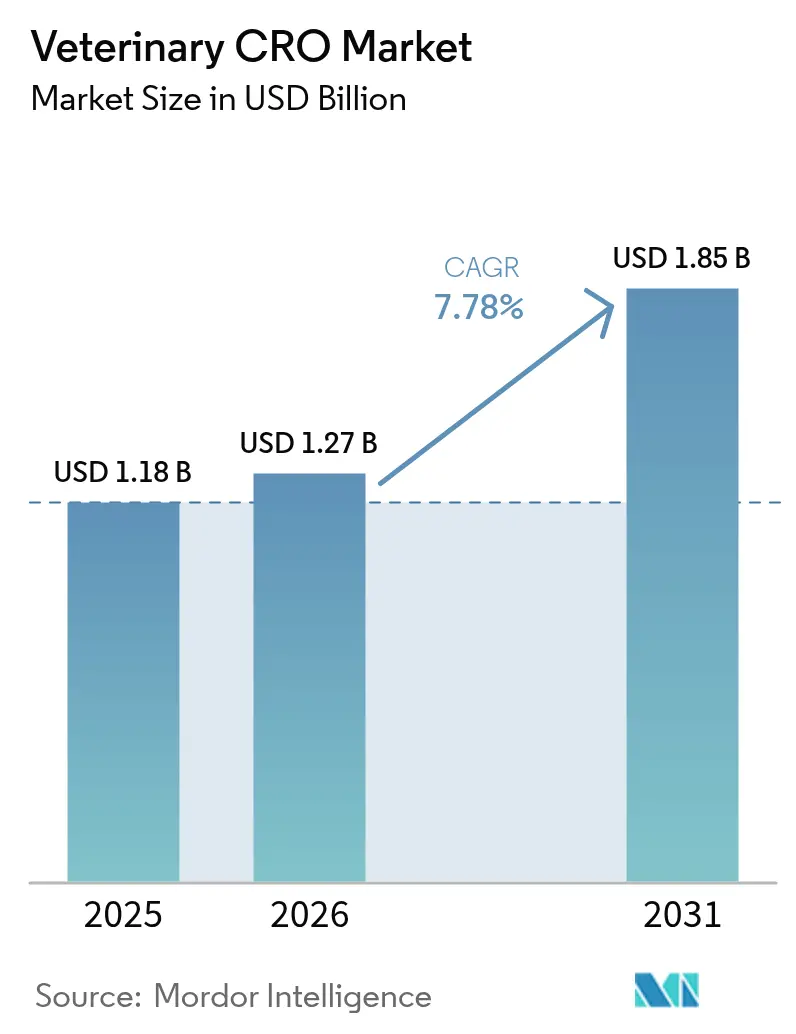
The Veterinary CRO Market size is projected to be USD 1.18 billion in 2025, USD 1.27 billion in 2026, and reach USD 1.85 billion by 2031, growing at a CAGR of 7.78% from 2026 to 2031.
Rapid outsourcing of discovery and development tasks, rising global spending on companion-animal and livestock health, and the rollout of streamlined regulatory pathways are together accelerating the flow of projects into contract research pipelines. Sponsors now favor external partners that can compress timelines, manage multi-jurisdiction dossiers, and provide specialized pathogen-handling capacity, especially for vaccine challenge studies. Asia-Pacific is emerging as the cost-advantaged growth engine, yet North America retains scale leadership thanks to its dense network of veterinary teaching hospitals and Good Laboratory Practice (GLP) sites. Meanwhile, digital monitoring tools are lowering per-patient costs in decentralized companion-animal trials, and biologics innovation—from monoclonal antibodies to gene therapies—is lengthening average study duration, which lifts overall CRO revenues.
Key Report Takeaways
- By service type, clinical trials held 33.12% of 2025 revenue, while regulatory and consulting services are projected to expand at a 9.43% CAGR through 2031.
- By animal type, companion animals led with a 57.45% revenue share in 2025; livestock studies are forecast to grow at a 9.66% CAGR through 2031.
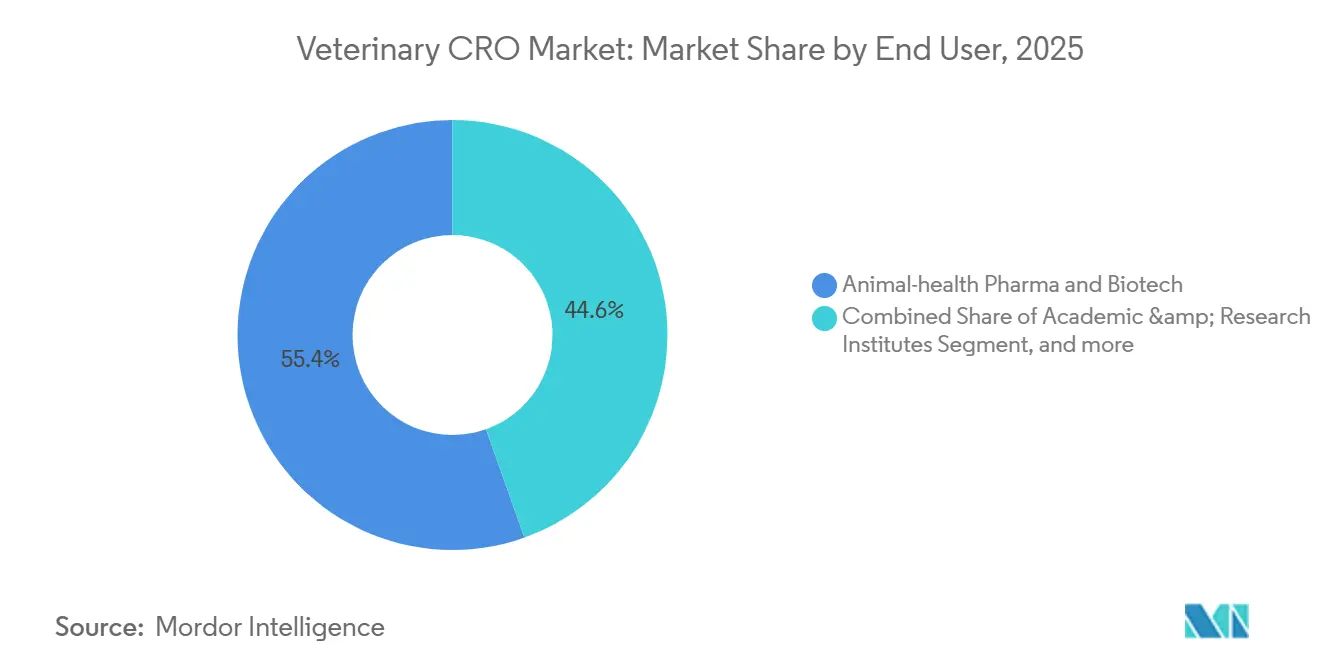
- By end user, pharmaceutical and biotech companies accounted for 55.43% of 2025 demand, whereas academic and research institutes are expected to grow at a 10.54% CAGR between 2026 and 2031.
- By indication, infectious-disease programs accounted for 35.76% of 2025 revenue, yet neurology trials are anticipated to register a 10.32% CAGR through 2031.
- By geography, North America commanded 41.75% of the veterinary contract research organization market in 2025, while Asia-Pacific is advancing at a market-leading 8.65% CAGR through 2031.
Note: Market size and forecast figures in this report are generated using Mordor Intelligence’s proprietary estimation framework, updated with the latest available data and insights as of 2026.
Market Trends and Insights
Drivers Impact Analysis of Veterinary CRO Market*
| Driver | (~) % Impact on CAGR Forecast | Geographic Relevance | Impact Timeline |
|---|---|---|---|
| Growth in global animal health expenditure | +1.8% | Global, with highest intensity in North America and Western Europe | Medium term (2-4 years) |
| Favorable regulatory pathways for veterinary pharmaceuticals | +1.5% | North America and Europe, spill-over to Asia-Pacific | Long term (≥4 years) |
| Increasing outsourcing of R&D activities by animal-health companies | +2.1% | Global, led by North America and emerging in Asia-Pacific | Short term (≤2 years) |
| Intensifying focus on One Health and zoonotic disease preparedness | +1.3% | Global, priority in Asia-Pacific and Sub-Saharan Africa | Medium term (2-4 years) |
| Expansion of companion-animal biologics and specialty therapies | +1.6% | North America and Europe, early adoption in urban Asia-Pacific | Medium term (2-4 years) |
| Digitalization and data-driven approaches in veterinary research | +1.2% | North America and Europe, gradual uptake in Asia-Pacific | Long term (≥4 years) |
| Source: Mordor Intelligence | |||
Growth in Global Animal Health Expenditure
Global veterinary pharmaceutical sales, including over-the-counter products and diagnostics, exceeded USD 50 billion in 2025, up sharply from pre-pandemic levels[1]. U.S. households now spend an average of USD 1,500 per pet each year, a 22% jump since 2020, which sustains demand for advanced trials in oncology, cardiology, and neurology. Livestock producers have likewise raised biosecurity budgets, allocating up to 12% of farm operating costs to veterinary services and vaccines. As spending expands on both the companion and production sides, the veterinary CRO market attracts projects that amortize fixed infrastructure across species. Heightened willingness to pay for specialty therapies underscores a durable revenue base for providers capable of serving multi-species portfolios.
Favorable Regulatory Pathways for Veterinary Pharmaceuticals
The U.S. Animal Drug User Fee Act V provides USD 35 million a year to expedite reviews and broaden conditional approvals for products targeting serious conditions. In Europe, the Platform Technology Master File enables a single dossier to support multiple vaccine candidates, reducing redundant studies by nearly 20%. VICH guideline GL52 now harmonizes pharmacokinetic protocols across key markets, eliminating region-specific bridging trials that once extended timelines. Although these tailwinds shorten time-to-market, they also elevate documentation standards, prompting sponsors to enlist CROs with proven regulatory track records. Post-approval efficacy commitments linked to conditional pathways further extend CRO engagement across the product life cycle.
Increasing Outsourcing of R&D Activities by Animal-Health Companies
Outsourcing penetration rose to 42% of preclinical and clinical workloads in 2025, up from 31% five years earlier. Industry leader Zoetis reported that external partnerships now cover 38% of its innovation pipeline. Venture-backed biotech entrants rely even more heavily on CRO capacity—often exceeding 90%—because they lack internal toxicology or clinical infrastructure. Complex biologics, from monoclonal antibodies to mRNA vaccines, require specialized analytics and manufacturing, pushing sponsors toward integrated service providers. As portfolios mature, companies streamline vendor rosters in favor of CROs that can deliver formulation, toxicology, clinical execution, and regulatory submission under a single quality system.
Intensifying Focus on One Health and Zoonotic-Disease Preparedness
The U.S. National One Health Framework allocates USD 1.2 billion through 2029 for integrated zoonotic-disease surveillance projects that heavily involve veterinary CROs. Emergency vaccine-challenge studies for avian influenza and African swine fever are being fast-tracked with public-sector funding in the United States and Southeast Asia alike. European guidance now mandates linking veterinary and human epidemiological data sets, boosting demand for dual-species study designs that CROs are uniquely positioned to manage. These multi-stakeholder initiatives broaden the veterinary CRO market beyond classic drug development into epidemiology, diagnostics validation, and public-health interventions, diversifying revenue and reducing exposure to cyclical pharmaceutical R&D budgets.
Restraints Impact Analysis of Veterinary CRO Market*
| Restraint | (~) % Impact on CAGR Forecast | Geographic Relevance | Impact Timeline |
|---|---|---|---|
| High development costs and lengthy approval timelines | -1.4% | Global, most acute in North America and Europe | Long term (≥4 years) |
| Limited availability of specialized animal research infrastructure | -0.9% | Asia-Pacific, Middle East & Africa, Latin America | Medium term (2-4 years) |
| Shortage of skilled veterinary research professionals | -0.7% | Global, particularly severe in emerging markets | Long term (≥4 years) |
| Ethical concerns and regulatory scrutiny over animal testing | -0.6% | Europe and North America, emerging in Asia-Pacific | Medium term (2-4 years) |
| Source: Mordor Intelligence | |||
High Development Costs and Lengthy Approval Timelines
Bringing a novel veterinary biologic to market can cost up to USD 150 million and take 7-9 years, versus 5-6 years a decade ago[2]. Field trials for livestock vaccines may involve 10-15 commercial farms, with each site adding USD 200,000-400,000 to budgets. Companion-animal oncology studies are similarly expensive, sometimes exceeding USD 5 million for 100 dogs enrolled across specialty centers. The EMA’s five-year post-approval monitoring rule for food-animal products adds another USD 2-4 million to lifecycle costs. Escalating capital requirements deter smaller innovators and concentrate projects among well-funded sponsors, which could slow the overall expansion pace of the veterinary CRO market.
Limited Availability of Specialized Animal Research Infrastructure
Fewer than 30 GLP-certified sites worldwide can handle large-animal studies at biosafety-level-3, and just 12% of those are in Asia-Pacific[3]. Sponsors often relocate livestock across continents, extending timelines by up to a year and inflating costs by more than 30%. Establishing a specific-pathogen-free swine herd can require USD 1.5-3 million annually, discouraging greenfield builds in emerging markets. Limited access to advanced imaging and oncology equipment further constrains enrollment capacity at veterinary teaching hospitals. Until new facilities come online, infrastructure scarcity will remain a headwind, particularly for regions that aspire to capture the fastest-growing share of outsourced studies.
*Our forecasts treat driver/restraint impacts as directional, not additive. The impact forecasts reflect baseline growth, mix effects, and variable interactions.
Veterinary CRO Market Segment Analysis
By Service Type:
Regulatory Consulting Gains as Harmonization Cuts RedundancyClinical trials accounted for the largest share of 2025 revenue, yet the segment’s 7.2% growth lags the 9.43% CAGR projected for regulatory and consulting work as harmonized VICH guidelines streamline dossier strategies across regions. Toxicology and safety studies held nearly 28% share, buoyed by stringent residue-depletion rules for food-animal therapies. Integrated providers that pair GLP toxicology with real-time bioanalytical support are steadily increasing their market share in the veterinary CRO market.
Over the forecast horizon, the regulatory-consulting niche is poised to expand its contribution to the veterinary CRO market, as sponsors prize rapid, audit-ready submissions. ISO 13485 certification has emerged as a key differentiator, with compliant firms able to command double-digit price premiums. Service bundling increasingly places dossier preparation, study monitoring, and pharmacovigilance under single-provider contracts, simplifying oversight for resource-constrained sponsors.


By Animal Type:
Livestock Vaccines Outpace Companion DominanceCompanion species accounted for 57.45% of 2025 revenue, led by canine and feline projects that mimic human medicine protocols. Oncology and dermatology remain the highest-value indications, often supported by owner-paid expenses that offset trial costs. Even so, accelerating vaccine development for African swine fever and avian influenza positions livestock programs to capture a larger share of the veterinary CRO market.
Livestock trials are forecast to post a 9.66% CAGR as governments inject funding to safeguard food security. Swine studies, propelled by new ASF vaccine candidates, are the fastest riser. Cattle respiratory-disease projects and poultry biosecurity mandates also add volume. The shift diversifies revenue streams away from consumer discretionary spending toward publicly financed disease-control budgets.
By End User:
Academic Institutes Ride One Health Funding WavePharmaceutical and biotech sponsors still dominate, accounting for 55.43% of the 2025 contract value, while universities and public institutions are scaling rapidly under One Health grant programs. These academic sites, once limited to exploratory work, now run pivotal trials under ISO 9001 quality systems, securing a larger share of the veterinary CRO market.
Growth at a 10.54% CAGR reflects both new government funding and the strategic monetization of teaching-hospital assets, such as the 400-dog oncology enrollment capacity at UC Davis. Non-profit agencies and agricultural cooperatives also fund data-rich studies aimed at addressing disease threats in developing countries, further broadening the customer mix.
By Indication:
Neurology Emerges as Fastest-Growing DomainInfectious-disease programs retained the top revenue spot in 2025, fueled by government-backed livestock vaccine efforts. Nonetheless, neurology projects—anchored by canine epilepsy gene therapy and feline cognitive diagnostics—are projected to log a 10.32% CAGR, the highest among all indications. This surge is drawing cross-over investment from human CNS specialists, enhancing the overall depth of the veterinary CRO market.
Oncology maintains a sizeable 22% share as comparative cancer models gain favor among translational researchers. Dermatology and gastrointestinal studies round out the pipeline diversity, ensuring that revenue is not overly dependent on any single disease class.
Geography Analysis
North America Veterinary CRO Market
North America contributed 41.75% of 2025 revenue on the strength of its dense GLP infrastructure, 67 million pet-owning households, and the FDA’s conditional-approval pathway that rewards early data packages. Canada adds volume via harmonized reviews, while Mexico offers cost-effective sites for poultry and swine vaccine work. Although regional CAGR moderates to 6.5% through 2031, North America will remain the largest component of the veterinary CRO market thanks to entrenched capacity and owner willingness to fund premium therapies.
Europe Veterinary CRO Market
Europe accounted for roughly 32% of global revenue, supported by EMA pharmacovigilance mandates that generate recurring service streams. Germany’s large swine population, the UK’s fast-track antimicrobial process, and France’s expansive companion-animal base concentrate trial activity in Western Europe. Regional growth is projected at 7.0%, aided by the EU Animal Health Law’s surveillance requirements, which sustain demand for epidemiology and diagnostics validation services.
APAC, MEA and South America Veterinary CRO Market
Asia-Pacific is set to outpace all regions with an 8.65% CAGR, led by China’s USD 8 billion domestic veterinary-drug market and India’s vast cattle population. Expanded AAALAC accreditation, local approval of monoclonal antibodies, and government vaccination programs drive trial volume. Australia and Japan add high-compliance capacity, though longer regulatory timelines temper immediate revenue gains. Middle East & Africa and South America jointly deliver 8% of 2025 sales, yet infrastructure gaps and fragmented rules keep their share below 10% through 2031.

Regulatory Landscape
Regulation in veterinary product development is shaped by major regulators and harmonization bodies, which influence how CROs design studies and compile dossiers across jurisdictions. In the United States, the FDA Center for Veterinary Medicine (CVM) oversees animal drug development and runs a Parallel Scientific Advice program with the European Medicines Agency (EMA) to align feedback earlier in the cycle, which helps reduce late-stage rework for sponsors running multi-region programs. Globally, VICH guidance underpins shared expectations for good clinical practices and other technical requirements, supporting more standardized protocol design and data packages across key markets.
In Europe, Regulation (EU) 2019/6 is the core framework governing authorization and use of veterinary medicinal products, reinforcing quality, safety, and efficacy expectations and strengthening lifecycle obligations such as pharmacovigilance. In 2026, EU delegated and implementing measures continued to refine requirements relevant to disease control and antimicrobial stewardship, including Commission Delegated Regulation (EU) 2026/1073 on use of veterinary medicinal products for category A diseases and Implementing Regulation (EU) 2026/1189, effective September 3, 2026, addressing third-country listings tied to antimicrobial-related restrictions. These updates raise the value of CRO regulatory consulting, compliance documentation, and post-authorization support services that can be delivered across multiple agencies and rule sets.
Value Chain Analysis
The veterinary CRO value chain starts with sponsors (animal-health pharma, biotech, academia, and public programs) that outsource discovery support, preclinical and toxicology packages, and field and clinical trial execution across companion animals and livestock. Upstream inputs include investigator networks and veterinary teaching hospitals, regulated animal facilities (including high-containment capacity for challenge studies), and laboratory consumables such as reagents and biological samples. Core CRO activities include protocol design, site selection and monitoring, bioanalysis, data management and biostatistics, and dossier preparation and regulatory consulting, followed by pharmacovigilance and post-approval commitments that extend CRO involvement beyond pivotal studies.
Bottlenecks cluster around capital-intensive large-animal, GLP-compliant infrastructure and specialized staffing, which can limit throughput for food-animal vaccines and high-biosafety work. Sponsors often respond by consolidating vendors toward providers that can bundle GLP toxicology, clinical operations, and regulatory submissions under one quality system, as reflected by Argenta Limited's January 2025 realignment of its animal health CRO platform. Digital tools for monitoring and data integrity are also becoming more embedded, but execution still depends on consistent access to qualified sites, biosecure animal populations, and compliant cross-border logistics for samples and study materials.
Competitive Landscape
The top five providers—Charles River Laboratories, Eurofins Scientific, Labcorp Drug Development, IDEXX Laboratories, and Envigo—command about 38% of revenue, indicating a moderately concentrated field. Scale advantages revolve around multi-species GLP sites, biosafety-level-3 containment, and integrated regulatory consulting that smaller firms struggle to replicate. Still, niche specialists thrive by focusing on single species or regional livestock markets, such as South Africa’s Clinvet, which focuses on swine vaccines.
Technology remains a key battleground. Large CROs deploy AI-enabled image analytics, blockchain for data integrity, and wearable biosensors to cut monitoring costs, widening the capability gap. Strategic moves include Charles River’s exclusive partnership with the NIH Comparative Oncology Trials Consortium and Eurofins’ acquisition of a UK toxicology lab, both aimed at adding specialized capacity.
Vendor consolidation is gathering pace as sponsors demand fewer, more capable partners. Hourly fees for high-end regulatory consulting now reach USD 400, more than double routine clinical-monitoring rates, underscoring the premium attached to dossier expertise. Telemedicine-enabled, decentralized-trial platforms may further disrupt the competitive order by slashing site-coordination costs and widening geographic patient pools.
Veterinary CRO Industry Leaders
-
Charles Laboratories Inc.
-
IDEXX Laboratories, Inc.
-
knoell Germany GmbH
-
Argenta Limited
-
Eurofins Scientific SE
- *Disclaimer: Major Players sorted in no particular order

Veterinary CRO Market Companies Covered in this Report
- Altasciences Company, Inc.
- Argenta Limited
- Charles River
- Clinvet International (Pty) Ltd
- East Tennessee Clinical Research, Inc.
- Envigo RMS Holding Corp. (Inotiv)
- Eurofins
- IDEXX
- KLIFOVET GmbH
- knoell Germany GmbH
- LabCorp
- Mispro Biotech Services Corp.
- Oncovet Clinical Research
- Triveritas (knoell Animal Health Ltd)
- TriviumVet
- Veeda Clinical Research Ltd.
- Vetworks BV
- Wageningen Bioveterinary Research
Market Opportunities and Future Outlook
Opportunities are strongest where clinical trial throughput and enrollment quality improve through better study visibility and broader site participation. The American Veterinary Medical Association (AVMA) continued adding studies to its Veterinary Clinical Trials Registry in April 2026, supporting owner and clinician awareness for client-owned companion-animal trials and creating a clearer funnel for CROs managing recruitment, consent workflows, and multi-center coordination. Academic clinical-trial offices are also shifting from exploratory research into structured, sponsor-like execution models, illustrated by The Ohio State University College of Veterinary Medicine launching an April 2026 clinical trial for RABI-767 in dogs through the Blue Buffalo Veterinary Clinical Trials Office (BBVCTO) in partnership with Lamassu Pets.
At the same time, active pipelines in specialty indications create room for CROs with integrated capabilities in trial operations, analytics, and regulatory support. Vetbiolix initiated a multi-center randomized, double-blind, placebo-controlled pilot study in February 2026 in client-owned dogs with periodontal disease, and completed enrollment in March 2026 for a Phase 2 osteoarthritis study in partnership with Can-Fite BioPharma, highlighting demand for multi-site companion-animal trial execution and data management. As sponsors broaden beyond traditional infectious-disease programs into chronic and specialty conditions, CROs that combine investigator networks, decentralized monitoring tools, and dossier-ready documentation can pursue higher-value work across study start-up, execution, and post-study regulatory interactions.
Recent Industry Developments in Veterinary CRO Market
- June 2026: knoell published an animal health regulatory update tied to the EMA Committee for Medicinal Products for Veterinary Use (CVMP) meeting held in May 2026. The update highlights the operational value of regulatory intelligence and ongoing EU monitoring for sponsors running multi-country veterinary development programs. It reinforces demand for CRO partners that can translate committee outcomes into study and submission actions.
- January 2026: Charles River Laboratories announced a definitive agreement to acquire the assets of K.F. (Cambodia) Ltd., a non-human primate supplier, with closing targeted for Q1 2026. The move increases control over a critical research input that influences discovery and safety assessment scheduling for outsourced programs. Greater supply-chain resilience at a large provider can shift vendor selection toward organizations with assured access to specialized models.
- January 2025: Argenta Limiteds realigned its animal health CRO platform, consolidating capabilities to bundle GLP toxicology, clinical operations, and regulatory submissions under one quality system. The restructuring supports faster multi-site trial execution and streamlined regulatory support across animal health programs.
Veterinary CRO Market Report Scope and Research Methodology
Market Definition and Coverage
This market covers outsourced contract research services used to develop, test, and support approvals for animal health products. It includes work like study design, site operations, safety studies, data handling, and regulatory support, delivered as a paid service to a sponsor.
Scope exclusions: It does not count in-house R&D within sponsor organizations, routine veterinary care delivery, or full-scale commercial manufacturing services.
Segments Covered in This Report
- By Service Type
- Clinical Trials
- Toxicology & Safety Studies
- Regulatory & Consulting Services
- Other Specialized Services
- By Animal Type
- Companion Animals
- Dogs
- Cats
- Other Companion Species
- Livestock
- Cattle
- Swine
- Poultry
- Other Livestocks
- Companion Animals
- By End User
- Animal-Health Pharma & Biotech Companies
- Academic & Research Institutes
- Government & Non-Profit Sponsors
- Other End Users
- By Indication
- Oncology
- Infectious Diseases
- Dermatology
- Gastrointestinal Disorders
- Neurology
- Other Indications
- Geography
- North America
- United States
- Canada
- Mexico
- Europe
- Germany
- United Kingdom
- France
- Italy
- Spain
- Rest of Europe
- Asia-Pacific
- China
- Japan
- India
- Australia
- South Korea
- Rest of Asia-Pacific
- Middle East & Africa
- GCC
- South Africa
- Rest of Middle East & Africa
- South America
- Brazil
- Argentina
- Rest of South America
- North America
Data Sources, Market Sizing, and Validation
Desk Research
Desk work starts by setting a practical boundary around what qualifies as a veterinary CRO service and what sits outside it, then mapping the service flow from study planning to regulatory submission. For context on demand, we refer to public indicators such as FDA CVM guidance and approvals, USDA APHIS animal health information, and WOAH disease reporting, since these shape study volumes and timelines in a visible way.
We also use national livestock and pet population statistics (from USDA and FAO), peer-reviewed journals on veterinary clinical research activity, and clinical trial registries where veterinary studies are disclosed. Company annual reports, investor presentations, and reputable press coverage help clarify outsourcing intensity and service mix, and a paid subscription for company financials and intelligence is used to standardize revenue history where it is disclosed unevenly. This list is illustrative, and many other public sources were reviewed for data collection, cross-checking, and clarifying assumptions.
Primary Interviews and Surveys
Primary work is used to pressure-test model inputs that desk sources do not show clearly, such as typical project mix by service line, realistic utilization ranges, and how pricing changes with study complexity and geography. We speak with a mix of service providers, sponsors, and supporting ecosystem roles across APAC, EMEA, and the Americas, and then align differences through follow-up questions so the final assumptions remain consistent.
Distribution of primary research fieldwork respondents
| Company type | Respondent position | Region |
|---|---|---|
| Top tier: 38% | CXOs: 20% | APAC: 39% |
| Mid tier: 41% | Functional/Unit leaders: 35% | EMEA: 35% |
| Smaller Players: 21% | Managers: 45% | Americas: 26% |
Market-Sizing & Forecasting
Sizing is built mainly using a top-down approach where animal health R&D activity is converted into an addressable outsourced services pool, then filtered by the share that typically gets contracted out to specialist providers. To keep the totals realistic, we corroborate the result with selective bottom-up approximations, such as sampled revenue disclosures, channel checks on service line mix, and a price-times-activity cross-check for common study types.
Key inputs in this market include the count of active veterinary clinical studies and safety studies, average study duration and drop-out patterns, the mix shift between companion and livestock programs, outsourcing intensity by sponsor type, and the typical progression of per-study pricing as complexity rises. When some countries do not disclose enough activity signals, we bridge gaps using proxy indicators like animal population and animal health spend direction, and then adjust after primary validation. For forecasting, scenario analysis is used around outsourcing penetration and study volume growth, and the mid-case is selected after expert feedback on regulatory pace and sponsor pipeline sentiment.
Data Validation & Update Cycle
Validation is done through several checks that compare the model output with independent signals, such as disclosed provider revenue ranges, study activity direction in registries, and shifts in sponsor pipeline commentary. If a large variance appears by region or service type, we revisit the drivers, recheck the underlying assumptions, and re-contact sources when the variance cannot be explained by timing or currency effects.
Before sign-off, the work is reviewed in steps so calculation logic, units, and year alignment are consistent across sections. The report is refreshed annually, and interim updates are triggered when material events occur, such as major regulatory changes or clear step-ups in outsourcing demand. Right before publication, we do a final pass to ensure the latest public updates and primary feedback are reflected.
Mordor Intelligence's Veterinary Cro Market Size Compared With Other Published Estimates
Published market sizes for veterinary CRO services can look far apart, even when they describe a similar outsourcing theme, because the service boundary is not always drawn in the same way. Differences also come from which year is treated as the base, how pricing is moved forward, and whether estimates are updated after new approvals, trial activity, or sponsor budgeting signals show up.
The table makes the spread easy to see, and in Mordor Intelligence's model the value is tied to CRO-only outsourced services (such as clinical trials, toxicology and safety studies, and regulatory and consulting work) rather than combining it with CDMO revenue streams that can inflate the total. Gaps are also created when one estimate uses a conservative outsourcing penetration rate, or when currency conversion timing and inflation pass-through are handled with a single broad factor instead of being checked against service line pricing feedback.
Benchmark comparison
| Source | Market Size | Gaps in Research Methodology |
|---|---|---|
| Mordor Intelligence | USD 1.18 B (2025) | |
| Trade Data Publisher A | USD 0.92 B (2024) | Uses a shorter horizon and limited scope detail, with the figure appearing to rely on a single-point forecast snapshot and broad global averaging of pricing and outsourcing share. |
| Industry Research Group B | USD 1.62 B (2024) | Likely includes adjacent outsourced activities beyond CRO-only work, and applies a faster growth path tied to generalized animal health spend growth rather than service-specific study activity and utilization checks. |
When the scope is kept to CRO services and stress-tested using study activity signals and primary pricing feedback, the result stays traceable to repeatable steps. The outside figures mainly differ because their service boundary and year alignment are not the same, which pushes the total down or up even before growth assumptions are applied.
Key Questions Answered in the Report
How large is the veterinary CRO market expected to be by 2031?
It is projected to reach USD 1.85 billion by 2031, growing at a 7.8% CAGR over 2026-2031.
Which region is forecast to grow fastest in outsourced veterinary research?
Asia-Pacific, supported by lower trial costs and expanding biosecurity programs, is set for an 8.65% CAGR through 2031.
What service line within contract research is expanding most rapidly?
Regulatory and consulting services should pace the field with a 9.43% CAGR as harmonized guidelines cut dossier redundancy.
Which animal segment is projected to add the most incremental revenue?
Livestock studies, especially swine vaccine programs, are forecast to grow at 9.66% per year to 2031.
Why are neurology trials gaining momentum in veterinary R&D?
Advances in gene therapy for canine epilepsy and other CNS disorders are drawing new funding, producing a 10.32% CAGR for neurology studies.
How concentrated is competition among veterinary CROs?
The top five providers hold about 38% of revenue, signaling moderate concentration with room for niche specialists.