
Market Overview
| Study Period | 2020 - 2031 |
|---|---|
| Forecast Data Period | 2026 - 2031 |
| Base Year Market Size (2025) | USD 2.13 Billion |
| Market Size (2026) | USD 2.29 Billion |
| Market Size (2031) | USD 3.34 Billion |
| Growth Rate (2026 - 2031) | 7.84 % |
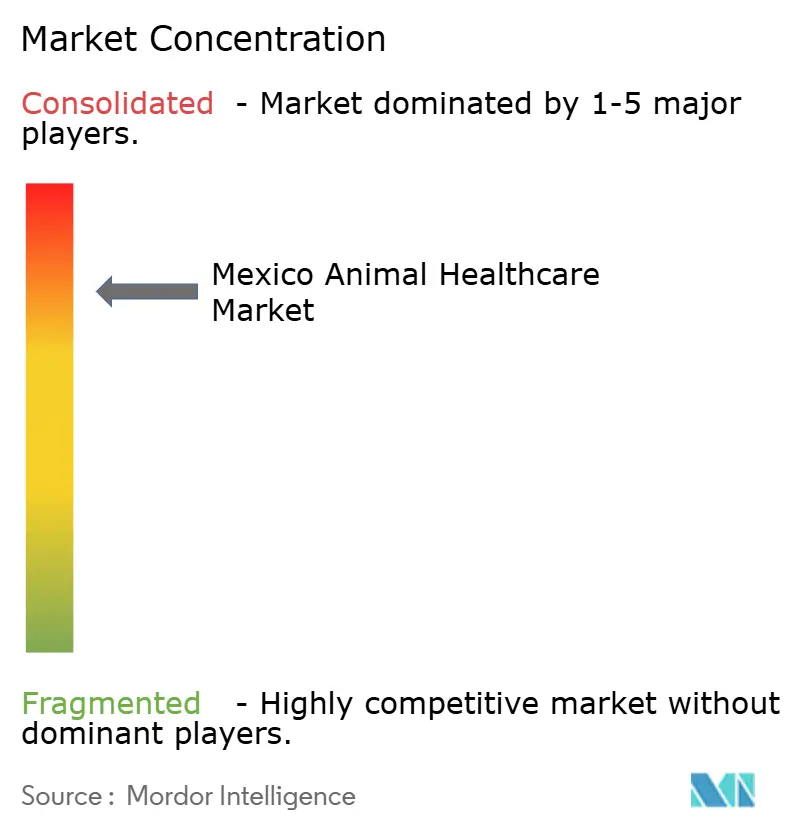
| Market Concentration | High |
Major Players *Disclaimer: Major Players sorted in no particular order Image © Mordor Intelligence. Reuse requires attribution under CC BY 4.0. | |
Mexico Animal Healthcare Market Analysis by Mordor Intelligence
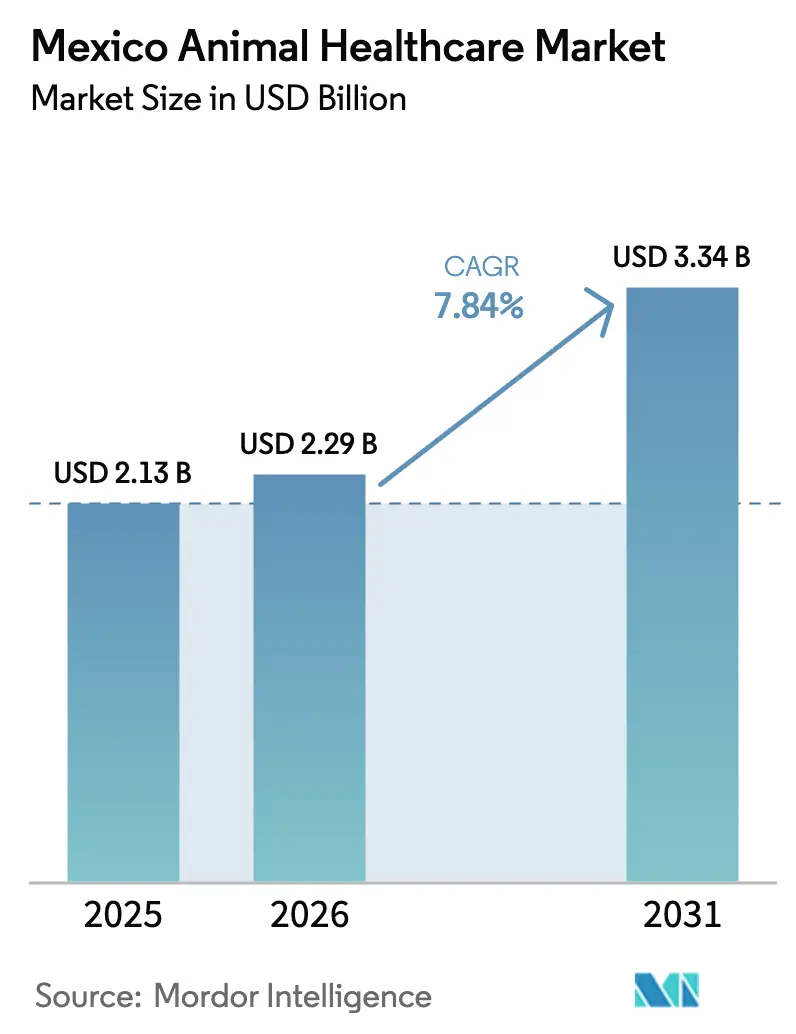
The Mexico Animal Healthcare Market size is expected to increase from USD 2.13 billion in 2025 to USD 2.29 billion in 2026 and reach USD 3.34 billion by 2031, growing at a CAGR of 7.84% over 2026-2031.
Strong livestock fundamentals, widening companion-animal ownership, and targeted government biosecurity programs underpin this advance. Structural advantages include Mexico’s status as the world’s fifth-largest cattle producer, a modernizing poultry industry, and improving access to innovative therapeutics and diagnostics. Competitive intensity has increased since the 2024–2025 screwworm crisis, prompting substantial public-private investments in sterile fly production and driving demand for advanced pest-control products. Cross-border trade remains a double-edged factor, with exports of live cattle and animal protein bolstering revenue. Yet, temporary disease-related suspensions highlight the importance of resilient surveillance systems and digital veterinary platforms.
Key Report Takeaways
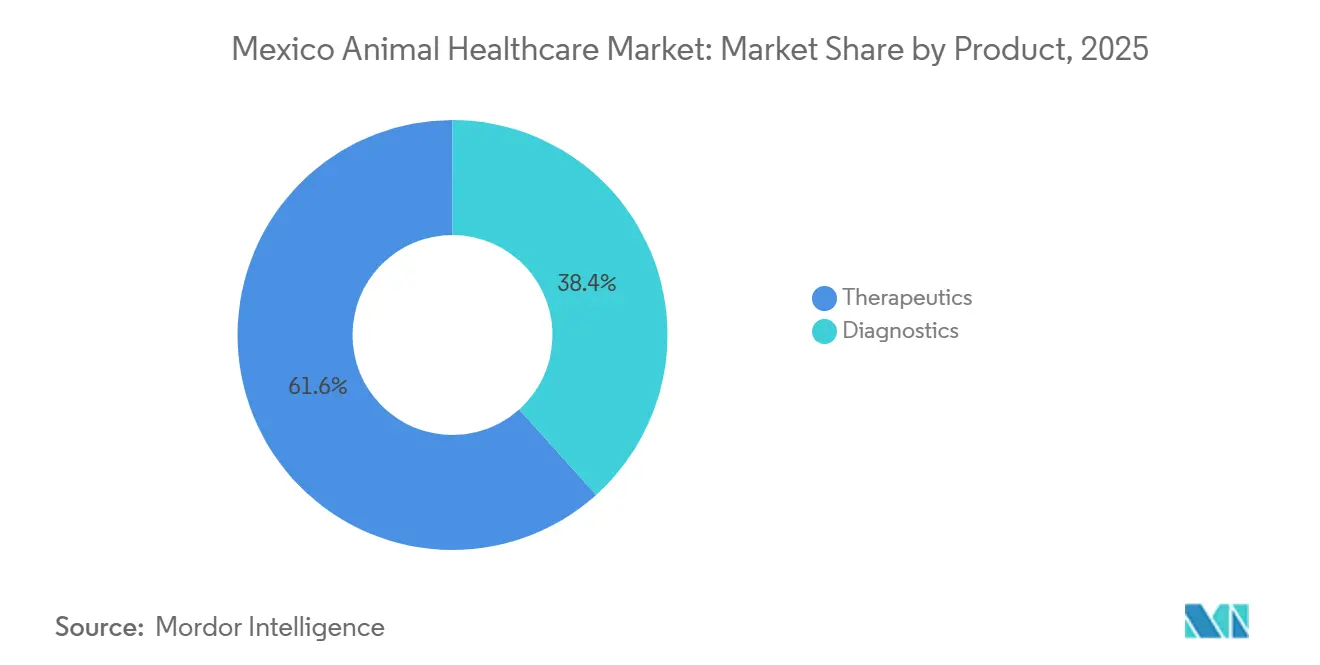
- By product category, therapeutics captured 61.65% of the Mexico animal healthcare market share in 2025, while diagnostics is projected to expand at a 8.81% CAGR through 2031.
- By animal type, dogs and cats accounted for 48.43% share of the Mexico animal healthcare market size in 2025; poultry is advancing at a 8.76% CAGR through 2031.
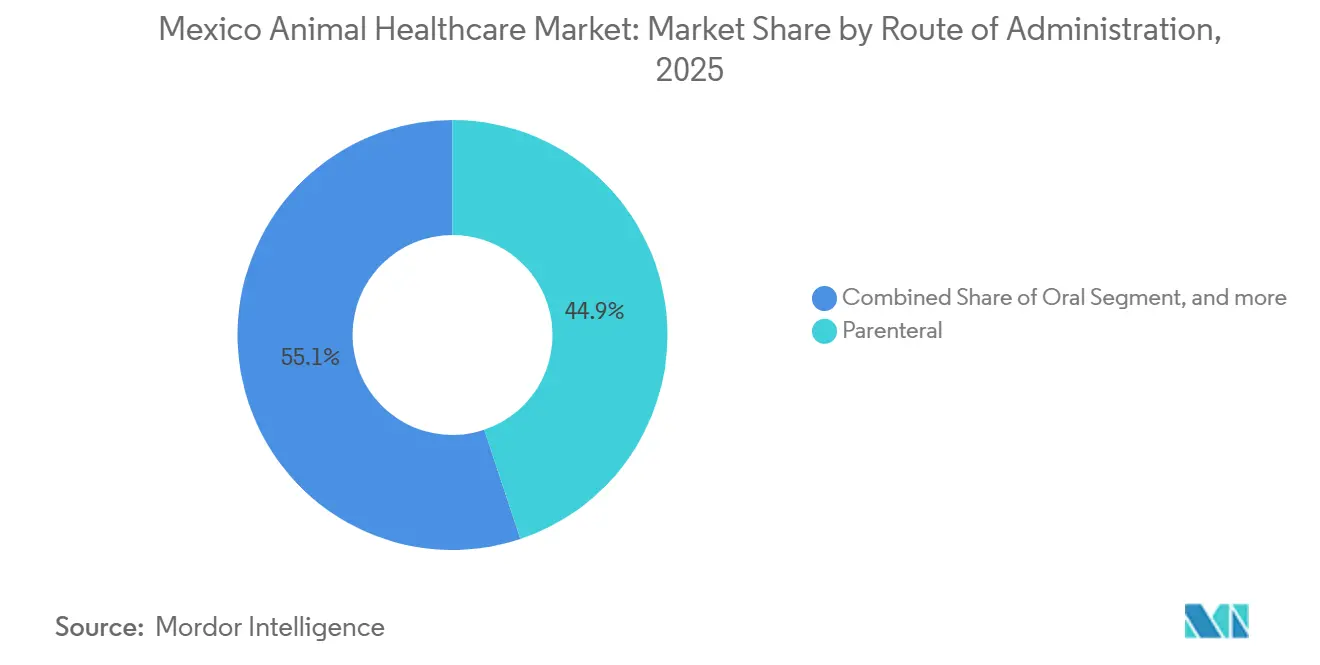
- By route of administration, parenteral products led with 44.87% share in 2025, whereas oral formulations are forecast to grow at a 8.42% CAGR to 2031.
- By end user, veterinary hospitals and clinics held 60.43% share of the Mexico animal healthcare market size in 2025; point-of-care settings are recording the highest projected CAGR at 8.54% through 2031.
Note: Market size and forecast figures in this report are generated using Mordor Intelligence’s proprietary estimation framework, updated with the latest available data and insights as of January 2026.
Mexico Animal Healthcare Market Trends and Insights
Drivers Impact Analysis*
| Driver | (~) % Impact on CAGR Forecast | Geographic Relevance | Impact Timeline |
|---|---|---|---|
| Rising companion animal expenditure | +2.1% | Mexico City, Guadalajara, Monterrey | Medium term (2-4 years) |
| Expansion of livestock industry and protein demand | +1.8% | Veracruz, Jalisco, San Luis Potosí | Long term (≥4 years) |
| Technological innovation in diagnostics and therapeutics | +1.5% | Urban centers expanding to rural areas | Medium term (2-4 years) |
| Government support for animal-health programs | +1.2% | National focus, emphasis on southern border states | Short term (≤2 years) |
| Growing penetration of pet-insurance solutions | +0.9% | Urban Mexico, moving into secondary cities | Medium term (2-4 years) |
| Digital transformation of veterinary services | +0.4% | Metropolitan areas; pilot livestock regions | Long term (≥4 years) |
| Source: Mordor Intelligence | |||
Rising Companion Animal Expenditure
Urban pet ownership continues to reshape the Mexico animal healthcare market, with dogs and cats commanding nearly half of total demand. In June 2025, the Similares pharmacy chain launched Simi Pet Care, signaling retail recognition of companion-animal potential and extending low-cost veterinary medicines to price-sensitive consumers. Preventive visits, premium nutrition, and specialty treatments are increasingly common, supported by 2024 legislation that created free public veterinary clinics to raise the baseline standard of care. Together, private and public channels are broadening service coverage, spurring demand for diagnostics and vaccines, and building customer expectations for quality across the Mexico animal healthcare market.
Expansion of Livestock Industry and Animal Protein Demand
Livestock production generates more than 565 billion pesos annually and employs over 828,000 people, ensuring steady therapeutic consumption for cattle, swine, and poultry[1]Servicio Nacional de Sanidad, Inocuidad y Calidad Agroalimentaria, “Sector Pecuario Genera 565 Mil Millones de Pesos,” gob.mx/senasica. Sector investment pledges of 105 billion pesos focus on plant upgrades and sustainability, while the July 2025 methane-reduction strategy requires specialized veterinary input on feed additives and genetics. Maintaining monthly cattle-export revenue of USD 25–30 million hinges on stringent surveillance, traceability, and certification—areas that continually enlarge the addressable base for the Mexico animal healthcare market.
Technological Innovation in Veterinary Diagnostics and Therapeutics
Artificial-intelligence tools for behavior scoring and body-condition monitoring, already common in major dairies, are diffusing to midsize producers and companion-animal clinics[2]PubMed Central, “AI-Enabled Health Monitoring in Latin American Livestock,” ncbi.nlm.nih.gov. Precision technologies shorten response times, support antimicrobial-stewardship goals, and underpin the rapid growth of point-of-care testing. Mexico’s large-scale sterile-insect program exemplifies its readiness to deploy biotech solutions, with 885 million sterile flies released since November 2024 to curb screwworm spread.
Government Support for Animal Health and Biosecurity Programs
SENASICA’s emergency spending after the screwworm outbreak funded inspections, mobile labs, and cross-border coordination. The August 2025 bilateral action plan with the United States secures ongoing financing for sterile-fly capacity, while Plan Mexico incentives bolster local drug manufacturing. COFEPRIS process reforms raised 2024 medical-device approvals by 26.22%, accelerating access for novel diagnostics that enrich the Mexico animal healthcare market.
Restraints Impact Analysis*
| Restraint | (~) % Impact on CAGR Forecast | Geographic Relevance | Impact Timeline |
|---|---|---|---|
| High Cost Of Veterinary Care And Products | -1.4% | National, most acute in rural and low-income urban districts | Medium term (2-4 years) |
| Limited Veterinary Infrastructure In Rural Areas | -1.1% | Southern states and remote livestock-dense regions | Long term (≥4 years) |
| Prevalence Of Counterfeit And Illegal Veterinary Medicines | -0.8% | National, with higher incidence in informal rural markets and online channels | Short term (≤2 years) |
| Regulatory Complexity And Approval Delays For New Products | -0.6% | National, affecting small and mid-size manufacturers | Medium term (2-4 years) |
| Source: Mordor Intelligence | |||
High Cost of Veterinary Care and Products
Price sensitivity limits uptake of premium pharmaceuticals outside major metros. SENASICA’s February 2025 counterfeit-drug alert underscored risks when producers turn to unregulated channels. Currency swings elevate import costs for advanced biologics, while compliance fees keep legitimate prices high. Low-cost retail clinics and free public services soften the constraint but also compress margins for full-service hospitals in the Mexico animal healthcare market.
Limited Veterinary Infrastructure in Rural Areas
Veterinary density skews heavily toward cities, leaving gaps in regions with the highest livestock densities. Budget limits at SENASICA restrict the frequency of on-farm inspections, prompting partnerships with producer groups and foreign agencies. Mobile units and telehealth pilots show promise yet require broadband investments and training to translate into broad rural coverage, tempering growth for the Mexico animal healthcare market over the long term.
*Our forecasts treat driver/restraint impacts as directional, not additive. The impact forecasts reflect baseline growth, mix effects, and variable interactions.
Segment Analysis
By Product: Therapeutics Dominance Meets Diagnostic Innovation
Therapeutics commanded 61.65% of the Mexico animal healthcare market share in 2025, reflecting entrenched treatment-oriented practices across livestock and companion-animal segments. Demand spikes following the screwworm outbreak sustained high volumes for parasiticides, wound treatments, and antibiotics. Agrovet Market’s February 2025 launch of Opticlox for bovine eye infections illustrates continuing formulation upgrades aimed at high-value cattle.
Recent shifts toward surveillance and export compliance are expanding diagnostics faster than any other category at a 8.81% CAGR, underpinning an incremental lift in the Mexico animal healthcare market size. Point-of-care test kits provide immediate, actionable results for ranchers facing tight shipment windows, while immunoassays and molecular panels gain currency in urban clinics catering to preventive-care minded pet owners. Modalities such as digital radiography are also moving into secondary cities, narrowing the historical gap with human healthcare standards.



By Animal Type: Companion Animals Lead While Poultry Accelerates
Urban dogs and cats represent 48.43% of volume and value demand, riding a wave of humanization that fuels specialty diets, vaccinations, and dental care. Insurance uptake and retail clinic chains both amplify expenditure depth within the companion cohort. Alongside, poultry health needs are expanding more rapidly than any other animal type, growing at a 8.76% CAGR as integrated producers tighten biosecurity after 2024 avian-influenza scares.
Beef and dairy cattle remain cornerstone users of reproductive hormones and mastitis-control drugs, leveraging Mexico’s fifth-place global herd ranking to secure export premiums. Swine and equine segments contribute stable baseline volumes, whereas aquaculture therapeutics hint at emerging niches that could widen the Mexico animal healthcare market size over the next decade.
By Route of Administration: Parenteral Preference Shifts Toward Oral Convenience
Parenteral formulations retained 44.87% share in 2025 due to precision-dose requirements in vaccination programs and emergency therapeutic interventions across intensive feedlots. Injectable oxytetracycline, antiparasitics, and reproductive hormones stay routine for veterinarians focused on compliance and efficacy.
Labor pressures and animal-handling constraints are steering producers toward palatable boluses and chewable tablets that underpin the 8.42% CAGR forecast for oral products through 2031. Sustained-release coatings lessen labor visits and stress, proving attractive for backyard poultry and companion-animal owners alike. Topicals remain indispensable for ectoparasite control, especially in the wake of screwworm, while intramammary tubes continue as specialized staples in the dairy sector of the Mexico animal healthcare market.
By End User: Clinical Settings Dominate While Point-of-Care Surges
Veterinary hospitals and clinics delivered 60.43% of 2025 revenue, anchored by surgery suites, imaging, and multi-disciplinary care clustered in metropolitan areas. Their role as referral centers ensures continuing demand for high-margin biologics and advanced diagnostics.
Decentralized models are scaling faster, with point-of-care environments anticipated to expand at an 8.54% CAGR as portable sensors and rapid tests proliferate. Livestock operators value on-the-spot diagnoses that avert shipment delays, while pet owners appreciate convenience and cost transparency. Reference labs sustain growth on the back of antimicrobial-resistance tracking, whereas academic institutions focus research on endemic challenges such as brucellosis that influence export eligibility for the Mexico animal healthcare market.
Regulatory Landscape
Mexico regulates veterinary medicines, biologicals, and feed additives primarily under the Ley Federal de Sanidad Animal (LFSA), with SENASICA (under SADER) handling authorizations, inspections, and sanitary controls across livestock and companion-animal health. The LFSA was reformed in May 2024, strengthening sanitary measures, expanding inspection powers, and introducing establishment certification requirements that affect manufacturers, importers, and distributors operating in Mexico.
Operationally, SENASICA manages product registration and renewals for veterinary pharmaceuticals and biologicals, including a five-year validity cycle for registrations, and enforces import compliance through Hojas de Requisitos Zoosanitarios (HRZ), consulted via the MCRZI portal at points of entry. During heightened sanitary risk periods, the government can activate and extend emergency instruments, including the National Emergency Animal Health Device (DINESA), which SADER extended in June 2025 in the context of risks such as New World screwworm, tightening biosecurity and raising the importance of compliant therapeutics, pest-control products, and diagnostics.
Value Chain Analysis
The Mexico animal healthcare value chain starts with R&D and manufacturing by both multinational suppliers and domestic producers. It also includes public-sector biological capability through PRONABIVE (Productora Nacional de Biologicos Veterinarios), and then moves into registration and quality oversight under SENASICA per the LFSA and related sanitary requirements. Compliance elements, including GMP expectations and zoosanitary import requirements (HRZ via SENASICA systems), shape supplier qualification and influence time-to-market for new therapeutics, vaccines, diagnostics, and feed additives.
Commercialization is typically carried through national and regional distributors and specialized veterinary supply logistics serving clinics, hospitals, and livestock operators. In private distribution and service ecosystems, Panavet, Enlace Veterinario, and TelVet operate with regional distribution centers to improve service levels in areas with more challenging logistics. Downstream demand is generated by veterinary hospitals and clinics (dominant in metro areas), point-of-care or in-house testing settings, and production systems (cattle, poultry, and swine) that purchase via integrators and producer networks; professional bodies such as AMMVEPE also support continuing education and practice standards that influence product adoption and diagnostics utilization.
Competitive Landscape
The Mexico animal healthcare market is highly concentrated. Multinationals including Zoetis, Boehringer Ingelheim, and Elanco leverage global R&D pipelines and extensive distributor networks to keep leadership positions. Local producers like Laboratorios Tornel and Avimex differentiate through price and regional-disease focus.
Competitive tension rose sharply during the screwworm emergency, as companies capable of supplying larvicides and wound dressings experienced demand spikes. Similares’ June 2025 rollout of Simi Pet Care injected low-price pressure into the companion-animal segment, compelling independent clinics to pivot toward specialized or premium services. Digital platforms are emerging as strategic differentiators, enabling smaller players to overcome distribution constraints and reach underserved geographies with teleconsultations and e-commerce drug sales.
Strategic collaborations between foreign innovators and domestic distributors remain common, driven by COFEPRIS’ streamlined approval timelines that still benefit from experienced local guidance. Technology-oriented start-ups focusing on sensor-based herd monitoring or AI-powered imaging are attracting venture funding, signaling a shift toward data-heavy solutions in the Mexico animal healthcare industry.
Mexico Animal Healthcare Industry Leaders
Zoetis Inc.
Ceva Santé Animale
Merck Animal Health
Elanco Animal Health
Boehringer Ingelheim Animal Health
- *Disclaimer: Major Players sorted in no particular order

Market Opportunities and Future Outlook
Screwworm-related biosecurity actions and export-compliance needs are pushing a more formal, documented animal-health stack across livestock. That shift creates whitespace for regulated parasiticides, wound-care portfolios, and rapid diagnostics aligned with SENASICA controls, including HRZ and traceability at entry points. The large-scale sterile-insect response, with 885 million sterile flies released since November 2024, highlights the scale of the pest-control challenge and supports demand for complementary on-farm surveillance tools and point-of-care testing that shorten decision cycles for producers operating under shipment timelines.
In companion animals, care channels are expanding beyond traditional private clinics. Retail-driven models, such as Farmacias Similares launching Simi Pet Care in 2025, broaden access and increase throughput for routine services that pull through vaccines, parasiticides, and basic diagnostics. Local manufacturing and supply-chain investments also support wider animal-care assortments and distribution reach; Nestle Purina announced a USD 100 million expansion of its Silao (Guanajuato) pet food production capacity in February 2026, and Nestle Mexico announced a USD 455 million multi-year plan that includes a new distribution center in Zumpango. These moves can support availability of companion-animal offerings and improve service levels across secondary cities where veterinary infrastructure is thinner.
Recent Industry Developments
- May 2026: MSD Salud Animal (Merck Animal Health) introduced EXZOLT 5% and EXZOLT 1% oral solutions in Mexico, positioned for producer use cases tied to New World screwworm control. The launch expanded commercially available parasiticide options and reinforced technical-support driven selling in cattle systems facing tighter biosecurity requirements.
- November 2025: Merck Animal Health received regulatory approval from SADER in Mexico for EXZOLT 5% Pour-On for the prevention and treatment of New World screwworm larvae myiasis. The authorization added a targeted ectoparasite control tool to the market and supported faster field deployment through compliant channels during an elevated sanitary-risk period.
- June 2024: Mexico City implemented a reinforcement campaign to vaccinate dogs and cats against rabies across the capital's 16 municipalities, with a stated target of 405,902 doses. The campaign strengthened preventive-care volume through public channels and supported steady pull-through for vaccines and associated clinic-level supplies.


Research Methodology Framework and Report Scope
Market Definition and Coverage
This market covers revenues generated in Mexico from animal healthcare products used to prevent, diagnose, and treat diseases in companion and farm animals. It includes therapeutics and diagnostics sold through veterinary and testing channels.
Scope exclusions: We exclude human health products, farm production inputs not intended for animal health outcomes, and general pet accessories that do not have a clinical or diagnostic purpose.
Segmentation Overview
- By Product
- Therapeutics
- Vaccines
- Parasiticides
- Anti-Infectives
- Medical Feed Additives
- Other Therapeutics
- Diagnostics
- Immunodiagnostic Tests
- Molecular Diagnostics
- Diagnostic Imaging
- Clinical Chemistry
- Other Diagnostics
- Therapeutics
- By Animal Type
- Dogs & Cats
- Horses
- Ruminants
- Swine
- Poultry
- Other Animal Types
- By Route Of Administration
- Oral
- Parenteral
- Topical
- Other Route of Administrations
- By End User
- Veterinary Hospitals & Clinics
- Reference Laboratories
- Point-Of-Care / In-House Testing Settings
- Academic & Research Institutes
Data Sources, Market Sizing, and Validation
Desk Research
Desk work started by mapping what is regulated and what is sold as animal health in Mexico, then aligning those items to the product groupings commonly used in the industry. Public sources were used to anchor the demand base, including agriculture and livestock statistics from FAOSTAT, disease and vaccination guidance from WOAH (OIE), and epidemiology signals from peer-reviewed veterinary journals.
To keep the model grounded in Mexico-specific trade and supply flows, we reviewed Mexico import and export statistics via UN Comtrade, plus relevant documents from Mexican authorities tied to animal health oversight and biosecurity. We also reviewed company filings, investor presentations, and credible press to understand portfolio mix and channel focus, and used paid subscription sources for company financials and for shipment-level import and export data where public coverage was thin, referencing them only for cross-checking totals. The sources listed here are illustrative only, and additional public documents and datasets were also used to collect, validate, and clarify inputs.
Primary Interviews and Surveys
Primary work in Mexico focused on validating what drives purchasing across pets and production animals, and how demand shifts by route of administration and care setting. Interviews included manufacturers, distributors, veterinarians, diagnostic labs, and large end users, which helped confirm pricing ranges, product substitution patterns, and the practical split between clinic-delivered care and laboratory testing. Coverage was kept balanced across main commercial hubs and livestock producing states, so assumptions could be checked against on-the-ground buying behavior rather than desk only logic.
Distribution of primary research fieldwork respondents
| Company type | Respondent position |
|---|---|
| Top tier: 29% | CXOs: 15% |
| Mid tier: 49% | Functional/Unit leaders: 33% |
| Smaller Players: 22% | Managers: 52% |
Market-Sizing & Forecasting
Sizing was built using a top-down and bottom-up mix, where national animal population and care intensity signals were translated into a realistic demand pool. That pool was then converted into value using typical product and testing prices observed for Mexico routes of sale.
In practice, the top-down path relies on livestock and pet population, preventive care and treatment uptake, diagnostic testing frequency, and typical dosing or test units. Those totals are then expressed through route of administration and end user settings.
The model used a small set of market fingerprints that can be tracked and explained, such as trends in cattle, poultry, and swine counts, pet ownership growth in urban areas, vaccine and parasiticide seasonality, shifts toward in-house testing versus reference labs, and observed price movement for key therapeutic classes. Results were corroborated with selective bottom-up checks, including sampled average selling price discussions with channel participants and a supplier and distributor revenue sanity check. Where gaps existed, conservative ranges were applied first and then tightened through interviews. For forecasting, scenario analysis was used so changes in disease incidence, biosecurity enforcement, and affordability could be applied transparently, and the agreed ranges were refined with expert consensus from primary respondents.
Data Validation & Update Cycle
Validation was done in layers so the final number is not dependent on any single source. We compare model outputs against independent signals such as animal population direction, import and export movement for relevant categories, and the implied per-animal spend, then investigate variances that fall outside realistic bounds.
Before sign-off, the work is reviewed by another analyst who checks assumptions, unit conversions, and year alignment. If a key input still looks uncertain, we prompt re-contact with previously interviewed stakeholders. The report is refreshed annually, and interim updates are triggered when material events occur, including major regulatory actions, large price changes, or sudden disease outbreaks that can shift demand. Right before delivery, a final pass is done to confirm the latest public releases and to ensure current market signals are reflected in the model.
Mordor Intelligence's Mexico Animal Healthcare Market Market Size Versus Other Published Estimates
Published market sizes for Mexico animal healthcare often differ because the boundary of what is counted is not the same. The year used for the headline number can also shift the result, and whether diagnostics are included alongside therapeutics varies across publications. Some estimates also focus on all animal types, while others cover only a subset.
Key gaps often show up in product scope and channel treatment. For example, some estimates include only veterinary medicines, while others also count diagnostic tests and imaging. Feed additives can also be treated differently within therapeutics. Pricing and currency timing is another frequent driver, since inflation and exchange rate changes can materially affect USD values when local pricing is updated at different points in the year. By tracking route of administration splits and end user flows, Mordor Intelligence ties the 2025 value to how products and tests are actually purchased in Mexico, and then refreshes pricing assumptions through interviews so the model remains aligned to current buying behavior.
Benchmark comparison
| Source | Market Size | Gaps in Research Methodology |
|---|---|---|
| Mordor Intelligence | USD 2.13 B (2025) | |
| Global Consultancy A | USD 1.65 B (2024) | This estimate is closer to a veterinary medicine scope, which can undercount diagnostics and may use a different channel boundary for lab and in-clinic testing revenues. |
| Industry Publisher B | USD 0.60 B (2025) | The lower value likely reflects a narrower product basket or partial coverage of animal types, and it may exclude parts of diagnostics and certain therapeutic classes like feed related additives. |
The spread across sources is mainly explained by what is included in the market basket and how testing related revenues are treated, followed by the year and currency timing used for the headline number. In our approach, each major input is linked back to observable demand signals and then checked through interviews, which makes the final total easier to reproduce and update as conditions change.


Key Questions Answered in the Report
How large is the Mexico veterinary healthcare market in 2026?
It is valued at USD 2.29 billion and is projected to reach USD 3.34 billion by 2031, reflecting a 7.84% CAGR.
Which product group dominates animal-health spending in Mexico?
Therapeutics leads with 61.65% share, driven by routine vaccinations, antiparasitics, and anti-infectives.
Which animal category shows the fastest growth?
Poultry health expenditure is advancing at a 8.76% CAGR due to intensified biosecurity and protein-demand trends.
What is driving adoption of diagnostics in Mexican veterinary practice?
Export-compliance pressures, preventive-care preferences, and point-of-care rapid tests are fueling a 8.81% CAGR in diagnostics.
How is the screwworm outbreak influencing market dynamics?
It has accelerated investment in sterile-insect control, wound therapeutics, and cross-border surveillance technologies.
Which regions concentrate the highest veterinary spending?
Northern states dominate due to intensive livestock trade, while the central corridor is the fastest-growing companion-animal hub.
Page last updated on:


 Your data is secure and never sold or shared.


