
Polymer Excipients Market Size and Share
Market Overview
| Study Period | 2021 - 2031 |
|---|---|
| Market Volume (2026) | 495.02 kilotons |
| Market Volume (2031) | 606.92 kilotons |
| Growth Rate (2026 - 2031) | 4.16 % |
| Fastest Growing Market | Asia-Pacific |
| Largest Market | Asia-Pacific |
| Market Concentration | Low |
Major Players *Disclaimer: Major Players sorted in no particular order Image © Mordor Intelligence. Reuse requires attribution under CC BY 4.0. | |
Polymer Excipients Market Analysis by Mordor Intelligence
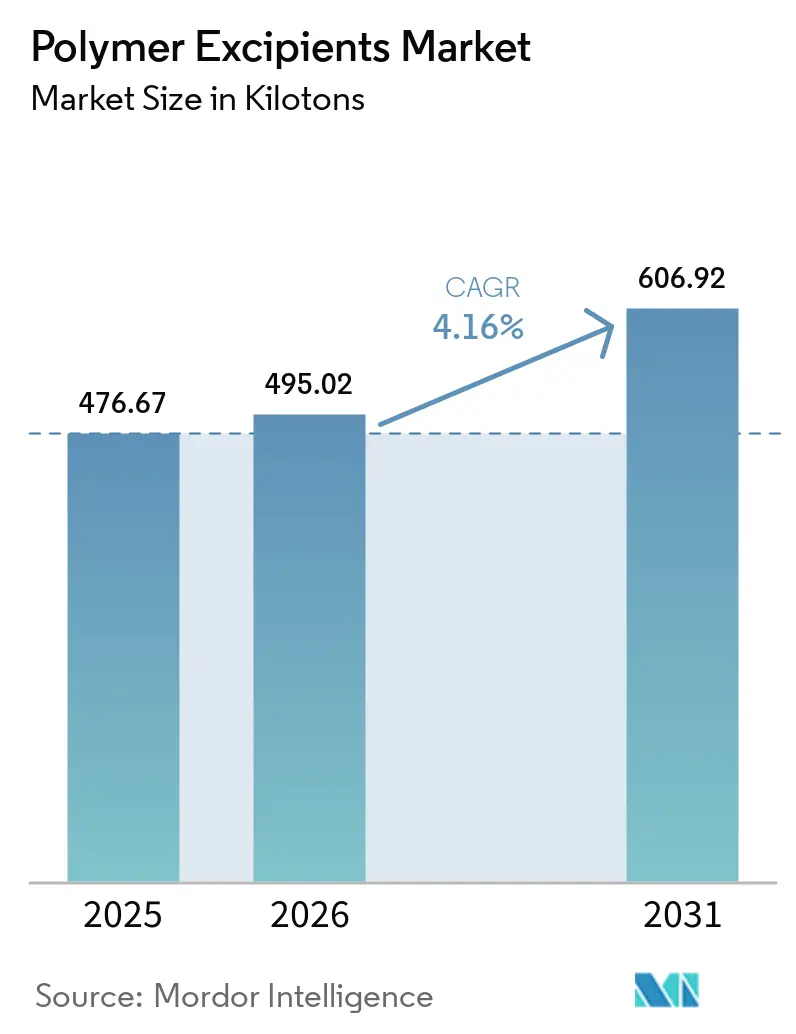
The polymer excipients market size was 476.67 kilotons in 2025 and is projected to grow from 495.02 kilotons in 2026 to 606.92 kilotons by 2031, at a CAGR of 4.16% during the forecast period (2026-2031). The polymer excipients market is influenced more by regulatory submissions, drug approvals, and validated formulations than by short-term raw material price cycles. Replacing an excipient in an approved drug product requires post-approval analytical and comparability studies, which link demand to commercial products for extended periods. This requirement can make established polymer systems difficult to replace and help maintain demand amid broader uncertainty in the pharmaceutical industry. Market growth also reflects generic drug production in emerging markets and the use of specialized coating systems in innovator drug pipelines. Competition centers on technical support capabilities, proprietary polymer platforms, and the ability to meet detailed quality requirements.
Key Report Takeaways
- By product type, Microcrystalline Cellulose held 34.74% of the polymer excipients market share in 2025 and is forecast to grow at a 4.87% CAGR through 2031.
- By application, Binders accounted for 26.25% of the polymer excipients market size in 2025, while Coatings is forecast to record the highest CAGR of 5.24% through 2031.
- By geography, Asia-Pacific held 38.17% of the polymer excipients market share in 2025 and is forecast to advance at a 5.03% CAGR through 2031.
Note: Market size and forecast figures in this report are generated using Mordor Intelligence’s proprietary estimation framework, updated with the latest available data and insights as of January 2026.
Global Polymer Excipients Market Trends and Insights
Drivers Impact Analysis*
| Drivers | (~) % Impact on CAGR Forecast | Geographic Relevance | Impact Timeline |
|---|---|---|---|
| Expansion of Generic and Complex Drug Manufacturing | +1.0% | Global, concentrated in Asia-Pacific, India, China, and Latin America | Short term (≤ 2 years) |
| Rising Adoption of Controlled-Release and Targeted-Delivery Formulations | +0.9% | North America and Europe, with growing adoption in the Asia-Pacific | Medium term (2-4 years) |
| Growth of Biologics, Biosimilars, and Long-Acting Injectables | +0.8% | Global, led by North America and Europe | Long term (≥ 4 years) |
| Demand for Multifunctional and Patient-Centric Excipients | +0.5% | Global, with early adoption gains in North America, Germany, and Japan | Medium term (2-4 years) |
| Continuous Manufacturing and Direct-Compression Adoption | +0.4% | North America and Europe, with spillover to major Asia-Pacific manufacturing hubs | Medium term (2-4 years) |
| Source: Mordor Intelligence | |||
Expansion of Generic and Complex Drug Manufacturing
Generic and complex drug manufacturing drives demand in the polymer excipients market. India and China remain major manufacturing hubs, as their pharmaceutical producers serve domestic and export markets. In China, the Healthy China 2030 framework supports a shift from commodity generics toward differentiated formulations. These formulations require polymers with stricter purity specifications and specialized functional performance. Tablets and capsules account for more than 80% of pharmaceutical dosage forms administered to humans and remain the primary application for polymer binders and coating materials. This base of solid oral products provides the polymer excipients market with a stable source of demand as generic drug production expands.
Rising Adoption of Controlled-Release and Targeted-Delivery Formulations
Controlled-release products support demand for hydroxypropyl methylcellulose (HPMC) and ethyl cellulose in the polymer excipients market. These polymers form tablet matrices that enable extended dosing intervals and targeted drug release. The excipient content in controlled-release products can account for 60-70% of total tablet weight, increasing polymer consumption per approved product. Evonik reports that its EUDRAGIT platform is cited in more than 23,000 patents and is used across 80 countries. Cellulose derivatives, including HPMC, serve as matrix formers for the oral transmucosal and extended-release delivery of large molecules. The polymer excipients market is shifting toward higher-specification grades for controlled-release and targeted-delivery formulations.
Demand for Multifunctional and Patient-Centric Excipients
Co-processed excipients combine functions such as binding, disintegration, and flow enhancement into a single material. These materials can reduce processing steps and improve powder flow in high-speed tablet manufacturing. Orodispersible tablets and mini-tablets for pediatric and geriatric patients require polymers that balance rapid disintegration, acceptable taste, and mechanical strength. Ion-exchange polymer systems can support taste masking and rapid disintegration in pediatric formulations. The polymer excipients market benefits from materials that improve manufacturing efficiency and patient usability. These formulations also require suppliers to provide consistent materials and technical guidance throughout product development.
Continuous Manufacturing and Direct-Compression Adoption
Continuous manufacturing and direct compression are increasing the importance of polymers that perform multiple functions within a single process. Direct-compression materials must deliver consistent flow, binding, and disintegration under tightly controlled production conditions. This requirement favors co-processed grades that reduce the number of ingredients and processing steps needed for tablet production. Microcrystalline cellulose (MCC) remains important because it can function as a binder, disintegrant, glidant, and stabilizer in direct-compression applications. The polymer excipients market is expected to see increased demand for grades that support reliable operations across continuous and high-speed production lines. This shift also increases the importance of supplier formulation support and quality documentation.
Restraints Impact Analysis*
| Restraints | (~) % Impact on CAGR Forecast | Geographic Relevance | Impact Timeline |
|---|---|---|---|
| Stringent Regulatory and Quality-Compliance Requirements | -0.5% | Global, most acute in North America and Europe | Short term (≤ 2 years) |
| High Development and Manufacturing Costs for Specialty Grades | -0.4% | Global, especially affecting emerging-market formulators and smaller contract development and manufacturing organizations (CDMOs) | Long term (≥ 4 years) |
| Excipient Nitrite Variability and Nitrosamine-Formation Risk | -0.3% | Global, with concentrated compliance pressure in North America and Europe, export-oriented manufacturers | Short term (≤ 2 years) |
| Source: Mordor Intelligence | |||
Stringent Regulatory and Quality-Compliance Requirements
Pharmaceutical polymer excipients must comply with pharmacopeial standards, national regulatory requirements, and International Council for Harmonization (ICH) guidance. This multilayered compliance framework can create operational requirements for smaller suppliers. Suppliers must maintain qualification processes, change management, and polymer characterization throughout the product life cycle. Materials included in the United States Pharmacopeia/National Formulary (USP/NF), European Pharmacopeia, and Japanese Pharmacopeia monographs generally undergo less regulatory review than novel materials. BASF reported that Soluplus was monographed in the European Pharmacopeia in 2025, reducing its novelty-related regulatory burden in European submissions. These requirements can limit the supplier base in the polymer excipients market and increase the role of producers with multi-compendial compliance capabilities.
Excipient Nitrite Variability and Nitrosamine-Formation Risk
Nitrosamine risk can result from interactions among formulation components under specific temperature, pH, and storage conditions. The FDA’s September 2024 guidance expanded its scope to include small-molecule nitrosamines and nitrosamine drug substance-related impurities (NDSRIs)[1]. The International Pharmaceutical Excipients Council (IPEC) Federation states that nitrosamine risk assessments should consider amine-containing polymer excipients, including certain amino-functionalized polymethacrylates. Nitrogen-containing polymer grades may require batch-level nitrite screening, increasing analytical costs and the potential for batch rejection. Suppliers with low-impurity profiles may support compliance requirements in the polymer excipients market.
*Our forecasts treat driver/restraint impacts as directional, not additive. The impact forecasts reflect baseline growth, mix effects, and variable interactions.
Segment Analysis
By Product Type: Microcrystalline Cellulose Leads Volume and Specialty Polymers Support Formulation Needs
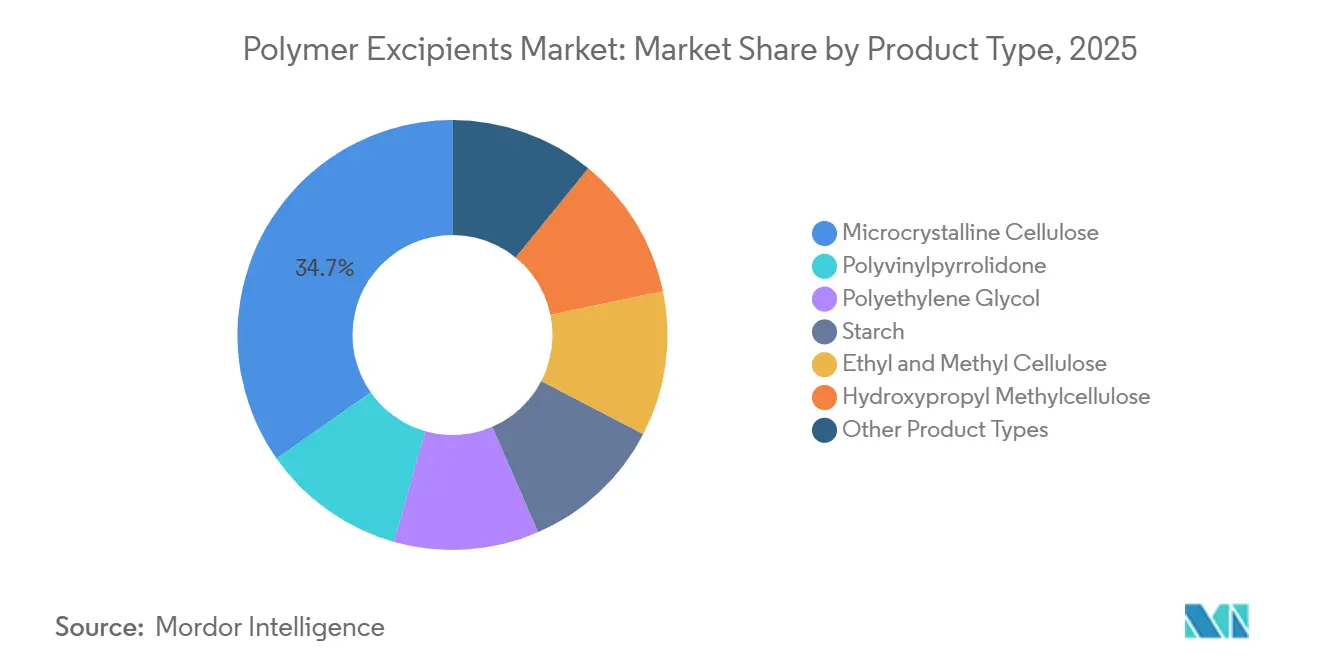
Microcrystalline cellulose (MCC) accounted for a 34.74% share of the polymer excipients market in 2025 and is projected to grow at a CAGR of 4.87% during 2026-2031. MCC is used in direct-compression formulations due to its established regulatory profile and availability in PH-101, PH-102, and silicified grades. A peer-reviewed study published in 2024 identified MCC as offering high dilution potential and compaction capacity among direct-compression fillers. The study also classified MCC as a binder, disintegrant, glidant, and stabilizer. Its use with HPMC or ethyl cellulose in sustained-release matrix systems extends its application beyond immediate-release tablets.
HPMC is the second-largest product segment by volume and serves as a controlled-release matrix former and a vegetarian capsule shell material. PVP remains a binder and solubilizer in wet granulation and amorphous solid dispersions. PEG demand aligns with that of parenteral and biologic manufacturing, as it can serve as a cryoprotectant, surfactant, and viscosity modifier. Starch-based materials support immediate-release and disintegrant applications in cost-sensitive markets. Ethyl cellulose and methyl cellulose support sustained-release coating systems for pellets, capsules, and multi-unit dosage forms in the polymer excipients market.

By Application: Binders Hold the Largest Position While Coatings Grow Fastest
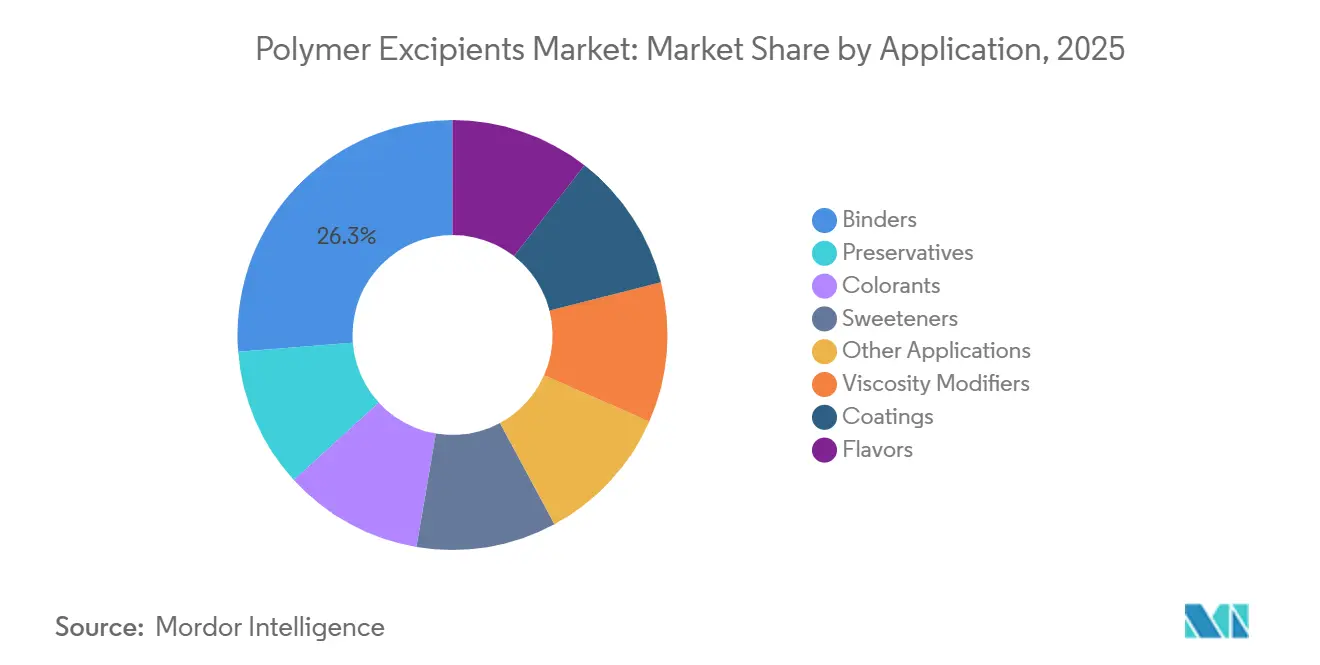
Binders accounted for a 26.25% share of the polymer excipients market in 2025, supported by global tablet manufacturing across generic and specialty drug pipelines. MCC and PVP play complementary roles in direct compression and wet granulation, respectively. Tablets and capsules account for more than 80% of pharmaceutical dosage forms administered to humans, driving demand for binder materials. Although continuous manufacturing can eliminate certain granulation steps, higher drug loading, complex batches, and expanding production volumes can offset this impact. Binders support the solid oral dosage form segment.
Coatings represent the fastest-growing application segment in the polymer excipients market and are projected to register a CAGR of 5.24% during 2026-2031. Demand for enteric, sustained-release, and patient-specific coatings is increasing across pediatric and specialty drug products. Ashland Inc. began construction of a tablet-coating facility in Ambernath, India, in 2026 to establish a localized supply base for more than 3,000 Indian pharmaceutical manufacturers. Viscosity modifiers are used in liquid, semi-solid, and ophthalmic dosage forms. Colorants, sweeteners, flavors, and preservatives play secondary roles in pediatric oral liquids and chewable products.
Geography Analysis
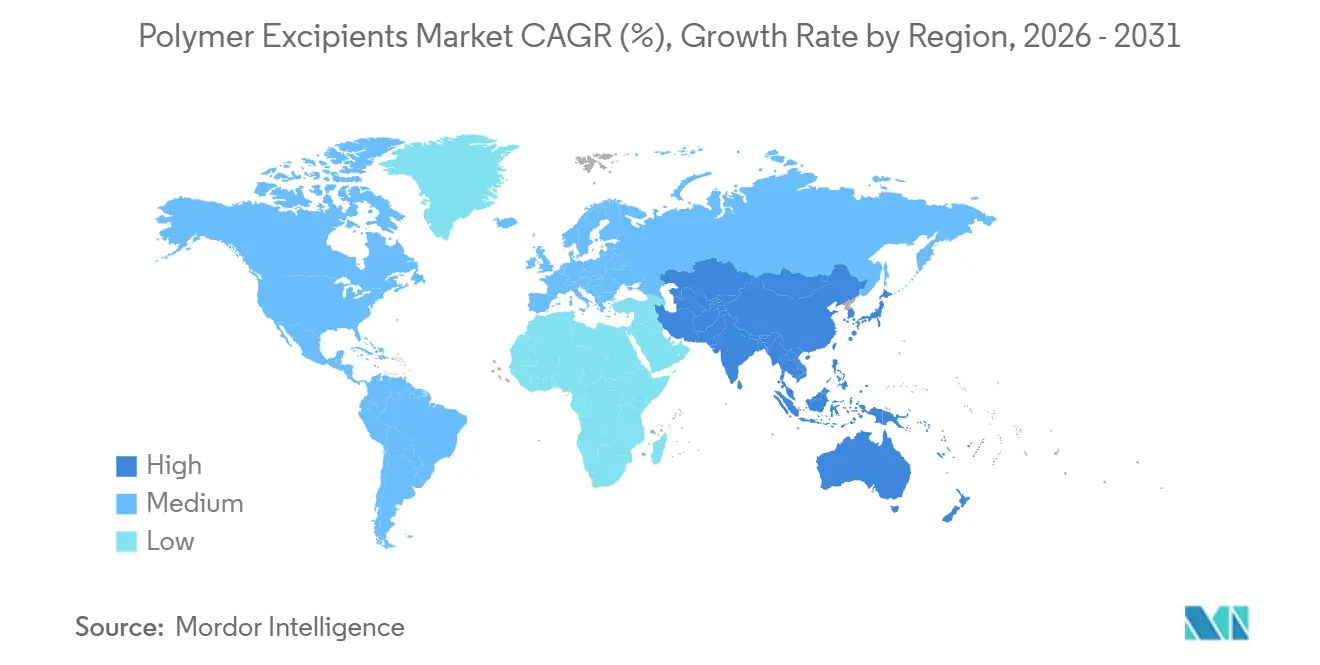
Asia-Pacific held 38.17% of the polymer excipients market share in 2025 and is forecast to grow at a CAGR of 5.03% through 2031. India and China support this position through generic drug manufacturing and an increasing focus on complex formulations. China’s Healthy China 2030 framework supports a shift toward products requiring higher-performance polymer materials. Japan contributes to the demand for high-grade cellulosic and specialty polymers that meet Japanese Pharmacopeia-aligned quality requirements. In 2026, Evonik and Higuchi opened the Open Pharma Lab in Yokohama, providing formulators with access to the EUDRAGIT platforms and formulation expertise[2].
North America is the second-largest demand region in the polymer excipients market. The United States accounts for more than 90% of regional consumption, with demand concentrated in specialty polymer grades for complex oral and injectable products. Canada contributes through domestic production and North American CDMO activity, while Mexico benefits from US generic drug manufacturing networks. European demand is shaped by European Pharmacopeia requirements and European Medicines Agency (EMA) guidance. Germany is an innovation center for BASF’s Kollidon and Soluplus platforms and Evonik’s EUDRAGIT business, while France hosts Roquette Frères and Gattefossé.
Brazil leads South American demand in the polymer excipients market, as generic drug production drives demand for binder and coating polymers. Argentina contributes additional demand, although currency volatility and regulatory variation may favor local or domestically blended materials. Saudi Arabia and South Africa are key demand centers in the Middle East and Africa. Saudi Arabia’s vaccine and specialty drug capacity drives demand for injectable-grade polymers, while Egypt and Nigeria are developing manufacturing hubs that support import growth.
Competitive Landscape
Innovation and Sustainability Drive Future Success
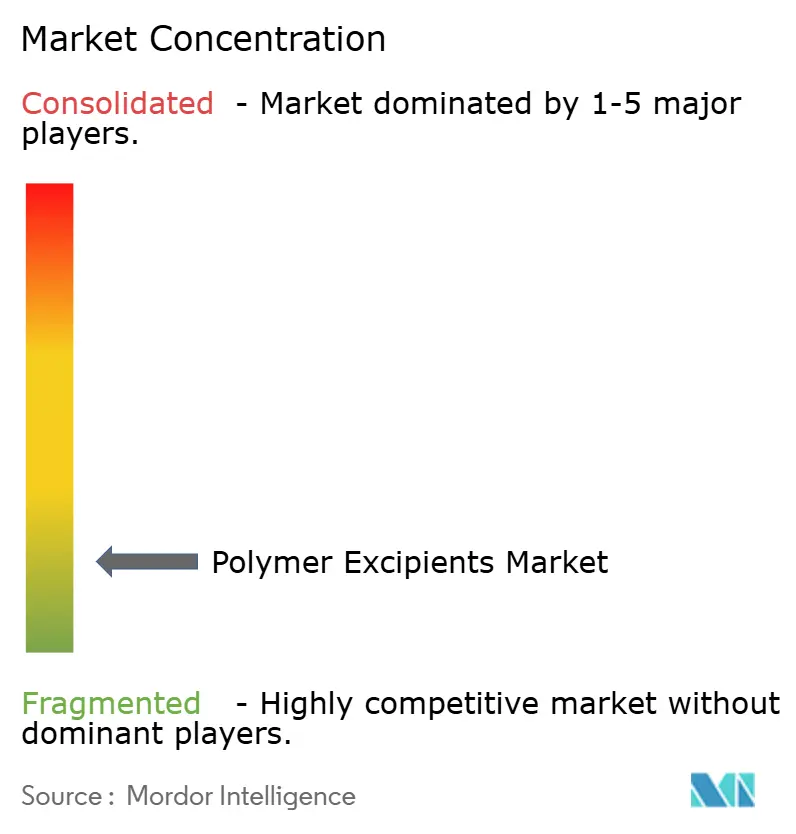
The polymer excipients market is fragmented. BASF, Evonik, Ashland, Colorcon, Lubrizol, and Merck KGaA maintain positions through proprietary polymer systems, patent portfolios, and formulation services. Commodity materials, including standard MCC, PVP, and PEG, are more fragmented, with producers in India and China competing primarily on price. This dynamic creates a split market in which specialty-grade sales can grow faster than volume. Early-stage formulation work is a key competitive stage, as technical support and regulatory documentation influence material selection.
Evonik and Higuchi opened the Open Pharma Lab in Yokohama in 2026, expanding access to EUDRAGIT platforms and local formulation support. Evonik reported a 6% reduction in the product carbon footprint of EUDRAGIT L 100-55, supported by a spray-drying facility powered by renewable energy in Darmstadt. Ashland commercially launched Permexa sodium caprate in 2026 for the development of oral peptide, biologic, and GLP-1 drug products. These initiatives indicate that companies compete in the polymer excipients market through formulation capabilities and manufacturing investments.
Smaller specialists, such as Gattefossé and JRS PHARMA, hold focused positions in lipid-based and co-processed systems. EUDRAGIT polymers are cited in more than 23,000 patents across 80 countries, indicating their use as functional coating platforms. Entry barriers remain significant because new suppliers require quality systems, multi-compendial documentation, and formulation credibility. Therefore, the polymer excipients market is more concentrated in specialty applications than in commodity grades.
Polymer Excipients Industry Leaders
-
BASF
-
Ashland
-
Dow
-
Evonik Industries AG
-
Roquette Frères
- *Disclaimer: Major Players sorted in no particular order
Recent Industry Developments
- August 2026: Ashland launched Permexa sodium caprate, an intestinal permeation enhancer for the development of oral peptide, biologic, and GLP-1 agonist drug products. The launch supports Ashland’s oral biologics excipient strategy and expands its vinyl pyrrolidone and derivatives portfolio within the polymer excipients market.
- May 2026: Evonik and Higuchi Inc. opened the Open Pharma Lab in Yokohama, Japan. The laboratory provides regional formulators with access to EUDRAGIT polymer platforms and formulation development expertise, supporting the polymer excipients market.
Global Polymer Excipients Market Report Scope
Polymer excipients are large, chain-like molecules added to drug formulations alongside active pharmaceutical ingredients to enhance drug delivery, improve stability, and control the medicine's release and performance in the body.
The polymer excipients market is segmented by product type, application, and geography. By product type, the market is segmented into polyvinylpyrrolidone, polyethylene glycol, starch, microcrystalline cellulose, ethyl and methyl cellulose, hydroxypropyl methylcellulose, and other product types. By application, the market is segmented into binders, viscosity modifiers, coatings, flavors, preservatives, colorants, sweeteners, and other applications. The report also covers the market size and forecasts for polymer excipients in 15 countries across major regions. The market sizes and forecasts are provided in terms of Volume (Kilotons).
| Polyvinylpyrrolidone |
| Polyethylene Glycol |
| Starch |
| Microcrystalline Cellulose |
| Ethyl and Methyl Cellulose |
| Hydroxypropyl Methylcellulose |
| Other Product Types |
| Binders |
| Viscosity Modifiers |
| Coatings |
| Flavors |
| Preservatives |
| Colorants |
| Sweeteners |
| Other Applications |
| Asia-Pacific | China |
| India | |
| Japan | |
| South Korea | |
| ASEAN Countries | |
| Rest of Asia-Pacific | |
| North America | United States |
| Canada | |
| Mexico | |
| Europe | Germany |
| United Kingdom | |
| France | |
| Italy | |
| NORDIC Countries | |
| Rest of Europe | |
| South America | Brazil |
| Argentina | |
| Rest of South America | |
| Middle East and Africa | Saudi Arabia |
| South Africa | |
| Rest of Middle East and Africa |
| By Product Type | Polyvinylpyrrolidone | |
| Polyethylene Glycol | ||
| Starch | ||
| Microcrystalline Cellulose | ||
| Ethyl and Methyl Cellulose | ||
| Hydroxypropyl Methylcellulose | ||
| Other Product Types | ||
| By Application | Binders | |
| Viscosity Modifiers | ||
| Coatings | ||
| Flavors | ||
| Preservatives | ||
| Colorants | ||
| Sweeteners | ||
| Other Applications | ||
| By Geography | Asia-Pacific | China |
| India | ||
| Japan | ||
| South Korea | ||
| ASEAN Countries | ||
| Rest of Asia-Pacific | ||
| North America | United States | |
| Canada | ||
| Mexico | ||
| Europe | Germany | |
| United Kingdom | ||
| France | ||
| Italy | ||
| NORDIC Countries | ||
| Rest of Europe | ||
| South America | Brazil | |
| Argentina | ||
| Rest of South America | ||
| Middle East and Africa | Saudi Arabia | |
| South Africa | ||
| Rest of Middle East and Africa | ||
Key Questions Answered in the Report
What is current market size of Polymer Excipients Market?
The polymer excipients market size was 476.67 kilotons in 2025 and is projected to grow from 495.02 kilotons in 2026 to 606.92 kilotons by 2031, at a CAGR of 4.16% during the forecast period (2026-2031).
Which product type has the largest position in polymer excipients?
Microcrystalline cellulose led with 34.74% volume share in 2025 and is projected to grow at a 4.87% CAGR through 2031.
Which application is growing fastest?
Coatings are forecast to grow at a 5.24% CAGR from 2026 to 2031, supported by demand for enterprises, sustained-release, and patient-specific coatings.
Which region leads demand for polymer excipients?
Asia-Pacific accounted for 38.17% of global volume in 2025 and is projected to grow at a 5.03% CAGR through 2031.