
Cell and Gene Therapy Market Size and Share
| Study Period | 2019 - 2030 |
| Market Size (2025) | USD 22.30 Billion |
| Market Size (2030) | USD 81.80 Billion |
| CAGR (2025 - 2030) | 25.67% |
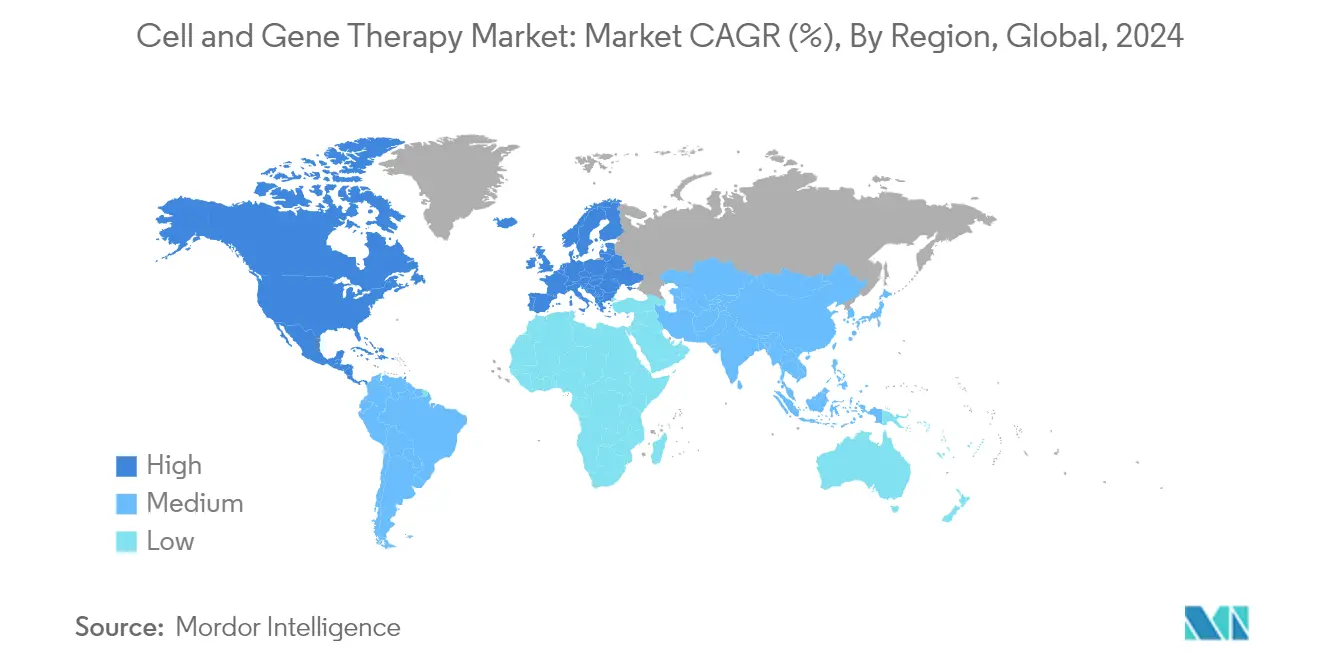
| Fastest Growing Market | North America |
| Largest Market | Asia Pacific |
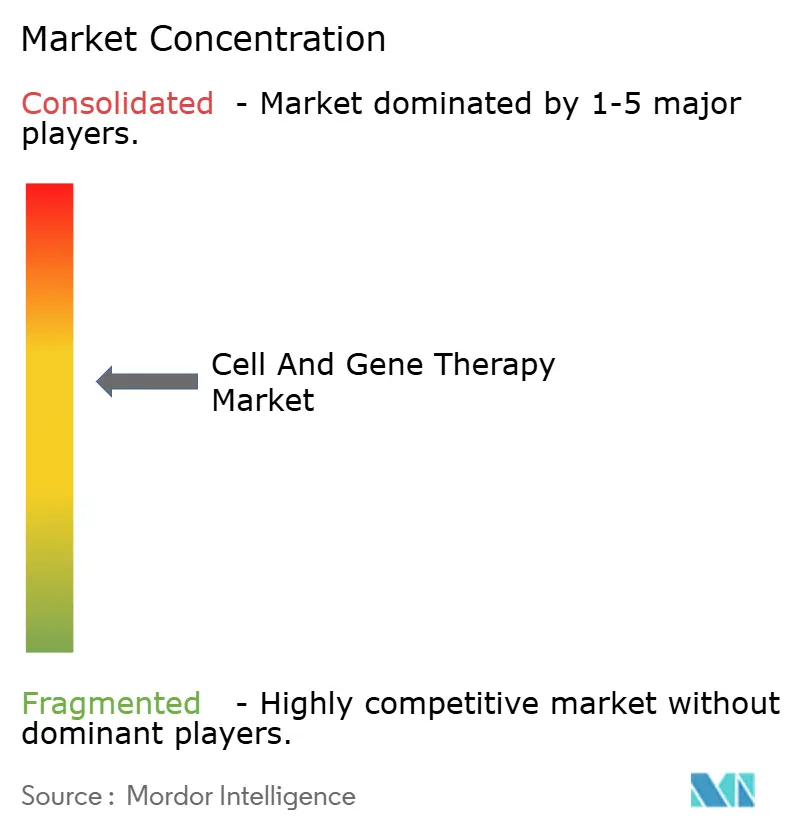
| Market Concentration | Medium |
Major Players *Disclaimer: Major Players sorted in no particular order |
Cell and Gene Therapy Market Analysis by Mordor Intelligence
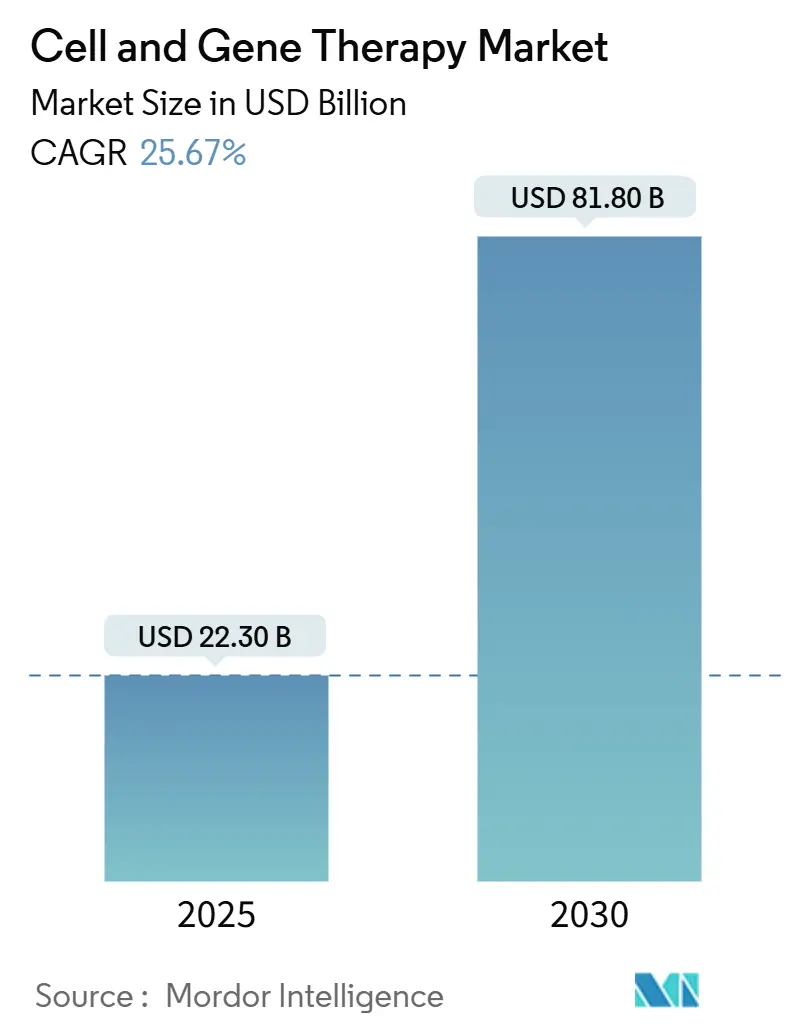
The Cell And Gene Therapy Market size is estimated at USD 22.30 billion in 2025, and is expected to reach USD 81.80 billion by 2030, at a CAGR of 25.67% during the forecast period (2025-2030).
The cell and gene therapy market has emerged as a transformative segment within the healthcare industry, offering innovative solutions for treating a wide range of diseases, including genetic disorders, cancers, and rare conditions. This market is characterized by rapid advancements in biotechnology, increasing investments, and a growing number of clinical trials aimed at developing novel therapies. The regulatory landscape is also evolving to support the accelerated approval of these therapies, reflecting the significant potential of this market to address unmet medical needs.
The regulatory environment plays a pivotal role in the growth of the cell and gene therapy market as favorable regulations can facilitate the development and approval of these therapies, while stringent or unclear regulations can hinder their progress. For instance, according to a report published by Kennedys Law LLP in September 2024, the United States Food and Drug Administration (FDA) has approved 37 cell and gene therapies to date, with seven approvals occurring in 2023 alone. This upward trend is expected to continue as the FDA implements initiatives to expedite the approval process. By 2025, the FDA anticipates approving 10 to 20 cell and gene therapies annually. These regulatory efforts are fostering a favorable environment for innovation and commercialization, thereby driving market expansion.
Furthermore, the diversification of therapy applications is another significant factor contributing to market growth. As researchers and companies explore a wider range of diseases and conditions that can be treated with these innovative therapies, the market expands, attracting investment and interest from various stakeholders. For instance, in October 2024, the American Society of Gene & Cell Therapy (ASGCT) reported that 51% of newly initiated gene therapy trials in 2024 targeted non-oncology indications, compared to 39% in 2023. This shift indicates a broadening scope of cell and gene therapies beyond oncology, addressing a wider range of diseases and expanding the market potential. The increasing focus on non-oncology indications reflects the growing demand for innovative treatments in areas such as rare genetic disorders and chronic diseases.
Moreover, rising investments and funding activities by market players are further propelling the cell and gene therapy market. For instance, in September 2024, Genespire, an Italy-based biotechnology startup specializing in off-the-shelf gene therapies for rare pediatric genetic conditions, secured USD 52 million in a Series B funding round. Similarly, in October 2024, Celaid Therapeutics, a Japan-based company, received an additional 140 million yen in Series A funding from KUC1 Investment Limited Partnership and Techno Science Co., Ltd. These investments are crucial for advancing research and development, scaling production capabilities, and accelerating the commercialization of innovative therapies. The influx of capital highlights the confidence of investors in the growth potential of this market.
Thus, the cell and gene therapy market is poised for significant growth, driven by supportive regulatory frameworks, diversification of therapy applications, and increased funding activities. As the market continues to evolve, it is expected to play a critical role in addressing unmet medical needs and transforming the healthcare landscape.
However, the high cost of treatment, coupled with complexity and lack of standardization, may limit the growth potential of the studied market over the forecast period.
Global Cell and Gene Therapy Market Trends and Insights
Oncology Segment is Expected to Witness Significant Growth Over the Forecast Period
The oncology segment within the global cell and gene therapy market has witnessed significant advancements in recent years. This growth is driven by the increasing prevalence of cancer worldwide and the rising demand for innovative treatment options. Cell therapies and cancer gene therapies have emerged as transformative solutions, offering targeted and personalized approaches to cancer treatment. These therapies are gaining traction due to their potential to address unmet medical needs and improve patient outcomes, positioning the oncology segment as a key driver in the overall cell and gene therapy market.
Regulatory advancements have played a pivotal role in accelerating the growth of the oncology segment in the cell and gene therapy market. For instance, in July 2024, Interius BioTherapeutics received approval from Australia's Human Research Ethics Committee to initiate the first-in-human trial of INT2104, an investigational in vivo CAR-T therapy designed to treat B-cell malignancies. Such approvals highlight the increasing regulatory support for innovative therapies, encouraging further research and development in the oncology segment.
Furthermore, legislative changes are fostering the adoption of advanced regenerative medical technologies in oncology. For instance, in January 2025, South Korea's Ministry of Health and Welfare introduced the revised Advanced Regenerative Bio Law, which will take effect on February 21, 2025. This law facilitates the development and application of cell and gene therapies, including stem cell and immune cell therapies, for diseases such as cancer. By creating a supportive legal framework, such initiatives are expected to drive the growth of the oncology segment in the global cell and gene therapy market.
Moreover, strategic collaborations in the oncology segment are enhancing patient care and expanding treatment options through shared resources, expertise, and innovative approaches. For instance, in March 2024, Caring Cross, a United States-based nonprofit, partnered with Fundação Oswaldo Cruz (Fiocruz), a foundation under Brazil's Ministry of Health, to establish local manufacturing of CAR-T cell and stem cell gene therapies in Brazil. This collaboration aims to develop CAR-T therapies for leukemia, lymphoma, and HIV, as well as treatments for oncology, infectious diseases, and genetic disorders. Such partnerships not only enhance accessibility but also strengthen the global supply chain for oncology-focused cell and gene therapies.
Hence, the oncology segment in the global cell and gene therapy market is poised for growth, driven by regulatory approvals, supportive legislation, and strategic collaborations. These factors collectively address critical challenges in cancer treatment, such as the need for personalized therapies and improved patient outcomes. As advancements in cell and gene therapy continue to evolve, the oncology segment is expected to remain a key contributor to the market's expansion, offering significant opportunities for stakeholders in the healthcare industry.
North America is Expected to Witness Significant Growth Over the Forecast Period
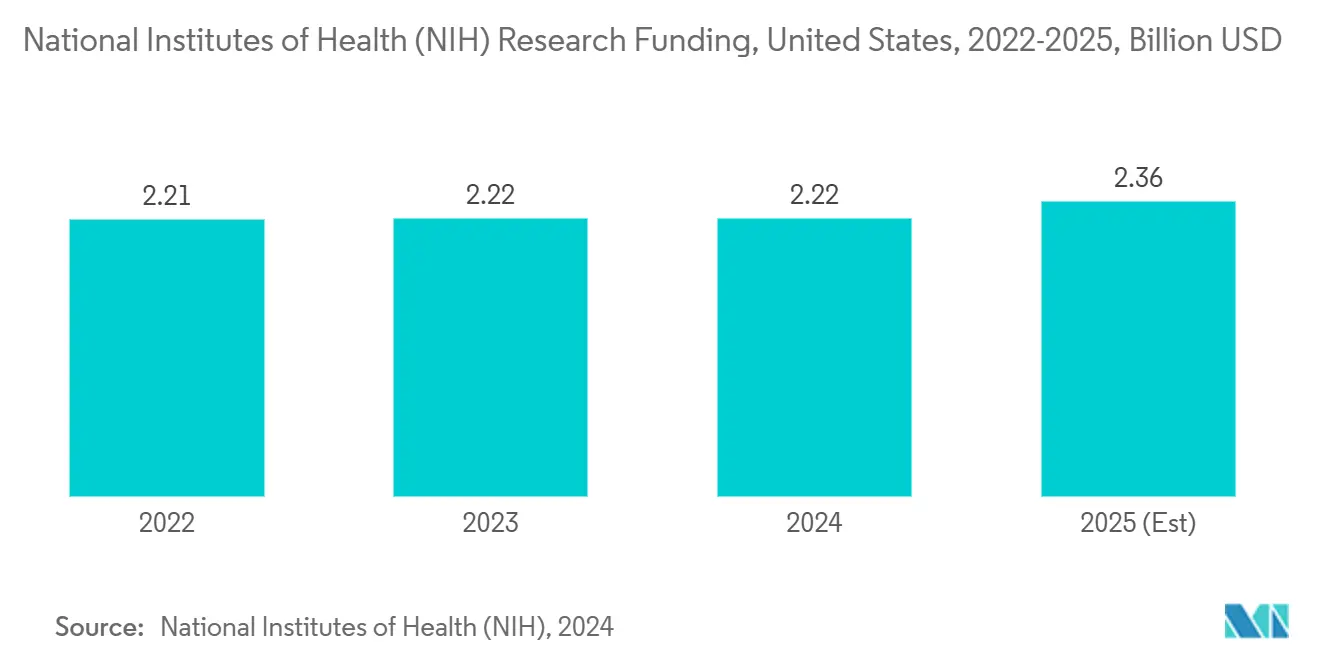
The North American cell and gene therapy market is witnessing significant advancements, driven by increasing investments, regulatory approvals, and the establishment of state-of-the-art facilities. The region has emerged as a global leader in the development and commercialization of innovative therapies, addressing critical unmet medical needs. With a robust research ecosystem and strong collaboration between academia, industry, and government, North America continues to play a pivotal role in shaping the future of cell and gene therapy.
The growing number of clinical trials and research initiatives is a key driver for the North American cell and gene therapy market. For instance, as of December 2024, Mexico has made notable progress in stem cell research, contributing to over 6,700 active interventional clinical studies globally. The country has conducted 43 stem cell-specific clinical trials, including 15 international collaborations, with 12 trials completed and 5 demonstrating significant results to date. This surge in clinical research highlights the region's commitment to advancing therapeutic innovations, thereby fostering market growth.
Additionally, the establishment of advanced manufacturing facilities is significantly enhancing the production capacity and accessibility of cell and gene therapies in North America. For instance, in October 2024, OmniaBio Inc., a contract development and manufacturing organization specializing in cell and gene therapy, opened a new manufacturing and AI center of excellence in Hamilton, Ontario. This facility aims to streamline the production of transformative treatments, improving access across Canada and North America. Similarly, in February 2024, AstraZeneca's USD 300 million investment in a state-of-the-art facility in Rockville, MD, underscores the region's focus on scaling up life-saving cell therapy platforms for critical cancer trials and future commercial supply in the United States.
Futhermore, regulatory advancements are playing a crucial role in accelerating the adoption of cell and gene therapies in North America. For instance, in September 2024, Health Canada granted marketing authorization for exagamglogene autotemcel (exa-cel), a gene-edited cell therapy developed by Vertex Pharmaceuticals and CRISPR Therapeutics. This therapy, marketed as Casgevy, is approved for treating sickle cell disease in patients aged 12 and older with recurrent vaso-occlusive crises, as well as transfusion-dependent beta-thalassemia. Such regulatory support not only validates the efficacy and safety of these therapies but also encourages further innovation and investment in the market.
Moroever, government initiatives and funding are pivotal in driving the growth of the cell and gene therapy market in North America. For instance, in October 2024, Governor Kathy Hochul announced the development of New York BioGenesis Park, a USD 430 million Cell and Gene Therapy Innovation Hub in Nassau County, New York. This facility is designed to accelerate research, development, clinical manufacturing, and commercialization of cell and gene therapies across the United State. Such large-scale investments reflect the government's commitment to fostering a conducive environment for innovation and market expansion.
Therefore, the North American cell and gene therapy market is poised for substantial growth, supported by increasing clinical research, expanding manufacturing capabilities, regulatory advancements, and significant government investments. As stakeholders continue to collaborate and invest in this transformative field, the market is expected to witness sustained growth, offering promising solutions for patients and driving advancements in the healthcare industry.
Competitive Landscape
The cell and gene therapy market is semi-consolidated due to several large, established companies that dominate significant portions of the market share. Many companies engage in strategic partnerships, collaborations, and licensing agreements to leverage expertise and share resources. The competitive landscape includes an analysis of a few international and local companies that hold significant market share and are well known, including Bristol-Myers Squibb Company (Celgene Corporation), Pfizer, Inc., Novartis AG, bluebird bio, Inc., and Gilead Sciences, Inc. (Kite Pharma, Inc.), among others.
Cell and Gene Therapy Industry Leaders
-
Bristol-Myers Squibb Company (Celgene Corporation)
-
Pfizer, Inc.
-
Novartis AG
-
bluebird bio, Inc.
-
Gilead Sciences, Inc. (Kite Pharma, Inc.)
- *Disclaimer: Major Players sorted in no particular order
Recent Industry Developments
- January 2025: MaxCyte, Inc., a company specializing in cell engineering, announced the acquisition of SeQure Dx, an organization providing on-target and off-target editing assessment services for cell and gene therapies.
- August 2024: The United States Food and Drug Administration (FDA) approved Tecelra (afamitresgene autoleucel), a gene therapy developed by Adaptimmune, for the treatment of adults with unresectable or metastatic synovial sarcoma. This approval applies to patients who have received prior chemotherapy, possess specific HLA antigens, and whose tumors express the MAGE-A4 antigen, as determined by FDA-authorized companion diagnostic devices.
- May 2024: Xyphos Biosciences, Inc., a wholly owned subsidiary of Astellas, entered into a research collaboration with Poseida. The agreement aims to develop novel convertibleCAR programs by integrating the advanced cell therapy platforms of both companies.
Global Cell and Gene Therapy Market Report Scope
As per the scope of the report, cell and gene therapy refers to a set of innovative medical treatments that involve the manipulating of cells and genes to treat or prevent diseases, particularly genetic disorders and certain types of cancer.
The cell and gene therapy market is segmented into therapy type, application, end-user, and geography. By therapy type, the market is segmented into cell therapy and gene therapy. By cell therapy, the market is segmented into stem cells, T cells, dendritic cells, and NK Cells. By application, the market is segmented into dermatology, musculoskeletal, oncology, immunology, cardiology, neurology, and others. The others include retinal diseases, infectious diseases, and many others. By end users, the market is segmented into hospitals, clinics, and others. By geography, the market is segmented into North America, Europe, Asia-Pacific, South America, and Middle East and Africa. The report also offers the market size and forecasts for 17 countries across the region. For each segment, the market sizing and forecasts were made on the basis of value (USD).
| Cell Therapy | Stem Cells |
| T Cells | |
| Dendritic Cells | |
| NK Cells | |
| Gene Therapy |
| Dermatology |
| Musculoskeletal |
| Oncology |
| Immunology |
| Cardiology |
| Neurology |
| Others |
| Hospitals |
| Clinics |
| Others |
| North America | United States |
| Canada | |
| Mexico | |
| Europe | Germany |
| United Kingdom | |
| France | |
| Russia | |
| Spain | |
| Rest of Europe | |
| Asia Pacific | China |
| Japan | |
| India | |
| Australia | |
| South Korea | |
| Rest of Asia-Pacific | |
| Middle East and Africa | GCC |
| South Africa | |
| Rest of Middle East and Africa | |
| South America | Brazil |
| Argentina | |
| Rest of South America |
| By Therapy Type | Cell Therapy | Stem Cells |
| T Cells | ||
| Dendritic Cells | ||
| NK Cells | ||
| Gene Therapy | ||
| By Application | Dermatology | |
| Musculoskeletal | ||
| Oncology | ||
| Immunology | ||
| Cardiology | ||
| Neurology | ||
| Others | ||
| By End User | Hospitals | |
| Clinics | ||
| Others | ||
| Geography | North America | United States |
| Canada | ||
| Mexico | ||
| Europe | Germany | |
| United Kingdom | ||
| France | ||
| Russia | ||
| Spain | ||
| Rest of Europe | ||
| Asia Pacific | China | |
| Japan | ||
| India | ||
| Australia | ||
| South Korea | ||
| Rest of Asia-Pacific | ||
| Middle East and Africa | GCC | |
| South Africa | ||
| Rest of Middle East and Africa | ||
| South America | Brazil | |
| Argentina | ||
| Rest of South America | ||
Key Questions Answered in the Report
How big is the Cell And Gene Therapy Market?
The Cell And Gene Therapy Market size is expected to reach USD 22.30 billion in 2025 and grow at a CAGR of 25.67% to reach USD 81.80 billion by 2030.
What is the current Cell And Gene Therapy Market size?
In 2025, the Cell And Gene Therapy Market size is expected to reach USD 22.30 billion.
Who are the key players in Cell And Gene Therapy Market?
Bristol-Myers Squibb Company (Celgene Corporation), Pfizer, Inc., Novartis AG, bluebird bio, Inc. and Gilead Sciences, Inc. (Kite Pharma, Inc.) are the major companies operating in the Cell And Gene Therapy Market.
Which is the fastest growing region in Cell And Gene Therapy Market?
North America is estimated to grow at the highest CAGR over the forecast period (2025-2030).
Which region has the biggest share in Cell And Gene Therapy Market?
In 2025, the Asia Pacific accounts for the largest market share in Cell And Gene Therapy Market.
What years does this Cell And Gene Therapy Market cover, and what was the market size in 2024?
In 2024, the Cell And Gene Therapy Market size was estimated at USD 16.58 billion. The report covers the Cell And Gene Therapy Market historical market size for years: 2019, 2020, 2021, 2022, 2023 and 2024. The report also forecasts the Cell And Gene Therapy Market size for years: 2025, 2026, 2027, 2028, 2029 and 2030.
Cell and Gene Therapy Market Report
Statistics for the 2025 Cell and Gene Therapy market share, size and revenue growth rate, created by Mordor Intelligence™ Industry Reports. Cell and Gene Therapy analysis includes a market forecast outlook for 2025 to 2030 and historical overview. Get a sample of this industry analysis as a free report PDF download.