
Canada Commercial HVAC Market Size and Share
| Study Period | 2019 - 2030 |
| Forecast Data Period | 2025 - 2030 |
| Historical Data Period | 2019 - 2023 |
| Market Size (2025) | USD 1.07 Billion |
| Market Size (2030) | USD 1.52 Billion |
| CAGR (2025 - 2030) | 7.21% |
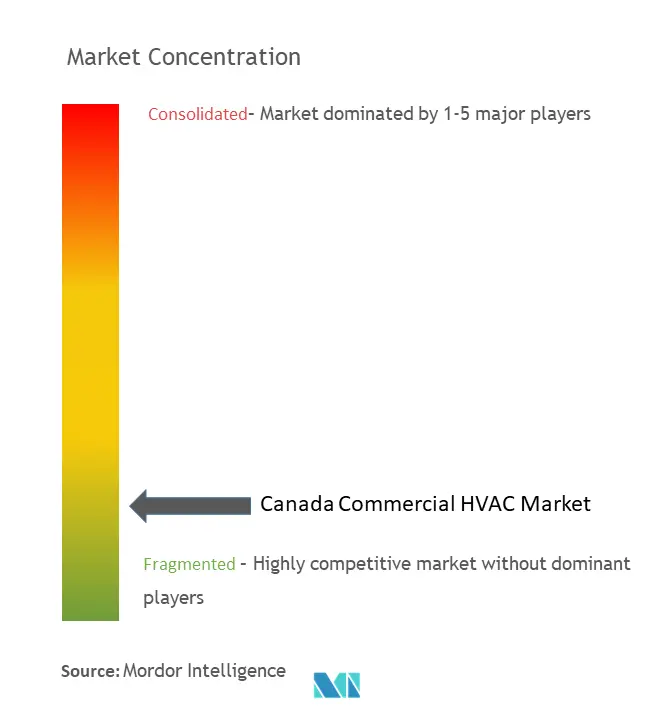
| Market Concentration | Medium |
Major Players *Disclaimer: Major Players sorted in no particular order |
Canada Commercial HVAC Market Analysis by Mordor Intelligence
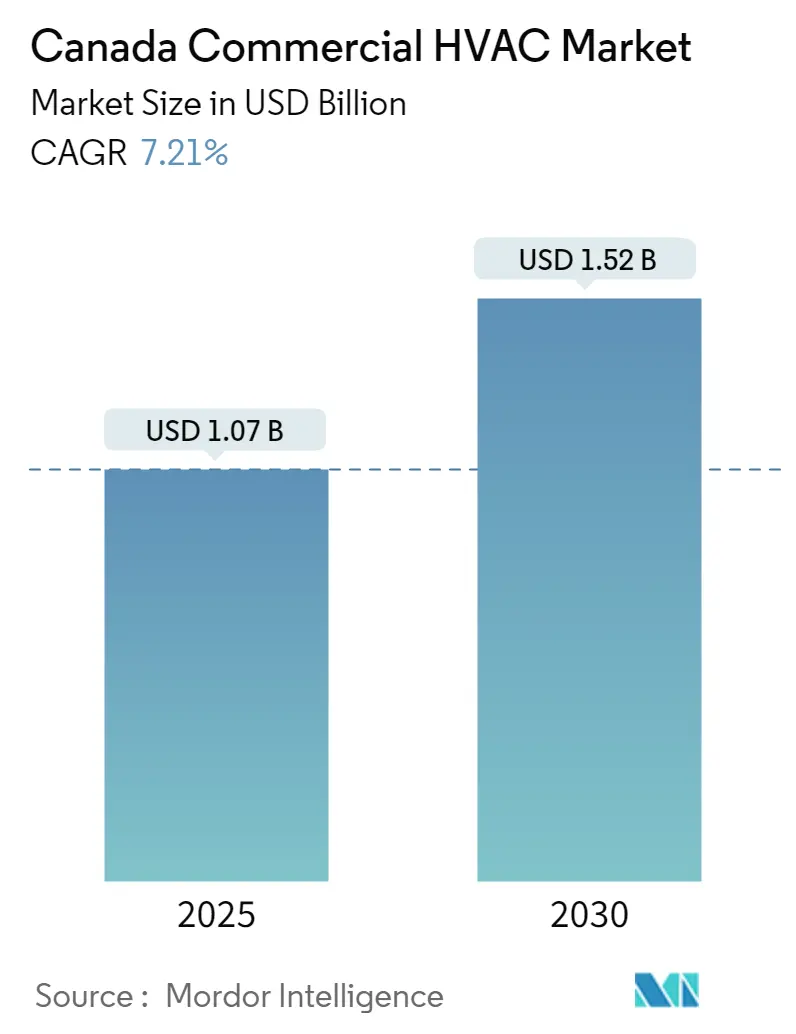
The Canada Commercial HVAC Market size is estimated at USD 1.07 billion in 2025, and is expected to reach USD 1.52 billion by 2030, at a CAGR of 7.21% during the forecast period (2025-2030).
- The commercial HVAC market in Canada encompasses a broad range of HVAC products and services related to heating, ventilation, and cooling equipment for commercial applications. Various factors, including government measures and policies, growing adoption of smart HVAC systems, and emphasis on energy efficiency, influence the adoption of HVAC equipment like heat pumps in the country.
- The IEA stated that Canada is considering introducing a new regulation requiring heating technologies to exceed an efficiency factor of 1 (equivalent to 100% equipment efficiency) by 2030. This proposed regulation would effectively prohibit using traditional coal, oil, and gas-fired boilers. Furthermore, the increasing need to decrease dependence on fossil fuels and explore energy-efficient alternatives for furnaces and cooling equipment is expected to drive the demand for heat pumps in Canada in the coming years.
- Heat pumps present a significant opportunity for Manitobans. One key reason is their potential to save residents money on heating costs. For instance, in November 2023, the Manitoba government committed to funding the installation of 5,000 geothermal heat pumps across the province. Unlike air-source heat pumps, which rely on outside air, geothermal heat pumps extract heat from the ground, enabling them to function effectively even in colder climates.
- The cost of an HVAC system hinges on many factors, including the size of the commercial building, the specific HVAC system and brand chosen, prevailing climatic conditions, and ductwork dimensions. High HVAC equipment costs often translate to prolonged payback periods for consumers. Moreover, as the market increasingly favors advanced solutions, such as swapping traditional heat pumps for geothermal alternatives, these trends are poised to increase HVAC prices, potentially stunting market growth.
- Macroeconomic factors wield substantial influence over market dynamics, especially in sectors such as commercial. Government regulations and regional initiatives further shape the commercial landscape. Notably, commercial growth fluctuations closely track the demand for HVAC equipment. Additionally, rising inflation tends to elevate the costs of materials, labor, and energy in HVAC system production and installation, frequently leading to increased prices for new installations.
Competitive positioning in Canada includes both locally based firms and those operating across multiple regions. The market landscape in the global commercial hvac industry research shows how these players are arranged internationally.
Canada Commercial HVAC Market Trends and Insights
Commercial Buildings is Expected to Witness Significant Growth
- Commercial air conditioning (AC) refers to the cooling and ventilation systems found in buildings that are not used for residential purposes. These systems are specifically created to cater to large areas' cooling and comfort requirements, such as offices, retail outlets, hospitals, hotels, restaurants, malls, and other commercial and industrial spaces. Government spending and private investment in infrastructure in the country are projected to generate a significant demand for commercial air conditioners.
- Thus, the flourishing construction industry in the country has unlocked substantial business opportunities for commercial air conditioners installed for heating and cooling purposes in high-rise buildings, industrial units, commercial complexes, parking units, hospitals, and hotels. Commercial air conditioning creates a comfortable and secure indoor environment for individuals by regulating the temperature, humidity, and air quality to appropriate levels. Along with offering comfort, efficient commercial AC systems can help save money, reduce noise, and enhance it.
- The demand for boilers is poised for a positive future, mainly due to the rising need for energy-efficient heating systems. The rising focus on reducing GHG (greenhouse gas emissions) and enhancing energy efficiency is anticipated to drive the demand for advanced boilers in commercial sectors. Moreover, the growing adoption of combined heat and power (CHP) systems, which utilize boilers for generating heat and electricity, will also play a significant role in fostering market growth.
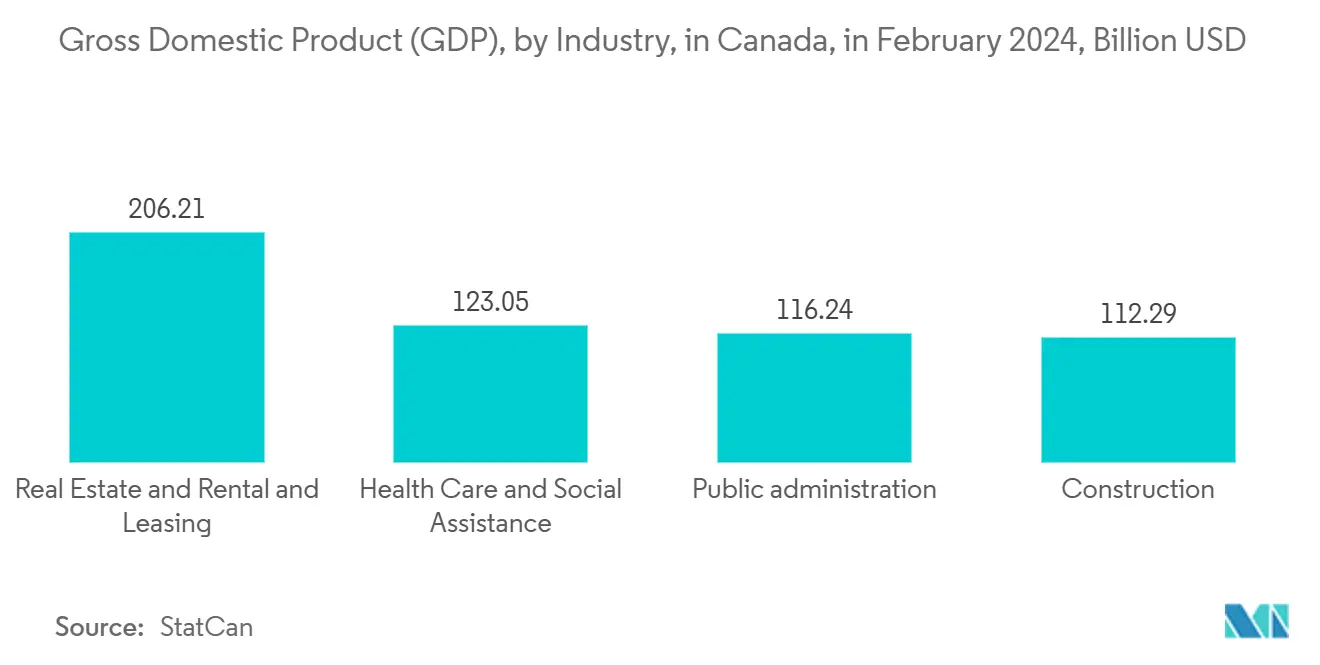
- The growing commercial sector is the main factor driving the increasing need for air-handling units. The country is experiencing rapid urban growth, leading to a higher demand for commercial property construction. For instance, according to StatCan, in February 2024, Canada's construction industry bolstered the country's GDP by approximately CAD 160.97 billion.


HVAC Equipment is Expected to Hold Significant Market Share
- The demand for water-source heat pumps is forecasted to experience a significant boost as a result of the escalating investments in the commercial sector in Canada. Heat pump systems are commonly employed in office buildings, hospitals, and hotels to deliver hot water, space heating, and cooling. The efficiency of heat pumps in non-residential buildings for heating and cooling purposes is remarkably high, owing to their capability to sustain low system temperatures and attain exceptional energy efficiency. Various companies are committed to offering a diverse array of water-source heat pumps for commercial applications.
- For instance, in February 2024, Johnson Controls introduced a water-to-water screw heat pump intended for use in small commercial buildings and district heating. The company announced that its latest product, the York YVWH Water-to-Water Dual Variable Speed Screw Heat Pump, is the latest to utilize the R-1234ze refrigerant. This refrigerant boasts an ultra-low global warming potential (GWP) of 1, allowing the YVWH to surpass the upcoming refrigerant regulations set to take effect on January 1, 2025.
- Ground-source heat pumps (Geothermal heat pumps) use the Earth's consistent temperature beneath the surface to extract or release heat. These systems tap into the Earth's natural thermal energy by circulating a fluid through underground pipes. Despite the higher installation expenses, geothermal heat pumps are recognized for their outstanding efficiency and potential for long-term cost savings.
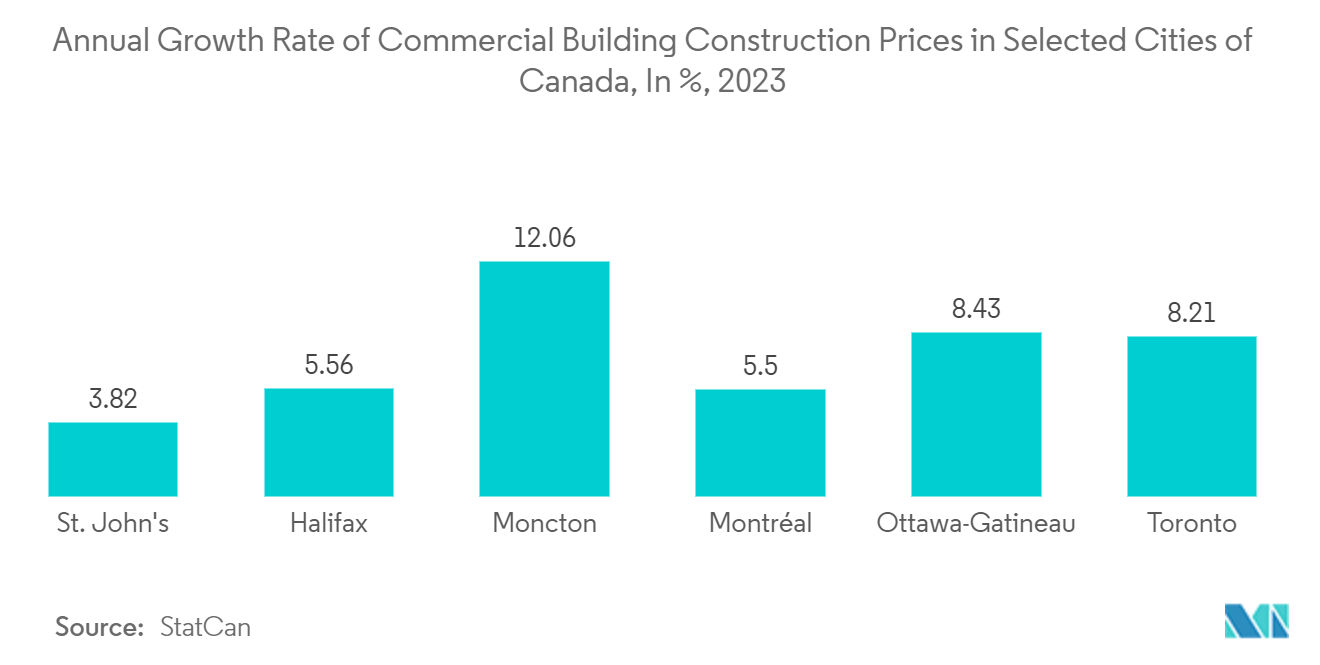
- Canada's energy landscape has witnessed a significant shift with the emergence of ground source heat pumps (GSHPs), which offer efficient and environmentally friendly heating and cooling solutions for residential properties. According to the Manitoba Government, geothermal technology is gaining traction among various stakeholders, including commercial building owners. For instance, according to StatCan, Moncton witnessed a substantial 12% surge in construction costs for commercial buildings in 2023. In contrast, Quebec experienced a more modest 5.5% increase in 2023.
- Canada's market growth is primarily fueled by its swift industrialization and urbanization. The surge in commercial building construction has led to a heightened demand for Air Handling Units, used mainly for space heating and cooling—additionally, the market benefits from a boost due to the increasing disposable income of Canadian consumers.

Mordor Intelligence tracks the commercial hvac market across other major regions such as Europe, North America, and Middle East and Africa, with additional country-level coverage spanning Italy, France, Japan, China, South Korea, and Germany, each reflecting localized structural drivers, restraints and more.
Competitive Landscape
The Canada Commercial HVAC market is fragmented, with the presence of major players like Robert Bosch GmbH, Carrier Corporation, Panasonic Holdings Corporation, Johnson Controls International PLC, Trane Technologies PLC, and Danfoss Inc., among others. Players in the market are adopting strategies such as partnerships, mergers, innovations, investments, and acquisitions to enhance product offerings and gain sustainable competitive advantage.
- June 2024: The Canada HRAI and the HVAC Designers of Canada (HVAC-DC) have signed a Memorandum of Understanding (MOU). The primary goal of this MOU is to foster enhanced communication, cooperation, and collaboration within the HVAC industry. The organizations will also improve awareness regarding the criticality of proper HVAC system commissioning and elevate industry standards.
- May 2024: Lennox and Samsung have signed an agreement to establish a joint venture in Canada. This venture will focus on marketing ductless AC and heat pump products, including mini-split, multi-split, and VRF systems. Samsung will take the lead with a 50.1% stake, while Lennox will hold the remaining 49.9%. The collaboration aims to introduce innovative HVAC products and leverage existing customer networks.
Canada Commercial HVAC Industry Leaders
Robert Bosch GmbH
Carrier Corporation
Panasonic Holdings Corporation
Johnson Controls International PLC
Trane Technologies Plc
- *Disclaimer: Major Players sorted in no particular order

Recent Industry Developments
- June 2024: Carrier, a division of Carrier Global Corporation, has introduced 'Carrier Cooling-as-a-Service,' a suite of solutions designed to assist commercial clients in streamlining the management of HVAC and other thermal systems, all in the face of the contemporary energy shift. This innovative portfolio from Carrier offers an alternative to conventional heating and cooling systems, shifting from the traditional upfront payment model to a more flexible subscription-based approach.
- April 2024: Johnson Controls-Hitachi Air Conditioning has introduced its cold-climate variable-refrigerant flow (VRF) heat pump. The air365 Max with HeatForce, this top-flow VRF system, promises commercial building owners a trifecta: unmatched comfort, leading energy efficiency, and straightforward installation and maintenance. It's designed for those keen on cutting operational costs and reducing carbon footprints.


Canada Commercial HVAC Market Report Scope
HVAC is a broad array of heating and cooling systems regulating indoor temperature and humidity. Beyond temperature control, these systems enhance indoor air quality through mechanical ventilation and filtration. The HVAC systems include heat pumps, central air conditioners, ductless mini-splits, furnaces, air handling units, and boilers. Additionally, HVAC encompasses the extensive refrigeration systems found in commercial structures.
The study tracks the revenue accrued through the sale of HVAC products in the commercial sector by various players in Canada. The study also tracks the key market parameters, underlying growth influencers, and major vendors operating in the industry, which supports the market estimations and growth rates over the forecast period. The study further analyses the overall impact of COVID-19 aftereffects and other macroeconomic factors on the market. The report's scope encompasses market sizing and forecasts for the various market segments.
The Canada Commercial HVAC market is segmented by type of component (HVAC equipment [heating equipment, air conditioning /ventilation equipment], HVAC services) and by end-user industry (hospitality, commercial buildings, public buildings, and others). The market sizes and forecasts are provided in value (USD) for all the above segments.
| HVAC Equipment | Heating Equipment |
| Air Conditioning /Ventillation Equipment | |
| HVAC Services |
| Hospitality |
| Commercial Buildings |
| Public Buildings |
| Others |
| By Type of Component | HVAC Equipment | Heating Equipment |
| Air Conditioning /Ventillation Equipment | ||
| HVAC Services | ||
| By End-user Industry | Hospitality | |
| Commercial Buildings | ||
| Public Buildings | ||
| Others |


Key Questions Answered in the Report
How big is the Canada Commercial HVAC Market?
The Canada Commercial HVAC Market size is expected to reach USD 1.07 billion in 2025 and grow at a CAGR of 7.21% to reach USD 1.52 billion by 2030.
What is the current Canada Commercial HVAC Market size?
In 2025, the Canada Commercial HVAC Market size is expected to reach USD 1.07 billion.
Who are the key players in Canada Commercial HVAC Market?
Robert Bosch GmbH, Carrier Corporation, Panasonic Holdings Corporation, Johnson Controls International PLC and Trane Technologies Plc are the major companies operating in the Canada Commercial HVAC Market.
What years does this Canada Commercial HVAC Market cover, and what was the market size in 2024?
In 2024, the Canada Commercial HVAC Market size was estimated at USD 0.99 billion. The report covers the Canada Commercial HVAC Market historical market size for years: 2019, 2020, 2021, 2022, 2023 and 2024. The report also forecasts the Canada Commercial HVAC Market size for years: 2025, 2026, 2027, 2028, 2029 and 2030.
Page last updated on:
Canada Commercial HVAC Market Report
Statistics for the 2025 Canada Commercial HVAC market share, size and revenue growth rate, created by Mordor Intelligence™ Industry Reports. Canada Commercial HVAC analysis includes a market forecast outlook for 2025 to 2030 and historical overview. Get a sample of this industry analysis as a free report PDF download.


 Your data is secure and never sold or shared.


