
South Korea Commercial HVAC Market Size and Share
| Study Period | 2019 - 2030 |
| Forecast Data Period | 2025 - 2030 |
| Historical Data Period | 2019 - 2023 |
| Market Size (2025) | USD 1.66 Billion |
| Market Size (2030) | USD 2.42 Billion |
| CAGR (2025 - 2030) | 7.85% |
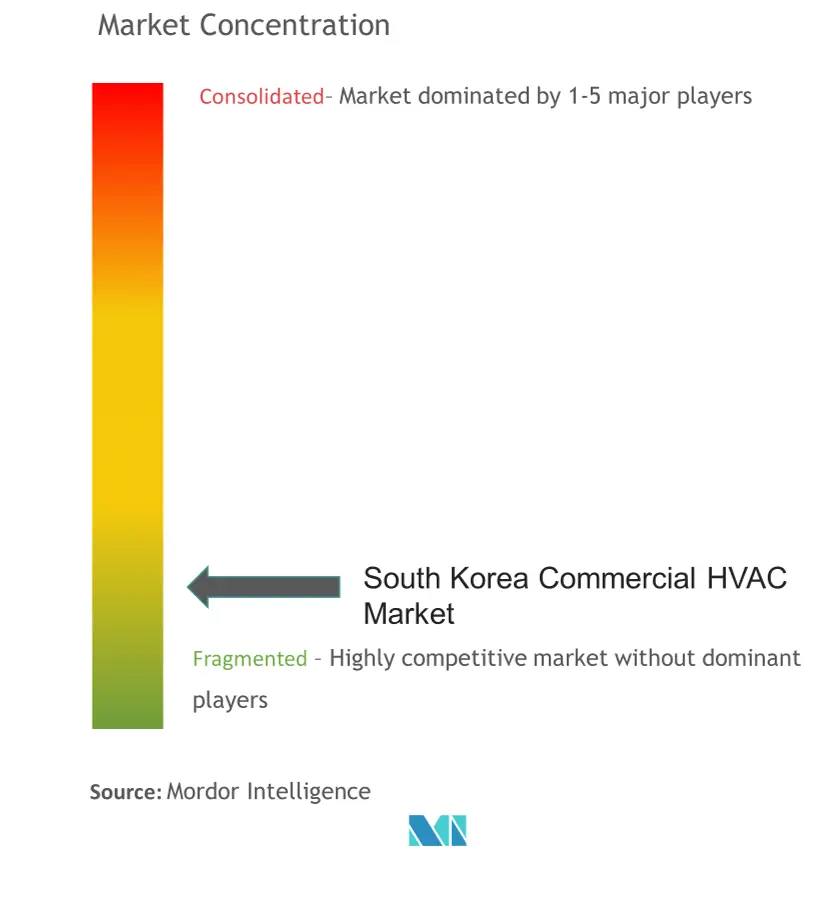
| Market Concentration | Low |
Major Players *Disclaimer: Major Players sorted in no particular order |
South Korea Commercial HVAC Market Analysis by Mordor Intelligence
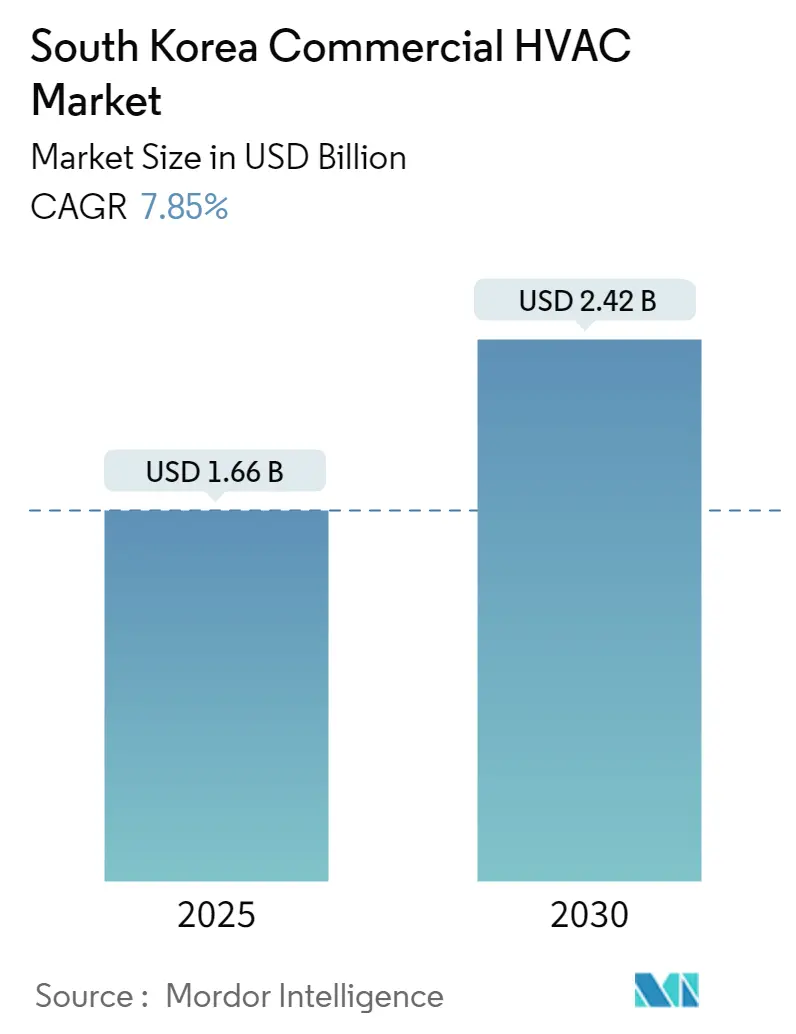
The South Korea Commercial HVAC Market size is estimated at USD 1.66 billion in 2025, and is expected to reach USD 2.42 billion by 2030, at a CAGR of 7.85% during the forecast period (2025-2030).
- Innovations like smart HVAC systems, IoT integration, and energy-efficient technologies make modern HVAC systems more attractive due to their improved performance and cost savings. Further, the growing awareness of climate change and environmental sustainability encourages businesses to invest in energy-efficient HVAC systems to reduce their carbon footprint.
- Rapid urbanization and the construction of new commercial buildings, such as offices, shopping malls, and hospitals, increase the demand for HVAC systems in the commercial space. As per the data from the CIA, the urban population in South Korea reached 81.5% of the total population in 2023.
- The adoption of more efficient HVAC systems is being propelled by government regulations and policies that prioritize reducing energy consumption and greenhouse gas emissions. The Korean government has implemented a comprehensive national strategy to promote zero-energy buildings in response to climate change and energy challenges. This initiative is supported by a range of energy efficiency policies designed for both new constructions and existing structures.
- The Korean government has announced plans to enhance its Nationally Determined Contribution (NDC) to reduce total national GHG emissions by 4 0 % from 2018 levels (727.6MtCO2eq) by 2030 and achieve the goal of carbon neutrality by 2050.
- Seoul, which accounted for 68.7% of carbon emissions from buildings in 2019, has been implementing the Seoul Building GHG Reduction Project in line with the Korean government's policy stance to encourage low-carbon buildings. This was included as a major task in the ‘2050 Greenhouse Gas Reduction Plan' and 'Seoul Vision 2030.'
- Many businesses, particularly small and medium-sized enterprises, may find the initial investment in advanced HVAC systems to be cost-prohibitive. Moreover, high energy costs are impacting the overall operating expenses of businesses, making them hesitant to invest in new or upgraded HVAC systems.
- The Russia-Ukraine war has had several indirect impacts on the HVAC market in South Korea. The war has disrupted global supply chains, affecting the avilability of raw materials and components needed for manufacturing HVAC systems. This has led to delays and increased costs in production. The conflict has caused fluctuations in energy prices, particularly oil and gas. Higher energy costs can increase the operational expenses for HVAC systems and drive demand for more energy-efficient solutions.
Note: Market size and forecast figures in this report are generated using Mordor Intelligence’s proprietary estimation framework, updated with the latest available data and insights as of January 2026.
South korea participates in a competitive field that extends beyond its own borders. The market landscape in the global commercial hvac industry outlined by Mordor Intelligence covers that wider structure.
South Korea Commercial HVAC Market Trends and Insights
HVAC Equipment is Expected to have a Significant Growth
- The commercial segment involves the usage of applied HVAC equipment in all commercial buildings and infrastructures, such as restaurants, small to large shopping complexes, public buildings, and offices, among others. Commercial buildings opt for semi-custom HVAC equipment in instances where standard market offerings fall short due to the buildings' non-uniform nature, necessitating tailored solutions.
- Moreover, heat pumps in South Korea are an ideal choice for commercial properties as they provide numerous advantages that go beyond conventional heating and cooling systems. These innovative technologies enhance energy efficiency, minimize operational expenses, and promote environmental sustainability and decarbonization.
- By implementing heat pumps, commercial properties can effectively decrease their carbon footprint and actively contribute to sustainability efforts. Embracing these systems is a wise investment that improves efficiency, saves costs, and positions commercial properties as pioneers in the shift towards a cleaner and more sustainable energy future.
- In September last year, South Korean scientists developed an air-source heat pump integrated with a photovoltaic thermal unit. This advanced system achieves an average heating coefficient of performance (COP) of 3.54 and a cooling COP of 3.31. Additionally, the system is reported to be 44% more cost-effective than ground-source heat pumps combined with PVT energy.


Commercial Buildings Segment is Expected to have a Significant Market Growth
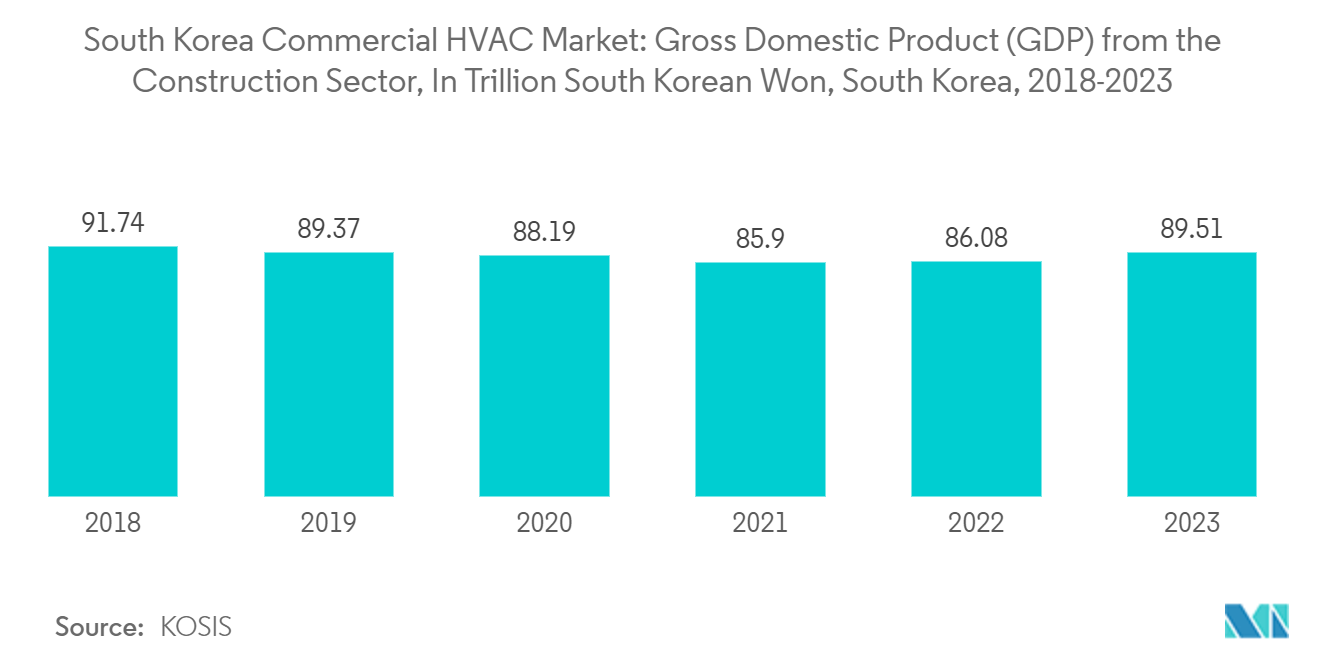
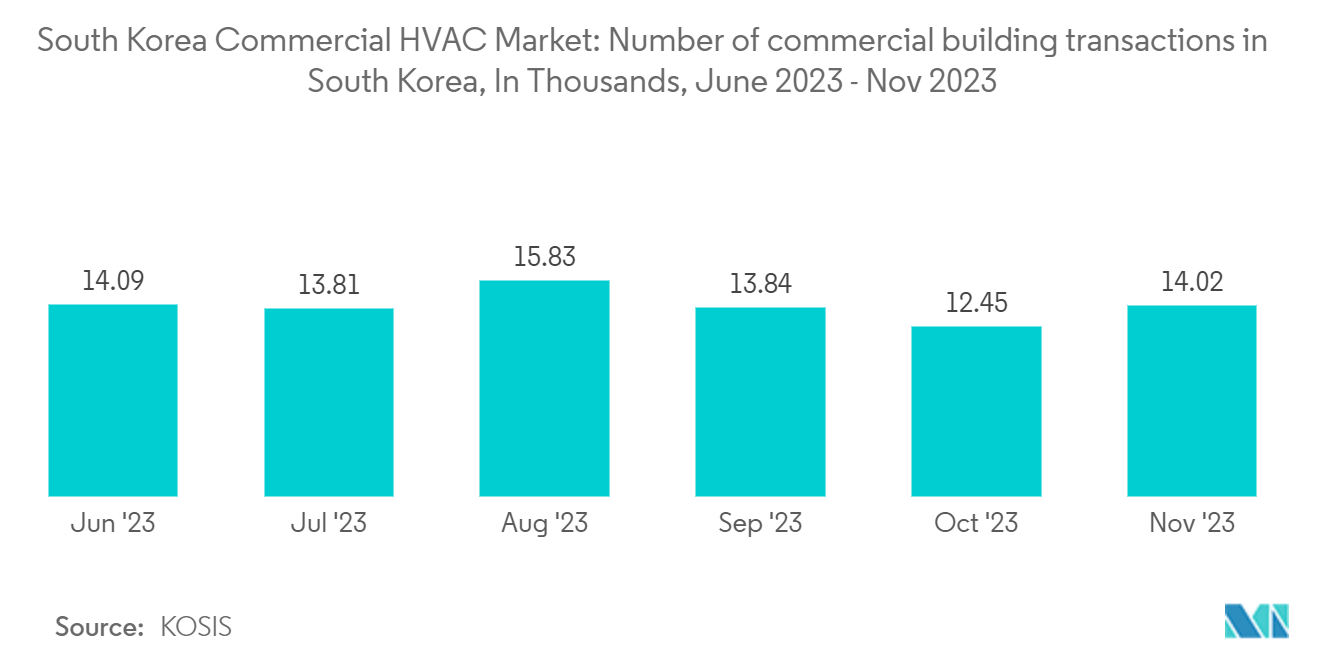
- The HVAC market experiences a positive influence from construction activity. The growing construction activity to increased investments in infrastructure to meet the rising living standards. Additionally, factors such as urbanization, migration, and industrialization significantly impact the construction industry's growth, which is likely to enhance the market for HVAC systems and services.
- As the country's construction of new buildings has rapidly increased, they require comprehensive HVAC systems to ensure proper heating, ventilation, and air conditioning from the start. This drives the demand for new HVAC equipment and installation services.
- As energy efficiency standards become stricter, commercial building owners invest in modern, energy-efficient HVAC systems to reduce operating costs and comply with regulations. This drives demand for advanced HVAC technologies. Further, compliance with building codes and environmental regulations often necessitates the installation or upgrade of HVAC systems. This includes meeting standards for indoor air quality, emissions, and energy consumption.
- Regular maintenance and unexpected repairs are essential to keep HVAC systems running smoothly in commercial buildings. This creates a steady demand for HVAC maintenance services and replacement parts. Further, in the post-COVID scenario, there is a heightened focus on indoor air quality and ventilation to reduce the spread of airborne diseases. This has led to increased demand for HVAC systems that can provide better air filtration and circulation.

Mordor Intelligence provides coverage of the commercial hvac market across other key regional markets, including Middle East and Africa, Asia, and Europe, each with their regulatory frameworks and demand patterns. Detailed country-level analysis extends to Japan, China, Germany, France, Canada, and United Kingdom incorporating local coverage and market participation, as required.
Competitive Landscape
The South Korea commercial HVAC market is consolidated and features key players like Johnson Controls International PLC, Midea Group Co., Ltd., Daikin Industries, Ltd., and Carrier Corporation, among others. Market participants strategically leverage partnerships and acquisitions to bolster their product portfolios and establish a sustainable competitive edge.
- In March 2024, Daikin Industries announced to launch of the next generation ‘All Seasons’ Perfera home air-to-air heat pump, also known as air conditioning. The indoor and outdoor units of the Perfera system have been fully redesigned to enhance the user experience, making them both easy to install and easy to use.
- In January 2024, Endo Enterprises announced the successful completion of its first EndoTherm pilot project, which was conducted at FarmHannong's R&D facilities in Nonsan-si, Chungcheongnam-do, in collaboration with the other Korean partners and FarmHannong. Korea’s government has also implemented various incentives and regulations to encourage businesses and consumers to adopt energy-efficient technologies. This favorable regulatory environment provides a significant advantage for companies entering the market with innovative solutions.
South Korea Commercial HVAC Industry Leaders
Johnson Controls International PLC
Midea Group Co., Ltd.
Daikin Industries, Ltd.
Robert Bosch GmbH
Carrier Corporation
- *Disclaimer: Major Players sorted in no particular order

Recent Industry Developments
- July 2024: Samsung Electronics launched a new line of high-performance air with low environmental impact. The new solutions stand out for their high performance and low environmental impact by having a change from R410A refrigerant to R32, also offering new connectivity tools.
- May 2024: Lennox International launched a line of light commercial and ducted HVAC products that meet the new standard. Lennox’s new HVAC products will offer a comprehensive market portfolio and will use the “environmentally responsible” refrigerant R-454B—which reduces global warming potential by as much as 78%.


South Korea Commercial HVAC Market Report Scope
HVAC equipment and services encompass a wide range of products and activities aimed at providing and maintaining indoor climate control. For market estimation, the revenue generated from the sale of commercial heating, ventilation, and air conditioning equipment is being tracked, which is offered by different market players for a diverse range of end-users. The market trends are evaluated by analyzing the investments made in product innovation, diversification, and expansion.
South Korea commercial HVAC market is segmented by type of component (HVAC equipment [heating equipment, air conditioning/ventilation equipment], and HVAC services), and end-user industry (hospitality, commercial Buildings, public buildings, and other end-user industries). The market sizes and forecasts are provided in terms of value (USD) for all the above segments.
| HVAC Equipment | Heating Equipment |
| Air Conditioning /Ventillation Equipment | |
| HVAC Services |
| Hospitality |
| Commercial Buildings |
| Public Buildings |
| Other End-user Industries |
| By Type of Component | HVAC Equipment | Heating Equipment |
| Air Conditioning /Ventillation Equipment | ||
| HVAC Services | ||
| By End-User Industry | Hospitality | |
| Commercial Buildings | ||
| Public Buildings | ||
| Other End-user Industries |


Key Questions Answered in the Report
How big is the South Korea Commercial HVAC Market?
The South Korea Commercial HVAC Market size is expected to reach USD 1.66 billion in 2025 and grow at a CAGR of 7.85% to reach USD 2.42 billion by 2030.
What is the current South Korea Commercial HVAC Market size?
In 2025, the South Korea Commercial HVAC Market size is expected to reach USD 1.66 billion.
Who are the key players in South Korea Commercial HVAC Market?
Johnson Controls International PLC, Midea Group Co., Ltd., Daikin Industries, Ltd., Robert Bosch GmbH and Carrier Corporation are the major companies operating in the South Korea Commercial HVAC Market.
What years does this South Korea Commercial HVAC Market cover, and what was the market size in 2024?
In 2024, the South Korea Commercial HVAC Market size was estimated at USD 1.53 billion. The report covers the South Korea Commercial HVAC Market historical market size for years: 2019, 2020, 2021, 2022, 2023 and 2024. The report also forecasts the South Korea Commercial HVAC Market size for years: 2025, 2026, 2027, 2028, 2029 and 2030.
Page last updated on:
South Korea Commercial HVAC Market Report
Statistics for the 2025 South Korea Commercial HVAC market share, size and revenue growth rate, created by Mordor Intelligence™ Industry Reports. South Korea Commercial HVAC analysis includes a market forecast outlook for 2025 to 2030 and historical overview. Get a sample of this industry analysis as a free report PDF download.


 Your data is secure and never sold or shared.


