
Bioconjugation Market Size and Share
| Study Period | 2019 - 2030 |
| Market Size (2025) | USD 6.44 Billion |
| Market Size (2030) | USD 11.81 Billion |
| CAGR (2025 - 2030) | 12.91% |
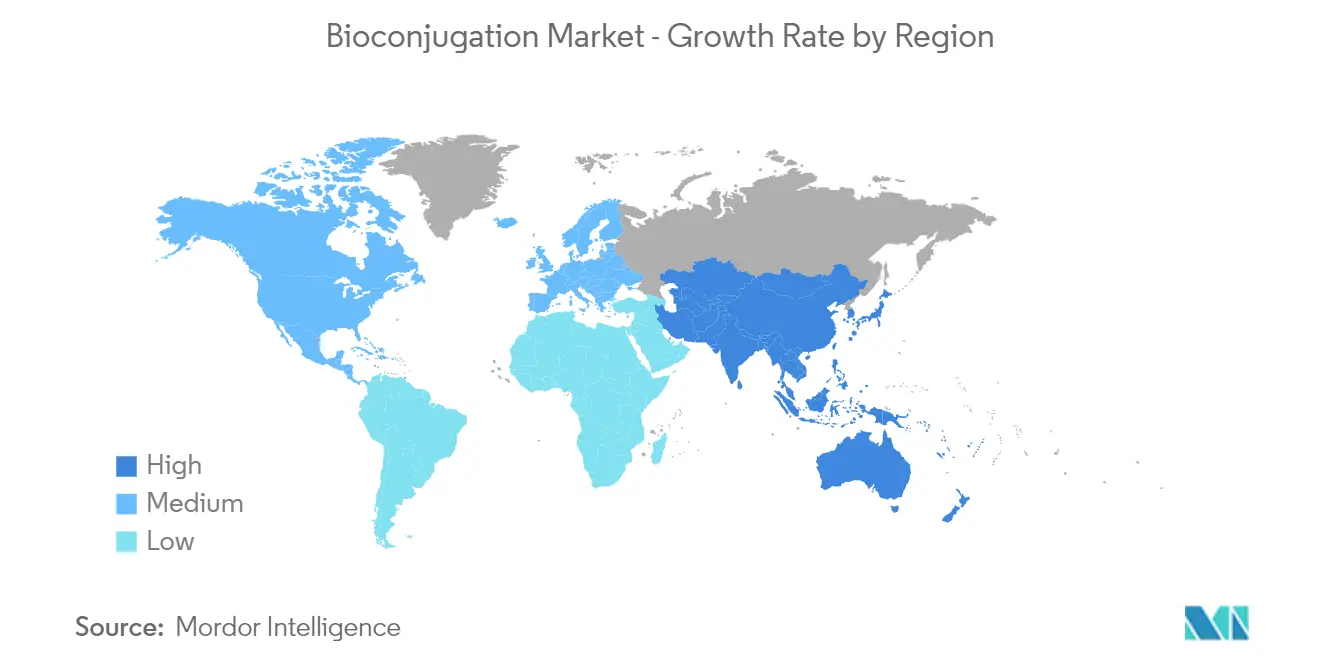
| Fastest Growing Market | Asia Pacific |
| Largest Market | North America |
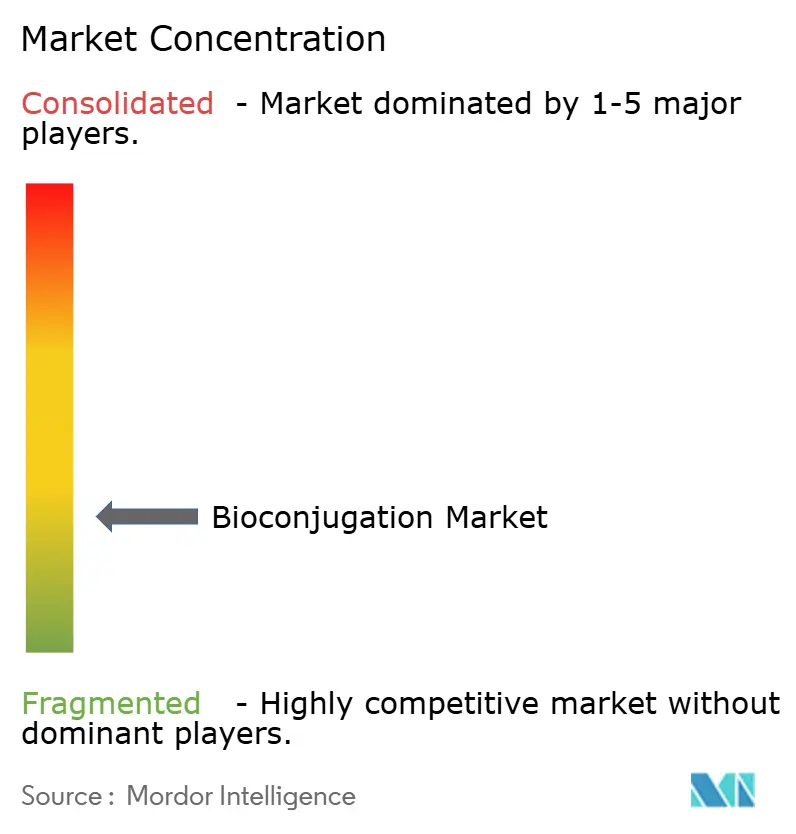
| Market Concentration | Low |
Major Players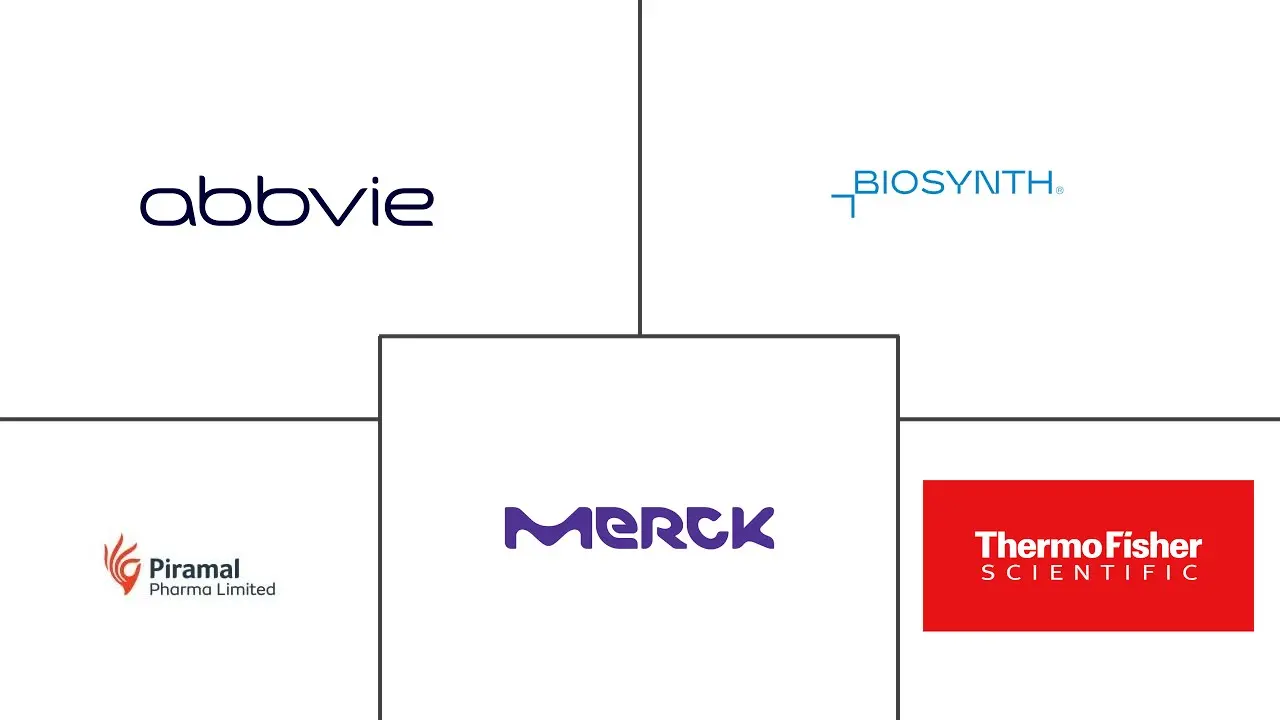 *Disclaimer: Major Players sorted in no particular order |
Bioconjugation Market Analysis by Mordor Intelligence
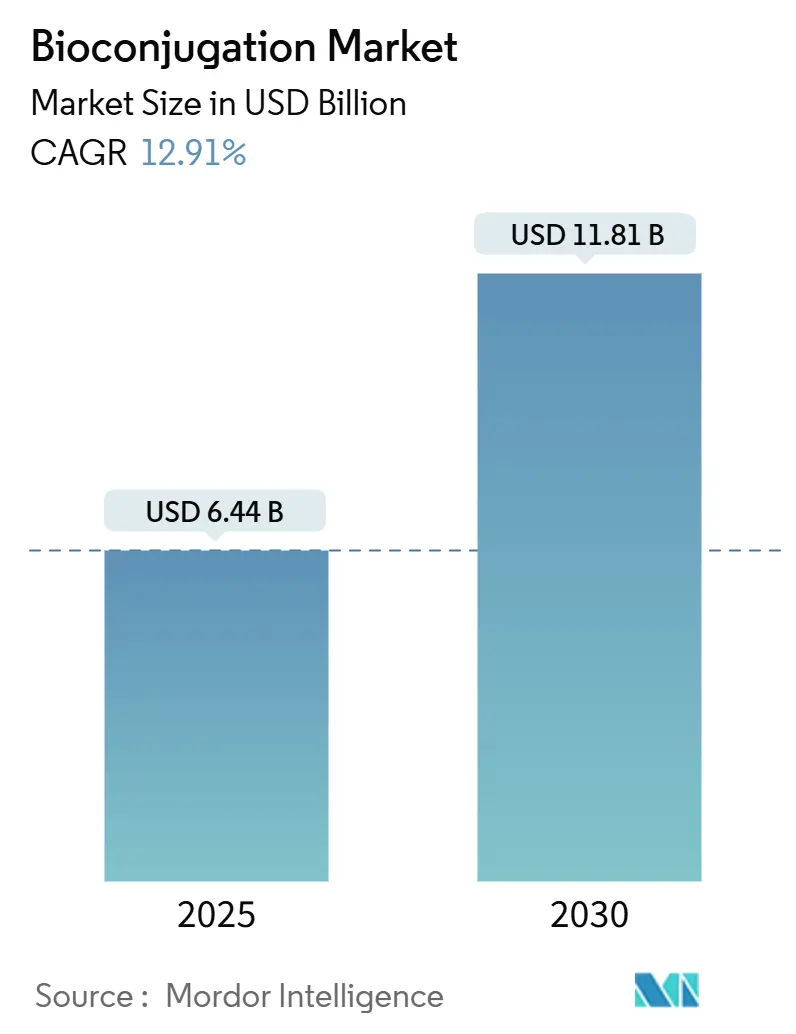
The Bioconjugation Market size is estimated at USD 6.44 billion in 2025, and is expected to reach USD 11.81 billion by 2030, at a CAGR of 12.91% during the forecast period (2025-2030).
Bioconjugation is a chemical process that links two molecules, with at least one being a biomolecule, such as a carbohydrate, nucleic acid, or protein. The bioconjugate market is driven by several factors, including the rising demand for antibody-drug conjugates (ADCs), increased research and development (R&D) investments fostering technological advancements, and the expanding applications of bioconjugates. For instance, in December 2024, a study published in the National Library of Medicine highlighted the potential of bioconjugation-based strategies to address nucleic acid delivery challenges. A notable development in this area was the targeting of liver cells through N-acetyl galactosamine (GalNAc) conjugation, which has facilitated treatments for rare metabolic diseases, further leading to FDA approval of four nucleic acid drugs. The continuous expansion of bioconjugation applications across drug delivery, diagnostics, and other fields is a key factor driving the growth of the bioconjugation market, positioning it for significant advancements during the forecast period.
Moreover, Antibody-drug conjugates (ADCs) have emerged as a transformative class of anti-cancer therapeutic agents, with several ADCs receiving approval for various cancer types. As of August 15, 2024, the National Library of Medicines reported 378 ADCs, with 11 FDA-approved, 217 in clinical development, and 150 discontinued. In May 2024, trastuzumab deruxtecan became the first ADC approved by the US FDA for uterine malignancies, marking a significant milestone. Data from October 2023 showed 551 ongoing clinical trials, with 64% focused on approved ADCs and 36% on new ADCs. As reliance on ADCs increases, so does the number of clinical trials. This surge in trials amplifies the dependence on bioconjugation techniques, fueling the expansion of the bioconjugation market.
Furthermore, research and development (R&D) spending in the biopharmaceutical sector has consistently increased over the years and is projected to rise further during the forecast period. For instance, according to February 2025 data from the International Federation of Pharmaceutical Manufacturers & Associations, global R&D spending in the biopharmaceutical sector grew from USD 182 billion in 2021 to USD 189 billion in 2022 and reached USD 202 billion in 2024. This figure is expected to climb to USD 213 billion by 2026. The surge in R&D investments reflects the industry's commitment to innovative drug development strategies, including bioconjugates, which are fueling the growth of the bioconjugation market by meeting the demand for advanced therapeutic solutions.
In conclusion, the increasing R&D investments and the growing adoption of bioconjugation applications are driving innovation and expanding the bioconjugation market. These factors are anticipated to support the market's growth during the forecast period. However, stringent regulatory compliance requirements and the high costs associated with bioconjugate manufacturing and development remain significant challenges to market expansion.
Global Bioconjugation Market Trends and Insights
Therapeutics Application Type Segment is Expected to Witness Significant Growth Over the Forecast Period
Bioconjugation has emerged as a critical component in therapeutic applications by improving drug delivery systems, enhancing therapeutic efficacy, and minimizing adverse effects. These advancements are particularly impactful in cancer treatments and vaccine development. Key drug delivery systems include nanoparticle-based delivery (such as liposomes, polymeric nanoparticles, and inorganic nanoparticles) and polymer-drug conjugates (like polyethylene glycol (PEG)). Additionally, targeted therapy approaches, including Antibody-Drug Conjugates (ADCs) and Peptide Conjugates, are gaining prominence. These therapeutic innovations are driving the growth of the bioconjugation market by enabling more precise and effective therapeutic solutions and addressing critical healthcare challenges.
Moreover, the development of ADCs has been significant, overcoming various pharmaceutical challenges and advancing targeted therapies. It has prompted industry players to explore its advantages in greater depth. For instance, in June 2024, Johnson & Johnson launched the Pitching ADC Advancements QuickFire Challenge, inviting global innovators to present novel ADCs in preclinical or clinical stages targeting cancers such as bladder, colorectal, lung, prostate, and hematologic malignancies. Such developments are fueling the bioconjugation market as it aids in addressing unmet medical needs and fostering innovation in precision medicine.
Furthermore, several ADCs are advancing to Phase III clinical trials for urothelial carcinoma treatment. For instance, in August 2024, Mabwell, an innovative biopharmaceutical company, received approval from the Center for Drug Evaluation (CDE) of China's National Medical Products Administration (NMPA) for a randomized, controlled, open-label, multicenter Phase III clinical study. The trial evaluated 9MW2821 in combination with Toripalimab against standard chemotherapy for first-line locally advanced or metastatic urothelial cancer. 9MW2821, a novel Nectin-4-targeting ADC developed by Mabwell, is the first of its kind in China to enter clinical trials for this target, enrolling over 400 subjects across multiple indications. These advancements are driving the bioconjugation market by introducing innovative therapies and expanding treatment options for complex diseases.
The growing adoption of nanoparticle-based delivery systems for medical treatments is significantly driving the demand for bioconjugation. In July 2024, researchers at Johns Hopkins developed specialized nanoparticles designed to deliver gene therapies directly to bone marrow cells, effectively targeting mutations responsible for sickle cell disease. Similarly, a study conducted in July 2024 by Forschungszentrum Jülich, a leading German research institution specializing in energy, information, and bioeconomy, demonstrated the potential of nanoparticle-based delivery systems in managing diabetes for patients with rare insulin allergies. This increasing utilization of nanoparticle-based delivery systems is propelling the bioconjugation market by enabling precise targeting of biological molecules, enhancing drug stability and bioavailability, and supporting controlled drug release. These advancements collectively improve the overall efficacy of therapeutic interventions.
In conclusion, the bioconjugation market is witnessing significant growth driven by advancements in ADCs, nanoparticle-based delivery systems, and innovative therapeutic solutions. These developments are expected to transform the healthcare landscape by addressing critical medical challenges and expanding treatment options.


North America is Expected to Hold a Significant Share in the Bioconjugation Market
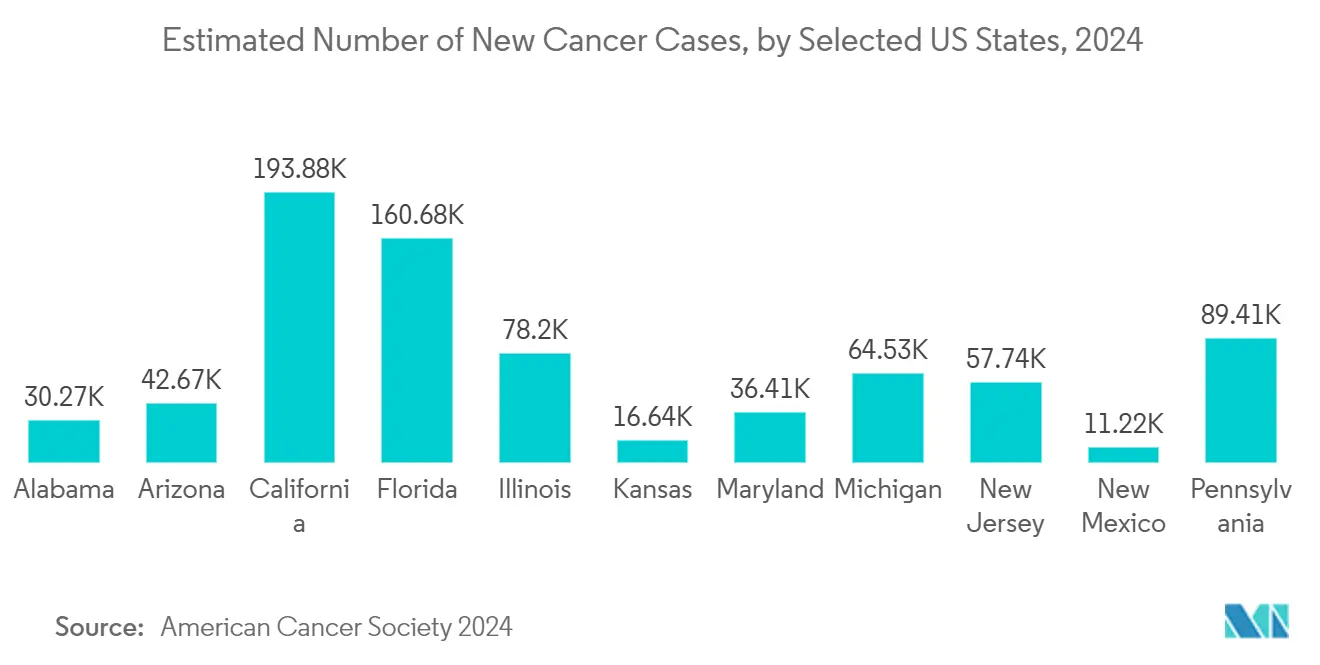
North America is expected to drive the bioconjugation market, supported by increasing R&D investment, the surge in bioconjugation facilities, advancements in antibody-drug conjugates (ADCs), and the presence of key competitors. The R&D investment in businesses (including pharmaceuticals) has surged over the years in the United States. For instance, as stated by the U.S. National Science Foundation, the U.S. R&D expenditure in the business sector surged to USD 735 billion in 2023 from USD 608.6 billion in 2021. Business-funded spending on experimental developments also increased from USD 461.0 billion in 2021 to USD 556.1 billion in 2023. This growth in investments is accelerating the R&D in the life sciences industry as well, and positively impacting the bioconjugation market. This is because the development of advanced therapeutics and diagnostics, such as antibody-drug conjugates and oligonucleotide conjugates, relies on precise biomolecule modification, a key function of bioconjugation technologies.
Moreover, the expansion of bioconjugation facilities in the United States has also accelerated, supported by rising investments from companies. For instance, in October 2024, Merck, a global leader in science and technology, announced a EUR 70 million expansion of its ADC manufacturing capabilities at its Bioconjugation Center of Excellence in St. Louis, Missouri, the United States. Further, in March 2024, Abzena, a leading CDMO specializing in complex biologics and bioconjugates, announced a USD 5 million expansion of its Bristol, Pennsylvania, bioconjugate development and cGMP manufacturing site in the United States. Such developments are directly contributing to the growth of the bioconjugation market by enhancing the infrastructure needed for advanced bioconjugation processes.
Furthermore, advancements in antibody-drug conjugates (ADCs) have gained momentum, marked by the strategic collaborations among pharmaceutical companies. For instance, in October 2023, MediLink Therapeutics and NEXT Oncology collaborated on a Phase 1 First in Human Clinical trial for an ADC designed to address solid tumor cancers through an innovative approach. Such collaborations are accelerating the bioconjugation market by fostering innovation and expanding the production of next-generation therapeutics.
In conclusion, North America's bioconjugation market is positioned for significant growth, fueled by increasing R&D investments, facility expansions, and advancements in ADC technologies. These factors collectively establish the region as a leader in driving innovation and market development.

Competitive Landscape
The bioconjugation market is fragmented, driven by the presence of numerous companies operating globally and regionally. The competitive landscape provides an analysis of several international and local companies with significant market shares and strong industry recognition. These include AbbVie Inc., Biosynth Ltd, Catalent, Inc., Creative Biolabs, Inc., Danaher Corporation, Lonza Group AG, Merck KGaA, Promega Corporation, Sartorius AG, and Thermo Fisher Scientific Inc. among others.
Bioconjugation Industry Leaders
AbbVie Inc.
Biosynth Ltd
Merck KGaA
Sartorius AG
Thermo Fisher Scientific Inc.
- *Disclaimer: Major Players sorted in no particular order

Recent Industry Developments
- November 2024: Lonza, a global partner in development and manufacturing for the pharmaceutical, biotech, and nutraceutical sectors, revealed plans to bolster its bioconjugation capabilities in Visp, Switzerland.
- November 2024: Adcendo, a Denmark-based biotech and a newcomer in the antibody-drug conjugate (ADC) arena, successfully raised USD 135 million to propel its pioneering ADC portfolio into clinical stages.


Global Bioconjugation Market Report Scope
As per the scope of the report, bioconjugation is the formation of a covalent bond between a biomolecule such as a protein, lipid, carbohydrate, or nucleic acid and either smaller chemical compounds or larger biomolecules. This technique has become a critical tool in chemical biology and cell biology, serving as a fundamental component in the production of biopharmaceuticals. Additionally, bioconjugation has significant applications in organic synthesis and materials science.
The bioconjugation market is segmented into product, technique, biomolecules, application, end-user, and geography. By product, the market is segmented into the instruments segment and the reagents and consumables segment. The instrument segment is further divided into chromatography systems, electrophoresis equipment, filtration equipment, incubators, mass spectrometers, spectroscopy equipment, and others. The reagents and consumables segment is further divided into linker & crosslinking reagents, labelling reagents, fluorescent tags, enzymes, and other reagents and consumables. By technique, the market is segmented into chemical conjugation, click chemistry, enzyme-mediated conjugation, photoreactive crosslinking, and other techniques. By biomolecules, the market is segmented into antibodies, oligonucleotides, peptides, proteins, and other biomolecules. By application, the market is segmented into therapeutics, diagnostics, and research & development. By end-user, the market is segmented into academic & research institutes, CROs & CMOs, diagnostic laboratories, and pharmaceutical and biotechnology companies. By geography, the market is segmented into North America, Europe, Asia-Pacific, Middle East and Africa, and South America. The report also offers the market size and forecasts for 17 countries across the region. For each segment, the market sizing and forecasts have been done on the basis of revenue (USD).
| Instruments | Chromatography Systems |
| Electrophoresis Equipment | |
| Filtration Equipment | |
| Incubators | |
| Mass Spectrometers | |
| Spectroscopy Equipment | |
| Others | |
| Reagents and Consumables | Linker & Crosslinking Reagents |
| Labelling Reagents | |
| Fluorescent Tags | |
| Enzymes | |
| Other Reagants and Consumables |
| Chemical Conjugation |
| Click Chemistry |
| Enzyme-Mediated Conjugation |
| Photoreactive Crosslinking |
| Other Techniques |
| Antibodies |
| Oligonucleotides |
| Peptides |
| Proteins |
| Other Biomolecules |
| Therapeutics |
| Diagnostics |
| Research & Development |
| Academic & Research Institutes |
| CROs & CMOs |
| Diagnostic Laboratories |
| Pharmaceutical and Biotechnology Companies |
| North America | United States |
| Canada | |
| Mexico | |
| Europe | Germany |
| United Kingdom | |
| France | |
| Italy | |
| Spain | |
| Rest of Europe | |
| Asia-Pacific | China |
| Japan | |
| India | |
| Australia | |
| South Korea | |
| Rest of Asia-Pacific | |
| Middle East and Africa | GCC |
| South Africa | |
| Rest of Middle East and Africa | |
| South America | Brazil |
| Argentina | |
| Rest of South America |
| By Products | Instruments | Chromatography Systems |
| Electrophoresis Equipment | ||
| Filtration Equipment | ||
| Incubators | ||
| Mass Spectrometers | ||
| Spectroscopy Equipment | ||
| Others | ||
| Reagents and Consumables | Linker & Crosslinking Reagents | |
| Labelling Reagents | ||
| Fluorescent Tags | ||
| Enzymes | ||
| Other Reagants and Consumables | ||
| By Technique | Chemical Conjugation | |
| Click Chemistry | ||
| Enzyme-Mediated Conjugation | ||
| Photoreactive Crosslinking | ||
| Other Techniques | ||
| By Biomolecules | Antibodies | |
| Oligonucleotides | ||
| Peptides | ||
| Proteins | ||
| Other Biomolecules | ||
| By Application | Therapeutics | |
| Diagnostics | ||
| Research & Development | ||
| By End-User | Academic & Research Institutes | |
| CROs & CMOs | ||
| Diagnostic Laboratories | ||
| Pharmaceutical and Biotechnology Companies | ||
| Geography | North America | United States |
| Canada | ||
| Mexico | ||
| Europe | Germany | |
| United Kingdom | ||
| France | ||
| Italy | ||
| Spain | ||
| Rest of Europe | ||
| Asia-Pacific | China | |
| Japan | ||
| India | ||
| Australia | ||
| South Korea | ||
| Rest of Asia-Pacific | ||
| Middle East and Africa | GCC | |
| South Africa | ||
| Rest of Middle East and Africa | ||
| South America | Brazil | |
| Argentina | ||
| Rest of South America | ||


Key Questions Answered in the Report
How big is the Bioconjugation Market?
The Bioconjugation Market size is expected to reach USD 6.44 billion in 2025 and grow at a CAGR of 12.91% to reach USD 11.81 billion by 2030.
What is the current Bioconjugation Market size?
In 2025, the Bioconjugation Market size is expected to reach USD 6.44 billion.
Who are the key players in Bioconjugation Market?
AbbVie Inc., Biosynth Ltd, Merck KGaA, Sartorius AG and Thermo Fisher Scientific Inc. are the major companies operating in the Bioconjugation Market.
Which is the fastest growing region in Bioconjugation Market?
Asia Pacific is estimated to grow at the highest CAGR over the forecast period (2025-2030).
Which region has the biggest share in Bioconjugation Market?
In 2025, the North America accounts for the largest market share in Bioconjugation Market.
What years does this Bioconjugation Market cover, and what was the market size in 2024?
In 2024, the Bioconjugation Market size was estimated at USD 5.61 billion. The report covers the Bioconjugation Market historical market size for years: 2019, 2020, 2021, 2022, 2023 and 2024. The report also forecasts the Bioconjugation Market size for years: 2025, 2026, 2027, 2028, 2029 and 2030.
Page last updated on:
Bioconjugation Market Report
Statistics for the 2025 Bioconjugation market share, size and revenue growth rate, created by Mordor Intelligence™ Industry Reports. Bioconjugation analysis includes a market forecast outlook for 2025 to 2030 and historical overview. Get a sample of this industry analysis as a free report PDF download.


 Your data is secure and never sold or shared.


