
Cruciate Ligament Repair Procedures Market Size and Share
Market Overview
| Study Period | 2020 - 2031 |
|---|---|
| Market Size (2026) | USD 17.44 Billion |
| Market Size (2031) | USD 26.12 Billion |
| Growth Rate (2026 - 2031) | 8.41 % |
| Fastest Growing Market | Asia Pacific |
| Largest Market | North America |
| Market Concentration | Medium |
Major Players *Disclaimer: Major Players sorted in no particular order Image © Mordor Intelligence. Reuse requires attribution under CC BY 4.0. | |
Cruciate Ligament Repair Procedures Market Analysis by Mordor Intelligence
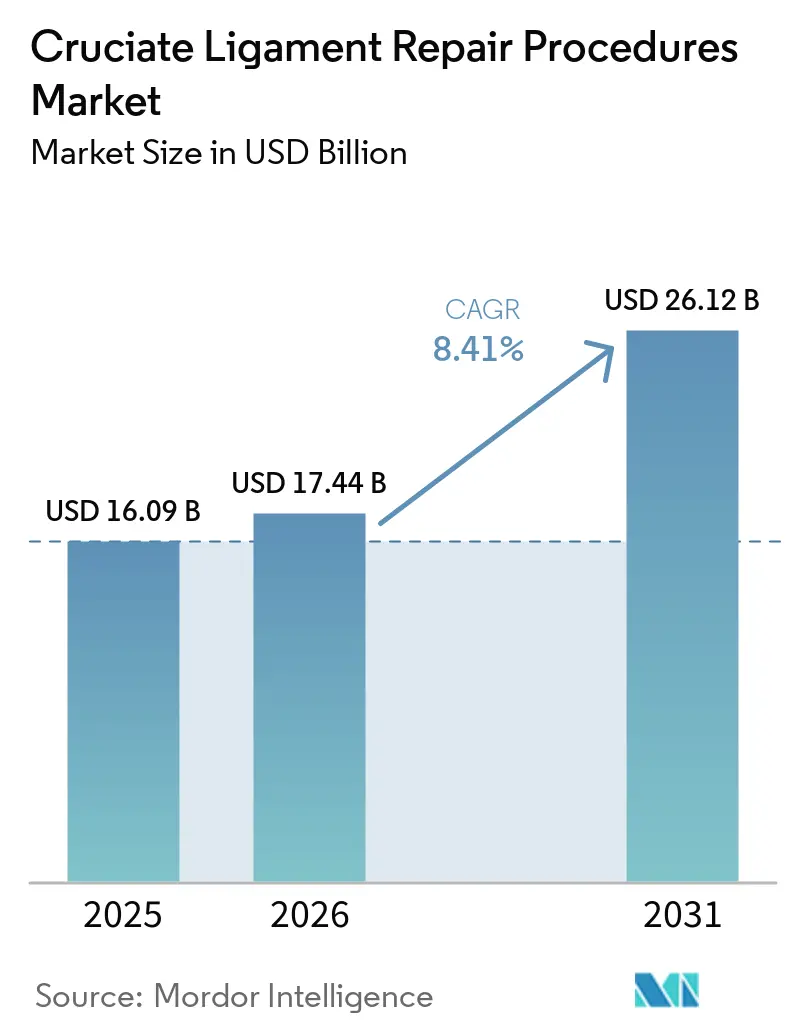
The Cruciate Ligament Repair Procedures Market size is projected to expand from USD 16.09 billion in 2025 and USD 17.44 billion in 2026 to USD 26.12 billion by 2031, registering a CAGR of 8.41% between 2026 to 2031.
The preference for surgical interventions over conservative care continues to grow, despite epidemiologic studies reporting a 3.43% decline in annual anterior cruciate ligament (ACL) tear incidents between 2010 and 2020. The U.S. Food and Drug Administration’s (FDA) January 2026 label update for the BEAR implant, which confirmed a reduced risk of post-traumatic osteoarthritis, has strengthened market confidence in biologic scaffolds. Expanding outpatient capacity, demonstrated by the removal of 275 orthopedic procedures from the Medicare inpatient-only list in 2024, is driving a shift toward cost-efficient ambulatory surgery centers. In China, volume-based procurement reforms have reduced knee-implant prices by 82%, improving accessibility but exerting pressure on multinational profit margins. To address these challenges, leading vendors are leveraging differentiated biologics, artificial intelligence (AI) planning, and robotic assistance to minimize technical failures, which remain the primary cause of 60%–70% of graft ruptures.
Key Report Takeaways
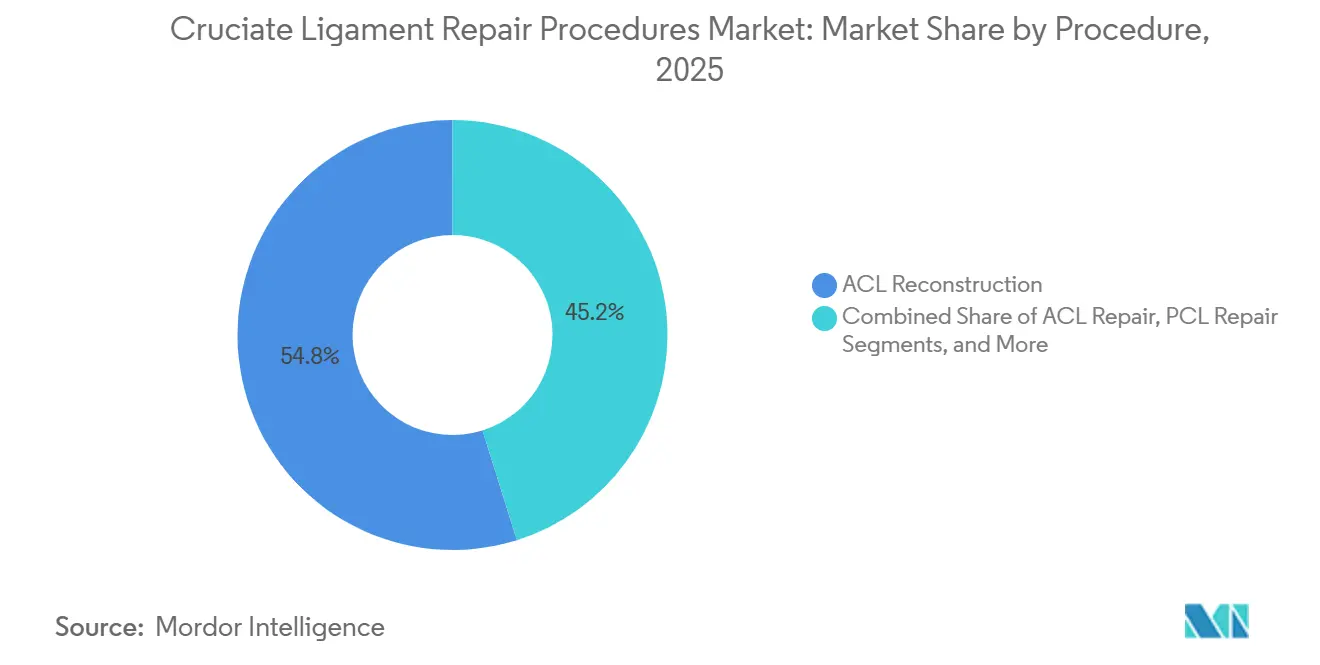
- By procedure, ACL reconstruction held 54.84% of the cruciate ligament repair procedures market share in 2025, while ACL repair is projected to expand at a 10.53% CAGR through 2031.
- By graft type, autograft tissue accounted for 46.76% share of the cruciate ligament repair procedures market size in 2025 and biologic scaffolds are advancing at a 10.87% CAGR to 2031.
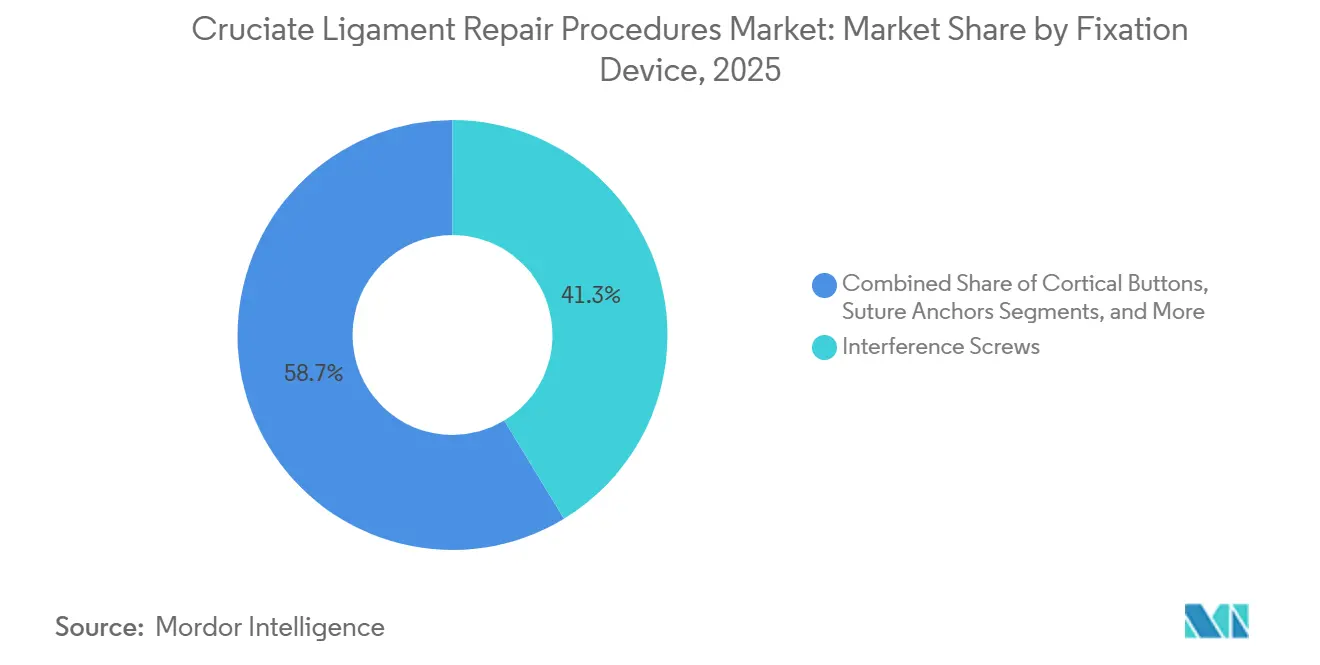
- By fixation device, interference screws retained 41.32% of segment revenue in 2025, whereas cortical buttons are forecast to grow at an 11.21% CAGR between 2026 and 2031.
- By end user, hospitals captured 60.32% of revenue in 2025; ambulatory surgery centers are moving ahead at an 11.45% CAGR through 2031.
- By geography, North America led with 42.65% revenue share in 2025, and Asia-Pacific is expected to record the fastest 9.54% CAGR over 2026-2031.
Note: Market size and forecast figures in this report are generated using Mordor Intelligence’s proprietary estimation framework, updated with the latest available data and insights as of 2026.
Market Trends and Insights
Drivers Impact Analysis of Cruciate Ligament Repair Procedures Market*
| Driver | (~) % Impact on CAGR Forecast | Geographic Relevance | Impact Timeline |
|---|---|---|---|
| Increasing Incidence Of Knee Ligament Injuries | +1.8% | Global, peak in North America & Europe | Medium term (2–4 years) |
| Rising Preference For Minimally Invasive Orthopedic Procedures | +2.1% | North America & EU, early APAC uptake | Short term (≤2 years) |
| Growing Availability Of Outpatient Ambulatory Surgery Centers | +1.9% | North America core, Western Europe spill-over | Medium term (2–4 years) |
| Advancements In Biologic And Synthetic Graft Technologies | +2.3% | Global, regulatory lead in North America & EU | Long term (≥4 years) |
| Expanding Sports Medicine Physician Workforce In Emerging Markets | +1.2% | APAC core, Latin America & MEA | Long term (≥4 years) |
| Integration Of Artificial Intelligence Into Surgical Planning & Navigation | +1.5% | North America & EU early adopters | Medium term (2–4 years) |
| Source: Mordor Intelligence | |||
Increasing Incidence of Knee Ligament Injuries
ACL tears occur at a rate of 75.19 per 100,000 person-years in the United States, resulting in 100,000–200,000 new cases annually[1]European Sports Medicine Society, “Arthroscopic Technique Survey 2023,” ncbi.nlm.nih.gov. Female athletes experience rupture rates two- to eight-fold higher than males because of anatomic and hormonal factors, while the 16-to-39-year bracket sees the most trauma. Although annual injury counts eased after 2010, surgical reconstruction volumes continued to climb by 2.15% per year as payers expanded reimbursement and patients demanded quicker return-to-sport timelines. The shift is most visible in North America and Western Europe, where third-party coverage for arthroscopy encourages early surgical decision-making.
Rising Preference for Minimally Invasive Orthopedic Procedures
All-inside arthroscopic techniques now dominate because they avoid tibial tunnel exit points and reduce postoperative pain. European surveys show transtibial drilling fell from 14.3% to 3.6% of high-volume surgeons between 2016 and 2023, while anteromedial and all-inside portals increased. Quadriceps-tendon harvests, which spare the patellar tendon, further improve donor-site morbidity. Arthrex extended its TightRope adjustable-loop button to pediatric ACL reconstruction in 2023, allowing all-epiphyseal fixation that protects the growth plate.
Advancements In Biologic and Synthetic Graft Technologies
The January 2026 BEAR implant label update exhibited lower osteoarthritis progression at two-year follow-up compared with autograft reconstruction. More than 5,000 patients have received the scaffold since FDA expanded indications in March 2025 to children and partial tears[2]FDA, “Expanded Indications for BEAR,” fda.gov. Two-year data report a 15% re-tear rate, paralleling autograft outcomes, and show earlier hamstring-strength recovery. Synthetic polymers are also resurging: Stryker bought Artelon in June 2024 to access bioabsorbable fibers with tensile strengths exceeding 2,000 N.
Integration of Artificial Intelligence into Surgical Planning & Navigation
Machine-learning algorithms achieve up to 98% accuracy for ACL tear diagnosis on magnetic resonance imaging, reducing the need for diagnostic arthroscopy. Planning platforms now suggest tunnel placement and graft diameter tailored to patient anatomy, directly mitigating the technical errors that cause most graft failures. Zimmer Biomet’s OrthoGrid integration and THINK Surgical alliance embed computer-vision guidance into ligament workflows. Smith & Nephew partnered with HOPCo to feed AI analytics into ambulatory centers’ scheduling software.
Restraints Impact Analysis of Cruciate Ligament Repair Procedures Market*
| Restraint | (~) % Impact on CAGR Forecast | Geographic Relevance | Impact Timeline |
|---|---|---|---|
| Elevated Total Procedure Cost And Limited Payer Coverage | -1.4% | North America & EU, acute in U.S. private insurance | Short term (≤2 years) |
| Risk Of Surgical Failure And Need For Revision Procedures | -1.1% | Global, highest in young athletes | Medium term (2–4 years) |
| Stringent Regulatory Pathways For Novel Biologic Implants | -0.7% | North America & EU | Long term (≥4 years) |
| Skill Gap Among Surgeons In Emerging Economies | -0.5% | APAC, Latin America & MEA | Long term (≥4 years) |
| Source: Mordor Intelligence | |||
Elevated Total Procedure Cost and Limited Payer Coverage
Uninsured U.S. patients face bills of USD 20,000-50,000, while insured patients often pay USD 2,000–6,000 out of pocket. Adolescent charges climbed 70% between 2010 and 2022, prompting stricter prior-authorization guidelines. Medicare’s allowable for CPT 27429 is USD 1,172, which many ambulatory centers consider below cost. Cigna’s August 2024 policy still classifies primary ACL repair as investigational, curbing reimbursement for the BEAR scaffold[3]Cigna, “Medical Necessity for ACL Repair,” cigna.com.
Risk of Surgical Failure and Need for Revision Procedures
Primary reconstruction fails in 3.2%–11.1% of cases, rising to 34.2% among young athletes who return to sport inside nine months. Allograft failure rates reach 25% in patients under 25, compared with 9.6% for autograft. Revision success averages 70%–75%, and two-stage revisions add USD 10,000–15,000 in costs. Only half of all reconstructed patients resume competitive sport, tempering expectations and fueling litigation when outcomes fall short.
*Our forecasts treat driver/restraint impacts as directional, not additive. The impact forecasts reflect baseline growth, mix effects, and variable interactions.
Cruciate Ligament Repair Procedures Market Segment Analysis
By Procedure:
Repair Gains Traction Amid Biologic InnovationACL reconstruction maintained a 54.84% share of the cruciate ligament repair procedures market in 2025. However, ACL repair is forecast to grow at a 10.53% CAGR through 2031 as the BEAR scaffold expands indications. More than 5,000 BEAR procedures have been performed since March 2025, with early data showing a 15% two-year re-tear rate comparable to that of autograft. As a result, repair could capture 15%–20% of primary cases by 2031, especially in younger cohorts that value hamstring preservation and faster rehabilitation. Posterior cruciate ligament (PCL) work accounts for less than 10% of volume because PCL injuries represent only 3%–5% of knee trauma. Revision reconstruction is a stable but growing niche, driven by aging grafts and repeat injuries.



By Graft Type:
Autograft Dominance Challenged By Biologic ScaffoldsAutograft tissue generated 46.76% revenue in 2025, supported by bone-patellar tendon-bone and hamstring grafts, which show a 9.6% failure rate under 25 years. Quadriceps-tendon options, commercialized with Smith & Nephew’s QUADTRAC guide, deliver the lowest 2.4% one-year reoperation rate, supporting their use in ligament reconstruction and tendon repair procedures. Allografts remain preferred for older or revision cases despite their 25% failure in young athletes, partly because they shave 15–20 minutes off operating time. Biologic scaffolds, the fastest-growing segment at 10.87% CAGR, are riding the BEAR implant’s expanded clearances and Stryker’s synthetic integrations. Next-generation synthetic grafts may reach a 5%–8% share by 2031 if their durability matches that of autografts.
By Fixation Device:
Cortical Buttons Ascend on AdjustabilityInterference screws still accounted for 41.32% of revenue in 2025, thanks to lower unit costs, but cortical buttons are projected to grow 11.21% annually as surgeons favor adjustable-loop tensioning. European usage jumped from 52.9% to 69.3% between 2016 and 2023. Buttons reduce tunnel widening and simplify pediatric all-epiphyseal fixation, which received FDA clearance in 2023. Bioabsorbable screws now account for 62.7% of tibial fixation, yet continue to raise concerns about a foreign-body response, sustaining interest in titanium options. Suture anchors and hybrid devices are used in niche applications, such as salvage revisions.
By End User:
Ambulatory Surgery Centers Capture ShareHospitals accounted for 60.32% of end-user revenue in 2025, reflecting their dominance in complex revisions, pediatric cases, and multi-ligament injuries. Still, ambulatory surgery centers are expanding at an 11.45% CAGR because Medicare’s 2024 outpatient rule shifted uncomplicated ACL cases to same-day discharge. ASC facility charges are 20%–30% lower than those of hospital outpatient departments, and surgeon equity incentives attract talent amid a looming orthopedic workforce shortfall. Orthopedic clinics, though vital for referrals and rehab, contribute less than one-fifth of surgical revenue because few possess accredited operating theaters.
Geography Analysis
The Americas, EMEA and APAC Cruciate Ligament Repair Procedures Market
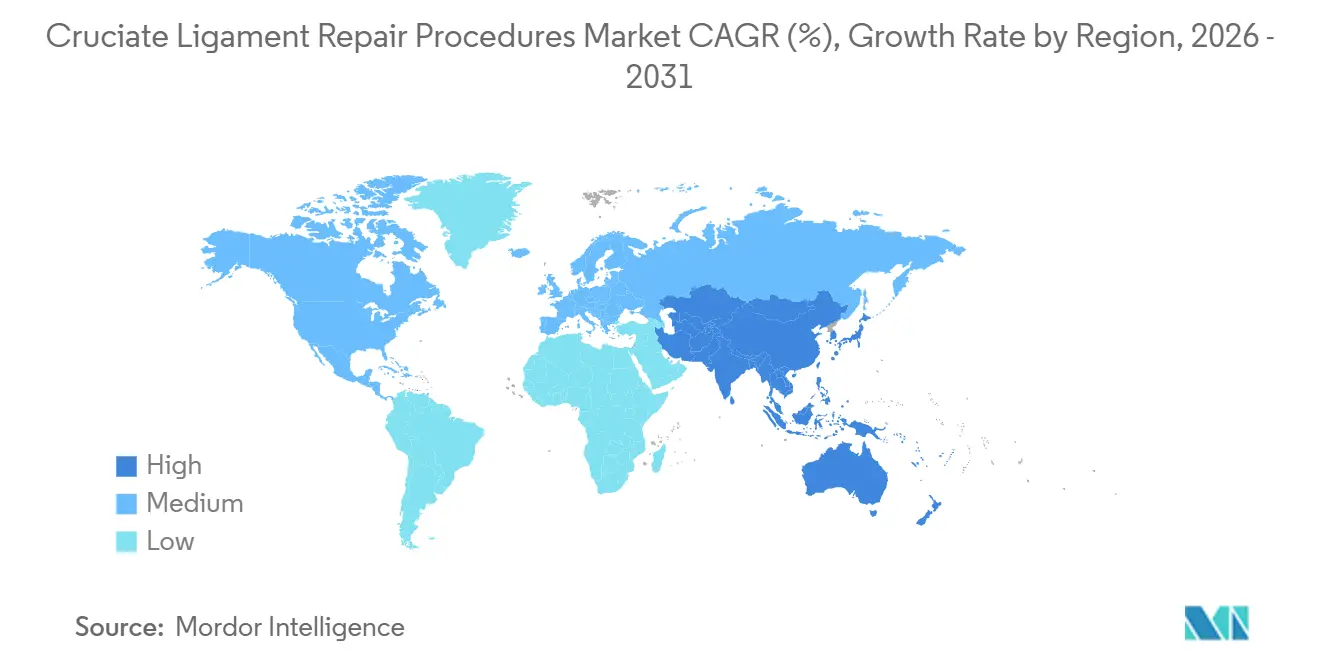
North America retained 42.65% of global revenue in 2025, performing 100,000–200,000 ACL procedures annually, but growth is moderating as incidence declines while intervention rates plateau. Europe held roughly one-quarter of revenue, transitioning to anatomic tunnel placement and lateral extra-articular augmentation. Asia-Pacific is set to grow 9.54% through 2031, lifted by China’s 82% price cuts that widened rural access even as they pressured supplier margins. Japan and South Korea leverage high bed density to maintain leading procedure rates, whereas India’s fragmented coverage restrains uptake. The Middle East & Africa and South America share about 12%–15% of revenue; investment in Gulf sports medicine and Brazil’s faster device approvals support incremental gains.

Regulatory Landscape
In the United States, implantable technologies used in cruciate ligament repair and reconstruction follow established FDA pathways. Resorbable implants for anterior cruciate ligament (ACL) repair are classified as Class II under 21 CFR 888.3044 and subject to special controls, including clinical performance evaluation (e.g., knee pain/function and re-operation metrics).
In Europe, manufacturers must comply with the EU Medical Device Regulation (MDR) 2017/745, which tightened clinical evidence and technical documentation requirements for orthopedic implants. This drove a transition away from legacy certifications that became void by May 2024, with further marketing authorization limitations applying post-May 2025. In China, the National Medical Products Administration (NMPA) maintains national-level review and registration requirements for higher-risk devices, supported by technical guidance such as the 2020 guideline for tendon and ligament fixation systems, shaping timelines and local-market entry strategies for multinational and domestic orthopedic suppliers.
Value Chain Analysis
The value chain covers biomaterials and tissue sourcing (autograft/allograft supply and processing, synthetic polymers, collagen and other scaffold inputs), device engineering and manufacturing (fixation devices such as screws, cortical buttons, and knotless systems, along with biologic scaffold production), and regulatory and quality systems supporting implantable-device traceability and sterilization. Procedure delivery then depends on hospital and ambulatory surgery center (ASC) infrastructure, arthroscopy capital equipment, and trained sports-medicine teams, while post-acute rehabilitation and return-to-sport programs shape revision and follow-up demand.
Cost and standardization pressures are concentrated intraoperatively, where supply choices (graft type, fixation construct, and adjunct biologics) drive a large share of total procedure economics. Recent clinical evidence points to supply costs dominating the ACL reconstruction cost structure (about 58.2% of total costs), with the intraoperative phase accounting for most cost generation (about 89.7%). This reinforces health-system efforts to manage surgeon preference variation through implant formularies, bundled purchasing, and ASC workflow optimization. On the innovation side, FDA 510(k) clearances for newer fixation systems and label expansions for biologic scaffolds support a pipeline from R&D to regulatory clearance and then distributor- and hospital-led commercialization.
Competitive Landscape
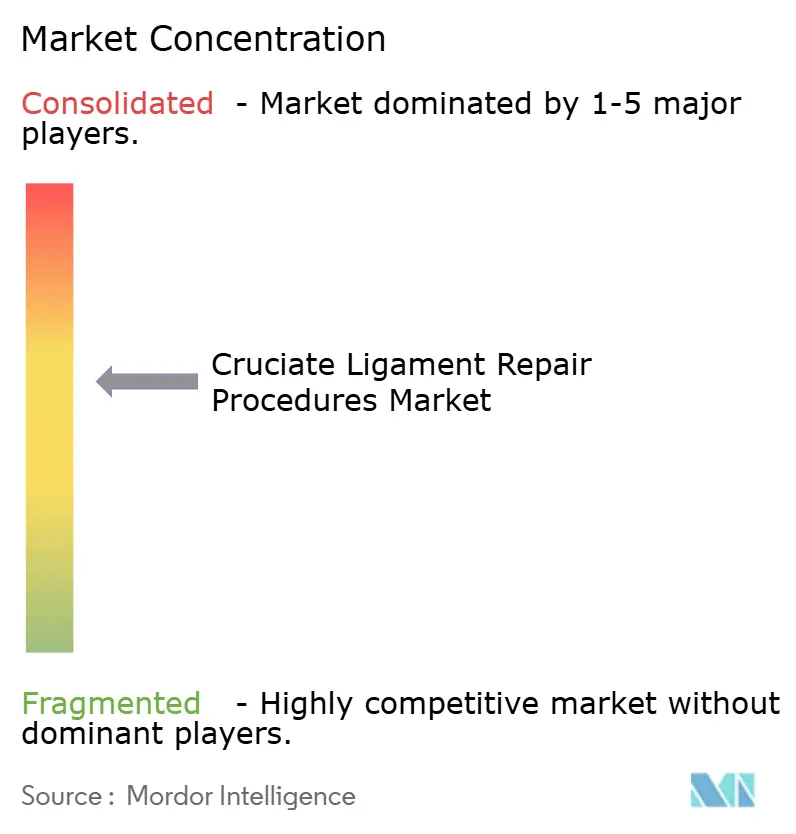
The top five vendors—Arthrex, Stryker, Smith & Nephew, Zimmer Biomet, and DePuy Synthes—held 55%–60% of 2025 revenue, pointing to moderate concentration. Stryker’s June 2024 Artelon deal adds synthetic soft-tissue scaffolds, while Smith & Nephew’s USD 330 million CartiHeal acquisition extends its cartilage solutions. Zimmer Biomet’s 2023 purchase of Embody supplied collagen-based implants and helped its sports medicine line grow 13.1% in 2024. Miach Orthopaedics is disrupting with the BEAR scaffold, having treated 5,000+ patients since 2025. Every leader is converging on biologics, robotics, and AI navigation to differentiate from commodity screws and sutures. China’s volume-based procurement is forcing tiered product portfolios and local manufacturing to defend share against MicroPort and Meril.
Cruciate Ligament Repair Procedures Industry Leaders
Zimmer Biomet
Smith & Nephew
Johnson & Johnson Services, Inc. (DePuy Synthes)
CONMED Corporation
Stryker Corporation
- *Disclaimer: Major Players sorted in no particular order
Cruciate Ligament Repair Procedures Market Companies Covered in this Report
- Acuitive Technologies (Arthrosurface)
- Arthrex
- Bioretec
- Cayenne Medical
- Conmed
- Enovis (Mathys)
- Exactech
- Integra LifeSciences
- Johnson & Johnson
- Karl Storz
- Medtronic
- Miach Orthopaedics
- Orthocell
- Parcus Medical
- RTI Surgical
- Smiths Group
- Stryker
- Tissue Regenix
- Xiros Ltd (Neoligaments)
- Zimmer Biomet
Read Analysis of Cruciate Ligament Repair Procedures Companies

Market Opportunities and Future Outlook
A near-term whitespace is forming around ACL repair and reconstruction solutions that combine mechanical fixation with biologic healing and longer-horizon outcomes. The FDA January 2026 label update for Miach Orthopaedics BEAR, which includes a reduced post-traumatic osteoarthritis claim versus autograft reconstruction, shifts competitive focus beyond short-term stability to disease-modifying endpoints that matter to payers and patients.
Procedure migration into ambulatory settings, alongside efforts to control intraoperative supply variation, is creating opportunities for systems that simplify steps, reduce inventory complexity, and standardize technique across surgeons and sites. Product activity in 2026 reflects this direction, including FDA-cleared knotless, tension-adjustable fixation (e.g., ABANZA QuadLock) and hardware-light fixation options (e.g., Arthrex TightRope SB all-suture, soft-button implant), as well as biologic adjacencies that reduce manual preparation time (e.g., pre-sutured tendon constructs). At the same time, China volume-based procurement dynamics and large price reductions for knee implants continue to incentivize tiered portfolios and localized supply strategies, favoring vendors that can protect margins through differentiated biologics, workflow tools, and value-based contracting with large hospital groups and ASC networks.
Recent Industry Developments in Cruciate Ligament Repair Procedures Market
- July 2026: AlloSource introduced ReConnex Pre-Sutured Tendon, an FDA 510(k) cleared option designed for all-inside ACL reconstruction workflows. The pre-sutured construct targets operating room efficiency by reducing intraoperative graft preparation steps, supporting higher-throughput outpatient environments.
- February 2026: Arthrex released the TightRope SB all-suture, soft-button implant for ACL fixation. The metal-free, screw-free approach expands hardware-light fixation choices across graft types and aligns with surgeon demand for minimally invasive constructs that simplify inventory and imaging artifacts.
- June 2024: Stryker acquired Artelon to add next-generation bioabsorbable synthetic soft-tissue scaffold technology to its orthopedics portfolio. The deal strengthened Stryker's position in ligament and soft-tissue repair adjacencies by integrating synthetic biomaterials capabilities that complement traditional fixation and graft offerings.


Cruciate Ligament Repair Procedures Market Report Scope and Research Methodology
Market Definition and Coverage
For this study, the market counts the value of surgical procedures used to repair or reconstruct knee cruciate ligaments, including the core procedure work and the commonly used graft and fixation elements needed to complete it.
Scope exclusions: It does not include conservative treatment without surgery, general knee arthroscopy done for other conditions, or long term rehabilitation and physical therapy services.
Segments Covered in This Report
- By Procedure
- ACL Repair
- ACL Reconstruction
- PCL Repair
- PCL Reconstruction
- Revision Procedures
- By Graft Type
- Autograft
- Allograft
- Synthetic Graft
- Biologic Scaffolds
- By Fixation Device
- Interference Screws
- Cortical Buttons
- Suture Anchors
- Other Fixation Devices
- By End User
- Hospitals
- Ambulatory Surgical Centers
- Orthopedic & Sports Medicine Clinics
- Geography
- North America
- United States
- Canada
- Mexico
- Europe
- Germany
- United Kingdom
- France
- Italy
- Spain
- Rest of Europe
- Asia-Pacific
- China
- Japan
- India
- Australia
- South Korea
- Rest of Asia-Pacific
- Middle East & Africa
- GCC
- South Africa
- Rest of Middle East & Africa
- South America
- Brazil
- Argentina
- Rest of South America
- North America
Data Sources, Market Sizing, and Validation
Desk Research
Desk research was used to set the clinical and economic boundaries before the modeling started. We reviewed public sources such as CDC injury and outpatient surgery statistics, OECD health data, WHO health system indicators, and national health services or ministry publications that report orthopedic procedure volumes.
To translate procedure activity into value, we also used sources such as peer reviewed orthopedic journals on ACL and PCL utilization and revision rates, hospital charge and reimbursement references where available, and import export summaries for orthopedic devices in key countries. We checked company filings and investor presentations to understand product mixes linked to ligament reconstruction. Where public details were thin, a paid subscription for company financials and a patent database were used as extra validation. These examples are not exhaustive, and other public and paid sources were also used to collect, cross check, and clarify data points.
Primary Interviews and Surveys
Primary work focused on confirming what is actually used in the operating room and how pricing moves in different settings. We spoke with orthopedic surgeons, sports medicine clinicians, hospital procurement teams, ambulatory surgery center administrators, and device distributors across major regions, so assumptions on procedure mix, graft preference, and fixation bundles could be corrected where needed.
Distribution of primary research fieldwork respondents
| Company type | Respondent position | Region |
|---|---|---|
| Top tier: 30% | CXOs: 13% | APAC: 46% |
| Mid tier: 54% | Functional/Unit leaders: 37% | EMEA: 31% |
| Smaller Players: 16% | Managers: 50% | Americas: 23% |
Market-Sizing & Forecasting
The market value was first reconstructed using a top-down approach, where procedure volumes were built by country from knee injury incidence, sports participation signals, surgical rate patterns, and the care setting split, then translated into value using typical procedure related pricing and device bundle ranges. When the totals looked too far from reality, we adjusted them only after re-checking the drivers.
To keep the model grounded, we corroborated it with selective bottom-up checks such as sampled selling prices for key fixation devices, a mix-based roll up of graft and fixation usage per case, and distributor channel feedback on unit movement. The inputs that matter most are the share of ACL reconstruction versus repair, revision procedure rates, the split between hospitals and ambulatory surgery centers, graft choice patterns (autograft versus allograft versus synthetic), and average fixation units used per surgery.
For forecasting, scenario analysis was used so demand could be projected under different assumptions for sports injury trends, adoption of minimally invasive techniques, and reimbursement stability, and then the final path was aligned to what experts considered realistic. Where country level procedure counts were missing, proxy indicators from similar health systems were applied and later corrected through interviews before the final totals were locked.
Data Validation & Update Cycle
Outputs were validated by comparing modeled procedure volumes and implied spend against independent signals such as orthopedic surgery throughput, device trade flows, and reported revenue exposure to ligament repair product lines. If an outlier appeared, we traced it back to the input level and reworked the country or setting split before sign-off.
A second analyst review is completed to make sure definitions, currency handling, and year alignment are consistent across geographies. Reports are refreshed annually, and interim updates are made when material events shift procedure access or pricing. Before delivery, an analyst performs a final pass so clients receive the latest updated view.
Mordor Intelligence's Cruciate Ligament Repair Procedures Market Size Compared Against Other Published Estimates
Published market values for cruciate ligament repair procedures can vary widely because groups count different components, use different starting years, and apply different pricing logic for hospitals versus ambulatory centers. We treat these differences as scope and math issues first, and then test them through interviews so the final number matches how care is delivered.
The biggest gap usually comes from whether the estimate is closer to a procedure-services view or a procedure-plus-devices view, and from how revision cases and graft choices are handled. The main gap comes from what is counted as device and graft bundles inside each procedure. Mordor Intelligence treats these consistently across ACL, PCL, and revision cases using region-specific mix and pricing checks, instead of applying one blended price across settings.
Benchmark comparison
| Source | Market Size | Gaps in Research Methodology |
|---|---|---|
| Mordor Intelligence | USD 17.44 B (2026) | |
| Trade Journal A | USD 14.10 B (2024) | Uses an earlier base year and a narrower procedure grouping that is often limited to ACL and PCL repair labels, and it can understate value when reconstruction and revision cases are priced differently by setting. |
| Industry Publisher B | USD 13.94 B (2024) | Reported in USD millions for a 2024 base year and may rely on broad regional averages, which can compress differences in graft selection, fixation units per case, and hospital versus ambulatory pricing. |
The spread in the table is mostly explained by year choice and what gets counted inside a typical case, especially reconstruction and revision intensity and how device bundles are treated. By tying the value build-up to procedure mix, setting split, and practical price ranges that were cross-checked with field feedback, the final estimate stays traceable and can be repeated when assumptions change.


Key Questions Answered in the Report
What is the current value of the cruciate ligament repair procedures market?
The market is estimated at USD 17.44 billion in 2026.
How fast will the market grow through 2031?
Revenue is expected to rise at an 8.41% CAGR between 2026 and 2031.
Which procedure segment is expanding the quickest?
ACL repair is forecast to grow 10.53% annually as biologic scaffolds gain adoption.
Why are ambulatory surgery centers gaining share?
Medicare's 2024 rule shift and 20%Ð30% lower facility fees are steering uncomplicated ACL cases to same-day centers.
What region shows the fastest future growth?
Asia-Pacific is projected to post a 9.54% CAGR because of wider access and regulatory acceleration.
Which fixation device type is most rapidly adopted?
Cortical buttons lead growth with an 11.21% CAGR due to adjustable tensioning and reduced tunnel widening.
Page last updated on:


 Your data is secure and never sold or shared.


