
US Unnatural Amino Acids Market Size and Share
Market Overview
| Study Period | 2021 - 2031 |
|---|---|
| Forecast Data Period | 2026 - 2031 |
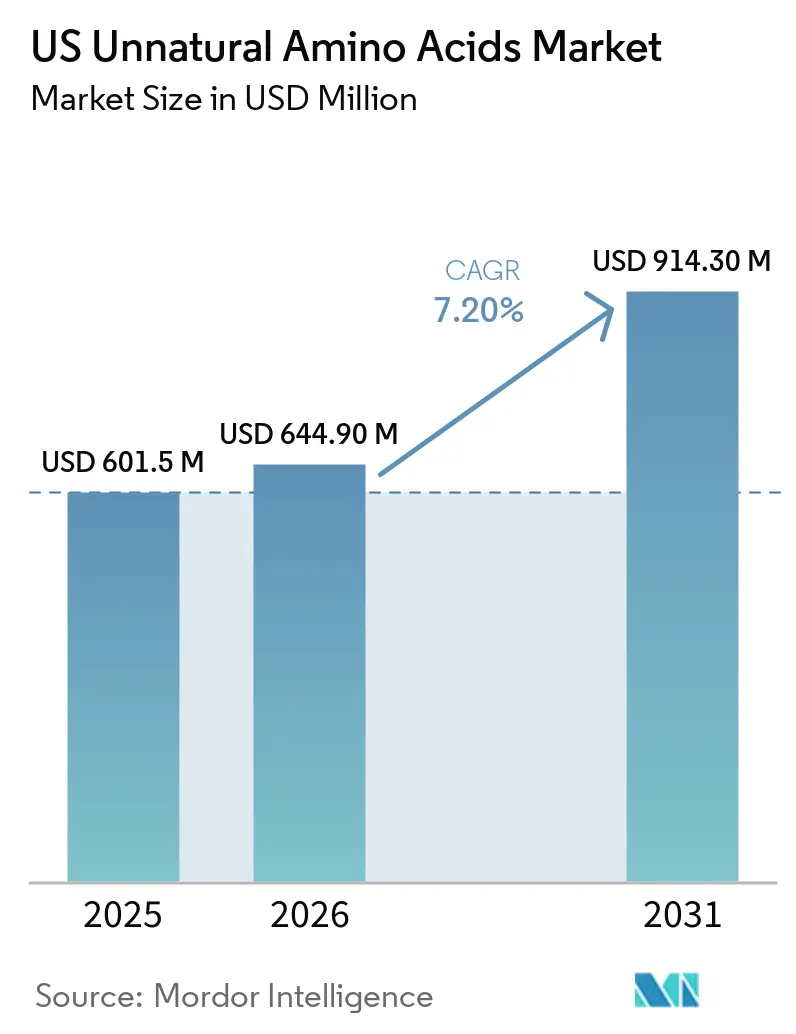
| Base Year Market Size (2025) | USD 601.5 Million |
| Market Size (2026) | USD 644.90 Million |
| Market Size (2031) | USD 914.30 Million |
| Growth Rate (2026 - 2031) | 7.20 % |
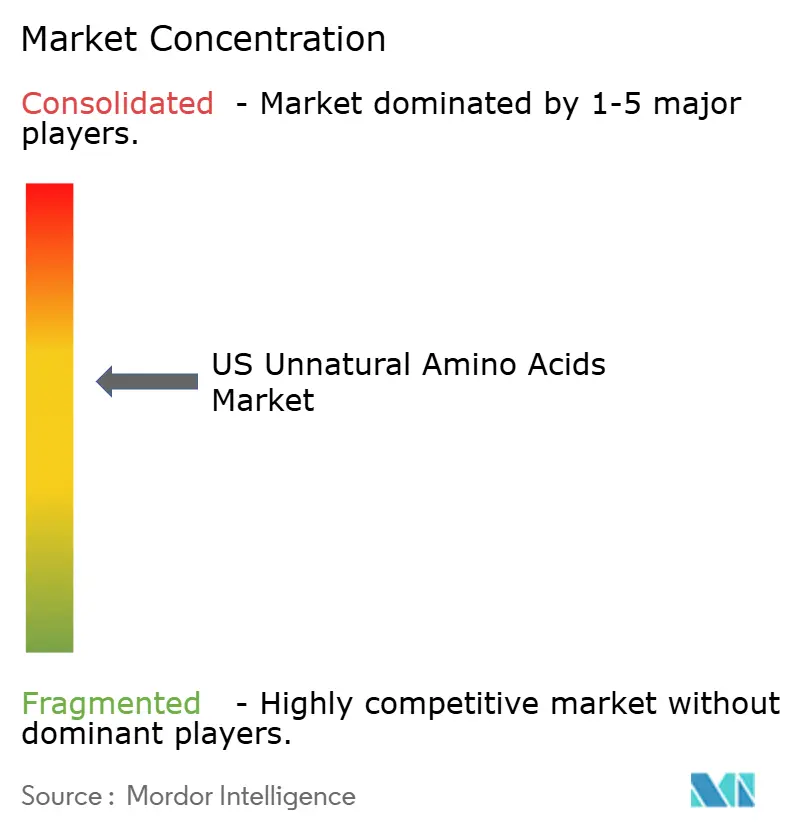
| Market Concentration | Medium |
Major Players *Disclaimer: Major Players sorted in no particular order Image © Mordor Intelligence. Reuse requires attribution under CC BY 4.0. | |
US Unnatural Amino Acids Market Analysis by Mordor Intelligence
In 2025, the US unnatural amino acids market was valued at USD 601.5 million and is projected to grow to USD 644.9 million in 2026, reaching USD 914.3 million by 2031, with a CAGR of 7.2% during the forecast period (2026-2031). Growth is driven by the rising use of modified residues in FDA-approved drugs, with over 110 products across anti-infective, oncology, cardiovascular, and neurology applications. The market also benefits from a steady pipeline of peptide therapeutics, with 29 FDA-approved peptide-based drugs between 2014 and 2024 targeting rare diseases, oncology, and metabolic conditions. Strong research and manufacturing clusters, federal support for protein engineering, and smooth transitions from academic discoveries to clinical-scale procurement further support the market. Supply remains tight due to GLP-1 peptide programs consuming manufacturing capacity, while buyers increasingly prioritize documentation, stereochemical verification, and GMP continuity. AI-driven peptide design and enzymatic production methods are also simplifying the development of complex building blocks, boosting market growth.
Key Report Takeaways
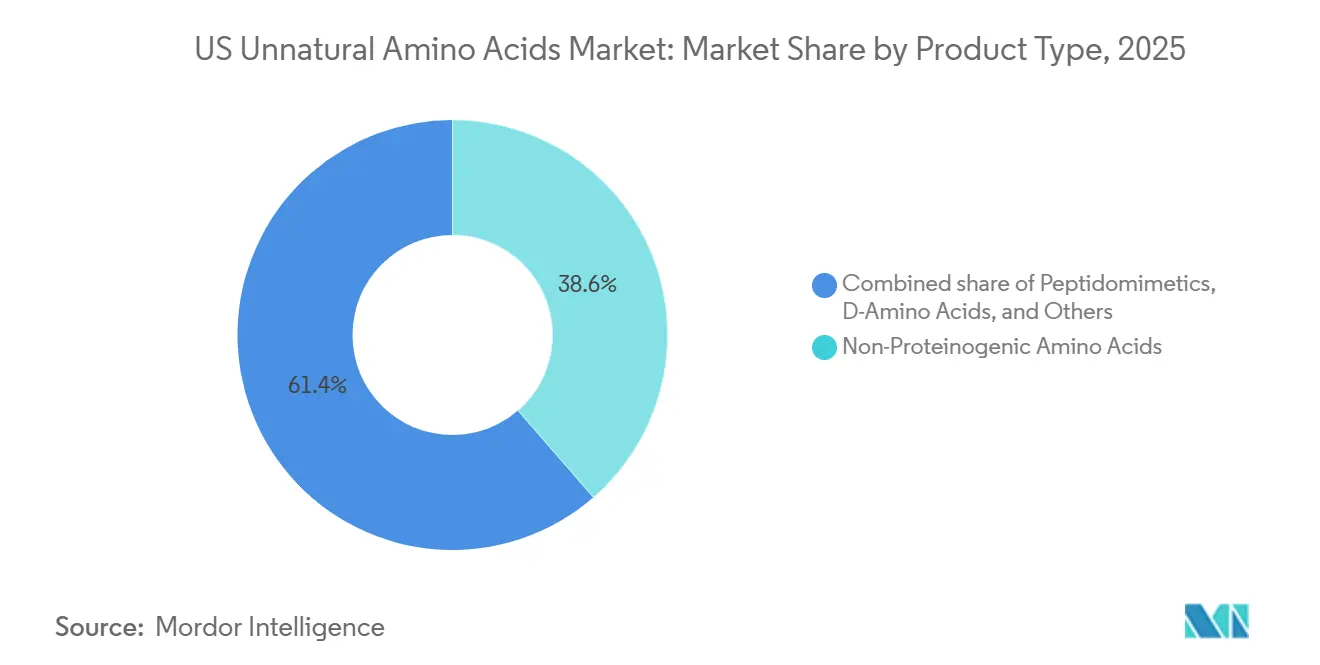
- By product type, non-proteinogenic amino acids led with 38.6% revenue share in 2025, while peptidomimetics are projected to expand at a 8.0% CAGR through 2031.
- By application, pharmaceuticals held 43.8% share in 2025, while food and beverage is forecast to grow at a 8.0% CAGR through 2031.
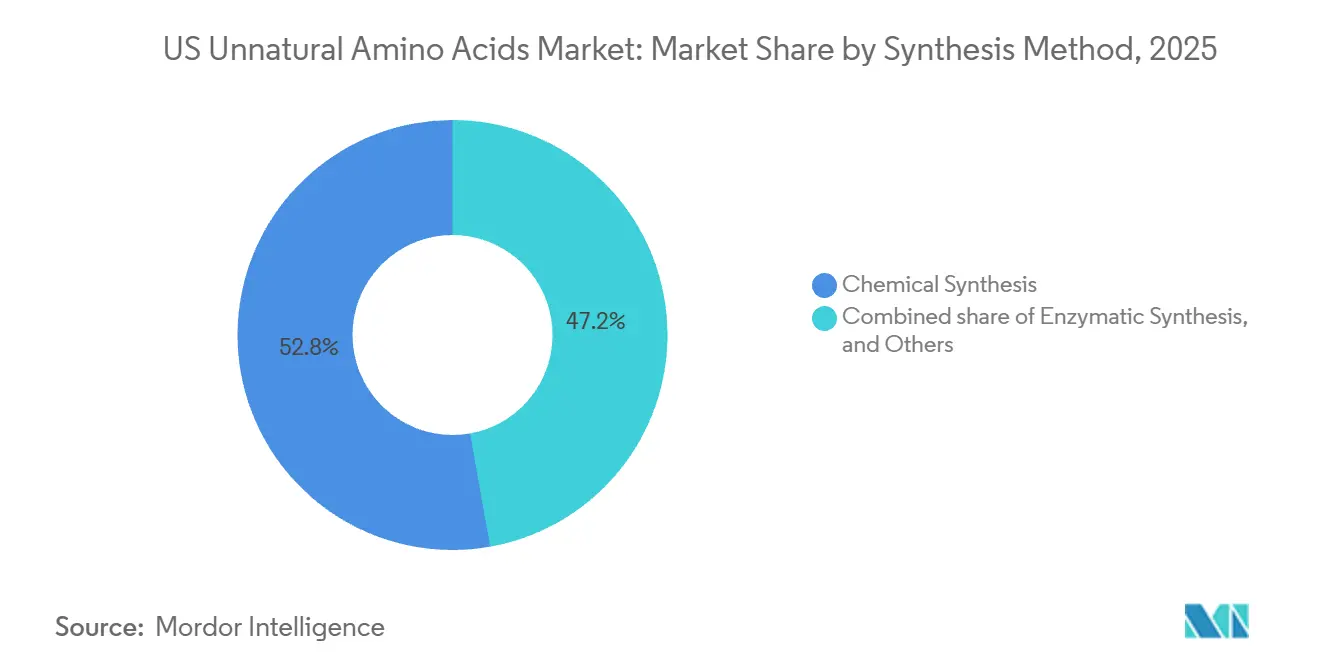
- By synthesis method, chemical synthesis accounted for 52.8% share in 2025, while enzymatic synthesis is expected to record the highest CAGR of 8.5% through 2031.
Note: Market size and forecast figures in this report are generated using Mordor Intelligence’s proprietary estimation framework, updated with the latest available data and insights as of January 2026.
US Unnatural Amino Acids Market Trends and Insights
Drivers Impact Analysis*
| Drivers | (~) % Impact on CAGR Forecast | Geographic Relevance | Impact Timeline |
|---|---|---|---|
| Rising Adoption in Drug Discovery and Therapeutic Development | +1.8% | National, with early gains in Boston, San Francisco, and San Diego biotech corridors | Medium term (2-4 years) |
| Increasing Demand for Biologics and Protein-Based Drugs | +1.5% | National | Long term (≥ 4 years) |
| Growth in Protein Engineering and Genetic Code Expansion | +1.2% | National, concentrated in West Coast and Northeast academic and industry hubs | Long term (≥ 4 years) |
| FDA-Backed Initiatives Promoting Peptide and Protein Drug Innovation | +1.0% | National | Medium term (2-4 years) |
| Advancements in Enzymatic and Microbial Synthesis Technologies | +0.8% | National | Medium term (2-4 years) |
| Rising Demand for Healthier and Functional Food Options | +0.6% | National, with early gains in major metropolitan consumer markets | Short term (≤ 2 years) |
| Source: Mordor Intelligence | |||
Rising Adoption in Drug Discovery and Therapeutic Development
In the U.S., drug developers are increasingly using unnatural amino acids to overcome peptide design limitations that natural residues cannot address. These compounds improve metabolic stability, membrane permeability, and oral exposure, making them essential in programs where native peptides underperform. A 2025 Chemical Science study introduced PepINVENT, a generative design tool that optimizes peptide sequences with non-natural amino acids, broadening their application in medicinal chemistry. Early-stage sequence optimization reduces late-stage chemistry changes and supports the procurement of high-value building blocks[1]. The FDA's peptide pipeline reflects this trend, with approved drugs and clinical programs highlighting the importance of modified residues in rare diseases, diabetes, and oncology. As a result, the U.S. unnatural amino acids market increasingly values suppliers offering strong documentation, impurity control, and regulatory support over catalog variety.
Increasing Demand for Biologics and Protein-Based Drugs
Broader developments in biologics are driving growth in the US market for unnatural amino acids. These amino acids are increasingly used as site-specific conjugation handles and for stability-enhancing substitutions. Peptide-drug conjugates are gaining importance, with a Frontiers in Pharmacology review noting 96 active development programs globally, including 6 in Phase III trials. This pipeline highlights the rising need for a consistent supply of specialty amino acid inputs as clinical batches scale up. In October 2025, Ajinomoto licensed its AJICAP® platform to Astellas, showcasing the growing role of amino acid-enabled conjugation in biopharma manufacturing strategies. Bachem also reported strong growth in its clinical medicines division, reflecting the shift from small-scale research to larger clinical and commercial peptide production. This trend is pushing competition in the US unnatural amino acids market toward suppliers offering end-to-end support, from early development to GMP production, under a unified quality system.
Growth in Protein Engineering and Genetic Code Expansion
In the US, demand for unnatural amino acids is growing, driven by advancements in genetic code expansion. This process inserts non-canonical amino acids at specific locations in engineered proteins. While academia has led this research, it is now shifting toward therapeutic and platform development, requiring greater scale and precision from suppliers. Since 2022, Oregon State University’s GCE4All center has received 420 Addgene requests for genetic code expansion tools and protocols, reflecting increased interest[2]. A 2025 Nature Communications study demonstrated directed evolution of aminoacyl-tRNA synthetases in yeast, achieving incorporation efficiencies near natural translation, addressing a key technical challenge in ncAA-enabled protein production. Essential materials for this work, such as azide-bearing residues, photoactivatable handles, and post-translational modification mimics, demand high purity and consistent quality. This creates a niche in the US market for suppliers capable of advancing from research-grade products to clinical-stage specifications.
FDA-Backed Initiatives Promoting Peptide and Protein Drug Innovation
The US market for unnatural amino acids is increasingly shaped by stricter regulations for peptide and protein therapies. The FDA requires detailed impurity profiling, stereochemical verification, and stability data, emphasizing early supplier qualification. Additionally, FDA guidance highlights the limitations of in silico tools in predicting the behavior of unnatural and modified amino acids, pushing suppliers to go beyond basic characterization. High-quality analytical support now offers a competitive edge, not just compliance. Established producers with GMP systems and regulatory expertise continue to dominate pharmaceutical demand. As a result, the market is becoming more accessible to prepared suppliers but challenging for smaller firms lacking robust process validation.
Restraints Impact Analysis*
| Restraint | (~) % Impact on CAGR Forecast | Geographic Relevance | Impact Timeline |
|---|---|---|---|
| Stringent Regulatory Compliance and Approval Complexities | -1.5% | National | Long term (≥ 4 years) |
| Technical Complexity in Synthesis and Purification | -1.2% | National | Medium term (2-4 years) |
| High Production and Manufacturing Costs | -1.0% | National | Medium term (2-4 years) |
| Stability and Solubility Challenges | -0.8% | National | Medium term (2-4 years) |
| Source: Mordor Intelligence | |||
Stringent Regulatory Compliance and Approval Complexities
In the US unnatural amino acids market, new building blocks face stringent documentation requirements, outpacing those of standard amino acid inputs. Clinical applications necessitate stability studies, impurity characterization, and support from drug master files, often elongating supplier qualification during development. The challenge intensifies when a novel amino acid lacks a recognized pharmacopoeial reference, compelling reviewers to assess each material individually. Furthermore, FDA guidelines on synthetic peptides underscore that due to the limitations of predictive tools, unnatural and modified residues often undergo a more rigorous analytical review. While this heightened scrutiny doesn't dampen demand, it does steer procurement towards larger, well-capitalized suppliers boasting established GMP systems. Consequently, for smaller players in the US unnatural amino acids market, the primary hurdle to transitioning from research supply to clinical and commercial roles is navigating regulatory readiness.
High Production and Manufacturing Costs
Producing stereochemically pure, pharmaceutical-grade unnatural amino acids in the U.S. comes at a premium. The processes of chiral synthesis, resolution, and the need for controlled manufacturing environments, coupled with extensive analytical testing, elevate costs significantly compared to traditional amino acid production. In 2024, Evonik decided to halt its pharma keto acid production at the Hanau site and is now weighing strategic options for its related manufacturing assets. This move underscores the challenges even major chemical corporations face in justifying lower-margin positions in the market. U.S. buyers grapple with reduced procurement flexibility, especially when their programs hinge on custom building blocks that are either structurally narrow or require high purity. Furthermore, raw materials in enantioselective processes are susceptible to broader input cost fluctuations. This volatility is more pronounced in small-batch development than in larger commercial operations. As a result of these dynamics, prices in certain segments of the U.S. unnatural amino acids market remain robust, even with steady end demand.
*Our forecasts treat driver/restraint impacts as directional, not additive. The impact forecasts reflect baseline growth, mix effects, and variable interactions.
Segment Analysis
By Product Type: Pharmaceutical Scaffolding Drives Non-Proteinogenic Dominance
In 2025, non-proteinogenic amino acids accounted for 38.6% of the US unnatural amino acids market, making them the top product category. Their dominance stems from their structural variety, including alpha-methyl amino acids, beta-amino acids, N-methyl residues, and side-chain-modified variants, which drug developers use to improve stability, binding geometry, and exposure. This class has proven its value in approved anti-infective, anticancer, and neurology drugs, solidifying its commercial importance. A 2024 study in Frontiers in Bioengineering and Biotechnology demonstrated the recombinant biosynthesis of β-hydroxyenduracididine and β-methylphenylalanine in engineered Escherichia coli, with β-methylphenylalanine scalable to larger fermentation volumes. This scalability could reduce biosynthesis costs for key pharmacological residues, broadening market access without altering demand patterns. D-amino acids, known for their protease resistance in cyclic and stapled peptide designs, are the next key category. The 'other' category supports macrocyclic peptide and constrained peptidomimetic programs but has yet to match non-proteinogenic demand.
Peptidomimetics are expected to grow the fastest, with an 8.0% CAGR through 2031 in the US unnatural amino acids market. This reflects a shift from native peptide scaffolds to structures that retain pharmacophore behavior while addressing metabolic weaknesses. A 2025 Chemical Reviews article highlighted how non-hydrolyzable isosteres, cyclic backbones, and rigid replacements are shaping next-generation therapeutic designs. These advancements drive demand for specialized staple residues, constrained amino acids, and macrocyclization-compatible intermediates over standard peptide components. With more candidates advancing in oncology, cardiovascular, central nervous system, and metabolic pipelines, this segment is set to outpace growth in established categories.

By Application: Pharmaceutical Leadership Intact as Food and Beverage Shifts to High Gear
In 2025, pharmaceuticals led the U.S. unnatural amino acids market with a 43.8% share, driven by the widespread use of UAA-infused biologics, cyclic peptides, and peptide-inspired therapeutics in the development pipeline. This sector benefits from higher revenue in regulated therapy programs compared to research or commodity channels. Biotechnology ranked second, supported by cell culture media and recombinant protein workflows, where modified residues enhance yields and reduce aggregation. The chemical industry also showed strong demand, using unnatural amino acids as chiral auxiliaries, intermediates, or selective synthesis tools. Additionally, the 'others' segment, including diagnostics, cosmetics, and research reagents, added stability to the market by ensuring steady demand outside drug development cycles.
The food and beverage sector is projected to grow at an 8.0% CAGR through 2031, making it the fastest-growing application in the U.S. unnatural amino acids market. This growth stems from rising interest in functional formulations using specialty amino acids for performance, wellness, and clinical nutrition. Ingredients like ornithine, citrulline, and gamma-aminobutyric acid are gaining popularity in premium products with higher price points. Ajinomoto’s March 2026 launch of GINO Wellbio highlights a shift from basic fortification to advanced delivery-engineered amino acid systems targeting gut bacteria. This trend raises technical standards for food-grade inputs, creating specialized demand while pharmaceuticals remain the primary revenue driver.
By Synthesis Method: Chemical Infrastructure Leads, Biocatalysis Reshapes the Long-Term Outlook
In 2025, chemical synthesis led the US unnatural amino acids market, holding 52.8% of the market share. This dominance stems from the established use of solid-phase peptide synthesis and liquid-phase methods, which ensure reproducibility, scale control, and analytical traceability for regulated production. These methods are optimized for D-amino acids, N-methyl residues, beta-amino acids, and other modified building blocks, making them central to commercial manufacturing. A 2024 Nature study introduced dehydrogenative tailoring, a radical enzyme-based method for producing diverse non-canonical amino acids, supporting hybrid production concepts. Despite advancements in alternatives, chemical synthesis remains the primary regulated route due to its strong validation history and extensive manufacturing base. The "others" category includes flow chemistry and hybrid processes, which enhance solvent efficiency and process control in specific applications. While the method mix is diversifying, the US market will continue relying on chemical synthesis throughout most of the forecast period.
Between 2026 and 2031, enzymatic synthesis in the US unnatural amino acids market is projected to grow at a CAGR of 8.5%, making it the fastest-growing segment. Advances in biocatalyst engineering are improving its economic feasibility, while sustainability and life cycle performance are gaining importance in raw material selection. A 2025 Nature Communications study demonstrated a modular multi-enzyme cascade producing over 25 non-canonical amino acids from glycerol in a one-pot, three-step process under mild aqueous conditions. Another 2025 Nature Chemistry study highlighted a photobiocatalytic cascade for stereoselective synthesis of diverse unnatural prolines, indicating broader substrate scope and scalability. As these methods mature, enzymatic production is expected to gain strategic importance, particularly where reduced solvent use, milder conditions, and flexibility can offset traditional cost challenges.
Geography Analysis
In 2026, the US market for unnatural amino acids was valued at USD 644.9 million, with demand concentrated in a few key innovation hubs. Boston-Cambridge, the San Francisco Bay Area, and San Diego lead demand due to their strong presence in peptide, biologic, and protein engineering programs. These clusters benefit from top universities, academic medical centers, and specialized service providers, enabling the shift from discovery to regulated clinical sourcing. The Northeast remains critical, supported by federal research funding and established pharmaceutical infrastructure, driving early-stage UAA demand that transitions into commercial use. The Pacific Northwest is also gaining importance, with Oregon State University’s GCE4All center expanding research on genetic code tools and non-canonical amino acids.
California is the main supply hub for the US unnatural amino acids market. Bachem’s facilities in Vista and Torrance connect GMP peptide manufacturing to two major demand regions. Bachem's 2025 investment program further strengthened California’s role in large-scale peptide and building block production. The Midwest and Southeast manufacturing corridors contribute upstream, focusing on raw materials, resins, coupling reagents, and synthesis inputs. This creates a geographically concentrated market at the high-value end, supported by a broader national supply base for precursor materials.
Food and beverage demand is more evenly distributed across the US, with higher activity in states with strong nutraceutical and consumer health manufacturing bases. California, Texas, New York, and Florida are key players, hosting established formulation brands and health-focused manufacturers. The US unnatural amino acids market combines pharmaceutical demand in clusters with a broader consumer product demand map. This mix creates a feedback loop where research, clinical development, manufacturing, and commercial uptake are more interconnected than in most other single-country markets.
Competitive Landscape
The U.S. unnatural amino acids market is moderately consolidated, led by specialized amino acid manufacturers, peptide synthesis firms, and biotechnology solution providers. Key players such as Ajinomoto Co., Inc., GenScript Biotech Corporation, and Bachem AG offer extensive portfolios, including non-proteinogenic amino acids, peptide building blocks, and custom synthesis services. The market benefits from strong pharmaceutical and biotechnology R&D investments, with increasing use of unnatural amino acids in biologics, peptide therapeutics, antibody-drug conjugates (ADCs), and protein engineering.
Competition focuses on technological expertise, product purity, GMP-compliant manufacturing, and support for complex drug development. Leading suppliers invest in advanced synthesis technologies, custom amino acid development, and scalable manufacturing to meet rising demand from pharmaceutical companies and research institutions. Collaborations with biotech firms working on mRNA therapeutics, gene therapies, and next-generation biologics are key differentiators. Innovations in genetic code expansion, site-specific protein modification, and synthetic biology are driving competitive intensity.
Biotechnology hubs in Boston, San Diego, and the San Francisco Bay Area fuel demand for research-grade and pharmaceutical-grade unnatural amino acids. Companies are expanding production and diversifying portfolios to meet the growing need for peptide-based drugs, oncology treatments, and metabolic disease therapies. As pharmaceutical developers increasingly use unnatural amino acids to enhance drug stability, bioavailability, and therapeutic precision, competition is expected to center on innovation, regulatory compliance, intellectual property, and customized manufacturing services.
US Unnatural Amino Acids Industry Leaders
-
Merck KGaA
-
Thermo Fisher Scientific Inc
-
Bachem Holding AG
-
Ajinomoto Co., Inc.
-
GenScript Biotech Corporation
- *Disclaimer: Major Players sorted in no particular order
Recent Industry Developments
- June 2026: Bachem Holding AG inaugurated Building K in Bubendorf, Switzerland, its most advanced large-volume peptide and oligonucleotide production plant; the facility successfully completed regulatory inspection by the Swiss Agency for Therapeutic Products (Swissmedic) at end of 2025 and commenced commercial production ramp-up in 2026, with CHF 332.6 million invested in 2025 and CHF 400+ million in CAPEX planned for 2026, reinforcing the company's large-scale GMP supply position for UAA-based APIs globally.
- March 2026: Ajinomoto Co., Inc. developed a new palm oil-free and petrochemical-free production method for amino acid-based biosurfactants, utilizing bio-derived raw materials with verified GHG reduction across the value chain; commercial sample shipments to cosmetics industry customers are planned for 2026 as the company advances the technology toward quantitative scale-up.
- October 2025: Ajinomoto Co., Inc. and Astellas Pharma Inc. entered a licensing agreement granting Astellas rights to Ajinomoto's AJICAP® amino acid-based site-specific conjugation technology for the research, development, and manufacturing of next-generation antibody-drug conjugates (ADCs); the agreement expands the application of Ajinomoto's amino science capabilities into the biopharmaceutical ADC manufacturing space.
US Unnatural Amino Acids Market Report Scope
| D-Amino Acids |
| Non-Proteinogenic Amino Acids |
| Peptidomimetics |
| Others |
| Pharmaceuticals |
| Biotechnology |
| Chemical Industry |
| Food and Beverage |
| Others |
| Chemical Synthesis |
| Enzymatic Synthesis |
| Others |
| By Product Type | D-Amino Acids |
| Non-Proteinogenic Amino Acids | |
| Peptidomimetics | |
| Others | |
| By Application | Pharmaceuticals |
| Biotechnology | |
| Chemical Industry | |
| Food and Beverage | |
| Others | |
| By Synthesis Method | Chemical Synthesis |
| Enzymatic Synthesis | |
| Others |
Key Questions Answered in the Report
What is the expected size of the US unnatural amino acids space by 2031?
It is projected to reach USD 914.3 million by 2031, rising from USD 644.9 million in 2026 at a 7.2% CAGR over 2026-2031.
Which product type currently leads demand in the United States?
Non-proteinogenic amino acids led in 2025 with 38.6% share because they are widely used across pharmaceutical building block and specialty research applications.
Which application is growing the fastest through 2031?
Food and beverage is forecast to grow the fastest at a 8.0% CAGR, supported by demand for functional formulations and delivery-engineered amino acid products.
Which synthesis route dominates current production?
Chemical synthesis led with 52.8% share in 2025 because it has the deepest GMP validation history and the broadest installed manufacturing base.