
Food Amino Acids Market Size and Share
Market Overview
| Study Period | 2021 - 2031 |
|---|---|
| Market Size (2026) | USD 9.71 Billion |
| Market Size (2031) | USD 13.75 Billion |
| Growth Rate (2026 - 2031) | 7.21 % |
| Fastest Growing Market | South America |
| Largest Market | Asia-Pacific |
| Market Concentration | Medium |
Major Players *Disclaimer: Major Players sorted in no particular order Image © Mordor Intelligence. Reuse requires attribution under CC BY 4.0. | |
Food Amino Acids Market Analysis by Mordor Intelligence
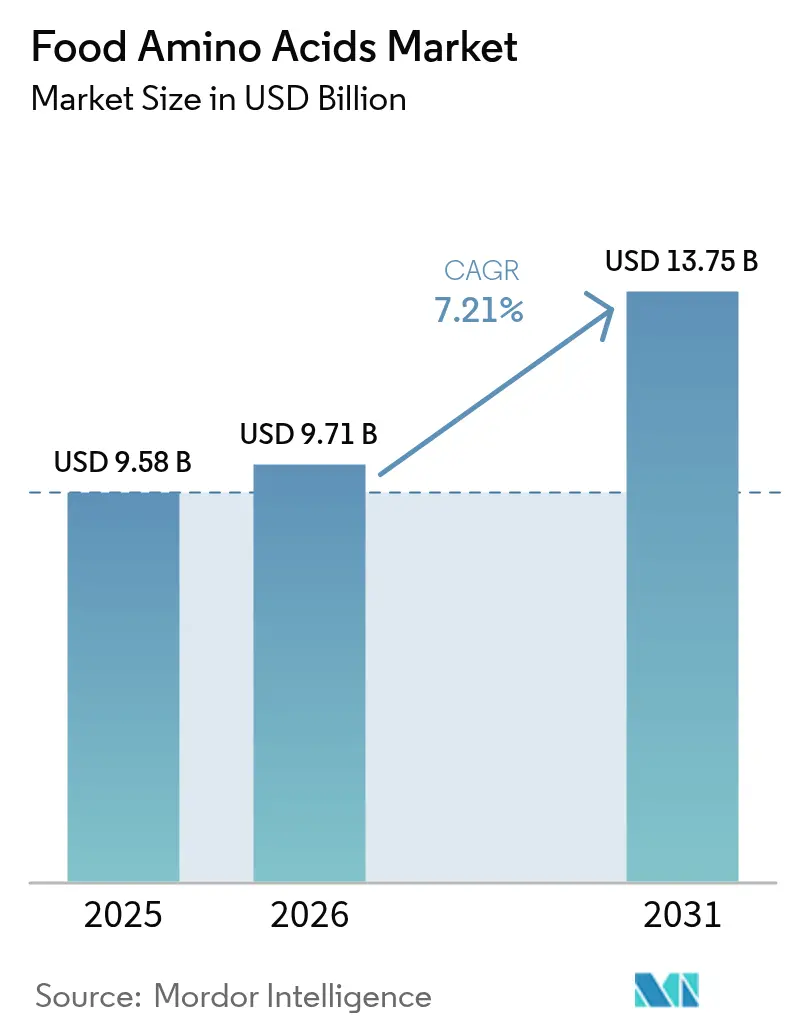
The Food Amino Acids market size is projected to grow from USD 9.58 billion in 2025 to USD 9.71 billion in 2026, reaching USD 13.75 billion by 2031, with a CAGR of 7.21% during the forecast period of 2026-2031. Key factors driving this growth include increasing fortification regulations for infant formula, expanding applications of amino acids in sports nutrition products, and a shift from animal-based protein to plant-based protein blends. The development of precision fermentation technology is enabling manufacturers to mitigate feedstock price fluctuations while reducing greenhouse gas emissions. Asia-Pacific holds the largest market share, primarily due to China's established lysine and methionine production clusters. Meanwhile, South America is emerging as a significant player, leveraging its abundant sugarcane and soy resources to attract foreign direct investment. Additionally, global consumers are increasingly demanding non-GMO, kosher, and halal certifications, prompting reformulations and the establishment of long-term offtake agreements with suppliers that can ensure traceability and regulatory compliance.
Key Report Takeaways
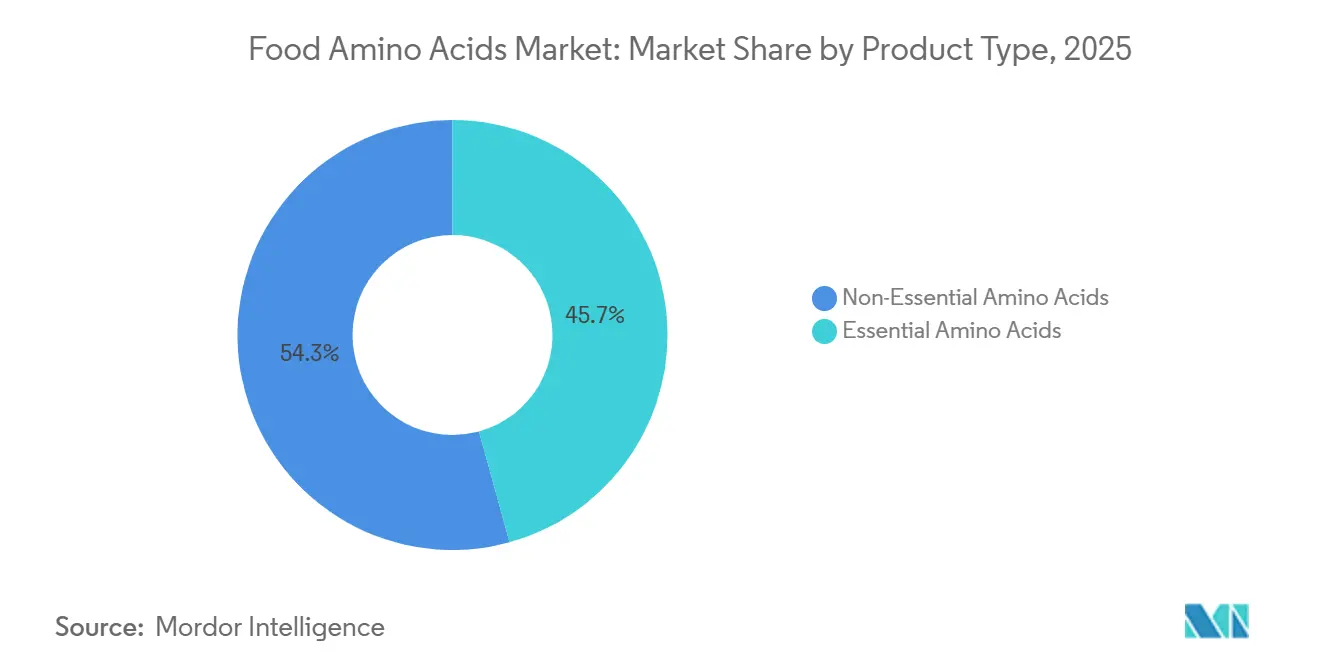
- By product type, non-essential amino acids held 54.27% of the 2025 food amino acids market share, while essential amino acids are forecast to post the fastest 8.88% CAGR through 2031.
- By source, plant-based fermentation accounted for 41.48% of 2025 supply; precision fermentation is projected to expand at a 9.36% CAGR to 2031, the highest among all sources.
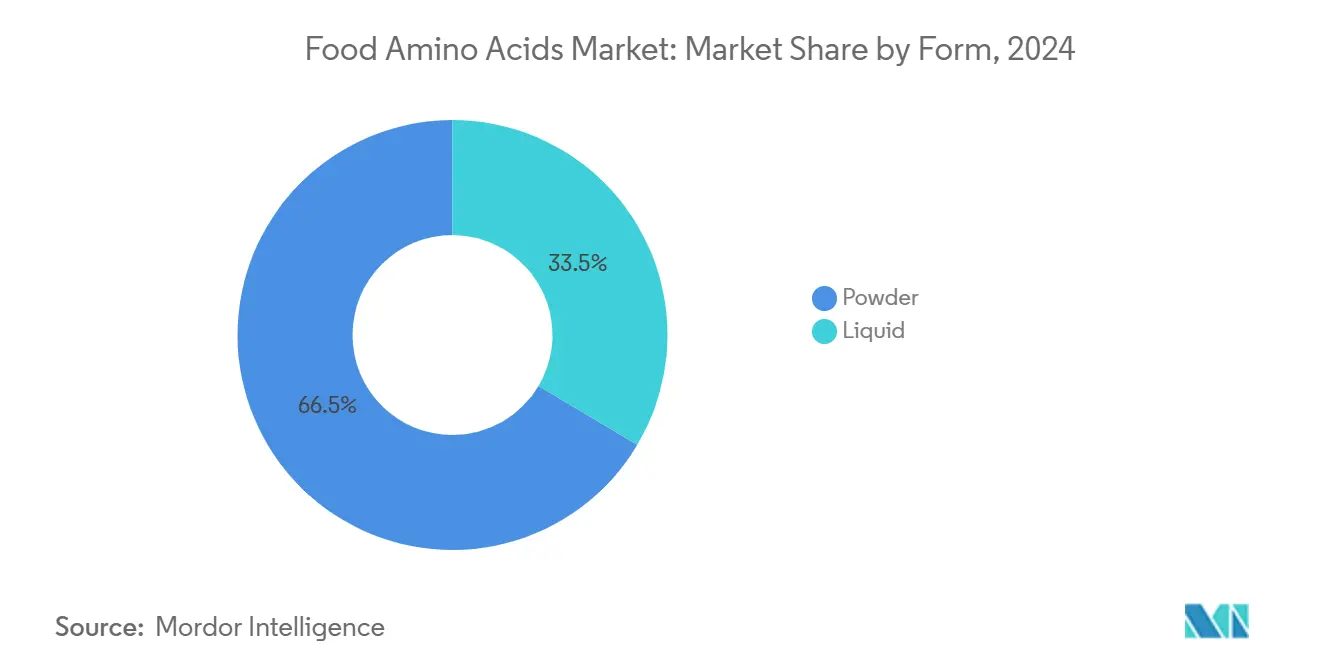
- By form, powders dominated with 66.47% share in 2025, whereas liquid concentrates are set to grow the quickest at 7.58% CAGR over 2026-2031.
- By application, dietary supplements commanded 40.18% of 2025 revenue, yet infant nutrition carries the top 7.45% CAGR through 203.
- By geography, Asia-Pacific led with 32.18% share in 2025; South America stands out with the strongest 8.15% CAGR to 2031.
Note: Market size and forecast figures in this report are generated using Mordor Intelligence’s proprietary estimation framework, updated with the latest available data and insights as of 2026.
Market Trends and Insights
Drivers Impact Analysis of Food Amino Acids Market*
| Driver | (~) % Impact on CAGR Forecast | Geographic Relevance | Impact Timeline |
|---|---|---|---|
| Growing demand for high-protein functional foods | +1.8% | Global, with strongest uptake in North America and Europe | Medium term (2-4 years) |
| Rising use in sports nutrition and dietary supplements | +1.5% | North America, Europe, Asia-Pacific urban centers | Short term (≤ 2 years) |
| Growth of plant-based diets drives amino acid use for complete protein profiles | +1.2% | Global, led by North America and Western Europe | Medium term (2-4 years) |
| Increasing use of amino acids as food additives for flavor enhancement | +0.9% | Asia-Pacific core, spill-over to Middle East and Africa | Long term (≥ 4 years) |
| Infant-formula fortification mandates | +1.1% | Global, with regulatory influence from FDA, EFSA, and China's SAMR | Short term (≤ 2 years) |
| Advancements in microbial fermentation and enzymatic production technologies | +1.4% | Global, concentrated in Asia-Pacific and North America production hubs | Long term (≥ 4 years) |
| Source: Mordor Intelligence | |||
Growing demand for high-protein functional foods
The increasing consumer emphasis on health, wellness, and nutrition is a key driver of the food amino acids market. Growing awareness of the advantages of high-protein diets, such as muscle maintenance, weight management, and overall well-being, has prompted food manufacturers to enhance products with amino acids to address the evolving nutritional preferences of health-conscious consumers. According to a 2025 International Food Information Council study, 70% of Americans aim to increase their protein intake, reflecting a nearly 20% rise over three years. Additionally, Cargill’s 2025 Protein Profile research revealed that 57% of consumers who read nutrition labels specifically seek information on protein content, underscoring the increasing significance of protein-rich foods and ingredients in daily diets [1]. This growing demand for protein is driving food and beverage manufacturers to integrate amino acids into a diverse range of products, including beverages, snacks, bakery items, and dairy alternatives. Amino acids enhance functional benefits, improve protein quality, and contribute to complete protein profiles, meeting consumer expectations for convenient and nutritionally optimized foods. As global trends toward health-conscious eating continue to expand, the demand for high-protein functional foods fortified with amino acids is anticipated to grow further, supporting the sustained expansion of the food amino acids market.
Rising use in sports nutrition and dietary supplements
The increasing emphasis on fitness, athletic performance, and overall wellness is driving significant demand for amino acids in sports nutrition and dietary supplements. Amino acids play a critical role as functional ingredients, aiding muscle recovery, endurance, and performance. They are widely used in protein powders, energy bars, ready-to-drink beverages, and specialized supplements designed for active adults. Between November 2023 and November 2024, 63.7% of adults in England adhered to the Chief Medical Officers’ guidelines of engaging in 150 minutes or more of moderate-intensity physical activity per week, representing approximately 30 million individuals [2]. This high level of physical activity highlights a substantial, health-conscious population seeking nutritional products to optimize fitness outcomes, thereby driving the adoption of amino acid-enriched products. As consumers increasingly focus on functional nutrition to complement regular exercise, food manufacturers and supplement brands are incorporating amino acids into diverse product formats to meet this rising demand. This trend is anticipated to persist, establishing amino acids as a fundamental ingredient in the growing sports nutrition and dietary supplement market.
Growth of plant-based diets drives amino acid use for complete protein profiles
The increasing adoption of plant-based diets is a significant driver in the global food amino acids market. Manufacturers are utilizing amino acids to provide complete protein profiles in vegan and vegetarian products. Since plant-based proteins often lack certain essential amino acids, fortification with specific amino acids ensures these products achieve nutritional equivalence to animal-derived proteins. This approach is essential for product developers aiming to meet consumer expectations regarding health, functionality, and taste in plant-based alternatives. This trend is particularly evident in regions with growing plant-focused populations. For example, in the UK, the vegan population has reached 2.5 million, accounting for 4.7% of adults following a plant-based diet. This marks a notable increase of 1.1 million individuals between 2023 and 2024, highlighting the rapid shift toward plant-based lifestyles [3]. Such demographic growth directly drives demand for amino acids to improve protein quality in plant-based foods, including meat substitutes, dairy alternatives, and nutritional beverages.
Increasing use of amino acids as food additives for flavor enhancement
The increasing use of amino acids as food additives is a key factor driving the growth of the food amino acids market, particularly for improving taste and flavor profiles. Amino acids such as glutamate, glycine, and arginine are commonly used to enhance umami, sweetness, and overall flavor perception in various food products, including snacks, seasonings, sauces, and processed foods. These amino acids interact with taste receptors to amplify specific flavor notes, making them essential components in the formulation of savory and sweet products. With growing consumer demand for flavorful, clean-label, and naturally tasting products, food manufacturers are incorporating amino acids to achieve desired taste profiles without relying on artificial additives or high salt content. This approach not only facilitates product differentiation but also aligns with consumer preferences for healthier and more enjoyable eating experiences. Additionally, the use of amino acids supports the development of low-sodium and reduced-sugar products, catering to health-conscious consumers. As a result, the targeted use of amino acids for flavor enhancement continues to drive innovation and adoption within the food industry, enabling manufacturers to meet evolving consumer expectations while maintaining product quality and appeal.
Restraints Impact Analysis of Food Amino Acids Market*
| Restraint | (~) % Impact on CAGR Forecast | Geographic Relevance | Impact Timeline |
|---|---|---|---|
| Volatile prices of key feedstocks | -0.8% | Global, with acute pressure in North America and South America | Short term (≤ 2 years) |
| Stringent purity and allergen regulations | -0.5% | Europe, North America, with emerging influence in Asia-Pacific | Medium term (2-4 years) |
| Supply-demand imbalance in specialty essential amino acids | -0.6% | Global, concentrated in tryptophan and threonine markets | Medium term (2-4 years) |
| Fermentation-plant environmental and odor compliance risk | -0.4% | Asia-Pacific core, with regulatory tightening in China and Southeast Asia | Long term (≥ 4 years) |
| Source: Mordor Intelligence | |||
Volatile prices of key feedstocks
The fluctuating prices of key feedstocks present a significant challenge to the market. Variations in the costs of raw materials, including soybeans, corn, and other agricultural products, directly affect the production costs of amino acids. These price fluctuations are influenced by factors such as unpredictable weather conditions, geopolitical tensions, and changes in trade policies. Such volatility in feedstock prices poses difficulties for manufacturers in maintaining stable profit margins and pricing strategies, thereby restraining market growth. Furthermore, the increasing demand for these feedstocks in other industries, such as biofuels and animal feed, heightens competition and exacerbates price instability. This competition often results in supply shortages, compelling manufacturers to pay higher prices, which can disrupt production schedules and elevate operational costs. The lack of price stability also complicates long-term planning and investment decisions for companies in the food amino acids market.
Stringent purity and allergen regulations
Regulatory complexity contributes to higher compliance costs and creates barriers to market entry, particularly for smaller manufacturers that lack robust quality assurance systems. The European Food Safety Authority (EFSA) has updated its guidance for novel food applications, mandating detailed documentation such as whole genome sequencing and antibiotic resistance assessments for production strains. These requirements have significantly increased both application costs and timelines. Similarly, the U.S. Food and Drug Administration (FDA) has enhanced oversight of dietary supplements, introducing mandatory adverse event reporting and updated manufacturing practices, which impose ongoing compliance obligations that disproportionately affect smaller manufacturers. Additionally, cross-border regulatory harmonization remains incomplete, compelling manufacturers to navigate multiple approval processes to access global markets. While the establishment of tolerable upper intake levels for amino acids provides regulatory clarity, it also introduces liability risks for manufacturers whose products exceed these safety thresholds.
*Our forecasts treat driver/restraint impacts as directional, not additive. The impact forecasts reflect baseline growth, mix effects, and variable interactions.
Food Amino Acids Market Segment Analysis
By Type:
Essential Amino Acids Accelerate on Infant and Sports DemandNon-essential amino acids accounted for 54.27% of the market share in 2025, while the essential amino acids are projected to grow at a compound annual growth rate (CAGR) of 8.88% during the period 2026-2031. This growth is driven by infant formula manufacturers adapting to updated Codex Alimentarius guidelines, which increased the minimum tryptophan concentration from 17 milligrams per 100 kilocalories to 22 milligrams per 100 kilocalories for formulas designed for preterm infants. Additionally, phenylalanine plays a key role in aspartame synthesis, while threonine is increasingly used in clinical nutrition formulas for patients with inflammatory bowel disease. Controlled trials have demonstrated that threonine supplementation can enhance intestinal barrier function by 35%.
Non-essential amino acids, particularly glutamic acid and aspartic acid, continue to dominate savory flavor applications and are integral to the Asian condiment industry. Glutamic acid's market share in 2025 highlights its widespread use in products such as soy sauce, oyster sauce, and instant noodle seasoning packets, where it provides umami flavor at one-tenth the cost of yeast extracts. Regulatory frameworks, including FDA 21 CFR Part 172 and the European Food Safety Authority's (EFSA) food additive database, allow unrestricted use of glutamic acid and aspartic acid in most food categories. This regulatory stability ensures a consistent demand base, even as essential amino acids experience incremental growth.
By Source:
Precision Fermentation Disrupts Cost CurvesPlant-based fermentation, which accounted for 41.48% of the 2025 supply, relies on corn-glucose or cane-sugar feedstocks and remains the primary production method for lysine, threonine, and glutamic acid. This dominance is attributed to established economies of scale and regulatory approvals spanning over three decades. The process utilizes plant-based raw materials, such as corn, sugarcane, or other carbohydrate-rich sources, to produce amino acids through microbial processes. It is favored for its cost efficiency, scalability, and compatibility with existing production facilities, making it a preferred approach for large-scale amino acid manufacturing. Furthermore, plant-based fermentation aligns with growing consumer demand for natural and sustainable production methods, further supporting its adoption in the market.
In contrast, precision fermentation, supported by declining DNA synthesis costs and advancements in AI-driven strain engineering, is the fastest-growing segment in the market, with a CAGR of 9.36%. This method employs genetically engineered microorganisms to produce specific amino acids with high precision, purity, and efficiency. Precision fermentation is gaining momentum due to advancements in synthetic biology, which facilitate the development of optimized microbial strains tailored for amino acid production. Additionally, it offers the flexibility to produce rare or specialty amino acids that are difficult to obtain through traditional methods.
By Form:
Liquid Formulations Gain Functional AdvantagePowder formats accounted for 66.47% of the total volume in 2025, while liquid amino acid concentrates are projected to grow at a CAGR of 7.58% during the period 2026-2031. This shift is driven by functional beverage brands prioritizing solubility, bioavailability, and manufacturing efficiency in ready-to-drink protein shakes and electrolyte solutions. Powder formats remain dominant in dietary supplements, bakery premixes, and infant formula blending due to their lower shipping costs, liquid concentrates weigh three to five times more per unit of active ingredient, and better shelf stability under ambient conditions.
However, liquid formats offer advantages such as eliminating the need for dissolution equipment and reducing clumping risks in high-humidity environments. These benefits make liquid concentrates appealing to co-packers producing single-serve beverage shots and clinical nutrition manufacturers developing enteral feeds that require precise amino acid ratios. The transition toward liquid concentrates is particularly notable in North America and Europe, where rapid beverage innovation cycles and co-packer requirements for reduced changeover times and simplified cleaning validation drive demand.
By Application:
Infant Nutrition Leads Growth Amid Regulatory UpgradesDietary supplements accounted for 40.18% of applications in 2025, making them the largest end-use segment. This category is dominated by branched-chain amino acid powders, leucine capsules, and multi-amino-acid blends, which are marketed for purposes such as muscle recovery, weight management, and cognitive support. While sports and performance nutrition overlaps with dietary supplements, it is differentiated by higher amino acid content per serving, typically ranging from 10 grams to 15 grams compared to 3 grams to 5 grams, and by its distribution through specialty fitness retailers and direct-to-consumer channels. These channels often emphasize clinical validation and third-party testing for banned substances.
Infant nutrition is projected to grow at a CAGR of 7.45% through 2031. This growth is driven by FDA and EFSA regulations mandating minimum concentrations of lysine, methionine, tryptophan, phenylalanine, and threonine in formulas for full-term and preterm infants. Compliance deadlines are set for 2026 for existing products, with immediate effect for new launches. Functional beverages represent a rapidly growing niche, with amino-acid-fortified energy drinks, protein waters, and recovery shots gaining increased shelf space in North American and European convenience stores. The "Others" category, which includes food-grade amino acid consumption, is also expanding. Growth in this segment is supported by improving regulatory clarity and rising demand for human-grade ingredients in pet food due to premiumization trends.
Geography Analysis
APAC Food Amino Acids Market
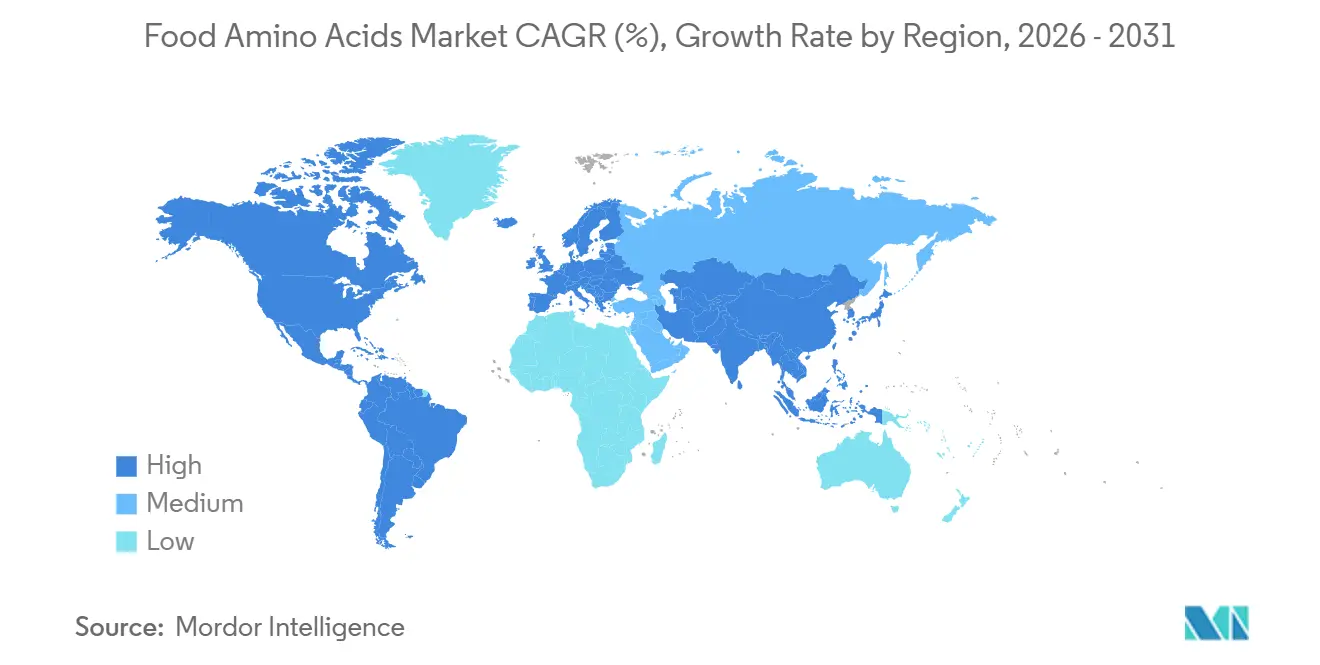
In 2025, Asia-Pacific holds a significant 32.18% market share, reflecting its integrated supply chain capabilities and strong governmental support for biotechnology. However, this dominance faces challenges, including trade tensions and increased regulatory scrutiny, which create uncertainty for Chinese suppliers that dominate global production capacity. Key growth drivers in the region include rising health consciousness, urbanization, and a growing middle class with a preference for premium nutrition. While India's nutraceutical market is expanding and Japan is recognized for its advanced fermentation technologies, China's large-scale manufacturing capacity integrates these elements, creating a comprehensive ecosystem for amino acid production and consumption.
South America Food Amino Acids Market
South America is projected to grow at a compound annual growth rate (CAGR) of 8.15% during 2026-2031, the highest among all regions. Brazil and Argentina are capitalizing on abundant soy and sugarcane feedstocks to attract foreign direct investment in fermentation capacity. Additionally, domestic demand for fortified foods is increasing alongside middle-class growth. Brazil's strong fermentation infrastructure, supported by its agricultural resources, positions the country for expanded amino acid production. In Argentina, the growing nutraceutical market is driving demand for specialized amino acid formulations.
North America and EMEA Food Amino Acids Market
North America and Europe continue to play important roles in the food amino acids market. North America benefits from advanced research and development capabilities, a well-established nutraceutical industry, and growing consumer interest in functional foods. Europe also contributes significantly, leveraging its mature market infrastructure and focus on innovation in food and nutrition. The Middle East and Africa, while smaller in absolute market size, are experiencing double-digit growth. Gulf Cooperation Council (GCC) countries are investing in food security initiatives, while Nigeria and Egypt are expanding domestic infant formula production to reduce reliance on imports. These developments are driving growth in the region's food amino acids market.
Regulatory Landscape
Regulation of food amino acids continues to split across additive, nutrient, and novel ingredient pathways, with Codex Alimentarius serving as a reference point for fortified foods such as infant formula. In the United States, amino acids used as nutrients in foods are addressed under FDA regulations (including 21 CFR 172.320), and the agency has also signaled tighter process expectations for food-ingredient safety substantiation through its 2026 Human Foods Program priority deliverables, including work tied to GRAS oversight.
In Europe, food additive use is governed under Regulation (EC) No 1333/2008 and related purity and use-condition specifications, and market access depends on demonstrating compliance for the specific substance and its manufacturing route. Separately, EFSA scientific opinions and European Commission implementing acts continue to authorize amino acids for feed uses on a strain-specific basis (for example, via implementing acts in 2026), reinforcing the need for well-documented production-strain safety packages for fermentation-derived amino acids, including where companies operate across both food and feed value streams.
Value Chain Analysis
The value chain begins with carbohydrate feedstocks (notably corn glucose and cane sugar) and process inputs (nutrients, enzymes, utilities), which feed large-scale fermentation that remains the dominant production route globally. Typical production uses organisms such as Corynebacterium glutamicum and Escherichia coli. Output then moves through downstream recovery, purification, and drying or concentration into powders and liquids, followed by blending and premix operations for applications such as dietary supplements, functional beverages, and infant nutrition that require consistent specification control.
Distribution typically runs through ingredient distributors and direct supply to multinational food and nutrition manufacturers, with qualification anchored in compendial and customer specifications (for example, FCC and pharmacopeial standards where relevant). The chain is shaped by regional concentration in Asia-Pacific, trade flows into Latin America and Africa, and investments that add or localize higher-end derivative and specialty capacity, including Evonik putting a lipid and amino acid derivatives plant into production in Hanau, Germany (March 2025). Buyers increasingly demand traceability and certification (non-GMO, kosher, halal), pushing suppliers toward long-term offtake agreements, tighter QC documentation, and multi-site sourcing strategies to manage geopolitical, tariff, and logistics risk.
Competitive Landscape
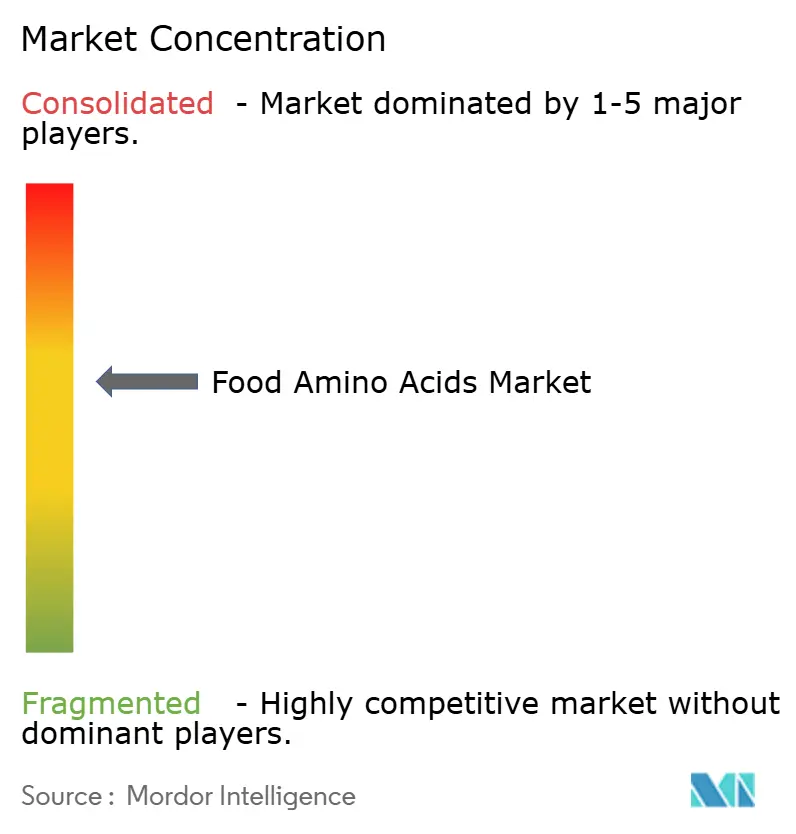
The food amino acids market is moderately consolidated, with key players including Ajinomoto Co., Inc., Evonik Industries AG, Meihua Holdings Group Co., Ltd., CJ CheilJedang Corporation, and Daesang Holdings Co., Ltd. This market structure allows both established multinational corporations and emerging biotechnology firms to secure market share by utilizing differentiated production technologies and specialized application expertise. For instance, Ajinomoto has maintained a strong market presence through advanced chemical synthesis methods, while newer entrants are leveraging innovative approaches such as precision fermentation to gain a competitive advantage. This dynamic environment encourages collaboration and innovation across the value chain.
Strategic partnerships are significantly influencing the competitive landscape of the food amino acids market. For example, the collaboration between Danone and Ajinomoto focuses on developing amino acid feed supplements aimed at reducing CO2 emissions in dairy farming. These partnerships not only address sustainability challenges but also strengthen the market positioning of the participating companies. Additionally, precision fermentation startups are increasingly collaborating with traditional food companies to scale production and navigate regulatory requirements, further intensifying competition within the market.
Technology adoption in the food amino acids market reveals a distinct bifurcation. On one side, companies are investing heavily in precision fermentation technologies to produce amino acids more sustainably and efficiently. On the other side, firms optimizing traditional chemical synthesis methods continue to dominate segments where cost-effectiveness and established processes are critical. Regulatory approvals and cost structures remain pivotal factors influencing competitive positioning and strategic decisions. For instance, while precision fermentation technologies show significant promise, they often involve higher initial costs and face regulatory challenges, which can slow their adoption compared to traditional methods.
Food Amino Acids Industry Leaders
-
Ajinomoto Co., Inc.
-
Evonik Industries AG
-
Meihua Holdings Group Co., Ltd.
-
CJ CheilJedang Corporation
-
Daesang Holdings Co., Ltd.
- *Disclaimer: Major Players sorted in no particular order
Food Amino Acids Market Companies Covered in this Report
- Ajinomoto Co., Inc.
- Evonik Industries AG
- Meihua Holdings Group Co., Ltd.
- CJ CheilJedang Corporation
- Sumitomo Chemical Co., Ltd.
- Kyowa Hakko Bio Co. Ltd
- Daesang Holdings Co., Ltd.
- Global Bio-Chem Technology Group
- Wuxi Jinghai Amino Acid Co., Ltd.
- AMINO GmbH
- Sichuan Tongsheng Amino Acid Co., Ltd.
- Shijiazhuang Jirong Pharmaceutical Co., Ltd.
- Vinstar Biotech Pvt Ltd
- Vizag chemical
- Hexon Laboratories Private Limited
- 7HILL AGROTECH
- AB Enterprises
- Hebei Huanwei Biotech Co.,Ltd
- Brova Limited
- Foodchem International Corporation
Market Opportunities and Future Outlook
Regulatory and standards tightening around allowable technological functions, use limits, and safety substantiation creates room for suppliers that can provide high-purity, well-documented amino acids and application support for regulated end uses such as infant nutrition and clinical nutrition. ANVISA issuing Normative Instruction No. 452/2026 (June 2026) is one example of an active rulemaking environment in major growth geographies, increasing the value of compliance-ready portfolios, localized dossiers, and formulation support that help brand owners maintain claims and labeling consistency across markets.
On the supply side, resilience and regional diversification are emerging as commercial levers alongside cost, particularly where fermentation capacity is concentrated and exposed to price pressure. The June 2026 rescue package for Eurolysine by France and Avril (EUR 70 million) highlights how the strategic importance and continuity of domestic amino-acid fermentation assets can attract direct support, shaping procurement strategies for European buyers and opening opportunities for multi-origin supply arrangements. At the same time, progress in strain engineering and alternative carbon utilization pathways (including published 2026 research on improved microbial production and enzymatic routes using methanol and CO2 as feedstocks) supports new routes to specialty and essential amino acids, reinforcing the business case for precision fermentation and advanced downstream purification platforms in food-grade and adjacent higher-value specifications.
Recent Industry Developments in Food Amino Acids Market
- March 2026: Evonik Industries AG announced a 10% global net price increase for MetAMINO (DL-methionine 99%, feed grade). The announcement highlighted how methionine economics remain sensitive to energy, operating conditions, and global supply-demand balance, which can shift pricing benchmarks and procurement strategies across amino-acid value chains with shared feedstock and utility exposure.
- July 2025: Meihua Holdings Group Co., Ltd. completed the acquisition of Kyowa Hakko Bio's amino acid and human milk oligosaccharide (HMO) businesses for about JPY 16.8 billion. The transaction broadened Meihua's access to higher-value nutrition ingredients, strengthening its positioning with customers that require consistent quality systems and application support across food and specialized nutrition segments.
- October 2024: Evonik announced plans to restructure its Health Care business and evaluate strategic options for its keto and pharmaceutical amino acid production facilities in Ham and Wuming. The review indicated portfolio prioritization around core growth areas and introduced possible changes to asset ownership or partnership structures that can affect availability and qualification pathways for higher-purity amino acids used in regulated nutrition and medical applications.
Food Amino Acids Market Report Scope and Research Methodology
Market Definition and Coverage
This market covers amino acids sold for use in food and nutrition products. Value is counted at the ingredient level (food-grade and nutrition-grade), across forms and sources, and then totaled across regions for a global view.
Scope exclusions: Amino acids used only for pharmaceutical and clinical infusion use, and non-food industrial uses, are excluded.
Segments Covered in This Report
- By Type
- Essential Amino Acids
- Lysine
- Methionine
- Tryptophan
- Phenylalanine
- Threonine
- Others
- Non-Essential Amino Acids
- Glutamic Acid
- Aspartic Acid
- Proline
- Others
- Essential Amino Acids
- By Source
- Plant-based Fermentation
- Synthetic Chemical Synthesis
- Precision Fermentation
- By Form
- Powder
- Liquid
- By Application
- Dietary Supplements
- Sports and Performance Nutrition
- Functional Beverages
- Bakery and Confectionery
- Infant Nutrition
- Medical and Clinical Nutrition
- Others
- By Geography
- North America
- United States
- Canada
- Mexico
- Rest of North America
- Europe
- United Kingdom
- Germany
- Spain
- France
- Italy
- Netherlands
- Sweden
- Poland
- Belgium
- Rest of Europe
- Asia-Pacific
- China
- India
- Japan
- Australia
- South Korea
- Indonesia
- Singapore
- Thailand
- Rest of Asia-Pacific
- South America
- Brazil
- Argentina
- Chile
- Colombia
- Peru
- Rest of South America
- Middle East and Africa
- Saudi Arabia
- South Africa
- United Arab Emirates
- Nigeria
- Egypt
- Morocco
- Turkey
- Rest of Middle East and Africa
- North America
Data Sources, Market Sizing, and Validation
Desk Research
Desk work started with setting a clean universe of food and nutrition usage, and then aligning it with what can be observed in public data series. We referenced sources such as the FAO and OECD for food system indicators, UN Comtrade for trade flows that signal cross-border ingredient movement, and FDA and EFSA materials for ingredient and labeling context.
To make the model practical, we also reviewed company annual reports and investor presentations to understand mix shifts and pricing commentary. Trade association sites and reputable food science journals were used to sanity check application trends, including fortification and supplement usage. In addition, paid subscriptions for company financials and for patent databases were used selectively to fill gaps on supplier scale, capacity signals, and innovation direction. The desk research sources listed above are illustrative only, and many other public references were used for data collection, validation, and clarification.
Primary Interviews and Surveys
Primary discussions were conducted with ingredient suppliers, distributors, and downstream formulators, so price and volume assumptions could be tested against real buying patterns. Technical and commercial roles were also interviewed across APAC, EMEA, and the Americas to confirm which applications are actually driving demand, and where substitution or reformulation is changing consumption.
Distribution of primary research fieldwork respondents
| Company type | Respondent position | Region |
|---|---|---|
| Top tier: 33% | CXOs: 12% | APAC: 49% |
| Mid tier: 53% | Functional/Unit leaders: 30% | EMEA: 29% |
| Smaller Players: 14% | Managers: 58% | Americas: 22% |
Market-Sizing & Forecasting
Sizing was built using top-down and bottom-up logic. Regional demand pools were reconstructed from food and supplement consumption indicators, and then translated into amino acid ingredient demand using penetration and dosage-style assumptions. Those totals were corroborated with selective bottom-up approximations, including sampled supplier and channel checks, plus ASP x volume reality checks by key product groups, which helped adjust outlier regions.
Inputs that mattered most were the mix of food fortification and dietary supplement consumption, relative pricing by form (powder versus liquid), source mix shifts (fermentation versus synthetic routes), trade intensity signals for amino acid ingredients, and application growth in areas like infant nutrition. Forecasting used scenario analysis supported by expert consensus, where macro demand drivers were paired with expected price movement and mix changes, then stress-tested for faster or slower adoption of nutrition products. When bottom-up evidence was thin for smaller countries, gaps were handled through proxy ratios to comparable markets, then re-checked with distributor feedback.
Data Validation & Update Cycle
Model outputs were cross-checked against independent signals such as trade directionality, reported pricing commentary, and visible changes in downstream nutrition demand, before final values were accepted. Any large variance triggered a re-check of conversion factors, application shares, and currency timing, and then a second analyst review was completed prior to sign-off.
The study is refreshed annually, and interim updates are made when material events can change supply, pricing, or demand patterns. Before report delivery, a final pass is completed so clients receive the most up-to-date view available at that time.
Mordor Intelligence's Food Amino Acid Market Size Compared Against Other Published Estimates
Published market numbers for food amino acids often differ because each publisher draws the line around what is counted as food and nutrition usage, and they also choose different base years, pricing logic, and forecast aggressiveness. Even when the same words are used in a title, the included applications and the way value is measured can shift the final number.
The biggest gap usually comes from whether non-food uses are included. In Mordor Intelligence sizing, amino acids are counted only when sold into food and nutrition applications like dietary supplements and infant nutrition, rather than being blended with animal feed, pharma, or cosmetic demand. Differences also show up when some estimates apply broad ingredient inflation curves, while others (including us) re-check ASP movement through interview-based price bands and mix changes by form and source. That approach reduces overstatement in fast-changing periods.
Benchmark comparison
| Source | Market Size | Gaps in Research Methodology |
|---|---|---|
| Mordor Intelligence | USD 9.71 B (2026) | |
| Industry Publisher A | USD 10.40 B (2026) | Uses a wider inclusion set that can treat some adjacent ingredient forms and distribution channel markups as part of the market value, which tends to lift the 2026 total versus an ingredient-level view. |
| Industry Publisher B | USD 9.45 B (2026) | Applies a narrower pricing and mix assumption set for 2026, and can undercount higher-value supplement and infant nutrition demand when application shares are not revalidated through regular interviews. |
Overall, the spread is mainly explained by how strictly food and nutrition end uses are separated from adjacent demand, and by how pricing is carried forward year to year. By tying the model to observable demand signals and interview-checked price bands, the final number stays traceable to clear steps that can be repeated during each refresh.
Key Questions Answered in the Report
How big will the Food Amino Acids market be by 2031?
The Food Amino Acids market size is projected to reach USD 13.75 billion by 2031, reflecting a 7.21% CAGR from 2026 to 2031.
Which amino-acid type is growing fastest in food use?
Essential amino acids post the highest 8.88% CAGR, fueled by infant-formula updates and sports-nutrition reformulations.
Why is precision fermentation important for amino-acid supply?
It delivers higher yields, cuts carbon intensity by roughly 40%, and reduces exposure to corn-glucose price swings, making future supply more resilient.
Which region shows the strongest growth momentum?
South America leads with an 8.15% CAGR because investors exploit abundant soy and sugarcane feedstocks to build new capacity.
What is the market concentration level among key players?
The market is moderately fragmented with a concentration score of 4/10, allowing both multinationals and startups to compete effectively.