
Thermostable Vaccines Market Size and Share
| Study Period | 2019 - 2030 |
| Market Size (2025) | USD 9.23 Billion |
| Market Size (2030) | USD 13.21 Billion |
| CAGR (2025 - 2030) | 7.42% |
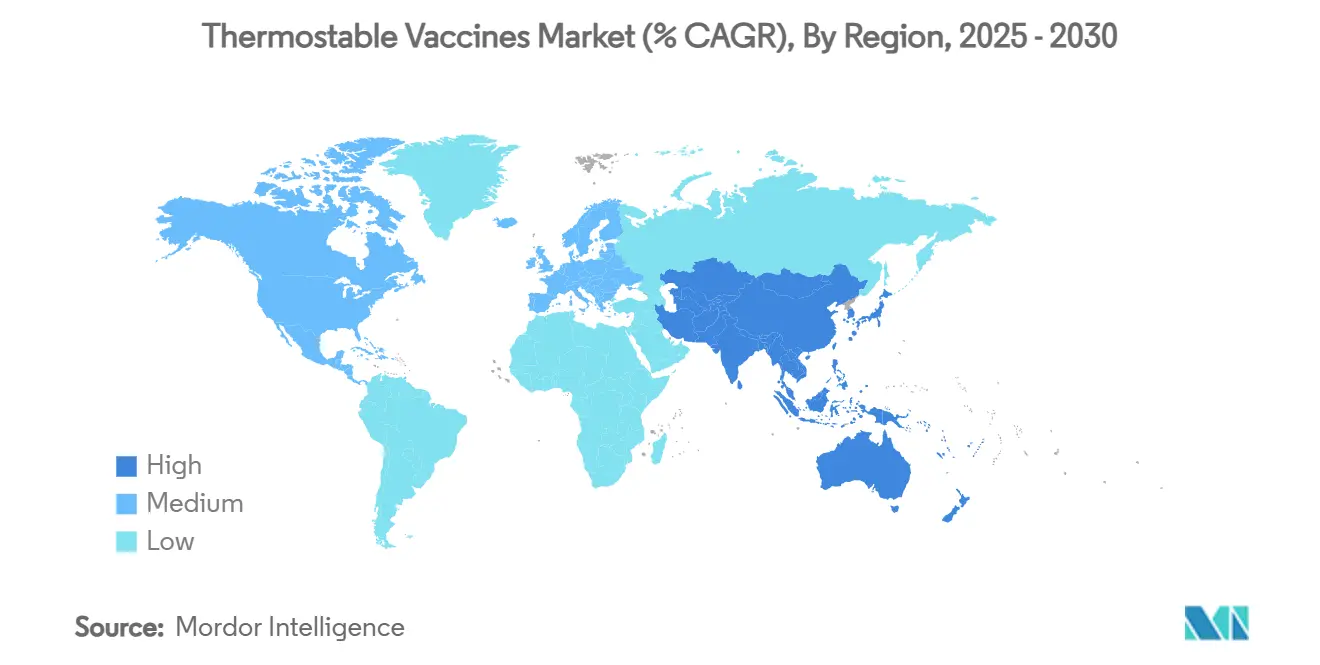
| Fastest Growing Market | Asia Pacific |
| Largest Market | North America |
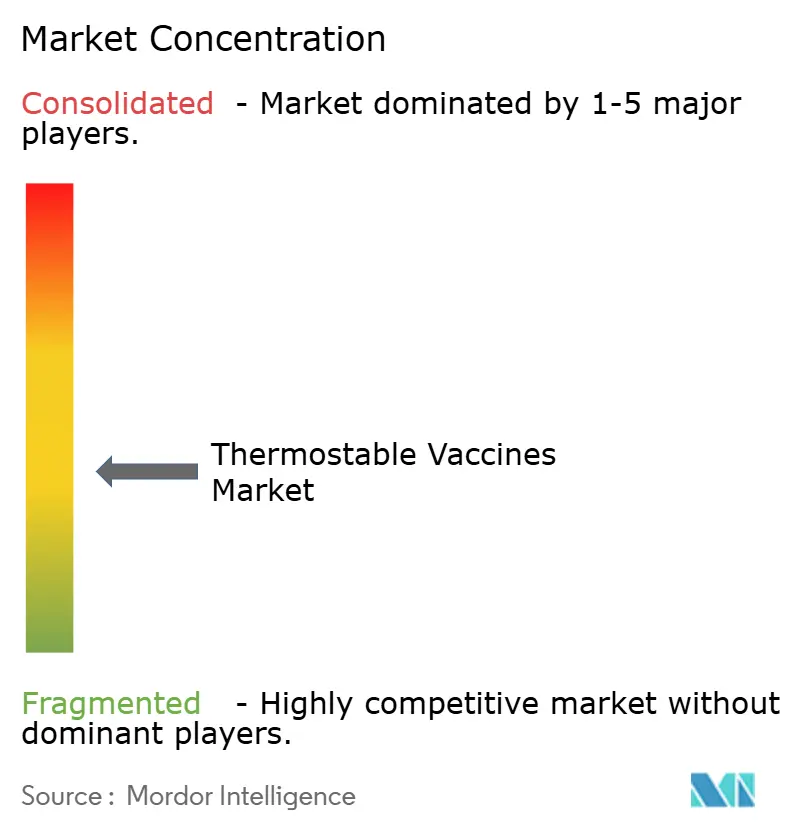
| Market Concentration | Medium |
Major Players *Disclaimer: Major Players sorted in no particular order |
Thermostable Vaccines Market Analysis by Mordor Intelligence
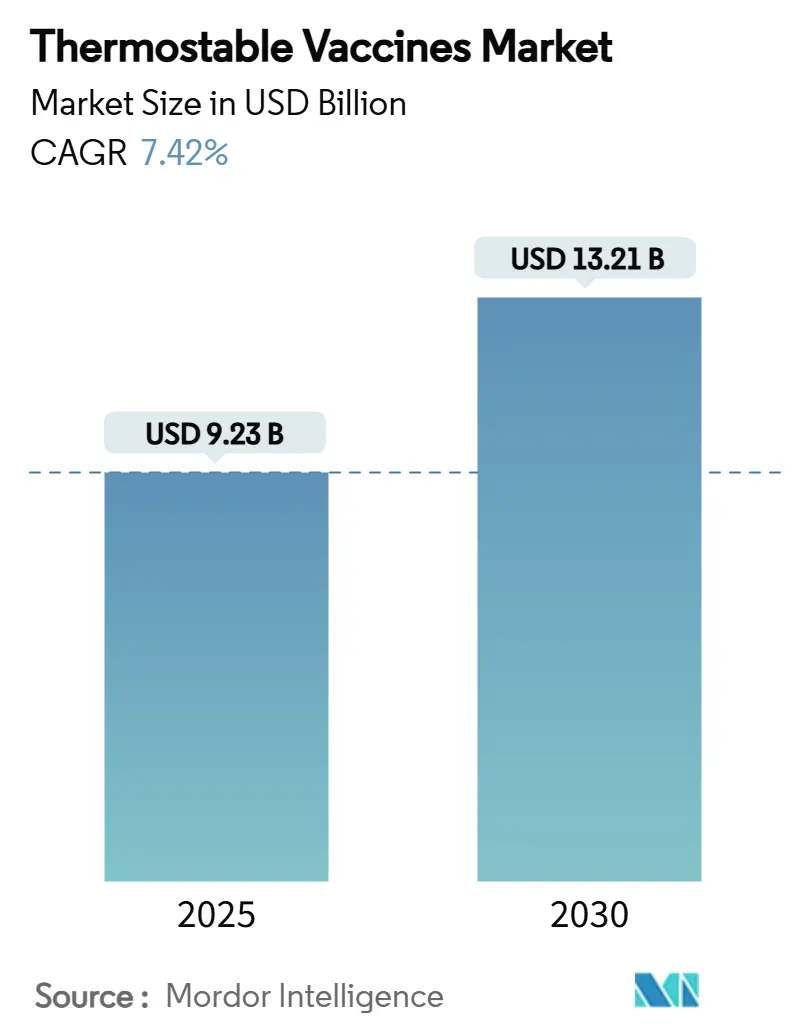
The Thermostable Vaccines Market size is estimated at USD 9.23 billion in 2025, and is expected to reach USD 13.21 billion by 2030, at a CAGR of 7.42% during the forecast period (2025-2030).
Thermostable vaccines are vaccines that maintain their effectiveness without the need for stringent cold chain conditions, typically remaining stable even at elevated temperatures. The demand for these vaccines is bolstered by an increasing focus on therapeutic vaccines, broader immunization programs, advancements in vaccine technology, and robust government backing for vaccine development.
The growing emphasis on therapeutic vaccines is transforming the landscape of disease treatment, particularly in oncology, by leveraging the body's immune system to combat existing diseases. For instance, in 2024, the FDA approved lifileucel (Amtagvi), the first tumor-infiltrating lymphocyte therapy for metastatic melanoma, achieving a 31.5% objective response rate, with 56.5% of responders maintaining outcomes at six months. Such advancements are poised to drive substantial growth in the thermostable vaccines market, supported by the increasing adoption of innovative and effective therapies.
Governments and organizations like World Health Organization (WHO), United Nations Children's Fund (UNICEF), and Gavi, the vaccine alliance have bolstered immunization programs, driving a heightened demand for thermostable vaccines, particularly in regions lacking robust cold chain infrastructures. For instance, Gavi, in collaboration with WHO and UNICEF, allocated 18 million doses of the RTS,S/AS01 malaria vaccine to 12 African nations for the 2023–2025 period. They aim to protect children in malaria's high-transmission zones. This initiative underscores the urgent need for vaccines that can withstand higher temperatures, given the ongoing challenges of cold chain logistics in remote areas. Promising technologies, like Stablepharma's SPVX02, a tetanus-diphtheria vaccine that remains stable between -20°C to 40°C for 18 months are currently in trials in the UK. If successful, they could revolutionize vaccine delivery by eliminating the need for refrigeration.
Recent advancements in vaccine technology have significantly enhanced the efficacy, stability, and delivery efficiency of vaccines. Stablepharma's tetanus-diphtheria vaccine (SPVX02) exemplifies this progress with its exceptional temperature resilience. SPVX02 maintains its potency across a temperature range of -20°C to 40°C, enabling storage at room temperature for up to 18 months. This innovation mitigates critical cold chain challenges and has the potential to reduce the current annual vaccine wastage rate of approximately 50%. These developments are poised to optimize supply chain operations, reduce costs, and create substantial growth opportunities for industry stakeholders. As the demand for efficient vaccine distribution continues to grow, such advancements are expected to play a pivotal role in shaping the future of the thermostable vaccine market.
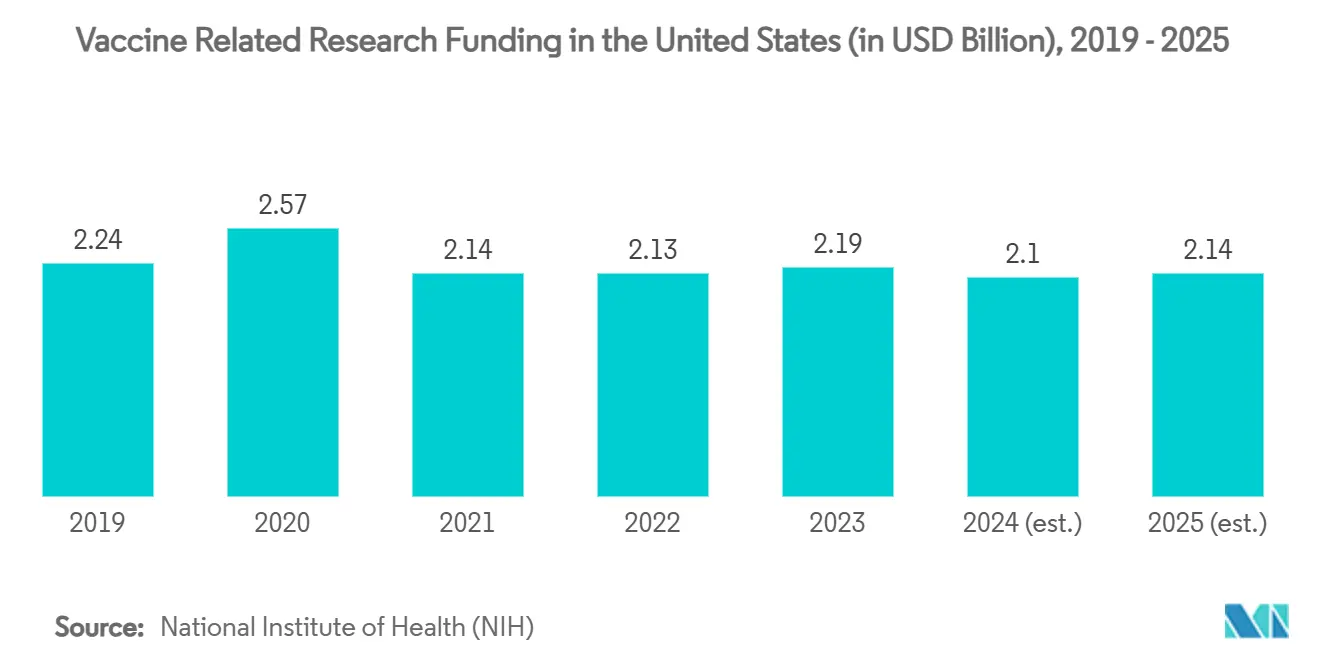
Additionally, governments are also putting substantial amounts of money and support into vaccine R&D, especially For example, in January 2025, the United States, the Department of Health and Human Services spent USD 590 million on Moderna to speed up the development of mRNA-based vaccines for avian influenza to facilitate broadened clinical studies and late-stage development for several subtypes of bird flu. Such strategic investments underscore the critical role of public funding in fostering advancements and addressing global health challenges effectively.
The thermostable vaccines market is expected to witness a robust growth driven by advancements in vaccine technology, increasing government and organizational support for immunization programs, rising investments in vaccine R&D, and the growing need for innovative solutions to address cold chain challenges. These factors collectively position the market for significant expansion in the coming years.
However, the high cost of development, stringent regulatory processes, and looming threat of product recalls are expected to restrain market growth.
Global Thermostable Vaccines Market Trends and Insights
Live Attenuated Vaccines Segment is Expected to Witness Significant Growth Over the Forecast Period
Live attenuated vaccines play a crucial role in disease prevention. They use a weakened form of a virus or bacterium that can replicate but doesn't cause illness in healthy individuals. These vaccines maintain a significant market share due to their extensive use in global immunization programs, especially for diseases like measles, mumps, rubella, and polio. Their effectiveness often requires fewer doses, making them ideal for mass campaigns in resource-limited settings. However, their susceptibility to heat degradation has led to concerted efforts in producing thermostable versions. Recognizing their importance, global health organizations like the World Health Organization (WHO) and Gavi prioritize stabilizing these vaccines to minimize wastage and enhance access, especially in areas without cold chain facilities.
Live attenuated vaccines hold a significant share in the thermostable vaccines market, primarily due to their extensive adoption in global immunization programs. For instance, the measles vaccine, a live attenuated product, has been a key driver in reducing global measles deaths from 2.6 million annually to approximately 122,000. However, in 2023, global measles cases increased by 20% to 10.3 million, largely attributed to insufficient vaccine coverage, with over 22 million children missing their first dose. This highlights the critical role of LAVs in mitigating epidemic risks. Additionally, the thermostabilization of these vaccines enhances their operational efficiency, particularly in markets with unreliable cold chain infrastructure.
In response to the challenges posed by heat degradation, there's a push towards creating thermostable formulations. For instance, Stablepharma's SPVX02, a thermostable tetanus-diphtheria vaccine. In March 2025, a U.S.-based vaccine candidate gained attention as it advanced to Phase I clinical trials. This vaccine demonstrates exceptional stability at room temperature and maintains its efficacy even after exposure to temperature variations ranging from -20°C to 40°C. The Medicines and Healthcare products Regulatory Agency (MHRA) approved the Phase I trial, representing a critical milestone toward the commercialization of fridge-free vaccines. Additionally, researchers utilized preservation by vaporization technology to develop a dry-powder live attenuated influenza vaccine, ensuring its stability under ambient condition.
International health agencies, including the World Health Organization (WHO) and Gavi, are shaping the market by setting strategic priorities. They've rolled out initiatives aimed at bolstering the thermal stability of live attenuated vaccines (LAVs). This enhancement seeks to reduce vaccine wastage and broaden immunization reach in areas with unreliable cold chain systems. Highlighting their commitment, Gavi's Phase 5 strategy (2021–2025) zeroes in on "zero-dose" children and marginalized communities, prioritizing equity. By amplifying vaccine distribution in resource-limited states and challenging environments, Gavi is not only addressing immediate health needs but also deepening market presence in regions with infrastructural challenges. These efforts are expected to drive significant growth in the live attenuated vaccines market, particularly in underserved regions, during the forecast period.
Technological advancements, coupled with increased funding and strategic initiatives from governments and global organizations, have further bolstered the use of live attenuated vaccines, especially in remote and resource-limited regions. As of December 2023, 35 countries have administered an estimated 1 billion doses of nOPV2, significantly aiding global polio eradication efforts. This highlights the critical role of collaborative efforts in addressing global health challenges.
Hence, due to widespread adoption in immunization programs, advancements in thermostabilization technologies, increasing support from global health organizations, and growing demand in resource-limited regions, the live attenuated segment is expected to witness significant growth in the upcoming years.
North America is Expected to Hold Significant Share in the Thermostable Vaccines Market
North America is poised to hold a significant share, driven by advancements in formulation technologies, heightened public health awareness, a surge in infectious diseases, and robust government backing, including research funding and public-private partnerships.
The rising prevalence of infectious diseases in North America is significantly impacting the thermostable vaccines market. In 2025, the U.S. recorded over 1,000 measles cases across 30 states, driven by declining MMR vaccination rates following the COVID-19 pandemic. This situation exposed gaps in vaccination policies and reinforced the need for robust immunization strategies, creating opportunities for thermostable vaccines, which offer enhanced stability and effectiveness. Similarly, Michigan experienced a 168% increase in Lyme disease cases over five years, rising from 452 in 2020 to 1,215 in 2024. These trends underscore the growing threat of vector-borne diseases, further fueling the demand for innovative and reliable vaccine solutions in the market
Further technological advancements in vaccine formulation are significantly influencing market dynamics. For example, in March 2025, Bavarian Nordic obtained U.S. FDA approval for a freeze-dried version of its Jynneos vaccine, designed for mpox and smallpox. This innovative formulation addresses critical market needs by improving transportation and storage efficiency while extending shelf life. Such developments are expected to drive market growth and reshape competitive strategies in the forecast period.
Moreover, increasing public health awareness is significantly influencing the market demand for thermostable vaccines. For example, the 2025 measles outbreak, with over 1,000 cases reported across 30 U.S. states, was primarily attributed to declining MMR vaccination rates, a trend exacerbated by the COVID-19 pandemic. Such incidents underscore the critical role of maintaining robust vaccination levels to mitigate future public health crises. In response, vaccine manufacturers are scaling up the production of thermostable vaccines, which retain efficacy without requiring stringent refrigeration. This innovation not only enhances immunization coverage but also addresses logistical challenges in regions with inadequate cold chain infrastructure, positioning thermostable vaccines as a key growth driver.
Concurrently strong government initiatives, substantial research funding, and strategic public-private collaborations further support the development of thermostable vaccines. For instance, in January 2025, the Coalition for Epidemic Preparedness Innovations (CEPI) partnered with Vaxxas to launch a USD 4.8 million program aimed at developing heat-stable, needle-free mRNA vaccines using Vaxxas' high-density microarray patch (HD-MAP) technology. Similarly, in June 2024, the U.S. Department of Health and Human Services (HHS) committed up to USD 500 million for mid-stage trials of COVID-19 vaccines delivered as nasal sprays or pills. This funding, under Project NextGen, focuses on next-generation vaccines offering broader and longer-lasting protection against COVID-19, with simplified delivery methods tailored for resource-constrained settings. These initiatives are expected to accelerate innovation and drive market growth in the coming years.
Therefore, owing to the rising incidence of infectious diseases, advancements in vaccine formulation technologies, increasing public health awareness, and strong government support through funding and strategic partnerships, the growth of the studied market is anticipated in the North American region.
Competitive Landscape
The thermostable vaccines market is moderately fragmented, with several players strategizing to capture the market. The competitive landscape includes an analysis of a few international as well as local companies which hold significant market share and are well known including Ainos Inc., Vaxart, Tiziana Life Sciences, Diabetology, Biocon, Serum Institute of India Pvt Ltd, AstriVax Therapeutics, Biological E. Limited, Bharat Biotech, Stablepharma Limited, GSK, Pfizer Inc among others
Thermostable Vaccines Industry Leaders
-
Bavarian Nordic
-
Vaxart Inc.
-
Biological E Limited
-
Bharat Biotech
-
Stablepharma Limited
- *Disclaimer: Major Players sorted in no particular order
Recent Industry Developments
- May 2025: Stablepharma has commenced human trials for its thermostable tetanus-diphtheria vaccine (SPVX02), representing a pivotal advancement in the development of heat-stable vaccines
- December 2024: Esperovax secured a USD 1.5 million subcontract to create a thermostable oral vaccine targeting the H5N1 influenza. This innovative vaccine seeks to overcome the storage, shelf-life, and manufacturing hurdles faced by today's protein and RNA vaccines.
- April 2024: Soligenix has expanded its patent portfolio for the proprietary ThermoVax platform, covering its Trivalent Filovirus Vaccines in the United Kingdom and South Africa
Global Thermostable Vaccines Market Report Scope
As per the scope of the report, thermostable vaccines use advanced formulations, stabilizing agents, or innovative delivery technologies that protect the active components, such as proteins or live attenuated organisms, from degradation caused by heat. The working principle of thermostable vaccines involves the incorporation of stabilizers like sugars, polymers, or nanoparticles that form a protective matrix around the vaccine antigens.
The thermostable vaccines market is segmented into vaccine type, route of administration, distribution channel, and geography. By vaccine type, the market is segmented into live attenuated vaccines, inactivated vaccines, recombinant vaccines, mRNA and DNA vaccines, and vector-based vaccines. By route of administration, the market is segmented into intramuscular & subcutaneous administration, oral administration, and other routes of administration. By distribution channel, the market is segmented into hospital & retail pharmacies, government suppliers, and others. By geography, the market is segmented into North America, Europe, Asia-Pacific, South America, the Middle East, and Africa. The report also offers the market size and forecasts for 17 countries across the region. For each segment, the market size and forecasts have been done on the basis of revenue (USD).
| Live Attenuated Vaccines |
| Inactivated Vaccines |
| Recombinant Vaccines |
| mRNA and DNA vaccines |
| Vector-Based Vaccines |
| Others |
| Intramuscular & Subcutaneous Administration |
| Oral Administration |
| Others |
| COVID-19 |
| Polio |
| Measles and Rubella |
| Cholera and Typhoid |
| Tetanus/Diphtheria |
| Others |
| Hospital & Retail Pharmacies |
| Government Suppliers |
| Others |
| North America | United States |
| Canada | |
| Mexico | |
| Europe | Germany |
| United Kingdom | |
| France | |
| Italy | |
| Spain | |
| Rest of Europe | |
| Asia-Pacific | China |
| Japan | |
| India | |
| South Korea | |
| Australia | |
| Rest of Asia-Pacific | |
| Middle East and Africa | GCC |
| South Africa | |
| Rest of Middle East and Africa | |
| South America | Brazil |
| Argentina | |
| Rest of South America |
| By Vaccines Type | Live Attenuated Vaccines | |
| Inactivated Vaccines | ||
| Recombinant Vaccines | ||
| mRNA and DNA vaccines | ||
| Vector-Based Vaccines | ||
| Others | ||
| By Route of Administration | Intramuscular & Subcutaneous Administration | |
| Oral Administration | ||
| Others | ||
| By Disease Indication | COVID-19 | |
| Polio | ||
| Measles and Rubella | ||
| Cholera and Typhoid | ||
| Tetanus/Diphtheria | ||
| Others | ||
| By Distribution Channel | Hospital & Retail Pharmacies | |
| Government Suppliers | ||
| Others | ||
| Geography | North America | United States |
| Canada | ||
| Mexico | ||
| Europe | Germany | |
| United Kingdom | ||
| France | ||
| Italy | ||
| Spain | ||
| Rest of Europe | ||
| Asia-Pacific | China | |
| Japan | ||
| India | ||
| South Korea | ||
| Australia | ||
| Rest of Asia-Pacific | ||
| Middle East and Africa | GCC | |
| South Africa | ||
| Rest of Middle East and Africa | ||
| South America | Brazil | |
| Argentina | ||
| Rest of South America | ||
Key Questions Answered in the Report
How big is the Thermostable Vaccines Market?
The Thermostable Vaccines Market size is expected to reach USD 9.23 billion in 2025 and grow at a CAGR of 7.42% to reach USD 13.21 billion by 2030.
What is the current Thermostable Vaccines Market size?
In 2025, the Thermostable Vaccines Market size is expected to reach USD 9.23 billion.
Who are the key players in Thermostable Vaccines Market?
Bavarian Nordic, Vaxart Inc., Biological E Limited, Bharat Biotech and Stablepharma Limited are the major companies operating in the Thermostable Vaccines Market.
Which is the fastest growing region in Thermostable Vaccines Market?
Asia Pacific is estimated to grow at the highest CAGR over the forecast period (2025-2030).
Which region has the biggest share in Thermostable Vaccines Market?
In 2025, the North America accounts for the largest market share in Thermostable Vaccines Market.
What years does this Thermostable Vaccines Market cover, and what was the market size in 2024?
In 2024, the Thermostable Vaccines Market size was estimated at USD 8.55 billion. The report covers the Thermostable Vaccines Market historical market size for years: 2019, 2020, 2021, 2022, 2023 and 2024. The report also forecasts the Thermostable Vaccines Market size for years: 2025, 2026, 2027, 2028, 2029 and 2030.
Thermostable Vaccines Market Report
Statistics for the 2025 Thermostable Vaccines market share, size and revenue growth rate, created by Mordor Intelligence™ Industry Reports. Thermostable Vaccines analysis includes a market forecast outlook for 2025 to 2030 and historical overview. Get a sample of this industry analysis as a free report PDF download.