
Pneumococcal Vaccines Market Size and Share
Market Overview
| Study Period | 2020 - 2031 |
|---|---|
| Market Size (2026) | USD 9.69 Billion |
| Market Size (2031) | USD 12.33 Billion |
| Growth Rate (2026 - 2031) | 4.95 % |
| Fastest Growing Market | Asia-Pacific |
| Largest Market | North America |
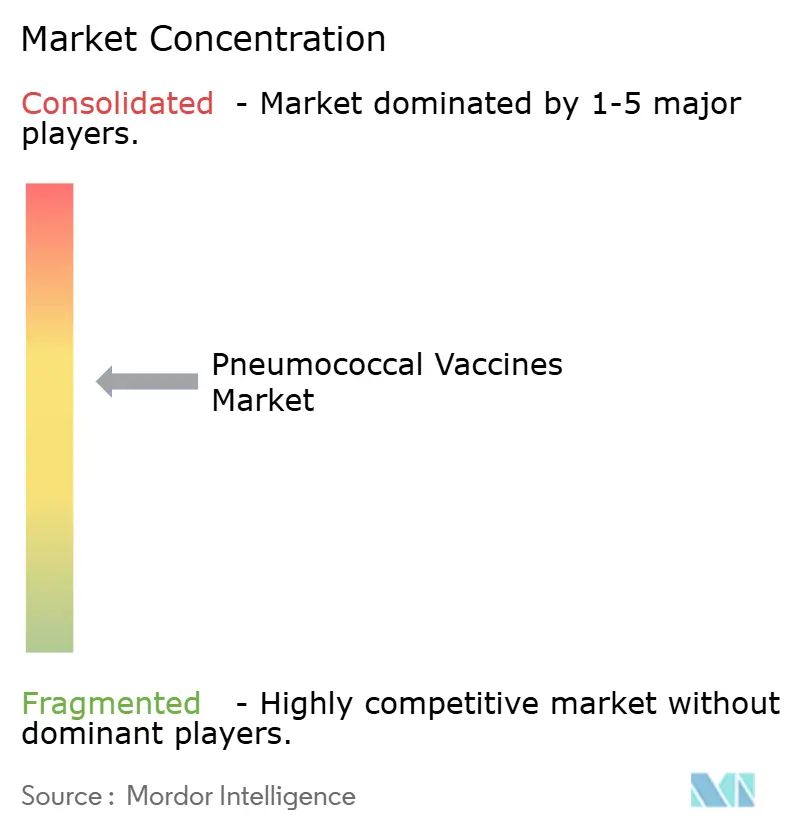
| Market Concentration | Medium |
Major Players *Disclaimer: Major Players sorted in no particular order Image © Mordor Intelligence. Reuse requires attribution under CC BY 4.0. | |
Pneumococcal Vaccines Market Analysis by Mordor Intelligence
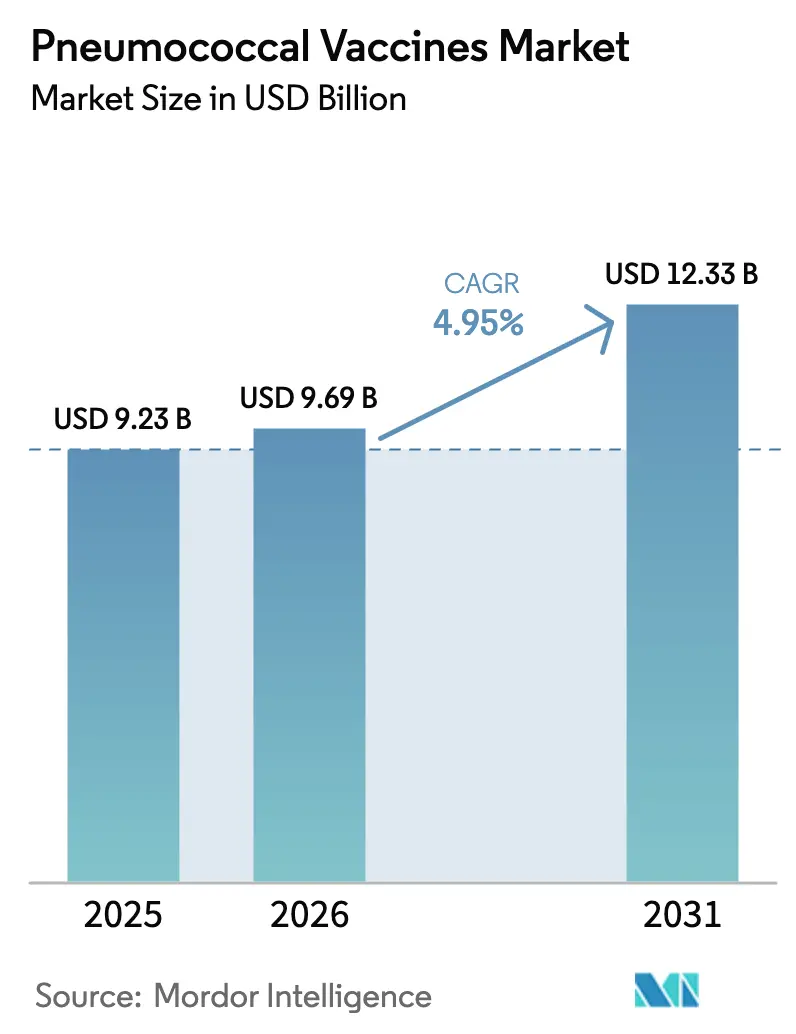
The Pneumococcal Vaccines Market size is expected to grow from USD 9.23 billion in 2025 to USD 9.69 billion in 2026 and is forecast to reach USD 12.33 billion by 2031 at 4.95% CAGR over 2026-2031.
Uptake is migrating from near-saturated pediatric programs in high-income economies to fast-growing adult schedules, a shift triggered by the 2024 U.S. approval of Merck’s Capvaxive (PCV21) that introduced eight serotypes absent from legacy formulations. GAVI’s decision to lock in a USD 2.75 dose ceiling through 2029 expanded procurement capacity across 57 low-income countries, while innovators such as Vaxcyte and Affinivax continue to chase ultra-valent conjugates that promise broader coverage and longer commercial life cycles. Adult vaccination momentum, local fill-finish partnerships in Asia-Pacific, and AI-driven serotype surveillance together underpin medium-term growth, yet manufacturing cost inflation, price negotiations under the Inflation Reduction Act, and cold-chain fragility in low-resource settings remain material constraints.
Key Report Takeaways
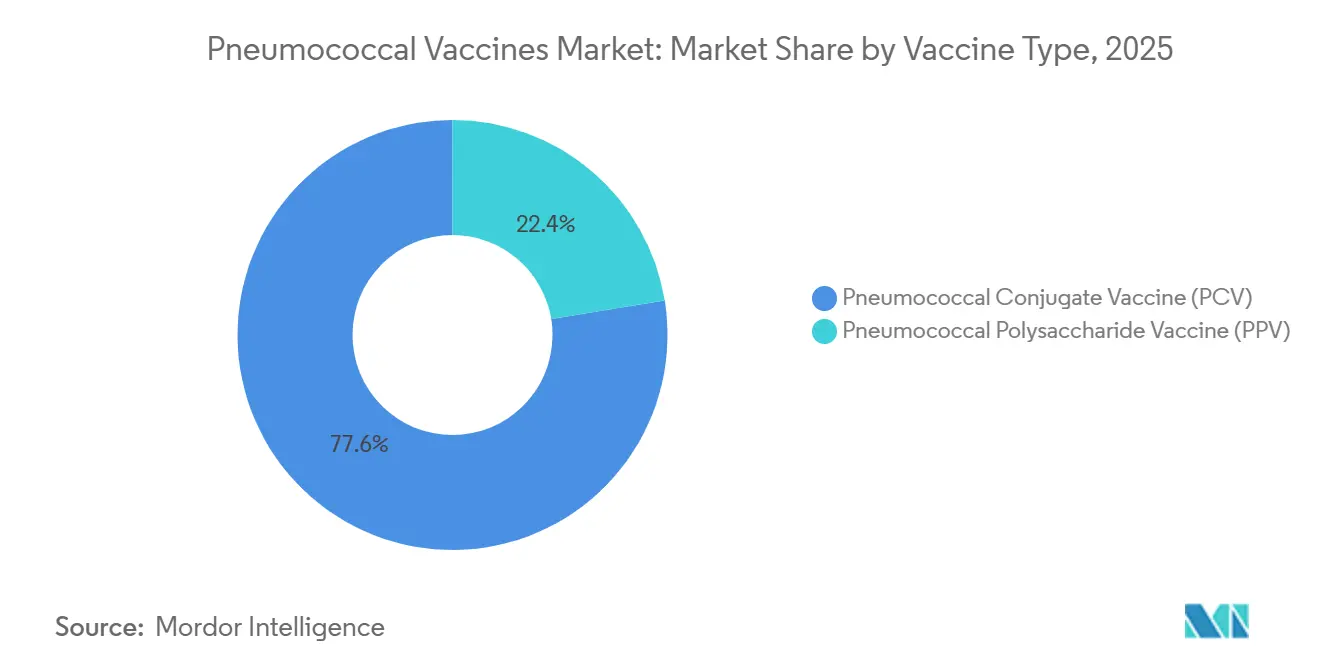
- By vaccine type, pneumococcal conjugate vaccines led with 77.56% of pneumococcal vaccines market share in 2025 and are advancing at an 8.25% CAGR through 2031.
- By product type, Prevnar 13 controlled 47.53% of the pneumococcal vaccines market size in 2025, while Prevnar 20 is forecast to post a 15.85% CAGR to 2031.
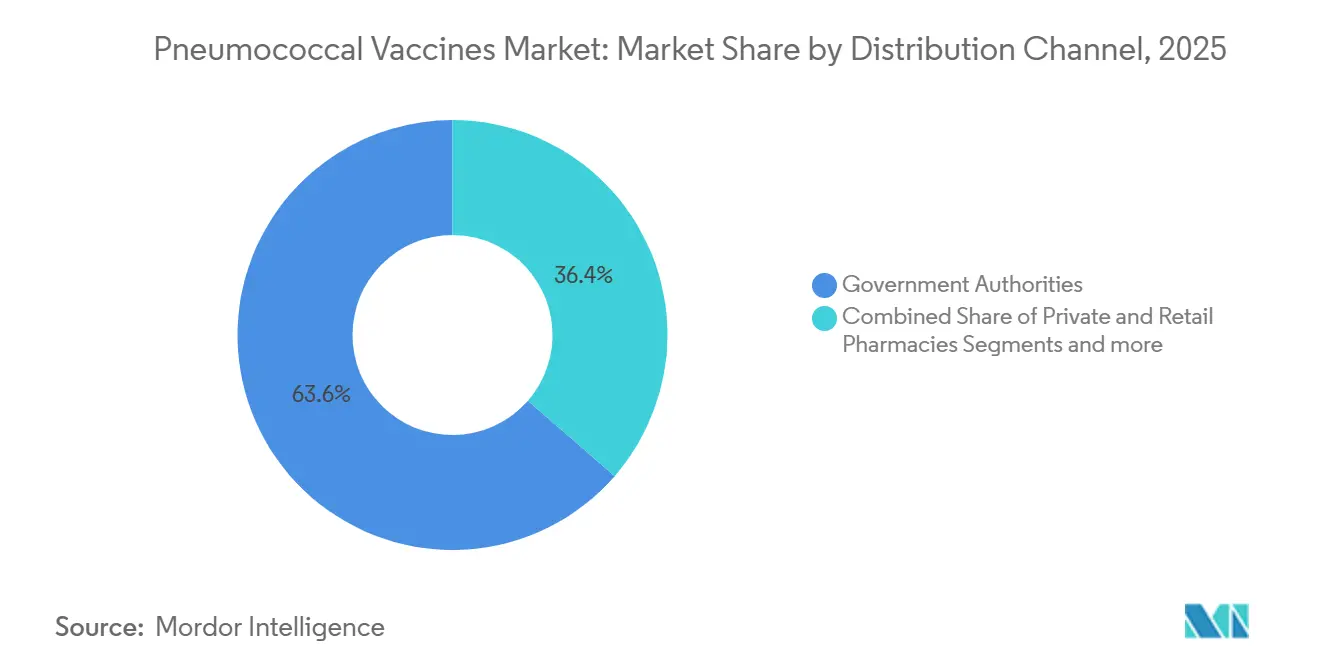
- By distribution channel, government authorities purchased 63.63% of 2025 doses, yet private and retail pharmacies are set to deliver a 10.87% CAGR to 2031.
- By age group, pediatric use captured 61.23% of 2025 demand, whereas the adult 19-64 cohort is on track to expand at a 6.7% CAGR through 2031.
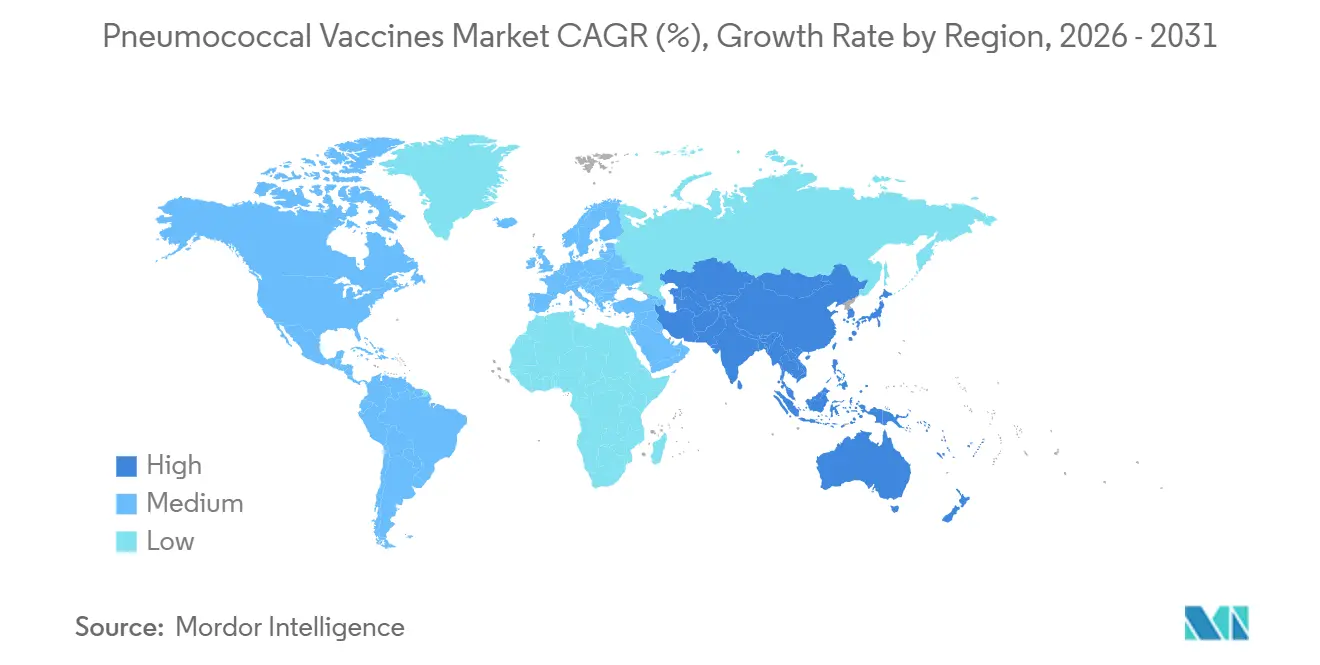
- By geography, North America contributed 38.53% revenue share in 2025, with Asia-Pacific forecast to be the fastest-growing region at 6.21% CAGR to 2031.
Note: Market size and forecast figures in this report are generated using Mordor Intelligence’s proprietary estimation framework, updated with the latest available data and insights as of January 2026.
Market Trends and Insights
Drivers Impact Analysis of Pneumococcal Vaccines Market*
| Driver | (~) % Impact on CAGR Forecast | Geographic Relevance | Impact Timeline |
|---|---|---|---|
| Increased GAVI-funded uptake in LICs after USD 2.75/dose tender price | +1.2% | Sub-Saharan Africa, South Asia, select Latin America LICs | Medium term (2-4 years) |
| Rising prevalence of pneumococcal infections | +0.8% | Global, acute burden in APAC and MEA | Long term (≥ 4 years) |
| Launch of higher-valent PCVs (PCV15/20/21) | +1.5% | North America, Europe, Japan, China | Short term (≤ 2 years) |
| Pipeline of ultra-valent PCVs (≥ 30-valent) accelerating due-diligence deals | +0.9% | Global, early adoption in North America and EU | Long term (≥ 4 years) |
| AI-enabled serotype surveillance speeding label expansions | +0.6% | North America, Europe, select APAC hubs | Medium term (2-4 years) |
| Local fill-finish partnerships unlocking tariff-free entry in APAC | +1.0% | China, India, Southeast Asia; spill-over to MEA | Medium term (2-4 years) |
| Source: Mordor Intelligence | |||


Increased GAVI-Funded Uptake in LICs After USD 2.75/Dose Tender Price
GAVI’s 2024 renewal of its Advance Market Commitment fixed pneumococcal conjugate vaccine procurement at USD 2.75 per dose, sustaining routine immunization in 57 low-income countries and injecting predictable volume that lifts the forecast CAGR by 1.2 percentage points. WHO prequalification of SK bioscience’s GBP301 in 2024 diversified supply and mitigated single-source risk. Long-run impact depends on governments co-financing doses as GAVI’s graduation schedules advance, a transition that could expose fragile health budgets to shortfalls. Manufacturers meanwhile pursue volume over margin, delaying ultra-valent launches in donor markets until new economics emerge.
Rising Prevalence of Pneumococcal Infections
CDC surveillance confirmed that invasive pneumococcal disease rates in U.S. adults 65+ remained above pre-pandemic baselines through 2024 despite PCV13 coverage, underscoring ongoing unmet need. Similar patterns persist in Asia-Pacific and Middle East & Africa where aging populations collide with historically low adult vaccination. The driver adds 0.8 percentage points to CAGR and is long term because building adult immunization infrastructure and reimbursement pathways is a slow, policy-heavy process. Emergent serotypes not covered by PCV13 further raise clinical urgency and validate higher-valent pipeline strategies.
Launch of Higher-Valent PCVs (PCV15/20/21)
Capvaxive’s approval in June 2024 brought eight new serotypes covering roughly 30% of U.S. adult disease burden, while Prevnar 20 won clearances in Japan and China, catalyzing guideline updates that have already widened adult eligibility. Rapid formulary inclusion in North America and Europe delivers a 1.5 percentage-point lift to CAGR. Health agencies moved swiftly; ACIP widened indications to adults 19-64 with risk factors, doubling the addressable base and accelerating commercial uptake[1]Centers for Disease Control and Prevention, “ACIP Recommendations,” CDC, cdc.gov.
Pipeline of Ultra-Valent PCVs (≥ 30-Valent) Accelerating Due-Diligence Deals
Vaxcyte secured USD 1.2 billion in 2024 to advance VAX-31, a 31-valent candidate employing cell-free synthesis that could cut production timelines and costs. GSK’s acquisition of Affinivax and its MAPS platform highlights incumbent anxiety over disruptive technology. The driver adds 0.9 percentage points to CAGR but materializes in the long term because regulatory pathways for 30-plus valencies remain undefined.
Restraints Impact Analysis of Pneumococcal Vaccines Market*
| Restraint | (~) % Impact on CAGR Forecast | Geographic Relevance | Impact Timeline |
|---|---|---|---|
| High manufacturing cost of conjugate vaccines | -0.7% | Global, acute in LMICs reliant on donor funding | Long term (≥ 4 years) |
| Serotype-replacement diminishing long-term efficacy | -0.5% | North America and Europe | Medium term (2-4 years) |
| IRA-linked U.S. price negotiations compressing adult-dose ASPs | -0.4% | United States | Short term (≤ 2 years) |
| Short-term cold-chain power outages tied to energy transition volatility | -0.3% | Sub-Saharan Africa, South Asia, select island nations | Short term (≤ 2 years) |
| Source: Mordor Intelligence | |||
High Manufacturing Cost of Conjugate Vaccines
Conjugation chemistry remains capital intensive, with 2024 U.S. estimates placing total capitalized development costs at USD 886.8 million per vaccine, shaving 0.7 percentage points off CAGR[2]U.S. Department of Health and Human Services, “Vaccine Development Costs,” HHS, hhs.gov. Scale economies help incumbents, yet donor markets demand sub-USD 3 pricing, capping margins and slowing diffusion of higher valencies. Disruptive platforms like cell-free synthesis have potential but will not be validated at scale before 2028.
Serotype-Replacement Diminishing Long-Term Efficacy
Surveillance shows rising disease from serotypes 22F, 33F, and 35B five to ten years after PCV13 adoption, eroding confidence in legacy products and knocking 0.5 percentage points from CAGR. The phenomenon presses manufacturers into perpetual reformulation, raising R&D spend and regulatory workload.
*Our forecasts treat driver/restraint impacts as directional, not additive. The impact forecasts reflect baseline growth, mix effects, and variable interactions.
Pneumococcal Vaccines Market Segment Analysis
By Vaccine Type:
Conjugate Chemistry Dominates, Polysaccharides FadePneumococcal conjugate vaccines held 77.56% of pneumococcal vaccines market share in 2025, a position supported by T-cell–dependent immunity that sustains herd protection in infants. Their 8.25% CAGR through 2031 reflects strong adoption in both pediatric and newly eligible adult cohorts. Pneumococcal polysaccharide vaccines trail because they lack memory response and face utility erosion as conjugate alternatives gain adult indications, particularly after ACIP’s 2024 recommendation favoring PCV20 or PCV15 before PPSV23. Emerging-market payers still deploy polysaccharides to contain budgets, but WHO prequalification trends and cost-reducing tech may ultimately accelerate their displacement.
Conjugate production costs remain higher, yet payers in high-income markets accept premium prices knowing that reduced boosters offset long-run expenses. GAVI programs exclusively source conjugates for infants, while many middle-income countries use polysaccharides for seniors only, creating a dual-track procurement landscape. New platforms like Vaxcyte’s cell-free synthesis could cut cost curves and entrench conjugate leadership by widening the price-efficacy gap.

By Product Type:
Prevnar Franchise Faces DisruptionPrevnar 13 accounted for 47.53% of pneumococcal vaccines market size in 2025, but Prevnar 20 is expanding at a 15.85% CAGR on the strength of its seven extra serotypes and rapid approvals in Japan and China[3]Pfizer Inc., “Pfizer Receives Approval in Japan for Prevnar 20,” Pfizer, pfizer.com. Merck’s Capvaxive (PCV21) entered the adult segment in 2024 and positions itself as a direct competitor with eight unique serotypes. Lower-valent Synflorix holds on in GAVI markets because of price advantages, yet efficacy-conscious middle-income buyers are gradually trading up.
Domestic Chinese producers such as Walvax and Beijing Minhai provide cost-competitive options, but their lower valency constrains penetration in urban private segments. The imminent arrival of VAX-31 could upend the hierarchy; if approved, its 31 valencies would reset the competitive baseline and hasten obsolescence of existing products in premium markets.
By Distribution Channel:
Government Procurement Dominates, Private Retail SurgesGovernment authorities purchased 63.63% of 2025 doses, reflecting entrenched pediatric mandates and GAVI-funded campaigns. Nonetheless, private and retail pharmacies will grow at a 10.87% CAGR because adults often self-pay or rely on employer insurance, especially in the United States where pharmacies administer most adult vaccines. Retail access expanded in Europe after 2024 legislation authorized pharmacist administration in multiple member states, shifting volume away from hospital clinics.
Hospital-based vaccine clinics remain important for immunocompromised patients but cannot match the convenience of community outlets. NGOs and multilateral tenders, though smaller in revenue terms, set global price anchors, forcing manufacturers to fine-tune channel-specific pricing.

By Age Group:
Pediatric Saturation Drives Adult PivotThe pediatric cohort (< 5 years) retained 61.23% share in 2025, but growth is plateauing in high-income nations where coverage already exceeds 95%. The adult 19-64 segment will expand at a 6.7% CAGR through 2031 because new guidance and employer wellness programs create reimbursed demand. Merck’s Capvaxive was filed exclusively for adults to exploit this momentum, signaling a strategic pivot toward higher-priced adult doses. The geriatric segment remains steady as long-standing policies recommend vaccination for all adults 65+, yet payer negotiations are compressing price premiums.
Emerging markets present contrasting patterns: pediatric gaps persist, but adult immunization infrastructure is only nascent, producing a two-speed ecological map that requires tailored commercial approaches.
Geography Analysis
North America Pneumococcal Vaccines Market
North America contributed 38.53% of 2025 revenue, propelled by Medicare’s 2024 elimination of cost-sharing for adult vaccines and rapid inclusion of PCV20 and PCV21 on formularies at USD 200-plus reimbursement levels. Canada and Mexico maintain high pediatric coverage, yet adult penetration lags. The Inflation Reduction Act will pressure prices from 2026, narrowing margins but likely expanding volume as co-pays fall.
APAC Pneumococcal Vaccines Market
Asia-Pacific is forecast to log a 6.21% CAGR through 2031, benefiting from multi-national approvals, domestic production, and tariff-free fill-finish operations. China and Japan now offer Prevnar 20, challenging domestic 13-valent competitors. India’s Serum Institute and South Korea’s SK bioscience supply GAVI at sub-USD 3 pricing, while private segments in Indonesia and Vietnam are beginning to pay premiums for higher valency. ASEAN regulatory harmonization could streamline clearances but remains uneven.
EMEA and South America Pneumococcal Vaccines Market
Europe sustains demand through centralized tenders that secure volume discounts; Germany, the United Kingdom, France, Italy, and Spain together represent the bulk of regional consumption. EMA’s 2024 acceptance of AI-generated serotype models may shorten timelines for ultra-valent approvals. Middle East & Africa and South America rely on donor or government tenders; cold-chain gaps and fiscal volatility limit uptake of premium products, yet localization projects like South Africa’s Biovac are slowly improving resilience.
Mordor Intelligence provides coverage of the pneumococcal vaccines market across other key regional markets. Detailed country-level analysis extends to Germany incorporating local coverage and market participation, as required.

Regulatory Landscape
Regulation in the pneumococcal vaccines market is increasingly shaped by high-valency conjugate approvals and immunization policy updates across major jurisdictions. In the United States, the FDA approved Merck's Capvaxive (PCV21) in June 2024 for adults, establishing a new regulatory benchmark for broader serotype coverage. In June 2026, the FDA expanded the indication to children and adolescents aged 2 through 17 years at increased risk. CDC ACIP also updated pneumococcal recommendations in January 2025 to include a single PCV dose for all adults aged 50 years and older, reinforcing adult schedule standardization around conjugates.
In Europe, the EMA CHMP issued a positive opinion for Capvaxive in January 2025, and the European Commission approved it in March 2025 for adults, supporting multi-country adoption through national tenders and guideline pathways. In the United Kingdom, the UK Health Security Agency published a Patient Group Direction (PGD) template in December 2025 supporting PCV20 use for adults aged 65 and over and defining clinical risk groups, enabling more structured delivery outside traditional physician-only pathways. For Latin America and the Caribbean, PAHO released updated pneumococcal recommendations in February 2026, and WHO position and schedule resources continue to influence program design and procurement eligibility, including via prequalification-linked access in donor-supported settings.
Competitive Landscape
Pfizer, GSK, and Merck collectively held a significant share of the 2025 revenue, yet competitive tension is intensifying as higher-valent and ultra-valent entrants emerge. Pfizer’s Prevnar franchise remains pivotal, but Merck’s Capvaxive has moved quickly to secure adult share, and GSK’s 2024 Affinivax acquisition signals an appetite for technology that can leapfrog current valencies. Vaxcyte’s USD 1.2 billion financing and SK bioscience’s 2024 WHO prequalification demonstrate investor and regulatory openness to new players.
Two strategic archetypes are visible: incumbents defend margins in high-income markets with premium, high-valency launches, while regional manufacturers attack price-sensitive donor segments with cost-advantaged 10- and 13-valent options. Patent cliffs for PCV13 beginning 2026 may encourage biosimilar exploration, but technical hurdles are high. If VAX-31 or other ≥ 30-valent vaccines win approval, incumbents will have to accelerate pipelines or risk rapid erosion of premium franchises.
Pneumococcal Vaccines Industry Leaders
Pfizer Inc.
CSL Ltd.
Serum Institute of India Pvt. Ltd.
GSK plc
Merck & Co., Inc.
- *Disclaimer: Major Players sorted in no particular order
Pneumococcal Vaccines Market Companies Covered in this Report
- Affinivax Inc.
- Aspen Pharmacare Holdings Ltd.
- Beijing Minhai Biotechnology Co., Ltd.
- Bharat Biotech International Ltd.
- Biological E. Limited
- GlaxoSmithKline
- Inventprise LLC
- KM Biologics Co., Ltd.
- Merck
- Panacea Biotec Ltd.
- Pfizer
- Sanofi
- Serum Institute of India
- SK bioscience Co., Ltd.
- Vaxcyte Inc.
- Walvax Biotechnology Co., Ltd.
- Zhejiang Pukang Biotechnology Co., Ltd.

Market Opportunities and Future Outlook
Opportunities are concentrating around broader-valency conjugates and label expansion into pediatric and at-risk cohorts, as regulators and policy bodies have moved toward PCV-centric schedules. The June 2026 FDA expansion of Capvaxive into at-risk children and adolescents aged 2 through 17 years creates a commercial lane beyond adult-only positioning and raises the competitive bar for serotype coverage and supporting real-world effectiveness evidence. In Europe, the March 2025 European Commission approval of Capvaxive for adults adds another tender-driven arena where manufacturers compete on valency, supply reliability, and contracting as health systems update guidelines and procurement lots.
Pipeline activity also offers a clearer path for next-generation products targeting higher serotype breadth and different manufacturing approaches. Pfizer initiated a pivotal Phase 3 pediatric program in May 2026 for an investigational 25-valent pneumococcal conjugate vaccine (25vPnC), directly benchmarking against PCV20 and signaling intensified R&D investment in pediatric comparators, immunobridging packages, and lifecycle label growth. In China, CanSino's NMPA clinical trial approval in January 2026 for a 24-valent PCV (PCV24) and its June 2025 NMPA approval for iPneucia (PCV13) broaden the set of manufacturers with local registration pathways and potential regional supply options. In combination with WHO-aligned schedule and policy frameworks and GAVI price ceilings noted in the market context, these developments keep focus on products that pair higher serotype coverage with cost and supply models that work across both premium adult markets and tender-led public programs.
Recent Industry Developments in Pneumococcal Vaccines Market
- June 2026: Merck received a US FDA expanded indication for Capvaxive (PCV21) to include children and adolescents aged 2 through 17 years at increased risk for pneumococcal disease. The decision extends the product beyond its original adult-only positioning and broadens competitive overlap with pediatric PCV franchises. It also increases the importance of pediatric immunogenicity packages and access planning for risk-based cohorts.
- May 2026: Pfizer initiated a pivotal Phase 3 pediatric program for its investigational 25-valent pneumococcal conjugate vaccine (25vPnC), designed to compare against PCV20. Moving into late-stage pediatric development raises the competitive bar for serotype breadth and lifecycle strategy beyond currently marketed valencies. The program also supports differentiated contracting narratives in government and private pediatric channels once regulatory submissions begin.
- March 2025: The European Commission approved Merck's Capvaxive for prevention of invasive pneumococcal disease and pneumococcal pneumonia in adults aged 18 years and older. EU-level authorization enables access to national immunization program evaluations and centralized tender mechanisms across member states. This provides an additional high-income procurement arena for newer high-valency PCVs alongside incumbent adult offerings.


Pneumococcal Vaccines Market Report Scope and Research Methodology
Market Definition and Coverage
This market covers revenues from pneumococcal vaccines that are sold for immunization against pneumococcal disease, across pediatric, adult, and older-age populations, and through public and private supply routes. Values are captured at the manufacturer level and are reported in USD.
Scope exclusions: We exclude antibiotics for treatment, diagnostic tests, and pipeline vaccine candidates that are not yet approved for commercial sale.
Segments Covered in This Report
- By Vaccine Type
- Pneumococcal Conjugate Vaccine (PCV)
- Pneumococcal Polysaccharide Vaccine (PPV)
- By Product Type
- Prevnar 13
- Prevnar 20
- Synflorix
- Pneumovax 23
- Other PCVs
- By Distribution Channel
- Government Authorities
- GAVI/Multilateral & NGO Procurement
- Private & Retail Pharmacies
- Hospital-based Vaccine Clinics
- By Age Group
- Pediatric (<5 years)
- Adults (19-64 years)
- Geriatric (?65 years)
- By Geography
- North America
- United States
- Canada
- Mexico
- Europe
- Germany
- United Kingdom
- France
- Italy
- Spain
- Rest of Europe
- Asia-Pacific
- China
- Japan
- India
- South Korea
- Australia
- Rest of Asia-Pacific
- Middle East and Africa
- GCC
- South Africa
- Rest of Middle East and Africa
- South America
- Brazil
- Argentina
- Rest of South America
- North America
Data Sources, Market Sizing, and Validation
Desk Research
Desk research was used to build the basic fact base around vaccine use and demand drivers before assumptions were taken into the market model. Public sources such as WHO immunization guidance, CDC pneumococcal vaccination recommendations, and national immunization technical group updates were reviewed to identify which age groups are recommended for vaccination and how schedules are shifting.
We also referenced sources such as UNICEF and other public procurement disclosures to pick up pricing signals, along with government health ministry releases and official statistical sites for demographic and age-cohort trends. Company filings, investor presentations, and reputable press were checked to confirm product coverage, recent approvals, and supply outlook. In a few cases, we used paid subscriptions for company financials and intelligence, news and financials, and patent databases to cross-check timelines and platform ownership. These sources are illustrative, and many other references were also consulted to collect data, validate assumptions, and clarify uncertainties.
Primary Interviews and Surveys
Primary discussions were run with vaccine manufacturers, distributors, procurement and tender participants, immunization program stakeholders, and practicing clinicians, so the inputs reflect how orders and uptake work in practice. Because this is a global market, the interviews were balanced across the Americas, EMEA, and APAC to validate pricing logic, the public versus private mix, and the pace of adult and older-adult adoption.
Distribution of primary research fieldwork respondents
| Company type | Respondent position | Region |
|---|---|---|
| Top tier: 30% | CXOs: 13% | APAC: 40% |
| Mid tier: 55% | Functional/Unit leaders: 40% | EMEA: 33% |
| Smaller Players: 15% | Managers: 47% | Americas: 27% |
Market-Sizing & Forecasting
Sizing starts with a top-down build where recommended populations are translated into an addressable demand pool using age-cohort counts, immunization schedule rules, and expected coverage in each major geography, followed by price bands that reflect public procurement versus private channels. To keep results realistic, the outputs are then checked using selective bottom-up approximations, such as sampled volume by channel and an ASP x dose approach for key product types, with adjustments made where the two views disagree.
The model leans on practical inputs that can be refreshed each year, including birth cohort trends, adult and older-adult eligible population sizes, country-level introduction timing for higher-valency PCVs, the split of PCV versus PPSV usage by age group, and tender-driven pricing movements in large public programs. When specific country dose uptake is not visible, gaps are handled by using proxy adoption curves from comparable markets and then re-validating the implied per-capita dose levels with primary feedback.
Forecasting uses scenario analysis supported by trend smoothing, with the key drivers stepped up or down based on expert views on policy expansion, product switching, and supply availability. When the main drivers move together, the final forecast is kept consistent with how coverage and pricing typically behave in immunization programs before the numbers are finalized.
Data Validation & Update Cycle
Validation is done by cross-checking the modeled totals against independent signals, like implied doses per eligible person, public procurement intensity, and the expected mix shift between pediatric and adult programs. If a country or region shows a sudden jump that is not supported by policy timing or pricing logic, the assumptions are revisited and, when needed, respondents are re-contacted for clarification.
Before sign-off, the numbers go through multi-step analyst review so that scope, unit logic, and currency handling remain consistent across the time series. Reports are refreshed annually, and interim updates are added when material events occur, such as major approvals, schedule changes, or large procurement actions. Right before delivery, a final pass is completed so clients receive the latest updated view.
Mordor Intelligence's Pneumococcal Vaccines Market Size Measured Against Other Published Estimates
Published values for pneumococcal vaccines are often not the same because each publisher makes different choices on product coverage, pricing approach, base year, and whether revenues are counted at the manufacturer level or closer to the end channel. Even small differences in how adult vaccination is treated can widen the gap once global totals are aggregated.
The benchmark table helps show where the spread comes from. Some estimates lean more on longer-horizon growth narratives up to 2034, while others start from earlier base years and assume faster price progression across higher-valency PCVs. Currency conversion timing and how public tenders are translated into average prices also matter, since a few large procurement markets can move the average significantly.
Benchmark comparison
| Source | Market Size | Gaps in Research Methodology |
|---|---|---|
| Mordor Intelligence | USD 9.69 B (2026) | |
| Global Consultancy A | USD 8.80 B (2025) | Uses a 2025 base and a different year anchor for pricing, which can shift the implied ASP when public tenders reset, especially in large immunization programs. |
| Industry Publisher B | USD 9.15 B (2026) | Shows a close 2026 value but commonly applies a steeper post-2026 growth path tied to broad product-switch assumptions, without the same level of channel mix checks between public, multilateral, and private routes. |
The table shows that the biggest differences come from the base year used and how pricing and channel mix are handled, not from disagreement that the market is growing. In Mordor Intelligence's model, revenues are counted at the manufacturer level for licensed PCVs (PCV10 to PCV21) and PPSV23 only, and the public procurement and multilateral share is modeled separately from private purchasing so ASP movements are not overstated. With these steps, we end up with a balanced number that can be traced back to clear demand pools, coverage assumptions, and practical price logic.


Key Questions Answered in the Report
How large is the pneumococcal vaccines market in 2026?
The pneumococcal vaccines market size stands at USD 9.69 billion in 2026.
What is the expected growth rate through 2031?
Revenue is forecast to expand at a 4.95% CAGR between 2026 and 2031.
Which vaccine type holds the largest share?
Pneumococcal conjugate vaccines account for 77.56% of 2025 sales, reflecting strong pediatric and growing adult uptake.
Why is adult vaccination gaining momentum?
ACIP widened eligibility in 2024 and higher-valent products like Prevnar 20 and Capvaxive offer broader serotype coverage that meets unmet adult need.
What regions will grow fastest?
Asia-Pacific is projected to record a 6.21% CAGR through 2031, helped by local manufacturing and expanding middle-class demand.
Who are the key emerging competitors?
Vaxcyte with its 31-valent VAX-31 and SK bioscience with its WHO-prequalified GBP301 are prominent challengers to established players.
Page last updated on:


 Your data is secure and never sold or shared.


