
Orthopedic Soft Tissue Repair Market Size and Share
Market Overview
| Study Period | 2021 - 2032 |
|---|---|
| Market Size (2027) | USD 8.52 Billion |
| Market Size (2032) | USD 13.80 Billion |
| Growth Rate (2027 - 2032) | 7.71 % |
| Fastest Growing Market | Asia Pacific |
| Largest Market | North America |
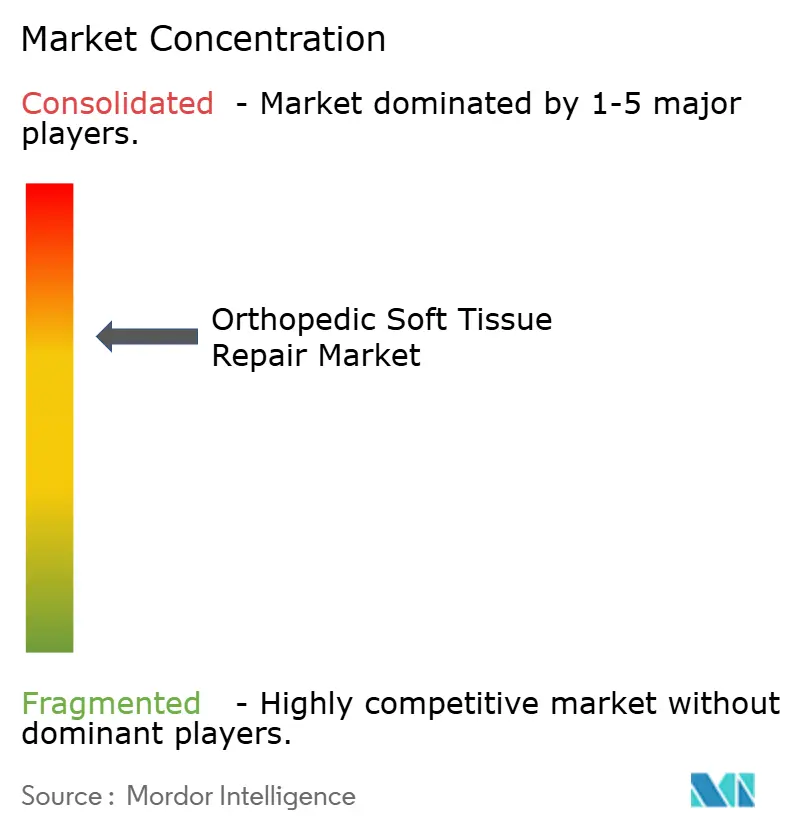
| Market Concentration | Medium |
Major Players *Disclaimer: Major Players sorted in no particular order Image © Mordor Intelligence. Reuse requires attribution under CC BY 4.0. | |
Orthopedic Soft Tissue Repair Market Analysis by Mordor Intelligence
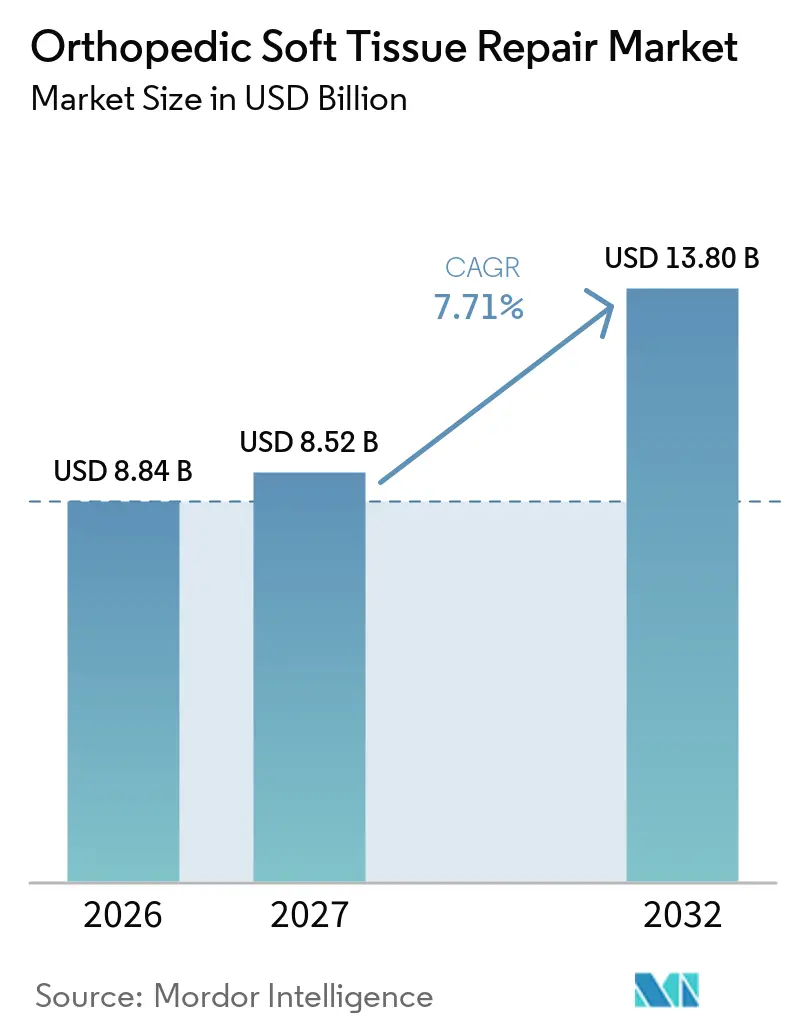
The Orthopedic Soft Tissue Repair Market size is expected to increase from USD 8.84 billion in 2026 to USD 8.52 billion in 2027 and reach USD 13.80 billion by 2032, growing at a CAGR of 7.71% over 2027-2032.
Demographic aging, rising sports participation, and accelerating surgeon adoption of bio-inductive scaffolds are amplifying procedure volumes. Hospitals and ambulatory surgical centers (ASCs) are expanding arthroscopic suites to capitalize on shorter stays and improved reimbursement, while original-equipment manufacturers (OEMs) intensify R&D in biologics that stimulate endogenous healing. Artificial-intelligence (AI) planning platforms that predict re-tear risk after rotator-cuff repair are further elevating procedural success rates. Together, these forces reinforce strong purchasing momentum for fixation anchors, bioresorbable implants, and specialty disposables used across shoulder, knee, and hip repairs.
Key Report Takeaways
- By product type, fixation devices led with 41.8% of the orthopedic soft tissue repair market share in 2026, while bio-inductive scaffolds are advancing at a 10.1% CAGR through 2032.
- By application, rotator-cuff repair accounted for 34.5% share of the orthopedic soft tissue repair market size in 2026, and hip-labrum repair is on track for a 10.4% CAGR to 2032.
- By end user, hospitals held 48.3% revenue share in 2026, while ASCs are expanding at an 8.9% CAGR through 2032 under revised Medicare payment rules.
- By region, North America commanded 38.7% of orthopedic soft tissue repair market share in 2026, whereas Asia–Pacific is forecast to post an 8.1% CAGR to 2032 on the back of capacity additions and pro-manufacturing policies.
Note: Market numbers in this report are based on Mordor Intelligence's proprietary estimation framework, which combines nine months of actuals with Q4 projections for base year 2026.
Market Trends and Insights
Drivers Impact Analysis of Orthopedic Soft Tissue Repair Market*
| Driver | (~) % Impact on CAGR Forecast | Geographic Relevance | Impact Timeline |
|---|---|---|---|
| Aging Population & Sports-Injury Prevalence | +1.80% | Global, with concentration in North America & EU | Long term (≥ 4 years) |
| Shift To Minimally-Invasive Arthroscopic Procedures | +1.50% | Global, led by North America, expanding to APAC | Medium term (2-4 years) |
| Growth In Outpatient ASC Reimbursement Models | +1.20% | North America primary, limited EU adoption | Short term (≤ 2 years) |
| Emergence Of Bio-Inductive & Scaffold Technologies | +2.10% | North America & EU leading, APAC following | Medium term (2-4 years) |
| AI-Driven Pre-Op Planning Improving Repair Success | +0.90% | North America & EU core, selective APAC adoption | Medium term (2-4 years) |
| Regenerative Medicine Collaborations With OEMs | +1.00% | Global, with R&D concentration in North America | Long term (≥ 4 years) |
| Source: Mordor Intelligence | |||
Aging Population & Sports-Injury Prevalence
Rotator-cuff pathology affects more than 40% of individuals older than 60, and participation in organized athletics among adults over 50 continues to rise.[1] The intersection of degenerative and acute injury mechanisms is therefore swelling the orthopedic soft tissue repair market. Healthcare systems are responding by opening combined sports-medicine and geriatric-orthopedic service lines that funnel high volumes of shoulder, knee, and hip repairs. In parallel, public-sector payers in Europe and North America have begun funding fall-prevention and musculoskeletal-screening programs, indirectly accelerating referral pipelines. Across emerging Asia, private hospitals cater to inbound medical tourists seeking low-cost arthroscopic procedures, widening global addressability for biologic grafts and fixation anchors.
Shift to Minimally Invasive Arthroscopy
Arthroscopic visualization, powered by 4K imaging and flexible instrumentation, is shortening the average length of stay from two days to same-day discharge for many tendon and labrum repairs. Vericel’s 2024 U.S. launch of MACI Arthro, an arthroscopically delivered chondrocyte implant, underscores the momentum toward smaller portals and biologic augmentation. Studies show surgeons reach proficiency in suprascapular-nerve decompression after about 50 cases, shrinking operative time from 29.5 minutes to 6.2 minutes.[2] As learning curves flatten, OEMs selling disposable cannulas, suture-passers, and smart anchors see expanding recurring revenue streams within the orthopedic soft tissue repair market.
Growth in Outpatient ASC Reimbursement Models
The Centers for Medicare & Medicaid Services lifted ASC payment rates by 2.6% for calendar 2025 and expanded its covered-procedure list to include additional arthroscopic knee, shoulder, and hip interventions.[3] Revenue projections indicate orthopedic ASCs can double top-line income for certain ligament repairs once new rates are fully implemented. The bundling of implant costs into the global payment is compelling buyers to negotiate volume-based contracts with implant vendors, creating price elasticity in favor of bioresorbable anchors that eliminate later hardware removal. Device makers are reciprocating by co-investing in ASC build-outs, offering capital equipment on deferred-payment terms to secure implant pull-through across the orthopedic soft tissue repair market.
Emergence of Bio-Inductive & Scaffold Technologies
Regenerative implants are shifting the therapeutic goal from structural reinforcement to biologic restitution. Regenity’s collagen RejuvaKnee meniscus device received U.S. clearance in 2024 and targets more than 1 million annual meniscectomies. CONMED’s BioBrace earned expanded indications in April 2025, now covering 50+ procedures ranging from ACL to biceps-tendon repair. Pre-clinical work on manganese-silicate nanoparticle scaffolds has further demonstrated accelerated tendon-to-bone healing via stem-cell modulation in animal models. These advances intensify surgeon and patient interest, nudging conventional screw-and-anchor protocols toward hybrid constructs that combine fixation with biologic augmentation, bolstering future growth in the orthopedic soft tissue repair market.
Restraints Impact Analysis of Orthopedic Soft Tissue Repair Market*
| Restraint | (~) % Impact on CAGR Forecast | Geographic Relevance | Impact Timeline |
|---|---|---|---|
| Clinical Evidence Gaps For Novel Biologics | -1.40% | Global, with stricter enforcement in North America & EU | Medium term (2-4 years) |
| High Procedure & Device Costs Vs. Payer Pressure | -2.10% | North America primary, spreading to EU and APAC | Short term (≤ 2 years) |
| Surgeon Learning Curve For Advanced Anchors | -0.80% | Global, with higher impact in emerging markets | Medium term (2-4 years) |
| Regulatory Uncertainty For Allograft Sourcing | -0.60% | North America & EU primary, limited APAC impact | Long term (≥ 4 years) |
| Source: Mordor Intelligence | |||
Clinical Evidence Gaps for Novel Biologics
No new cartilage-repair biologic has gained FDA approval in more than 15 years, underscoring the stringent clinical-trial burden for 351-classified products. The agency has heightened surveillance of human-tissue derivatives, and the American Academy of Orthopaedic Surgeons now maintains a public biologics dashboard to track research status. Randomized trials are hampered by small sample sizes and ethical hurdles tied to placebo surgery, delaying commercial timelines for scaffold innovators. For hospitals, uncertain long-term efficacy data limit reimbursement coding beyond temporary new-technology add-on payments, constraining initial uptake inside the orthopedic soft tissue repair market.
High Procedure & Device Costs Versus Payer Pressure
Inflation-adjusted Medicare payments for primary hip and knee arthroplasties have fallen 55% since 2000, while supply-chain costs consume up to 20% of med-tech expenses. Orthopedic trauma reimbursement declined by nearly one-third over the same span. Episode-of-care pricing pressures lead surgeons to weigh premium scaffold implants against tighter margins. At the same time, ASCs standardize generic screws or negotiate capitated contracts with OEMs, slowing near-term revenue growth for high-specification biologics in the orthopedic soft tissue repair market.
*Our forecasts treat driver/restraint impacts as directional, not additive. The impact forecasts reflect baseline growth, mix effects, and variable interactions.
Orthopedic Soft Tissue Repair Market Segment Analysis
By Product Type:
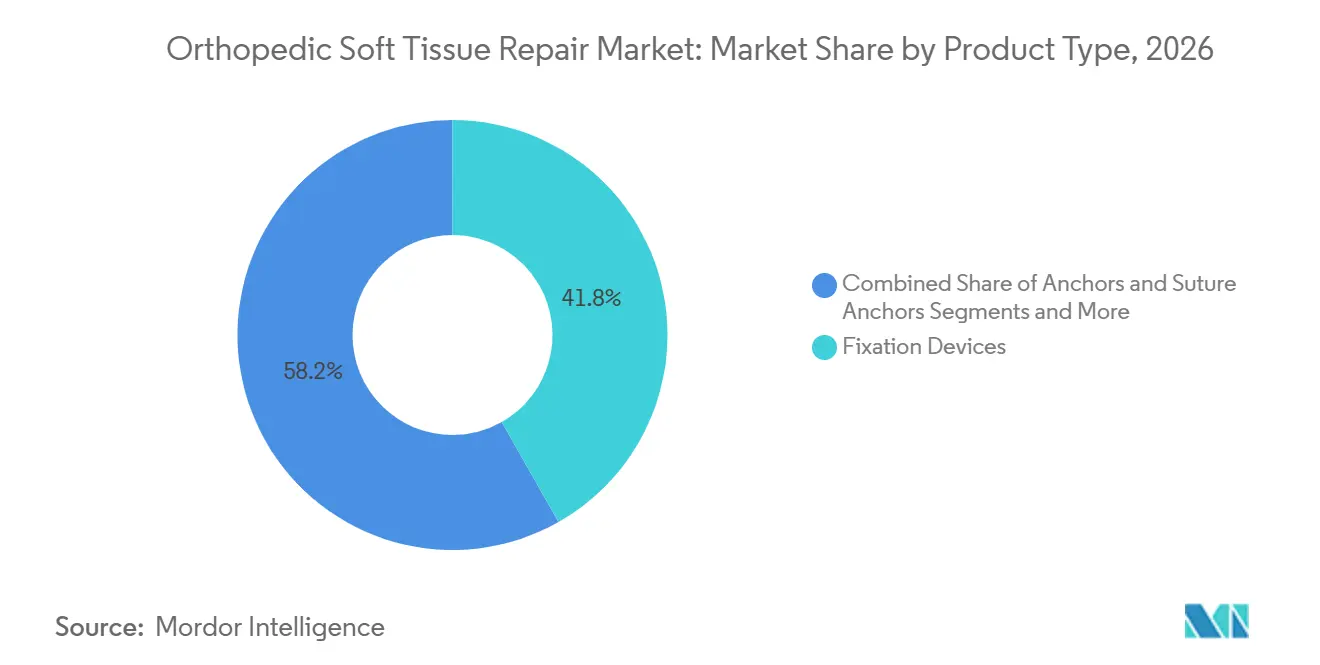
Bio-Inductive Technologies Drive InnovationFixation devices retained 41.8% of the orthopedic soft tissue repair market share in 2026, underpinned by the ubiquity of anchors, screws, and tapes used across tendon and ligament procedures. Yet bio-inductive scaffolds are scaling at a 10.1% CAGR through 2032, signaling a paradigm shift toward regenerative healing constructs. Atreon received U.S. clearance in 2025 for a bioresorbable synthetic implant that provides temporary support during rotator-cuff healing and then dissolves, avoiding future hardware complications. OEMs are bundling growth factors, stem-cell carriers, and antimicrobial agents into composite designs, creating multifunctional products that command premium average-selling prices.
R&D priorities increasingly center on hybrid platforms that integrate fixation and biologic cues in a single delivery system. Three-dimensional printing enables patient-specific porosity gradients, while smart polymers respond to local pH or enzymatic activity to control degradation rates. Regulatory agencies have published guidance that stresses mechanical testing parity with legacy metals yet encourages innovative biocompatibility evidence pathways, giving first movers a timing advantage. Collectively, these advances position bio-inductive constructs as pivotal contributors to long-run expansion of the orthopedic soft tissue repair market.

By Application:
Hip Labrum Repair Emerges as Growth LeaderRotator-cuff interventions generated 34.5% of the orthopedic soft tissue repair market size in 2026 owing to high prevalence and well-established clinical pathways. Hip-labrum surgery, however, is growing fastest at 10.4% CAGR, propelled by improved femoroacetabular-impingement diagnostics and postless-traction arthroscopy that reduces pudendal-nerve risk. Surgeons now employ combined capsular plication and femoroplasty to restore hip kinematics, stimulating demand for low-profile suture anchors compatible with constrained anatomical corridors.
Meniscal preservation is also transitioning from partial meniscectomy toward scaffold-based regeneration after Regenity’s RejuvaKnee clearance, which targets an annual U.S. caseload exceeding 1 million. Anterior cruciate ligament (ACL) reconstructions benefit from multiphasic bone-ligament-bone scaffolds that accelerate graft incorporation. As outcome registries document durability gains for biologically enhanced repairs, payer algorithms may eventually favor tissue-conserving approaches, adding tailwinds to the orthopedic soft tissue repair market.
By End User:
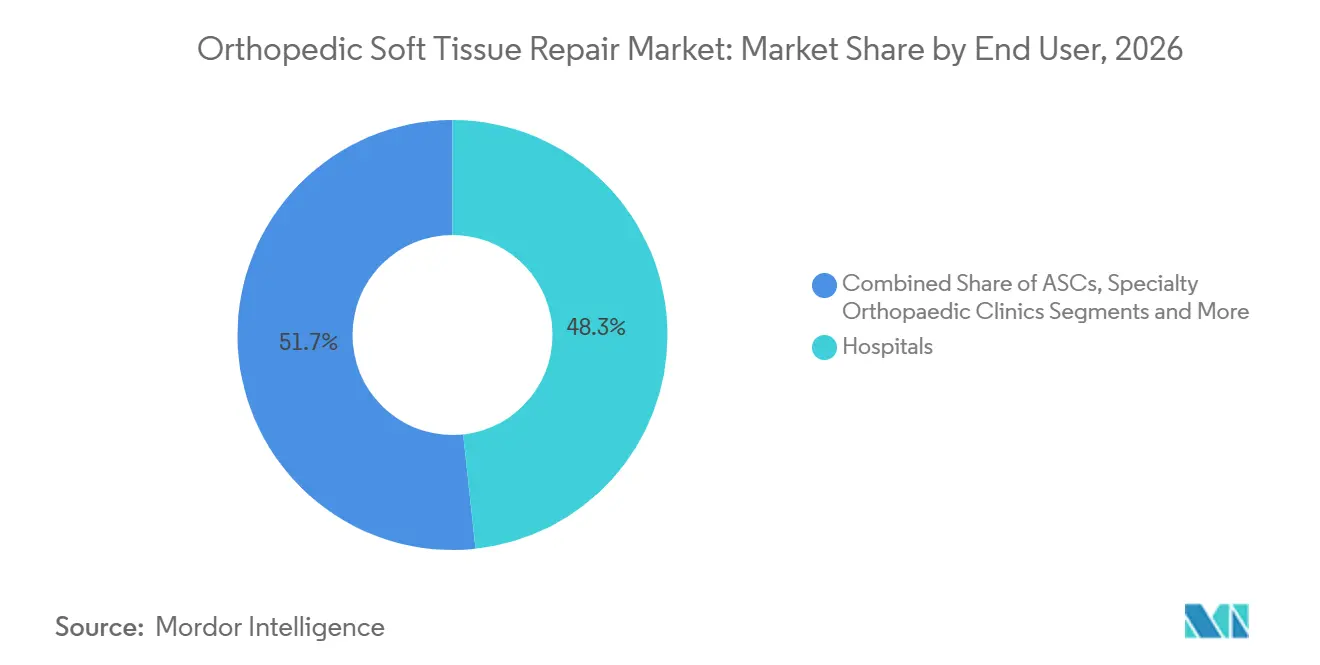
ASCs Capitalize on Reimbursement AdvantagesHospitals accounted for 48.3% revenue in 2026, reflecting their broad case mix and trauma coverage responsibilities. Nevertheless, ASCs are forecast to grow 8.9% annually through 2032 as Medicare and commercial insurers steer suitable cases to outpatient settings with lower facility fees. Surgeons appreciate control over scheduling and staffing, while patients value same-day discharge and reduced infection risk.
Specialty orthopedic centers are experimenting with bundled-payment contracts that cover implant, facility, and professional fees for a fixed price. Device vendors, in turn, offer consignment inventory and cloud-connected instrumentation that tracks utilization, permitting granular cost accounting. Mobile surgical pods and hybrid inpatient-outpatient facilities round out the “others” category, extending reach into rural catchment areas. All told, shifting site-of-service patterns deepens procedure volumes and diversifies buying channels inside the orthopedic soft tissue repair market.
Geography Analysis
North America Orthopedic Soft Tissue Repair Market
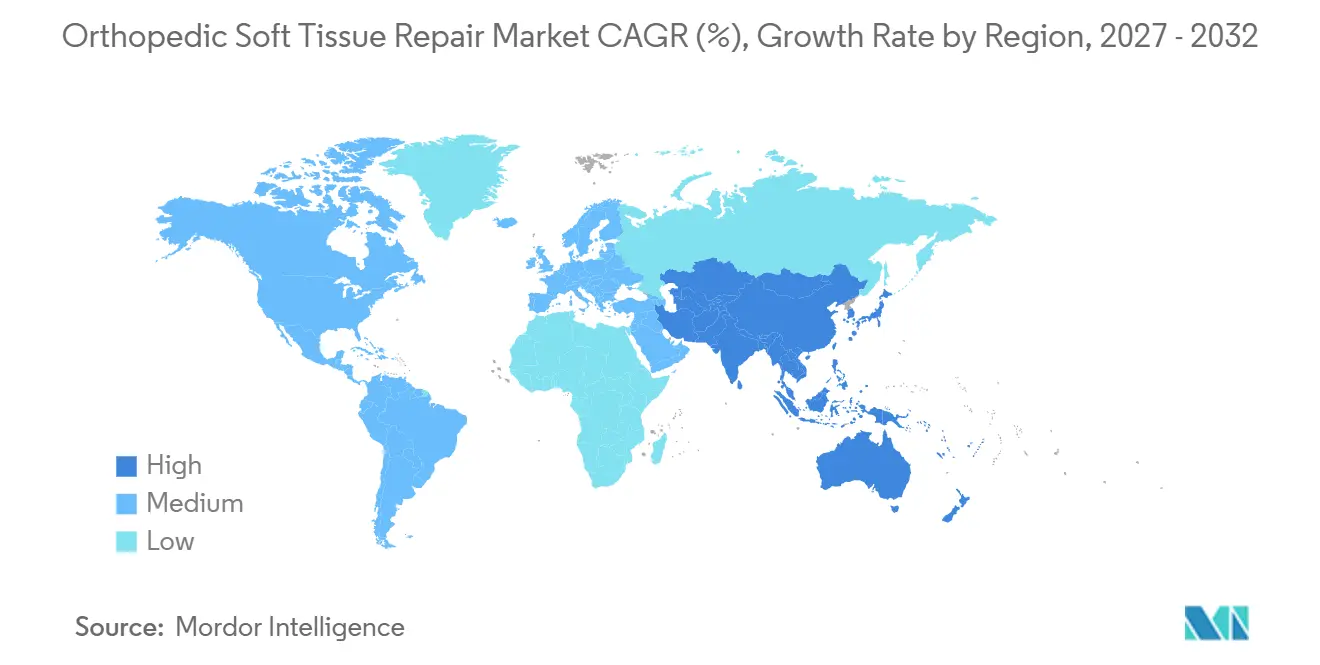
North America retained 38.7% of the orthopedic soft tissue repair market share in 2026 on the strength of advanced imaging infrastructure and early biologic-implant adoption. Federal payment reforms that lift ASC rates enhance near-term revenue visibility; however, long-term growth is tempered by downward pressure on surgeon fees and hospital budgets. U.S. OEMs are responding via targeted acquisitions—Stryker’s purchase of Artelon being a prime example—to secure proprietary soft-tissue technologies.
APAC Orthopedic Soft Tissue Repair Market
Asia–Pacific is expected to log an 8.1% CAGR to 2032, buoyed by hospital expansion, rising disposable incomes, and government incentives for domestic device manufacturing. China’s National Medical Products Administration has streamlined Class III approval pathways under State Order 739, enabling local firms to launch orthopedic robots aimed at arthroscopy. India’s production-linked incentives likewise encourage home-grown implant fabrication, expanding regional supply and lowering cost barriers.
EMEA and LATAM Orthopedic Soft Tissue Repair Market
Europe shows steady, regulated growth as Medical Device Regulation (MDR) compliance deadlines synchronize clinical-evidence expectations across member states. Aging demographics and public-sector emphasis on day-case surgery sustain medium-term volume gains. Meanwhile, Latin America, the Middle East, and parts of Africa post double-digit procedure growth from a small base, though currency volatility and fragmented reimbursement slow premium-implant penetration. OEMs deploying tiered-pricing and surgeon-education programs are best positioned to harvest incremental demand in these frontier segments of the orthopedic soft tissue repair market.
Competitive Landscape
The orthopedic soft tissue repair industry displays moderate consolidation: the top five manufacturers collectively control roughly 52% of global revenue, with Johnson & Johnson alone holding 13% and Stryker about 3%. Large players leverage scale to fund pivotal trials that satisfy 351 biologic requirements, erecting barriers for smaller innovators. Recent deal activity—such as Smith+Nephew’s USD 180 million acquisition of Agili-C cartilage-regeneration technology—signals investor appetite for platforms that complement anchor portfolios with biologic augmentation.
Artificial-intelligence engines that map tear morphology and bone density onto implant placement plans are emerging as key differentiators. A deep-learning model recently achieved 96.9% accuracy in predicting re-tear risk after arthroscopic rotator-cuff repair, sharpening debate over pay-for-performance reimbursement. Robotic-assisted total-knee arthroplasty reached 13% of U.S. procedures in 2023, but long-term superiority over manual techniques remains inconclusive.
Start-ups focusing on bioresorbable polymers and cell-laden hydrogels continue to raise venture capital albeit at lower valuations than in 2021. Strategic partnering—Zimmer Biomet’s alliance with CBRE to develop ASC networks, for example—extends downstream control over procedure settings and implant formularies. As reimbursement systems pivot toward bundled payments and evidence-based authorizations, scale, product breadth, and data analytics will increasingly dictate share shifts within the orthopedic soft tissue repair market.
Orthopedic Soft Tissue Repair Industry Leaders
-
Arthrex
-
Smith & Nephew
-
Stryker
-
Zimmer Biomet
-
Johnson & Johnson
- *Disclaimer: Major Players sorted in no particular order
Orthopedic Soft Tissue Repair Market Companies Covered in this Report
- Arthrex
- Smiths Group
- Stryker
- Zimmer Biomet
- Johnson & Johnson
- Conmed
- Medtronic
- Orthofix
- Integra LifeSciences
- Bioventus
- RTI Surgical
- Tissue Regenix
- MTF Biologics
- LifeNet Health
- Wright Medical (now Stryker)
- Parcus Medical
- Breg
- Mathys Ltd Bettlach
- Cayenne Medical
- Orthomed
Recent Industry Developments in Orthopedic Soft Tissue Repair Market
- April 2025: CONMED gained FDA clearance for expanded BioBrace indications covering 50+ tendon and ligament repairs, positioning the scaffold as a platform technology.
- February 2025: Atreon secured U.S. clearance for a bioresorbable rotator-cuff implant, offering surgeons a metal-free fixation option.
- August 2024: Vericel launched MACI Arthro, enabling arthroscopic delivery of autologous cultured chondrocytes on a porcine collagen membrane.
Global Orthopedic Soft Tissue Repair Market Report Scope
Segmentation Overview
| Fixation Devices |
| Anchors & Suture Anchors |
| Biological Grafts |
| Synthetic Grafts |
| Sutures & Tapes |
| Others |
| Rotator Cuff Repair |
| ACL/PCL Repair |
| Meniscal Repair |
| Hip Labrum Repair |
| Shoulder Labrum Repair |
| Others |
| Hospitals |
| Ambulatory Surgical Centres (ASCs) |
| Specialty Orthopaedic Clinics |
| Sports-Medicine Centres |
| Others |
| North America | United States |
| Canada | |
| Mexico | |
| Europe | Germany |
| United Kingdom | |
| France | |
| Italy | |
| Spain | |
| Rest of Europe | |
| Asia-Pacific | China |
| Japan | |
| India | |
| South Korea | |
| Australia | |
| Rest of Asia-Pacific | |
| Middle East & Africa | GCC |
| South Africa | |
| Rest of Middle East & Africa | |
| South America | Brazil |
| Argentina | |
| Rest of South America |
| By Product Type | Fixation Devices | |
| Anchors & Suture Anchors | ||
| Biological Grafts | ||
| Synthetic Grafts | ||
| Sutures & Tapes | ||
| Others | ||
| By Application | Rotator Cuff Repair | |
| ACL/PCL Repair | ||
| Meniscal Repair | ||
| Hip Labrum Repair | ||
| Shoulder Labrum Repair | ||
| Others | ||
| By End-User | Hospitals | |
| Ambulatory Surgical Centres (ASCs) | ||
| Specialty Orthopaedic Clinics | ||
| Sports-Medicine Centres | ||
| Others | ||
| By Geography | North America | United States |
| Canada | ||
| Mexico | ||
| Europe | Germany | |
| United Kingdom | ||
| France | ||
| Italy | ||
| Spain | ||
| Rest of Europe | ||
| Asia-Pacific | China | |
| Japan | ||
| India | ||
| South Korea | ||
| Australia | ||
| Rest of Asia-Pacific | ||
| Middle East & Africa | GCC | |
| South Africa | ||
| Rest of Middle East & Africa | ||
| South America | Brazil | |
| Argentina | ||
| Rest of South America | ||
Key Questions Answered in the Report
What is the current value of the orthopedic soft tissue repair market?
The orthopedic soft tissue repair market size is USD 9.52 billion in 2027.
How fast is demand for bio-inductive scaffolds growing?
Bio-inductive scaffolds are expanding at a 10.1% CAGR through 2032 thanks to regenerative-healing benefits.
Why are ambulatory surgical centers gaining share in soft-tissue procedures?
Revised Medicare payment rates and same-day discharge convenience are pushing more arthroscopic repairs into ASCs.
Which application segment shows the fastest growth potential?
Hip-labrum repair leads with a projected 10.4% CAGR, driven by better impingement diagnostics and arthroscopic techniques.
How are reimbursement pressures influencing device selection?
Declining surgeon fees and bundled payments are steering clinics toward cost-effective, often bioresorbable, implant systems.