
Online Poker Market Size and Share
Market Overview
| Study Period | 2021 - 2031 |
|---|---|
| Market Size (2026) | USD 4.29 Billion |
| Market Size (2031) | USD 7.45 Billion |
| Growth Rate (2026 - 2031) | 11.65 % |
| Fastest Growing Market | North America |
| Largest Market | Europe |
| Market Concentration | Medium |
Major Players
*Disclaimer: Major Players sorted in no particular order Image © Mordor Intelligence. Reuse requires attribution under CC BY 4.0. |
|
Online Poker Market Analysis by Mordor Intelligence
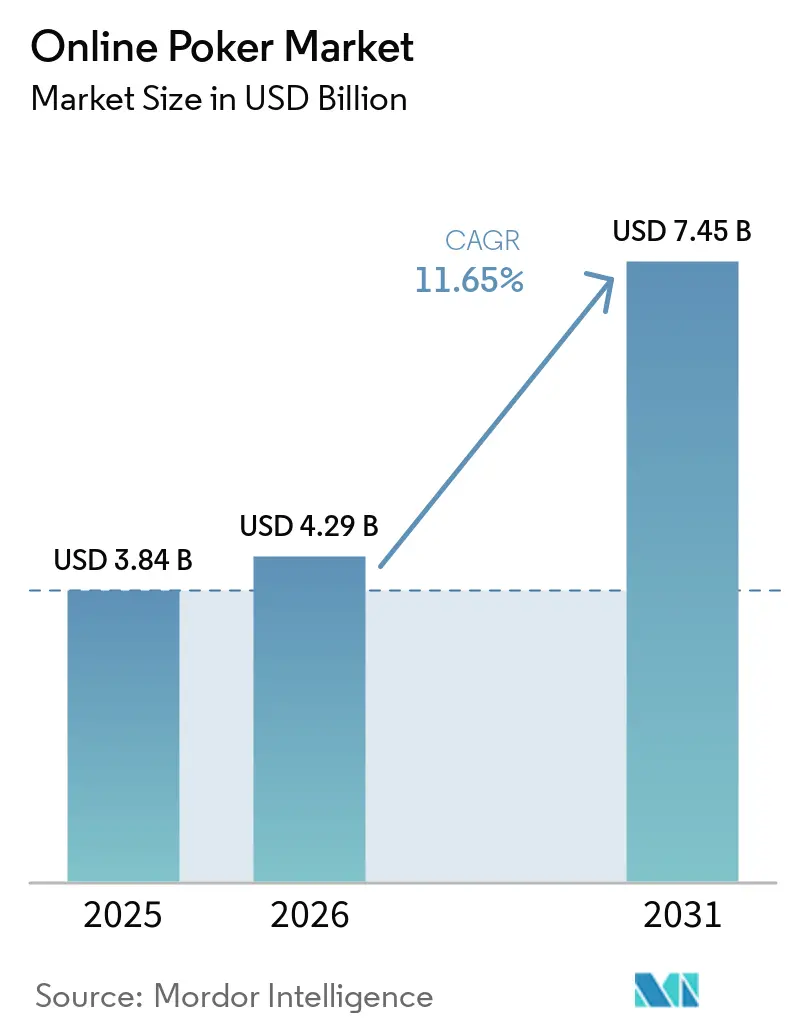
The online poker market was valued at USD 3.84 billion in 2025 and is projected to reach USD 4.29 billion in 2026, with further growth expected to USD 7.45 billion by 2031, registering a CAGR of 11.65% during 2026–2031. This growth is primarily driven by the increasing shift toward digital gaming platforms, the rising adoption of mobile-based entertainment, and the growing demand for convenient and interactive gaming experiences. Advancements in gaming technologies, such as artificial intelligence, virtual reality, data analytics, and enhanced security solutions, are also contributing to improved platform performance and user experience. Additionally, the increasing popularity of skill-based digital entertainment, competitive gaming experiences, and online tournaments is further supporting market expansion.
Key Report Takeaways
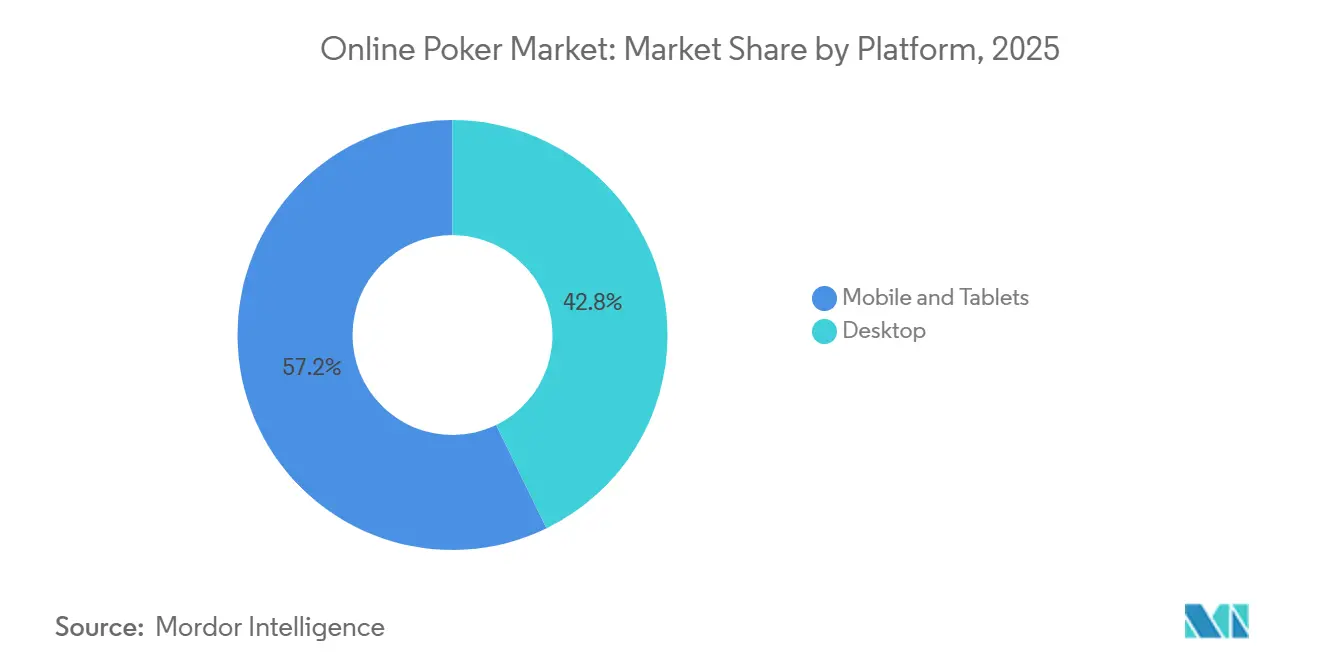
- By platform, Mobile and Tablets led the online poker market with a 57.21% share in 2025 and is also the fastest-growing segment, projected to expand at a 13.24% CAGR during 2026-2031.
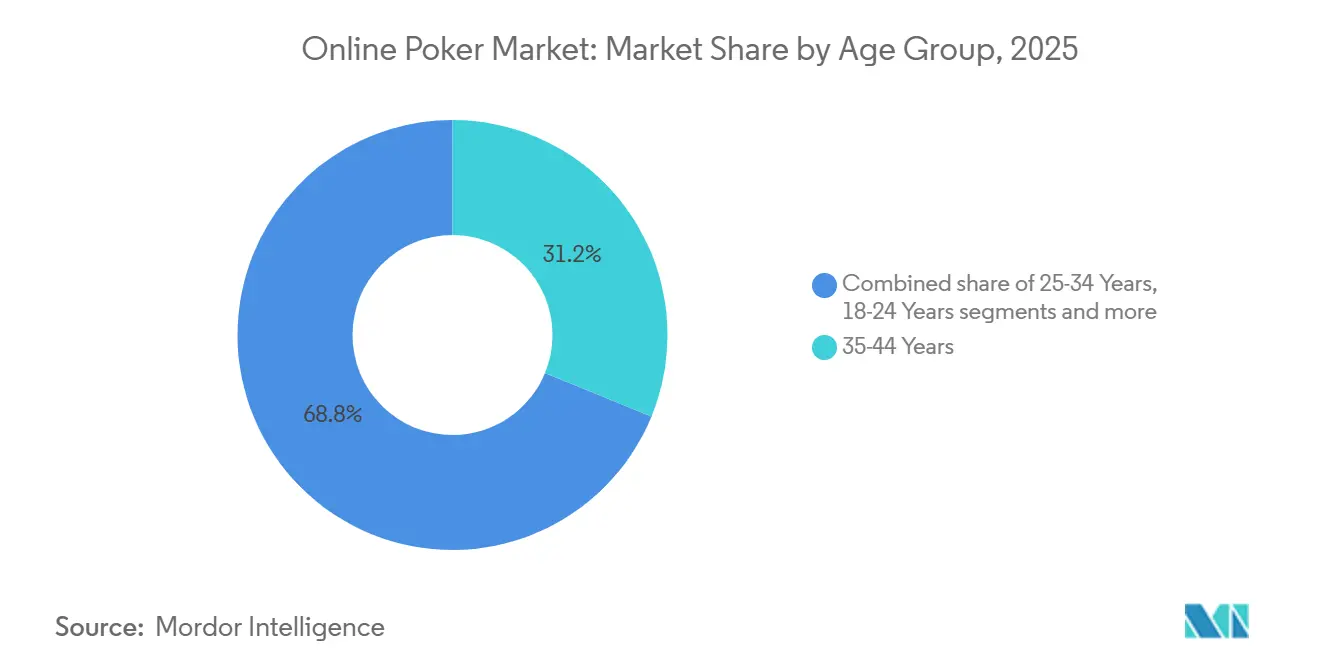
- By age group, the 35-44 Years segment held the largest revenue share at 31.19% in 2025, while the 25-34 Years segment is expected to record the highest growth at a 12.73% CAGR through 2031.
- By geography, Europe accounted for the largest share at 52.19% in 2025, while North America is forecast to be the fastest-growing regional segment with a 13.56% CAGR over 2026-2031.
Note: Market size and forecast figures in this report are generated using Mordor Intelligence’s proprietary estimation framework, updated with the latest available data and insights as of January 2026.
Global Online Poker Market Trends and Insights
Drivers Impact Analysis*
| Driver | (~) % Impact on CAGR Forecast | Geographic Relevance | Impact Timeline |
|---|---|---|---|
| Increasing smartphone penetration and mobile gaming adoption | +2.8% | Global, with early concentration in North America, Europe, and Asia-Pacific | Short term (≤ 2 years) |
| Legalization and regulated online gambling frameworks | +2.3% | North America (MSIGA states), Europe (GluStV, UKGC), South America (Brazil) | Medium term (2–4 years) |
| Advancements in secure digital payment technologies | +1.5% | Global, with high relevance in Asia-Pacific, Middle-East and Africa, and South America | Medium term (2–4 years) |
| Adoption of virtual reality (VR) and immersive poker experiences | +0.9% | North America and Europe (higher VR hardware penetration) | Long term (≥ 4 years) |
| Influence of social gaming and multiplayer experiences | +0.8% | Global, spill-over from mobile casual gaming markets | Short to medium term |
| Marketing partnerships and sponsorship activities | +0.5% | North America, Europe | Short term (≤ 2 years) |
| Source: Mordor Intelligence | |||
Increasing smartphone penetration and mobile gaming adoption
Increasing smartphone penetration and the adoption of mobile gaming are enhancing accessibility, convenience, and user engagement across digital platforms. Smartphones enable players to access poker games, live tournaments, and multiplayer formats at any time, driving the transition from traditional desktop-based gaming to mobile-first experiences. The development of dedicated poker applications with enhanced interfaces, secure payment systems, real-time gameplay features, and personalized experiences is further promoting frequent participation. For example, according to the Office of Communications (Ofcom), smartphone usage among mobile phone users in the United Kingdom reached 93% in 2024, underscoring the widespread adoption of mobile technology [1]Source: Office of Communications (Ofcom), "Share of smartphone users in the United Kingdom", ofcom.org.uk. The growing availability of smartphones, coupled with advancements in connectivity and app-based gaming solutions, continues to expand the potential user base and accelerate the global adoption of online poker.
Legalization and regulated online gambling frameworks
The expansion of legalization and regulated online gambling frameworks is enhancing platform credibility, user confidence, and opportunities for operator growth. Clear licensing structures, player protection policies, responsible gaming requirements, and compliance standards allow online poker providers to create safer and more transparent gaming environments. These regulated frameworks also facilitate secure payment processing, fair gameplay monitoring, and fraud prevention measures, encouraging increased participation through authorized platforms. As more regions implement structured online gambling regulations and integrate digital gaming platforms into legal frameworks, operators can introduce new poker formats, expand tournament offerings, and improve customer experiences, thereby driving the long-term growth of the online poker market.
Advancements in secure digital payment technologies
Advancements in secure digital payment technologies are contributing to the growth of the online poker market by enhancing transaction security, improving user convenience, and fostering trust in digital gaming platforms. The adoption of encrypted payment gateways, digital wallets, blockchain-based solutions, instant deposit systems, and secure withdrawal mechanisms allows players to conduct transactions more efficiently while mitigating risks associated with fraud and unauthorized access. Online poker operators are increasingly implementing advanced financial technologies to facilitate seamless peer-to-peer transactions and enhance the overall gaming experience. For example, GPoker's launch of Escrow Trade in June 2026 introduced an in-platform peer-to-peer marketplace that safeguards virtual currency funds during transactions, ensuring assets remain protected until both parties complete the exchange. These innovations in payment infrastructure continue to build player confidence and promote the broader adoption of online poker platforms.
Adoption of virtual reality (VR) and immersive poker experiences
The adoption of virtual reality (VR) and immersive gaming technologies is contributing to the growth of the online poker market by enhancing player interaction and creating more realistic digital poker environments. VR-enabled platforms provide users with interactive poker rooms featuring virtual avatars, real-time communication, 3D environments, and casino-like gameplay, bridging the gap between traditional live poker and online formats. These technologies enhance user engagement by facilitating social interaction, offering personalized gaming spaces, and delivering more engaging gameplay experiences compared to conventional screen-based poker. The integration of advanced graphics, motion tracking, artificial intelligence, and immersive interfaces allows platforms to attract technology-oriented players seeking innovative gaming experiences. As VR hardware becomes more affordable and gaming platforms continue to invest in immersive features, virtual poker experiences are anticipated to improve player retention and drive the ongoing growth of the online poker market.
Restraints Impact Analysis*
| Restraint | (~) % Impact on CAGR Forecast | Geographic Relevance | Impact Timeline |
|---|---|---|---|
| Gambling addiction and responsible gaming issues | -1.5% | Global; highest intensity in Europe (United Kingdom, Germany, France) and North America | Medium term (2–4 years) |
| Cybersecurity threats and data privacy concerns | -0.9% | Global | Short term (≤ 2 years) |
| Increasing cases of fraud, bots, and cheating practices | -0.7% | Global; highest operational visibility in US and European regulated markets | Short to medium term |
| Competition from alternative online entertainment platforms | -0.6% | Global; higher intensity in the 18–34 age cohort | Medium to long term |
| Source: Mordor Intelligence | |||
Gambling addiction and responsible gaming issues
Gambling addiction and responsible gaming concerns are limiting the growth of the online poker market by intensifying regulatory scrutiny and posing challenges for platform operators. The easy accessibility of online poker platforms, the availability of continuous gameplay, and real-money gaming features heighten the risk of excessive participation among vulnerable users, raising concerns about gambling-related harm. Consequently, operators are required to adopt stricter responsible gaming measures, such as spending limits, self-exclusion options, identity verification, and player behavior monitoring systems, which add to compliance complexities. According to the World Health Organization (WHO), approximately 1.2% of the global adult population experienced gambling disorder in 2024, underscoring the increasing concerns surrounding gambling-related risks.
Cybersecurity threats and data privacy concerns
Cybersecurity threats and data privacy concerns are limiting the growth of the online poker market by undermining user trust and creating operational challenges for gaming providers. Online poker platforms handle significant volumes of sensitive data, including personal information, identity verification details, financial transactions, and player activity records, making them attractive targets for cyberattacks, payment fraud, phishing, and data breaches. Security vulnerabilities can result in financial losses, unauthorized account access, and diminished player confidence, negatively affecting platform adoption and retention. To mitigate these risks, operators are required to invest substantially in cybersecurity systems, encryption technologies, fraud detection tools, and compliance with data protection regulations, which increases operational complexity. Persistent concerns regarding digital privacy and the safety of online transactions continue to hinder the broader adoption of online poker platforms.
*Our forecasts treat driver/restraint impacts as directional, not additive. The impact forecasts reflect baseline growth, mix effects, and variable interactions.
Segment Analysis
By Platform: Mobile-First Architecture Defines the Competitive Baseline
Mobile and tablets accounted for 57.21% of the market in 2025 and are projected to achieve the fastest growth, with a CAGR of 13.24% during 2026–2031. This growth is driven by the increasing shift toward mobile-based gaming experiences and the rising demand for convenient, on-demand entertainment access. The widespread availability of smartphones and tablets has enabled players to engage in online poker anytime and anywhere. According to the Global System for Mobile Communications Association (GSMA), global smartphone penetration reached 71% in 2024, up from 69% in 2023, underscoring the expanding digital user base that supports mobile gaming adoption [2]Source: Global System for Mobile Communications Association (GSMA), "Global smartphone penetration", gsma.com. The development of dedicated poker applications featuring optimized interfaces, faster loading speeds, secure payment systems, live gameplay options, and personalized gaming experiences has further enhanced user engagement on mobile devices.
The desktop segment is gaining traction due to its ability to deliver a more stable, immersive, and professional gaming experience, particularly for players who prefer extended sessions and advanced gameplay. Larger screens, improved visibility of game layouts, and easier multi-table management make desktops a preferred choice among experienced and competitive poker players. The segment benefits from superior processing capabilities, reliable connectivity, and compatibility with advanced poker software features, enabling users to analyze gameplay, customize interfaces, and manage multiple games simultaneously. Additionally, desktops provide greater convenience for high-volume players who require precision controls, detailed statistics, and uninterrupted gaming environments.


By Age Group: Middle-Aged Players Anchor Revenue, Younger Cohort Drives Forward Momentum
The 35–44 years age group accounted for the largest share, 31.19%, of online poker market revenue in 2025. This dominance is attributed to higher engagement with strategic and skill-based gaming formats. Players in this demographic typically exhibit a strong interest in competitive gameplay, decision-making challenges, and extended gaming sessions, leading to increased platform participation and retention rates. Their familiarity with digital platforms, coupled with a preference for analytical and strategy-focused entertainment, drives consistent adoption of online poker services. This group values advanced gaming features such as multi-table options, personalized experiences, secure payment systems, and competitive formats, which enhance their overall gaming experience. Additionally, their awareness of poker strategies, access to training resources, and involvement in online gaming communities further bolster engagement levels.
The 25–34 years age group is projected to be the fastest-growing segment in the online poker market, with a CAGR of 12.73% during 2026–2031. This growth is driven by the increasing adoption of digital entertainment platforms, competitive online gaming formats, and mobile-based poker experiences. Representing a highly technology-oriented user base, this demographic actively engages with interactive and skill-driven gaming environments, fueling rapid growth in online poker participation. Their preference for convenient access, real-time multiplayer experiences, personalized gaming features, and socially connected platforms is prompting operators to enhance digital poker offerings. Additionally, growing interest in strategic gameplay, online competitions, live-streamed events, and community-based gaming ecosystems is further driving engagement within this age group.

Geography Analysis
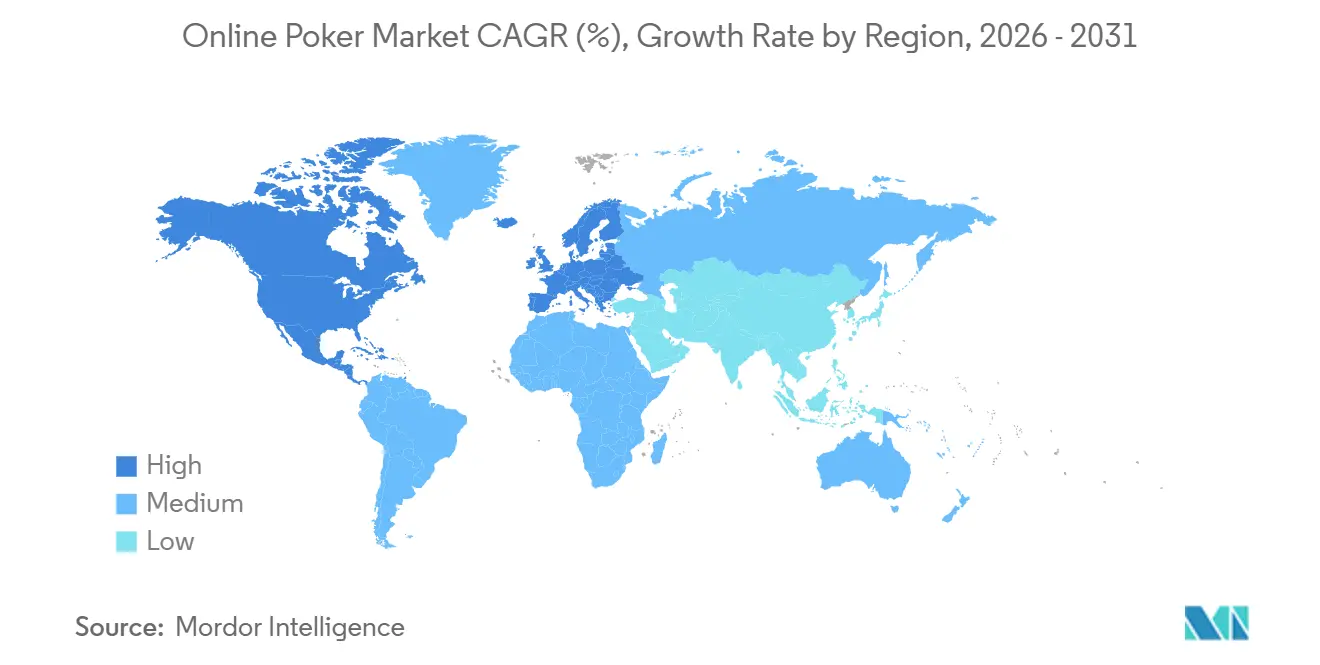
Europe is expected to account for the largest share of 52.19% of the online poker market revenue in 2025. This dominance is attributed to a mature digital gaming ecosystem, strong player engagement, and the presence of well-established regulated online gaming frameworks. The region benefits from a higher acceptance of online poker as a skill-based digital entertainment format, supported by secure gaming platforms, responsible gaming initiatives, and enhanced player protection measures. Factors such as increasing participation in online gaming communities, the availability of competitive poker formats, and the adoption of advanced gaming technologies continue to drive market growth. According to the National Gaming Authority, the number of active online gaming accounts in France rose to approximately 2.12 million in 2024, compared to 1.91 million in 2023, highlighting the growing participation and engagement across regulated digital gaming platforms [3]Source: National Gaming Authority, "Number of active online poker player accounts in France", anj.fr.
North America is projected to be the fastest-growing region in the online poker market, with a CAGR of 13.56% during 2026–2031. This growth is driven by expanding legalization, increasing adoption of regulated gaming platforms, and a growing preference for digital poker experiences. The region's development is further supported by advancements in mobile gaming technologies, secure payment solutions, live gaming features, and improved user verification systems, which enhance trust and accessibility. Additionally, rising demand for competitive online tournaments, real-money gaming formats, and interactive entertainment experiences is accelerating the shift from traditional poker formats to online platforms.
The Asia-Pacific region presents a mixed outlook due to varying regulatory environments. While some markets are witnessing increasing acceptance of skill-based gaming, others maintain strict restrictions on online gambling activities. Growth opportunities in the region are supported by rising digital gaming adoption, mobile-first entertainment trends, and expanding technology-driven gaming ecosystems in markets where online gaming is permitted. South America remains in the early stages of growth in the online poker market. This development is supported by gradual regulatory advancements, improving digital gaming infrastructure, and increasing awareness of online poker platforms. The Middle East and Africa region faces slower adoption of online poker due to regulatory limitations. However, improving digital connectivity, evolving entertainment preferences, and emerging participation in online gaming are creating selective opportunities for future market development.

Competitive Landscape
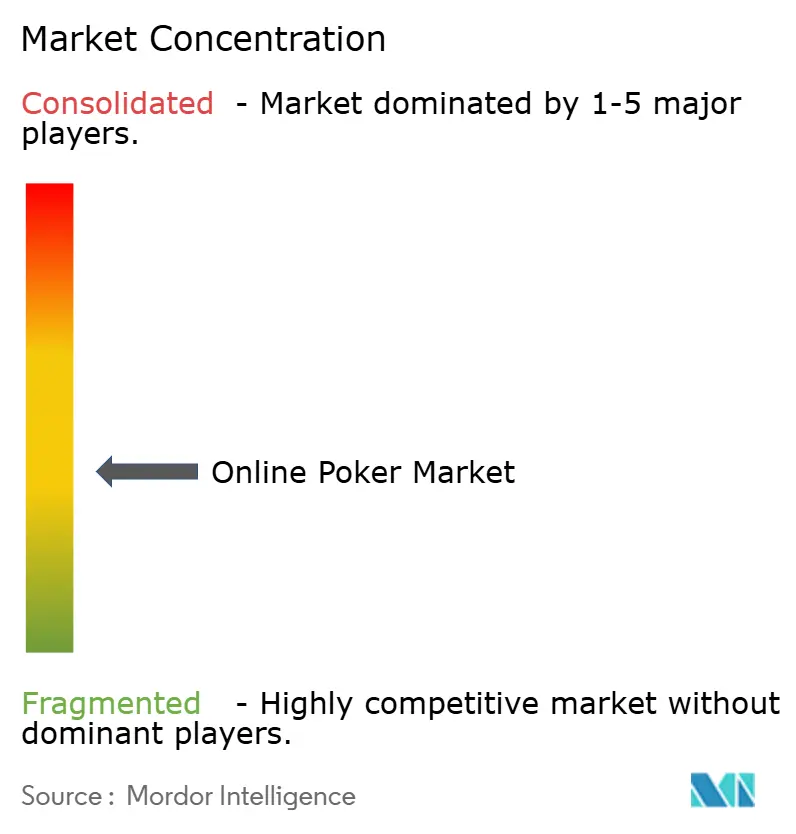
The online poker market is moderately fragmented, with numerous global and regional players competing through platform innovation, tournament expansion, enhanced gaming experiences, and player engagement strategies. The market comprises several established operators emphasizing secure gameplay environments, mobile optimization, responsible gaming tools, and interactive features to strengthen their customer base. Key players in the market include NSUS Group Inc., Flutter Entertainment plc, WPT Global, Evoke plc, and Entain plc, among others.
Companies are increasingly focusing on organizing large-scale online and live poker tournaments, forming partnerships, and hosting promotional events to enhance brand visibility and boost player participation. Tournament-based strategies enable operators to build gaming communities, improve customer retention, and attract both recreational and professional players. For example, The PokerStars Live Manila Special was held from June 15 to June 21, 2026, at Okada Manila in the Philippines, offering a week-long poker event with competitive formats and premium tournament offerings to engage players.
Additionally, market participants are investing in advanced technologies such as improved mobile applications, AI-enabled personalization, fraud detection systems, secure payment solutions, and enhanced user interfaces to differentiate their platforms. Operators are also expanding access to regulated markets and prioritizing responsible gaming measures to build user trust and foster long-term engagement. Continuous innovation in gameplay formats, digital experiences, and tournament ecosystems is expected to intensify competition among online poker providers in the coming years.
Online Poker Industry Leaders
-
NSUS Group Inc. (GGPoker)
-
Flutter Entertainment plc (PokerStars)
-
WPT Global
-
Evoke plc (888poker)
-
Entain plc (partypoker)
- *Disclaimer: Major Players sorted in no particular order

Recent Industry Developments
- June 2026: CoinPoker has introduced VIP Arena, a specialized cash-game platform tailored for high-stakes online poker players. It focuses on higher-stakes cash games, offers dedicated player support, enhanced game monitoring, and VIP rewards.
- June 2026: Playtech has launched its online poker network in North America through FanDuel, covering Michigan, New Jersey, Pennsylvania, and the Canadian province of Ontario. This initiative strengthens the company’s poker division and aligns with its broader regional growth strategy.
- February 2026: Codere Online Luxembourg, S.A. launched its new iOS Poker application in Mexico, aligning with the company's strategic objective to offer customers a comprehensive range of online gaming products.


Global Online Poker Market Report Scope
The online poker market refers to the global digital ecosystem where players wager real or virtual money on poker games over the internet. The online poker market is segmented by platform, age group and geography. Based on platform, the market is segmented into desktop and mobile and tablets. Based on age group, the market is segmented into 18–24 years, 25–34 years, 35–44 years, 45–54 years, and 55+ years. Based on geography, the market is segmented into North America, Europe, Asia-Pacific, South America, and Middle East and Africa. For each segment, the market sizing and forecast have been done based on the value (in USD million).
| Desktop |
| Mobile and Tablets |
| 18-24 Years |
| 25-34 Years |
| 35-44 Years |
| 45-54 Years |
| 55+ Years |
| North America | United States |
| Canada | |
| Mexico | |
| Rest of North America | |
| Europe | United Kingdom |
| Germany | |
| France | |
| Italy | |
| Spain | |
| Sweden | |
| Rest of Europe | |
| Asia-Pacific | Oceanic Countries |
| Rest of Asia-Pacific | |
| South America | |
| Middle East and Africa |
| By Platform | Desktop | |
| Mobile and Tablets | ||
| By Age Group | 18-24 Years | |
| 25-34 Years | ||
| 35-44 Years | ||
| 45-54 Years | ||
| 55+ Years | ||
| By Geography | North America | United States |
| Canada | ||
| Mexico | ||
| Rest of North America | ||
| Europe | United Kingdom | |
| Germany | ||
| France | ||
| Italy | ||
| Spain | ||
| Sweden | ||
| Rest of Europe | ||
| Asia-Pacific | Oceanic Countries | |
| Rest of Asia-Pacific | ||
| South America | ||
| Middle East and Africa | ||


Key Questions Answered in the Report
What is the projected value of online poker by 2031?
The online poker market is projected to reach USD 7.45 billion by 2031, up from USD 4.29 billion in 2026.
What is driving growth in digital poker through 2031?
Mobile usage, regulated expansion in North America, and stronger payment systems are the main factors supporting the 11.65% CAGR.
Which region leads global revenue today?
Europe led with 52.19% of revenue in 2025, supported by mature regulation and established operator presence.
Which region is growing the fastest?
North America is expected to grow the fastest, with a projected 13.56% CAGR through 2031 as shared liquidity expands.
Page last updated on:


 Your data is secure and never sold or shared.


