
Healthcare Supply Chain BPO Market Size and Share
Market Overview
| Study Period | 2020 - 2031 |
|---|---|
| Market Size (2026) | USD 3.17 Billion |
| Market Size (2031) | USD 4.30 Billion |
| Growth Rate (2026 - 2031) | 6.30 % |
| Fastest Growing Market | Asia-Pacific |
| Largest Market | North America |
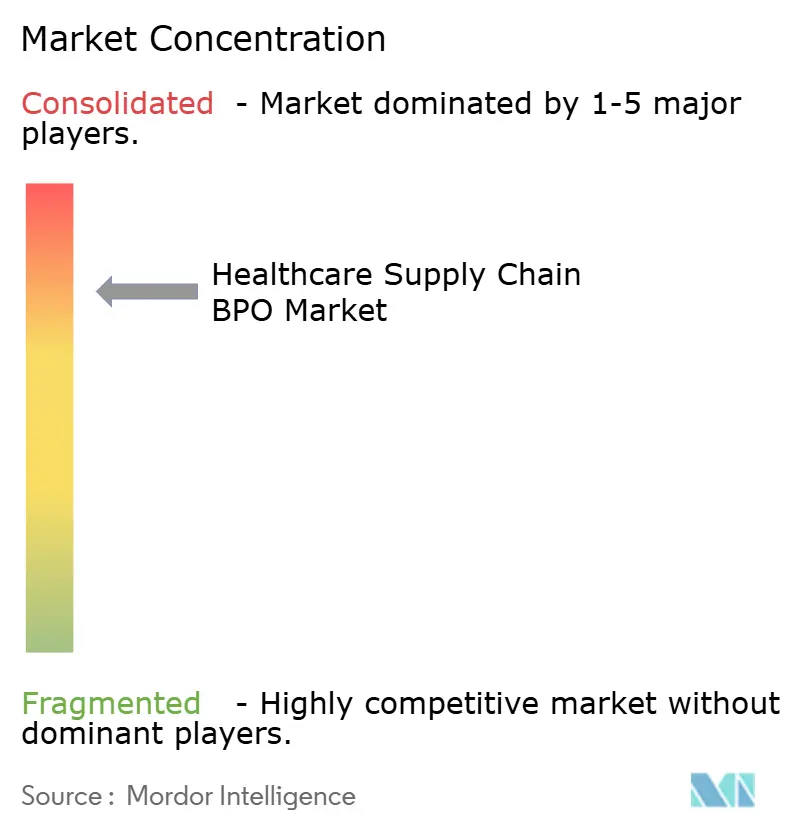
| Market Concentration | High |
Major Players *Disclaimer: Major Players sorted in no particular order Image © Mordor Intelligence. Reuse requires attribution under CC BY 4.0. | |
Healthcare Supply Chain BPO Market Analysis by Mordor Intelligence
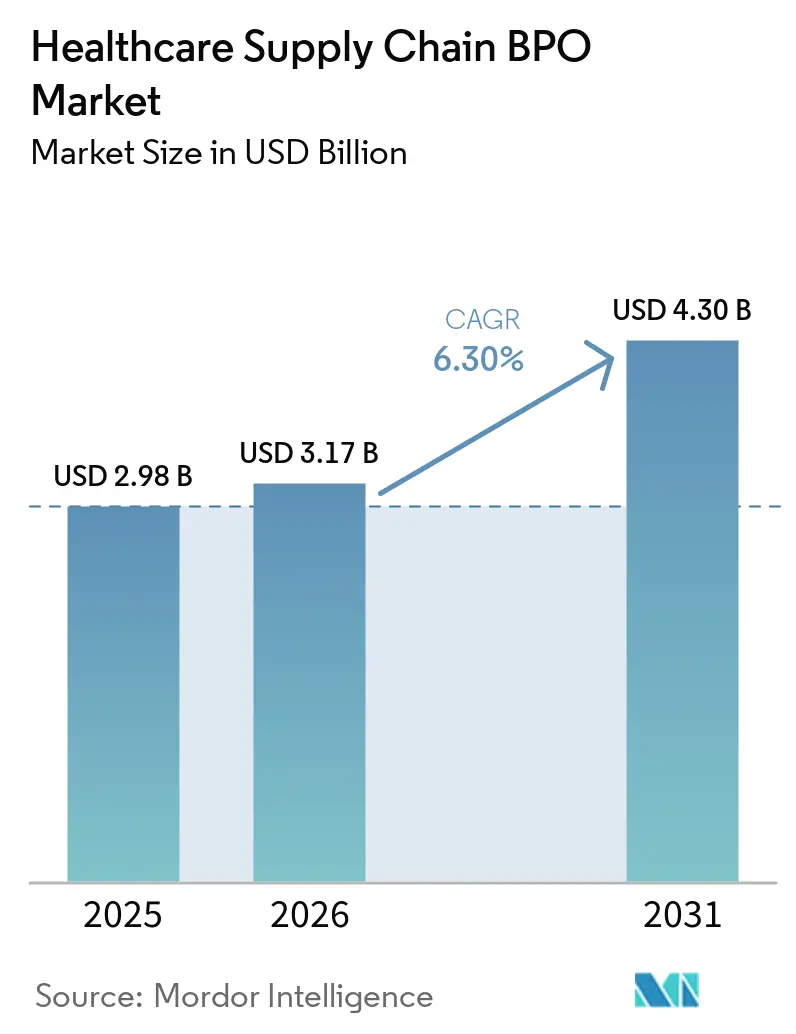
The Healthcare Supply Chain BPO Market size was valued at USD 2.98 billion in 2025 and is estimated to grow from USD 3.17 billion in 2026 to reach USD 4.30 billion by 2031, at a CAGR of 6.30% during the forecast period (2026-2031).
Hospitals, pharmaceutical companies, and medical device firms face growing pressure to reduce supply chain costs while improving reliability, driving market growth. Outsourcing decisions now prioritize enhanced procurement control, better inventory visibility, and measurable outcomes over mere labor savings. Cloud-based platforms, AI-driven tools, and compliance-focused processes are making outsourcing contracts more strategic. Providers with robust platforms and regulatory expertise are outperforming those offering only transactional support. Key opportunities exist in end-to-end contracts, procurement transformation, compliance-heavy pharmaceutical workflows, and multi-site hospital supply chain programs.
Key Report Takeaways
- By type, transactional BPO held 41.68% share in 2025, while comprehensive BPO is projected to grow at an 8.90% CAGR through 2031.
- By product, order management held 36.23% share in 2025, while procurement services is projected to grow at a 9.25% CAGR through 2031.
- By services, consulting services held 36.74% share in 2025, while implementation services is projected to grow at an 8.55% CAGR through 2031.
- By technology, cloud-based solutions held 42.71% share in 2025, while artificial intelligence is projected to grow at a 7.33% CAGR through 2031.
- By component, services held 49.87% share in 2025, while software is projected to grow at a 6.53% CAGR through 2031.
- By application, hospitals and clinics held 45.9% share in 2025, while pharmaceutical companies are projected to grow at a 7.76% CAGR through 2031.
- By process, order fulfillment held 38.56% share in 2025, while supplier relationship management is projected to grow at an 8.64% CAGR through 2031.
- By deployment, on-premise held 48.95% share in 2025, while cloud-based deployment is projected to grow at a 9.15% CAGR through 2031.
- By end user, pharmaceutical companies held 44.77% share in 2025, while Healthcare Providers are projected to grow at an 8.87% CAGR through 2031.
- By geography, North America held 41.55% share in 2025, while Asia-Pacific is projected to grow at a 9.22% CAGR through 2031.
Note: Market size and forecast figures in this report are generated using Mordor Intelligence’s proprietary estimation framework, updated with the latest available data and insights as of January 2026.
Market Trends and Insights
Drivers Impact Analysis of Healthcare Supply Chain BPO Market*
| DRIVER | (~) % IMPACT ON CAGR FORECAST | GEOGRAPHIC RELEVANCE | IMPACT TIMELINE |
|---|---|---|---|
| Expanding clinical pipelines for RNA-targeted medicines | +6.2% | Global | Short term (≤ 2 years) |
| Outsourcing shift for complex oligonucleotide synthesis and fill-finish | +5.0% | Global, particularly North America & Europe | Medium term (2-4 years) |
| Rising demand for precision medicine and rare-disease programs | +4.5% | North America & Europe | Medium term (2-4 years) |
| Scale-up pressure from dual-route manufacturing, clinical and GMP | +3.0% | Global | Medium term (2-4 years) |
| Analytical release burden for modified and conjugated oligomers | +1.8% | North America & Europe | Long term (≥ 4 years) |
| Supply localization for nucleoside, phosphoramidite, and specialty raw materials | +1.3% | APAC, with spill-over to North America | Medium term (2-4 years) |
| Source: Mordor Intelligence | |||
Expanding Clinical Pipelines For RNA-Targeted Medicines
As of mid-2026, over 200 organizations contributed to the global oligonucleotide clinical pipeline, providing the oligonucleotide CDMO market with a diverse and active customer base, reducing reliance on a select few sponsors. Every IND-stage and late-stage program requires GMP material prior to approval and commercialization. The pipeline is increasingly leaning towards larger cardiometabolic opportunities, altering expected batch sizes and intensifying the pressure on commercial supply planning, a shift from the previous focus on rare diseases. Legacy synthesis footprints weren't designed to handle demands scaling from kilograms to tonnes across an expanding array of chronic indications.
Outsourcing Shift For Complex Oligonucleotide Synthesis And Fill-Finish
The oligonucleotide CDMO market is witnessing a pronounced outsourcing trend, as many innovators find it challenging to manage complex oligonucleotide synthesis to commercial standards internally. Manufacturing GalNAc-conjugated siRNA demands meticulous coordination across assembly, deprotection, conjugation, purification, and impurity profiling, with each step introducing distinct technical challenges under ICH standards. By the first half of 2025, WuXi AppTec’s TIDES platform was servicing 69 molecules for both API and drug product services, a figure that has more than doubled in just two years. The fill-finish phase is gaining prominence as products transition to subcutaneous and prefilled formats, necessitating sterile capacities beyond mere API synthesis.
Rising Demand For Precision Medicine And Rare-Disease Programs
The oligonucleotide CDMO market is benefiting from personalized medicine and rare-disease initiatives, which often demand rapid GMP execution despite modest batch volumes. By 2026, over 20 individualized ASOs had been crafted and administered to more than 30 patients globally, indicating the model's transition from theoretical to practical clinical application. The FDA’s independent trial pathway for n-of-1 ASOs has alleviated significant access hurdles, rendering the development and manufacturing processes more viable. For CDMOs, the challenge extends beyond volume; it involves delivering validated small batches swiftly while upholding stringent GMP quality standards. Providers adept at this pace are enjoying enhanced pricing and fortified sponsor relationships.
Scale-Up Pressure From Dual-Route Manufacturing, Clinical And GMP
The oligonucleotide CDMO market faces mounting scale-up challenges, as transitioning from small-column clinical systems to larger commercial outputs proves difficult. While conventional solid-phase synthesis dominates the supply landscape, enzymatic ligation is emerging as a formidable contender for large-scale oligonucleotide production. Alnylam's December 2025 announcement of a USD 250 million expansion at its Norton, Massachusetts RNAi site, aimed at deploying the siRELIS enzymatic ligation platform, underscores the commercial viability of this approach. Agilent's commitment of over USD 740 million since 2023 to oligonucleotide manufacturing is evident, with Train C commencing production in early 2026 and Train D earmarked for enzymatic ligation in early 2027.
Restraints Impact Analysis of Healthcare Supply Chain BPO Market*
| RESTRAINT | (~) % IMPACT ON CAGR FORECAST | GEOGRAPHIC RELEVANCE | IMPACT TIMELINE |
|---|---|---|---|
| High process complexity and yield sensitivity in long-chain oligonucleotides | -1.5% | Global | Short term (≤ 2 years) |
| Stringent purity, impurity, and potency control requirements | -1.2% | North America & Europe | Medium term (2-4 years) |
| Limited availability of specialized talent and qualified GMP capacity | -0.9% | Global, acute in APAC | Medium term (2-4 years) |
| Raw-material dependency and batch-level supply volatility | -0.8% | Global, acute in APAC | Short term (≤ 2 years) |
| Source: Mordor Intelligence | |||
High Process Complexity And Yield Sensitivity In Long-Chain Oligonucleotides
The oligonucleotide CDMO market faces a significant technical challenge due to the stepwise synthesis process, where one nucleotide is added at a time. This method results in compounded efficiency losses for longer sequences. For example, a 20-mer ASO undergoes at least 20 coupling cycles, and even with high per-step efficiency, the final yield can drop noticeably. The challenge becomes more pronounced with modifications like phosphorothioate backbones, 2'-fluoro substitutions, or GalNAc ligands, which introduce additional side reactions and analytical complexities. Providers transitioning from peptides or small molecules often underestimate timelines, impurity management, and batch failure risks, leading to slower capacity ramp-up despite strong demand. Consequently, commercial supply remains concentrated among experienced companies with extensive operational histories.
Stringent Purity, Impurity, And Potency Control Requirements
The oligonucleotide CDMO market is constrained by rigorous analytical requirements. Oligonucleotide drug products must meet strict specifications for full-length sequences, deletion variants, diastereomer patterns, and residue-related impurities. Achieving these standards often requires 15 to 20 analytical methods across platforms like HPLC, mass spectrometry, and electrophoresis, increasing staffing needs and validation efforts. Analytical headcount often grows faster than synthesis throughput, pressuring margins and client timelines. Ionis’ investments in commercial-scale analytical and CMC capabilities highlight the depth needed to support multiple approved products and late-stage filings.
*Our forecasts treat driver/restraint impacts as directional, not additive. The impact forecasts reflect baseline growth, mix effects, and variable interactions.
Healthcare Supply Chain BPO Market Segment Analysis
By Type:
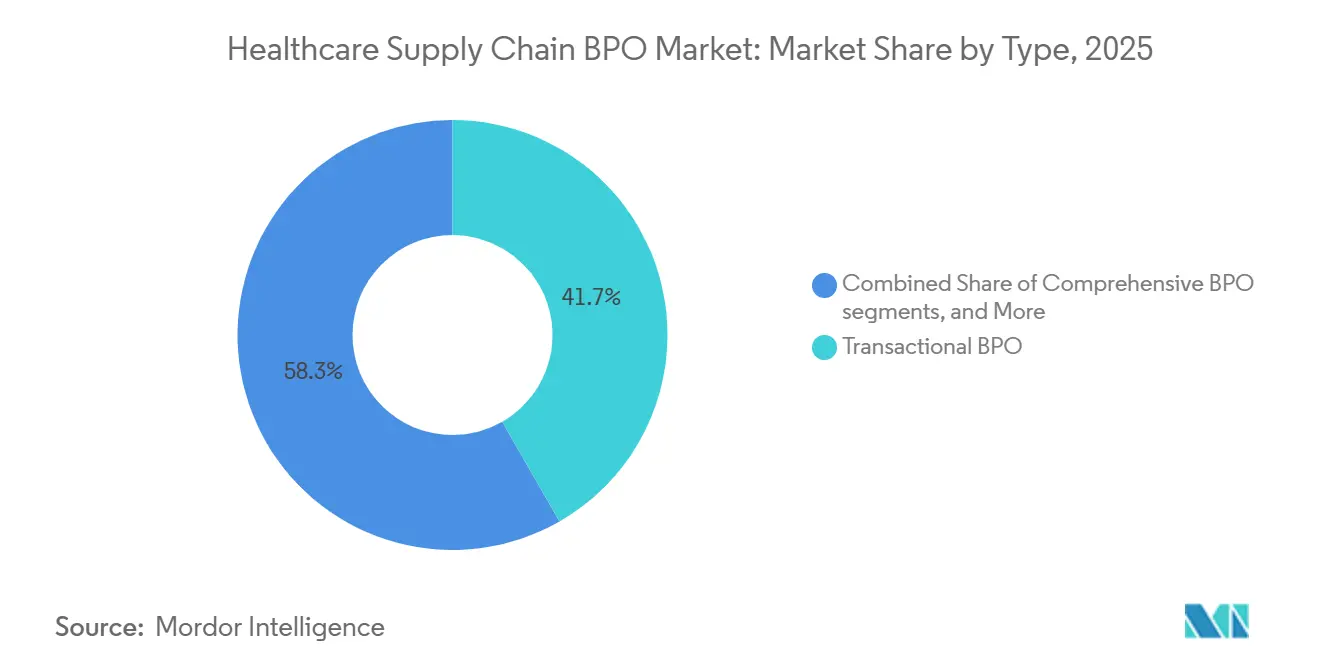
Transactional BPO Leads the Base While Comprehensive BPO Expands FasterIn 2025, Transactional BPO accounted for 41.68% of the segment, making it the largest contract model by current value. Comprehensive BPO is projected to grow at an 8.90% CAGR through 2031, emerging as the fastest-growing type in the healthcare supply chain BPO market. Many hospitals, regional providers, and distributors start outsourcing with limited scopes like order processing and invoice support, concentrating volume in standardized workflows.
Comprehensive BPO is expanding as buyers seek single partners to manage procurement, logistics, inventory, and analytics. This model gains traction as healthcare organizations grow confident in setting service outcomes and holding vendors accountable. Process-Specific BPO remains a middle-ground option for targeted outsourcing without a full operational shift. Over time, the market is expected to see more contracts adopting end-to-end structures for tighter control across supply chain functions.



By Product:
Order Management Holds the Largest Share While Procurement Services Grow the FastestOrder Management held 36.23% of the product segment in 2025, making it the largest by value. Procurement Services is projected to grow at a 9.25% CAGR through 2031, becoming the fastest-growing product area. Hospitals and healthcare networks rely on Order Management for processing large order volumes across thousands of SKUs, as these workflows are repetitive and easier to standardize.
Procurement Services are growing as clients demand support in sourcing, supplier risk assessment, contract compliance, and spend analysis. This shift moves demand toward higher-value operational support. Logistics and Supplier Management are also benefiting as organizations diversify suppliers and enhance network resilience, driving a gradual shift from transaction-heavy to strategic functions.
By Services:
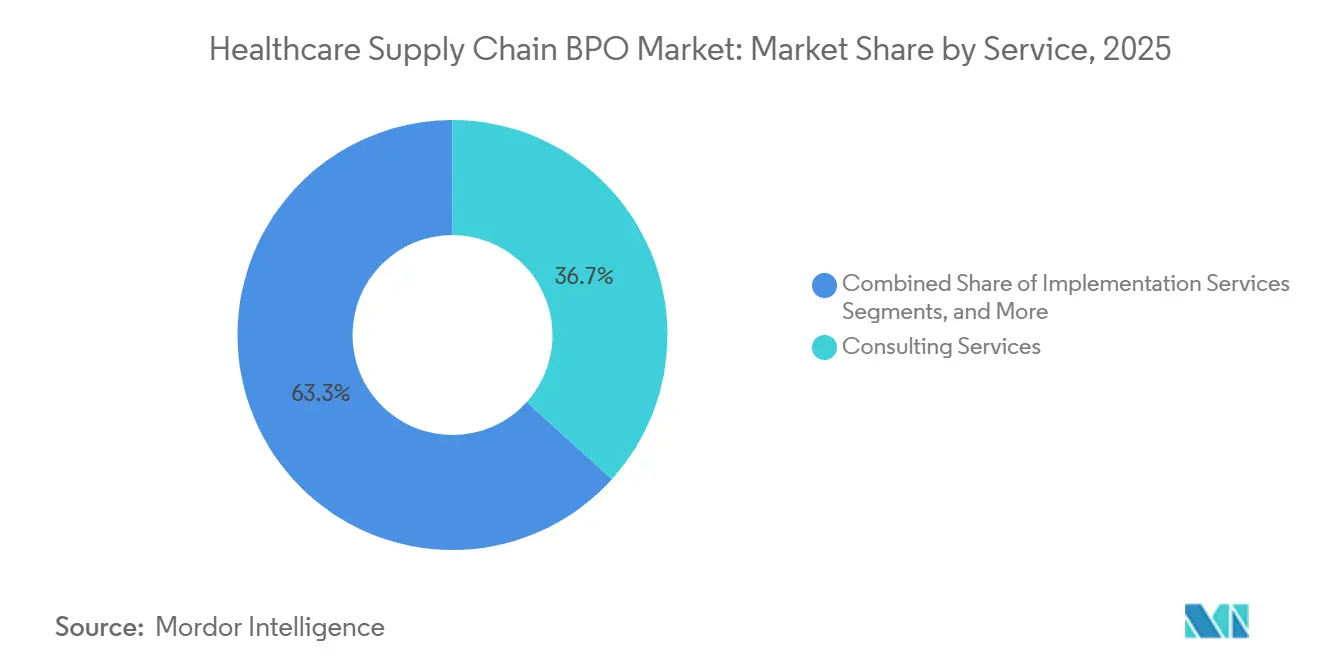
Consulting Services Lead Current Revenue While Implementation Services Advance the FastestConsulting Services held 36.74% of the segment in 2025, making it the largest services category by revenue. Implementation Services is projected to grow at an 8.55% CAGR through 2031, becoming the fastest-growing service type. Consulting remains strong as most outsourcing programs begin with assessment, design, process mapping, and operating model planning.
Implementation is growing as more organizations move from planning to execution, requiring setup, integration, testing, and change management. Support and Maintenance Services are also gaining importance as buyers prefer continuity post-deployment. This full life cycle approach is evident in partnerships like TraceLink and Genpact, combining digital supply chain technology with managed services.
By Technology:
Cloud-Based Solutions Dominate Current Use While Artificial Intelligence Grows the FastestCloud-Based Solutions held 42.71% of the technology segment in 2025, making them the largest technology base. Artificial Intelligence is projected to grow at a 7.33% CAGR through 2031, becoming the fastest-growing technology. Cloud platforms lead due to faster updates, easier scaling, and better coordination across supply chain participants, providing the structure needed for modern outsourcing delivery.
Artificial Intelligence is expanding as organizations seek improved demand forecasting, disruption sensing, inventory planning, and exception management. Its adoption is increasing as more data integrates into connected digital environments, highlighting its growing role in healthcare supply chain management.
By Component:
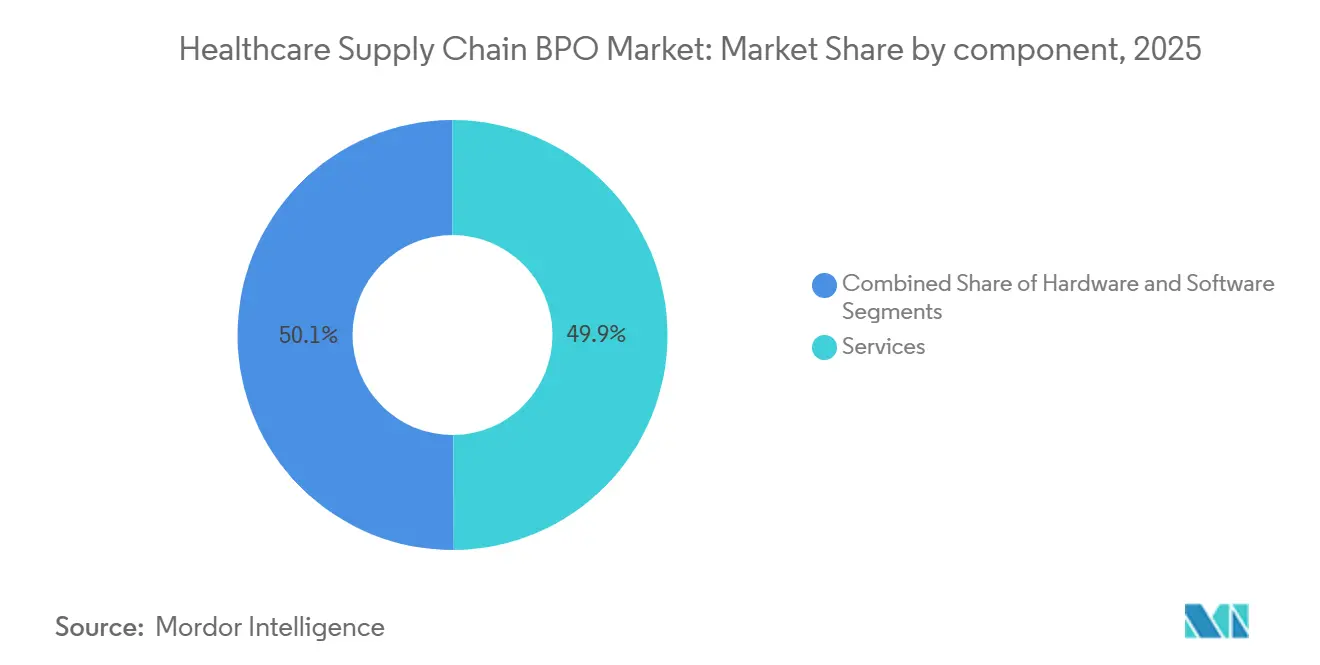
Services Hold the Largest Share While Software Expands FasterServices held 49.87% of the component segment in 2025, making them the largest by value. Software is projected to grow at a 6.53% CAGR through 2031, becoming the fastest-growing component. Services dominate due to reliance on process execution, compliance oversight, and workflow management, even with digital tools in place.
Software is growing as buyers demand analytics engines, procurement automation, and compliance tools embedded into service delivery. Hardware remains the smallest component, focused on RFID, IoT, and cold-chain monitoring. The market is gradually becoming more software-enabled, though services still account for the largest revenue share.
By Application:
Hospitals and Clinics Lead Current Demand While Pharmaceutical Companies Grow FasterHospitals and Clinics held 45.9% of the application segment in 2025, making them the largest application area. Pharmaceutical Companies are projected to grow at a 7.76% CAGR through 2031, becoming the fastest-growing segment. Hospitals and clinics dominate due to their broad procurement, inventory, and logistics needs across multi-site networks.
Pharmaceutical Companies are growing as their supply chains face increasing compliance and operational demands. Serialization, specialty therapies, and complex distribution models drive the need for outsourced planning and execution. Medical Device Manufacturers are also increasing outsourcing due to rising supplier control and documentation requirements.
By Process:
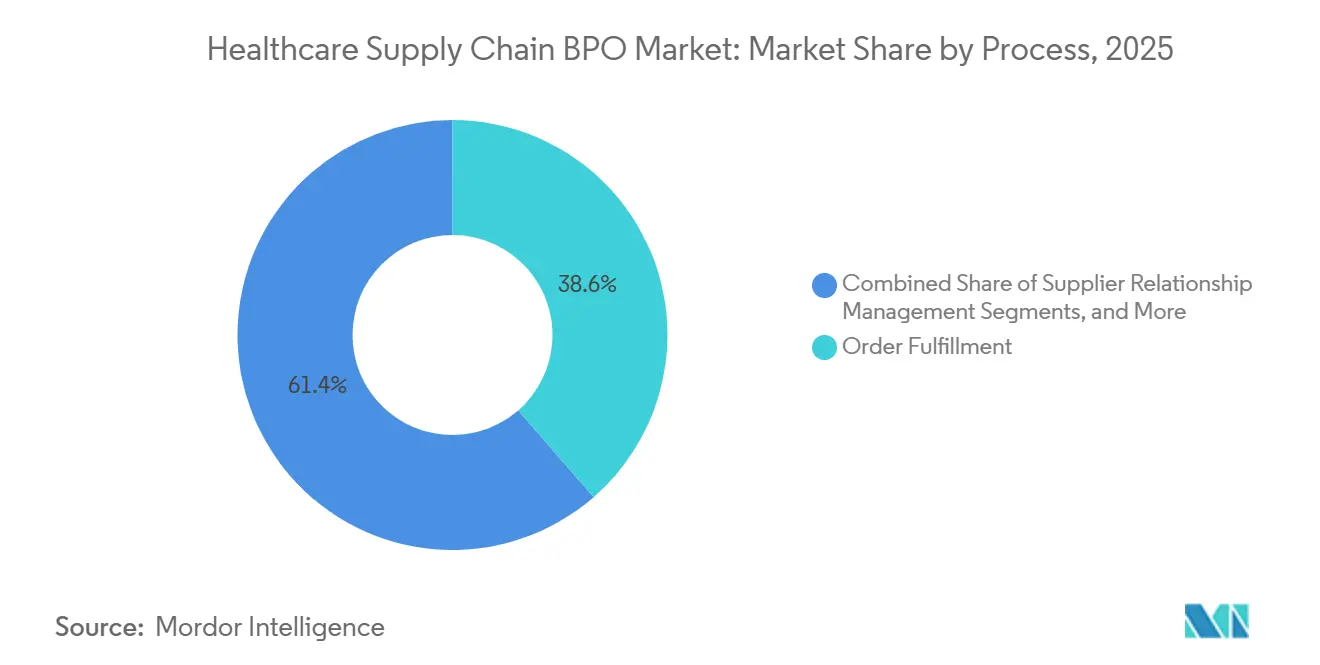
Order Fulfillment Holds the Largest Share While Supplier Relationship Management Grows the FastestOrder Fulfillment held 38.56% of the process segment in 2025, making it the largest by value. Supplier Relationship Management is projected to grow at an 8.64% CAGR through 2031, becoming the fastest-growing process. Order Fulfillment leads as it is frequently outsourced across hospitals, distributors, and manufacturers, involving high-volume execution that is measurable and transferable.
Supplier Relationship Management is growing as organizations face pressure to diversify suppliers, enhance performance monitoring, and tighten contract governance. These needs are increasingly critical as supply chains globalize and face disruptions.
By Deployment:
On-Premise Still Leads the Installed Base While Cloud-Based Delivery Grows FasterOn-Premise held 48.95% of the deployment segment in 2025, making it the largest installed model. Cloud-Based deployment is projected to grow at a 9.15% CAGR through 2031, becoming the fastest-growing model. On-Premise remains significant due to long-standing investments in ERP, warehouse, and procurement infrastructure, along with preferences for direct control over sensitive data.
Cloud-Based solutions are growing due to easier scaling, faster deployment, and enhanced collaboration. Hybrid deployment remains relevant as organizations retain selected data on-site while transitioning other workflows to the cloud. Premier's 2026 technology investment program reflects this modernization trend across healthcare supply chain systems.
By End User:
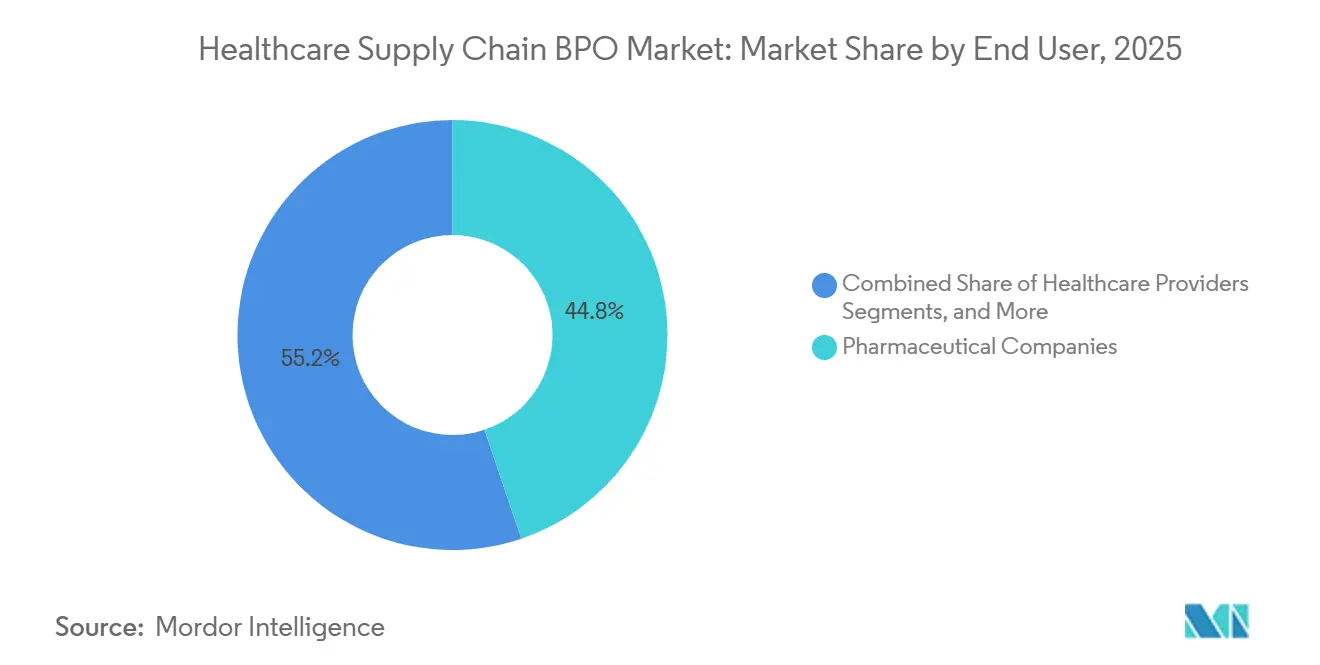
Pharmaceutical Companies Hold the Largest Share While Healthcare Providers Grow the FastestIn 2025, Pharmaceutical Companies held a 44.77% share of the end-user segment, establishing themselves as the largest contributors to the healthcare supply chain BPO market. Their leadership is attributed to advanced outsourcing practices, extensive distribution networks, and stringent compliance requirements. Additionally, their contracts are typically larger and longer-term, directly influencing product availability, documentation, and regulatory adherence.
Healthcare Providers are projected to grow at a robust 8.87% CAGR through 2031, driven by increasing operational complexities and margin pressures faced by hospitals and integrated delivery networks. Many providers are in the early stages of outsourcing, offering significant growth potential during the forecast period. Medical Device Manufacturers are also expanding their reliance on external supply chain support as sourcing networks grow more complex and regulated. The market is thus characterized by a mature pharmaceutical segment alongside a rapidly scaling provider base still developing its outsourcing capabilities.
Geography Analysis
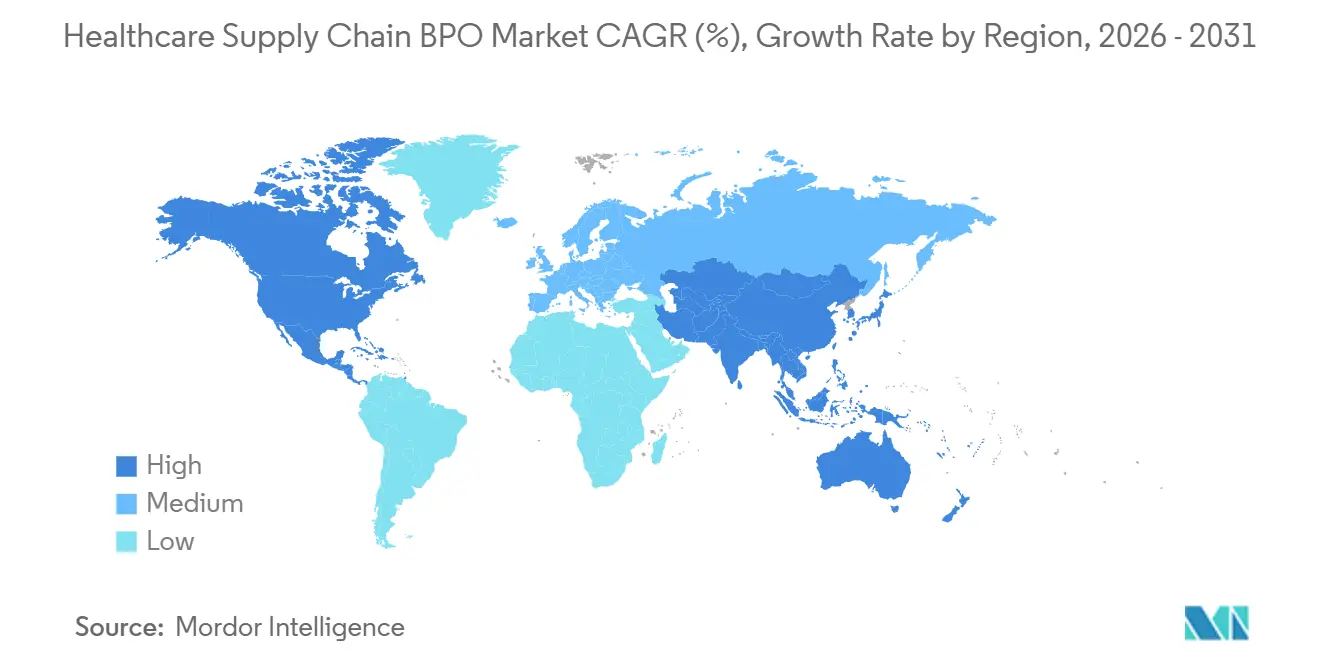
North America Healthcare Supply Chain BPO Market
In 2025, North America held a 39.55% share of the oligonucleotide CDMO market, driven by a strong presence of RNA-targeted drug developers and mature GMP sites in the U.S. and Canada. Companies like Alnylam, Ionis, Arrowhead, and Wave Life Sciences, along with manufacturing leaders such as Agilent and Thermo Fisher Scientific, anchor the region's market. Agilent's 2026 launch of Agilent Advanced Therapeutics integrated BIOVECTRA in Canada and Nucleic Acid Solutions in Colorado, enhancing North America's CDMO capabilities. Familiarity with FDA regulations and established GMP track records further strengthen the region's position, though its lead may narrow as global capacity expands and delivery time advantages diminish.
Europe Healthcare Supply Chain BPO Market
Europe remains a key technical hub in the oligonucleotide CDMO market, led by Germany and Switzerland, with a focus on high-purity API manufacturing and sustained capital investments. BioSpring is investing over EUR 100 million (USD 108 million) in a new nucleic acid API facility in Offenbach, set for completion by late 2027. Bachem allocated CHF 332.6 million in 2025 to expand its network, initiated commercial production in 2026, and plans an additional CHF 400 million in CapEx for 2026. Lonza projects 11-12% sales growth for 2026 and continues to enhance its synthesis and antibody-oligonucleotide conjugate capabilities in the Netherlands. Europe's strength lies in its technical expertise, regulatory rigor, and ability to meet stringent quality demands.
APAC, South America and MEA Healthcare Supply Chain BPO Market
Asia-Pacific is the fastest-growing region in the oligonucleotide CDMO market, with a 24.56% CAGR through 2031, driven by capacity expansions in China, South Korea, and Japan. Asymchem's TJ4 facility in Tianjin offers 180 mol per year of oligonucleotide capacity, supported by advanced processing tools and an integrated drug product facility. WuXi AppTec's API sites in Changzhou and Taixing passed FDA inspections in 2025, ensuring continued U.S. supply. Japan's Nippon Shokubai is expanding its GMP-compliant nucleic acid API capacity tenfold. South America and the Middle East & Africa remain emerging markets, primarily relying on imports from North America, Europe, and Asia-Pacific hubs.

Competitive Landscape
The oligonucleotide CDMO market exhibits moderate to high concentration at the top, as a small group of scaled, multi-site companies controls much of the commercial GMP synthesis capacity. Leading players include Bachem, Lonza, Agilent (via Agilent Advanced Therapeutics), WuXi AppTec (through WuXi TIDES), and ST Pharm. While these companies dominate, mid-sized specialists actively compete for clinical-stage projects. The market's division into commercial and clinical segments creates distinct competitive dynamics.
Vertical integration has become a key strategy in the oligonucleotide CDMO market. Bachem’s seven-year collaboration with Lilly, with an annual order potential of up to CHF 100 million, highlights how pharmaceutical companies secure preferred suppliers early. Agilent’s launch of Agilent Advanced Therapeutics in March 2026, combining Canadian and U.S. CDMO assets into a single platform, reflects this trend. Similarly, Asymchem’s TJ4 expansion integrates oligonucleotide API production, drug formulation, process technology, and AI-assisted PAT into one supply chain. These developments demonstrate that sponsors increasingly value comprehensive execution capabilities alongside synthesis capacity.
Technological advancements are reshaping the oligonucleotide CDMO market, with enzymatic ligation gaining credibility alongside traditional solid-phase synthesis. Initiatives like Agilent’s Train D, Alnylam’s siRELIS-linked expansion, and Asymchem’s chemoenzymatic approach indicate a shift toward cleaner, scalable production methods. Geopolitical factors are also influencing supplier choices, as sponsors seek to reduce exposure to policy risks associated with Chinese capacity.
Healthcare Supply Chain BPO Industry Leaders
Cognizant Technology Solutions Corporation
Accenture plc
Genpact Limited
IBM Corporation
Tata Consultancy Services Limited
- *Disclaimer: Major Players sorted in no particular order
Healthcare Supply Chain BPO Market Companies Covered in this Report
- Accenture
- Capgemini
- Cardinal Health
- Cognizant
- Conduent Incorporated
- Coupa Software Incorporated
- EXLService Holdings, Inc.
- Firstsource Solutions Limited
- GeBBS Healthcare Solutions, Inc.
- Genpact
- Global Healthcare Exchange, LLC
- HCL Technologies Limited
- IBM
- Infosys
- JAGGAER, LLC
- Mckesson
- NTT DATA Group Corporation
- Premier, Inc.
- Sutherland Global Services, Inc.
- Tata Consultancy Services
- Tech Mahindra Limited
- Vizient
- Wipro
- WNS (Holdings) Limited

Recent Industry Developments in Healthcare Supply Chain BPO Market
- April 2026: Asymchem launched its integrated TIDES commercial supply matrix in Tianjin, featuring 180 mol/yr oligonucleotide production capacity, a 6,000 m² drug product facility, and 45 million pre-filled syringe units annually.
- March 2026: Agilent Technologies introduced Agilent Advanced Therapeutics, consolidating BIOVECTRA in Canada and Nucleic Acid Solutions in Colorado into a unified CDMO platform, supported by an investment exceeding USD 740 million since 2023.
- February 2026: Lonza expanded its Advanced Synthesis capabilities in the Netherlands by adding bioconjugate solutions, including antibody-oligonucleotide conjugates, targeted lipid nanoparticles, and protein-protein conjugates.
- October 2025: Ajinomoto Bio-Pharma Services collaborated with Gene Tools, LLC, to enhance PMO therapeutic access through early-stage synthesis and liquid-phase technology.


Global Healthcare Supply Chain BPO Market Report Scope
Healthcare supply chain business process outsourcing is the practice of hiring external experts to manage the movement of medical supplies, drugs, and devices. It handles tasks like purchasing, inventory, and delivery. This allows hospitals to save money and focus on patient care.
The healthcare supply chain BPO market is segmented by type, product, services, technology, component, application, process, deployment, end-user, and geography. By type, the market includes transactional BPO, process-specific BPO, and comprehensive BPO. By product, the market is segmented into inventory management, procurement services, logistics management, supplier management, and order management. By services, the market includes consulting services, implementation services, and support and maintenance services. By technology, the market is categorized into cloud-based solutions, artificial intelligence, blockchain, robotic process automation, and the Internet of Things. By component, the market is segmented into software, hardware, and services. By application, the market includes hospitals and clinics, pharmaceutical companies, and medical device manufacturers. By process, the market is segmented into order fulfillment, demand planning, and supplier relationship management. By deployment, the market is categorized into on-premise, cloud-based, and hybrid. By end-user, the market includes healthcare providers, pharmaceutical companies, and medical device manufacturers. By geography, the market is analyzed across North America, Europe, Asia-Pacific, the Middle East and Africa, and South America. The report also covers the estimated market sizes and trends for 17 countries across major regions globally. The report offers the market sizes and forecasts in terms of value (USD) for the above segments.
| Transactional BPO |
| Process-Specific BPO |
| Comprehensive BPO |
| Inventory Management |
| Procurement Services |
| Logistics Management |
| Supplier Management |
| Order Management |
| Consulting Services |
| Implementation Services |
| Support and Maintenance Services |
| Cloud-Based Solutions |
| Artificial Intelligence |
| Blockchain |
| Robotic Process Automation |
| Internet of Things |
| Software |
| Hardware |
| Services |
| Hospitals and Clinics |
| Pharmaceutical Companies |
| Medical Device Manufacturers |
| Order Fulfillment |
| Demand Planning |
| Supplier Relationship Management |
| On-Premise |
| Cloud-Based |
| Hybrid |
| Healthcare Providers |
| Pharmaceutical Companies |
| Medical Device Manufacturers |
| North America | United States |
| Canada | |
| Mexico | |
| Europe | Germany |
| United Kingdom | |
| France | |
| Italy | |
| Spain | |
| Rest of Europe | |
| Asia-Pacific | China |
| India | |
| Japan | |
| Australia | |
| South Korea | |
| Rest of Asia-Pacific | |
| Middle East and Africa | GCC |
| South Africa | |
| Rest of Middle East and Africa | |
| South America | Brazil |
| Argentina | |
| Rest of South America |
| By Type | Transactional BPO | |
| Process-Specific BPO | ||
| Comprehensive BPO | ||
| By Product | Inventory Management | |
| Procurement Services | ||
| Logistics Management | ||
| Supplier Management | ||
| Order Management | ||
| By Services | Consulting Services | |
| Implementation Services | ||
| Support and Maintenance Services | ||
| By Technology | Cloud-Based Solutions | |
| Artificial Intelligence | ||
| Blockchain | ||
| Robotic Process Automation | ||
| Internet of Things | ||
| By Component | Software | |
| Hardware | ||
| Services | ||
| By Application | Hospitals and Clinics | |
| Pharmaceutical Companies | ||
| Medical Device Manufacturers | ||
| By Process | Order Fulfillment | |
| Demand Planning | ||
| Supplier Relationship Management | ||
| By Deployment | On-Premise | |
| Cloud-Based | ||
| Hybrid | ||
| By End User | Healthcare Providers | |
| Pharmaceutical Companies | ||
| Medical Device Manufacturers | ||
| By Geography | North America | United States |
| Canada | ||
| Mexico | ||
| Europe | Germany | |
| United Kingdom | ||
| France | ||
| Italy | ||
| Spain | ||
| Rest of Europe | ||
| Asia-Pacific | China | |
| India | ||
| Japan | ||
| Australia | ||
| South Korea | ||
| Rest of Asia-Pacific | ||
| Middle East and Africa | GCC | |
| South Africa | ||
| Rest of Middle East and Africa | ||
| South America | Brazil | |
| Argentina | ||
| Rest of South America | ||


Key Questions Answered in the Report
What is the current size of the healthcare supply chain BPO market?
The healthcare supply chain BPO market size is USD 3.17 billion in 2026 and is projected to reach USD 4.30 billion by 2031, growing at a 6.30% CAGR over 2026-2031.
Which region leads the healthcare supply chain BPO market?
North America led the healthcare supply chain BPO market with 41.55% share in 2025, supported by large hospital systems, mature procurement networks, and strong outsourcing demand.
Which region is growing the fastest in healthcare supply chain BPO?
Asia-Pacific is the fastest-growing region and is projected to expand at a 9.22% CAGR through 2031, driven by Indias role as a delivery hub and wider healthcare digitization in the region.
Which contract type holds the largest share in the healthcare supply chain BPO market?
Transactional BPO held the largest share at 41.68% in 2025, while Comprehensive BPO is growing faster at an 8.90% CAGR through 2031.
Which product segment is growing the fastest in healthcare supply chain BPO?
Procurement Services is the fastest-growing product segment with a 9.25% CAGR through 2031, while Order Management held the largest 2025 share at 36.23%.
Which deployment model leads the healthcare supply chain BPO market today?
On-Premise led with 48.95% share in 2025 because many healthcare organizations still rely on long-established ERP and warehouse systems, while Cloud-Based deployment is growing faster at a 9.15% CAGR.
Which end-user group contributes the most revenue in healthcare supply chain BPO?
Pharmaceutical Companies held the largest end-user share at 44.77% in 2025 due to higher outsourcing maturity, compliance requirements, and global distribution complexity.
Which end-user segment is expanding the fastest in healthcare supply chain BPO?
Healthcare Providers are the fastest-growing end-user segment and are projected to grow at an 8.87% CAGR through 2031 as hospitals and integrated delivery networks scale outsourcing adoption.
Page last updated on:


 Your data is secure and never sold or shared.


