
Tissue Diagnostics Market Size and Share
Market Overview
| Study Period | 2020 - 2031 |
|---|---|
| Market Size (2026) | USD 6.86 Billion |
| Market Size (2031) | USD 9.33 Billion |
| Growth Rate (2026 - 2031) | 6.35 % |
| Fastest Growing Market | Asia-Pacific |
| Largest Market | North America |
| Market Concentration | Medium |
Major Players
*Disclaimer: Major Players sorted in no particular order Image © Mordor Intelligence. Reuse requires attribution under CC BY 4.0. |
|
Tissue Diagnostics Market Analysis by Mordor Intelligence
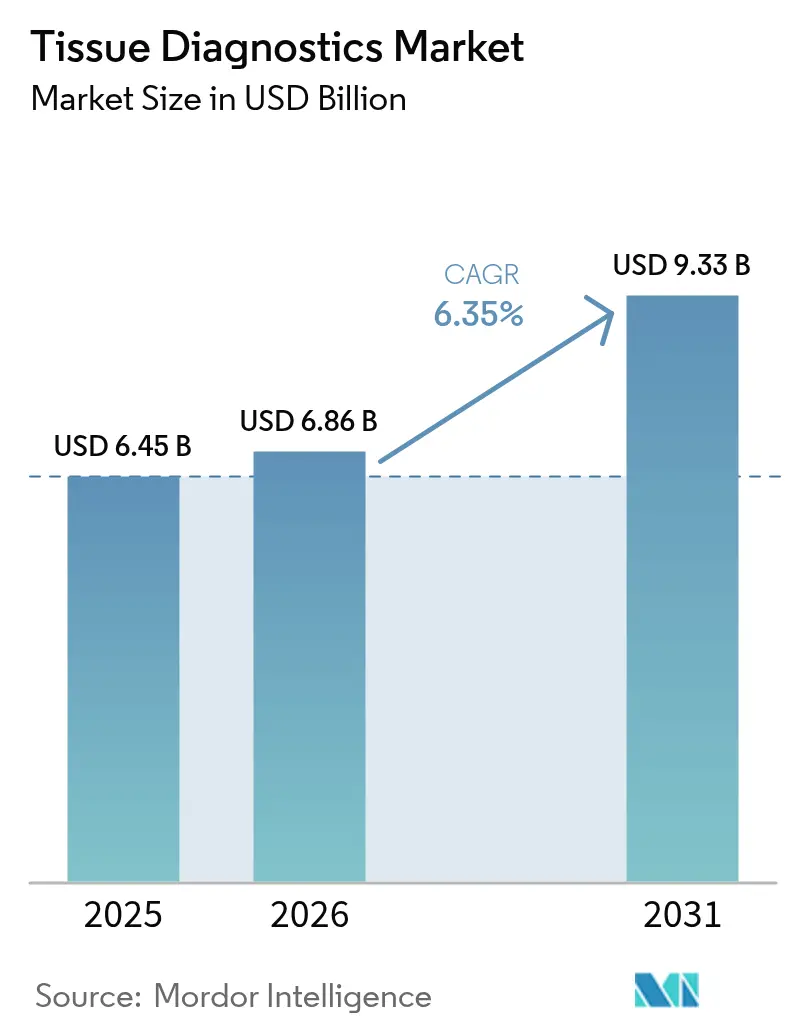
The tissue diagnostics market size is expected to grow from USD 6.45 billion in 2025 to USD 6.86 billion in 2026 and is forecast to reach USD 9.33 billion by 2031 at 6.35% CAGR over 2026-2031. This expansion rests on the dual momentum of a rising global cancer burden and rapid laboratory automation, especially AI-enabled whole-slide imaging that compresses reading times and standardizes results. Reagents and consumables sustain predictable demand because every histopathology test consumes single-use antibodies, while instruments gain ground as laboratories digitize slide handling and integrate robotics for error-free throughput. Digital reimbursement clarity in the United States and Europe lowers economic barriers, prompting small hospitals and reference labs to adopt remote-consultation workflows that ease persistent pathologist shortages. Asia-Pacific draws record capital as governments embed early detection targets into national health budgets, unlocking fresh volume for global and local vendors alike. Simultaneously, AI-native startups press incumbents to bundle software, hardware and reagents into seamless platforms, setting the stage for vigorous mergers and partnerships through the decade.
Key Report Takeaways
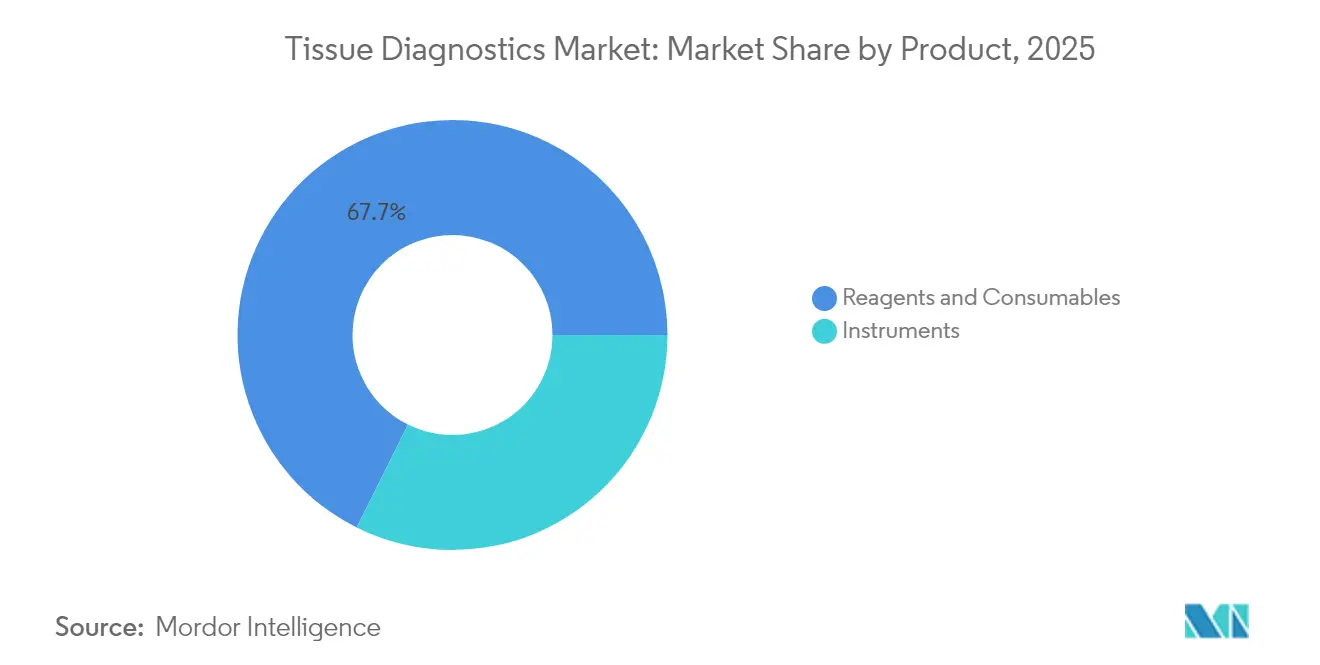
- By product, reagents and consumables held 67.65% of tissue diagnostics market share in 2025, while instruments are projected to grow at a 7.02% CAGR to 2031.
- By technology, immunohistochemistry led with 43.10% revenue share in 2025; digital pathology is advancing at a 7.10% CAGR through 2031.
- By application, breast cancer accounted for 31.70% of the tissue diagnostics market size in 2025, whereas non-small cell lung cancer is expanding at 7.25% CAGR.
- By end user, hospitals and diagnostic laboratories commanded 54.05% share in 2025, while research and academic institutes record the highest 7.33% CAGR.
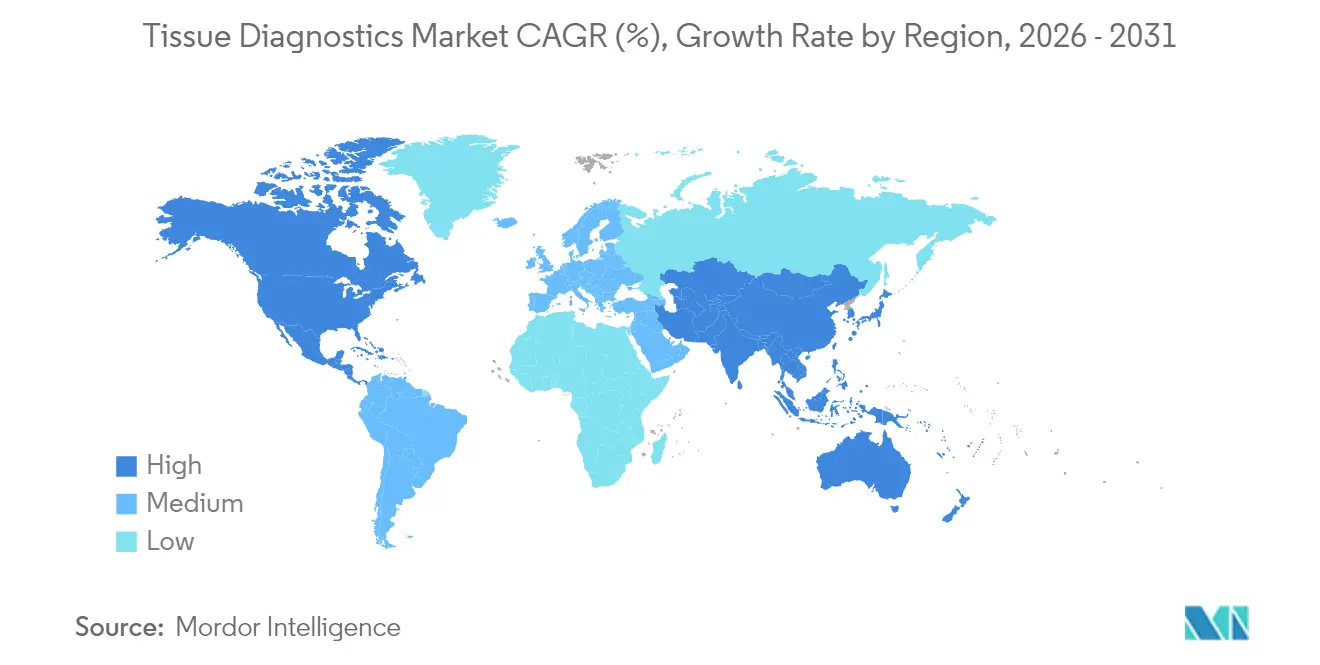
- By geography, North America controlled 41.00% share in 2025; Asia-Pacific is the fastest-growing region at 7.48% CAGR.
Note: Market size and forecast figures in this report are generated using Mordor Intelligence’s proprietary estimation framework, updated with the latest available data and insights as of 2026.
Global Tissue Diagnostics Market Trends and Insights
Drivers Impact Analysis*
| Driver | ( ~ ) % Impact on CAGR Forecast | Geographic Relevance | Impact Timeline |
|---|---|---|---|
| Rising cancer incidence burden | +1.2% | Global; highest in aging populations of North America, Europe, Japan | Long term (≥ 4 years) |
| Acceleration of automation & AI in labs | +1.8% | North America & EU lead, fast uptake in APAC urban centers | Medium term (2-4 years) |
| Expanding digital pathology reimbursement | +1.5% | United States, Europe, spillover to Australia, Canada | Short term (≤ 2 years) |
| Healthcare CAPEX surge in high-population Asia | +1.3% | China, India, Southeast Asia | Medium term (2-4 years) |
| Spatial-biology enabled multiplex IHC | +0.9% | Tier-1 research hospitals and pharma R&D centers worldwide | Long term (≥ 4 years) |
| Point-of-care microfluidic tissue prep | +0.7% | Rural Sub-Saharan Africa, Southeast Asia, Latin America | Long term (≥ 4 years) |
| Source: Mordor Intelligence | |||


Rising Cancer Incidence Burden
Confirmatory tissue analysis remains indispensable as global cancer cases grow 2.1% each year and are projected to hit 35 million by 2050. Breast cancer continues to dominate diagnostic volumes, yet non-small cell lung cancer is the fastest-expanding use case because national screening programs demand detailed tumor profiling [1]Antonio Passaro, "Cancer biomarkers: Emerging trends and clinical implications for personalized treatment," Cell, sciencedirect.com. Risk escalates sharply beyond age 65, intensifying throughput pressure on already stretched pathology labs. The sustained specimen inflow gives vendors a stable revenue runway and validates ongoing R&D in automation, multiplex immunohistochemistry and AI algorithms that compress turnaround time while preserving accuracy.
Acceleration of Automation & AI in Histopathology Labs
AI-powered whole-slide scanners reduce slide review time by 40% and raise inter-laboratory concordance, allowing scarce pathologists to focus on complex cases. FDA breakthrough designation for Roche’s computational companion diagnostic in 2024 signaled regulatory acceptance of algorithm-assisted reads, widening the customer pool. Retirement rates now outstrip replacements two-to-one in the United States, making automation central to service continuity. Laboratories that deploy AI achieve faster reporting, tighter quality metrics and greater scalability, pushing the tissue diagnostics market toward a software-augmented standard of care.
Expanding Digital Pathology Reimbursement in US-EU
Medicare’s 2024 policy update removed previous site-of-service and cancer-type restrictions, enabling nationwide billing for remote tissue consultations. Major private insurers quickly followed, closing a key payor gap that had slowed capital spending on scanners and bandwidth upgrades. Europe mirrored the shift by embedding digital workflows into cross-border telepathology networks that equalize specialist access. [2]European Commission, “Digital health reimbursement framework,” ec.europa.eu With revenue assurance finally clear, even mid-sized community hospitals can justify investment, accelerating diffusion beyond early academic adopters.
Healthcare CAPEX Surge in High-Population Asia
China earmarked USD 140 billion for diagnostic modernization under its 14th Five-Year Plan, and India’s National Health Mission targets a 50% jump in pathology availability by 2030. Large public tenders cover automated tissue processors, slide scanners and reagent supply contracts, driving volume for global OEMs and encouraging local manufacturing of consumables. Rapid urbanization, medical tourism and universal health-coverage goals combine to position Asia-Pacific as the primary growth frontier for the tissue diagnostics market.
Restraints Impact Analysis*
| Restraint | ( ~ ) % Impact on CAGR Forecast | Geographic Relevance | Impact Timeline |
|---|---|---|---|
| High capital & consumable costs | –1.1% | Global; most acute in emerging markets, rural systems | Short term (≤ 2 years) |
| Global shortage of trained pathologists | –0.8% | North America, Europe, Australia | Medium term (2-4 years) |
| Inter-platform data-format gaps | –0.6% | Multi-vendor health systems worldwide | Medium term (2-4 years) |
| Reagent/antibody supply-chain volatility | –0.4% | Specialized antibody-dependent assays globally | Short term (≤ 2 years) |
| Source: Mordor Intelligence | |||
High Capital & Consumable Costs; Patchy Reimbursement
Whole-slide scanners list between USD 200,000 and USD 500,000, and consumables absorb roughly 65% of lab operating budgets. Smaller hospitals struggle to recoup such outlays when reimbursement remains inconsistent across private payors, creating a two-tier ecosystem where cash-rich providers widen capability gaps. COVID-19 diverted spending to acute care, delaying hardware refresh cycles and enlarging the replacement backlog. Leasing models and regional shared-service hubs are emerging stopgaps but do not fully resolve affordability.
Global Shortage of Trained Pathologists
American Society for Clinical Pathology data show more than 2,400 vacant positions in the United States, particularly in rural settings. Training pipelines run six years post-medical school, so workforce shortages will linger. Telepathology and AI reduce human workload but cannot entirely replace expert oversight, capping how fast laboratories can scale output even when instruments are available.
*Our forecasts treat driver/restraint impacts as directional, not additive. The impact forecasts reflect baseline growth, mix effects, and variable interactions.
Segment Analysis
By Product: Automation Fuels Instrument Uptake
The instruments segment is projected to clock a 7.02% CAGR through 2031, outpacing overall tissue diagnostics market growth as labs overhaul manual workflows. Whole-slide scanners post the steepest unit growth, buoyed by reimbursement certainty in the United States and European Union. Robotics-enabled tissue processors reduce handling errors, while AI-oriented staining systems economize reagent use. Advances such as barcode-driven sample tracking and cloud-native dashboards further elevate laboratory efficiency . Conversely, recurring revenue from reagents and consumables sustains vendor margins; this category retained 67.65% share in 2025 because every specimen necessitates antibodies, probes and mounting media. Multiplex assay kits gain traction because they condense several biomarkers into a single run, lowering per-result cost and conserving tissue—an increasingly valuable commodity in small biopsy samples. Stable demand for routine reagents provides vendors with predictable cash flows that finance R&D in high-margin instrumentation.
Second-generation microtomes and cryostats incorporate digital temperature and blade-angle controls, minimizing variance in section thickness. Although these tools are mature, replacement cycles remain steady due to wear and adherence to CAP accreditation requirements. Disposable plastic cassettes, glass slides and cover slips round out the consumables landscape, ensuring that even small community pathology units contribute steady income streams. The symbiotic relationship between instruments and disposables, coupled with rising throughput expectations, anchors long-term expansion of the tissue diagnostics market.


By Technology: Digital Pathology Takes Center Stage
Digital pathology is advancing at a 7.10% CAGR, the highest among all modalities. Algorithm-based pattern recognition converts pixel data into quantitative metrics, allowing objective grading of tumor infiltrating lymphocytes and mitotic figures. Rural facilities exploit cloud connectivity to tap urban subspecialists, cutting patient travel and wait times. Regulatory milestones—such as the FDA’s 2025 clearance of an AI-enabled breast cancer metastasis detector—galvanize hospital procurement committees. Meanwhile, immunohistochemistry retains 43.10% market leadership thanks to its clinical familiarity and an ever-expanding biomarker catalog that guides targeted therapies. Automation has reduced staining cycle times to under 60 minutes, boosting daily slide throughput without extra headcount.
In-situ hybridization maintains relevance for detecting gene rearrangements and viral genomes, particularly in hematologic malignancies. Some laboratories combine ISH with multiplex IHC to triangulate RNA-protein co-expression, enhancing diagnostic yield from scarce tissue. Novel mass-spectrometry imaging and Raman-based modalities remain niche but show promise for drug-distribution studies and lipidomics. Collectively, these technology arcs ensure continual diversification within the tissue diagnostics market.
By Application: Lung Programs Spur Uptake
Non-small cell lung cancer testing is set to expand at 7.25% CAGR as more countries roll out CT-based screening and require reflex tissue testing to confirm actionable mutations. Spatial profiling excels here, distinguishing immune-excluded versus inflamed tumor niches that forecast immunotherapy response. FDA-approved liquid biopsies complement tissue reads, creating bundled diagnostic pathways that laboratories monetize. Breast cancer, at 31.70% share, remains the volume anchor, supported by long-standing screening programs and a mature panel of ER, PR and HER2 assays. Continuous discovery of additional markers such as Ki-67 maintains test menu refresh cycles.
Prostate and gastric cancer testing gains volume as guidelines shift toward risk-stratified biopsy regimens, requiring periodic re-evaluation. Lymphoma subtyping leverages combined IHC and ISH panels to decode complex chromosomal translocations. Together, these indications underpin broad utilization of tissue platforms and protect the tissue diagnostics market from single-disease dependency.

By End User: Research Institutes Lead Innovation Curve
Research and academic institutes are forecast to grow at 7.33% CAGR, propelled by grant-funded biomarker discovery and pharma co-development projects. These centers often pilot multiplex and spatial technologies before they migrate to routine clinical labs, shortening commercialization timelines. Integration of clinical and research cores within academic medical centers creates hybrid environments where new assays can be analytically validated and clinically deployed under one roof. Hospitals and reference laboratories, while more conservative, still dominate revenue at 54.05% thanks to their mandate for routine diagnostic throughput.
Pharma and biotech companies increasingly acquire in-house tissue platforms to support companion-diagnostic co-development, reinforcing demand for high-throughput, regulatory-grade instrumentation. Contract research organizations round out the user mix by providing outsourced slide scanning and AI quantification services to smaller biotech firms lacking internal capacity. This diversity of demand nodes stabilizes the tissue diagnostics market against cyclical investment downturns in any single sector.
Geography Analysis
North America generated 41.00% of global revenue in 2025, anchored by a deep installed base of CLIA-certified labs, broad payer coverage and proximity to many instrument and reagent headquarters. Continuous FDA oversight shapes worldwide best-practice standards, and venture capital flows sustain AI startup formation. Canada advances national telepathology networks that connect sparsely populated regions to urban cancer centers, broadening market reach.
Europe benefits from the EU Digital Single Market strategy, which streamlines cross-border data exchange and procurement. Germany and the United Kingdom spearhead AI validation studies, while the Nordics leverage centralized pathology registries for algorithm training. Cohesive regulatory frameworks and stable reimbursement make Europe a reliable adopter of second-generation digital systems, although budget austerity in some Southern and Eastern member states tempers growth.
Asia-Pacific is the fastest-growing region, posting a projected 7.48% CAGR as China and India channel a combined USD 200 billion into diagnostics infrastructure upgrades. Japanese and South Korean labs, already technologically advanced, pivot quickly to spatial biology, whereas Southeast Asian nations invest in foundational histopathology capacity. Local manufacturing clusters in Suzhou, Shenzhen and Hyderabad emerge for antibodies and slides, improving supply resilience and lowering landed costs. In parallel, medical-tourism hubs such as Singapore and Thailand demand internationally accredited labs, elevating quality benchmarks.
Latin America and the Middle East & Africa represent emerging frontiers. Brazil, Saudi Arabia and the United Arab Emirates lead spending in their respective regions, buoyed by private hospital expansion and government modernization drives. Nonetheless, inadequate reimbursement and skilled-workforce shortages hold aggregate growth below global averages. Targeted aid programs and point-of-care microfluidics aim to bridge diagnostic gaps in lower-income countries, slowly enlarging the addressable base for the tissue diagnostics market.

Regulatory Landscape
In the United States, tissue diagnostics and related IVD workflows are shaped by FDA device pathways (including 510(k) and PMA) and a tightening approach to laboratory-developed tests (LDTs). A May 2024 FDA final rule to phase out enforcement discretion for LDTs over a four-year period raises the compliance bar for labs running tissue-based genomic and biomarker assays, which puts more weight on standardized, cleared IVD solutions and on quality and reporting obligations. This backdrop is complemented by ongoing FDA activity in oncology diagnostics, including proposals aimed at streamlining access for certain assay categories, such as a June 2025 proposal to reclassify certain oncology in situ hybridization test systems from Class III to Class II with special controls.
Value Chain Analysis
The tissue diagnostics value chain starts with upstream inputs such as antibodies, probes, stains, enzymes, plastics (slides, cassettes, tips), and precision components for instruments including tissue processors, microtomes, stainers, and whole-slide scanners. Core manufacturing and system integration are handled by large platform vendors that combine hardware, reagent kits, and middleware, while specialized suppliers provide niche antibodies, controls, and anatomical pathology consumables that support high-frequency replenishment in routine histopathology.
Downstream, sales and service are delivered through direct commercial teams and distributors into hospital pathology labs, reference laboratories, and academic centers. Installation, preventive maintenance, assay validation, LIS integration, and user training sit alongside these sales channels. Digitization and precision oncology are pushing the chain toward integrated offerings that bundle scanners, staining systems, and AI-driven image analysis with companion diagnostic content and service contracts. Consolidation is also tightening connections across steps, as large players acquire capabilities in spatial biology, AI software, and anatomic pathology consumables (including Roche announcing a definitive merger agreement to acquire PathAI in May 2026, and Leica Biosystems signing a definitive agreement to acquire StatLab Medical Products in July 2026). Regulatory demands (FDA pathways and EU IVDR requirements) shape supplier qualification, documentation, and post-market processes, while supply resilience strategies such as regional manufacturing and dual-sourcing of critical reagents remain important given prior volatility in specialized antibody and assay inputs.
Competitive Landscape
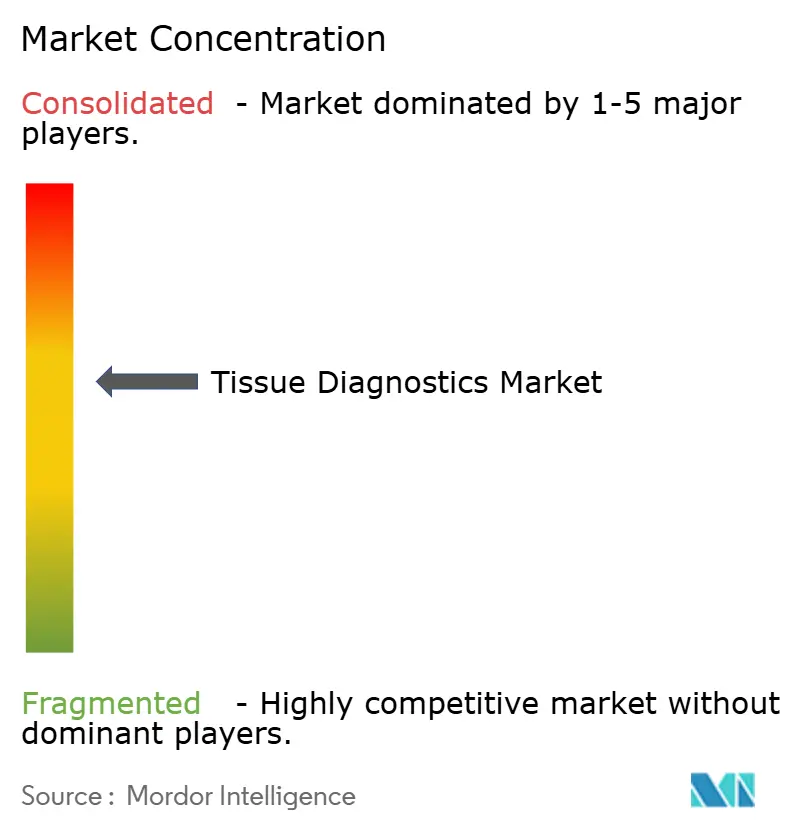
The market shows moderate concentration. These incumbents pursue platform integration, bundling scanners, stainers, reagents and cloud analytics into service contracts that lock in long-term clients. Acquisition activity remains brisk: Quanterix’s USD 300 million takeover of Akoya Biosciences in July 2025 married single-molecule detection with spatial imaging to meet pharma’s multiplex demands.
AI-native challengers such as PathAI and Nucleai secure multi-year funding rounds and co-development deals with reference labs and pharma sponsors, providing software layers that augment or replace proprietary vendor algorithms. Strategic alliances—Quest Diagnostics’ 2025 partnership with Google Cloud, for instance—tap hyperscale infrastructure to process millions of slides daily and deliver decision support back to pathologists within seconds.
Supply-chain security has become a differentiator. Vendors expand regional antibody manufacturing and dual-source critical reagents to reassure buyers fatigued by pandemic-era shortages. Interoperability initiatives gather steam, and open-architecture platforms now feature prominently in procurement tenders. Overall, competitive intensity is expected to rise as software margins entice both existing hardware makers and SaaS entrants, reshaping revenue mixes within the tissue diagnostics market.
Tissue Diagnostics Industry Leaders
-
Agilent Technologies, Inc.
-
F. Hoffmann-La Roche Ltd
-
Merck KGaA
-
Thermo Fisher Scientific
-
Abbott
- *Disclaimer: Major Players sorted in no particular order

Market Opportunities and Future Outlook
Near-term opportunity is concentrated in expanding companion diagnostics and standardized oncology biomarker testing on automated tissue platforms as drug labels and testing requirements broaden. In 2026, FDA actions provided concrete momentum: Roche received FDA approval for the VENTANA PTEN (SP218) RxDx Assay as a companion diagnostic assessing PTEN protein loss in prostate adenocarcinoma patients eligible for TRUQAP (capivasertib). The approval reinforces end-to-end workflows that link instruments, assays, and digital interpretation layers.
Separately, FDA clearance activity in tissue-based comprehensive genomic profiling, such as Datar Cancer Genetics receiving FDA 510(k) clearance for CellDx-Tissue in May 2026, supports whitespace for vendors that simplify tissue NGS workflows, including sample-to-answer process control, bioinformatics, and reporting integration. Workflow modernization creates additional openings in digital and computational pathology, especially where reimbursement and labor constraints make remote review and automation financially relevant. Supply-side consolidation also points to where investment is going, including Roche moving to acquire PathAI (announced May 2026) to deepen AI-powered pathology capabilities, and Leica Biosystems agreeing to acquire StatLab Medical Products (July 2026) to broaden histology workflow solutions and consumables coverage. On the demand side, scaling clinical adoption of established tissue tests continues to support volume growth in specialized segments, illustrated by Castle Biosciences reporting that TissueCypher surpassed 100,000 clinical test orders (June 2026). Finally, slide-free and accelerated tissue imaging and preparation approaches from academic and translational efforts, such as HKUST/PhoMedics announcing a slide-free pathology imaging system for fresh tissue in June 2026, suggest a longer-cycle pathway to reduce sectioning and staining bottlenecks, assuming solutions clear validation, regulatory, and lab-integration hurdles.
Recent Industry Developments
- July 2026: Agilent Technologies received FDA approval for PD-L1 IHC 28-8 pharmDx as a companion diagnostic across multiple tumor indications including ESCC, gastric, gastroesophageal junction, and esophageal adenocarcinoma. The expanded approved menu strengthens the Dako ecosystem by linking high-volume tissue IHC to therapy-specific decisions, which supports reagent pull-through and standardization on automated platforms.
- June 2026: Roche received FDA approval for the VENTANA PTEN (SP218) RxDx Assay as a companion diagnostic assessing PTEN protein loss in prostate adenocarcinoma patients eligible for TRUQAP (capivasertib). The approval strengthens platform-based IHC workflows and supports integration with end-to-end digital interpretation layers.
- December 2024: Labcorp acquired MAWD Pathology Group for USD 85 million, adding specialist pathologist capacity and expanding its digital capabilities. The deal increased scale in anatomic pathology services and supported broader deployment of digital pathology workflows across a large diagnostics provider footprint.


Research Methodology Framework and Report Scope
Market Definition and Coverage
For this methodology, the tissue diagnostics market covers tools and consumables used to prepare, stain, and analyze tissue samples so clinicians can support diagnosis and treatment decisions, mostly in oncology workflows. We count revenues tied to routine histopathology and advanced tissue-based testing used in labs and hospitals.
Scope exclusions: This sizing excludes blood-based diagnostics and imaging-only modalities that do not involve tissue sample preparation and evaluation.
Segmentation Overview
-
By Product
-
Instruments
- Slide-staining systems
- Tissue-processing systems
- Whole-slide scanners
- Microtomes & cryostats
- Other Instruments
-
Reagents and Consumables
- Antibodies
- Kits & assays
- Reagents & probes
- Other consumables
-
Instruments
-
By Technology
- Immunohistochemistry
- In-situ Hybridization
- Digital Pathology
- Other Technologies
-
By Application
- Breast Cancer
- Prostate Cancer
- Non-Small Cell Lung Cancer
- Gastric Cancer
- Lymphoma
- Others
-
By End User
- Hospitals and Diagnostic Laboratories
- Pharmaceutical and Biotechnology Companies
- Research & Academic Institutes
- Others
-
By Geography
-
North America
- United States
- Canada
- Mexico
-
Europe
- Germany
- United Kingdom
- France
- Italy
- Spain
- Rest of Europe
-
Asia-Pacific
- China
- Japan
- India
- Australia
- South Korea
- Rest of Asia-Pacific
-
Middle East and Africa
- GCC
- South Africa
- Rest of Middle East and Africa
-
South America
- Brazil
- Argentina
- Rest of South America
-
North America
Data Sources, Market Sizing, and Validation
Desk Research
Desk research starts by clarifying what is being counted, and where revenues show up across instruments, reagents, and related tissue workflows. We relied on public health and disease-burden references to anchor the demand pool, such as World Health Organization cancer statistics and Globocan outputs, and then translated those into diagnosis and pathology testing needs.
To ground assumptions, we reviewed regulatory and coding signals, along with lab workflow guidance where available. Sources included U.S. FDA databases, CDC publications, OECD health data, and peer-reviewed pathology journals that discuss test adoption and clinical practice. We also used company annual reports, investor presentations, and reputable press to understand product-mix shifts and pricing behavior. When a check was needed on corporate revenue splits or deal timing, we used paid subscriptions for company financials and intelligence, news and financials, and patent databases as supporting inputs. These examples are not exhaustive, and many other sources were also used for data collection, validation, and research clarification.
Primary Interviews and Surveys
Primary work was used to pressure test assumptions around test volumes, reagent pull-through per case, and typical replacement cycles for lab instruments, which vary by region and lab type. We spoke with a mix of pathology lab decision-makers, hospital lab leads, and channel participants across APAC, EMEA, and the Americas, and then cross-checked the feedback against our desk findings so the final model stays practical.
Distribution of primary research fieldwork respondents
| Company type | Respondent position | Region |
|---|---|---|
| Top tier: 34% | CXOs: 14% | APAC: 45% |
| Mid tier: 51% | Functional/Unit leaders: 39% | EMEA: 37% |
| Smaller Players: 15% | Managers: 47% | Americas: 18% |
Market-Sizing & Forecasting
The market model is built mainly using a top-down approach where disease incidence and diagnosis pathways are translated into tissue case volumes, and those volumes are converted into spend using typical tests per case and average pricing. We then corroborate totals with selective bottom-up approximations, such as sampled ASP times volume checks for key consumables and a limited supplier revenue sanity check in major regions, before adjustments are finalized.
Inputs used in the model include cancer incidence and screening trends, biopsy and surgery rates that influence specimen flow, immunohistochemistry and in situ hybridization utilization per case, reagent pull through linked to instrument installs, and regional lab capacity expansion in hospitals and independent diagnostic labs. Where public data is thin for smaller countries, gaps are handled by using proxy indicators like healthcare spend, lab density, and peer-country testing patterns, followed by an expert review for realism.
For forecasting, scenario analysis is used so adoption of newer workflows, reimbursement momentum, and lab automation budgets can be translated into a range, and then narrowed to the most likely path using interview consensus. Growth is further checked against expected instrument replacement timing and the mix shift toward higher value assays, which helps keep the curve stable from year to year.
Data Validation & Update Cycle
Validation is done through triangulation across independent signals, where outputs are compared with disease burden direction, lab workflow adoption rates, and the implied spend per tissue case by region. If a region shows a sudden jump that cannot be explained by installs, pricing, or policy changes, it is flagged and reworked, and experts are re-contacted when needed.
Before sign-off, the model goes through multi-step analyst reviews that include variance checks versus prior editions, consistency checks across regions, and logic checks that tie instruments to consumable usage. Reports are refreshed annually, and interim updates are made when material events occur, such as major regulatory shifts or sharp currency moves. Right before delivery, a fresh pass is completed so clients receive the latest updated view.
Mordor Intelligence's Global Tissue Diagnostics Market Market Estimate Compared With Other Published Estimates
Published market values for tissue diagnostics can look far apart even when they use similar labels, because the counted items and the timing choices are not the same. The biggest differences usually come from whether adjacent anatomic pathology areas are folded in, how instrument revenue is treated versus recurring reagents, and whether the estimate is tied to case volumes or to broad vendor revenue narratives.
The main gap comes from including wider anatomic pathology and primary staining revenue streams, which pushes the total higher, while Mordor Intelligence counts tissue diagnostics only when it is linked to tissue analysis technologies and consumables used for disease diagnosis workflows and cross-checks the implied spend against tissue case volumes and regional adoption signals.
Benchmark comparison
| Source | Market Size | Gaps in Research Methodology |
|---|---|---|
| Mordor Intelligence | USD 6.86 B (2026) | |
| Global Consultancy A | USD 10.10 B (2026) | Uses a broader definition that can absorb adjacent pathology revenue streams and applies higher adoption and pricing progression assumptions, which can inflate the 2026 level versus case-linked spend checks. |
| Industry Publisher B | USD 6.16 B (2026) | Starts from a lower 2025 base and extends a long horizon forecast, and it can understate near term uptake when instrument installs and reagent pull through are not reconciled with regional lab capacity additions. |
The table shows that the spread is mostly explained by what is included around pathology workflows and how strongly pricing and adoption are pushed in the early years. By keeping the inputs tied to observable case volumes, test utilization, and realistic pricing behavior, the approach remains easier to replicate and simpler to audit when assumptions change.


Key Questions Answered in the Report
What is the current value of the tissue diagnostics market?
The tissue diagnostics market size is USD 6.86 billion in 2026 and is projected to reach USD 9.33 billion by 2031, reflecting a 6.35% CAGR.
Which product category dominates tissue diagnostics revenue?
Reagents and consumables lead with 67.65% share because every tissue test consumes single-use antibodies and probes.
Why is digital pathology growing faster than traditional methods?
Reimbursement expansion and AI algorithms that cut review times by 40% drive a 7.10% CAGR for digital pathology.
Which geographic region is the fastest-growing market?
Asia-Pacific is forecast to grow at 7.48% CAGR, propelled by USD 200 billion in diagnostic infrastructure investments across China, India and Southeast Asia.
How are workforce shortages influencing technology adoption?
With over 2,400 U.S. pathologist vacancies, laboratories adopt automation and AI to maintain diagnostic throughput and quality.
Page last updated on:


 Your data is secure and never sold or shared.


