
Market Overview
| Study Period | 2020 - 2031 |
|---|---|
| Forecast Data Period | 2026 - 2031 |
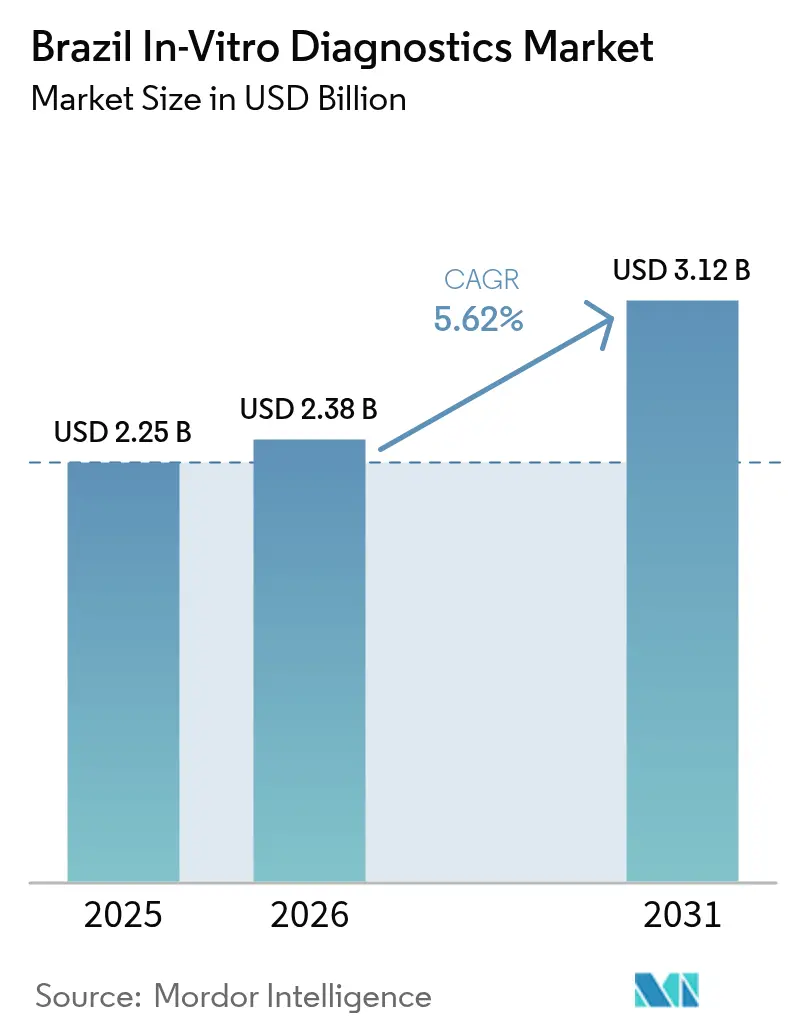
| Base Year Market Size (2025) | USD 2.25 Billion |
| Market Size (2026) | USD 2.38 Billion |
| Market Size (2031) | USD 3.12 Billion |
| Growth Rate (2026 - 2031) | 5.62 % |
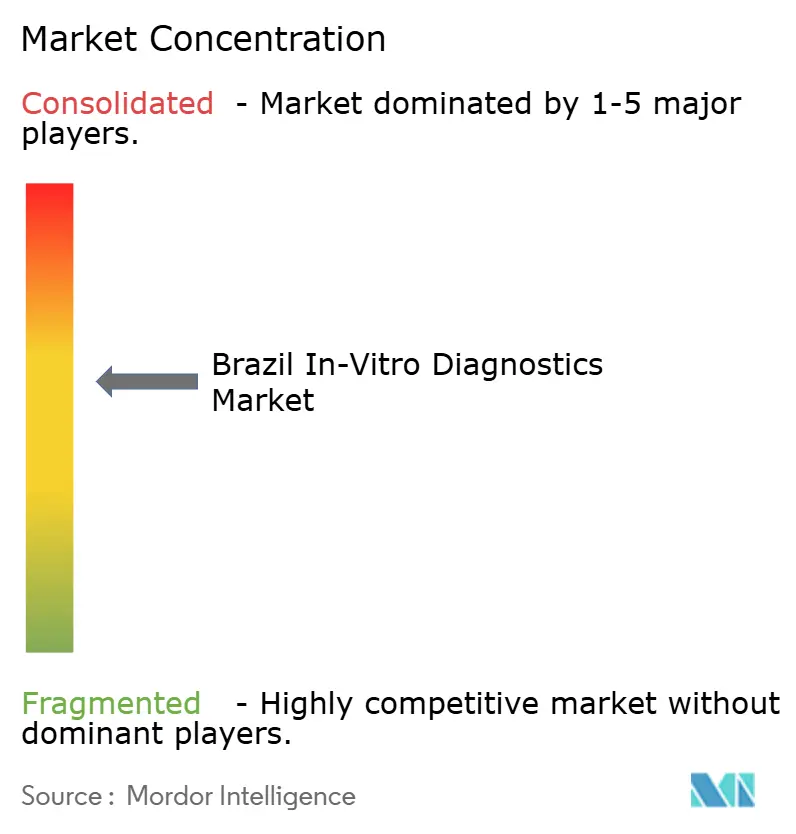
| Market Concentration | Medium |
Major Players *Disclaimer: Major Players sorted in no particular order Image © Mordor Intelligence. Reuse requires attribution under CC BY 4.0. | |
Brazil In-Vitro Diagnostics Market Analysis by Mordor Intelligence
The Brazil IVD market size was valued at USD 2.25 billion in 2025 and estimated to grow from USD 2.38 billion in 2026 to reach USD 3.12 billion by 2031, at a CAGR of 5.62% during the forecast period (2026-2031). Rising demand stems from an aging population of more than 32 million people over 60 years, expanded public-sector funding through the Sistema Único de Saúde, and ANVISA’s 2024-2025 regulatory agenda that prioritizes faster pathways for innovative diagnostics. Investments in point-of-care (POC) infrastructure, telehealth integration, tier-2-city insurance penetration, and local reagent manufacturing further reinforce growth prospects. Competitive momentum intensifies as laboratories consolidate, device makers on-shore production to offset currency risk, and software vendors embed artificial intelligence into test workflows. Collectively, these forces position the Brazil IVD market for sustained mid-single-digit expansion through the decade.
Key Report Takeaways
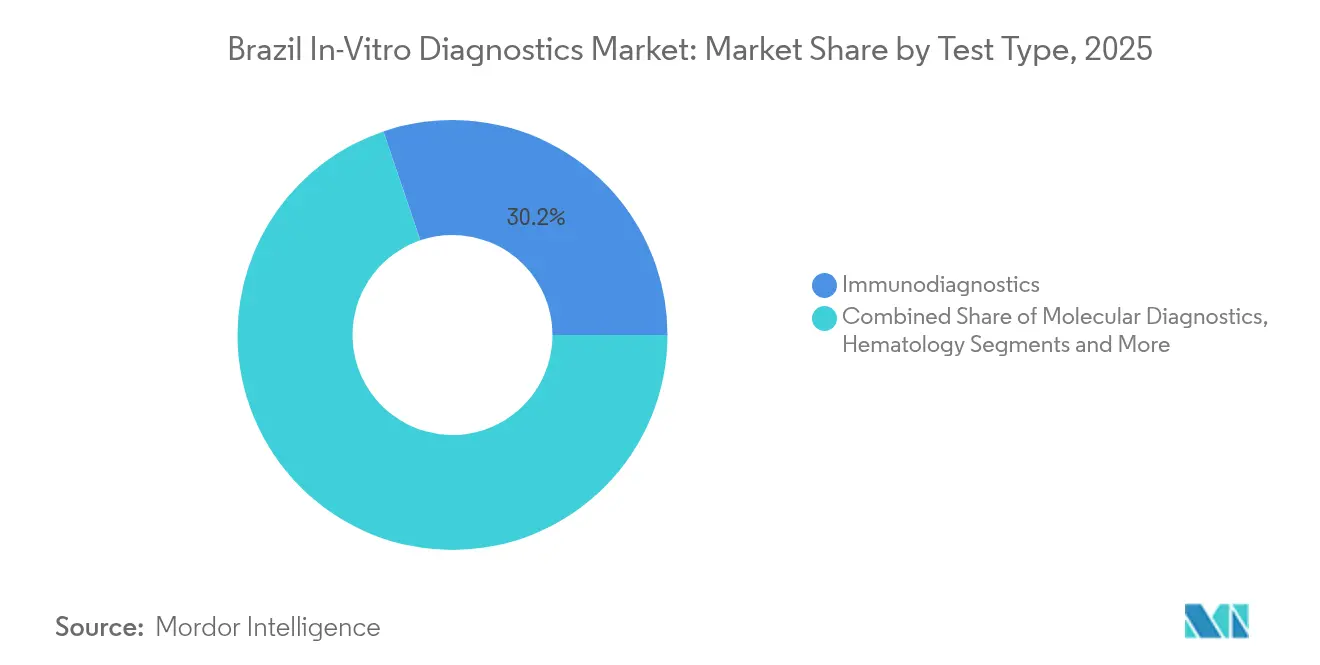
- By test type, immunodiagnostics held 30.21% of Brazil IVD market share in 2025 while molecular diagnostics is advancing at a 12.02% CAGR to 2031.
- By product, reagents and kits accounted for 55.05% of the Brazil IVD market size in 2025; software and services register the highest projected growth at 11.15% CAGR through 2031.
- By usability, disposable devices led with 64.10% revenue share in 2025, whereas reusable devices are expanding at a 8.95% CAGR over the forecast window.
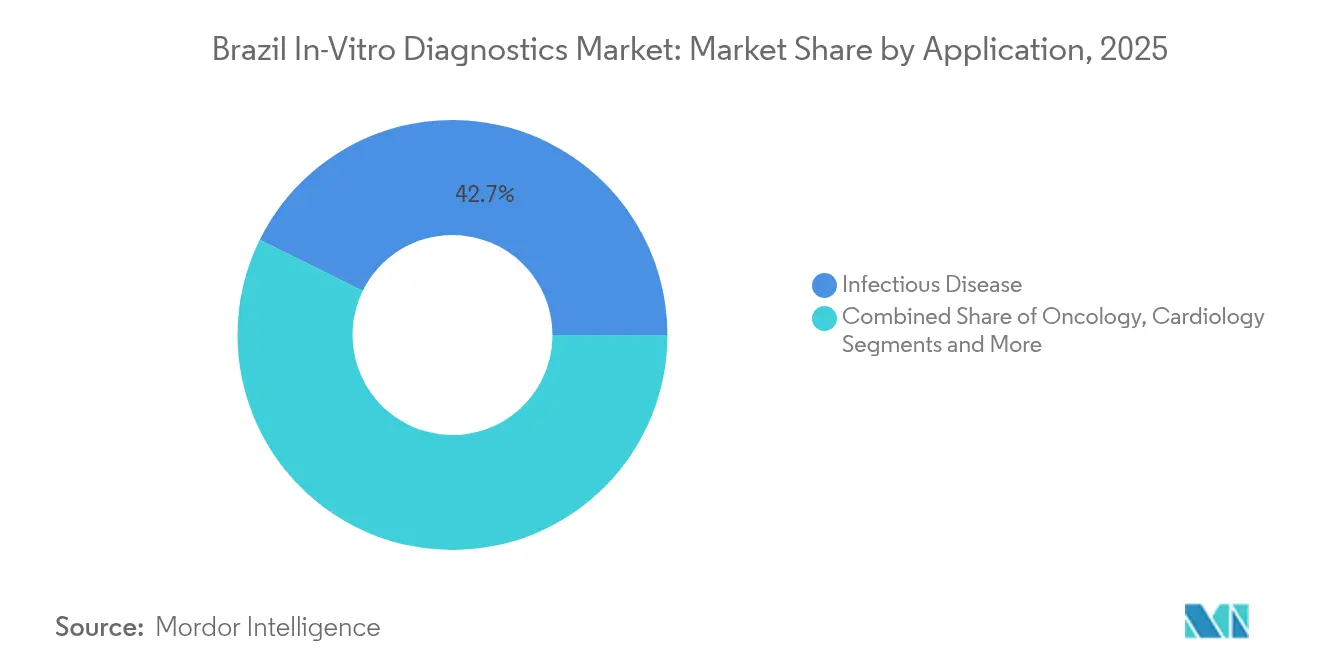
- By application, infectious-disease testing commanded 42.70% share of the Brazil IVD market size in 2025, and oncology testing shows the fastest trajectory at 11.88% CAGR to 2031.
- By end user, diagnostic laboratories represented 53.70% share in 2025, while home-care and self-testing are growing at 13.10% CAGR amid telemedicine adoption.
Note: Market size and forecast figures in this report are generated using Mordor Intelligence’s proprietary estimation framework, updated with the latest available data and insights as of 2026.
Market Trends and Insights
Drivers Impact Analysis of Brazil In-Vitro Diagnostics Market*
| Driver | (~) % Impact on CAGR Forecast | Geographic Relevance | Impact Timeline |
|---|---|---|---|
| High prevalence of chronic & lifestyle diseases | +1.8% | National; higher in Southeast & South | Long term (≥ 4 years) |
| Growing adoption of point-of-care diagnostics | +1.2% | Rural areas & tier-2 cities | Medium term (2-4 years) |
| Expansion of private health-insurance in tier-2 cities | +0.9% | Minas Gerais & interior São Paulo | Medium term (2-4 years) |
| Telehealth-linked sample-collection kiosks | +0.7% | Amazon, Northeast, Center-West | Long term (≥ 4 years) |
| Local manufacturing of low-cost reagents | +0.6% | São Paulo & Rio de Janeiro hubs | Short term (≤ 2 years) |
| Aging population & SUS reimbursement reforms | +1.1% | National; strongest in South & Southeast | Long term (≥ 4 years) |
| Source: Mordor Intelligence | |||
High Prevalence Of Chronic & Lifestyle Diseases
Brazil’s epidemiological transition toward obesity, diabetes, and cardiovascular disorders drives sustained use of immunodiagnostics and clinical-chemistry assays. Point-of-care HbA1c testing in primary care delivers cost-effective monitoring and shortens result times from weeks to minutes. SUS reimbursement reforms embedded in the Previne Brasil model reward early detection, enlarging the test volume eligible for public funding. The Brasil Saudável program’s plan to eliminate 14 neglected diseases requires expanded laboratory capacity for serological and molecular screening. Cardiovascular disease affecting more than 14 million residents fuels demand for high-sensitivity troponin and natriuretic-peptide platforms. Together, these factors add 1.8 percentage points to the Brazil IVD market CAGR.
Growing Adoption Of Point-Of-Care (POC) Diagnostics
Infrastructure constraints across Brazil’s 5,570 municipalities make rapid testing essential for timely care. Field studies in Vitória da Conquista show POC-A1c devices achieving 90% accuracy versus central labs while lowering patient travel costs. In the Amazon, POC syphilis tests record 95% sensitivity and 100% specificity, replacing multi-day laboratory logistics. ANVISA’s streamlined rules under RDC 751 and its 2024-2025 software-cybersecurity agenda accelerate market entry for connected POC devices. Rural programs leverage POC kits to compensate for technician shortages, as only 29% of states meet minimum lab standards. The aggregate impact lifts the CAGR by 1.2 percentage points.
Rapid Expansion Of Private Health-Insurance Coverage In Tier-2 Brazilian Cities
New insurance enrollment of 957,197 beneficiaries in 2023 raised total covered lives to 51 million, expanding demand for reimbursed diagnostics outside major metros. Hapvida’s USD 74 million hospital build-out in Rio de Janeiro illustrates operators’ pivot toward interior growth corridors. Regulatory floor requirements oblige insurers to cover broad diagnostic panels, ensuring test utilization in emerging middle-income cities. Job creation of 1.9 million formal positions in 2023 enhances affordability, although penetration among the poorest quintile remains under 6%. Insurance-driven utilization contributes 0.9 percentage points to overall CAGR.
Telehealth-Linked Sample-Collection Kiosks In Rural Areas
Brazil’s UBS+Digital project logged 6,300 telehealth sessions in 2023 with 85% case-resolution rates, demonstrating scalable remote diagnostics[1]. Tele-ICU services in northern states delivered 3,971 virtual rounds for 5,471 patients, linking specialists to remote hospitals. ANVISA’s telemedicine framework authorizes certified professionals to supervise remote specimen collection while maintaining chain-of-custody. Private 5G pilots such as OpenCare5G at Hospital das Clínicas enable real-time imaging uploads and rapid pathology consultations. Collectively, kiosks and mobile units add 0.7 percentage points to forecast growth.
Restraints Impact Analysis of Brazil In-Vitro Diagnostics Market*
| Restraint | (~) % Impact on CAGR Forecast | Geographic Relevance | Impact Timeline |
|---|---|---|---|
| Stringent ANVISA approval timelines | -0.8% | National | Short term (≤ 2 years) |
| High import tariffs on IVD instruments | -1.1% | National; larger hit on small labs | Medium term (2-4 years) |
| Fragmented public-sector procurement & delayed payments | -0.7% | SUS-dependent regions | Long term (≥ 4 years) |
| Shortage of skilled molecular-lab technicians outside Southeast | -0.9% | North, Northeast, Center-West | Long term (≥ 4 years) |
| Source: Mordor Intelligence | |||
Stringent ANVISA Approval Timelines
Class III and IV devices can face 12-18-month registration windows, challenging rapid product launches. ANVISA’s 2024 legislation allowing reliance on FDA and Health Canada clearances should reduce duplication, yet compliance with Portuguese labeling and cybersecurity files still extends preparation cycles[2]. While a pilot for innovative devices drew 100 applicants, capacity limits persist, especially for molecular technologies needing bioinformatics validation. The resulting drag subtracts 0.8 percentage points from the Brazil IVD market CAGR.
High Import Tariffs On IVD Instruments
Shipments valued above USD 50 incur 60% duty plus ICMS state tax calculated on freight-inclusive customs value. INMETRO and ANATEL certifications add time and cost for wireless analyzers. Although the Mercosur waiver for capital goods runs through 2028, domestic lobbies can trigger reviews, sustaining uncertainty. Combined fiscal pressures shave 1.1 percentage points off growth, especially for smaller independent laboratories.
*Our forecasts treat driver/restraint impacts as directional, not additive. The impact forecasts reflect baseline growth, mix effects, and variable interactions.
Brazil In-Vitro Diagnostics Market Segment Analysis
By Test Type:
Molecular Diagnostics Drives InnovationImmunodiagnostics retained 30.21% Brazil IVD market share in 2025 thanks to high-volume infectious-disease and cardiac biomarker panels. Molecular diagnostics, boosted by COVID-19 infrastructure and precision oncology, is expected to post a 12.02% CAGR through 2031, the fastest within the Brazil IVD market. Oncology sequencing and antimicrobial-resistance panels anchor demand, yet per-run costs average USD 3,500, challenging wider diffusion. Government approval of homologous recombination deficiency testing for ovarian-cancer therapy selection underscores policy support for genomics. Platform vendors partner with public hospitals to broaden access, while ANVISA’s reliance agreements speed assay clearance. Continued reagent cost declines and cloud-based bioinformatics are set to expand molecular adoption beyond tertiary centers by the decade’s end.

By Product:
Software Integration AcceleratesReagents and kits produced 55.05% of the Brazil IVD market size in 2025, reflecting consumable-driven revenue streams across laboratory and POC settings. However, software and services are advancing at 11.15% CAGR as laboratories overhaul information systems to meet telehealth data-exchange mandates and cybersecurity rules. AI-enabled quality-control modules reduce error flags by up to 30% in pilot SUS facilities. DASA’s Nav Pro portal allows clinicians to visualize longitudinal test results, lifting portal login rates five-fold in 2025. Meanwhile, instrument upgrades hinge on flexible reagent rentals to manage capital constraints. Vendors bundling middleware analytics with reagents secure stickier contracts and unlock incremental margin pools.
By Usability:
Sustainability Drives Reusable GrowthDisposable formats commanded 64.10% share in 2025 after pandemic-triggered infection-control protocols boosted rapid-test purchases. As pandemic volumes normalize, reusable analyzers are projected to rise 8.95% CAGR through 2031, underpinned by waste-reduction policies and lifecycle-cost calculations. ANVISA’s 2024 risk-based reprocessing rules permit sterilization of selected single-use devices, lowering consumable spend for high-volume laboratories. Public hospitals evaluating green-procurement criteria now weight disposal cost at 10% of tender scoring. Vendors offering take-back programs and recyclable cartridges gain traction, balancing safety with environmental stewardship.
By Application:
Oncology Testing TransformationInfectious-disease assays held 42.70% share of Brazil IVD market size in 2025, fueled by HIV, dengue, and COVID-19 surveillance. Oncology panels are the fastest riser, predicted to advance 11.88% CAGR as precision therapies demand companion diagnostics. National Cancer Institute forecasts a 74.5% jump in new cases by 2050, necessitating biomarker stratification at earlier stages. Public insurance now reimburses PD-L1 and HRD testing, accelerating uptake beyond private networks. Meanwhile, diabetes and cardiology panels benefit from integrated POC meters in primary care. Autoimmune and nephrology tests expand gradually as clinical pathways embed algorithm-based reflex testing.
By End User:
Home Testing RevolutionDiagnostic laboratories generated 53.70% of 2025 revenue, but home-care and self-testing channels are expanding 13.10% CAGR on the back of regulatory clearance for OTC assays and teleconsult follow-up workflows. Conexa’s platform handled 1.25 million virtual encounters in 2024, with 40% including lab orders fulfilled via at-home collection kits. Retail pharmacies pilot kiosk-based COVID-19, pregnancy, and cholesterol testing, cutting wait times to under 15 minutes. Hospital networks integrate bedside POC blood gas analyzers to streamline emergency care. Academic institutes continue to drive assay validation studies, feeding innovation pipelines for commercial launch.
Geography Analysis
Southeast Brazil accounts for 82% of diagnostic procedures despite housing only 42% of the population, underpinned by dense private-insurance coverage and concentrated laboratory groups such as DASA and Fleury. São Paulo alone processes one-third of national test volumes through 200-plus collection centers and high-throughput core labs. Rio de Janeiro’s pipeline of new hospitals, including Hapvida’s 250-bed unit, will deepen regional dominance and widen network referral opportunities.
Northeast and North regions register lower physician ratios but show strong upside due to telehealth and mobile-kiosk deployments. Tele-ICU programs in Pará and Maranhão achieved 70% case-resolution without patient transfers, validating remote-interpretation models for hematology and imaging. Amazon river municipalities rely on rapid tests for malaria and leptospirosis, where logistics preclude central-lab processing. Center-West agribusiness wealth boosts private-clinic expansion in Goiânia and Cuiabá, attracting vendors of molecular panels for zoonotic-disease surveillance. The South maintains robust infrastructure and the country’s highest per-capita private-insurance enrollment, sustaining steady demand for chronic-disease monitoring. Collectively, geographic diversification into tier-2 cities where private coverage added nearly 1 million lives in 2023 underpins future growth.
Regulatory Landscape
Brazil regulates in-vitro diagnostics through ANVISA, with the core framework consolidated under RDC 830/2023, which entered into effect on June 1, 2024. The rule aligns risk classification and technical documentation expectations with IMDRF principles. For connected and point-of-care IVD workflows, ANVISA requirements interact with broader medical-device rules such as RDC 751/2022 (including provisions used for connected products and faster market entry pathways referenced in the report context), and technical compliance may require parallel conformity steps outside ANVISA registration, such as INMETRO where applicable.
Traceability requirements advanced through ANVISA actions around unique device identification, culminating in Normative Instruction 426/2026, which established the official UDI database (SIUD) effective March 1, 2026. The phased UDI submission calendar extends by risk class into 2029-2032. In parallel, ANVISA continues to use a reliance approach for premarket authorization, allowing manufacturers to leverage approvals from recognized foreign regulators to reduce duplicative review for higher-risk products, while still requiring Brazil-specific documentation, including Portuguese labeling and cybersecurity files where applicable.
Competitive Landscape
Global majors Danaher, Roche, and Siemens Healthineers compete with domestic champions DASA and Fleury in a moderately consolidated field. DASA’s merger with Amil’s hospital assets created a USD 1.84 billion revenue platform spanning 4,400 beds, enabling bundled diagnostic-plus-care contracts with insurers. Fleury’s reported talks with Rede D’Or signal further vertical integration to capture inpatient-testing flows.
Technology capabilities differentiate players: Roche’s acquisition of LumiraDx’s microfluidics enhances its POC menu, while Abbott leverages continuous glucose-monitor data to cross-sell lab services[3]. Domestic startups emphasize software; Conexa’s AI triage reduces unnecessary lab orders by 15%, improving payer acceptance.
White-space potential lies in low-penetration regions and oncology genomics. International entrants partner with local distributors to navigate ANVISA requirements, whereas Brazilian reagent manufacturers gain share under currency depreciation.
Brazil In-Vitro Diagnostics Industry Leaders
-
bioMérieux
-
Becton, Dickinson and Company
-
Bio-Rad Laboratories Inc.
-
Roche Diagnostics
-
Danaher Corp. (Beckman Coulter & Cepheid)
- *Disclaimer: Major Players sorted in no particular order
Brazil In-Vitro Diagnostics Market Companies Covered in this Report
- Abbott Laboratories
- Arkray
- Beckton Dickinson
- bioMérieux
- Bio-Rad Laboratories
- Danaher Corp. (Beckman Coulter & Cepheid)
- Diagnosticos da America (DASA)
- Fleury S.A.
- Foundation Medicine (do Brasil)
- Fujifilm Holdings Corp.
- Hologic
- Illumina
- QIAGEN
- QuidelOrtho
- Roche
- Siemens Healthineers
- Sysmex
- Thermo Fisher Scientific
- Wama Diagnostica
- Werfen Life Group
Market Opportunities and Future Outlook
Onshoring and technology transfer remain a central whitespace for IVD suppliers facing Brazil-specific cost and availability constraints, particularly for reagents, rapid tests, and point-of-care molecular platforms. Government industrial policy under Nova Industria Brasil (NIB) targets increasing domestic health technology production (50% by 2026 and 70% by 2033), supported by BNDES credit lines. This supports local assembly, localized reagent fill-finish, and co-development with public institutions. A concrete signal is Fiocruz (Bio-Manguinhos) signing technological cooperation agreements in March 2026 with South Korean companies Optolane, Green Cross, and GenBody to modernize and expand domestic capacity for POC-molecular diagnostics and rapid test production.
Access and commercialization also improve through clearer routes into public-sector adoption and digitized care delivery, supporting software, services, and connected-testing ecosystems already highlighted in the report. In June 2026, the Ministry of Health published a guide to help startups and technology companies navigate incorporation into the Sistema Unico de Saude (SUS), outlining technical, scientific, and economic assessment. That creates a more structured entry point for novel assays, middleware, and decision-support tools. Regulatory convergence steps (RDC 830/2023 and reliance mechanisms under ANVISA) further reduce friction for manufacturers that can leverage equivalent foreign authorizations, while the rollout of SIUD increases demand for traceability-ready portfolios and compliance tooling across laboratory and point-of-care deployments.
Recent Industry Developments in Brazil In-Vitro Diagnostics Market
- March 2026: Fiocruz (Bio-Manguinhos) signed technological cooperation agreements with South Korean companies Optolane, Green Cross, and GenBody to modernize and expand domestic capacity for point-of-care molecular diagnostics and rapid test production. The partnerships strengthen local supply and create a clearer pathway for SUS-scale deployment of new rapid and molecular menus, reducing reliance on imported finished goods.
- November 2025: bioMerieux and Fiocruz inaugurated a Center for Research, Development and Innovation in Diagnostics in Jacarepagua, Rio de Janeiro, backed by a long-term facility-use agreement. The site anchors local R&D, training, and development of diagnostics aligned with public-health priorities, supporting localization and faster iteration for Brazil-specific use cases.
- November 2024: bioMerieux signed a sale and purchase agreement to acquire Brazil-based Neoprospecta, a company focused on genomics and data solutions for microbiological risk prevention in food and pharmaceutical settings. The acquisition adds local bioinformatics and genomics capabilities that can be leveraged across molecular workflows and surveillance-oriented testing, strengthening bioMerieuxs footprint in Brazil.
Brazil In-Vitro Diagnostics Market Report Scope and Research Methodology
Market Definition and Coverage
This market covers the value of in vitro diagnostic tests sold and used in Brazil, including kits and reagents, instruments, and related IVD services that support testing on patient samples outside the body.
Scope exclusions: It excludes imaging diagnostics, treatment devices, and purely research-use-only tools that are not intended for clinical diagnostic use.
Segments Covered in This Report
- By Test Type
- Clinical Chemistry
- Molecular Diagnostics
- Immunodiagnostics
- Hematology
- Microbiology & Virology
- Coagulation
- Point-of-Care Testing
- Others
- By Product
- Instruments
- Reagents & Kits
- Software & Services
- By Usability
- Disposable IVD Devices
- Reusable IVD Devices
- By Application
- Infectious Disease
- Diabetes
- Oncology
- Cardiology
- Autoimmune Disease
- Nephrology
- Rare Genetic Disorders
- Others
- By End User
- Diagnostic Laboratories
- Hospitals & Clinics
- Home-care & Self-testing
- Academic & Research Institutes
- Others
Data Sources, Market Sizing, and Validation
Desk Research
Desk research built the first structure of the model by mapping demand drivers and the local testing ecosystem in Brazil. We relied on public health statistics and disease surveillance releases, such as Brazil Ministry of Health publications, IBGE demographic series, and PAHO and WHO country dashboards, to anchor the tested population and care access indicators.
To translate demand into market value, we also reviewed sources such as ANVISA regulatory updates, customs and trade statistics for medical devices and reagents, peer-reviewed clinical laboratory and diagnostics journals, and national or regional laboratory association publications. Company annual reports, investor presentations, and reputable press were used to cross-check product mix changes and pricing direction. We also used paid subscriptions for company financials and intelligence, news and financials, patent lookups, and shipment-level import and export signals where it helped confirm trends. These desk sources are not exhaustive, and many other public references were also used for data collection, validation, and research clarification.
Primary Interviews and Surveys
Primary interviews and surveys were used to pressure-test assumptions that desk sources cannot fully explain, especially test mix, utilization changes, and typical price ranges across Brazil's public and private channels. We spoke with participants across the IVD value chain, including distributors, laboratory operators, hospital procurement stakeholders, and diagnostics manufacturing or commercial teams, and coverage was spread across Brazil to reflect different care settings.
When input ranges varied, we re-contacted a smaller set of respondents to confirm what changed, whether it was linked to reimbursement, import conditions, or shifts in disease testing protocols. After that, we adjusted the model only after consistency checks.
Distribution of primary research fieldwork respondents
| Company type | Respondent position |
|---|---|
| Top tier: 30% | CXOs: 14% |
| Mid tier: 49% | Functional/Unit leaders: 30% |
| Smaller Players: 21% | Managers: 56% |
Market-Sizing & Forecasting
Sizing started with a top-down demand pool build-up, where diagnosed and screened cohorts by major testing areas were translated into expected test volumes using public health signals and lab workflow benchmarks, and then converted into value using typical reagent and kit pricing patterns. To keep the output realistic, we corroborated results with selective bottom-up approximations, such as supplier and channel roll-ups, sampled test-menu pricing, and instrument placement intensity checks, and then adjusted totals when they did not reconcile.
Key inputs used in the model included Brazil population aging, public system utilization patterns, private insurance coverage direction, installed base of lab analyzers (as indicated by procurement and import signals), reagent versus instrument share behavior, and the pace of molecular and point-of-care adoption. Where direct volume data was patchy, gaps were handled by using proxy indicators, such as imports by relevant product group, lab consolidation signals, and a conservative range for tests per patient, followed by a second pass with primary feedback.
Forecasting was done using scenario analysis supported by short time-series smoothing on the most stable indicators, such as population and chronic disease prevalence, and then stress-tested with interview-based expectations for pricing, access, and testing protocol changes. The final forecast was reviewed to ensure that growth does not outrun plausible capacity and utilization in labs and hospitals.
Data Validation & Update Cycle
Validation was done through triangulation across independent signals, so model outputs were compared against trade movements, regulatory activity, and the direction of clinical testing demand discussed in interviews. Outliers, sudden jumps, and unusual segment splits were flagged, and the assumptions behind them were reviewed in more than one step before sign-off.
The report is refreshed annually, and interim updates are made when material events occur, such as major regulatory shifts, reimbursement changes, or large demand shocks tied to outbreaks. Before delivery, a final analyst pass is completed to make sure the numbers and narrative reflect the latest available public releases and the most recent reconfirmations from primary discussions.
Mordor Intelligence's Vitro Diagnostics Brazil Market Size Versus Other Published Estimates
Published estimates for Brazil IVD often differ because the included revenue lines are not always the same, and the base year and currency timing can shift the totals. Differences also show up when one model assumes a faster change in the test mix (for example, more molecular share) than what labs report as practical in the near term.
IVD-related laboratory services are kept inside the scope here only when they are directly tied to clinical testing delivery, and in Mordor Intelligence sizing, broader lab service revenue that is not specific to IVD testing is kept outside the market, which narrows the total versus some broader revenue views.
Benchmark comparison
| Source | Market Size | Gaps in Research Methodology |
|---|---|---|
| Mordor Intelligence | USD 2.25 B (2025) | |
| Industry Publisher A | USD 2.00 B (2024) | Uses a 2024 base year and a test-type scope that can undercount IVD service-linked revenue, and the value may reflect a more conservative pricing progression for reagents and kits. |
| Industry Publisher B | USD 4.23 B (2024) | Reports a broader revenue view that explicitly includes IVD services alongside reagents and instruments, which can expand the market total beyond product-led demand conversions. |
The spread in the table is mainly explained by what is counted as IVD service revenue and by base-year differences, rather than by a single growth assumption. By keeping the model tied to test demand signals, practical utilization, and cross-checks from trade and procurement indicators, the estimate stays traceable to clear inputs that can be repeated and updated each year.
Key Questions Answered in the Report
What is the projected value of the Brazil IVD market in 2031?
The market is forecast to reach USD 3.12 billion by 2031 at a 5.62% CAGR.
Which test type is growing fastest within Brazil's diagnostics space?
Molecular diagnostics is projected to grow 12.02% annually, driven by precision oncology and infectious-disease surveillance.
How dominant are reagents and kits in overall revenue?
Reagents and kits represented 55.05% of 2025 revenue, making them the largest product category.
Why are tier-2 cities important for diagnostic providers?
Private health-insurance enrollment in interior cities rose by 957,197 lives in 2023, creating fresh demand for reimbursed testing services.
What regulatory change may shorten device approvals?
ANVISA's 2024 rule permitting reliance on FDA and Health Canada clearances can reduce Class III and IV approval times.
How fast is the home-care and self-testing segment expanding?
Home-based testing is growing 13.10% annually, fueled by telemedicine and OTC assay approvals.