
Medical Device Technologies Market Size and Share
Medical Device Technologies Market Analysis by Mordor Intelligence
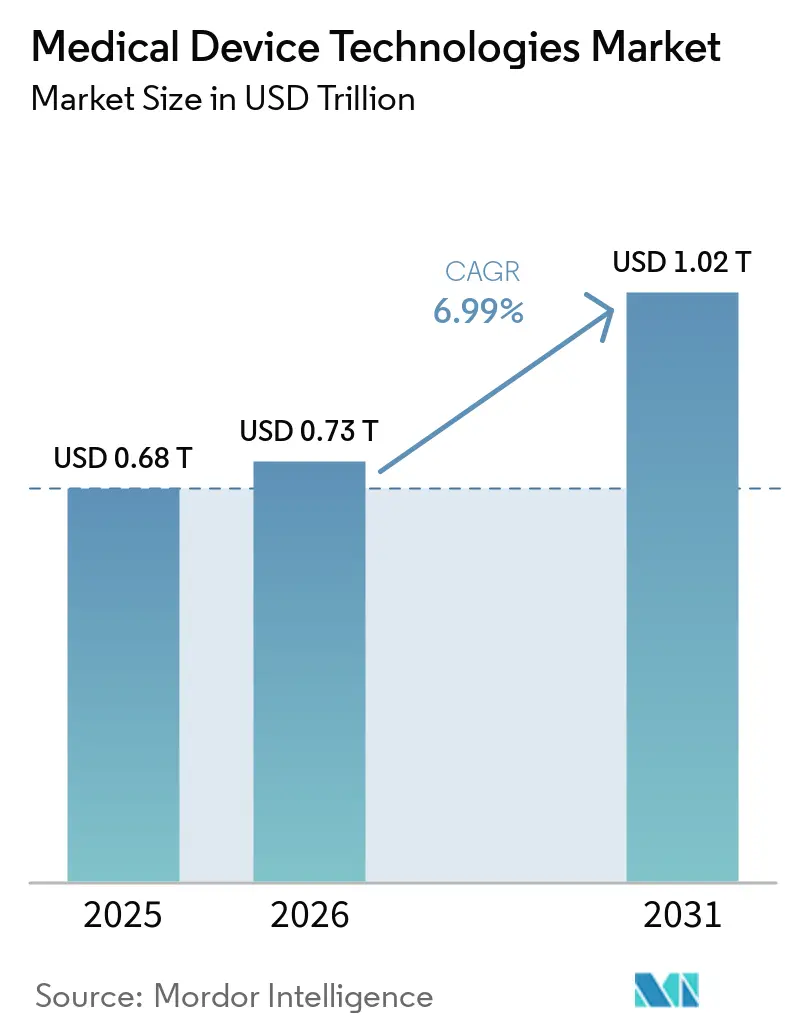
The medical device technologies market size is projected to expand from USD 0.73 trillion in 2026 and USD 0.78 trillion in 2027 to USD 1.07 trillion by 2032, registering a CAGR of 6.62% between 2027 and 2032.
A larger older patient base and wider care capacity support demand for monitoring and procedural equipment. Domestic manufacturing in India broadens imaging and implant supply, while US hospital wearables connect observation with clinical data. Broader portfolios, robotics partnerships and equipment services give suppliers complementary ways to serve these needs. Regulatory burdens tie up manufacturers' resources, while constrained US hospital reinvestment can delay equipment replacement.
Key Report Takeaways
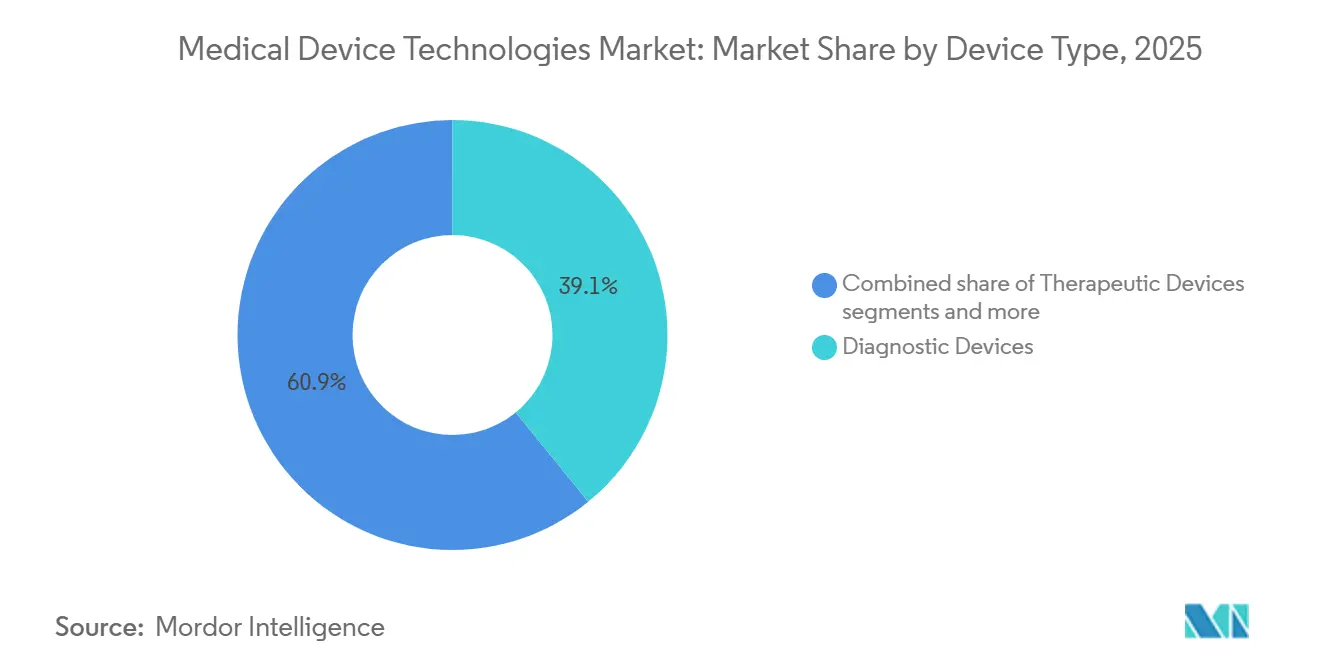
- By device type, diagnostic devices held a 39.03% medical device technologies market share in 2026, and monitoring devices are forecast to be the fastest-growing segment at a 6.93% CAGR between 2027 and 2032.
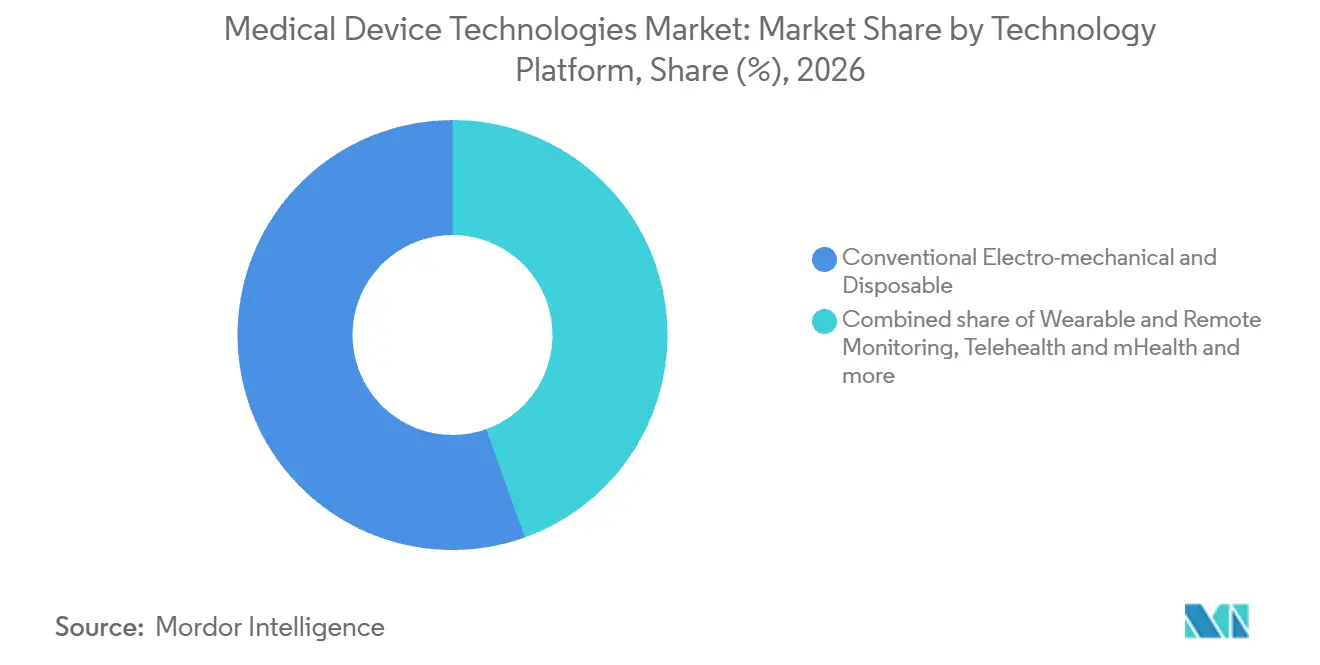
- Among technology platforms, conventional electromechanical and disposable technologies accounted for a 55.46% share of the medical device technologies market size in 2026, while nanotechnology and smart materials form the fastest-growing segment with a 7.85% CAGR between 2027 and 2032.
- In therapeutic applications, cardiology led with 22.8% of revenue in 2026, and neurology is the fastest-growing segment with a 7.35% CAGR between 2027 and 2032.
- By end user, hospitals accounted for 65.93% of revenue in 2026, with ambulatory surgical centers forecast to be the fastest-growing segment at a 7.7% CAGR between 2027 and 2032.
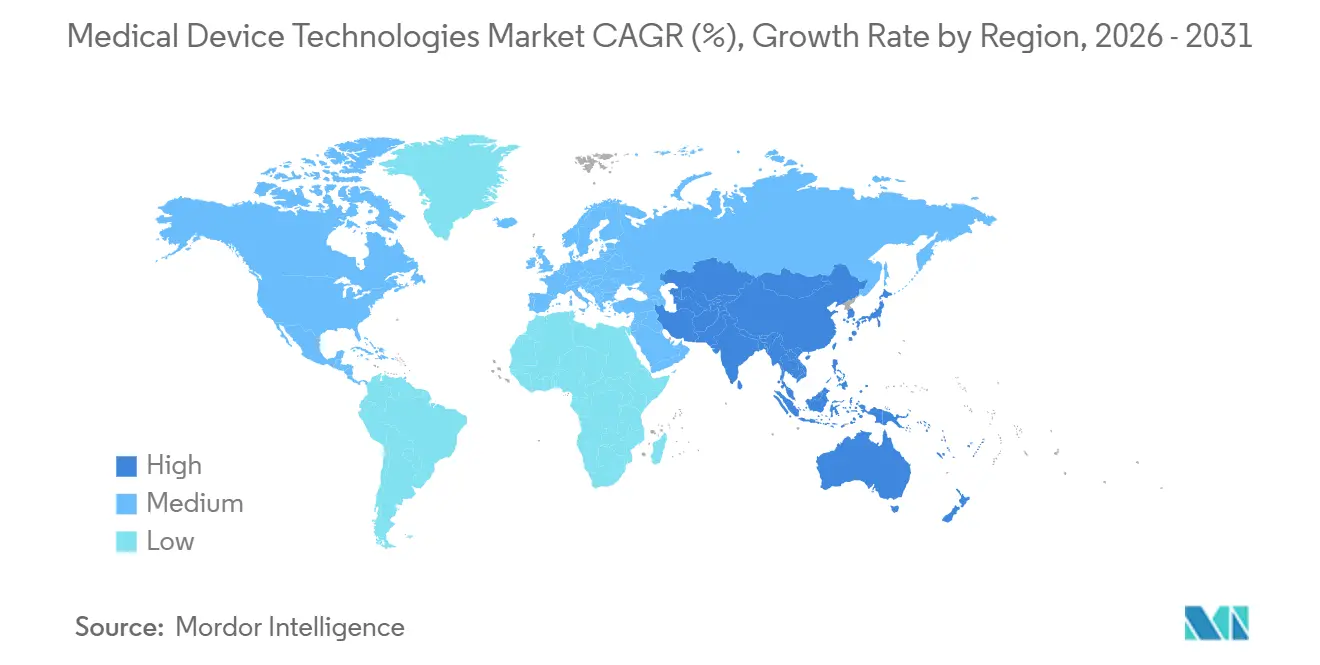
- Across geographies, North America held 45.26% of revenue in 2026, while Asia-Pacific is the fastest-growing region at a 7.4% CAGR between 2027 and 2032.
Note: Market numbers in this report are based on Mordor Intelligence's proprietary estimation framework, which combines nine months of actuals with Q4 projections for base year 2026.
Market Trends and Insights
Drivers Impact Analysis of Medical Device Technologies Market*
| Driver | (~) % Impact on CAGR Forecast | Geographic Relevance | Impact Timeline |
|---|---|---|---|
| Aging Population & Rise in Chronic Diseases | +2.5% | North America, Europe and Asia-Pacific | Long term (≥ 4 years) |
| Technological Convergence in Minimally Invasive & AI-Enabled Devices | +2.2% | United States of America | Medium term (2-4 years) |
| Healthcare Infrastructure Expansion in Emerging Markets | +1.9% | Republic of Indonesia | Medium term (2-4 years) |
| Rapid Uptake of Wearable & Remote-Monitoring Devices | +1.7% | United States of America | Short term (≤ 2 years) |
| Digital Twins & In-Silico Trials Shortening R&D Cycles | +0.3% | United States of America | Long term (≥ 4 years) |
| Point-Of-Care 3-D Printing Enabling Just-In-Time Implants | +0.5% | United States and Switzerland | Long term (≥ 4 years) |
| Source: Mordor Intelligence | |||
Aging Population & Rise in Chronic Diseases
An expanding older population broadens the potential patient base for medical devices over several decades. The United Nations Department of Economic and Social Affairs estimated the global population aged 60 or older at 1.22 billion in 2025.[1] It projected that this population would reach 2.11 billion by 2050. At about 1.7 times its 2025 size by 2050, the 60-and-over population gives suppliers of diagnostic, monitoring and implant equipment a patient base that keeps widening for 25 years.
Technological Convergence in Minimally Invasive & AI-Enabled Devices
AI integration can broaden the value of minimally invasive equipment by addressing a specific task within the surgical workflow. In March 2025, Moon Surgical received FDA clearance for ScoPilot, an optional AI-powered feature on its Maestro System. It allows an attached laparoscope to follow a selected instrument tip while the surgeon retains control of positioning without disengaging from the instruments. For operating teams, this links the value of the software to how the surgeon manages the view during a laparoscopic procedure. Because ScoPilot is an optional feature on the Maestro System, the clearance adds capability to an existing platform rather than introducing a separate surgical robot.
Healthcare Infrastructure Expansion in Emerging Markets
Healthcare expansion creates an equipment opportunity that depends on making new capacity usable across many care locations. In June 2026, the World Bank reported that Indonesia's Health Systems Strengthening project had delivered over 6,700 pieces of equipment to over 4,000 primary care centers.[2] For project equipment procured with comprehensive operational support and maintenance under a total cost of ownership approach, Indonesia's Ministry of Health conditions delivery and installation on facility readiness. The criteria cover existing equipment, adequate staff, infrastructure and utilities, and adherence to waste-management guidelines. Qualifying deliveries are staggered annually for up to 4 years from contract signing. Facility readiness determines when vendors can deliver and install the covered equipment, making the pace of rollout depend on how quickly each listed site qualifies.
Rapid Uptake of Wearable & Remote-Monitoring Devices
Wearable monitors can extend connected observation across hospital beds, linking the equipment opportunity to patient coverage and the care team's data flow. In October 2025, University Hospitals announced a rolling deployment of Masimo Radius VSM wearable monitors across Northeast Ohio. The device transmits health data to the patient's care team through the electronic health record and Masimo Patient SafetyNet. This connects demand for the wearable hardware to a hospital's intended coverage of patients within its clinical information systems. For the supplier, deployment across hospital units creates an equipment opportunity organized around bed coverage. The announced 1,500-bed rollout, with a fall 2026 target for systemwide use, represented a hospital-scale commitment to the Masimo platform.
Restraints Impact Analysis of Medical Device Technologies Market*
| Restraint | (~) % Impact on CAGR Forecast | Geographic Relevance | Impact Timeline |
|---|---|---|---|
| Stringent & Fragmented Regulatory Pathways | -1.1% | European Union member states | Medium term (2-4 years) |
| Reimbursement Cuts & Pricing Pressure | -0.8% | United States of America | Short term (≤ 2 years) |
| Cyber-Security Liability Shifts Raising Compliance Costs | -0.4% | United States, United Kingdom and Germany | Medium term (2-4 years) |
| Rare-Earth Material Supply Constraints for Imaging Components | -0.2% | China and United States | Short term (≤ 2 years) |
| Source: Mordor Intelligence | |||
Stringent & Fragmented Regulatory Pathways
For smaller device manufacturers, complying with EU medical-device and in vitro diagnostic rules can absorb resources before a product generates a commercial return. The European Commission's 2025 evaluation found that 278 of 325 call-for-evidence entries discussing the regulations' impact on small and medium-sized enterprises addressed disproportionate financial and administrative burdens.[3] This feedback makes certification and documentation demands commercially relevant because resources committed to market access cannot simultaneously support product development. The evaluation identifies high certification costs, resource constraints, lengthy approval timelines and complex documentation requirements as recurring SME concerns. The feedback connects these burdens with hindered innovation, possible product withdrawals and some SMEs leaving the market, making product availability vulnerable to compliance costs.
Reimbursement Cuts & Pricing Pressure
Reimbursement pressure can restrict equipment investment even when the clinical case for a device is strong. In 2025, the American Hospital Association reported that US Medicare net inpatient payment rates rose 5.1% from 2022 to 2024 while general inflation rose 14.1%. It also reported that hospital plant age had risen by more than 10% over two years, suggesting hospitals were increasingly unable to reinvest in medical equipment. For suppliers, this gap separates the clinical value of replacement equipment from a hospital's ability to fund it. Capital-equipment vendors serving these hospitals therefore face a risk of longer sales cycles as replacement proposals compete for constrained reinvestment funds.
*Our forecasts treat driver/restraint impacts as directional, not additive. The impact forecasts reflect baseline growth, mix effects, and variable interactions.
Medical Device Technologies Market Segment Analysis
By Device Type:
Diagnostic Scale and Monitoring AdoptionDiagnostic devices accounted for a 39.03% share of the medical device technologies market size in 2026. Danaher Corporation's Diagnostics segment generated USD 9.94 billion in 2025 sales from clinical instruments, consumables, software and services used for disease diagnosis. Its customers include hospitals, physicians' offices, reference laboratories and other critical-care settings. This breadth gives the largest segment multiple points of contact with care delivery, connecting equipment demand to diagnostic work across several settings. Instrument placement and the consumables used with it provide complementary commercial roles, linking the supplier's equipment offering to the testing performed at these sites.
Monitoring devices are the fastest-growing segment, with a forecast CAGR of 6.93% between 2027 and 2032. Becton, Dickinson and Company (BD) reported USD 309 million in Advanced Patient Monitoring unit revenue for the quarter ended June 30, 2026, up 10.9% year over year. The unit reported portfolio volume growth driven particularly by Acumen IQ Cuff and Acumen IQ Sensor adoption and growth in consumables sales. Surgical devices have a different activity base, with Intuitive Surgical Inc.'s da Vinci systems used in approximately 3.15 million procedures worldwide in 2025. In monitoring, BD's reported growth rests on cuffs, sensors and consumables, while da Vinci procedure volumes indicate platform use rather than systems sold.

By Technology Platform:
Conventional Volume and Surface InnovationConventional electromechanical and disposable technologies were the largest segment, accounting for 55.46% of revenue in 2026. BD's Medication Delivery Solutions unit generated USD 4.58 billion in global revenue in fiscal 2025. The company attributed unit volume growth to its vascular access management portfolio and hypodermic products. This connects conventional-device scale to the supply of established care products, with vascular access and hypodermic devices contributing to the unit's volume growth. An expected volume-based procurement impact in China partially offset that growth, placing a country-specific constraint on the unit's expansion.
Nanotechnology and smart materials form the fastest-growing segment, with a forecast CAGR of 7.85% between 2027 and 2032. Onkos Surgical received FDA 510(k) clearance in June 2026 to apply NanoCept technology to titanium implants in the ELEOS Limb Salvage System. Onkos describes the proprietary coating as non-eluting with a nanoscale surface, intended to reduce bacterial contamination on coated components before implantation. The commercial mechanism is differentiation at the implant surface, allowing a materials-based feature to become part of an established device offering. The clearance covers titanium implants in the ELEOS Limb Salvage System, and Onkos states that the coating's potential clinical impact has not been evaluated in human clinical studies.
By Therapeutic Application:
Cardiology Scale and Neurological Device GrowthCardiology was the largest segment, with 22.8% of revenue in 2026. Left atrial appendage closure gives patients with non-valvular atrial fibrillation an implant-based way to stop blood thinners, so cardiology demand in this field attaches to a procedure that changes long-term drug use. By October 2026, Boston Scientific Corporation's WATCHMAN left atrial appendage closure implant had enabled more than 600,000 patients with non-valvular atrial fibrillation to stop blood thinners.
Neurology is the fastest-growing segment, with a forecast CAGR of 7.35% between 2027 and 2032. Medtronic plc reported that its Neuromodulation division's net sales rose 7% in fiscal 2026 from fiscal 2025. The Percept RC neurostimulator with BrainSense technology was one of three named growth drivers alongside the Inceptiv closed-loop spinal-cord stimulator and interventional products. The brain-modulation offering connects stimulation-system selection to the neurological condition being treated. Within a division also selling spinal-cord stimulation and chronic-pain products, brain modulation serves conditions including Parkinson's disease and essential tremor.
By End User:
Hospital Demand and Broader Ambulatory Procedure EligibilityHospitals represented a 65.93% medical device technologies market share in 2026. The American Hospital Association reported that US hospital inpatient volumes rose 5.3% in 2025. US hospital supply spending, including pacemakers, ventilators and other technology, rose 9.9% through 2025, reflecting higher prices. These measures connect the largest segment to both growing care activity and costlier inputs, so the commercial opportunity cannot be read from spending growth alone. Hospital-equipment suppliers must address the capacity needed for patient care while making the cost of a device credible within a more expensive supply base.
Ambulatory surgical centers are the fastest-growing segment, with a forecast CAGR of 7.7% between 2027 and 2032. Under Medicare's 2026 ASC policy, CMS added 289 procedures to the covered list after revising its criteria. It also added 271 codes removed from the inpatient-only list. Ascension St. Vincent's and Southeast Orthopedic Specialists opened an ASC in St. Augustine, Florida, in March 2026 with 4 operating rooms and 17 preoperative and post-anesthesia care beds. More eligible procedures and an operating expansion give device suppliers a specific route to support surgery outside the hospital, with demand tied to procedures an ASC can deliver.
Geography Analysis
North America Medical Device Technologies Market
North America held a 45.26% medical device technologies market share in 2026, making it the largest geography. Under its October 6, 2026 partnership with the US government, Becton, Dickinson and Company intended to expand US end-to-end production by approximately 5 billion essential medical consumables annually. Siemens Healthineers AG reported 17,207 US employees in active employment across its fully consolidated companies at fiscal 2025 year-end. Its Cary, North Carolina, training center offers more than 1,000 imaging and laboratory diagnostic equipment courses, pairing this US operating footprint with technical education for hospital and laboratory engineering teams.
Asia-Pacific Medical Device Technologies Market
Asia-Pacific is the fastest-growing geography, with a forecast CAGR of 7.4% between 2027 and 2032. Manufacturers participating in India's Production Linked Incentive scheme had begun producing 57 unique medical devices by September 2026, including MRI machines, CT scanners and heart valves. The program established domestic capabilities for high-end devices that had previously been predominantly imported. This gives the regional growth mechanism a supply-side dimension, as local production broadens the range of equipment that can be sourced from participating manufacturers. The commercial opening is a more diverse domestic manufacturing base, spanning imaging and implant technologies within the scheme's participating producers.
Europe's medical-technology industry included more than 36,000 companies in 2025, around 90% of them small and medium-sized enterprises, so most suppliers in the region operate at small scale. In the Middle East and Africa, the Saudi Food and Drug Authority reported 25 licensed medical-device factories and 1,313 licensed medical-device warehouses in Saudi Arabia in 2025. Kenya's Ministry of Health set a 2026-2030 strategy to expand local health-products manufacturing, including medical devices, and develop regional markets for Kenyan manufacturers. In South America, Brazil's AgSUS began primary-care equipment procurement processes in the second half of 2025, coordinating tenders, supplier contracting and distribution logistics with the Ministry of Health. Kenya's plan targets local manufacturing for regional markets, Saudi Arabia's licensed base covers both factories and warehouses, and Brazil's coordinated procurement gives suppliers a public channel to participating municipalities.
Regulatory Framework and Outlook
These selected jurisdictions are compared from the perspective of finished-device manufacturers seeking market entry through the pathways described below. The comparison focuses on quality systems, registration and establishment licensing, retaining risk-class distinctions where the entry route differs. Brazil's notification pathway for eligible class I and II devices contrasts with China's national review of imported class II and III devices. These procedural differences shape the administrative work needed to reach buyers, while scheduled and proposed changes influence the direction of that work.
Regulatory Table of Medical Device Technologies Market
| Decision factor | United States | Germany | China | Brazil | South Africa |
|---|---|---|---|---|---|
| Primary authority | FDA | Länder authorities for market surveillance | NMPA and provincial drug regulators | Anvisa | SAHPRA |
| Key instruments or direction | Quality Management System Regulation (QMSR); 21 CFR Part 820; ISO 13485:2016 | EU device rules and conditional EUDAMED database notification framework | Device-registration provisions; revised manufacturing GMP from November 1, 2026 | RDC 751/2022 class I and II notification route | Establishment licensing; ISO 13485 evidence at manufacturer and distributor renewal |
| Commercial effect | Quality-system obligations for finished-device manufacturers | No additional authority notification once EUDAMED use is mandatory | National review for domestic class III and imported class II and III; provincial review for domestic class II | Notification documentation required without prior technical review for eligible devices | License for regulated business activities; renewal certification for manufacturers and distributors |
| Current policy attractiveness | Medium | Medium | Medium | High | Medium |
| Future direction of policy attractiveness | No change | Easing | Hardening | Easing | No change |
| Source: Mordor Intelligence | |||||
US continuity reflects QMSR's February 2026 transition, while South Africa's licensing and renewal duties provide the baseline alongside SAHPRA's September 2026 closure of an expression of interest for expert review of draft rules. Germany's easing direction reflects the EU simplification proposed in December 2025, which requires adoption by the European Parliament and Council. China's revised GMP adds quality-assurance, validation and outsourcing chapters and strengthens lifecycle risk management from November 1, 2026, supporting a hardening direction. Brazil's favorable class I and II notification route and its July 2026 grouped-review initiative support a high current rating and an easing direction for the described pathways.
Value Chain Stages
The value chain compares how device manufacturing, distribution and equipment support create distinct sources of supplier earnings. Cardinal Health Inc. manufactures, sources and distributes its own-brand medical, surgical and laboratory products internationally, while distributing national-brand products to providers in the United States and Canada. This integrated role connects production with access to care providers, so commercial value can accrue at more than one stage of an equipment supply relationship.
Value Chain Analysis Table of Medical Device Technologies Market
| Primary activity | Key participants | Value capture | Bottleneck | Resilience response |
|---|---|---|---|---|
| Device manufacturing | Medical-product manufacturers such as Becton, Dickinson and Company and Cardinal Health Inc. | Manufactured-product sales | Time and capacity needed to add production lines | Stage capacity additions across production sites |
| Distribution to providers | Integrated medical-product distributors such as Cardinal Health Inc. | Own-brand product sales; national-brand distribution in the United States and Canada | Matching product availability with provider locations | Position supply around the provider network served |
| Maintenance and service parts | Equipment-service providers such as Siemens Healthineers AG and Philips Healthcare | Service-plan fees, with fixed-cost maintenance and parts coverage or optional tiered US agreement pricing | Availability of support and parts over equipment life | Combine planned maintenance with defined service coverage |
| Source: Mordor Intelligence | ||||
In May 2025, Siemens Healthineers AG announced USD 150 million of US investments spanning production and supply-chain projects. The announcement included relocating manufacturing by its Varian subsidiary from Baja, Mexico, to Palo Alto, California, and opening depots in New Jersey and California. Such a configuration could strengthen the connection between producing equipment and supplying the parts needed during its operating life. Maintenance agreements add a separate commercial relationship after the equipment sale, making continued support a source of supplier earnings alongside the original device.
Competitive Landscape
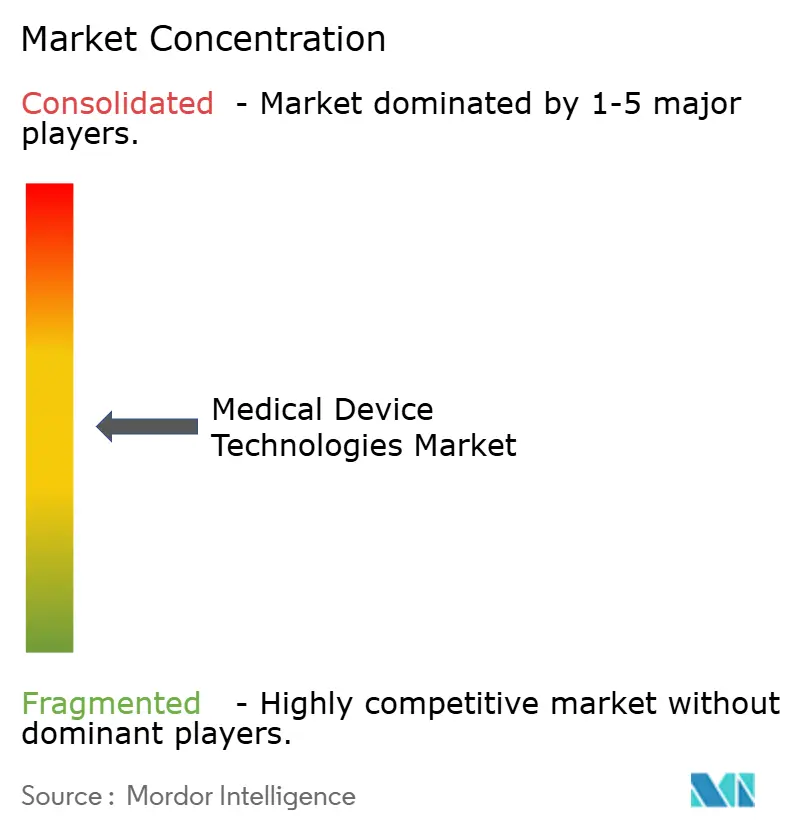
Competition is dispersed across clinical specialties, with large diversified suppliers and businesses focused on particular device systems. Medtronic plc reported USD 2.28 billion in Medical Surgical Portfolio revenue for its first fiscal quarter of 2027, ended July 31, 2026, covering surgery, endoscopy, acute care and monitoring. Johnson & Johnson reported USD 8.64 billion in third-quarter 2026 MedTech sales across cardiovascular, vision, surgery and orthopedics. Abbott Laboratories generated USD 5.85 billion in second-quarter 2026 Medical Devices sales, with products spanning rhythm management, electrophysiology, heart failure and diabetes care. These overlapping portfolios make the relevant supplier comparison procedure-specific, with rhythm management and diabetes care requiring a different assessment from vision or orthopedic systems.
GE HealthCare Technologies Inc. reported USD 3.77 billion in second-quarter 2026 Advanced Imaging Solutions revenue after combining imaging and advanced visualization reporting and recasting historical figures. Baxter International Inc. reported USD 801 million in second-quarter 2026 Healthcare Systems & Technologies sales, spanning connected care, patient monitoring, respiratory devices and surgical-space equipment. Medtronic announced a strategic partnership with Cornerstone Robotics in September 2026. Medtronic's release describes the partnership as a way to further expand global access to robotic-assisted surgery, a goal set apart from the imaging and connected-care segments that GE HealthCare and Baxter report.
In July 2026, FDA granted De Novo authorization for OTTAVA following a request by Auris Health Inc., part of Johnson & Johnson MedTech. The system is indicated for adults and intended for trained physicians performing specified upper-abdominal general laparoscopic procedures in an operating room. Within that scope, surgical staff can reposition the patient by adjusting the table without undocking. For a surgical buyer, this makes the relationship between table movement and robotic docking a concrete design consideration when assessing the equipment. The authorization covers adults and specified upper-abdominal general laparoscopic procedures in an operating room, which sets the clinical scope within which Auris Health can place OTTAVA.
Medical Device Technologies Industry Leaders
-
Medtronic plc
-
Johnson & Johnson
-
Abbott Laboratories
-
GE HealthCare Technologies Inc.
-
Baxter International Inc.
- *Disclaimer: Major Players sorted in no particular order
Medical Device Technologies Market Companies Covered in this Report
- Abbott Laboratories
- Baxter
- Beckton Dickinson
- Boston Scientific
- Canon
- Cardinal Health
- Danaher
- Dexcom
- Edward Lifesciences
- FUJIFILM
- GE HealthCare Technologies Inc.
- Hologic
- Intuitive Surgical
- Johnson & Johnson
- Medtronic
- Olympus
- Koninklijke Philips
- Resmed
- Roche
- Siemens Healthineers
- Smiths Group
- Stryker
- Terumo
- Zimmer Biomet
Key Opportunities for Market Participants
The opportunities compare England's robotic-system procurement route with respiratory and musculoskeletal monitoring applications in the United States. From September 1, 2026, NHS England made competition the default for new robotic procurements not already initiated, subject to defined direct-award exceptions and approval. CMS's 2026 respiratory and musculoskeletal device-supply codes cover data access or transmissions on 2 to 15 days within a 30-day period, creating a defined interval for eligible remote therapeutic monitoring services.
Market Opportunities Table of Medical Device Technologies Market
| Opportunity | Why now | Buyer / lead segment | Recommended play | Main barrier | Likely beneficiaries |
|---|---|---|---|---|---|
| New NHS robotic-surgery systems | Competition is the default from September 1, 2026, for new procurements not initiated earlier | NHS hospitals starting robotic programs or clinical pathways | Prepare framework competition bids around the intended clinical pathway | Demonstrating value for the proposed pathway | CMR Surgical Ltd, Intuitive Surgical Limited and Medtronic Limited, Lot 1 framework suppliers from July 15, 2024, to July 14, 2028 |
| Short-interval respiratory-device monitoring | Code 98984 from January 1, 2026, covers 2 to 15 data days in 30 days | Medicare respiratory-care providers | Build qualifying monitoring episodes around inhaler-use data and physician access | Meeting data-day and applicable billing conditions | Respiratory sensor and platform suppliers such as Adherium Ltd |
| Short-interval musculoskeletal monitoring | Code 98985 from January 1, 2026, covers 2 to 15 data days in 30 days | Rehabilitation practices | Connect home-exercise adherence and outcomes data to qualifying therapy episodes | Required data engagement and therapy-plan documentation | Remote therapeutic monitoring platform suppliers such as Limber Health |
| Source: Mordor Intelligence | |||||
Remote therapeutic monitoring services furnished by therapists require a therapy plan of care and the applicable GP, GO or GN modifier. CMS pays the qualifying device-supply codes under the Physician Fee Schedule, with outpatient hospital type-of-bill 13X paid under the Hospital Outpatient Prospective Payment System. The NHS route retains narrow direct-award exceptions requiring NHS England consideration and approval, with 15 working days allowed for queries and approval. The clearest near-term opening is a monitoring offering that helps therapists deliver and document a qualifying short episode, linking device data to an eligible care service.
Recent Industry Developments in Medical Device Technologies Market
- Oct 2026: Becton, Dickinson and Company announced a partnership with the US government under which it intends to expand US end-to-end production by approximately 5 billion essential medical consumables annually.
- Sep 2026: Medtronic announced a strategic partnership with Cornerstone Robotics.
- Jul 2026: FDA granted OTTAVA De Novo authorization, requested by Auris Health Inc., part of Johnson & Johnson MedTech, for adult use by trained physicians in specified upper-abdominal general laparoscopic procedures in operating rooms.
Medical Device Technologies Market Report Scope and Research Methodology
Market Definition and Coverage
Medical device technologies market measures annual spending on medical devices and medical software products used to diagnose, monitor, prevent, or treat disease. It covers sales to healthcare providers and other end users globally, valued at the seller's medical-product revenue.
Scope exclusions: Healthcare delivery and telehealth consultation fees, pharmaceuticals and biologic therapies sold separately from a medical device, standalone hospital information technology and general-purpose software, and separately sold replacement parts, repair, and maintenance for installed devices are excluded.
Segments Covered in This Report
- By Device Type
- Diagnostic Devices
- Diagnostic Imaging Devices
- MRI Systems
- CT Scanners
- Ultrasound
- In-Vitro Diagnostics
- Diagnostic Imaging Devices
- Therapeutic Devices
- Implants
- Drug-Delivery Pumps
- Surgical Devices
- Robotics & Navigation
- Energy-based Devices
- Monitoring Devices
- Multiparameter Monitors
- Remote Patient Monitors
- Others
- Diagnostic Devices
- By Technology Platform
- Conventional Electro-mechanical & Disposable
- Wearable & Remote Monitoring
- Telehealth & mHealth
- Robotic Surgery
- 3-D Printing
- Augmented / Virtual Reality
- Nanotechnology & Smart Materials
- AI-as-a-Medical-Device (SaMD)
- By Therapeutic Application
- Cardiology
- Orthopedics & Sports Medicine
- Neurology
- Ophthalmology
- General & Laparoscopic Surgery
- Oncology
- Others
- By End User
- Hospitals
- Clinics
- Ambulatory Surgical Centers
- Home Healthcare Settings
- Diagnostic Laboratories
- By Geography
- North America
- United States
- Canada
- Mexico
- Europe
- Germany
- United Kingdom
- France
- Italy
- Spain
- Rest of Europe
- Asia-Pacific
- China
- India
- Japan
- South Korea
- Australia
- Rest of Asia-Pacific
- Middle East and Africa
- GCC
- South Africa
- Rest of Middle East and Africa
- South America
- Brazil
- Argentina
- Rest of South America
- North America
Data Sources, Market Sizing, and Validation
Desk Research
Public and official sources such as the World Health Organization's Global Health Observatory and Global Atlas of Medical Devices describe device categories, national policy, equipment availability and procurement, which help establish product boundaries and compare health-system capacity. MedTech Europe's market data reports manufacturer-price market estimates, regional shares and sales histories, while World Bank project reporting provides evidence on equipment deployment and healthcare infrastructure. These sources are used as context and indicators rather than substitutes for global product-sales totals.
Company annual reports and regulatory filings help distinguish device-product sales from service, pharmaceutical and broader corporate revenue, while investor materials and reputable business reporting can clarify product launches, installed-base changes and supply conditions. Trade and policy publications can help check regional demand, regulation and procurement against those disclosures, and the named sources are illustrative rather than exhaustive because further sources inform collection, validation and clarification.
Primary Interviews and Surveys
Interviews and structured surveys may include medical-device manufacturers, software-product vendors, distributors, healthcare procurement specialists and clinical engineering leaders across APAC, EMEA and the Americas. Respondents can clarify product boundaries, sales channels, replacement timing, realized price and category trends, then help check secondary-source interpretations and forecast drivers. Where evidence is missing or inconsistent, the analyst records the gap, seeks clarification from another source or respondent type, and triangulates sales-side information with selected channel and end-user checks.
Distribution of primary research fieldwork respondents
| Company type | Respondent position | Region |
|---|---|---|
| Top tier: 35% | CXOs: 20% | APAC: 40% |
| Mid tier: 40% | Functional/Unit leaders: 35% | EMEA: 33% |
| Smaller Players: 25% | Managers: 45% | Americas: 27% |
Market-Sizing & Forecasting
The analyst builds a top-down estimate of global annual product-sale revenue, then checks selected categories and geographies with supplier roll-ups, channel evidence and sampled average selling price multiplied by unit volume. Relevant indicators include medical-equipment density and procurement from WHO, healthcare facility and capacity expansion from public project records, company device revenue and product mix, procedure volumes, and reimbursement or regulatory changes. These help distinguish underlying demand from changes in price, replacement timing and access. Segment shares are derived by assigning counted product revenue to device type, technology platform, therapeutic application, end-user setting and geography, then comparing the resulting category totals with the global estimate. A multivariate forecast relates historical revenue to population and disease burden, equipment replacement and procedure activity, health-system investment, product adoption, pricing and reimbursement, with scenario analysis used where policy or adoption paths remain uncertain. Selective bottom-up checks are reconciled to the global estimate, and gaps are investigated through additional filings, channel evidence or clarified assumptions. Primary respondents can check whether the drivers and forecast paths reflect actual procurement, pricing and adoption conditions, and material disagreements prompt a review of the input series and scenario ranges.
Data Validation & Update Cycle
Analysts triangulate product-sales estimates against company filings, public procurement and deployment signals, healthcare-capacity indicators and selected channel checks. They investigate anomalies and material variances by tracing source periods, currency, product scope and reported revenue classification, then document the resolution and conduct a second analyst review before sign-off. Re-contact is triggered when a key input remains inconsistent, a product or channel boundary is unclear, or an event could materially change price, supply or adoption. The dataset is refreshed annually, updated between cycles for material events, and reviewed again in a fresh pre-delivery pass.
Mordor Intelligence's Global Medical Device Technologies Market Size Compared With Other Published Estimates
Published estimates can differ in the transactions and products they count and the inputs used to model demand. Medical device technologies market measures annual spending on medical devices and medical software products used to diagnose, monitor, prevent, or treat disease.
Key Gap Drivers include the study's defined coverage and market-specific modeling choices. Relevant indicators include medical-equipment density and procurement from WHO, healthcare facility and capacity expansion from public project records, company device revenue and product mix, procedure volumes, and reimbursement or regulatory changes.
Benchmark comparison
| Source | Market Size | Gaps in Research Methodology |
|---|---|---|
| Mordor Intelligence | USD 0.78 T (2027) | |
| Global Consultancy A | USD 637.42 B (2026) | At its 2026 base, this estimate is 18.3% below this report's 2027 value of USD 0.78 T, 1 year later. |
| Global Consultancy B | USD 580.51 B (2025) | At its 2025 base, this estimate is 25.6% below this report's 2027 value of USD 0.78 T, 2 years later. |
Mordor Intelligence's analysts triangulate product-sales estimates against company filings, public procurement and deployment signals, healthcare-capacity indicators and selected channel checks.
Key Questions Answered in the Report
What is the medical device technologies market size and growth outlook?
The market is projected to grow from USD 0.78 trillion in 2027 to USD 1.07 trillion by 2032, with a CAGR of 6.62% between 2027 and 2032.
Which factors support demand for medical devices?
Aging, healthcare expansion and connected monitoring support demand. In June 2026, the World Bank reported equipment deliveries to over 4,000 Indonesian primary care centers.
Which medical-device category holds the largest share?
Diagnostic devices held 39.03% of revenue in 2026. Monitoring devices are forecast to grow fastest, at a 6.93% CAGR between 2027 and 2032.
Which companies are major medical-device suppliers?
Major suppliers include Medtronic plc, Johnson & Johnson, Abbott Laboratories, GE HealthCare Technologies Inc. and Baxter International Inc.
What challenges can slow medical-device technology adoption?
US hospital funding and EU compliance burdens can constrain adoption. The American Hospital Association reported that Medicare net inpatient payment rates rose 5.1% from 2022 to 2024 against 14.1% general inflation.
Which regions lead medical-device technology revenue and forecast growth?
North America held 45.26% of revenue in 2026. Asia-Pacific is forecast to grow fastest, with a 7.4% CAGR between 2027 and 2032.