
Functional Cosmetics Market Size and Share
Market Overview
| Study Period | 2021 - 2031 |
|---|---|
| Market Size (2026) | USD 4.26 Billion |
| Market Size (2031) | USD 5.71 Billion |
| Growth Rate (2026 - 2031) | 6.05 % |
| Fastest Growing Market | Asia-Pacific |
| Largest Market | Asia-Pacific |
| Market Concentration | Medium |
Major Players *Disclaimer: Major Players sorted in no particular order Image © Mordor Intelligence. Reuse requires attribution under CC BY 4.0. | |
Functional Cosmetics Market Analysis by Mordor Intelligence
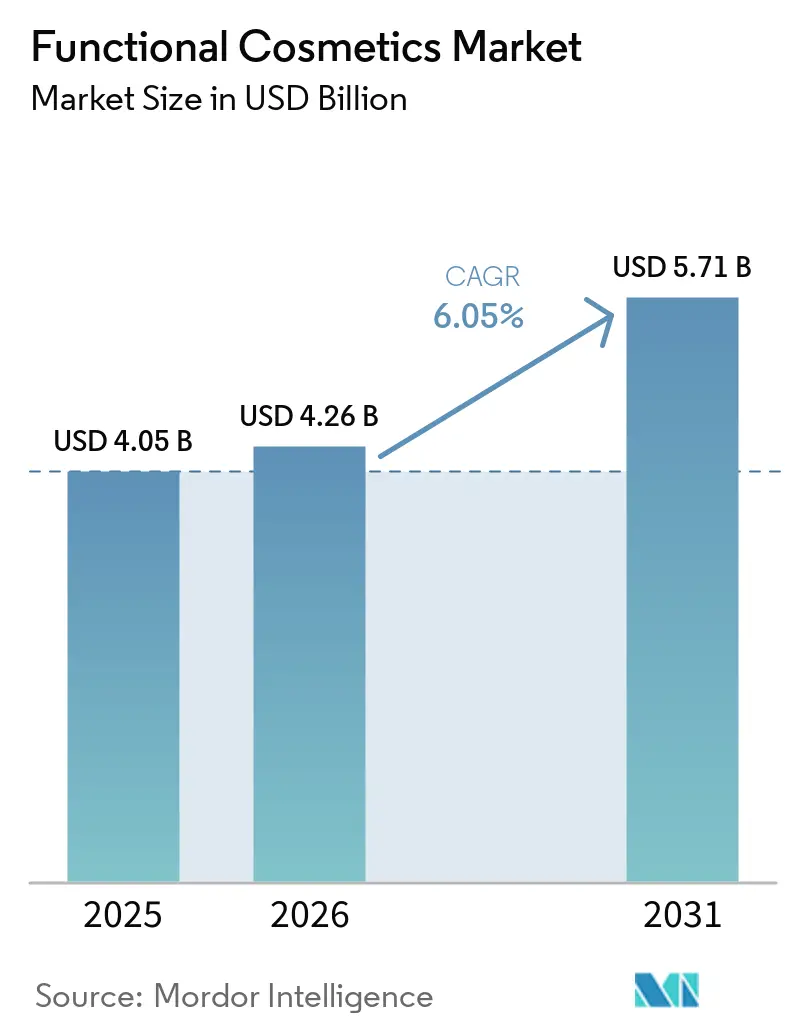
The functional cosmetics market was valued at USD 4.05 billion in 2025 and is projected to grow to USD 4.26 billion in 2026, reaching USD 5.71 billion by 2031, with a CAGR of 6.05% during the forecast period of 2026–2031. This growth is primarily driven by the increasing demand for beauty products that offer benefits beyond appearance enhancement, as consumers prioritize formulations that promote long-term skin health, protection, and overall wellness. Advances in formulation technologies, ingredient innovation, and science-backed product development are bolstering consumer confidence and adoption of functional cosmetics. Additionally, the rising preference for personalized beauty solutions, clean-label formulations, and products with demonstrated effectiveness is influencing consumer purchasing behavior.
Key Report Takeaways
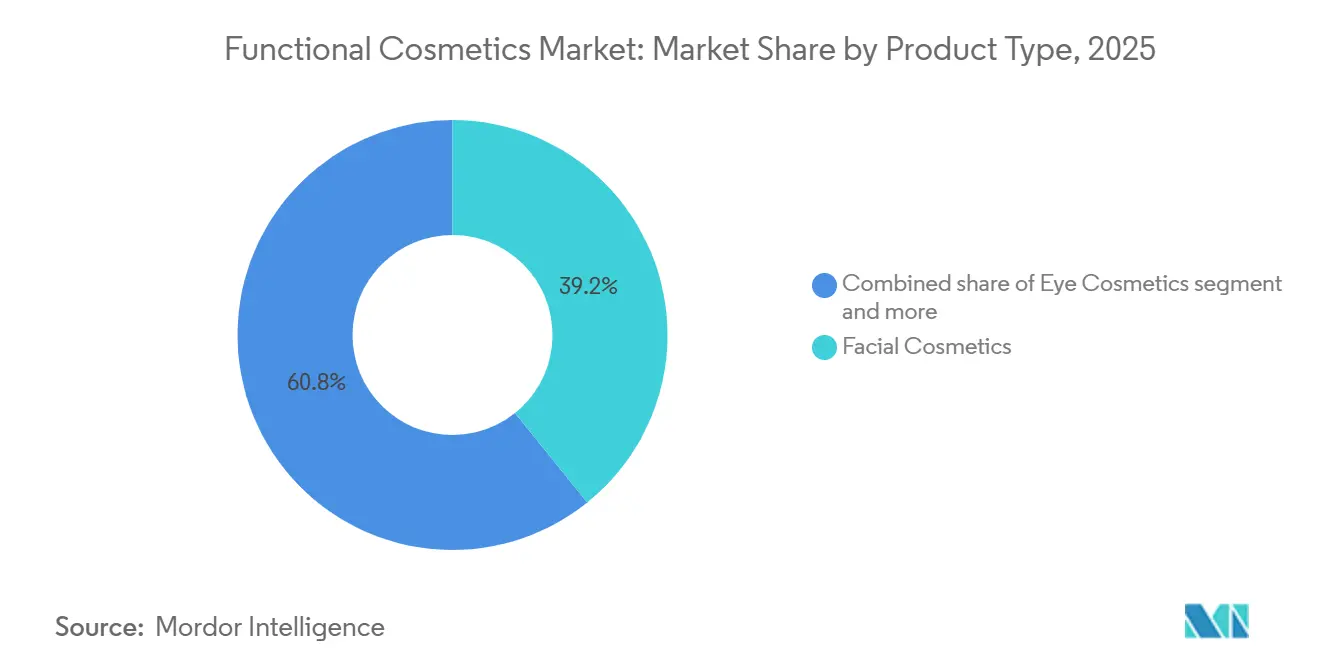
- By product type, facial cosmetics held 39.23% of functional cosmetics market share in 2025, while lip and nail make-up products are forecast to grow at 6.95% CAGR through 2031.
- By functionality, anti-aging accounted for 31.23% share in 2025, while sun protection is forecast to expand at 7.41% CAGR through 2031.
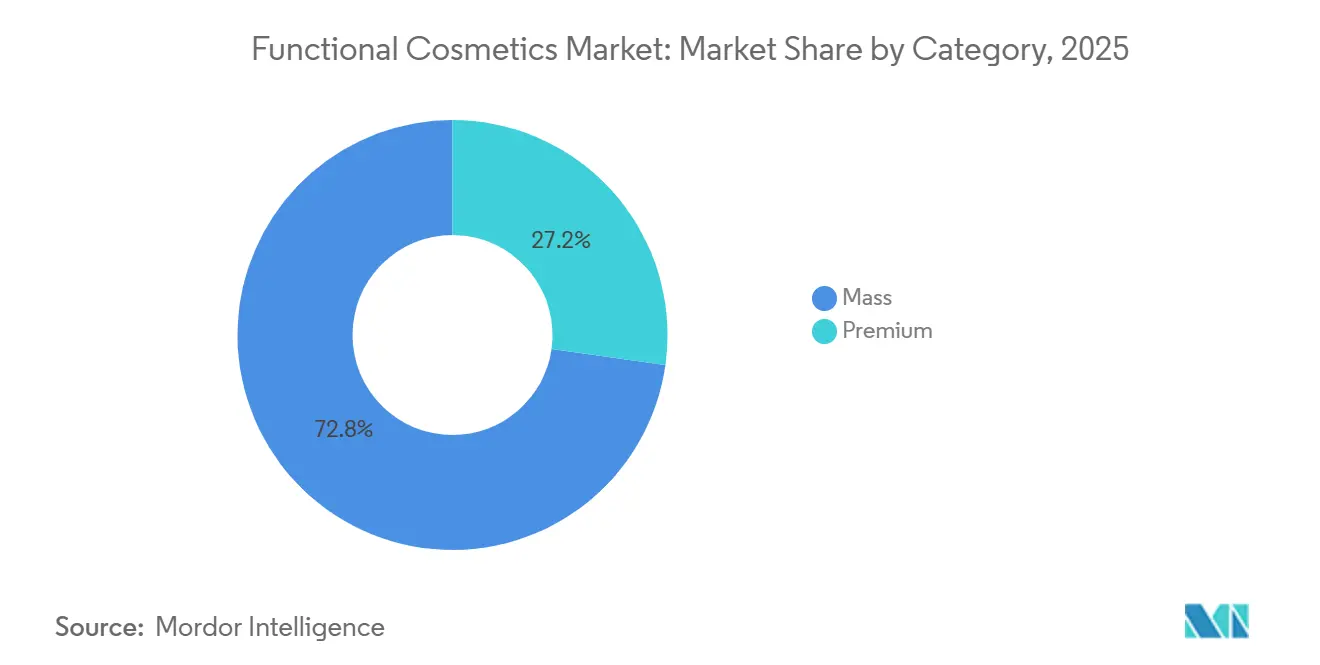
- By category, mass products accounted for 72.78% share of the functional cosmetics market size in 2025, while premium is forecast to expand at 7.11% CAGR through 2031.
- By distribution channel, specialty stores held 38.92% share of the functional cosmetics market size in 2025, while online retail stores are projected to grow at 8.11% CAGR through 2031.
- By geography, Asia-Pacific held 33.86% of functional cosmetics market share in 2025 and is forecast to grow at 7.23% CAGR through 2031.
Note: Market size and forecast figures in this report are generated using Mordor Intelligence’s proprietary estimation framework, updated with the latest available data and insights as of January 2026.
Market Trends and Insights
Drivers Impact Analysis of Functional Cosmetics Market*
| Driver | (~) % Impact on CAGR Forecast | Geographic Relevance | Impact Timeline |
|---|---|---|---|
| Growing awareness of preventive skin health | +1.2% | Global | Medium term (2–4 years) |
| Popularity of dermatologist-recommended cosmetics | +0.9% | North America and Europe, spill-over to Asia-Pacific | Short term (≤ 2 years) |
| Increasing adoption of clean and natural ingredients | +0.7% | Global, with early gains in North America and Western Europe | Medium term (2–4 years) |
| Concerns over pollution and environmental skin damage | +0.5% | Asia-Pacific core, spill-over to Middle-East and Africa | Short term (≤ 2 years) |
| Advancements in active ingredient technologies | +1.1% | Global | Long term (≥ 4 years) |
| Demand for multi-functional beauty products | +0.8% | North America, Asia-Pacific, Western Europe | Medium term (2–4 years) |
| Source: Mordor Intelligence | |||
Growing awareness of preventive skin health
The growing awareness of preventive skin health is a key factor driving the functional cosmetics market. Consumers are increasingly prioritizing long-term skin quality over addressing issues only after they arise. This shift toward proactive beauty routines has led to higher demand for products that protect, strengthen, and support healthy skin functions through targeted ingredients and advanced formulations. Greater consumer knowledge about factors influencing skin changes, such as UV exposure, environmental stress, lifestyle habits, and natural aging, has further boosted the adoption of cosmetics offering protective and maintenance benefits. As a result, there is a rising preference for functional formulations with ingredients that enhance hydration retention, barrier protection, antioxidant defense, and overall skin resilience.
Popularity of dermatologist-recommended cosmetics
The increasing demand for dermatologist-recommended cosmetics is driving growth in the functional cosmetics market, as consumers prioritize products supported by scientific research, safety testing, and proven skin benefits. Greater awareness of ingredient efficacy and skin compatibility has influenced purchasing decisions, with a preference for formulations developed under dermatological guidance. These products often target specific concerns such as sensitivity, hydration, signs of aging, and skin barrier health. Consumers are showing increased trust in brands that emphasize clinical testing, hypoallergenic formulations, and transparent claims, boosting the demand for dermatologist-endorsed beauty products. In response, companies are expanding the availability of such products through broader retail and digital platforms. For example, in August 2025, Clinique, a dermatologist-recommended brand, launched its products in the Amazon.com.mx Premium Beauty store, enhancing access to its allergy-tested and fragrance-free skincare and makeup solutions across Mexico.
Increasing adoption of clean and natural ingredients
The growing preference for clean and natural ingredients is driving the functional cosmetics market, as consumers increasingly prioritize product formulations that are safer, transparent, and skin-friendly. Concerns about harsh chemicals, skin irritation, and long-term compatibility have led to a shift toward products containing naturally derived actives, botanical extracts, plant-based oils, minerals, and sustainable ingredients. Consumers are paying closer attention to ingredient labels, opting for formulations that exclude unnecessary additives while providing targeted functional benefits. This trend has prompted manufacturers to create clean-label cosmetics that integrate natural ingredients with advanced formulation techniques to ensure product performance, stability, and effectiveness.
Concerns over pollution and environmental skin damage
Rising concerns over pollution and environmental skin damage are driving consumer demand for products designed to protect the skin from external aggressors that impact skin quality and appearance. Exposure to air pollutants, dust particles, UV radiation, and environmental stressors contributes to oxidative stress, clogged pores, irritation, premature aging, and the exacerbation of existing skin concerns. This has led to increased demand for protective and restorative cosmetic formulations. Pollution-related skin issues are particularly influencing the use of products containing antioxidants, barrier-strengthening ingredients, and anti-pollution technologies that help mitigate environmental exposure. According to the American Academy of Dermatology Association (AAD), acne is the most common skin condition in the United States, affecting up to 50 million Americans annually [1]. Environmental factors, such as pollution, can also worsen chronic skin conditions, including acne and eczema.
Restraints Impact Analysis of Functional Cosmetics Market*
| Restraint | (~) % Impact on CAGR Forecast | Geographic Relevance | Impact Timeline |
|---|---|---|---|
| High cost of advanced functional cosmetic formulations | -0.6% | Global (acutest in price-sensitive EM segments) | Medium term (2–4 years) |
| Stringent regulatory requirements and product claim restrictions | -0.4% | North America and Europe, spill-over to Asia-Pacific | Medium term (2–4 years) |
| Concerns over misleading claims and product efficacy | -0.3% | Global | Short term (≤ 2 years) |
| Risk of skin sensitivity and allergic reactions | -0.2% | Global | Short to medium term |
| Source: Mordor Intelligence | |||
High cost of advanced functional cosmetic formulations
The high cost associated with advanced functional cosmetic formulations serves as a significant restraint for the functional cosmetics market. Products incorporating specialized active ingredients, advanced delivery systems, and rigorous testing processes often entail elevated production expenses. Formulations that include premium components such as peptides, biotechnology-derived compounds, stabilized vitamins, probiotics, and advanced skin-enhancing actives demand substantial investment in research, ingredient procurement, stability testing, and quality assurance. These factors contribute to higher final product prices, which can limit accessibility for price-sensitive consumers and hinder adoption compared to traditional cosmetic products. Additionally, ensuring the effectiveness, safety, and stability of functional ingredients throughout the product lifecycle necessitates advanced manufacturing techniques and packaging solutions, further increasing cost pressures for manufacturers.
Stringent regulatory requirements and product claim restrictions
Stringent regulatory requirements and restrictions on product claims serve as a significant restraint for the functional cosmetics market. Manufacturers must adhere to complex safety standards, ingredient regulations, testing protocols, and evidence-based claim validation before launching products. These compliance processes, which include ingredient assessments, safety evaluations, documentation, labeling requirements, and regulatory approvals, can extend development timelines and increase operational complexity. For example, the EU Cosmetics Regulation (EC) No. 1223/2009 is the primary legislation governing cosmetic products in the European Union. It imposes strict human safety requirements and mandates the preparation of a comprehensive Cosmetic Product Safety Report (CPSR) before products can be introduced to the market.
*Our forecasts treat driver/restraint impacts as directional, not additive. The impact forecasts reflect baseline growth, mix effects, and variable interactions.
Functional Cosmetics Market Segment Analysis
By Product Type:
Lip and Nail Innovations Redefine a Traditionally Decorative SegmentFacial cosmetics accounted for 39.23% of the functional cosmetics market in 2025, driven by increasing consumer focus on skin health, appearance enhancement, and prevention of early skin concerns. The segment's growth is supported by rising demand for products offering benefits beyond basic cosmetic enhancement, such as hydration, nourishment, skin barrier improvement, brightening, and protection against external stressors. Growing awareness of skincare routines and the importance of preventive care has encouraged consumers to integrate functional facial products into their daily beauty practices. Additionally, the preference for advanced formulations containing active ingredients like peptides, antioxidants, vitamins, ceramides, and botanical extracts is further driving product adoption.
Lip and nail make-up products are projected to be the fastest-growing segment in the functional cosmetics market, with a CAGR of 6.95% during 2026–2031. This growth is attributed to the increasing shift from purely decorative cosmetics to products offering added care and protective benefits. The segment is gaining traction as consumers seek lip and nail formulations that enhance appearance while providing nourishment, strengthening, hydration, repair, and long-lasting performance. Functional lip products are witnessing rising demand for moisturizing, plumping, barrier-supporting, and protective formulations, while nail products are evolving to include strengthening, damage repair, and conditioning benefits.

By Functionality:
Sun Protection Emerges as the Category's Fastest-Scaling SegmentThe anti-aging segment is expected to maintain the broadest functionality base in the functional cosmetics market, accounting for a 31.23% share in 2025. This growth is driven by the increasing focus on preserving youthful skin appearance and preventing visible signs of aging. According to the World Bank, Monaco recorded the highest proportion of people aged 65 years and above in 2024, at 36% of the population, followed by Japan at 30%. This highlights the expanding aging consumer base, which supports the demand for age-focused beauty solutions [2]. Consumers are increasingly adopting functional cosmetic products to address concerns such as fine lines, wrinkles, loss of firmness, uneven texture, and reduced skin elasticity.
The sun protection segment is projected to achieve the fastest growth in the functional cosmetics market, with a CAGR of 7.41% during 2026–2031. This growth is attributed to the transformation of sunscreen from a seasonal product to an essential daily-use cosmetic. Increasing awareness of photoaging, hyperpigmentation, sunburn prevention, and the long-term effects of ultraviolet radiation has driven the adoption of SPF-based formulations in regular beauty routines. Consumers are shifting toward advanced sun protection products that offer broad-spectrum UVA/UVB defense, improved wearability, water resistance, and formulations addressing common concerns such as greasiness, white cast, and heavy texture.
By Category:
Mass Products Defend Volume as Premium Captures ValueMass products are expected to account for the largest share of the functional cosmetics market, holding 72.78% of the category share in 2025. This dominance is attributed to the increasing availability of functional beauty solutions across mainstream consumer segments. The segment benefits from the accessibility of products that combine cosmetic appeal with targeted benefits at affordable price points, encouraging frequent usage and repeat purchases. Advances in formulation technologies have enabled mass-market products to include functional ingredients such as vitamins, antioxidants, hydration boosters, and skin-conditioning compounds, which were previously limited to premium ranges. Additionally, the expansion of everyday beauty routines has driven demand for cost-effective products offering convenience, multiple benefits, and suitability for regular use.
The premium products segment is projected to grow at a CAGR of 7.11% during 2026–2031, fueled by increasing consumer preference for high-performance cosmetics with advanced formulations and specialized beauty benefits. Growth in this segment is supported by rising demand for products with higher concentrations of active ingredients, innovative delivery systems, and scientifically developed formulations designed to deliver enhanced results. Consumers in this segment are prioritizing product quality, ingredient transparency, clinical validation, and unique formulations over conventional beauty solutions. Additionally, the segment is benefiting from the growing appeal of luxury skincare experiences, which include refined textures, advanced ingredient combinations, sustainable packaging, and personalized beauty solutions.
By Distribution Channel:
Specialty Retail Expertise Faces Structural Challenge from Algorithm-Driven PersonalizationSpecialty stores accounted for 38.92% of the market in 2025, driven by their ability to offer a personalized and knowledge-based shopping experience for consumers evaluating advanced cosmetic formulations. Functional cosmetics often involve specific ingredients, targeted claims, and product selection tailored to individual concerns. As a result, consumers prefer specialty retail formats that provide expert assistance, product demonstrations, and guided recommendations. These stores bridge the gap between complex formulation science and consumer understanding by enabling shoppers to compare product benefits, test formulations, and receive tailored advice before making a purchase. The availability of curated product ranges, exclusive offerings, and professional consultation services has enhanced consumer confidence and increased engagement within this channel.
Online retail stores are projected to achieve the fastest growth in the functional cosmetics market, with a CAGR of 8.11% during 2026–2031. This growth is driven by the increasing shift toward digital beauty purchasing and the influence of technology-enabled product discovery. The channel benefits from consumers’ ability to access detailed ingredient information, compare formulations, review product claims, and evaluate user feedback before purchasing functional cosmetics. Features such as virtual consultations, AI-powered skin analysis tools, personalized product recommendations, and subscription-based purchasing models are enhancing the online shopping experience and boosting consumer confidence. Additionally, the availability of wider product selections, direct-to-consumer platforms, influencer-led product education, and digital content explaining active ingredients and usage routines has accelerated the adoption of online retail channels.
Geography Analysis
APAC Functional Cosmetics Market
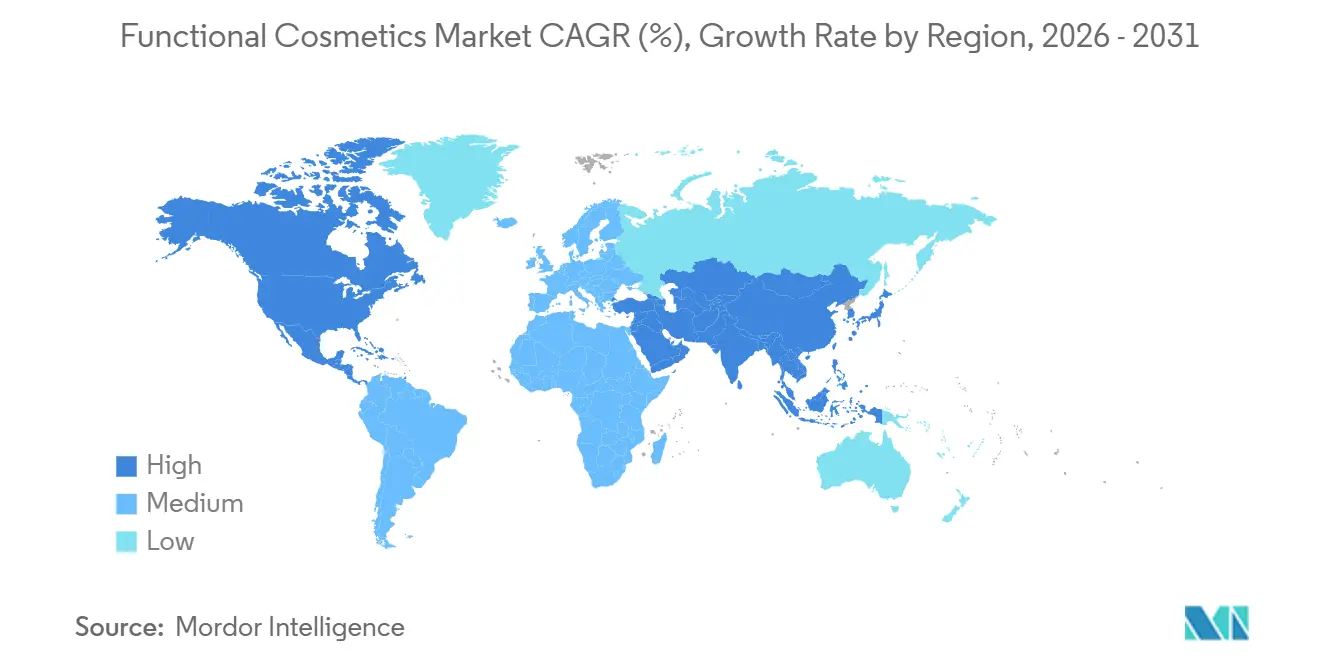
Asia-Pacific dominated the global functional cosmetics market with a 33.86% share in 2025 and is expected to remain the fastest-growing region, with a projected CAGR of 7.23% during 2026–2031. This leadership is attributed to strong consumer adoption of advanced beauty routines, rising demand for functional formulations, and ongoing innovation in ingredient-focused cosmetics. Beauty trends emphasizing prevention, skin maintenance, and multi-step care routines have driven the acceptance of products offering targeted benefits. According to the International Trade Council, South Korea exported USD 3.61 billion worth of cosmetics between January and April 2025, highlighting the region’s strength in beauty innovation and global influence [3]. The combination of evolving consumer preferences, rapid product development, and a robust beauty culture solidifies Asia-Pacific’s position as the largest and fastest-growing functional cosmetics market.
North America and Europe Functional Cosmetics Market
North America and Europe represent mature markets, supported by well-established beauty industries, high consumer awareness of active ingredients, and strong demand for science-based cosmetic formulations. Consumers in these regions are more familiar with ingredient efficacy, clinical claims, and specialized product benefits, driving the adoption of advanced functional cosmetics. The market is further influenced by a growing emphasis on transparency, safety standards, and regulatory compliance, prompting brands to invest in validated formulations and clearer product communication. Increasing interest in dermatologist-inspired products, preventive skincare, and performance-driven cosmetics continues to sustain steady demand in these developed markets.
MEA and South America Functional Cosmetics Market
South America and the Middle East and Africa are emerging as growth markets, with Brazil, Saudi Arabia, and the United Arab Emirates serving as key commercial hubs in their respective regions. Growth in these areas is fueled by increasing beauty awareness, rising adoption of modern skincare routines, and a growing preference for products offering targeted cosmetic benefits. Consumers are increasingly interested in functional beauty solutions tailored to diverse skin needs, climate conditions, and evolving lifestyle preferences. Expanding retail accessibility, stronger brand presence, and acceptance of innovative formulations are expected to drive the long-term development of the functional cosmetics market in these regions.
Competitive Landscape
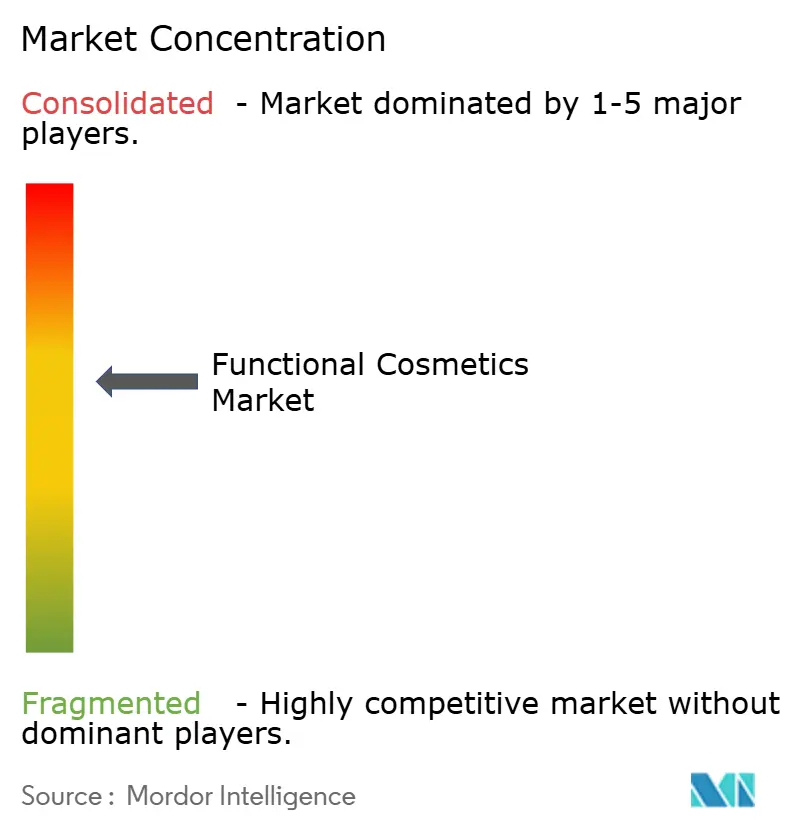
The global functional cosmetics market is moderately concentrated, with key players such as L'Oréal S.A., The Estée Lauder Companies Inc., Procter & Gamble Company, Unilever PLC, and Shiseido Company, Limited maintaining strong market positions. These companies leverage broad product portfolios, robust research capabilities, and continuous formulation innovation to sustain their competitive edge. The competition is increasingly driven by the ability to develop science-backed products with proven functionality, incorporating advanced active ingredients, enhanced delivery systems, and targeted beauty solutions. Companies are focusing on expanding product lines to meet evolving consumer demands for efficacy, personalization, and multifunctional cosmetic benefits.
Strategic acquisitions and portfolio diversification remain critical strategies for companies aiming to access high-growth categories and emerging beauty trends. Leading players are actively pursuing acquisitions of specialized brands to strengthen their capabilities in premium beauty, advanced skincare, and functional product segments. For example, L'Oréal completed the acquisition of Kering Beauté in March 2026, aligning with its strategy to enhance its presence in luxury and high-performance beauty categories. Such investments enable companies to accelerate innovation, diversify their offerings, and reinforce their competitive positioning within the functional cosmetics market.
Technology adoption has emerged as a significant differentiating factor in the functional cosmetics market. Companies are increasingly integrating AI-driven skin diagnostics, digital consultation platforms, and personalized beauty technologies to improve consumer engagement and product recommendations. The use of artificial intelligence, data analytics, and advanced research tools is enabling brands to better understand individual skincare needs and develop more targeted formulations. Additionally, investments in biotechnology-based ingredients, sustainable formulation practices, and advanced product testing capabilities are expected to play a pivotal role in shaping future competition within the market.
Functional Cosmetics Industry Leaders
-
L'Oréal S.A.
-
The Estée Lauder Companies Inc.
-
Procter and Gamble Company
-
Unilever PLC
-
Shiseido Company, Limited
- *Disclaimer: Major Players sorted in no particular order
Functional Cosmetics Market Companies Covered in this Report
- L'Oreal S.A.
- The Estee Lauder Companies Inc.
- Procter and Gamble Company
- Unilever PLC
- Shiseido Company, Limited
- Beiersdorf AG
- Kenvue Inc.
- Amorepacific Corporation
- Kao Corporation
- Colgate-Palmolive Company
- Coty Inc.
- Revlon, Inc.
- BASF SE
- Croda International Plc
- Ashland Inc.
- Evonik Industries AG
- Symrise AG
- Givaudan SA
- Clariant AG
- Seppic SA
Recent Industry Developments in Functional Cosmetics Market
- November 2025: Tira launched its first own-brand color cosmetics product designed to moisturize and plump the lips. It contains ingredients such as Hyaluronic Acid, Shea Butter, and Murumuru Butter. Formulated in Italy, the shades in Tira’s debut lip range are vegan, cruelty-free, paraben-free, and free from mineral oil.
- April 2025: SZA has introduced a high-quality functional brand, NOT BEAUTY. The launch includes three signature shades: In The Flesh, Strawberry Jelly, and Quartz. Starting this spring, the full product lineup will feature lip glosses, lip stains, lip liners, and lip creams, designed to complement her well-known layered lip combinations.
- February 2025: Korean cosmetic manufacturer Cosmax announced that the Korean Ministry of Food and Drug Safety (MFDS) has approved their functional skin-whitening ingredient, White Plussome, as a non-notified raw material. White Plussome utilizes Plussome technology, which enhances the absorption of cosmetic ingredients into the skin by leveraging natural electrical charges.
Global Functional Cosmetics Market Report Scope
Functional cosmetics are formulated with specific active ingredients to deliver measurable physiological, therapeutic, or preventive benefits. The functional cosmetics market is segmented by product type, functionality, category, distribution channel, and geography. Based on product type, the market is segmented into facial cosmetics, eye cosmetics, and lip and nail make-up products. Based on functionality, the market is segmented into anti-aging, skin brightening, moisturizing, sun protection, and others. Based on category, the market is segmented into premium and mass products. Based on distribution channel, the market is segmented into supermarkets and hypermarkets, specialty stores, online retail stores, and other distribution channels. Based on geography, the market is segmented into North America, Europe, Asia-Pacific, South America, and Middle East and Africa. The report provides market size and forecasts in both value (USD) and volume (tons) for all the mentioned segments.
| Facial Cosmetics |
| Eye Cosmetics |
| Lip and Nail Make-up Products |
| Anti-aging |
| Skin Brightening |
| Moisturizing |
| Sun Protection |
| Others |
| Premium |
| Mass |
| Supermarkets and Hypermarkets |
| Specialty Stores |
| Online Retail Stores |
| Other Distribution Channels |
| North America | United States |
| Canada | |
| Mexico | |
| Rest of North America | |
| Europe | Germany |
| United Kingdom | |
| Italy | |
| France | |
| Spain | |
| Netherlands | |
| Poland | |
| Belgium | |
| Sweden | |
| Rest of Europe | |
| Asia-Pacific | China |
| India | |
| Japan | |
| Australia | |
| Indonesia | |
| South Korea | |
| Thailand | |
| Singapore | |
| Rest of Asia-Pacific | |
| South America | Brazil |
| Argentina | |
| Colombia | |
| Chile | |
| Peru | |
| Rest of South America | |
| Middle East and Africa | South Africa |
| Saudi Arabia | |
| United Arab Emirates | |
| Nigeria | |
| Egypt | |
| Morocco | |
| Turkey | |
| Rest of Middle East and Africa |
| By Product Type | Facial Cosmetics | |
| Eye Cosmetics | ||
| Lip and Nail Make-up Products | ||
| By Functionality | Anti-aging | |
| Skin Brightening | ||
| Moisturizing | ||
| Sun Protection | ||
| Others | ||
| By Category | Premium | |
| Mass | ||
| By Distribution Channel | Supermarkets and Hypermarkets | |
| Specialty Stores | ||
| Online Retail Stores | ||
| Other Distribution Channels | ||
| By Geography | North America | United States |
| Canada | ||
| Mexico | ||
| Rest of North America | ||
| Europe | Germany | |
| United Kingdom | ||
| Italy | ||
| France | ||
| Spain | ||
| Netherlands | ||
| Poland | ||
| Belgium | ||
| Sweden | ||
| Rest of Europe | ||
| Asia-Pacific | China | |
| India | ||
| Japan | ||
| Australia | ||
| Indonesia | ||
| South Korea | ||
| Thailand | ||
| Singapore | ||
| Rest of Asia-Pacific | ||
| South America | Brazil | |
| Argentina | ||
| Colombia | ||
| Chile | ||
| Peru | ||
| Rest of South America | ||
| Middle East and Africa | South Africa | |
| Saudi Arabia | ||
| United Arab Emirates | ||
| Nigeria | ||
| Egypt | ||
| Morocco | ||
| Turkey | ||
| Rest of Middle East and Africa | ||
Key Questions Answered in the Report
What is the 2026 size of functional cosmetics?
The functional cosmetics market stands at USD 4.26 billion in 2026 and is forecast to reach USD 5.71 billion by 2031 at a 6.1% CAGR.
Which product type leads spending in this space?
Facial cosmetics led with 39.23% share in 2025 because complexion care, tone support, and barrier management remain the core use cases for daily routines.
Which functionality is expanding the fastest through 2031?
Sun protection is the fastest-growing functionality, with a projected 7.41% CAGR, as SPF is moving into everyday serums, primers, moisturizers, and hybrid formats.
Why is Asia-Pacific so important for future growth?
Asia-Pacific held 33.86% share in 2025 and is projected to grow at 7.22% CAGR, supported by strong adoption of prevention-led skin care and fast product innovation cycles.