
Europe Cosmetics Market Size and Share
Market Overview
| Study Period | 2021 - 2031 |
|---|---|
| Forecast Data Period | 2026 - 2031 |
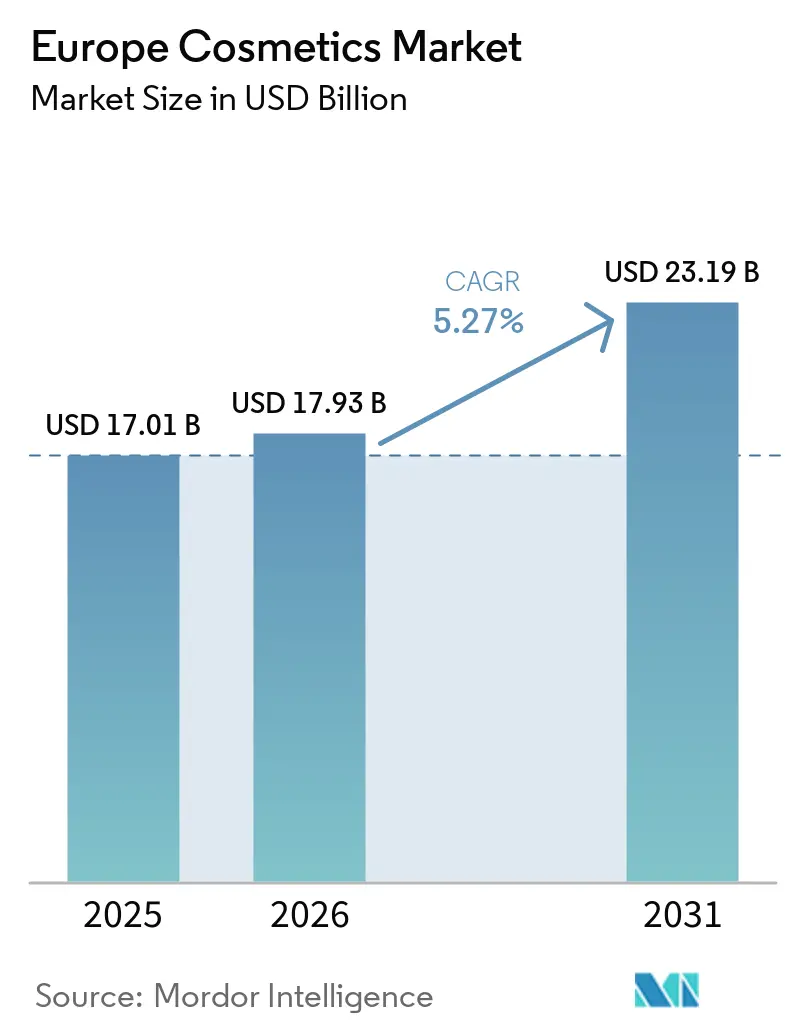
| Base Year Market Size (2025) | USD 17.01 Billion |
| Market Size (2026) | USD 17.93 Billion |
| Market Size (2031) | USD 23.19 Billion |
| Growth Rate (2026 - 2031) | 5.27 % |
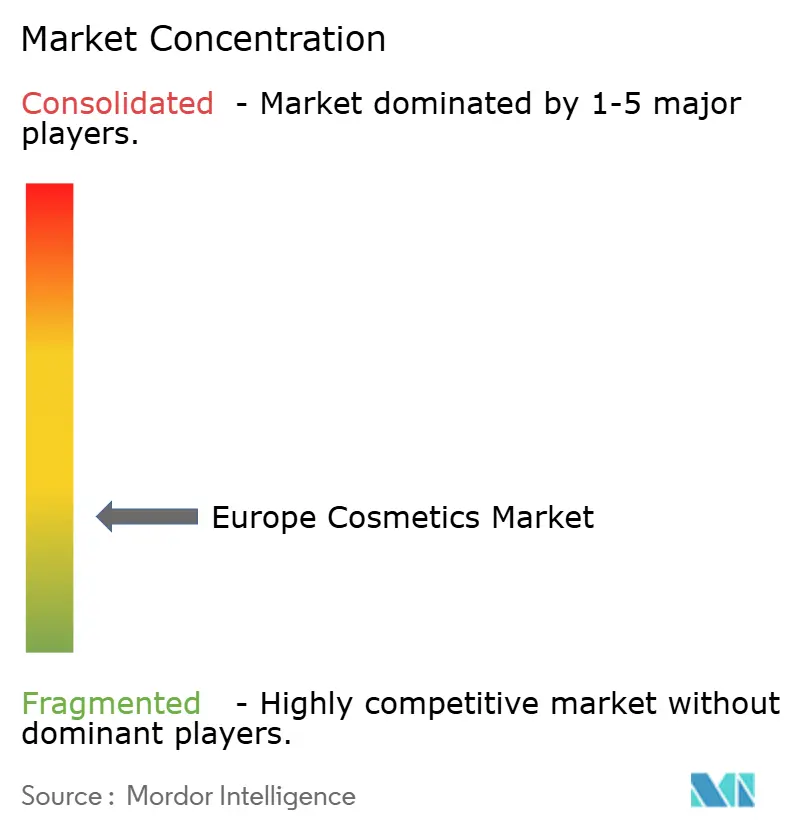
| Market Concentration | Low |
Major Players
*Disclaimer: Major Players sorted in no particular order Image © Mordor Intelligence. Reuse requires attribution under CC BY 4.0. |
|
Europe Cosmetics Market Analysis by Mordor Intelligence
The Europe cosmetics market size is expected to grow from USD 17.01 billion in 2025 to USD 17.93 billion in 2026 and is forecast to reach USD 23.19 billion by 2031 at a 5.27% CAGR over 2026-2031. This growth highlights significant changes in consumer behavior across Europe, with cosmetics increasingly viewed as tools for self-expression and identity rather than mere transactional purchases. The rising demand for clean formulations, inclusive shade ranges, and digitally personalized products is transforming cosmetics into a category associated with wellness and self-expression. These shifts have notable implications for product development timelines and retail assortment strategies.
Key Report Takeaways
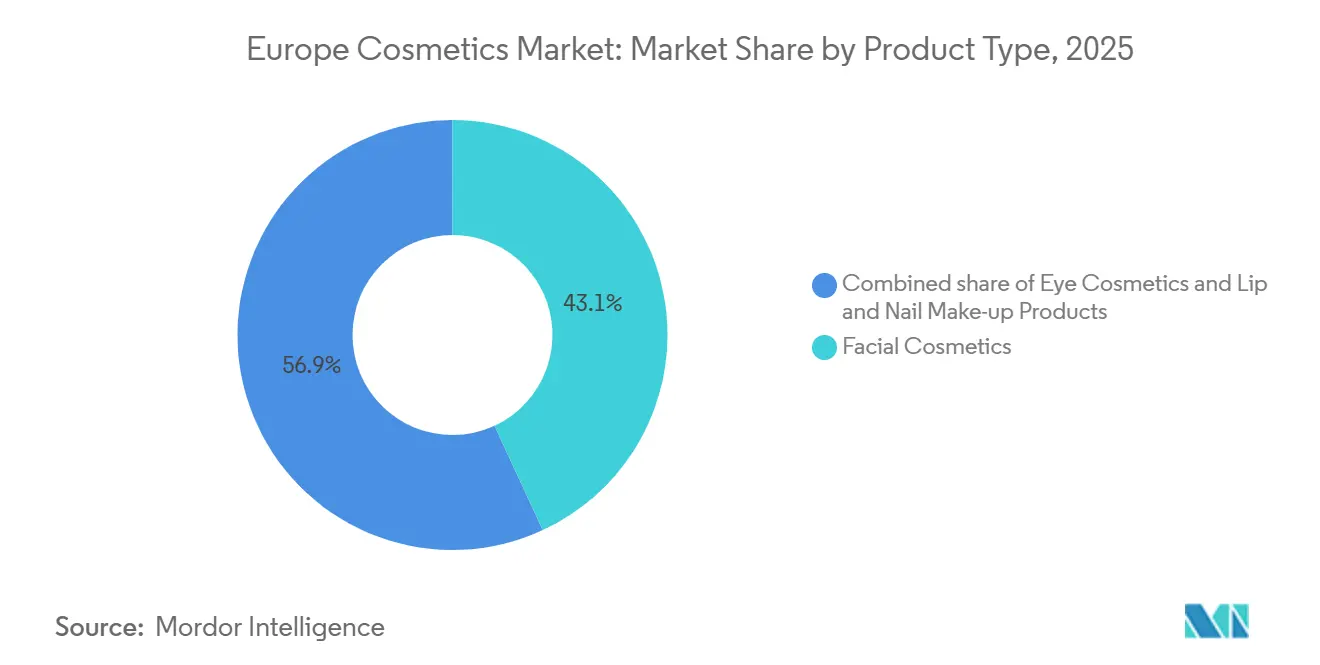
- By product type, facial cosmetics held 43.10% share in 2025, and facial cosmetics also recorded the fastest 6.05% CAGR through 2031.
- By category, mass products accounted for 68.27% share in 2025, while premium products are forecast to expand at a 6.53% CAGR through 2031.
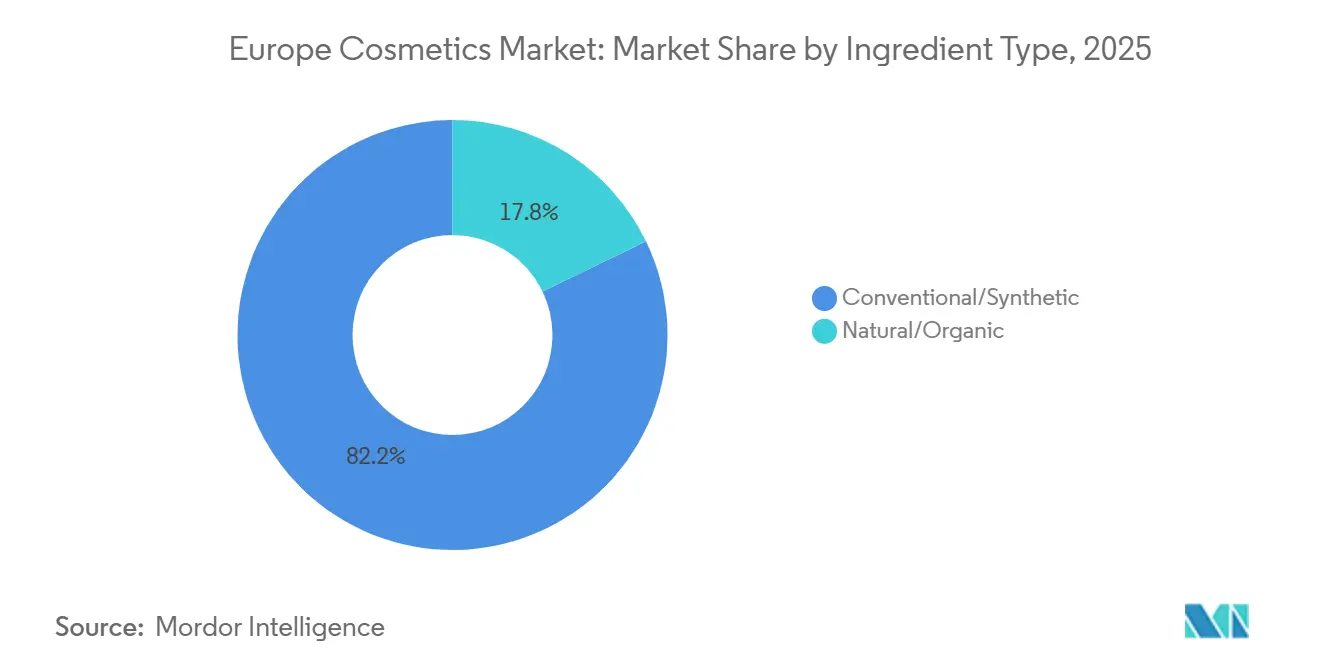
- By ingredient type, conventional/synthetic ingredients represented 82.18% share in 2025, while natural/organic formulations are projected to grow at a 6.74% CAGR through 2031.
- By distribution channel, specialty stores captured 38.73% share in 2025, while online retail stores are forecast to grow at a 7.13% CAGR through 2031.
- By geography, Germany held 15.24% of the Europe cosmetics market share in 2025, while Spain is projected to record the fastest 5.94% CAGR through 2031.
Note: Market size and forecast figures in this report are generated using Mordor Intelligence’s proprietary estimation framework, updated with the latest available data and insights as of January 2026.
Europe Cosmetics Market Trends and Insights
Drivers Impact Analysis*
| Driver | (~) % Impact on CAGR Forecast | Geographic Relevance | Impact Timeline |
|---|---|---|---|
| Growing demand for clean-label and natural cosmetics | +1.2% | Global, concentrated gains in France, Germany, and Benelux | Medium term (2-4 years) |
| Growing popularity of multifunctional beauty products | +1.0% | Global, strongest in Western Europe | Medium term (2-4 years) |
| Increasing influence of social media and beauty content creators | +0.9% | Global, early gains in United Kingdom, Spain, and France | Short term (≤ 2 years) |
| Increasing demand for inclusive and gender-neutral beauty products | +0.7% | National, early gains in Switzerland, Germany, France | Long term (≥ 4 years) |
| Expansion of personalized and skin-specific beauty solutions | +0.6% | Global, concentration in United Kingdom and Netherlands | Medium term (2-4 years) |
| Innovation in cosmetic formulations and beauty technology | +0.5% | Global, R&D concentration in France and Italy | Long term (≥ 4 years) |
| Source: Mordor Intelligence | |||
Growing demand for clean-label and natural cosmetics
The European cosmetics market is experiencing significant growth driven by increasing demand for clean-label and natural cosmetics among health-conscious and environmentally aware consumers. Consumers in the region are paying closer attention to ingredient lists, favoring products made with plant-based extracts, organic components, and claims such as paraben-free, sulfate-free, silicone-free, and cruelty-free. This trend is particularly prominent in the skincare, haircare, and color cosmetics segments, where transparency, product safety, and sustainability are key priorities. Additionally, stringent European regulations on chemical usage in cosmetic formulations are prompting manufacturers to use naturally derived and minimally processed ingredients. Major beauty brands are expanding their product offerings to include vegan, eco-friendly, and sustainably packaged options, aligning with changing consumer preferences and further driving growth in the European cosmetics market.
Growing popularity of multifunctional beauty products
The Europe cosmetics market is primarily driven by the increasing demand for multifunctional beauty products that offer multiple benefits in a single formulation. Consumers in the region are prioritizing convenience and efficiency, seeking products that streamline daily beauty routines while providing enhanced functionality. This has led to a rise in demand for items such as BB and CC creams with skincare benefits, moisturizers with SPF, anti-aging foundations, and hybrid makeup-skincare solutions. Urban consumers with fast-paced lifestyles and a growing preference for minimalist beauty routines are particularly drawn to all-in-one products that provide hydration, sun protection, coverage, and skin nourishment. Additionally, manufacturers are focusing on innovation by integrating active ingredients, vitamins, and botanical extracts into these multifunctional products, further enhancing their appeal and driving the growth of the Europe cosmetics market.
Increasing influence of social media and beauty content creators
The Europe cosmetics market is witnessing significant growth, driven by the increasing impact of social media platforms and beauty content creators on consumer purchasing behavior. Influencers, skincare specialists, and makeup artists on platforms like Instagram, TikTok, and YouTube are playing a key role in shaping beauty trends, enhancing product awareness, and fostering brand engagement across the region. Younger demographics, in particular, are increasingly turning to digital content, tutorials, product reviews, and influencer recommendations to guide their purchasing decisions. According to Eurostat, 89.3% of individuals aged 16–29 in the European Union reported using social media in 2025, highlighting the prevalence of digital engagement among young Europeans[1]Source: Eurostat, "89% of 16-29-year-olds used socials in 2025," ec.europa.eu. This trend is enabling cosmetic brands to enhance direct consumer interaction, execute viral marketing campaigns, and promote new product innovations effectively. Furthermore, the rising popularity of short-form beauty content and personalized skincare recommendations is boosting demand for premium, trend-focused, and visually appealing cosmetic products, thereby contributing to the growth of the Europe cosmetics market.
Increasing demand for inclusive and gender-neutral beauty products
The Europe cosmetics market is driven by the rising demand for inclusive and gender-neutral beauty products, as consumers increasingly prefer brands that reflect diversity, individuality, and evolving beauty standards. Consumers across Europe are shifting away from traditional gender-specific beauty categories, opting for products suitable for all skin types, tones, identities, and personal preferences. This trend has prompted cosmetic manufacturers to broaden shade ranges, create universal skincare and grooming products, and implement inclusive marketing strategies to appeal to a wider audience. Additionally, younger consumers are prioritizing authenticity, representation, and self-expression, leading brands to adopt gender-neutral packaging, minimalist product designs, and inclusive advertising campaigns. The growing acceptance of personalized beauty and non-binary grooming trends is driving innovation in skincare, makeup, haircare, and fragrance segments, contributing to the continued growth of the Europe cosmetics market.
Restraints Impact Analysis*
| Restraint | (~) % Impact on CAGR Forecast | Geographic Relevance | Impact Timeline |
|---|---|---|---|
| Stringent Cosmetic Regulations and Compliance Requirements | -0.9% | Concentrated impact in European Union member states and United Kingdom post-Brexit | Medium term (2-4 years) |
| Proliferation of Counterfeit Cosmetics | -0.7% | High prevalence in Southern and Eastern Europe | Short term (≤ 2 years) |
| Growing Concerns Regarding Harmful Ingredients and Chemical Safety | -0.5% | Global | Medium term (2-4 years) |
| Complexity of Cross-Border Regulatory Differences Within Europe | -0.4% | European Union-United Kingdom corridor and accession states | Long term (≥ 4 years) |
| Source: Mordor Intelligence | |||
Stringent cosmetic regulations and compliance requirements
The European cosmetics market encounters notable challenges due to stringent regulations and complex compliance requirements enforced by regional regulatory authorities. Manufacturers in the region must comply with strict safety assessments, ingredient restrictions, labeling standards, and product testing procedures outlined in the European Union’s regulatory framework. Frequent updates to these regulations increase compliance costs and pose operational challenges, particularly for small and medium-sized enterprises. For example, Commission Regulation (EU) 2026/78, issued on 12 January 2026, amended Regulation (EC) No 1223/2009 to address the use of substances classified as carcinogenic, mutagenic, or toxic for reproduction in cosmetic products[2]Source: EUR-Lex, "Regulation - EU - 2026/78 - EN - EUR-Lex," eur-lex.europa.eu. Such regulatory changes compel companies to reformulate products, reassess ingredient safety, and adjust production processes to retain market authorization. Furthermore, extended approval timelines and rising expenditures on regulatory documentation, testing, and quality assurance can delay product launches and hinder innovation, thereby constraining the growth of the European cosmetics market.
Proliferation of counterfeit cosmetics
The Europe cosmetics market faces challenges due to the increasing prevalence of counterfeit cosmetics and personal care products across both online and offline distribution channels. The widespread circulation of fake beauty products raises significant concerns regarding consumer safety, brand reputation, and market competitiveness. Counterfeit products often contain substandard or harmful ingredients that do not meet European safety standards. The growth of e-commerce platforms and unauthorized third-party sellers has further facilitated the availability of imitation cosmetics, complicating efforts for consumers to differentiate between genuine and counterfeit products. According to European Union authorities, cosmetics and perfumes represented 3.04% of counterfeit products seized across the EU in 2024, underscoring the magnitude of the issue within the beauty industry[3]Source: European Union Intellectual Property Office, "European Union seizes 112 million counterfeit items worth €3.8 billion in 2024," euipo.europa.eu. Beyond financial losses for established brands, counterfeit products erode consumer trust and pose challenges for premium cosmetic manufacturers in maintaining product authenticity and brand loyalty. Consequently, the rising incidence of counterfeit cosmetics continues to impede the growth potential of the Europe cosmetics market.
*Our forecasts treat driver/restraint impacts as directional, not additive. The impact forecasts reflect baseline growth, mix effects, and variable interactions.
Segment Analysis
By Product Type: Facial Cosmetics Anchors Value and Growth
Facial cosmetics accounted for a 43.10% share of the Europe cosmetics market in 2025 and are projected to be the fastest-growing product category with a 6.05% CAGR for 2026–2031. The growth of facial cosmetics in Europe is primarily driven by increasing consumer interest in skincare-enhanced beauty products, rising demand for flawless complexion solutions, and the growing popularity of premium makeup formulations. Consumers are increasingly seeking products such as foundations, concealers, primers, blushes, and highlighters that offer both aesthetic appeal and skincare benefits, including hydration, anti-aging properties, sun protection, and skin nourishment. The influence of beauty influencers, digital tutorials, and social media trends is encouraging experimentation with contouring, highlighting, and complexion-enhancing products. Additionally, the demand for clean-label, vegan, and dermatologically tested formulations is prompting manufacturers to develop innovative products featuring natural ingredients and lightweight textures. The expansion of personalized beauty solutions, wider shade inclusivity, and the growing adoption of multifunctional products like BB creams and serum foundations are further supporting the growth of facial cosmetics in the Europe cosmetics market.
Lip and nail make-up products in the Europe cosmetics market are experiencing growth due to evolving fashion trends, increased consumer interest in self-expression, and rising demand for long-lasting, premium-quality beauty products. Popular items such as lipsticks, lip glosses, lip tints, nail polishes, and nail art products are being used by consumers to enhance personal style and individuality. Social media platforms, celebrity beauty trends, and seasonal fashion collections continue to drive demand for new shades, textures, and finishes in the lip and nail categories. The rising popularity of at-home beauty and nail care routines has further accelerated the adoption of easy-to-use, salon-inspired nail products. Consumers are increasingly favoring transfer-resistant lip products, breathable nail formulations, vegan ingredients, and toxin-free nail polishes, reflecting growing health and sustainability awareness. Moreover, continuous product innovation, including gel-based nail systems, moisturizing lip formulations, and customizable color ranges, is contributing to the expansion of lip and nail make-up products in the Europe cosmetics market.



By Category: Premium Accelerates as Mass Brands Narrow the Quality Gap
The mass products category accounted for a significant 68.27% market share in 2025, driven by strong consumer demand for affordable, accessible, and trend-oriented beauty products catering to a broad demographic. Consumers increasingly favor mass-market cosmetics due to their availability in supermarkets, drugstores, hypermarkets, and online retail platforms, ensuring easy access for everyday use. Frequent product launches, influencer-led promotions, and quick adaptation to evolving beauty trends are enhancing consumer engagement in this segment. Additionally, manufacturers are offering high-quality formulations, clean-label ingredients, and multifunctional benefits at competitive prices, reducing the perceived gap between mass and premium products. The rising popularity of affordable skincare-infused makeup, vegan formulations, and inclusive shade ranges is further boosting interest in mass cosmetics. Younger consumers and first-time makeup users are also driving sales by seeking budget-friendly products that align with current fashion and social media trends, thereby supporting the growth of the mass cosmetics segment in Europe.
The premium products segment is projected to grow at a 6.53% CAGR during 2026–2031, fueled by increasing consumer preference for high-performance beauty products, luxury brand experiences, and advanced skincare formulations. Consumers in the region are showing a greater willingness to invest in premium cosmetics that deliver superior quality, long-lasting performance, scientifically backed ingredients, and exclusive packaging. The rising demand for personalized beauty solutions, anti-aging products, and dermatologist-tested formulations has significantly boosted interest in premium skincare and makeup. Luxury cosmetic brands are also benefiting from heightened consumer awareness of ingredient transparency, sustainability, and product efficacy, driving the adoption of organic, cruelty-free, and clinically formulated premium cosmetics. Social media influence, celebrity endorsements, and beauty influencer marketing are further encouraging aspirational purchasing behavior among consumers seeking prestige beauty products. Additionally, the expansion of luxury retail stores, premium e-commerce platforms, and travel retail channels is improving access to high-end cosmetic brands, contributing to the growth of the premium cosmetics segment across Europe.
By Ingredient Type: Regulatory Pressure Accelerates Natural Reformulation
Conventional or synthetic ingredients are projected to account for 82.18% of ingredient usage in 2025. This dominance is attributed to their strong product performance, extended shelf life, broad availability, and cost-effective manufacturing processes. Consumers continue to favor synthetic cosmetic formulations due to their ability to provide consistent texture, enhanced pigmentation, long-lasting wear, and advanced functional benefits across color cosmetics categories. Additionally, synthetic ingredients enable the development of specialized formulations, such as waterproof makeup, transfer-resistant lip products, anti-aging creams, and high-coverage foundations, offering improved stability and durability. Large-scale production capabilities and established distribution networks further ensure that conventional cosmetics remain competitively priced and widely accessible through supermarkets, drugstores, specialty stores, and online platforms. Continuous advancements in cosmetic chemistry, including the creation of innovative active ingredients and sensory-enhancing formulations, sustain consumer demand for synthetic cosmetics in Europe. Furthermore, the strong presence of established international beauty brands and frequent product launches continue to bolster the growth of the conventional cosmetics segment in the region.
Natural and organic formulations are expected to grow at a compound annual growth rate (CAGR) of 6.74% during 2026–2031. This growth is driven by increasing consumer awareness of ingredient safety, environmental sustainability, and clean beauty trends. European consumers are increasingly opting for cosmetic products made with plant-based, organically sourced, and minimally processed ingredients due to concerns about synthetic chemicals and their potential long-term effects on skin health. The rising demand for vegan, cruelty-free, paraben-free, and eco-friendly beauty products is prompting cosmetic companies to expand their natural and organic product offerings. Stringent European regulations emphasizing ingredient transparency and sustainability are further encouraging the adoption of certified organic and naturally derived formulations. Additionally, social media influence, wellness-oriented lifestyles, and a growing preference for holistic skincare routines are driving interest in botanical extracts, essential oils, and herbal cosmetic products. Innovations in sustainable packaging, ethical sourcing practices, and biodegradable formulations are also enhancing consumer trust and accelerating the growth of natural and organic cosmetics in the European market.
By Distribution Channel: Specialty Retains Share, Digital Reshapes Discovery
Specialty stores accounted for the largest distribution share at 38.73% in 2025, driven by consumers' preference for personalized shopping experiences, expert beauty guidance, and access to premium and exclusive product ranges. These retailers attract customers by offering curated selections of skincare, makeup, haircare, and fragrance products from both established luxury brands and emerging niche companies. The presence of trained beauty consultants, opportunities for product testing, skin analysis services, and customized recommendations enhances consumer confidence and encourages higher-value purchases. Additionally, specialty stores frequently introduce limited-edition collections, new product launches, and experiential retail concepts, which strengthen customer engagement and brand loyalty. Consumers view specialty beauty retailers as reliable sources for authentic, high-quality, and dermatologically tested cosmetic products, particularly in the premium and clean beauty segments. The growing demand for personalized beauty solutions, prestige cosmetics, and in-store experiential shopping continues to support robust cosmetic sales through specialty stores across Europe.
Online retail stores are projected to grow at a 7.13% CAGR from 2026 to 2031, driven by increasing digital adoption, convenience-focused shopping behavior, and the influence of social media and e-commerce marketing strategies. Consumers across Europe are increasingly purchasing cosmetics online due to the ease of comparing products, accessing detailed ingredient information, reading customer reviews, and benefiting from home delivery services. The rapid growth of direct-to-consumer beauty brands, online-exclusive product launches, and subscription-based beauty services has further accelerated online cosmetic sales. Moreover, beauty influencers, virtual makeup tutorials, live-stream shopping events, and targeted digital advertising are significantly shaping online purchasing decisions, particularly among younger consumers. Technological advancements such as virtual try-on tools, AI-powered skincare recommendations, and personalized product suggestions are enhancing the online shopping experience and boosting consumer confidence in purchasing beauty products digitally. Additionally, the availability of discounts, loyalty programs, and broader product assortments compared to physical retail stores continues to drive the growth of online cosmetic sales in the European cosmetics market.
Geography Analysis
Germany held a 15.24% share of the European cosmetics market in 2025, driven by consumer preference for high-quality, safe, and scientifically formulated beauty products, alongside growing demand for sustainable and clean-label cosmetics. German consumers prioritize ingredient transparency, dermatologically tested formulations, and environmentally responsible products, fueling the demand for natural, organic, and vegan cosmetics across skincare, haircare, and color cosmetics categories. The country's advanced retail infrastructure, including drugstores, specialty beauty chains, pharmacies, and e-commerce platforms, ensures easy product accessibility and strong market penetration. Additionally, the rising interest in skincare-focused beauty routines, anti-aging products, and multifunctional cosmetics is fostering continuous product innovation among manufacturers. Social media influence, increasing male grooming trends, and the growing adoption of premium beauty products are further contributing to the expansion of cosmetic sales in Germany.
Spain is expected to be the fastest-growing individual market, with a 5.94% CAGR from 2026 to 2031. This growth is driven by rising beauty consciousness, increasing demand for sun-care and skincare products, and the influence of fashion and lifestyle trends. Spanish consumers are increasingly focused on personal grooming, skincare maintenance, and appearance-enhancing products, influenced by the country's beauty-oriented culture and strong social engagement trends. The warm climate in many regions of Spain drives higher demand for sun protection cosmetic products and lightweight makeup. Furthermore, the growing impact of social media platforms, beauty influencers, and celebrity-driven trends is encouraging younger consumers to experiment with makeup. Tourism growth, expanding online beauty retail channels, and the increasing availability of international cosmetic brands are also supporting market growth. The rising preference for premium beauty products, clean-label cosmetics, and personalized solutions further accelerates the expansion of the cosmetics market in Spain.
Cosmetic sales in the United Kingdom, France, and Italy are driven by robust beauty and fashion industries, high consumer awareness of personal care, and ongoing product innovation across premium and mass-market segments. In the United Kingdom, digital beauty trends, influencer marketing, and the rapid growth of e-commerce platforms are shaping purchasing behavior, particularly among younger consumers seeking trend-driven and multifunctional products. France remains a hub for luxury beauty innovation, with consumers favoring premium cosmetics, supported by the presence of globally recognized beauty brands. In Italy, the market is influenced by fashion-conscious consumers, growing interest in premium makeup products, and increasing demand for natural and sustainable cosmetics. Across these three countries, rising demand for clean-label formulations, inclusive beauty products, and personalized makeup routines continues to drive growth. Additionally, strong retail networks, expanding online distribution channels, and continuous investment in product development are further supporting the cosmetics market in the United Kingdom, France, and Italy.
Competitive Landscape
The Europe cosmetics market is a fragmented market, marked by the presence of numerous international, regional, and niche beauty brands competing across both mass-market and premium product categories. The market is evolving rapidly as emerging and mid-sized companies challenge established players with trend-focused product portfolios, agile marketing strategies, and strong digital engagement. Brands offering affordable color cosmetics, skincare-infused makeup, and products aligned with social media-driven beauty trends are gaining significant traction, particularly among younger consumers. The influence of fast-moving beauty trends and the rise of direct-to-consumer business models have diminished the traditional advantage of retail-heavy cosmetic companies, fostering a more dynamic and innovation-driven competitive environment.
Competition in the market increasingly revolves around premium product expansion, digital transformation, and sustainability-focused product development. Cosmetic manufacturers are enhancing their portfolios through acquisitions, strategic collaborations, and investments in high-growth segments such as dermocosmetics and clean beauty. Additionally, companies are expanding their e-commerce capabilities and leveraging artificial intelligence technologies to improve online consumer experiences, offer personalized recommendations, and enable virtual product testing. The growing emphasis on ingredient transparency, eco-friendly packaging, vegan formulations, and regulatory compliance across Europe is prompting brands to invest in sustainable sourcing practices and environmentally responsible product innovation to maintain long-term competitiveness.
The Europe cosmetics market offers significant growth opportunities in personalized beauty solutions and gender-neutral cosmetic products, where competition remains relatively fragmented, and innovation potential is high. Increasing consumer demand for customized makeup, AI-powered shade matching, and personalized cosmetic formulations is driving investments in advanced beauty technology platforms and data-driven consumer solutions. Simultaneously, the rising acceptance of inclusive and gender-neutral beauty concepts is reshaping product development and marketing strategies across various cosmetic categories. Furthermore, advancements in biotechnology, microbiome-compatible formulations, and bio-fermented cosmetic ingredients are emerging as critical innovation areas expected to shape future product launches and competitive positioning in the European cosmetics industry.
Europe Cosmetics Industry Leaders
-
L'Oréal
-
Unilever
-
Beiersdorf
-
Coty
-
The Estée Lauder Companies
- *Disclaimer: Major Players sorted in no particular order

Recent Industry Developments
- May 2026: Coty introduced an AI-powered platform for color cosmetics, aimed at providing color-matching and formulation recommendations. This initiative seeks to minimize online purchase errors and returns across European e-commerce channels, addressing a common challenge that affects brand equity in digital-first purchasing.
- March 2026: IL Cosmetics launched a new portfolio of ready-to-market cosmetic solutions at Cosmoprof Bologna, emphasizing advanced formulations, expedited product commercialization, and cross-category beauty innovation. The company showcased developments in nails, complexion, lips, and eye cosmetics, including a damage-free gel polish system, AI-supported formulation concepts, skincare-inspired nail care products, and hybrid complexion technologies.
- March 2026: Larens launched new clean beauty makeup sets featuring skincare-inspired formulations that combine cosmetic performance with skin nourishment. The newly introduced product lines include matte and glow-focused makeup kits, comprising liquid foundations, concealers, and translucent powders designed for various skin finishes and preferences. These launches address the growing consumer demand for lightweight, skin-friendly, and multifunctional cosmetics that provide both aesthetic enhancement and skincare benefits.


Europe Cosmetics Market Report Scope
| Facial Cosmetics |
| Eye Cosmetics |
| Lip and Nail Make-up Products |
| Premium Products |
| Mass Products |
| Natural/Organic |
| Conventional/Synthetic |
| Specialty Stores |
| Supermarkets/Hypermarkets |
| Online Retail Stores |
| Other Channels |
| Germany |
| United Kingdom |
| France |
| Italy |
| Spain |
| Russia |
| Netherlands |
| Switzerland |
| Belgium |
| Rest of Europe |
| By Product Type | Facial Cosmetics |
| Eye Cosmetics | |
| Lip and Nail Make-up Products | |
| By Category | Premium Products |
| Mass Products | |
| By Ingredient Type | Natural/Organic |
| Conventional/Synthetic | |
| By Distribution Channel | Specialty Stores |
| Supermarkets/Hypermarkets | |
| Online Retail Stores | |
| Other Channels | |
| By Country | Germany |
| United Kingdom | |
| France | |
| Italy | |
| Spain | |
| Russia | |
| Netherlands | |
| Switzerland | |
| Belgium | |
| Rest of Europe |


Key Questions Answered in the Report
What is the forecast value of the Europe cosmetics market by 2031?
The Europe cosmetics market is forecast to reach USD 23.19 billion by 2031, rising from USD 17.93 billion in 2026 at a 5.27% CAGR.
Which product type leads cosmetics sales in Europe?
Facial cosmetics led with 43.10% share in 2025 and are also projected to be the fastest-growing product type at a 6.05% CAGR through 2031.
Why are premium cosmetics growing faster than mass products in Europe?
Premium products are projected to grow at 6.53% CAGR as consumers are concentrating spending on fewer and higher-quality purchases.
Which country is growing fastest in European cosmetics?
Spain is the fastest-growing geography with a 5.94% CAGR through 2031, supported by a younger consumer base and a beauty sector.
Page last updated on:





