
Construction Silicone Sealant Market Size and Share
Market Overview
| Study Period | 2021 - 2031 |
|---|---|
| Market Size (2026) | USD 4.72 Billion |
| Market Size (2031) | USD 6.06 Billion |
| Growth Rate (2026 - 2031) | 5.12 % |
| Fastest Growing Market | Asia Pacific |
| Largest Market | Asia Pacific |
| Market Concentration | Medium |
Major Players *Disclaimer: Major Players sorted in no particular order Image © Mordor Intelligence. Reuse requires attribution under CC BY 4.0. | |
Construction Silicone Sealant Market Analysis by Mordor Intelligence
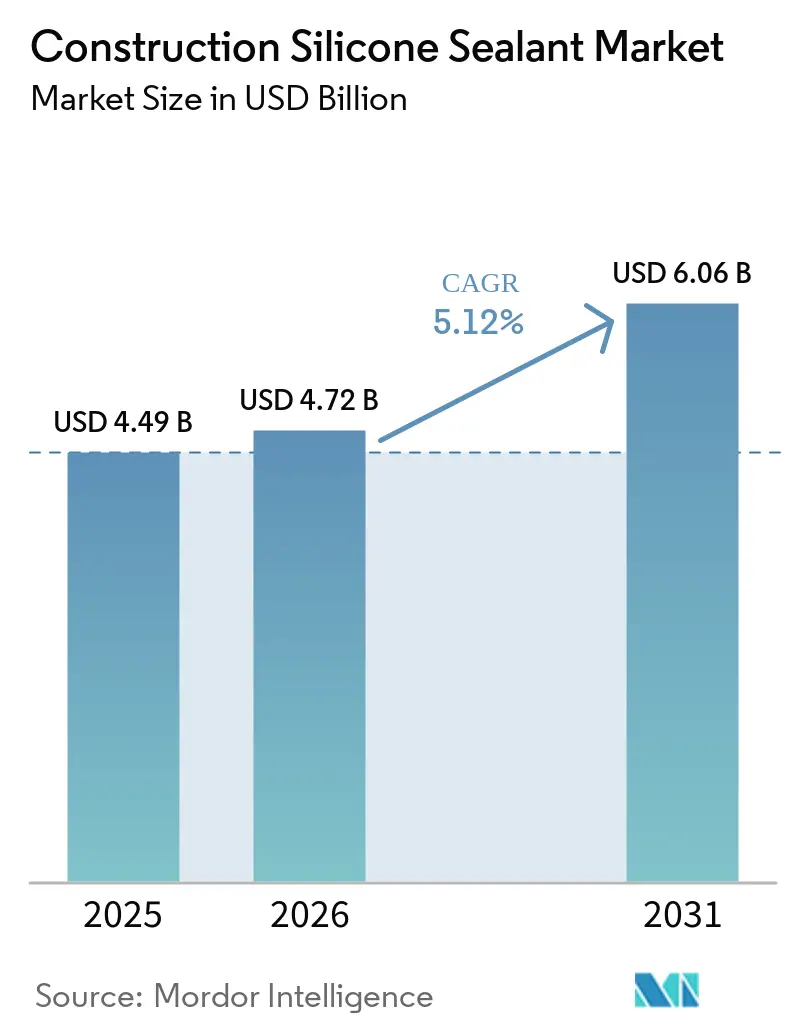
The Construction Silicone Sealant Market size is expected to increase from USD 4.49 billion in 2025 to USD 4.72 billion in 2026 and reach USD 6.06 billion by 2031, growing at a CAGR of 5.12% over 2026-2031. Expanding infrastructure budgets, the increasing adoption of unitized curtain-wall systems, and stricter fire-safety provisions in building codes are driving demand beyond global GDP growth. The industry's transition toward prefabricated façades is reducing project timelines and raising technical requirements for elastic modulus. This trend is directing specifications toward high-performance sealants designed to accommodate significant joint movements. Additionally, silicone manufacturers are differentiating their offerings by providing products with verified product carbon footprint (PCF) labels, which support architects in meeting green-building standards under frameworks such as Leadership in Energy and Environmental Design (LEED) v4.1. However, fluctuations in raw materials like dimethyldichlorosilane (DMC) and fumed silica are impacting margins for formulators, leading to increased consolidation and selective price adjustments by integrated multinational companies. While alternatives such as polyurethane and acrylics are gaining traction in lower-specification projects, silicone's durability in weather-exposed joints continues to support its value proposition, particularly in commercial high-rise and infrastructure projects.
Key Report Takeaways
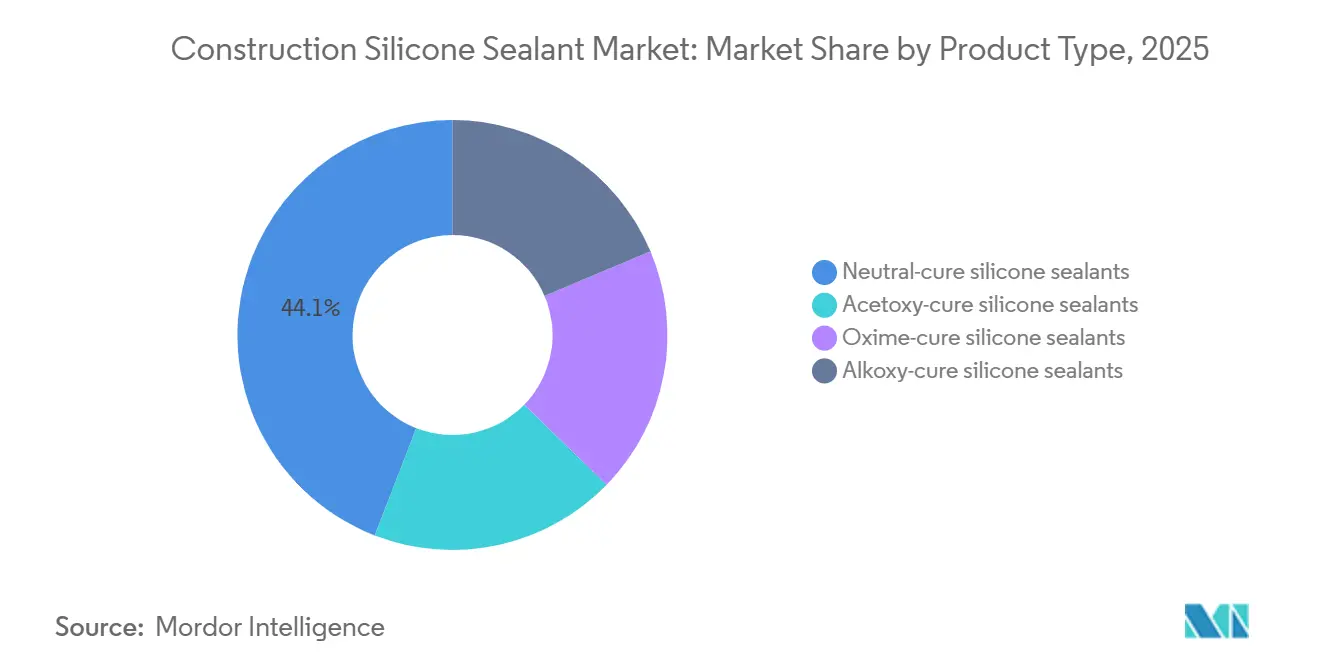
- By product type, neutral-cure formulations led with 44.11% of the construction silicone sealant market share in 2025, while acetoxy-cure variants are advancing at a 5.66% CAGR through 2031.
- By application, glazing and weatherproofing accounted for 38.89% of the construction silicone sealant market size in 2025, whereas fire-resistant uses are forecast to grow at a 5.72% CAGR to 2031.
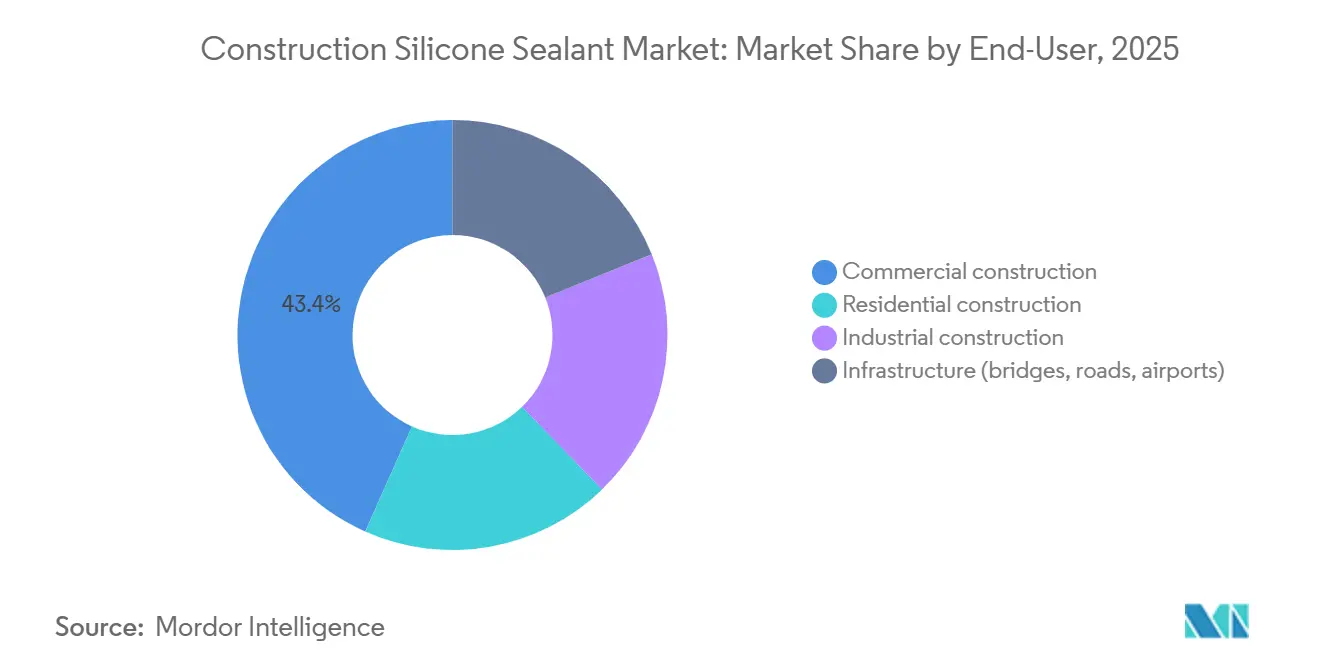
- By end-user, commercial construction held 43.35% revenue share in 2025; infrastructure projects are poised for the fastest 6.03% CAGR during 2026-2031.
- By geography, Asia-Pacific commanded 46.78% share of the construction silicone sealant market in 2025 and is expanding at a leading 6.11% CAGR over the forecast horizon.
Note: Market size and forecast figures in this report are generated using Mordor Intelligence’s proprietary estimation framework, updated with the latest available data and insights as of January 2026.
Market Trends and Insights
Drivers Impact Analysis of Construction Silicone Sealant Market*
| Drivers | (~) % Impact on CAGR Forecast | Geographic Relevance | Impact Timeline |
|---|---|---|---|
| Rising demand from residential and commercial construction | +1.4% | Global, with APAC and Middle East leading | Medium term (2-4 years) |
| Infrastructure boom in emerging economies | +1.8% | APAC core (China, India, ASEAN), spill-over to Middle East and Africa | Long term (≥ 4 years) |
| Growing use in green buildings and sustainable architecture | +0.9% | North America and EU, expanding to APAC urban centers | Medium term (2-4 years) |
| Surge in unitized curtain-wall adoption (high-movement joints) | +0.7% | Global, concentrated in commercial high-rise markets | Short term (≤ 2 years) |
| 3-D-printed prefab façade components needing specialist sealants | +0.3% | EU and North America pilot projects, early APAC adoption | Long term (≥ 4 years) |
| Source: Mordor Intelligence | |||
Rising Demand from Residential and Commercial Construction
In 2026, new office fit-out costs in the United States reached USD 149 per square foot, reflecting a 5.5% increase from 2025[1]Marcus & Millichap, “U.S. Office Market Report 2026,” marcusmillichap.com. This rise is driving developers to adopt longer-life sealants to reduce maintenance schedules. In China, prefabrication mandates are directing high-movement joints into factory environments, where neutral-cure silicones are predominantly used. Homeowners in tier-1 Asian cities are selecting low-odor products that resist substrate staining, a feature not commonly found in lower-cost acrylics. As labor markets tighten, project managers are focusing on total installed costs rather than just material prices. These factors collectively enhance silicone’s positioning in premium residential towers and Grade-A commercial spaces.
Infrastructure Boom in Emerging Economies
India’s Noida International Airport and Delhi Metro Phase V(A) represent a combined civil expenditure exceeding USD 2.7 billion, requiring sealants certified for ±25% movement and higher fire ratings. Similarly, expansions at Saudi Arabia’s King Salman International and Dubai’s Al Maktoum airports, with a combined value exceeding USD 64 billion, demand UV-stable, sand-resistant silicone joints to withstand extreme desert conditions. These large-scale projects provide multi-year opportunities for suppliers capable of ensuring batch consistency and offering on-site technical support. Additionally, extended design lead times benefit manufacturers that mitigate raw-material price volatility through backward integration or long-term silicon-metal contracts.
Growing Use in Green Buildings and Sustainable Architecture
Architectural sealants are increasingly regulated, with Leadership in Energy and Environmental Design (LEED) version 4.1 capping volatile organic compound (VOC) levels at 100 grams per liter (g/L), a standard met by neutral- and alkoxy-cure chemistries. In Europe, the Corporate Sustainability Reporting Directive (CSRD) requires contractors to report Scope 3 emissions, encouraging the adoption of carbon-neutral solutions such as Dow’s bio-attributed siloxane service, launched in China in March 2025. Sika’s Carbon Compass platform facilitates life-cycle assessments, aiding projects in qualifying for green-finance tax incentives[2]Sika AG, “Acquisition of Akkim Closed,” sika.com . Surveys indicate that certified buildings achieve higher tenant lease rates, driving demand for premium, low-emission sealants.
Surge in Unitized Curtain-Wall Adoption (High-Movement Joints)
Unitized systems reduce on-site labor by nearly 40% for towers over 30 stories, promoting the use of factory-applied structural silicone glazing that complies with European Technical Approval Guidelines (ETAG) 002 strength standards. Wacker’s ETAG-approved ELASTOSIL holds over 60% market share in European super-tall projects, highlighting its technical advantages. The Asia-Pacific region is experiencing faster growth, with China’s curtain-wall spending increasing at a double-digit rate. Since structural loads are transferred through the sealant, alternatives like polyurethane do not meet the required elongation-at-break standards, maintaining silicone’s market preference.
Restraints Impact Analysis of Construction Silicone Sealant Market*
| Restraints | (~) % Impact on CAGR Forecast | Geographic Relevance | Impact Timeline |
|---|---|---|---|
| Volatility in silicone and additive raw-material prices | -0.8% | Global, acute in regions dependent on Chinese DMC exports | Short term (≤ 2 years) |
| Competition from acrylic / polyurethane / polysulfide substitutes | -0.5% | Price-sensitive residential markets in South America, Southeast Asia | Medium term (2-4 years) |
| Scrutiny of micro-plastic shedding in sensitive watersheds | -0.2% | EU and North America coastal zones, expanding to APAC urban areas | Long term (≥ 4 years) |
| Source: Mordor Intelligence | |||
Volatility in Silicone and Additive Raw-Material Prices
In Q1 2026, prices for Dimethyldichlorosilane increased by 28% year-on-year, driven by outages at Chinese chlor-alkali units and higher tariffs on silicon metal. This price rise has impacted formulators reliant on spot market purchases. Additionally, shortages in fumed silica extended lead times from four to twelve weeks in late 2025. This situation benefited vertically integrated companies while creating challenges for small-batch contractors. In response to these market conditions, Wacker announced a mid-single-digit price increase in April 2026. Concurrently, Dow shifted its siloxane production from high-cost Europe to other regions to maintain competitiveness. These market dynamics introduce uncertainties in project budgeting and may lead to a shift toward more cost-effective chemistries when project specifications allow.
Competition from Acrylic, Polyurethane, and Polysulfide Substitutes
Acrylic latex sealants, priced at approximately half the cost of neutral-cure silicone, are widely used for interior trims in U.S. single-family homes. Polyurethanes are commonly used for horizontal concrete joints in parking decks due to their strong adhesion, while polysulfides retain a niche presence in insulating-glass units across Southeast Asia alongside Silicone adhesives and sealants. A survey conducted in 2025 revealed that 62% of contractors specify acrylics for indoor applications, reserving silicone primarily for wet zones. In regions with lower labor costs and acceptable five-year resealing cycles, the life-cycle cost advantage of silicone is reduced, limiting its volume growth in cost-sensitive markets.
*Our forecasts treat driver/restraint impacts as directional, not additive. The impact forecasts reflect baseline growth, mix effects, and variable interactions.
Construction Silicone Sealant Market Segment Analysis
By Product Type:
Neutral-Cure Holds the Lead but Acetoxy-Cure Gains on CostIn 2025, neutral-cure products accounted for 44.11% of the construction silicone sealant market, supported by their compatibility with anodized aluminum, coated glass, and natural stone. Meanwhile, the market for acetoxy-cure grades is projected to grow at a 5.66% compound annual growth rate (CAGR) through 2031, driven by residential builders in Southeast Asia and Latin America who prefer the rapid moisture cure and a 30-40% lower unit cost. Oxime- and alkoxy-cure chemistries occupy smaller niches, catering to specialized needs like potable-water systems and automotive elastomer bonding. Premium tiers, exemplified by Momentive's 2025 bio-attributed room-temperature vulcanizing (RTV) range, are evolving to meet embodied-carbon disclosure demands. This competitive shift towards verified sustainability aims to address acetoxy-cure's growth in mainstream glazing applications.
The evolving product mix highlights a pricing hierarchy rather than a direct substitution. Dow's DOWSIL 791, a widely used acetoxy product, dominates over half of Southeast Asia's window-perimeter installations, reflecting cost-driven decisions in mass housing. On the other hand, Wacker's alkoxy-cure ELASTOSIL A07, compliant with Food and Drug Administration (FDA) 21 Code of Federal Regulations (CFR) 177.2600 sanitization standards, secures demand from food-processing cleanrooms. Additionally, oxime-cure products are gaining traction in 3D-printed concrete façades due to their superior adhesion on porous substrates crafted through robotic extrusion. As building codes diversify based on specific use cases, no single chemistry is expected to dominate all niches, ensuring the relevance of multigrade portfolios.



By Application:
Fire-Resistant Joints Accelerate as Codes TightenWhile glazing and weatherproofing accounted for 38.89% of the construction silicone sealant market in 2025, fire-resistant joints are projected to grow at a 5.72% CAGR through 2031. The 2024 edition of the International Building Code (IBC) tightened fire-barrier regulations for mixed-use towers, leading design teams to opt for 2 to 4-hour-rated silicone sealants in critical areas like elevator shafts and stairwells. Products like 3M’s CP 25WB+ and Hilti’s CFS-S SIL, compliant with American Society for Testing and Materials (ASTM) E814 and Underwriters Laboratories (UL) 2079, have captured retrofit demand in North American data centers. Concurrently, kitchen and sanitary renovations across the Asia-Pacific are incorporating low-mold, silver-ion additives, supporting volume in the mature residential segment.
Energy-efficiency mandates are expanding the role of silicone beyond water sealing. Europe's recast Energy Performance of Buildings Directive (EPBD) is pushing for near-zero-energy envelopes by 2030, driving demand for airtight, low-permeability sealing in insulation and cladding. High-movement sealants, capable of withstanding ±25% displacement during extreme temperature fluctuations, remain in demand for infrastructure joints, particularly on bridges and airports. These factors collectively indicate a gradual shift towards multifunctional products that integrate weather, fire, and acoustic performance into a single application, raising technical barriers for low-cost alternatives.
By End-User:
Infrastructure Pipeline Surpasses Commercial Builds on GrowthIn 2025, commercial sites accounted for 43.35% of the construction silicone sealant market revenue. However, infrastructure projects are on track to outpace them, with a robust 6.03% CAGR through 2031, driven by mega-airports and metro expansions. While residential demand stabilizes in developed nations, where acrylics and polyurethanes are gaining traction for interior applications, silicone remains the preferred choice for wet exposure areas. Industrial sectors, including semiconductor fabs and food-processing plants, continue to demand FDA-compliant and cleanroom-grade silicone products.
Government capital-expenditure initiatives play a pivotal role. India’s National Infrastructure Pipeline, targeting USD 1.4 trillion by 2025, promises sustained demand for sealants, especially those rated for seismic displacement and fire containment. In North America, retrofit projects are increasing; a study by the U.S. General Services Administration highlighted USD 2.3 billion allocated for façade rehabilitation across federal offices established before 2000. These trends highlight a divided market: high-spec infrastructure and retrofit projects drive silicone demand upward, while budget housing leans toward more economical chemistries.
Geography Analysis
APAC Construction Silicone Sealant Market
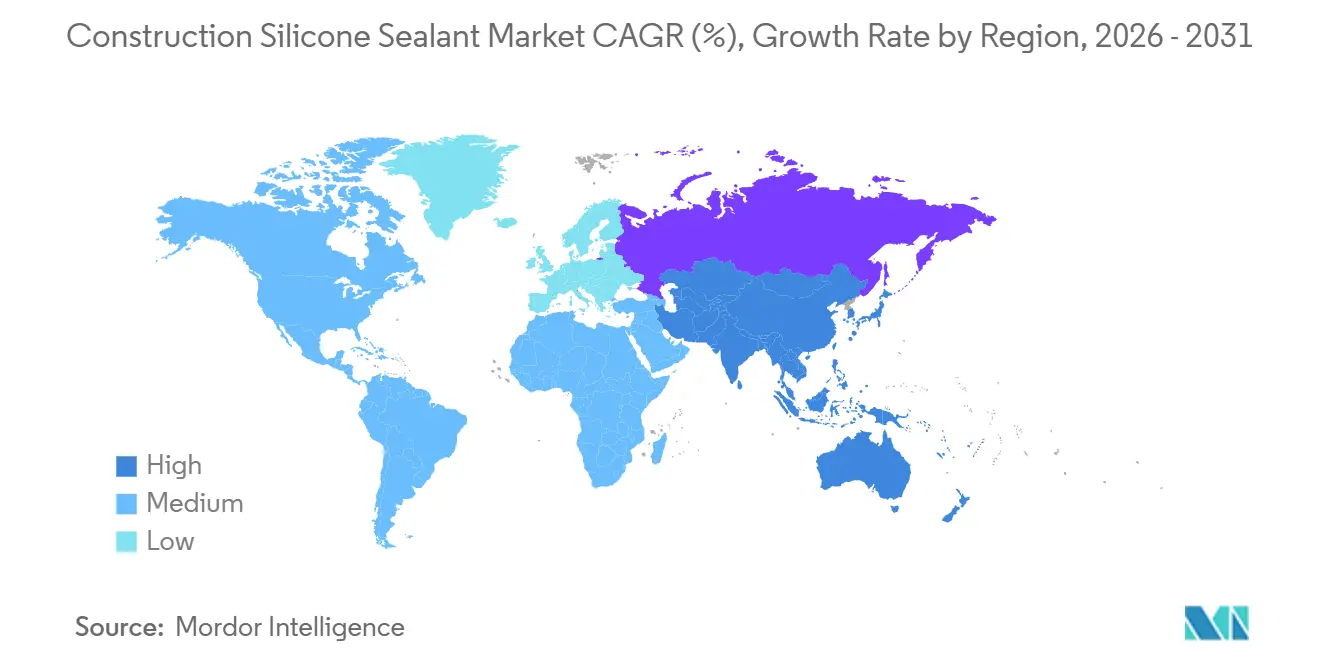
In 2025, the Asia-Pacific region accounted for 46.78% of global revenue and is projected to grow at a 6.11% compound annual growth rate (CAGR) through 2031, maintaining its leadership in the construction silicone sealant market. China's focus on prefabrication and India's expanding aviation sector indicate consistent demand, with coastal provinces consuming over 40% of the nation's sealants. Regional producers with local mixing plants benefit from shorter lead times and preferred status in state projects, creating challenges for import-dependent competitors.
North America Construction Silicone Sealant Market
North America is experiencing a shift as office spaces convert to residential use, altering urban landscapes. Vacancy rates improved in 2025, and rising fit-out costs have driven demand for premium, durable materials, reducing the need for frequent resealing. Additionally, federal energy performance mandates for government buildings are directing retrofit investments into high-performance silicone joints, ensuring stable demand even as new construction levels off.
EMEA and South America Construction Silicone Sealant Market
In Europe, regulatory frameworks play a more significant role than new construction. The Corporate Sustainability Reporting Directive (CSRD) and the Energy Performance of Buildings Directive (EPBD) are driving procurement toward low-volatile organic compound (VOC), carbon-verified products, while suppliers with traceable supply chains gain pricing advantages. Although macroeconomic growth remains slow, retrofitting aging social housing is increasing demand for cladding and insulation joints. South America and the Middle East-Africa, while smaller markets, are showing rapid growth. Airports such as Dubai's Al Maktoum and Riyadh's King Salman are expected to utilize millions of linear meters of UV-stable sealants designed for arid climates. NEOM's mirrored façades are setting new technical requirements, including sand-erosion resistance and optical clarity at ambient temperatures of 45 °C.

Competitive Landscape
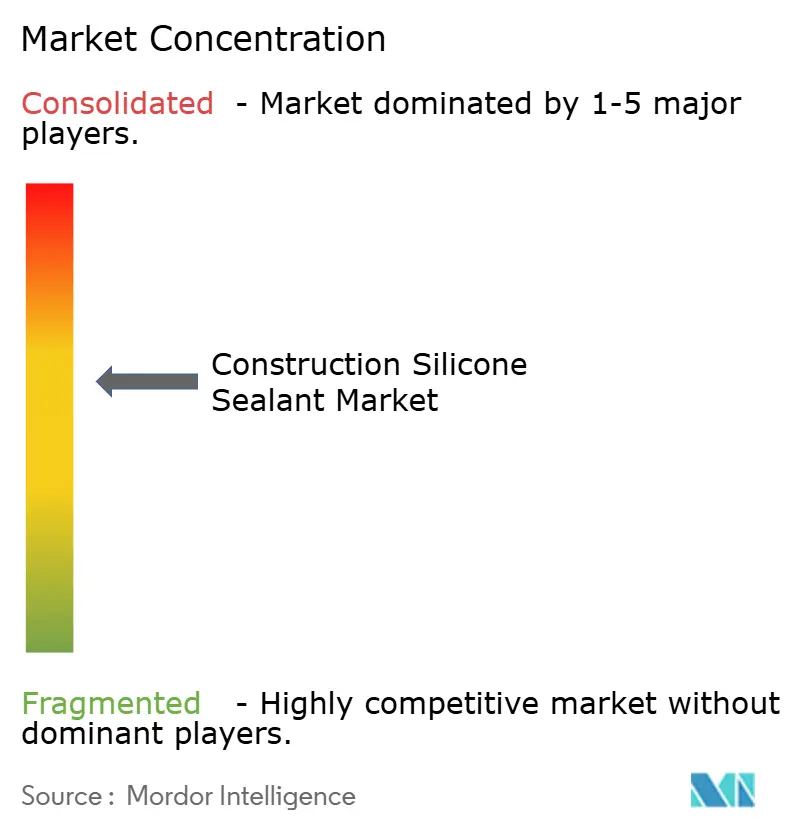
The construction silicone sealant market is moderately concentrated. Top suppliers include Dow, Wacker Chemie AG, Henkel AG & Co. KGaA, Sika AG, and 3M. These companies are focusing on differentiation through sustainability initiatives, digital specification tools, and regional manufacturing capabilities. Sika's acquisition of Akkim in 2026 expands its distribution channels in Eastern Europe and the Middle East, regions experiencing significant infrastructure development. In May 2025, Wacker increased its specialty silicone capacity in Zhangjiagang to enhance supply security for clients in the Asia-Pacific curtain-wall market.
Technology partnerships are expediting formulation processes. Sika's Carbon Compass tool enables architects to assess cradle-to-gate emissions in real-time, supporting early commitments on large-scale projects targeting green-bond financing. Dow's carbon-neutral service integrates bio-attributed siloxanes with renewable energy credits, allowing developers in China to meet the Three-Star Green Building Evaluation Standard without requalifying materials. Regional competitors, such as Pecora in healthcare glazing and Shin-Etsu with its new capacity in Pinghu, are capturing niche market shares through specialized certifications and faster lead times.
Hybrid chemistries are anticipated to drive the next phase of competition. Henkel's 2025 patent application outlines a silyl-terminated polyether blend that delivers 80% of silicone's elongation at half the raw material cost, targeting builders managing both performance and budget requirements. Companies with extensive research and development pipelines and backward-integrated feedstocks are expected to maintain stronger margins compared to regional mixers exposed to spot-market price fluctuations.
Construction Silicone Sealant Industry Leaders
Dow
Wacker Chemie AG
Sika AG
Henkel AG & Co. KGaA
3M
- *Disclaimer: Major Players sorted in no particular order
Construction Silicone Sealant Market Companies Covered in this Report
- 3M
- Arkema
- Beijing Zhongtian
- CHEMENCE
- Dow
- H.B. Fuller Company
- Henkel AG and Co. KGaA
- Mapei
- Momentive
- Pecora Corporation
- Pidilite Industries Ltd.
- RPM International, Inc.
- Shin-Etsu Chemical Co., Ltd.
- Sika AG
- Soudal Group
- Tremco
- Wacker Chemie AG

Recent Industry Developments in Construction Silicone Sealant Market
- April 2026: Wacker Chemie increased silicone product list prices by a mid-single-digit percentage, attributing the adjustment to supply disruptions in the Middle East and higher energy tariffs in Europe. This development is expected to impact the construction silicone sealant market, given its reliance on silicone as a key raw material.
- February 2026: Sika completed the acquisition of Turkish sealant manufacturer Akkim, which contributes CHF 220 million (USD 245 million) in annual sales and adds two regional plants to its operational network. This acquisition strengthens Sika's position in the construction silicone sealant market by expanding its production capacity and regional presence.


Global Construction Silicone Sealant Market Report Scope
Construction silicone sealant, a rubber-like compound, is used to fill gaps, form weather-resistant bonds, and prevent moisture, dust, and air infiltration in building joints. It is utilized for sealing windows, doors, facades, and sanitary fixtures in kitchens and bathrooms, providing adhesion and durability in extreme temperatures.
The construction silicone sealant market is segmented by product type, application, end-user, and geography. By product type, the market is segmented into neutral-cure silicone sealants, acetoxy-cure silicone sealants, oxime-cure silicone sealants, and alkoxy-cure silicone sealants. By application, the market is segmented into joint sealing (expansion and movement joints), glazing and weatherproofing, insulation and cladding, kitchen and sanitary, fire-resistant applications, and other applications (sound-proofing, electrical, etc.). By end-user, the market is segmented into residential construction, commercial construction, industrial construction, and infrastructure (bridges, roads, airports). The report also covers the market size and forecasts for construction silicone sealant in 17 countries across major regions. The market sizes and forecasts are provided in terms of value (USD).
| Neutral-cure silicone sealants |
| Acetoxy-cure silicone sealants |
| Oxime-cure silicone sealants |
| Alkoxy-cure silicone sealants |
| Joint sealing (expansion and movement joints) |
| Glazing and weatherproofing |
| Insulation and cladding |
| Kitchen and sanitary |
| Fire-resistant applications |
| Other Applications (sound-proofing, electrical, etc.) |
| Residential construction |
| Commercial construction |
| Industrial construction |
| Infrastructure (bridges, roads, airports) |
| Asia-Pacific | China |
| Japan | |
| India | |
| South Korea | |
| ASEAN Countries | |
| Rest of Asia-Pacific | |
| North America | United States |
| Canada | |
| Mexico | |
| Europe | Germany |
| United Kingdom | |
| France | |
| Italy | |
| Spain | |
| Russia | |
| Rest of Europe | |
| South America | Brazil |
| Argentina | |
| Rest of South America | |
| Middle East and Africa | South Africa |
| Saudi Arabia | |
| Rest of Middle East and Africa |
| By Product Type | Neutral-cure silicone sealants | |
| Acetoxy-cure silicone sealants | ||
| Oxime-cure silicone sealants | ||
| Alkoxy-cure silicone sealants | ||
| By Application | Joint sealing (expansion and movement joints) | |
| Glazing and weatherproofing | ||
| Insulation and cladding | ||
| Kitchen and sanitary | ||
| Fire-resistant applications | ||
| Other Applications (sound-proofing, electrical, etc.) | ||
| By End-user | Residential construction | |
| Commercial construction | ||
| Industrial construction | ||
| Infrastructure (bridges, roads, airports) | ||
| By Geography | Asia-Pacific | China |
| Japan | ||
| India | ||
| South Korea | ||
| ASEAN Countries | ||
| Rest of Asia-Pacific | ||
| North America | United States | |
| Canada | ||
| Mexico | ||
| Europe | Germany | |
| United Kingdom | ||
| France | ||
| Italy | ||
| Spain | ||
| Russia | ||
| Rest of Europe | ||
| South America | Brazil | |
| Argentina | ||
| Rest of South America | ||
| Middle East and Africa | South Africa | |
| Saudi Arabia | ||
| Rest of Middle East and Africa | ||


Key Questions Answered in the Report
What is the current value of the construction of the silicone sealant market?
The market is valued at USD 4.72 billion in 2026 to USD 6.06 billion by 2031.
How fast is demand for construction silicone sealants growing?
Between 2026 and 2031 demand is increasing at a 5.12% CAGR, outpacing projected global GDP growth.
Which product type leads global revenue?
Neutral-cure formulations held 44.11% share in 2025 owing to broad substrate compatibility.
Which application segment is expanding most quickly?
Fire-resistant joints are forecast to grow at 5.72% CAGR as building codes tighten fire-barrier rules.
Why is Asia-Pacific the largest regional market?
Massive infrastructure investment alongside China’s prefabricated-construction push lifted APAC to 46.78% share in 2025 and a leading 6.11% CAGR outlook.
Page last updated on:


 Your data is secure and never sold or shared.


