
Concierge Medicine Market Size and Share
Market Overview
| Study Period | 2020 - 2031 |
|---|---|
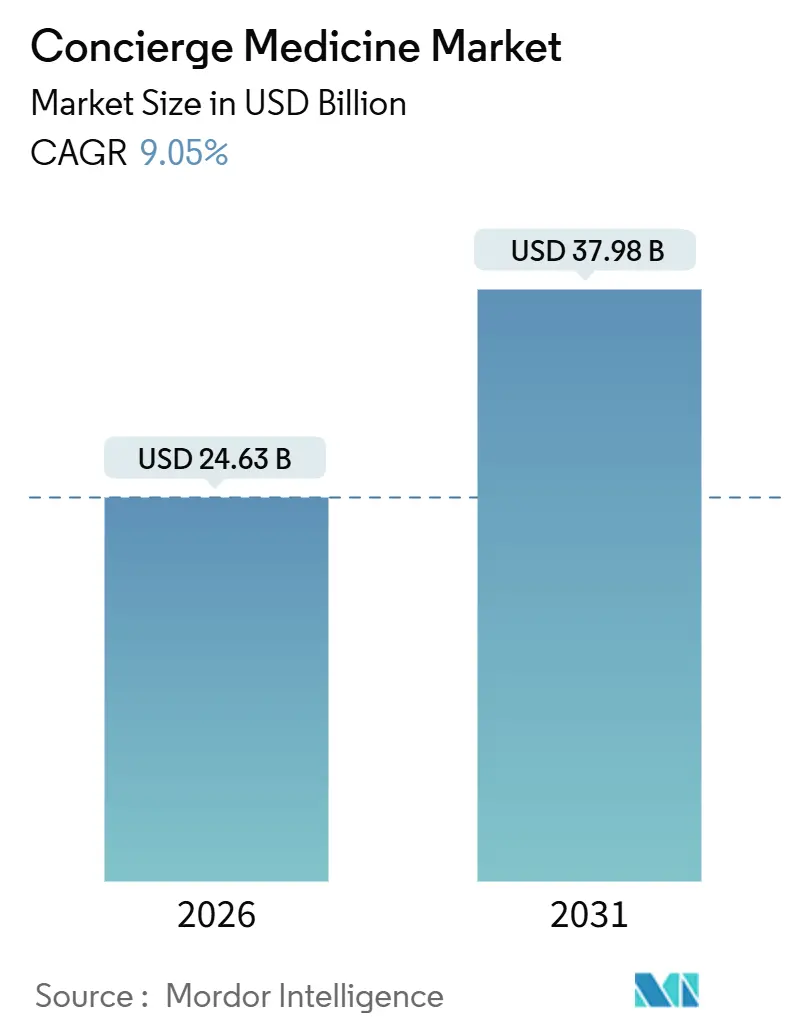
| Market Size (2026) | USD 24.63 Billion |
| Market Size (2031) | USD 37.98 Billion |
| Growth Rate (2026 - 2031) | 9.05 % |
| Fastest Growing Market | Asia Pacific |
| Largest Market | North America |
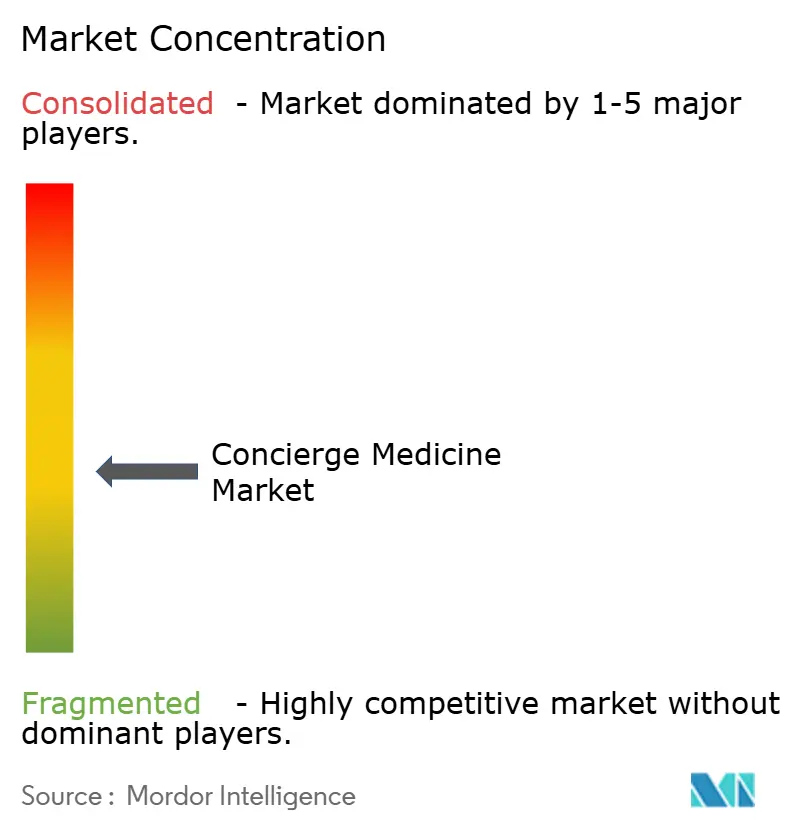
| Market Concentration | Medium |
Major Players *Disclaimer: Major Players sorted in no particular order Image © Mordor Intelligence. Reuse requires attribution under CC BY 4.0. | |
Concierge Medicine Market Analysis by Mordor Intelligence
The Concierge Medicine Market size is estimated at USD 24.63 billion in 2026, and is expected to reach USD 37.98 billion by 2031, at a CAGR of 9.05% during the forecast period (2026-2031).
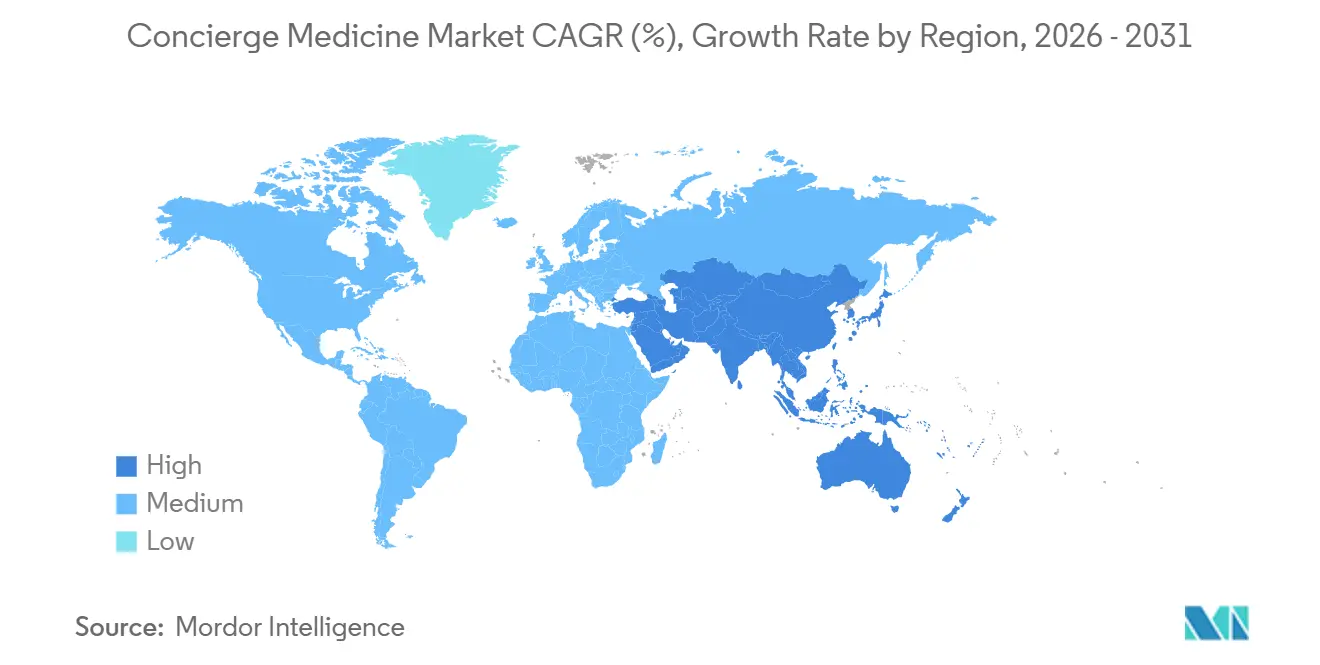
Physician burnout, stronger corporate demand for high-touch benefits, and rapid telehealth adoption are reshaping the concierge medicine market, prompting a swift conversion of traditional primary-care offices to membership models. Between 2018 and 2023 the number of U.S. concierge practices jumped 83.1%, while affiliated clinicians climbed 78.4%, pointing to an accelerating supply-side response to patient willingness to pay for personalized care. Corporate benefits groups such as the Health Transformation Alliance now embed concierge memberships for roughly 5 million covered employees to curb absenteeism and avoid unnecessary emergency-department visits. North America remains the largest regional market, but Asia-Pacific is on track for the fastest growth, supported by surging consumer interest in holistic health services and relaxed telehealth rules.
Key Report Takeaways
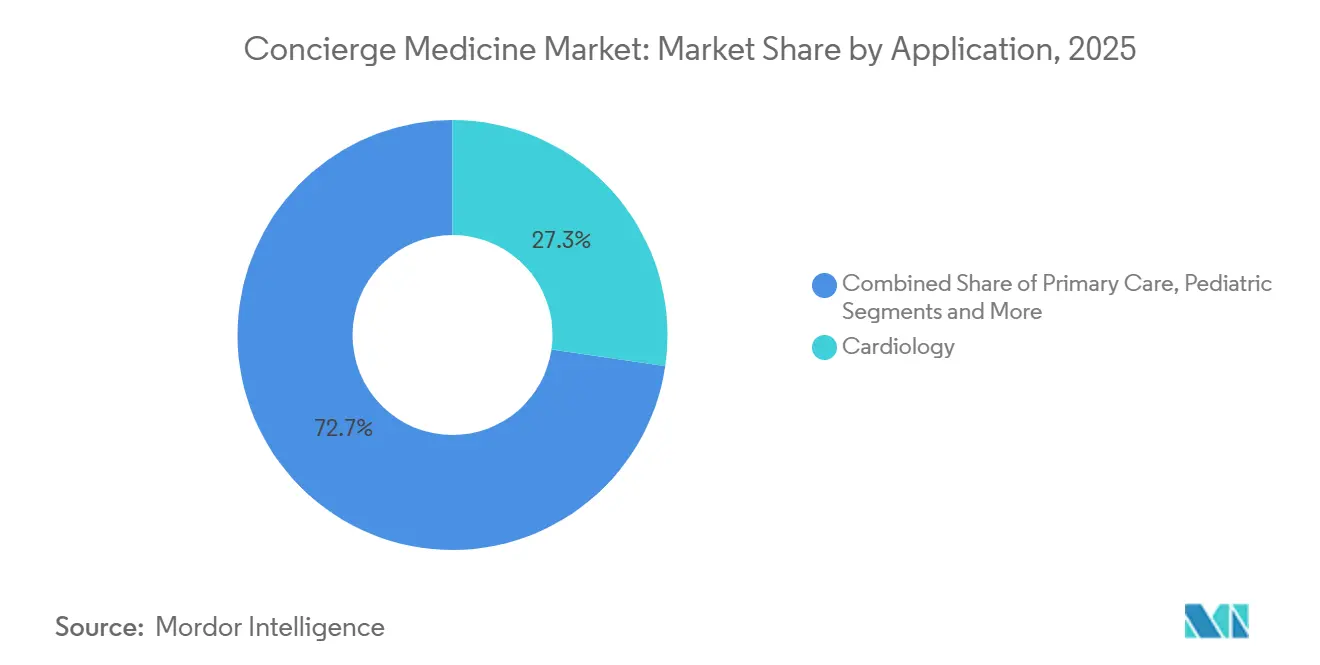
- By application, cardiology held 27.31% of the concierge medicine market share in 2025, while pediatrics is expected to post the highest CAGR of 11.62% from 2026 to 2031.
- By ownership model, physician-led group practices captured 59.83% revenue share in 2025, whereas virtual-only concierge platforms are expanding at a 12.38% CAGR to 2031.
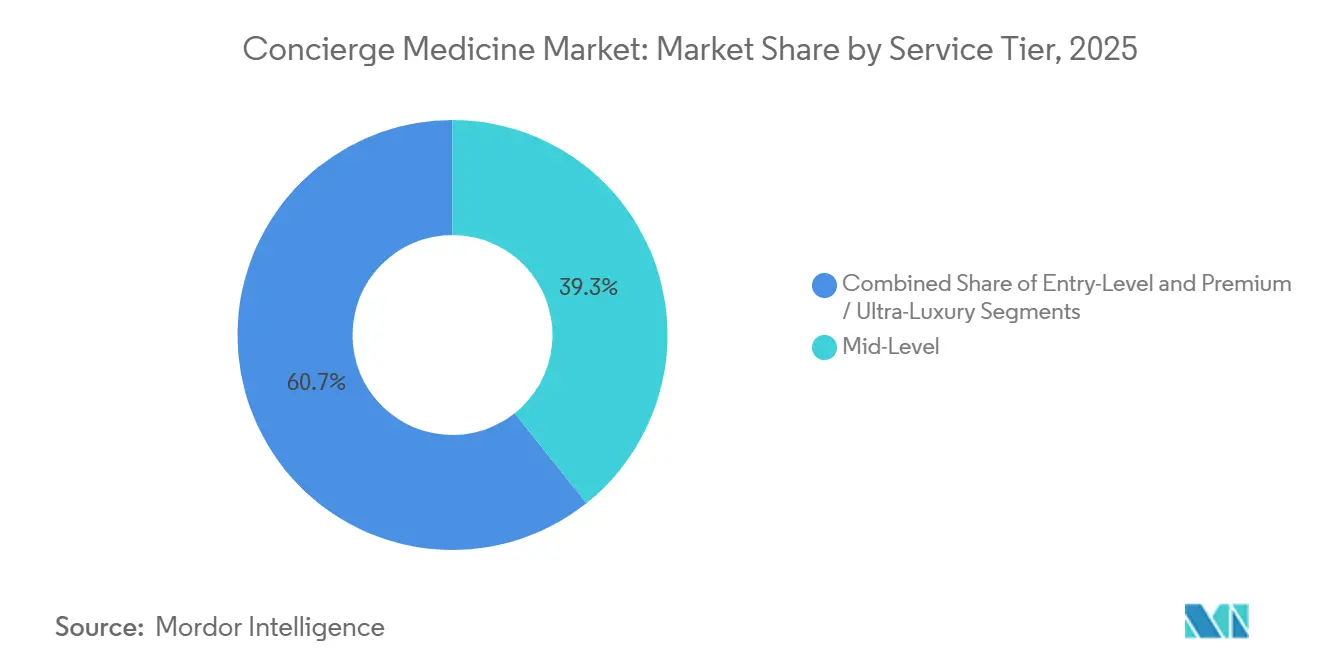
- By service tier, mid-level memberships, priced at USD 3,000–USD 10,000 per year, accounted for 39.28% of the concierge medicine market size in 2025, while premium tiers above USD 10,000 are growing at a 10.16% CAGR.
- By delivery mode, in-person care accounted for 62.86% of the concierge medicine market size in 2025; however, virtual-only models are forecasted to grow at a 13.32% CAGR through 2031.
- By geography, North America retained a 38.36% revenue share in 2025, while the Asia-Pacific region is projected to lead growth with a 12.38% CAGR from 2026 to 2031.
Note: Market size and forecast figures in this report are generated using Mordor Intelligence’s proprietary estimation framework, updated with the latest available data and insights as of January 2026.
Market Trends and Insights
Drivers Impact Analysis of Concierge Medicine Market*
| Driver | (~) % Impact on CAGR Forecast | Geographic Relevance | Impact Timeline |
|---|---|---|---|
| Personalized, time-rich primary care | +2.1% | Global, strongest in North America and Western Europe | Medium term (2-4 years) |
| Physician burnout encouraging conversions | +1.8% | North America, Australia, United Kingdom | Short term (≤ 2 years) |
| Telehealth and remote monitoring integration | +1.5% | Global, fastest in Asia-Pacific | Medium term (2-4 years) |
| Aging, high-net-worth population expansion | +1.3% | North America, Europe, GCC | Long term (≥ 4 years) |
| Employers adding concierge benefits | +1.0% | North America, emerging in Europe & Asia-Pacific | Medium term (2-4 years) |
| AI-enabled continuous care | +0.9% | Global, early in North America & select APAC | Long term (≥ 4 years) |
| Source: Mordor Intelligence | |||
Growing Demand for Personalized, Time-Rich Primary Care
Patients increasingly pay direct annual fees ranging from USD 1,000 to USD 50,000 to secure same-day appointments, extended visits, and seamless coordination, which are often absent in fee-for-service settings.[1]Concierge Medicine Today, “Concierge Medicine Statistics,” conciergemedicinetoday.com In a 2024 analysis of 18,432 on-demand house-call visits, 52% were self-funded, and 94.2% of users indicated they would rebook, underscoring a durable willingness to spend for convenience. High-net-worth households grew by 562,000 in North America during 2024, broadening the premium customer base. Chronic-disease patients also opt for memberships to hedge against hospital readmissions, translating lifestyle demand into steady subscription revenue. The shift signals a structural shift toward patient-financed, value-driven primary care, supporting the expansion of the concierge medicine market.
Physician Burnout Pushing Practice Conversions
Burnout affected 43% of U.S. physicians in 2024, and 35% considered leaving their current roles within two years.[2]American Medical Association, “Physician Burnout 2024 Survey Results,” ama-assn.org Concierge models typically cap panels at 300-600 patients, compared to 2,000-2,500 in traditional practices, which eases the administrative load. MDVIP, with over 1,300 affiliated doctors, reported 96% physician satisfaction and 90% patient retention in December 2024. A JAMA Health Forum study showed that hospital-employed physicians charge 10.7% more than independent physicians, intensifying pressure for independent conversion. With just 42.2% of doctors remaining in physician-owned settings in 2024, scarcity enables concierge providers to command higher fees, reinforcing momentum toward membership practice models.
Telehealth & Remote Monitoring Integration
CMS extended pandemic-era telehealth flexibilities into 2025, removing rural restrictions and covering audio-only visits.[3]Centers for Medicare & Medicaid Services, “CY 2025 Medicare Physician Fee Schedule Final Rule,” cms.gov Amazon has integrated Amazon Clinic into One Medical's pay-per-visit services, offering video consultations for USD 49, illustrating how hybrid virtual care can lower acquisition costs. Wearable integration enables real-time monitoring of glucose levels and cardiac rhythm, facilitating earlier interventions. An Asia-Pacific consumer survey indicated telehealth adoption doubled from 2020 to 2024, with 90% preferring a single care touchpoint. Asynchronous messaging reduces the time physicians spend per encounter, helping concierge platforms scale profitably and expand the concierge medicine market.
Aging, High-Net-Worth Population Expansion
North America’s high-net-worth cohort increased by 7.3% in 2024 and continues to age, thereby elevating demand for proactive, multi-specialty coordination. Ultra-luxury memberships above USD 10,000, bundling 24/7 physician access, genomic screening, and house calls, are gaining traction. A White House 2025 brief reported that more than 40% of U.S. children now live with chronic conditions, catalyzing pediatric concierge enrollment among affluent parents. Wealth hubs in the GCC and Asia produce pockets of demand for executive and geriatric concierge models. Because health preservation is price-inelastic for these segments, spending supports resilient revenue growth through economic cycles.
Restraints Impact Analysis of Concierge Medicine Market*
| Restraint | (~) % Impact on CAGR Forecast | Geographic Relevance | Impact Timeline |
|---|---|---|---|
| Limited insurance reimbursement | -1.4% | Global, strongest in price-sensitive markets | Short term (≤ 2 years) |
| Shrinking pool of independent physicians | -0.8% | North America, Australia, United Kingdom | Medium term (2-4 years) |
| Regulatory ambiguity on billing | -0.7% | North America, spillover globally | Medium term (2-4 years) |
| Equity and access policy push-back | -0.5% | North America and Western Europe | Long term (≥ 4 years) |
| Source: Mordor Intelligence | |||
Limited Insurance Reimbursement / High Out-of-Pocket Fees
Membership fees are generally ineligible for reimbursement under Medicare or commercial plans, as they are viewed as non-medical amenities. CMS guidance permits billing only for incremental covered services, leaving annual fees entirely patient-funded. Affordability barriers narrow the eligible population in lower-income markets. Hospital-affiliated physicians already charge 10.7% more than independents, heightening cost concerns that make concierge access appear exclusive. Entry-level direct-primary care tiers priced below USD 3,000 aim to broaden their reach, yet these stripped-down offerings often lack diagnostic breadth, which limits their competitiveness.
Shrinking Pool of Independent Primary-Care Physicians
Hospital contracts often bar departing physicians from practicing locally for several years, blocking concierge startups. Private-equity acquisitions likewise favor volume-based models, diverting potential converts. AMA survey data show that while 35% of doctors consider leaving their current roles, many retire or transition into non-clinical jobs rather than launching concierge ventures. Intensifying recruitment competition elevates physician acquisition costs and slows geographic rollout.
*Our forecasts treat driver/restraint impacts as directional, not additive. The impact forecasts reflect baseline growth, mix effects, and variable interactions.
Concierge Medicine Market Segment Analysis
By Application:
Cardiovascular Dominance Meets Pediatric AccelerationCardiology controlled 27.31% of the concierge medicine market share in 2025 on the back of executive demand for ongoing risk surveillance and immediate cath-lab access. The concierge medicine market size for cardiovascular offerings is expected to expand steadily alongside aging demographics that elevate disease burden. Pediatrics, though smaller today, is forecast to grow at 11.62% CAGR through 2031, fueled by rising childhood obesity, diabetes, and behavioral disorders documented by the White House in May 2025.
Specialty diversification continues. Psychiatry concierge demand is escalating as employers link mental health access to productivity, while primary care remains foundational for broad patient panels. Dermatology, orthopedics, and women’s health emerge in pockets where patients value aesthetic outcomes or fertility monitoring, but still account for modest proportions of the overall concierge medicine market size. Providers are increasingly bundling primary care with specialty access to differentiate themselves, creating composite programs that deepen loyalty and lengthen membership tenure.



By Ownership Model:
Group Practices Lead, Virtual Platforms DisruptPhysician-led group practices held 59.83% of the concierge medicine market size in 2025, leveraging shared infrastructure and cross-referral dynamics to keep per-member costs in check. Group economics also support investments in electronic records and remote monitoring, which solo offices often struggle to fund. Virtual-only concierge platforms, however, are projected to record a 12.38% CAGR to 2031, drawing strength from minimal real-estate overhead and AI-enhanced triage that enables clinicians to manage larger panels without compromising visit quality.
Corporate-owned networks such as One Medical, now part of Amazon, operate more than 200 clinics serving roughly 815,000 members, demonstrating how scale amplifies bargaining power with payers and suppliers. Franchise formats provide turnkey platforms for doctors lacking capital to develop proprietary technology, while hospital-affiliated programs integrate inpatient pathways but often fall short in terms of concierge-level responsiveness. Overall, competitive positioning pivots on a provider’s capacity to balance the intimacy of care with operational efficiency, a tension central to the future trajectory of the concierge medicine market.
By Service Tier:
Mid-Level Balances Access, Luxury Captures WealthMid-level memberships priced between USD 3,000 and USD 10,000 secured 39.28% of the concierge medicine market size in 2025, offering attractive trade-offs for upper-middle-income households seeking faster access without premium frills. Premium and ultra-luxury tiers are climbing at a 10.16% CAGR, powered by high-net-worth individuals who value global medical navigation, advanced diagnostics, and dedicated care teams. Sollis Health cites a 99% avoidance of emergency department utilization among its members, underlining perceived ROI at the upper end.
Entry-level tiers under USD 3,000 per year aim to democratize concierge access but often rely on larger patient panels and slimmer service menus. Mid-level programs face squeeze pressures from both ends—forced to justify incremental fees versus entry-level, while lacking the white-glove features of luxury competitors. Providers refine tier differentiators to manage churn, highlighting bespoke exam protocols, specialist coordination, and personalized lifestyle planning as value anchors.
By Delivery Mode:
In-Person Anchors Trust, Virtual Scales ReachIn-person care accounted for 62.86% of the concierge medicine market size in 2025, as patients continue to prefer physical examinations, on-site labs, and the rapport that comes with face-to-face visits. A 2024 review of house-call services found 94.2% repeat-booking intent, signaling a persistent appetite for direct interaction. Virtual-only platforms are expanding at the fastest rate, with a 13.32% CAGR, aided by remote monitoring devices that deliver continuous biometric data streams to clinicians.
Hybrid models, combining annual physicals with telehealth follow-ups, strike an efficiency balance. CMS rules effective through 2026 continue to reimburse telehealth across geographic locations, alleviating regulatory friction. Virtual modalities nonetheless face limitations for complex diagnostics, prompting many operators to adopt blended offerings. Younger digital-native patients favor messaging consults, making virtual capacity a strategic necessity even for brick-and-mortar practices within the concierge medicine market.
Geography Analysis
North America Concierge Medicine Market
North America commanded 38.36% revenue share in 2025, upheld by the largest pool of independent physicians and the densest high-net-worth population. The concierge medicine market size in the United States expanded, with practice counts increasing from 1,658 in 2018 to 3,036 in 2023, and the number of clinicians rising from 3,935 to 7,021 over the same period. U.S. employers further accelerate penetration, bundling memberships to curb absenteeism and emergency department spending. Canada and Mexico exhibit fledgling adoption, centered in major metropolitan areas, where cross-border medical tourists seek continuity of care.
APAC Concierge Medicine Market
The Asia-Pacific region is projected to grow at a 12.38% CAGR through 2031, driven by rapidly expanding disposable incomes, particularly in China and India. Eighty percent of Asia-Pacific consumers voice interest in health maintenance services, with half ready to pay premiums and ninety percent preferring single-point coordination. Telemedicine use doubled from 2020 to 2024, laying infrastructure that concierge platforms can leverage. AXA Hong Kong’s 2025 upgrade of its Greater Bay Area Medical Concierge Service Network exemplifies the growth of cross-border care. Japan’s aging cohort and Australia’s private insurance norms add further runway for regional expansion.
Europe, Middle East and South America Concierge Medicine Market
Europe experiences a moderate uptake, with Germany, the United Kingdom, and France at the forefront, each benefiting from private spending upticks and permissive direct contracting regulations. GCC economies in the Middle East welcome ultra-luxury providers catering to expatriate executives who seek continuity across their global postings. South America remains emergent; affluent segments in Brazil and Argentina adopt concierge services, but broader diffusion is slowed by affordability and fragmented insurance frameworks. Diverse regulatory regimes necessitate localized models, encouraging large operators to form regional partnerships to mitigate the risk of entry.

Regulatory Landscape
Concierge medicine operates across a patchwork of healthcare, insurance, and consumer-protection rules, with limited uniform statutory definition in many jurisdictions. In the United States, Medicare and commercial payer rules generally treat membership retainers as non-covered, which means providers must separate and bill only for incremental covered services. That approach increases compliance risk around dual billing and documentation. CMS extended pandemic-era telehealth flexibilities into 2025, including broader geographic coverage and audio-only allowances. This supports concierge hybrid delivery models, but it also increases the need to manage licensure and prescribing compliance across states.
A key 2026 compliance anchor is federal fraud and abuse enforcement interpretation: HHS-OIG FAQ updates in April 2026 reiterated that Fair Market Value is not a safe harbor for Anti-Kickback Statute compliance and that Stark Law compliance does not confer AKS protection. This affects how concierge practices structure referrals, ancillary services, and employer arrangements. In parallel, the One Big Beautiful Bill Act (effective January 1, 2026) created a clearer statutory framework for direct primary care (DPC) and HSA treatment within specific fee limits, shaping how some operators position offerings and design membership agreements. State-level doctrines such as Corporate Practice of Medicine (for example, in California) continue to constrain non-physician ownership, pushing corporate-backed models toward MSO structures and requiring member disclosures that clarify covered services, termination terms, and that membership is not insurance.
Value Chain Analysis
The concierge medicine value chain starts with physician supply and practice formation, then moves through practice transition (conversion from fee-for-service panels to capped membership panels) and member acquisition, before care delivery through in-person, hybrid, or virtual-only channels. Enabling layers include membership administration (enrollment, recurring billing, and customer support), clinical workflow technology (EHR integrations, secure messaging, telehealth, and remote monitoring), and contracted services for diagnostics, imaging, labs, and specialist referrals. Revenue collection is heavily weighted toward direct patient payment, and where applicable, separate claims for covered services.
Operational scaling often depends on intermediaries such as Management Services Organizations (MSOs), which provide staffing, scheduling, facilities, technology procurement, and compliance support while accommodating state CPOM constraints on corporate ownership. Physician recruitment remains a bottleneck in the chain, tightening capacity for new clinic openings and limiting geographic expansion even as demand rises. Clinician-experience improvements (such as reduced administrative burden and smaller panels) and conversion-support services can therefore become differentiators. Legal and compliance advisory services are also central, since membership contracts must align with consumer-protection disclosures and billing separation rules, particularly when practices add employer-sponsored memberships or expand telehealth across state lines.
Competitive Landscape
The concierge medicine market remains moderately fragmented. Amazon’s USD 3.9 billion acquisition of One Medical in 2023 spotlighted intensifying competition as technology giants seek footholds in clinical delivery. One Medical now operates over 200 offices and serves approximately 815,000 members, leveraging scale to negotiate payer contracts and invest in AI tools that reduce documentation times by 40%. Privia Health, supporting 4,642 providers across 1,170 care centers, reported 98% gross provider retention and more than 100 value-based contracts, illustrating a quality-metric-aligned model.
Smaller entities pursue white-space niches such as pediatric care, executive health, and cosmetic dermatology. Virtual-only disruptors avoid real estate costs, allowing for lower membership prices and a broader geographic reach, yet still face hurdles in performing physical exams. Physician recruitment remains the fiercest battleground, given shrinking independent supply. Platforms offering reduced paperwork, higher per-patient revenue, and flexible scheduling gain an advantage in attracting talent.
Regulatory mastery also differentiates winners. Providers who are fluent in Medicare billing stipulations, state insurance disclosure rules, and telehealth licensure requirements scale more effectively across markets. Equity debates spark reputational scrutiny, pushing operators to showcase measurable outcome improvements and stress that higher physician satisfaction ultimately keeps more clinicians in practice. Consolidation is likely to continue as capital-rich entrants acquire established practices to accelerate regional growth, thereby compressing margins for smaller, standalone clinics.
Concierge Medicine Industry Leaders
MDVIP
SignatureMD
Crossover Health
Castle Connolly Private Health Partners
Concierge Choice Physicians
- *Disclaimer: Major Players sorted in no particular order
Concierge Medicine Market Companies Covered in this Report
- AtlasMD
- Baylor Scott & White Premier
- Carbon Health (Concierge Tier)
- Castle Connolly Private Health Partners
- Cedars-Sinai Concierge Medicine
- Concierge Choice Physicians
- Crossover Health
- EliteHealth
- Forward
- MDVIP
- One Medical (Amazon)
- Paragon Private Health
- PartnerMD
- Peninsula Doctor
- Privia Health
- Priority Physicians
- Qliance (Legacy Case)
- SignatureMD
- Sollis Health

Market Opportunities and Future Outlook
A near-term whitespace sits at the intersection of membership-based primary care and employer-sponsored access models, where large buyers embed concierge-style benefits to improve access and reduce avoidable utilization. The Health Transformation Alliance has embedded concierge memberships for roughly 5 million covered employees, supporting the case for a scalable B2B2C route for concierge networks and advanced primary care platforms that can deliver consistent service levels across multi-site workforces. Consolidation and platform-building also create room for multi-region networks with standardized workflows, including the completion of the Premise Health and Crossover Health merger in 2026, which combined onsite, nearsite, and virtual delivery at national scale.
Another opportunity is product and pricing architecture that fits evolving rules for membership arrangements and digital access expectations. The One Big Beautiful Bill Act effective January 1, 2026 formalized HSA eligibility parameters for DPC membership fees within defined limits. That encourages some providers to build compliant, clearly delineated membership tiers and billing separation that reduce ambiguity for patients and employers. On the care-model side, the market continues moving toward hybrid and virtual-only concierge designs, supported by CMS extending telehealth flexibilities into 2025, and by operators using asynchronous messaging and remote monitoring to manage access at scale. Specialty pockets, notably pediatrics supported by heightened focus on chronic conditions in children, and high-touch coordination for complex patients remain concrete expansion vectors for both physician-led groups and corporate-backed clinic networks.
Recent Industry Developments in Concierge Medicine Market
- March 2026: Crossover Health and Premise Health announce a definitive merger agreement to merge for integrated onsite, nearsite, and virtual care serving 400+ organizations. The announcement reshapes market structure through consolidation. The combination yields a national-scale platform enabling diversified delivery and stronger enterprise contracts.
- February 2026: MDVIP relocates and secures an 11-year headquarters lease at The Eclipse in Boca Raton, Florida. The relocation signals scale-up and capacity expansion of a leading concierge network. The lease supports a nationwide affiliated physician network and infrastructure for growth.
- January 2026: Crossover Health and Premise Health announce a definitive merger agreement to create a unified, national on site and near site care platform. The announcement accelerates consolidation in membership based concierge and advanced primary care. It strengthens the enterprise focused delivery model and payer contract leverage.


Concierge Medicine Market Report Scope and Research Methodology
Market Definition and Coverage
This market is defined as revenues earned from concierge medicine memberships and retainer-style care programs that provide patients with enhanced access, coordination, and physician time, delivered through clinics or physician-led practices across major geographies.
Scope exclusions: We do not count insurance-paid medical procedures, lab tests, imaging, hospital stays, or pharmacy sales that sit outside the concierge membership or retainer fee.
Segments Covered in This Report
- By Application
- Primary Care
- Pediatrics
- Cardiology
- Psychiatry & Mental Health
- Other Applications
- By Ownership Model
- Physician-Owned Solo Practices
- Physician-Led Group Practices
- Corporate-Owned Clinics
- Hospital/Health-System Affiliated Programs
- Franchise Models
- Virtual-Only Concierge Platforms
- By Service Tier
- Entry-Level (USD < 3 k p.a.)
- Mid-Level (USD 3–10 k p.a.)
- Premium / Ultra-Luxury (USD > 10 k p.a.)
- By Delivery Mode
- In-Person
- Hybrid
- Virtual-Only
- By Geography
- North America
- United States
- Canada
- Mexico
- Europe
- Germany
- United Kingdom
- France
- Italy
- Spain
- Rest of Europe
- Asia-Pacific
- China
- Japan
- India
- Australia
- South Korea
- Rest of Asia-Pacific
- Middle East & Africa
- GCC
- South Africa
- Rest of Middle East & Africa
- South America
- Brazil
- Argentina
- Rest of South America
- North America
Data Sources, Market Sizing, and Validation
Desk Research
Desk research was used to map the addressable patient pool and the rules that shape how concierge programs charge and operate. We leaned on public sources such as the US Centers for Medicare and Medicaid Services guidance and fee rules, the US Bureau of Labor Statistics for physician wage trends, and OECD health statistics to understand spending and system capacity in key countries.
To make the model practical, we also reviewed sources such as peer-reviewed journals on primary care access and physician workload, government health ministry publications, and reputable press and association sites that track subscription care adoption and care delivery patterns. Company filings and investor materials were used to understand pricing ranges, program structures, and geographic footprints. Paid subscriptions that track company financials, news, and patents helped fill gaps on scale signals and service expansion. These examples are not exhaustive, and many other sources were referenced to collect, validate, and clarify inputs.
Primary Interviews and Surveys
Primary work focused on validating what patients actually pay and what providers can realistically deliver, since a program is constrained by panel size and physician time. We spoke with practice owners, medical directors, clinic operations teams, and third-party administrators across major regions to confirm typical membership pricing, service inclusions, and churn behavior. Where possible, we then cross-checked these points with payers and referral partners.
Distribution of primary research fieldwork respondents
| Company type | Respondent position | Region |
|---|---|---|
| Top tier: 31% | CXOs: 12% | APAC: 44% |
| Mid tier: 54% | Functional/Unit leaders: 34% | EMEA: 35% |
| Smaller Players: 15% | Managers: 54% | Americas: 21% |
Market-Sizing & Forecasting
The core model uses a top-down demand pool build that starts with primary care capacity and adoption signals, which are then translated into paying concierge members. Country totals were developed using inputs such as estimated participating physicians, average patient panel size by program type, annual membership fee ranges, and the mix between in-person, hybrid, and virtual-only delivery.
Those totals were then corroborated with selective bottom-up approximations, mainly through sampled price checks, provider roll-ups in key metros, and simple revenue logic (memberships per physician multiplied by annual fees) to spot overcounts and to correct unrealistic penetration levels. Where practice-level data was not visible, gaps were handled by using conservative adoption bands and then re-tested through interviews.
For forecasting, scenario analysis was used because growth depends on a few sensitive levers that can change quickly, such as physician supply constraints, patient willingness to pay, and the pace of hybrid program launches. Short-term trends were anchored to observed pricing and enrollment patterns, and then adjusted using expert inputs on how panel sizes and service intensity tend to evolve as programs scale.
Data Validation & Update Cycle
Results were validated through multiple checks so the outputs stay tied to real-world capacity and pricing. We compared country estimates against independent signals such as physician-to-population ratios, primary care utilization trends, and published ranges for membership fees. We also reviewed outliers where implied revenue per physician looked too high or too low.
Before sign-off, the model goes through stepwise reviews where assumptions, units, and conversion logic are rechecked, followed by targeted re-contacts when a key input shifts or a gap remains unresolved. Reports are refreshed annually, with interim updates when material events occur, and a final pre-delivery review is done so clients receive the latest consistent view.
Mordor Intelligence's Concierge Medicine Market Size Versus Other Published Estimates
Published market values for concierge medicine can differ because each publisher draws the line around what is counted as concierge revenue, and because pricing and patient volumes are not reported in a single standard way. Differences also show up when studies choose different base years, currency timing, or regional coverage, which then affects totals and growth paths.
Key gap drivers in this market usually come down to whether hybrid programs are treated as concierge when only a subset of patients pay a retainer, how entry-level subscription tiers are priced and annualized, and whether the estimate blends membership fees with broader primary care spending. Assumptions on physician participation, realistic panel sizes, and churn also matter, since small shifts in these inputs can move the global number noticeably.
Benchmark comparison
| Source | Market Size | Gaps in Research Methodology |
|---|---|---|
| Mordor Intelligence | USD 24.63 B (2026) | |
| Global Consultancy A | USD 20.40 B (2024) | Uses an earlier base year and typically narrows scope to established in-person concierge programs, which can undercount hybrid memberships and newer virtual-only models in faster-growing countries. |
| Trade Journal B | USD 18.30 B (2024) | Leans on simplified physician adoption assumptions and limited pricing normalization, which can miss how panel caps and service tiers change the effective revenue per physician across regions. |
The table shows a spread that is mainly explained by scope and the way membership revenue is annualized across program types. In Mordor Intelligence's model, only patient-funded membership and retainer fees are counted, while insurance-paid medical services are left out even when care is delivered through the same clinic. Once those boundaries are applied consistently and then stress-tested with panel size and pricing checks, the outcome is easier to trace back to clear inputs and repeatable steps.


Key Questions Answered in the Report
What CAGR is projected for the concierge medicine market through 2031?
The concierge medicine market is forecast to grow at 9.05% CAGR from 2026 to 2031.
Which application currently holds the largest share?
Cardiology leads, capturing 27.31% of 2025 revenue.
Which region is expected to grow fastest?
Asia-Pacific is projected to post a 12.38% CAGR through 2031.
How big is the mid-level membership segment?
Mid-level tiers priced USD 3,000–USD 10,000 captured 39.28% of 2025 revenue.
What drives physician migration to concierge models?
High burnout rates, with 43% of doctors reporting symptoms in 2024, motivate conversions for smaller panels and improved work-life balance.
Page last updated on:




