
Home Medical Equipment Market Size and Share
Market Overview
| Study Period | 2020 - 2031 |
|---|---|
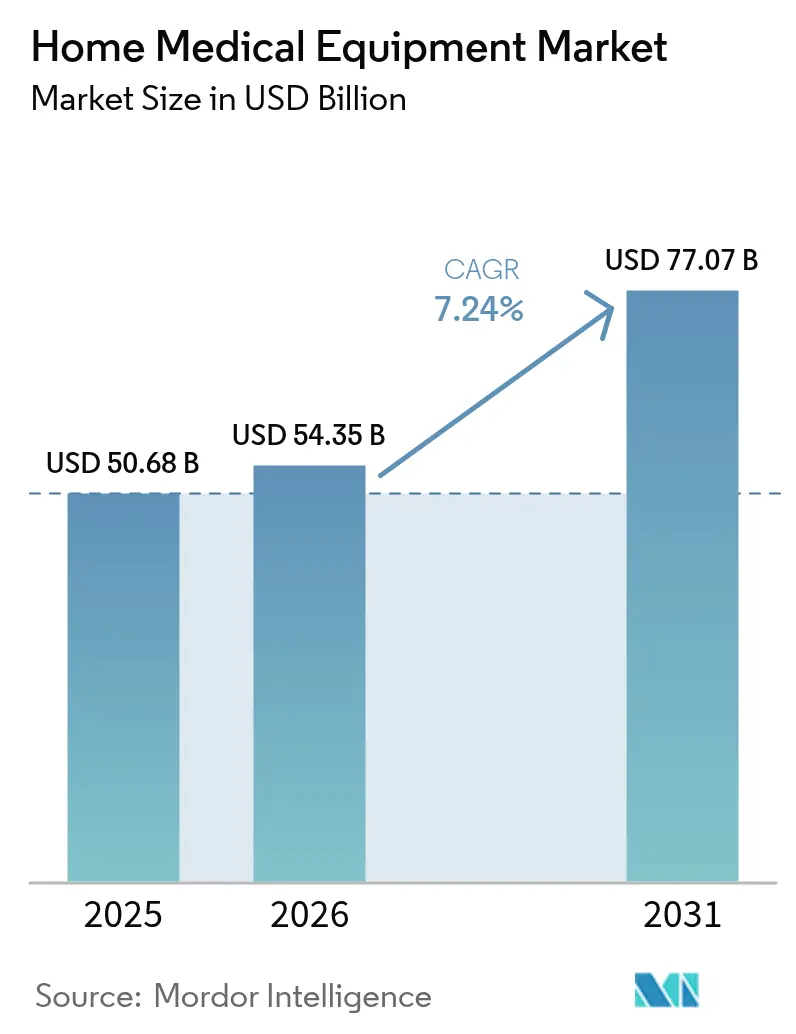
| Market Size (2026) | USD 54.35 Billion |
| Market Size (2031) | USD 77.07 Billion |
| Growth Rate (2026 - 2031) | 7.24 % |
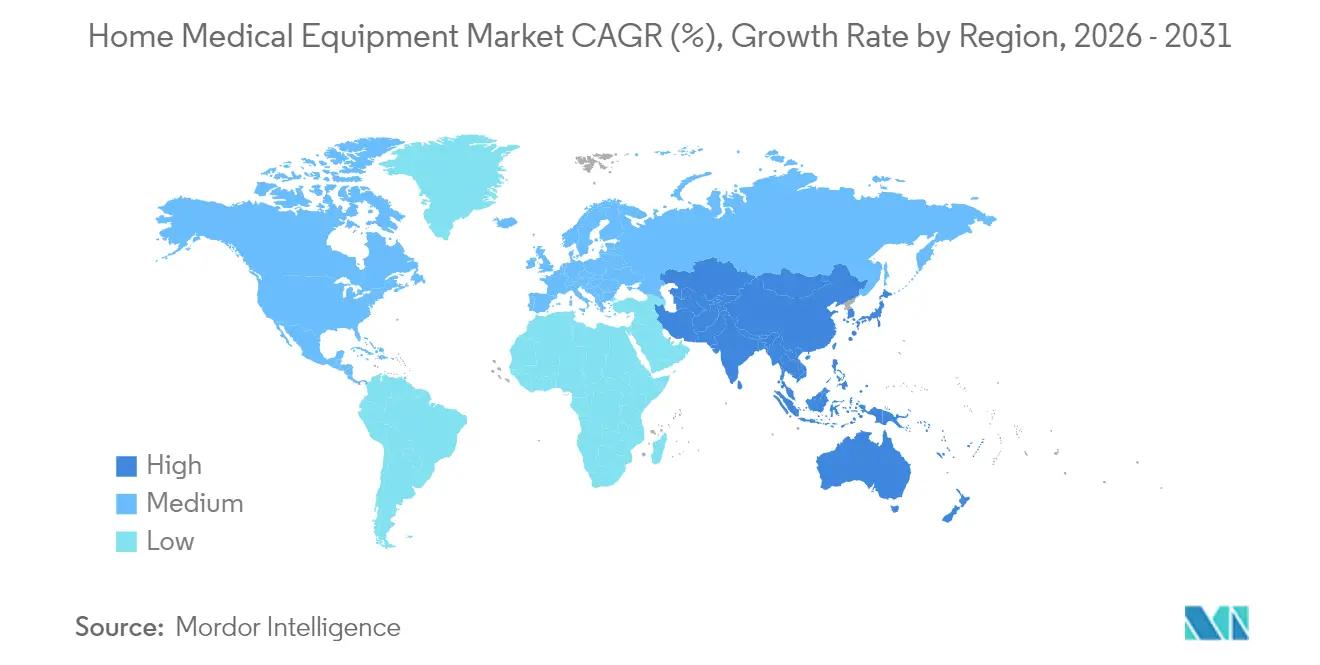
| Fastest Growing Market | Asia-Pacific |
| Largest Market | North America |
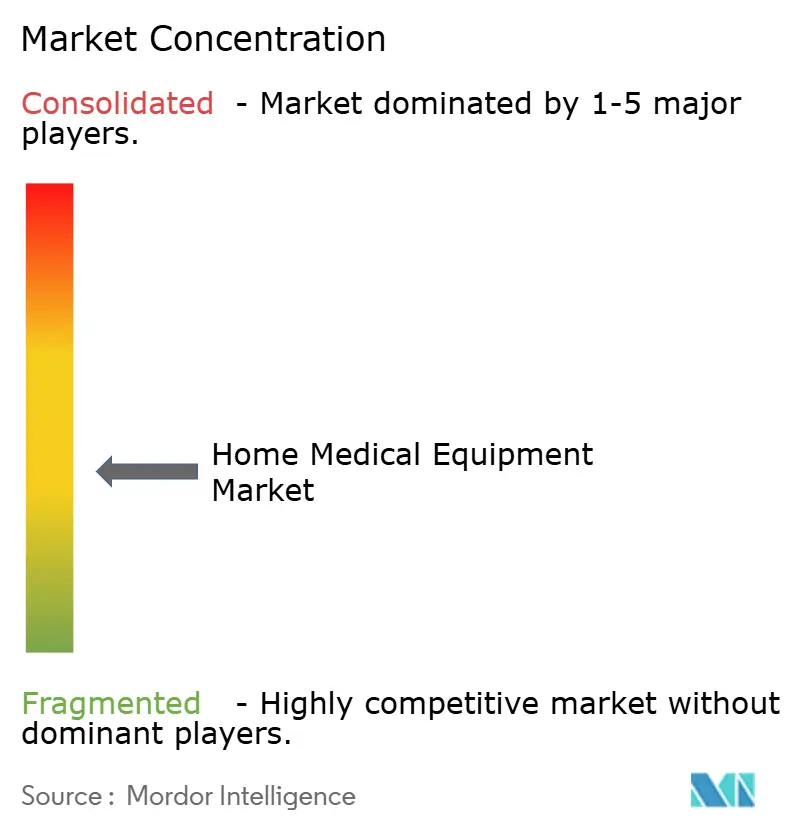
| Market Concentration | Medium |
Major Players *Disclaimer: Major Players sorted in no particular order Image © Mordor Intelligence. Reuse requires attribution under CC BY 4.0. | |
Home Medical Equipment Market Analysis by Mordor Intelligence
home medical equipment market size in 2026 is estimated at USD 54.35 billion, growing from 2025 value of USD 50.68 billion with 2031 projections showing USD 77.07 billion, growing at 7.24% CAGR over 2026-2031. Robust growth stems from an accelerating shift of care delivery to patient homes, cost-containment mandates, and sustained innovation in portable, connected therapeutic solutions. Demand momentum is particularly strong for devices that support chronic-disease management, remote monitoring, and long-term mobility, while policy makers widen reimbursement coverage to curb hospital utilization. Manufacturers that harmonize with evolving global quality standards, deploy data-enabled services, and scale omnichannel distribution gain a measurable competitive edge. Asia-Pacific’s rapid infrastructure build-out, North America’s favorable payer mix, and Europe’s stringent but predictable regulatory ecosystem collectively shape the geographic opportunity set for the home medical equipment market.
Key Report Takeaways
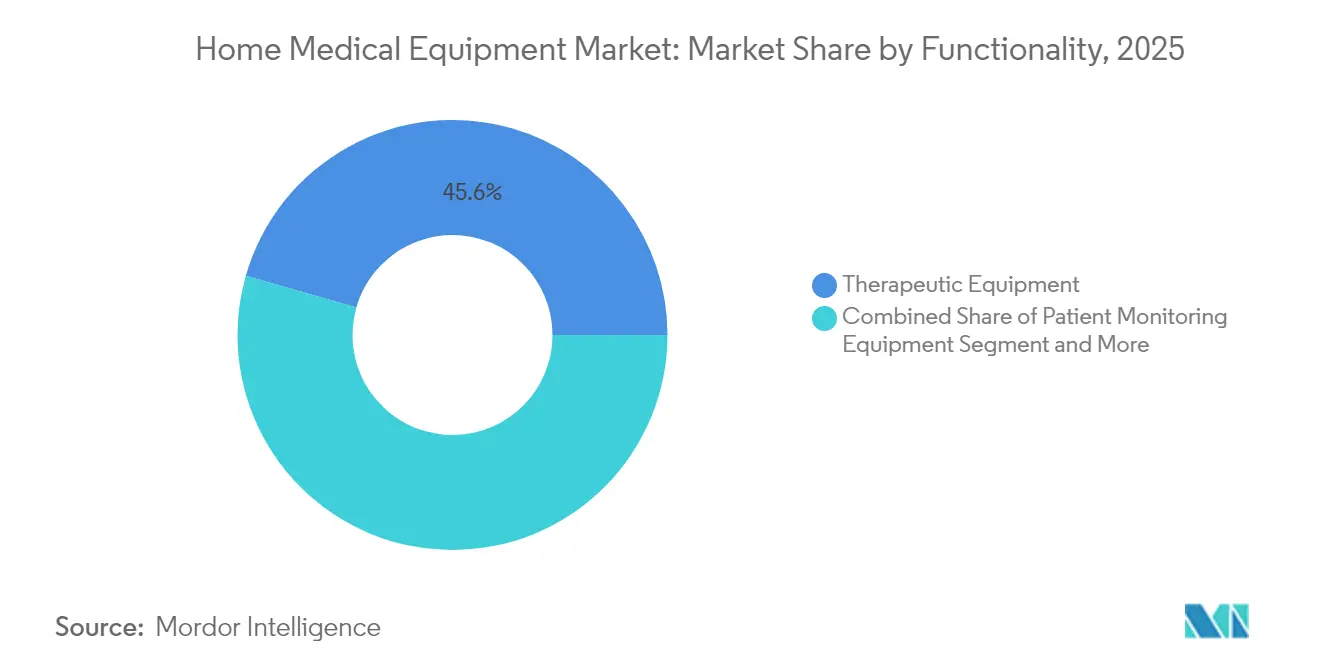
- By functionality, therapeutic equipment led with 45.55% revenue share in 2025; mobility assist and patient support is advancing at an 8.55% CAGR through 2031.
- By geography, North America commanded 37.75% of the home medical equipment market share in 2025, while Asia-Pacific is forecast to expand at a 10.25% CAGR to 2031.
- By connectivity, conventional products accounted for 54.20% of the home medical equipment market size in 2025; connected/smart devices are projected to grow at a 9.75% CAGR between 2026-2031.
- By distribution channel, retail medical stores commanded 39.85% of the market size in 2025 and online retailers is advancing at a 12.15% CAGR over 2026-2031.
- By therapeutic area, diabetes care contributed 39.35% of segment revenue in 2025 and remains the largest value pool of the home medical equipment market.
- By end-user, the elderly and assisted-living commanded a 34.35% revenue share in 2025, while chronic-disease home-care is forecast to expand at an 8.95% CAGR to 2031.
Note: Market size and forecast figures in this report are generated using Mordor Intelligence’s proprietary estimation framework, updated with the latest available data and insights as of 2026.
Market Trends and Insights
Drivers Impact Analysis of Home Medical Equipment Market*
| Driver | (~) % Impact on CAGR Forecast | Geographic Relevance | Impact Timeline |
|---|---|---|---|
| Rising chronic disease burden | +2.1% | North America, Europe | Medium term (2-4 years) |
| Rapid expansion of the geriatric population | +1.8% | Japan, Western Europe, North America | Long term (≥ 4 years) |
| Cost-containment shift from in-patient to home-care | +1.5% | North America, Europe, developed APAC | Medium term (2-4 years) |
| Technological advances in portable & connected devices | +1.9% | North America, Europe, developed APAC | Short term (≤ 2 years) |
| Broadening reimbursement for home therapies | +1.2% | North America, Europe | Medium term (2-4 years) |
| Growth of e-commerce & rental models | +0.8% | Global | Short term (≤ 2 years) |
| Source: Mordor Intelligence | |||
Rising Chronic Disease Burden Accelerates Home Monitoring Adoption
Global prevalence of diabetes, COPD, and cardiovascular disorders is reshaping therapeutic priorities in the home medical equipment market. Continuous glucose monitoring systems now anchor 40% of therapeutic-area revenue, propelled by FDA clearances that allow factory-calibrated sensors and automated insulin-delivery algorithms. Portable oxygen concentrators and home dialysis units follow similar growth trajectories as payers incentivize self-management to prevent costly acute episodes. Healthcare providers increasingly integrate device-generated data into telehealth workflows, enhancing longitudinal care coordination and reinforcing adherence[1]Center for Devices and Radiological Health, “FDA Launches Health Care at Home Initiative to Help Advance Health Equity,” fda.gov.
Aging Population Drives Demand for Mobility and Monitoring Solutions
Adults aged 65+ will represent 21% of the U.S. population by 2030, and most prefer to age in place. That demographic shift materially enlarges the addressable base for wheelchairs, patient lifts, fall-prevention sensors, and non-invasive vital sign monitors. Lightweight composite frames, power-assist motors, and radar-based occupancy detection reduce caregiver burden and broaden use beyond post-acute scenarios. Long-term services providers expand home-based offerings to capture this persistent demand pool, reinforcing the growth outlook for the home medical equipment market.
Home-Care Shift Transforms Healthcare Delivery Models
Payers and regulators frame the home as an extension of the clinical continuum. The FDA’s “Home as a Health Care Hub” initiative (April 2024) formally recognizes residences as active sites of medical care and prioritizes technology that can close gaps created by workforce shortages and hospital bed constraints. Hospital-at-home programs, remote therapeutic monitoring codes, and bundled payments for post-discharge episodes further cement this structural pivot and safeguard long-term growth of the home medical equipment market.
Technological Advances Enable Remote Patient Monitoring Revolution
Connectivity, miniaturization, and embedded analytics elevate home devices from episodic tools to real-time clinical assets. Nearly 1,000 AI-enabled medical devices had FDA clearance by early-2025, covering diagnostics, dosage optimization, and early warning alerts. Radar-based sensors that operate contact-free detect respiration and heart rate, while cloud portals push anomalies to clinicians within seconds. Industry alliances, such as GE HealthCare’s partnership with Biofourmis to create virtual care-at-home pathways, exemplify how platform integration accelerates product adoption and extends revenue beyond hardware[2]GE HealthCare, “GE HealthCare and Biofourmis Collaborate to Extend Patient Monitoring Outside the Hospital,” biofourmis.com.
Restraints Impact Analysis of Home Medical Equipment Market*
| Restraint | (~) % Impact on CAGR Forecast | Geographic Relevance | Impact Timeline |
|---|---|---|---|
| Stringent regulatory & quality compliance | -1.3% | Global | Short term (≤ 2 years) |
| Semiconductor & sensor supply-chain volatility | -0.9% | Global | Short term (≤ 2 years) |
| Safety-related recalls undermining confidence | -0.4% | North America | Medium term (2-4 years) |
| High up-front costs & limited coverage in emerging markets | -0.7% | APAC, Latin America, MEA | Long term (≥ 4 years) |
| Source: Mordor Intelligence | |||
Regulatory Complexity Creates Market Entry Barriers
In January 2024 the FDA finalized its Quality Management System Regulation, aligning U.S. requirements with ISO 13485:2016. Manufacturers must update design, supplier, and post-market surveillance processes before enforcement begins February 2, 2026. Simultaneously, the EU Battery Regulation 2023/1542 adds cradle-to-grave obligations for portable-device power sources, impacting infusion pumps and glucose meters alike. Compliance costs and documentation workload weigh heaviest on small firms, trimming near-term expansion pacing within the home medical equipment market.
Supply Chain Vulnerabilities Threaten Production Continuity
Geopolitical tensions, natural disasters, and cyclical demand swings disrupt semiconductor and sensor supply, leaving connected device manufacturers exposed to unpredictable lead times. Strategic responses include dual-sourcing, on-shoring of mature-node fabrication, and modular design that allows component substitution without re-validation. While these initiatives shore up resiliency, they also inflate bill-of-materials costs in the short term, tempering price competitiveness in the home medical equipment market.
*Our forecasts treat driver/restraint impacts as directional, not additive. The impact forecasts reflect baseline growth, mix effects, and variable interactions.
Home Medical Equipment Market Segment Analysis
By Functionality:
Therapeutic Equipment Anchors Value While Mobility Solutions AccelerateTherapeutic equipment retained a 45.55% revenue contribution in 2025, reflecting the indispensable role of respiratory therapy devices, dialysis systems, and infusion pumps in chronic-disease management. Conversely, mobility assist and patient support equipment is the fastest-expanding cohort at 8.55% CAGR through 2031, mirroring rising demand for aging-in-place services. AI-driven respirators, peritoneal dialysis cyclers outfitted with telemetric modules, and sensor-enabled hospital beds enhance adherence and streamline clinician oversight. The home medical equipment market size for mobility solutions is on track to add USD 6.25 billion between 2026 and 2031, buoyed by reimbursement enhancements and ergonomic advances.
Autonomous vital-sign technologies such as radar-based monitors illustrate ongoing convergence across functionality categories. These contactless systems integrate seamlessly with electronic health records, flagging deterioration events sooner than conventional point-in-time devices. Device neutrality—ability to pair with multiple data platforms—emerges as a principal buying criterion among health systems and large home-care agencies, reinforcing the strategic importance of interoperability within the home medical equipment market.



By Therapeutic Area:
Diabetes Care Leads; Neuro-Rehabilitation Exhibits Outsize MomentumDiabetes care holds 39.35% of therapeutic-area revenue, supported by widespread deployment of factory-calibrated continuous glucose monitors and hybrid closed-loop insulin pumps. The home medical equipment market size for diabetes management is projected to surpass USD 29.4 billion by 2031 on the back of newer biosensor chemistries and extended-wear adhesives. Neuro-rehabilitation, although smaller in absolute terms, posts the highest forecast CAGR at 9.15%. Robotic exoskeletons, wearable motion-capture sleeves, and interactive VR therapy suites deliver quantifiable functional gains, hastening coverage among workers’ compensation plans and neuro-specialty clinics.
Respiratory and cardiovascular applications maintain double-digit revenue shares, driven by COPD prevalence and heart failure hospitalizations. Integrated wound-care kits and home hemodialysis platforms display steady uptake as device makers miniaturize components and embed wireless diagnostics, preventing service interruptions and elevating treatment fidelity across the home medical equipment market.
By Connectivity:
Smart Devices Outpace Conventional EquipmentConventional products represented 54.20% of 2025 shipments, yet connected and smart devices are tracking a 9.75% CAGR through 2031—nearly 3 percentage points above the total home medical equipment market. Embedded Bluetooth LE, cellular IoT, and edge AI processors transform standalone apparatus into continuous data streams. Remote firmware upgrades mitigate recall risk by allowing cyber-patches without field technician visits. The cybersecurity provision in the Consolidated Appropriations Act of 2023 obliges pre-market submissions to include Software Bills of Materials, prompting vendors to embed secure-by-design protocols from concept stage.
By Distribution Channel:
Online Retailers Disrupt Traditional ModelsBrick-and-mortar medical stores captured 39.85% of 2025 revenue, but e-commerce platforms are set to grow 12.15% annually as consumers prize doorstep delivery and transparent pricing. Large device makers now operate brand-owned web shops, supplementing authorized resellers and subscription refill programs. Hospitals discharge planners increasingly route durable equipment orders through integrated digital portals, collapsing ordering friction and reducing readmission penalties. The omnichannel imperative reshapes logistics footprints and elevates last-mile performance standards throughout the home medical equipment market.

By End-User:
Elderly Care Dominates; Chronic-Disease Home-Care Grows FastestThe elderly and assisted-living cohort commanded 34.35% share in 2025, loaned momentum by demographic aging and value-based care metrics that favor low-acuity settings. AI dashboards that predict falls or urinary-tract infections enable caregivers to escalate interventions promptly, aligning perfectly with payer goals around avoidable event reduction. Chronic-disease home-care follows with a 8.95% CAGR, bolstered by remote therapeutic monitoring reimbursements and widening payer recognition of self-dialysis and insulin-pump supplies. Pediatric and post-operative segments each deepen addressability as miniaturization and child-specific user interfaces alleviate historically limiting size and usability barriers. The expansion multiplies medium-term volume tributaries of the home medical equipment market.
Geography Analysis
North America Home Medical Equipment Market
North America retained 37.75% share in 2025, underpinned by Medicare’s Durable Medical Equipment benefit set, private payer parity laws, and prolific early adoption of connected devices. The region’s home medical equipment market size for AI-enabled patient monitoring exceeded USD 4.3 billion in 2026 and is pacing double-digit growth as clinical staffing gaps widen. Strategic policy initiatives like Hospital-at-Home waivers extend inpatient-equivalent reimbursement into residential settings, catalyzing further uptake.
APAC Home Medical Equipment Market
Asia-Pacific is the fastest-growing geography with a 10.25% CAGR through 2031. China’s Healthy China 2030 roadmap, Japan’s Community-Based Integrated Care System, and India’s Production-Linked Incentive scheme collectively expand local manufacturing depth and equipment accessibility. A rising middle class, coupled with high mobile broadband penetration, accelerates direct-to-consumer acquisition and regional cloud-hosted telehealth scale-up. The resulting home medical equipment market share uplift is most pronounced in connected glucometers and motorized wheelchairs adapted for smaller dwelling sizes.
Europe Home Medical Equipment Market
Europe maintains substantive volume, leveraging universal coverage and community nursing programs that formalize device deployment protocols. The EU Battery Regulation introduces carbon footprint disclosure and mandatory replaceability for portable device batteries, nudging manufacturers toward modular designs that simplify serviceability and align with the bloc’s circular-economy goals. Nordic countries showcase the highest per-capita expenditure owing to strong social-insurance backing, while Southern Europe advances at an accelerated clip from a lower baseline, collectively reinforcing continent-wide stability in the home medical equipment market.
MEA and South America Home Medical Equipment Market
The Middle East & Africa and South America contribute smaller slices but report quickening momentum as health ministries invest in primary-care networks and private insurers launch disease-specific home-care bundles. GCC nations prioritize long-term ventilator procurement amid local respiratory disease prevalence, whereas Brazil’s supplementary-health segment contracts direct-to-patient equipment leases. Currency volatility and fragmented reimbursement remain headwinds yet expected infrastructure upgrades promote longer-term penetration gains for the home medical equipment market.

Regulatory Landscape
Home medical equipment manufacturers and suppliers operate under tightening quality-system, cybersecurity, and reimbursement-linked compliance requirements across major markets. In the United States, FDA device regulation is being reinforced by the Quality Management System Regulation (QMSR), which aligned 21 CFR Part 820 with ISO 13485:2016 and reached its February 2026 effective milestone, raising expectations around design controls, supplier oversight, and post-market surveillance for home-use devices. On the reimbursement side, CMS policy updates continue to shape pricing and access for DMEPOS through mechanisms such as the DMEPOS fee schedule quarterly updates (including April 2026 updates with HCPCS additions and deletions) and competitive-bidding related program rules, which directly influence supplier participation, documentation, and allowable payment levels.
In Europe, the Medical Device Regulation (EU) 2017/745 remains the central framework for placing home-use devices on the market, with 2025-2026 actions focused on improving the functioning and capacity of conformity assessment. The European Commission adopted measures in 2026 that refine MDR implementation, including Delegated Regulation (EU) 2026/1359 and Implementing Regulation (EU) 2026/977, which address aspects of technical documentation assessment and notified body conformity-assessment procedures. For portable and connected home equipment, these updates reinforce the need for strong technical documentation, lifecycle quality management, and traceability across device and component supply chains.
Competitive Landscape
The sector exhibits moderate fragmentation: top conglomerates—Medline Industries, Omron Healthcare, and ResMed—control significant global revenue. Their advantages include broad portfolios, proprietary algorithms, and high-service distribution footprints that reinforce stickiness among large provider systems. Mid-tier specialists focus on niche innovations such as radar-based vitals monitoring or AI-guided rehabilitation robotics, resulting in differentiated value propositions that attract strategic partnerships with payers and health systems.
Consolidation remains a defining theme. Cardinal Health introduced the Kendall SCD SmartFlow compression platform with embedded sensor analytics in November 2024, strengthening its thrombosis-prevention franchise[3]Cardinal Health, “Kendall SCD™ SmartFlow Compression System,” cardinalhealth.com. Abbott scaled continuous glucose monitoring capacity to meet escalating U.S. and EU demand following FDA clearances of next-generation sensors. ResMed outlined a profitability roadmap that integrates data-driven coaching services into its ventilator ecosystem, underscoring the growing service-revenue mix. Investment activity highlights strategic appetite for vertically integrated home-care solutions as value-based payment models spread globally.
Disruptive entrants leverage cloud-native architectures, subscription pricing, and user-centric design to capture share. Several pursue FDA De Novo pathways for AI-augmented monitoring categories, compressing time-to-market and preserving premium pricing. Strategic alliances among hardware vendors, software analytics firms, and logistics providers increasingly set competitive benchmarks around holistic solution delivery in the home medical equipment market. Price competition intensifies within commodity sub-segments such as basic walkers and bath-safety aids, pressuring low-margin manufacturers to differentiate via warranties and rapid delivery guarantees.
Home Medical Equipment Industry Leaders
Rotech Healthcare Inc.
ARKRAY, INC.
Medline Industries, Inc.
Omron Healthcare, Inc.
ResMed Corporation
- *Disclaimer: Major Players sorted in no particular order
Home Medical Equipment Market Companies Covered in this Report
- Abbott Laboratories
- Medline Industries
- GE Healthcare
- Medtronic
- Arkray
- Invacare
- OMRON
- ResMed Corporation
- Smiths Group
- Rotech Healthcare
- Home Medical Products
- Beckton Dickinson
- Stryker
- Koninklijke Philips
- Cardinal Health
- Baxter
- Drive DeVilbiss Healthcare
- Sunrise Medical
- Pride Mobility Products
- B. Braun

Market Opportunities and Future Outlook
Policy and program activity in 2026 created clearer routes for home-based technologies that combine regulated devices with longitudinal services, supporting new commercialization playbooks beyond one-time equipment sales. In April 2026, FDA launched the READI-Home Innovation Challenge to accelerate device development that supports post-discharge care and reduces readmissions, while CMS and FDA announced the RAPID coverage pathway to better synchronize FDA authorization and Medicare national coverage decisions for certain breakthrough devices. In parallel, CMS initiated the ACCESS (Advancing Chronic Care with Effective, Scalable Solutions) Model in July 2026 as a long-duration, outcomes-aligned payment approach for chronic condition management in the home, strengthening the business case for connected monitoring, adherence tooling, and bundled service delivery around diabetes, cardiovascular, respiratory, and renal care.
Strategic moves by major incumbents and new entrants highlight whitespace in integrated home care platforms, distribution resilience, and condition-focused virtual care built around home equipment. In July 2026, ResMed agreed to sell its MatrixCare business to Frazier Healthcare Partners, signaling capital reallocation toward cloud-connected home care and sleep and respiratory health technologies. Over the same period, Withings launched Withings Medical, positioning a clinical care service for cardiovascular and metabolic conditions under the CMS ACCESS Model, and Cardinal Health signed agreements to acquire AdaptHealth Corp's Diabetes Health business and Strive Medical to expand its at-home solutions presence in diabetes and adjacent home therapies. These actions emphasize opportunities in device-plus-service models, payer-aligned care pathways, and scaled fulfillment capabilities that reduce friction from referral to setup to ongoing supply replenishment.
Recent Industry Developments in Home Medical Equipment Market
- July 2026: Medline signed leases for two new distribution centers in Tracy and Stockton, California, totaling more than 1.6 million square feet after a June 11, 2026 fire destroyed a roughly 1 million square foot facility. The rapid capacity replacement strengthens continuity for home medical equipment fulfillment and reduces disruption risk for provider and DME supply chains in a high-volume region.
- June 2025: Owens & Minor and Rotech Healthcare mutually agreed to terminate their previously announced acquisition. The outcome underscores the complexity of dealmaking in home medical equipment distribution and services, where scale benefits are balanced against regulatory scrutiny and contracting concentration.
- November 2024: Cardinal Health launched the Kendall SCD SmartFlow Compression System in the United States with Patient Sensing technology designed to individualize compression cycles. The release illustrates continued product innovation in home and post-acute therapeutic equipment, supporting differentiation through sensor-enabled therapy optimization.


Home Medical Equipment Market Report Scope and Research Methodology
Market Definition and Coverage
For this study, the home medical equipment market covers medical devices and equipment used to provide patient care at home or in other private facilities, where care is managed by nonprofessional caregivers or family members. The market is measured in value terms.
Scope exclusions: We exclude home healthcare services and hospital-only devices that are not intended for routine use in home settings.
Segments Covered in This Report
- By Functionality
- Therapeutic Equipment
- Respiratory Therapy Equipment
- Dialysis Equipment
- Intravenous / Infusion Pumps
- Negative-Pressure Wound-Therapy Systems
- Patient Monitoring Equipment
- Blood Glucose Monitors
- Blood-Pressure Monitors
- Multi-parameter & Wearables
- Mobility Assist & Patient Support
- Wheelchairs (Manual, Powered)
- Mobility Scooters
- Patient Lifts
- Medical Furniture
- Bathroom Safety Products
- Therapeutic Equipment
- By Therapeutic Area
- Respiratory Care
- Diabetes Care
- Cardiovascular Care
- Renal Care
- Wound & Skin Management
- Neuro-rehabilitation
- By Connectivity
- Connected / Smart Devices
- Conventional Devices
- By Distribution Channel
- Retail Medical Stores
- Online Retailers
- Hospital & Clinic Pharmacies
- Other Channels
- By End-User
- Chronic-Disease Home-Care
- Elderly & Assisted-Living
- Post-operative Care
- Pediatric Home-Care
- Palliative & Hospice
- Geography
- North America
- United States
- Canada
- Mexico
- Europe
- Germany
- United Kingdom
- France
- Italy
- Spain
- Rest of Europe
- Asia-Pacific
- China
- Japan
- India
- South Korea
- Australia
- Rest of Asia-Pacific
- Middle East and Africa
- GCC
- South Africa
- Rest of Middle East and Africa
- South America
- Brazil
- Argentina
- Rest of South America
- North America
Data Sources, Market Sizing, and Validation
Desk Research
Desk work started with aligning the market boundary to commonly used device definitions and home care delivery patterns, then mapping product groups to real-world demand signals. We used public sources such as the World Health Organization for noncommunicable disease context, the OECD for health spending and aging indicators, and the US FDA for device category and recall signals that can affect shipment patterns.
To convert those signals into a workable sizing model, we also reviewed sources such as the US Census Bureau and Eurostat for population and aging trends, and selected peer-reviewed journals for at-home monitoring and respiratory care adoption cues. Company annual reports, investor presentations, and reputable press were used to understand pricing direction, channel mix changes (retail stores, online retailers, and hospital pharmacies), and product refresh cycles. Where needed, paid subscriptions for company financials, patents, and shipment level import-export checks were used to tighten assumptions on coverage and timing. These examples are not exhaustive, and many other sources were also used to collect data, validate it, and clarify open questions.
Primary Interviews and Surveys
Primary work focused on confirming how demand is built in home settings, and how pricing differs across channels and regions. We spoke with a mix of manufacturers, distributors, home care providers, and domain experts across APAC, EMEA, and the Americas. This input helped close gaps on device replacement cycles, reimbursement-driven adoption, and what is counted as home use versus adjacent clinical use.
Distribution of primary research fieldwork respondents
| Company type | Respondent position | Region |
|---|---|---|
| Top tier: 37% | CXOs: 14% | APAC: 43% |
| Mid tier: 48% | Functional/Unit leaders: 37% | EMEA: 33% |
| Smaller Players: 15% | Managers: 49% | Americas: 24% |
Market-Sizing & Forecasting
Sizing starts with a top-down build where healthcare utilization moving into the home is translated into equipment demand pools by major therapy areas and device functions, followed by geography splits that reflect access and reimbursement realities. Totals are then corroborated with selective bottom-up approximations, such as sampled unit volumes in key device groups multiplied by typical realized price ranges, plus distributor channel checks to avoid overstating the global number.
Model inputs include growth in the elderly population, chronic disease burden that drives home respiratory care and monitoring needs, the mix shift toward online retail and home delivery, device replacement cycles for commonly reused equipment, and average selling price movement as connected devices gain share. For forecasting, scenario analysis is used so adoption, reimbursement visibility, and price erosion or premiumization can be adjusted in a transparent way, then aligned to expert consensus gathered in interviews. Where bottom-up gaps exist in smaller countries or niche device types, proxies are applied using comparable markets with similar care pathways and income levels, then rechecked with regional experts before finalizing.
Data Validation & Update Cycle
Outputs are checked against independent signals such as category level device demand direction, channel mix movements, and any sudden changes flagged in public safety notices or reimbursement updates. When a variance appears, the underlying driver is traced, assumptions are revisited, and follow-up calls are triggered for the specific device group or region before sign-off.
A multi-step analyst review is followed, including checks on calculations, unit conversions, and regional splits, so the final story stays consistent with the model math. The report is refreshed annually, and interim updates are made when major events materially change demand or pricing. Before delivery, a last data pass is done so clients receive the most current view supported by the available evidence.
Mordor Intelligence's Global Home Medical Equipment Market Size Versus Other Published Estimates
Published market values for home medical equipment often do not line up because each publisher draws the category boundary differently, and each also handles pricing and channel coverage in a different way. Spread also increases when the time window is not the same, or when the estimate leans on a single macro indicator without enough checks from real device demand signals.
Device type splits, channel mix (retail, online, and hospital pharmacy), and replacement cycle assumptions are the usual drivers of spread in this market. Differences are especially visible when connected devices are treated as a premium category without validating realized prices. Trade and shipment direction, public device safety signals, and payer-driven home care adoption trends are the checks used to keep Mordor Intelligence tied to equipment actually used in home settings, rather than broader home healthcare spending.
Benchmark comparison
| Source | Market Size | Gaps in Research Methodology |
|---|---|---|
| Mordor Intelligence | USD 54.35 B (2026) | |
| Trade Journal A | USD 44.69 B (2023) | Uses an earlier base year and often frames the space as reusable DME, which can undercount fast-growing connected monitoring and newer home respiratory configurations, and it may not fully normalize channel pricing across regions. |
| Industry Publisher B | USD 46.53 B (2025) | Uses a narrower device list for home DME in parts of its scope and applies a different base year, which can shift totals when replacement cycles and online channel growth are not carried through consistently into the forecast build. |
Overall, the spread is mainly explained by year alignment and what each estimate includes inside the home use boundary, followed by how pricing is treated across channels. By keeping assumptions traceable to adoption cues, replacement patterns, and practical channel pricing, the resulting value stays repeatable and easier to reconcile when new evidence comes in.


Key Questions Answered in the Report
What is the current value of the global home medical equipment market?
The market is valued at USD 54.35 billion in 2026 and is forecast to reach USD 77.07 billion by 2031.
Which region is expanding the fastest in home-based medical devices?
Asia-Pacific posts the highest forecast CAGR at 10.25% due to infrastructure expansion and rising middle-class healthcare spending.
Which functional segment leads revenue?
Therapeutic equipment retains leadership with 45.55% of 2025 revenue, anchored by respiratory and dialysis products.
How are connected devices transforming home care?
IoT-enabled monitors stream real-time data to clinicians, enabling preventive interventions and fueling a 9.75% CAGR for connected products.
What regulatory changes should manufacturers prioritize?
The FDA's Quality Management System Regulation, effective February 2026, aligns U.S. rules with ISO 13485 and mandates updates to quality processes.
What is the outlook for diabetes-care devices?
Diabetes care represents 39.35% of therapeutic-area revenue and continues to grow on rising CGM adoption and automated insulin delivery innovations.
Page last updated on:


 Your data is secure and never sold or shared.


