
Diathermy Equipment Market Size and Share
Market Overview
| Study Period | 2020 - 2031 |
|---|---|
| Market Size (2026) | USD 3.75 Billion |
| Market Size (2031) | USD 5.26 Billion |
| Growth Rate (2026 - 2031) | 6.97 % |
| Fastest Growing Market | Asia Pacific |
| Largest Market | North America |
| Market Concentration | Medium |
Major Players *Disclaimer: Major Players sorted in no particular order Image © Mordor Intelligence. Reuse requires attribution under CC BY 4.0. | |
Diathermy Equipment Market Analysis by Mordor Intelligence
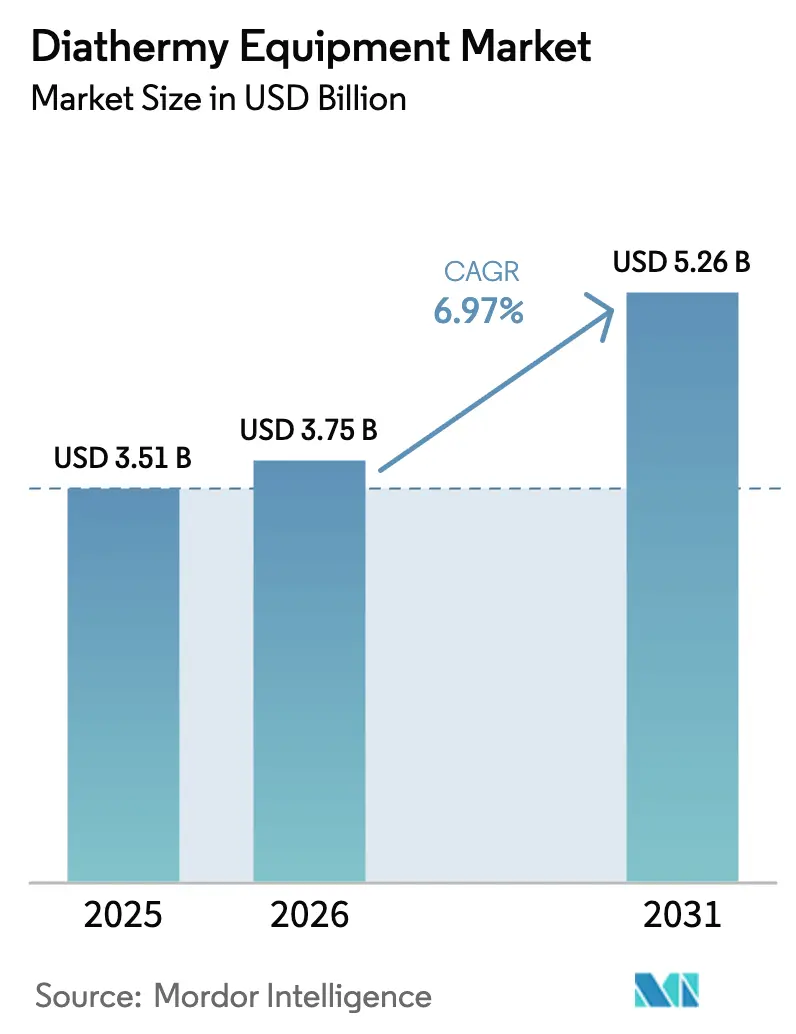
The Diathermy Equipment Market size was valued at USD 3.51 billion in 2025 and estimated to grow from USD 3.75 billion in 2026 to reach USD 5.26 billion by 2031, at a CAGR of 6.97% during the forecast period (2026-2031).
Robust expansion results from rising musculoskeletal disease prevalence, technology upgrades that lower treatment time, and outpatient care models that favor device-based therapies over manual interventions. Hospital procurement cycles remain steady, but physiotherapy chains and sports-injury clinics now drive incremental demand because diathermy enables deeper tissue heating that accelerates recovery and lowers opioid use risk. Vendor competition intensifies around electromagnetic-compatibility features since failed compliance can add USD 150,000 to product launch costs. Meanwhile, aging populations in North America and Europe, where adults ≥65 years will reach 84 million by 2054, amplify the need for non-pharmacological pain solutions that can be delivered in high-volume outpatient settings.
Key Report Takeaways
- By product category, microwave systems led with 42.35% of diathermy equipment market share in 2025 and ultrasound units are projected to expand at a 8.62% CAGR through 2031.
- By application, physical-therapy treatments accounted for 62.10% share of the diathermy equipment market size in 2025 and electrosurgery devices are forecast to advance at an 8.05% CAGR to 2031.
- By end user, hospitals held 47.65% revenue share in 2025, while physiotherapy centers record the highest projected CAGR at 10.35% through 2031.
- By geography, North America captured 35.72% revenue share in 2025; Asia-Pacific is set to register a 9.18% CAGR between 2026-2031.
Note: Market size and forecast figures in this report are generated using Mordor Intelligence’s proprietary estimation framework, updated with the latest available data and insights as of 2026.
Market Trends and Insights
Drivers Impact Analysis of Diathermy Equipment Market*
| Driver | (~) % Impact on CAGR Forecast | Geographic Relevance | Impact Timeline |
|---|---|---|---|
| Rising prevalence of musculoskeletal disorders | +1.8% | Global (higher in OECD nations) | Long term (≥ 4 years) |
| Growing demand for outpatient physical therapy | +1.5% | North America & EU, expanding in APAC | Medium term (2-4 years) |
| Rapid growth in sports-injury centers | +1.2% | Global (concentrated in developed) | Medium term (2-4 years) |
| Expanding geriatric population | +2.1% | Global, led by U.S. & Europe | Long term (≥ 4 years) |
| Integration into hybrid operating rooms | +0.9% | North America & EU | Short term (≤ 2 years) |
| Government-funded pain-management programs | +0.8% | North America & EU, selective APAC | Medium term (2-4 years) |
| Source: Mordor Intelligence | |||
Rising Prevalence of Musculoskeletal Disorders
Roughly 1.3 billion individuals lived with musculoskeletal conditions in 2024, and osteoarthritis alone affected 607 million people. Low-back pain ranks as the leading cause of disability among adults ≥55 years, pushing payers toward modalities that reduce long-term opioid use. Diathermy delivers deep, uniform heat that improves joint mobility with minimal staffing, making it a preferred first-line therapy in high-volume orthopedic clinics. Employers spend USD 353 billion annually on associated care and productivity losses, so workplace wellness programs now reimburse diathermy sessions to expedite return-to-work.
Growing Demand for Outpatient Physical-Therapy Services
Physiotherapy chains adopt portable short-wave and microwave units because they shorten each session to ≤15 minutes, letting a single therapist manage higher patient throughput. Chronic therapist shortages 12,070 FTE in 2025 make time-saving devices mission-critical for clinics that operate on per-visit reimbursement. CMS policies cover electromagnetic therapy for chronic wounds and nerve stimulation, giving outpatient centers predictable cash flows.
Rapid Growth in Sports-Injury Management Centers
Athletic-trainer employment will rise 22.8% between 2024-2030, and physical-therapist roles 28%, outpacing average job growth.[1] Elite sports facilities prize diathermy for its deep-heat advantage, which speeds ligament recovery by improving micro-circulation. Clinical trials using 433.9 MHz ultra-high-frequency systems show pain score reductions within 48 hours post-treatment. The technology integrates with strength-and-conditioning software, creating cloud-based dashboards that track thermal dose relative to range-of-motion gains, which justifies premium session pricing to professional teams.
Expanding Geriatric Population Pool
Adults ≥85 years consume triple the healthcare resources of 65-74-year-olds, a pattern that magnifies demand for non-invasive pain therapies. Focused ultrasound for myofascial pain achieves clinically meaningful relief without pharmacological co-therapy, appealing to seniors managing polypharmacy.[2] Workforce gaps—projected 400,000 home-health-aide shortage by 2025 push home-care agencies to trial portable diathermy devices, which weigh less than 680 g and can be self-applied under tele-supervision.
Restraints Impact Analysis of Diathermy Equipment Market*
| Restraint | (~) % Impact on CAGR Forecast | Geographic Relevance | Impact Timeline |
|---|---|---|---|
| Shortage of certified electro-therapy professionals | -1.4% | Global (acute in U.S., EU, Japan) | Medium term (2-4 years) |
| Contraindications for cancer & implant patients | -0.9% | Global (higher with aging) | Long term (≥ 4 years) |
| Device-specific reimbursement gaps | -1.1% | North America & EU | Short term (≤ 2 years) |
| Electromagnetic-interference compliance costs | -0.7% | Global (regulated markets) | Medium term (2-4 years) |
| Source: Mordor Intelligence | |||
Shortage of Certified Electro-Therapy Professionals
Electro-therapy requires additional credentials beyond general physiotherapy. VitalStim dysphagia certification needs 16 hours of coursework plus proctored competency checks. State boards, such as Ohio, mandate 1-2.5 CEUs on pulsed-short-wave physics before therapists can bill insurers. Staffing deficits therefore reduce clinic expansion velocity, particularly in rural U.S. counties where therapist density drops to 0.15 per 1,000 residents.
Contraindications for Cancer & Implant Patients
FDA device labels prohibit diathermy on individuals with pacemakers, cochlear implants, or spinal stimulators because induced currents can overheat leads and injure tissue.[3] Oncology guidelines restrict deep-heat therapies near tumor beds due to potential growth acceleration. As the implant-bearing population rises with cardiac and neuromodulation device adoption, these flags remove up to 9% of potential end users in high-income markets.
*Our forecasts treat driver/restraint impacts as directional, not additive. The impact forecasts reflect baseline growth, mix effects, and variable interactions.
Diathermy Equipment Market Segment Analysis
By Product:
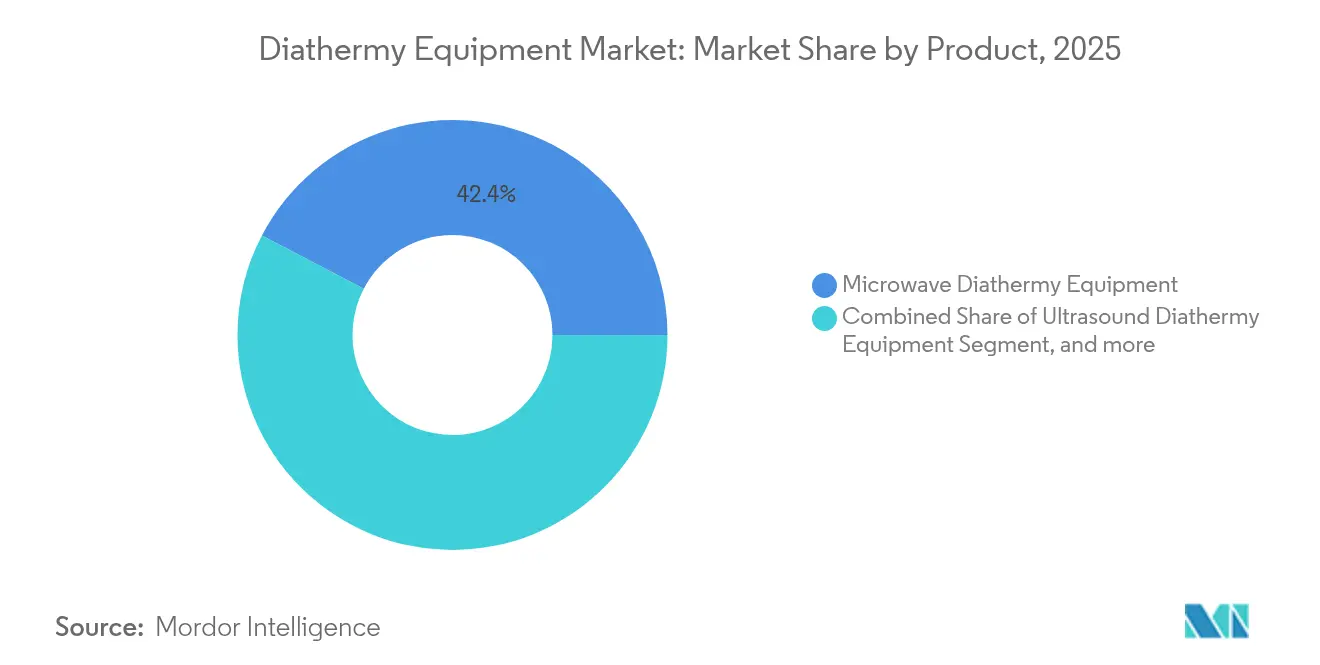
Microwave Dominance Amid Ultrasound InnovationMicrowave systems captured 42.35% of diathermy equipment market share in 2025, while ultrasound devices posted the highest 8.62% CAGR projection for 2026-2031, lifting the segment portion of diathermy equipment market size by 6 percentage points during the forecast horizon. Microwave units generate uniform deep heat at 915 MHz or 2,450 MHz without tuning, which simplifies setup in busy hospital physiotherapy suites. Clinics favor these platforms for chronic tendinopathy protocols that require 10-12 minutes of continuous heat.
Shot-wave diathermy remains relevant through pulsed modes that deliver athermal benefits, such as cell membrane permeability increases that accelerate soft-tissue repair. Yet growth shifts toward ultrasound because class II focused devices now treat diabetic microcirculatory disorders and myofascial pain. Lithuanian-patented ultrasonic foot stimulators improve dorsalis pedis flow by 29% within 4 weeks. Low-intensity focused ultrasound outperforms planar ultrasound on pain and Neck-Disability-Index scores after six sessions. FDA 510(k) clearances for portable devices such as PainShield MD legitimize home-use models, expanding direct-to-consumer channels.
Technological convergence spurs hybrid platforms that combine ultrasound imaging with diathermy output, letting therapists visualize dose-response in real time. Vendors market AI-driven algorithms that auto-calibrate power to patient adiposity, which reduces overheating risk in obese cohorts.

By Application:
Physical Therapy Leadership with Electrosurgery AccelerationPhysical-therapy indications commanded 62.10% of the diathermy equipment market size in 2025 as back pain, osteoarthritis, and fibromyalgia cases grew among adults ≥45 years. Transcutaneous electrical nerve stimulation studies demonstrate moderate efficacy for chronic low-back pain, leading insurers to reimburse up to 20 visits per episode. Electrical muscle stimulation improves quadriceps strength post-total knee arthroplasty faster than passive modalities.
Electrosurgery shows the fastest 8.05% CAGR, boosted by hybrid operating rooms and ambulatory surgery centers. Pulse-field ablation platforms like VARIPULSE recorded 74.4% effectiveness in preventing atrial-fibrillation recurrence at 12 months. Zimmer Biomet generates 20% of U.S. revenue from ASC customers who prefer multi-function electrosurgical towers that reduce footprint. Devices now embed active-electrode-monitor circuits to comply with IEC-displacement current limits, minimizing stray burns and increasing surgeon confidence.
By End User:
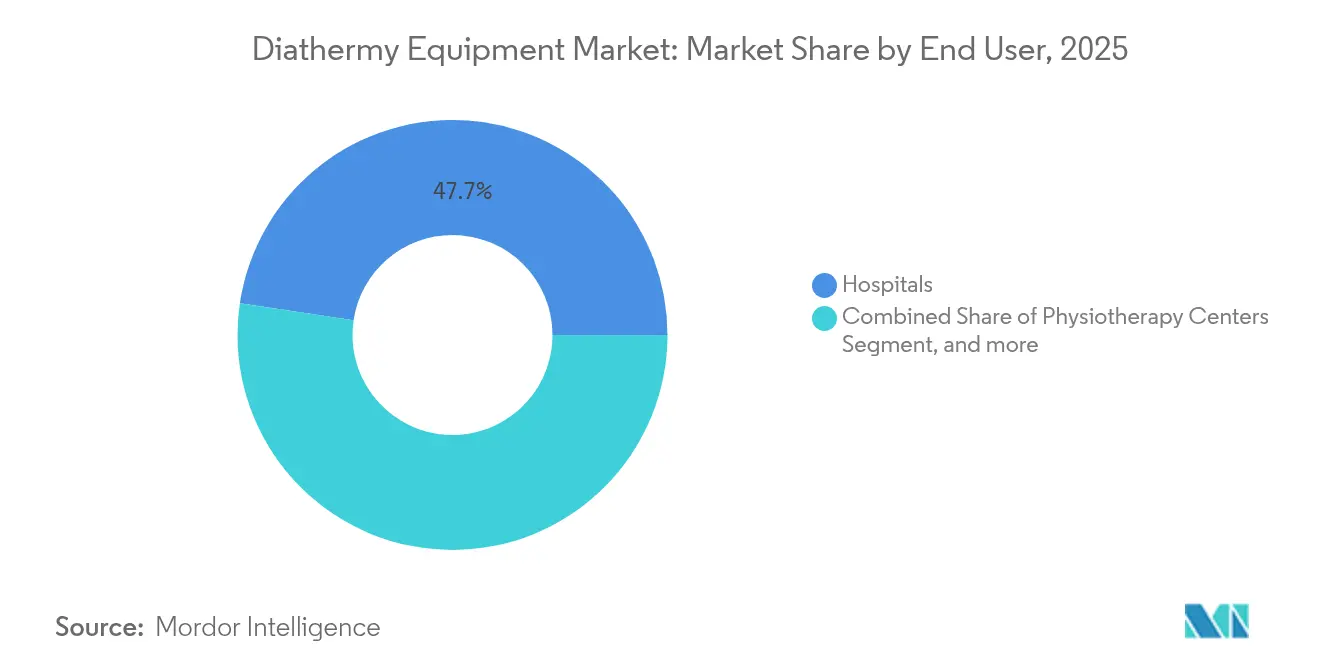
Hospital Dominance with Physiotherapy Center SurgeHospitals retained 47.65% revenue in 2025, using diathermy both in rehab wards and OR suites. Hybrid OR investment cycles favor suppliers that bundle microwave, short-wave, and electrosurgical modules in integrated carts. Inpatient stroke units employ pulsed-short-wave to manage post-spasticity shoulder pain, cutting average length of stay by 1.2 days in pilot programs.
Physiotherapy centers post the strongest 10.35% CAGR, elevating their slice of diathermy equipment market share as aging populations prefer community-based care. Orthopedic urgent-care chains doubled visit volumes, with 70% requiring imaging plus modality therapy. Medicare’s coverage for home-based electromagnetic therapy catalyzes mobile-therapist models that carry compact 180-W units weighing less than 1 kg. Certification-heavy protocols create entry barriers, so large clinic networks invest in workforce development alliances with device makers, mirroring VitalStim’s dysphagia partnership model.
Geography Analysis
The Americas, APAC and EMEA Diathermy Equipment Market
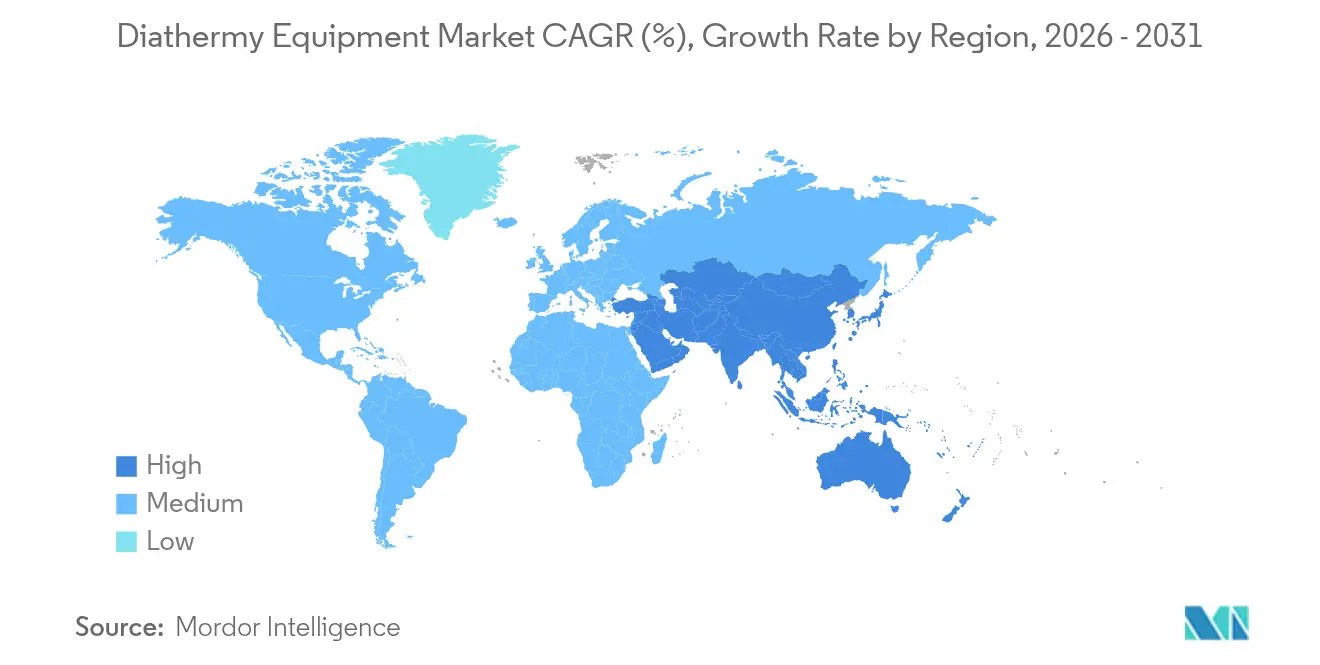
North America controlled 35.72% of diathermy equipment market size in 2025 thanks to Medicare coverage determinations for electromagnetic therapies and FDA clarity on Class II/III pathways. Centenarian counts will quadruple to 420,000 by 2054, sustaining demand, while a combined shortage of 100,000 registered nurses during 2020-2021 pushes hospitals to favor modalities that lower bedside workloads. Asia-Pacific delivers the fastest 9.18% CAGR on a base of rising GDP per capita and rapid private-hospital build-outs. The region’s medtech sector should reach USD 225 billion by 2030 despite a 22% fall in venture funding since 2021. Malaysian health budgets climbed 13.5% year-on-year in 2024, earmarking funds for rehabilitation equipment, and ASEAN countries see ≥22.2% of citizens aging above 60 years by 2050. Private-equity inflows accelerate as governments cap spending growth, supporting device leasing programs that reduce upfront capital hurdles. Europe maintains mid-single-digit growth due to stable reimbursement, while Middle East & Africa plus South America emerge as long-term prospects where urban hospital networks adopt diathermy to meet orthopedic-injury burdens from traffic accidents.
Competitive Landscape
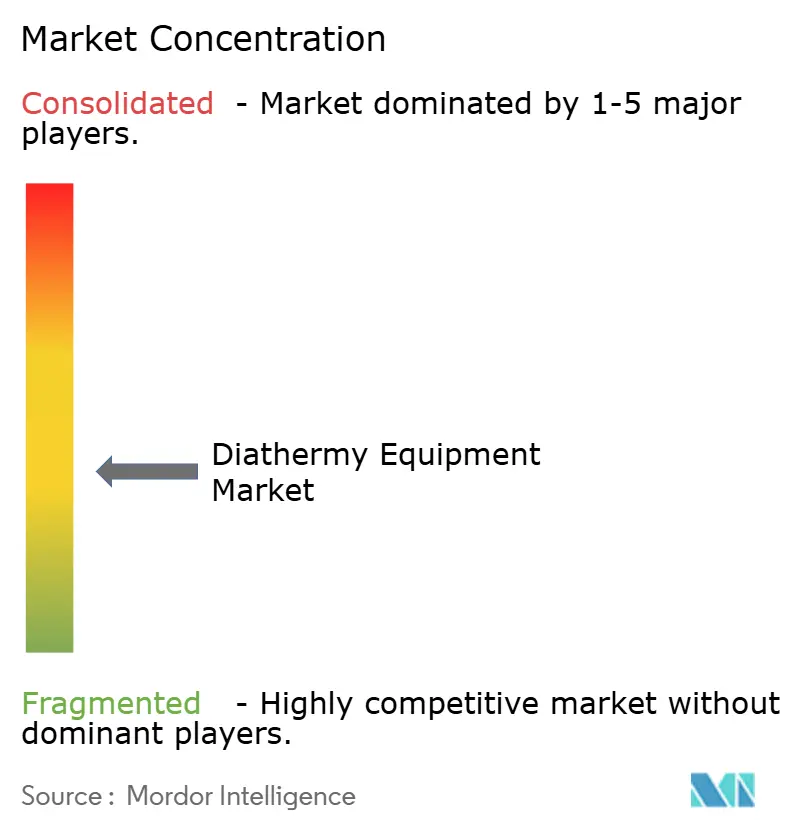
The diathermy equipment market remains moderately fragmented. Players differentiate through electromagnetic-compatibility designs to navigate IEC 60601-1-2:2014. Passing immunity and emissions tests on the first try provides a marketing edge, as failures can inflate launch costs by more than USD 150,000.
Strategic activity centers on innovation in portable systems and hybrid-OR integration. ReGear Life Sciences pioneered smartphone-controlled wearable diathermy that weighs 320 g, targeting chronic-pain tele-rehab programs. BTL Industries’ EXOMIND uses ExoTMS for depression treatment and posted USD 220 million in 2025 sales, proving cross-modality expansion potential. Large conglomerates pursue acquisitions to broaden cardio-vascular and electrosurgical portfolios that share RF-energy platforms, as seen in Stryker’s USD 4.9 billion purchase of Inari Medical. Manufacturers also co-fund therapist-education programs, securing brand loyalty while addressing labor shortages.
Diathermy Equipment Industry Leaders
-
EMS Physio Ltd
-
Life Care Systems
-
Physio International
-
Zimmer MedizinSysteme GmbH
-
BTL Industries
- *Disclaimer: Major Players sorted in no particular order
Diathermy Equipment Market Companies Covered in this Report
- BTL
- Zimmer MedizinSysteme
- Chattanooga (DJO Global)
- EMS Physio
- Enraf-Nonius
- PHYSIOMED Elektromedizin AG
- Richmar (Compass Health)
- ITO Co. Ltd
- Mettler Electronics
- Winback Group
- HMS Medical system
- Spark Meditech
- Physio International
- Life Care Systems
- TechnoMed
- Schiller Healthcare India Pvt Ltd
- Mega Healthcare
- Physio International
- GBo Medizintechnik AG
- Sometech Inc
Recent Industry Developments in Diathermy Equipment Market
- June 2025: Stryker Corporation completed the acquisition of Inari Medical for USD 4.9 billion, providing entry into the high-growth peripheral vascular segment and expanding capabilities in venous thromboembolism treatment, which affects up to 900,000 individuals annually in the U.S.
- February 2025: Teleflex Incorporated announced the acquisition of BIOTRONIK's Vascular Intervention business for approximately EUR 760 million (USD 820 million), enhancing its interventional portfolio with drug-coated balloons and stents while strengthening its position in the USD 10 billion interventional cardiology and peripheral vascular market
- January 2025: BTL Industries unveiled EXOMIND, a non-invasive brain stimulation treatment using ExoTMS technology for mental wellness, receiving FDA clearance for depression and approvals in Canada and Europe for various mental health conditions, with the company reporting over USD 220 million in global sales.
- March 2024: A new diathermy machine was installed in the Physiotherapy Department of Kasturba Hospital in Bhopal, India. This new diathermy machine helps diagnose back pain, cervical spondylitis, knee pain, frozen solder, and joint pain. Continuous efforts are being made to expand the facilities to treat patients in the hospital.
Global Diathermy Equipment Market Report Scope
As per the scope of the report, diathermy equipment uses energy sources to deep-heat areas of the body. Rather than a heat source, diathermy uses sources like electricity and sound, which the body converts into heat. The heat generated aids in improving blood circulation, increasing tissue mobility, reducing inflammation, and relieving pain. Diathermy treats musculoskeletal disorders such as joint pains, sprains, neuromas, back pains, arthritis, fibromyalgia, myositis, tendonitis, bursitis, and tenosynovitis.
The diathermy equipment market is segmented into product, application, end-user, and geography. By product, the market is segmented into microwave diathermy equipment, shortwave diathermy equipment, and ultrasound diathermy equipment. By application, the market is segmented into physical therapy and electrosurgery. By end user, the market is segmented into hospitals, clinics, physiotherapy centers, and other end users. By geography, the market is segmented into North America, Europe, Asia-Pacific, South America, and Middle East and Africa. The report also offers the market size and forecasts for 17 regional countries. For each segment, the market sizing and forecasts are made based on value (USD).
Segmentation Overview
| Microwave Diathermy Equipment |
| Shortwave Diathermy Equipment |
| Ultrasound Diathermy Equipment |
| Physical Therapy |
| Electrosurgery |
| Hospitals |
| Clinics |
| Physiotherapy Centers |
| Other End Users |
| North America | United States |
| Canada | |
| Mexico | |
| Europe | Germany |
| United Kingdom | |
| France | |
| Italy | |
| Spain | |
| Rest of Europe | |
| Asia-Pacific | China |
| Japan | |
| India | |
| Australia | |
| South Korea | |
| Rest of Asia-Pacific | |
| Middle East & Africa | GCC |
| South Africa | |
| Rest of Middle East & Africa | |
| South America | Brazil |
| Argentina | |
| Rest of South America |
| By Product | Microwave Diathermy Equipment | |
| Shortwave Diathermy Equipment | ||
| Ultrasound Diathermy Equipment | ||
| By Application | Physical Therapy | |
| Electrosurgery | ||
| By End User | Hospitals | |
| Clinics | ||
| Physiotherapy Centers | ||
| Other End Users | ||
| By Geography | North America | United States |
| Canada | ||
| Mexico | ||
| Europe | Germany | |
| United Kingdom | ||
| France | ||
| Italy | ||
| Spain | ||
| Rest of Europe | ||
| Asia-Pacific | China | |
| Japan | ||
| India | ||
| Australia | ||
| South Korea | ||
| Rest of Asia-Pacific | ||
| Middle East & Africa | GCC | |
| South Africa | ||
| Rest of Middle East & Africa | ||
| South America | Brazil | |
| Argentina | ||
| Rest of South America | ||
Key Questions Answered in the Report
What is the current value of the diathermy equipment market?
The market stands at USD 3.75 billion in 2026 and is on track to reach USD 5.26 billion by 2031.
Which product type leads sales?
Microwave systems command 42.35% of 2025 global revenue.
Which region is expanding fastest?
Asia-Pacific is forecast to grow at a 9.18% CAGR between 2026-2031.
Why are physiotherapy centers investing in diathermy?
They face therapist shortages and rely on fast-acting devices to raise patient throughput, driving a 10.35% CAGR.
What key standard affects device launches?
IEC 60601-1-2:2014, which tightens electromagnetic-immunity thresholds and raises compliance costs.