
Continence Care Market Size and Share
| Study Period | 2019 - 2030 |
| Market Size (2025) | USD 7.77 Billion |
| Market Size (2030) | USD 10.45 Billion |
| CAGR (2025 - 2030) | 6.11% |
| Fastest Growing Market | Asia |
| Largest Market | North America |
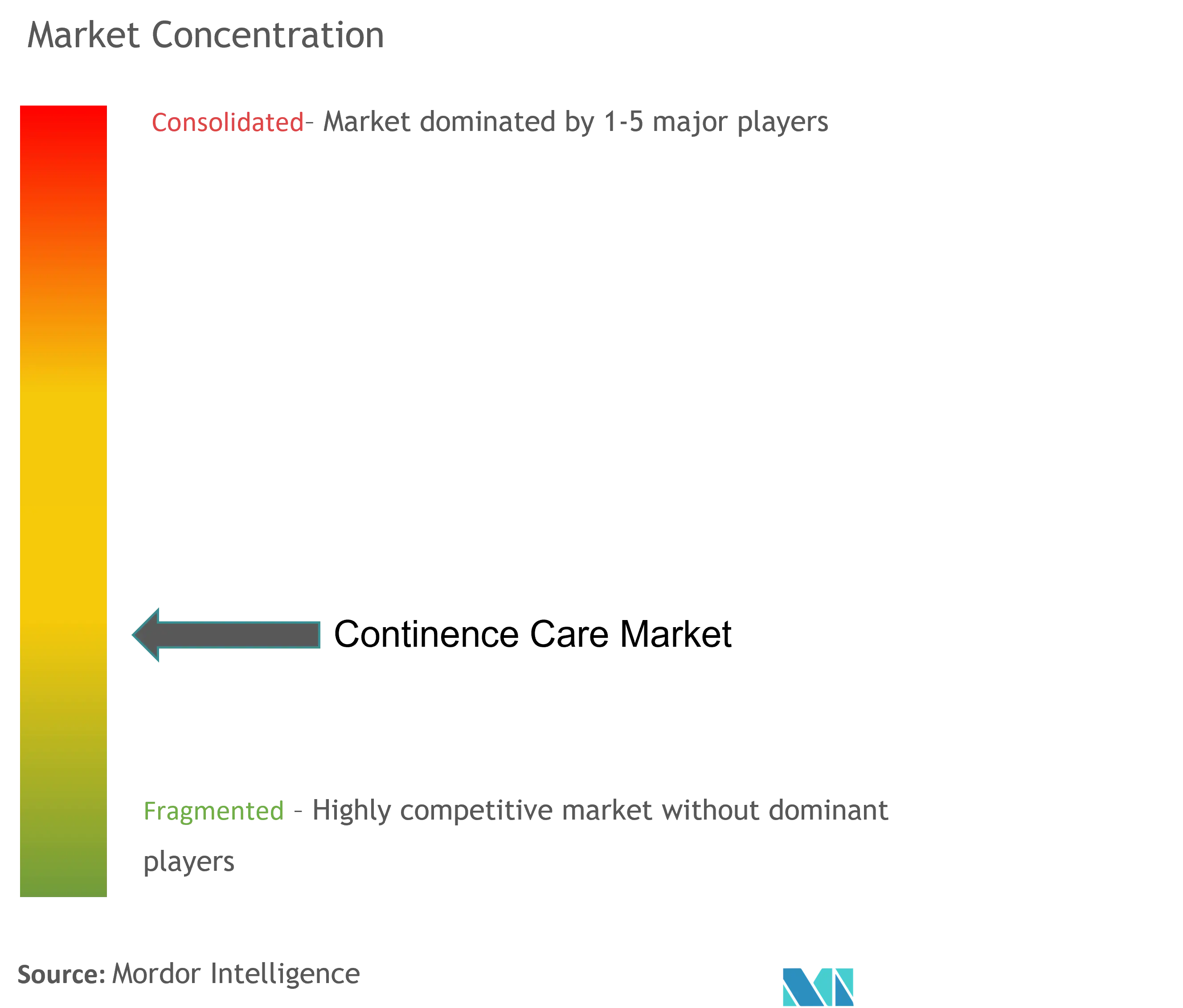
| Market Concentration | High |
Major Players *Disclaimer: Major Players sorted in no particular order |
Continence Care Market Analysis by Mordor Intelligence
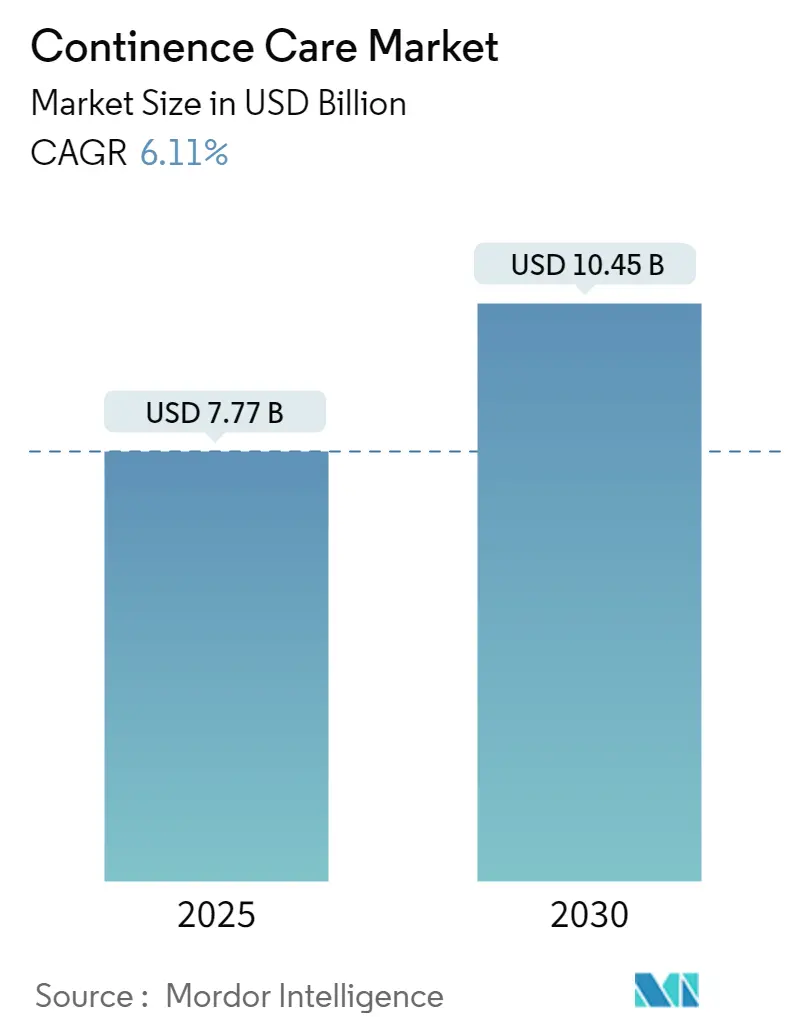
The Continence Care Market size is estimated at USD 7.77 billion in 2025, and is expected to reach USD 10.45 billion by 2030, at a CAGR of 6.11% during the forecast period (2025-2030).
The continence care market is anticipated to grow due to the high burden of incontinence and chronic diseases, increasing demand for minimally invasive continence care products and technological advancements, and the rising geriatric population.
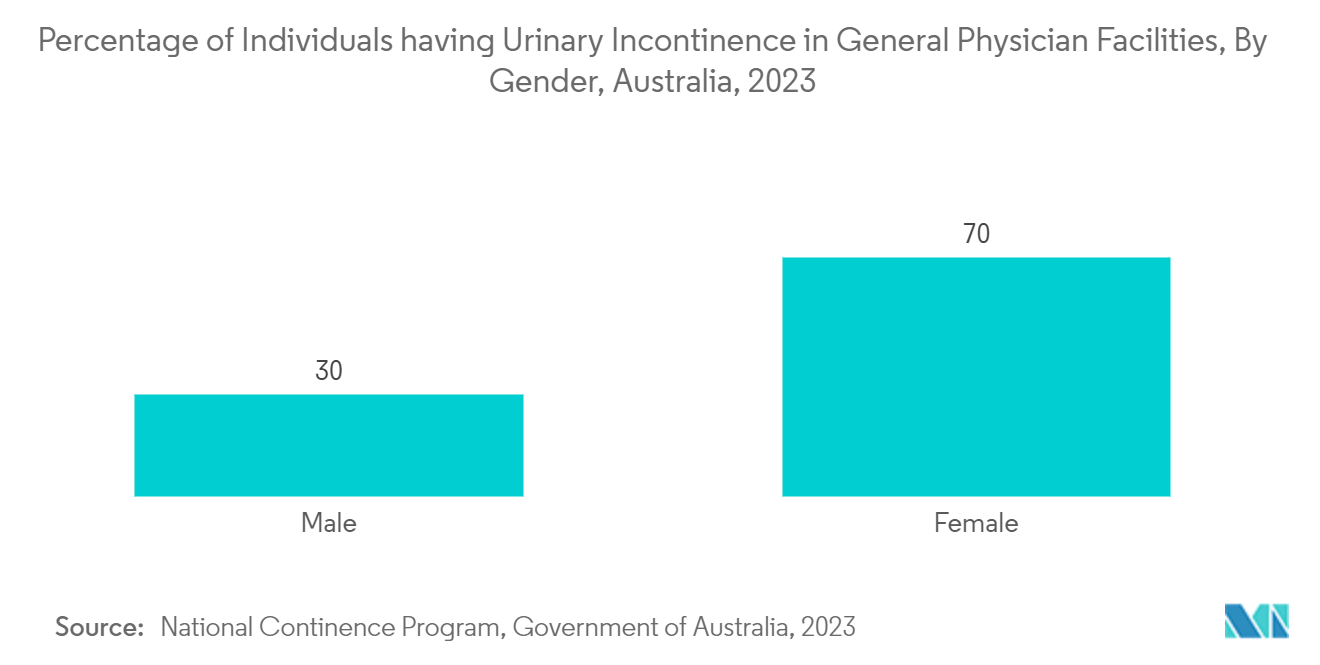
Several sources have highlighted that the prevalence of incontinence and chronic diseases, such as diabetes, urinary tract infections, and kidney stones, are on the rise, which is anticipated to create a large patient base for incontinence that will boost the demand for continence care products. For instance, the data published by the BMC Urology Journal in December 2023 mentioned that in Turkey, 8.8% of the population experienced urinary incontinence, with a significant gender gap. Women were disproportionately affected, with a prevalence of 11.2%, compared to 5.5% in men. Additionally, another article published in the DovePress in August 2023 mentioned that female urinary incontinence (UI) affected 24.8% of women studied in Southeastern China, with stress UI being the most prevalent subtype at 12.7%. Mixed UI was the second most common subtype at 8.0%, followed by urgency UI at 4.1%. Thus, due to the high prevalence of urinary incontinence, the demand for continence care products is expected to rise and drive market growth.
Moreover, underlying chronic medical diseases such as diabetes also cause urinary incontinence, and their increasingly high prevalence is expected to expand the number of patients, which will elevate the demand for continence care products. For instance, according to data updated by the International Diabetes Federation in 2024, the number of diabetes cases is estimated to increase, reaching 643 million by 2030 and 783 million by 2045. Additionally, an article published in the JU Open Plus Journal in January 2024 mentioned that kidney stones are estimated to affect 9.9% of the US population, which accounts for approximately 23.7 million people. Thus, with such a vast patient base of diabetic and kidney stone patients, the demand for continence care products is expected to increase to manage urinary incontinence cases, boosting market growth.
In addition, several market players have received regulatory approval and launched advanced and minimally invasive products, increasing the penetration of continence care products. This is expected to boost market growth in the coming years. For instance, in April 2023, Avation Medical Inc. received the US Food and Drug Administration’s (FDA) 510(k) clearance for its Vivally System. The device is a non-invasive bladder control therapy device and mobile application that is intended to treat urinary urgency and urge urinary incontinence (UUI) caused by overactive bladder syndrome. Additionally, in January 2023, Zida launched its neuromodulation device garment, the Zida Control Sock, which is intended to manage overactive bladder and incontinence symptoms. The device stimulates the transcutaneous tibial nerve to treat overactive bladder and incontinence.
Further, in June 2022, Valencia Technologies Corporation completed the world's first commercial implantation of eCoin in the United States. The device is a tibial neurostimulator indicated for the treatment of urge urinary incontinence. Also, in March 2022, Valencia Technologies Corporation received premarket approval (PMA) from the US Food and Drug Administration for its eCoin, which is a leadless tibial neurostimulator. Thus, with the launch of such advanced products for incontinence management, the market penetration and adoption of continence products will increase. These factors are anticipated to boost market growth in the coming years.
Therefore, owing to the factors above, such as the high prevalence of urinary incontinence and chronic diseases, along with new product launches, the market is anticipated to grow over the forecast period. However, the lack of awareness about incontinence and skilled continence care specialists and the high cost of the products are likely to impede market growth.
Global Continence Care Market Trends and Insights
The Electrical Stimulation Devices Segment is Expected to Witness Significant Growth Over the Forecast Period
Electrical stimulation devices send mild electric currents to nerves in the lower back, pelvic muscles, and sacral nerves involved in urination to manage urinary and fecal incontinence. The segment is expected to witness significant growth over the forecast period, given the benefits offered by the devices and the recent developments by the market players.
Research studies have highlighted the device's effectiveness, which is anticipated to attract more demand from the patient base and boost the segment's growth in the coming years. For instance, a study published in the Frontiers in Neurology in September 2022 mentioned that intravaginal electrical stimulation demonstrated efficacy for managing urinary incontinence symptoms. Further, a study published in the Journal of Spinal Cord Medicine in May 2023 showed that minimal invasive electrical rectal stimulation improved bowel emptying in patients with spinal cord injury. Such studies demonstrate the efficacy of electrical stimulation for incontinence management, which is anticipated to increase the adoption of these devices and will increase the segment's growth in the coming years.
Furthermore, the recent developments by the market players in electrical stimulation devices are expected to increase the penetration of the devices in the market, which is expected to boost the segment's growth. For instance, in May 2023, Elidah launched its first and only non-intrusive treatment for urge incontinence, ELITONE URGE. The device is an external, non-implanted muscle stimulator that treats urgency bladder and urinary incontinence. Further, in April 2022, Axonics Inc. launched its recharge-free sacral neuromodulation (SNM) system, Axonics F15, in the United States.
Therefore, the electrical stimulation devices segment is expected to witness significant growth over the forecast period due to the abovementioned factors, including its high efficacy and the recent developments by the market players.
North America is Expected to Witness Significant Growth Over the Forecast Period
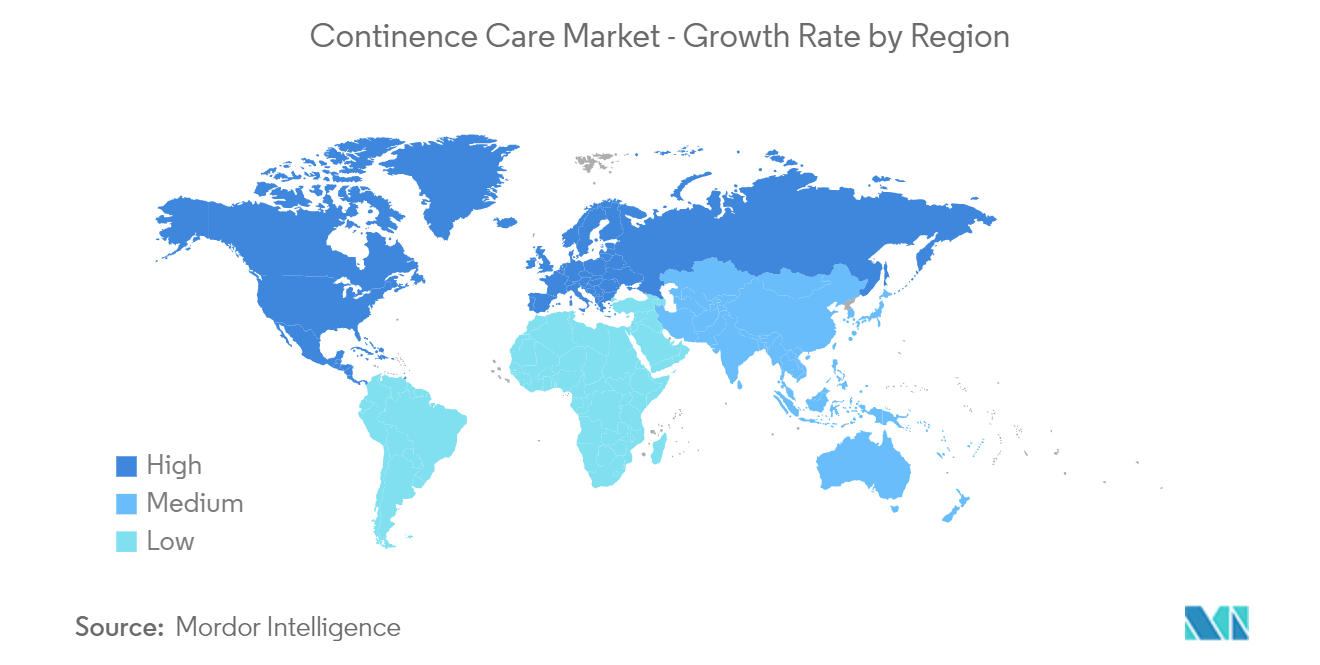
North America is expected to witness significant growth over the forecast period owing to factors such as the considerable burden of incontinence and underlying chronic diseases, the vast geriatric population, and recent developments by the market players.
The region has significant numbers of urology issues, which is anticipated to create a vast patient base with an elevated demand for continence care products to manage the condition effectively. For instance, according to the data published by Female Pelvic Medicine & Reconstructive Surgery in April 2022, the prevalence of urinary incontinence among adult women in the United States has increased in the past few years. The source stated that the overall prevalence of urinary incontinence in adult women aged 20 years and above was approximately 62%, which was equivalent to more than 78 million women in the United States. Thus, the high prevalence of urinary incontinence among women in the region is expected to fuel the demand for its care products and drive market growth in the area.
Further, the report published by the Canadian Diabetes Association in July 2023 mentioned that the prevalence of diabetes was 5.83 million in 2023, and it is expected to reach 7.41 million by 2033 in Canada. Thus, the increasing burden of diabetes will increase the risks of urinary incontinence and boost the demand for continence care products in the region.
Additionally, the prevalence of urinary incontinence is higher in the geriatric population; therefore, with the vast geriatric population base, the demand for continence care products is anticipated to increase, boosting the market growth during the forecast period. Moreover, as per the data published by Statistics Canada in July 2023, the population of the age group of 75 to 79 years has increased from 2022 to 2023, i.e., 1.38 million in 2022 to 1.46 million in 2023 in Canada. Further, according to the US Census Bureau 2022 report, it is projected that there will be more than 73.1 million older adults in the United States. By 2050, there will be an estimated 85.7 million adults aged 65 and older, or about 22% of the country's total population. Thus, with the region's rising geriatric population, the risk for urinary problems and other chronic diseases is expected to increase, fueling the demand for continence care products and boosting market growth in the region.
Furthermore, the recent developments by the market players in incontinence care products in North America are anticipated to increase market penetration and boost regional market growth. For instance, in April 2023, UroMems received the designation of Safer Technologies Program (STeP) from the US Food and Drug Administration (USFDA) for its UroActive smart continence therapy. Further, in January 2023, Coloplast launched its new catheter, SpeediCath Flex Set, in the United States, which is intended for the management of bladder and urinary problems in patients with urinary tract infections, spinal cord injuries, and others. These regulatory developments and product launches are expected to increase the availability of more continence care products in North America, boosting the regional market during the forecast period.
Therefore, with the significant burden of incontinence, chronic diseases, the vast geriatric population, and the recent developments by the market players, the North American market is anticipated to witness significant growth over the forecast period.
Competitive Landscape
The continence care market is competitive in nature due to the presence of several companies operating globally as well as regionally. The leading players operating in the market include Boston Scientific Corporation, Becton, Dickinson and Company (C R Bard Inc.), Coloplast Group, Medtronic PLC, and Teleflex Incorporated.
Continence Care Industry Leaders
-
Boston Scientific Corporation
-
Becton, Dickinson and Company (C R Bard Inc.)
-
Colopast Group
-
Medtronic PLC
-
Teleflex Incorporated
- *Disclaimer: Major Players sorted in no particular order
Recent Industry Developments
- May 2024: Watkins-Conti received the US Food and Drug Administration (FDA) 510(k) clearance for its Yoni. Fit bladder support device. The device can temporarily relieve urine leakage due to stress urinary incontinence (SUI) in adult females.
- April 2024: Medline expanded its catheter portfolio with the QiVi MEC male external urine management device. This device offers a safe and effective solution for managing male urinary incontinence and helps prevent catheter-associated urinary tract infections (CAUTI) and incontinence-associated dermatitis (IAD).
Global Continence Care Market Report Scope
As per the scope of the report, continence care products include medical devices, accessories, and products used to manage incontinence, which is caused by the loss of control over the pelvic muscles due to underlying chronic disease or spinal bifida or injury. The continence care market is segmented by product, indication, end-user, and geography. By product, the market is segmented into urinary catheters, non-implanting electric stimulation devices, protective garments, urine bags, bowel management products, and other products. By urinary catheters, the market is further sub-segmented into indwelling (foley)catheters, intermittent catheters, and external catheters. By non-implanting electric stimulation devices, the market is further sub-segmented into urethral slings, electrical stimulation devices, and artificial urinary sphincters. By protective garments, the market is further sub-segmented into disposable adult diapers, disposable underpads, and disposable pull-up pants. By urine bag, the market is further sub-segmented into leg urine bags and bedside urine bags. By bowel management products, the market is further sub-segmented into anal plugs, bowel irrigation systems, and enemas. By indication, the market is segmented into fecal incontinence care, urinary incontinence care, and other indications. By end user, the market is segmented into acute care facilities, long-term care facilities, home care, and other end users. By geography, the market is segmented into North America, Europe, Asia-Pacific, Middle East and Africa, and South America. For each segment, the market size is provided in terms of value (USD).
| Urinary Catheter | Indwelling (Foley) Catheters |
| Intermittent Catheters | |
| External Catheters | |
| Non-Implanting Electric Stimulation Devices | Urethral Slings |
| Electrical Stimulation Devices | |
| Artificial Urinary Sphincters | |
| Protective Garments | Disposable Adult Diapers |
| Disposable Under Pads | |
| Disposable Pull Up Pants | |
| Urine Bag | Leg Urine Bag |
| Bedside Urine Bag | |
| Bowel Management Products | Anal Plug |
| Bowel Irrigation System | |
| Enemas | |
| Other Products |
| Fecal Incontinence Care | |
| Urinary Incontinence Care | Stress incontinence |
| Urge incontinence | |
| Mixed incontinence | |
| Other Incontinence | |
| Other Indications |
| Acute Care Facilities |
| Long-Term Care Facilities |
| Home Care |
| Other End Users |
| North America | United States |
| Canada | |
| Mexico | |
| Europe | Germany |
| United Kingdom | |
| France | |
| Italy | |
| Spain | |
| Rest of Europe | |
| Asia-Pacific | China |
| Japan | |
| India | |
| Australia | |
| South Korea | |
| Rest of Asia-Pacific | |
| Middle East and Africa | GCC |
| South Africa | |
| Rest of Middle East and Africa | |
| South America | Brazil |
| Argentina | |
| Rest of South America |
| By Product | Urinary Catheter | Indwelling (Foley) Catheters |
| Intermittent Catheters | ||
| External Catheters | ||
| Non-Implanting Electric Stimulation Devices | Urethral Slings | |
| Electrical Stimulation Devices | ||
| Artificial Urinary Sphincters | ||
| Protective Garments | Disposable Adult Diapers | |
| Disposable Under Pads | ||
| Disposable Pull Up Pants | ||
| Urine Bag | Leg Urine Bag | |
| Bedside Urine Bag | ||
| Bowel Management Products | Anal Plug | |
| Bowel Irrigation System | ||
| Enemas | ||
| Other Products | ||
| By Indication | Fecal Incontinence Care | |
| Urinary Incontinence Care | Stress incontinence | |
| Urge incontinence | ||
| Mixed incontinence | ||
| Other Incontinence | ||
| Other Indications | ||
| By End User | Acute Care Facilities | |
| Long-Term Care Facilities | ||
| Home Care | ||
| Other End Users | ||
| By Geography | North America | United States |
| Canada | ||
| Mexico | ||
| Europe | Germany | |
| United Kingdom | ||
| France | ||
| Italy | ||
| Spain | ||
| Rest of Europe | ||
| Asia-Pacific | China | |
| Japan | ||
| India | ||
| Australia | ||
| South Korea | ||
| Rest of Asia-Pacific | ||
| Middle East and Africa | GCC | |
| South Africa | ||
| Rest of Middle East and Africa | ||
| South America | Brazil | |
| Argentina | ||
| Rest of South America | ||
Key Questions Answered in the Report
How big is the Continence Care Market?
The Continence Care Market size is expected to reach USD 7.77 billion in 2025 and grow at a CAGR of 6.11% to reach USD 10.45 billion by 2030.
What is the current Continence Care Market size?
In 2025, the Continence Care Market size is expected to reach USD 7.77 billion.
Who are the key players in Continence Care Market?
Boston Scientific Corporation, Becton, Dickinson and Company (C R Bard Inc.), Colopast Group, Medtronic PLC and Teleflex Incorporated are the major companies operating in the Continence Care Market.
Which is the fastest growing region in Continence Care Market?
Asia is estimated to grow at the highest CAGR over the forecast period (2025-2030).
Which region has the biggest share in Continence Care Market?
In 2025, the North America accounts for the largest market share in Continence Care Market.
What years does this Continence Care Market cover, and what was the market size in 2024?
In 2024, the Continence Care Market size was estimated at USD 7.30 billion. The report covers the Continence Care Market historical market size for years: 2019, 2020, 2021, 2022, 2023 and 2024. The report also forecasts the Continence Care Market size for years: 2025, 2026, 2027, 2028, 2029 and 2030.
Continence Care Market Report
Statistics for the 2025 Continence Care market share, size and revenue growth rate, created by Mordor Intelligence™ Industry Reports. Continence Care analysis includes a market forecast outlook for 2025 to 2030 and historical overview. Get a sample of this industry analysis as a free report PDF download.