
Beauty Tools Market Size and Share
Market Overview
| Study Period | 2021 - 2031 |
|---|---|
| Market Size (2026) | USD 20.84 Billion |
| Market Size (2031) | USD 29.57 Billion |
| Growth Rate (2026 - 2031) | 7.25 % |
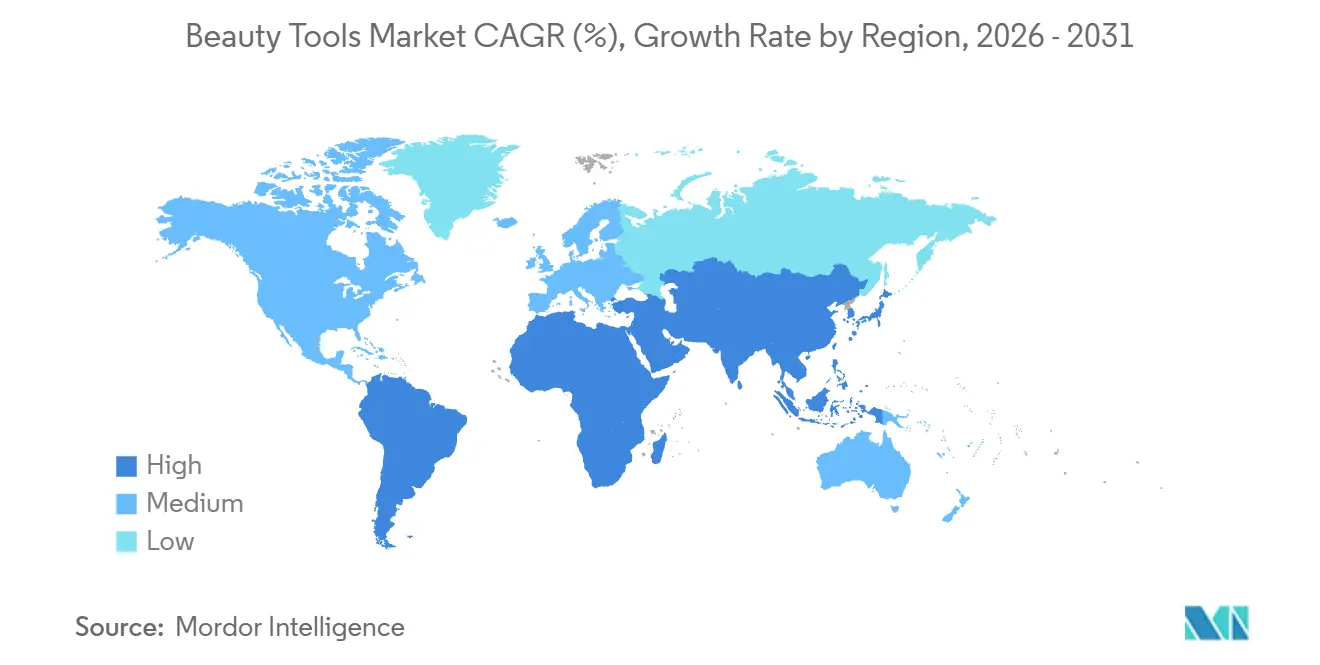
| Fastest Growing Market | Middle East and Africa |
| Largest Market | Asia-Pacific |
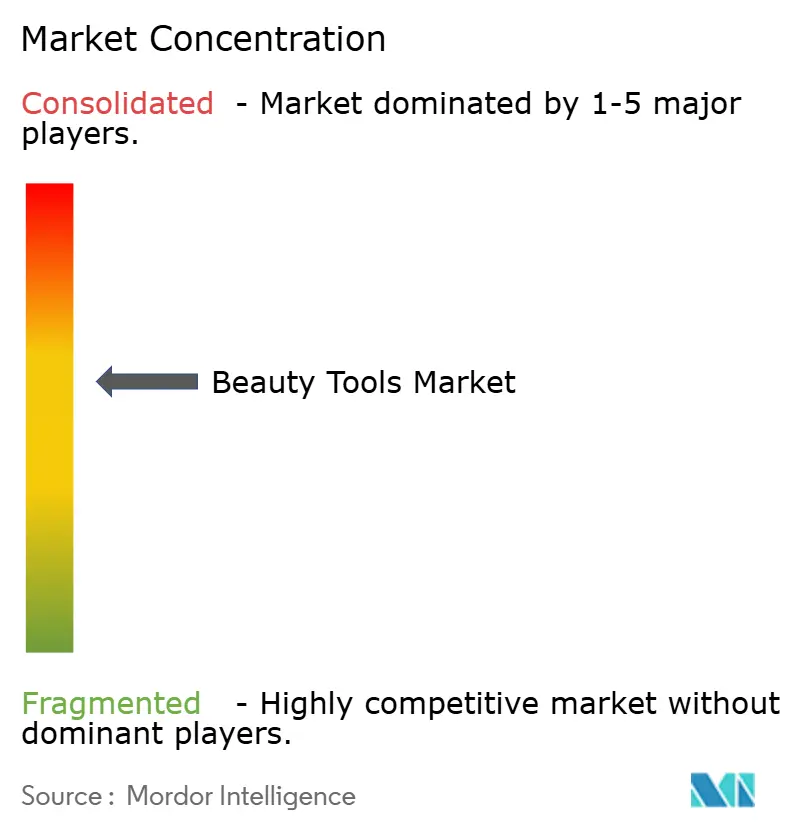
| Market Concentration | Medium |
Major Players
*Disclaimer: Major Players sorted in no particular order Image © Mordor Intelligence. Reuse requires attribution under CC BY 4.0. |
|
Beauty Tools Market Analysis by Mordor Intelligence
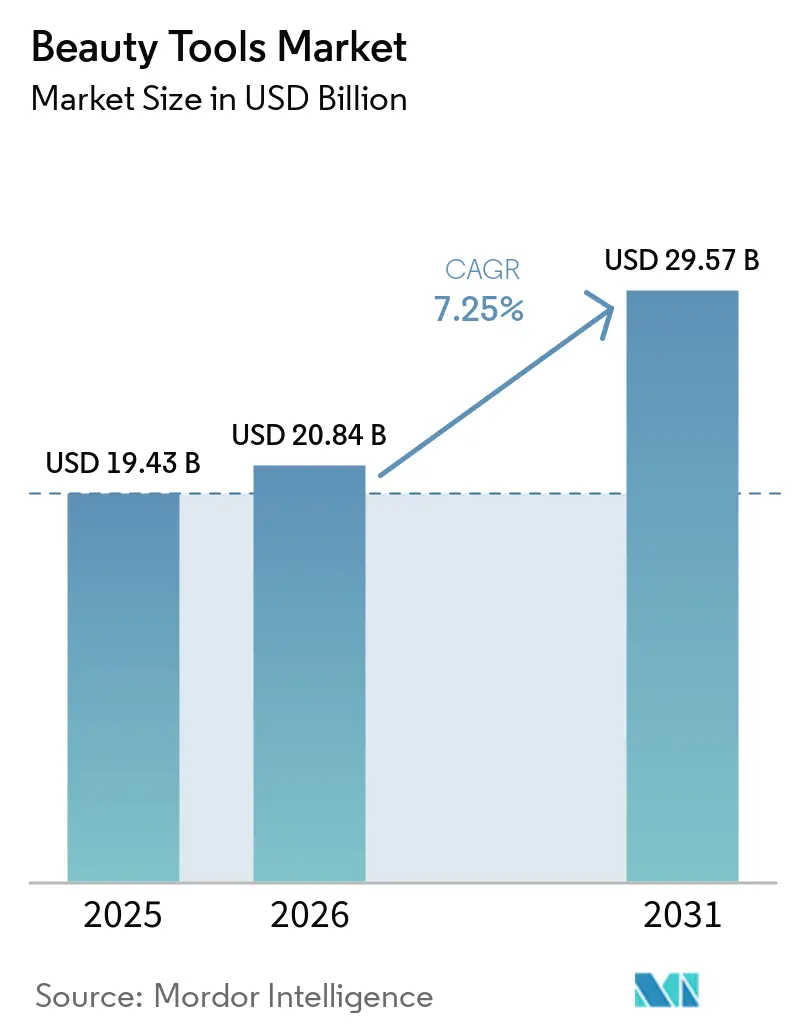
The Beauty Tools Market size is projected to be USD 19.43 billion in 2025, USD 20.84 billion in 2026, and reach USD 29.57 billion by 2031, growing at a CAGR of 7.25% from 2026 to 2031. The market growth stems from increasing consumer adoption of at-home professional treatments and advanced personal care devices. Consumers are investing in tools like facial rollers, gua sha stones, and electronic cleansing devices for professional-quality skincare routines at home. The integration of smart technology in beauty tools, such as customizable hair styling devices is attracting tech-savvy consumers. Higher disposable incomes in emerging economies and growing beauty consciousness through social media platforms continue to influence consumer purchasing patterns. The rise of beauty influencers and tutorial content has educated consumers about various beauty tools and their benefits, driving market expansion.
Key Report Takeaways
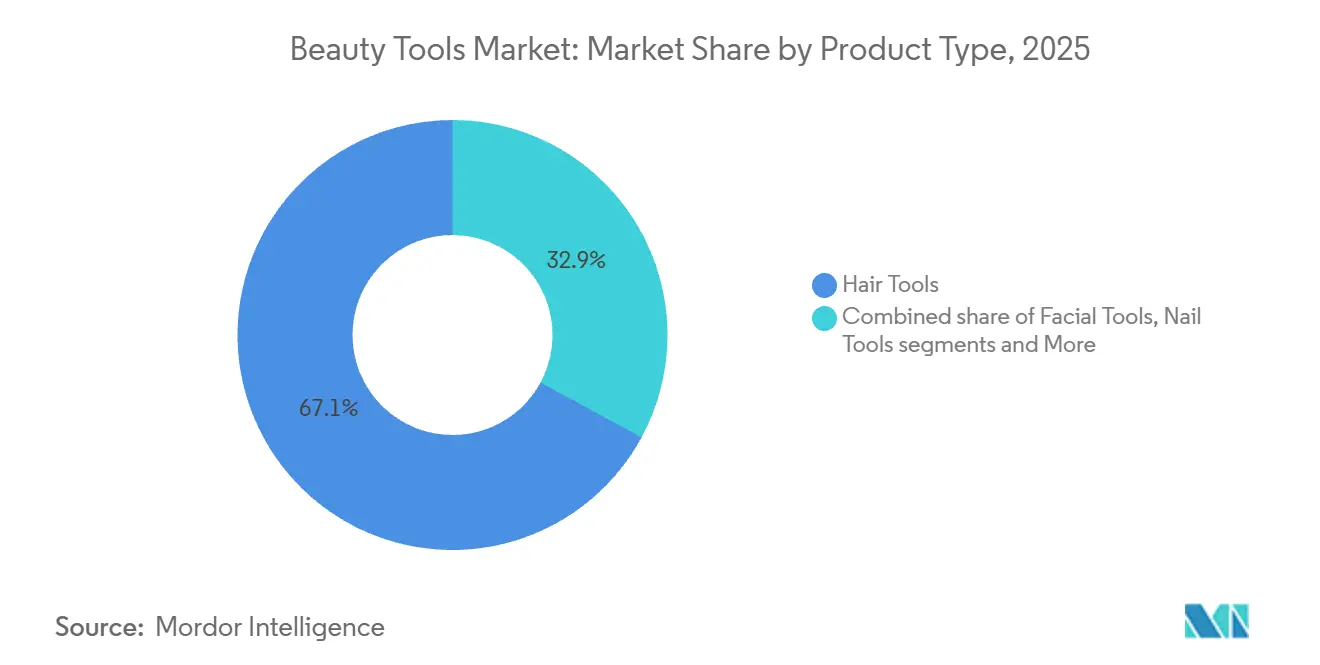
- By product type, hair tools dominated with 67.10% of the beauty tools market share in 2025, while facial tools are projected to grow at 7.54% CAGR during 2026-2031.
- By price tier, the mass price tier held 69.32% share of the beauty tools market in 2025, with the premium/luxury tier forecast to expand at 8.03% CAGR through 2031.
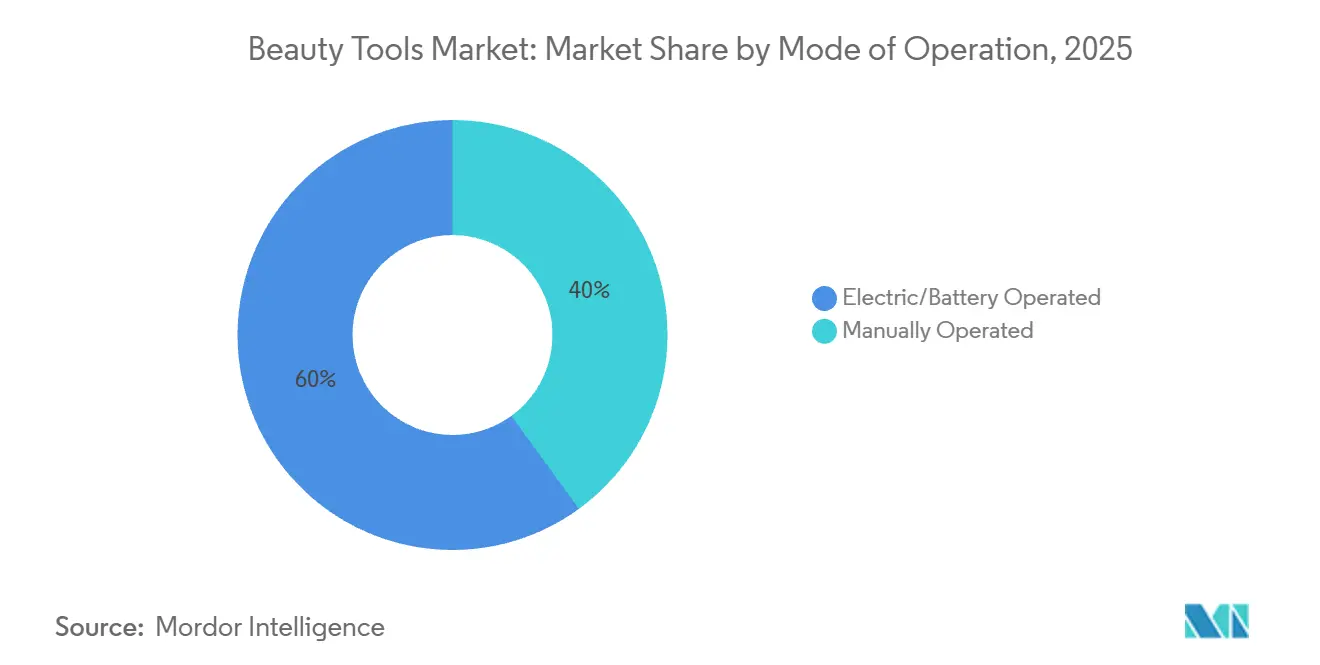
- By mode of operation, electric/battery-operated devices commanded 60.01% share of the beauty tools market size in 2025 and are expected to rise at 8.67% CAGR to 2031.
- By distribution channel, offline retail stores accounted for 44.95% of the beauty tools market in 2025, while online retail stores are advancing at 9.12% CAGR for the forecast period.
- By region, Asia-Pacific contributed 35.65% to global revenue in 2025, and the Middle East and Africa region is projected to post the highest 8.15% CAGR through 2031.
Note: Market size and forecast figures in this report are generated using Mordor Intelligence’s proprietary estimation framework, updated with the latest available data and insights as of January 2026.
Global Beauty Tools Market Trends and Insights
Drivers Impact Analysis*
| Driver | (~) % Impact on CAGR Forecast | Geographic Relevance | Impact Timeline |
|---|---|---|---|
| Rising consumer beauty consciousness | +1.2% | Global, with strongest uptake in North America and Asia-Pacific urban centers | Medium term (2-4 years) |
| Technological innovations are driving advancements in beauty tools | +1.5% | Global, led by North America and East Asia (China, Japan, South Korea) | Long term (≥ 4 years) |
| At-home professional treatments are gaining popularity | +1.3% | North America and Europe, spillover to APAC affluent segments | Medium term (2-4 years) |
| Growing prevalence of skin and hair concerns | +0.9% | Global, with higher incidence in aging populations (Europe, North America, Japan) | Long term (≥ 4 years) |
| Social media trends and beauty tutorials strongly influence consumer choices | +1.4% | Global, peak impact in North America, APAC youth demographics | Short term (≤ 2 years) |
| Online platforms provide easy access, reviews, and variety, accelerating tool sales | +1.1% | Global, accelerated in markets with high smartphone penetration (APAC, North America) | Medium term (2-4 years) |
| Source: Mordor Intelligence | |||
Technological Innovations are Driving Advancements in Beauty Tools
In December 2025, Dyson filed a patent for a hair-styling device featuring advanced airflow control and sensor feedback, aiming to enhance styling precision and user experience. Similarly, in June 2025, Philips introduced the BLDC 8000, a brushless DC hair dryer in India, designed to deliver improved durability, energy efficiency, and quieter operation. LED face masks now use 280 to 352 light-emitting diodes across multiple wavelengths, with red light promoting collagen production for anti-aging benefits and blue light targeting acne treatment. Devices like the Dreame Chrona, priced at USD 219.99, and the Keskine, priced at GBP 280 (approximately USD 350), offer clinical-grade phototherapy solutions for home use, making professional skincare more accessible. Microcurrent technology, previously available only in dermatology clinics, is now integrated into portable devices for personal use. For example, Nu Skin's RenuSpa iO, which received FDA clearance in February 2024, is priced at USD 375 and offers advanced skin rejuvenation.
At-home Professional Treatments are Gaining Popularity
The beauty tools market is experiencing a shift as consumers increasingly prefer professional-quality treatments at home. This change stems from wellness trends and the desire for convenience. The market shows growing demand for subtle beauty procedures and tools that provide salon-quality results discreetly. For example, 10Beauty's autonomous manicure machine "The 10" received USD 38 million in funding, with its initial 1,000 units purchased by retailers like Nordstrom and Ulta Beauty. The wellness segment influences beauty tool development, as consumers seek products offering both health benefits and aesthetic improvements. Generation Z consumers specifically favor products enhancing natural beauty with multiple benefits, which has influenced product development strategies in the industry.
Growing Prevalence of Skin and Hair Concerns
The increasing prevalence of skin and hair problems drives the growth of the global beauty tools market. Conditions such as acne, pigmentation, premature aging, hair damage, and others affect various age groups, leading consumers to seek effective at-home solutions through beauty tools. The American Academy of Dermatology reports that acne affects up to 50 million people annually in the United States, making it the country's most common skin condition[1]Source: American Academy of Dermatology Association, "Skin conditions by the numbers," aad.org. Globally, skin conditions like eczema, rosacea, and hyperpigmentation continue to rise, particularly among younger populations, due to factors including lifestyle changes, increased stress levels, poor dietary habits, and rising environmental pollution. This widespread occurrence of skin and hair concerns has created a substantial demand for beauty tools that offer convenient and effective solutions for personal care routines.
Social Media Trends and Beauty Tutorials Strongly Influence Consumer Choices
TikTok Shop's beauty segment achieved 94% year-over-year growth in gross merchandise value, with 87% of top-seller revenue driven by affiliate and creator channels instead of brand storefronts. Creator recommendations influence 50% of social shoppers, and Generation Z is 2.5 times more impacted by creator content than older groups. Influencer Mikayla Nogueira, with 16.3 million TikTok followers, launched Point of View Beauty, showing how creators bypass traditional retail. TikTok Shop strategies like live selling, exclusive drops, and creator-only offers deliver 3 to 4 times higher conversion rates and reduce customer acquisition costs by 45% to 60% compared to paid social ads. Products such as CheekyGlo exfoliation devices and Shark Beauty's FlexFusion hair styler (launched October 2024 at USD 349.99) see rapid sales growth after creator endorsements, benefiting brands with agile supply chains. This creator-led model is reshaping advertising, with brands shifting budgets from traditional media to micro-influencers and affiliate programs.
Restraints Impact Analysis*
| Restraint | (~) % Impact on CAGR Forecast | Geographic Relevance | Impact Timeline |
|---|---|---|---|
| Counterfeit and poor-quality products remain a concern | -0.8% | Global, highest impact in markets with weak IP enforcement (APAC, MEA, South America) | Medium term (2-4 years) |
| Advanced beauty tools are often expensive | -0.6% | Global, most acute in price-sensitive markets (South America, MEA, APAC mass segments) | Short term (≤ 2 years) |
| Regulatory hurdles and compliance issues persist | -0.4% | North America and Europe (FDA, EU MDR), spillover to export-oriented APAC manufacturers | Long term (≥ 4 years) |
| Brands face challenges with loyalty and profit margins | -0.5% | Global, particularly North America and Europe where brand equity is eroding | Medium term (2-4 years) |
| Source: Mordor Intelligence | |||
Counterfeit and Poor-quality Products Remain a Concern
The rise in counterfeit beauty tools presents significant challenges to market growth and consumer safety, as counterfeiters use e-commerce platforms to distribute products globally. In 2024, U.S. Customs and Border Protection intercepted 501K counterfeit products valued at USD 8 million[2]Source: U.S. Customs and Border Protection, "The Truth Behind Counterfeits," cbp.gov. The FDA's Modernization of Cosmetic Regulation Act (MoCRA) now requires cosmetic product registration, strengthening the fight against fraudulent products and addressing tariff loopholes that previously facilitated counterfeit imports. E-commerce platforms are under increasing pressure to implement verification systems, as evidenced by COSRX's warnings about counterfeit versions of their products on Amazon and TikTok Shop. The impact of counterfeiting extends beyond direct revenue losses, as demonstrated by the European Union cosmetics market, which lost approximately 32,000 jobs due to this issue[3]Source: European Union Intellectual Property Office, "Economic impact of counterfeiting in the clothing, cosmetics, and toy sectors in the EU," euipo.europa.eu.
Regulatory Hurdles and Compliance Issues Persist
The European Union's Medical Device Regulation Annex XVI classifies beauty devices like microcurrent tools, LED masks, and laser hair-removal systems as medical devices. This requires clinical evidence, technical documentation, and post-market surveillance, with compliance costs often exceeding USD 100,000 per SKU. These high costs delay product launches and discourage smaller brands. In the U.S., the FDA requires 510(k) clearance for devices with therapeutic claims. For example, Nu Skin's RenuSpa iO received FDA clearance in February 2024 after years of clinical trials. Varying regulations across regions complicate supply chains, as devices approved in one market may need additional testing for others, like the EU or Japan. Chinese manufacturers exporting to Western markets face strict scrutiny, with U.S. Customs and Border Protection inspecting for safety certifications like UL and CE marks. Non-compliant shipments risk seizure or destruction. Emerging technologies, such as AI-powered skin analysis and app-controlled dosing, add compliance challenges due to the lack of clear regulatory frameworks.
*Our forecasts treat driver/restraint impacts as directional, not additive. The impact forecasts reflect baseline growth, mix effects, and variable interactions.
Segment Analysis
By Product Type: Hair Tools Dominate Despite Facial Tools Acceleration
Facial Tools are projected to grow at a CAGR of 7.54% through 2031, driven by advanced at-home skincare devices. FDA-cleared microcurrent devices, LED masks with 280 to 352 diodes, and derma rollers priced between USD 12 and USD 199 are making clinical-grade skincare accessible. Nu Skin's RenuSpa iO, FDA-cleared in February 2024 and priced at USD 375, focuses on body contouring, while its ageLOC LumiSpa iO offers app-based skin analysis. LED masks from Project E Beauty (EUR 639, ~USD 750) and CURAFACE PRO (EUR 89, ~USD 105) cater to premium and mass markets, democratizing phototherapy previously limited to clinics. Cleansing brushes and steamers support daily skincare, while derma rollers and microneedling devices target anti-aging and serum absorption. Influencer endorsements, like CheekyGlo's TikTok success, are accelerating product adoption.
Hair Tools led the market in 2025, contributing 67.10% of revenue, with Chinese manufacturers shipping 500–650 million units globally. Dyson's Supersonic Travel, launched in 2026, targets frequent travelers with a compact design. Philips introduced the BLDC 8000 dryer in India in June 2025, focusing on energy efficiency and durability. Panasonic's ELMISTA Beautifying Hair Dryer, launched in Japan in 2025, features nanoe moisture technology. SharkNinja's FlexFusion and FlexFusion Straight, launched in October 2024 at USD 349.99 and USD 399.99, combine drying and styling to save space. Hair brushes and combs, though commoditized, are improving with ergonomic designs and sustainable materials. Nail Tools and Makeup Tools, though smaller segments, are innovating. iPolish's app-controlled press-on nails, introduced at CES 2026, use nanopolymers for instant color changes and ship in June 2026. Olive & June's press-on nails cost USD 45, while Yiwu Yusheng's EclipseFlex Pro offers 21-day wear, is 94% plant-based, and biodegrades in 45 days.



By Price Tier: Premium Growth Outpaces Mass Market Expansion
From 2024 to 2031, premium and luxury tools are expected to grow at a CAGR of 8.03%, driven by affluent consumers valuing performance, design, and brand heritage. The top 10% of U.S. earners contribute 49.7% of consumer spending, fueling demand for products like Dyson hair dryers (USD 350–500), GHD straighteners (USD 200–300), and multi-wavelength LED masks (USD 400–750). Coty’s USD 510 million acquisition of GHD highlights confidence in the premium beauty tools market. Brands like Dyson and L'Oréal are strengthening their positions with patents, such as Dyson’s hair-styling apparatus (filed for December 2025) and L'Oréal’s aerosol dye attachment, which justify premium pricing. Experiential retail, including personalized consultations and try-before-you-buy options, supports premium positioning, though online channels are challenging this advantage.
In 2025, mass-tier products held 69.32% of revenue, reflecting consumer interest in affordable alternatives. About 77% of consumers have purchased or are willing to buy dupes, and 68% believe dupes match premium quality. The mass beauty segment grew 5% in 2025, reaching USD 72.7 billion, outpacing the 2% growth of prestige products. Chinese brands like Xiaomi, Laifen, CONFU, and Flyco offer hair dryers with advanced features at USD 50–100, delivering 70–80% of premium performance at 30–40% of the price. Private-label and white-label tools sold on Amazon and Walmart gain traction by leveraging platform traffic and reviews. Mass tools benefit from shorter replacement cycles, as consumers replace lower-priced devices more often, maintaining unit sales despite declining average prices. The market is polarizing, with mid-tier brands losing share to both premium and mass segments, forcing repositioning or exits.
By Mode of Operation: Electric Dominance Accelerates
In 2025, electric and battery-operated devices captured a notable 60.01% share of the revenue, with projections indicating a robust CAGR of 8.67%. This growth is largely fueled by hair dryers, straighteners, curling irons, cleansing brushes, and LED masks, all of which depend on power for heating, motor functions, or light emission. Innovations like Dyson's Supersonic and Shark Beauty's FlexFusion leverage lithium-ion batteries, enhancing portability. Yet, challenges remain, notably in runtime and recharge cycles. Conversely, brushless DC motors, such as Philips' BLDC 8000, not only prolong device lifespan but also reduce noise, catering to consumer preferences. Moreover, the rise of IoT connectivity facilitates app-driven customizations; for example, Nu Skin's ageLOC LumiSpa iO can connect to smartphones for personalized cleansing routines.
Manually operated tools continue to hold significance in applications demanding direct control and simplicity, especially in professional settings and portable scenarios. The growth of electric tools finds backing in emerging markets, where developing infrastructure and better electricity access are driving adoption. Advances in battery technology, marked by longer lifespans and quicker charging, are breaking down previous adoption hurdles. Manufacturers are now crafting cordless designs that merge the ease of manual tools with the efficiency of electric ones, catering to diverse consumer preferences and usage patterns.
By Distribution Channel: Online Acceleration Challenges Offline Dominance
Online retail stores are expected to grow at a 9.12% CAGR through 2031, fueled by TikTok Shop's 94% year-over-year GMV growth, Amazon's vast product range, and the cost efficiency of direct-to-consumer brands. TikTok Shop generates 87% of its top beauty-seller revenue through affiliate and creator channels, bypassing traditional retailers and speeding up market entry. Features like live selling and limited-time drops on TikTok deliver 3 to 4 times higher conversion rates and reduce customer acquisition costs by 45% to 60% compared to paid social ads. In November 2025, SharkNinja expanded Shark Beauty's presence on Walmart.com, leveraging Walmart's e-commerce traffic and fulfillment network. Online platforms offer extensive product options, reviews, and comparison tools, helping consumers make informed choices. Direct-to-consumer brands like Omniglow use AI-driven personalization to acquire customers more efficiently than traditional omnichannel players.
Offline retail stores contributed 45.95% of revenue in 2025, supported by unique experiences like try-before-you-buy, in-store consultations, and instant purchases. Specialty beauty retailers such as Sephora and Ulta attract repeat customers with curated products and loyalty programs. Mass merchandisers like Walmart and Target provide convenience for restocking and impulse buys. However, offline stores face challenges, including declining foot traffic from 2020 to 2025 and inventory destocking, which pressures suppliers like Helen of Troy. Increased competition for shelf space has also compressed margins. To adapt, offline retailers are enhancing digital integration with mobile apps and in-store pickup for online orders. Despite these efforts, they cannot match the product variety and real-time social proof of online platforms. While offline growth is slowing due to the shift toward digital-first shopping, physical stores remain essential for high-touch products and urgent purchases.
Geography Analysis
North America is projected to grow at an 8.15% CAGR through 2031, exceeding the global average of 7.25%. Growth is driven by creator-led commerce, premium product demand among high-income groups, and increased adoption of at-home treatments. TikTok Shop's 94% GMV growth and 87% creator-driven revenue are transforming distribution, enabling brands to bypass retail and cut customer acquisition costs by 45% to 60%. The top 10% of U.S. earners account for 49.7% of spending, supporting demand for premium tools like Dyson's Supersonic (USD 350–500) and Nu Skin's FDA-cleared RenuSpa iO (USD 375). In the first half of 2025, mass beauty revenue grew 4% to USD 34.6 billion, while prestige beauty rose 2% to USD 16.0 billion, highlighting a clear value divide. FDA 510(k) clearance for therapeutic devices raises compliance costs but protects established players by creating entry barriers.
Asia-Pacific contributed 35.65% of 2025 revenue, driven by China's manufacturing strength and domestic consumption. Chinese manufacturers exported 500–650 million home hair-styling appliances in 2025, priced at USD 7–12, undercutting Western brands by 60%–70%. Brands like Xiaomi, Laifen, CONFU, and Flyco leverage efficient production and e-commerce platforms like Tmall, JD.com, and Douyin to reach consumers. In June 2025, Philips launched the BLDC 8000 hair dryer in India, targeting the growing middle class and rising beauty awareness. Japan's aging population boosts demand for anti-aging tools, with Panasonic's ELMISTA Beautifying Hair Dryer featuring nanoe moisture technology tailored to local needs. South Korea's skincare-focused beauty culture drives demand for cleansing brushes, LED masks, and derma rollers. However, counterfeit products remain a challenge, with 90% of US CBP cosmetic seizures originating from China and Hong Kong.
Europe faces high compliance costs under the Medical Device Regulation Annex XVI, which classifies certain beauty devices as medical and requires clinical evidence, technical documentation, and post-market surveillance. Compliance costs can exceed USD 100,000 per SKU, deterring smaller brands and delaying launches. Counterfeiting costs the region USD 3.42 billion in lost sales, squeezing margins for genuine brands. Despite these challenges, demand for premium tools remains strong, as seen in Coty's USD 510 million acquisition of GHD, reflecting confidence in the market. South America and the Middle East & Africa, though smaller markets, are seeing early adoption of affordable electric tools and press-on nail systems, bypassing salons. Tariffs and currency issues limit purchasing power, but rising smartphone use is driving e-commerce growth.

Competitive Landscape
The beauty tools market is moderately consolidated, with competition balanced between large multinational corporations and smaller specialized players. Leading companies such as Dyson, Philips, and L'Oréal use advanced technology and strong brand recognition to maintain their market position. Meanwhile, smaller companies focus on niche markets and direct-to-consumer strategies to grow their presence.
Technological advancements are driving intense competition in the market. Companies are heavily investing in artificial intelligence (AI), smart devices, and sustainable manufacturing to differentiate their products. Strategic partnerships are also becoming crucial. For example, L'Oréal has partnered with IBM to create AI-powered beauty solutions, while Estée Lauder has collaborated with Microsoft to establish AI Innovation Labs aimed at improving customer engagement and accelerating product development.
There is significant potential in combining wellness and beauty technology, allowing companies to develop tools that address both aesthetic and health-related needs. Additionally, regulatory compliance is playing a key role in shaping the competitive landscape. The implementation of MoCRA has created challenges for smaller players due to stricter requirements. However, it offers opportunities for established companies with strong regulatory expertise to gain a competitive edge and increase their market share.
Beauty Tools Industry Leaders
-
L’Oréal S.A.
-
Panasonic Corporation
-
Koninklijke Philips N.V.
-
Conair Corporation
-
Dyson Ltd.
- *Disclaimer: Major Players sorted in no particular order

Recent Industry Developments
- April 2026: Xiaomi has launched the Mijia High-Speed Water Ion Hair Dryer Pro, featuring nano water ion technology, intelligent scalp protection with ToF sensing, and precise temperature control for safer and more effective hair drying. Powered by a 120,000 RPM brushless motor, the dryer delivers high-speed airflow, customizable heat and wind settings, and up to 200 million negative ions to reduce frizz and enhance hair health, according to the brand.
- April 2026: Dyson has launched the Supersonic Travel hair dryer, a compact styling device designed for travelers that is 32% smaller and 25% lighter than the original model while offering global voltage compatibility. It incorporates Dyson's intelligent heat control technology and supports existing Supersonic attachments, delivering fast drying and hair protection without compromising performance.
- March 2026: Philips has launched the One Stroke Hair Straightener in India, featuring ThermoShield and Ionic Care technologies to deliver up to 50% faster styling while minimizing heat damage and frizz. Designed specifically for Indian hair, the straightener includes longer, smoother plates for efficient single-stroke styling and claims to provide salon-like results lasting up to three days, according to the brand.


Global Beauty Tools Market Report Scope
| Hair Tools | Hair Dryers |
| Hair Straighteners | |
| Curling Irons | |
| Hair Brushes and Combs | |
| Others | |
| Facial Tools | Cleansing Brushes |
| Face Massagers | |
| Derma Rollers | |
| Facial Steamers | |
| Others | |
| Nail Tools | Nail Clippers |
| Nail Files and Buffers | |
| Others | |
| Makeup Tools | Makeup Brushes |
| Sponges and Blenders | |
| Others |
| Mass |
| Premium/Luxury |
| Electric/Battery Operated |
| Manually Operated |
| Offline Retail Stores |
| Online Retail Stores |
| North America | United States |
| Canada | |
| Mexico | |
| Rest of North America | |
| Europe | Germany |
| United Kingdom | |
| Italy | |
| France | |
| Spain | |
| Netherlands | |
| Poland | |
| Belgium | |
| Sweden | |
| Rest of Europe | |
| Asia-Pacific | China |
| India | |
| Japan | |
| Australia | |
| Indonesia | |
| South Korea | |
| Thailand | |
| Singapore | |
| Rest of Asia-Pacific | |
| South America | Brazil |
| Argentina | |
| Colombia | |
| Chile | |
| Peru | |
| Rest of South America | |
| Middle East and Africa | South Africa |
| Saudi Arabia | |
| United Arab Emirates | |
| Nigeria | |
| Egypt | |
| Morocco | |
| Turkey | |
| Rest of Middle East and Africa |
| By Product Type | Hair Tools | Hair Dryers |
| Hair Straighteners | ||
| Curling Irons | ||
| Hair Brushes and Combs | ||
| Others | ||
| Facial Tools | Cleansing Brushes | |
| Face Massagers | ||
| Derma Rollers | ||
| Facial Steamers | ||
| Others | ||
| Nail Tools | Nail Clippers | |
| Nail Files and Buffers | ||
| Others | ||
| Makeup Tools | Makeup Brushes | |
| Sponges and Blenders | ||
| Others | ||
| By Price Tier | Mass | |
| Premium/Luxury | ||
| By Mode of Operation | Electric/Battery Operated | |
| Manually Operated | ||
| By Distribution Channel | Offline Retail Stores | |
| Online Retail Stores | ||
| By Geography | North America | United States |
| Canada | ||
| Mexico | ||
| Rest of North America | ||
| Europe | Germany | |
| United Kingdom | ||
| Italy | ||
| France | ||
| Spain | ||
| Netherlands | ||
| Poland | ||
| Belgium | ||
| Sweden | ||
| Rest of Europe | ||
| Asia-Pacific | China | |
| India | ||
| Japan | ||
| Australia | ||
| Indonesia | ||
| South Korea | ||
| Thailand | ||
| Singapore | ||
| Rest of Asia-Pacific | ||
| South America | Brazil | |
| Argentina | ||
| Colombia | ||
| Chile | ||
| Peru | ||
| Rest of South America | ||
| Middle East and Africa | South Africa | |
| Saudi Arabia | ||
| United Arab Emirates | ||
| Nigeria | ||
| Egypt | ||
| Morocco | ||
| Turkey | ||
| Rest of Middle East and Africa | ||


Key Questions Answered in the Report
What is the current value of the beauty tools market?
The beauty tools market size is USD 20.84 billion in 2026 and is projected to reach USD 29.57 billion by 2031 at a 7.25% CAGR.
Which product category leads global revenue?
Hair styling tools dominated the beauty tools market with a 67.10% share in 2025, driven by widespread consumer demand for hair styling products.
Which channel is growing fastest for beauty tools sales?
The online retail stores are growing at a CAGR of 9.12% through 2031, driven by the increasing adoption of social commerce and same-day delivery services.
Which region shows the strongest growth outlook?
The Middle East and Africa region is forecast to grow at 8.15% CAGR to 2031, driven by rising disposable incomes and expanding retail infrastructure.
Page last updated on:





