
Coffee Beauty Products Market Size and Share
Market Overview
| Study Period | 2020 - 2030 |
|---|---|
| Market Size (2025) | USD 0.95 Billion |
| Market Size (2030) | USD 1.24 Billion |
| Growth Rate (2025 - 2030) | 5.42 % |
| Fastest Growing Market | Asia Pacific |
| Largest Market | Europe |
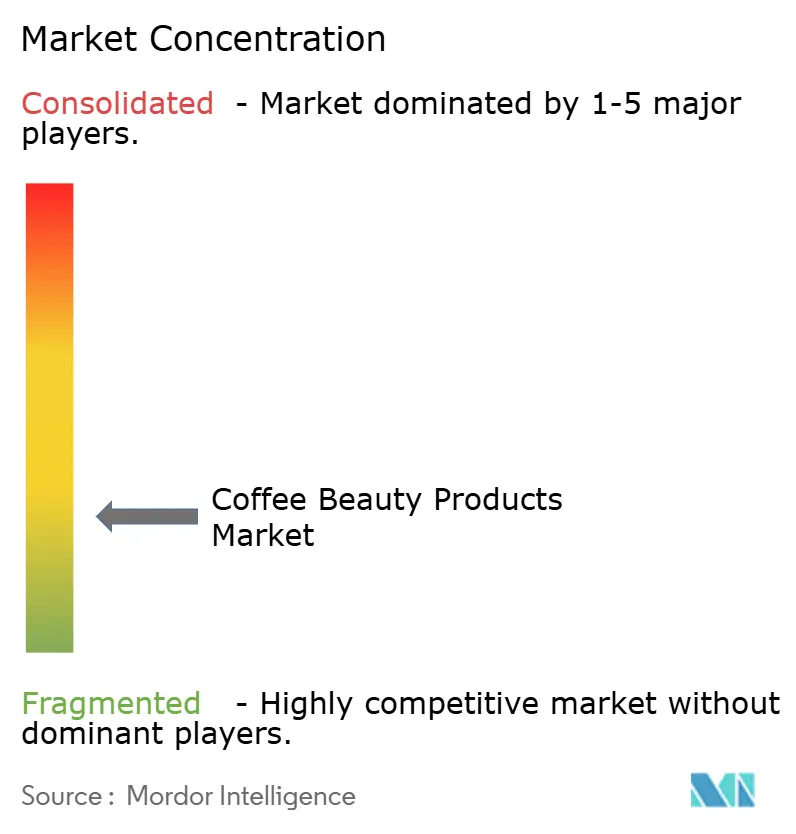
| Market Concentration | Low |
Major Players *Disclaimer: Major Players sorted in no particular order Image © Mordor Intelligence. Reuse requires attribution under CC BY 4.0. | |

Coffee Beauty Products Market Analysis by Mordor Intelligence
The coffee-based beauty products market size is estimated to be USD 0.95 billion in 2025 and is forecast to reach USD 1.24 billion by 2030, expanding at a 5.42% CAGR. This trajectory reflects the convergence of clean-label expectations, circular-economy sourcing, and growing clinical validation of caffeine’s dermatological benefits. Additionally, the market for coffee-based skincare and haircare products is expanding, driven by coffee's exfoliating, brightening, and energizing properties. The adoption of upcycled coffee grounds in scrubs and masks aligns with environmental sustainability trends. Companies like Frank Body and The Body Shop leverage sustainability messaging and product efficacy to attract millennial and Gen Z consumers. Ingredient suppliers are scaling upcycled coffee oils, while brand owners respond to the Modernization of Cosmetics Regulation Act of 2022 by tightening safety dossiers and traceability. Europe’s COSMOS rules push formulators toward 95% organic-plant content, giving coffee extracts an inherent compliance advantage. Besides, Asia-Pacific’s digital-native consumers boost online penetration, and robust clinical evidence showing that caffeine inhibits collagenase and elastase enzymes reinforces premium positioning.
Key Report Takeaways
- By product type, skin care held 35.77% of the coffee-based beauty products market share in 2024, while hair care is projected to expand at a 6.05% CAGR through 2030.
- By category, mass products captured 70.04% revenue share in 2024, while premium offerings are set to grow at a 7.29% CAGR to 2030.
- By end user, women commanded 65.18% of the coffee-based beauty products market size in 2024; men’s grooming is advancing at a 7.03% CAGR through 2030.
- By distribution channel, supermarkets/hypermarkets accounted for a 40.23% share of the coffee-based beauty products market in 2024, and online retail is rising at a 6.52% CAGR between 2025 and 2030.
- By geography, Europe led with a 32.19% market share in 2024, whereas Asia-Pacific records the fastest regional CAGR of 6.24% to 2030.
Note: Market size and forecast figures in this report are generated using Mordor Intelligence’s proprietary estimation framework, updated with the latest available data and insights as of January 2026.
Market Trends and Insights
Drivers Impact Analysis of Coffee Beauty Products Market*
| Driver | (~) % Impact on CAGR Forecast | Geographic Relevance | Impact Timeline |
|---|---|---|---|
| Rising demand for clean-label caffeine-based skin care | +1.2% | Global, with premium positioning in North America and Europe | Medium term (2-4 years) |
| Growing awareness of caffeine skin benefits | +0.9% | Asia-Pacific core, spill-over to Middle East and Africa markets | Long term (≥ 4 years) |
| Sustainable beauty trends | +0.8% | Europe leading, North America following | Long term (≥ 4 years) |
| Social media and influencer endorsements | +0.6% | Global, concentrated in digitally native demographics | Short term (≤ 2 years) |
| Holistic self-care and wellness trends | +0.5% | North America and Europe, expanding to urban Asia-Pacific | Medium term (2-4 years) |
| Male grooming adoption | +0.4% | Global, with accelerated growth in Asia-Pacific | Medium term (2-4 years) |
| Source: Mordor Intelligence | |||
Rising demand for clean-label caffeine-based skin care
Consumer demand for clean-label caffeine-based skincare products continues to increase as buyers seek natural and transparent personal care solutions that deliver effective results. Caffeine's antioxidant and anti-inflammatory properties help reduce puffiness and improve circulation, attracting health-conscious consumers looking for visible skin benefits without synthetic ingredients. The clean-label movement emphasizes ingredient transparency, ethical sourcing, and the elimination of harmful substances like parabens and sulfates. This aligns with caffeine's natural properties, enhancing its market appeal. Social media platforms and influencer marketing have increased consumer awareness and confidence in caffeine-infused skincare products, particularly among Millennials and Generation Z consumers. Companies such as Frank Body and Bean Body Care demonstrate market success through their targeted coffee-based formulations that combine effectiveness with natural ingredients. Additionally, caffeine's versatility in addressing anti-aging and skin revitalization has led to its incorporation in various products, including creams, serums, and masks within the clean-beauty category. The growth of e-commerce platforms has improved global accessibility to these specialized products, contributing to market expansion. The increasing popularity of caffeine in skincare reflects a broader consumer shift toward wellness-focused, clean-label personal care products that provide scientifically supported results while meeting sustainability and ethical standards. The market for caffeine-based skincare products is expected to grow at a higher rate than the overall beauty market in the next ten years.
Growing awareness of caffeine skin benefits
Consumer awareness regarding caffeine's skin benefits continues to drive market expansion in beauty and personal care segments. Caffeine's proven effectiveness in reducing puffiness, brightening under-eye circles, and protecting against environmental damage has established its position in skincare formulations. As an antioxidant and vasoconstrictor, caffeine reduces inflammation, tightens blood vessels, and prevents free-radical damage, making it valuable for anti-aging and skin revitalization products. Millennials and Gen Z consumers, focused on natural skincare solutions, are drawn to caffeine-based products that deliver results without harsh chemicals. The ingredient's documented ability to enhance microcirculation and provide temporary skin-tightening effects meets this consumer demand. Beauty brands have expanded their caffeine-based product lines to include eye creams, face masks, and serums. For instance, Revluk's coffee-infused face scrub demonstrates the market's use of caffeine's firming and brightening properties. Caffeine's reputation for reducing redness and improving skin luminosity has established it as a key ingredient in both daily skincare routines and specialized treatments. The market growth is supported by increased transparency in ingredient effectiveness and sustainable sourcing practices. Both niche brands and major beauty companies continue to educate consumers about caffeine's benefits, contributing to its increasing prominence in advanced skincare formulations globally.
Sustainable beauty trends
Sustainable beauty trends focusing on ethical sourcing, environmental responsibility, and ingredient transparency influence coffee-based beauty product development. Companies are developing innovative solutions by utilizing upcycled ingredients, such as converting spent coffee grounds from beverage chains into natural exfoliants, which reduces landfill waste while maintaining product effectiveness. Consumers' shift away from single-use plastics has increased the adoption of refillable systems and biodegradable packaging. The market has also witnessed the integration of cold-brew coffee extracts and green coffee oil, which preserve nutrient content through improved extraction methods. Additionally, biotechnology advancements have enabled the development of lab-grown, coffee-inspired active ingredients that balance performance with resource conservation. The implementation of blockchain technology enhances ingredient transparency, ensuring coffee-infused beauty products meet ethical standards and fair trade requirements. For example, Pretti5 sources active ingredients from discarded Arabica coffee beans, demonstrating the integration of environmental responsibility with product efficacy. The market's growth is further supported by the combination of coffee with other botanical ingredients, simplified formulations, and products that meet cruelty-free and vegan standards. Coffee-based personal care products are experiencing increased demand across environmentally conscious consumer segments worldwide, offering both visible results and reduced environmental impact.
Social media and influencer endorsements
Social media and influencer endorsements drive substantial market growth in coffee-based beauty products. According to Barclays Consumer Spend data, 22% of consumers discover new beauty trends through social media platforms, while 27% purchase beauty and skincare products directly through social media in 2024 [1]. TikTok, Instagram, and YouTube serve as primary platforms where brands collaborate with influencers to create authentic content targeting younger, beauty-conscious consumers. Influencers demonstrate coffee-based products' natural ingredients and skin benefits, building consumer trust and encouraging purchases. Social media's interactive features allow consumers to view product demonstrations, reviews, and testimonials instantly. Companies like Frank Body and mCaffeine have expanded their global presence through influencer campaigns that highlight coffee's antioxidant and anti-inflammatory properties. With TikTok Shops driving billions in beauty product sales, the relationship between social media and the coffee beauty market continues to drive consumer adoption. Social media remains essential for consumer education, engagement, and conversion in this growing market segment.
Restraints Impact Analysis of Coffee Beauty Products Market*
| Restraint | (~) % Impact on CAGR Forecast | Geographic Relevance | Impact Timeline |
|---|---|---|---|
| Fluctuations in raw material supply and price swings | -0.7% | Global, particularly in regions reliant on coffee imports (e.g., Europe, North America, East Asia) | Short term (≤ 2 years) |
| Allergenicity and caffeine-sensitivity concerns | -0.4% | Highly regulated markets such as the European Union, North America, Japan | Medium term (2-4 years) |
| Intense competition from non-coffee botanical claims | -0.3% | Premium segments in developed markets — North America, Western Europe, Australia | Long term (≥ 4 years) |
| Limited clinical proof versus synthetic actives | -0.2% | Professional skincare channels — North America, Europe, East Asia (notably South Korea, Japan) | Long term (≥ 4 years) |
| Source: Mordor Intelligence | |||
Fluctuations in raw material supply and price swings
Supply chain disruptions and commodity price increase create significant operational challenges in the coffee beauty products industry during 2024. Coffee commodity prices have increased substantially, with Arabica beans rising by approximately 58% and Robusta by around 70% year-over-year [2]. These increases stem from adverse climatic conditions, including droughts and erratic weather patterns affecting major producers such as Brazil, Vietnam, and Indonesia. The sharp rise in coffee prices directly impacts formulation costs across market segments, increasing the expenses for specialty coffee extracts and upcycled ingredients. Supply chain disruptions from reduced exports and poor harvests further affect availability and cost stability. The rising input costs reduce profit margins and particularly affect smaller and niche coffee beauty brands dependent on coffee-derived raw materials. The scarcity and price increases of high-quality Arabica coffee grounds, a common ingredient in exfoliating scrubs, affect product pricing and shelf life considerations. These issues highlight the market's sensitivity to external commodity factors, affecting growth potential despite increasing consumer demand for coffee-based personal care products. The industry may need to explore alternative solutions, including innovative sourcing methods, synthetic or lab-grown coffee actives, and enhanced supply chain resilience to control production costs and support market growth globally.
Allergenicity and caffeine-sensitivity concerns
Allergenicity and caffeine sensitivity present significant challenges for manufacturers of coffee-based beauty products, affecting both consumer safety protocols and product development requirements. Caffeine, while known for its antioxidant and anti-inflammatory benefits, can penetrate deeply into the skin and may trigger adverse reactions, particularly in individuals with skin conditions like rosacea, eczema, or atopic dermatitis. Also, pure caffeine in beauty products requires careful consideration, as concentrated forms can cause skin irritation, redness, and itching. This necessitates proper dilution in gentle formulations. Some users may experience systemic reactions to topical caffeine application, including jitters or headaches, though these occurrences are less frequent than reactions from oral consumption. Medical professionals recommend patch testing before regular use to prevent adverse reactions. Thus, manufacturers have developed solutions to address these concerns. For example, combining caffeine with ingredients like niacinamide and cornflower hydrolate helps improve product tolerance while maintaining efficacy in addressing concerns such as under-eye puffiness. However, research indicates that high concentrations of caffeine may impact collagen synthesis, potentially affecting skin structure with prolonged use. The successful development of coffee-based beauty products depends on careful formulation strategies that balance efficacy with safety considerations to maintain consumer confidence in the market.
*Our forecasts treat driver/restraint impacts as directional, not additive. The impact forecasts reflect baseline growth, mix effects, and variable interactions.
Coffee Beauty Products Market Segment Analysis
By Product Type:
Skin Care Dominance Drives InnovationSkin care holds a 35.77% market share in 2024, driven by coffee's proven effectiveness in anti-aging and antioxidant applications. The hair care segment is growing at a 6.05% CAGR through 2030 as research validates its benefits beyond traditional scalp stimulation. Recent studies in 2024 demonstrate caffeine's ability to inhibit aging-related enzymes, including collagenase and elastase, while providing tyrosinase inhibition for managing hyperpigmentation. Face creams and lotions are the primary skin care products, utilizing caffeine's proven benefits in enhancing microcirculation and reducing dark circles. Besides, scrubs and exfoliators benefit from coffee grounds' natural exfoliating properties combined with antioxidant benefits. Also, hair care's growth is supported by research showing coffee bean residue extract promotes hair growth through autophagy activation, demonstrating efficacy similar to minoxidil with better safety outcomes. Shampoos incorporate caffeine for scalp benefits, while conditioners and masks use coffee oil derivatives to improve moisture retention and enhance shine.
Meanwhile, body care maintains consistent growth through coffee scrub products, while body lotions and butters use coffee extracts for cellulite reduction and skin firming, supported by research on enhanced lipolysis and microcirculation. The fragrance segment, though smaller, offers premium product opportunities by utilizing coffee's aromatic properties in perfumes and deodorants. Consumer familiarity with coffee's sensory characteristics facilitates acceptance of these topical applications. Research in 2024 shows a 300% improvement in caffeine absorption through electric field-induced lipid vesicles, enabling effective delivery without chemical enhancers while maintaining clean-label standards.


By Category:
Premium Acceleration Outpaces Mass FoundationIn 2024, mass market products hold a dominant 70.04% share of the global coffee beauty products market, highlighting a clear segmentation between mass and premium offerings. This dominance is primarily driven by competitive pricing and extensive distribution networks. Companies in the mass segment are utilizing coffee waste valorization, converting upcycled coffee grounds into cost-effective and sustainable cosmetic ingredients. This strategy not only supports price competitiveness but also aligns with the preferences of environmentally conscious consumers, reinforced by strong sustainability messaging. By leveraging the economics of upcycling, businesses ensure that coffee-based beauty products remain affordable while maintaining their commitment to sustainability.
Meanwhile, the premium segment is expanding rapidly, with a 7.29% CAGR projected through 2030. This growth is fueled by consumers prioritizing ingredient transparency, ethical sourcing, and clinically validated formulations over price considerations. Premium coffee beauty brands benefit from COSMOS certification, which facilitates compliance by emphasizing natural-origin ingredients, offering a competitive edge over synthetic alternatives. Certifications such as Fair Trade and Rainforest Alliance further enhance the appeal of these brands, attracting ethically driven consumers willing to pay a premium for verified sustainable sourcing. This dual-market dynamic enables premium innovations, such as clinically validated caffeine serums, to drive technological advancements and enhance category credibility, ultimately influencing product development and accessibility across the broader market.
By End User:
Male Grooming Expansion Challenges Women's LeadershipThe women segment accounts for 65.18% market share in 2024, aligning with established beauty product consumption patterns. The men's segment is growing at a 7.03% CAGR through 2030, driven by coffee-based formulations that address specific male grooming needs. Coffee's gender-neutral nature and its established role in daily routines facilitate its adoption in men's grooming products. Research in 2024 demonstrates that topical caffeine effectively treats male pattern baldness through adenosine pathway modulation, appealing to men concerned about androgenetic alopecia. The men's market expansion is notable in Asia-Pacific regions, where increasing disposable income and grooming awareness combine with high digital connectivity, as evidenced by Singapore's 97% digital consumer penetration in 2023, according to the International Trade Administration.
Unisex products are increasing their market presence by focusing on coffee's functional benefits rather than gender-specific marketing. This shift reflects the industry's understanding that ingredient effectiveness is more important than traditional gender-based positioning, especially among younger consumers who prioritize product performance. Women's market leadership is based on established skincare routines and openness to new ingredients, which helps validate the category for male consumers. This market dynamic shows a development pattern where initial female adoption establishes product credibility, followed by male segment growth that drives market expansion. Coffee's performance-enhancing properties make it particularly suitable for male grooming products, especially in pre-workout and post-exercise applications where caffeine's stimulating effects align with fitness-oriented lifestyles.

By Distribution Channel:
Digital Transformation Accelerates Online GrowthSupermarkets/hypermarkets maintain a 40.23% market share in coffee beauty product distribution in 2024. These traditional retail channels remain dominant due to established consumer shopping patterns and broad product availability. The online retail segment is experiencing significant expansion at a 6.52% CAGR through 2030, driven by consumers seeking convenience and detailed product information. E-commerce platforms enable companies to provide comprehensive ingredient information and research data, addressing the need to explain coffee-based beauty product benefits effectively.
Meanwhile, health and beauty stores maintain their market position by providing specialized guidance and premium product selections that support the pricing of research-backed coffee formulations. Physical retail locations continue to serve an essential role by allowing consumers to experience product textures and fragrances before purchase. The market is increasingly adopting omnichannel approaches, where online platforms build product awareness and education, while physical stores facilitate product testing and immediate purchases. Besides, direct-to-consumer and subscription services are expanding by leveraging coffee's regular usage patterns to build customer loyalty and engagement.
Geography Analysis
Europe Coffee Beauty Products Market
Europe accounts for 32.19% market share in 2024, supported by regulations promoting natural ingredients and consumer acceptance of premium pricing for sustainable products. The COSMOS certification mandate of 95% organic plant content for organic cosmetic certification enhances the market position of coffee-derived ingredients versus synthetic alternatives, according to Ecocert [3]. Germany maintains regional market leadership through its established consumer base and natural product distribution channels, while the United Kingdom benefits from Food Standards Agency regulations on caffeine safety in consumer products. France's established luxury beauty market supports premium coffee-based formulations with clinical validation, supported by L'Oréal's target to reach 95% renewable ingredient sourcing by 2030. Italy and Spain's established coffee markets facilitate consumer adoption of coffee-based personal care products, while regional Fair Trade certification awareness supports product differentiation through ethical sourcing practices.
APAC Coffee Beauty Products Market
Asia-Pacific demonstrates a 6.24% CAGR through 2030, driven by urbanization, higher disposable incomes, and digital adoption that supports ingredient marketing to beauty-focused consumers. China generates significant volume growth through middle-class expansion and increased premium beauty product adoption. Japan's developed beauty market and established coffee consumption support the coffee-based personal care market growth. The Japan External Trade Organization's 2024 cosmetics webinar series on Korean beauty market insights facilitates knowledge transfer across Asia-Pacific markets. India's market expansion results from urban development and increased personal care expenditure, while Australia provides market stability through clear regulations and natural product market acceptance. Hong Kong's cosmetics market shows increased demand for natural and organic products, with e-commerce adoption enabling market access for coffee-based brands.
The Americas and MEA Coffee Beauty Products Market
North America holds the largest market share in coffee beauty products, supported by established distribution networks and increasing demand for natural beauty solutions. The United States market expansion stems from consumer health awareness and targeted marketing of coffee-based skincare benefits. Moreover, South America shows market growth driven by rising consumption of coffee-based beauty products, particularly in scrubs and haircare segments. The region's expanding middle-class population supports demand for organic beauty products. Besides, the Middle East and Africa market demonstrates steady development in the coffee beauty segment. Growing e-commerce platforms and increasing consumer preference for premium beauty products drive market growth, despite regional infrastructure constraints.

Competitive Landscape
The global coffee-based beauty products market is notably fragmented, with a diverse mix of niche specialists and major multinationals. Independent companies like Frank Body and mCaffeine have gained market share by focusing on coffee-based formulations and meeting consumer demand for natural personal care products. These companies prioritize quality production methods, sustainable sourcing practices, and product development. Their operational structure enables efficient product development and direct consumer sales, resulting in strong customer retention in specific market segments. The increasing market demand for natural beauty products and ingredient transparency presents growth opportunities for these specialized manufacturers.
Major beauty companies, including L'Oréal Group and The Body Shop, have incorporated coffee extracts into their premium product lines. These companies leverage their research capabilities to demonstrate product effectiveness through clinical studies, attracting consumers who require proven results. Their marketing investments and established distribution networks enable significant market penetration and product availability. These resources allow large corporations to dominate premium market segments and increase market adoption of coffee-based beauty products.
Market development continues through strategic partnerships between established companies and new market entrants. These business agreements facilitate product expansion and market growth, with established companies acquiring market authenticity while smaller companies achieve operational efficiency. Regional market conditions and consumer preferences determine ingredient sourcing, product development, and marketing approaches. This market environment drives product development as companies work to differentiate their offerings in this growing market segment.
Coffee Beauty Products Industry Leaders
-
L’Oréal SA
-
Bath & Body Works, LLC.
-
The Body Shop
-
Lush Cosmetics
-
The Organic Shop
- *Disclaimer: Major Players sorted in no particular order
Coffee Beauty Products Market Companies Covered in this Report
- LOreal Group
- The Body Shop
- Lush Cosmetics
- Bath & Body Works, LLC.
- Pep Technologies Pvt Ltd (mCaffeine)
- Terre de Mars
- Frank Body
- The Organic Shop
- JAVA Skin Care
- Bean Body
- Callyssee
- UpCircle Beauty
- Gabi+Skin
- BEOX Professional
- Klarif Company
- Good Chemistry
- Naples Soap Company
- M3 Naturals
- Alfheim Beauty
- The Coffee Scrub Co,
Recent Industry Developments in Coffee Beauty Products Market
- July 2024: Sensatia Botanicals, a Bali-based company, recently launched its latest innovation: the Advanced Hair Care Collection. This product line featured three unique variants, each developed to address specific hair care needs. The collection included Hibiscus & Papaya to combat dandruff, Coffee & Ginseng to reduce hair loss, and Horsetail & Rice Protein for dry or colored hair. A shampoo, conditioner, and hair mask accompanied each variant. Furthermore, the Coffee & Ginseng variant was complemented by a hair treatment oil and tonic.
- August 2023: Tree Hut, which manufactured America's top-selling body scrubs, launched a seasonal body care collection inspired by coffee beverages. The limited-edition fall collection included Iced Coffee Shea Sugar Scrub, Sweet Cream Whipped Shea Body Butter, Pumpkin Spice Latte Shea Sugar Scrub, Vanilla Moisturizing Shave Oil, and the Coffee & Cream Gift Set.
- March 2023: The Revived Coffee Scrub which was launched utilized recycled coffee grounds that would typically end up in landfills. The product incorporated a coffee-based emulsifier and repurposed coffee grounds for exfoliation. This palm oil-free formulation underwent extensive research and development to achieve optimal performance. The scrub delivered exfoliating benefits while contributing to waste reduction through its use of recycled coffee ingredients.
Global Coffee Beauty Products Market Report Scope
Segmentation Overview
| Skin Care | Face Creams and Lotions |
| Scrubs and Exfoliators | |
| Masks and Peels | |
| Hair Care | Shampoos |
| Conditioners and Masks | |
| Others | |
| Body Care | Body Scrubs |
| Body Lotions and Butters | |
| Fragrances | Perfumes |
| Deodorants/Body Mists |
| Mass |
| Premium |
| Women |
| Men |
| Unisex |
| Supermarkets/Hypermarkets |
| Health and Beauty Stores |
| Online Retail Stores |
| Other Distribution Channels |
| North America | United States |
| Canada | |
| Rest of North America | |
| Europe | Germany |
| United Kingdom | |
| Italy | |
| France | |
| Spain | |
| Rest of Europe | |
| Asia-Pacific | China |
| India | |
| Japan | |
| Australia | |
| Rest of Asia-Pacific | |
| South America | Brazil |
| Rest of South America | |
| Middle East and Africa | South Africa |
| United Arab Emirates | |
| Rest of Middle East and Africa |
| By Product Type | Skin Care | Face Creams and Lotions |
| Scrubs and Exfoliators | ||
| Masks and Peels | ||
| Hair Care | Shampoos | |
| Conditioners and Masks | ||
| Others | ||
| Body Care | Body Scrubs | |
| Body Lotions and Butters | ||
| Fragrances | Perfumes | |
| Deodorants/Body Mists | ||
| By Category | Mass | |
| Premium | ||
| By End User | Women | |
| Men | ||
| Unisex | ||
| By Distribution Channel | Supermarkets/Hypermarkets | |
| Health and Beauty Stores | ||
| Online Retail Stores | ||
| Other Distribution Channels | ||
| By Geography | North America | United States |
| Canada | ||
| Rest of North America | ||
| Europe | Germany | |
| United Kingdom | ||
| Italy | ||
| France | ||
| Spain | ||
| Rest of Europe | ||
| Asia-Pacific | China | |
| India | ||
| Japan | ||
| Australia | ||
| Rest of Asia-Pacific | ||
| South America | Brazil | |
| Rest of South America | ||
| Middle East and Africa | South Africa | |
| United Arab Emirates | ||
| Rest of Middle East and Africa | ||
Key Questions Answered in the Report
What is the projected value of the coffee-based beauty products market in 2030?
It is forecast to reach USD 1.24 billion by 2030 driven by a 5.42% CAGR.
Which product type currently leads sales?
Skin care products hold 35.77% share, benefiting from caffeine’s proven anti-aging and antioxidant efficacy.
Which region will grow fastest through 2030?
Asia-Pacific is set to expand at a 6.24% CAGR thanks to rising disposable incomes and digital shopping penetration.
How will online channels influence future sales?
Online retail is expected to expand 6.52% annually, supported by social-commerce launches and detailed ingredient education.