
Toothbrush Market Size and Share
Market Overview
| Study Period | 2020 - 2030 |
|---|---|
| Market Size (2025) | USD 16.82 Billion |
| Market Size (2030) | USD 22.75 Billion |
| Growth Rate (2025 - 2030) | 6.23 % |
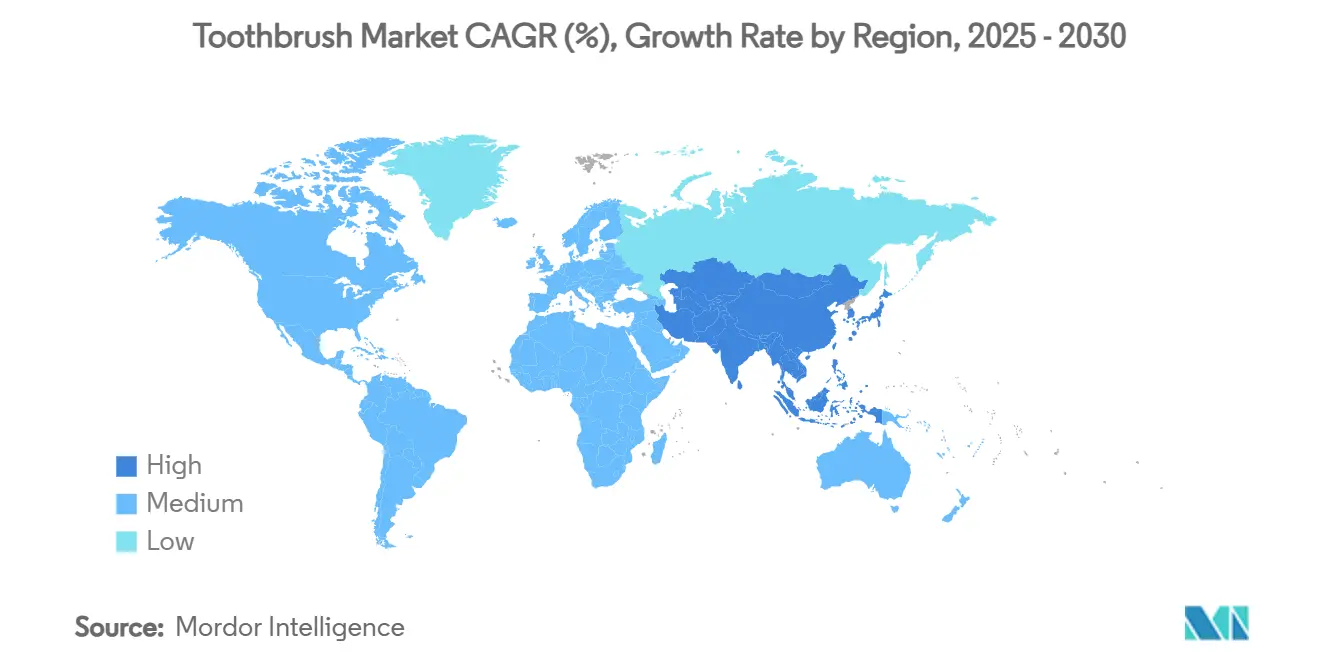
| Fastest Growing Market | Asia Pacific |
| Largest Market | Asia Pacific |
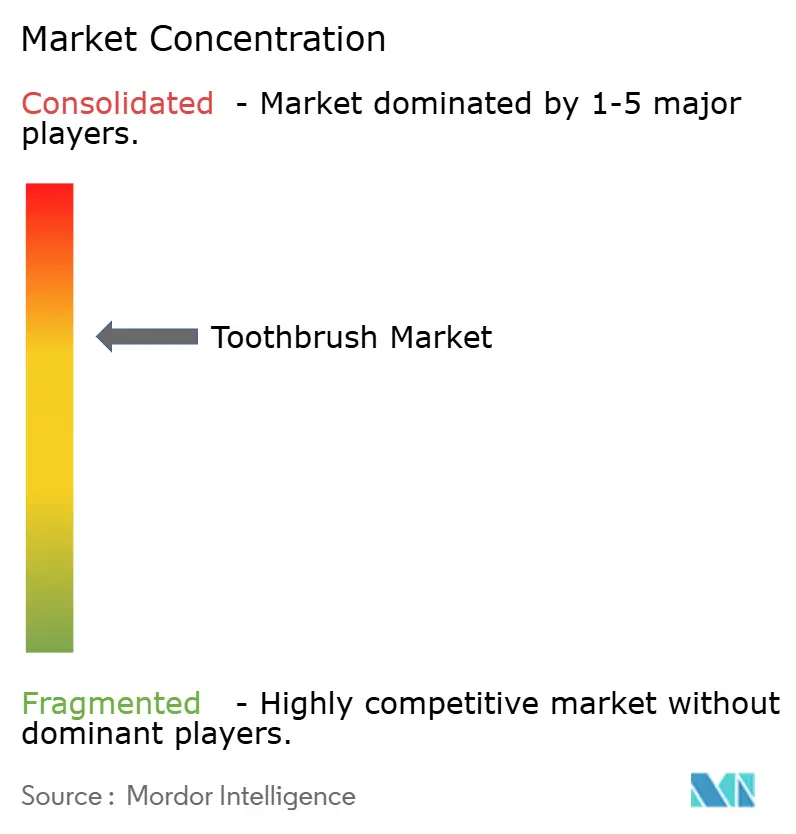
| Market Concentration | Medium |
Major Players *Disclaimer: Major Players sorted in no particular order Image © Mordor Intelligence. Reuse requires attribution under CC BY 4.0. | |
Toothbrush Market Analysis by Mordor Intelligence
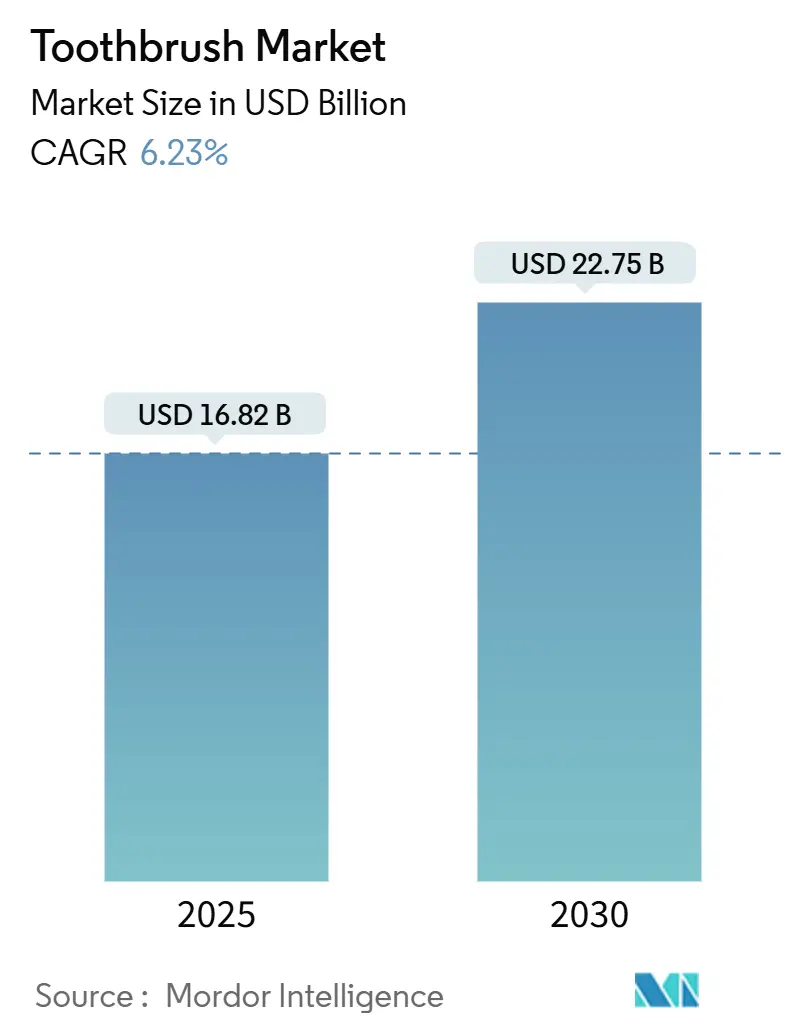
The global toothbrush market size reached USD 16.82 billion in 2025 and is projected to grow to USD 22.75 billion by 2030, at a CAGR of 6.23%. Heightened global awareness of oral hygiene's role in preventing major health issues, such as cardiovascular diseases and diabetes, primarily fuels this growth. Urbanization, rising disposable incomes, and government-endorsed oral health campaigns propel the Asia-Pacific region to the forefront of this market surge. Meanwhile, North America remains a stronghold for premium and smart toothbrush segments. Manual toothbrushes dominate due to their cost-effectiveness, yet electric models are gaining traction, particularly among tech enthusiasts. Products like Oral-B iO and Philips Sonicare DiamondClean, boasting features such as real-time feedback, AI-driven brushing guidance, and Bluetooth connectivity, underscore this trend. Sustainability increasingly influences consumer choices, with brands like Humble Co. and WooBamboo seeing heightened demand for bamboo and biodegradable toothbrushes. The retail landscape is evolving, as online platforms, especially those offering auto-replenishment subscriptions and influencer-led promotions, gain prominence.
Key Report Takeaways
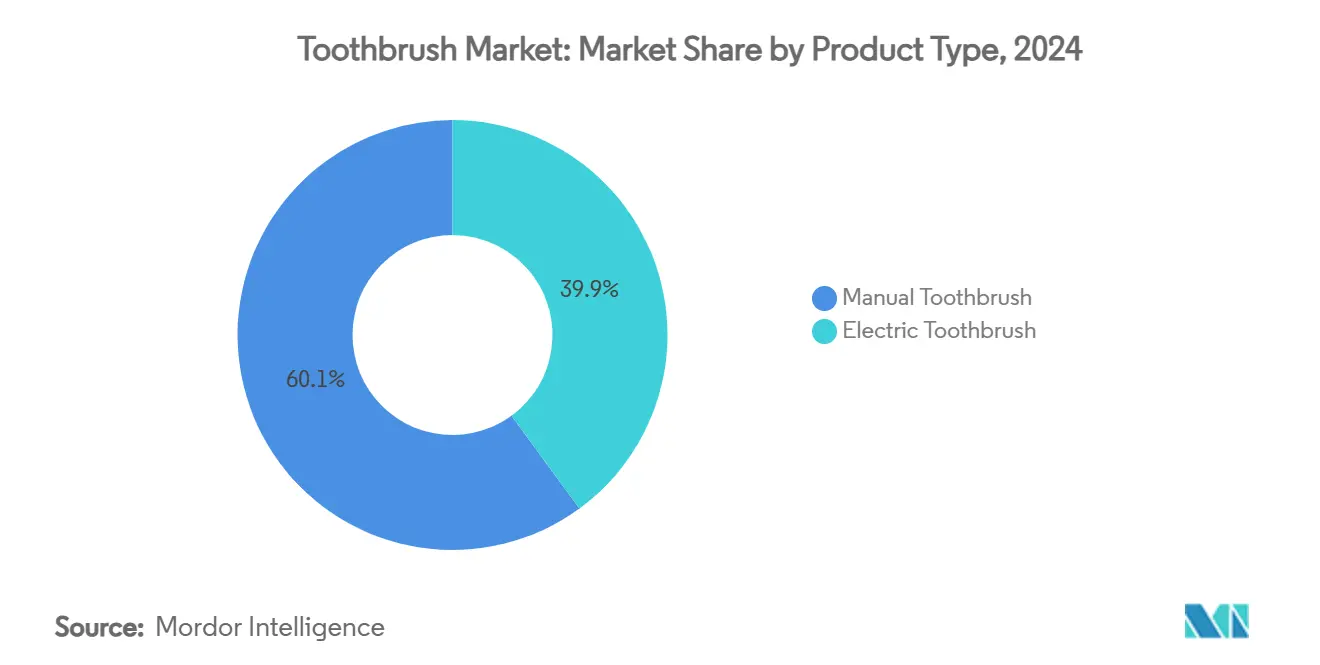
- By product type, manual toothbrushes held 60.06% of the toothbrush market share in 2024, while electric variants are forecast to expand at a 6.81% CAGR through 2030.
- By material, plastic accounted for 93.43% of the toothbrush market size in 2024, and bamboo/wood alternatives are advancing at a 9.63% CAGR.
- By end-user, adults controlled 87.12% revenue in 2024, and the kids/children’s segment is set to grow at an 8.22% CAGR by 2030.
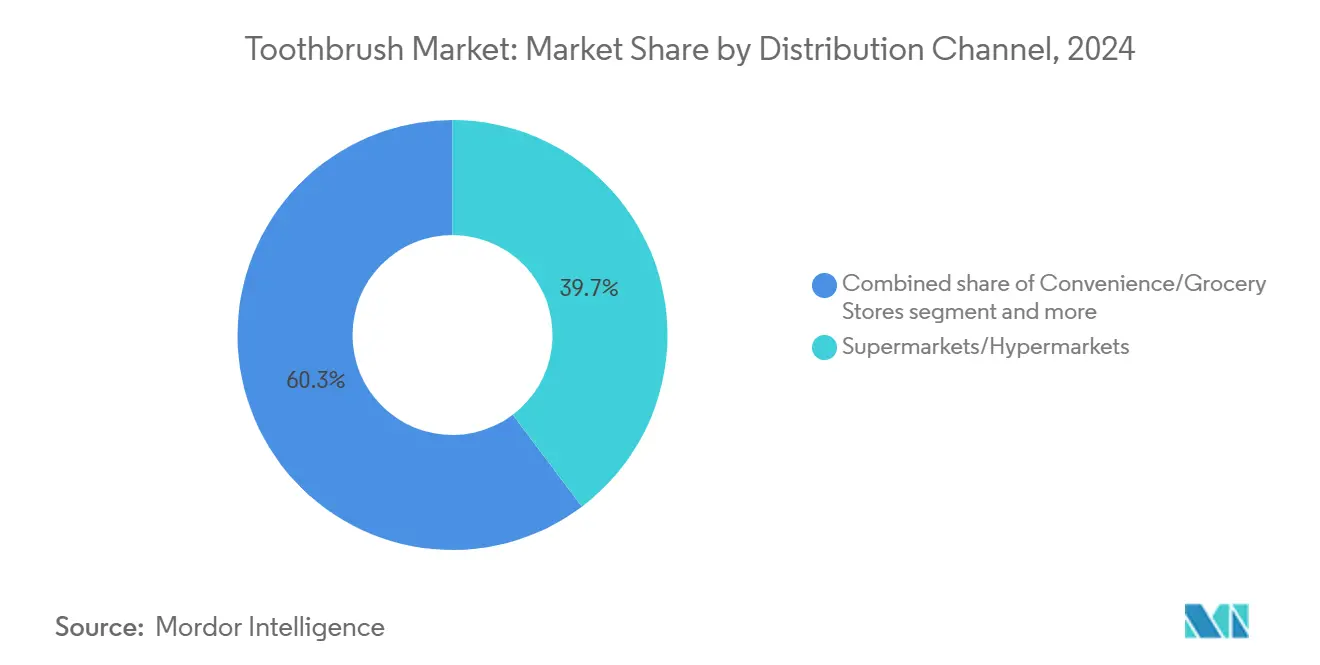
- By distribution channel, supermarkets and hypermarkets led with 39.72% revenue share in 2024, and online retail is the fastest channel, projecting an 8.36% CAGR through 2030.
- By geography, Asia-Pacific captured 35.76% of global revenue in 2024, and is pacing ahead at a 7.87% CAGR to 2030.
Note: Market size and forecast figures in this report are generated using Mordor Intelligence’s proprietary estimation framework, updated with the latest available data and insights as of January 2026.
Market Trends and Insights
Drivers Impact Analysis of Toothbrush Market*
| Driver | (~) % Impact on CAGR Forecast | Geographic Relevance | Impact Timeline |
|---|---|---|---|
| Consumer awareness of oral–systemic health links | +1.8% | Global, first-mover impact in North America and Europe | Medium term (2-4 years) |
| Rising prevalence of dental disorders | +1.2% | Aging cohorts in developed economies | Long term (≥ 4 years) |
| Demand for eco-friendly toothbrushes | +0.9% | North America, Europe, expanding Asia-Pacific cities | Medium term (2-4 years) |
| Government-led school brushing programmes | +0.7% | China, India, UAE | Long term (≥ 4 years) |
| Aggressive brand marketing and advertising | +0.5% | Global, most intense in saturated markets | Short term (≤ 2 years) |
| Product innovation and smart technology | +1.1% | North America and Europe leadership, quick Asia-Pacific uptake | Medium term (2-4 years) |
| Source: Mordor Intelligence | |||
Increasing Consumer Awareness of Oral Hygiene
Global awareness of oral hygiene has increased toothbrush adoption through public health campaigns and educational initiatives. The World Health Organization reports that approximately 3.5 billion people worldwide will suffer from oral diseases in 2025 [1], including tooth decay, gum disease, and oral cancer, emphasizing the necessity of proper oral hygiene practices and tools. According to the Centers for Disease Control and Prevention, in 2025, 11% of children aged 2-5 years had untreated decay in their primary teeth [2]. Heightened awareness of health disparities, especially in untreated tooth decay among Mexican American children and impoverished communities, is reshaping consumer behavior and fueling growth in the personal care market, with a pronounced emphasis on oral hygiene. In underserved areas, parents are increasingly adopting preventive measures, such as fluoride toothbrushes and smart aids, to address care gaps. Colgate's 2023 initiative, "Bright Smiles, Bright Futures," bolstered oral health education and product distribution in schools across low-income U.S. regions, significantly swaying purchasing decisions. In 2024, brands like Oral-B and Philips unveiled AI-driven toothbrushes that provide real-time feedback and brushing analytics, elevating their status from mere hygiene tools to essential daily wellness instruments.
Increasing Demand for Eco-Friendly and Sustainable Toothbrushes
As demand surges for eco-friendly toothbrushes, the oral care industry is pivoting its product development strategies. Millennials and Gen Z, particularly those with a keen environmental focus, are steering away from plastic. In response, brands are turning to innovations like biodegradable materials, bamboo handles, and recyclable packaging. In 2024–2025, industry giants Colgate and Oral-B introduced toothbrushes with replaceable heads and designs that use less plastic. Meanwhile, startups such as Bite and Humble Co. are carving out a niche with their subscription services and commitment to zero-waste packaging. Retailers are taking note, allocating more shelf space to these eco-friendly products. This shift is further fueled by regulatory pressures and corporate ESG (Environmental, Social, and Governance) objectives. Not only does this burgeoning segment resonate with global sustainability ambitions, but it also appeals to a discerning consumer base, enhancing both market value and brand loyalty.
Government Initiatives on Oral Hygiene
Government-backed oral health initiatives are reshaping consumer habits and propelling growth in the personal care sector, with a notable surge in toothbrush adoption. In 2024, India's National Oral Health Programme broadened its school-centric efforts, distributing hygiene kits featuring toothbrushes, especially targeting first-time users in rural locales. This initiative not only heightened initial product usage but also instilled daily habits, paving the way for lasting consumer loyalty. Across the Atlantic, the CDC ramped up its "Oral Health Basics" campaigns in 2023-2024, weaving educational content into digital realms and championing electric toothbrushes via pediatric care channels. This strategy has led to a discernible rise in parents opting for premium toothbrushes designed for their children. In the EU, the "Healthy Teeth, Healthy Life" initiative, running through 2025, is making waves with in-school screenings and product distributions, especially in high-risk demographics. Such public endeavors are transitioning oral care from a mere option to a necessity, nurturing a preventive approach that amplifies demand for both entry-level and premium products, and sways purchasing choices in both traditional and online retail spaces.
Rising Prevalence of Dental Disorders
As dental disorders rise across age groups, the demand for advanced oral hygiene products surges. In 2024, the American Dental Association highlighted that 47% of U.S. adults aged 30 and older grappled with periodontitis [3]. This statistic has catalyzed a pivot towards toothbrushes equipped with gum care modes and pressure sensors, aimed at managing inflammation and staving off recession. Meanwhile, in the United Kingdom, dental screenings from 2023–24 revealed that 22.4% of five-year-olds exhibited visible tooth decay [4]. This finding underscores the urgency for child-centric toothbrushes. Responding to this need, brands like Jordan and Colgate unveiled toothbrushes tailored for children, featuring smaller heads, soft bristles, and engaging elements like timers and music to boost brushing compliance. Over in China, a surge in parental awareness has ushered in a trend of premiumization in pediatric oral care. Urban households are increasingly gravitating towards AI-enabled toothbrushes, with the Soocas C1 leading the charge. On a global scale, health agencies are championing preventive care by distributing toothbrushes through clinics and insurance providers, thereby enhancing accessibility. These evolving consumer behaviors, spurred by rising health concerns and bolstered by targeted innovations, are broadening the horizons of both the basic and premium segments of the toothbrush market.
Restraints Impact Analysis of Toothbrush Market*
| Restraint | (~) % Impact on CAGR Forecast | Geographic Relevance | Impact Timeline |
|---|---|---|---|
| Intensifying competition and category saturation | -0.8% | North America and Europe | Short term (≤ 2 years) |
| High retail price of electric toothbrushes | -0.6% | Price-sensitive Asia-Pacific and Latin America | Medium term (2-4 years) |
| Plastic-waste concerns | -0.4% | Europe and North America, expanding globally | Long term (≥ 4 years) |
| Stricter raw-material and manufacturing regulations | -0.3% | Global with Europe lead | Long term (≥ 4 years) |
| Source: Mordor Intelligence | |||
High Competition and Market Saturation
In developed regions, particularly North America and Western Europe, market saturation is stifling growth in the toothbrush sector. Data from 2024 reveals that over 90% of U.S. households own multiple toothbrushes, with electric models becoming standard among middle- to high-income groups. This saturation has not only limited growth opportunities but also heightened competition based on pricing. Major players, such as Oral-B and Philips, frequently refresh their product lines. However, many consumers view these updates like added pressure sensors or app integration as minor, leading to extended replacement cycles. Startups, including Quip, enjoyed initial success but now grapple with challenges in broadening their reach beyond niche markets. These challenges stem from steep customer acquisition costs and a lack of distinctiveness in already crowded markets. Retailers are also streamlining their offerings, cutting down on SKU counts to prioritize high-velocity products, which curtails shelf space for newer brands. While eco-friendly products, such as bamboo toothbrushes, are witnessing a rise in popularity, their market share is still limited, hindered by higher prices and a gradual adoption rate.
Environmental Concerns Related to Plastic Waste
Concerns over environmental sustainability are increasingly hampering the growth of the toothbrush market, especially in the electric and plastic segments. In 2024, regulatory bodies in the EU and several U.S. states began scrutinizing waste regulations for non-recyclable personal care items, including plastic and electronic toothbrushes. This heightened scrutiny is compelling manufacturers to redesign their products, leading to increased production costs and postponed launches. For instance, in mid-2024, Oral-B faced criticism from Greenpeace over the limited recyclability of its iO Series packaging. This backlash forced Oral-B to halt a global marketing campaign and rethink its supply chain strategy. Eco-conscious consumers are increasingly resisting electric toothbrushes due to their mix of motors, batteries, and plastic casings, which are not easily recyclable. While brands like SURI introduced repairable electric toothbrushes with recyclable components in 2023, the high production costs and challenges in scaling have hindered widespread adoption. On the other hand, bamboo and biodegradable toothbrushes remain on the fringes, grappling with issues of price sensitivity and durability. These hurdles are stunting growth in what are typically high-margin segments, as companies navigate the tightrope of innovation, sustainability demands, and regulatory adherence.
*Our forecasts treat driver/restraint impacts as directional, not additive. The impact forecasts reflect baseline growth, mix effects, and variable interactions.
Toothbrush Market Segment Analysis
By Product Type:
Electric Toothbrushes Drive Market Growth Despite Manual Segment DominanceIn 2024, manual toothbrushes command a dominant 60.06% share of the global market. Their leadership stems from being affordable, user-friendly, and widely available in mass retail and pharmacy outlets. In cost-sensitive regions such as Southeast Asia and Africa, the low price and reliable access make manual brushes the top choice. Major brands, including Colgate and Jordan, drive volume sales with frequent product refreshes, introducing features like ergonomic handles and soft bristles for sensitive gums. They also benefit from a high replacement frequency and robust distribution networks.
Electric toothbrushes are the fastest-growing segment, projected to expand at a CAGR of 6.81% from 2025 to 2030. This growth is fueled by heightened awareness of oral health benefits and endorsements from professionals. Premium models, like Oral-B’s oscillating-rotating heads, dominate the category, while sonic brushes, such as Philips Sonicare, are increasingly favored for their gentle cleaning. In 2024, Oclean debuted its tech-savvy X Ultra series, featuring WiFi, bone conduction, and real-time brushing feedback, targeting tech-oriented consumers. Brands like Quip and Colgate’s Hum bolster engagement with their digital apps, providing personalized recommendations. Meanwhile, eco-friendly innovations, such as SURI’s repairable models and Humble Co.’s bamboo designs, are carving out a niche for sustainability enthusiasts.
By Material:
Plastics Prevail but Eco-Handles AcceleratePlastic, with its cost-efficiency, moisture resistance, and molding ease, dominates toothbrush manufacturing, holding a commanding 93.43% market share. This dominance is bolstered by robust production capabilities and its adaptability to both manual and electric designs. Major players, including Oral-B and Colgate, heavily utilize both virgin and recycled plastics, crafting durable yet affordable products that resonate with the mass market. While there's a push towards recyclable plastics, many traditional toothbrushes still use materials that pose post-use processing challenges, leading to environmental concerns and a sluggish shift in mainstream material diversification.
Eco-friendly alternatives, especially bamboo and wood, are witnessing a surge, growing at a CAGR of 9.63%, driven by a rising wave of eco-conscious, zero-waste consumers. In 2023, Colgate-Palmolive unveiled a bamboo toothbrush paired with fully recyclable packaging. Their “Keep” toothbrush, featuring a reusable aluminum handle, boasts an 80% reduction in plastic waste. Brands like Hum by Quip, The Humble Co., and Brush with Bamboo are carving a niche with biodegradable handles and compostable packaging. Emerging hybrid designs, like bamboo brushes with detachable nylon heads, cater to hygiene and performance needs. Electric toothbrush manufacturers are also adopting recyclable components, aligning with global sustainability goals and driving a broader eco-friendly shift across the industry.
By End-User:
Adult Market Dominance with Growing Children's SegmentAdults dominate the toothbrush market, accounting for 87.12% of total revenue. Their higher disposable incomes and preference for premium oral care products drive this trend. With a consistent replacement cycle of about three months, sales remain stable. Additionally, there's a growing demand for specialized solutions, like soft bristles for sensitive gums and orthodontic care brush heads. In 2024, Oral-B teamed up with Walmart to introduce refillable brush head bundles, underscoring their commitment to enhancing long-term customer engagement through both in-store and online platforms.
Meanwhile, the children's segment, though smaller, is on a rapid ascent with an 8.22% CAGR, spurred by increasing parental focus on preventive dental care. In early 2025, Colgate unveiled the “Magik” smart toothbrush across several Asian and European markets, blending AR-based mobile games to make brushing fun for kids. This shift in behavior is evident in retail, with Tesco and Carrefour broadening their range of eco-friendly toothbrushes from brands like The Humble Co., appealing to parents who prioritize both dental hygiene and sustainability.
By Distribution Channel:
Traditional Retail Maintains Lead as E-commerce GrowsIn 2024, supermarkets and hypermarkets led toothbrush distribution, capturing a 39.72% revenue share. Their success stems from high foot traffic and the immediate availability of products. These outlets adeptly harness impulse buying tendencies and cater to consumers' desire for hands-on product assessment. In a bid to entice repeat customers, Walmart, in 2024, ramped up in-store promotions with Oral-B, offering discounts on bundles of electric toothbrushes and their refill heads. Echoing this trend, Tesco and Carrefour allocated more shelf space to sustainable brands like The Humble Co. and BrushBox, underscoring the rising demand for eco-conscious oral care products. Such collaborations not only broaden manufacturers' consumer reach but also bolster brand visibility and amplify sales volumes.
Online retail, with a robust CAGR of 8.36%, is swiftly altering market dynamics, emphasizing convenience and direct consumer engagement. In 2024, Quip harnessed the power of TikTok and Instagram, unveiling limited-edition toothbrushes and drawing in new subscribers through focused promotions. Subscription services, which automatically replace brush heads, play a pivotal role in retaining customers. Major platforms like Amazon and Nykaa enhance their offerings with AI-driven product suggestions, boosting sales conversions. On a global scale, cross-border e-commerce paves the way for niche eco-friendly brands to expand without the constraints of traditional supply chains, heightening competition and fragmenting the market.

Geography Analysis
APAC Toothbrush Market
In 2024, Asia-Pacific dominates the global toothbrush market, capturing 35.76% of total revenue. This surge is attributed to a burgeoning middle class, improved healthcare access, and a growing emphasis on oral hygiene. Central to this dominance are nations like China and India, bolstered by initiatives such as China's "Healthy China 2030" and India's National Oral Health Program, both championing preventive care in underserved areas. The region also benefits from increasing urbanization and rising disposable incomes, which drive demand for premium oral care products.
North America Toothbrush Market
North America emerges as the fastest-growing market, eyeing a CAGR of 7.87% through 2030. This growth is spurred by the rising popularity of electric toothbrushes and the debut of cutting-edge smart dental products. Brands including Oral-B, Quip, and Philips are enhancing user engagement by integrating AI features, offering subscription-based brush head replacements, and connecting through mobile apps. Additionally, the increasing prevalence of dental issues such as cavities and gum diseases has heightened the focus on preventive oral care. Moreover, United States and Canadian government dental health initiatives, especially in schools and public clinics, champion preventive oral care, further fueling the market's expansion.
Europe Toothbrush Market
Brands like Curaprox, The Humble Co., and Philips Sonicare are capitalizing on Europe's surging demand for eco-friendly, high-performance toothbrushes. Public health campaigns in the United Kingdom, Germany, and Scandinavia, bolstered by EU-endorsed oral care initiatives, are fueling this market momentum. A heightened consumer inclination towards biodegradable materials and ergonomic designs is shaping product innovation. Furthermore, an increasing emphasis on children's oral health is spurring demand for pediatric toothbrushes tailored to regional preferences.
Competitive Landscape
The toothbrush market is moderately consolidated, with manufacturers increasingly adopting segmented marketing strategies to distinguish their products and cater to a wide array of consumers. Colgate-Palmolive solidifies its dominance through robust brand recall, extensive retail collaborations, and regular product updates attuned to regional tastes. Meanwhile, brands like Quip and BURST harness influencer marketing and direct-to-consumer subscription models, boosting customer interaction and steady revenue streams. Eco-conscious brands such as The Humble Co. and SURI emphasize green branding and sustainable materials, resonating with environmentally conscious consumers.
Advanced technology is becoming the cornerstone of product differentiation in the toothbrush market. Oral-B and Philips Sonicare lead the charge with AI-driven electric toothbrushes, boasting features such as real-time brushing feedback, Bluetooth connectivity, and pressure sensors. These premium offerings command higher price tags, underscoring their prowess in plaque removal and user customization. Meanwhile, Chinese brands Oclean and Usmile, with their high-speed motors and AI brushing guidance, present these advanced features at competitive prices, appealing to both tech-savvy and budget-conscious consumers.
To bolster their market foothold, companies are actively seeking partnerships, broadening their regional reach, and pursuing acquisitions driven by innovation. Colgate-Palmolive and Procter & Gamble are making strides in emerging markets, leveraging retail partnerships and local manufacturing. Startups like Quip are sidestepping conventional retail routes, opting instead for a global e-commerce strategy bolstered by influencer partnerships. Companies like SURI and The Humble Co. are channeling investments into R&D, focusing on biodegradable materials and recycling initiatives.
Toothbrush Industry Leaders
-
Colgate-Palmolive Company
-
Procter & Gamble Company
-
Koninklijke Philips N.V.
-
Unilever PLC
-
Panasonic Holdings Corporation
- *Disclaimer: Major Players sorted in no particular order
Toothbrush Market Companies Covered in this Report
- Procter & Gamble Company
- Koninklijke Philips N.V.
- Colgate Palmolive Company
- Unilever PLC
- Lion Corporation
- Panasonic Holdings Corporation
- Sunstar Group
- Church & Dwight Co., Inc. (ARM & Hammer)
- Quip LLC
- Stars Pulse Corporation (Usmile Inc.)
- Shenzhen Yunding Information Technology Co (Oclean)
- FOREO AG
- Burst Oral Care LLC
- Ningbo Seago Electric Co. Ltd (Seago Group)
- SURI Inc.
- The Humble Co. AB
- Snow Cosmetics LLC
- Den-Mat Holdings LLC
- Curaden AG
- GSK plc
Recent Industry Developments in Toothbrush Market
- March 2025: Willo released the AutoFlow+ automated children’s toothbrush starter kit at USD 149, integrating 34,000 soft bristles for full-mouth coverage
- January 2025: Philips introduced its Sonicare toothbrush featuring adaptive brushing technology, 62,000 sonic movements per minute, and patented optical sensing capability.
- January 2025: Oral-B launched the iO2 in Berlin aimed at easing the transition from manual to powered brushing
- November 2024: Unilever Plc.'s brand Pepsodent conducted an activation program across 16 primary schools in Lagos, Nigeria, during World Oral Health Day 2024. The initiative focused on promoting oral hygiene awareness among children, aiming to enhance brand visibility and increase toothbrush sales.
Global Toothbrush Market Report Scope
Segmentation Overview
| Manual Toothbrush | |
| Electric Toothbrush | Oscillating/Rotating |
| Sonic/Ultrasonic |
| Plastic |
| Wood/Bamboo |
| Others |
| Adults |
| Children/Kids |
| Supermarkets/Hypermarkets |
| Convenience/Grocery Stores |
| Pharmacies/Drug Stores |
| Online Retail Stores |
| Other Distribution Channels |
| North America | United States |
| Canada | |
| Mexico | |
| Rest of North America | |
| Europe | Germany |
| United Kingdom | |
| Italy | |
| France | |
| Spain | |
| Netherlands | |
| Belgium | |
| Sweden | |
| Rest of Europe | |
| Asia-Pacific | China |
| India | |
| Japan | |
| Australia | |
| Indonesia | |
| South Korea | |
| Thailand | |
| Singapore | |
| Rest of Asia-Pacific | |
| South America | Brazil |
| Argentina | |
| Rest of South America | |
| Middle East and Africa | South Africa |
| Saudi Arabia | |
| United Arab Emirates | |
| Egypt | |
| Turkey | |
| Rest of Middle East and Africa |
| By Product Type | Manual Toothbrush | |
| Electric Toothbrush | Oscillating/Rotating | |
| Sonic/Ultrasonic | ||
| By Material | Plastic | |
| Wood/Bamboo | ||
| Others | ||
| By End-User | Adults | |
| Children/Kids | ||
| By Distribution Channel | Supermarkets/Hypermarkets | |
| Convenience/Grocery Stores | ||
| Pharmacies/Drug Stores | ||
| Online Retail Stores | ||
| Other Distribution Channels | ||
| By Geography | North America | United States |
| Canada | ||
| Mexico | ||
| Rest of North America | ||
| Europe | Germany | |
| United Kingdom | ||
| Italy | ||
| France | ||
| Spain | ||
| Netherlands | ||
| Belgium | ||
| Sweden | ||
| Rest of Europe | ||
| Asia-Pacific | China | |
| India | ||
| Japan | ||
| Australia | ||
| Indonesia | ||
| South Korea | ||
| Thailand | ||
| Singapore | ||
| Rest of Asia-Pacific | ||
| South America | Brazil | |
| Argentina | ||
| Rest of South America | ||
| Middle East and Africa | South Africa | |
| Saudi Arabia | ||
| United Arab Emirates | ||
| Egypt | ||
| Turkey | ||
| Rest of Middle East and Africa | ||
Key Questions Answered in the Report
What is the current value of the toothbrush market?
The toothbrush market size reached USD 16.82 billion in 2025 and is projected to hit USD 22.75 billion by 2030.
Which region leads global sales?
Asia-Pacific holds 35.76% of global revenue and is also the fastest-growing region with a 7.87% CAGR to 2030.
Which channel is expanding fastest?
Online retail is the fastest-growing outlet at 8.36% CAGR, benefiting from subscription models, detailed product information, and post-pandemic shopping habits.
How is sustainability influencing material choices?
Plastic remains dominant at 93.43% share, but bamboo and wood alternatives are accelerating at 9.63% CAGR as consumers and regulators push for biodegradable options.