
Sugar Beet Juice Extract Market Size and Share
Market Overview
| Study Period | 2021 - 2031 |
|---|---|
| Market Size (2026) | USD 4.19 Billion |
| Market Size (2031) | USD 5.32 Billion |
| Growth Rate (2026 - 2031) | 4.89 % |
| Fastest Growing Market | Asia Pacific |
| Largest Market | Europe |
| Market Concentration | Medium |
Major Players
*Disclaimer: Major Players sorted in no particular order Image © Mordor Intelligence. Reuse requires attribution under CC BY 4.0. |
|
Sugar Beet Juice Extract Market Analysis by Mordor Intelligence
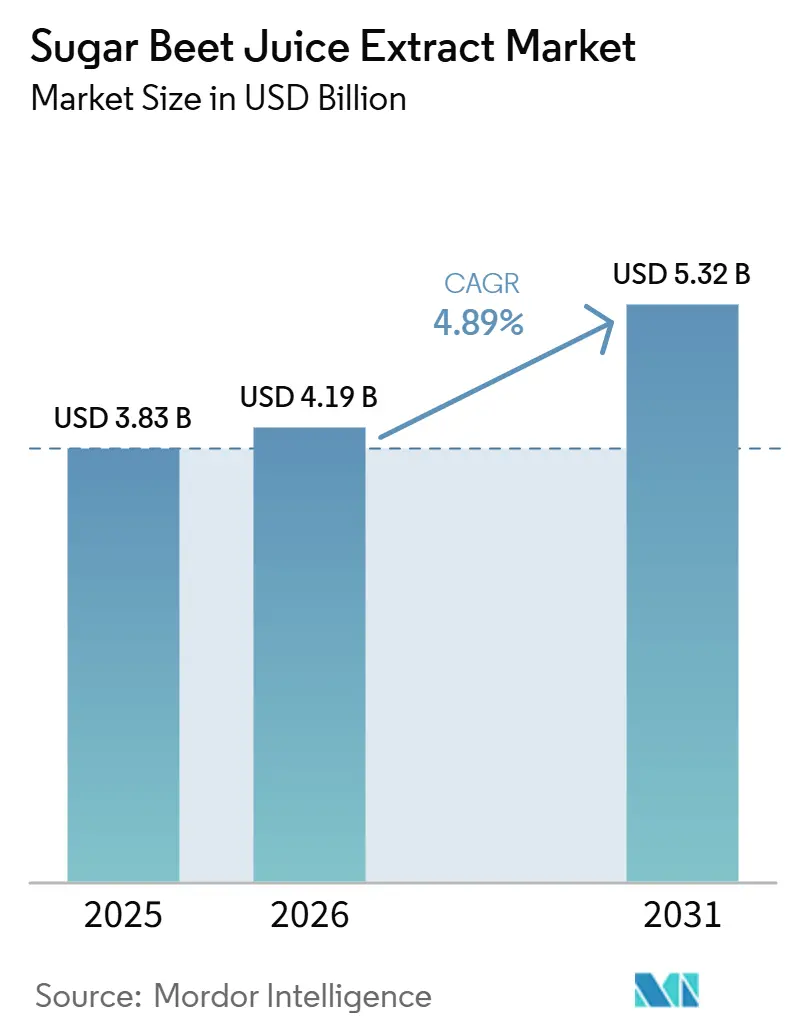
The global sugar beet juice extract market size is expected to grow from USD 3.83 billion in 2025 to USD 4.19 billion in 2026 and is forecast to reach USD 5.32 billion by 2031 at a 4.89% CAGR over 2026-2031. The global sugar beet juice extract market is driven by the increasing demand for natural and plant-based ingredients in the food, beverage, and nutraceutical industries, as consumers show a growing preference for clean-label products over synthetic additives. The extract's use as a natural coloring and sweetening agent, particularly in functional foods and health drinks, is contributing to market growth. Furthermore, rising awareness of cardiovascular health and athletic performance has heightened interest in nitrate-rich beet extracts, which are linked to improved blood circulation and endurance. Technological advancements in extraction and processing are improving product quality, shelf life, and application versatility, further supporting market adoption. Additionally, the growth of vegan and vegetarian diets, coupled with a shift toward sustainable and minimally processed ingredients, is driving demand, as sugar beet juice extract aligns with environmentally conscious consumption preferences.
Key Report Takeaways
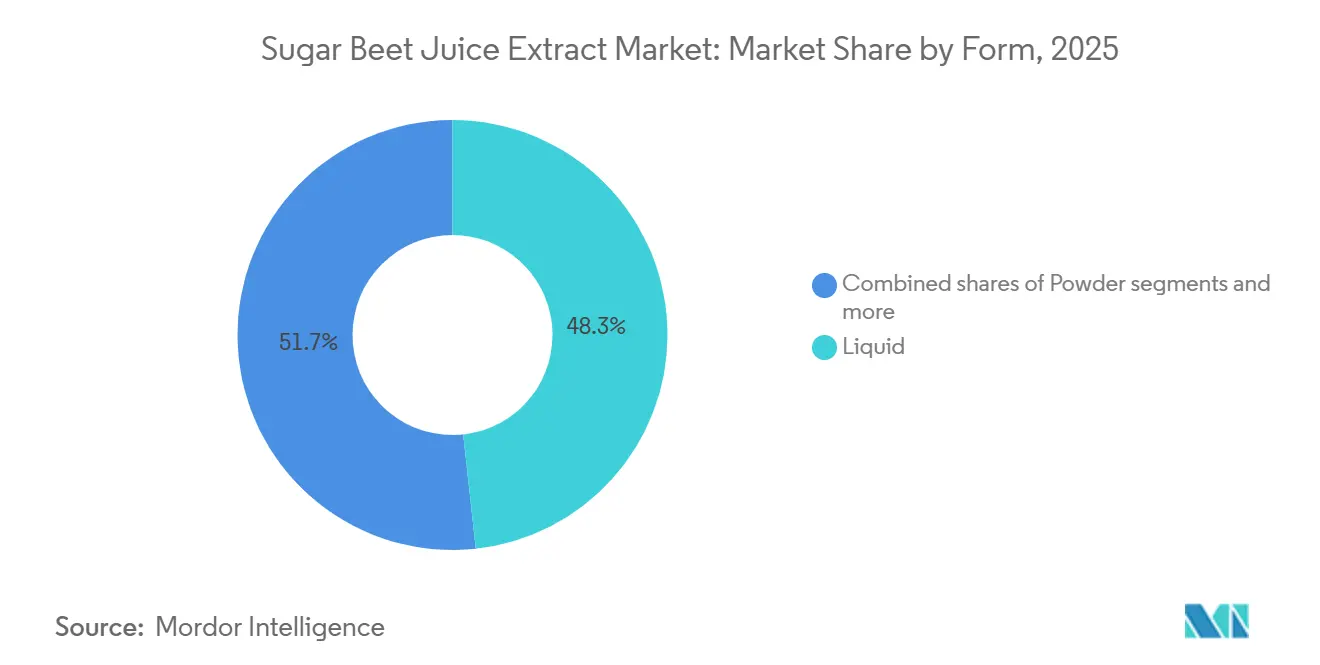
- By form, liquid formats held 48.27% of the sugar beet juice extract market share in 2025, while powder is projected to expand at a 5.95% CAGR from 2026-2031, led by spray-drying innovations.
- By nature, conventional products held 73.13% of 2025 sales; organic-certified extracts are forecast to post a 6.15% CAGR through 2031.
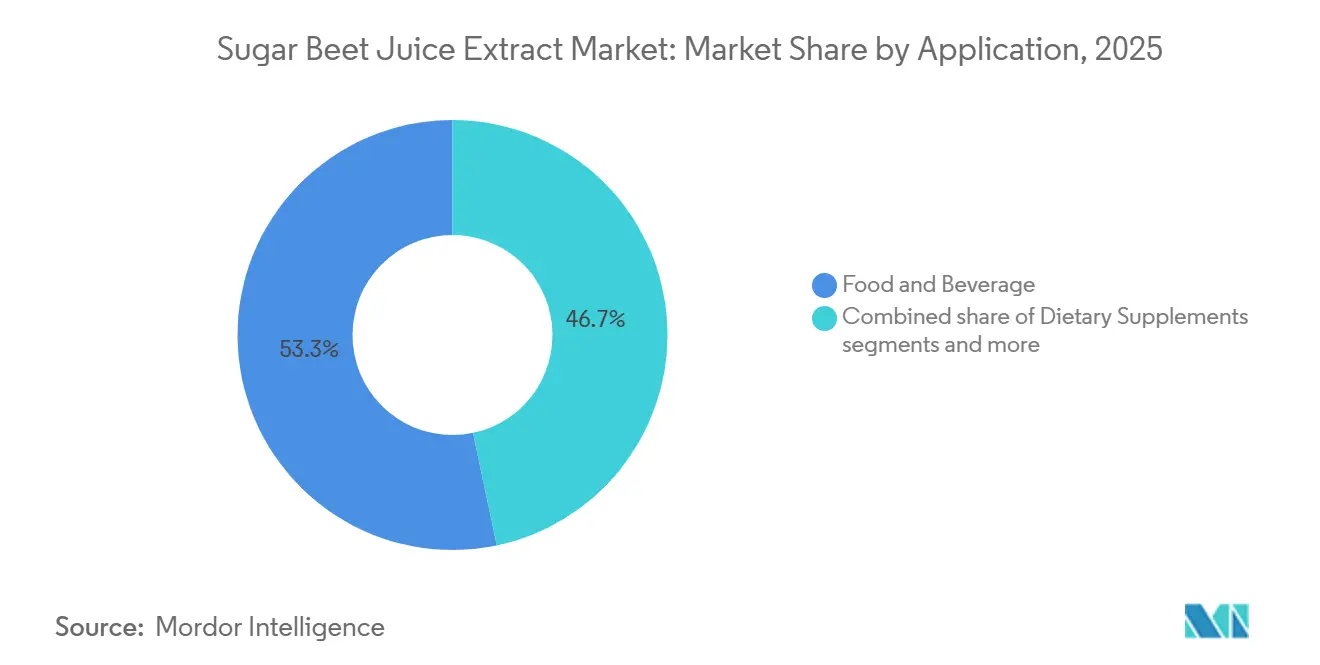
- By application, food and beverages captured 53.29% of demand in 2025, whereas dietary supplements are set to grow at a 5.88% CAGR to 2031.
- By geography, Europe commanded 32.36% of global revenue in 2025; Asia-Pacific is expected to record the fastest regional growth with a 5.88% CAGR over 2026-2031.
Note: Market size and forecast figures in this report are generated using Mordor Intelligence’s proprietary estimation framework, updated with the latest available data and insights as of January 2026.
Global Sugar Beet Juice Extract Market Trends and Insights
Drivers Impact Analysis*
| Driver | (~) % Impact on CAGR Forecast | Geographic Relevance | Impact Timeline |
|---|---|---|---|
| Rising demand for natural food colorants | +1.2% | Global, with regulatory acceleration in China, European Union, North America | Medium term (2-4 years) |
| Clean-label and plant-based ingredient trends | +1.0% | North America and European Union core, spillover to Asia-Pacific urban centers | Long term (≥ 4 years) |
| Expanding functional food & beverage applications | +0.8% | Global, concentrated in North America sports nutrition, European Union fortified beverages | Medium term (2-4 years) |
| Increasing application in cosmetics and personal care | +0.5% | European Union and North America premium beauty, emerging in Asia-Pacific K-beauty formulations | Long term (≥ 4 years) |
| Technological advancements in extraction & stabilization | +0.7% | Global, R&D hubs in European Union (Denmark, Netherlands), North America (United States) | Short term (≤ 2 years) |
| Regulatory approval and safety acceptance | +0.9% | China, United States, European Union | Short term (≤ 2 years) |
| Source: Mordor Intelligence | |||
Rising demand for natural food colorants
Rising demand for natural food colorants is a key factor accelerating the growth of the global sugar beet juice extract market, as food manufacturers increasingly replace synthetic dyes with plant-derived alternatives to meet clean-label expectations and regulatory requirements. Sugar beet extract, rich in betalains, offers vibrant red and purple hues while aligning with consumer preferences for recognizable, minimally processed ingredients. This shift is further reinforced by supportive regulatory frameworks across major markets. For instance, China’s Ministry of Industry and Information Technology, in collaboration with the China National Food Industry Association, mandated that all food colorings must be sourced from edible plants and produced using only physical extraction methods, effective May 1, 2025, significantly boosting demand for naturally derived pigments like beet extracts[1]Source: China’s Ministry of Industry and Information Technology, "China standardizes plant-based coloring foods," miit.gov.cn. In Europe, the European Food Safety Authority has confirmed the safety of beetroot red for use as a food additive and authorized its application across various food and beverage categories under Regulation (EC) No 1333/2008, strengthening its acceptance among manufacturers[2]Source: International Association of Color Manufacturers, "Beet Red," iacmcolor.org. Similarly, in the United States, beet powder GMP (21 CFR 73.40) and vegetable juice, including beet juice (GMP (21 CFR 73.260), have long been recognized as color additives exempt from certification under established regulations, permitting their use in food products in accordance with good manufacturing practices[3]Source: International Association of Color Manufacturers, "Beet Red," iacmcolor.org. These regulatory endorsements, combined with the growing global shift toward natural ingredient sourcing, are driving the widespread adoption of sugar beet juice extract as a reliable and compliant natural coloring solution.
Clean-label and plant-based ingredient trends
The increasing focus on clean-label and plant-based ingredient trends is driving the growth of the global sugar beet juice extract market. Consumers are prioritizing transparency, simplicity, and natural sourcing in the products they purchase. In response, food and beverage manufacturers are reformulating products to replace artificial additives, preservatives, and synthetic ingredients with plant-derived alternatives that align with health-conscious and environmentally sustainable lifestyles. Sugar beet juice extract aligns with these preferences due to its minimal processing, natural origin, and multifunctional properties, including use as a colorant, flavor enhancer, and nutritional ingredient. Its suitability for vegan and vegetarian diets further boosts its appeal, particularly as plant-based consumption gains widespread acceptance across regions. Additionally, brands are utilizing clean-label claims to enhance product positioning and build consumer trust, promoting ingredients like sugar beet juice extract that support "natural," "organic," and "non-GMO" labeling. This alignment of consumer demand, brand strategies, and product innovation is driving the adoption of sugar beet juice extract across various applications, contributing to market growth.
Expanding functional food & beverage applications
The growing use of functional foods and beverages is a key factor driving the global sugar beet juice extract market. Manufacturers are increasingly incorporating ingredients that provide both nutritional value and functional benefits. Sugar beet juice extract is naturally high in nitrates, antioxidants, and bioactive compounds, making it well-suited for products targeting cardiovascular health, energy enhancement, and sports performance. Its application is expanding in categories such as energy drinks, wellness beverages, dietary supplements, and fortified foods, as consumers demand products offering health benefits beyond basic nutrition. Furthermore, its natural color and mild sweetness enhance its versatility in product formulations, enabling manufacturers to create multi-functional products without relying on synthetic additives. The growing emphasis on preventive healthcare and rising consumer awareness of the connection between diet and overall health are driving innovation with ingredients like sugar beet juice extract, boosting its adoption in the functional product market.
Technological advancements in extraction & stabilization
Advancements in extraction and stabilization technologies are significantly contributing to the growth of the global sugar beet juice extract market by enhancing product quality, consistency, and application flexibility. Techniques such as low-temperature extraction, membrane filtration, and vacuum concentration help maintain the integrity of sensitive bioactive compounds, including betalains and nitrates, ensuring higher potency and improved color retention. Additionally, innovations in encapsulation and stabilization methods are extending shelf life and improving resistance to heat, light, and pH variations, addressing limitations traditionally associated with natural extracts in complex food and beverage formulations. These advancements allow manufacturers to integrate sugar beet juice extract into a wider range of products, such as ready-to-drink beverages, processed foods, and nutraceuticals, without compromising stability or performance. Consequently, ongoing technological developments are minimizing formulation challenges and production inefficiencies, making sugar beet juice extract a more dependable and commercially viable ingredient, thereby driving its adoption across various industries.
Restraints Impact Analysis*
| Restraint | (~) % Impact on CAGR Forecast | Geographic Relevance | Impact Timeline |
|---|---|---|---|
| Limited heat resistance in industrial applications | -0.6% | Global, acute in bakery-intensive markets (European Union, North America) | Medium term (2-4 years) |
| Competition from alternative natural colorants | -0.4% | Global, with spirulina/turmeric gains in Asia-Pacific, anthocyanins in European Union /North America | Long term (≥ 4 years) |
| Agricultural dependency and raw material variability | -0.3% | European Union, North America | Short term (≤ 2 years) |
| Shorter shelf life compared to synthetic alternatives | -0.2% | Global, logistics-sensitive in tropical/subtropical export markets | Medium term (2-4 years) |
| Source: Mordor Intelligence | |||
Limited heat resistance in industrial applications
Limited heat resistance poses a significant challenge to the global sugar beet juice extract market, as the natural pigments and bioactive compounds in the extract, particularly betalains, are highly sensitive to high temperatures. Common food processing methods such as pasteurization, baking, frying, and extrusion can cause degradation of color intensity, loss of nutritional value, and reduced functional performance. This thermal instability complicates efforts by manufacturers to ensure consistent product quality, especially in applications requiring high-temperature processing or extended shelf life. To address these issues, companies need to adopt specialized formulation techniques, use protective carriers, or implement alternative processing methods, which can increase production complexity and costs. As a result, the limited thermal stability of sugar beet juice extract hinders its broader adoption in certain industrial applications, particularly when compared to more heat-stable synthetic additives.
Competition from alternative natural colorants
Competition from alternative natural colorants presents a significant challenge to the global sugar beet juice extract market. Manufacturers have access to a variety of plant-based pigments, such as anthocyanins from berries, carotenoids from carrots and paprika, and curcumin from turmeric. These alternatives offer a range of functional and visual benefits, including diverse color shades, enhanced stability across different pH levels and temperatures, and, in some cases, extended shelf life compared to beet-derived pigments. This wide availability enables food and beverage producers to choose colorants that align with their specific formulation needs, processing conditions, and desired visual outcomes. Furthermore, some of these alternatives may be more cost-effective or easier to manage in large-scale production, increasing competitive pressure. Consequently, despite its natural origin and health-related appeal, sugar beet juice extract faces difficulties in maintaining a strong market position, particularly in applications where stability, color diversity, and processing durability are essential considerations.
*Our forecasts treat driver/restraint impacts as directional, not additive. The impact forecasts reflect baseline growth, mix effects, and variable interactions.
Segment Analysis
By Form: Spray-Drying Innovations Drive Powder Acceleration
In 2025, liquid sugar beet extract accounted for 48.27% of the market share, primarily due to its ease of incorporation into beverages, liquid foods, and ready-to-consume formulations. Its uniform dispersion and immediate solubility are critical factors driving its preference among manufacturers. Liquid extracts are widely used in applications such as juices, functional drinks, smoothies, and syrups, as they simplify processing by eliminating the need for rehydration or additional blending steps. Additionally, the liquid form retains the natural profile of beet compounds, including color and bioactive nutrients, making it suitable for clean-label and minimally processed product positioning. Its compatibility with continuous processing systems and ability to deliver consistent color intensity and flavor further enhance its appeal for large-scale beverage production. With the growing demand for ready-to-drink and functional liquid products, the convenience and performance benefits of liquid sugar beet extract are driving its increased adoption.
The powdered sugar beet extract segment is projected to grow at a CAGR of 5.95% through 2031, gaining popularity in the global market due to its superior shelf stability, ease of storage, and cost-efficient transportation compared to liquid alternatives. Powdered extracts are less susceptible to microbial spoilage and degradation, making them ideal for long-term use in dry formulations such as bakery products, snack coatings, dietary supplements, and instant beverage mixes. Their lightweight and compact nature reduces logistics costs and improves handling efficiency for manufacturers and distributors. Furthermore, advancements in drying technologies, such as spray drying, have improved the retention of color, flavor, and nutritional properties, enabling powdered beet extracts to perform effectively across various applications. The ability to precisely control dosage and blend uniformly into dry matrices further supports their use in large-scale food processing, driving demand for the powdered form segment.



By Nature: Organic Certification Commands Premium
Conventional formats accounted for 73.13% of the market share in 2025, driven by their cost-effectiveness, large-scale availability, and consistent supply chain. These attributes make them highly attractive for mass-market food and beverage production. Conventional cultivation methods enable higher crop yields and more stable pricing, allowing manufacturers to procure raw materials in bulk without significant cost fluctuations. This affordability is particularly crucial for industries with tight margins, such as processed foods, beverages, and industrial applications, where ingredient costs significantly influence product formulation. Furthermore, conventional extracts provide reliable quality and performance for coloring, flavoring, and functional purposes, meeting the demands of large-scale manufacturing processes. The widespread acceptance of conventional ingredients in emerging markets, where price sensitivity is high, further bolsters demand.
Organic-certified sugar beet juice extract is projected to grow at a 6.15% CAGR through 2031, gaining traction in the global sugar beet juice extract market due to rising consumer preference for chemical-free, sustainably sourced, and environmentally friendly ingredients. Organic sugar beet extracts align with clean-label trends and are perceived as healthier alternatives, as they are produced without synthetic fertilizers, pesticides, or genetically modified inputs. This makes them particularly appealing in premium food, beverage, and nutraceutical categories, where consumers are willing to pay a premium for certified organic products. Additionally, increasing awareness of environmental sustainability and ethical farming practices is encouraging brands to incorporate organic ingredients to enhance their market positioning and comply with regulatory and certification standards in developed markets. The expansion of organic product lines by manufacturers, coupled with growing availability through specialized retail and e-commerce channels, is further driving the global adoption of organic sugar beet juice extract.
By Application: Dietary Supplements Surges
Food and beverage applications accounted for 53.29% of the market share in 2025, supported by the rising demand for natural, multifunctional ingredients that enhance both product appeal and nutritional value. Sugar beet juice extract is extensively used as a natural colorant, mild sweetener, and functional ingredient, making it highly versatile across categories such as juices, dairy products, confectionery, bakery items, and ready-to-drink beverages. Its ability to provide vibrant color while aligning with clean-label and plant-based trends makes it particularly appealing to manufacturers aiming to replace synthetic additives. Furthermore, the increasing consumer preference for minimally processed foods and beverages with recognizable ingredients is driving product reformulation using beet-derived extracts. The growth of innovative product launches, including functional drinks and naturally colored snacks, further supports the adoption of sugar beet juice extract in this segment, sustaining consistent demand across global markets.
The dietary supplements segment is projected to grow at a 5.88% CAGR through 2031, driven by increasing consumer focus on preventive healthcare and the demand for natural, performance-enhancing, and wellness-supporting ingredients. Sugar beet juice extract, rich in nitrates and antioxidants, is associated with benefits such as improved blood flow, enhanced stamina, and cardiovascular support, making it a popular ingredient in sports nutrition and health supplements. Its use in capsules, powders, and liquid shots caters to consumers seeking convenient and effective ways to boost energy and overall well-being. Additionally, the shift toward plant-based supplementation is accelerating its adoption, as consumers increasingly prefer naturally sourced ingredients over synthetic alternatives. Growing awareness of fitness, active lifestyles, and holistic health approaches is encouraging supplement manufacturers to innovate with beet-derived formulations, driving the expansion of this application segment in the global market.
Geography Analysis
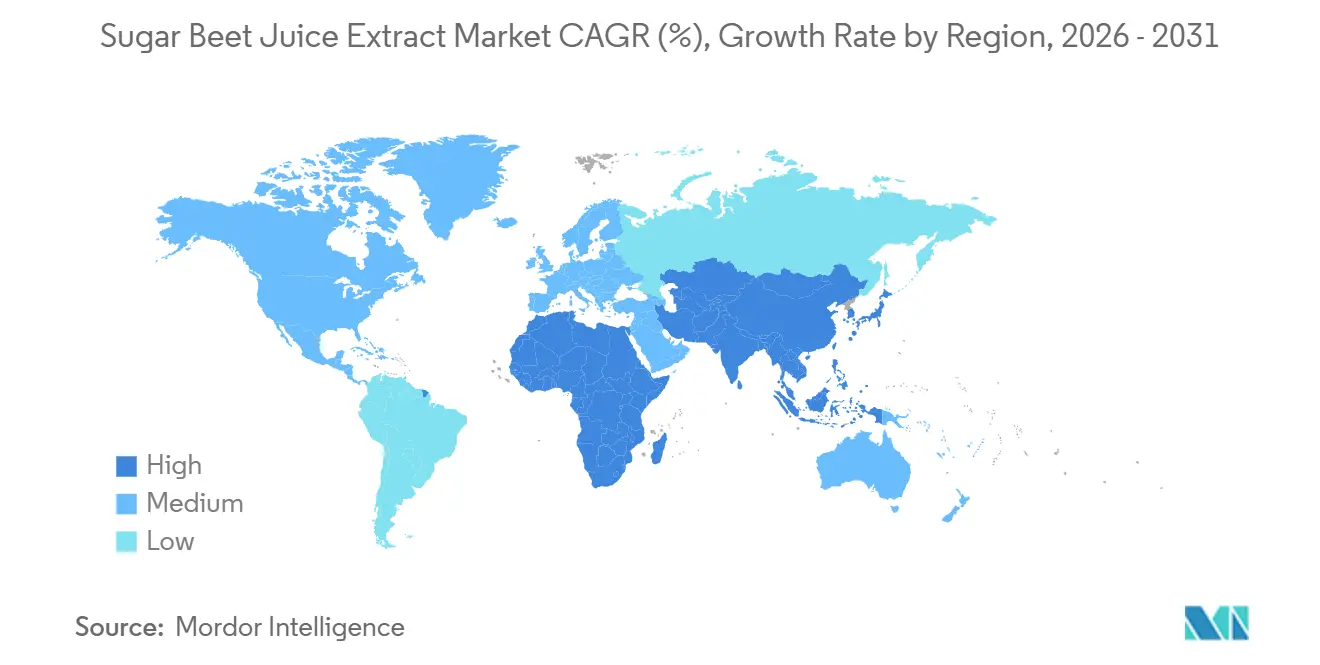
Europe accounted for 32.36% of the global market share in 2025, driven by robust regulatory support for natural food additives and a well-established clean-label movement. Regulatory bodies such as the European Food Safety Authority have validated the safety of beet-derived colorants, promoting their widespread application in food and beverage products. The region's advanced food processing industry and high consumer awareness regarding ingredient transparency further boost the demand for plant-based extracts. Additionally, the increasing popularity of organic and sustainably sourced products, along with the rise in vegan and vegetarian lifestyles, is encouraging manufacturers to incorporate natural ingredients like sugar beet extract into various offerings, including functional beverages and confectionery.
The Asia-Pacific region is projected to grow at a CAGR of 5.88% through 2031, driven by evolving food consumption patterns, increasing urbanization, and rising demand for natural and minimally processed ingredients. Countries such as China and India are experiencing a shift toward healthier dietary choices, prompting food and beverage companies to adopt plant-based colorants and functional ingredients. Regulatory developments supporting the use of naturally derived food additives are further aiding market growth. Additionally, the expansion of the processed food and ready-to-drink beverage sectors, coupled with a growing middle-class population seeking premium and health-oriented products, is driving the adoption of sugar beet juice extract across various applications in the region.
In North America, South America, and the Middle East and Africa, the sugar beet juice extract market is growing due to clean-label trends, expanding food processing industries, and increasing awareness of natural ingredients. In the United States and Canada, strong demand for natural colorants and functional beverages is driving market growth, supported by established regulatory frameworks that allow the use of beet-derived ingredients. In South America, the availability of agricultural raw materials and the growth of the food export sector are encouraging the use of natural extracts in processed foods. Meanwhile, in the Middle East and Africa, increasing urbanization, a rising preference for packaged foods, and the gradual adoption of health-conscious consumption patterns are contributing to market growth. Collectively, these regions are benefiting from a shift toward natural, sustainable, and value-added ingredients, supporting the steady demand for sugar beet juice extract.

Competitive Landscape
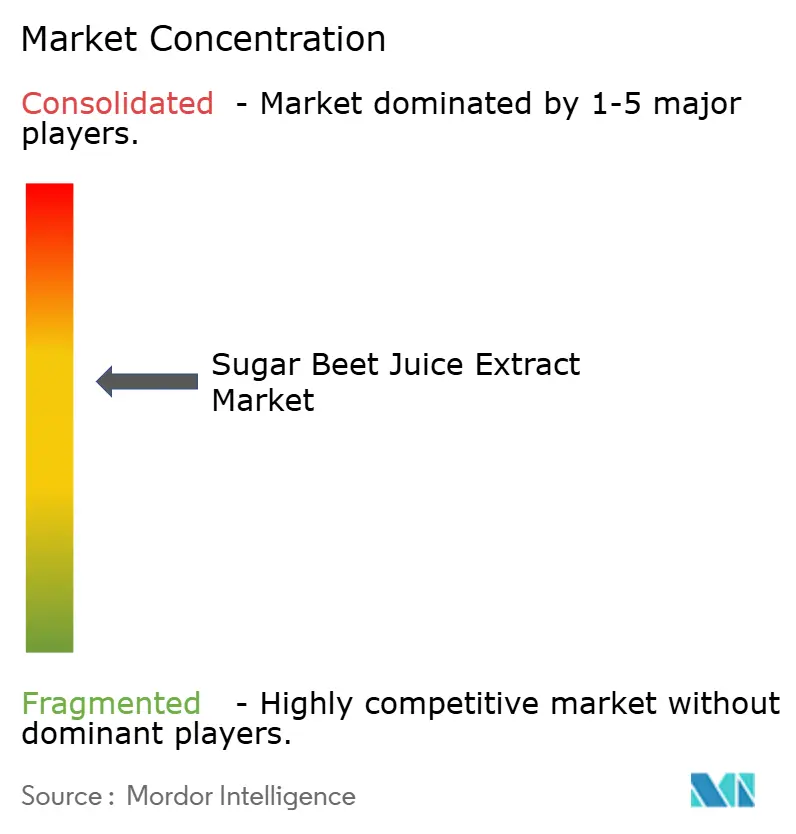
The global sugar beet juice extract market is moderately consolidated, featuring vertically integrated processors alongside specialized ingredient suppliers. Large-scale processors typically manage the entire value chain, from sugar beet cultivation to refining and primary extraction. This vertical integration allows them to control raw material sourcing and optimize production efficiency. However, these processors face growing competition from niche ingredient companies that focus on producing high-purity extracts and customized formulations. These specialized firms differentiate themselves through advanced processing technologies and consistent quality, targeting premium applications rather than bulk commodity markets.
A distinct divide exists in competitive strategies. Traditional processors aim to maximize value from existing operations, often leveraging byproduct streams to enhance profitability and minimize waste. This approach creates additional revenue opportunities from materials previously considered residual. On the other hand, specialty manufacturers focus on innovation and product differentiation. Their efforts center on improving the functionality, stability, and application-specific performance of sugar beet extracts. These advancements cater to demanding end uses such as sports nutrition, personal care, and high-end food applications, where enhanced stability, purity, and formulation compatibility enable higher value realization.
Technological advancements are reshaping the competitive landscape, particularly in extraction efficiency and pigment stabilization. Market participants are investing in refining processing techniques to improve yield, preserve bioactive integrity, and expand usability across diverse industrial conditions. Emerging technologies, such as fermentation-based production and bioengineered alternatives, are beginning to challenge traditional agriculture-dependent supply chains. These innovations offer the potential for controlled, year-round production. Although still in the early stages of commercialization, they could disrupt conventional sourcing models if they achieve cost competitiveness and scalability, intensifying competition and creating new growth opportunities within the market.
Sugar Beet Juice Extract Industry Leaders
-
Südzucker AG
-
Nordzucker AG
-
Tereos S.A.
-
Cristal Union
-
AGRANA Beteiligungs-AG
- *Disclaimer: Major Players sorted in no particular order

Recent Industry Developments
- January 2026: Archer Daniels Midland announced a USD 26 million expansion of its Erlanger, Kentucky campus to increase production capacity for naturally derived colors and flavors, building on a prior USD 15 million investment and signaling confidence in clean-label ingredient demand despite compressed commodity margins.
- September 2025: Südzucker’s Tiense Suikerraffinaderij inaugurated a new state-of-the-art diffusion tower capable of processing 14,500 tons of sugar beets per day. This Euro 25 million investment is expected to reduce energy consumption by 25%, cut CO₂ emissions by 6,000 tons annually, and save 150,000 cubic meters of water each year, reinforcing Südzucker’s commitment to sustainable sugar production.
- February 2025: Cristal Union, reported an increase in sugar production to 1.5 million metric tonnes for the 2024-25 season, driven by a 6% rise in sugar beet area harvested. In line with its growth strategy, the company also acquired the Lesaffre family refinery, further consolidating its position in the French sugar industry.


Global Sugar Beet Juice Extract Market Report Scope
| Powder |
| Liquid |
| Concentrate |
| Conventional |
| Organic |
| Food and Beverage |
| Dietary Supplements |
| Cosmetics and Personal Care |
| Animal Feed |
| Biofuel |
| Others |
| North America | United States |
| Canada | |
| Mexico | |
| Rest of North America | |
| Europe | United Kingdom |
| Germany | |
| France | |
| Italy | |
| Spain | |
| Netherlands | |
| Poland | |
| Belgium | |
| Sweden | |
| Rest of Europe | |
| Asia-Pacific | China |
| Japan | |
| India | |
| Australia | |
| Indonesia | |
| Souh Korea | |
| Thailand | |
| Singapore | |
| Rest of Asia-Pacific | |
| South America | Brazil |
| Argentina | |
| Colombia | |
| Chile | |
| Peru | |
| Rest of South America | |
| Middle East and Africa | Saudi Arabia |
| South Africa | |
| United Arab Emirates | |
| Nigeria | |
| Egypt | |
| Morocco | |
| Turkey | |
| Rest of Middle East and Africa |
| By Form | Powder | |
| Liquid | ||
| Concentrate | ||
| By Nature | Conventional | |
| Organic | ||
| By Application | Food and Beverage | |
| Dietary Supplements | ||
| Cosmetics and Personal Care | ||
| Animal Feed | ||
| Biofuel | ||
| Others | ||
| By Geography | North America | United States |
| Canada | ||
| Mexico | ||
| Rest of North America | ||
| Europe | United Kingdom | |
| Germany | ||
| France | ||
| Italy | ||
| Spain | ||
| Netherlands | ||
| Poland | ||
| Belgium | ||
| Sweden | ||
| Rest of Europe | ||
| Asia-Pacific | China | |
| Japan | ||
| India | ||
| Australia | ||
| Indonesia | ||
| Souh Korea | ||
| Thailand | ||
| Singapore | ||
| Rest of Asia-Pacific | ||
| South America | Brazil | |
| Argentina | ||
| Colombia | ||
| Chile | ||
| Peru | ||
| Rest of South America | ||
| Middle East and Africa | Saudi Arabia | |
| South Africa | ||
| United Arab Emirates | ||
| Nigeria | ||
| Egypt | ||
| Morocco | ||
| Turkey | ||
| Rest of Middle East and Africa | ||


Key Questions Answered in the Report
What is the 2026 value of the sugar beet juice extract market?
The market stands at USD 4.19 billion in 2026.
Which form is growing fastest through 2031?
Powder formats, projected at a 5.95% CAGR owing to high-efficiency spray-drying.
Why is Asia-Pacific the quickest growing region?
China’s 2025 ban on synthetic colors and regulatory harmonization across India and Japan are accelerating natural-pigment demand at a 5.88% CAGR.
Are organic-certified beet extracts gaining share?
Organic-certified beet extracts post a 6.15% CAGR.
Page last updated on:


 Your data is secure and never sold or shared.


