
White Sugar Market Size and Share
Market Overview
| Study Period | 2021 - 2031 |
|---|---|
| Market Size (2026) | USD 72.62 Billion |
| Market Size (2031) | USD 97.73 Billion |
| Growth Rate (2026 - 2031) | 6.12 % |
| Fastest Growing Market | Asia Pacific |
| Largest Market | Asia Pacific |
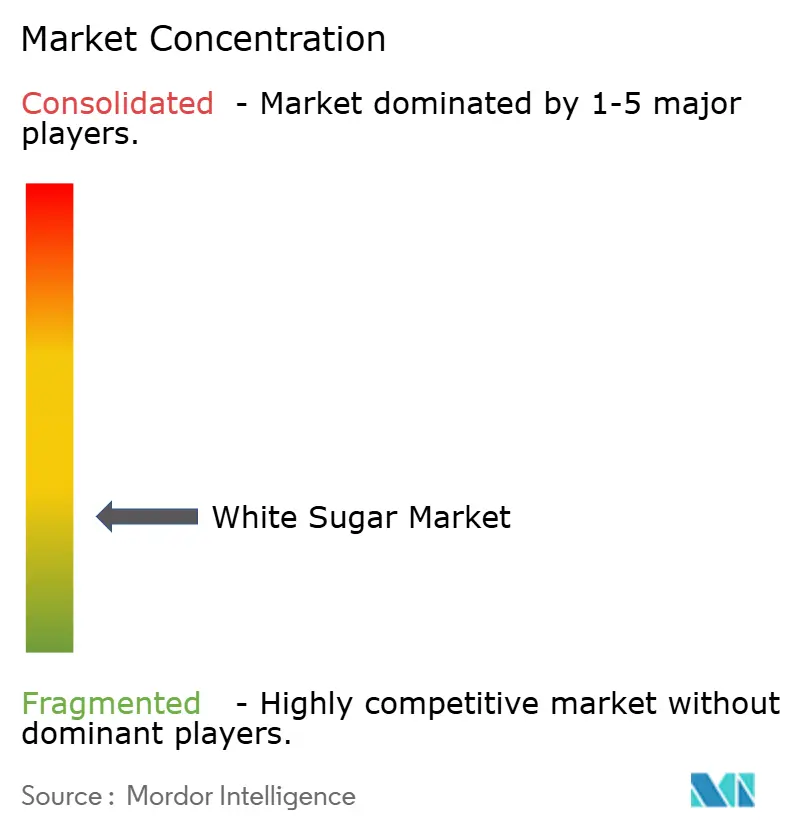
| Market Concentration | Low |
Major Players
*Disclaimer: Major Players sorted in no particular order Image © Mordor Intelligence. Reuse requires attribution under CC BY 4.0. |
|
White Sugar Market Analysis by Mordor Intelligence
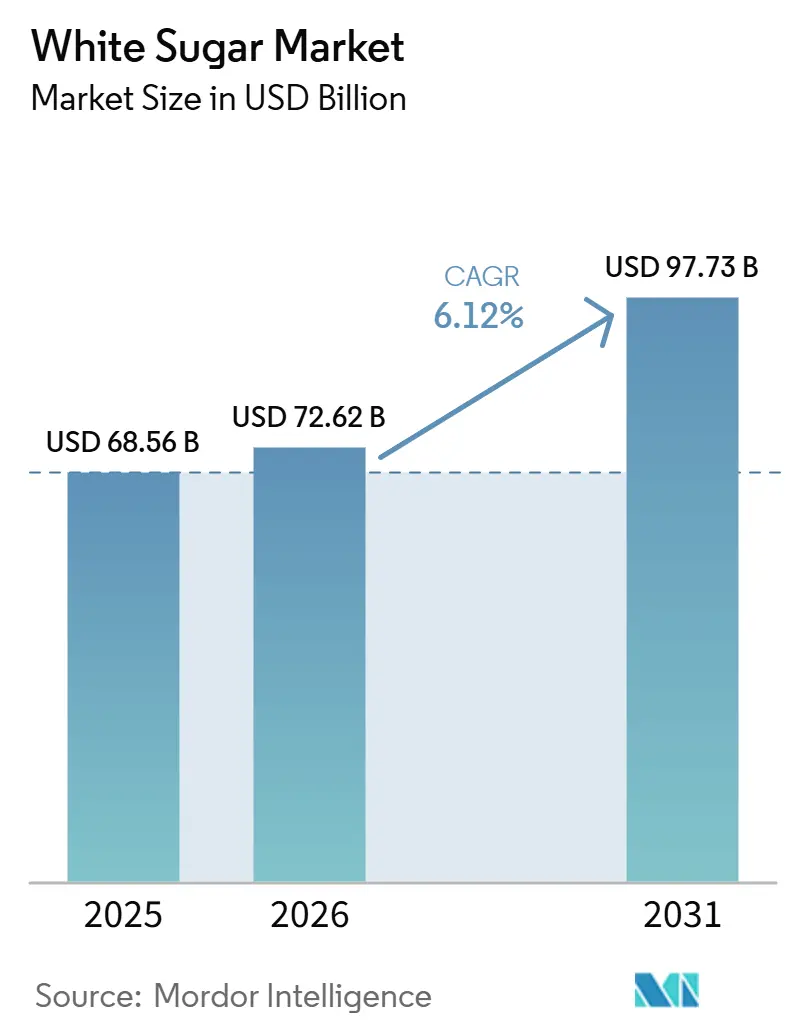
The global white sugar market size is expected to grow from USD 68.56 billion in 2025 to USD 72.62 billion in 2026 and is forecast to reach USD 97.73 billion by 2031, at a 6.12% CAGR over 2026-2031. The global white sugar market remains resilient and strategically important, supported by its expanding role as a key industrial input across multiple value chains. Processed food and beverage applications continue to drive baseline demand, as established formulation requirements support consistent consumption. Industrial non-food applications, including bioethanol and bio-based chemicals, are also creating additional growth opportunities. Cane-origin producers maintain a competitive advantage through cost efficiency and operational flexibility, enabling them to shift output between sugar and ethanol based on market conditions. Adoption of technologies such as liquid sugar formats for automated dosing reflects the market’s focus on manufacturing efficiency. According to the USDA Foreign Agricultural Service, India’s domestic sugar consumption is forecast at 31 million metric tons in 2025/2026, highlighting strong demand in emerging economies[1]Source: USDA Foreign Agricultural Service, "India: Sugar Annual", fas.usda.gov. Despite regulatory pressures and climate-related production risks, the premium for refined white sugar reinforces its strategic value, positioning the market as a stable and adaptable component of global agribusiness.
Key Report Takeaways
- By source, cane sugar led the global white sugar market with a share of 74.47% in 2025, and is anticipated to register the fastest CAGR of 6.89% during 2026-2031.
- By form, granulated retained 72.84% share in 2025, whereas liquid is forecast to expand at a 7.25% CAGR through 2031.
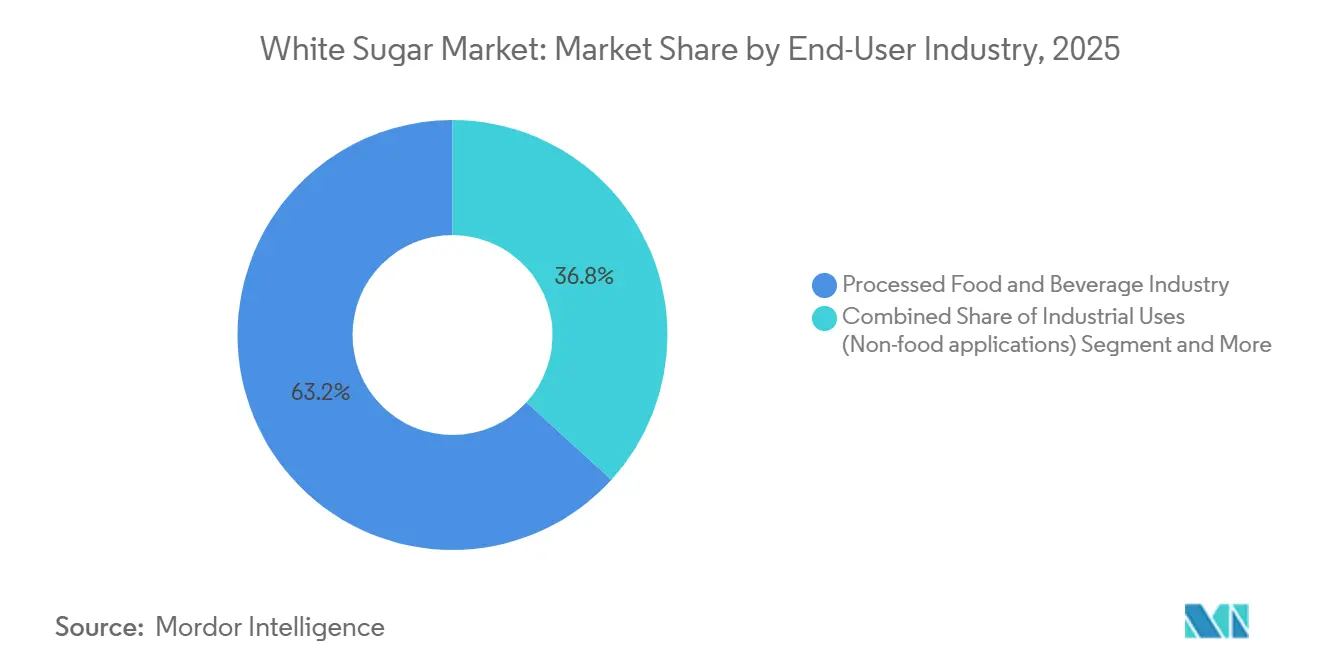
- By end user industry, processed food and bevrages industry held 63.25% of 2025 revenue, but industrial uses (non-food applications) is expected to grow fastest at 7.33% through 2031.
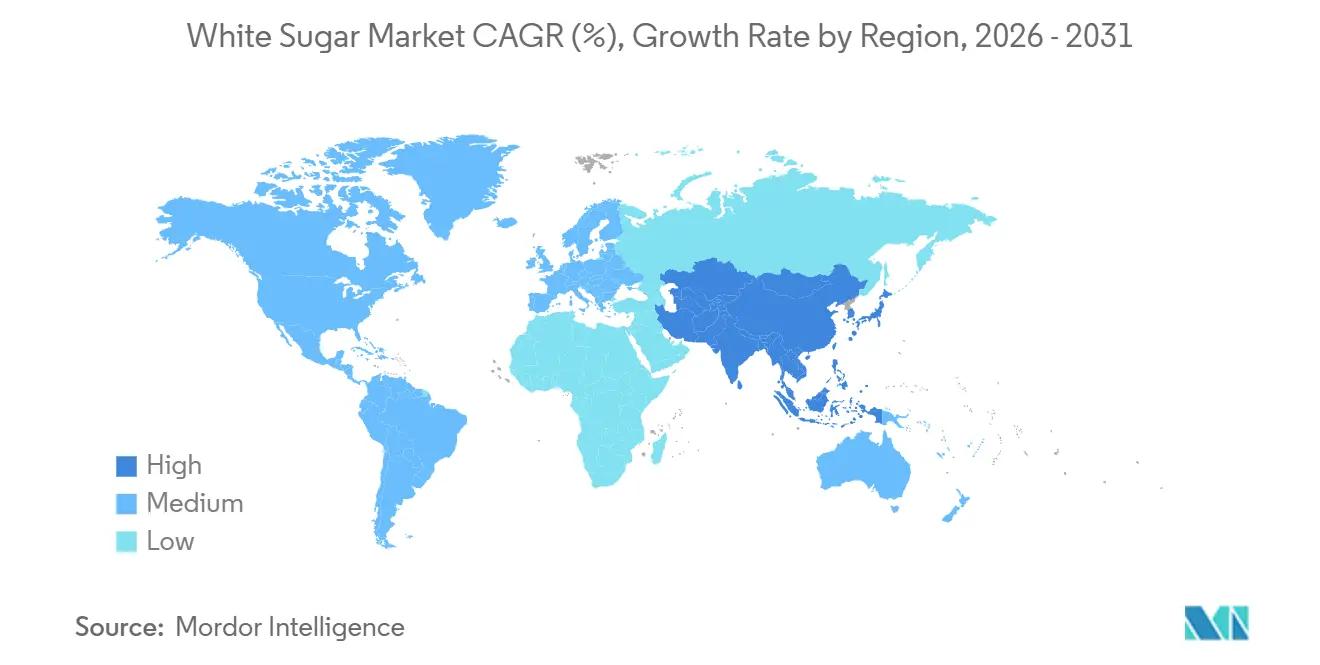
- By geography, Asia-Pacific led the white sugar market with a share of 38.67% in 2025, and is anticipated to register the fastest CAGR of 7.89% during 2026-2031
Note: Market size and forecast figures in this report are generated using Mordor Intelligence’s proprietary estimation framework, updated with the latest available data and insights as of January 2026.
Market Trends and Insights
Drivers Impact Analysis of White Sugar Market*
| Driver | (~) % Impact on CAGR Forecast | Geographic Relevance | Impact Timeline |
|---|---|---|---|
| Rising demand from processed food and beverage manufacturing | +1.8% | Global, concentrated in Asia-Pacific and North America | Medium term (2–4 years) |
| Strong demand from foodservice and quick-service restaurant expansion | +0.8% | Asia-Pacific, North America, Middle East and Africa | Short term (≤ 2 years) |
| Growing consumption of sugar-sweetened beverages | +0.9% | Asia-Pacific, Latin America, Sub-Saharan Africa | Short to medium term (≤ 4 years) |
| Strong demand from pharmaceutical syrups and nutraceutical formulations | +0.5% | Asia-Pacific (India, China), North America | Medium to long term (2–5 years) |
| Technological advancement in sugar processing | +0.4% | Global, early adoption in Asia-Pacific and Brazil | Medium term (2–4 years) |
| Rising household consumption of packaged white sugar in emerging economies | +0.7% | South Asia, Sub-Saharan Africa, Middle East and Africa | Short to medium term (≤ 4 years) |
| Source: Mordor Intelligence | |||
Rising demand from processed food and beverage manufacturing
White sugar demand is primarily supported by its critical role in processed food and beverage manufacturing. Long-term supply contracts and stringent quality specifications make it a key input for industrial buyers. Growth in packaged categories, including biscuits, dairy, confectionery, and flavored beverages, continues to drive stable procurement volumes, with limited impact from evolving consumer health preferences. According to the International Food Information Council, snacking behavior in the United States supports this trend, with 30% of consumers snacking at least once daily, 28% snacking twice daily, and 12% snacking three or more times daily[2]Source: International Food Information Council, "2025 IFIC Food & Health Survey: A Focus On Food & Ingredient Safety", ific.org. These consumption patterns maintain steady demand for sugar as a formulation ingredient. Major refiners identify beverage producers, bakers, and confectionery manufacturers as their most reliable customers, underscoring the strength of this demand base. In addition, the widening premium between commodity-grade and food-grade sugar during periods of supply tightness encourages refiners to expand high-purity output capacity, reinforcing white sugar’s position as a strategic input across global food and beverage value chains.
Strong demand from foodservice and quick-service restaurant expansion
Growth in foodservice demand and quick-service restaurant (QSR) expansion is becoming a key driver of the global white sugar market, as organized foodservice channels account for a larger share of consumption. Compared with retail channels, QSR procurement models typically include sugar in multi-category contracts with approved suppliers, supporting volume visibility and pricing stability. The National Restaurant Association’s 2026 outlook is expected to indicate resilient dining demand despite margin pressures, reinforcing sugar’s role in foodservice growth. In Asia, QSR chains are expanding rapidly into secondary and tertiary cities, creating broad-based demand that remains largely independent of health-driven consumption trends in developed markets due to slower recipe reformulation and strict product standards. This trend makes foodservice-linked sugar volumes less price-sensitive than retail demand, giving refiners and traders a more dependable procurement base and strengthening sugar’s position as a core ingredient across global foodservice value chains.
Growing consumption of sugar-sweetened beverages
Rising consumption of sugar-sweetened beverages continues to drive the global white sugar market, as these products represent the largest indirect demand source for sugar in liquid and dissolved forms. High-income countries are reporting flat or declining volumes due to reformulation initiatives and fiscal measures. However, lower- and middle-income markets are expanding rapidly, supported by higher disposable incomes and increasing adoption of urban lifestyles. South and Southeast Asia are registering the strongest growth, reinforcing sugar’s established role in beverage formulation and procurement. According to the United States Department of Agriculture, China imported 5.3 million metric tons of sugar in 2025/26, making it the largest importer globally. Indonesia, India, and Algeria also ranked among the major importers, highlighting the geographic shift in demand[3]Source: United States Department of Agriculture, "Sugar," fas.usda.gov. This trend is encouraging beverage manufacturers to locate blending and syrup operations closer to consumption hubs, reducing supply chain length and creating new procurement channels. As a result, growth in sugar-sweetened beverages continues to support white sugar’s strategic relevance while reshaping global supply dynamics and strengthening its role as a critical input in the evolving beverage economy.
Technological advancement in sugar processing
Technological innovation in sugar processing is a key driver of the global white sugar market, strengthening efficiency, product quality, and sustainability as sources of competitive advantage. Breakthroughs such as advanced microfiltration and membrane-based decolorization enable mills to produce higher-purity sugar, accelerate crystallization, and reduce energy consumption. These advancements support access to premium food-grade markets while lowering waste-related liabilities. Complementing these process innovations, China’s development of the LC05-136 sugarcane variety demonstrates how agronomic advances strengthen supply-side competitiveness by improving crop resilience and yield potential. Early adoption in cane-origin markets, such as Brazil, India, and Thailand, is accelerating structural differentiation, as technologically advanced producers gain cost and quality advantages over conventionally operated mills. In contrast, European beet processors are focusing on reducing the cost gap rather than expanding new capacity, further widening the divide between innovators and incumbents. As this differentiation deepens, technology is not only improving operational performance; it is reshaping competitive positioning and establishing innovation as a core factor in long-term market leadership.
Restraints Impact Analysis of White Sugar Market*
| Restraint | (~) % Impact on CAGR Forecast | Geographic Relevance | Impact Timeline |
|---|---|---|---|
| Growing consumer shift toward reduced-sugar and sugar-free products | -0.6% | North America, Western Europe, Asia-Pacific urban centers | Medium term (2–4 years) |
| Increasing sugar taxes and regulatory measures on sweetened foods and beverages | -0.7% | Global, concentrated in high-income and upper-middle-income markets | Short to medium term (≤ 4 years) |
| Volatility in sugarcane and sugar beet production due to climate change | -0.5% | Brazil (cane), Europe (beet), South Asia | Short to long term (ongoing) |
| Trade restrictions, export controls, and import tariffs disrupting global supply | -0.4% | Global trade flows; highest impact in the United States, South Asia, Middle East and North America | Short to medium term (≤ 4 years) |
| Source: Mordor Intelligence | |||
Growing consumer shift toward reduced-sugar and sugar-free products
Changing consumption patterns are creating a key restraint for the global white sugar market, as consumers increasingly shift toward reduced-sugar and sugar-free products, gradually weakening retail demand even as industrial procurement remains resilient. This trend is most evident in high-income markets, where health-conscious consumers increasingly prefer zero-calorie sweeteners and reformulated products. At the same time, evolving labeling regulations are prompting packaged goods manufacturers to adapt their product portfolios in advance of changing consumer preferences. In Latin America, mandatory front-of-pack labeling frameworks are accelerating product reformulation. In Europe, refiners are reporting higher demand for specialty sugars and substitutes, along with declining per capita consumption of conventional white sugar. As a result, growth opportunities are narrowing in retail-facing channels, increasing the market’s reliance on industrial and foodservice demand as more stable volume drivers. For market participants, this shift highlights the need to optimize the customer mix and secure long-term supply agreements with industrial buyers to offset structural headwinds in consumer-facing segments.
Increasing sugar taxes and regulatory measures on sweetened foods and beverages
Regulatory pressure from expanding sugar taxes and excise frameworks has become a major restraint on the global white sugar market. These measures directly affect beverage manufacturers and influence procurement strategies. Governments are increasingly implementing tiered models based on sugar content to encourage product reformulation and reduce dependence on high-sugar formulations. Recent regulatory changes in the Gulf Cooperation Council and the United Kingdom show that policy adoption is accelerating across developed and middle-income economies. In line with World Health Organization guidance, these measures are not isolated interventions but part of a broader global trend that continues to reduce beverage-channel demand for white sugar. For producers, the business impact is clear: manufacturers subject to these levies have strong financial incentives to lower sugar intensity, which reduces procurement volumes and requires refiners to adjust their commercial strategies. This evolving regulatory landscape highlights that compliance, customer mix management, and diversification into less exposed channels are now critical to sustaining competitiveness in the global sugar economy.
*Our forecasts treat driver/restraint impacts as directional, not additive. The impact forecasts reflect baseline growth, mix effects, and variable interactions.
White Sugar Market Segment Analysis
By Source:
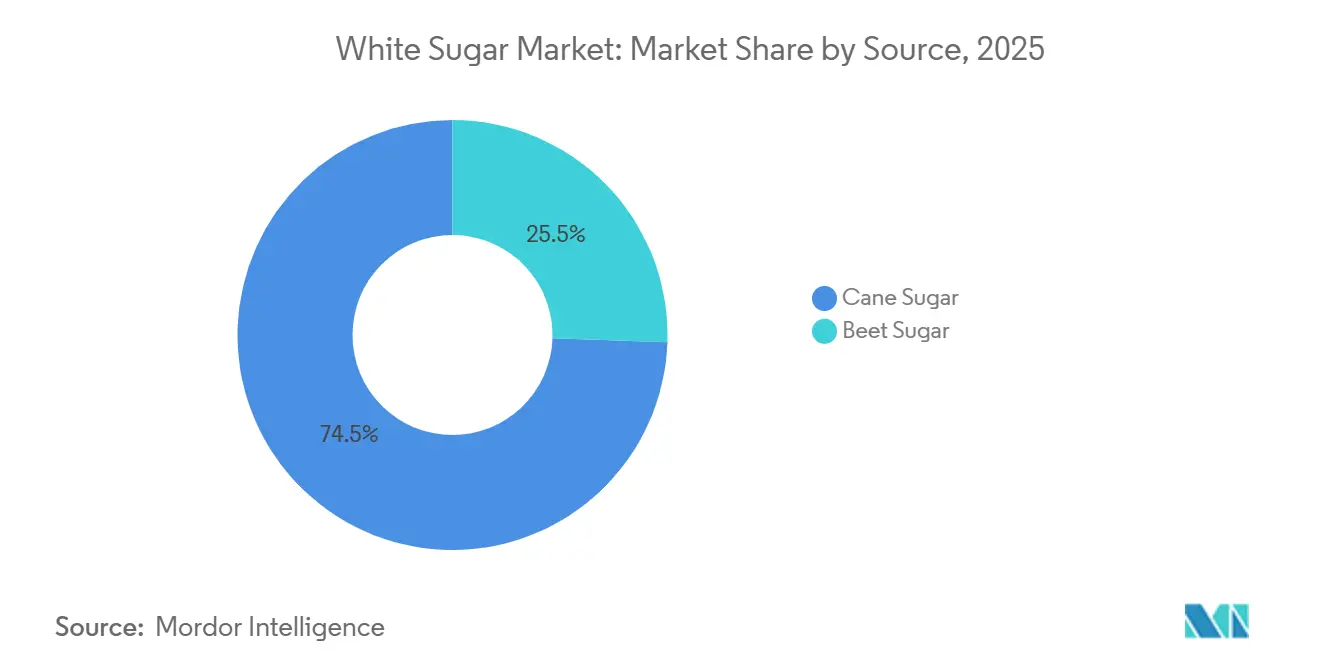
Cane Sugar Infrastructure Reinforces Production DominanceBy source, cane sugar remained the leading category in the global white sugar market, accounting for 74.47% of the total share in 2025. Favorable tropical growing conditions supported its market position, while cane processors benefit from the operational flexibility to allocate output across raw sugar, refined white sugar, and ethanol based on prevailing market conditions. Brazil, India, and Thailand are expanding their white sugar export capacity. Brazil’s rising share of refined exports indicates a strategic shift toward higher-value products. This established market position is expected to keep cane sugar central to global supply, supported by its cost efficiency and ability to optimize production portfolios in response to changing demand.
Beet sugar is projected to be the fastest-growing category, registering a CAGR of 7.12% through 2031. New investments in Egypt, Türkiye, the United States, and China are supporting expansion, as these countries increase cultivation to meet rising domestic demand. Structural challenges in Europe, including land-use competition, regulatory restrictions on plant-protection products, and margin pressure, are limiting recovery and widening the cost gap with cane-origin producers. Despite these headwinds, expansion in emerging markets is expected to sustain beet sugar’s growth trajectory, positioning it as the strongest growth contributor during the forecast period.


By Form:
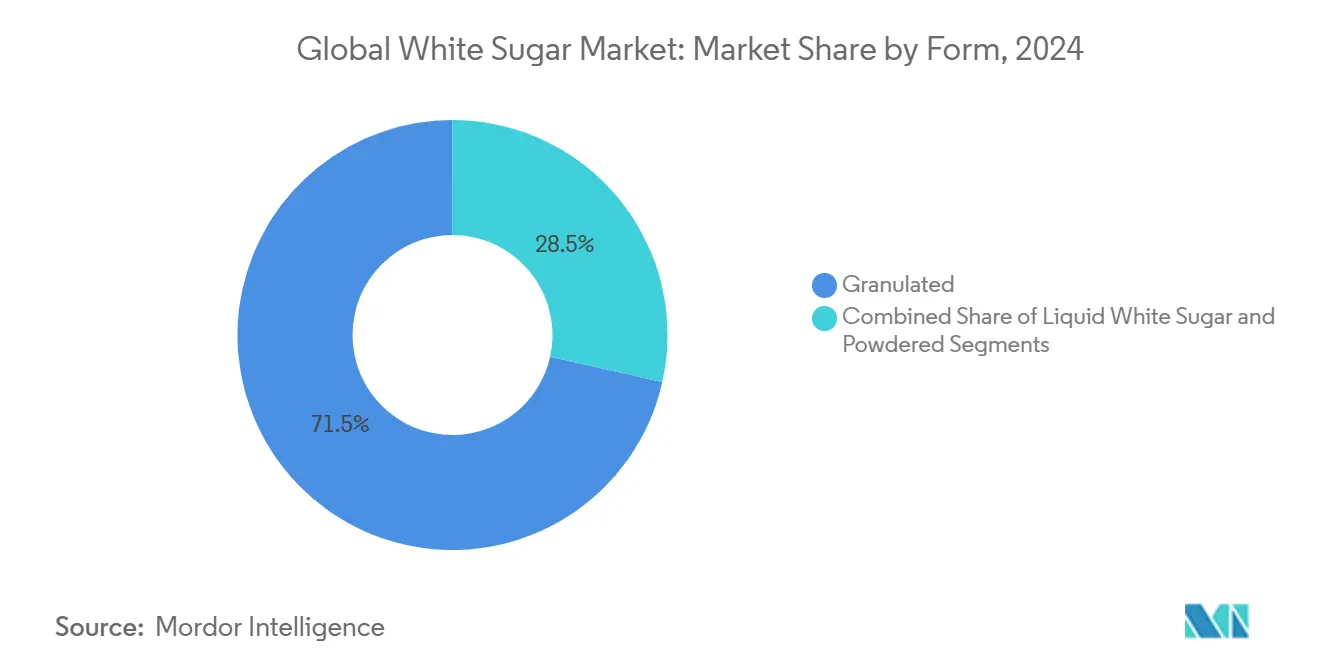
Liquid Sugar Disrupts Bulk Granulated Procurement PatternsBy form, granulated sugar held the largest share of the global white sugar market, at 72.84% in 2025, supported by its broad commercial use in baking, confectionery, and beverage manufacturing. The high capital cost of replacing dry ingredient handling infrastructure further supports its dominance, making it the default choice for established production lines. Powdered sugar continues to serve a stable niche in premium baked goods and confectionery coatings. However, granulated sugar’s versatility and entrenched role in industrial supply chains continue to anchor its leadership. This position ensures that granulated sugar remains central to procurement patterns, even as other forms create specialized growth opportunities.
Liquid sugar is expected to be the fastest-growing category, registering a CAGRof 7.25% through 2031. Its pumpable format integrates seamlessly with automated dosing systems in beverage, dairy, and bakery production, reducing manual handling and delivering cost savings that scale with volume. Adoption remains particularly strong in Asia-Pacific, where new manufacturing facilities in Indonesia, Vietnam, and India are being designed with automated ingredient handling as a baseline specification. Although liquid sugar accounts for a modest share of overall consumption, its adoption rate indicates a structural shift in procurement preferences. Producers that invest in integrated liquid sugar production and distribution capabilities are well positioned to capture premiums on quality and convenience, outpacing traditional granulated sugar suppliers in high-growth industrial markets.

By End-User Industry:
Industrial Non-Food Applications Build a Structurally New Demand BaseBy end-user industry, the processed food and beverage sector accounted for 63.25% of global white sugar consumption in 2025, underscoring its position as the largest demand category. This dominance reflects the extensive use of sugar in beverage, confectionery, bakery, and dairy manufacturing, where formulation requirements support consistent procurement volumes. Foodservice demand, particularly from the expansion of quick-service restaurants in Asia-Pacific, the Middle East, and Latin America, is generating incremental growth as new outlets create additional procurement needs. Household and retail consumption remains relevant in lower-income markets, where packaged sugar is a staple. However, in high-income regions, health-conscious purchasing behavior and labeling regulations are gradually reducing the retail share, reinforcing the industrial sector’s role as the primary demand anchor.
Industrial non-food applications represent the fastest-growing category, with a projected CAGR of 7.33% through 2031. Manufacturers increasingly use white sugar as a high-purity fermentation feedstock in pharmaceuticals, nutraceuticals, and bio-based chemicals, as well as in emerging pathways such as sustainable aviation fuel. This segment benefits from sugar’s consistent sucrose concentration, which improves process predictability compared with variable agricultural feedstocks. Institutional support, such as Brazil’s financing initiatives for ethanol and biomass energy, highlights the strategic importance of this dual-commodity model. As a result, industrial non-food demand is creating a structurally new consumption base and functioning as a stabilizing factor by providing an effective price floor during periods of softer food-grade demand.
Geography Analysis
APAC White Sugar Market
Asia-Pacific was the largest regional category in the global white sugar market, holding a 38.67% share in 2025 and expected to register a CAGR of 7.89% through 2031. India and China support the region’s leadership, with industrial buyers driving demand and dual-origin production structures improving supply resilience. Indonesia’s increasing reliance on imports highlights the gap between domestic supply and growth in food processing. Overall, demographic momentum, industrial expansion, and infrastructure development position Asia-Pacific as the structural center of global demand.
North America and Europe White Sugar Market
North America is expected to be the fastest-growing region, registering a compound annual growth rate of 7.92% through 2031, supported by structurally supply-constrained market dynamics. Industrial food and beverage demand continues to exceed domestic production, creating a sustained import requirement that supports predictable procurement for large buyers. Declining beet sugar output has increased reliance on imports, while major capital investments, such as American Sugar Refining Group’s new refinery in Louisiana, indicate confidence in long-term demand. In contrast, Europe faces structural challenges. Consecutive high-yield beet campaigns have created surplus stocks, reducing prices and prompting capacity rationalization. French cooperative Tereos has projected a 9% decline in sugar beet planting for the 2025 season, further tightening continental output and increasing pressure on European refiners.
South America and MEA White Sugar Market
South America and the Middle East and Africa add further complexity to the global landscape. Brazil, the critical swing supplier, is shifting toward higher-value refined exports, strengthening its role as a global price-setter. In Africa, Nigeria’s refinery expansion highlights the focus on import substitution, while South Africa’s industry restructuring reflects a shift toward diversified cane-based value chains. Meanwhile, Gulf Cooperation Council markets are moderating beverage-channel demand through tiered excise frameworks. Together, these regions show how trade flows, regulatory changes, and industrial diversification are reshaping the balance of global white sugar supply and demand.

Competitive Landscape
The competitive landscape of the global white sugar market remains highly fragmented. Cost structures, refining capabilities, and geographic positioning shape competition more than market share dominance. Cane-origin producers in Brazil, India, and Thailand benefit from integrated operations and export infrastructure. In contrast, beet processors in Europe and North America face higher fixed costs and regulatory headwinds. European incumbents, including Südzucker, Tereos, and Nordzucker, are facing pressure from depressed prices and rising energy costs. Tereos predicts a 9% decline in sugar beet planting for the 2025 season, which could further constrain continental output and push refiners to prioritize cost optimization, selective closures, and specialty product diversification.
Capital investment flows in growth markets indicate a different trajectory. American Sugar Refining Group’s planned modernization of its Louisiana refinery in May 2026 signals confidence in long-term North American demand. Cargill’s planned acquisition of SJC Bioenergia in Brazil in April 2025 is expected to secure vertically integrated ownership across cane origination, sugar-ethanol processing, and refining capacity. These developments highlight how global leaders are positioning for structural growth by integrating dual-commodity flexibility and scaling refining capabilities. Meanwhile, Africa presents untapped growth opportunities. Dangote’s planned expansion in June 2026 is expected to reshape regional trade flows by reducing import dependence and strengthening domestic refining capacity.
Looking ahead, the widening premium for food-grade white sugar is expected to reward producers that invest in advanced refining technologies ahead of the cycle. Chromatography and membrane filtration breakthroughs expected to be showcased at the International Society of Sugar Cane Technologists 2025 event could enable higher-quality output and sustainability gains, positioning innovators to capture disproportionate value. As a result, the competitive dynamic is shifting from volume defense to innovation-led differentiation, where cost efficiency, technology adoption, and strategic integration across sugar-ethanol pathways will define long-term market leadership.
White Sugar Industry Leaders
-
American Sugar Refining, Inc.
-
Südzucker AG
-
Tereos S.A.
-
Wilmar International Ltd.
-
Associated British Foods plc
- *Disclaimer: Major Players sorted in no particular order
White Sugar Market Companies Covered in this Report
- ASR (American Sugar Refining, Inc. )
- Sudzucker AG
- Tereos Group
- Wilmar International Ltd.
- Associated British Foods plc
- Nordzucker Holding AG
- Zilor Energia e Alimentos
- Mitr Phol Group
- Louis Dreyfus Company
- Cargill Inc. (Sugar Trading)
- Cristal Union
- Sao Martinho S.A.
- Thai Roong Ruang Sugar Group
- Shree Renuka Sugars Ltd.
- EID-Parry (India) Ltd.
- Buriram Sugar Public Company Limited
- Guangzhou HUATANG Co.,Ltd.
- COFCO Corporation Limited
- Mitsui & Co., Ltd.
- JG Summit Holdings, Inc.

Recent Industry Developments in White Sugar Market
- June 2026: Vision Sugar Holdings, a consortium of four local and foreign investors, acquired Tongaat Hulett Private Limited’s operations in the Lowveld, a transaction that was expected to revitalize the sugar industry in Chiredzi.
- May 2026: American Sugar Refining Inc. broke ground on the first phase of its USD 785 million modernization project in St. Bernard Parish. The initial investment of more than USD 200 million at the Domino Sugar Chalmette Refinery strengthened Louisiana’s deep-rooted sugar industry while positioning the largest refinery in the Western Hemisphere for its next phase of growth. The company was expected to create 15 new direct jobs while retaining 500 current positions.
- March 2026: Sucro Limited, an integrated sugar refiner, signed a raw sugar supply agreement with HMC Farms LLC, one of Louisiana's largest cane growers, owned by Hugh Andre and his brothers, Chris and Mike Andre. The agreement supported operations at Sucro's new refinery in University Park, Illinois, strengthened newly built domestic refining capacity, and expanded market opportunities for United States cane growers.
- July 2025: Domino Sugar revamped its packaging with the “Easy Baking Tub,” a rectangular, recyclable, and easy-to-store container for granulated sugar. The redesigned packaging used 28% less plastic than previous canisters, incorporated tamper-evident and user-friendly lids, and enabled consumers in the United States to purchase refills and reuse the tub, supporting sustainability objectives.


Global White Sugar Market Report Scope
White sugar is a refined carbohydrate composed almost entirely of sucrose, produced from sugarcane or sugar beets, and recognized for its uniform white crystalline form.
The global white sugar market is segment based on source, form, end user industry, and geography. By source, the market is segmented into cane sugar and beet sugar. By form, the market is segmented into granulated, powdered, and liquid. By end-user industry, the market is segmented into processed food and beverage industry, industrial uses (non-food applications), household/retail, and foodservice. By geography, the market is segmented into North America, South America, Europe, Asia-Pacific, and Middle East and Africa.
| Cane Sugar |
| Beet Sugar |
| Granulated |
| Powdered |
| Liquid |
| Processed Food and Beverage Industry |
| Industrial Uses (Non-food applications) |
| Household/Retail |
| Foodservice |
| North America | United States |
| Canada | |
| Mexico | |
| Rest of North America | |
| Europe | Germany |
| United Kingdom | |
| Italy | |
| France | |
| Spain | |
| Netherlands | |
| Poland | |
| Belgium | |
| Sweden | |
| Rest of Europe | |
| Asia-Pacific | China |
| India | |
| Japan | |
| Australia | |
| Indonesia | |
| South Korea | |
| Thailand | |
| Singapore | |
| Rest of Asia-Pacific | |
| South America | Brazil |
| Argentina | |
| Colombia | |
| Chile | |
| Peru | |
| Rest of South America | |
| Middle East and Africa | South Africa |
| Saudi Arabia | |
| United Arab Emirates | |
| Nigeria | |
| Egypt | |
| Morocco | |
| Turkey | |
| Rest of Middle East and Africa |
| By Source | Cane Sugar | |
| Beet Sugar | ||
| By Form | Granulated | |
| Powdered | ||
| Liquid | ||
| By End-User Industry | Processed Food and Beverage Industry | |
| Industrial Uses (Non-food applications) | ||
| Household/Retail | ||
| Foodservice | ||
| By Geography | North America | United States |
| Canada | ||
| Mexico | ||
| Rest of North America | ||
| Europe | Germany | |
| United Kingdom | ||
| Italy | ||
| France | ||
| Spain | ||
| Netherlands | ||
| Poland | ||
| Belgium | ||
| Sweden | ||
| Rest of Europe | ||
| Asia-Pacific | China | |
| India | ||
| Japan | ||
| Australia | ||
| Indonesia | ||
| South Korea | ||
| Thailand | ||
| Singapore | ||
| Rest of Asia-Pacific | ||
| South America | Brazil | |
| Argentina | ||
| Colombia | ||
| Chile | ||
| Peru | ||
| Rest of South America | ||
| Middle East and Africa | South Africa | |
| Saudi Arabia | ||
| United Arab Emirates | ||
| Nigeria | ||
| Egypt | ||
| Morocco | ||
| Turkey | ||
| Rest of Middle East and Africa | ||


Key Questions Answered in the Report
What is the current size of the global white sugar market?
The global white sugar market was valued at USD 68.56 billion in 2025 and is projected to reach USD 97.73 billion by 2031, advancing at a 6.12% CAGR between 2026–2031.
Which source dominates the market?
Cane sugar is the largest source segment, accounting for 74.47% of the market in 2025. Its dominance is reinforced by cost efficiency and production flexibility. Cane sugar also remains the fastest-growing source, expanding at a 6.89% CAGR through 2031.
What segment offers the highest growth opportunity?
Industrial applications—pharmaceuticals, personal care, and chemicals—are forecast to grow 7.1% CAGR, outpacing food and beverage demand.
Which form of white sugar is most widely used?
Granulated sugar held the largest share at 72.84% in 2025, reflecting its universal applicability across baking, confectionery, and beverages. However, liquid sugar is the fastest-growing form, advancing at a 7.25% CAGR from 2026–2031, driven by adoption in automated industrial systems.
Which end-user industry consumes the most white sugar?
The processed food and beverage industry anchored demand with 63.25% share in 2025, highlighting its role in large-scale manufacturing. The fastest-growing end-user segment is industrial non-food applications, projected at a 7.33% CAGR through 2031, as sugar becomes a key feedstock for pharmaceuticals, nutraceuticals, and bio-based chemicals.
Which region leads the global market?
Asia-Pacific is the largest regional market, holding 38.67% share in 2025, supported by industrial scale-up and demographic demand. It is also the fastest-growing geography, advancing at a 7.89% CAGR through 2031, with India, China, and Southeast Asia driving expansion.
Page last updated on:


 Your data is secure and never sold or shared.


