
Blueberry Extract Market Size and Share
Market Overview
| Study Period | 2021 - 2031 |
|---|---|
| Market Size (2026) | USD 124.39 Million |
| Market Size (2031) | USD 199.95 Million |
| Growth Rate (2026 - 2031) | 9.94 % |
| Fastest Growing Market | Asia Pacific |
| Largest Market | North America |
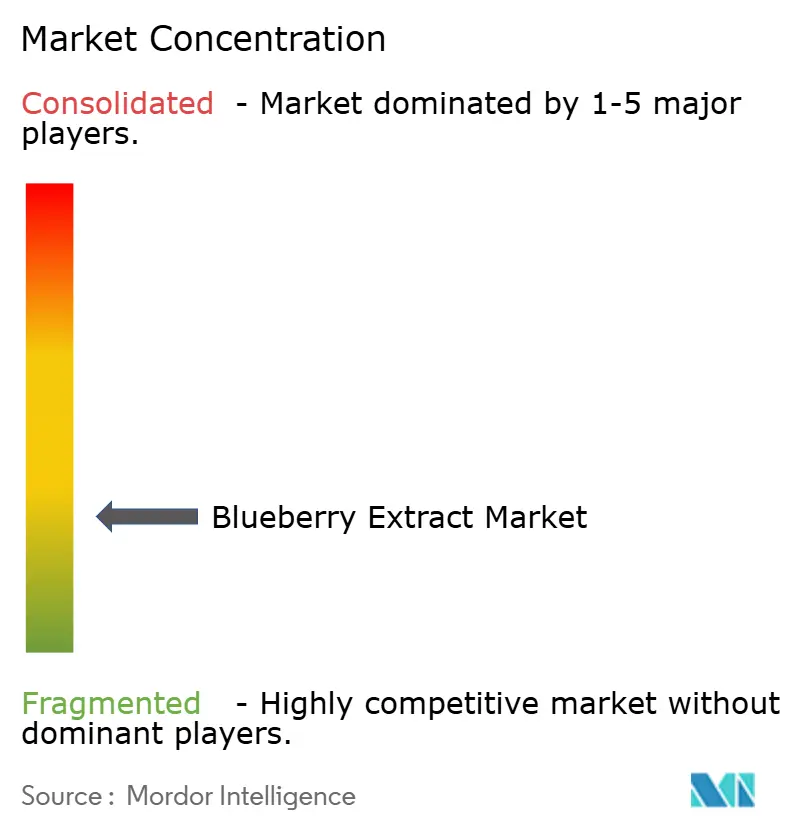
| Market Concentration | Low |
Major Players *Disclaimer: Major Players sorted in no particular order Image © Mordor Intelligence. Reuse requires attribution under CC BY 4.0. | |
Blueberry Extract Market Analysis by Mordor Intelligence
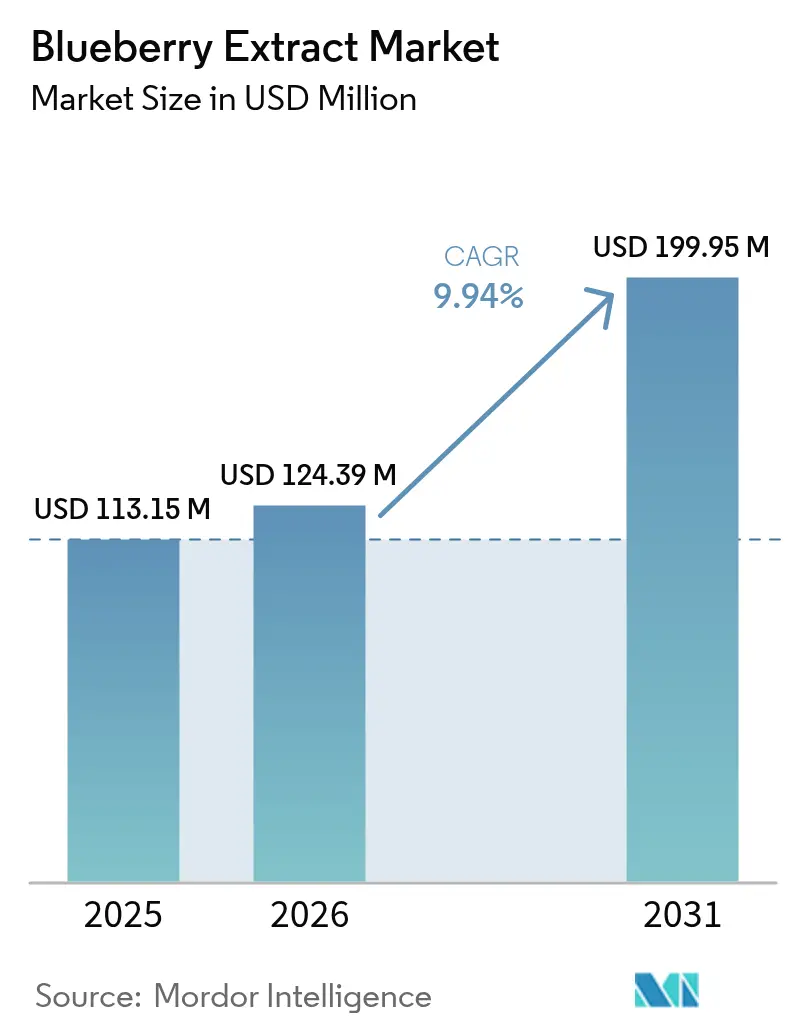
The blueberry extract market size was valued at USD 113.15 million in 2025 and estimated to grow from USD 124.39 million in 2026 to reach USD 199.95 million by 2031, at a CAGR of 9.94% during the forecast period (2026-2031). This expansion reflects sustained demand for natural antioxidants, wider clinical validation of anthocyanin benefits, and faster regulatory clearances for clean-label ingredients. Powder formats hold 45.72% of 2024 revenue, although liquid extracts are set to grow more quickly at 11.51% CAGR because beverage, gummy, and cosmetic formulators prize solubility and bioavailability over shelf stability. Dietary supplements dominate applications with 40.11% share in 2024, yet pharmaceutical adoption is accelerating at 12.02% CAGR as trials confirm cardiovascular and cognitive outcomes at 130 – 320 mg daily dosages. North America leads with 38.25% of 2024 sales on the strength of FDA GRAS recognition, while Asia-Pacific records the fastest 12.52% CAGR thanks to China’s 3.3 million-tonne berry harvest and Japan’s streamlined Foods with Function Claims pathway. Competitive intensity is rising as processors race to secure pomace, adopt solvent-free extraction, and win pharmaceutical contracts that demand tighter anthocyanin standardization.
Key Report Takeaways
- By product type, powder extracts captured 46.24% of the blueberry extract market share in 2025, whereas liquid extracts are advancing at an 11.29% CAGR through 2031.
- By application, dietary supplements held a 39.68% share of the blueberry extract market in 2025, while pharmaceuticals are projected to show the highest 11.82% CAGR to 2031.
- By geography, North America commanded 37.84% revenue share in 2025, yet Asia-Pacific is forecast to expand at a 12.31% CAGR through 2031.
Note: Market size and forecast figures in this report are generated using Mordor Intelligence’s proprietary estimation framework, updated with the latest available data and insights as of 2026.
Market Trends and Insights
Drivers Impact Analysis of Blueberry Extract Market*
| Drivers | ~)% Impact on CAGR Forecasts | Geographic Relevance | Impact Timeline |
|---|---|---|---|
| Rising demand for natural antioxidants in functional foods and beverages | +2.1% | Global, with peak uptake in North America and Europe | Medium term (2-4 years) |
| Rising applications in dietary supplements | +1.8% | Global, led by North America and Asia-Pacific | Short term (≤ 2 years) |
| Clean-label and super-fruit positioning in cosmetics/skin-care products | +1.5% | Europe and Asia-Pacific (K-beauty), spillover to North America | Medium term (2-4 years) |
| Advancements in extraction technologies | +1.3% | Global, with R&D concentrated in North America, Europe, and China | Long term (≥ 4 years) |
| Increasing product innovation, increasing the usage of extracts | +1.2% | Global | Medium term (2-4 years) |
| Increasing pharmaceutical procurement for anti-inflammatory and cardiovascular formulations | +1.4% | North America and Europe, emerging in Asia-Pacific | Long term (≥ 4 years) |
| Source: Mordor Intelligence | |||
Rising Demand for Natural Antioxidants in Functional Foods and Beverages
Manufacturers of functional yogurt, kombucha, kefir, and ready-to-drink tea are substituting synthetic antioxidants with blueberry anthocyanins to satisfy clean-label mandates and capture premium shelf pricing. A standardized extract delivers DPPH activity of 39.91 mg Trolox equivalents per gram and ABTS activity of 19.01 mg Trolox equivalents per gram, outperforming many botanical alternatives on a per-gram basis. Encapsulating blueberry juice in sodium alginate macrogels preserves total phenolics at 119 – 121 µg gallic acid equivalents per milliliter for 15 days under refrigeration while ABTS inhibition remains near 97%, enabling dairy formulators to maintain antioxidant claims without reformulation. Fermented beverages enriched with anthocyanin extracts modulate gut microbiota by influencing NF-κB and PI3K/AKT signaling, so brands can position products for both taste and wellness. These dual sensory and health benefits are driving the blueberry extract market into premium beverage niches where consumers are willing to pay more for verified functionality.
Rising Applications in Dietary Supplements
Dietary supplements are expected to contribute the largest share. This growth is supported by dose-response evidence from peer-reviewed studies. For example, the Norwegian ACID study found that a daily intake of 320 mg of purified berry anthocyanins enhanced cognitive function in adults with high inflammation over 24 weeks[1]Source: Rocío Corfield et al., “Current State of Research on Health-Promoting Functional Properties in Berry-Based Foods,” Current Nutrition Reports, doi.org. Commercial products have adopted similar dosage levels. Life Extension, for instance, offers a formulation containing 425 mg of wild blueberry extract and 75 mg of BlueActiv for DNA support, priced at USD 17.25 for a 60-count bottle. Furthermore, combination capsules that include blueberry extract with 30% punicalagin and pomegranate extract are available at USD 22.50, targeting cardiovascular health through complementary polyphenols. The demand for gummy and liquid formats, which require soluble extracts for consistent dispersion, is also rising. This trend is fueling the growth of liquid products, which currently show the fastest CAGR in the blueberry extract market.
Clean-Label and Super-Fruit Positioning in Cosmetics and Skin-Care Products
Cosmetic chemists leverage blueberry anthocyanins for their ability to inhibit tyrosinase, suppress MMP-1, and provide UV protection, addressing brightening and anti-wrinkle claims while avoiding restricted synthetic ingredients. The European Union bans 1,328 cosmetic substances, driving brands to explore natural alternatives with proven efficacy[2]Source: European Commission, “Cosmetic Ingredients & Substances Database,” europa.eu. K-beauty innovators ferment blueberry substrates to transform glycosides into more bioavailable phenolic acids, improving skin absorption and enhancing brand differentiation. Studies show that blueberry extract can reduce UV-induced oxidative stress, making it suitable for outdoor-use formulations without relying solely on zinc oxide or chemical filters. With the clean-beauty market expected to reach USD 11.5 billion by 2024, growing at a CAGR of 8.2%, blueberry’s super-fruit profile offers a compelling narrative to strengthen brand positioning and profitability.
Advancements in Extraction Technologies
Process innovation is redefining competitive advantage in the blueberry extract market, shifting focus from raw material access to intellectual property. In 2024, Shenyang Agricultural University developed and patented a high-stability liquid anthocyanin method, which was subsequently commercialized by Zhejiang Lanmei Technology and approved for food use by China’s National Health Commission, as reported by the U.S Patent and Trademark Office[3]Source: U.S. Patent & Trademark Office, Patent 11,945,954, uspto.gov. In May 2025, Sensient Technologies acquired Mazza Innovation, gaining the PhytoClean solvent-free platform that produces residue-free extracts suitable for pharmaceutical applications. Ultrasound-assisted extraction at 80°C for 15 minutes achieves a yield of 5.46 mg of gallic acid equivalents per gram from pomace, while high-pressure processing at 500 MPa enhances anthocyanin recovery threefold compared to conventional maceration, with lower costs than supercritical CO₂ units. Encapsulation using beta-casein and carboxymethylcellulose improves systemic anthocyanin uptake by ten times, addressing the historical bioavailability limitation of 1–2%. As these technologies progress, suppliers holding patents or exclusive licenses are well-positioned to secure premium pricing and establish long-term contracts in the market.
Restraints Impact Analysis of Blueberry Extract Market*
| Restraints | (~)% Impact on CAGR Forecasts | Geographic Relevance | Impact Timeline |
|---|---|---|---|
| Fluctuating raw material prices due to seasonal blueberry supply variability | -1.6% | Global, with acute effects in North America, South America, and Europe | Short term (≤ 2 years) |
| Stringent regulatory compliance for quality, safety, and health claims | -1.1% | Europe and North America, emerging in Asia-Pacific | Medium term (2-4 years) |
| Competition from alternative antioxidants and berry extracts | -0.9% | Global | Medium term (2-4 years) |
| Logistical inefficiencies and perishable raw material handling | -0.7% | Global, with highest impact in regions with underdeveloped cold-chain infrastructure | Short term (≤ 2 years) |
| Source: Mordor Intelligence | |||
Fluctuating Raw Material Prices Due to Seasonal Blueberry Supply Variability
Blueberry supply chains are heavily affected by seasonal and climatic volatility, disrupting pricing stability and margin predictability. In 2024, Michigan growers reported production costs surpassing USD 10,000 per acre, with harvest and packing comprising 56% of these costs and labor accounting for 42%, leaving margins highly vulnerable to yield variations. Frost damage in Ukraine during 2024 led to a 39% drop in blueberry prices compared to the six-year average, rendering small farms unprofitable and reducing pomace availability for extract processors. Conversely, Georgia's 2025 outlook forecasts stronger prices due to crop damage from Hurricane Helene, resulting in regional price disparities that complicate long-term supply agreements. Peru's export volume rose by 24% year-over-year, reaching USD 1.68 billion in 2023, while Mexico's 2024 harvest declined due to drought and sanitary issues, underscoring the risks of single-origin dependencies. Extract manufacturers without vertically integrated pomace sourcing or diversified procurement strategies face margin pressures when spot prices increase, limiting their ability to fulfill fixed-price contracts with pharmaceutical and cosmetic clients who require cost stability.
Stringent Regulatory Compliance for Quality, Safety, and Health Claims
Regulatory fragmentation across key markets results in higher compliance costs, disproportionately impacting small and mid-sized extract suppliers. The European Food Safety Authority (EFSA) has not approved specific health claims for anthocyanins, requiring European brands to rely on generic antioxidant messaging that fails to effectively distinguish blueberry extracts from lower-cost alternatives, such as synthetic vitamin E. In Japan, the Foods with Function Claims system mandates human clinical trials or systematic reviews for notification, creating an evidence barrier that favors established nutraceutical firms with larger R&D budgets. In the United States, the FDA's December 2024 update to the "healthy" claim definition will allow berry-fortified foods with added sugars, provided they comply with specified limits. However, the agency has not issued GRAS notifications for novel blueberry extraction methods, leaving suppliers uncertain about whether new processes necessitate pre-market review. This fragmented regulatory framework compels multinational extract suppliers to maintain separate workflows for formulation, testing, and labeling, increasing fixed costs and reducing the margin benefits of scale.
*Our forecasts treat driver/restraint impacts as directional, not additive. The impact forecasts reflect baseline growth, mix effects, and variable interactions.
Blueberry Extract Market Segment Analysis
By Product Type:
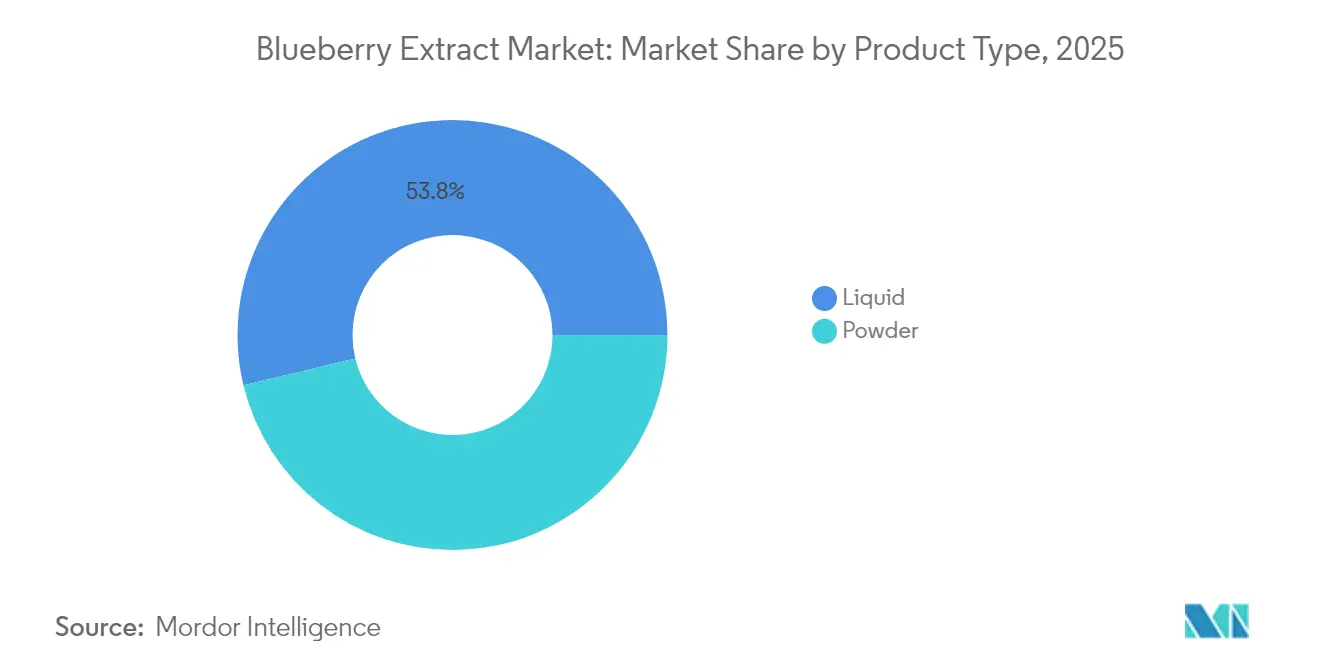
Liquid Extracts Gain Ground on Bioavailability DemandsPowder formulations held 46.24% of the 2025 market share, reflecting their dominance in capsule and tablet supplements, where shelf stability and dosing precision matter most. Spray-drying with maltodextrin retains up to 98% of anthocyanins and produces free-flowing powders with moisture content below 5%, meeting pharmaceutical excipient standards for encapsulation. Yet liquid extracts are forecast to grow at 11.29% CAGR through 2031, driven by beverage and cosmetic applications where solubility and rapid absorption are critical. Shenyang Agricultural University's patented high-stability liquid anthocyanin process, commercialized by Zhejiang Lanmei Technology in 2024, addresses the historical instability of liquid formats by maintaining anthocyanin integrity under ambient storage, enabling ready-to-drink formulators to avoid refrigeration costs. Encapsulation with beta-casein and carboxymethylcellulose increases liquid extract bioavailability tenfold, creating a technical moat for suppliers who license or develop similar formulations.
Powder extracts benefit from lower freight costs and longer shelf life, making them the preferred format for export-oriented Chinese suppliers who serve price-sensitive supplement brands. Chinese manufacturers quote USD 10 to USD 334 per kilogram for powder extracts, depending on anthocyanin concentration, with standardized 25% anthocyanin powders commanding mid-range pricing. Liquid extracts, by contrast, require cold-chain logistics and have shorter shelf lives unless stabilized through encapsulation or co-pigmentation, raising landed costs by 15 to 20%. However, cosmetic formulators accept this premium because liquid extracts disperse uniformly in emulsions and serums without the grittiness that can occur with powder suspensions.



By Application:
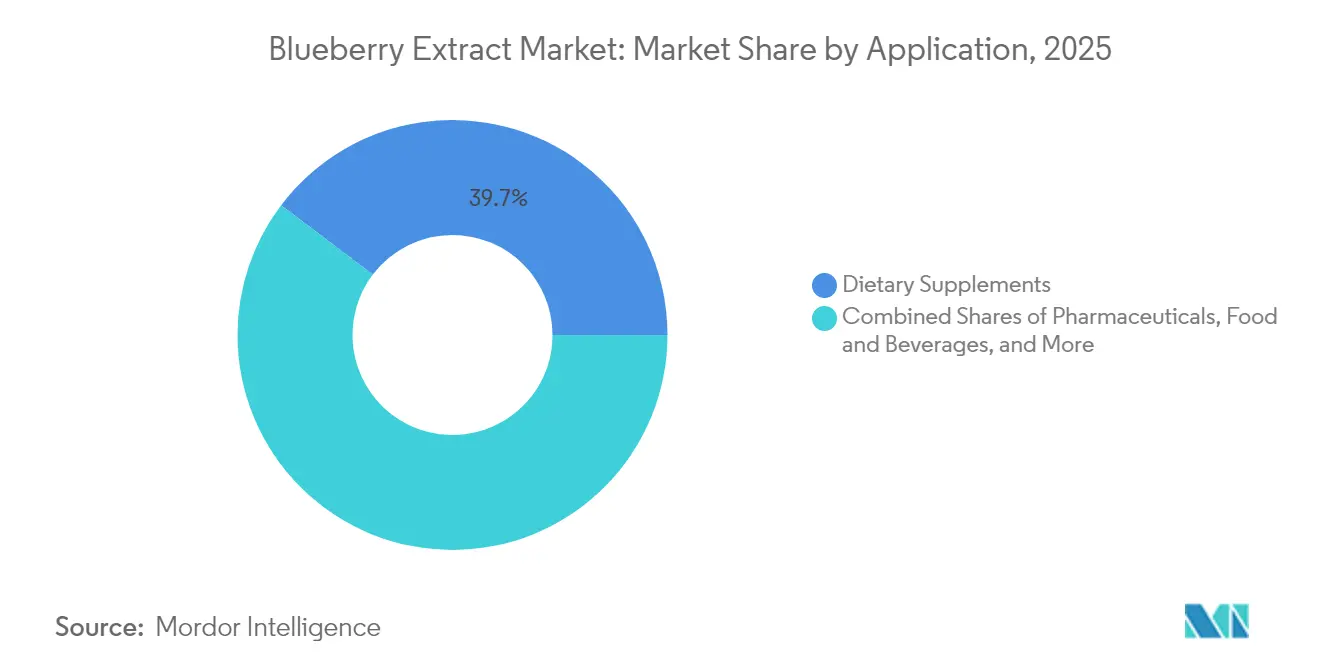
Pharmaceuticals Accelerate as Clinical Evidence MaturesIn 2025, dietary supplements accounted for 39.68% of the revenue in the blueberry extract market, representing the largest share in absolute value terms. Companies such as Life Extension and Swanson dominate mass-market channels, while Amazon storefronts offer white-label capsules priced under USD 12, increasing accessibility for consumers. Pharmaceuticals, however, are the fastest-growing segment, with a CAGR of 11.82%, driven by studies like King’s College London’s BluFlow trial, which highlights endothelial benefits at clinically relevant dosages. Hospitals and compounding pharmacies now require extracts standardized to at least 36% malvidin-3-glucoside equivalents, a specification met by only a limited number of GMP-certified facilities.
Food and beverage manufacturers are incorporating encapsulated blueberry juice to preserve 97% of ABTS antioxidant capacity in yogurt, enabling a functional-health positioning without encountering EU novel-food regulatory challenges. The cosmetics segment also contributes to demand, leveraging claims related to tyrosinase suppression and MMP-1 inhibition for anti-aging benefits. This segment is further supported by the European Union’s ban on 1,328 synthetic ingredients, which has accelerated the shift toward botanical actives. Across all four end-use segments, evidence-based positioning and regulatory considerations continue to shape value creation within the blueberry extract market.
Geography Analysis
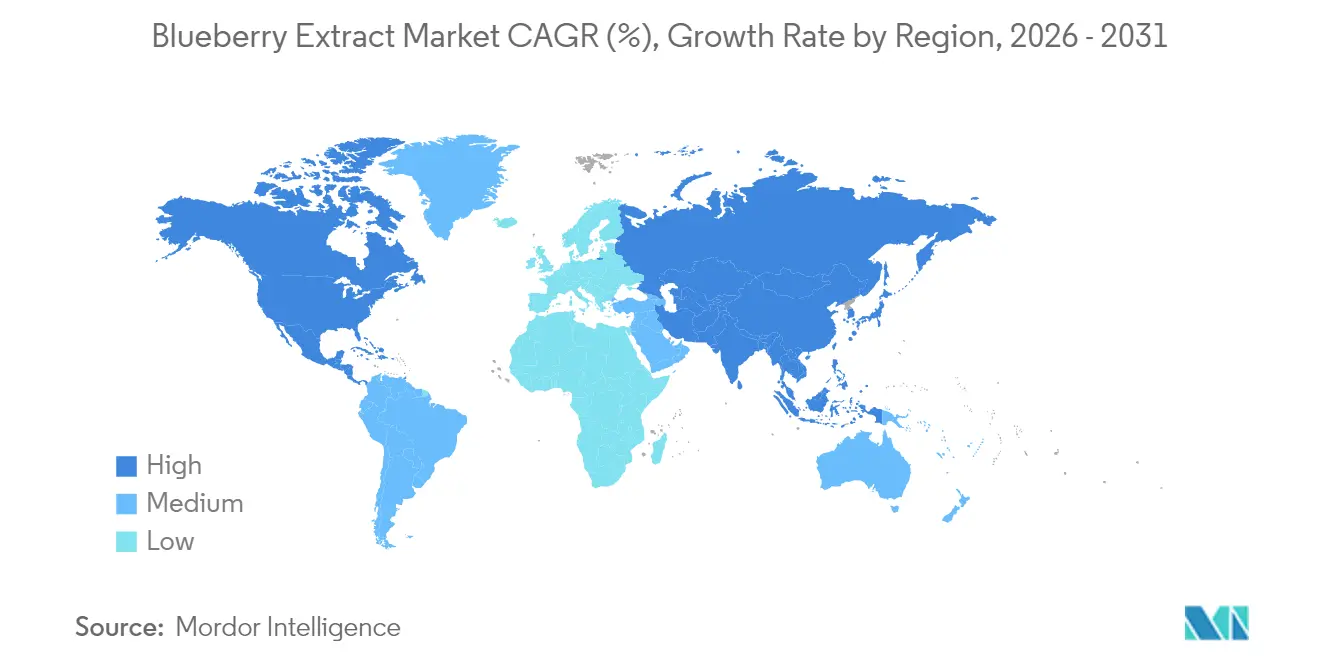
The Americas, APAC and MEA Blueberry Extract Market
North America held 37.84% of the 2025 market share, supported by FDA GRAS recognition for berry anthocyanins and well-established distribution networks through GNC, Whole Foods, and specialty supplement retailers. FutureCeuticals' collaboration with Global Calcium in November 2024 expanded its presence into Asia, the Middle East, and Africa, reflecting the recognition of growth limitations within the North American market. The FDA's December 2024 revision to the "healthy" claim definition allows berry-fortified foods with added sugars, provided they adhere to specified limits. This regulatory change creates new opportunities for functional snacks and beverages that were previously restricted. However, Michigan's production costs, exceeding USD 10,000 per acre, with labor accounting for 42% of these costs, are prompting extract manufacturers to source pomace from lower-cost regions such as Chile and Peru. FutureCeuticals' acquisition of SouthAm Freeze Dry in May 2025 secures supply at the source, showcasing a trend toward vertical integration. This shift indicates that North American extract suppliers are increasingly adopting global procurement strategies to reduce risks associated with regional weather conditions and labor shortages.
APAC Blueberry Extract Market
The Asia-Pacific region is expected to grow at a CAGR of 12.31% through 2031, the fastest rate among all geographies. This growth is driven by China's annual berry harvest of 3.3 million tonnes and regulatory frameworks that ease market entry for functional foods. Shenyang Agricultural University's microencapsulation technology, approved by China's National Health Commission and commercialized by Zhejiang Lanmei Technology in 2024, illustrates how domestic R&D is reducing dependence on Western extraction platforms. In Japan, the Foods with Function Claims system enables anthocyanin products to enter the market through notification after submitting clinical trials or systematic reviews, bypassing the lengthy and costly FOSHU approval process that traditionally favored large pharmaceutical companies.
EMEA and the Americas Blueberry Extract Market
Europe faces regulatory challenges as the European Food Safety Authority (EFSA) has not approved specific health claims for anthocyanins, limiting label differentiation and forcing brands to rely on generic antioxidant messaging. While the European Union's ban on 1,328 cosmetic substances has driven demand for natural alternatives, the absence of approved health claims for oral supplements restricts market growth compared to North America and the Asia-Pacific. According to Rabobank's 2024 update, the European blueberry supply remains constrained, with high prices encouraging extract manufacturers to import pomace from regions like Peru and Mexico. In 2024, Mexico alone produced 81,000 metric tonnes of blueberries. South America, led by Peru's USD 1.68 billion in blueberry exports in 2023, is becoming a key raw-material hub. FutureCeuticals' acquisition of SouthAm Freeze Dry positions the company to secure pomace at processing sites, gaining a competitive edge over rivals. The Middle East and Africa are still developing markets for berry anthocyanins. However, FutureCeuticals' distribution partnership with Global Calcium indicates the early establishment of distribution channels in these regions, suggesting potential for future growth.

Regulatory Landscape
Blueberry extract sits within fragmented food, supplement, and cosmetics rules that affect both what suppliers can claim and how they substantiate safety. In the United States, the FDA regulates ingredients either as food additives or through the Generally Recognized as Safe (GRAS) pathway, with tools such as the Food Additive Status List and the Substances Added to Food inventory used to assess regulatory status and use conditions. The FDA's December 2024 update to the definition of the "healthy" claim also shifts label design space for berry-fortified foods, increasing compliance focus on sugar limits and nutrient criteria for finished products.
In the European Union, food additive use is governed by Regulation (EC) No 1333/2008, alongside food authorization pathways that can include novel food considerations under Regulation (EU) 2015/2283 when an extract use or process lacks significant history of consumption. For botanicals used in supplements, EU-wide harmonization remains limited, so suppliers manage member-state requirements and rely on mutual recognition. A concrete 2025 example is Belgium, where the Commission d'avis des preparations de plantes issued an official opinion permitting the use of Vaccinium angustifolium (wild blueberry) in dietary supplements, creating a clearer route to market in Belgium and a reference point for dossiers in other EU jurisdictions.
Value Chain Analysis
The value chain begins with blueberry cultivation and harvest, followed by rapid post-harvest handling (pre-cooling and cold storage) to protect bioactive compounds and color before berries move into processing. Because blueberries are highly perishable, supply chains depend on cold-chain execution and conversion into stable intermediates such as IQF fruit, juice, or pomace streams that can be processed year-round. Upstream sourcing is increasingly linked to by-product valorization (pomace from juice and frozen-fruit operations), which ties extract economics more to industrial berry processing volumes than to fresh-market demand.
Midstream value creation is concentrated in extraction, purification, and stabilization, where equipment intensity and yield control drive both cost and differentiation. Processing bottlenecks include the blueberry skin's waxy layer, which slows drying and mass transfer, encouraging pretreatments such as ultrasound, pulsed electric field, and cold plasma to improve permeability and preserve anthocyanins. Downstream, standardized extracts are sold directly to food, beverage, supplement, pharmaceutical, and cosmetics manufacturers or through broad-line distributors and specialty ingredient channels; requirements diverge sharply between commodity powder extracts for mass-market supplements and higher-spec, residue-managed extracts that require documentation, traceability, and tighter batch-to-batch anthocyanin control.
Competitive Landscape
The blueberry extract market is characterized by significant fragmentation, with over 22 active suppliers ranging from vertically integrated Western formulators to low-cost Chinese ingredient manufacturers. This fragmentation presents opportunities for companies capable of securing pomace at processing sites and employing proprietary extraction technologies. Sensient Technologies' acquisition of Mazza Innovation in May 2025 incorporated PhytoClean solvent-free extraction into its operations, enabling the company to cater to both natural-color and pharmaceutical markets without the risk of cross-contamination.
Market opportunities are increasingly centered on pharmaceutical-grade extracts standardized to specific anthocyanin profiles for clinical applications. Dose-response evidence from trials such as King's College London's BluFlow study and Norway's ACID trial is creating regulatory pathways for prescription-adjacent products. Patent activity is also accelerating, with innovations such as Shenyang Agricultural University's April 2024 US Patent 11945954 for high-stability liquid anthocyanins and Ohio State University's 2025 anthocyanin blue colorant technology (T2023-189), underscoring the shift in competitive advantage from raw-material access to intellectual property portfolios.
Smaller Chinese suppliers rely on cost-effective spray-drying and maltodextrin encapsulation to compete on price, offering products priced between USD 10 and USD 334 per kilogram depending on anthocyanin concentration. However, these suppliers often lack the clinical-trial infrastructure and regulatory expertise required to meet the needs of pharmaceutical clients, who demand batch-to-batch consistency and residue-free extracts. This market bifurcation—commodity powders for mass-market supplements versus pharmaceutical-grade extracts for clinical applications—is expected to widen. Mid-sized players are likely to face increasing challenges as they are caught between low-cost Chinese producers and vertically integrated Western formulators.
Blueberry Extract Industry Leaders
Nutra Green Biotechnology Co.,Ltd
JF Natural
Bio-Botanica Inc.
R. J. Van Drunen & Sons, Inc.
Berrico FoodCompany
- *Disclaimer: Major Players sorted in no particular order
Blueberry Extract Market Companies Covered in this Report
- FutureCeuticals
- Berrico FoodCompany BV
- Nutra Green Biotechnology Co., Ltd.
- Shaanxi Guanjie Bio-technology Co. Ltd.
- JF Natural
- Bio-Botanica Inc.
- Mazza Innovation Ltd.
- Life Extension
- Carrubba Inc.
- Herbo Nutra
- Naturalin Bio-Resources Co., Ltd.
- Swanson Health Products
- Nature’s Way Products LLC
- Givaudan (Naturex)
- Sensient Technologies
- Döhler Group
- Ingredion Incorporated
- Symrise AG
- Hunan Nutramax Inc.
- Xi’an Greena Biotech

Market Opportunities and Future Outlook
Opportunities are centered on use cases where blueberry anthocyanins provide both functional benefits and formulation utility, particularly in formats where solubility, stability, and cleaner processing aids matter. On the ingredient side, non-thermal and hybrid extraction approaches (ultrasound, enzyme-assisted, pulsed electric field, and ultra-high-pressure processing), together with downstream filtration, can improve recovery from pomace and support residue-management needs for pharma-adjacent and premium nutrition uses. Research in 2026 also points to process upgrades that reduce operating friction, including ultrasound-assisted membrane processing, which increased initial permeate flux by up to 35% by mitigating fouling during blueberry pomace extraction.
Application whitespace extends beyond supplements into food systems where anthocyanins function as both bioactives and natural colorants, and into smart materials where they can act as pH-responsive indicators. Academic work in 2026 highlights anthocyanin stabilization via nanoencapsulation and nanoemulsions (using proteins and polysaccharides), supporting use in intelligent packaging films for real-time freshness signaling in categories such as meat, seafood, and dairy. At the consumer end, product activity continues to validate demand for blueberry-based functionality, including Korea Ginseng Corporation's July 2026 launch of Good Base Organic Blueberry Puree, positioned around 100% organic ingredients with minimal additives, which supports pull for cleaner-label ingredient systems and concentrates/extracts used to deliver color and antioxidant positioning.
Recent Industry Developments in Blueberry Extract Market
- July 2026: Korea Ginseng Corporation launched Good Base Organic Blueberry Puree with 100% organic ingredients and minimal additives. The launch reinforces demand for clean-label blueberry-based formulations and increases pull-through for blueberry-derived ingredient systems used to deliver color and antioxidant positioning in packaged foods and wellness products.
- July 2025: McCormick launched a natural blueberry extract in its flavor line for use across food manufacturing and home baking applications. The move expands mainstream access to blueberry extract as a clean-label flavor solution and supports higher-volume adoption in beverages, baked goods, and confectionery formulations.
- September 2024: Bio-Botanica and Gillco Ingredients (an Azelis company) announced an exclusive distribution agreement for botanical extracts in the United States spanning food, beverage, and dietary supplement customers. By expanding access through Gillco's sales and distribution footprint, the partnership improves route-to-market for blueberry-derived botanicals and can shorten qualification cycles for formulators seeking established supplier programs.


Blueberry Extract Market Report Scope and Research Methodology
Market Definition and Coverage
The blueberry extract market covers concentrated blueberry-derived ingredients sold in liquid or powder form and used to add color, flavor, and functional benefits (including antioxidant positioning) across consumer and health-related products.
This sizing excludes whole fresh blueberries, frozen berries, and non-blueberry fruit extracts. It also excludes finished retail products where the extract is only an ingredient.
Segments Covered in This Report
- By Product Type
- Liquid
- Powder
- By Application
- Food and Beverages
- Nutraceuticals and Dietary Supplements
- Pharmaceuticals
- Cosmetics and Personal Care
- By Geography
- North America
- United States
- Canada
- Mexico
- Rest of North America
- Europe
- Germany
- United Kingdom
- Italy
- France
- Spain
- Rest of Europe
- Asia-Pacific
- China
- India
- Japan
- Rest of Asia-Pacific
- South America
- Middle East and Africa
- North America
Data Sources, Market Sizing, and Validation
Desk Research
To set up the market structure, we rely on public sources that describe blueberry production, processing, and end-use demand signals. The main inputs include USDA crop and price statistics, FAOSTAT production series, and UN Comtrade trade flows for plant extracts and related preparations, alongside regulatory and ingredient reference material from bodies such as FDA and EFSA. We also review peer-reviewed nutrition and food science journals to understand typical extract use levels and quality markers, including anthocyanin-related specifications that tend to appear in finished-product documentation.
On the commercial side, annual reports, investor decks, and press releases are used to map capacity changes, partnership announcements, and application focus, which helps when we sanity-check the regional split. Select paid subscriptions are used only when they add structure, such as company financials and company intelligence, patent databases, and shipment-level import and export data for cross-checking trade intensity. The desk-source list above is illustrative, and we also pull additional public references during data collection, clarification, and validation.
Primary Interviews and Surveys
Primary work is used to convert broad signals into usable sizing inputs. In particular, we validate typical pricing ranges, extract strength assumptions, and mix shifts between powder and liquid forms. We speak with stakeholders across processors, ingredient distributors, and downstream users in food and beverage, dietary supplements, pharmaceuticals, and personal care, then re-check any differences that appear by region so the model does not over-apply a single market pattern globally.
Distribution of primary research fieldwork respondents
| Company type | Respondent position | Region |
|---|---|---|
| Top tier: 36% | CXOs: 16% | APAC: 43% |
| Mid tier: 47% | Functional/Unit leaders: 37% | EMEA: 33% |
| Smaller Players: 17% | Managers: 47% | Americas: 24% |
Market-Sizing & Forecasting
The core model uses a top-down build where blueberry extract demand is reconstructed from application demand pools, typical inclusion rates, and price bands, then split by form and region using trade and consumption signals. To keep the totals realistic, we corroborate the output with selective bottom-up approximations, such as sampled supplier and distributor revenue checks, typical volume by application, and observed price per kilogram ranges gathered from industry conversations.
Key inputs that shape the sizing include blueberry cultivation and processing volumes, export and import intensity for extract-related categories, adoption of natural colors and clean-label claims in food and beverages, supplement launch activity tied to antioxidant positioning, and mix shifts between powder and liquid extracts. Where direct volume indicators are thin, we handle gaps using conservative ranges, then tighten them after interview input rather than relying on a single fixed assumption.
For forecasting, we run scenario analysis around the two variables that tend to move the market most, pricing progression and application growth rates. The final outlook is then aligned to expert expectations for form mix, regulatory acceptance for claims, and normalization in raw blueberry availability.
Data Validation & Update Cycle
Model outputs are cross-checked against independent signals, including trade flows, raw material availability trends, and downstream category growth, before the figures are finalized. If a region or application shows a jump that is not supported by these signals, we review the underlying assumptions and conduct targeted re-contacts to confirm whether a real structural change is present.
Each study includes multi-step analyst review, such as consistency checks across years, currency and inflation handling, and variance checks between regions and forms. Reports are refreshed annually, and interim updates are made when material events occur, followed by a final pre-delivery review to provide the most current view.
Mordor Intelligence's Blueberry Extract Market Estimate Compared With Other Published Estimates
Published numbers for blueberry extract can appear far apart because the product scope is not always the same, and because different studies use different price points and base years. Differences in currency conversion timing, treatment of concentrate strength, and whether an estimate is tied to ingredient sales versus broader finished-product value also tend to create visible gaps.
In this study, the main gap driver is scope clarity. Some estimates appear to fold in wider blueberry ingredient value pools and broader extraction-method categories, while this sizing only counts extract sold as an ingredient in liquid and powder forms across the stated applications, which is the approach applied by Mordor Intelligence.
Benchmark comparison
| Source | Market Size | Gaps in Research Methodology |
|---|---|---|
| Mordor Intelligence | USD 124.39 M (2026) | |
| Industry Publisher A | USD 345.40 M (2024) | Uses an earlier base year and a broader form scope that includes additional extract presentations and channel splits, which can capture adjacent blueberry-derived preparations beyond the ingredient-only extract focus. |
| Global Research Portal B | USD 1.68 B (2024) | Likely combines blueberry extract with wider blueberry ingredient and end-use value, and it may apply higher implied pricing by including downstream value layers, which inflates totals versus an ingredient sales value build. |
The table indicates that much of the spread is explained by what gets counted and at which point in the value chain the price is applied. By keeping assumptions tied to observable application demand, realistic pricing bands, and cross-checks from trade and industry feedback, the estimate remains traceable and easier to replicate when the model is refreshed.


Key Questions Answered in the Report
What is the projected value of the blueberry extract market by 2031?
It is forecast to reach USD 199.95 million by 2031, growing at a 9.94% CAGR.
Which product type is expanding fastest?
Liquid extracts are advancing at an 11.29% CAGR through 2031 because beverage and cosmetic formulators need solubility and rapid absorption.
Which region shows the most rapid growth?
Asia-Pacific records a 12.31% CAGR owing to China’s berry harvest scale and Japan’s simplified Foods with Function Claims process.
What technology trends shape competitive advantage?
Patented solvent-free and high-pressure extraction, plus microencapsulation that boosts bioavailability, are becoming decisive differentiators.
Page last updated on:





