
Smoked Salmon Market Size and Share
Market Overview
| Study Period | 2021 - 2031 |
|---|---|
| Market Size (2026) | USD 5.91 Billion |
| Market Size (2031) | USD 7.48 Billion |
| Growth Rate (2026 - 2031) | 4.83 % |
| Fastest Growing Market | Asia Pacific |
| Largest Market | Europe |
| Market Concentration | Medium |
Major Players
*Disclaimer: Major Players sorted in no particular order Image © Mordor Intelligence. Reuse requires attribution under CC BY 4.0. |
|
Smoked Salmon Market Analysis by Mordor Intelligence
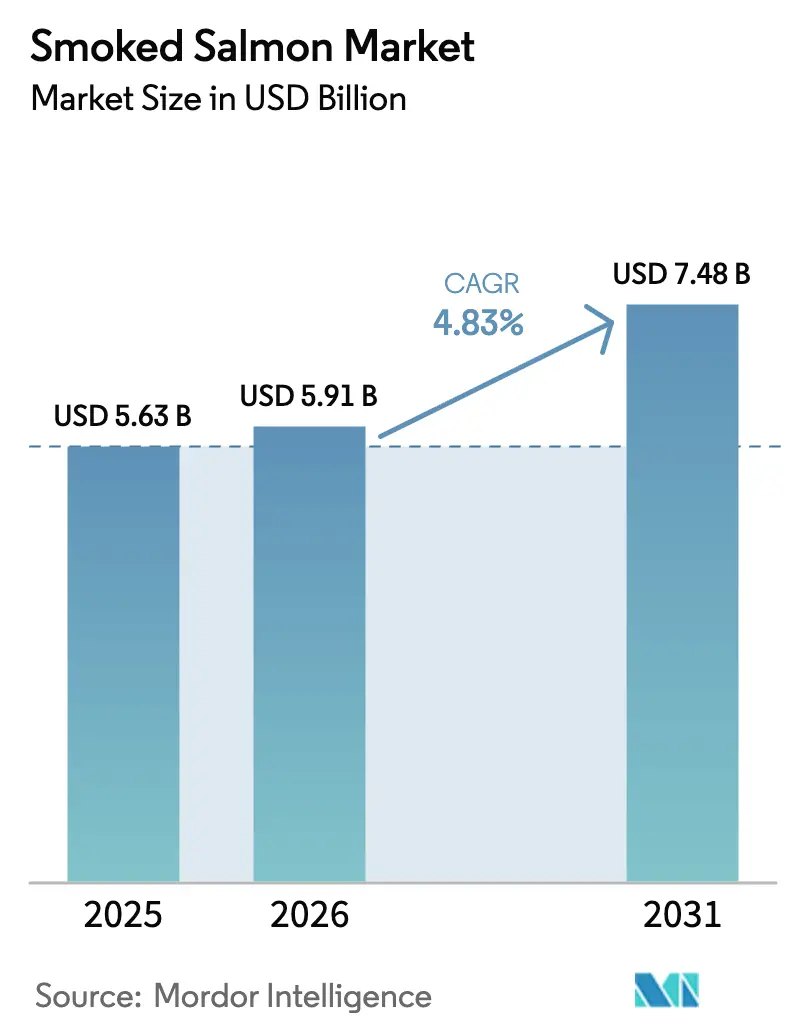
The Smoked Salmon Market size was valued at USD 5.63 billion in 2025 and estimated to grow from USD 5.91 billion in 2026 to reach USD 7.48 billion by 2031, at a CAGR of 4.83% during the forecast period (2026-2031). Increasing household demand for premium protein, rapid menu innovation across the hotel–restaurant–café (HoReCa) channel, and rising preference for ecolabeled seafood are widening the consumer base. Cold-smoked products still dominate, yet hot-smoked formats are posting faster volume gains as their firmer texture suits salads, bowls, and sandwiches. Certification schemes such as ASC and MSC have moved from niche differentiators to baseline requirements among large European and North American retailers, encouraging vertically integrated players to tighten biosecurity and traceability. Meanwhile, regional processors in Poland, France, and Scotland are scaling capacity to capitalize on lower trout input prices, while Asian distributors ramp up air-freight and ultralow-temperature logistics to shorten lead times from Norway and Chile. Persistent biological hazards and stricter antibiotic caps keep farming costs high, but processors offset them through automation, modified-atmosphere packaging, and omnichannel distribution.
Key Report Takeaways
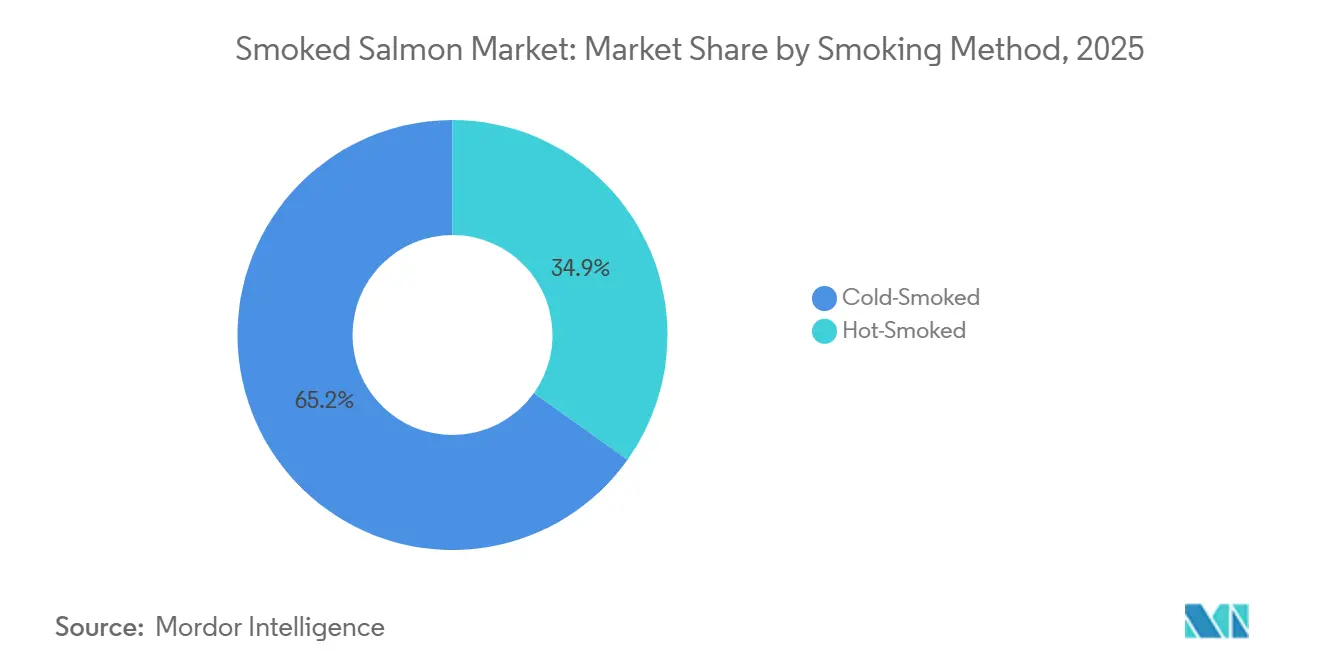
- By smoking method, cold-smoked salmon led with 65.15% of the smoked salmon market share in 2025, while hot-smoked products are projected to expand at a 5.91% CAGR through 2031.
- By species, Atlantic salmon accounted for 70.87% of the smoked salmon market size in 2025, whereas trout salmon is expected to record the fastest 6.18% CAGR between 2026 and 2031.
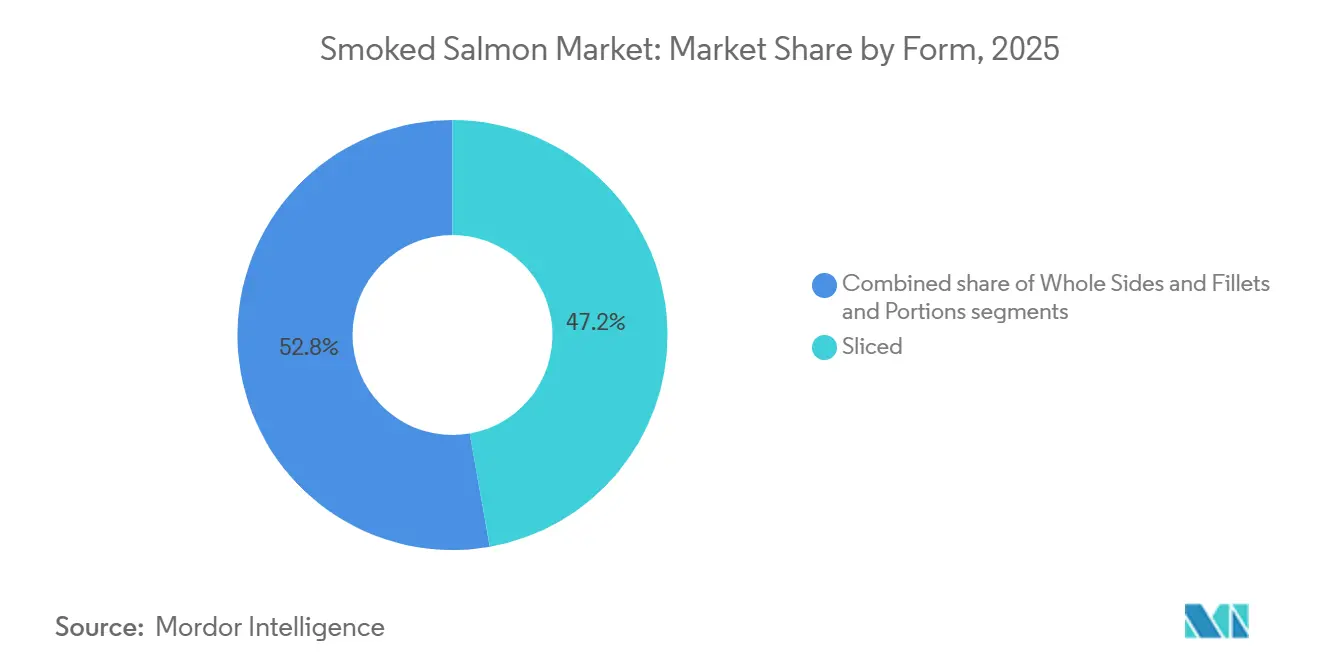
- By form, sliced packs retained 47.23% share of the smoked salmon Market in 2025; nonetheless, fillets and portions are forecast to advance at a 5.62% CAGR to 2031.
- By distribution channel, retail commanded 54.86% revenue share in 2025, but foodservice is set to register a 5.80% CAGR over 2026-2031.
- By geography, Europe held 35.29% of the smoked salmon market share in 2025, whereas Asia-Pacific is on track for the highest 6.01% CAGR through 2031.
Note: Market size and forecast figures in this report are generated using Mordor Intelligence’s proprietary estimation framework, updated with the latest available data and insights as of January 2026.
Global Smoked Salmon Market Trends and Insights
Drivers Impact Analysis*
| Driver | (~) % Impact on CAGR Forecast | Geographic Relevance | Impact Timeline |
|---|---|---|---|
| Growing demand for convenient, ready-to-eat seafood | +1.1% | Global, with pronounced uptake in North America, Western Europe, and urban Asia-Pacific markets | Medium term (2-4 years) |
| Technological advancements in smoking, freezing, and packaging | +0.7% | Global, led by Europe and North America; emerging adoption in South America processing hubs | Long term (≥4 years) |
| Rising preference for sustainably sourced and certified seafood | +0.8% | North America and European Union core; spillover to Asia-Pacific premium segments | Medium term (2-4 years) |
| Wide culinary versatility across meal occasions | +0.6% | Global, with foodservice-led gains in North America, Europe, and Middle East hospitality sectors | Short term (≤2 years) |
| Perception as a nutrient-rich, healthy protein option | +0.4% | Global, particularly resonant in health-conscious markets (Scandinavia, North America, Japan) | Long term (≥4 years) |
| Premiumization and growth in gourmet food consumption | +0.9% | Europe, North America, and affluent Asia-Pacific urban centers | Medium term (2-4 years) |
| Source: Mordor Intelligence | |||
Growing demand for convenient, ready-to-eat seafood
Demand for convenient, ready-to-eat seafood continues to grow, driven by evolving lifestyle patterns, including the rise of time-constrained consumers and dual-income households seeking quick, nutritious meal options. Data from the U.S. Bureau of Labor Statistics indicates that in 2024, nearly 49.6% of all married-couple families had both spouses employed, underscoring the need for food solutions that save time without compromising quality [1]Source: U.S. Bureau of Labor Statistics, "Both Spouses Employed in About Half of all Married-Couple Families," bls.gov. Smoked salmon has become a preferred choice in this context, offering a ready-to-eat, protein-rich product that integrates seamlessly into various meal occasions, such as breakfast bagels, salads, and premium charcuterie boards. Its versatility allows consumers to incorporate it into both everyday meals and special occasions without additional preparation. Retailers are responding to this demand by expanding their ready-to-eat seafood portfolios, ensuring availability across diverse formats and price points. For instance, Costco has introduced multiple smoked salmon SKUs under its Kirkland Signature line alongside branded offerings, catering to consumer preferences for bulk and premium-ready options. Additionally, innovative products like Seattle Pure Food Fish Market’s alderwood hot-smoked king salmon, with extended shelf-life flexibility (up to 3 days without refrigeration and 2.5 weeks refrigerated), exemplify how product development is addressing convenience needs. These factors collectively reinforce smoked salmon’s position as a key product in the ready-to-eat seafood market.
Rising preference for sustainably sourced and certified seafood
Consumer demand for sustainably sourced and certified seafood is reshaping procurement strategies and supply chains, driven by a growing emphasis on transparency, traceability, and environmental responsibility. Certification programs such as the Marine Stewardship Council (MSC) and Aquaculture Stewardship Council (ASC) have become critical benchmarks, particularly in European and North American retail markets, where verified sourcing is now a standard expectation. This shift reflects increasing awareness of overfishing, aquaculture's environmental impacts, and food safety concerns. In China, consumer studies highlight that ecolabels significantly influence purchase decisions, especially among urban millennials and Gen Z consumers who associate certifications with superior quality and ethical production practices. On the supply side, ASC standards are driving measurable progress, particularly in Norway, where producers have achieved a 65% ASC certification rate and 91% compliance with Global G.A.P. standards as of 2024 [2]Source: Animal Ask LTD, “Mapping the Industry and Supply Chain for Farmed Fish in Europe,” animalask.org. These advancements not only support sustainability goals but also enhance competitiveness in premium export markets. Leading brands like Mowi are leveraging ASC-certified salmon in their smoked product lines, integrating sustainability credentials into their branding and consumer communication strategies. The alignment of certification-driven supply, retailer requirements, and evolving consumer expectations underscores sustainability as a pivotal factor shaping the future of the smoked salmon industry.
Wide culinary versatility across meal occasions
Smoked salmon's culinary adaptability is a significant factor driving its demand, as it seamlessly integrates into various meal occasions, consumption formats, and dining settings. Its ready-to-eat nature makes it suitable for breakfast staples like bagels and eggs, lunch options such as salads and sandwiches, and premium dinner appetizers, catering to time-conscious consumers. This flexibility aligns with evolving eating habits, where consumers increasingly prefer small-plate and snackable formats over traditional meal structures. Additionally, the rising popularity of global cuisines and fusion dishes has broadened smoked salmon's applications, including sushi, pasta, wraps, and pizza, enhancing its appeal across diverse culinary traditions. The foodservice industry further amplifies this trend, with hotels, cafes, and quick-service restaurants incorporating smoked salmon into brunch menus, gourmet platters, and high-margin dishes to enhance perceived value and premiumization. Its consistent flavor profile and minimal preparation requirements make it an efficient choice for chefs aiming to maintain quality and presentation. The growing trend of at-home entertaining and charcuterie boards has also positioned smoked salmon as a centerpiece ingredient for social dining occasions. Brands like Labeyrie, offering a variety of smoked salmon formats for retail and foodservice channels, continue to support their widespread application, reinforcing their sustained global demand.
Perception as a nutrient-rich, healthy protein option
Smoked salmon is increasingly perceived as a nutrient-dense and health-conscious protein choice, driven by consumer demand for foods offering both functional and nutritional benefits. Known for its high-quality protein, omega-3 fatty acids, and essential vitamins, smoked salmon is positioned as a heart-healthy alternative to red meat and heavily processed protein sources. This aligns with dietary trends emphasizing cleaner and balanced eating habits, where consumers prioritize options that support wellness, weight management, and long-term health. The Food and Agriculture Organization (FAO) reported global fish consumption reached 168 million tonnes in 2024, reflecting the growing reliance on seafood as a primary protein source and reinforcing the relevance of smoked salmon in this context [3]Source: Mowi ASA, "Salmon Farming Industry Handbook 2025," mowi.com . Urban and health-conscious consumers, in particular, value its minimally processed nature and clear nutritional advantages. Its compatibility with popular diets such as keto, paleo, and Mediterranean further enhances its appeal as a versatile protein option. Retailers and brands are leveraging this perception through clean-label claims, nutritional transparency, and premium packaging to attract discerning buyers. For instance, brands like Ducktrap River of Maine emphasize natural smoking techniques and high-quality sourcing, reinforcing the product’s wholesome image. Additionally, its ready-to-eat format addresses the demand for convenient yet nutritious meal solutions, driving sustained global demand.
Restraints Impact Analysis*
| Restraint | (~) % Impact on CAGR Forecast | Geographic Relevance | Impact Timeline |
|---|---|---|---|
| Environmental and ethical concerns around intensive salmon farming | -0.5% | Global, with acute pressure in Chile, Norway, and Scotland; reputational spillover to all origins | Medium term (2-4 years) |
| Stringent and fragmented food safety and sustainability regulations | -0.4% | North America, European Union, and Asia-Pacific import markets; compliance costs concentrated in exporting nations | Long term (≥4 years) |
| High sensitivity to cold chain and packaging integrity | -0.3% | Global, with infrastructure gaps most acute in emerging Asia-Pacific and Middle East markets | Short term (≤2 years) |
| Supply chain volatility and raw material constraints | -0.4% | Global, with biological shocks (sea lice, disease) concentrated in Norway, Chile, and Scotland | Short term (≤2 years) |
| Source: Mordor Intelligence | |||
Environmental and ethical concerns around intensive salmon farming
Intensive salmon farming practices are increasingly under scrutiny due to environmental and ethical concerns, creating significant challenges for producers. High-density net-pen aquaculture has been linked to issues such as sea lice infestations, antibiotic overuse, and waste discharge, raising questions about its ecological impact and sustainability. In key regions like Norway and Scotland, chemical treatments for sea lice, including emamectin benzoate and hydrogen peroxide, remain common, but resistance to these treatments is growing. This has prompted producers to explore alternatives such as cleaner fish deployment, thermal delousing, and freshwater bathing, which, while reducing chemical dependency, increase operational costs and may affect fish health and product quality. At the same time, buyers in Europe and North America are implementing stricter procurement standards, favoring responsibly farmed salmon certified by organizations like the Aquaculture Stewardship Council (ASC). These certifications address sustainability concerns but also raise compliance costs and limit the scalability of farming operations. As a result, producers face the challenge of balancing higher production costs with competitive pricing pressures, leading to cost inflation that impacts smoked salmon pricing and accessibility in price-sensitive markets. Brands like Loch Duart, known for low-density farming practices, highlight the trade-off between sustainability and scalability, further influencing the market's growth trajectory.
Stringent and fragmented food safety and sustainability regulations
Regulatory divergence in food safety and sustainability standards presents a significant challenge for processors in the smoked salmon industry, compelling them to navigate complex and overlapping compliance frameworks. For example, the U.S. FDA enforces the Fish and Fishery Products Hazards and Controls Guidance, which requires stringent controls for Listeria monocytogenes in cold-smoked fish that lack sufficient heat treatment to eliminate pathogens. Compliance demands rigorous sanitation protocols, continuous environmental monitoring, and extensive finished-product testing, all of which increase operational costs and necessitate specialized infrastructure. Companies operating across regions such as North America and Europe face additional hurdles due to varying regulatory requirements, including differences in labeling, traceability, and sustainability certifications. This fragmented regulatory landscape often forces manufacturers to reformulate products or segregate production lines to meet region-specific standards, reducing operational efficiency and limiting economies of scale. The growing emphasis on sustainability further intensifies compliance burdens, requiring continuous investment in certifications and audits. Established players like Lerøy Seafood Group must manage these complexities while maintaining consistent product quality across markets, underscoring the operational coordination required. The interplay of strict safety requirements and inconsistent regulations continues to elevate costs, constrain scalability, and challenge profitability across the global smoked salmon value chain.
*Our forecasts treat driver/restraint impacts as directional, not additive. The impact forecasts reflect baseline growth, mix effects, and variable interactions.
Segment Analysis
By Smoking Method: Hot-Smoked Gains Outpace Cold-Smoked Dominance
Cold-smoked salmon represented 65.15% of the market share in 2025, driven by strong consumer demand for its silky texture and delicate flavor. This segment commands premium pricing due to the extended curing process and the expertise required to achieve the ideal balance of salt, smoke, and moisture. However, the low-temperature smoking process does not eliminate pathogens, increasing the risk of Listeria contamination. To mitigate this, processors implement rigorous sanitation and environmental monitoring protocols, as highlighted by Acme's October 2024 recall of Kirkland Signature cold-smoked salmon. Modified atmosphere packaging (MAP) with CO2 concentrations of 20% to 80% extends the shelf life of cold-smoked salmon to 3 to 4 weeks, reducing spoilage and enabling broader distribution. Despite these challenges, cold-smoked salmon remains a preferred choice for premium applications such as bagels and canapés.
Hot-smoked salmon, while holding a smaller market share, is expanding at a CAGR of 5.91% through 2031, outpacing the overall market growth rate. This process involves cooking the fish at temperatures above 60°C, resulting in a firmer texture suitable for salads, pasta, and grain bowls. Hot-smoked products, such as Echo Falls' Atlantic salmon in flavors like Santa Fe Spice and Kentucky Bourbon, cater to consumers seeking bold, ready-to-eat protein options. Also, Acme's June 2024 launch of Lemon Garlic, Honey Maple, and Kansas City BBQ variants, along with a Sweet Heat dip featuring Mike's Hot Honey, reflects the growing popularity of sweet-heat flavors in North America. Foodservice operators favor hot-smoked salmon for its durability during handling and plating, which reduces waste and labor costs. Additionally, its fully cooked nature lowers pathogen risks and allows for freezing or vacuum-sealing, appealing to retailers aiming to streamline cold-chain logistics.


By Species: Atlantic Salmon Leads, Trout Salmon Surges on Cost Dynamics
Atlantic salmon remains the largest segment in the smoked salmon market, projected to hold 70.87% of the market share by 2025. Its popularity is driven by its fatty texture, mild flavor, and the reliability of large-scale aquaculture systems that ensure a consistent, year-round supply. Furthermore, farmed Atlantic salmon provides price stability compared to the more volatile wild-caught alternatives, solidifying its market position. Companies such as Scottish Sea Farms have capitalized on this by offering premium farmed Atlantic smoked salmon, supported by controlled farming practices and consistent production. Trout salmon is emerging as the fastest-growing segment, with a projected CAGR of 6.18% through 2031, driven by its affordability and growing adoption in price-sensitive markets. Despite a 12% decline in Scotland’s rainbow trout production in 2024, investments in recirculation aquaculture systems (RAS) are helping stabilize supply and address environmental concerns, as per the Scottish Government.
Pacific salmon varieties, including sockeye, king, and coho, primarily serve premium and niche segments. Wild-caught Alaskan sockeye, recognized for its deep red color, firm texture, and MSC certification, commands premium pricing in gourmet retail and upscale foodservice applications. However, its shorter harvest season and strict regulatory limits constrain supply, making it less scalable than farmed alternatives. This supply-demand imbalance has increased reliance on farmed Atlantic salmon and trout, which provide year-round availability and operational flexibility. Companies like Vital Choice focus on wild-caught Alaskan sockeye smoked salmon, targeting consumers seeking premium, sustainably sourced options. The interplay between premiumization in wild species and scalability in farmed varieties continues to shape the dynamics of the smoked salmon market.
By Form: Fillets and Portions Gain as Sliced Retains Majority
Sliced smoked salmon represented the largest segment, accounting for 47.23% of the market share in 2025. Its popularity is attributed to convenience and its appeal in both retail and foodservice settings. Pre-sliced packs dominate retail shelves, offering consumers a ready-to-serve option without additional preparation. These products are also widely used in breakfast buffets and catering trays. In May 2025, Loch Duart introduced its Signature Smoke and Double Smoked premium product lines, available in both sliced and whole-side formats, catering to diverse customer needs. Whole sides are particularly favored by specialty retailers, delicatessens, and high-end restaurants, as they allow slicing to order, preserving freshness and enabling custom thickness. However, whole sides require skilled labor and can result in trim waste, which may limit their broader adoption.
Fillets and portions are gaining traction, with a projected CAGR of 5.62% through 2031, as foodservice operators focus on portion control and waste reduction. Echo Falls' 6-ounce hot-smoked packs, available in three flavors, exemplify this trend by providing consistent portion sizes suitable for salads and grain bowls. Similarly, in June 2024, Acme launched its "Lox in a Box" snack kits, pairing smoked salmon portions with crackers and spreads to target on-the-go consumers and office snacking occasions. Vacuum-sealed portions extend shelf life and reduce oxidation, enabling retailers to stock smaller SKUs with longer code dates, minimizing shrinkage. While whole sides remain a premium option, they face logistical challenges, including the need for refrigerated display cases, skilled slicing, and rapid turnover to prevent drying, which limits their appeal to high-volume operators.

By Distribution Channel: Foodservice Accelerates as Retail Matures
Retail channels are expected to remain the largest segment in the smoked salmon market, accounting for 54.86% of the market share in 2025. This dominance is attributed to the extensive reach and diverse product offerings provided by supermarkets, hypermarkets, and online platforms. These channels have matured significantly, offering a wide range of private-label and branded products that cater to both value-driven and premium consumer segments. Key players such as Costco, Walmart, Carrefour, and Tesco play a critical role in distribution by leveraging economies of scale, competitive pricing strategies, and robust cold-chain infrastructure to ensure consistent product availability. For instance, Costco’s Kirkland Signature line competes directly with established brands like Seattle Pure Food Fish Market and Trident Seafoods, providing consumers with varied quality and pricing options. Additionally, the growing penetration of e-commerce has further strengthened the retail landscape, enabling bulk purchases and subscription-based buying. However, as retail channels near saturation in developed markets, growth is stabilizing, prompting businesses to explore alternative distribution strategies.
The foodservice segment is emerging as a key growth driver, projected to grow at a CAGR of 5.80% through 2031. This growth is driven by increasing menu innovation and premiumization trends, with restaurants, cafes, and hotels repositioning smoked salmon as a versatile ingredient for all-day dining. Smoked salmon is now featured in dishes such as eggs Benedict, avocado toast, salads, pasta, and sushi rolls, enhancing menu appeal and profit margins. This trend aligns with rising consumer demand for gourmet and experiential dining, particularly in urban markets where brunch culture and premium casual dining are gaining traction. Brands like Ocean Pearl Smokehouse are increasingly visible in foodservice supply chains, offering consistent-quality products tailored for professional kitchens. Meanwhile, convenience stores and specialty retailers cater to niche demand for grab-and-go packs and artisanal formats, though their growth remains constrained by limited cold-chain infrastructure and lower foot traffic compared to large-format retail. Together, the evolving dynamics of retail and foodservice channels are reshaping the distribution landscape of the smoked salmon market.
Geography Analysis
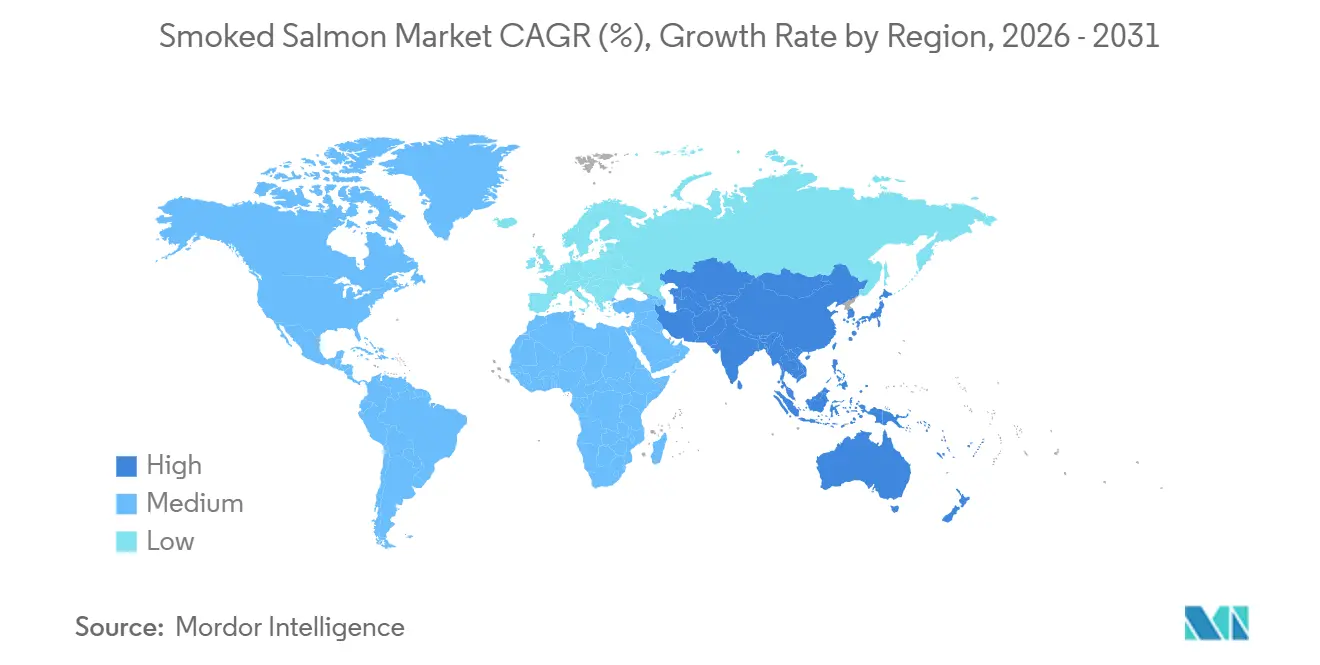
Europe remains the largest market for smoked salmon, holding a 35.29% share of the global market in 2025. This dominance is attributed to high per-capita consumption, advanced cold-chain infrastructure, and proximity to major farming regions in Norway and Scotland. Key markets such as Germany, the United Kingdom, France, the Netherlands, and Poland drive demand, with Poland also serving as a strategic processing hub. Retailers like Sainsbury’s have committed to sourcing 100% ASC-certified Scottish salmon, reflecting a growing emphasis on sustainability. Additionally, regulations such as the EU’s Empowering Consumers Directive are pushing ecolabels into mainstream adoption. While these measures increase compliance costs, they also create barriers to entry, favoring established producers with scalable and traceable supply chains. Europe’s combination of consumer awareness, strong infrastructure, and regulatory support continues to solidify its leadership in smoked salmon consumption and quality standards.
The Asia-Pacific region is the fastest-growing market, with a projected CAGR of 6.01% through 2031. Growth is driven by rising incomes, urbanization, and expanding cold-chain networks in countries such as China, Japan, and India. Companies are leveraging strategic partnerships to address infrastructure gaps. For example, Mowi partnered with CP AXTRA in Thailand in January 2026 to establish the first integrated premium salmon supply chain, launching the Aro Gold brand for retail and foodservice. In Japan, smoked salmon is gaining popularity due to its inclusion in breakfast buffets, sushi rolls, and bento boxes, although regulatory challenges and a preference for domestic species limit imports. In India, consumption remains low due to an underdeveloped cold-chain infrastructure and limited familiarity with the product. However, expatriate communities and luxury hotels are early adopters, indicating potential for growth as logistics improve.
North America, South America, and the Middle East and Africa collectively account for the remaining market share, each with distinct characteristics. The United States absorbs 40% of Chilean salmon exports, valued at USD 2.399 billion in 2025, despite a 10% tariff. Chile’s total salmon and trout exports reached USD 6.549 billion, with Atlantic salmon comprising 72%, Pacific salmon 23%, and trout 5%, according to We Are Aquaculture. In the Middle East, demand for imported specialty seafood, including smoked salmon, is driven by expatriate populations in GCC countries. Infrastructure improvements, such as ice plants, cold storage facilities, and refrigerated transport, are enhancing chilled and frozen distribution. However, regulatory frameworks and a preference for fresh fish continue to limit smoked salmon penetration compared to Europe and North America, highlighting regional disparities in market maturity and consumption patterns.

Competitive Landscape
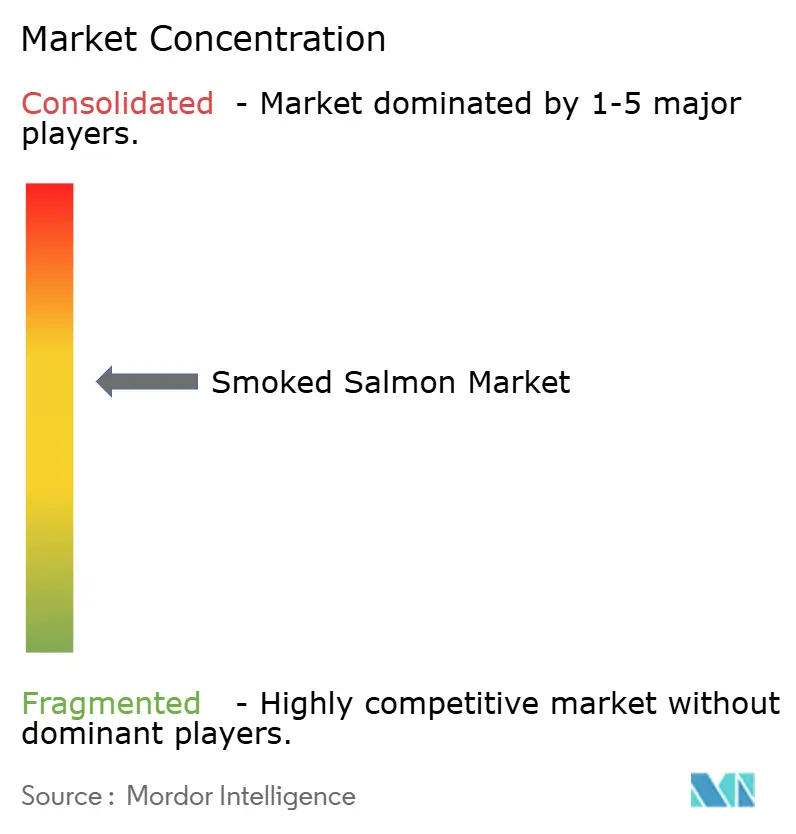
The global smoked salmon market is moderately fragmented, comprising vertically integrated aquaculture companies, regional specialists, and artisanal producers. Prominent players such as Mowi ASA, Austevoll Seafood ASA, and Acme Smoked Fish Holding Corp oversee operations from breeding and feed production to farming, processing, and distribution. This comprehensive approach enables these companies to optimize margins at each stage, ensure product traceability, and deliver consistent quality. Additionally, vertical integration minimizes the impact of supply chain disruptions, ensuring a reliable supply for both retail and foodservice customers.
Strategic expansions and partnerships remain critical for sustaining growth and competitiveness in the market. For instance, Mowi expanded its European operations in March 2026 through agreements with Nova Sea and Torghatten Aqua, boosting farming capacity in Norway and the Faroe Islands. Similarly, its January 2026 partnership with CP AXTRA in Thailand established the first integrated premium salmon supply chain in the Asia-Pacific region. This collaboration introduced the Aro Gold brand, targeting emerging markets with increasing cold-chain infrastructure and rising seafood consumption. These initiatives underscore the importance of expanding operations in both established and emerging markets to capture new growth opportunities.
Sustainability certifications have become a key differentiator in the smoked salmon market, particularly in Europe and North America. Certifications such as ASC (Aquaculture Stewardship Council) and MSC (Marine Stewardship Council) are increasingly demanded by retailers and foodservice operators to ensure responsible sourcing and environmental compliance. Retailers like Sainsbury’s have committed to sourcing 100% ASC-certified Scottish salmon, while Mowi launched its ASC-certified Signature line for foodservice in July 2025. By integrating sustainability credentials into their brand strategies, leading players are addressing evolving consumer expectations, enhancing trust, and reinforcing their market positions. The combination of vertical integration, strategic expansion, and certified sourcing continues to drive success in this competitive industry.
Smoked Salmon Industry Leaders
-
Mowi ASA
-
Austevoll Seafood ASA
-
Labeyrie Fine Foods
-
Acme Smoked Fish Holding Corp.
-
Suempol Sp. z o.o.
- *Disclaimer: Major Players sorted in no particular order

Recent Industry Developments
- November 2025: St. James Smokehouse, a family-owned business based in Florida and certified as a women-owned enterprise by WBENC, announced the nationwide launch of its SAINT Pure Smoked Salmon line at Whole Foods Market. The SAINT Oak Smoked Salmon became available in select Whole Foods Market stores nationwide. This product provided customers with a cold-smoked salmon featuring a delicate balance of flavors, made using only four ingredients: salmon, salt, sugar, and European oak smoke.
- October 2025: Italian retailer Esselunga introduced the country's first land-based smoked salmon, in collaboration with Salmon Evolution and Milarex, to address the increasing consumer demand for sustainable seafood. Offered under the Icelander brand, this product marked the first instance where Italian consumers could access smoked salmon produced entirely through land-based aquaculture.
- May 2025: Loch Duart, a premium Scottish salmon brand favored by chefs, restaurants, and culinary enthusiasts globally, has introduced its own smoked salmon product. This offering was crafted using only two natural ingredients: their award-winning Scottish salmon and pure sea salt. It was available in two variants: 'Signature Smoke' and 'Double Smoked'.


Global Smoked Salmon Market Report Scope
| Cold-Smoked |
| Hot-Smoked |
| Atlantic Salmon |
| Pacific Salmon |
| Trout Salmon |
| Others |
| Sliced |
| Fillets and Portions |
| Whole Sides |
| Foodservice | |
| Retail | Supermarkets and Hypermarkets |
| Convenience Stores | |
| Online Retail | |
| Others |
| North America | United States |
| Canada | |
| Mexico | |
| Rest of North America | |
| Europe | Germany |
| United Kingdom | |
| Italy | |
| France | |
| Spain | |
| Netherlands | |
| Poland | |
| Belgium | |
| Sweden | |
| Rest of Europe | |
| Asia-Pacific | China |
| India | |
| Japan | |
| Australia | |
| Indonesia | |
| South Korea | |
| Thailand | |
| Singapore | |
| Rest of Asia-Pacific | |
| South America | Brazil |
| Argentina | |
| Colombia | |
| Chile | |
| Peru | |
| Rest of South America | |
| Middle East and Africa | South Africa |
| Saudi Arabia | |
| United Arab Emirates | |
| Nigeria | |
| Egypt | |
| Morocco | |
| Turkey | |
| Rest of Middle East and Africa |
| By Smoking Method | Cold-Smoked | |
| Hot-Smoked | ||
| By Species | Atlantic Salmon | |
| Pacific Salmon | ||
| Trout Salmon | ||
| Others | ||
| By Form | Sliced | |
| Fillets and Portions | ||
| Whole Sides | ||
| By Distribution Channel | Foodservice | |
| Retail | Supermarkets and Hypermarkets | |
| Convenience Stores | ||
| Online Retail | ||
| Others | ||
| By Geography | North America | United States |
| Canada | ||
| Mexico | ||
| Rest of North America | ||
| Europe | Germany | |
| United Kingdom | ||
| Italy | ||
| France | ||
| Spain | ||
| Netherlands | ||
| Poland | ||
| Belgium | ||
| Sweden | ||
| Rest of Europe | ||
| Asia-Pacific | China | |
| India | ||
| Japan | ||
| Australia | ||
| Indonesia | ||
| South Korea | ||
| Thailand | ||
| Singapore | ||
| Rest of Asia-Pacific | ||
| South America | Brazil | |
| Argentina | ||
| Colombia | ||
| Chile | ||
| Peru | ||
| Rest of South America | ||
| Middle East and Africa | South Africa | |
| Saudi Arabia | ||
| United Arab Emirates | ||
| Nigeria | ||
| Egypt | ||
| Morocco | ||
| Turkey | ||
| Rest of Middle East and Africa | ||


Key Questions Answered in the Report
What size is the Smoked Salmon Market expected to reach by 2031?
It is projected to attain USD 7.48 billion by 2031, expanding at a 4.83% CAGR from 2026.
Which smoking method is growing fastest?
Hot-smoked products are forecast to rise at a 5.91% CAGR through 2031, outperforming cold-smoked formats.
Why is trout gaining ground against Atlantic salmon?
Lower input prices and expanding Polish processing capacity have pushed trout volumes up, driving a 6.18% forecast CAGR.
Which region is expected to post the highest growth through 2031?
Asia-Pacific leads with a projected 6.01% CAGR, fueled by rising incomes, urbanization, and improved cold-chain infrastructure.
Page last updated on:


 Your data is secure and never sold or shared.


