
Market Overview
| Study Period | 2021 - 2031 |
|---|---|
| Market Size (2026) | USD 2.87 Billion |
| Market Size (2031) | USD 3.65 Billion |
| Growth Rate (2026 - 2031) | 4.94 % |
| Fastest Growing Market | Asia Pacific |
| Largest Market | Middle East and Africa |
| Market Concentration | Medium |
Major Players *Disclaimer: Major Players sorted in no particular order Image © Mordor Intelligence. Reuse requires attribution under CC BY 4.0. | |
Fish Sauce Market Analysis by Mordor Intelligence
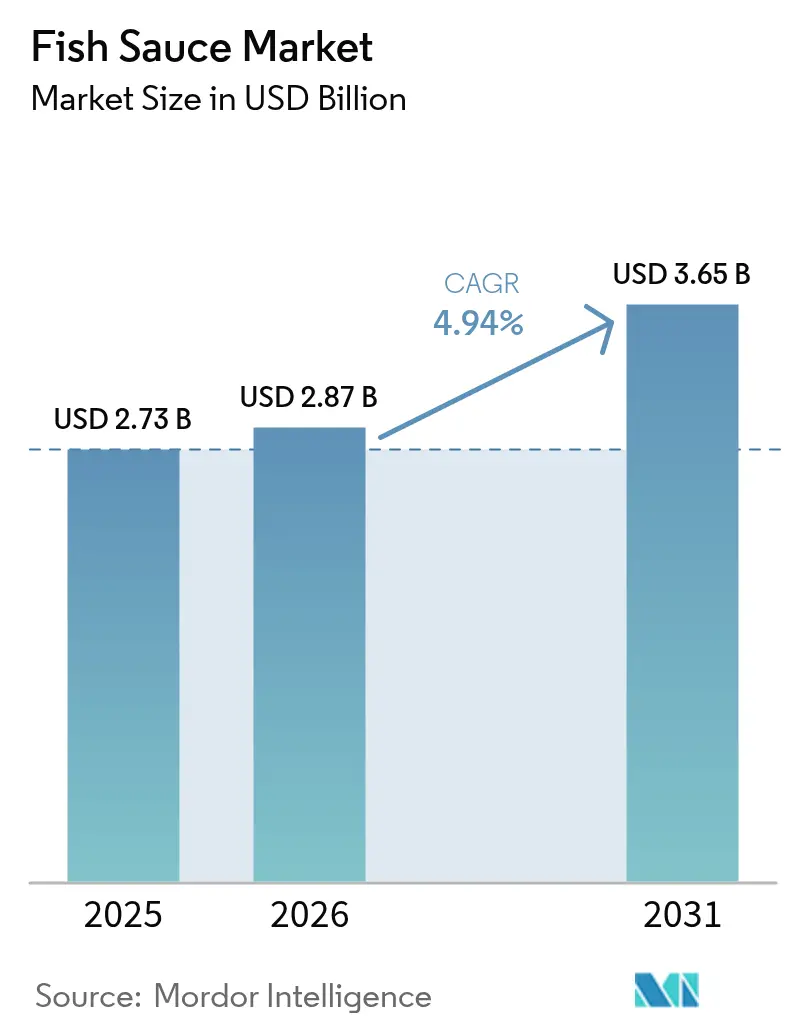
The fish sauce market size in 2026 is estimated at USD 2.87 billion, growing from 2025 value of USD 2.73 billion with 2031 projections showing USD 3.65 billion, growing at 4.94% CAGR over 2026-2031. This growth is driven by a global embrace of Asian flavors, heightened spending on halal foods, and a shift towards clean-label condiments. Yet, climate pressures on anchovy stocks create a pronounced supply-demand tension, jeopardizing long-term price stability. In response, larger producers are turning to vertical integration, blockchain traceability, and expanding capacities to ensure a steady flow of raw materials. These strategies align with rising demand from quick-service restaurants and ready-meal manufacturers, who value the sauce's umami intensity, shelf stability, and versatility across cuisines. At the same time, regulators in affluent nations are tightening sodium-reduction targets, pushing producers to navigate the delicate balance between taste authenticity and reformulation, all while considering portion-controlled packaging.
Key Report Takeaways
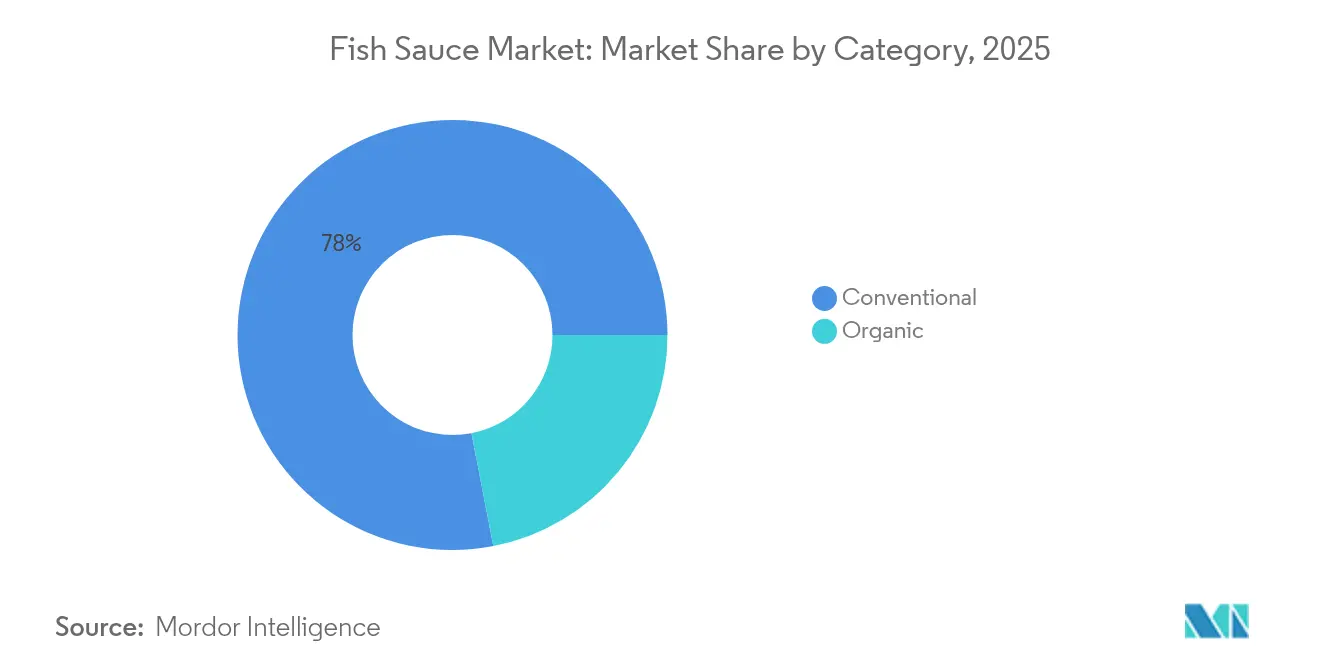
- By category, conventional products commanded 78.04% of the fish sauce market share in 2025, while organic variants are expanding at a 6.43% CAGR through 2031.
- By flavor, plain varieties captured 81.71% revenue share in 2025; flavored options are forecast to advance at a 6.33% CAGR to 2031.
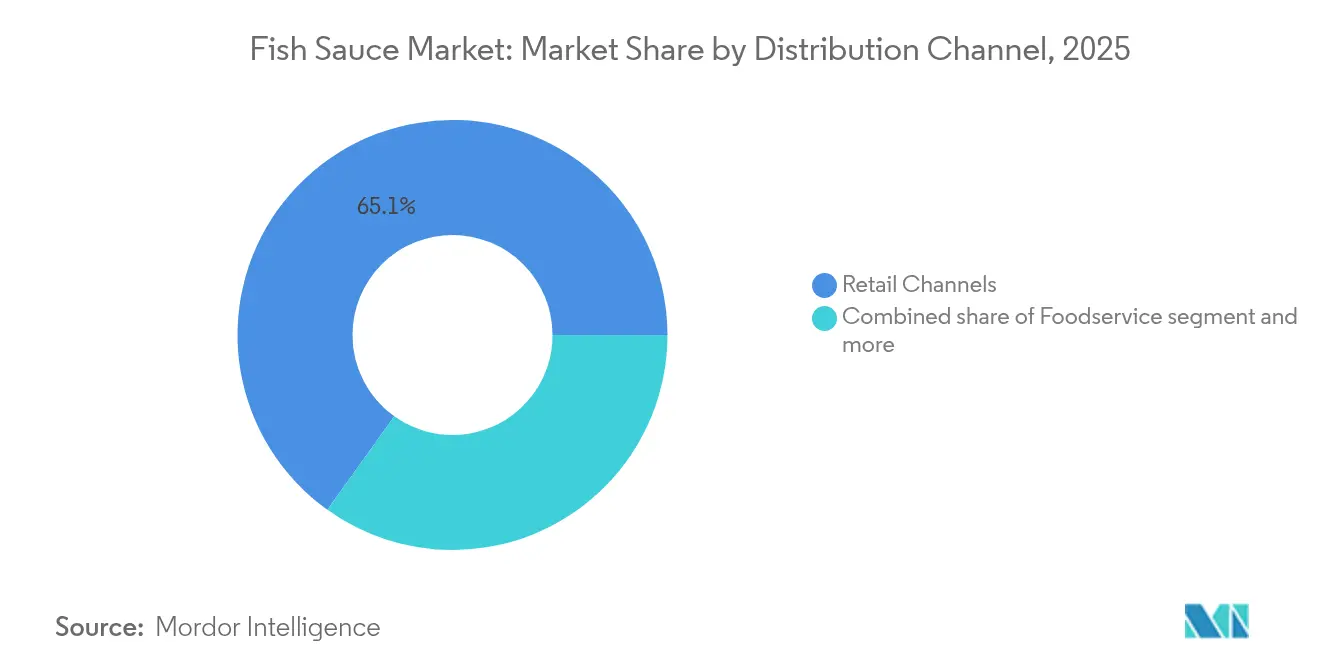
- By distribution channel, retail formats accounted for 65.11% of the fish sauce market size in 2025; foodservice channels are pacing ahead at a 5.48% CAGR over 2026-2031.
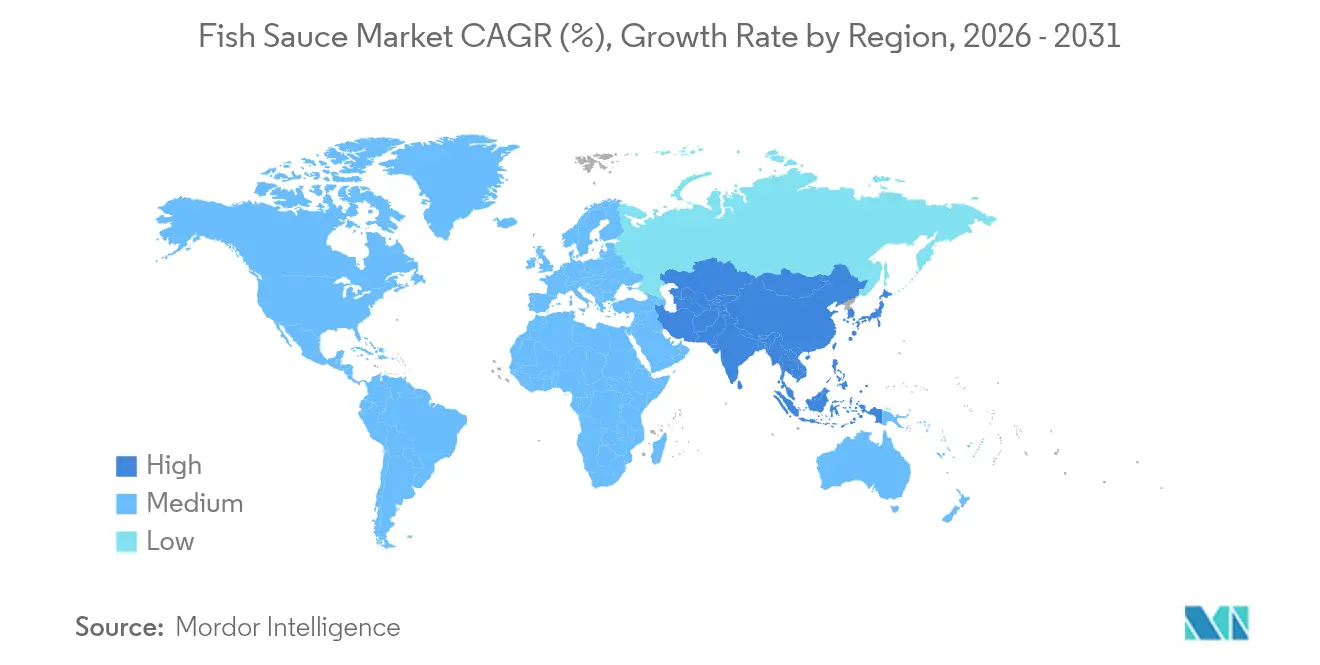
- By geography, Asia-Pacific led with a 74.92% share of the fish sauce market in 2025, whereas the Middle East and Africa are set to grow fastest at 6.61% CAGR through 2031.
Note: Market size and forecast figures in this report are generated using Mordor Intelligence’s proprietary estimation framework, updated with the latest available data and insights as of 2026.
Market Trends and Insights
Drivers Impact Analysis of Fish Sauce Market*
| Driver | (~) % Impact on CAGR Forecast | Geographic Relevance | Impact Timeline |
|---|---|---|---|
| Asian cuisine globalisation | +1.2% | Global, with strongest penetration in North America and Europe | Medium term (2-4 years) |
| Clean-label demand for natural umami | +0.8% | North America, Europe, and urban APAC markets | Long term (≥ 4 years) |
| Expansion of Asian food-service chains | +0.9% | Global, concentrated in major metropolitan areas | Short term (≤ 2 years) |
| Ready-to-eat and processed food growth | +0.7% | Global, with emphasis on convenience-oriented markets | Medium term (2-4 years) |
| Culinary tourism and influencer culture | +0.5% | Global, social media-driven adoption patterns | Short term (≤ 2 years) |
| Blockchain traceability adoption | +0.3% | Export-oriented regions, premium market segments | Long term (≥ 4 years) |
| Source: Mordor Intelligence | |||
Asian Cuisine Globalisation
Asian flavors are increasingly becoming a staple in global foodservice, spurred by demographic changes and cultural blending. An analysis by Unilever Food Solutions, sifting through 237,000 keywords from 312 million searches across 21 countries, highlights that Chinese and Japanese cuisines have secured spots among the top 5 global favorites[1]. Meanwhile, Korean and Filipino flavors are witnessing a rapid rise in popularity. This trend isn't confined to ethnic eateries; mainstream restaurants are also adopting a "borderless cuisine" approach, seamlessly blending Eastern umami into Western dishes through thoughtful ingredient swaps. Migration and travel play pivotal roles in this culinary shift, with 76% of travelers expressing a desire for authentic local food experiences. This, in turn, fuels a demand for these familiar flavors back home. Generation Z stands out in this culinary landscape, relishing experimentation and valuing quality at reasonable prices, all while favoring experiential dining over conventional meals. As globalization continues to weave its tapestry, ingredients like fish sauce are evolving from niche ethnic components to essential culinary enhancers, finding their way into a myriad of menu categories.
Clean-Label Demand for Natural Umami
As consumers increasingly scrutinize ingredient lists, the clean-label movement gains momentum, pushing the condiment industry to reformulate. This shift positions traditional fish sauce, made solely from fish and salt through natural fermentation, as a prime umami source. While consumers seek recognizable components and shun synthetic additives, fish sauce's authentic umami complexity stands unmatched[2]. This authenticity becomes crucial as food manufacturers face pressure to ditch artificial flavor enhancers and preservatives. Moreover, as sustainability takes center stage, consumers prioritize traceability and environmental responsibility in their choices. Producers showcasing traditional methods, sustainable sourcing, and transparent supply chains bolstered by certifications and blockchain traceability find themselves with premium positioning opportunities.
Ready-to-Eat and Processed Food Growth
As the convenience food sector expands, manufacturers are turning to fish sauce to infuse authentic flavor profiles, setting their products apart in competitive markets. This trend is evident in Thailand's ready-to-eat food industry, spurred by urbanization and smaller household sizes. Innovations in single-serve packaging and portion-controlled formats cater to evolving consumer lifestyles, seamlessly integrating fish sauce into convenient meal solutions. Demographic shifts, such as an aging population and urban dwellers pressed for time, further amplify this trend, as these consumers seek convenience without compromising on flavor authenticity. Recognizing fish sauce's potential to elevate umami profiles in soups, marinades, and ready meals, manufacturers are seizing cross-category adoption opportunities. Yet, with rising pressures to reduce sodium, there's a delicate balancing act: maintaining authentic taste profiles while aligning with health-conscious trends.
Culinary Tourism and Influencer Culture
Food influencers and travel content are exposing global audiences to authentic Asian flavors and cooking techniques, amplifying demand through social media-driven food culture and culinary tourism. This phenomenon isn't limited to traditional media; platforms like TikTok and Instagram rapidly spread viral recipe content, showcasing fish sauce in both traditional and fusion dishes. Beyond just travel, culinary tourism drives consumers to recreate authentic flavors at home, boosting retail demand for specialty ingredients that were once only found in ethnic markets. By emphasizing authentic ingredients and traditional techniques, food influencers are solidifying fish sauce's role as a vital umami component, especially when showcasing its versatility across various cuisines. Brands see this trend as a chance to engage consumers through recipe content, cooking demos, and cultural storytelling, fostering brand loyalty and broadening usage occasions. This influence is especially strong among younger demographics, who value authenticity and cultural exploration in their culinary choices.
Restraints Impact Analysis of Fish Sauce Market*
| Restraint | (~) % Impact on CAGR Forecast | Geographic Relevance | Impact Timeline |
|---|---|---|---|
| Health concerns over high sodium | -1.1% | Global, with strongest regulatory pressure in developed markets | Medium term (2-4 years) |
| Raw material price fluctuations | -0.9% | APAC production regions, global supply chain impact | Short term (≤ 2 years) |
| Authenticity import checks tightening | -0.4% | Export-dependent regions, premium market segments | Long term (≥ 4 years) |
| Limited consumer awareness outside Asia | -0.6% | North America, Europe, emerging markets | Long term (≥ 4 years) |
| Source: Mordor Intelligence | |||
Health Concerns Over High Sodium
Public health initiatives aimed at reducing sodium intake are putting significant pressure on traditional fish sauce producers to reformulate their products. This comes in light of the World Health Organization (WHO) singling out fish sauce as a high-sodium condiment in need of intervention. WHO recommends a daily sodium intake of less than 2,000 mg. However, the global average stands at a concerning 4,310 mg, with fish sauce and other processed foods playing a notable role in this excess. The FDA has set voluntary sodium reduction targets across 155 food categories, signaling a regulatory trend that might soon extend to imported condiments. This is further underscored by microsimulation analyses, which hint at considerable healthcare savings from widespread industry reformulation. Yet, traditional fish sauce fermentation poses a challenge: it relies on high salt concentrations for both preservation and flavor, complicating efforts to reformulate without losing product integrity. Educating consumers is paramount, especially since fish sauce's potency means that even small servings can provide intense flavor with relatively lower sodium levels than many processed foods. To successfully adapt, producers might explore innovations like low-sodium alternatives, potassium chloride substitutions, or concentrated formulations that maintain flavor intensity while cutting down on sodium content per serving.
Authenticity Import Checks Tightening
As import regulations tighten and authenticity verification becomes paramount, traditional producers find themselves at a disadvantage. In contrast, larger manufacturers, equipped with advanced compliance capabilities, stand to benefit. The EU's Common Organization of Markets Regulation and Fisheries Control Regulation set forth stringent traceability mandates. These are particularly challenging for smaller producers, especially when it comes to catch documentation and supply chain verification[3]. In the U.S., the FDA's PREDICT system and foreign facility inspections heighten compliance challenges for exporters eyeing the American market. Insufficient documentation can lead to detention without physical examination. Vietnam's 2017 standard for traditional fish sauce, while safeguarding authentic production, complicates international trade. Importers now face the added task of ensuring adherence to specific fermentation durations and ingredient limitations. This evolving regulatory landscape seems to favor those with the means to adopt robust quality management systems, secure third-party certifications, and leverage blockchain for traceability. As a result, there's a risk of market share consolidation among these larger entities. Meanwhile, smaller artisanal producers grapple with the dilemma of either bolstering their compliance infrastructure or aligning with larger distributors adept at navigating these intricate regulations.
*Our forecasts treat driver/restraint impacts as directional, not additive. The impact forecasts reflect baseline growth, mix effects, and variable interactions.
Fish Sauce Market Segment Analysis
By Category:
Conventional Dominance Faces Organic DisruptionIn 2025, conventional fish sauce held a dominant 78.04% market share. However, organic variants are on a rapid ascent, boasting a 6.43% CAGR projected through 2031. This shift underscores a growing consumer preference for clean-label alternatives. The stronghold of the conventional segment can be attributed to its well-established production infrastructure, cost benefits, and broad distribution, especially in traditional Asian markets where price sensitivity is a key factor. On the other hand, organic certifications resonate with consumers' increasing demand for transparency and sustainable practices. This alignment not only creates premium market opportunities but also enables higher profit margins, even with reduced volumes. The organic segment's appeal is further enhanced by its stringent raw material sourcing, which emphasizes certified sustainable fisheries and organic salt. This resonates with eco-conscious consumers who are ready to pay a premium for genuine sustainability.
Regulatory bodies are leaning towards organic methods, with USDA organic standards and their international counterparts offering a leg up in developed markets. The organic segment's growth mirrors a broader clean-label movement, where consumers are gravitating towards minimally processed products with familiar ingredients. This trend naturally aligns traditional fermentation methods with organic values. Facing this shift, conventional producers are under pressure to embrace sustainable practices. If they falter, they risk losing ground to organic alternatives, especially in premium retail spaces where organic products not only enjoy prime shelf placement but also a stronger consumer preference.

By Flavor:
Plain Varieties Lead While Spiced Innovations AccelerateIn 2025, plain fish sauce held an 81.71% market share, solidifying its role as the cornerstone of genuine Asian cuisine. Meanwhile, flavored variants are experiencing rapid growth, with a 6.33% CAGR projected through 2031. The plain segment's stronghold is attributed to its adaptability, serving as a primary ingredient in both home kitchens and professional food services. Chefs often favor customizing flavors with their spice blends over relying on pre-seasoned options. Traditional methods of production, centered on fermenting pure fish and salt, yield intricate umami profiles. These profiles are foundational to a myriad of dishes in Vietnamese, Thai, and Filipino culinary traditions.
Innovations in flavored fish sauces cater to consumers who prioritize convenience and those experimenting with fusion cuisines. By infusing ingredients like chili, garlic, and lime during fermentation or blending post-production, these sauces have carved a niche. They resonate especially with Western consumers, who, while delving into Asian flavors, gravitate towards these familiar taste profiles. This strategic alignment has facilitated broader acceptance. The upward trend underscores adept product development, balancing authentic umami roots with regional flavor inclinations. This strategy not only broadens the appeal but also extends the sauce's use beyond its traditional Asian confines. There's a burgeoning market for premium flavored variants. By marrying age-old fermentation techniques with artisanal spice selection, these products stand poised for gourmet retail and upscale dining venues.
By Distribution Channel:
Retail Strength Meets Foodservice MomentumIn 2025, retail channels commanded a dominant 65.11% market share, capitalizing on their vast distribution networks and deep-rooted consumer familiarity. Meanwhile, the foodservice segment is on an upswing, projected to grow at a 5.48% CAGR through 2031, driven by the rising popularity of Asian cuisines and innovative menu trends. The retail sector has forged strong ties with ethnic grocery chains and specialty food stores. Mainstream supermarkets are also jumping on board, recognizing the surging consumer interest in fish sauce. Modern trade is expanding, with hypermarkets and supermarkets broadening consumer access to a wider range of products. At the same time, convenience stores are adeptly capturing impulse buys and catering to single-serve needs.
The rise of online retail is unlocking avenues for direct-to-consumer sales and subscription models. This is especially true for premium and artisanal products, which leverage storytelling and brand differentiation to command higher margins. The foodservice industry's growth is a testament to the restaurant sector's embrace of Asian flavors. Fast-casual chains and upscale dining spots are now seamlessly weaving fish sauce into a variety of dishes, moving beyond its traditional Asian roots. Culinary schools are playing a pivotal role, integrating fish sauce education into their curriculums, ensuring chefs are well-versed in its diverse applications. This growing momentum in the foodservice sector presents a golden opportunity for suppliers. Those who can consistently deliver quality, offer technical support, and assist in menu development will find restaurants eager to integrate fish sauce into their offerings.
Geography Analysis
APAC Fish Sauce Market
In 2025, Asia-Pacific commanded a dominant 74.92% market share, underscoring its rich cultural integration and robust production infrastructure. However, the region grapples with supply chain vulnerabilities, notably those stemming from the toll of climate change on anchovy stocks. Anchored by production hubs, Vietnam and Thailand shine, with Vietnam alone churning out around 418 million liters annually. Notably, data from the American Culinary Federation indicate that the average Vietnamese consumer consumes approximately 1 gallon per year. Yet, traditional production methods are under siege from environmental shifts. Projections from the University of British Columbia warn of over 20% fish stock losses in the South China Sea, even with moderate warming. In response, the region pivots towards a growth strategy centered on technological innovation and sustainability. A testament to this shift is CP Foods, which has implemented blockchain traceability systems across its supply chains, aligning with international export standards. Moreover, China's resurgence and its changing demand patterns play a pivotal role in shaping regional pricing and supply distribution, especially for premium exports.
North America and Europe Fish Sauce Market
North America and Europe are witnessing a surge in Asian cuisine adoption, propelled by the globalization of Asian flavors and the rise of fusion cooking. Notably, flavors from China and Japan have ascended to the top 5 global culinary preferences. A deep dive by Unilever Food Solutions highlights a trend: Eastern umami flavors are seamlessly weaving into Western dishes. This cross-cultural culinary fusion is broadening the scope of usage occasions, extending well beyond traditional ethnic contexts. While both regions enjoy a well-established import infrastructure and a consumer base eager to experiment with premium ingredients, they aren't without challenges. Regulatory hurdles, especially sodium reduction initiatives and import authentication mandates, loom large. The FDA's voluntary sodium reduction targets and the EU's stringent traceability regulations pose compliance challenges. These regulations tend to favor larger producers, equipped with advanced quality management systems, potentially sidelining smaller artisanal imports.
MEA, APAC and South America Fish Sauce Market
Middle East and Africa are on an upward trajectory, boasting an impressive 6.61% CAGR expected through 2031. This growth is largely attributed to the expanding Muslim populations and the burgeoning halal food market. In fact, global spending on halal food is set to touch a staggering USD 1.7 trillion by 2025. A significant boost comes from Malaysia, which boasts a holistic halal ecosystem. This ecosystem, with its robust regulatory frameworks and certification infrastructure, is paving the way for trade expansion across Muslim-majority markets. Meanwhile, Indonesia has rolled out new halal certification requirements, effective October 2024. While this presents a golden opportunity, it also poses compliance hurdles for exporters eyeing the world's largest Muslim demographic. Urbanization, rising disposable incomes, and a cultural embrace of Asian cuisines to immigration and global business ties are further fueling the region's food service expansion and premium product adoption. South America, too, is catching the wave. With its Asian immigrant communities and a penchant for culinary experimentation, urban centers are witnessing a surge in fusion cuisine concepts. Affluent consumers are particularly drawn to these, seeking genuine and authentic flavor experiences.
Regulatory Landscape
Fish sauce exporters operate under a mix of international reference standards and country-specific seafood safety and labeling rules. At the global level, the FAO/WHO Codex Alimentarius Standard for Fish Sauce (CXS 302-2011) defines fermented fish sauce and sets hygiene, quality, and contaminant expectations that many importing markets use as a benchmark. In key producing markets, Thailand’s Ministry of Public Health (Thai FDA) Notification No. 203-43 specifies standards for clear and mixed fish sauce, including labeling and process requirements, which increases compliance demands for domestic brands seeking premium positioning and export readiness.
In major import markets, seafood safety frameworks shape market access and supplier selection. In the United States, FDA requirements under 21 CFR Part 123 (HACCP for fish and fishery products) apply to imported fishery products, requiring processors to operate under controls equivalent to US standards, with importers responsible for verification through records and compliance systems. This tends to favor manufacturers that can document sanitation, traceability, and hazard controls across raw material procurement, fermentation, and bottling, while smaller artisanal suppliers face higher documentation and audit burdens.
Value Chain Analysis
The fish sauce value chain starts with sourcing small pelagic fish (commonly anchovies), where catch variability and handling practices directly affect yield, safety, and flavor outcomes. Fish are typically salted soon after landing (or at sea) to slow spoilage, then moved through collectors and landing-site operators into fermentation facilities. Production relies on long fermentation (often 12 to 24 months) in vats or wooden barrels, followed by pressing, blending, filtration, and bottling. Larger plants increasingly add stainless steel filtration and pasteurization steps to align with HACCP/ISO and export-market requirements, and to manage quality attributes such as clarity and histamine.
Downstream, bottled products move through domestic distributors, modern retail, specialty and ethnic grocers, online channels, and foodservice and food processors that use fish sauce as an umami ingredient. Industry organizations also support standardization and market access, including the Vietnam Association of Fish Sauce (with membership representing a large share of national output) and the Phu Quoc Fish Sauce Association (56 members with sizable collective capacity), which help support consistency and authenticity claims. A visible supply-chain shift is toward standardized production for export markets; in June 2025, Huynh Khoa Fish Sauce exported its first standardized batch to Australia after facility upgrades, linking compliance-driven investments in upstream procurement and in-plant controls to downstream access in higher-value markets.
Competitive Landscape
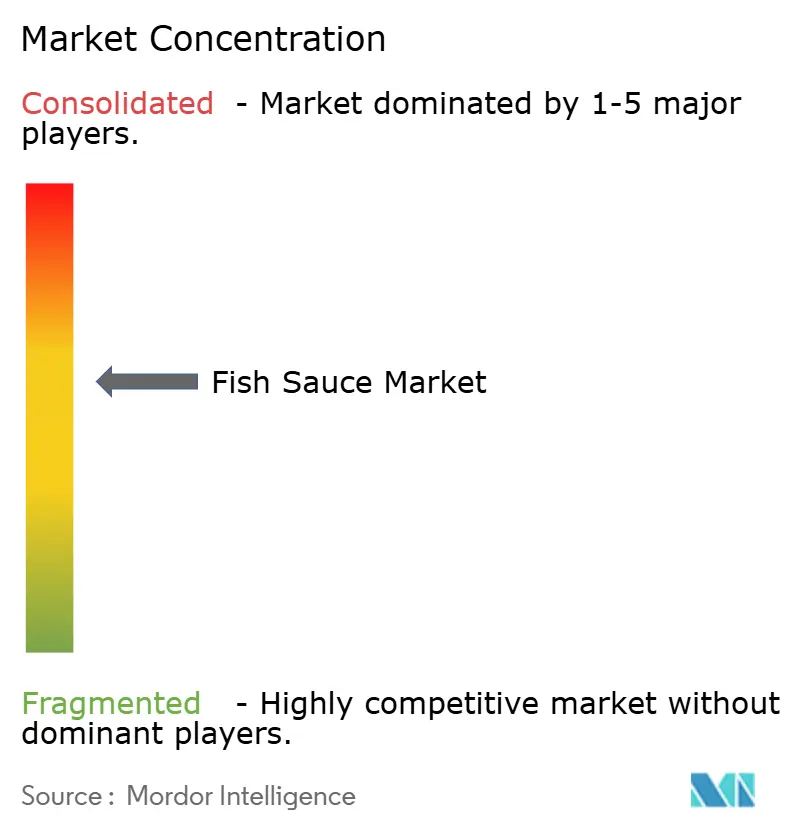
The fish sauce market remains moderately concentrated, with leadership fragmented due to traditional production methods and regional specializations. These factors not only hinder consolidation but also empower niche players to uphold their market positions through authenticity and quality differentiation. Companies boasting integrated supply chains and technological prowess are thriving in this landscape. A prime example is Masan Group's CHIN-SU Phu Quoc facility, which spans 22,000 square meters, processes over 10,000 tonnes of fish annually, and adheres to ISO and HACCP certification standards.
Strategic differentiation now hinges on traceability and sustainability. Companies are increasingly turning to blockchain technology, not just for compliance, but as a badge of premium positioning and a ticket to export markets. As traditional high-sodium profiles grapple with regulatory scrutiny, there's a shift towards health-conscious reformulations and convenience. Single-serve packaging and ready-to-use formats are emerging as solutions, catering to evolving consumer lifestyles.
Companies adopting comprehensive quality management systems are reaping competitive rewards. A case in point is CP Foods, whose blockchain-enabled QR code systems underscore the dual benefits of digital transformation: bolstering consumer trust and ensuring regulatory adherence. The market is witnessing the rise of disruptors, notably alternative protein developers and clean-label advocates. These players, harnessing fermentation expertise, are crafting novel umami solutions. In response, established brands are pursuing organic certifications, carving out premium market positions, and forging strategic partnerships to broaden their distribution across varied geographies.
Fish Sauce Industry Leaders
-
Masan Group
-
Unilever PLC
-
Viet Phu Inc. (Red Boat Fish Sauce)
-
Rayong Fish Sauce Industry Co. Ltd
-
Thai Fishsauce Factory (Squid Brand)
- *Disclaimer: Major Players sorted in no particular order
Fish Sauce Market Companies Covered in this Report
- Viet Phu Inc. (Red Boat)
- Thai Fishsauce Factory (Squid Brand)
- Unilever (Knorr)
- Masan Group (Chin-Su)
- Tang Sang Ha Co. (Tiparos)
- Rayong Fish Sauce Industry
- Rungroj Fish Sauce
- Pichai Fish Sauce
- Pantai Norasingh
- Teo Tak Seng Fish Sauce
- Pantai Norasingh
- Phu Quoc Fish Sauce
- Three Crabs
- Golden Boy Brand
- Sozye
- Thanh Hung Co.
- Lee Kum Kee
- Maesri
- Healthy Boy
- Megachef
- Kimlan Foods
Market Opportunities and Future Outlook
Product standardization and compliance-led upgrading are creating opportunities for suppliers that can serve regulated import markets with consistent specifications and documentation. China’s GB/T 45810-2025 technical specification for fish sauce processing, issued in May 2025 and effective from June 1, 2026, formalizes requirements across raw fish receiving, salting, fermentation, sterilization, and packaging. It supports opportunities for equipment suppliers and manufacturers that can scale quality systems across multiple facilities and contract manufacturing partners. Alongside Codex CXS 302-2011 and the Codex Code of Practice for Fish and Fishery Products (CXC 52-2003), these frameworks provide a clearer pathway for export-oriented brands to align processing and verification protocols across markets.
Technology-enabled differentiation is also widening within premium and large-scale production, particularly where buyers want tighter control over safety and sensory consistency. Membrane filtration and enzymatic controls are being used to standardize flavor, accelerate aging steps, and manage histamine and other quality parameters, which helps suppliers address sodium-related scrutiny through precision dosing and reformulation options without abandoning fermentation-based positioning. On the supply side, raw material security remains a central strategic lever, reinforcing vertical integration and traceability investments in Southeast Asian sourcing hubs; large players with blockchain and audited procurement systems are better positioned to secure volumes and maintain export eligibility as anchovy availability and pricing tighten.
Recent Industry Developments in Fish Sauce Market
- May 2026: Masan Group reported that growth in its Masan Consumer condiments segment was driven primarily by fish sauce, cited as the largest contributor to the segment’s increase. The update reinforces fish sauce’s role as a core volume and value driver inside scaled condiment portfolios, supporting continued investment in branding, distribution, and product-tiering within the category.
- December 2025: Masan Consumer Corporation announced a roadmap to list on the Ho Chi Minh City Stock Exchange (HoSE). The listing plan signals continued capital-market focus around scaling FMCG platforms, which can strengthen procurement, marketing, and route-to-market capabilities relevant to fish sauce and broader condiment lines.
- May 2025: Thai Fishsauce Factory (Squid Brand) Co., Ltd. launched Volcano Fish Sauce at THAIFEX-Anuga Asia 2025. The launch highlights ongoing premium and innovation-led SKU activity in fish sauce, using major trade platforms to support export visibility and defend brand positioning amid input-cost volatility.
Fish Sauce Market Report Scope and Research Methodology
Market Definition and Coverage
For this study, the market includes the value of fish sauce sold for cooking and food preparation across retail packs and bulk formats, covering traditional fermentation and industrial production routes across major consuming regions.
Scope exclusions: We do not count adjacent condiments and seasonings that are not sold as fish sauce (for example, soy sauce, oyster sauce, or blended dipping sauces).
Segments Covered in This Report
- By Category
- Conventional
- Organic
- By Flavor
- Plain Fish Sauce
- Flavored / Spiced Fish Sauce
- By Distribution Channel
- Food Processors
- Foodservice
- Retail Channels
- Hypermarkets/Supermarkets
- Convenience and Specialty Stores
- Online Retail
- Other Retail Channels
- By Geography
- North America
- United States
- Canada
- Mexico
- Rest of North America
- Europe
- Germany
- United Kingdom
- Italy
- France
- Spain
- Netherlands
- Poland
- Belgium
- Sweden
- Rest of Europe
- Asia-Pacific
- China
- India
- Japan
- Australia
- Rest of Asia-Pacific
- South America
- Brazil
- Argentina
- Rest of South America
- Middle East and Africa
- South Africa
- United Arab Emirates
- Rest of Middle East and Africa
- North America
Data Sources, Market Sizing, and Validation
Desk Research
Desk work started with building the demand and supply context for fish sauce using public, repeatable sources, and then turning that into sizing inputs we can defend. We used sources such as FAO fishery and aquaculture statistics, UN Comtrade trade flows for fish products and sauces where available, national food safety and labeling agencies, and customs or excise publications from major importing countries.
To make sure the model matches real market behavior, we also reviewed company annual reports, investor presentations, and press coverage on capacity additions, product launches, and channel expansion. A paid subscription for company financials and intelligence was used selectively where public disclosures were limited, and a patent database was checked for signals around processing and packaging. These examples are not exhaustive, and many other public sources were reviewed to collect data, validate assumptions, and clarify open points.
Primary Interviews and Surveys
Primary work focused on validating volumes, pricing ladders, and channel splits that desk sources do not clearly show, especially across Southeast Asia and export-focused markets. We spoke with a mix of manufacturers, distributors, foodservice buyers, and retail-side participants so assumptions on premiumization, packaging mix, and industrial use could be confirmed and then adjusted where needed. Feedback was also used to sanity-check growth drivers such as restaurant traffic recovery, packaged food reformulation, and sodium reduction pressure in select countries.
Distribution of primary research fieldwork respondents
| Company type | Respondent position | Region |
|---|---|---|
| Top tier: 34% | CXOs: 12% | APAC: 47% |
| Mid tier: 44% | Functional/Unit leaders: 32% | EMEA: 33% |
| Smaller Players: 22% | Managers: 56% | Americas: 20% |
Market-Sizing & Forecasting
Sizing was built using a top-down approach where production and trade indicators help reconstruct the addressable pool by region, and then value is formed by applying realistic pricing by grade and channel. The totals were then cross-checked with selective bottom-up approximations, such as sampling typical retail price bands, translating pack-size mixes into implied average selling prices, and rolling up a limited set of supplier and distributor revenue references to test the reasonableness of the output.
Key model inputs included import dependency for non-producing markets, penetration of fish sauce in household cooking versus foodservice, the share of industrial demand from food manufacturers, premium versus mass mix shifts, and observed price movements linked to fish raw material availability. For forecasting, scenario analysis was used so the model could reflect different paths for raw fish supply tightness, premiumization pace, and foodservice recovery, with final trajectories aligned to what experts see as realistic for the next five years. When bottom-up checks had gaps, conservative ranges were applied and then narrowed only after reconfirmation through interviews.
Data Validation & Update Cycle
Outputs were validated through multiple checks, starting with consistency tests across regions, channels, and price bands, followed by variance checks against trade signals and known consumption patterns. Any unusual jumps in growth or pricing were flagged, reworked, and reviewed again before sign-off, and follow-up calls were triggered when a key assumption moved beyond an acceptable range.
The report is refreshed annually, and interim updates are made when material events occur, such as major capacity expansions, regulatory changes on labeling, or sharp raw material price moves. Before delivery, a fresh final review pass is completed so clients receive the latest updated view supported by traceable inputs.
Mordor Intelligence's Fish Sauce Market Size Versus Other Published Estimates
Published market values for fish sauce can look far apart because firms do not always count the same product boundary, they use different price anchors, and they refresh assumptions on raw fish supply and channel mix at different times. Even when the geography is labeled as global, differences in what is treated as fish sauce versus wider sauce categories can change the final number.
Trade-linked volume signals and retail price-band checks are the evidence that keep Mordor Intelligence's estimate tied to fish sauce only, instead of broader condiment baskets that inflate the addressable pool. Other gaps usually come from using aggressive premiumization curves across all countries, applying a single average price without separating industrial bulk from retail packs, or using older currency conversion timing that does not match the current-year pricing reality.
Benchmark comparison
| Source | Market Size | Gaps in Research Methodology |
|---|---|---|
| Mordor Intelligence | USD 2.87 B (2026) | |
| Global Consultancy A | USD 2.07 B (2023) | Uses an earlier base year and a different timing for price levels, which can understate current value if recent retail and foodservice pricing has moved up. Some country coverage and channel splits are also applied more broadly, with fewer checks on pack-size and bulk-price separation. |
| Industry Portal B | USD 3.40 B (2024) | Appears to use a wider scope that can pull in adjacent sauce applications and a broader fish-type basket, which raises the revenue pool. It also relies on a single base-year value with long-range CAGR application, so regional mix shifts and grade-level pricing ladders are less visible. |
Overall, the spread is mainly explained by scope boundaries, base-year timing, and how pricing is built across bulk and retail formats. By keeping inputs traceable to trade, channel, and price signals, the model stays reproducible and easier to reconcile when clients compare different published figures.
Key Questions Answered in the Report
How large is the fish sauce market in 2026?
It stands at USD 2.87 billion and is forecast to climb to USD 3.65 billion by 2031.
Which region generates most revenue?
Asia-Pacific contributes about 74.92% of global value, thanks to entrenched cultural consumption and robust production capacity.
What is driving recent sales momentum in North America?
Mainstream adoption of Asian flavors in fast-casual dining and home cooking has widened retail distribution and menu applications.
How are sodium-reduction policies influencing product development?
Producers are trialing potassium blends, concentrated formulas, and precision dosing caps to cut sodium without diluting flavor authenticity.
Which product segment is growing fastest?
Organic variants lead with a 6.43% CAGR as health-conscious shoppers seek clean-label and sustainably sourced condiments.