
Frozen Meat And Fish Market Size and Share
Market Overview
| Study Period | 2021 - 2031 |
|---|---|
| Market Size (2026) | USD 54.63 Billion |
| Market Size (2031) | USD 70.97 Billion |
| Growth Rate (2026 - 2031) | 5.38 % |
| Fastest Growing Market | Asia Pacific |
| Largest Market | North America |
| Market Concentration | Medium |
Major Players *Disclaimer: Major Players sorted in no particular order Image © Mordor Intelligence. Reuse requires attribution under CC BY 4.0. | |
Frozen Meat And Fish Market Analysis by Mordor Intelligence
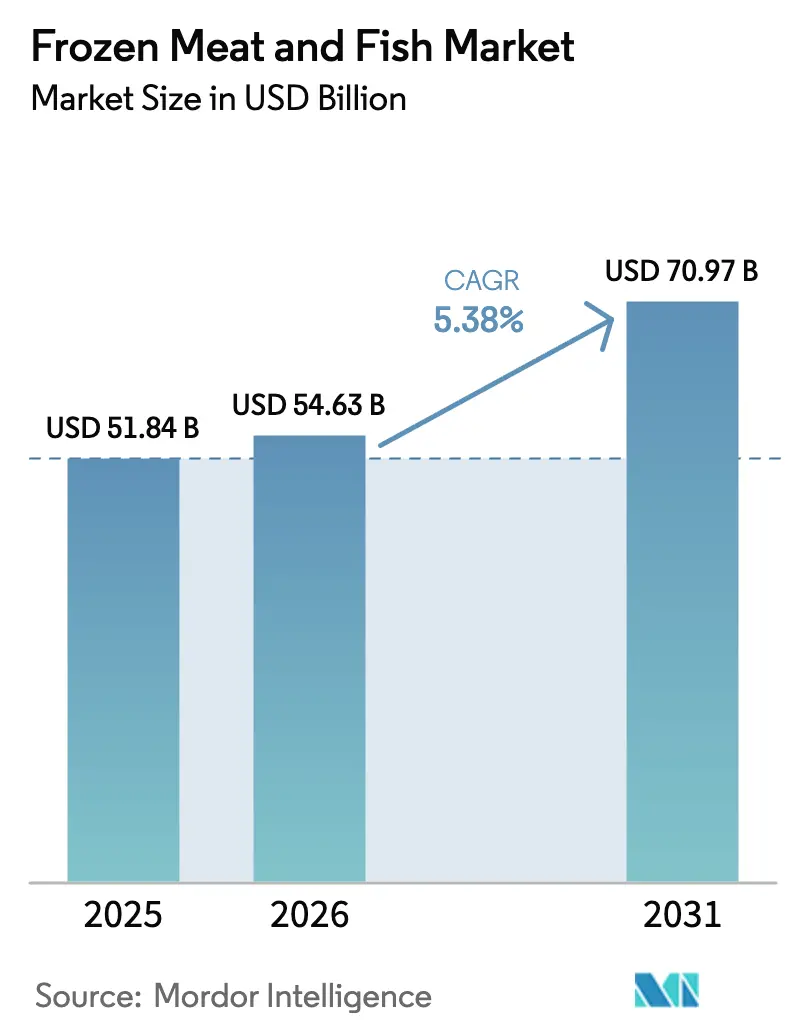
The frozen meat and fish market size is expected to grow from USD 51.84 billion in 2025 to USD 54.63 billion in 2026 and is forecast to reach USD 70.97 billion by 2031 at 5.38% CAGR over 2026-2031. Shifts in consumer preferences and distribution strategies are reshaping the frozen meat and seafood market. While meat retains a dominant market share, seafood is rapidly gaining ground. Currently, wild-caught and caged sourcing leads the way, but there's a noticeable shift towards farm-raised and free-range products, driven by heightened consumer focus on sustainability and quality. Although foodservice is the primary distribution channel, retail is swiftly gaining momentum. A growing appetite for convenient, long-lasting, yet nutritious food options fuels this surge in retail. Technological advancements, especially in IQF and cryogenic freezing methods, have enhanced the quality, texture, and taste of frozen meat and seafood, bolstering consumer confidence. E-commerce's rise has revolutionized the landscape, enabling direct-to-consumer models and broadening access to premium frozen products across various regions. A discernible trend towards healthier, preservative-light options is steering manufacturers to craft products that marry convenience with nutrition. North America stands out as a major revenue contributor, while Asia-Pacific emerges as the region with the most rapid growth, hinting at a vibrant future and deepening consumer interest.
Key Report Takeaways
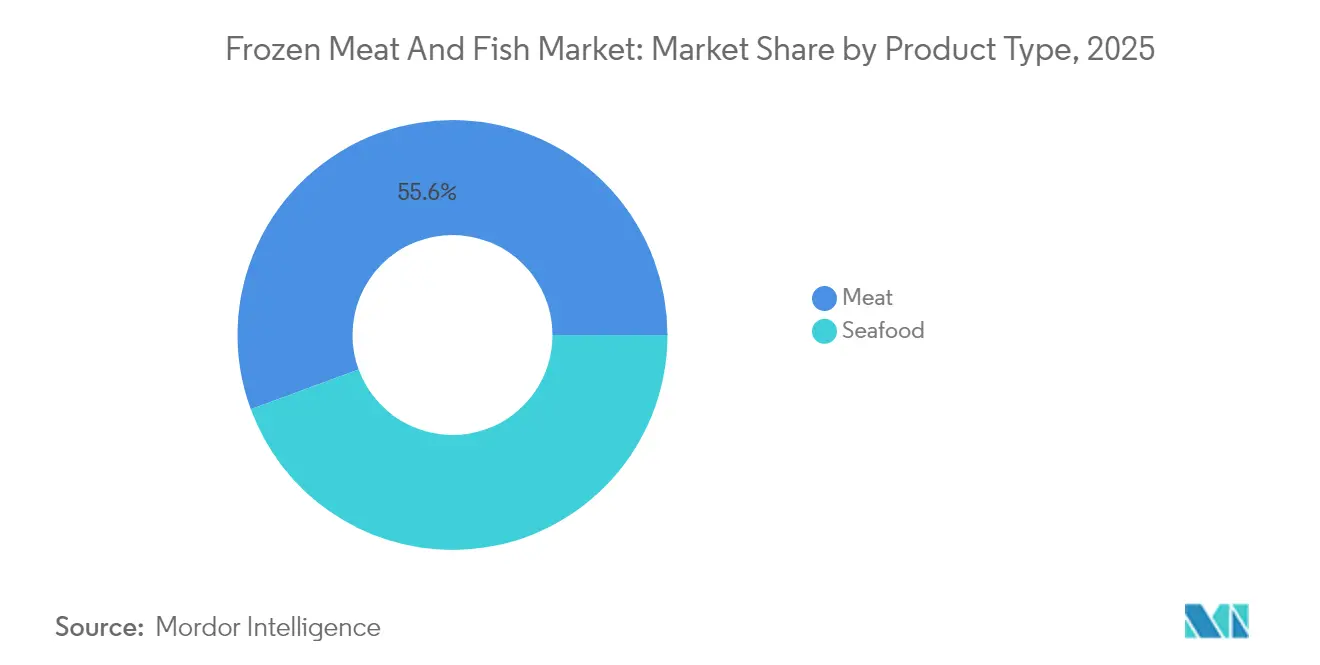
- By product type, meat held 55.62% of frozen meat and seafood market share in 2025, and seafood is forecast to climb at an 7.89% CAGR through 2031.
- By source, wild-caught/caged products accounted for 53.78% share of the frozen meat and seafood market size in 2025; the farm-raised/free-range segment is set to advance at an 8.29% CAGR between 2026-2031.
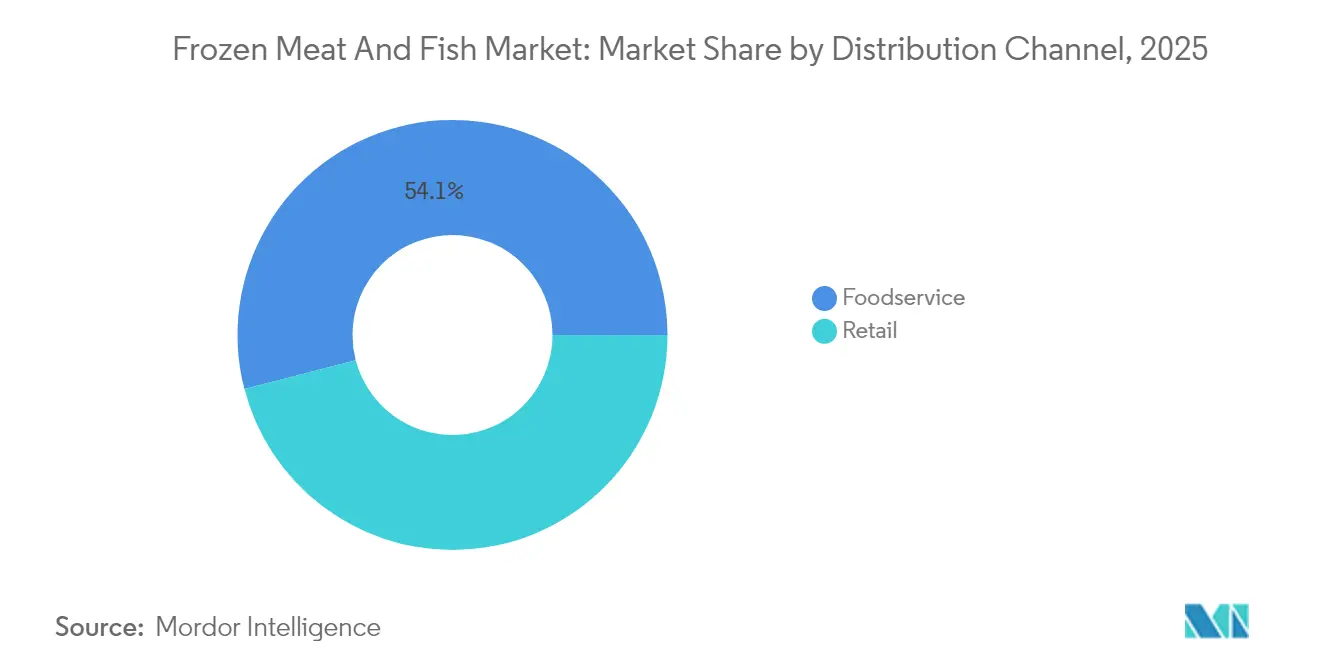
- By distribution channel, foodservice commanded 54.05% of the frozen meat and seafood market in 2025, while retail is slated to expand at a 9.01% CAGR by 2031.
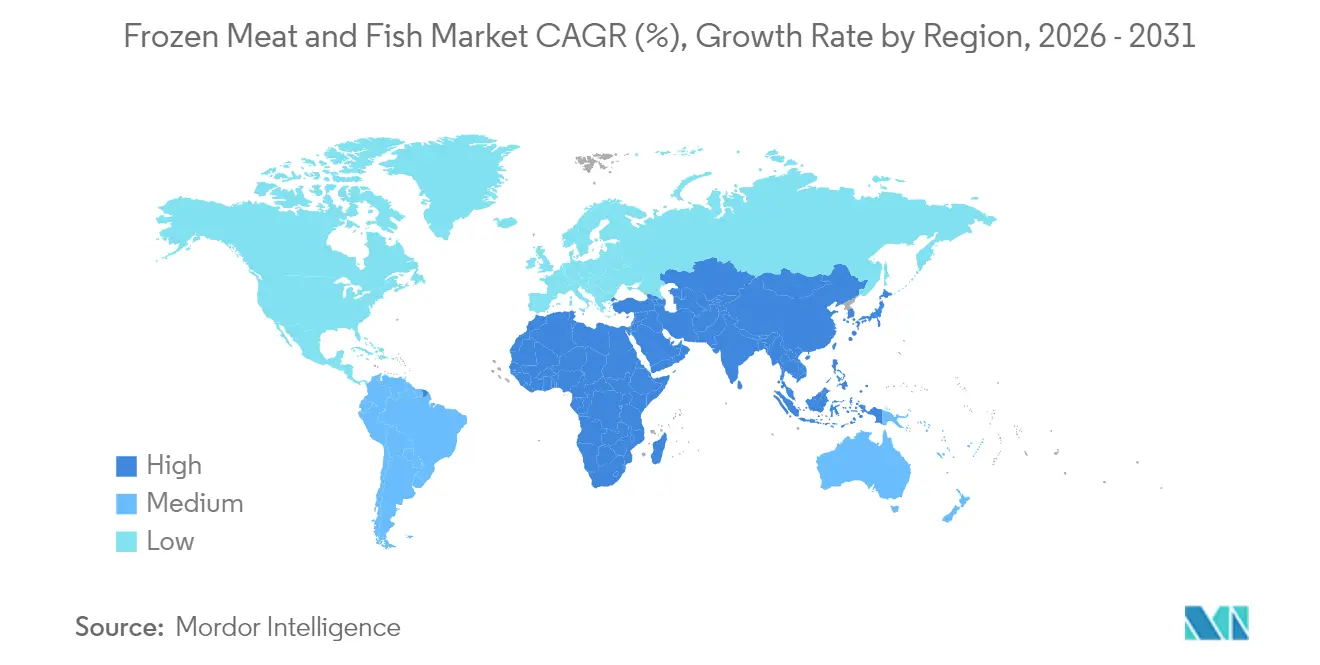
- By geography, North America contributed 32.05% revenue in 2025; Asia-Pacific is projected to record the fastest 6.88% CAGR to 2031.
Note: Market size and forecast figures in this report are generated using Mordor Intelligence’s proprietary estimation framework, updated with the latest available data and insights as of 2026.
Market Trends and Insights
Drivers Impact Analysis of Frozen Meat And Fish Market*
| Driver | (~) % Impact on CAGR Forecast | Geographic Relevance | Impact Timeline |
|---|---|---|---|
| Growing adoption of IQF and cryogenic freezing for high-value meat and fish | +2.7% | Global, with stronger impact in North America and Europe | Medium term (2-4 years) |
| Retailers' private-label penetration boosting frozen meat and fish | +3.2% | North America, Europe, with emerging influence in Asia-Pacific | Short term (≤ 2 years) |
| E-commerce-first D2C meat brands driving portion-controlled packs | +4.0% | Global, with highest adoption in urban centers | Medium term (2-4 years) |
| Extended shelf life of frozen products reduces food waste and supports bulk purchasing habits | +2.1% | Global, with higher impact in developed markets | Short term (≤ 2 years) |
| Growing awareness of protein-rich diets is boosting consumption of frozen meat and fish products | + 3.9% | Global, with strongest growth in Asia-Pacific and North America | Medium term (2-4 years) |
| Expansion of organized retail and e-commerce platforms is improving product accessibility | +2.3% | Asia-Pacific, Latin America, with spill over to emerging markets | Long term (≥ 4 years) |
| Source: Mordor Intelligence | |||
Growing adoption of IQF and cryogenic freezing for high-value meat and fish
Individual Quick Freezing (IQF) and cryogenic freezing technologies are transforming the market by improving product quality and shelf life. These freezing methods minimize ice crystal formation, preserving the cellular structure of seafood products and maintaining texture, flavor, and nutritional content after thawing. IQF tunnel freezers with rolling-wave technology enable processors to freeze individual seafood items while reducing operational costs. The technology maintains product separation during freezing, preventing clumping and ensuring consistent portion control for food service and retail applications. Companies such as BRF SA, Del Pacifico Seafoods and ABZ Frozen Foods utilize IQF technology in their frozen meat and fish products to maintain food quality and convenience. The improved product quality, extended shelf life, reduced energy consumption, and enhanced operational efficiency have increased the adoption of IQF and cryogenic freezing technologies in the frozen meat and fish industry. These freezing methods help manufacturers meet consumer demand for frozen products with fresh-like characteristics, supporting market growth.
Retailers' private-label penetration boosting frozen markets for meat and fish
Private label brands are experiencing substantial growth in the frozen meat and fish market as retailers expand their product portfolios. These brands focus on delivering high-quality products, sustainable sourcing practices, and competitive pricing to capture larger market shares. Consumer trust in retailer brands, combined with increasing price sensitivity, continues to support this expansion. For instance, in February 2024, ALDI, a German retailer, promoted its private-label seafood products and introduced pollock portions. ALDI sources all its exclusive fresh, frozen, and canned seafood from responsibly managed fisheries and farms that minimize environmental impact and maintain human rights standards. Private label brands are strengthening their market position through strategic partnerships and co-branding initiatives with established suppliers. The emphasis on transparency in sourcing, quality control measures, and competitive pricing strategies has enhanced consumer confidence in private label products. Additionally, retailers are investing in packaging innovations and product diversification to meet evolving consumer preferences. The integration of sustainability certifications and clear labeling practices has further positioned private label products as reliable alternatives to traditional branded offerings. These developments indicate sustained growth potential for private label frozen meat and fish products in the global market.
E-commerce-first D2C meat brands driving portion-controlled packs
E-commerce platforms are transforming the frozen meat and fish market by enabling direct-to-consumer (D2C) brands to reach customers through digital channels. These platforms facilitate seamless transactions between producers and consumers, offering premium seafood and meat products with portion-controlled packaging that addresses consumer preferences for convenience and waste reduction. The digital marketplace allows consumers to access detailed product information, compare prices, and make informed purchasing decisions from the comfort of their homes. Companies like Fresh N Frozen demonstrate this digital transformation by operating exclusively through their websites, eliminating traditional retail intermediaries. The rise of mobile applications and user-friendly interfaces has further simplified the ordering process, while efficient cold chain logistics ensure product quality during delivery. Additionally, e-commerce enables producers to gather valuable consumer data, helping them adjust their product offerings and packaging sizes to meet specific market demands.
Growing awareness of protein-rich diets is boosting consumption of frozen meat and fish products
The increasing consumer awareness about protein-rich diets is driving growth in the frozen meat and fish market. Health-conscious consumers seek high-protein food options for muscle development, weight management, and overall health benefits. Frozen meat and fish products provide a convenient solution with extended shelf life compared to fresh alternatives. The rise in fitness culture and specialized diets, such as keto and paleo, has increased demand for these protein-rich frozen products. Busy lifestyles and the need for quick meal preparation have made frozen meat and fish products particularly appealing, while portion-controlled options help consumers manage their protein intake effectively. Market players have responded by expanding their product portfolios and emphasizing protein content on packaging. According to the Food and Agriculture Organization (FAO), the global undernourishment rate was 9.1% in 2023, indicating the potential for frozen meat and fish to serve as an affordable protein source to improve dietary nutrition [1]. These factors collectively demonstrate the significant role of frozen meat and fish products in meeting global protein requirements while addressing modern consumer preferences and nutritional needs..
Restraints Impact Analysis of Frozen Meat And Fish Market*
| Restraint | (~) % Impact on CAGR Forecast | Geographic Relevance | Impact Timeline |
|---|---|---|---|
| Volatility in ocean freight disrupting frozen fish supply | -1.8% | Global, with highest impact on Asia-Pacific exporters | Short term (≤ 2 years) |
| Cultural shift toward plant-based proteins among Gen-Z consumers | -1.2% | North America, Europe, Urban Asia | Long term (≥ 4 years) |
| Strict regulations regarding food safety, storage temperatures, and handling requirements increase compliance costs | -1.6% | Global, with highest impact in North America and Europe | Medium term (2-4 years) |
| Environmental concerns about packaging waste and energy consumption in cold storage facilities | -1.4% | Europe, North America, with growing influence in Asia-Pacific | Long term (≥ 4 years) |
| Source: Mordor Intelligence | |||
Volatility in ocean freight disrupting frozen fish supply
Ocean freight volatility disrupts the frozen seafood industry's supply chains, affecting product availability and pricing. The National Retail Federation projects a 20% year-over-year decline in imports for May 2025, with annual volume expected to decrease by over 10[2]. China-US trade routes experienced a 25% reduction in daily ocean container bookings as of April 2025, primarily due to increased US tariffs on Chinese goods, which rose to 125%. These developments constrain the global frozen meat and fish market, impacting supply chain operations and market access. Ocean freight challenges extend beyond immediate supply disruptions, affecting cold storage capacity utilization and inventory management across major ports. The increasing freight rates, coupled with longer transit times, necessitate enhanced cold chain infrastructure investments by market participants. Additionally, port congestion and container shortages force companies to maintain higher inventory levels, increasing operational costs. The uncertainty in ocean freight schedules also influences procurement strategies, with importers diversifying their supplier base across multiple regions to mitigate risks. Furthermore, these logistics challenges prompt companies to explore alternative transportation methods and regional sourcing options, reshaping traditional supply chain networks in the frozen meat and fish market.
Cultural shift toward plant-based proteins among Gen-Z consumers
The growing preference for plant-based protein alternatives, particularly among Generation Z consumers, affects the frozen meat and seafood market. Companies like Beyond Meat, Impossible Foods, GoodDot, and Vegolution continue to expand their plant-based meat product lines to address this increasing demand. This consumer shift toward plant-based alternatives may limit the growth potential of the traditional frozen meat and seafood market over the long term. The rising environmental consciousness among consumers, coupled with health concerns related to meat consumption, drives the adoption of plant-based alternatives. Additionally, technological advancements in plant-based protein development have improved taste and texture, making these alternatives more appealing to consumers. The increasing availability of plant-based options in retail stores and restaurants further strengthens this trend, potentially impacting the market share of conventional frozen meat and seafood products. Moreover, government initiatives promoting sustainable food choices and the growing number of flexitarian consumers contribute to this market restraint.
*Our forecasts treat driver/restraint impacts as directional, not additive. The impact forecasts reflect baseline growth, mix effects, and variable interactions.
Frozen Meat And Fish Market Segment Analysis
By Product Type:
Meat dominates while seafood outpaces on growthThe meat segment commands the largest market share at 55.62% in 2025. Poultry, specifically chicken and turkey, drives this dominance due to broad consumer acceptance and competitive pricing compared to alternative protein sources. The convenience of frozen meat products, combined with extended shelf life, appeals to busy households seeking quick meal solutions. Additionally, improvements in freezing technology have enhanced the texture and taste of frozen meat products, maintaining qualities similar to fresh alternatives. Companies such as Good Ranchers, Zanchick, and JBS SA have enhanced market growth through portion-controlled packaging and value-added frozen meat products.
The seafood segment demonstrates strong growth potential with a projected CAGR of 7.89% from 2026-2031. This growth stems from increased consumer awareness of health benefits and improved freezing technologies that maintain product quality. Tuna and salmon remain key products in the seafood segment, with salmon prices reaching record levels due to supply chain disruptions and farm production delays. The adoption of Individual Quick Freezing (IQF) technology improves frozen seafood quality, attracting consumers who traditionally purchased fresh products. Rising demand for omega-3 rich fish products and sustainable seafood options has expanded the frozen fish market.

By Source:
Wild-caught leads while farm-raised gains momentumThe wild-caught/caged segment dominates the market with a 53.78% share in 2025, particularly in the seafood category, where wild-caught fish command premium prices due to consumer perception of superior taste and quality. This segment benefits from established distribution networks and traditional consumer preferences, especially in regions with a strong fishing heritage. The market position is further strengthened by the perception that wild-caught products offer better nutritional value. However, the segment faces increasing pressure from sustainability concerns as consumers become more aware of overfishing and environmental impacts. Companies like Sea To Table address these concerns by offering wild-caught flash-frozen fish sourced from sustainable fishing practices that support local communities. The implementation of stricter fishing regulations and increased focus on marine ecosystem preservation influence the segment's growth potential.
The farm-raised/free-range segment is expected to grow at a CAGR of 8.29% from 2026 to 2031. The farm-raised/free-range segment is on a steady upswing, driven by innovations in aquaculture, heightened sustainability efforts, and a growing acceptance among consumers. These controlled environments guarantee consistent quality and a year-round supply. Within the meat category, there's a rising trend for free-range and ethically raised livestock. This surge is especially pronounced among health-conscious consumers who prioritize animal welfare and are willing to pay a premium. Producers such as Verde Farms and Bell & Evans are aligning with this demand, emphasizing humane and antibiotic-free practices. Furthermore, the segment reaps the benefits of advanced feed solutions and a robust cold chain infrastructure, ensuring a stable supply and facilitating nationwide distribution. This reliability elevates farm-raised/free-range meat and seafood as a strong contender against their wild-sourced counterparts.
By Distribution Channel:
Foodservice leads while online retail acceleratesThe foodservice (HoReCa) segment accounts for 54.05% of the market share in 2025. This significant share stems from restaurants, hotels, and catering services requiring large volumes of frozen meat and seafood to maintain consistent quality and benefit from extended shelf life. The segment's dominance is further reinforced by the operational advantages frozen products offer to foodservice establishments, including reduced food waste and simplified inventory management. Commercial kitchens particularly value the convenience and cost-effectiveness of frozen meat and seafood products, as they help standardize portion control and maintain menu consistency throughout the year.
The retail segment is expected to grow at a CAGR of 9.01% during 2026-2031, driven by increased e-commerce adoption, improved cold chain logistics, and changing consumer shopping preferences. The expansion of temperature-controlled delivery services has increased consumer confidence in purchasing frozen meat and seafood products online. Supermarkets and hypermarkets maintain a significant presence in the retail segment, with growth supported by increased retail outlet distribution. For example, in November 2024, Prime Shrimp expanded into select Whole Foods Market stores across the United States, with availability in more than 200 stores across the Northeast, North Atlantic, Mid-Atlantic, South, and Southwest regions, strengthening retail sales channels.
Geography Analysis
North America Frozen Meat and Fish Market
North America holds the largest market share at 32.05% in 2025, supported by well-established cold chain infrastructure and robust retail and foodservice networks. The United States market features a mature retail landscape with increasing focus on ethical sourcing and food safety compliance. The region's strong distribution channels and advanced storage facilities ensure consistent product quality throughout the supply chain. Consumer preferences in North America increasingly favor premium frozen products with clear traceability and sustainability certifications. The market also benefits from technological advancements in freezing techniques that help maintain product quality.
APAC Frozen Meat and Fish Market
Asia-Pacific is expected to grow at a CAGR of 6.88% from 2026-2031, driven by rising disposable incomes, urbanization, and evolving dietary preferences in China, Japan, and India. JD Super's partnerships with Argentina's Beef Promotion Institute (IPCVA) and Linking Fresh in May 2025 demonstrate strategic expansion in China's frozen meat market. The region's growing middle-class population has increased demand for convenient protein options, particularly in metropolitan areas. Improvements in cold storage infrastructure across developing Asian markets have enhanced product accessibility and distribution efficiency. Local retailers are expanding their frozen food sections to accommodate the increasing consumer demand for frozen meat and fish products.
EMEA Frozen Meat and Fish Market
Europe maintains a significant market share in the food industry, with consumer demand increasingly focused on sustainable and ethically sourced products. According to the National Library of Medicine, European consumers demonstrate a willingness to pay premium prices for meat products with health and ethical labels . Transparency is paramount for these consumers, leading them to prefer products boasting sustainability certifications. Companies such as Nomad Foods and Vion Food Group are rising to the occasion, adopting responsible sourcing and cutting-edge processing technologies to align with these consumer expectations. Meanwhile, the Middle East and Africa are witnessing uneven market growth. In the Gulf Cooperation Council (GCC) nations, urbanization and a burgeoning expatriate community have spiked the demand for frozen meat and seafood, especially in foodservice. Religious and cultural nuances also shape demand patterns here, evident in the strong preference for halal-certified frozen products.
Regulatory Landscape
Regulation of frozen meat and fish is shaped by food safety controls (time-temperature management and microbiological criteria), import requirements, and traceability frameworks that increase compliance and documentation costs across global cold chains. In the United States, the FDA delayed enforcement of the Food Traceability Final Rule to July 20, 2028, shifting near-term timelines for additional recordkeeping on covered foods, while keeping traceability as a clear direction of travel for larger processors, importers, and retail programs.
International and country-level updates continue to tighten or recalibrate requirements affecting frozen proteins in trade. In July 2026, the FAO/WHO Codex Alimentarius Commission adopted new standards relevant to microbiological risk assessment and controls (including Listeria monocytogenes in frozen/ready-to-eat contexts), supporting harmonization for exporters supplying multiple markets. In Asia, Indonesia implemented Government Regulation No. 1 of 2026 (effective January 5, 2026) to strengthen food safety and import controls, while China published a catalog of 1,725 national food safety standards on January 8, 2026, reinforcing a standards-led compliance environment for imported and domestically produced foods.
Competitive Landscape
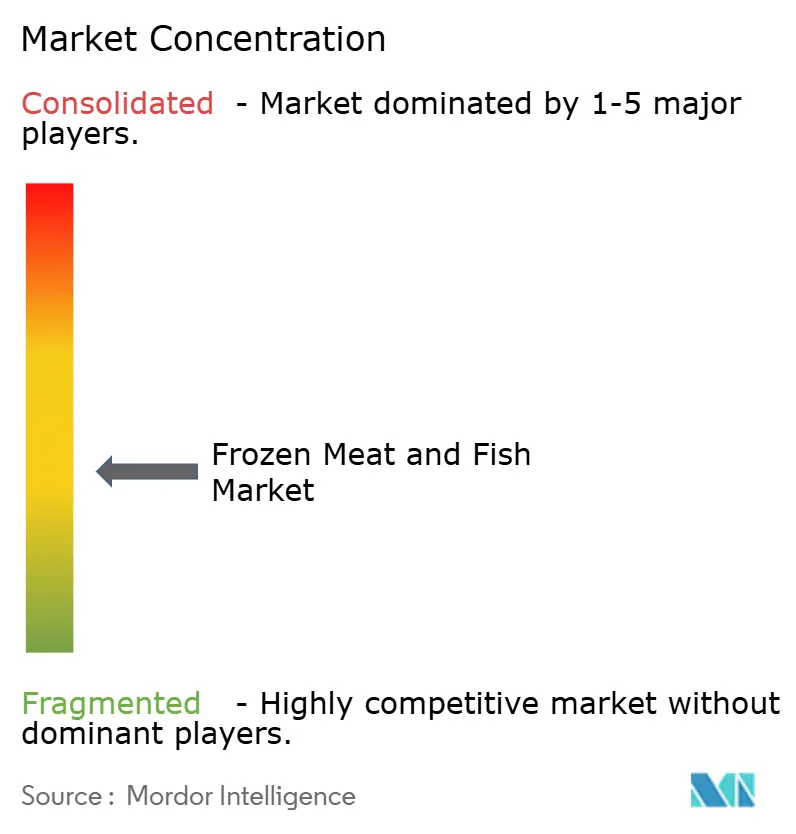
The frozen meat and seafood market exhibits a moderate fragmented market with global corporations and regional specialists competing across product segments and geographic regions. Key market players include Nomad Foods Limited, Marfrig Group, and Austevoll Seafood ASA. These companies maintain their competitive edge through product innovation, sustainability initiatives, and digital transformation efforts. The market structure allows for both large-scale operations and specialized regional players to coexist, creating a balanced competitive environment. Companies are increasingly investing in cold chain infrastructure and distribution networks to enhance their market reach and operational efficiency.
In October 2024, Bumble Bee Seafoods expanded its product portfolio with 11 new offerings in canned, pouched, and kit-based seafood categories. The new products include Wild-Caught Pink Salmon in Skinless and Boneless Pouch (MSC-Certified), Wild-Caught Sardines, and Prime Wild-Caught Tiny Shrimp. This product expansion reflects the industry's response to growing consumer demand for convenient, sustainable seafood options. The company's focus on MSC-certified products demonstrates the increasing importance of certification and traceability in the frozen seafood segment. Market players are continuously developing new product formats and packaging solutions to meet evolving consumer preferences.
Sustainability has become a key competitive advantage in the market, as demonstrated by High Liner Foods achieving 96% responsibly sourced seafood in 2023. The company has also set targets to reduce greenhouse gas emissions and food waste intensity by 50% by 2030. These sustainability commitments are becoming increasingly important for market competitiveness and consumer trust. Companies are implementing comprehensive environmental programs that encompass responsible sourcing, waste reduction, and emissions control. The industry's focus on sustainability extends beyond environmental concerns to include social responsibility and economic sustainability throughout the supply chain.
Frozen Meat And Fish Industry Leaders
-
Nomad Foods Limited
-
M&J Seafood Holdings Limited
-
Austevoll Seafood ASA
-
Marfrig Group
-
Cargill, Inc.
- *Disclaimer: Major Players sorted in no particular order
Frozen Meat And Fish Market Companies Covered in this Report
- Nomad Foods Limited
- Vion Food Group
- BRF S.A.
- Marfrig Group
- NH Foods Ltd.
- Maple Leaf Foods
- Thai Union Group PCL
- High Liner Foods Incorporated
- Maruha Nichiro Corporation
- Young's Seafood Ltd.
- Cargill, Inc. (Primewaters Seafood)
- Austevoll Seafood ASA
- JBS S.A. (Pilgrim's)
- Trident Seafoods Corp.
- Sea Harvest Group
- Verde Farms LLC
- Seaboard Corporation
- Trident Seafoods Corp.
- Allanasons Pvt Ltd
- Danish Crown
Market Opportunities and Future Outlook
Frozen meat and fish demand is being pulled by retailer-led assortment expansion and digital channels, creating room for portion-controlled packs, premiumization, and differentiation through verified sourcing and quality systems. ALDI's February 2024 promotion of responsibly sourced private-label seafood (including new pollock portions) and Prime Shrimp's November 2024 expansion into more than 200 Whole Foods Market stores show how shelf access and retailer partnerships can scale frozen seafood distribution beyond foodservice.
Sustainability and standards alignment also shape where companies can compete and how they position products. Nomad Foods reported that 99.9% of its fish and seafood volumes were MSC- or ASC-certified by the end of 2025, and that it achieved a 41.1% reduction in absolute GHG emissions versus its 2019 baseline, which indicates how certification coverage and decarbonization programs are being used to meet customer requirements and strengthen brand credentials. Upstream, Cargill expanded Aquaculture Stewardship Council (ASC) certifications across its global feed mill network in 2025, including facilities in Norway, Scotland, Ecuador, Chile, Honduras, Indonesia, and Canada, supporting more standardized input assurance for farm-raised seafood supply chains. On the regulatory and tradeability side, Codex updates in July 2026 for Listeria monocytogenes control in ready-to-eat cold-smoked fish provide a clearer reference point for processors operating across multiple jurisdictions, reinforcing investment opportunities in hygienic design, validated freezing processes, and stronger QA systems that can be applied across export markets.
Recent Industry Developments in Frozen Meat And Fish Market
- June 2026: Austevoll Seafood ASA reports Lerøy Seafood Group's farming technology scaling with around 50% of total harvest volumes expected from sites using submerged, semi-closed, and laser-based solutions in 2026. The development underlines advances in high-tech aquaculture affecting the seafood supply chain. The capacity addition strengthens yield and production efficiency and enhances cost control and scalability in frozen seafood.
- April 2026: Nomad Foods Limited reports Birds Eye and Tefal partnering for Future Foods Lab initiative following a functional nutrition challenge. The collaboration signals innovation partnerships in frozen foods and nutrition-focused products. It accelerates product and formulation innovation and strengthens digital nutrition collaboration.
- April 2026: Marfrig Group reports BRF subsidiary MBR Investimentos Ltda finalized acquisition of a 50% stake in Gelprime Indústria e Comércio de Produtos Alimentícios S.A. The move expands vertical integration and capabilities in processed meat ingredients. It strengthens supply chain and product differentiation through strategic stake in ingredients.
Frozen Meat And Fish Market Report Scope and Research Methodology
Market Definition and Coverage
We define the frozen meat and fish market as the value of meat and seafood products sold in frozen form through retail and foodservice channels, counted at the point of sale and tracked across major regions.
Scope exclusions: This sizing excludes shelf-stable canned proteins, chilled or fresh meat and seafood, and fully prepared frozen meals where protein is only one ingredient.
Segments Covered in This Report
- By Product Type
- Meat
- Chicken and Turkey
- Beef
- Pork
- Mutton
- Others
- Seafood
- Tuna
- Salmon
- Other Species (Cod, Shrimp, etc.)
- Meat
- By Source
- Farm-raised/Free-range
- Wild-caught/Caged
- By Distribution Channel
- Foodservice (HoReCa)
- Retail
- Supermarkets/Hypermarkets
- Convenience Stores
- Online Stores
- Other Retail Formats
- By Geography
- North America
- United States
- Canada
- Mexico
- Rest of North America
- Europe
- Germany
- France
- United Kingdom
- Spain
- Netherlands
- Italy
- Sweden
- Poland
- Belgium
- Rest of Europe
- Asia-Pacific
- China
- India
- Japan
- Australia
- South Korea
- Indonesia
- Thailand
- Singapore
- Rest of Asia-Pacific
- South America
- Brazil
- Argentina
- Chile
- Colombia
- Peru
- Rest of South America
- Middle East and Africa
- United Arab Emirates
- South Africa
- Nigeria
- Saudi Arabia
- Egypt
- Morocco
- Turkey
- Rest of Middle East and Africa
- North America
Data Sources, Market Sizing, and Validation
Desk Research
Desk research was used to set the market boundaries, find demand and supply indicators that match frozen formats, and build starting assumptions that could be tested later. We relied on public production and trade series, food consumption indicators, and cold chain context to understand where frozen formats are gaining share and where constraints are visible.
Sources were drawn from non-paywalled references such as FAO databases and reports, USDA production and trade publications, UN Comtrade trade statistics, Eurostat food supply chain indicators, and national fisheries or agriculture departments in key countries. We also reviewed company filings, investor presentations, and industry association updates for distribution changes and product launches. For additional financial and market intelligence, we used paid subscriptions for company financials and intelligence, news and financials, patent databases, and selective shipment-level import and export reads. The desk sources listed here are illustrative, and many other public and proprietary references were also used for data collection, validation, and clarification.
Primary Interviews and Surveys
Primary work focused on confirming what counts as frozen in real buying and selling workflows and how pricing moves by species and cut, pack type, and channel. Interviews covered processors, cold storage and logistics participants, distributors, retailers, and foodservice buyers across major regions, so gaps in public data could be filled and key assumptions could be stress-tested before finalizing results.
Distribution of primary research fieldwork respondents
| Company type | Respondent position | Region |
|---|---|---|
| Top tier: 35% | CXOs: 16% | APAC: 41% |
| Mid tier: 48% | Functional/Unit leaders: 41% | EMEA: 33% |
| Smaller Players: 17% | Managers: 43% | Americas: 26% |
Market-Sizing & Forecasting
For sizing, we start with a top-down build where protein demand, trade flows, and processing output are used to reconstruct a realistic frozenable supply pool. That pool is then adjusted using cold chain penetration and channel mix, retail versus foodservice. The totals are corroborated with selective bottom-up checks such as sampled average selling prices by species and cut, retail freezer assortment checks, and distributor level volume signals, to correct any overstatement in specific regions.
A few practical inputs kept the model grounded, including frozen share within total meat and seafood consumption, import and export movements for key frozen categories, cold storage capacity additions and utilization signals, retail versus foodservice split shifts, and observed price progression for common SKUs (by species and pack size). Where bottom-up reads were incomplete, gaps were handled through proxy pricing bands and conservative volume allocation based on comparable markets, and then confirmed in follow-up expert calls.
Forecasts used scenario analysis supported by short-run trend smoothing, since demand is influenced by inflation, protein substitution behavior, and foodservice traffic changes that do not move in a straight line each year. Assumptions on volume growth and pricing were kept separate so the final revenue path stays explainable and easier to audit.
Data Validation & Update Cycle
Validation was done by cross-checking model outputs against independent signals, such as per-capita protein consumption indicators, trade balances for major exporters and importers, and channel commentary from public filings. When an outlier appeared, we traced it back to the specific driver (volume, price, or mix), and then reviewed it again by another analyst before locking.
Reports are refreshed annually. Interim updates are triggered when there are material events like major supply shocks, policy changes affecting trade, or sharp pricing swings in key species. Before delivery, we run a fresh data pass and re-check the main assumptions so clients receive the latest consistent view.
Mordor Intelligence's Frozen Meat and Fish Market Size Measured Against Other Published Estimates
Published market sizes for frozen meat and fish can look inconsistent because the included products, pricing points, and even the meaning of "frozen" are not always handled the same way. Differences also come from how firms treat foodservice versus retail, and whether they mix value and volume logic when inflation is high.
The main gap comes from whether adjacent categories like chilled proteins and multi-ingredient frozen meals are blended into the total. Mordor Intelligence counts only standalone frozen meat and frozen seafood sold through retail and foodservice, and keeps price progression tied to species and cut level checks instead of using a single broad food inflation factor.
Benchmark comparison
| Source | Market Size | Gaps in Research Methodology |
|---|---|---|
| Mordor Intelligence | USD 54.63 B (2026) | |
| Industry Publisher A | USD 52.00 B (2024) | Uses an earlier base year and appears to apply a broader packaged protein view, which can understate the later-cycle price reset seen in several frozen seafood and meat categories. |
| Global Consultancy B | USD 67.83 B (2030) | Leans on a more aggressive forward price and growth path and may include adjacent ready-to-cook meal formats, which lifts the projected total compared with a stricter frozen protein-only scope. |
Overall, the spread is explained by scope choices, the year used for comparison, and how pricing is carried forward across proteins that behave differently. Our approach stays traceable because each step ties back to measurable demand and trade signals, then gets adjusted using channel and pricing checks from primary discussions.
Key Questions Answered in the Report
What is the current frozen meat and fish market size?
The frozen meat and fish market size stands at USD 54.63 billion in 2026 and is forecast to reach USD 70.97 billion by 2031.
Which product type commands the highest frozen meat and fish market share?
Meat, led by poultry SKUs, held 55.62% of frozen meat and fish market share in 2025.
Which channel is expanding fastest within the frozen meat and fish market?
Retail distribution channel is projected to grow at a 9.01% CAGR through 2031.
Why is seafood expected to outpace meat in growth?
Seafood enjoys an 7.89% CAGR outlook, aided by IQF technology that preserves texture and by rising health awareness around omega-3 benefits.