
Philippines Diabetes Care Drugs And Devices Market Size and Share
Market Overview
| Study Period | 2020 - 2031 |
|---|---|
| Forecast Data Period | 2026 - 2031 |
| Historical Data Period | 2020 - 2024 |
| Growth Rate | 4.06 % |
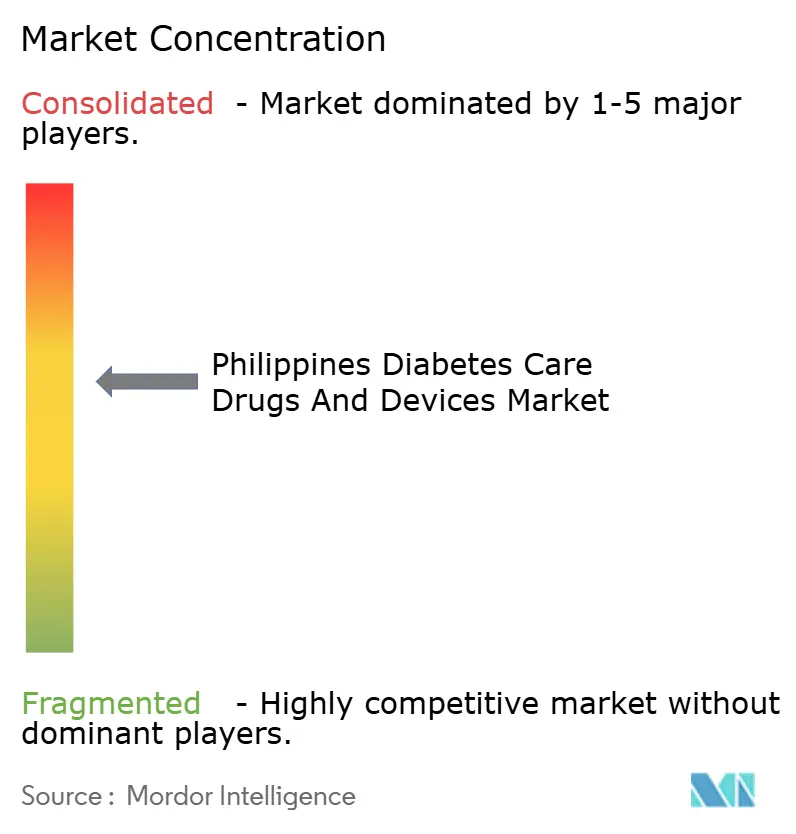
| Market Concentration | Medium |
Major Players *Disclaimer: Major Players sorted in no particular order Image © Mordor Intelligence. Reuse requires attribution under CC BY 4.0. | |
Philippines Diabetes Care Drugs And Devices Market Analysis by Mordor Intelligence
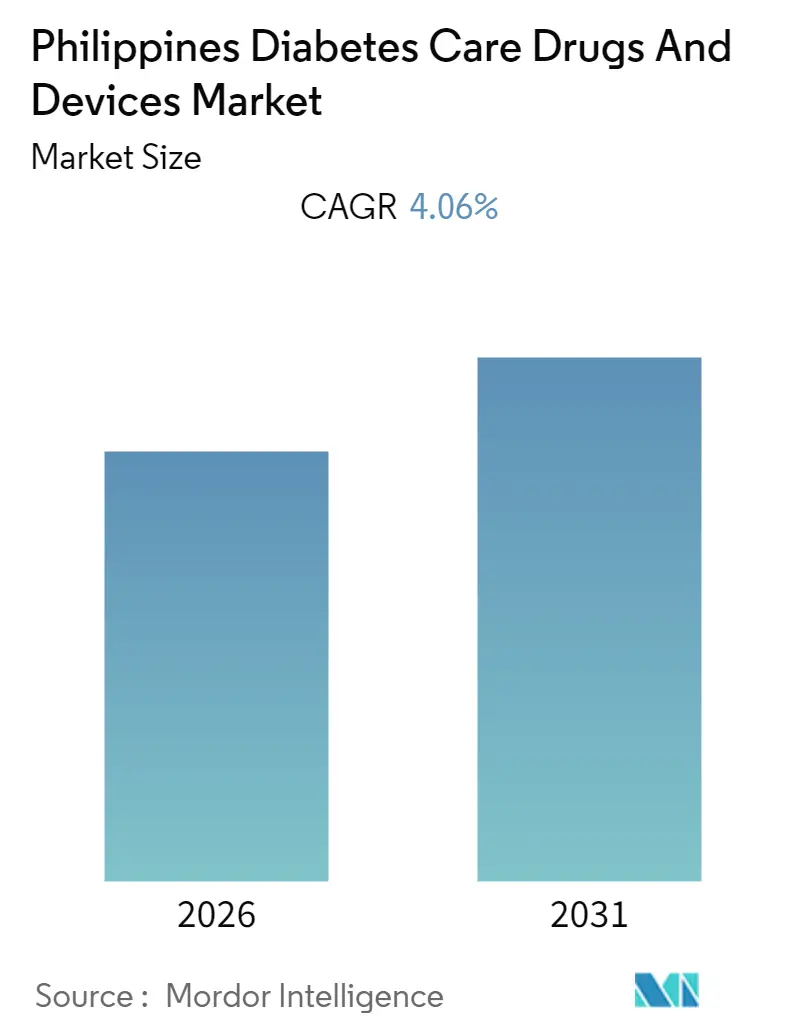
The Philippines Diabetes Care Drugs and Devices Market size is expected to register a CAGR of greater than 4.06% during the forecast period.
COVID-19 is a new disease caused by the SARS-CoV-2 virus strain. Most people infected with the virus develop mild to moderate respiratory illness and recover without specific treatment. Older people and people with underlying medical conditions such as diabetes, high blood pressure, heart disease, lung disease, obesity, and cancer are at increased risk of developing serious illnesses. The virus invades multiple cells in the body, including the heart and lungs, causing inflammatory changes that lead to inflammation and damage to multiple organs. Diabetes and systemic inflammation are linked. Studies have shown that people with diabetes have higher viral entry, lower immune responses, lower viral clearance, and dysregulation of inflammatory markers.
People with diabetes may be at the same risk of contracting COVID-19 as nondiabetics. On the other hand, people with diabetes are at increased risk of hospitalization, ICU admission, severe outcomes and death after being infected with COVID-19 due to the essential features of the disease.
Diabetes is a complex disease characterized by elevated blood sugar levels resulting from impaired insulin production and\/or action. Insulin is a pancreatic hormone that controls blood sugar levels in the body. Uncontrolled diabetes has many effects, including heart attacks, strokes, amputations, blindness, and kidney failure. According to DOST-FNRI data, prediabetes affects approximately 14.2% of the population. Combining diabetes and prediabetes, one in five Filipinos has abnormal blood sugar levels.
Thus, the above factors are expected to drive market growth over the forecast period.
Note: Market size and forecast figures in this report are generated using Mordor Intelligence’s proprietary estimation framework, updated with the latest available data and insights as of 2026.
Philippines Diabetes Care Drugs And Devices Market Trends and Insights
The continuous Glucose Monitoring Segment is Expected to Witness the Highest Growth Rate Over the Forecast Period
Continuous blood glucose monitors help people with type 1 and type 2 diabetes manage their diabetes with fewer finger tests. This wearable tech device tracks blood sugar levels via an app. Most CGM machines take readings every 5-10 minutes throughout the day. A CGM device uses a wireless transmitter to transmit glucose data from the sensor to the receiver.
Diabetes has a disproportionate economic impact on patients in low- and middle-income countries. The emergence of complications can also increase medical costs, which significantly impacts the direct medical costs of diabetes. HTAC aims to add insulin analogues to Philippine prescriptions to reduce costs and influence government debate. As this practice becomes more widespread, improving primary care units and referral networks is essential to build a robust infrastructure for delivering diabetes care. Diabetes treatment in the Philippines is limited in resources, government support and economics. In a preventive approach, the National Health System does not fully cover diabetes treatment and private insurance companies offer only minimal diabetes coverage. For this reason, most patients rely on out-of-pocket expenses such as laboratory tests and daily prescriptions.
Awareness programs for continuous blood glucose monitoring devices are being implemented around the Philippines. Technological advancements in CGM devices are driving the market during the forecast period.
Rising diabetes prevalence
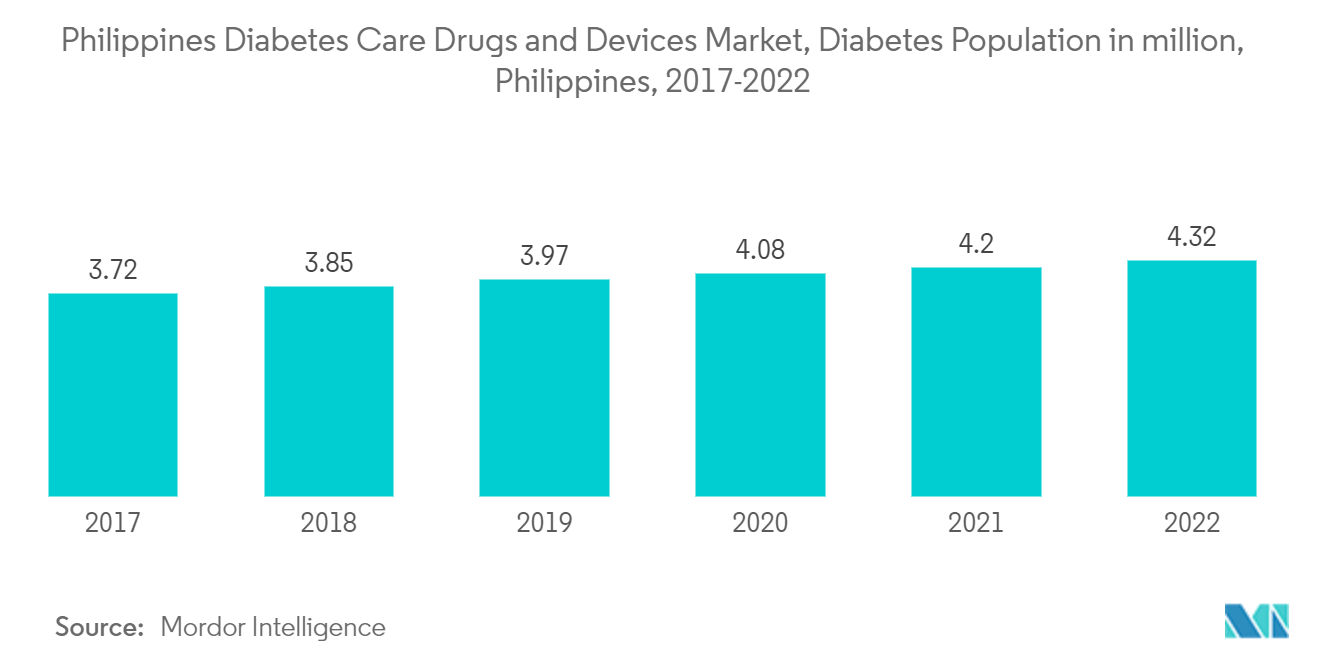
Diabetes is a complex disease characterized by elevated blood sugar levels caused by impaired insulin synthesis and action. Insulin is a pancreatic hormone that regulates blood sugar levels. Left untreated, diabetes can lead to heart attack, stroke, amputation, blindness, and kidney failure. According to DOST-FNRI statistics, prediabetes affects approximately 14.2% of the population. One in five Filipinos has abnormal blood sugar levels when diabetes and pre-diabetes are combined. Significant barriers to healthcare exist in the Philippines, including high out-of-pocket costs due to limited healthcare funding and a fragmented referral system from general practice to speciality clinics. Increase. Budgetary constraints from the economic slowdown and severe supply shortages have made access to diabetes care equipment even more difficult in the Philippines during the COVID-19 outbreak. Identifying and removing these barriers is critical to solving the problem of access to insulin and diabetes care within the country. Millions of people in low- and middle-income countries (LMICs) do not have access to insulin or regular diabetes treatment. The Philippines, a lower-middle-income Southeast Asian country with more than 4 million adults with diabetes, is not immune to this problem.
The increasing diabetes prevalence and the above factors will likely drive segment growth over the forecast period.
Competitive Landscape
Manufacturers have constantly innovated to survive in the market.Novo Nordisk partnered with Abbott Diabetes Care, which may also assist to enable insulin statistics to be shared between Novo Nordisk-connected insulin pens and digital fitness equipment well suited to the FreeStyle Libre portfolio of products.
Philippines Diabetes Care Drugs And Devices Industry Leaders
-
Medtronics
-
Roche
-
NovoNordisk
-
Sanofi
-
Omnipod
- *Disclaimer: Major Players sorted in no particular order
Market Opportunities and Future Outlook
Opportunities are tied to earlier detection and more structured primary-care workflows that increase treated patient volumes and support repeat demand for monitoring supplies and chronic pharmacotherapy. The Department of Health (DOH) focus on prevention and screening, alongside updated PhilPEN implementation support formalized through the DOH-JICA framework agreement signed on May 13, 2026, is an explicit pathway for diabetes and hypertension management at primary care facilities, including patient tracking approaches aligned with UHC-era service delivery. As diabetes care shifts toward primary settings, demand also expands for more affordable insulin delivery consumables, SMBG strips, and clinic-level procurement models that reduce reliance on fragmented out-of-pocket purchasing.
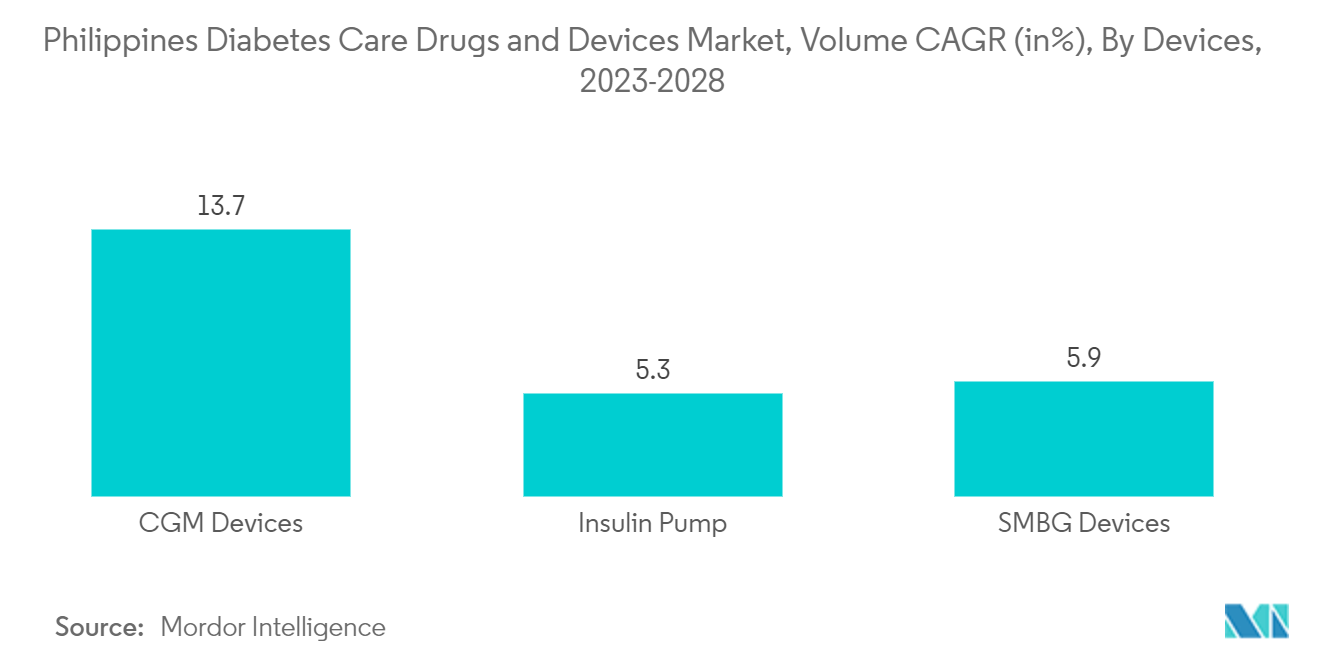
On devices, the category shows room for connected monitoring. CGM devices posted a higher volume CAGR (13.7% for 2023-2028) than SMBG devices and insulin pumps over the same period. Awareness programs for continuous glucose monitoring and expanding diabetes-center channels support broader uptake of sensors, transmitters, and app-linked receivers. Partnerships that connect insulin data with monitoring, such as Novo Nordisk working with Abbott Diabetes Care to support FreeStyle Libre-compatible data sharing, point to an ongoing push toward integrated diabetes management. Separately, private-sector expansion in renal care infrastructure, tied to downstream diabetes complications, can create additional points of care that become steady purchasing nodes for glucose monitoring, insulin, and cardiometabolic medicines within chronic-disease clinics.
Recent Industry Developments
- July 2026: Nephro Plus opened its 50th dialysis clinic in Orion, Bataan, expanding network to 686 stations and approximately 2,866 patients served monthly. The expansion improves CKD treatment accessibility and shows scalable private network growth aligned with public-private capacity buildout.
- June 2026: Department of Health (DOH) and Japanese International Cooperation Agency signed a framework agreement to implement the updated PhilPEN for diabetes and hypertension primary care management, Batangas as initial intensive site. The public-private collaboration shifts care delivery toward primary level management, affecting market access and payer dynamics.
- April 2026: Sun Pharmaceutical Industries launched its CaRMeLin Primary Care Portfolio in the Philippines. This broadens direct diabetes and cardiometabolic drug and device care offerings and increases competition in the Philippines diabetes care space.
Research Methodology Framework and Report Scope
Market Definition and Coverage
This market covers revenue generated in the Philippines from diabetes care medicines and diabetes care devices used to manage and monitor diabetes, across retail, hospital, and other care settings, where products are purchased for patient use.
Scope exclusions: We exclude general hospital equipment and broad lab diagnostics that are not specific to diabetes monitoring or diabetes treatment decisions.
Segmentation Overview
- Devices
- Monitoring Devices
- Self-monitoring Blood Glucose Devices
- Continuous Blood Glucose Monitoring
- Management Devices
- Insulin Pump
- Insulin Syringes
- Insulin Cartridges
- Disposable Pens
- Monitoring Devices
- Drugs
- Oral Anti-Diabetes Drugs
- Insulin Drugs
- Combination Drugs
- Non-Insulin Injectable Drugs
Data Sources, Market Sizing, and Validation
Desk Research
Our desk work starts by mapping how diabetes medicines and devices move through the local healthcare system, and which categories are actually paid for and used year to year. Public sources were used to ground the demand pool and treatment patterns, such as the World Health Organization, International Diabetes Federation, the Philippines Department of Health, and PhilHealth policy releases for coverage and access signals.
We then triangulated supply and pricing direction using sources that help explain what is available and at what kind of price points, such as the FDA Philippines database for product listings, UN Comtrade for relevant import flows, and peer reviewed clinical and health economics studies on therapy use. Company annual reports, investor decks, and credible press were reviewed for portfolio direction and local channel priorities. Paid subscriptions were used selectively for company financials and intelligence, patent databases, and import and export shipment level checks to validate where volumes and pricing seemed to be moving. The examples above are illustrative only, and many other sources were also referenced during data collection, validation, and research clarification.
Primary Interviews and Surveys
We validated the model through interviews and structured surveys with stakeholders across the care pathway, including clinicians, pharmacists, distributors, and local sales and reimbursement focused roles. Because this is a Philippines-focused market, inputs were balanced across major urban centers and provincial demand pockets, so both hospital use and community use were reflected. We then adjusted assumptions where adoption or affordability signals did not match what was reported in the interviews.
Distribution of primary research fieldwork respondents
| Company type | Respondent position |
|---|---|
| Top tier: 34% | CXOs: 12% |
| Mid tier: 51% | Functional/Unit leaders: 30% |
| Smaller Players: 15% | Managers: 58% |
Market-Sizing & Forecasting
Sizing was anchored in a top-down build that starts from the diabetes population and treated share in the Philippines, which is then translated into annual therapy and device usage. Once that demand pool is built, it is split across major product groups using practical signals such as insulin versus oral therapy mix, frequency of self monitoring, and the share moving toward continuous glucose monitoring where it is available.
To keep totals realistic, we cross checked results with selective bottom-up approximations, such as sampled average selling price (ASP) by product type multiplied by implied annual units, followed by channel checks on where patients typically buy medicines and strips. Key inputs that moved the model included diabetes prevalence trends, treated patient penetration, test strip consumption patterns, refill persistence for chronic therapy, product mix shifts between human insulin and analogs, and price movement visible through tender and retail signals. Forecasting relied mainly on scenario analysis, because reimbursement changes, affordability, and new product introductions can shift adoption faster than straight line trends. Where product level volume data was thin, gaps were handled using ranges agreed in interviews and then constrained back to plausible per patient usage rates.
Data Validation & Update Cycle
Before sign off, the model is tested against independent checks, including whether implied per patient usage of medicines and strips makes sense against clinical practice, and whether growth aligns with access and reimbursement direction. Variance checks are also run across years to catch sudden jumps that usually come from timing effects, stocking cycles, or a price assumption that drifted.
Reviews are done in multiple steps, where one analyst re checks key assumptions and a separate reviewer challenges the drivers that matter most, such as patient pool, mix, and ASP. If a major mismatch is seen, experts are re contacted to confirm whether the change is real or just a data artifact. Reports refresh annually, with interim updates for material events, and a fresh final pass is completed close to delivery so clients receive the latest updated view.
Mordor Intelligence's Philippines Diabetes Care Drugs and Devices Market Size Versus Other Published Estimates
It is normal to see different market values for diabetes drugs and devices, even when the country and topic look identical at first glance. The gaps usually come from what is counted as diabetes care, which year and exchange rate are used, and how prices are carried forward when product mix changes.
ASPs were rechecked near the final cut off using consistent currency timing across drug and device lines, and those refreshed inputs were stress tested against per patient usage sanity checks before totals were locked, which helps limit pricing drift in Mordor Intelligence estimates when inflation, tender cycles, and therapy switching are active at the same time.
Benchmark comparison
| Source | Market Size | Gaps in Research Methodology |
|---|---|---|
| Mordor Intelligence | USD 341.07 M (2024) | |
| Regional Consultancy A | USD 1.80 B (2026) | Uses a later start year and a higher growth setup, and it appears to bundle broader diabetes related supplies and services alongside drugs and devices, which expands the spending pool beyond product revenues. |
| Trade Journal B | USD 127.93 M (2033) | Tracks devices only and reports a future year value, so diabetes drug revenues are not included and the figure reflects a different time horizon and adoption curve. |
The spread across sources mainly comes from scope boundaries and timing choices, where some estimates expand into adjacent diabetes spending or focus only on devices and then quote a later year. By keeping the market limited to diabetes drugs and diabetes specific management and monitoring devices, and by applying consistent pricing and usage checks, we get a traceable number that can be repeated as assumptions are updated.
Key Questions Answered in the Report
What is the current undefined size?
The undefined is projected to register a CAGR of 4.06% during the forecast period (2026-2031)
Who are the key players in undefined?
Medtronics, Roche, NovoNordisk, Sanofi and Omnipod are the major companies operating in the undefined.
What years does this undefined cover?
The report covers the undefined historical market size for years: 2019, 2020, 2021, 2022, 2023 and 2024. The report also forecasts the undefined size for years: 2026, 2027, 2028, 2029, 2030 and 2031.