
Neovaginal Surgery Market Size and Share
Market Overview
| Study Period | 2019 - 2030 |
|---|---|
| Market Size (2025) | USD 1.31 Billion |
| Market Size (2030) | USD 1.67 Billion |
| Growth Rate (2025 - 2030) | 5.20 % |
| Fastest Growing Market | Asia Pacific |
| Largest Market | North America |
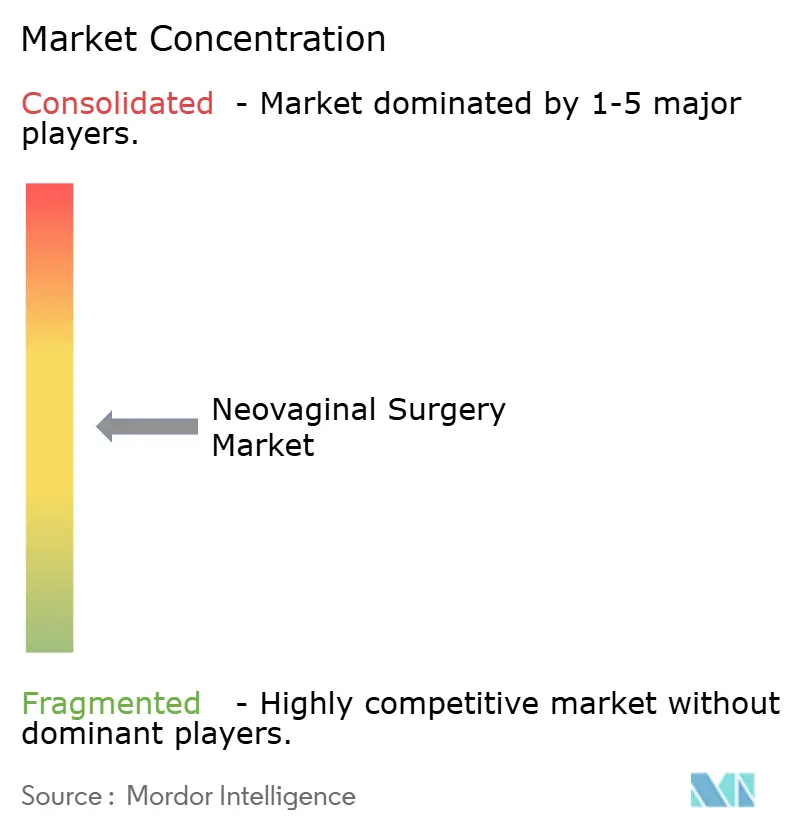
| Market Concentration | Medium |
Major Players *Disclaimer: Major Players sorted in no particular order Image © Mordor Intelligence. Reuse requires attribution under CC BY 4.0. | |
Neovaginal Surgery Market Analysis by Mordor Intelligence
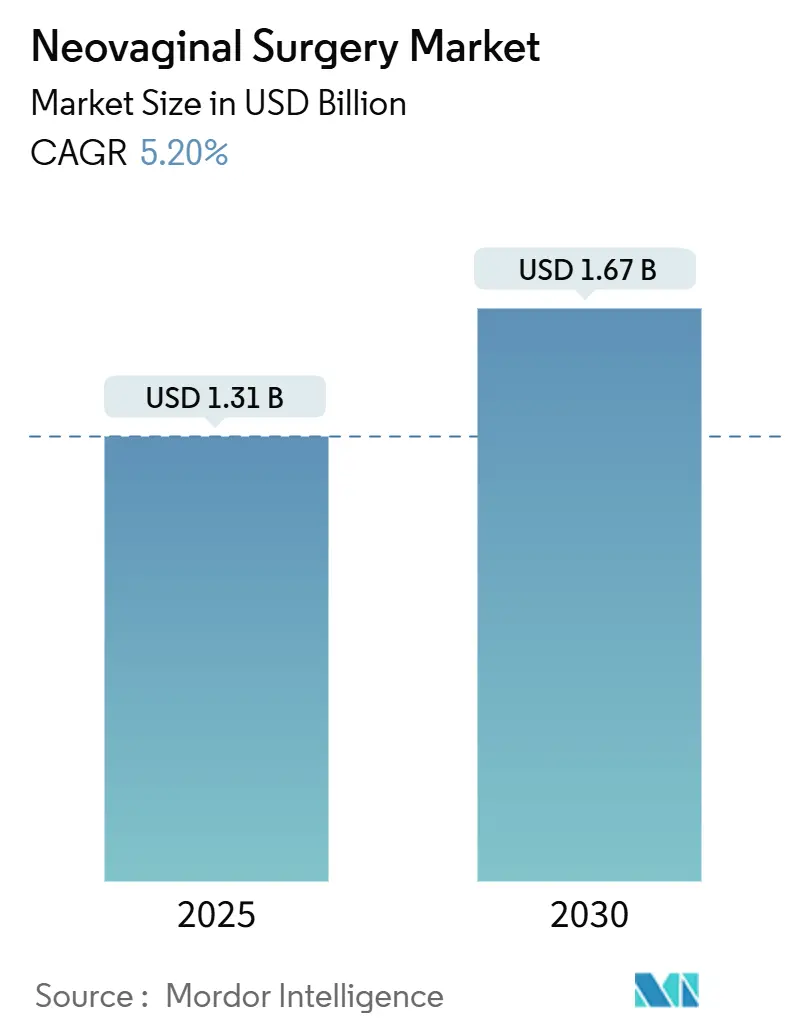
The neovaginal surgery market size reached USD 1.31 billion in 2025 and is projected to attain USD 1.67 billion by 2030, expanding at a 5.20% CAGR. Growth reflects four converging forces: broader reimbursement mandates in high-income economies, accelerating adoption of robotic peritoneal-flap techniques that trim complication rates, the demographic swell in gender-affirming procedures, and the willingness of large hospital groups to invest in dedicated transgender centers. The neovaginal surgery market now covers transgender women, congenital agenesis, trauma, and post-oncologic reconstruction, with gender-affirming indications dominating utilization. Technology-enabled approaches such as single-port robotics and tissue-engineered scaffolds are driving referral preference, while fellowship programs at Mount Sinai and OHSU propagate standardized curricula. Although North America remains the largest revenue base, Asia–Pacific’s price-advantaged medical-tourism hubs are capturing a growing share of outbound procedures.
Key Report Takeaways
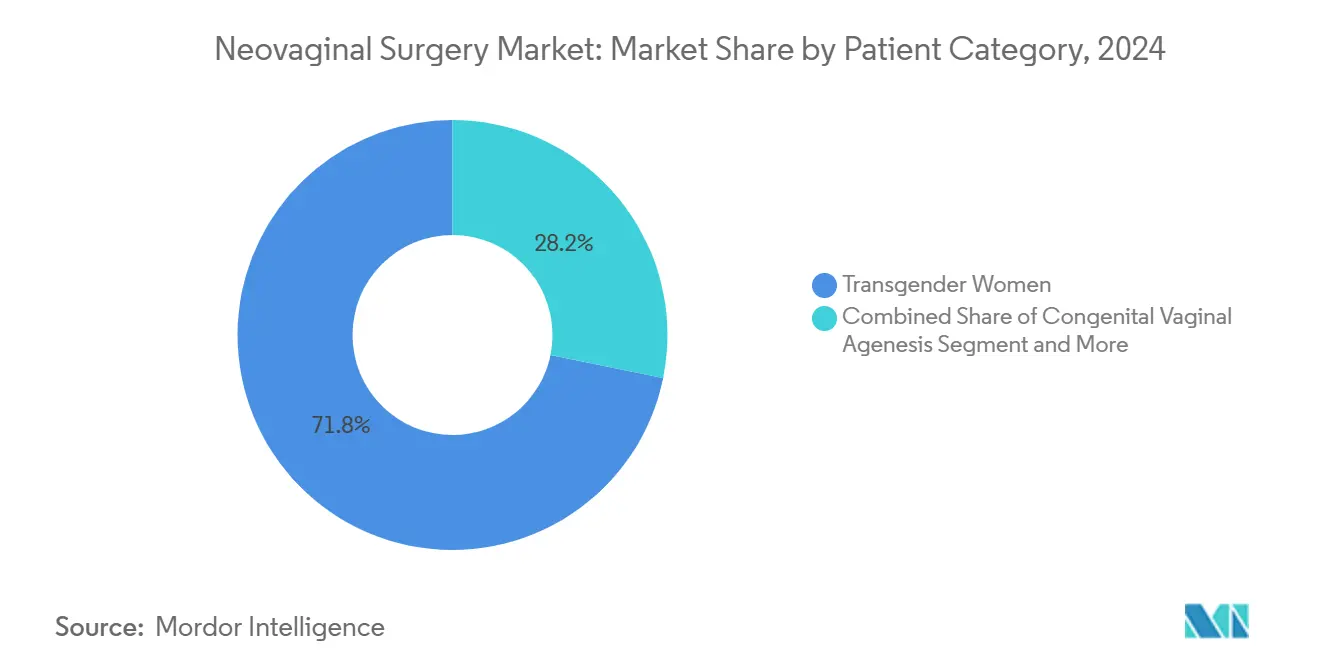
- By technique, penile inversion held 48.3% of the neovaginal surgery market share in 2024, while robotic-assisted procedures are forecast to post a 19.4% CAGR through 2030.
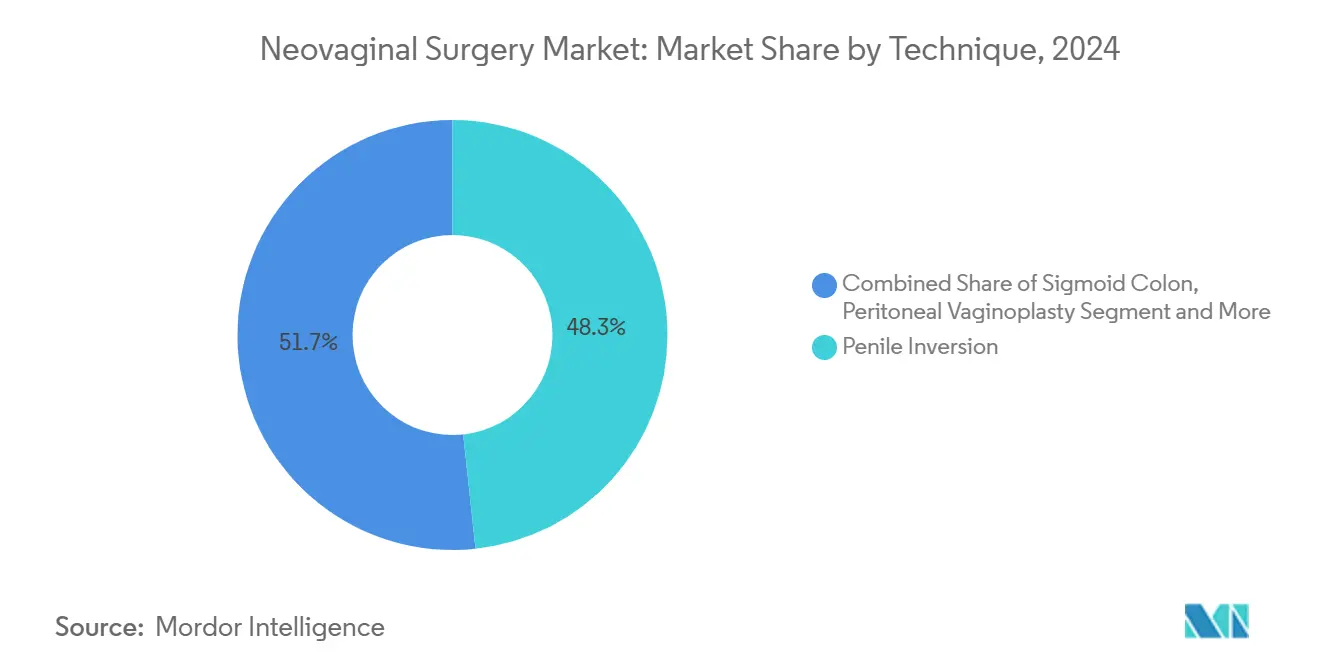
- By patient category, transgender women accounted for 71.8% of the neovaginal surgery market size in 2024; trauma reconstruction is projected to expand at a 15.7% CAGR to 2030.
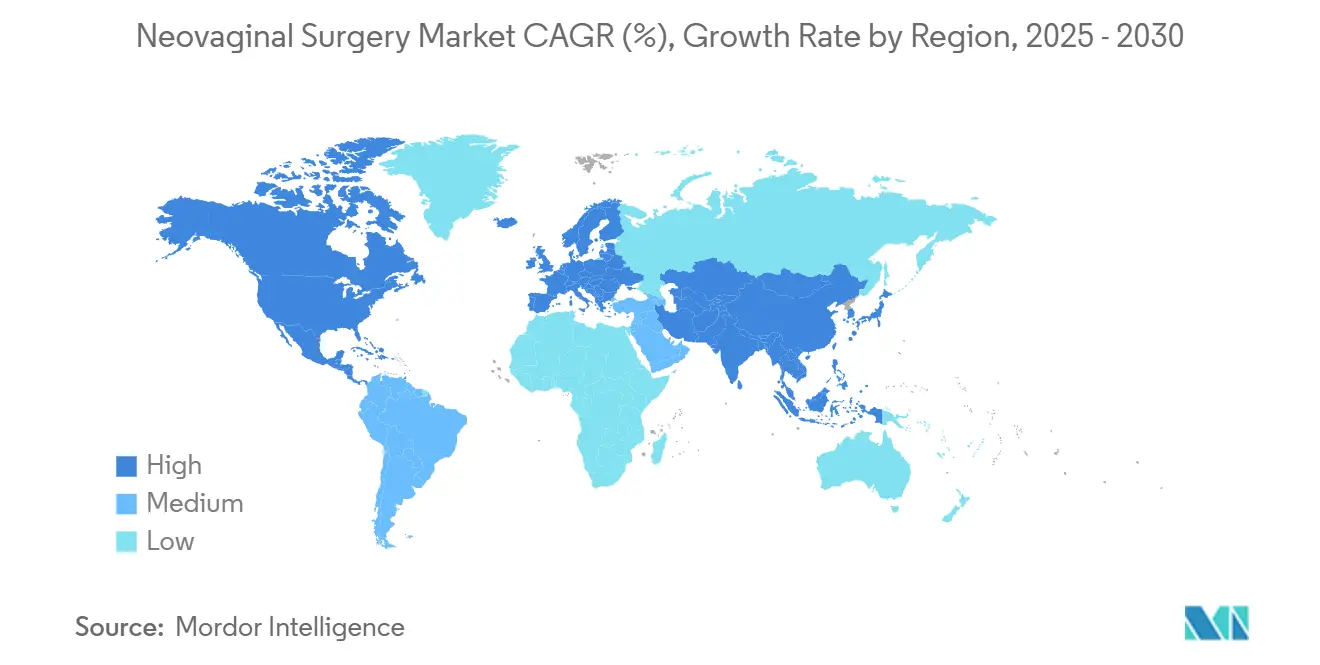
- By geography, North America controlled 40.6% of the neovaginal surgery market in 2024, yet Asia–Pacific is set to climb at a 14.9% CAGR between 2025 and 2030.
Market Trends and Insights
Drivers Impact Analysis of Neovaginal Surgery Market*
| Driver | (~) % Impact on CAGR Forecast | Geographic Relevance | Impact Timeline |
|---|---|---|---|
| Demographic Surge In Gender-Affirming Surgeries | +1.20% | Global, with concentration in North America & Europe | Medium term (2-4 years) |
| Rising Insurer Reimbursement In OECD Countries | +0.90% | North America & EU primarily | Short term (≤ 2 years) |
| Surgical Robot Integration Lowering Complication Rates | +0.70% | North America, Europe, select APAC centers | Medium term (2-4 years) |
| Cross-Border Medical Tourism To Thailand And Spain | +0.50% | Global, with primary flows from North America & Europe to APAC & Europe | Long term (≥ 4 years) |
| Venture Funding For Genital Tissue Engineering | +0.40% | North America & Europe research centers | Long term (≥ 4 years) |
| Telehealth-Enabled Pre-Op Counselling Improving Funnel | +0.30% | Global | Short term (≤ 2 years) |
| Source: Mordor Intelligence | |||
Demographic Surge in Gender-Affirming Procedures
Germany logged a 343% rise in feminizing surgeries between 2006 and 2022, totaling 799 cases in the final year, and 53.1% of those interventions were in patients aged 20-34.[1]Tobias Pottek, “Genital Gender-Affirming Surgery Trends in Germany,” Andrology, onlinelibrary.wiley.comThis early-adult concentration signals a durable volume pipeline for the neovaginal surgery market. Surveys place the global transgender population at nearly 25 million, creating a substantial addressable pool. Dedicated transgender units at academic centers—Mount Sinai’s program is among the world’s largest —standardize protocols and shorten waiting lists. As social-acceptance indices climb, patient willingness translates directly into surgical bookings, supporting a medium-term tailwind on the neovaginal surgery market.
Expanding Insurer Reimbursement Across OECD
Ninety-seven percent of U.S. commercial insurers now reimburse neovaginal reconstruction, up from fewer than 50% a decade earlier. Oregon’s House Bill 2002 bars denials of medically necessary gender-affirming care, setting a template other states are studying. Canadian provinces provide full coverage, while Germany’s statutory funds reimburse primary and revision cases. These policies curb the median U.S. out-of-pocket burden to USD 2,953, catalyzing uptake. Employer adoption tracks the trend: 30% of large U.S. firms funded gender-affirming benefits in 2025 against 12% in 2016, cementing reimbursement as the strongest accelerator of the neovaginal surgery market.
Robotic Integration Lowering Complication Rates
A multicenter study showed robotic peritoneal flap vaginoplasty cut blood loss by 45% and trimmed operative time by 37 minutes versus traditional inversion.[2]Joel Gelman, “PD31-08 A Comparison of Primary Gender-Affirming Vaginoplasty Outcomes: Penile Inversion Versus Robotic-Assisted Peritoneal Flap,” Journal of Urology, auajournals.org Robotic platforms reached a mean post-operative vaginal depth of 14.5 cm with lower stenosis risk for patients with genital hypoplasia. OHSU formalized a fellowship blending urology and plastic surgery to proliferate proficiency. Single-port devices further boost precision in revision cases, making robotics the preferred choice at high-volume centers. Capital markets are responding to an AI-guided imaging firm, Horizon Surgical Systems, which raised USD 30 million in 2025, underscoring investor confidence in robotic acceleration of the neovaginal surgery market.[3]U.S. Food and Drug Administration, “510(k) Summary for MagDI System (K242086),” accessdata.fda.gov
Cross-Border Medical Tourism to Spain & Thailand
Spanish robotic programs now bundle surgery and a two-week stay for roughly USD 9,000, while high-volume Thai hospitals offer packages under USD 7,500. Outcomes match domestic benchmarks, with fistula and stenosis rates below 2% at Bellvitge University Hospital, Europe’s first robotic site. Price arbitrage and shorter waitlists fuel outbound flows from the United States, Canada, and Northern Europe, adding a long-term trickle of demand that underpins the neovaginal surgery market, despite post-op follow-up logistics and periodic travel-restriction shocks.
Restraints Impact Analysis of Neovaginal Surgery Market*
| Restraint | (~) % Impact on CAGR Forecast | Geographic Relevance | Impact Timeline |
|---|---|---|---|
| Limited Fellowship-Trained Surgeons Globally | -0.80% | Global, particularly acute in emerging markets | Long term (≥ 4 years) |
| High Medico-Legal Risk And Malpractice Premiums | -0.60% | North America & Europe primarily | Medium term (2-4 years) |
| Intestinal Vaginoplasty Post-Op Infection Concerns | -0.40% | Global, with higher impact in developing healthcare systems | Medium term (2-4 years) |
| Social-Political Backlash Curbing State Medicaid Cover | -0.50% | North America, select European regions | Short term (≤ 2 years) |
| Source: Mordor Intelligence | |||
Limited Fellowship-Trained Surgeons
Only a handful of year-long transgender surgery fellowships operate globally, with Mount Sinai and OHSU each training one fellow per year. A high-volume study showed a 27% decline in complication rates after surgeons surpassed 120 cases. Scarcity is acute in South Asia, the Middle East, and Africa, forcing patients to travel and capping local volume growth. Curriculum expansion is constrained by caseload requirements, funding, and the specialized instrumentation needed, tempering the neovaginal surgery market in underserved regions.
High Medico-Legal Risk & Malpractice Premiums
Complication frequencies from 20-70% across techniques elevate litigation exposure. Granulation tissue forms in 26% of cases, necessitating re-intervention and raising liability. Malpractice premiums for U.S. surgeons performing neovaginal reconstruction exceed baseline plastics rates by 35%. Regulatory uncertainty weighs on institutions; Penn Medicine halted procedures for minors amid threatened Medicaid clawbacks, illustrating how policy volatility restrains the neovaginal surgery market.
*Our forecasts treat driver/restraint impacts as directional, not additive. The impact forecasts reflect baseline growth, mix effects, and variable interactions.
Neovaginal Surgery Market Segment Analysis
By Technique:
Robotic Innovation Reshapes Traditional ApproachesPenile inversion remained the workhorse, holding 48.3% neovaginal surgery market share in 2024, due largely to surgeons trained before 2020 and the technique’s shorter learning curve. Robotic peritoneal-flap solutions are accelerating at a 19.4% CAGR, addressing depth-loss and mucosal complications common with inversion. The neovaginal surgery market size for robotic procedures is expected to jump from USD 320 million in 2025 to USD 780 million by 2030. Sigmoid-colon variants serve congenital agenesis and post-oncologic gaps but require extensive bowel prep and carry higher infection odds. Peritoneal robotics demonstrates reduced fistula incidence and superior sensation retention, encouraging adoption, especially for revision work. Hybrid models combining inversion and robotic suturing have emerged at centers wanting robotic benefits without a full laparoscopic setup.
Tissue-engineering adjuncts serve as force multipliers. Tilapia dermal matrices provide collagen-rich grafts that speed epithelialization, lowering dilation frequency. Allogeneic placental tissues in inversion cases cut stenosis by 18% in small cohort studies. Such biomaterials, once broadly approved, could lift functional outcomes and extend robotic indications, further underpinning the neovaginal surgery market.



By Patient Category:
Transgender Care Dominates Growing MarketTransgender women comprised 71.8% of 2024 cases, reflecting insurance traction and high satisfaction rates—91% overall satisfaction and 76% orgasmic attainment in multicenter follow-ups. Younger cohorts under 35 represent the bulk of cases, ensuring a robust forward pipeline for the neovaginal surgery market. Trauma reconstruction, though a smaller slice, is posting a 15.7% CAGR thanks to improved microsurgical instruments and insurance coverage expansions. Congenital agenesis, chiefly Mayer-Rokitansky-Küster-Hauser syndrome, stands to benefit from laboratory-grown vaginas; early trials showed 89% long-term patency. Cancer-related reconstructions add a steady flow, often funneled to high-complexity oncologic centers with combined pelvic and perineal teams.
Telehealth platforms remove geographic barriers, letting rural patients complete hormone optimization, mental health screening, and informed consent remotely. This outreach boosts completion rates, spreading the neovaginal surgery market into previously underserved second-tier cities. Trauma and congenital cases now routinely incorporate 3D-printed scaffolds that promote neo-mucosa regeneration, demonstrating the interplay between patient-category shifts and technological migration.
Geography Analysis
North America Neovaginal Surgery Market
North America retained 40.6% of global revenue in 2024 on the strength of coverage mandates and fellowship density. Mount Sinai, Cleveland Clinic, and Johns Hopkins run multidepartment programs, enabling quick escalation for complications. Yet Medicaid funding uncertainty for minors introduces volatility that could moderate regional growth. The neovaginal surgery market size for North America is forecast to reach USD 620 million by 2030, underpinned by private-insurer stability and ongoing robotics investment.
APAC Neovaginal Surgery Market
Asia–Pacific is the fastest-growing arena at a 14.9% CAGR. Thai hospitals leverage high daily case volumes to hone efficiency, while Korean clinics market bundled cosmetic add-ons, broadening revenue per patient. Australia’s MSAC review may fold neovaginal surgery into national insurance, further lifting domestic demand. The region’s neovaginal surgery market could surpass USD 550 million by 2030, doubling its 2025 base.
Europe Neovaginal Surgery Market
Europe charts steady mid-single-digit growth under universal-care umbrellas. Germany’s case count climb underscores the impact of centralized funding, while Spain’s Bellvitge University Hospital has become a referral node for robotic revisions. Cross-border directives allow EU citizens reimbursement for procedures in other member states, widening patient choice. Eastern Europe is drafting coverage schemes aligned with anti-discrimination mandates, promising incremental lift over the forecast window. Collectively, Europe should eclipse USD 370 million by 2030 in the neovaginal surgery market.

Competitive Landscape
The neovaginal surgery market is highly fragmented; the five largest hospital groups collectively perform under 10% of global procedures. Academic medical centers dominate complex work: Mount Sinai leads U.S. volume, Cleveland Clinic integrates oncologic reconstructions, while OHSU pioneers single-port robotic fellowships. Bellvitge University Hospital’s early robotic success yielded a 20% drop in fistula revisions, boosting European referrals. In Asia, Bangkok-based private chains market cost-advantaged packages, pairing surgery with recovery hotel stays.
Strategic differentiation flows from technology adoption and training pipelines. Centers that procure dual-console robots not only improve resident education but also attract visiting fellows, reinforcing regional leadership. Venture funding channels now target perioperative AI and bio-scaffold start-ups, creating industry-academic alliances.
Insurance networks increasingly steer patients to centers posting complication dashboards, marginalizing low-volume practices. The absence of large-scale consolidation suggests individual expertise will remain the decisive factor in the neovaginal surgery market through 2030.
Neovaginal Surgery Industry Leaders
Mount Sinai Health System
Cleveland Clinic
NYU Langone Health
Johns Hopkins Medicine
Preecha Aesthetic Institute
- *Disclaimer: Major Players sorted in no particular order
Neovaginal Surgery Market Companies Covered in this Report
- Mount Sinai Health System
- Cleveland Clinic
- NYU Langone Health
- Johns Hopkins Medicine
- Oregon Health & Science University
- UCSF Health
- Preecha Aesthetic Institute
- Bangkok Hospital (Gender Confirmation Center)
- University of Michigan Medicine
- Mayo Clinic
- Keck Medicine of USC
- Seoul National University Hospital
- Karolinska University Hospital
- Bumrungrad International Hospital
- St. Peter's Andrology Centre
- Gender Confirmation Center (San Francisco)
- St. George's University Hospitals (NHS)
- University Hospital Essen
- Fundación Jiménez Díaz
- Antwerp University Hospital

Recent Industry Developments in Neovaginal Surgery Market
- June 2025: Bellvitge University Hospital completes Europe’s first robotic peritoneal-flap neovaginal reconstruction, publishing technique guidelines for EU adoption.
- May 2025: Penn Medicine suspends neovaginal surgeries for patients under 19 after federal funding threats, though endocrinology and counseling remain available.
- October 2024: FDA clears the MagDI anastomosis device, adding a minimally invasive option for intestinal vaginoplasty variants.
- April 2024: Horizon Surgical Systems raises USD 30 million to refine AI-guided robotic imaging for genital reconstruction.


Global Neovaginal Surgery Market Report Scope
Segmentation Overview
| Penile Inversion Vaginoplasty |
| Sigmoid Colon Vaginoplasty |
| Peritoneal (Davydov/PPF) Vaginoplasty |
| Robotic-Assisted Vaginoplasty |
| Zero-Depth Vulvoplasty |
| Transgender Women (MtF) |
| Congenital Vaginal Agenesis |
| Post-Oncologic Reconstruction |
| Trauma-Related Reconstruction |
| Others |
| North America | United States |
| Canada | |
| Mexico | |
| Europe | Germany |
| United Kingdom | |
| France | |
| Italy | |
| Spain | |
| Rest of Europe | |
| Asia Pacific | China |
| Japan | |
| India | |
| South Korea | |
| Australia | |
| Rest of Asia Pacific | |
| Middle East & Africa | GCC |
| South Africa | |
| Rest of Middle East & Africa | |
| South America | Brazil |
| Argentina | |
| Rest of South America |
| By Technique | Penile Inversion Vaginoplasty | |
| Sigmoid Colon Vaginoplasty | ||
| Peritoneal (Davydov/PPF) Vaginoplasty | ||
| Robotic-Assisted Vaginoplasty | ||
| Zero-Depth Vulvoplasty | ||
| By Patient Category | Transgender Women (MtF) | |
| Congenital Vaginal Agenesis | ||
| Post-Oncologic Reconstruction | ||
| Trauma-Related Reconstruction | ||
| Others | ||
| By Geography | North America | United States |
| Canada | ||
| Mexico | ||
| Europe | Germany | |
| United Kingdom | ||
| France | ||
| Italy | ||
| Spain | ||
| Rest of Europe | ||
| Asia Pacific | China | |
| Japan | ||
| India | ||
| South Korea | ||
| Australia | ||
| Rest of Asia Pacific | ||
| Middle East & Africa | GCC | |
| South Africa | ||
| Rest of Middle East & Africa | ||
| South America | Brazil | |
| Argentina | ||
| Rest of South America | ||


Key Questions Answered in the Report
How large is the neovaginal surgery market in 2025?
The neovaginal surgery market size is USD 1.3 billion in 2025 and is projected to climb to USD 1.67 billion by 2030.
Which region is growing fastest for neovaginal reconstruction?
Asia Pacific is forecast to expand at a 14.9% CAGR through 2030, driven by cost-competitive medical-tourism hubs and rising local coverage.
What technique is gaining momentum over traditional inversion?
Robotic peritoneal-flap vaginoplasty is the fastest-growing approach, offering reduced blood loss and deeper canals compared with inversion.
How critical is insurance coverage to patient uptake?
In the United States, 97% of commercial insurers now reimburse neovaginal surgery, cutting median out-of-pocket costs to USD 2,953.
Which patient group represents the largest share of procedures?
Transgender women account for 71.8% of interventions, benefiting from dedicated hospital programs and high satisfaction rates.
Are tissue-engineered grafts making a difference yet?
Early trials of tilapia xenograft and 3D-printed scaffolds show improved epithelialization and may soon broaden options for complex cases.
Page last updated on:


 Your data is secure and never sold or shared.


