
Cosmetic Surgery And Services Market Size and Share
Market Overview
| Study Period | 2020 - 2031 |
|---|---|
| Market Size (2026) | USD 102.49 Billion |
| Market Size (2031) | USD 133.52 Billion |
| Growth Rate (2026 - 2031) | 5.43 % |
| Fastest Growing Market | Asia Pacific |
| Largest Market | North America |
| Market Concentration | Medium |
Major Players *Disclaimer: Major Players sorted in no particular order Image © Mordor Intelligence. Reuse requires attribution under CC BY 4.0. | |
Cosmetic Surgery And Services Market Analysis by Mordor Intelligence
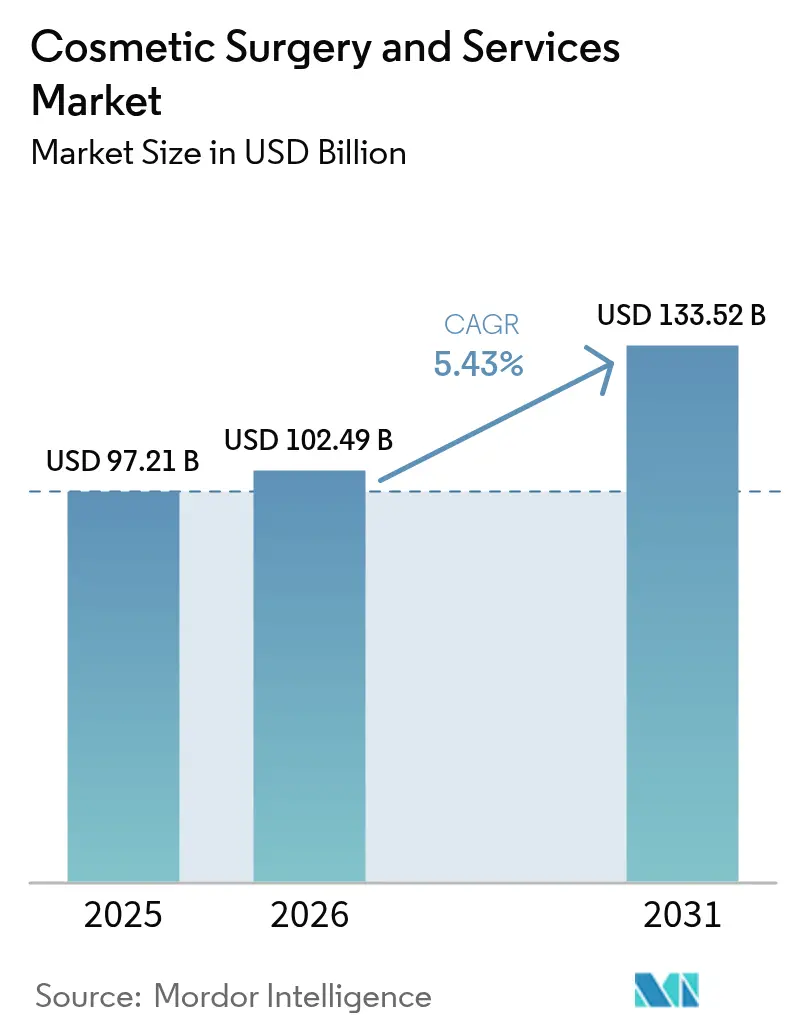
The cosmetic surgery & services market size was valued at USD 97.21 billion in 2025 and estimated to grow from USD 102.49 billion in 2026 to reach USD 133.52 billion by 2031, at a CAGR of 5.43% during the forecast period (2026-2031). Accelerated adoption of minimally invasive technologies, demographic shifts toward aesthetic self-optimization, and widening clinical indications for injectables are anchoring demand across both developed and emerging economies. Volume growth is reinforced by the 300% surge in GLP-1 weight-loss prescriptions that is generating incremental procedure needs, while social-media-mediated beauty standards continue to raise awareness and lower the psychological barrier to first-time treatment uptake. Consolidation among multi-specialty clinic chains is unlocking scale benefits in marketing, procurement, and digital engagement, thereby raising competitive thresholds for smaller providers. Although regulatory tightening around licensing, advertising, and product authentication is elevating compliance costs, the cosmetic surgery & services market remains structurally positioned for sustainable expansion through the decade.
Key Report Takeaways
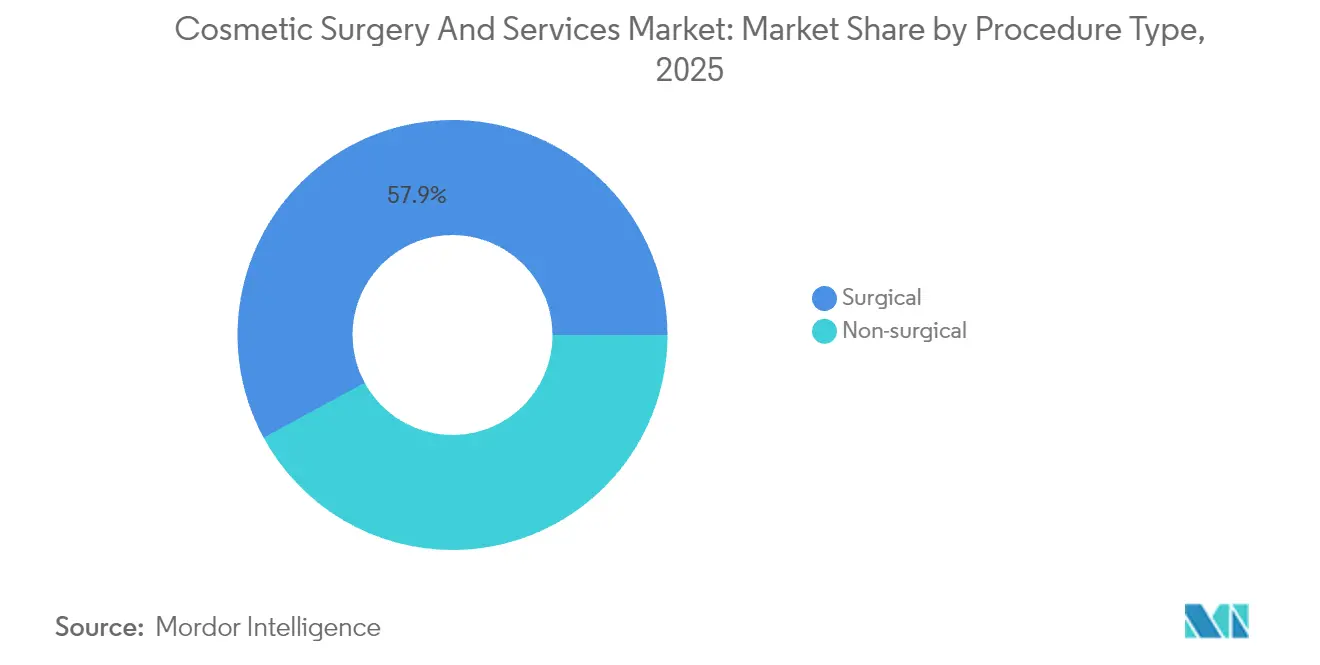
- By procedure type, surgical interventions led with 57.92% revenue share in 2025, whereas non-surgical modalities are projected to record the fastest 7.28% CAGR through 2031.
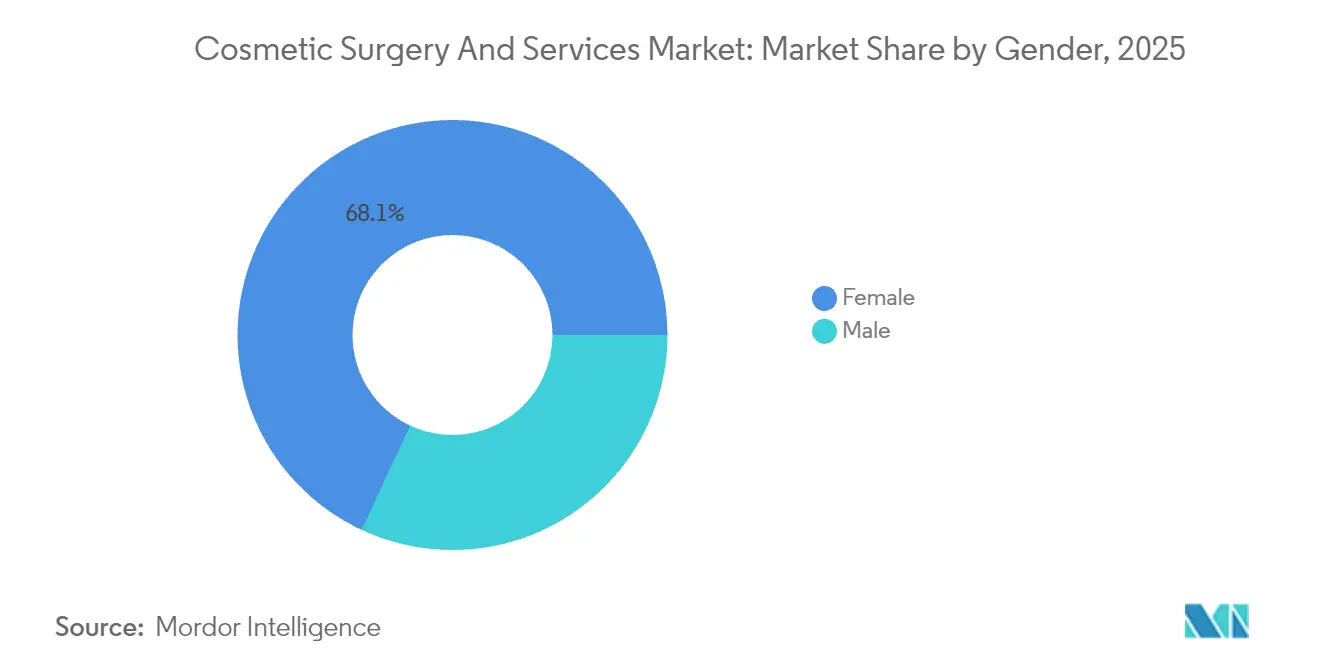
- By gender, female patients accounted for 68.05% of the cosmetic surgery & services market size in 2025; male clientele is advancing at a 6.88% CAGR to 2031.
- By age group, the 35-50 cohort captured 48.01% of cosmetic surgery & services market share in 2025, while the 18-34 segment is forecast to expand at 7.19% CAGR.
- By end user, hospitals & specialty clinics held 54.68% share of the cosmetic surgery & services market in 2025; medical spas are expected to post the highest 7.86% CAGR through 2031.
- By body area, face & head treatments contributed 61.72% of cosmetic surgery & services market size in 2025, whereas body & extremities procedures are growing at an 7.71% CAGR.
- By geography, North America dominated with 42.13% share in 2025, yet Asia-Pacific is projected to grow the fastest at 6.18% CAGR to 2031.
Note: Market size and forecast figures in this report are generated using Mordor Intelligence’s proprietary estimation framework, updated with the latest available data and insights as of 2026.
Global Cosmetic Surgery And Services Market Trends and Insights
Drivers Impact Analysis*
| Driver | % Impact on CAGR Forecast | Geographic Relevance | Impact Timeline |
|---|---|---|---|
| Growing demand for minimally & non-invasive procedures | 2.1% | Global, with early gains in North America, Europe, Asia-Pacific | Medium term (2-4 years) |
| Technological advances in energy-based & injectable devices | 1.8% | Global, spill-over from developed to emerging markets | Long term (≥ 4 years) |
| Rising social-media-led beauty consciousness | 1.2% | Global, particularly strong in APAC and North America | Short term (≤ 2 years) |
| GLP-1 weight–loss drugs boosting post-loss contouring demand | 0.9% | North America & EU, expanding to APAC | Medium term (2-4 years) |
| Private-equity roll-ups creating clinic capacity & marketing muscle | 0.7% | North America core, spill-over to Europe | Long term (≥ 4 years) |
| AI-driven outcome simulation increasing first-time conversions | 0.5% | Developed markets initially, global expansion | Medium term (2-4 years) |
| Source: Mordor Intelligence | |||
Growing Demand for Minimally & Non-Invasive Procedures Reshapes Treatment Paradigms
Non-surgical modalities now constitute 80% of all facial plastic procedures, with neurotoxins and dermal fillers favored across every age group[1]American Academy of Facial Plastic and Reconstructive Surgery, “2024 Annual Member Survey,” aafprs.org. Superior efficacy of fractional lasers, radiofrequency microneedling, and high-intensity focused ultrasound is shortening recovery windows, thereby elevating patient throughput and revenue per clinic hour. Younger consumers regard injectables as preventive care rather than corrective medicine, which is lengthening patient lifecycles and stabilizing recurring revenue streams. The cosmetic surgery & services market is benefiting from regulatory frameworks such as updated FDA guidance that raise quality thresholds and legitimize new treatment indications. Integration of combination protocols—for example toxin–filler pairings followed by light energy resurfacing—is further pushing the non-surgical CAGR beyond its surgical counterpart, reinforcing a structural shift in the procedure mix.
Technological Advances in Energy-Based Devices Create New Revenue Streams
AI-enabled skin analyzers, robotic injectors, and precision energy platforms are delivering outcomes historically limited to operating rooms. Treatment customization driven by software algorithms translates into higher satisfaction scores and word-of-mouth referrals, thus compressing patient acquisition costs. Radiofrequency microneedling and fractional CO₂ systems are capturing premium price points due to visible collagen remodeling within abbreviated downtime windows. Device manufacturers are co-developing exosome-enhanced protocols that merge regenerative medicine with energy delivery, producing hybrid treatments that support price differentiation. Asia-Pacific innovation hubs are accelerating iterative product updates, shortening global launch cycles and broadening the cosmetic surgery & services market addressable base.
Social Media Influence Drives Unprecedented Procedure Consideration Rates
Consumers exposed to more than four hours of aesthetic content daily exhibit an 87.9% likelihood of contemplating a cosmetic procedure. Platform filters that idealize skin texture and facial symmetry normalize aesthetic modification, while “dupe culture” encourages real-world replication of digital enhancements. The phenomenon has evolved into communal behavior as users collectively pursue “beauty fandom” ideals. Clinics report that prospective patients now arrive with curated reference images that dictate precise treatment objectives, compressing consultation time yet raising the bar for delivering individualized results. The cosmetic surgery & services market is consequently allocating larger budgets to social-media-native education campaigns aimed at shaping expectations and mitigating misinformation.
GLP-1 Weight-Loss Medications Generate Unexpected Aesthetic Demand
Prescription volumes for GLP-1 analogs have climbed 300%, and clinicians are documenting a 50% uptick in fat-grafting requests to counteract “Ozempic face” volume depletion. Body-contouring inquiries also escalate as rapid weight loss yields skin laxity and contour irregularities. Providers are developing integrated care pathways that stage skin tightening and volumization around predictable pharmacologic milestones. Cross-referral models between bariatric specialists and aesthetic surgeons are monetizing contiguous patient needs, broadening cosmetic surgery & services market penetration among health-motivated populations.
Restraints Impact Analysis*
| Restraint | % Impact on CAGR Forecast | Geographic Relevance | Impact Timeline |
|---|---|---|---|
| Stringent regulatory approvals & practitioner-licensing gaps | -1% | Global | Long term (≥ 4 years) |
| Post-procedure side-effects & safety worries | -0.8% | Global | Medium term (2-4 years) |
| Tariff-driven cost spikes for imported injectables/fillers | -0.6% | Import-dependent markets in Asia-Pacific & Latin America | Short term (≤ 2 years) |
| Rising counterfeit product infiltration via e-commerce | -0.4% | Emerging economies with high online retail penetration | Short term (≤ 2 years) |
| Source: Mordor Intelligence | |||
Regulatory Approval Complexity Creates Market Access Barriers
The United Kingdom’s pending licensing overhaul illustrates a global push for stricter credentialing, facility standards, and advertising controls that will raise entry barriers and operational costs. In the United States, extended FDA review periods for new dermal fillers add time-to-market risk for manufacturers and delay revenue realization. Europe’s Medical Device Regulation imposes rigorous clinical evidence obligations that smaller firms find onerous, tipping competitive advantage toward well-capitalized incumbents. Collectively, these measures temper the growth trajectory of the cosmetic surgery & services market by slowing product roll-outs and limiting provider expansion.
Safety Concerns and Counterfeit Product Infiltration Threaten Market Confidence
Counterfeit botulinum toxin discovered in e-commerce channels has amplified consumer anxiety and prompted stepped-up enforcement sweeps. Highly publicized complications tied to inadequately supervised medical spas have led regulators to restrict scope-of-practice allowances for non-physician injectors. Recalls such as La Roche-Posay’s benzene-contaminated products demonstrate how quality lapses can erode brand equity across the wider aesthetic ecosystem. Heightened vigilance raises overhead for authenticity programs and insurance premiums, potentially dampening first-time adoption levels within the cosmetic surgery & services market.
*Our forecasts treat driver/restraint impacts as directional, not additive. The impact forecasts reflect baseline growth, mix effects, and variable interactions.
Segment Analysis
By Procedure Type: Surgical Dominance Faces Non-Surgical Disruption
Surgical interventions retained a 57.92% cosmetic surgery & services market share in 2025, buoyed by reimbursement support for reconstructive indications and relatively durable outcomes. Yet non-surgical categories are accelerating at 7.28% CAGR, propelled by injectables and energy devices that deliver quasi-surgical results without general anesthesia or extended downtime.
Eyelid surgery and liposuction remain top surgical procedures, but slowing breast augmentation volumes hint at a patient shift toward less invasive enhancement. Conversely, botulinum toxin surpassed 7.9 million sessions and hyaluronic acid fillers reached 6.3 million injections, underlining the momentum that is re-shaping the cosmetic surgery & services market size calculus in favor of quick-turn treatments with subscription-style repeat rates.



By Gender: Male Demographic Emerges as High-Growth Opportunity
Female patients continued to anchor demand at 68.05% of the cosmetic surgery & services market size in 2025. Male participation, however, is climbing with a projected 6.88% CAGR to 2031 as evolving workplace culture normalizes appearance investment among men.
Hair transplantation commands the largest male volume, yet uptake of neurotoxins, fillers, and jawline contouring solutions is expanding as product messaging pivots toward discreet, masculine outcomes. Clinics are retraining staff on male facial anatomy and marketing through professional networking channels to seize this incremental share of the cosmetic surgery & services market.
By Age Group: Younger Demographics Drive Preventive Treatment Adoption
Consumers aged 35-50 accounted for 48.01% of procedures, supported by peak disposable income and established aesthetic routines. The 18-34 segment shows higher velocity, growing at 7.19% CAGR as “prejuvenation” mindsets spur earlier entry into treatment cycles.
Millennial and Gen Z patients prioritize subtle, cumulative improvements aligned with social-media-visible recovery timelines, reinforcing demand for injectables and low-energy resurfacing. This shift is lengthening lifetime revenue per patient and expanding the prospective funnel for providers across the cosmetic surgery & services market.
By End User: Medical Spas Capture Market Share Through Accessibility
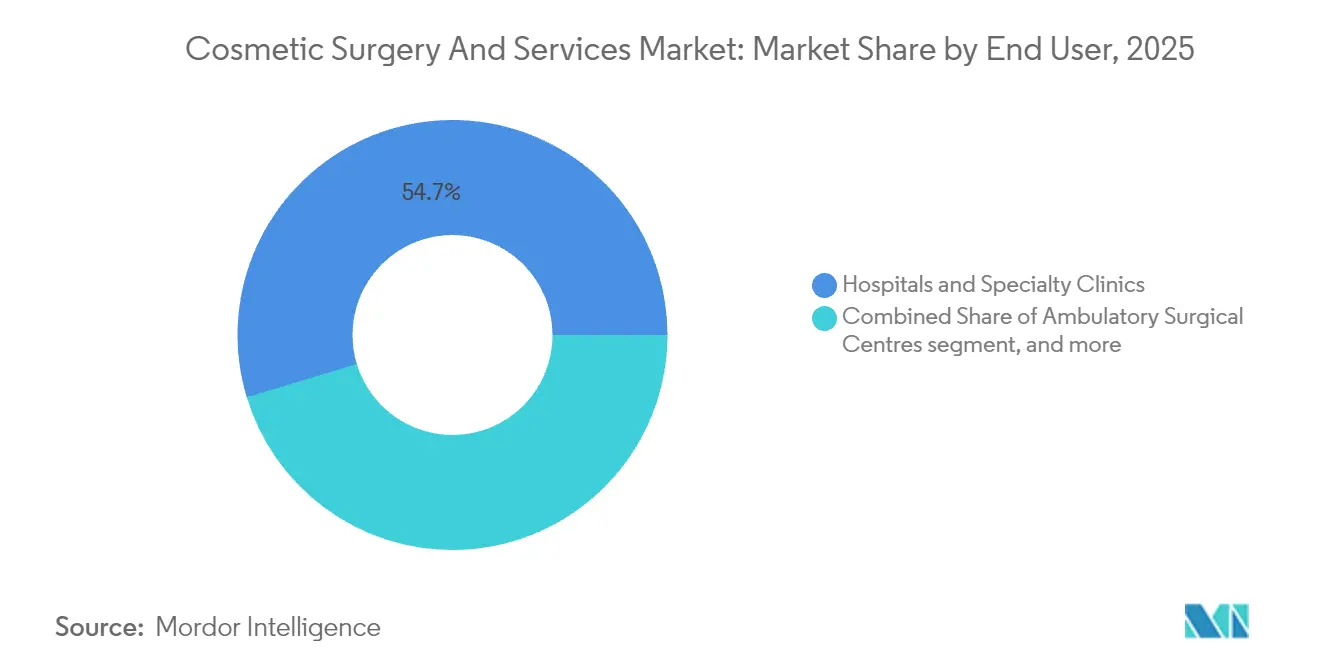
Hospitals & specialty clinics held 54.68% cosmetic surgery & services market share in 2025, fueled by broad procedure portfolios and robust safety infrastructure. Medical spas, though, are pacing at an 7.86% CAGR, leveraging relaxed atmospheres, consumer-friendly branding, and digital booking convenience.
Private equity investors are aggregating regional spa chains to create standardized experiences and scale marketing spend, a model expected to accelerate penetration in suburban and tier-two urban centers. These developments diversify service channels and reinforce volume growth within the cosmetic surgery & services market.
By Body Area: Facial Treatments Lead While Body Procedures Show Strong Growth
Face & head procedures captured 61.72% of revenue, reflecting high visibility and continuous product innovation that keeps patients engaged in maintenance regimens. Body & extremities treatments, benefiting from GLP-1-induced weight-loss aftercare, are rising at an 7.71% CAGR.
Technology cross-pollination from facial to body platforms—such as radiofrequency microneedling for abdominal skin tightening—is expanding total addressable sessions. Providers now bundle facial and body services, increasing average transaction values and deepening the cosmetic surgery & services market size potential per patient.
Geography Analysis
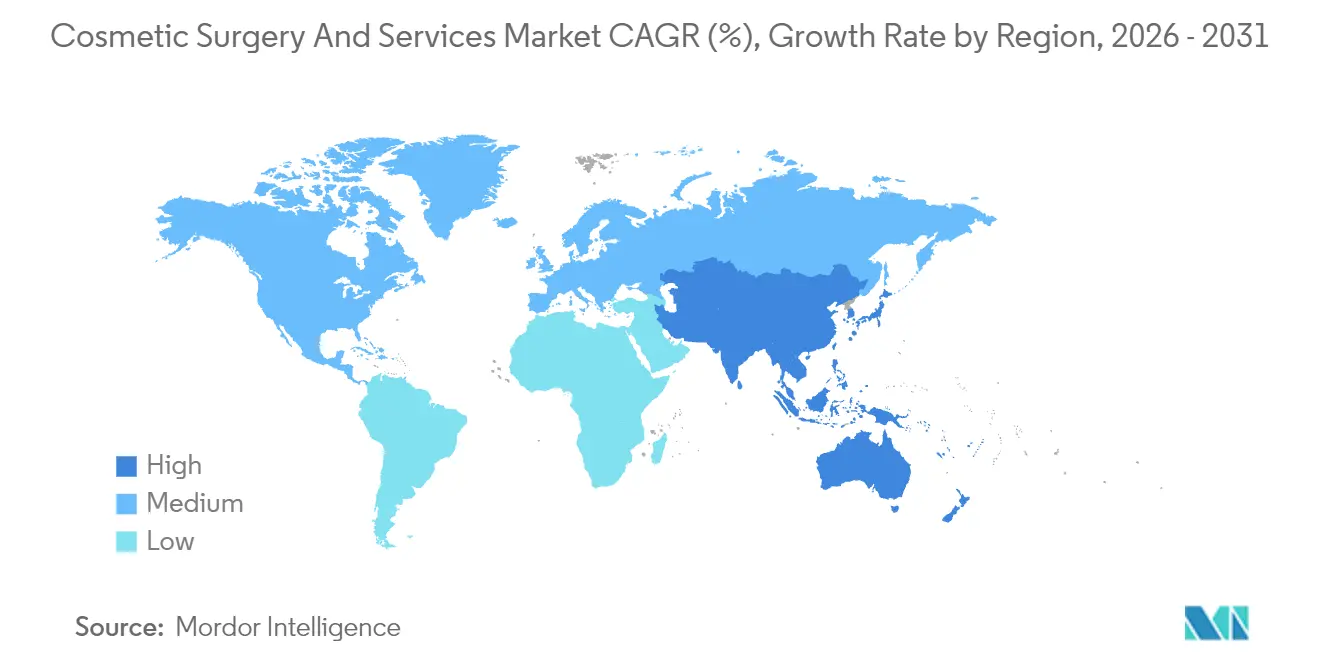
North America retained 42.13% share of the cosmetic surgery & services market in 2025 on the back of 6.2 million total procedures and payer support for select reconstructive cases. Clinical research density and a sophisticated regulatory environment stimulate early adoption of advanced devices and injectables, sustaining premium pricing.
Europe presents a fragmented yet significant opportunity set, with Western markets like Germany and France combining stable procedure volumes and growing medical tourism. Upcoming U.K. licensing reforms are poised to elevate operator quality while pressuring under-capitalized clinics. Eastern Europe offers above-average growth as disposable incomes rise and cross-border procedure packages become more accessible.
Asia-Pacific posts the fastest 6.18% CAGR, driven by China’s double-digit expansion, Japan’s high acceptance of non-surgical treatments, and South Korea’s status as a global hub for aesthetic innovation. Domestic device manufacturing advantages reduce input costs, facilitating aggressive price competition and broadening access. Australia’s new safety standards are projected to heighten consumer confidence and fortify the cosmetic surgery & services market in Oceania.
South America and the Middle East & Africa are emerging growth engines. Brazil’s 2.4 million surgical procedures affirm deep cultural affinity for aesthetic enhancement, while stricter cosmetics registration protocols are improving supply-chain transparency. Gulf economies leverage medical tourism corridors and high per-capita income, although geopolitical uncertainty tempers near-term investment appetites.

Regulatory Landscape
Regulation in cosmetic surgery and services spans both medical devices (energy-based platforms, injectables and certain aesthetic products) and consumer-facing cosmetics, with compliance requirements increasingly converging on clinical evidence, post-market surveillance, and quality systems. In the United States, the FDA (CDRH) regulates aesthetic medical devices under the device framework, and the Quality Management System Regulation (QMSR) incorporating ISO 13485:2016 became effective on February 2, 2026, which raised the bar for manufacturer quality processes and documentation. The Modernization of Cosmetics Regulation Act of 2022 (MoCRA) expanded FDA oversight for cosmetic products through facility registration, product listing, and greater access to safety and adverse event records, tightening requirements relevant to skincare products and adjuncts used around aesthetic procedures.
In Europe, Regulation (EU) 2017/745 (MDR) covers not only traditional medical devices but also certain aesthetic products without an intended medical purpose (Annex XVI), bringing select lasers and other aesthetic equipment under full medical device obligations. In December 2025 (COM(2025) 1023), the European Commission proposed targeted amendments to ease administrative burden and improve conformity assessment capacity, addressing certification bottlenecks that affect time-to-market. In Great Britain, the Medical Devices (Amendment) (Great Britain) Regulations 2025 came into force on May 24, 2025, continuing the post-Brexit evolution of the device framework and adding compliance complexity for manufacturers and clinic networks operating across the UK and EU.
Value Chain Analysis
The cosmetic surgery and services value chain starts with upstream inputs for devices and consumables, including specialized polymers and packaging for fillers, APIs and biologic processing for neurotoxins, and semiconductors, optics, and energy components for lasers and radiofrequency systems. These flow into OEM R&D, clinical validation, and manufacturing, followed by regulatory and quality activities (including sterilization and validation services from providers such as Steris and Sterigenics) before downstream distribution through direct sales forces and distributors into hospitals, specialty clinics, ambulatory surgical centers, and medical spas. As AI-driven consultation tools and outcome simulation gain adoption, a software layer is also being added, shifting some value capture toward platforms that bundle training, protocols, and ongoing updates.
Downstream purchasing is shaped by clinic-chain consolidation and procurement standardization. Larger multi-site operators negotiate for bundled equipment, injectables, financing, and practitioner training to reduce variability and improve unit economics. Supply and cost volatility remains a constraint, particularly for import-dependent markets and cross-border product flows, which has supported dual-sourcing, inventory buffering for high-velocity injectables, and tighter authenticity controls to mitigate counterfeit infiltration through e-commerce. For providers, the operational chain increasingly includes patient acquisition and retention infrastructure, including digital marketing, social media education, and online booking, which sits alongside clinical delivery as minimally invasive volumes rise.
Competitive Landscape
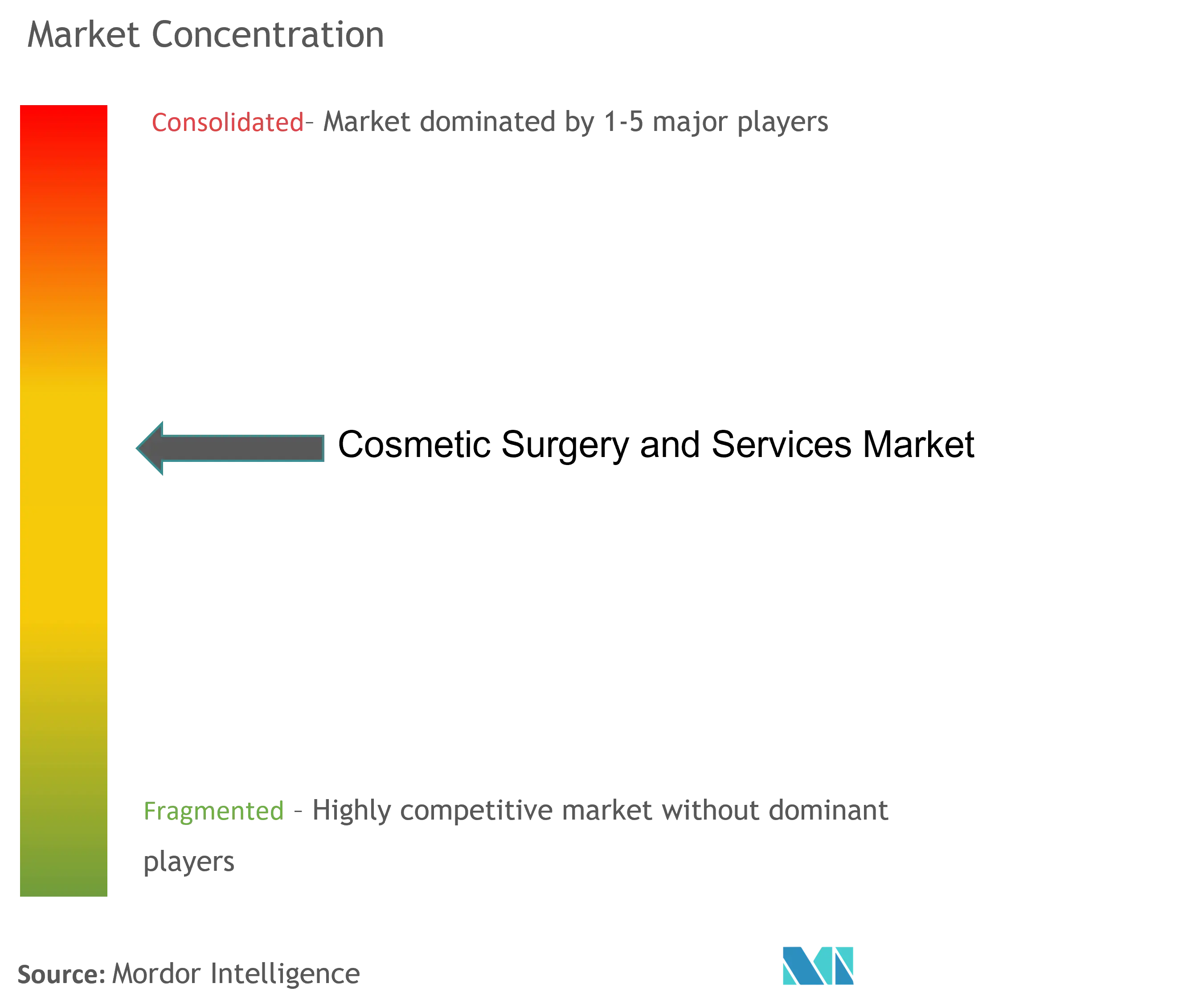
Market concentration is moderate. AbbVie’s Allergan Aesthetics, Galderma, and Merz collectively anchor broad portfolios that span neurotoxins, fillers, and energy devices, enabling cross-category bundling strategies[3]The Aesthetic Society News Bureau, “Quarterly Market Insights 2025,” theaestheticsociety.org. Private equity-backed roll-ups are forming multi-location platforms that negotiate favorable supplier contracts and deploy unified electronic health record systems to standardize outcomes.
Technology investment is a central differentiator. Leading groups are piloting AI-driven outcome simulators that elevate consult-to-conversion ratios, while robotic injectors aim to reduce practitioner variability and malpractice exposure. Male-focused product lines, regenerative adjuncts, and combination therapy packages represent white-space segments receiving heightened R&D attention.
Emerging disruptors include tele-esthetic platforms offering remote consultations and at-home energy devices. However, regulatory hurdles around FDA clearance and practitioner licensing create a moat that favors entities with established compliance infrastructures. The cosmetic surgery & services market therefore balances innovation velocity against safety-driven governance, shaping a competitive field where capital depth and technology acumen dictate share gains.
Cosmetic Surgery And Services Industry Leaders
Bausch Health Companies Inc.
Johnson and Johnson
AbbVie Inc.
Galderma SA
Merz Pharma GmbH & Co. KGaA
- *Disclaimer: Major Players sorted in no particular order

Market Opportunities and Future Outlook
Non-surgical and hybrid care pathways represent a clear opportunity, especially where clinics combine injectables with energy-based skin tightening and resurfacing to support higher procedure throughput and recurring visit patterns. The report context points to evidence including the 300% increase in GLP-1 weight-loss prescriptions, which has translated into incremental demand for post-weight-loss contouring and facial volumization services, alongside a documented 50% uptick in fat-grafting requests tied to volume depletion. That demand profile gives clinics a reason to formalize staged treatment programs (assessment, skin tightening, volumization, and maintenance), while manufacturers can package protocols, training, and consumables around more predictable patient journeys.
A second opportunity is compliance-ready product and software support that helps providers operate under tighter governance while improving conversion and consistency. Regulatory tightening in the United States (FDA QMSR effective February 2, 2026, and MoCRA requirements for cosmetics) and Europe (MDR, including Annex XVI) increases demand for traceability, post-market vigilance, and standardized training. This tends to favor manufacturers and clinic networks that can deliver authentication, adverse-event workflows, and validated digital tools. There is also room for digital-first consultation experiences, as suggested by simulation and education solutions used in breast aesthetics, plus clinic-chain operating models that centralize procurement and protocol standardization across hospitals, specialty clinics, and medical spas.
Recent Industry Developments
- June 2026: AbbVie (Allergan Aesthetics) received U.S. FDA approval for SKINVIVE by JUVEDERM for improvement of neck appearance. The label expansion strengthens portfolio breadth in hyaluronic acid injectables and supports new treatment conversations beyond the face. It also increases competitive pressure in the premium injectable segment as clinics add another indication-backed option to their menus.
- December 2025: Bausch Health (Solta Medical) acquired Wuhan Shibo Zhenmei Technology Co., Ltd. (Shibo group) in China to expand its aesthetics distribution presence. The acquisition deepens local channel access in a fast-growing aesthetics market and can improve service and training coverage for energy-based device placements. Greater direct reach can also help manufacturers defend share where distributor fragmentation limits product pull-through.
- December 2024: Lorena Investments acquired sk:n clinics and The Harley Medical Group in the United Kingdom. This transaction increased consolidation among branded clinic networks and reinforced scale advantages in marketing and procurement. A larger platform footprint can also support faster protocol standardization as licensing and advertising controls tighten.


Research Methodology Framework and Report Scope
Market Definition and Coverage
This market is defined as revenues earned from elective cosmetic procedures and closely linked in-clinic aesthetic services that change or improve appearance, covering the service fee and procedure-related delivery in formal care settings.
Scope exclusions: The sizing excludes purely medical reconstructive surgery performed for trauma, congenital conditions, or post-cancer care when it is coded and paid as medically necessary treatment.
Segmentation Overview
- By Procedure Type
- Surgical
- Non-surgical
- By Gender
- Female
- Male
- By Age Group
- 18-34 years
- 35-50 years
- 51 years and above
- By End User
- Hospitals & Specialty Clinics
- Ambulatory Surgical Centres
- Medical Spas / Aesthetic Clinics
- By Body Area
- Face & Head
- Breast
- Body & Extremities
- Geography
- North America
- United States
- Canada
- Mexico
- Europe
- Germany
- United Kingdom
- France
- Italy
- Spain
- Rest of Europe
- Asia-Pacific
- China
- Japan
- India
- Australia
- South Korea
- Rest of Asia-Pacific
- Middle East & Africa
- GCC
- South Africa
- Rest of Middle East & Africa
- South America
- Brazil
- Argentina
- Rest of South America
- North America
Data Sources, Market Sizing, and Validation
Desk Research
Desk research starts with public, repeatable reference points that describe procedure demand, provider footprint, and pricing direction. We typically pull procedure statistics and definitions from the International Society of Aesthetic Plastic Surgery, the American Society of Plastic Surgeons, and comparable national plastic surgery associations where available.
For context on healthcare delivery and country level indicators, we also use the World Health Organization, OECD health statistics, and national health ministries, followed by customs and trade releases where imports of aesthetic devices are relevant. Company filings, investor presentations, and reputed press are used to understand service mix and regional exposure, and paid subscriptions for company financials and patent databases are used selectively to validate innovation intensity and business scale. These sources are not exhaustive, and additional public references were also used to collect data, cross-check assumptions, and clarify open points.
Primary Interviews and Surveys
Primary work focuses on filling gaps that desk sources rarely publish, like realistic price bands by procedure, provider utilization patterns, and how demand shifts between surgical and non-surgical services. We spoke with a mix of clinics, hospital departments, ambulatory centers, distributors, and independent experts across APAC, EMEA, and the Americas, so assumptions could be checked against on-ground operating reality for those regions.
Distribution of primary research fieldwork respondents
| Company type | Respondent position | Region |
|---|---|---|
| Top tier: 30% | CXOs: 15% | APAC: 45% |
| Mid tier: 54% | Functional/Unit leaders: 34% | EMEA: 36% |
| Smaller Players: 16% | Managers: 51% | Americas: 19% |
Market-Sizing & Forecasting
Sizing starts with a top-down build where procedure volumes by country are reconstructed from society statistics and health system indicators, then translated into value using typical price bands and service mix splits shared by practitioners. To keep the model practical, we use variables such as procedure counts by surgical and non-surgical categories, average selling price progression by major treatment groups, clinic and ambulatory center penetration, provider capacity utilization, and medical tourism flows that shift demand across borders.
The totals are then corroborated with selective bottom-up approximations, including sampling provider revenue ranges, checking distributor channel movement for key consumables, and validating implied revenue per physician against real appointment throughput. Where data is thin for smaller countries, gaps are handled using peer country proxies based on income level, urban population, and elective spending behavior, and then re-tested in interviews. For forecasting, we use scenario analysis with a light multivariate regression layer so procedure growth is linked to drivers like disposable income, social media influence indicators, and provider expansion, before assumptions are normalized by expert feedback.
Data Validation & Update Cycle
Validation is done through a series of checks that compare outputs with independent signals, such as procedure growth rates published by associations, provider count shifts, and the direction of average pricing discussed in interviews. Any outliers are reviewed, the underlying assumptions are reworked, and respondents are re-contacted when a variance cannot be explained by a clear local factor.
Before sign-off, the model and write-up are reviewed in steps by another analyst so formula logic, currency conversions, and country totals match the stated scope. Reports are refreshed annually, and interim updates are triggered when material events occur, such as major regulatory changes, sudden demand shocks, or a sharp shift in procedure mix. Right before delivery, a final pass is completed so clients receive the latest updated view.
Mordor Intelligence's Cosmetic Surgery and Services Market Size Compared With Other Published Estimates
Published market values for cosmetic surgery and services can look far apart, even when the topic label sounds similar. Differences usually come from what is counted as a service versus a product, how countries are grouped, and whether the estimate leans on procedure volumes, provider revenues, or broader beauty spending.
Medical reconstructive procedures that are paid as necessary care sit outside the Mordor Intelligence scope, and that single exclusion changes the demand pool meaningfully in countries where hospital based reconstruction volumes are high. Other gaps come from using aggressive price uplift assumptions for injectables and energy based treatments, mixing consumer skincare services into the same total, or using older currency conversion timing that does not reflect recent inflation and FX movement.
Benchmark comparison
| Source | Market Size | Gaps in Research Methodology |
|---|---|---|
| Mordor Intelligence | USD 97.21 B (2025) | |
| Industry Publisher A | USD 59.13 B (2025) | Often presented as a cosmetic surgery focused total, which can undercount non-surgical services delivered in clinics and may apply narrower provider coverage or conservative price bands for injectables and laser based procedures. |
| Industry Publisher B | USD 22.00 B (2025) | Appears to use a tighter definition and may count only selected service lines or a limited set of monetized procedures, which can exclude a large share of elective non-surgical treatments and broader clinic delivered service revenue. |
The spread across the three figures mainly reflects scope and monetization choices, not just forecasting style. When procedure volume, realistic price bands, and provider delivery settings are kept consistent across countries, the final number becomes easier to trace and re-check year over year.


Key Questions Answered in the Report
How large is the cosmetic surgery & services market in 2026?
It is valued at USD 102.49 billion and is projected to grow at a 5.43% CAGR to reach USD 133.52 billion by 2031.
Which procedure category is expanding the fastest?
Non-surgical treatments, including injectables and energy-based devices, are rising at a 7.28% CAGR.
Which region shows the highest growth momentum?
Asia-Pacific leads growth with a projected 6.18% CAGR, fueled by rising incomes and evolving cultural norms.
What demographic group is driving new demand?
The 18-34 age segment is growing at 7.19% CAGR as preventive ÒprejuvenationÓ gains popularity.
How are GLP-1 weight-loss drugs influencing demand?
Rapid weight-loss side effects are spurring a 50% increase in fat-grafting and related contouring procedures.
What is the main regulatory challenge providers face?
Stricter licensing and product approval requirements, particularly in the U.K. and EU, are raising compliance costs and delaying market entry.
Page last updated on:


 Your data is secure and never sold or shared.


