
Vaginal Rejuvenation Market Size and Share
Market Overview
| Study Period | 2020 - 2031 |
|---|---|
| Market Size (2026) | USD 5.76 Billion |
| Market Size (2031) | USD 10.91 Billion |
| Growth Rate (2026 - 2031) | 13.61 % |
| Fastest Growing Market | Asia Pacific |
| Largest Market | North America |
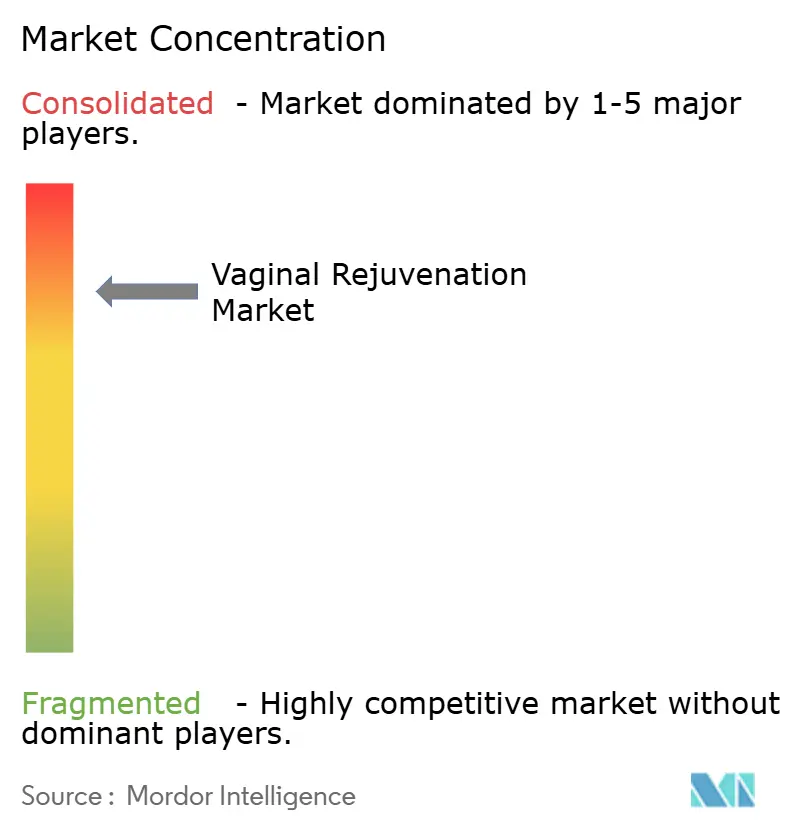
| Market Concentration | High |
Major Players *Disclaimer: Major Players sorted in no particular order Image © Mordor Intelligence. Reuse requires attribution under CC BY 4.0. | |
Vaginal Rejuvenation Market Analysis by Mordor Intelligence
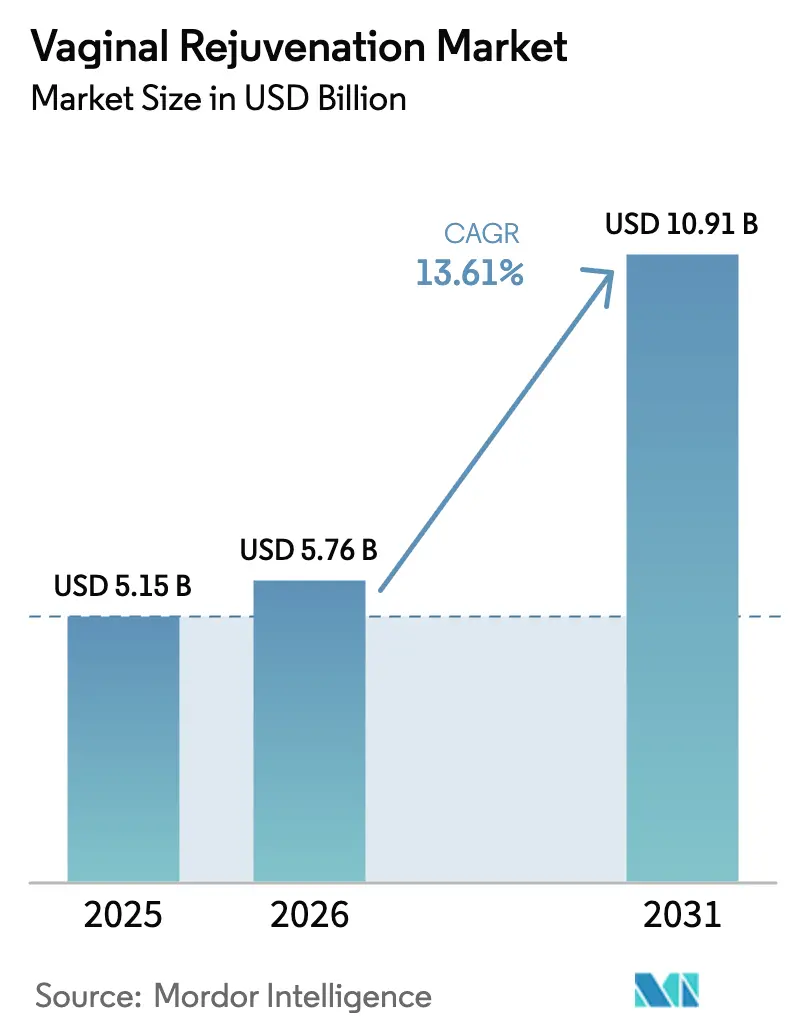
The Vaginal Rejuvenation Market size is expected to increase from USD 5.15 billion in 2025 to USD 5.76 billion in 2026 and reach USD 10.91 billion by 2031, growing at a CAGR of 13.61% over 2026-2031.
Device innovation, a growing population of women over 50, and wider clinical acceptance of energy-based modalities are accelerating adoption despite fragmented regulation. Cosmetic procedures remain the prime revenue engine as wellness spending rises, while reconstructive indications create a hedge against regulatory pushback. Hospitals dominate revenue today because reimbursement pathways for functional repair favor inpatient settings, yet ambulatory surgical centers (ASCs) are quickly scaling as they unbundle cosmetic sessions from hospital overhead. Competitive intensity stays high, with firms differentiating on radiofrequency versus CO₂ laser platforms and on hybrid treatment bundles that combine pelvic-floor electromagnetic stimulation with laser consoles.
Key Report Takeaways
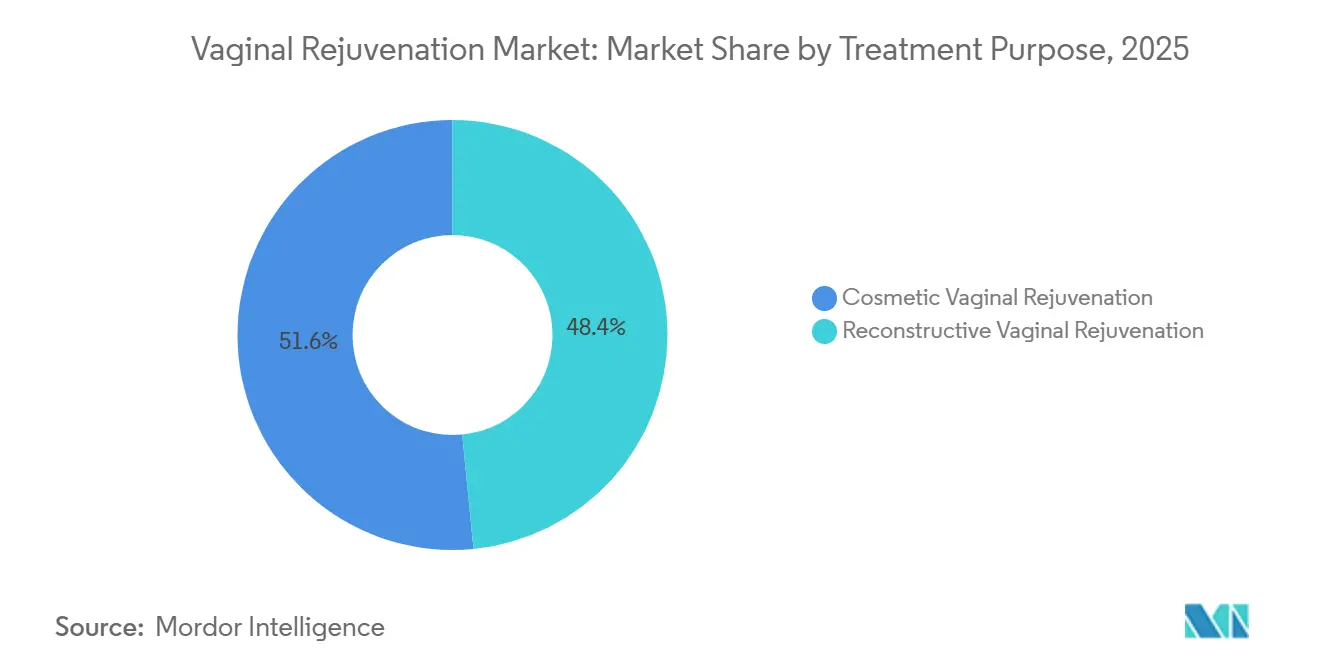
- By treatment purpose, cosmetic procedures held 51.56% of vaginal rejuvenation market share in 2025 and are expanding at a 16.02% CAGR through 2031.
- By modality, energy-based devices accounted for 44.74% of revenue in 2025 and are growing at a 17.25% CAGR to 2031.
- By end user, hospitals controlled 61.23% of revenue in 2025, while ASCs post the fastest growth at 15.33% through 2031.
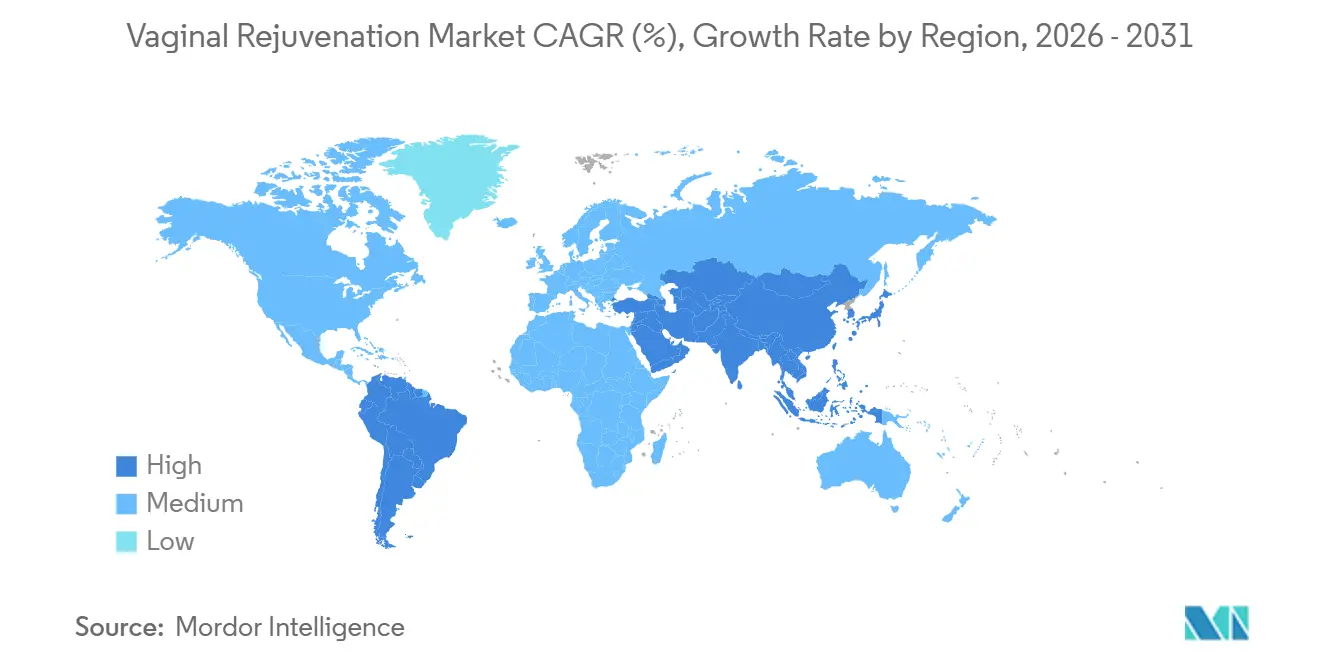
- By geography, North America delivered 41.11% of global revenue in 2025, whereas Asia-Pacific registers the highest regional CAGR at 15.21% through 2031.
Note: Market size and forecast figures in this report are generated using Mordor Intelligence’s proprietary estimation framework, updated with the latest available data and insights as of January 2026.
Market Trends and Insights
Drivers Impact Analysis of Vaginal Rejuvenation Market*
| Driver | (~) % Impact on CAGR Forecast | Geographic Relevance | Impact Timeline |
|---|---|---|---|
| Surging demand for energy-based treatments | 2.8% | Global, with North America and Europe leading adoption | Medium term (2-4 years) |
| Increasing adoption of non-invasive gynecological procedures | 2.5% | Global, particularly APAC and Middle East emerging markets | Long term (≥ 4 years) |
| Rising disposable incomes & aesthetic awareness | 2.1% | APAC core (China, India, South Korea), spill-over to Middle East | Long term (≥ 4 years) |
| Integration of pelvic-floor digital therapeutics & EMS chair devices | 1.9% | North America and Europe, early APAC adopters | Medium term (2-4 years) |
| Uro-gynecologic crossover (stress-urinary-incontinence synergy) | 1.7% | Global, with reimbursement pathways in North America and Europe | Short term (≤ 2 years) |
| Menopause-tech platforms bundling laser sessions | 1.4% | North America, Western Europe, urban APAC hubs | Medium term (2-4 years) |
| Source: Mordor Intelligence | |||
Surging Demand for Energy-Based Treatments
Energy-based platforms such as CO₂ lasers, erbium:YAG systems, radiofrequency devices, and high-intensity focused ultrasound are displacing surgical vaginoplasty because they offer shorter recovery, minimal scarring, and same-day discharge. A 2025 study showed platelet-rich plasma with hyaluronic acid outperformed topical estrogen for vulvovaginal atrophy, highlighting the value of adjunct biologics.[1] InMode’s women’s health portfolio grew 19% year over year in Q3 2024, validating commercial demand despite regulatory caution. Yet no energy-based device carries explicit FDA clearance for cosmetic vaginal indications, and an International Menopause Society white paper reported randomized trials that failed to prove laser superiority over sham, a gap that limits reimbursement.[2]
Increasing Adoption of Non-Invasive Gynecological Procedures
Office-based treatments reshape patient expectations and clinic economics. The American Society of Plastic Surgeons logged 10,827 labiaplasties in 2024, a 2% rise from the prior year. Radiofrequency systems such as Hologic’s TempSure Vitalia deliver controlled thermal energy without incisions, allowing quick turnaround sessions. A 2024 meta-analysis ranked high-intensity focused electromagnetic therapy among the top interventions for stress urinary incontinence, aligning muscle-stimulation chairs with vaginal rejuvenation packages.[3]However, NICE guidance still favors vaginal estrogen and recommends lasers only in research protocols, so payer coverage remains limited.
Rising Disposable Incomes and Aesthetic Awareness
Wealth creation in China, India, and South Korea fuels demand for procedures once confined to Western clinics. China reclassified radiofrequency devices to Class III in 2024, delaying market entry until firms secure new clinical approvals. Japanese device maker Ya-Man saw China sales fall 37% after the rule shift, showing revenue sensitivity to policy swings. Meanwhile, a Beijing-made Nd:YAG laser won U.S. FDA 510(k) clearance in March 2025, signaling that Chinese manufacturers will pursue higher-margin export market. Social stigma still limits uptake in conservative areas, so vendors invest in culturally attuned marketing and training.
Integration of Pelvic-Floor Digital Therapeutics and EMS Chair Devices
High-intensity focused electromagnetic chairs such as BTL Emsella strengthen pelvic muscles without patients needing to undress, bridging physiotherapy and aesthetics. A 2025 systematic review recorded significant reductions in urinary-incontinence episodes after HIFEM sessions. Clinics bundle chair programs with radiofrequency or laser treatments, enlarging per-patient revenue streams. Digital therapeutics add remote coaching and subscription billing, yet reimbursement covers only medically coded stress-incontinence use, so cosmetic indications remain self-pay.
Restraints Impact Analysis of Vaginal Rejuvenation Market*
| Restraint | (~) % Impact on CAGR Forecast | Geographic Relevance | Impact Timeline |
|---|---|---|---|
| Stringent regulatory scrutiny & uncertain approvals | -2.3% | Global, with North America, Europe, and Australia most affected | Short term (≤ 2 years) |
| Social stigma & ethical debate | -1.6% | Middle East, parts of APAC, and conservative regions in North America | Long term (≥ 4 years) |
| Escalating litigation & liability-insurance premiums | -1.2% | North America and Europe, with spillover to other developed markets | Medium term (2-4 years) |
| Digital-advertising restrictions on "vaginal-rejuvenation" claims | -0.9% | Global, particularly platforms operating in North America and Europe | Short term (≤ 2 years) |
| Source: Mordor Intelligence | |||
Stringent Regulatory Scrutiny and Uncertain Approvals
The FDA issued 2018 warning letters to seven manufacturers and has not cleared any laser or radiofrequency system specifically for cosmetic vaginal use. Australia canceled all devices from its register in November 2024, citing safety concerns. China elevated radiofrequency beauty devices to Class III in 2024, creating a compliance bottleneck until April 2026. The European Union’s Medical Device Regulation heightens post-market surveillance demands, raising cost and delaying launches.
Social Stigma and Ethical Debate
The American College of Obstetricians and Gynecologists warns that vaginal rejuvenation may medicalize normal anatomy. In conservative regions, patients often seek functional diagnoses to avoid social judgment, complicating consent. A British Medical Journal article detailed HIV transmission from unlicensed platelet-rich plasma injections, underscoring reputational risk. Manufacturers counter by sponsoring patient-education campaigns and collaborating with professional societies.
*Our forecasts treat driver/restraint impacts as directional, not additive. The impact forecasts reflect baseline growth, mix effects, and variable interactions.
Vaginal Rejuvenation Market Segment Analysis
By Treatment Purpose:
Cosmetic Demand Leads, Reconstructive Builds ResilienceCosmetic procedures captured 51.56% of revenue in 2025, reflecting strong interest in aesthetic genital care. That slice of vaginal rejuvenation market share expands as social acceptance widens and ASCs lower entry costs. Cosmetic sessions often utilize energy-based devices that shorten recovery, allowing clinics to schedule higher daily volumes. Reconstructive indications, including pelvic-organ prolapse repair and stress-urinary-incontinence management, draw reimbursement but grow slower because payers mandate stricter evidence. Breast-cancer survivors and post-menopausal patients drive reconstructive demand, creating overlap across care pathways. Manufacturers now design single consoles usable in both cohorts, protecting revenue against shifts in payer policy. Despite the momentum, NICE still advises estrogen first for urogenital atrophy, constraining reconstructive growth in the United Kingdom. Continued multicenter trials are required to unlock wider coverage and accelerate adoption.
The cosmetic segment continues to command premium pricing, enabling higher margins even when procedure volumes fluctuate. Word-of-mouth and influencer endorsements play a disproportionate role in patient acquisition, and clinics differentiate through bundled offerings that include topical products and at-home pelvic-floor devices. On the reconstructive side, surgeons emphasize durability and functional outcomes, favoring modalities with published long-term data. As evidence matures, especially around combined radiofrequency and platelet-rich plasma protocols, the reconstructive share of the vaginal rejuvenation market could rise, but near-term growth remains anchored in cosmetics.
By Modality:
Energy-Based Devices Dominate Growth TrajectoryEnergy-based platforms generated 44.74% of 2025 revenue and post the fastest 17.25% CAGR, underscoring their central role in the vaginal rejuvenation market. CO₂ lasers hold the largest installed base thanks to early movers such as Lumenis and Cynosure, yet radiofrequency devices gain momentum because they heat tissue without ablation, lowering complication risk. Er:YAG systems offer precise thermal profiles with less collateral damage, appealing to risk-averse practitioners. High-intensity focused ultrasound remains niche, but ongoing thermal-science studies may broaden its clinical rationale. Surgical vaginoplasty remains the standard for severe laxity, though demand is limited by higher costs and downtime. Injectable biologics like platelet-rich plasma and crosslinked hyaluronic acid deliver complementary benefits, with a 2025 trial showing superior outcomes to topical estrogen. Still, inconsistent regulation and variable technique limit widespread adoption. Over-the-counter pelvic-floor trainers and HIFEM chairs occupy the self-care corner of the vaginal rejuvenation market, offering non-invasive alternatives that broaden the funnel for in-clinic services.
Capital expenditure dynamics influence modality mix: lasers and radiofrequency consoles carry higher upfront costs but allow billing across multiple indications, improving return on investment. Vendors bundle software upgrades and consumable tips under subscription models, smoothing clinic cash flows. Competition pushes rapid feature releases, including real-time thermal feedback and AI-assisted treatment planning. These improvements build practitioner confidence and reinforce the transition from surgical to energy-based care.
By End User:
Hospitals Maintain Control, ASCs Accelerate ExpansionHospitals accounted for 61.23% of revenue in 2025, as reconstructive procedures such as pelvic-organ prolapse repair require full operating-room resources. Complex cases receive insurance coverage when coded as functional repair, reinforcing hospital dominance. Nonetheless, ASCs post a 15.33% CAGR to 2031 because they cater to self-pay cosmetic patients seeking discreet, efficient experiences. ASCs invest in multifunction energy-based consoles and HIFEM chairs, enabling high patient throughput and packaged pricing. Specialty uro-gynecology and aesthetic clinics occupy a middle ground, combining reconstructive capability with spa-like amenities, and they leverage social-media branding to attract niche demographics.
Direct-to-consumer e-commerce remains minor, limited to pelvic-floor trainers, topical moisturizers, and subscription telehealth services. Yet digital menopause platforms may redirect patient flow toward partner clinics that offer bundled laser sessions, expanding the referral ecosystem. Reimbursement diversity across end-user settings shapes pricing power: hospitals rely on insurance codes, whereas ASCs and clinics depend on transparent self-pay fees. This divergence influences technology procurement, with hospital committees emphasizing clinical evidence and ASCs prioritizing patient experience.


Geography Analysis
North America Vaginal Rejuvenation Market
North America contributed 41.11% of 2025 revenue thanks to high disposable incomes, widespread aesthetic-clinic infrastructure, and relatively permissive regulation that stops short of outright bans. Median menopause age is 52, and surgical menopause adds to the candidate pool, sustaining demand for both cosmetic and functional care. InMode’s women’s health division booked USD 73.5 million in Q3 2024, signaling robust device utilization across U.S. and Canadian centers. FDA warning letters dampen marketing claims but have not halted procedure volume. Mexico benefits from cross-border medical tourism, offering cost-effective cosmetic packages to U.S. residents.
APAC Vaginal Rejuvenation Market
Asia-Pacific records the fastest regional CAGR at 15.21%, driven by rising incomes and urbanization. China’s Class III reclassification delays new radiofrequency launches, giving early-certified firms an advantage. Indian metros and South Korean specialty clinics showcase rapid adoption, while Australia’s November 2024 device cancellation shifts demand to neighboring countries with lighter oversight. Local distributors tailor marketing to cultural sensitivities, an essential strategy because stigma still suppresses uptake outside major cities.
EMEA and South America Vaginal Rejuvenation Market
Europe holds a mid-tier share, with Germany, the United Kingdom, France, Italy, and Spain as lead markets. The EU Medical Device Regulation tightens evidence and post-market surveillance, delaying some device renewals. The United Kingdom’s NICE guidance recommends lasers only inside research protocols, tempering growth in reconstructive indications. Vendors seek CE certification for combination radiofrequency and electromagnetic field systems, such as Venus Fiore, to diversify revenue streams across European and Latin American markets. Middle East and Africa plus South America represent emerging markets where medical tourism and affluent local populations drive niche demand. Nevertheless, social conservatism and limited reimbursement slow broad expansion.
Regulatory Landscape
Regulation for vaginal rejuvenation remains fragmented, with tighter oversight focused on marketing claims and clinical evidence for energy-based modalities. In the United States, the FDA has maintained that the safety and effectiveness of energy-based devices for vaginal rejuvenation indications have not been established, and it continues enforcement against promotion for unapproved uses, as reflected by the February 2023 warning letter to Cutera regarding marketing for unauthorized vaginal indications.
In Europe, the EU Medical Device Regulation (MDR 2017/745) raises the compliance bar for aesthetic-use devices through Annex XVI by requiring safety and performance evidence comparable to medical devices. The common specifications under Implementing Regulation (EU) 2022/2346 became applicable on June 22, 2023, increasing the need for clinical evaluation and post-market surveillance for cosmetic and aesthetic applications and lengthening conformity assessment timelines for manufacturers and distributors.
Value Chain Analysis
The value chain spans core component suppliers (laser resonators and RF subassemblies), OEM system design and assembly, regulatory and clinical validation activities, and multi-tier distribution into hospitals, ASCs, and specialty aesthetic and uro-gynecology clinics. Energy-based console manufacturers depend on specialized upstream inputs (optics, handpieces, cooling systems, and software controls). They then build recurring revenue through consumables, applicators, service contracts, and training that supports protocol standardization and clinic throughput.
Compliance and evidence generation are key friction points across the chain. With no explicit FDA clearance for cosmetic vaginal indications and increased scrutiny from regulators and professional societies, manufacturers emphasize intended-use discipline, labeling, and post-market surveillance while funding clinical studies to support safety and performance claims. Policy actions can also force channel changes quickly: Australia’s TGA decision in November 2024 to cancel energy-based devices intended for vaginal rejuvenation from the ARTG shows how regulatory review can disrupt installed-base expansion and shift vendor focus toward markets with clearer pathways and stronger clinical governance.
Competitive Landscape
The vaginal rejuvenation market remains fragmented. InMode, Hologic (Cynosure), BTL Industries, Alma Lasers, and Fotona compete on core technology and on bundled treatment ecosystems. InMode’s EmpowerRF console integrates internal and external radiofrequency applicators with electromagnetic pelvic-floor stimulation, helping clinics cross-sell multiple procedures per patient. Hologic leverages TempSure Vitalia inside broader OB/GYN relationships, while BTL bundles Emsella chairs with Exilis facial-body contouring systems to maximize capital-equipment ROI. Fotona positions Er:YAG platforms for precise tissue interaction, capturing surgeons wary of thermal injury risk.
Clinical evidence and regulatory compliance emerge as decisive differentiators. Larger companies finance multicenter trials, real-world data registries, and post-market safety surveillance, activities that smaller rivals struggle to match. Viveve Medical’s failure to meet trial endpoints illustrates the high bar for demonstrating durable outcomes and the financial vulnerability of under-capitalized entrants. Chinese manufacturers such as Beijing Nubway pursue FDA clearance to gain credibility and enter premium export markets, intensifying price competition. Strategic partnerships with digital therapeutic platforms and menopause-focused telehealth companies further redefine the competitive field, creating vertically integrated care pathways that generate recurring revenue beyond the initial console sale.
Vaginal Rejuvenation Industry Leaders
-
Alma Lasers
-
ThermiGen LLC
-
Venus Concept
-
Lutronic
-
Viveve
- *Disclaimer: Major Players sorted in no particular order
Vaginal Rejuvenation Market Companies Covered in this Report
- Alma Lasers
- Almirall
- Apyx Medical
- BTL
- Caldera Medical
- Cynosure LLC
- Fotona
- Hologic
- InMode Ltd.
- Lumenis
- Lutronic
- Onda S.p.A.
- Rohrer Aesthetics
- Sciton
- Sinclair Pharma
- ThermiGen
- Venus Concept
- Viveve Medical
- Vuvatech
Market Opportunities and Future Outlook
White space centers on building medically defensible pathways that connect functional uro-gynecologic needs with clinic economics. Hospitals anchor volume for reconstructive procedures where reimbursement exists, while ASCs and specialty clinics expand self-pay bundles that combine energy-based sessions with pelvic-floor electromagnetic stimulation and adjunct injectables or topical regimens. Concrete signals of monetizable demand include procedure momentum on the cosmetic side, such as the American Society of Plastic Surgeons reporting 10,827 labiaplasties in 2024, and vendor efforts to differentiate through multi-application consoles that can be used across women’s health and aesthetics.
The opportunity set is constrained by payer and guideline positions, which pushes vendors to compete on evidence, safety, and compliant claims rather than broad cosmetic promises. In the United States, insurers such as Blue Cross Blue Shield of Arizona classify vaginal rejuvenation and tightening as cosmetic and not eligible for medical coverage, reinforcing the need for self-pay pricing models and clinic financing. Professional bodies including ACOG and AUGS continue to frame these procedures as cosmetic with limited evidence for menopausal symptoms, while EU MDR Annex XVI and similar oversight raise the premium on clinical evaluation, post-market surveillance, and standardized protocols. This creates room for scaled players that can fund multicenter studies and support compliant training ecosystems.
Recent Industry Developments in Vaginal Rejuvenation Market
- February 2026: Alma Lasers announced a major upgrade to its Intelligent Aesthetics platform, expanding clinical data packages and standardized treatment protocols across clinics. The enhanced evidence package reinforces the claims framework and supports multi-market deployment, signaling intensified clinical governance.
- December 2025: Venus Concept announced that Venus NOVA, cleared via the 510(k) pathway, became available to customers in the United States, with a broader rollout communicated for 2026. Expanding a newly cleared platform in a major market strengthens competitive positioning for non-invasive energy-based systems and supports installed-base growth through upgrades and cross-selling.
- October 2025: Alma Lasers supported the official launch of Alma FemiLift in Nairobi, Kenya, in collaboration with the Kenyan Obstetrical Gynaecological Society and SkinTech Africa. The launch points to targeted geographic expansion into emerging markets and underscores the role of local clinical partnerships and training in driving adoption for feminine health device offerings.
Vaginal Rejuvenation Market Report Scope and Research Methodology
Market Definition and Coverage
This market covers the revenues generated from vaginal rejuvenation solutions used to address vaginal laxity, dryness, and urinary incontinence concerns, across clinical and at home settings. It includes procedure-related services and device or product sales where the offering is directly tied to vaginal rejuvenation outcomes.
Scope exclusions: We exclude general women s wellness products that do not claim a vaginal rejuvenation benefit, as well as broader urogynecology surgeries that are not performed for rejuvenation intent.
Segments Covered in This Report
- By Treatment Purpose
- Cosmetic Vaginal Rejuvenation
- Reconstructive Vaginal Rejuvenation
- By Modality
- Surgical Procedures
- Energy-Based Devices
- CO₂ Laser Systems
- Er:YAG Laser Systems
- Radio-frequency Devices
- High-Intensity Focused Ultrasound (HIFU)
- Injectable / Biologic Therapies (PRP, Stem-cell, Fillers)
- OTC & Pelvic-Floor Devices
- By End User
- Hospitals
- Ambulatory Surgical Centers
- Specialty Aesthetic & Uro-gynecology Clinics
- Direct-to-Consumer / E-commerce
- By Geography
- North America
- United States
- Canada
- Mexico
- Europe
- Germany
- France
- United Kingdom
- Italy
- Spain
- Rest of Europe
- Asia-Pacific
- China
- Japan
- India
- South Korea
- Australia
- Rest of Asia-Pacific
- Middle East & Africa
- GCC
- South Africa
- Rest of Middle East & Africa
- South America
- Brazil
- Argentina
- Rest of South America
- North America
Data Sources, Market Sizing, and Validation
Desk Research
Desk research was used to build the basic demand map and to keep the medical definitions consistent across countries. We referred to public sources such as CDC, NIH, FDA databases, and WHO publications, along with clinical-trial registries, peer reviewed journals, and guidance from professional bodies such as ACOG or similar associations.
To translate this into a usable sizing model, we also reviewed annual reports, investor decks, and product labeling information for relevant device and therapy categories. We then used pricing and utilization references found in reputable healthcare press and open hospital publications. For cross checks, we selectively used paid subscriptions that support company financials and intelligence, patent scanning, and shipment level import export reads where it helped validate device flows. These desk sources are not exhaustive, and many other public references were used for data collection, validation, and clarification during analysis.
Primary Interviews and Surveys
Primary work focused on validating what is actually used in clinics and what gets paid for, where desk sources can be unclear. We spoke with a mix of urogynecology and aesthetic clinic leaders, hospital procurement and billing stakeholders, and channel side experts that track energy based devices, injectables, and at home pelvic floor devices.
Because this is a global market, inputs were balanced across Americas, EMEA, and APAC so utilization patterns, pricing ranges, and procedure mix assumptions could be adjusted country by country before finalizing the model.
Distribution of primary research fieldwork respondents
| Company type | Respondent position | Region |
|---|---|---|
| Top tier: 31% | CXOs: 15% | APAC: 47% |
| Mid tier: 49% | Functional/Unit leaders: 42% | EMEA: 34% |
| Smaller Players: 20% | Managers: 43% | Americas: 19% |
Market-Sizing & Forecasting
Sizing starts with a top-down build where procedure and treatment volumes are reconstructed from condition prevalence signals, care seeking rates, and provider capacity patterns, and then priced using typical cash pay and reimbursed components by setting. Once these totals are formed, we cross check them with selective bottom-up approximations, such as sampled device placements, channel feedback on consumable pull through, and volume times ASP sanity checks for key modalities.
Inputs used in the model include the split of cosmetic versus reconstructive intent, adoption of energy based devices versus surgical approaches, average number of sessions per patient, utilization by site of care (hospitals, ASCs, specialty clinics, and DTC), and the typical price progression by country after currency normalization. Where local price points or utilization are missing, we apply proxy logic using comparable countries with similar income levels and care pathways, then review the assumption with experts.
For forecasting, scenario analysis is applied around adoption rates and price normalization. We then use an exponential smoothing pass to keep year to year movement realistic when demand signals remain stable. Final growth paths are aligned to what primary respondents expect for procedure mix shifts and for the pace of new device upgrades and clinic expansion.
Data Validation & Update Cycle
Model outputs are validated through multiple checks, including comparing implied patient volumes against provider capacity, reviewing pricing ranges against public references, and rechecking extreme country level growth rates that do not match known care access trends. When a variance is large, the relevant assumption is reopened, and follow up calls are triggered to confirm whether it reflects a true shift or a data artifact.
Before sign off, the work is reviewed in steps, starting with internal peer review of the logic, followed by a consistency pass across regions and segments so totals reconcile cleanly. Reports are refreshed annually, and interim updates are included when material events occur, such as major regulatory actions, notable reimbursement shifts, or step changes in device availability. Right before delivery, a final update pass is run so clients receive the most current view that the model supports.
Mordor Intelligence's Vaginal Rejuvenation Market Size Compared With Other Published Estimates
It is common to see different market sizes for vaginal rejuvenation because publishers do not always count the same revenue streams, years, or care settings. Differences also come from how treatment mix is handled, since surgical procedures, energy based sessions, injectables, and at home devices do not follow the same pricing and usage patterns.
By tracking procedure session intensity and country specific price points, Mordor Intelligence keeps the estimate tied to what clinics and consumers actually pay for across surgical, energy based, injectable biologic, and OTC or pelvic floor device options. These are mapped to consistent end user channels. Some published totals lean heavily toward either device sales only or procedure revenue only, and a few use aggressive adoption ramps without rechecking them against provider capacity and realistic repeat session behavior.
Benchmark comparison
| Source | Market Size | Gaps in Research Methodology |
|---|---|---|
| Mordor Intelligence | USD 5.76 B (2026) | |
| Global Research Publisher A | USD 2.12 B (2024) | Uses an earlier base year and a narrower near term value series, and the scope language indicates a different revenue boundary that can treat follow up, maintenance, and service bundled goods differently, which shifts totals even when categories look similar. |
| Healthcare Analytics Publisher B | USD 3.60 B (2023) | Anchors the model to a 2023 base and applies a faster growth profile, and the public summary does not clearly explain how multi session energy based treatments and at home pelvic floor devices are counted across care settings, which can raise the implied run rate. |
The spread in the table is largely explained by year selection and what is counted as paid treatment value, especially when multi session therapies and mixed channels are involved. When scope boundaries are stated clearly and the same utilization and pricing levers are refreshed consistently, the final market size becomes easier to trace, reconcile, and update over time.
Key Questions Answered in the Report
How large is the vaginal rejuvenation market in 2026?
The vaginal rejuvenation market size is USD 5.76 billion in 2026 and is forecast to reach USD 10.91 billion by 2031.
Which segment grows fastest within the market?
Energy-based devices post the quickest growth at a 17.25% CAGR through 2031.
Which region records the highest CAGR?
Asia-Pacific expands at a 15.21% CAGR, the fastest regional rate over the forecast period.
What share do cosmetic procedures hold?
Cosmetic treatments account for 51.56% of 2025 revenue and continue to lead growth.
What is the main regulatory challenge?
The main regulatory challenge is the lack of specific FDA approval for cosmetic vaginal indications and the 2018 warning letters that limit marketing claims.