
Middle East and Africa Mammography Market Size and Share
Market Overview
| Study Period | 2021 - 2032 |
|---|---|
| Forecast Data Period | 2027 - 2032 |
| Base Year Market Size (2026) | USD 89.43 Million |
| Market Size (2027) | USD 96.07 Million |
| Market Size (2032) | USD 137.41 Million |
| Growth Rate (2027 - 2032) | 7.42 % |
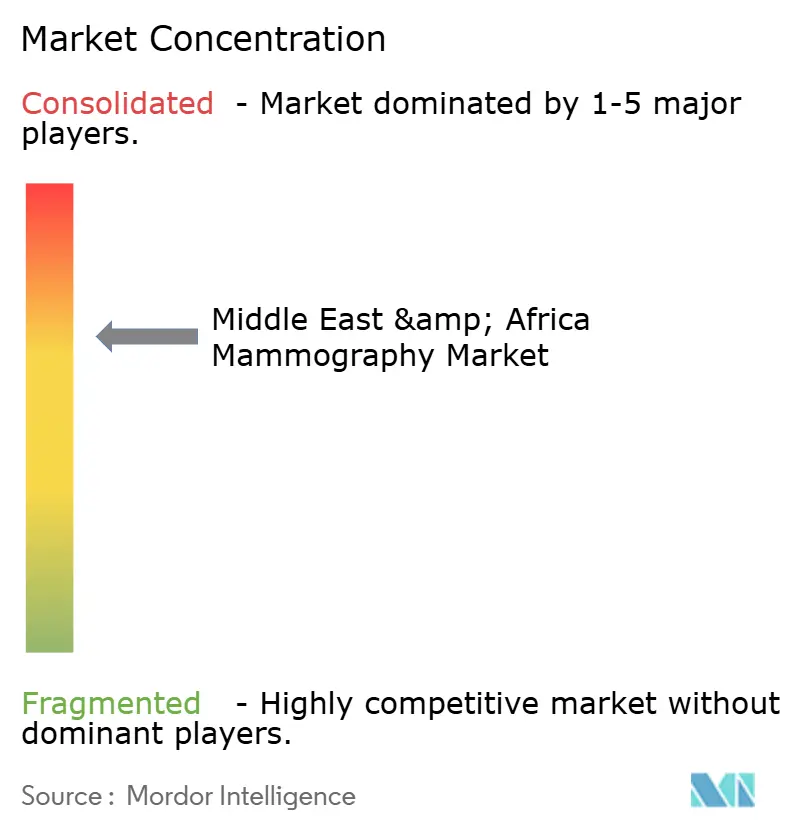
| Market Concentration | Medium |
Major Players *Disclaimer: Major Players sorted in no particular order Image © Mordor Intelligence. Reuse requires attribution under CC BY 4.0. | |
Middle East and Africa Mammography Market Analysis by Mordor Intelligence
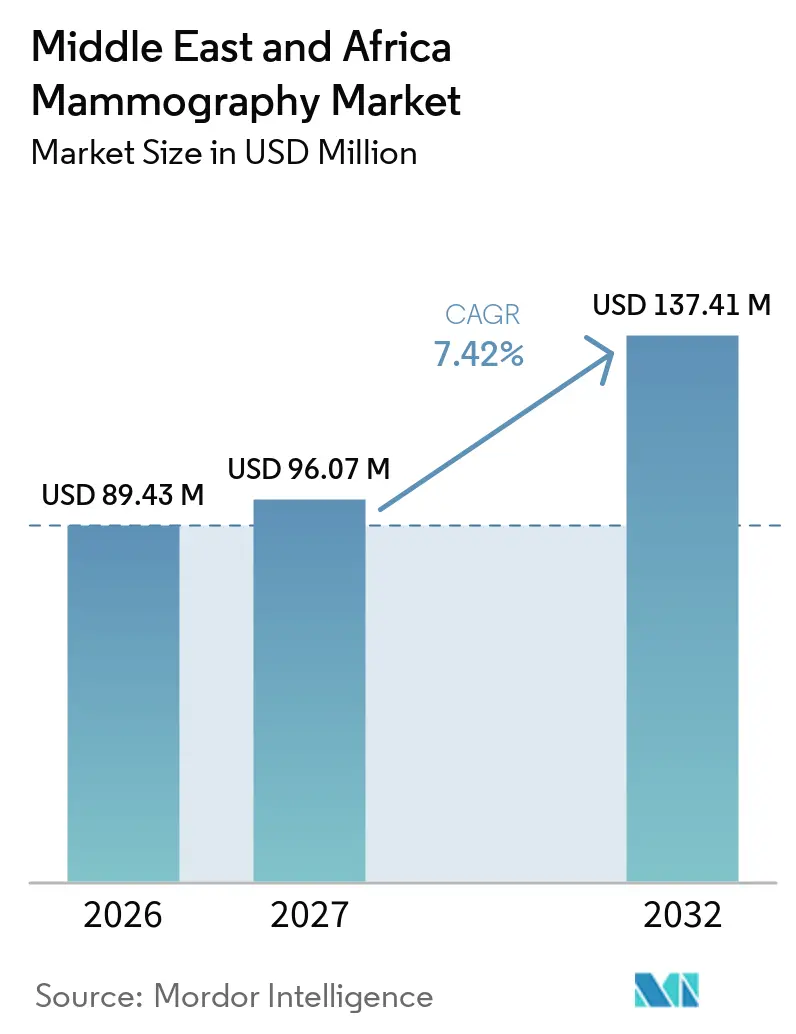
The Middle East and Africa Mammography Market size was valued at USD 89.43 million in 2026 and is estimated to grow from USD 96.07 million in 2027 to reach USD 137.41 million by 2032, at a CAGR of 7.42% during the forecast period (2027-2032).
Accelerated government spending on preventive oncology, a rapid conversion from analog to digital imaging, and the region’s growing burden of breast cancer collectively underpin this growth. Digital systems already dominate new installations, yet breast tomosynthesis 3-D units are diffusing quickly as providers seek higher cancer-detection sensitivity for dense-breast populations. Hospital networks remain the principal buyers, but specialized diagnostic centers are expanding fastest as policymakers encourage decentralized screening access. Competitive positioning hinges on AI-enabled workflows and vendor-financed leasing that lower upfront capital constraints.
Key Report Takeaways
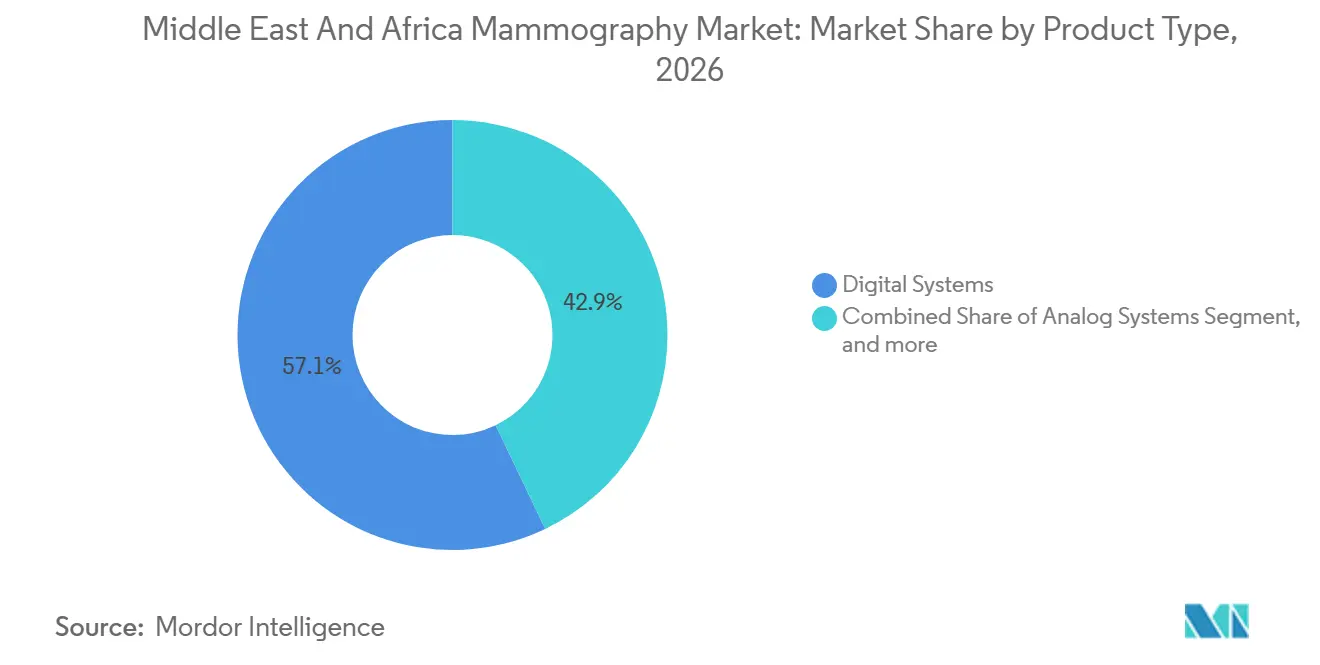
- By product type, digital systems held 57.14% of the Middle East and Africa mammography market share in 2026, whereas breast tomosynthesis 3-D systems are on track for the fastest 8.15% CAGR through 2032.
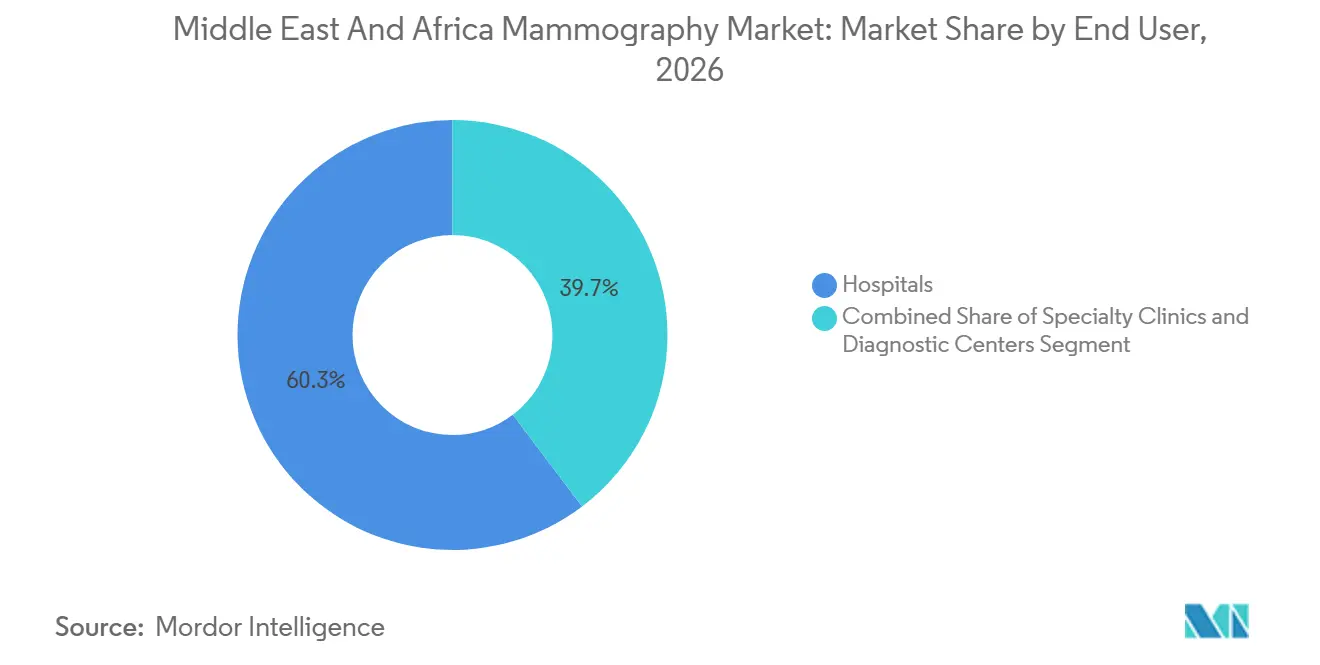
- By end user, hospitals accounted for 60.35% of the Middle East and Africa mammography market size in 2026, while diagnostic centers are forecast to expand at 8.21% CAGR between 2027 and 2032.
- By geography, the Gulf Cooperation Council (GCC) countries led with 52.35% revenue share in 2026; South Africa is set to grow the quickest at 8.52% CAGR through 2032.
Note: Market numbers in this report are based on Mordor Intelligence's proprietary estimation framework, which combines nine months of actuals with Q4 projections for base year 2026.
Market Trends and Insights
Drivers Impact Analysis of Middle East and Africa Mammography Market*
| Driver | ( ~ ) % Impact on CAGR Forecast | Geographic Relevance | Impact Timeline |
|---|---|---|---|
| Rising breast-cancer incidence among Middle-Eastern women | 2.10% | GCC countries, North Africa | Medium term (2-4 years) |
| Rapid shift from analog to 3-D tomosynthesis systems | 1.80% | GCC, South Africa urban centers | Short term (≤ 2 years) |
| Government & NGO-funded screening campaigns | 1.50% | Morocco, Saudi Arabia, UAE | Long term (≥ 4 years) |
| GCC-wide AI teleradiology reimbursement pilots | 1.20% | GCC countries | Medium term (2-4 years) |
| Growing demand for low-dose CESM in oil-industry clinics | 0.80% | GCC oil-sector facilities | Medium term (2-4 years) |
| Vendor-financed leasing lowering CapEx for private sites | 0.60% | Sub-Saharan Africa, smaller markets | Short term (≤ 2 years) |
| Source: Mordor Intelligence | |||
Rising Breast-Cancer Incidence Among Middle Eastern Women
Age-standardized breast-cancer incidence in the MENA bloc climbed 90.9% between 1990 and 2019, reaching 37.5 per 100,000 women, and the disease presents roughly a decade earlier than in Western settings. Diabetes prevalence, urban lifestyle shifts, and later child-bearing amplify risk, forcing authorities to widen screening beyond the traditional 50-69-year bracket. GCC registries show Qatar nationals and expatriates exhibiting higher incidence than Saudi nationals, illustrating how rapid socioeconomic transitions intersect with disease epidemiology. The escalating burden compels ministries to secure additional mammography capacity, catalyzing steady procurement pipelines across both hospital and ambulatory settings.
Rapid Shift from Analog to 3-D Tomosynthesis Systems
Digital breast tomosynthesis (DBT) improves invasive-cancer detection by 20–65% compared with 2-D film while reducing recall rates during multi-year screening cycles. These clinical benefits resonate in dense-breast populations common to Middle-Eastern women, accelerating capital budgets for 3-D upgrades. Vendors now embed AI triage tools; GE HealthCare’s Pristina Via integrates concurrent reading algorithms that flag suspicious lesions within existing PACS workflows[1]. Facilities marketing DBT as standard of care report higher patient retention, signaling that image-quality differentials increasingly outweigh price gaps against legacy 2-D units.
Government & NGO-Funded Screening Campaigns
Morocco’s National Breast-Cancer Screening Program raised annual coverage from 10.4% in 2014 to 28.8% in 2023 despite workforce and equipment shortage. Saudi Arabia’s program, operational since 2002, continues to expand mobile-unit fleets to address geographic barriers, yet cultural hesitance limits participation in rural provinces. The UAE illustrates residual gaps: 68% of eligible women rarely undergo mammography even though awareness is high, highlighting the need for simultaneous education and access drives. Multi-stakeholder campaigns anchor predictable replacement cycles for digital systems while setting service-quality benchmarks that private providers emulate.
GCC-Wide AI Teleradiology Reimbursement Pilots
Saudi and Emirati insurers now reimburse AI-assisted reads under pilot tariffs, boosting cancer-detection sensitivity by up to 21% compared with unaided radiologist review. The pilots mitigate radiologist shortages and support night-time coverage via cross-border teleradiology, allowing smaller Gulf markets to leverage expertise centralized in Dubai or Riyadh. Quality metrics derived from these programs influence procurement, favoring DBT systems bundled with FDA-cleared AI software.
Restraints Impact Analysis of Middle East and Africa Mammography Market*
| Restraint | ( ~ ) % Impact on CAGR Forecast | Geographic Relevance | Impact Timeline |
|---|---|---|---|
| High acquisition & maintenance cost of DBT units | –1.3% | Sub-Saharan Africa, smaller GCC markets | Short term (≤ 2 years) |
| Radiation-dose concerns & limited follow-up reimbursement | –0.9% | Conservative regions, cost-sensitive markets | Long term (≥ 4 years) |
| Shortage of female mammography technologists | –0.8% | Saudi Arabia, conservative regions | Long term (≥ 4 years) |
| Poor PACS/EHR interoperability for CAD-AI outputs | –0.7% | Healthcare systems with legacy IT | Medium term (2-4 years) |
| Source: Mordor Intelligence | |||
High Acquisition & Maintenance Cost of DBT Units
DBT hardware prices exceed USD 300,000, straining budgets of district hospitals that also face currency volatility and import duties. Vendor-financed leases ease barriers but bundle annual service contracts that elevate lifecycle outlays. Limited in-country engineering expertise prolongs downtime, prompting some operators to retain analog back-ups for redundancy, a practice that slows full digital conversion.
Shortage of Female Mammography Technologists
Cultural norms in Saudi Arabia, Kuwait, and parts of North Africa stipulate female technologists for breast imaging, yet the regional training pipeline graduates far fewer women than demand requires[2]. Staffing deficits inflate wages and limit operating hours, capping throughput even where equipment is available. Institutions explore part-time rosters and cross-training programs, but stringent quality-assurance protocols under the Mammography Quality Standards Act demand certified personnel, limiting flexibility[3].
*Our forecasts treat driver/restraint impacts as directional, not additive. The impact forecasts reflect baseline growth, mix effects, and variable interactions.
Middle East and Africa Mammography Market Segment Analysis
By Product Type:
Digital Dominance Drives Tomosynthesis TransitionDigital systems secured 57.14% of the Middle East and Africa mammography market share in 2026, underscoring how connectivity, dose efficiency, and PACS integration have eclipsed analog alternatives. The segment benefits from multiyear replacement mandates that align with quality-assurance protocols, anchoring a stable installed-base upgrade cycle. Simultaneously, breast tomosynthesis 3-D units are registering an 8.15% CAGR as clinicians prioritize volumetric imaging to detect small invasive lesions obscured in dense tissue. Hospitals leveraging DBT showcase lowered recall rates during community screening, thereby reducing unplanned diagnostic costs that were common with 2-D workflows.
The technological shift also catalyzes AI adjunct deployment, allowing facilities to triage cases and streamline radiologist workload. Fujifilm’s Amulet Sophinity, unveiled at Arab Health 2025, integrates dual-energy CESM and automated positioning software to shrink scan time and improve patient comfort. Over the forecast, the Middle East and Africa mammography market size for 3-D systems is expected to add USD 19.1 million, reflecting hospitals and diagnostic centers' race to match emerging reimbursement for advanced screening packages. Analog systems continue their down-cycle, though selected rural programs retain film units where power stability is uncertain, and images are courier-read in regional hubs.

By End User:
Hospitals Lead While Diagnostic Centers AccelerateHospitals contributed 60.35% of the Middle East and Africa mammography market size in 2026, capitalizing on embedded oncology pathways and integrated referral channels. Multidisciplinary teams enable immediate biopsy and surgical planning, reinforcing hospital preference among clinicians for complex follow-up needs. Yet diagnostic centers are tracking an 8.21% CAGR to 2032, propelled by convenient urban footprints, shorter wait times, and tailored customer experience that includes spa-like décor and extended evening hours.
The rise of point-solution chains mirrors broader primary-care privatization trends in the GCC, Egypt, and Kenya. Independent centers harness digital portals that deliver reports directly to patients’ phones, a service increasingly demanded by digitally savvy populations. Mobile mammography vans, often run by public-private consortia, extend coverage to remote districts and industrial sites; fleet utilization rates jumped after COVID-19–linked screening backlogs spotlighted geographic inequity. Over the outlook, hospitals will retain complex-care leadership, but enrollment growth under Saudi Arabia’s National Health Insurance Bill could redirect routine screening to cost-efficient standalone units.
Geography Analysis
GCC and South Africa Mammography Market
The GCC block maintained 52.35% revenue command in 2026 as unified digital-health agendas and pooled procurement accelerated high-specification system rollouts. Vendor alliances with oil-industry in-house clinics furnish early-adopter testbeds for CESM and AI triage, innovations that later disseminate to public hospitals. In South Africa, the National Health Insurance Bill positions preventive diagnostics at the heart of system reform; mammography capital outlays are forecast to compound at 8.52% yearly to 2032 as public-sector tenders consolidate equipment purchasing.
Africa Mammography Market
Rest-of-region markets grow unevenly. Morocco and Tunisia run national screening initiatives but still face participation gaps that leave late-stage presentation rates stubbornly high. Ethiopia and Tanzania wrestle with infrastructure shortfalls; teleimaging pilots in Francophone West Africa illustrate potential, yet bandwidth and training remain constraints. Emerging public-private alliances aim to solve last-mile issues through bundled mobile units and cloud PACS subscriptions payable in local currency, a model particularly attractive where currency swings erode dollar-denominated budgets.
Competitive Landscape
The competitive arena is moderately fragmented, headed by Hologic, Siemens Healthineers, and GE HealthCare, each integrating AI suites, ergonomic gantry designs, and multiyear service contracts to lock in clients. Hologic’s 2023 Sustainability Report details carbon-neutral manufacturing targets that resonate with GCC procurement policies requiring green-supply disclosures. Siemens Healthineers leverages its syngo Carbon enterprise-imaging platform to bundle mammography with cardiology and oncology PACS modules, strengthening account stickiness in multihospital groups.
GE HealthCare’s RadNet collaboration focuses on SmartTechnology toolsets that push AI inference to the edge, curtailing cloud latency and data-sovereignty concerns prevalent in Saudi Arabia. AGFA HealthCare commands the leading PACS footprint for two consecutive years, a position that allows seamless integration of third-party CAD modules for clients upgrading to DBT. Regional suppliers such as Trivitron and Allengers compete aggressively on price, often offering hybrid analog-digital packages to facilities that cannot fully migrate but seek incremental image-quality gains.
Vendor-financed leasing gains traction where CapEx ceilings are tight; payment schedules aligned with screening-program cash flows lower adoption barriers while anchoring annuity service revenues. Mobile-mammography specialists partner with oil companies and NGOs to reach off-grid sites, establishing thin-client PACS nodes that hook into city-based reading centers. Across the forecast, competitive differentiation will tighten around AI validation datasets generated on local populations, a requirement that regulators are beginning to codify into tender documents.
Middle East and Africa Mammography Industry Leaders
-
Metaltronica SpA
-
Siemens Healthineers
-
Koninklijke Philips NV
-
Hologic Inc.
-
Fujifilm Holdings Corporation
- *Disclaimer: Major Players sorted in no particular order
Middle East and Africa Mammography Market Companies Covered in this Report
- Hologic
- Siemens Healthineers
- GE Healthcare
- Fujifilm Holdings Corp.
- Canon
- Koninklijke Philips
- Agfa-Gevaert
- Metaltronica
- Konica Minolta
- Planmed
- iCAD Inc.
- RadNet Inc.
- Allengers Medical Systems
- Mindray Bio-Medical Electronics
- Trivitron Healthcare
- Carestream Health
- Shimadzu
- Dilon Technologies
- Esaote
- United Imaging Healthcare
Recent Industry Developments in Middle East and Africa Mammography Market
- January 2025: Lunit signed a five-year contract with Abu Dhabi Health Services Company (SEHA) to deploy Lunit INSIGHT MMG across 14 hospitals and 70 clinics, covering more than 3,000 beds.
- April 2024: The Radiological Society of North America (RSNA) expanded its Global Learning Center program to South Africa and Tanzania, offering three-year blended curricula that include hands-on mammography training.
Middle East and Africa Mammography Market Report Scope
As per the scope of the report, mammography refers to a standard diagnostic and screening technique that is used to screen breast tissues to check the presence of a malignant tumor. The process involves the use of low-energy X-rays for the early detection of breast cancer.
The Middle East & Africa Mammography Market is Segmented by Product Type (Digital Systems, Analog Systems, Breast Tomosynthesis, Film Screen Systems, and Other Product Types), End User (Hospitals, Specialty Clinics, and Diagnostic Centers), and Geography (GCC, South Africa, and Rest of the Middle East and Africa). The report offers the value (in USD) for the above segments.
Segmentation Overview
| Digital Systems |
| Analog Systems |
| Breast Tomosynthesis (3-D) |
| Other Product Types |
| Hospitals |
| Specialty Clinics |
| Diagnostic Centers |
| Gulf Cooperation Council (GCC) |
| South Africa |
| Rest of Middle-East & Africa |
| By Product Type | Digital Systems |
| Analog Systems | |
| Breast Tomosynthesis (3-D) | |
| Other Product Types | |
| By End User | Hospitals |
| Specialty Clinics | |
| Diagnostic Centers | |
| Geography | Gulf Cooperation Council (GCC) |
| South Africa | |
| Rest of Middle-East & Africa |
Key Questions Answered in the Report
How big is the Middle East & Africa Mammography Market?
The Middle East & Africa Mammography Market size is expected to reach USD 96.07 million in 2027 and grow at a CAGR of 7.42% to reach USD 137.41 million by 2032.
How fast are breast tomosynthesis 3-D systems growing in the region?
The segment is expanding at an anticipated 8.15% CAGR through 2032 as facilities seek higher invasive-cancer detection sensitivity.
Who are the key players in Middle East & Africa Mammography Market?
Metaltronica SpA, Siemens Healthineers, Koninklijke Philips NV, Hologic Inc. and Fujifilm Holdings Corporation are the major companies operating in the Middle East & Africa Mammography Market.
Which geography is forecast to grow the quickest through 2032?
South Africa leads with a projected 8.52% CAGR, supported by National Health Insurance reforms that prioritize early detection.