
Mexico Pet Supplements Market Size and Share
Market Overview
| Study Period | 2020 - 2030 |
|---|---|
| Forecast Data Period | 2025 - 2030 |
| Historical Data Period | 2020 - 2023 |
| Market Size (2025) | USD 102.5 Million |
| Market Size (2030) | USD 160.60 Million |
| Growth Rate (2025 - 2030) | 9.40 % |
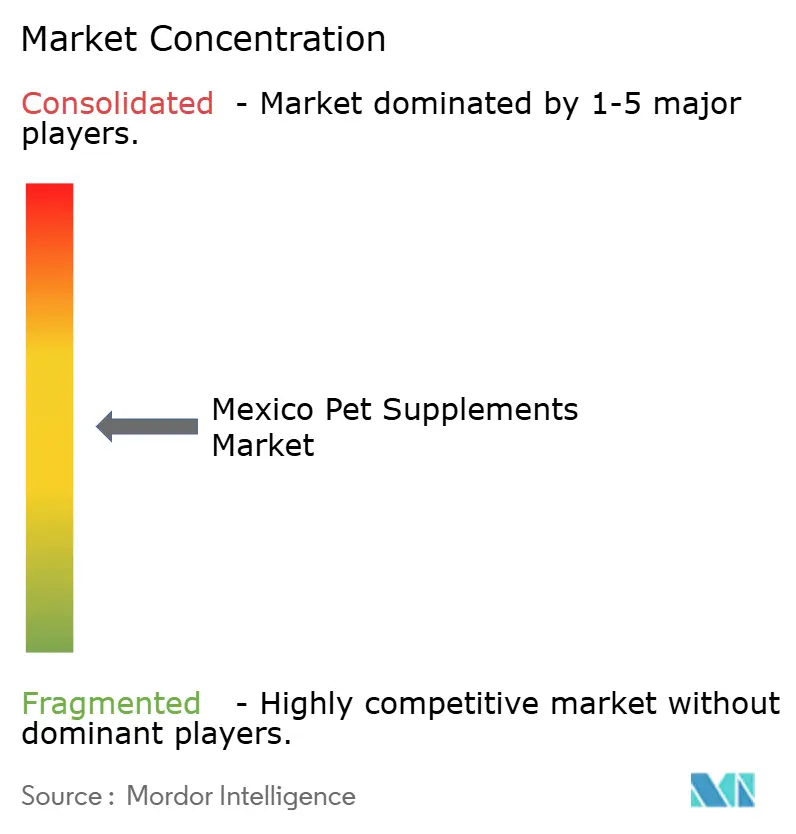
| Market Concentration | Medium |
Major Players
*Disclaimer: Major Players sorted in no particular order Image © Mordor Intelligence. Reuse requires attribution under CC BY 4.0. |
|
Mexico Pet Supplements Market Analysis by Mordor Intelligence
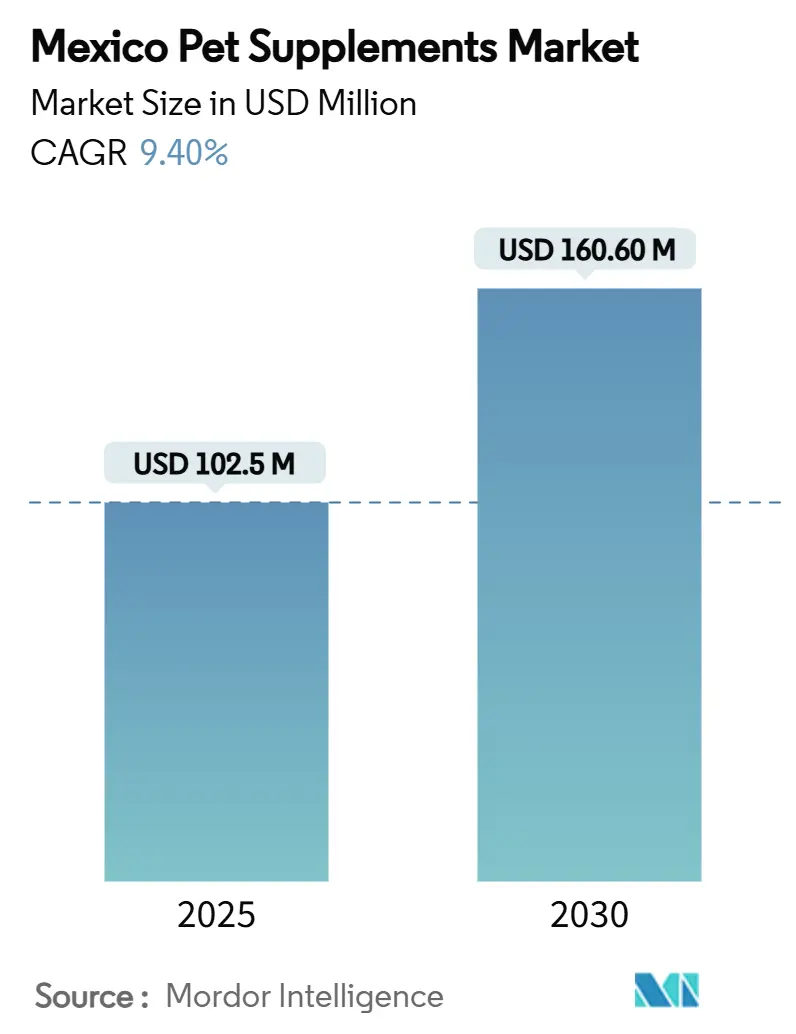
The Mexico pet supplement market size stands at USD 102.5 million in 2025 and is forecast to reach USD 160.6 million in 2030, advancing at a 9.4% CAGR during 2025–2030 [1]Source: Procuraduría Federal del Consumidor (PROFECO),“Alimentación Adecuada para Mascotas,” gob.mx. Rising pet humanization, supportive veterinary legislation, and fast-growing e-commerce channels are the primary forces propelling value growth, while regulatory bottlenecks and inflation-linked price sensitivity remain the main drags. Multinational brand investments in domestic factories and digital platforms are narrowing supply-chain gaps and supporting broader product variety. Demand for functional ingredients such as probiotics, omega-3s, and indigenous botanicals is widening the premium segment and spurring innovation. Moderate competitive intensity and a growing subscription ecosystem create space for niche, digitally native challengers to gain traction.
Key Report Takeaways
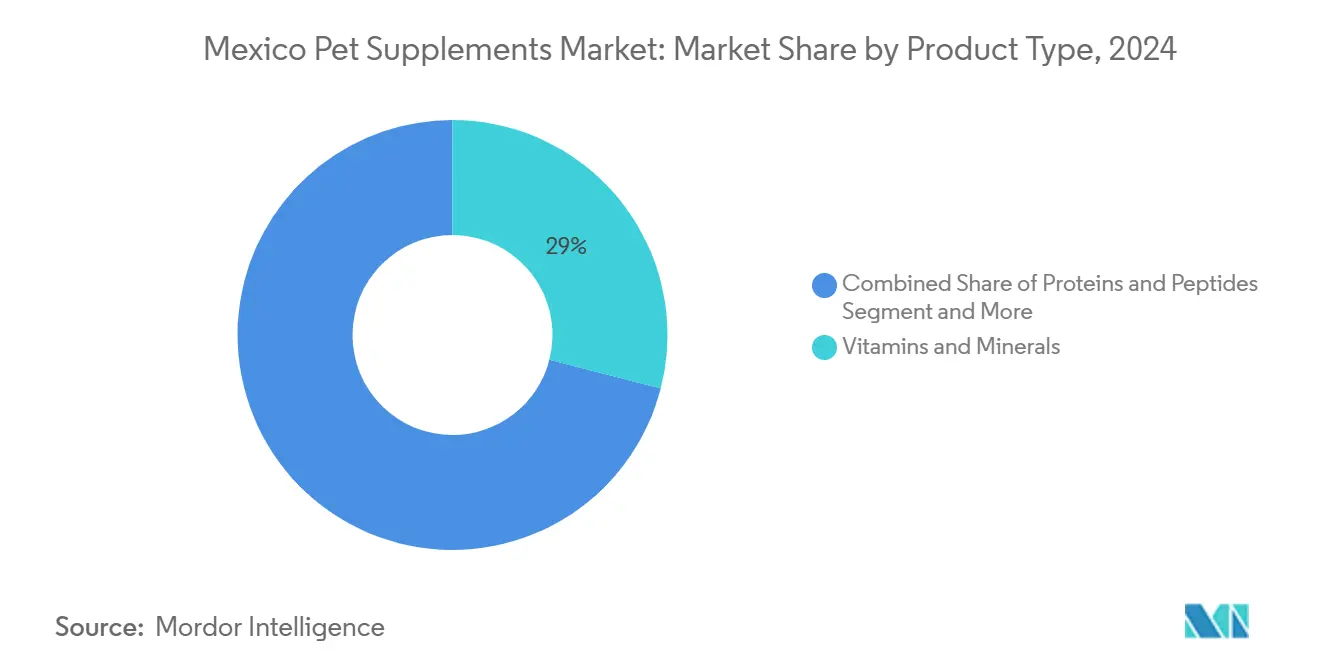
- By product type, vitamins and minerals led with 29.0% of the Mexican pet supplement market share in 2024, and probiotics are projected to expand fastest at a 12.4% CAGR to 2030.
- By pet type, dogs accounted for a 57.4% share of the Mexican pet supplement market size in 2024, while cats are advancing at an 11.3% CAGR through 2030.
- By form, chewables and soft chews captured 38.6% revenue share in 2024, and powders are forecast to grow fastest at a 13.6% CAGR to 2030.
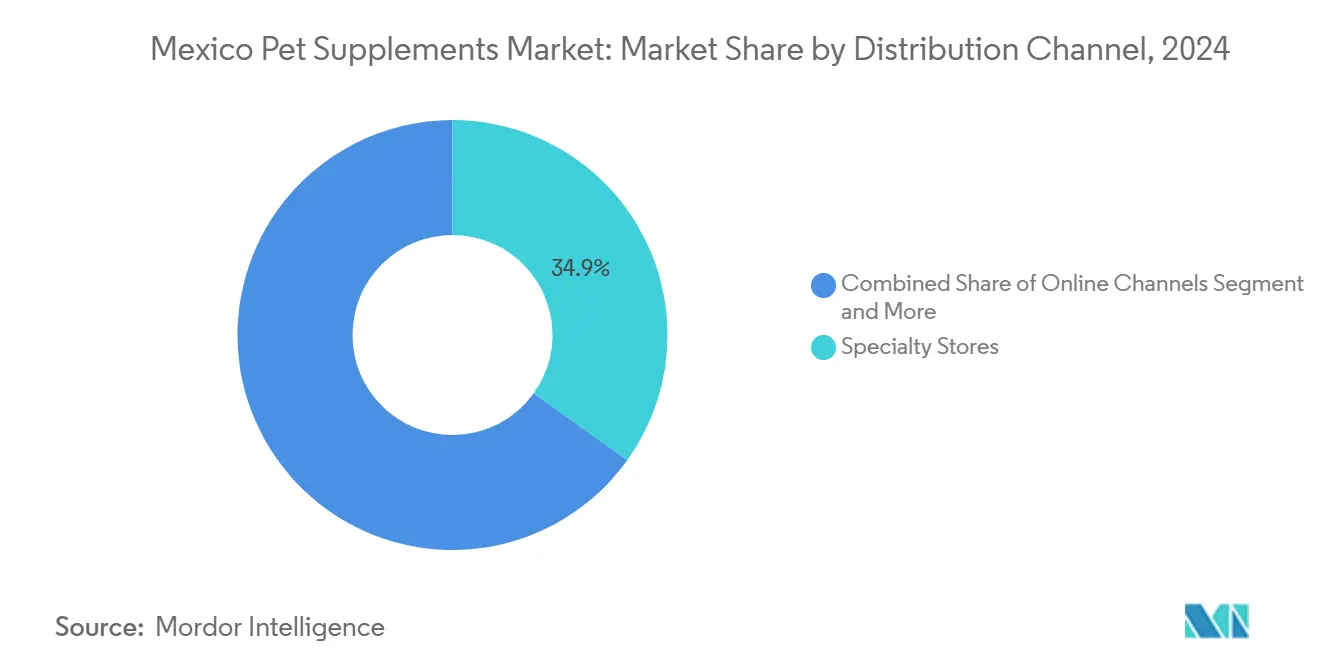
- By distribution channel, specialty stores held 34.9% of the market in 2024, whereas the online channel is set to register the fastest 14.8% CAGR through 2030.
Mexico Pet Supplements Market Trends and Insights
Drivers Impact Analysis*
| Driver | (~) % Impact on CAGR Forecast | Geographic Relevance | Impact Timeline |
|---|---|---|---|
| Humanization of pets and premium spend | +2.1% | National, strongest in Mexico City, Guadalajara, and Monterrey | Medium term (2–4 years) |
| Rising veterinarian recommendation rates | +1.8% | Urban centres are expanding to the suburbs | Short term (≤ 2 years) |
| Expanding e-commerce penetration | +1.6% | National, millennial driven | Short term (≤ 2 years) |
| Subscription-based supplement services | +1.2% | Large metros | Medium term (2–4 years) |
| Domestic nutraceutical incentives | +0.9% | Jalisco and Guanajuato hubs | Long term (≥ 4 years) |
| Indigenous botanical ingredients adoption | +0.7% | Yucatán, Oaxaca, and Chiapas | Long term (≥ 4 years) |
| Source: Mordor Intelligence | |||
Humanization of Pets and Premium Spend
Young Mexican consumers increasingly treat pets as family members [2]Source: National Anthropology and History Institute, “Pets join Mexico’s Day of the Dead celebrations, as Fido and Tiger get their altars,” apnews.com , raising acceptance of human-grade ingredients and driving premium purchases even when budgets tighten. Millennials represent 45% of online buyers and favor transparent labels, boosting demand for supplements that promise specific health outcomes. Premium pet food already accounts for 12% of sales and is set to at least double by 2030, underpinning a parallel upswing in complementary supplements. Urbanization limits outdoor activity and heightens owner concern over indoor-related ailments, fueling functional product uptake. Companies are responding with chewables that mimic human vitamins, aligning form factor with familiar routines.
Rising Veterinarian Recommendation Rates
A public veterinary care law effective January 2024 mandates municipal clinics, broadening professional advice to price-sensitive owners [3]Source: Cámara de Diputados, "DOF publica decreto con reforma para promover establecimiento de clínicas veterinarias públicas," gob.mx. Regulatory rules require vet oversight for many functional claims, embedding professional guidance into the purchase path. Diagnostic improvements permit personalized protocols, linking test results to supplement regimens. Consolidation trends seen in global chains signal potential for similar corporate veterinary footprints locally, likely increasing standardized supplement dispensing. Cultural reliance on expert opinions accelerates adoption, particularly for emerging categories such as joint support and immune health.
Expanding E-Commerce Penetration
Online pet product sales surged 90% year-on-year during El Buen Fin and now account for double-digit category value. Amazon, Mercado Libre, and grocery platforms complement pure-play pet retailers, significantly expanding the number of Stock Keeping Units (SKUs) beyond traditional brick-and-mortar assortments. Digital storefronts eliminate regional availability gaps, enabling rural buyers to access premium lines. Mars, Incorporated's USD 1 billion digital program aims to double global online revenue by 2030, with Mexico identified as a priority market for pilot AI-driven recommendation engines. In-site education tools reduce awareness barriers and turn browsers into subscription customers.
Subscription-Based Supplement Services
Recurring delivery platforms such as Guadalajara’s PetFoodie are normalizing automated replenishment for vitamins and probiotics. Subscriptions smooth compliance by eliminating gaps in administration, a key hurdle to efficacy. They also gather consumption data that feeds personalization algorithms, enhancing customer lifetime value. Flexible plans let owners adapt dosages as pets age or health needs evolve, reducing product switching. Investors favor the predictable cash flows, prompting new entrants to design direct-to-consumer models around gut-health powders and joint chews.
Restraints Impact Analysis*
| Restraint | (~) % Impact on CAGR Forecast | Geographic Relevance | Impact Timeline |
|---|---|---|---|
| Limited consumer awareness in rural areas | -1.4% | Southern and southeastern states | Medium term (2–4 years) |
| High price sensitivity versus basic feed | -1.1% | National, low-income cohorts | Short term (≤ 2 years) |
| Treat-format cannibalization | -0.8% | Urban centres | Short term (≤ 2 years) |
| Weak enforcement of labelling norms | -0.6% | National | Long term (≥ 4 years) |
| Source: Mordor Intelligence | |||
Limited Consumer Awareness in Rural Areas
Veterinary density outside metros remains low, restricting professional guidance that fosters supplement adoption. Budget cuts trimmed SADER (Secretariat of Agriculture and Rural Development) extension programs by 28%, slowing outreach that could educate rural owners. Connectivity gaps hinder e-commerce penetration, and cold-chain limitations complicate probiotic distribution. Owners often rely on household remedies and view supplements as discretionary. Despite these hurdles, the new public veterinary mandate may gradually close awareness gaps, suggesting medium-term improvement potential.
High Price Sensitivity Versus Basic Feed
Spending has increasingly shifted toward economy pet food, limiting room in household budgets for add-on products. Pet owners are becoming more price-conscious, carefully evaluating cost-per-serving and favoring multi-functional treats that deliver perceived value across health benefits. The growing presence of private-label options is reshaping shelf space, challenging branded supplements to justify premium pricing through clinically supported results. Without targeted messaging that highlights long-term savings from preventive health benefits, adoption of supplements may remain limited, particularly among budget-sensitive pet owners seeking tangible value in every purchase.
*Our forecasts treat driver/restraint impacts as directional, not additive. The impact forecasts reflect baseline growth, mix effects, and variable interactions.
Segment Analysis
By Product Type: Vitamins Maintain Scale as Probiotics Accelerate
Vitamins and minerals capture 29.0% of the Mexican pet supplement market size in 2024, anchoring the Mexican pet supplement market with universally recognized health benefits. The segment draws steady demand because dosage guidance is widely understood, and price points span economy to premium. Probiotics are projected to post the fastest 12.4% CAGR, as gut health awareness mirrors human supplement trends. Consumer familiarity with yogurt cultures softens adoption friction, and microencapsulation technologies now permit heat-stable chewables that travel well in Mexico’s warm climate. Omega-3s hold a niche but resilient uptake due to joint and coat claims approved by veterinarians, and emerging postbiotic blends promise differentiated immunity cues. Personalized packs that bundle multivitamins with strain-specific probiotics are likely to blur segment boundaries and increase average order values.
The Mexican pet supplement market size for probiotics is projected to almost double by 2030, reinforced by cross-promotion within therapeutic diets sold by veterinary clinics. Though competition intensifies, investment in clinical validation differentiates premium Stock Keeping Unit (SKUs) that command 25% price premiums over generic formulations. Regulatory scrutiny favors players with in-house labs, filtering out opportunistic imports and stabilizing price hierarchies.



By Pet Type: Dogs Dominate, Cats Catch Up
Dogs make up 57.4% of the Mexican pet supplement market share in 2024, due to higher dosage volumes and more frequent veterinary visits, securing a sizeable portion of the Mexican pet supplement market share in 2024. Canine joint and mobility products benefit from aging large breeds, while anxiety chews now gain traction amid fireworks-related stress incidents common during local festivals. Cats, however, clock the swiftest growth at 11.3% CAGR as urban dwellers favor compact companions and recognize feline-specific issues such as urinary tract health. Palatable gel formats and squeeze-up sticks address administration hurdles that historically stunted cat supplement penetration.
The Mexico pet supplement market size tied to cats remains smaller than that of dogs, but is set to overtake small mammal and bird segments combined by 2027, presenting a strategic whitespace for flavor science innovation. Feline formulations employing cranberry extract and L-tryptophan demonstrate high repeat-purchase intent, suggesting brand-loyal behaviors once palatability thresholds are met. Multi-pet households offer cross-selling opportunities where bundled dog-and-cat packs lower per-unit shipping costs in direct-to-consumer channels.
By Form: Chewables Retain Preference while Powders Surge
Chewables and soft chews lead the format adoption, accounting for 38.6% of the Mexican pet supplement market size in 2024. This is because they mask flavors and simplify the dosing process. Owners equate them with treats, fostering positive routines that improve compliance. Powders projected to deliver the strongest 13.6% CAGR and are typically sprinkled onto wet food, offering flexible dosing for multi-pet households. Tablets and Capsules remain relevant for prescription-adjacent SKUs requiring precise concentration, yet palatability constraints limit mainstream growth. Liquids are suitable for small breeds and senior animals with swallowing difficulties, particularly in probiotic suspensions.
Manufacturers are deploying cold-pressed techniques to preserve actives in chewables and experimenting with dairy-free bases to accommodate lactose-sensitive pets. At the same time, compostable sachets for single-serve probiotic powders align with sustainability concerns among younger shoppers. Innovations that fuse the convenience of chewables with the customization of powders may recalibrate format shares over the forecast period.
By Distribution Channel: Specialty Stores Command Value, Online Takes Speed
Specialty stores hold a 34.9% market share of the Mexican pet supplement market in 2024, by combining curated assortments with knowledgeable staff who bridge knowledge gaps in complex functional claims. They host live veterinary consultations and in-store sampling that build trust and justify premium pricing. The Mexican pet supplement market, however, is witnessing a rapid shift online, with the online channel forecasted to log a 14.8% CAGR as shoppers seek convenience and broader SKU access. Supermarkets and hypermarkets maintain mass reach but devote limited shelf space to niche supplements, focusing instead on high-turnover treat lines. Convenience stores meet emergency needs, particularly for flea and tick tablets, but contribute a modest volume.
Omnichannel strategies are removing the boundaries. Click-and-collect allows owners to research online and pick up their items at neighborhood stores within hours. Subscription functionality baked into e-commerce platforms increases repeat rates and reduces churn, making digital the preferred launchpad for novel botanicals and condition-specific bundles. Meanwhile, veterinarians leverage rising clinic traffic under the public care law to stock in-house brands, expanding the other channels bucket.
Geography Analysis
Mexico’s three largest metropolitan areas, Mexico City, Guadalajara, and Monterrey, generate more than half of the 2024 category revenues due to higher disposable income, dense veterinary networks, and early adopter mindsets. Cross-border influences elevate premium awareness in the northern corridor, where shoppers regularly interact with the United States retail trends and import flows. Manufacturing clusters in Jalisco and Guanajuato benefit from agro-industrial linkages and logistic efficiencies. Nestlé (Purina)’s USD 220 million Silao expansion underscores the region’s strategic appeal.
Central highlands supply botanicals like yucca and agave derivatives, enabling the use of locally sourced actives that resonate in clean-label positioning. Southern states, despite lower per-capita spending, offer a long-term upside as infrastructure programs expand broadband and veterinary services. The Pacific and Atlantic ports facilitate ingredient imports and finished-goods exports under the Pacific Alliance, positioning Mexico as a springboard into South America. Government-backed free-trade corridors could reduce logistics costs, supporting competitive export pricing and potentially enhancing regional brand leadership.
Urban sprawl and rising apartment living in Tier-2 cities such as Puebla and León foster smaller pet adoption, favoring cat and mini-breed dog supplements. Meanwhile, climatic diversity necessitates formulation tweaks for heat-resilient chewables for tropical coastal zones and high-calorie supplements for colder plateaus. Disaster-prone areas prone to supply disruption are prime candidates for subscription services that guarantee continuity through centralized fulfillment from well-connected hubs.
Competitive Landscape
The Mexican pet supplement market is moderately concentrated, with the top five firms accounting for a significant share of revenue in 2024. Nestlé (Purina) leads by leveraging broad dog-food penetration to cross-sell joint chews, while Mars, Incorporated channels its USD 1 billion digital push into AI-guided supplement pairings. Elanco leverages its veterinary relationships through its expanding diagnostics arm following its June 2025 acquisition of Heska.
Local players differentiate themselves through the use of indigenous ingredients and agile new-product timelines, although they face limitations in scale for R&D and navigating regulations. ADM’s USD 33 million investment in the Guadalajara line boosts the output of Ganador and Minino supplements, signaling a rising multinational appetite for mid-priced, locally tailored SKUs. Direct-to-consumer entrants, such as Zesty Paws, achieve double-digit growth in Mexico by leveraging social media micro-influencers and subscription bundles.
Strategically, incumbents pursue vertical integration. Mars, Incorporated Cerba Vet's acquisition broadens its diagnostic suite, locking in clinical data loops that feed supplement R&D. Co-manufacturing deals with third-party nutraceutical labs help smaller brands bypass capital expenditures while retaining brand agility. Regulatory expertise remains a moat as firms with dedicated compliance teams secure faster NOM-051 approvals, accelerating time-to-shelf versus import-dependent rivals.
Mexico Pet Supplements Industry Leaders
-
Virbac
-
Vetnil
-
Mars, Incorporated
-
Elanco
-
Nestlé (Purina)
- *Disclaimer: Major Players sorted in no particular order

Recent Industry Developments
- October 2024: Elanco received FDA approval for Credelio Quattro in October 2024, a broad-spectrum chewable targeting six parasites. Its projected launch in Mexico by 2026 aligns with the country's growing demand for multifunctional, preventive pet health solutions. This supports Elanco’s entry into Mexico’s expanding pet supplements market.
- May 2024: Nestlé (Purina) announced a USD 220 million expansion of its Silao plant, which will include the installation of two new lines, making it South America’s largest pet food facility.
- January 2024: Mars, Incorporated acquired Cerba Vet and ANTAGENE to strengthen its Science and Diagnostics division. This enhances its clinical capabilities, supporting evidence-based positioning. In Mexico’s growing pet supplements market, the move can help Mars build trust among veterinarians and promote preventive health messaging.


Mexico Pet Supplements Market Report Scope
| Milk Bioactives |
| Omega-3 Fatty Acids |
| Probiotics |
| Proteins and Peptides |
| Vitamins and Minerals |
| Other Nutraceuticals |
| Cats |
| Dogs |
| Other Pets |
| Chewables and Soft Chews |
| Tablets and Capsules |
| Powders |
| Liquids |
| Convenience Stores |
| Online Channel |
| Specialty Stores |
| Supermarkets/Hypermarkets |
| Other Channels |
| By Product Type | Milk Bioactives |
| Omega-3 Fatty Acids | |
| Probiotics | |
| Proteins and Peptides | |
| Vitamins and Minerals | |
| Other Nutraceuticals | |
| By Pet Type | Cats |
| Dogs | |
| Other Pets | |
| By Form | Chewables and Soft Chews |
| Tablets and Capsules | |
| Powders | |
| Liquids | |
| By Distribution Channel | Convenience Stores |
| Online Channel | |
| Specialty Stores | |
| Supermarkets/Hypermarkets | |
| Other Channels |


Key Questions Answered in the Report
How big is the Mexico pet supplement market in 2025?
It is valued at USD 102.5 million and is projected to reach USD 160.6 million in 2030.
Which segment grows fastest among product types?
Probiotics, forecast to post a 12.4% CAGR through 2030.
What role do veterinarians play in supplement adoption?
Veterinarians increasingly recommend supplements under new public clinic mandates, adding a projected 1.8 percentage-point boost to CAGR.
Why are chewables popular in Mexico?
Chewables mask flavors and align with treat routines, driving 38.6% of 2024 value.
How does e-commerce influence sales?
Online channels expand assortment and convenience, projected to grow at 14.8% CAGR and accelerate rural access.
Page last updated on:


 Your data is secure and never sold or shared.



