
Men's Swimwear Market Size and Share
Market Overview
| Study Period | 2021 - 2031 |
|---|---|
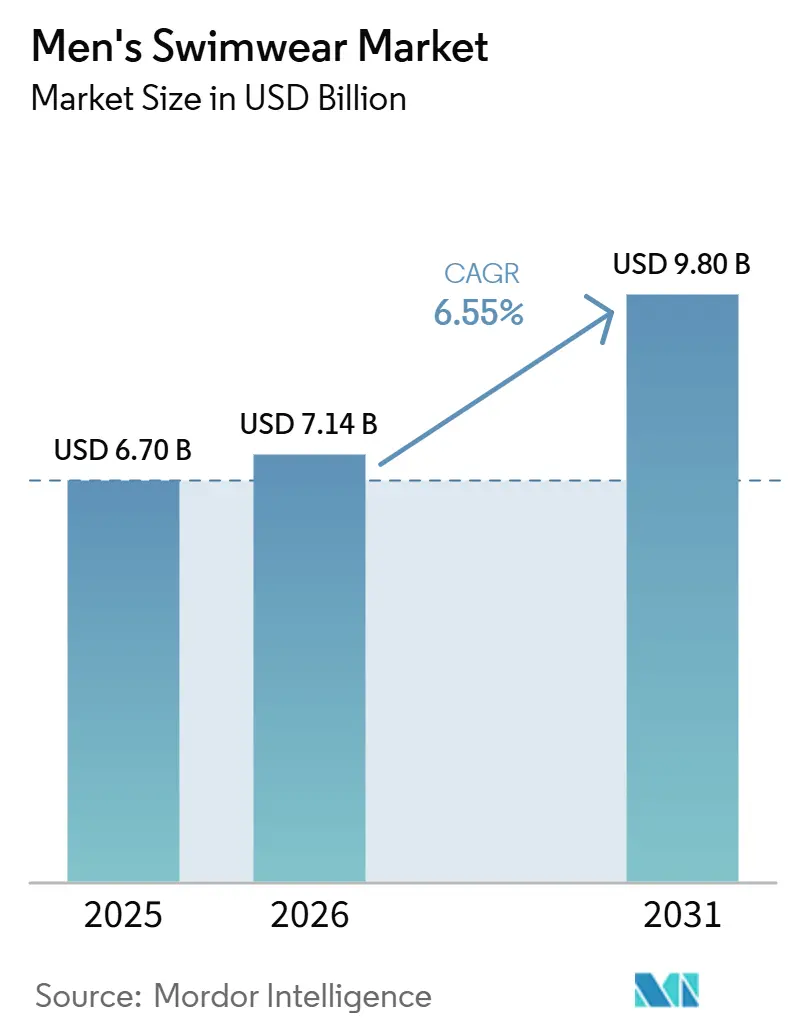
| Market Size (2026) | USD 7.14 Billion |
| Market Size (2031) | USD 9.80 Billion |
| Growth Rate (2026 - 2031) | 6.55 % |
| Fastest Growing Market | Asia Pacific |
| Largest Market | North America |
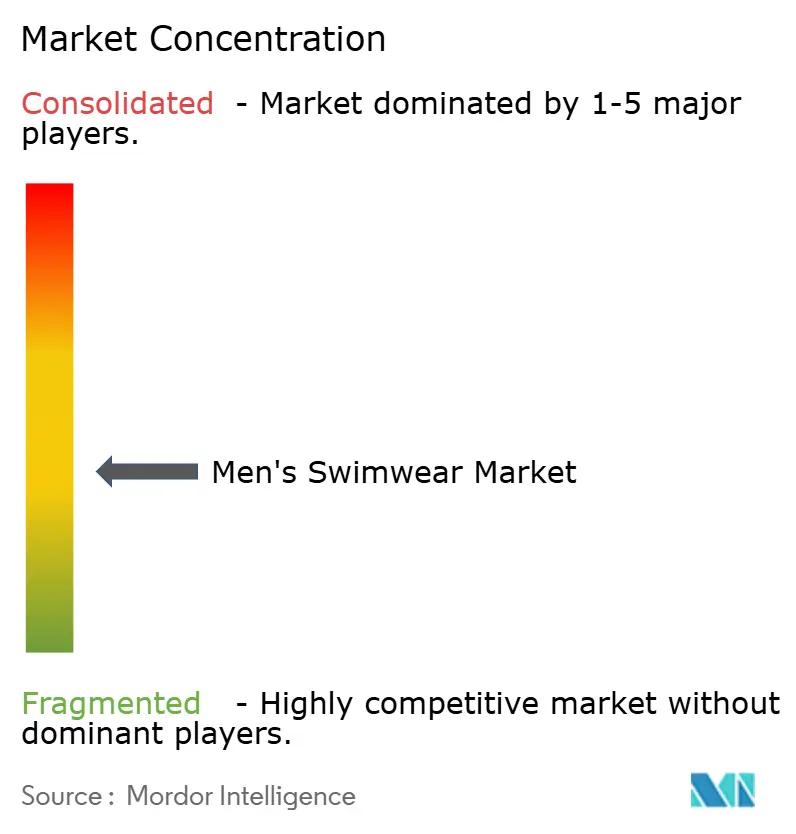
| Market Concentration | Medium |
Major Players *Disclaimer: Major Players sorted in no particular order Image © Mordor Intelligence. Reuse requires attribution under CC BY 4.0. | |
Men's Swimwear Market Analysis by Mordor Intelligence
The men’s swimwear market size is projected to expand from USD 6.70 billion in 2025 and USD 7.14 billion in 2026 to USD 9.80 billion by 2031, registering a CAGR of 6.55% between 2026 and 2031. This growth reflects the convergence of performance sportswear engineering with lifestyle aesthetics, driven by younger triathlon participants and the integration of athleisure design principles into water-specific apparel. Brands are enhancing margins by incorporating quick-dry, four-way stretch, and anti-odor technologies, which justify premiums over standard swim trunks. Additionally, regulatory pressure on microplastic shedding is prompting investments in low-shed synthetics and bio-based elastane. Mobile-first shopping behaviors, particularly among Gen Z and Millennials, are shifting sales toward online channels, where AI-driven product discovery is transforming merchandising strategies and reducing return rates. While North America provides a stable revenue base, the Asia-Pacific region is experiencing the fastest growth, fueled by rising disposable incomes, coastal infrastructure development, and increasing triathlon participation.
Key Report Takeaways
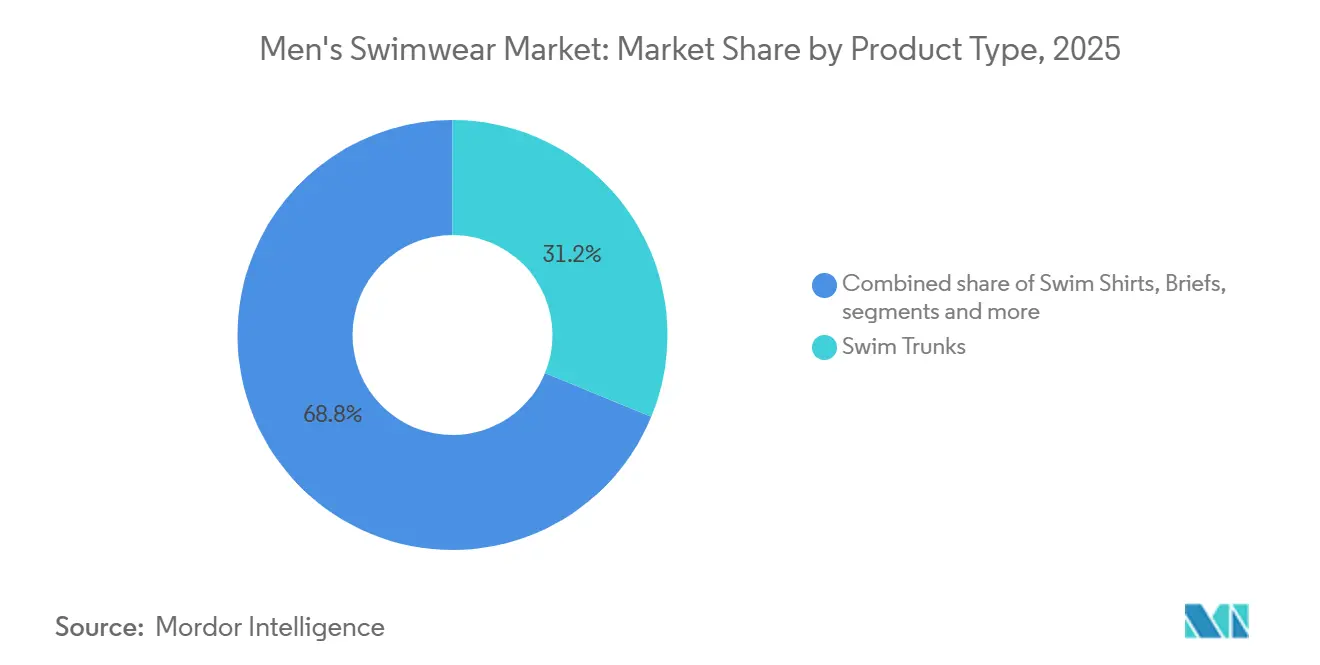
- By product type, swim trunks led with 31.21% of the men’s swimwear market share in 2025, while swim shirts are projected to grow at 7.09% CAGR through 2031.
- By fabric, nylon accounted for 35.43% of the 2025 total, whereas spandex is forecast to expand at a 6.78% CAGR over 2026-2031.
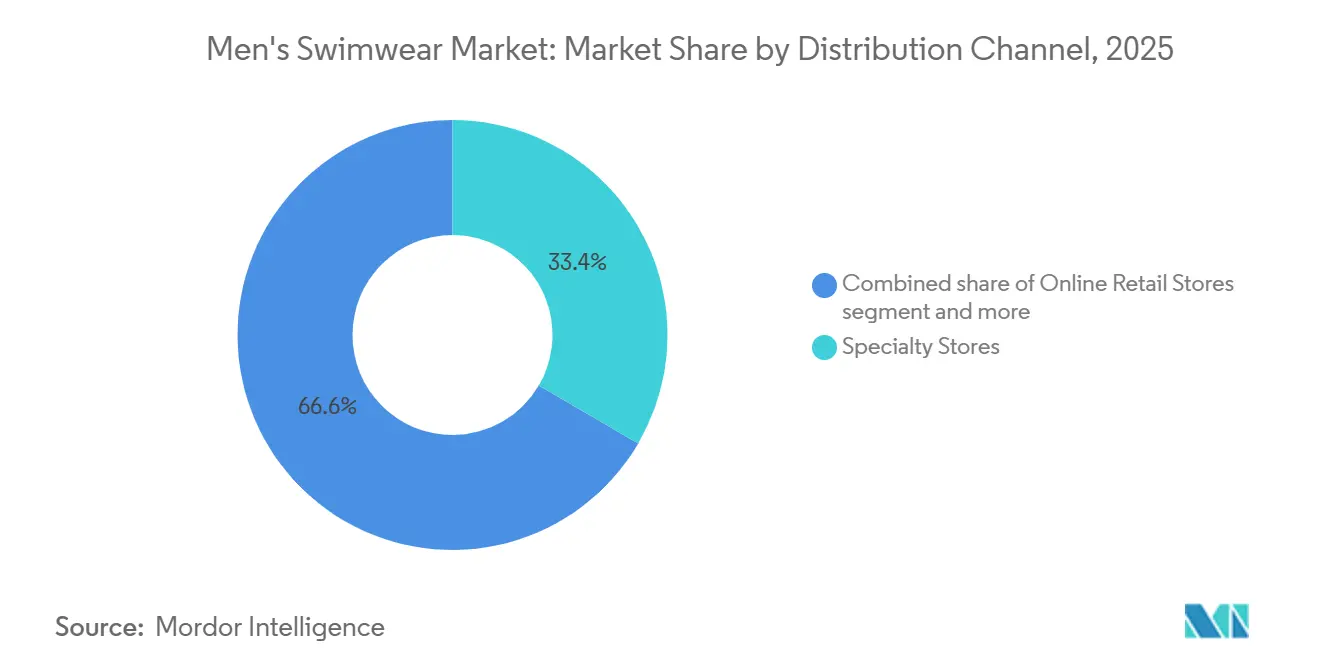
- By distribution channel, specialty stores accounted for 33.41% of 2025 sales, and online retail stores are advancing at a 8.20% CAGR through 2031.
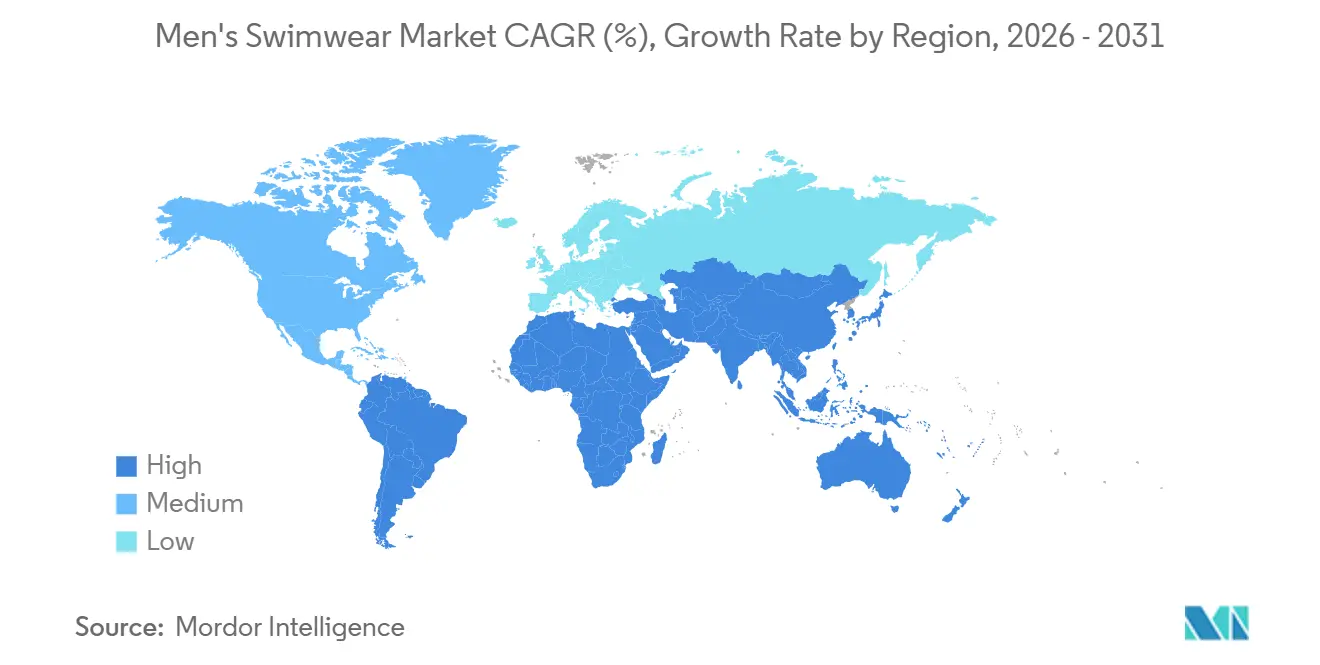
- By geography, North America commanded 32.28% of 2025 revenue, while Asia-Pacific is the fastest-growing region with a 7.49% CAGR during 2026-2031.
Note: Market size and forecast figures in this report are generated using Mordor Intelligence’s proprietary estimation framework, updated with the latest available data and insights as of January 2026.
Market Trends and Insights
Drivers Impact Analysis of Men's Swimwear Market*
| Driver | (~) % Impact on CAGR Forecast | Geographic Relevance | Impact Timeline |
|---|---|---|---|
| Surge in men's athleisure-inspired swim lines | +1.2% | Global, with early adoption in North America and Western Europe | Medium term (2-4 years) |
| Eco-friendly, recycled fabrics gaining premium shelf space | +1.0% | North America, Europe, Australia; spillover to urban Asia-Pacific | Long term (≥ 4 years) |
| Rising coastal and cruise tourism | +0.9% | Global, concentrated in Mediterranean, Caribbean, Southeast Asia | Medium term (2-4 years) |
| Growing participation in triathlon and open-water sports | +0.8% | North America, Europe, Australia, with emerging growth in China and Latin America | Medium term (2-4 years) |
| Social media-driven micro-trends | +0.7% | Global, strongest in Gen Z and Millennial cohorts across all regions | Short term (≤ 2 years) |
| Advances in swimwear technology | +1.1% | Global, led by innovation hubs in North America, Europe, and Japan | Long term (≥ 4 years) |
| Source: Mordor Intelligence | |||
Surge in men's athleisure-inspired swim lines
The expansion of men’s athleisure-inspired swimwear is driven by the increasing adoption of athleisure and active lifestyle trends, as consumers prioritize versatile clothing that transitions seamlessly from workouts to social or beach settings. This growth is supported by rising global health awareness, increased participation in water sports, and a preference for performance-oriented designs incorporating quick-drying, stretchy, and chlorine-resistant fabrics. For example, the Ten Thousand Set Short, an ultra-lightweight hybrid swim short, is engineered for both intense training and pool use, featuring four-way stretch, quick-drying material, and resistance to chlorine and saltwater, effectively bridging gym and ocean functionality. This trend reflects the global men’s swimwear market’s shift toward performance-driven, sustainable, and multifunctional designs, moving away from traditional board shorts to versatile resort wear that supports active lifestyles. Social media and celebrity endorsements further accelerate the adoption of stylish and functional swimwear, with European and North American markets leading the transformation through eco-conscious materials and technical innovation. Athleisure-inspired swimwear addresses modern men’s demand for comfort, performance, and style in a single garment.
Eco-friendly, recycled fabrics gaining premium shelf space
Sustainability is now a fundamental expectation in the global men’s swimwear market, particularly in premium and direct-to-consumer segments dominated by eco-conscious consumers. Leading brands such as Arena, Ecoalf, Rip Curl, and Billabong are incorporating materials like recycled nylon (ECONYL) and LYCRA EcoMade spandex, derived from discarded fishing nets and plastic waste, to produce high-performance swimwear. The use of ECONYL, for instance, saves 70,000 barrels of crude oil per 10,000 tonnes and significantly reduces carbon emissions, aligning with the market's shift toward circular economy principles. Certifications such as the Global Recycled Standard and OEKO-TEX Standard 100 provide third-party validation, influencing purchasing decisions among environmentally conscious male consumers. Europe and North America are leading this transition, with textile innovations focusing on combining sustainability with performance features such as chlorine resistance and durability. However, higher costs and increased minimum order quantities for recycled fibers present challenges for smaller brands and compress profit margins for mid-tier players, driving consolidation toward larger brands capable of absorbing sustainability investments while maintaining competitive pricing. Sustainability has evolved from being a niche differentiator to a baseline requirement for market relevance, with the integration of environmental responsibility, performance, and style defining the next growth phase of the global men’s swimwear industry.
Rising coastal and cruise tourism
Coastal and cruise travel is driving growth in the market for resort-oriented swimwear, with increasing demand for hybrid swim-to-street styles, such as board shorts and volley shorts, that transition seamlessly from the water to casual dining. The rise in Mediterranean, Caribbean, and Southeast Asian beach destinations has further expanded this market. According to the Secretariat of Social Communication, between January and May 2025, Brazil received 4.8 million international tourists, marking a 49.7% increase compared to the 3.2 million tourists during the same period in 2024 [1]. The cruise industry's recovery is particularly significant for premium swimwear brands, as cruise passengers typically purchase multiple swim pieces per trip and prefer quick-dry, wrinkle-resistant fabrics that suit limited cabin storage. However, the seasonal nature of coastal tourism poses inventory risks and creates working-capital challenges for brands.
Growing participation in triathlon and open-water sports
The growing participation in triathlons and open-water sports, particularly among athletes under 30, with a 35% increase in this demographic and over 250,000 IRONMAN registrations reflecting a 10% year-on-year rise in first-time participants in 2025, is driving demand for high-performance swimwear designed for seamless pool-to-road transitions [2]. This trend prioritizes comfort, fit, and ease of use over traditional swimwear metrics, fueling the need for tri-suits, jammers, and fast-dry shorts that minimize drag and withstand frequent use. For example, the Skins A400 Triathlon Suit, featuring compression support, quick-drying fabric, and seamless construction, addresses the swim-bike-run transitions that younger athletes demand. This product reflects the global men’s swimwear market's evolution toward technical, athletic designs that cater to multi-sport lifestyles rather than leisure swimming. Brands are responding with custom-fit solutions, try-before-you-buy wetsuit policies, and limited-run pre-sales to reduce waste while targeting this emerging consumer group. Consequently, the growth of triathlon participation is transforming men’s swimwear into a performance-oriented category where versatility, fit, and durability are critical to market relevance, positioning this demographic-driven demand as a key growth driver for the global men’s swimwear industry.
Restraints Impact Analysis of Men's Swimwear Market*
| Restraint | (~) % Impact on CAGR Forecast | Geographic Relevance | Impact Timeline |
|---|---|---|---|
| Volatile raw-material prices | -0.9% | Global, with acute exposure in nylon-dependent supply chains | Short term (≤ 2 years) |
| Counterfeit and low-priced unbranded imports | -0.7% | Global, concentrated in China, Hong Kong SAR, and Turkey origins | Medium term (2-4 years) |
| Seasonal demand fluctuations | -0.5% | Temperate climates in North America and Europe | Short term (≤ 2 years) |
| Tightening sustainability regulations on micro-plastics | -0.6% | Europe, with spillover to North America and Australia | Long term (≥ 4 years) |
| Source: Mordor Intelligence | |||
Volatile raw-material prices
Volatility in raw material prices, primarily driven by caprolactam fluctuations linked to petrochemical feedstocks such as benzene and crude oil, presents a significant challenge to the global men’s swimwear market by compressing profit margins and disrupting fixed-price retail agreements. As caprolactam constitutes the highest variable cost in Nylon 6 production, the primary material for swim trunks, linings, and performance gear, price increases are quickly transmitted to manufacturers, often before retail prices can be adjusted. For example, the Speedo LZR Racer X, a high-performance jammer made with Nylon 6 and elastane, faces rising production costs during caprolactam price surges, forcing brands to either absorb the additional costs or risk losing price-sensitive customers. Smaller swimwear brands, lacking the procurement scale or hedging mechanisms of larger competitors, are particularly vulnerable to these cost increases, which cannot easily be passed on to consumers. This volatility complicates inventory management, scenario planning, and long-term pricing strategies. While some brands mitigate risks by monitoring caprolactam trends and using feedstock-indexed contracts, mid-tier players continue to face sustained margin pressures. Additionally, oil price surges, with petrochemical costs rising over 50% during recent geopolitical tensions, further exacerbate the economic challenges for performance-oriented swimwear reliant on Nylon 6.
Counterfeit and low-priced unbranded imports
Counterfeit and low-cost unbranded imports negatively impact the global men’s swimwear market by eroding brand value, weakening pricing power, and fostering unfair competition. Counterfeiters operate with minimal costs, while legitimate manufacturers face significant enforcement expenses. Intellectual property violations are particularly detrimental to premium segments, as fast-fashion retailers exploit weak IP protections, creating market confusion and diluting authentic brand positioning. For example, counterfeit versions of the Arena Powerskin ST 2.0 competitive swimwear, produced with inferior fabrics lacking chlorine resistance and drag-reduction technology, are sold at a fraction of the original price, misleading consumers and damaging Arena’s reputation when these substandard products fail to perform. This proliferation of low-quality items undermines consumer trust and brand image, especially in digital marketplaces where counterfeit products are listed alongside genuine offerings. In emerging markets, price-sensitive consumers often opt for these cheaper alternatives, limiting the adoption of premium swimwear brands. Furthermore, the grey market disrupts pricing strategies through unauthorized distribution channels, significantly affecting premium positioning. Counterfeiting, concentrated in Asia-Pacific and emerging markets, imposes medium-term growth challenges, with brands incurring rising enforcement costs while counterfeiters capitalize on demand for affordable but inferior products.
*Our forecasts treat driver/restraint impacts as directional, not additive. The impact forecasts reflect baseline growth, mix effects, and variable interactions.
Men's Swimwear Market Segment Analysis
By Product Type:
Swim Shirts Capture Health-Conscious ShiftSwim trunks accounted for 31.21% of the market in 2025, driven by their versatility across resort, casual, and light athletic use. However, they face commoditization pressures from fast-fashion entrants and counterfeit imports. In contrast, swim shirts are projected to grow at a 7.09% CAGR through 2031, outpacing the broader market as rising UV-protection awareness and dermatological endorsements drive adoption beyond traditional surf and triathlon niches. Board shorts continue to dominate in surf and beach-culture markets, with brands like Billabong, Rip Curl, and Volcom focusing on recycled polyester, durable water-repellent finishes, and quick-dry technologies to stand out.
Jammers and briefs cater to competitive swimmers and triathletes who prioritize drag reduction and muscle compression. Innovations such as Arena's Hyperforce fabric and Speedo's Lamoral coating have positioned tech suits in the premium price range of USD 200-400. The "other" category includes hybrid styles, such as Hurley's 2.5-inch ultra-short boardshorts, targeting bold, beach-to-bar consumers seeking freedom of movement and fashion-forward aesthetics. Product segmentation is intensifying as brands introduce activity-specific lines, such as sprint versus distance tech suits, surf versus pool boardshorts, and lifestyle versus performance trunks. This approach enables brands to capture margins in niches where functional differentiation justifies premium pricing and minimizes direct competition with commodity alternatives.

By Fabric:
Spandex Gains on Durability InnovationNylon accounted for 35.43% of the fabric market share in 2025, valued for its premium texture, durability, and compatibility with performance finishes. However, it faces challenges from volatility in input costs linked to caprolactam and petrochemical feedstocks. Spandex is anticipated to grow at a 6.78% CAGR through 2031, driven by advancements in chlorine-resistant and bio-based elastane technologies that enhance garment longevity and align with sustainability goals. For instance, LYCRA XTRA LIFE fiber, which lasts up to 10 times longer than unprotected spandex, is being adopted by brands like NEXT and Arena to reduce fiber degradation caused by chlorine, UV exposure, and lotions.
Polyester, known for its superior chlorine resistance compared to nylon, is increasingly sourced from recycled PET bottles. Brands such as Billabong, Rip Curl, and Ecoalf are emphasizing 100% recycled polyester constructions and Global Recycled Standard certifications to attract environmentally conscious consumers. The "other" category includes innovative materials like organic cotton, hemp blends, merino wool, and plant-based fibers derived from corn or castor beans. These materials offer biodegradability and renewable feedstocks but lack the stretch and performance characteristics of synthetic alternatives.
By Distribution Channel:
Online Retail Reshapes Margin StructureSpecialty stores accounted for 33.41% of the distribution in 2025, leveraging their ability to provide tactile product experiences, personalized fit consultations, and curated assortments that simplify consumer decision-making. For instance, Nordstrom offers over 90 rash guard items, showcasing the extensive assortment of specialty retailers that can utilize to drive cross-shopping and upselling opportunities. Meanwhile, online retail stores, expanding at a CAGR of 8.20% through 2031, are gaining market share from specialty stores as mobile-first shopping and AI-driven discovery continue to influence consumer purchasing behavior. This shift is reflected in data from the U.S. Census Bureau, which reported that e-commerce accounted for 16.6% of total retail sales in Q4 2025, with total e-commerce sales reaching USD 1,233.7 billion in 2025, marking a 5.4% year-over-year growth [3].
Supermarkets and hypermarkets cater to price-sensitive, convenience-driven shoppers seeking basic swim trunks and seasonal items. Additionally, "other" channels, such as direct-to-consumer brand websites, pop-up stores, and resort retail, capitalize on impulse purchases and benefit from premium pricing in captive environments. The growing shift to online retail is compressing specialty-store margins, compelling brick-and-mortar players to differentiate through exclusive collaborations, in-store events, and services like same-day alterations or swim-fit clinics, which are difficult to replicate in digital formats.
Geography Analysis
North America Men's Swimwear Market
North America is anticipated to lead the global men’s swimwear market, contributing 32.28% of revenue in 2025, driven by high pool ownership, a robust swim club culture, and established sportswear brands ensuring consistent demand. Tariff adjustments have prompted American brands to shift manufacturing from China to Mexico and Vietnam, diversifying supply chains while maintaining cost efficiency. Although the market is mature, innovations in UV-protective fabrics and sustainable materials are encouraging premium product upgrades among environmentally and health-conscious consumers, reinforcing North America’s role as a trendsetter where performance features and sustainability drive value growth in the global men’s swimwear market.
APAC and Oceania Men's Swimwear Market
The Asia-Pacific region is projected to grow at a CAGR of 7.49%, the fastest among all regions, supported by rising incomes, coastal urbanization, and the increasing popularity of triathlon and open-water events in China, India, and Southeast Asia. Australia’s stringent AS/NZS 4399:2020 UV standards are boosting demand for certified UPF 50+ garments, enabling brands to command higher prices. Additionally, government funding for aquatic facilities in India is expanding distribution opportunities, although local price sensitivity continues to favor value-tier products.
EMEA and South America Men's Swimwear Market
Europe, the Middle East and Africa, and South America exhibit mixed growth trajectories. Europe’s microplastic regulations are driving investments in low-shed yarns, benefiting early adopters with compliant fabrics. The expansion of luxury resorts in the United Arab Emirates and Saudi Arabia is increasing demand for premium swimwear, while Brazil’s strong beach culture supports steady mid-market board-short sales despite economic volatility. Currency fluctuations across South America are prompting international brands to adjust pricing strategies to maintain margins, though local production helps mitigate exchange-rate risks.
Competitive Landscape
The men’s swimwear market is moderately fragmented, reflecting the coexistence of global sportswear giants, heritage swimwear specialists, and a long tail of regional and direct-to-consumer brands. Established players such as Speedo and Arena leverage institutional partnerships; for example, Speedo renewed its 40-year relationship with USA Swimming in October 2025, committing USD 2 million in product donations to grassroots programs. Athleisure entrants such as Lululemon, Vuori, and Adidas are importing design velocity, digital-first distribution, and lifestyle positioning from activewear into swim, compressing product lifecycles and raising the bar for aesthetic differentiation.
Emerging opportunities exist in sustainable premium segments, where brands like Ecoalf, Orlebar Brown, and Patagonia command premiums by combining recycled materials, certifications, and product stewardship programs such as lifetime repairs and take-back schemes. Direct-to-consumer brands are bypassing traditional retail by optimizing for AI-driven discovery, providing rich product metadata on fit, fabric, UV protection, and sustainability to capture share among younger, digitally native consumers who default to AI-assisted search.
Technology is a key driver in the global men's swimwear market, with brands leveraging proprietary fabrics such as LYCRA XTRA LIFE, ECONYL, and Hyperforce to enhance performance, sustainability, and speed-to-market. By utilizing digital product development and 3D sampling, these companies reduce time-to-market and inventory risks, enabling swift adaptation to micro-trends. In contrast, brands reliant on long lead times and large minimum order quantities face challenges in responding to shifting consumer preferences, increasing obsolescence risks, and market share losses. This technological divide is reshaping competition, favoring agile brands with advanced materials and digital workflows.
Men's Swimwear Industry Leaders
-
Speedo International Ltd.
-
Arena S.p.A.
-
Adidas AG
-
Nike Inc.
-
Authentic Brands Group
- *Disclaimer: Major Players sorted in no particular order
Men's Swimwear Market Companies Covered in this Report
- Speedo International Ltd.
- Adidas AG
- Nike Inc.
- Arena S.p.A.
- Authentic Brands Group
- TYR Sport Inc.
- PVH Corp. (Tommy Hilfiger Swim)
- Billabong International Ltd.
- Rip Curl Group Pty Ltd.
- Hurley LLC
- Lululemon Athletica Inc.
- Decathlon S.A.
- Under Armour Inc.
- Patagonia Inc.
- Phelps Brand (Aqua Sphere)
- Orlebar Brown Ltd.
- Vuori Inc.
- Tom & Teddy Pty Ltd.
- Ecoalf S.A.
- Volcom LLC
Recent Industry Developments in Men's Swimwear Market
- March 2026: Tommy John expanded into swimwear with the launch of a new collection featuring two models of men’s swim shorts. These designs addressed common concerns regarding uncomfortable mesh linings. Both models included a supportive, quick-dry liner inspired by Tommy John underwear, along with side-seam pockets, elastic drawstring waists, and hidden rear-zip pockets.
- March 2026: Naia Beach, a swim and activewear brand, announced the launch of Naia Men swim shorts. The collection featured five designs in various colors and prints, including seashells, beach scenes, and solid blue and brown styles. Each pair included a zip-back pocket, velcro side pockets, a back hook, and a drawstring closure.
- October 2025: Speedo and USA Swimming renewed their partnership through 2028, marking 40 years of collaboration, with Speedo retaining limited exclusive rights in technical swimwear and committing USD 2 million in product donations to USA Swimming Foundation programs, expanding brand penetration into grassroots and diversity initiatives.
- July 2025: Adidas launched a four-piece men's and gender-inclusive swimwear collection with Olympic diver Tom Daley, featuring Infinitex chlorine-resistant fabric and quick-dry materials, priced from USD 38 and available on adidas.co.uk and at selected retailers, blending performance and fashion-forward aesthetics.
Global Men's Swimwear Market Report Scope
The men's swimwear market is segmented by product type, fabric, distribution channel, and geography. Based on product type, the market is segmented into swim trunks, board shorts, briefs, jammers, swim shirts, and others. By fabric, the market is segmented into polyester, nylon, spandex, and others. By distribution channels, the market has been segmented into hypermarkets/supermarkets, specialty stores, online retail stores, and other distribution channels. By geography, the market has been segmented into North America, Europe, Asia-Pacific, South America, and the Middle East and Africa. For each segment, the market sizing and forecasts have been done based on value (USD).
Segmentation Overview
| Swim Trunks |
| Board Shorts |
| Briefs |
| Jammers |
| Swim Shirts |
| Others |
| Polyester |
| Nylon |
| Spandex |
| Others |
| Supermarkets/Hypermarkets |
| Specialty Stores |
| Online Retail Stores |
| Other Distribution Channels |
| North America | United States |
| Canada | |
| Mexico | |
| Rest of North America | |
| Europe | Germany |
| United Kingdom | |
| Italy | |
| France | |
| Spain | |
| Netherlands | |
| Poland | |
| Belgium | |
| Sweden | |
| Rest of Europe | |
| Asia-Pacific | China |
| India | |
| Japan | |
| Australia | |
| Indonesia | |
| South Korea | |
| Thailand | |
| Singapore | |
| Rest of Asia-Pacific | |
| Middle East and Africa | South Africa |
| Saudi Arabia | |
| United Arab Emirates | |
| Nigeria | |
| Egypt | |
| Morocco | |
| Turkey | |
| Rest of Middle East and Africa | |
| South America | Brazil |
| Argentina | |
| Colombia | |
| Chile | |
| Peru | |
| Rest of South America |
| By Product Type | Swim Trunks | |
| Board Shorts | ||
| Briefs | ||
| Jammers | ||
| Swim Shirts | ||
| Others | ||
| By Fabric | Polyester | |
| Nylon | ||
| Spandex | ||
| Others | ||
| By Distribution Channel | Supermarkets/Hypermarkets | |
| Specialty Stores | ||
| Online Retail Stores | ||
| Other Distribution Channels | ||
| By Geography | North America | United States |
| Canada | ||
| Mexico | ||
| Rest of North America | ||
| Europe | Germany | |
| United Kingdom | ||
| Italy | ||
| France | ||
| Spain | ||
| Netherlands | ||
| Poland | ||
| Belgium | ||
| Sweden | ||
| Rest of Europe | ||
| Asia-Pacific | China | |
| India | ||
| Japan | ||
| Australia | ||
| Indonesia | ||
| South Korea | ||
| Thailand | ||
| Singapore | ||
| Rest of Asia-Pacific | ||
| Middle East and Africa | South Africa | |
| Saudi Arabia | ||
| United Arab Emirates | ||
| Nigeria | ||
| Egypt | ||
| Morocco | ||
| Turkey | ||
| Rest of Middle East and Africa | ||
| South America | Brazil | |
| Argentina | ||
| Colombia | ||
| Chile | ||
| Peru | ||
| Rest of South America | ||
Key Questions Answered in the Report
What is the projected value of the men’s swimwear market in 2031?
The men's swimwear market is forecast to reach USD 9.80 billion by 2031, growing at a 6.55% CAGR from 2026.
Which product category is expanding fastest through 2031?
Swim shirts, driven by UPF 50+ protection demand, are set to advance at a 7.09% CAGR.
Why is Asia-Pacific the most attractive growth region?
Rising disposable incomes, coastal urbanization, and expanding triathlon participation deliver a 7.49% regional CAGR.
How are sustainability regulations influencing fabric selection?
EU microplastic rules and French washing-machine mandates push brands toward low-shed polyester, recycled nylon, and bio-based elastane.
Which sales channel is gaining share most rapidly?
Online retail stores are growing at an 8.20% CAGR as mobile shopping and AI-driven discovery reshape purchasing habits.