
Krill Oil Supplements Market Size and Share
Market Overview
| Study Period | 2020 - 2030 |
|---|---|
| Market Size (2025) | USD 0.71 Billion |
| Market Size (2030) | USD 1.09 Billion |
| Growth Rate (2025 - 2030) | 8.95 % |
| Fastest Growing Market | Asia Pacific |
| Largest Market | North America |
| Market Concentration | Medium |
Major Players *Disclaimer: Major Players sorted in no particular order Image © Mordor Intelligence. Reuse requires attribution under CC BY 4.0. | |
Krill Oil Supplements Market Analysis by Mordor Intelligence
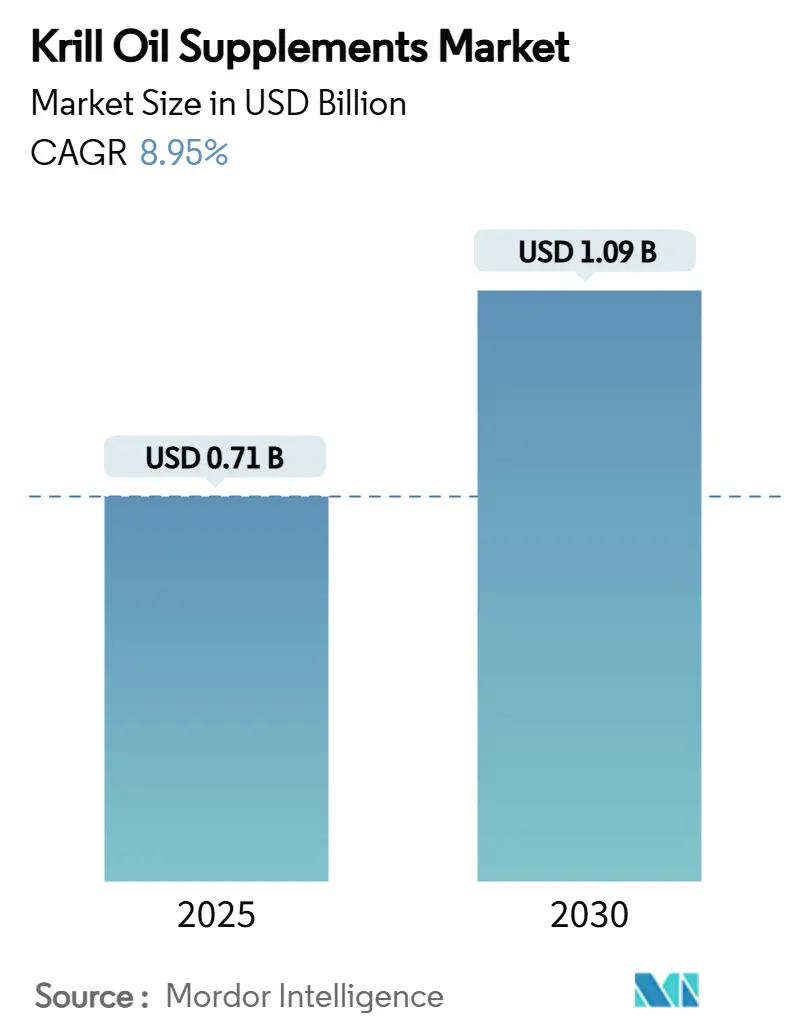
The global krill oil supplements market size is expected to reach USD 0.71 billion in 2025 and USD 1.09 billion by 2030, growing at a compound annual growth rate (CAGR) of 8.95% during the forecast period. The market has transformed from a niche omega-3 supplement to a mainstream nutraceutical product due to its superior bioavailability compared to fish oil supplements. The enhanced absorption properties of krill oil are attributed to its phospholipid-bound omega-3 fatty acids, which facilitate better cellular uptake and integration. Research through network meta-analyses shows that krill oil achieves better absorption at doses under 2000 mg, making it a more cost-effective option than high-dose fish oil formulations. This improved bioavailability means consumers require lower doses to achieve the same therapeutic benefits, resulting in reduced pill burden and improved compliance with supplementation regimens.
Key Report Takeaways
- By product form, softgels held 66.12% of the krill oil supplements market share in 2024, while gummies are expected to grow at a 10.45% CAGR through 2030.
- By health benefits, heart and cardiovascular health segment accounted for 44.32% of the krill oil supplements market size in 2024, while brain and cognitive function is growing at a 9.87% CAGR to 2030.
- By end-users, adults represented 88.35% of the market share in 2024, while supplements for children are projected to grow at a 10.11% CAGR during the forecast period.
- By distribution channels, online retail stores dominated with 38.46% market share in 2024 and is expected to maintain the highest CAGR of 11.23% from 2025-2030.
- By geography, North America led the market with 34.53% share in 2024, while Asia-Pacific is expected to achieve the highest regional CAGR of 10.76% through 2030.
Note: Market size and forecast figures in this report are generated using Mordor Intelligence’s proprietary estimation framework, updated with the latest available data and insights as of January 2026.
Market Trends and Insights
Drivers Impact Analysis of Krill Oil Supplements Market*
| Driver | (~) % Impact on CAGR Forecast | Geographic Relevance | Impact Timeline |
|---|---|---|---|
| Superior bioavailability and efficacy | +2.1% | Global | Medium term (2-4 years) |
| Rising interest in natural and sustainable products | +1.8% | North America and Europe | Long term (≥ 4 years) |
| Focus on cardiovascular and joint health | +1.6% | Global | Short term (≤ 2 years) |
| Demand for multifunctional and clean-label supplements | +1.4% | North America and Asia-Pacific | Medium term (2-4 years) |
| Growth of preventive health and wellness trends | +1.3% | Global | Long term (≥ 4 years) |
| Increasing scientific research and product development | +1.2% | Global | Medium term (2-4 years) |
| Source: Mordor Intelligence | |||
Superior bioavailability and efficacy
Krill oil contains omega-3 fatty acids bound to phospholipids, which are better absorbed by the body compared to fish oil supplements. This allows manufacturers to produce effective supplements with lower doses. Clinical studies indicate that krill oil achieves similar bioavailability to fish oil at lower doses, particularly in formulations below 2000 mg. The improved absorption leads to better patient adherence and fewer digestive side effects, influencing both healthcare provider recommendations and consumer use. The phospholipid structure enables direct cellular absorption, avoiding digestive issues common with triglyceride-bound omega-3s in fish oil. Research shows that krill oil more effectively increases the HS-Omega-3 Index compared to equal doses of fish oil, providing quantifiable evidence of its absorption benefits.
Rising interest in natural and sustainable products
The krill oil market is evolving as consumers increasingly demand environmentally responsible supplements. The Commission for the Conservation of Antarctic Marine Living Resources (CCAMLR) regulates the Antarctic krill fishery through strict precautionary management, permitting only 1% of total biomass for annual harvest[1]. This regulation establishes krill oil as a sustainable option compared to fish oil, which faces overfishing challenges. In 2021, Marine Stewardship Council (MSC) certified operations accounted for 75% of krill catches. The Association of Responsible Krill harvesting companies further enhances sustainability through seasonal buffer zones and eco-harvesting methods that reduce by-catch, addressing environmental concerns.
Focus on cardiovascular and joint health
Research validates krill oil's cardiovascular benefits through systematic reviews showing improvements in lipid profiles and inflammatory markers. Clinical trials demonstrate that krill oil supplementation reduces total cholesterol, low-density lipoprotein cholesterol, and triglycerides while increasing high-density lipoprotein levels. The anti-inflammatory effects of krill oil's astaxanthin and omega-3 fatty acids benefit joint health. A 6-month multicenter study found that krill oil supplementation reduced osteoarthritic knee pain in adults with mild to moderate osteoarthritis. These cardiovascular and joint health benefits make krill oil effective for consumers seeking comprehensive health solutions.
Demand for multifunctional and clean-label supplements
The demand for clean-label products and multifunctional supplements drives innovation in krill oil formulations. Manufacturers are developing products that deliver omega-3 benefits alongside other bioactive compounds. Krill oil's natural composition, which includes phospholipids, astaxanthin, and choline with omega-3 fatty acids, aligns with consumer preferences for transparent ingredient lists and minimal processing. The U.S. Food and Drug Administration's revised "healthy" claim definition, taking effect in February 2025, establishes new criteria for nutrient content claims that favor natural nutrients over synthetic additives[2]. This regulatory change benefits krill oil supplements, as they contain multiple bioactive compounds naturally without synthetic fortification. New product launches highlight krill oil's whole food characteristics, presenting it as a natural alternative to processed fish oil supplements.
Restraints Impact Analysis of Krill Oil Supplements Market*
| Restraint | (~) % Impact on CAGR Forecast | Geographic Relevance | Impact Timeline |
|---|---|---|---|
| Sustainability and environmental concerns | -1.2% | Global | Long term (≥ 4 years) |
| High production and procurement costs | -1.8% | Global | Short term (≤ 2 years) |
| Stringent regulatory environment | -0.9% | North America and Europe | Medium term (2-4 years) |
| Competition from alternative omega-3 sources | -1.4% | Global | Medium term (2-4 years) |
| Source: Mordor Intelligence | |||
Sustainability and environmental concerns
Environmental concerns regarding Antarctic krill harvesting persist despite established regulatory frameworks, affecting consumer perceptions and regulatory oversight. The impact of climate change on krill populations, particularly through reduced winter sea ice and ocean acidification, threatens sustainable harvesting levels. Research shows a 40-80% decline in krill biomass over the past 30 years, raising concerns about increased commercial exploitation. Environmental organizations actively campaign to highlight the ecological effects of krill harvesting on dependent species such as penguins, seals, and whales. While CCAMLR maintains conservative catch limits, the geographic concentration of krill fishing creates localized ecosystem pressures in specific Antarctic regions.
High production and procurement costs
The specialized requirements for krill harvesting and processing result in higher costs compared to traditional fish oil supplements, limiting market access in price-sensitive segments. Antarctic krill fishing operations require specialized vessels designed for Southern Ocean conditions, while restricted fishing seasons and high operational costs add to expenses. The need for immediate krill oil extraction to prevent degradation necessitates on-board processing facilities, further increasing vessel investments. Raw material price variations affect product pricing stability, with manufacturers facing reduced profits due to increased input costs. The limited number of krill oil suppliers creates supply chain vulnerabilities, leading to potential price fluctuations and supply disruptions that constrain market expansion.
*Our forecasts treat driver/restraint impacts as directional, not additive. The impact forecasts reflect baseline growth, mix effects, and variable interactions.
Krill Oil Supplements Market Segment Analysis
By Product Form:
Softgels Dominate Despite Gummy InnovationSoftgels hold the dominant market position with a 66.12% share in 2024, due to consumer familiarity and robust manufacturing infrastructure. Gummies emerge as the fastest-growing segment with a 10.45% CAGR through 2030, attributed to their improved taste and broader consumer acceptance. The gummy format effectively addresses common omega-3 supplementation challenges, including fish-related aftertaste and swallowing issues, particularly for children and elderly consumers. The industry's focus on gummy innovation is evident in Pharmavite's 2025 investment in a specialized Ohio facility, which includes a dedicated Gummies Innovation Center of Excellence.
Capsules maintain their market position through cost efficiency and established supply chain networks. Advances in encapsulation technology enable the production of smaller softgels without compromising omega-3 content, meeting consumer demands for easier consumption. Additionally, the development of enteric-coated formulations minimizes digestive discomfort, supporting the premium market position of softgels despite the increasing popularity of gummies.


By Health Benefit:
Cardiovascular Leadership Faces Cognitive ChallengeHeart and cardiovascular health applications held a 44.32% market share in 2024, supported by extensive clinical research and established consumer understanding of omega-3 benefits for heart health. Brain and cognitive function applications are growing at a 9.87% CAGR through 2030, driven by aging populations and research on omega-3's neuroprotective properties. The University of Cincinnati's clinical trial comparing lysophosphatidylcholine-bound DHA with traditional formulations for dementia risk reduction demonstrates the increased focus on cognitive applications. Joint and bone health applications are supported by clinical evidence showing krill oil's anti-inflammatory properties, with research indicating improvements in osteoarthritic knee pain.
Skin and beauty applications are gaining prominence, with studies showing krill oil's effectiveness in improving skin hydration and reducing signs of aging. The "others" category continues to expand as manufacturers develop specialized formulations for specific health needs. The expansion of health benefit claims aligns with krill oil's multiple bioactive components, including omega-3 fatty acids, phospholipids, and astaxanthin.
By End-User:
Adult Dominance Challenged by Pediatric GrowthAdults accounted for 88.35% of krill oil supplement users in 2024, primarily due to age-related health concerns and higher purchasing capacity. The children's supplement segment is projected to grow at 10.11% CAGR through 2030, as parents increasingly recognize omega-3's role in children's neurodevelopment and academic performance. The introduction of child-friendly formats, such as gummies has increased accessibility of omega-3 supplements for children. Research from Japanese consumers indicates that DHA and EPA content levels are the key factor in omega-3 supplement purchases, highlighting quality-based consumer decisions.
The adult segment continues to expand beyond traditional cardiovascular applications into cognitive function, joint health, and sports nutrition. Research validating omega-3's impact on athletic performance and recovery has increased uptake among younger adults. The global aging population trend supports sustained growth in adult applications, particularly in preventive health and aging-related formulations. Companies are responding by developing targeted formulations that address specific nutritional requirements across different age groups.

By Distribution Channel:
E-commerce Transformation AcceleratesOnline retail stores held 38.46% market share in 2024 and are projected to grow at 11.23% CAGR through 2030, making them both the largest and fastest-growing distribution channel. This dominance stems from the shift in consumer purchasing behavior toward digital channels, which the pandemic has accelerated. The direct-to-consumer model allows manufacturers to establish stronger customer relationships, offer subscription services, and achieve higher margins compared to traditional retail channels. E-commerce platforms enable consumers to make informed purchasing decisions through detailed product information, reviews, and comparison tools for krill oil supplements.
Pharmacies/drugstores remain significant market players due to professional recommendations and consumer trust in healthcare environments. Supermarkets/hypermarkets offer broad accessibility but experience pressure from online competition and evolving consumer preferences. Manufacturers are implementing omnichannel strategies to utilize multiple distribution points while maintaining consistent brand messaging and pricing.
Geography Analysis
North America Krill Oil Supplements Market
North America held 34.53% market share in 2024, maintaining its position as the largest regional market for krill oil supplements. This dominance stems from high consumer awareness of omega-3 benefits and established supplement consumption patterns. The region's regulatory environment, particularly the U.S. Food and Drug Administration's GRAS status for krill oil, enables broad commercial applications in food products and supplements[3]. However, recent tariff policies are creating supply chain challenges, potentially increasing ingredient costs due to international sourcing dependencies. The market's maturity has led to premium positioning and product differentiation, with consumers demonstrating willingness to pay more for quality and sustainability certifications.
APAC Krill Oil Supplements Market
Asia-Pacific shows the highest growth rate at 10.76% CAGR through 2030. This growth results from increasing disposable incomes, aging populations, and heightened health awareness in China, Japan, and Australia. Chinese consumers specifically seek omega-3 supplements for immune support, with e-commerce channels accelerating market expansion. The region's complex regulatory environment necessitates market-specific entry strategies, particularly in countries with strict marine supplement import regulations.
EMEA and South America Krill Oil Supplements Market
Europe demonstrates consistent growth, supported by environmental consciousness and robust regulatory frameworks for validated health claims. The European Food Safety Authority's novel food regulations establish clear guidelines for krill oil products while maintaining safety standards. South America and Middle East and Africa present growth opportunities through expanding middle-class populations and increasing preventive healthcare awareness. While infrastructure limitations and regulatory complexities may restrict immediate growth in these regions, long-term prospects remain positive as healthcare systems evolve and consumer education advances.
Competitive Landscape
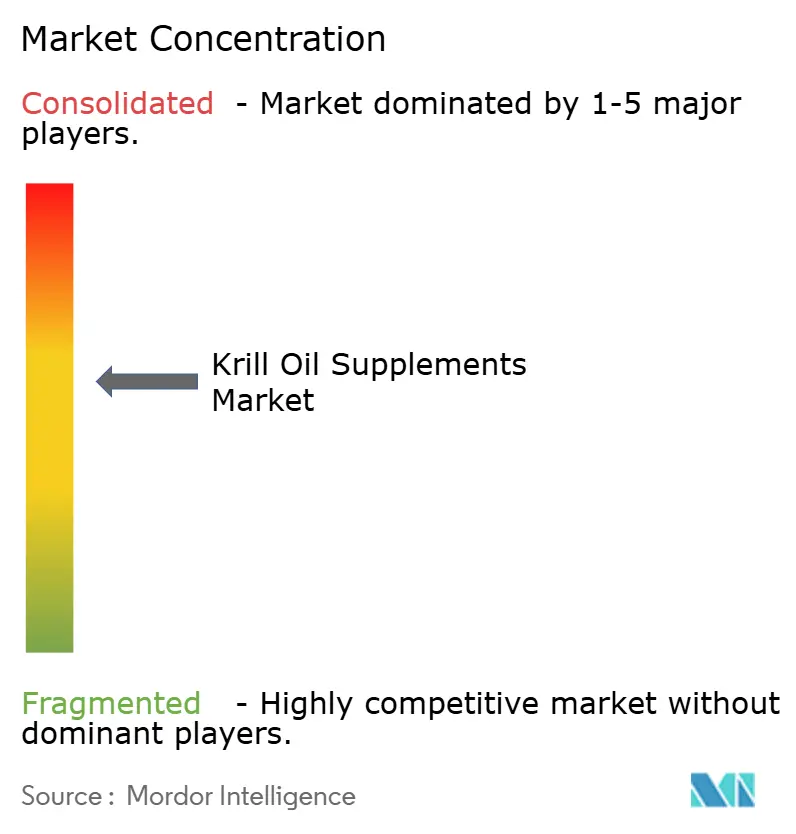
The krill oil supplements market exhibits moderate concentration with a score of 6 out of 10, indicating balanced competition between established players and emerging brands without dominant market control by any single entity. Leading companies leverage vertical integration strategies, with major players like Kori Krill Oil controlling the entire value chain from Antarctic harvesting to finished product manufacturing.
The market dynamics are shifting toward sustainability, with companies pursuing Marine Stewardship Council certification and implementing eco-friendly harvesting technologies to meet consumer demand for environmentally responsible products. Companies are focusing on competition through innovation by enhancing bioavailability and diversifying delivery formats, developing specialized formulations for specific health applications.
The market presents significant growth potential in pediatric formulations and combination products that incorporate krill oil with complementary ingredients. Pediatric formulations focus on developing age-appropriate dosage forms and flavors suitable for children, while combination products integrate krill oil with vitamins, minerals, and other bioactive compounds to enhance their nutritional benefits.
Krill Oil Supplements Industry Leaders
-
Sports Research
-
Viva Naturals
-
Swisse Wellness
-
MegaRed (Schiff/Nature’s Way)
-
Kori Krill Oil
- *Disclaimer: Major Players sorted in no particular order
Krill Oil Supplements Market Companies Covered in this Report
- MegaRed (Schiff/Nature's Way)
- Aker BioMarine
- Swisse Wellness
- NOW Foods
- Jarrow Formulas
- Viva Naturals
- Sports Research
- Onnit
- Bulletproof 360
- Naturemyst
- Carlson Labs
- Neptune Wellness Solutions
- Nutrigold
- Doctor's Best
- Kirkland Signature (Costco)
- GNC
- Life Extension
- Go-keto
- Blackmores
- Healthy Care
Recent Industry Developments in Krill Oil Supplements Market
- May 2024: NYO3, a Norwegian dietary nutrition company specializing in Omega-3 products, launched NYO3 Royal-boost Antarctic Krill Oil with 1300mg of krill oil per capsule. The product uses water-soluble technology for marine phospholipids to improve absorption. This formulation enhances nutritional delivery at the cellular level.
- May 2022: Kori Krill Oil introduced Mind & Body, an Omega-3 supplement combined with nootropic ingredients and nutrients. The product contains krill oil, plant antioxidants, turmeric curcumin, and B12 to support brain function, cardiovascular health, and nervous system health. This supplement aims to provide comprehensive benefits for brain, heart, eye, joint, skin, and immune health in a single daily dose.
Global Krill Oil Supplements Market Report Scope
| Softgels |
| Capsules |
| Gummies |
| Others |
| Heart and Cardiovascular Health |
| Joint and Bone Health |
| Brain and Cognitive Function |
| Skin and Beauty |
| Others |
| Adults |
| Children |
| Pharmacies/Drugstores |
| Supermarkets/Hypermarkets |
| Online Retail Stores |
| Others |
| North America | United States |
| Canada | |
| Mexico | |
| Rest of North America | |
| Europe | Germany |
| United Kingdom | |
| Italy | |
| France | |
| Spain | |
| Rest of Europe | |
| Asia-Pacific | China |
| India | |
| Japan | |
| Australia | |
| Rest of Asia-Pacific | |
| South America | Brazil |
| Argentina | |
| Rest of South America | |
| Middle East and Africa | South Africa |
| Saudi Arabia | |
| United Arab Emirates | |
| Rest of Middle East and Africa |
| By Product Form | Softgels | |
| Capsules | ||
| Gummies | ||
| Others | ||
| By Health Benefit | Heart and Cardiovascular Health | |
| Joint and Bone Health | ||
| Brain and Cognitive Function | ||
| Skin and Beauty | ||
| Others | ||
| By End-User | Adults | |
| Children | ||
| By Distribution Channel | Pharmacies/Drugstores | |
| Supermarkets/Hypermarkets | ||
| Online Retail Stores | ||
| Others | ||
| By Geography | North America | United States |
| Canada | ||
| Mexico | ||
| Rest of North America | ||
| Europe | Germany | |
| United Kingdom | ||
| Italy | ||
| France | ||
| Spain | ||
| Rest of Europe | ||
| Asia-Pacific | China | |
| India | ||
| Japan | ||
| Australia | ||
| Rest of Asia-Pacific | ||
| South America | Brazil | |
| Argentina | ||
| Rest of South America | ||
| Middle East and Africa | South Africa | |
| Saudi Arabia | ||
| United Arab Emirates | ||
| Rest of Middle East and Africa | ||
Key Questions Answered in the Report
What is the current market size of krill oil supplements?
The krill oil supplements market size is USD 0.71 billion in 2025 and is on track to reach USD 1.09 billion by 2030.
Why are gummies gaining traction in krill oil supplements?
Gummies eliminate fishy aftertaste, improve palatability for children and seniors, and are projected to post a 10.45% CAGR through 2030.
Which region will grow the fastest for krill oil supplements?
Asia-Pacific leads growth with a forecast 10.76% CAGR owing to rising disposable income, cross-border e-commerce, and preventive health focus.
Which health applications are expanding fastest within the market?
Brain and cognitive support is the fastest-growing health segment, advancing at 9.87% CAGR as aging populations seek neuroprotective solutions.