
Hair Brush Market Size and Share
Market Overview
| Study Period | 2021 - 2031 |
|---|---|
| Market Size (2026) | USD 5.70 Billion |
| Market Size (2031) | USD 7.90 Billion |
| Growth Rate (2026 - 2031) | 6.59 % |
| Fastest Growing Market | Asia-Pacific |
| Largest Market | Europe |
| Market Concentration | Medium |
Major Players
*Disclaimer: Major Players sorted in no particular order Image © Mordor Intelligence. Reuse requires attribution under CC BY 4.0. |
|
Hair Brush Market Analysis by Mordor Intelligence
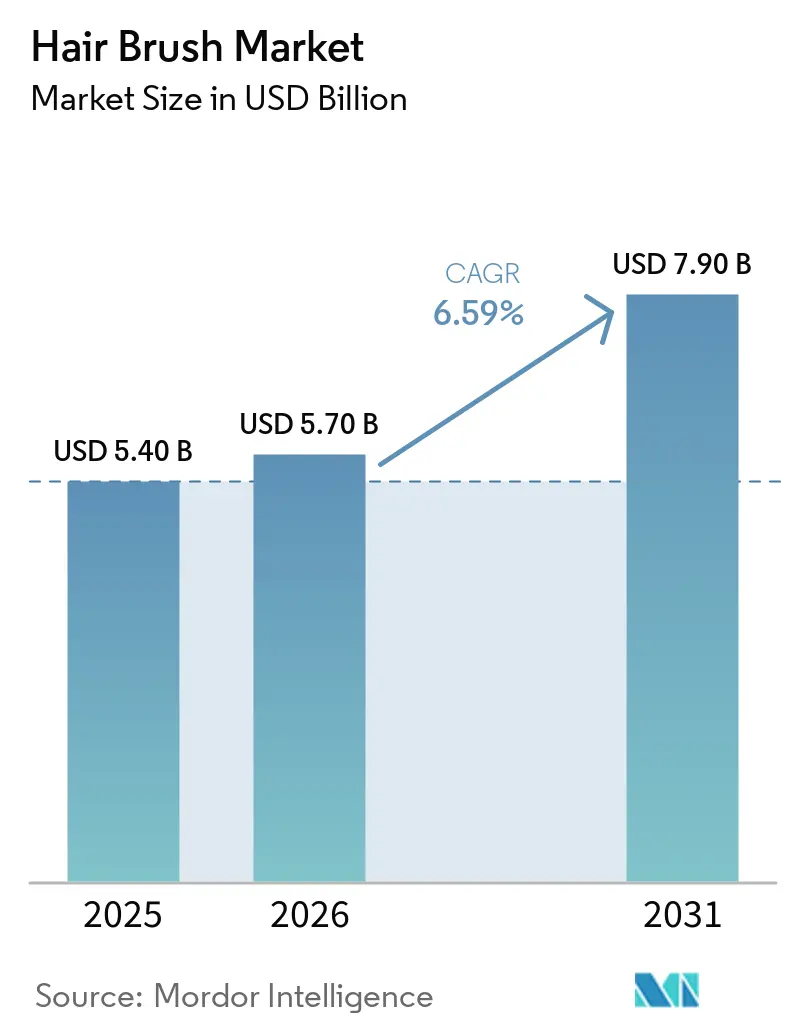
The hair brush market size is expected to grow from USD 5.40 billion in 2025 to USD 5.70 billion in 2026 and is forecast to reach USD 7.90 billion by 2031 at 6.59% CAGR over 2026-2031. This growth reflects a shift in the hair care industry, where brushes are increasingly viewed as integral components of multi-step at-home styling routines rather than basic utility items. This shift has driven category growth, as expanded distribution channels provide access to previously underserved consumer groups. Additionally, rising consumer awareness of hair health, scalp care, and damage prevention is influencing purchasing decisions, leading to increased demand for specialized brushes designed for detangling, minimizing breakage, enhancing scalp stimulation, and catering to specific hair textures. In response, manufacturers are focusing on product differentiation by offering paddle, cushion, vent, and thermal brushes tailored to various styling and treatment requirements. Furthermore, the rapid growth of e-commerce and the influence of social media-driven beauty education have enhanced consumer access to premium and niche brush categories, boosting adoption beyond traditional mass-market products.
Key Report Takeaways
- By shape type, flat brushes represented 58.81% of the share in 2025, while round brushes are projected to grow at a 7.64% CAGR through 2031.
- By cushion type, non-cushioned brushes held 63.67% of the share in 2025, while cushioned brushes are expected to expand at a 7.86% CAGR through 2031.
- By usage, detangling brushes accounted for 43.87% of the share in 2025, while teasing brushes are forecast to register a 7.34% CAGR through 2031.
- By material, synthetic brushes represented 74.81% of the share in 2025, while wooden/bamboo brushes are projected to grow at an 8.01% CAGR through 2031.
- By end user, adults accounted for 88.19% of the share in 2025, while the kids segment is expected to expand at a 7.55% CAGR through 2031.
- By distribution channel, retail captured 82.77% of the share in 2025, while hair salons are projected to grow at a 7.93% CAGR through 2031.
- By geography, Europe accounted for 32.02% share in 2025, while Asia-Pacific is the fastest-growing region with 7.18% through 2031.
Note: Market size and forecast figures in this report are generated using Mordor Intelligence’s proprietary estimation framework, updated with the latest available data and insights as of January 2026.
Market Trends and Insights
Drivers Impact Analysis of Hair Brush Market*
| Driver | (~) % Impact on CAGR Forecast | Geographic Relevance | Impact Timeline |
|---|---|---|---|
| Growing awareness of hair care and personal grooming | +1.2% | Global | Short term (≤ 2 years) |
| Rising male grooming and self-care expenditure | +0.9% | Global, with concentration in North America and Asia-Pacific | Medium term (2-4 years) |
| Social media and influencer impact on specialized hair care tools | +1.0% | Global, primary in Asia-Pacific and North America | Short term (≤ 2 years) |
| Advancements in ionic, heated, and smart brush technology | +1.1% | Global, higher adoption in premium markets | Medium term (2-4 years) |
| Rising demand for eco-friendly and sustainable hair care products | +0.7% | Europe and North America | Long term (≥ 4 years) |
| Premium hair care routines beyond shampoos and conditioners | +0.8% | Global, with growing traction in Asia-Pacific and Middle East and Africa | Long term (≥ 4 years) |
| Source: Mordor Intelligence | |||
Growing Awareness of Hair Care and Personal Grooming
Increasing consumer awareness regarding hair health, appearance management, and preventive hair care is a key factor driving the growth of the hair brush market. Hair brushes are now perceived not just as grooming tools but as essential products for maintaining scalp health, minimizing hair breakage, enhancing detangling efficiency, and supporting styling routines tailored to various hair types. This shift is evident in the growing consumer expenditure on hair care products. According to the U.S. Bureau of Labor Statistics, annual spending by American consumers on hair care products rose from USD 86.45 per consumer unit in 2023 to USD 101.14 in 2024, marking a year-over-year increase of nearly 17% [1]Source: Bureau of Labor Statistics, "Consumer Expenditure Surveys", bls.gov. This increase in spending reflects a broader consumer inclination to invest in products and accessories that aid in hair maintenance and styling. Consequently, there is a rising demand for premium and specialized hair brushes. As consumers place greater emphasis on hair wellness alongside personal grooming, manufacturers are experiencing increased adoption of high-value brushes designed to address specific hair concerns. This trend is driving both volume growth and category premiumization in the global hair brush market.
Rising Male Grooming and Self-care Expenditure
The growing focus on male grooming, personal appearance, and self-care is becoming a key driver for the hair brush market. While traditionally dominated by female consumers, the market is now experiencing increased participation from men as grooming routines evolve to include hair styling, beard maintenance, scalp care, and overall hair health management. Consumers increasingly perceive grooming as an integral part of personal wellness and professional presentation, prompting a shift towards specialized grooming tools instead of basic hair maintenance products. This trend is particularly prominent among younger demographics, who are more inclined to invest in styling accessories and adopt structured grooming routines. Consequently, the expanding male grooming market is enlarging the consumer base for hair brushes and driving consistent demand across both mass-market and premium product segments.
Social Media and Influencer Impact on Specialized Hair Care Tools
The increasing influence of social media platforms, beauty influencers, hairstylists, and digital content creators is a significant factor driving the demand for specialized hair care tools, including hair brushes. Consumers are increasingly turning to online tutorials, product reviews, haircare routines, and styling demonstrations to guide their purchasing decisions. This has led to heightened awareness of the benefits offered by various brush types tailored to specific hair textures, concerns, and styling needs. Platforms such as Instagram, TikTok, YouTube, and Pinterest have elevated hair care from a basic grooming activity to a personalized and educational category, encouraging investments in tools like detangling brushes, paddle brushes, thermal brushes, scalp-massaging brushes, and natural-bristle brushes. The impact of social media is particularly pronounced in beauty-conscious markets across the Asia-Pacific region. For instance, survey data indicates that Instagram was one of the most popular social media platforms in South Korea, with approximately 45.8% of respondents identifying it as their most frequently used platform[2]Source: Korea Information Society Development Institute, stat.kisdi.re.kr. The widespread use of visually driven platforms like Instagram provides brands, beauty influencers, and haircare professionals with an effective medium to educate consumers on advanced haircare practices and promote specialized grooming tools.
Premium Hair Care Routines Beyond Shampoos and Conditioners
The hair care industry is experiencing a significant shift toward premiumization, with consumers increasingly allocating their spending to high-performance grooming and styling tools in addition to traditional products like shampoos and conditioners. This trend is supported by the rising concentration of affluent consumers in key markets. As of January 2026, the United States had approximately 935 billionaires, indicating notable growth in high-net-worth consumer segments with substantial purchasing power for premium personal care products [3]Source: Tax Fairness Organization, "U.S. BILLIONAIRES GOT $1.5 TRILLION RICHER IN TRUMP’S FIRST YEAR", americansfortaxfairness.org. Similarly, in the United Kingdom, around 2.62 million individuals had a net worth exceeding USD 1 million in 2024, excluding the value of their primary residence [4]Source: UBS, "Global Wealth Report 2025", global-wealth-report-09072025.pdf. The global expansion of affluent and upper-middle-income populations is driving demand for premium beauty and grooming products, including advanced hair brushes designed for performance, aesthetics, sustainability, and professional-grade functionality. In response, manufacturers are increasingly focusing on innovation,
Restraints Impact Analysis of Hair Brush Market*
| Restraint | (~) % Impact on CAGR Forecast | Geographic Relevance | Impact Timeline |
|---|---|---|---|
| Long product lifespan resulting in infrequent replacement cycles | -1.1% | Global | Long term (≥ 4 years) |
| Counterfeit and low-quality products impacting premium brands | -0.9% | Asia-Pacific, online channels globally | Short term (≤ 2 years) |
| Market fragmentation driving price wars and margin pressure | -0.8% | Global | Medium term (2-4 years) |
| Environmental criticism of plastic-based grooming accessories | -0.6% | Europe and North America | Medium term (2-4 years) |
| Source: Mordor Intelligence | |||
Long Product Lifespan Resulting in Infrequent Replacement Cycles
The extended functional lifespan of hair brushes serves as a significant restraint on market growth, as it reduces purchase frequency and limits opportunities for recurring sales. Unlike consumable hair care products such as shampoos, conditioners, serums, and styling treatments that require regular replenishment, hair brushes can remain functional for several years with minimal maintenance. Consequently, demand is primarily replacement-driven rather than consumption-driven, resulting in a slower purchasing cycle. For many consumers, a hair brush is perceived as a durable household item rather than a product requiring frequent upgrades, particularly in the mass-market segment where basic plastic brushes sufficiently meet everyday grooming needs. While premium and hair-type-specific brushes have introduced new growth opportunities, the durable nature of the product continues to constrain replacement rates, thereby limiting the overall market's growth potential. Thus, the long lifecycle of hair brushes remains a structural challenge for industry players aiming for sustained volume growth.
Counterfeit and Low-quality Products Impacting Premium Brands
The presence of counterfeit and low-quality imitation hair brushes presents a considerable obstacle to the growth of the premium hair brush market. As the demand for branded and specialized grooming tools rises, unauthorized manufacturers are increasingly producing low-cost replicas that imitate the appearance of established products but lack comparable material quality, durability, and performance. These imitation products are particularly common in online marketplaces and price-sensitive regions, where consumers often prioritize affordability over brand authenticity. The availability of these cheaper alternatives frequently diverts sales from premium manufacturers, hindering their ability to fully benefit from the growing interest in advanced hair care tools. In addition to revenue losses, counterfeit products can erode consumer confidence in premium brands when imitation brushes fail to meet expectations. The use of inferior materials, poorly designed bristles, and inadequate construction can result in hair breakage, scalp irritation, reduced durability, and subpar styling performance, ultimately damaging consumer perceptions of the original brand.
*Our forecasts treat driver/restraint impacts as directional, not additive. The impact forecasts reflect baseline growth, mix effects, and variable interactions.
Hair Brush Market Segment Analysis
By Shape Type:
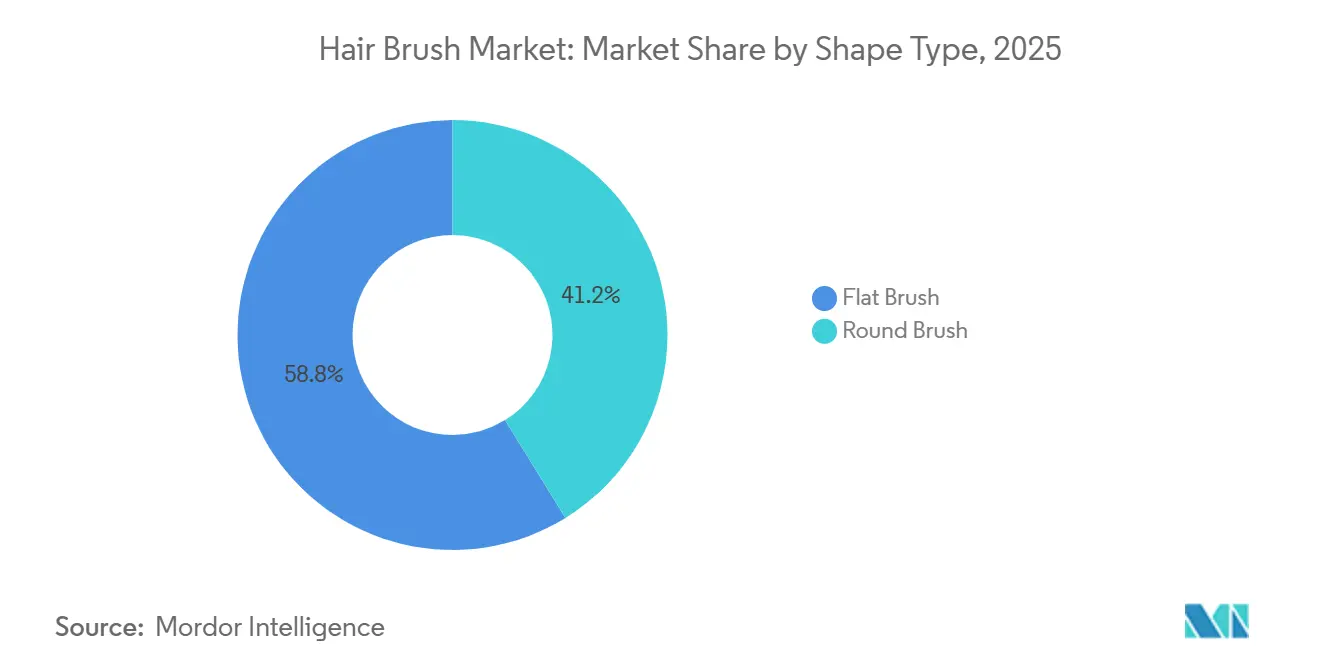
Flat Brushes Lead, Round Brushes Gain MomentumFlat brushes represented 58.81% of the hair brush market share in 2025, maintaining their position as the dominant shape type. Their broad surface area enables users to cover larger sections of hair efficiently during brushing and styling. Flat brushes are particularly suitable for everyday grooming, smoothing, and detangling, supporting their widespread adoption among consumers. Their versatility across different hair lengths and textures further strengthens demand in the mass-market segment. In addition, their availability across multiple price points makes them accessible to a broad consumer base.
Round brushes are projected to expand at a 7.64% CAGR from 2026 to 2031, making them the fastest-growing shape category. Their ability to create volume, curls, waves, and smooth finishes has increased their relevance among consumers seeking salon-like styling results at home. Round brushes are particularly compatible with blow-drying, enabling users to combine drying and styling in a single grooming routine. The growing popularity of DIY hairstyling and at-home beauty treatments is expected to support their adoption. Product innovations, including ceramic, ionic, heated, and ergonomic round brushes, are also improving styling efficiency and user convenience. As consumers increasingly invest in specialized tools for personalized hairstyles, demand for round brushes is expected to grow steadily through 2031.


By Cushion Type:
Non-Cushioned Brushes Lead, Cushioned Designs Gain PopularityNon-cushioned brushes accounted for 63.67% of the hair brush market share in 2025, making them the leading cushion type. Their simple construction, durability, and affordability support widespread use across everyday grooming routines. These brushes are available in a wide range of shapes, bristle configurations, and materials, allowing them to serve diverse hair care requirements. Their relatively lower price points also make them attractive to mass-market consumers and price-sensitive buyers. Non-cushioned designs are commonly used for basic brushing, smoothing, and styling, supporting their broad consumer adoption.
Cushioned brushes are projected to expand at a 7.86% CAGR from 2026 to 2031, making them the fastest-growing cushion category. Their flexible cushioned base is designed to provide greater comfort during brushing while reducing excessive pressure on the scalp. Growing consumer interest in gentle hair care and scalp-friendly grooming tools is supporting demand for these products. Cushioned designs are particularly attractive to consumers seeking improved comfort during frequent or prolonged brushing routines. Manufacturers are also incorporating ergonomic handles, flexible bristles, and specialized configurations to enhance detangling and scalp stimulation.
By Usage:
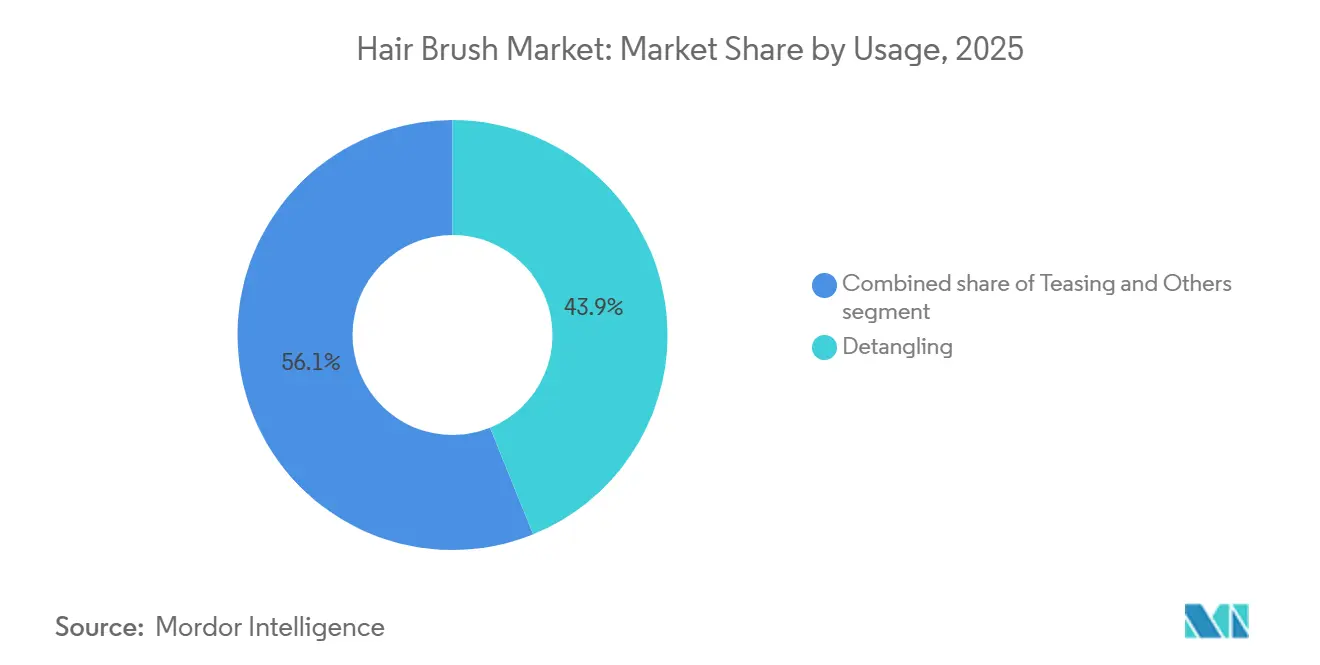
Detangling Brushes Dominate, Teasing Brushes Gain MomentumDetangling brushes accounted for 43.87% of the hair brush market share in 2025, making them the leading usage segment. Their widespread adoption is supported by the growing emphasis on convenient and efficient daily hair grooming. These brushes are designed to remove knots and tangles while minimizing excessive pulling and hair breakage. Demand is particularly strong among consumers with long, thick, curly, or textured hair that requires specialized brushing solutions. The increasing availability of flexible bristles and ergonomic detangling designs has further improved consumer convenience.
Teasing brushes are forecast to register a 7.34% CAGR from 2026 to 2031, making them the fastest-growing usage segment. Their ability to create volume, lift, and texture is driving increased interest among consumers seeking more versatile styling options. The growing popularity of voluminous hairstyles and personalized hair styling is supporting demand for specialized teasing tools. These brushes are also increasingly used for creating salon-inspired hairstyles at home, aligning with the broader growth of DIY beauty routines. Product innovations focused on finer bristles, ergonomic designs, and improved styling control are further enhancing their appeal.
By Material:
Synthetic Brushes Dominate, Wooden and Bamboo Designs AccelerateSynthetic brushes accounted for 74.81% of the market share in 2025, maintaining a strong position due to their affordability, durability, and broad suitability across different hair types. Their consistent bristle performance supports everyday brushing, detangling, smoothing, and styling applications. Synthetic materials also enable manufacturers to produce brushes in a wide range of shapes, bristle densities, and flexibility levels, allowing products to target diverse consumer needs. Their resistance to moisture and ease of cleaning further support their use in regular grooming routines. In addition, synthetic brushes are widely available across mass-market retail and beauty channels, strengthening their accessibility to price-conscious consumers.
Wooden and bamboo brushes are projected to expand at an 8.01% CAGR through 2031, supported by increasing consumer interest in natural and environmentally conscious personal-care products. These brushes are increasingly positioned as alternatives to conventional plastic-based grooming tools, particularly among consumers seeking sustainable materials. The growing emphasis on reducing plastic consumption is encouraging brands to incorporate bamboo, wood, and other renewable materials into hair-care accessories. Their natural appearance and premium aesthetic also align with the broader shift toward minimalist and eco-conscious beauty products.
By End User:
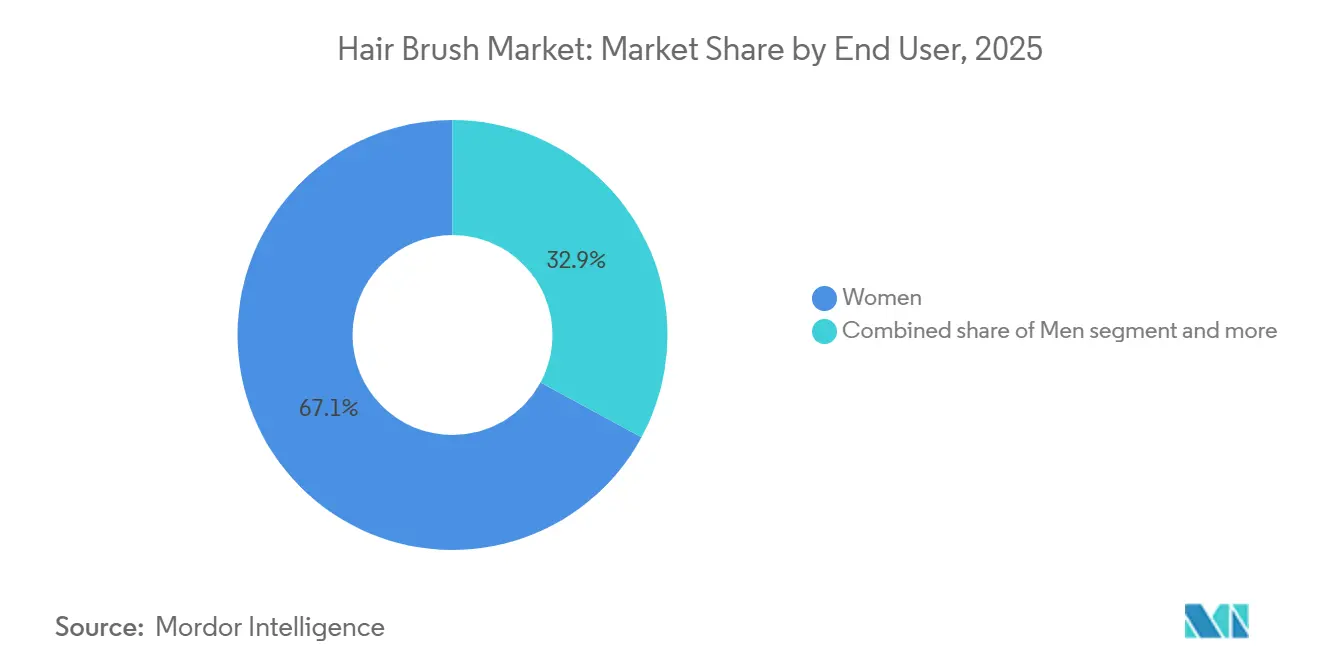
Adults Dominate Hair Brush Demand, Kids Segment Gains MomentumAdults accounted for 88.19% of the market share in 2025, making them the dominant end-user segment due to the routine and frequent use of hair brushes for grooming, styling, and hair maintenance. Adult consumers typically require brushes suited to a wider range of hair types, lengths, textures, and styling preferences. Demand is supported by the growing emphasis on personal appearance, hair health, and at-home grooming routines. Consumers are also increasingly purchasing specialized brushes for detangling, smoothing, blow-drying, and scalp care, contributing to higher product variety within the adult segment. The availability of brushes across mass-market, premium, and professional-oriented price points further broadens accessibility.
The kids segment is projected to grow at a 7.55% CAGR through 2031, supported by increasing demand for gentle, easy-to-use grooming products designed specifically for children. Parents are increasingly seeking brushes that minimize pulling and discomfort while helping manage tangles in children's hair. Manufacturers are responding with softer bristles, flexible designs, compact formats, and ergonomic handles that improve ease of use. Attractive colors, playful designs, and character-based styling also help increase product appeal among younger consumers. Growing awareness of children's hair-care routines and the availability of specialized products through retail and online channels are further supporting adoption.
By Distribution Channel:
Retail Outlets Lead, Hair Salons Expand Professional DemandRetail accounted for 82.77% of the market share in 2025, making it the dominant distribution channel due to the widespread availability and accessibility of hair brushes across supermarkets, hypermarkets, specialty beauty stores, and other retail outlets. Consumers benefit from the convenience of comparing different brush types, materials, sizes, and price points within physical retail environments. The high frequency of hair brush purchases as everyday grooming products also supports strong retail sales volumes. Mass-market brands benefit from extensive shelf presence, promotional displays, and bundled personal-care offerings, further strengthening the channel.
Hair salons are projected to expand at a 7.93% CAGR through 2031, supported by rising demand for professional hair styling, grooming, and salon-based treatments. Professional stylists require specialized brushes for blow-drying, smoothing, detangling, volumizing, and creating specific hairstyles, generating recurring demand within the channel. Increasing consumer spending on professional hair-care services is also encouraging salons to use a wider range of specialized grooming tools. Premium and professional-grade brushes with ergonomic handles, heat-resistant materials, and specialized bristle configurations are gaining relevance in salon environments.
Geography Analysis
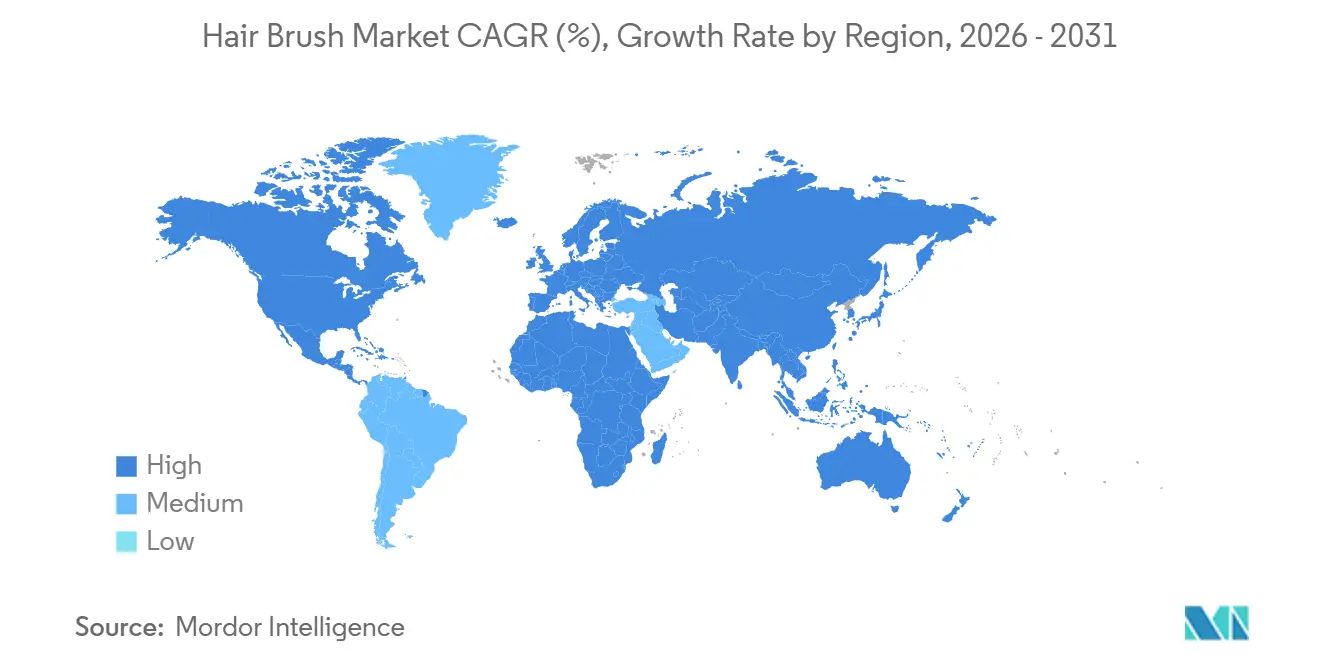
In 2025, Europe accounted for 32.02% of the global hair brush market, making it the largest regional market. This dominance is attributed to high consumer spending on personal care products, strong awareness of hair health and grooming, and the widespread use of premium beauty and styling tools. European consumers increasingly focus on specialized hair care solutions, driving demand for premium brushes designed for detangling, scalp care, styling, and damage prevention.
The Asia-Pacific hair brush market is projected to grow at the fastest CAGR of 7.18% during the forecast period. This growth is driven by rising disposable incomes, rapid urbanization, and increasing beauty consciousness among consumers. The region's large population, expanding middle-class demographic, and growing emphasis on personal grooming present significant opportunities for market expansion. Countries such as China, India, Japan, South Korea, and Southeast Asian nations are experiencing increased adoption of specialized hair care products as consumers become more aware of hair health, styling, and scalp wellness.
Across both developed and emerging markets, the hair brush industry benefits from evolving consumer preferences for comprehensive hair care routines and advanced grooming solutions. Europe continues to lead as the largest market due to its mature beauty and personal care landscape. However, Asia-Pacific is expected to contribute the highest incremental growth during the forecast period. North America remains a significant market, supported by strong consumer spending on premium grooming products and increasing demand for specialized styling tools. These regional dynamics are driving manufacturers to expand product portfolios, enhance omnichannel distribution strategies, and introduce innovative brush designs tailored to diverse consumer needs, hair types, and styling preferences.

Competitive Landscape
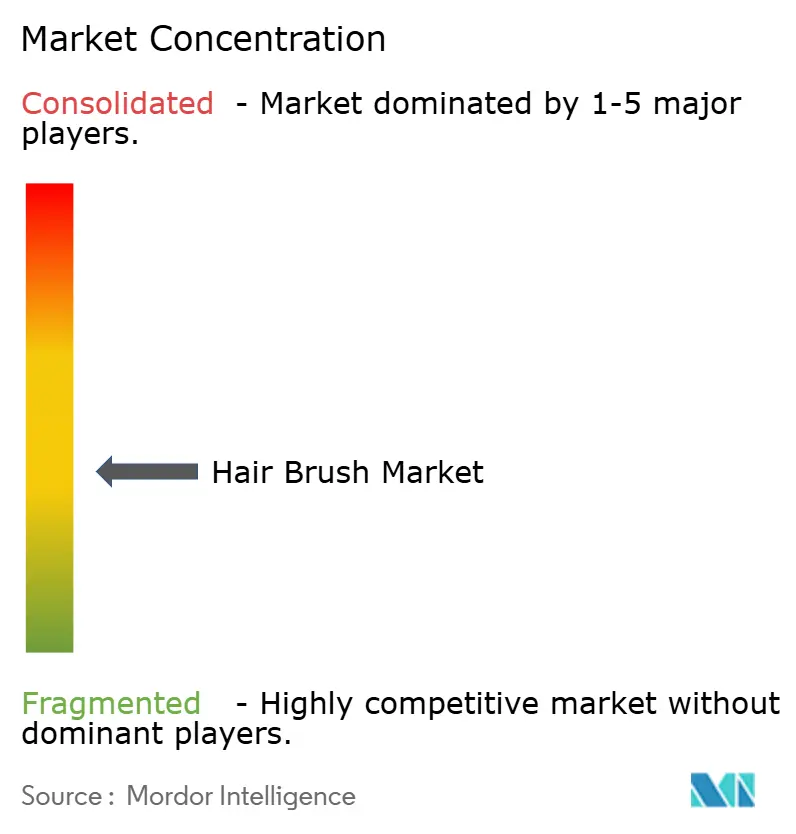
The hair brush market is moderately fragmented, with no single company holding a dominant market share. High-volume players such as Conair LLC and Spectrum Brands Holdings (through Remington) focus on supply chain efficiency, extensive mass-retail distribution, and competitive pricing to maintain their market presence. These companies aim to cater to a broad consumer base by offering affordable and widely available products. In contrast, technology-focused premium brands like Dyson and GHD emphasize advanced product engineering and innovation, targeting consumers willing to pay a premium for high-performance and technologically advanced products.
This strategic division is reflected in recent product developments: volume players leverage co-branding and retailer partnerships to expand their reach and drive sales. For instance, Wet Brush's March 2026 collaboration with Hill House Home at Ulta and FHI Heat's expansion into Walmart are aimed at creating additional purchase opportunities and enhancing brand visibility. On the other hand, premium brands prioritize innovation and intellectual property, as demonstrated by Wet Brush's patent-pending ionic infusion brush and Dyson's RFID nozzle-recognition system in the Airwrap Coanda 2X. These innovations highlight their focus on delivering unique features and advanced functionality to differentiate themselves in the market.
Additionally, specialized professional brands, including Denman International, Olivia Garden International, Ibiza Hair, and Tek Salonsystem, continue to exert competitive pressure on larger players within salon distribution channels. These brands leverage their deep technical expertise and focus on specification-driven purchasing to cater to professional stylists and salon owners. By offering high-quality, specialized products tailored to professional needs, they challenge the dominance of larger incumbents, where technical performance often takes precedence over mass-market scale.
Hair Brush Industry Leaders
-
Conair LLC
-
Denman International Limited
-
Tangle Teezer Limited
-
Mason Pearson Bros. Ltd.
-
G. B. Kent and Sons plc
- *Disclaimer: Major Players sorted in no particular order
Hair Brush Market Companies Covered in this Report
- Conair Corporation
- Denman International Limited
- Tangle Teezer Limited
- Mason Pearson Bros. Ltd.
- G. B. Kent & Sons plc
- Olivia Garden International LLC
- Spornette International, Inc.
- Bass Brushes, Inc.
- Cricket Silky Holdings, LLC
- Ibiza Hair
- The Burmax Company, Inc.
- Acca Kappa S.p.A.
- Janeke 1830
- Crown Affair
- Beauty By Imagination (BBI) (Wet Brush)
- La Bonne Brosse
- TEK S.r.l.
- Manta Hair Ltd.
- Beter S.A.
- Vega Industries

Recent Industry Developments in Hair Brush Market
- April 2026: Tangle Teezer unveiled a limited-edition collaboration with The Devil Wears Prada, presenting exclusive versions of its Ultimate Detangler and Mini Ultimate Detangler brushes. These brushes feature a metallic red design inspired by the iconic fashion franchise. The launch highlights Tangle Teezer's detangling technology while leveraging entertainment-themed branding, reflecting the rising demand for premium, collectible hair care accessories created through brand and pop-culture partnerships.
- March 2026: Wet Brush introduced a limited-edition collaboration with Hill House Home, a lifestyle brand recognized for its romantic prints and feminine designs. The collection includes Wet Brush's bestselling Original Detangler featuring IntelliFlex bristles, along with silk scrunchies, headbands, and claw clips adorned with Hill House Home's signature floral, gingham, trellis, and striped patterns. This collaboration blends fashion with practical haircare solutions.
- March 2026: FHI Heat has expanded its retail partnership with Walmart by launching the Hello Kitty and Friends UNbrush, a limited-edition collaboration with Sanrio. This product is available exclusively at Walmart stores and Walmart.com. The collection integrates FHI Heat's UNbrush detangling technology with character-themed designs, aligning with the increasing trend of merging beauty tools with entertainment and lifestyle brands.


Global Hair Brush Market Report Scope
The hair brush market comprises retail sales of products designed to detangle, style, smooth, and maintain hair, including flat and round brushes, cushioned and non-cushioned brushes, and brushes for detangling, teasing, and scalp massage. By shape type, the market is segmented into flat and round. By cushion type, the market is segmented into cushioned and non-cushioned. Based on the usage, the market is segmented into detangling, teasing, and others. By material, the market is segmented into synthetic and wooden/bamboo. By end user, the market is segmented into adults and kids. By distribution channel, the market is segmented into hair salons and retail. Also, the report covers a detailed analysis of major economies across North America, Europe, Asia-Pacific, South America, and the Middle East and Africa. For each segment, the market sizing and forecasting have been done in value terms (USD).
| Flat |
| Round |
| Cushioned |
| Non-Cushioned |
| Detangling |
| Teasing |
| Others (Vent, Scalp Massage) |
| Synthetic |
| Wooden/Bamboo |
| Adults |
| Kids |
| Hair Salon | |
| Retail | Supermarkets/Hypermarkets |
| Online Retail Stores | |
| Other Retail Channels |
| North America | United States |
| Canada | |
| Mexico | |
| Rest of North America | |
| Europe | United Kingdom |
| Germany | |
| France | |
| Italy | |
| Spain | |
| Russia | |
| Sweden | |
| Belgium | |
| Poland | |
| Netherlands | |
| Rest of Europe | |
| Asia-Pacific | China |
| Japan | |
| India | |
| Thailand | |
| Singapore | |
| Indonesia | |
| South Korea | |
| Australia | |
| New Zealand | |
| Rest of Asia-Pacific | |
| South America | Brazil |
| Argentina | |
| Colombia | |
| Chile | |
| Rest of South America | |
| Middle East and Africa | United Arab Emirates |
| South Africa | |
| Saudi Arabia | |
| Nigeria | |
| Egypt | |
| Morocco | |
| Turkey | |
| Rest of Middle East and Africa |
| By Shape Type | Flat | |
| Round | ||
| By Cushion Type | Cushioned | |
| Non-Cushioned | ||
| By Usage | Detangling | |
| Teasing | ||
| Others (Vent, Scalp Massage) | ||
| By Material | Synthetic | |
| Wooden/Bamboo | ||
| By End User | Adults | |
| Kids | ||
| By Distribution Channel | Hair Salon | |
| Retail | Supermarkets/Hypermarkets | |
| Online Retail Stores | ||
| Other Retail Channels | ||
| By Geography | North America | United States |
| Canada | ||
| Mexico | ||
| Rest of North America | ||
| Europe | United Kingdom | |
| Germany | ||
| France | ||
| Italy | ||
| Spain | ||
| Russia | ||
| Sweden | ||
| Belgium | ||
| Poland | ||
| Netherlands | ||
| Rest of Europe | ||
| Asia-Pacific | China | |
| Japan | ||
| India | ||
| Thailand | ||
| Singapore | ||
| Indonesia | ||
| South Korea | ||
| Australia | ||
| New Zealand | ||
| Rest of Asia-Pacific | ||
| South America | Brazil | |
| Argentina | ||
| Colombia | ||
| Chile | ||
| Rest of South America | ||
| Middle East and Africa | United Arab Emirates | |
| South Africa | ||
| Saudi Arabia | ||
| Nigeria | ||
| Egypt | ||
| Morocco | ||
| Turkey | ||
| Rest of Middle East and Africa | ||


Key Questions Answered in the Report
What is the projected size of the hair brush market by 2031?
The market is expected to reach USD 7.90 billion by 2031, growing at a CAGR of 6.59% from 2026 to 2031.
Which region is expected to grow the fastest in the hair brush market?
Asia-Pacific is projected to be the fastest-growing region, registering a CAGR of 7.18% during 2026–2031.
Which shape type holds the largest share in the hair brush market?
Flat brushes dominated the hair brush market by shape type, accounting for 58.81% of the share in 2025.
Which cushion type held the largest share of the hairbrush market in 2025?
Non-cushioned brushes led the market by cushion type, representing 63.67% of the share in 2025.
Which region held the largest market share in 2025?
Europe held the largest regional share of the hair brush market, accounting for 32.02% in 2025.
Page last updated on:





