
Hair Gel Market Size and Share
Market Overview
| Study Period | 2021 - 2031 |
|---|---|
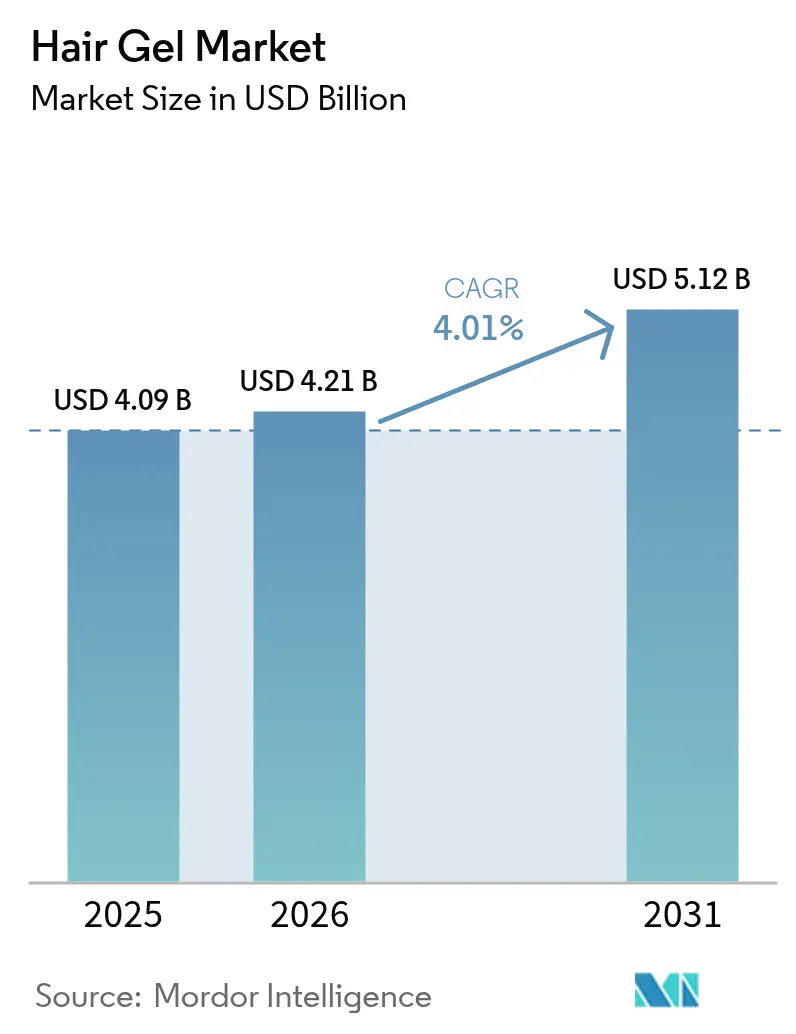
| Market Size (2026) | USD 4.21 Billion |
| Market Size (2031) | USD 5.12 Billion |
| Growth Rate (2026 - 2031) | 4.01 % |
| Fastest Growing Market | Asia Pacific |
| Largest Market | North America |
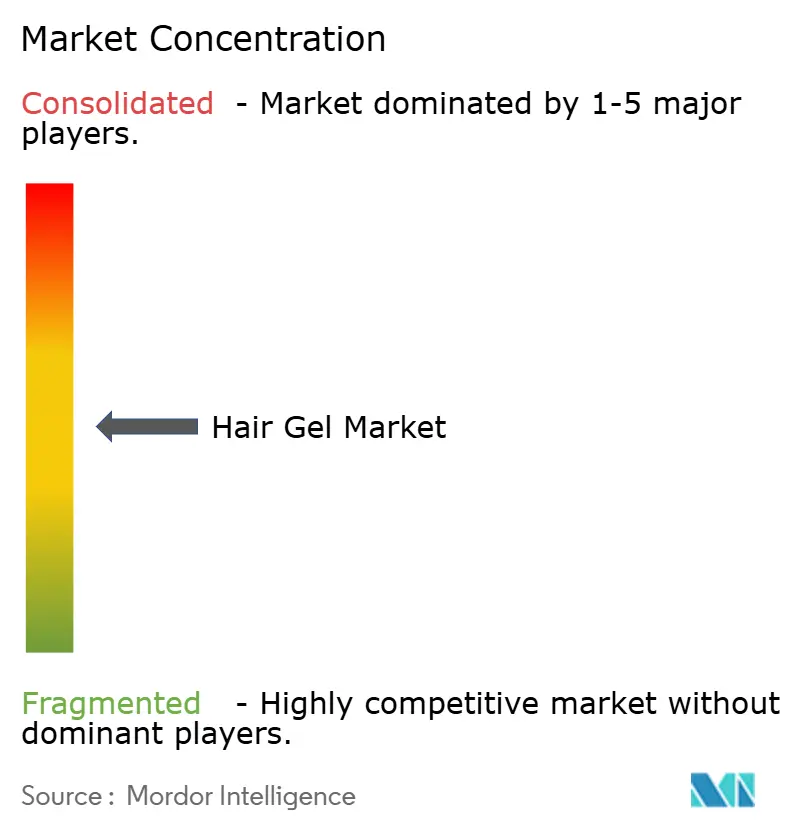
| Market Concentration | Medium |
Major Players
*Disclaimer: Major Players sorted in no particular order Image © Mordor Intelligence. Reuse requires attribution under CC BY 4.0. |
|
Hair Gel Market Analysis by Mordor Intelligence
The hair gel market size is expected to grow from USD 4.09 billion in 2025 to USD 4.21 billion in 2026 and is forecast to reach USD 5.12 billion by 2031 at 4.01% CAGR over 2026-2031. This moderate expansion arises from rising demand for hyper-personalized styling solutions, broader premiumization across men’s grooming, and regulatory moves that prioritize ingredient transparency. Social-media-driven style shifts shorten trend cycles, encouraging manufacturers to speed product development and strengthen supply-chain agility. Alcohol-free polymers, natural preservatives, and sustainable packaging are becoming core differentiators as consumers reconcile performance needs with clean-beauty values. Competitive intensity is heightened by direct-to-consumer brands that harness AI-powered diagnostics to win digitally native shoppers, while incumbents lean on acquisitions to defend both shelf space and online visibility.
Key Report Takeaways
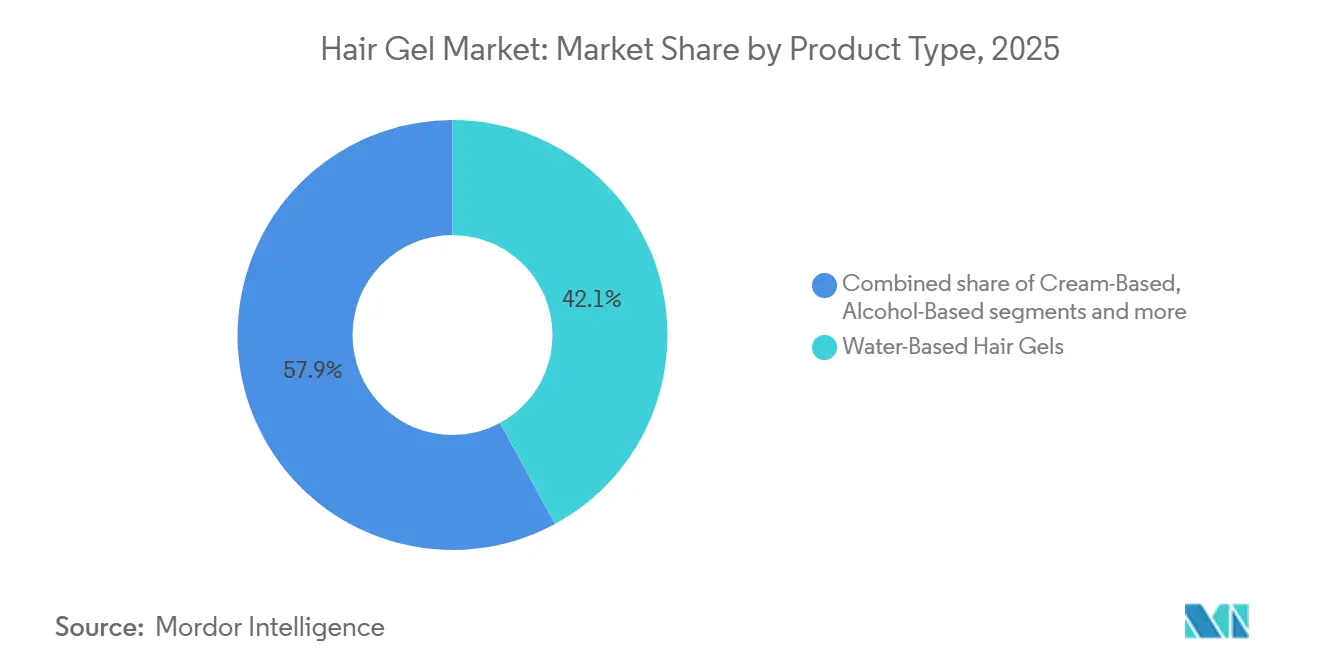
- By product type, water-based gels led with 42.01% of hair gel market share in 2025; alcohol-based variants are projected to expand at a 4.26% CAGR through 2031.
- By gender, male consumers commanded 55.06% share of the hair gel market size in 2025, whereas female uptake is forecast to grow at 5.21% CAGR to 2031.
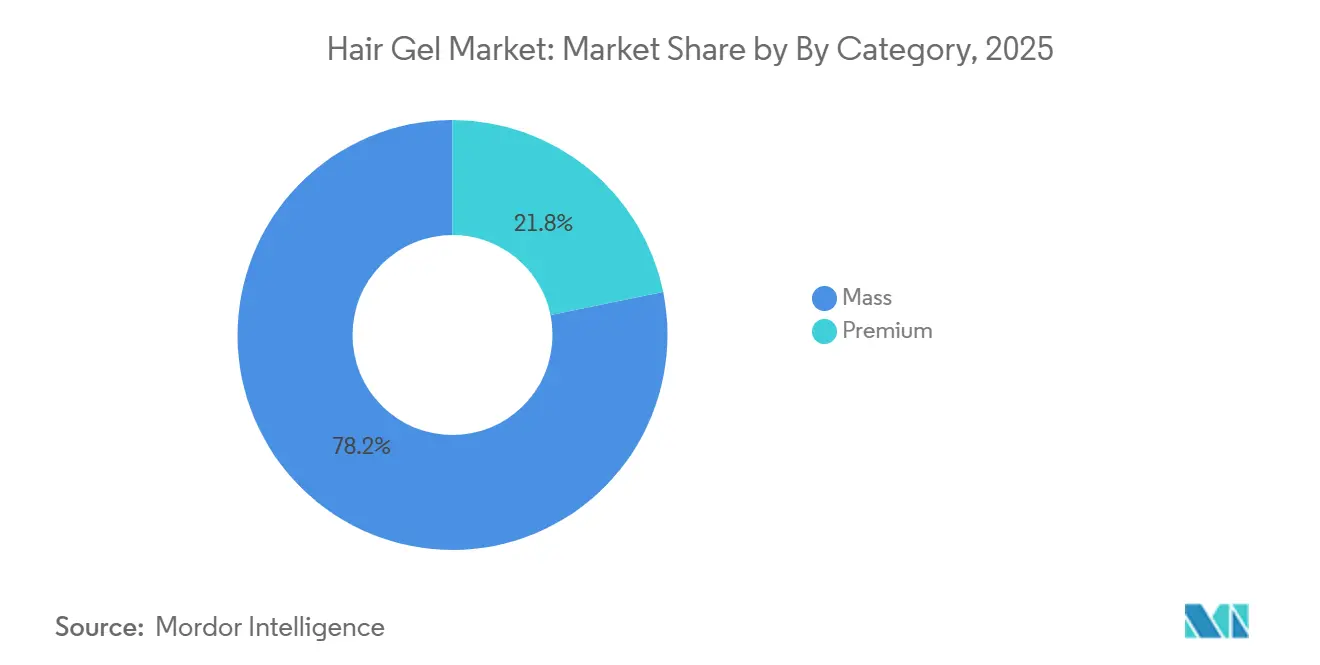
- By category, mass offerings held 78.21% of the hair gel market in 2025, while premium lines are on track for a 5.55% CAGR through 2031.
- By distribution, supermarkets and hypermarkets retained 42.32% share in 2025; online retail channels are rising at a 5.28% CAGR during the forecast period.
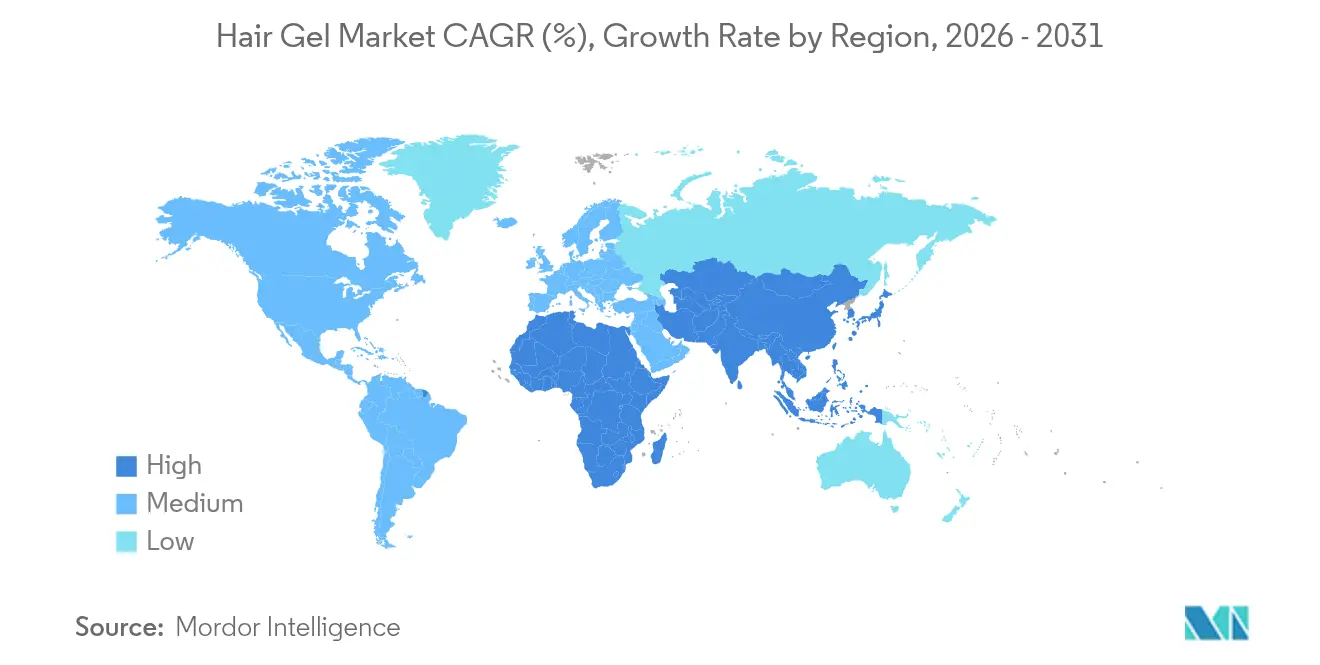
- By geography, North America accounted for 38.02% share of the hair gel market in 2025; Asia-Pacific is poised for the fastest 4.78% CAGR to 2031.
Note: Market size and forecast figures in this report are generated using Mordor Intelligence’s proprietary estimation framework, updated with the latest available data and insights as of 2026.
Market Trends and Insights
Drivers Impact Analysis of Hair Gel Market*
| Driver | (~) % Impact on CAGR Forecast | Geographic Relevance | Impact Timeline |
|---|---|---|---|
| Personalized and functional hairstyling products see a surge in demand | +0.8% | Global, with early gains in North America and Asia-Pacific | Medium term (2-4 years) |
| Men's grooming and styling trends gain heightened awareness | +0.9% | Global, particularly strong in North America and Europe | Short term (≤ 2 years) |
| Social media and influencers reshape the landscape of hair fashion | +0.7% | Global, with highest impact in Asia-Pacific and North America | Short term (≤ 2 years) |
| Formulations with natural and organic ingredients witness a wave of innovation | +0.6% | North America and core European markets, with spillover to Asia-Pacific | Long term (≥ 4 years) |
| Product formulations evolve, emphasizing superior hold and nourishment | +0.4% | Europe-wide and North America, expanding to Asia-Pacific markets | Long term (≥ 4 years) |
| Growing E-commerce services boosts demand | +0.5% | Global, with premium segment focus | Medium term (2-4 years) |
| Source: Mordor Intelligence | |||


Personalized and functional hairstyling products see a surge in demand
Rising demand for personalized and functional hairstyling products is a key driver of growth in the Hair Gel Market. Consumers are increasingly seeking customized solutions tailored to their unique hair types, textures, and styling needs, driving innovation in product formulation and delivery. Advances in technology, including AI-powered diagnostics and virtual consultations, enable brands to offer personalized hair gels with specific hold strengths, ingredients, and fragrance preferences that better meet individual requirements. Functional benefits such as moisture retention, UV protection, heat defense, and anti-frizz properties integrated into styling gels also attract consumers looking for multi-purpose products to simplify hair care routines. This trend toward high-performance, bespoke hair gels fosters stronger brand loyalty, as products resonate more closely with users’ expectations and desired outcomes. The growing direct-to-consumer personalized hair care market, projected to expand rapidly, exemplifies how tailored products are reshaping consumer behavior and market dynamics. Overall, personalization and multifunctionality are shaping the future trajectory of the hair gel market with lasting impact.
Men's grooming and styling trends gain heightened awareness
Research indicates that men are increasingly investing in hairstyling and wellness products that offer operational efficiency and protective features. According to a 2023 Professional Beauty survey, consumers in the United Kingdom, including men, spent an average of GBP 4,600 annually on wellness products, reflecting a heightened awareness and willingness to invest in high-quality beauty and grooming solutions [1]Source: Professional Beauty, “Brits spend over £4.5K on self-care annually”, professionalbeauty.co.uk . This trend aligns with the broader growth of the UK beauty and personal care industry, which contributed significantly to the economy. The sector's expansion is driven not only by rising consumer expenditure but also by innovations in product formulation that combine style, health, and sustainability benefits. Improved efficiency in beauty services and the introduction of multifunctional products support demand for effective hairstyling solutions. This dynamic environment continues to drive innovation in the hair gel segment.
Social media and influencers reshape the landscape of hair fashion
The growth of social media and influencers has become a significant driver shaping hair fashion trends and the hair gel market, especially in the context of increasing global internet connectivity. As of 2024, 68% of the world's population, equivalent to approximately 5.5 billion people, were actively using the internet, according to the World Bank [2]Source: World Bank, "Individuals using the Internet", worldbank.org. Platforms like Instagram, TikTok, and YouTube have revolutionized how hairstyles trend by enabling influencers and everyday creators to share viral styling tutorials and product recommendations instantly with millions of followers. This rapid and widespread exposure accelerates demand for versatile, high-performance hair gels that help consumers replicate the styles featured online. Social media’s role extends beyond trend propagation to fostering inclusivity by promoting diverse hair types, textures, and styles, redefining beauty standards. Influencer collaborations with brands and the rise of personalized, tech-enabled styling solutions further drive consumer engagement and product innovation. Ultimately, the combination of pervasive internet access and influencer impact greatly influences consumer behavior, accelerating growth and innovation in the Hair Gel Market.
Formulations with natural and organic ingredients witness a wave of innovation
Innovation in natural and organic ingredient formulations is a key driver influencing the hair gel market's growth. Consumers increasingly prioritize products that are free from harmful chemicals such as parabens, sulfates, and synthetic fragrances, fueling demand for clean-label and botanical-based hair gels. The market is witnessing the launch of advanced formulations incorporating plant-based ingredients like aloe vera, okra, sea moss, coconut oil, and cocoa butter, which cater to diverse hair types and concerns while promoting hair health. This shift is further accelerated by growing consumer awareness of sustainability and environmental impact, leading brands to adopt eco-friendly packaging and cruelty-free practices. Moreover, personalization trends drive innovation where natural hair gels are tailored to individual scalp and hair needs, enhancing efficacy and consumer loyalty. As a result, natural and organic innovations not only meet the demand for safer products but also attract a discerning consumer base seeking wellness and authenticity, supporting sustained market growth.
Restraints Impact Analysis of Hair Gel Market*
| Restraint | (~) % Impact on CAGR Forecast | Geographic Relevance | Impact Timeline |
|---|---|---|---|
| Product safety and ingredient transparency raise concerns | -0.3% | Global, particularly acute in North America and Europe | Short term (≤ 2 years) |
| Few formulations may trigger allergic reactions or scalp sensitivities | -0.2% | Global, with higher impact in sensitive consumer segments | Medium term (2-4 years) |
| Compliance with cosmetic ingredient regulations poses challenges | -0.4% | North America and Europe core, expanding globally | Long term (≥ 4 years) |
| Packaging waste sparks environmental concerns | -0.2% | Europe-wide, North America, growing in Asia-Pacific markets | Long term (≥ 4 years) |
| Source: Mordor Intelligence | |||
Product safety and ingredient transparency raise concerns
In 2024, the FDA's Modernization of Cosmetics Regulation Act (MoCRA) intensified scrutiny on hair gel formulations by focusing on undisclosed fragrance components and preservative systems that may cause adverse reactions. The regulation mandates cosmetic manufacturers to register their facilities, list their products, and report adverse events, significantly increasing compliance requirements. Major industry players now face compliance costs estimated between USD 50 - 100 million annually [3]Source: U.S. Food and Drug Administration, "Hair Products", fda.gov. Social media campaigns have actively raised consumer awareness by highlighting potential health risks associated with commonly used ingredients in styling products, such as formaldehyde-releasing preservatives and sulfate-based cleansing agents. In response to these concerns, manufacturers are proactively reformulating their products to emphasize ingredient transparency while ensuring product efficacy. This reformulation process has extended development timelines to 18-24 months, which is considerably longer than traditional formulation cycles. Despite offering superior hold properties, alcohol-based formulations continue to face growing consumer skepticism, which could constrain the segment's growth potential in the coming years.
Few formulations may trigger allergic reactions or scalp sensitivities
As multiple regulatory frameworks converge across key markets, smaller manufacturers face intricate compliance challenges. In contrast, established players, equipped with dedicated regulatory affairs teams, navigate these waters with relative ease. The EU will implement restrictions on microplastics in cosmetic formulations in 2025. This move will directly impact gel formulations that use synthetic polymers for texture and hold. Meanwhile, in the US, five states have introduced legislation capping heavy metal content in cosmetics. This mandates rigorous testing protocols, which inflate compliance costs by an additional USD 15,000 - 25,000 per product formulation. These mounting regulatory pressures are driving market consolidation. Smaller brands, unable to absorb these compliance expenses, struggle to compete, while newcomers encounter heightened barriers to entry. Companies pursuing global distribution strategies face significant hurdles due to regulatory complexities. Harmonizing formulations across diverse jurisdictions often requires juggling multiple product variants, which complicates manufacturing processes and inflates inventory costs.
*Our forecasts treat driver/restraint impacts as directional, not additive. The impact forecasts reflect baseline growth, mix effects, and variable interactions.
Hair Gel Market Segment Analysis
By Product Type:
Water-Based Dominance Meets Innovation PressureWater-based hair gels continue to hold the largest share in the global hair gel market, accounting for approximately 42.01% in 2025. Their dominance is attributed to consumer preferences for lightweight, non-greasy formulas that are easy to wash out and suitable for daily use. Water-based gels appeal to a broad demographic and provide reliable hold without causing product buildup, which enhances overall user satisfaction. Manufacturers have focused on developing innovative formulations and expanding their product ranges to meet evolving consumer demands. The robust market performance of water-based gels is further reinforced by their versatility for various hair types and styles, making them a go-to choice in both professional salons and everyday routines. Despite facing increasing innovation pressure from alternative formulas, water-based variants maintain their leadership position due to strong brand loyalty and retail presence.
Alcohol-based hair gels represent the fastest-growing segment in the market, projected to expand at a CAGR of 4.26% from 2026 through 2031. This growth is fueled by manufacturers’ investments in advanced formulations that offer stronger hold and improved texture, addressing the preferences of consumers seeking lasting style solutions. Alcohol-based gels are often favored for their quick-drying properties and high performance during intense styling needs, such as shaping sculpted or spiky hairstyles. Increased awareness of fashion trends and the rise of influencer-driven marketing have accelerated the adoption of alcohol-based gels, particularly among younger consumers. Companies are targeting this segment by launching new products that balance styling effectiveness with scalp care, broadening their appeal within the beauty and personal care space. As a result, alcohol-based gels are likely to gain more market share in the coming years, challenging the long-standing dominance of water-based hair gels.


By Gender:
Male Market Maturity Drives Female Segment AccelerationMale consumers remain the dominant force in the hair gel market, commanding a substantial 55.06% market share in 2025. This leadership is rooted in decades of targeted advertising, brand positioning, and product innovation, which have consistently associated hair gel with masculine grooming routines. Manufacturers have tailored their marketing strategies and product formulations to address the specific styling preferences and daily grooming habits of men. The prominence of male consumers can be attributed to the ongoing popularity of sleek, structured hair trends and the normalization of hair styling as part of a refined, modern look. The influence of professional salons and increased visibility of male grooming tutorials across digital platforms further reinforces this segment’s dominance. These established patterns ensure that men will remain the core target audience for hair gel brands, even as the market evolves to embrace more diverse consumer segments.
In contrast, the female segment within the hair gel market is emerging as the fastest growing, with an expected CAGR of 5.21% through 2031. This accelerated growth is driven by a significant shift toward gender-neutral styling preferences and the rising participation of women in professional spheres where polished appearances are increasingly valued. The expanding diversity of female hairstyles, coupled with social media influence and fashion trends, has prompted manufacturers to offer more inclusive and multifunctional hair gel products. Women’s growing engagement in beauty routines now includes products that deliver flexible hold, shine, and protection against environmental factors, catering to both everyday and special occasion needs. As women seek convenient, long-lasting styling solutions, their increased market share highlights evolving perceptions of hair gel as an essential component of modern self-care, not just a masculine staple. The ongoing introduction of gender-neutral and premium formulations will further accelerate demand among female consumers, reshaping the segment’s overall trajectory.
By Category:
Premium Innovation Challenges Mass Market ScaleMass market hair gel products continue to lead the segment, commanding an impressive 78.21% share in 2025. Their dominance can be attributed to widespread distribution networks that ensure easy availability in supermarkets, hypermarkets, and online platforms, making them accessible to a broad array of consumer demographics. Competitive pricing strategies further bolster their reach, allowing consumers from varied income groups to purchase styling solutions without a significant financial burden. The appeal of mass market products is enhanced by their practicality for daily use and reliable performance, which has cultivated long-standing brand loyalty among users. These offerings typically prioritize essential styling benefits and efficiency, focusing less on luxury positioning and more on functional value. As economic pressures rise and discretionary spending becomes more selective, mass market products are well-positioned to maintain their stronghold by catering to routine grooming needs across diverse populations.
Conversely, the premium hair gel segment is experiencing the fastest growth, with a projected CAGR of 5.55% through 2031. This acceleration reflects shifting consumer expectations, as individuals increasingly prioritize product performance, ingredient transparency, and environmental responsibility when making purchasing decisions. Premium products entice buyers willing to invest in advanced formulations, promising enhanced hold, improved hair health, and gentle, clean ingredient profiles. Awareness of sustainable packaging and ethical production practices is fueling demand for prestige brands that demonstrate commitment to environmental stewardship. The rise of social media influencers, salon recommendations, and heightened interest in luxury grooming experiences is also contributing to this segment’s expansion. As a result, premium hair gels are making greater inroads into the market, redefining consumer aspirations and sparking ongoing innovation within this space.
By Distribution Channel:
Digital Transformation Accelerates Traditional Retail EvolutionSupermarkets and hypermarkets remain the dominant distribution channels for hair gel products, commanding a robust 42.32% share in 2025. Their leadership is sustained by established consumer shopping habits, which position these outlets as staples for purchasing personal care essentials alongside household goods and groceries. The sheer accessibility and variety of brands available in these retail formats attract a wide range of demographic groups, fostering broad market penetration. Retailers leverage expansive shelf space and strategic product placement to increase visibility and drive impulse purchases for the hair gel market. Special promotions, loyalty programs, and bundled offers further enhance consumer engagement and frequent repeat buying. In addition, supermarkets and hypermarkets act as gatekeepers, curating a selection of reliable and affordable products that address everyday grooming needs, cementing their pivotal role in the hair gel market.
Online retail channels are emerging as the fastest-growing segment in hair gel distribution, projected to expand at a compelling CAGR of 5.28% through 2031. This rapid acceleration is propelled by the convenience of e-commerce platforms, which allow consumers to access a wide range of products, compare prices, and read reviews from the comfort of their homes. Subscription services and personalized product recommendations contribute to enhanced customer retention and satisfaction, driving recurring sales. Many direct-to-consumer brands are launching innovative and tailored offerings, bypassing traditional retail margins to deliver greater value and customization. Frequent online-only discounts, fast shipping options, and exclusive product launches amplify the appeal of digital channels. As consumers increasingly embrace online shopping for personal care needs, digital platforms are reshaping the competitive landscape and redefining engagement strategies for manufacturers and retailers alike.
Geography Analysis
North America Hair Gel Market
In 2025, North America secures a dominant 38.02% market share, propelled by established consumer habits and a trend towards premiumization, emphasizing higher-value products. While the region grapples with market saturation limiting volume growth, it witnesses a surge in value growth, spurred by innovations in natural formulations and tailored product offerings. The U.S. stands at the forefront, with male consumers aged 25 - 45 driving a robust demand for professional-grade styling products. Meanwhile, Canada leans towards eco-friendly formulations, echoing a broader environmental consciousness. Mexico emerges as a burgeoning market, buoyed by rising disposable incomes and a heightened awareness of male grooming, largely influenced by social media and urbanization.
APAC Hair Gel Market
Asia-Pacific is on a growth trajectory, boasting a 4.78% CAGR through 2031, a testament to its economic evolution, digital embrace, and shifting beauty paradigms. China's hair care market is witnessing a pronounced surge, with styling products seeing an 18% annual growth. This uptick is fueled by urban consumers gravitating towards Western grooming habits, yet they remain loyal to products tailored for Asian hair. In India, the rise of organized retail and e-commerce is bridging the gap, making products more accessible in tier-2 and tier-3 cities. Japan and South Korea are driving the region's growth with their penchant for innovation and premium products. Australia, on the other hand, is pioneering natural and organic formulations, setting trends that ripple across the region.
Europe Hair Gel Market
Europe's growth is steady, shaped by rigorous regulations that champion natural ingredients and sustainable packaging. With the EU's impending microplastics restrictions, companies adept in advanced polymer technology and sustainable sourcing stand to gain. Germany and the UK dominate with a strong inclination towards premium and professional-grade products. France, with its luxury brand innovations and export prowess, plays a pivotal role. Southern Europe, particularly Italy and Spain, is witnessing a cultural shift, with male grooming products gaining traction as personal care and professional appearance take center stage. Established distribution networks and a consumer base willing to pay a premium for environmentally and safety-conscious products bolster the region's growth.

Competitive Landscape
The hair gel market demonstrates a moderate level of concentration, highlighting strategic opportunities for consolidation. Major multinational corporations are actively pursuing acquisitions to gain access to emerging technologies and specialized market segments. This approach allows them to strengthen their market presence and capitalize on evolving consumer preferences. Additionally, the market is witnessing an increasing number of collaborations between established players and startups, aimed at fostering innovation and accelerating the development of unique product offerings. The competitive landscape is also influenced by the growing trend of mergers among mid-sized companies, which are seeking to pool resources and expand their geographic reach to compete with larger players.
Market leadership is firmly held by established personal care giants such as L'Oréal, Unilever, and Procter & Gamble. These companies leverage their extensive distribution networks, advanced research and development capabilities, and diversified brand portfolios to maintain a competitive edge. Their ability to innovate and adapt to changing market demands has solidified their dominance. Furthermore, these players are investing heavily in digital marketing strategies, including influencer partnerships and social media campaigns, to enhance brand visibility and engage with a broader consumer base. In addition, these companies are focusing on expanding their presence in emerging markets, where rising disposable incomes and changing grooming habits are driving demand for hair gel market.
To differentiate themselves in an increasingly commoditized market, these leading companies are prioritizing technology integration and sustainability. AI-powered personalization is emerging as a key trend, enabling brands to offer tailored solutions that meet individual consumer needs. Additionally, sustainable packaging innovations are gaining traction, reflecting the growing demand for environmentally friendly products. Companies are expanding hair gel portfolios to include organic and natural formulations tailored for styling products. Moreover, advanced formulation technologies are enabling faster product development in the hair gel market.
Hair Gel Industry Leaders
-
Henkel AG & Co. KG aA
-
Unilever PLC
-
The Estée Lauder Companies Inc.
-
The Procter & Gamble Company
-
L’Oréal S.A.
- *Disclaimer: Major Players sorted in no particular order
Hair Gel Market Companies Covered in this Report
- L’Oréal S.A.
- Unilever PLC
- The Procter & Gamble Company
- Henkel AG & Co. KG aA
- Kao Corporation
- The Estée Lauder Companies Inc.
- Coty Inc.
- Revlon Inc.
- Shiseido Co., Ltd.
- Amway Corporation
- Amka Products (Pty) Ltd.
- Edgewell Personal Care Company
- American Crew
- DevaCurl LLC
- Cantu Beauty
- Curlsmith
- Johnny B. Hair Care
- Vaughn
- Avon Products, Inc.
- Wella

Recent Industry Developments in Hair Gel Market
- February 2025: American Crew introduced a new line of water-based styling gels featuring bio-derived ingredients, targeting environmentally conscious male consumers. The product launch includes three variants designed for different hold strengths and hair types.
- December 2024: DevaCurl LLC launched a specialized curl-enhancing gel formulated specifically for textured hair types, addressing the underserved curly hair market segment. The product development involved 18 months of consumer testing and formulation optimization.
- November 2024: Set Wet, in collaboration with renowned hairstylist Aalim Hakim, has unveiled a new video series titled "Set Wet x Aalim Answers." Debuting on International Men’s Day, the series offers a fresh and insightful take on hairstyling queries prevalent among today's youth.
- July 2023: Set Wet teams up with Zakir Khan for the #ApniHairStyleHiApniVibeHai campaign, highlighting the importance of hairstyling in shaping one’s personality and creating a strong, lasting first impression. The campaign emphasizes how the right hairstyle can set the perfect tone and vibe from the very beginning.


Global Hair Gel Market Report Scope
Hair gel is a thick, jelly-like substance that is used to keep hair in a particular style or shape. The Hair Gel Market is Segmented by Product Type (Water-Based Hair Gels, Cream-Based Hair Gels, and More), Gender (Male and Female), Category (Mass and Premium), Distribution Channel (Supermarkets/Hypermarkets, Convenience Stores, Specialist Retailers, and More), and Geography (North America, Europe, Asia-Pacific, South America, and Middle East and Africa). The Market Forecasts are Provided in Terms of Value (USD).
| Water-Based Hair Gels |
| Cream-Based Hair Gels |
| Alcohol-Based Hair Gels |
| Other Product Types |
| Male |
| Female |
| Mass |
| Premium |
| Supermarkets/Hypermarkets |
| Convenience Stores |
| Specialist Retailers |
| Online Retail Stores |
| Other Distribution Channels |
| North America | United States |
| Canada | |
| Mexico | |
| Rest of North America | |
| Europe | Germany |
| United Kingdom | |
| Italy | |
| France | |
| Spain | |
| Netherlands | |
| Rest of Europe | |
| Asia-Pacific | India |
| Japan | |
| Australia | |
| China | |
| Indonesia | |
| Rest of Asia-Pacific | |
| South America | Brazil |
| Argentina | |
| Colombia | |
| Rest of South America | |
| Middle East and Africa | South Africa |
| Saudi Arabia | |
| United Arab Emirates | |
| Rest of Middle East and Africa |
| By Product Type | Water-Based Hair Gels | |
| Cream-Based Hair Gels | ||
| Alcohol-Based Hair Gels | ||
| Other Product Types | ||
| By Gender | Male | |
| Female | ||
| By Category | Mass | |
| Premium | ||
| By Distribution Channel | Supermarkets/Hypermarkets | |
| Convenience Stores | ||
| Specialist Retailers | ||
| Online Retail Stores | ||
| Other Distribution Channels | ||
| By Geography | North America | United States |
| Canada | ||
| Mexico | ||
| Rest of North America | ||
| Europe | Germany | |
| United Kingdom | ||
| Italy | ||
| France | ||
| Spain | ||
| Netherlands | ||
| Rest of Europe | ||
| Asia-Pacific | India | |
| Japan | ||
| Australia | ||
| China | ||
| Indonesia | ||
| Rest of Asia-Pacific | ||
| South America | Brazil | |
| Argentina | ||
| Colombia | ||
| Rest of South America | ||
| Middle East and Africa | South Africa | |
| Saudi Arabia | ||
| United Arab Emirates | ||
| Rest of Middle East and Africa | ||


Key Questions Answered in the Report
What is the projected CAGR for hair gel through 2031?
The market is forecast to grow at a 4.01% CAGR between 2026 and 2031.
Which region offers the fastest growth potential?
Asia-Pacific is expected to post the quickest 4.78% CAGR, driven by rising disposable income and social-commerce adoption.
Which distribution channel is gaining share most rapidly?
Online retail is advancing at a 5.28% CAGR thanks to personalized recommendations and direct-to-consumer models.
What category is outpacing the mass segment?
Premium hair gel lines are on a 5.55% CAGR trajectory as shoppers reward ingredient transparency and sustainable packaging.
Page last updated on:





