
Bamboo Toothbrush Market Size and Share
Market Overview
| Study Period | 2021 - 2031 |
|---|---|
| Market Size (2026) | USD 119.23 Million |
| Market Size (2031) | USD 216.92 Million |
| Growth Rate (2026 - 2031) | 12.72 % |
| Fastest Growing Market | Asia-Pacific |
| Largest Market | Europe |
| Market Concentration | Medium |
Major Players
*Disclaimer: Major Players sorted in no particular order Image © Mordor Intelligence. Reuse requires attribution under CC BY 4.0. |
|
Bamboo Toothbrush Market Analysis by Mordor Intelligence
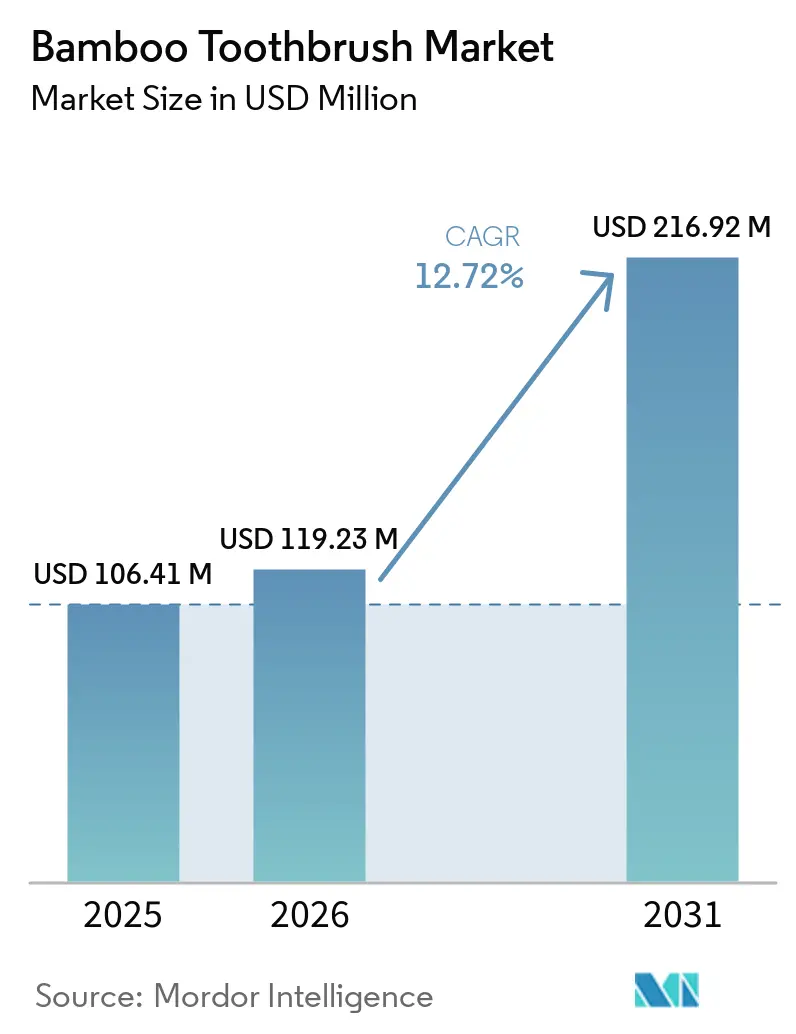
The bamboo toothbrush market size is expected to grow from USD 106.4 million in 2025 to USD 119.2 million in 2026 and is forecast to reach USD 216.9 million by 2031 at 12.7% CAGR over 2026-2031. Heightened scrutiny on plastic usage, a growing consumer shift towards eco-friendly personal care products, and an increasing acceptance of biodegradable items by retailers are propelling the bamboo toothbrush market. This market is evolving; consumers are now prioritizing packaging, material traceability, and product performance over merely opting for an eco-friendly alternative to traditional plastic brushes. While competition remains fragmented, allowing smaller brands to flourish, it underscores the significance of certifications and a compelling product narrative for brands vying for shelf space and repeat online orders. The bamboo toothbrush market is transitioning from sporadic first-time purchases to more consistent replacement cycles, bolstered by subscription models, demand from the hospitality sector, and product line extensions. However, challenges persist in areas like bristle disposal, premium pricing, and durability concerns. As a result, growth is skewed towards brands adept at harmonizing sustainability claims with practical utility.
Key Report Takeaways
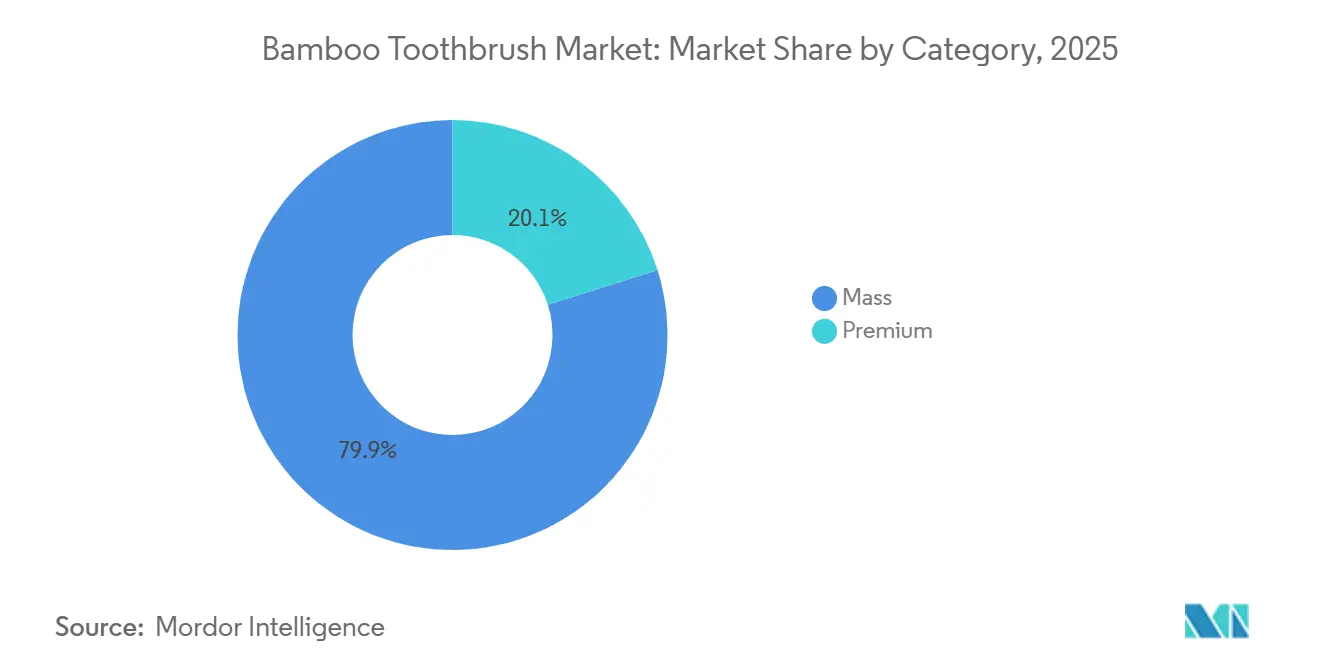
- By category, the mass segment held 79.89% of the global bamboo toothbrush market share in 2025, while the premium segment is forecast to grow at 13.18% CAGR during 2026-2031.
- By end user, adults accounted for the largest share of the bamboo toothbrush market, at 78.18% in 2025, while children's is projected to grow at the fastest CAGR of 14.42% during 2026-2031.
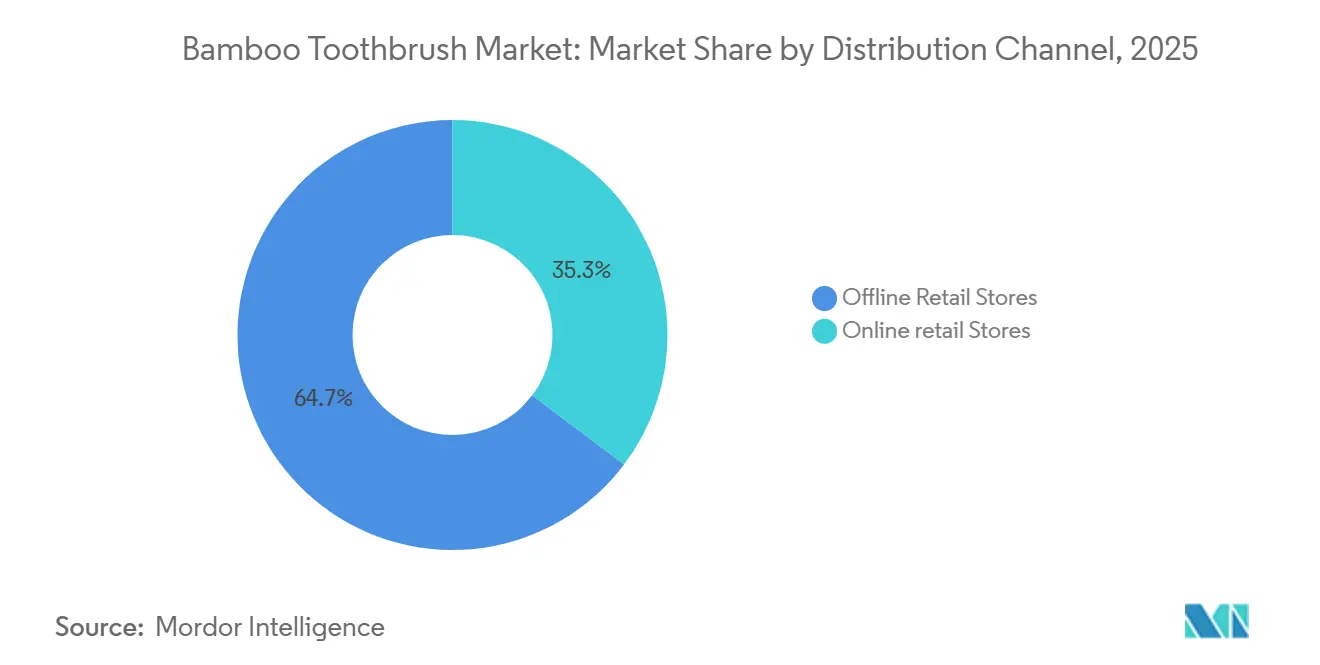
- By distribution channel, offline retail stores accounted for the largest share of the bamboo toothbrush market, at 64.71% in 2025, while online retail stores are projected to grow at the fastest CAGR of 15.21% during 2026-2031.
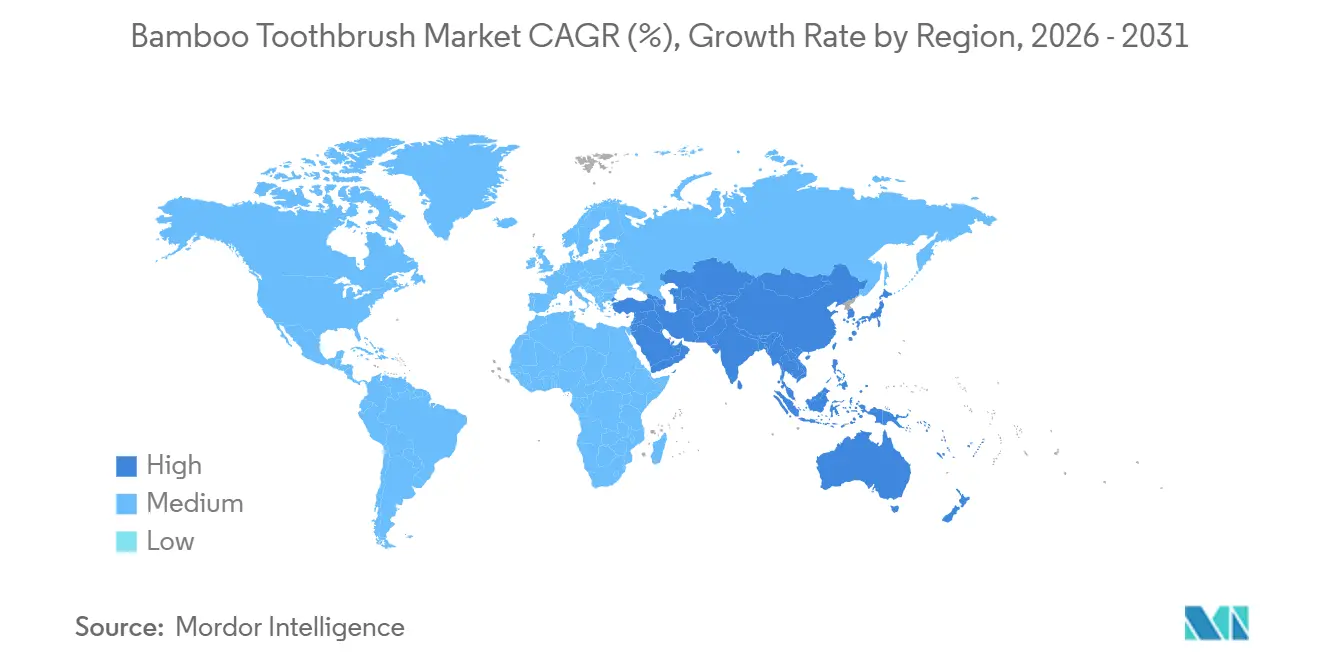
- By geography, Asia-Pacific accounted for the largest share of the bamboo toothbrush market, at 34.74% in 2025, while Europe is projected to grow at the fastest CAGR of 14.47% during 2026-2031.
Note: Market size and forecast figures in this report are generated using Mordor Intelligence’s proprietary estimation framework, updated with the latest available data and insights as of January 2026.
Market Trends and Insights
Drivers Impact Analysis of Bamboo Toothbrush Market*
| Driver | (~) % Impact on CAGR Forecast | Geographic Relevance | Impact Timeline |
|---|---|---|---|
| Rising Plastic-Free Oral Care Adoption | +3.5% | Global, led by Europe and North America | Short term (≤ 2 years) |
| Sustainability Claims Moving From Niche to Mainstream | +2.2% | North America, Europe, with spill-over to Asia-Pacific | Medium term (2-4 years) |
| Toothbrush Replacement Subscription Models | +1.8% | North America and Europe primarily | Medium term (2-4 years) |
| Institutional Procurement From Hospitality and Travel | +1.5% | Global, with early gains in Europe, Asia-Pacific, and Middle East and Africa resort markets | Short term (≤ 2 years) |
| Traceability Demand for Bamboo Sourcing and Packaging | +1.2% | Europe and North America, compliance driven in the EU | Medium term (2-4 years) |
| Retailer Preference for Differentiated Eco-Private Labels | +1.0% | North America, Europe, Asia-Pacific core | Long term (≥ 4 years) |
| Source: Mordor Intelligence | |||
Rising plastic-free oral care adoption
In the bamboo toothbrush market, plastic-free oral care has transitioned from a niche choice to a prominent mainstream preference. Global awareness of oral hygiene has increased toothbrush adoption through public health campaigns and educational initiatives. The World Health Organization reports that approximately 3.5 billion people worldwide will suffer from oral diseases in 2025[1]Source: World Health Organization, " Oral Health Fact Sheet 2025 WHO", who.int. Heightened consumer awareness regarding plastic usage in daily personal care has bolstered the trial of bamboo toothbrushes, both in physical stores and on digital platforms. Retailers, particularly those emphasizing lower-waste household products, are allocating more shelf space to items with a pronounced sustainability appeal. This strategy not only enhances category visibility but also increases the likelihood of repeat purchases. Such dynamics are crucial, given the bamboo toothbrush market's reliance on turning initial curiosity into a habit of regular replacements every few months. The impact is most pronounced among shoppers familiar with eco-labels, who actively compare materials, packaging, and end-of-life claims prior to purchase. Consequently, while a plastic-free stance alone isn't sufficient, it serves as a pivotal entry point, facilitating the bamboo toothbrush market's expansion into a wider customer demographic.
Sustainability claims moving from niche to mainstream
In the bamboo toothbrush market, sustainability claims are evolving from being a premium feature to a standard expectation. As a result, brands find it increasingly challenging to rely solely on broad eco-friendly language, with consumers now demanding specifics on lifecycle impacts, materials, and disposal methods. A 2024 peer-reviewed life cycle assessment found that bamboo toothbrush handles have a lower carbon footprint than plastic ones, provided the handle is properly composted and the bristles are removed beforehand. This highlights the need for sustainability messaging to align with genuine consumer practices, rather than just packaging jargon. In October 2025, The Humble Co. took this more evidence-based route by introducing a COSMOS-certified natural toothpaste line, complementing its existing plant-based oral care products. This shift signals a move for the bamboo toothbrush market towards more robust proof points, enhanced consumer education, and an expanded product lineup, moving beyond a singular eco-centric claim.
Toothbrush replacement subscription models
Subscription models are reshaping the bamboo toothbrush market's approach to securing repeat demand. Given the product's natural fit within a regular replacement cycle, online brands find it easier to establish predictable quarterly purchasing patterns. This predictability mitigates demand volatility, a crucial factor for brands juggling bamboo, packaging, and accessory inventories across multiple sales channels. Furthermore, it enhances customer retention; once accustomed to the replenishment routine, subscribers are less inclined to revert to plastic alternatives. In April 2025, The Humble Co. underscored this trend by introducing replaceable toothbrush heads and a plant-based format, both designed to minimize waste and promote continued use within the brand's ecosystem. Consequently, subscription commerce is not just boosting online sales; it's enabling the bamboo toothbrush market to achieve more consistent revenue visibility and cultivate stronger customer loyalty.
Institutional procurement from hospitality and travel
Institutional demand from hotels, resorts, and travel channels is becoming an important support layer for the bamboo toothbrush market. This channel matters because it creates recurring volume outside the usual consumer price comparison seen in retail. Procurement teams in hospitality tend to focus on basic sustainability compliance, consistent product quality, and the ability to order at scale, which fits the strengths of standardized bamboo toothbrush formats. It also gives brands access to end users through room amenities and travel kits, which can later support retail conversion if the experience is positive. The effect is especially useful for the mass segment because high-volume orders can improve production planning and reduce unit cost pressure. Over time, hospitality procurement is likely to remain a practical route for the bamboo toothbrush market to widen exposure while supporting stable demand in a fragmented supplier landscape.
Restraints Impact Analysis of Bamboo Toothbrush Market*
| Restraint | (~) % Impact on CAGR Forecast | Geographic Relevance | Impact Timeline |
|---|---|---|---|
| Bristle Disposal Still Depends on Non-Biodegradable Materials | -1.2% | Global, particularly acute in markets with strict compostability labeling rules | Medium term (2-4 years) |
| Premium Pricing Versus Mass Plastic Alternatives | -0.8% | Emerging markets in Asia-Pacific, South America, and Middle East and Africa | Short term (≤ 2 years) |
| Performance Skepticism Around Durability and Hygiene | -0.6% | Global, particularly among first-time bamboo toothbrush users | Short term (≤ 2 years) |
| Uneven Composting and End-Of-Life Infrastructure | -0.4% | Emerging markets, with fragmented infrastructure in MEA and South America | Long term (≥ 4 years) |
| Source: Mordor Intelligence | |||
Bristle disposal still depends on non-biodegradable materials
The bamboo toothbrush market grapples with a significant challenge: the bristle issue. While many bamboo toothbrushes address the waste dilemma with biodegradable handles, the bristles still pose a disposal challenge. A 2024 life cycle assessment underscored that the environmental benefits hinge on proper disposal practices, such as removing bristles before composting. However, many consumers overlook this step, undermining claims of full biodegradability and leading to confusion during disposal. In response, brands are experimenting with new materials and introducing replaceable-head designs. Yet, these innovations aren't uniformly accessible across all price ranges and regions. As a result, the bamboo toothbrush market faces ongoing scrutiny until brands can refine product designs and offer clearer end-of-life instructions.
Premium pricing versus mass plastic alternatives
Price poses a significant hurdle for the bamboo toothbrush market, particularly in regions where conventional plastic brushes dominate due to their affordability and accessibility. The bamboo toothbrush category thrives in markets where consumers willingly pay a premium for sustainability, innovative design, or eco-friendly materials. However, this creates a void in price-sensitive areas. Here, while consumers may resonate with the environmental benefits of bamboo brushes, they often opt for the more economical plastic alternatives. This challenge is pronounced in the mass market segment, where even minor price variations can significantly influence adoption rates. Although channels like hospitality and online platforms have heightened demand visibility, they haven't bridged the retail price gap for individual consumers. To expand its footprint, the bamboo toothbrush market must focus on reducing landed costs, streamlining product offerings, and enhancing value communication—moving beyond mere eco-centric messaging.
*Our forecasts treat driver/restraint impacts as directional, not additive. The impact forecasts reflect baseline growth, mix effects, and variable interactions.
Bamboo Toothbrush Market Segment Analysis
By Category:
Mass Volumes Sustained Leadership While Premium Expanded FasterIn 2025, the mass segment dominated the bamboo toothbrush market, capturing a substantial 79.9% share. This dominance underscored its alignment with retail programs, hospitality kits, subscription packs, and other high-turnover channels, where affordability and a reliable supply took precedence over design enhancements. Moreover, the industry reaped benefits as mass products facilitated easier standardization in materials, packaging, and procurement. This standardization empowered suppliers to scale their offerings across diverse customer groups. Essentially, the mass segment served as the foundation, bolstering broad category availability, encouraging first-time trials, and fostering repeat purchases in the bamboo toothbrush arena.
Forecasted to expand at a 13.2% CAGR from 2026 to 2031, the premium segment is set to outpace its mass counterpart in the bamboo toothbrush market. Premium offerings are increasingly defined by a heightened focus on handle design, bristle composition, certifications, and eco-friendly formats, moving beyond a sole emphasis on bamboo. Highlighting this trend, The Humble Co. launched the Humble Brush 7K in May 2025, boasting 7,000 ultra-soft bristles, a plant-based handle, vegan certification, and a PFAS-free promise. This underscores how premium brands are intertwining performance with sustainability. Consequently, the bamboo toothbrush market's fastest-growing segment is becoming more associated with superior product design and tangible quality evidence, rather than just eco-friendly branding.



By End User:
Adults Dominated Demand While Children Recorded the Fastest GrowthIn 2025, adults dominated the bamboo toothbrush market, accounting for 78.2% of the market. Their lead stemmed from heightened environmental awareness, robust purchasing power, and active engagement in subscription and travel-related buying channels. Moreover, adult-oriented formats seamlessly integrated into standardized manufacturing, facilitating larger production runs and smoother placements in pharmacies, health stores, and online platforms. This demographic lent stability to the bamboo toothbrush industry, as adult consumers were more inclined to embrace premium claims, scrutinize certification cues, and commit to planned repeat purchases.
Meanwhile, the children's segment is set to grow at a 14.4% CAGR from 2026 to 2031, emerging as the fastest-growing category in the bamboo toothbrush market. This growth is driven by parents increasingly opting for non-toxic, BPA-free, and chemical-free oral care products, a choice that resonates with their overarching household sustainability objectives. The segment is evolving, now favoring child-specific handle sizes, softer materials, and thoughtfully engineered products, rather than just miniaturized adult versions. As this trend cements itself, the bamboo toothbrush market is set to reap substantial rewards from family-oriented buying choices, where safety, trust, and a dedication to minimizing plastic use are paramount. Additionally, data from the Centers for Disease Control and Prevention highlights a pressing concern: in 2025, 11% of children aged 2-5 had untreated decay in their primary teeth, further fueling the demand for quality oral care products[2]Source: Centers for Disease Control and Prevention, "Dental Caries and Sealand Prevalence in Children 2025", cdc.gov.
By Distribution Channel:
Offline Led Volumes While Online Improved Purchase FrequencyIn 2025, offline retail stores dominated the bamboo toothbrush market, accounting for 64.7% of sales. Many consumers preferred to inspect the handle, packaging, and certification cues at physical stores before trying a new oral care product. This tactile experience allowed buyers to assess the product's quality and eco-friendliness firsthand, which is often a critical factor for environmentally conscious consumers. Pharmacies, health food outlets, and eco-specialty stores provided trusted environments, clarifying product differences and easing first-time buyers' hesitations. Additionally, these physical outlets often employed knowledgeable staff who could guide customers through the benefits of bamboo toothbrushes, further building consumer confidence. Thus, even with the rapid expansion of digital channels, offline retail remained the primary volume base for the bamboo toothbrush market.
Online retail stores are projected to grow at a 15.2% CAGR from 2026 to 2031, emerging as the fastest-growing channel in the bamboo toothbrush market. Digital sales thrive on subscription models, repeat deliveries, and the convenience of bundling toothbrushes with other oral care products. The 2025 partnership between Suma Wholefoods and BambuuBrush, showcased through the ALTER/NATIVE collection, highlighted how online wholesale access can bolster eco-focused distribution, negating the need for every brand to establish a vast direct network. As online retail continues to enhance purchase convenience and promote regular replacements, its influence in the bamboo toothbrush market is set to expand.
Geography Analysis
APAC Bamboo Toothbrush Market
In 2025, Asia-Pacific dominated the bamboo toothbrush market, capturing 34.7% of the share. The region's advantage stems from its access to raw materials, robust manufacturing capabilities, and an expanding local consumer base. This combination positions Asia-Pacific more favorably than many other regions. The bamboo toothbrush market's success hinges not just on end-user demand but also on the efficient sourcing and processing of bamboo. Asia-Pacific's expanding production footprint not only meets export demand but also boosts domestic sales. In a notable move in 2025, Deotech Korea unveiled the Orgeul bamboo toothbrush, crafted from locally sourced Moso bamboo, underscoring the region's shift towards specialized and transparent supply chains.
Europe Bamboo Toothbrush Market
Europe is poised to dominate the bamboo toothbrush market, with forecasts predicting a robust 14.5% CAGR from 2026 to 2031. European consumers, adept at deciphering certification labels, frequently prioritize verified sustainability in their personal care choices, even if it comes at a premium. In the UK, dental screenings for 2023-24 highlighted a concerning trend: 22.4% of five-year-olds showed visible signs of tooth decay[3]Source: Office for Health Improvement and Disparities, "Oral Health Survey of 5-Year-old School Children: 2024, " gov.uk.With policies emphasizing plastic reduction and closely examining environmental claims, Europe emerges as a frontrunner for alternatives that champion transparent material narratives. This alignment of regulations, retail benchmarks, and consumer inclinations solidifies Europe's position as the leading growth hub for the bamboo toothbrush market in the years ahead.
The Americas and MEA Bamboo Toothbrush Market
While North America, South America, and the Middle East and Africa collectively contribute to the bamboo toothbrush market, their growth trajectories vary significantly. North America leverages established online platforms, habitual purchasing, and a growing acceptance of low-plastic personal care items in specialty retail. South America, still in the nascent stages of adoption, grapples with pricing challenges and the adequacy of end-of-life infrastructure. Meanwhile, the Middle East and Africa are witnessing initial growth driven by demand from the hospitality and resort sectors, paving a pragmatic entry into nations where eco-friendly retail channels are still evolving.

Competitive Landscape
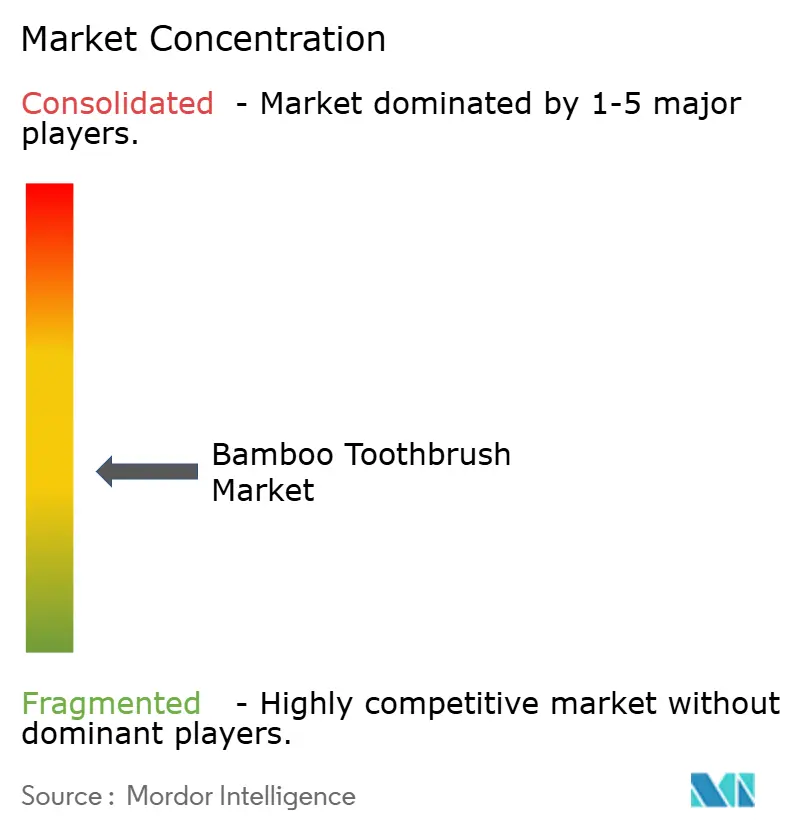
The bamboo toothbrush market remains fragmented, with a concentration score of 4 indicating moderate-to-low control by suppliers. While scale can provide an advantage, it doesn't ensure market leadership. Brands must also demonstrate reliable sourcing, consistent product quality, and credible sustainability claims. By 2026, companies that prioritize clear material disclosure, foster repeat purchases, and maintain consistent product performance will dominate the bamboo toothbrush market. This emphasis is crucial as buyers now evaluate not just the bamboo handle but also disposal guidance, packaging choices, and overall product credibility before making a purchase.
Major consumer brands and niche oral care specialists are navigating the bamboo toothbrush market differently. Colgate-Palmolive leverages its expansive sustainability agenda, pushing for reduced plastic packaging and setting a 2025 goal for all its packaging to be recyclable, reusable, or compostable. In contrast, specialist brands carve their niche through distinctive product design, strong brand values, and a focused eco-friendly approach. The Humble Co. exemplified this strategy, introducing replaceable heads and a plant-based toothbrush in April 2025, followed by the launch of its COSMOS-certified natural toothpaste range under the Ungredients initiative in October 2025. Such maneuvers highlight a trend: success in the bamboo toothbrush arena increasingly hinges on establishing a comprehensive oral care platform rather than merely selling a single sustainable brush.
Channel strategy plays a pivotal role in shaping competition within the bamboo toothbrush market. While some brands prioritize in-store visibility to lure first-time buyers, others focus on subscriptions, direct online orders, or eco-friendly wholesale networks for repeat business. A notable instance is the 2025 collaboration between BambuuBrush and Suma Wholefoods, showcasing how aligned distribution can amplify reach without necessitating a vast standalone infrastructure. In summary, while the bamboo toothbrush market still offers growth opportunities for smaller brands, those poised for the brightest future are those adept at seamlessly integrating certification, product quality, and channel strategy.
Bamboo Toothbrush Industry Leaders
-
Colgate-Palmolive Company
-
The Humble Co.
-
WooBamboo
-
Brush with Bamboo
-
Bambaw
- *Disclaimer: Major Players sorted in no particular order
Bamboo Toothbrush Market Companies Covered in this Report
- The Humble Co.
- WooBamboo
- Brush with Bamboo
- Colgate-Palmolive Company
- TIO Care GmbH
- Bambaw
- Jordan Oral Care
- EcoRoots
- EcoLiving
- Humble Brush
- Dental Lace
- N-Amboo Brush
- Living Bamboo
- Mable
- SaveOurBrush
- Truthbrush
- Bamboo Brush Society
- Georganics
- MyMagicMud
- Simply Gum

Recent Industry Developments in Bamboo Toothbrush Market
- April 2026: Truthbrush has introduced the UK's inaugural bamboo electric toothbrush heads, designed to fit Oral-B handles. This move offers a sustainable, lower-plastic option for the nation's 30 million electric toothbrush users. Crafted with 100% castor oil bristles, these heads provide a seamless, eco-friendly replacement, eliminating the need for users to switch devices.
- October 2025: The Humble Co. has introduced its "Ungredients" brand initiative alongside a COSMOS-Certified Natural Toothpaste range, which contains 99.4% natural-origin ingredients. Packaged in endlessly recyclable aluminum tubes, this launch broadens the company's eco-oral-care platform beyond its bamboo toothbrush offerings. This step highlights The Humble Co.'s strategy to lead the entire natural oral care routine rather than focusing solely on toothbrush features.
- May 2025: The Humble Co. launched the Humble Brush 7K, boasting 7,000 ultra-soft, plant-based bristles and a hexagonal handle made from plant materials. This vegan-certified brush is free from PFAS and bisphenol and is available worldwide via select retailers and direct-to-consumer channels. Marking a shift towards the premium lifestyle segment, the product showcases the brand's refreshed Scandinavian design language.
- April 2025: The Humble Co. introduced replaceable toothbrush heads designed for Oral-B handles. In addition, they unveiled a plant-based toothbrush featuring these replaceable heads. The toothbrush handle, primarily made from wheat starch, boasts bristles that are 65% derived from castor-bean-based nylon. This innovation directly tackles the issue of product waste.


Global Bamboo Toothbrush Market Report Scope
| Premium |
| Mass |
| Adults |
| Children |
| Online Retail Stores |
| Offline Retail Stores |
| North America |
| Europe |
| Asia-Pacific |
| South America |
| Middle East and Africa |
| By Category | Premium |
| Mass | |
| By End User | Adults |
| Children | |
| By Distribution Channel | Online Retail Stores |
| Offline Retail Stores | |
| By Geography | North America |
| Europe | |
| Asia-Pacific | |
| South America | |
| Middle East and Africa |


Key Questions Answered in the Report
What is the current size of the bamboo toothbrush sector?
The bamboo toothbrush market size stood at USD 119.2 million in 2026 and is forecast to reach USD 216.9 million by 2031, growing at a 12.7% CAGR over 2026-2031.
Which region leads global demand for bamboo toothbrushes?
Asia-Pacific led in 2025 with 34.7% share, supported by its role as both a major production base and a growing consumer region.
Which region is expected to grow the fastest through 2031?
Europe is forecast to expand at 14.5% CAGR during 2026-2031, making it the fastest-growing regional segment in the bamboo toothbrush market.
Which category holds the largest share in bamboo toothbrush sales?
The mass segment led by category with 79.9% share in 2025, supported by its fit with retail, hospitality, and other large-volume channels.
Page last updated on:


 Your data is secure and never sold or shared.


