
Eye Health Supplement Market Size and Share
Market Overview
| Study Period | 2020 - 2031 |
|---|---|
| Market Size (2026) | USD 2.93 Billion |
| Market Size (2031) | USD 4.23 Billion |
| Growth Rate (2026 - 2031) | 7.62 % |
| Fastest Growing Market | Asia Pacific |
| Largest Market | North America |
| Market Concentration | Medium |
Major Players *Disclaimer: Major Players sorted in no particular order Image © Mordor Intelligence. Reuse requires attribution under CC BY 4.0. | |
Eye Health Supplement Market Analysis by Mordor Intelligence
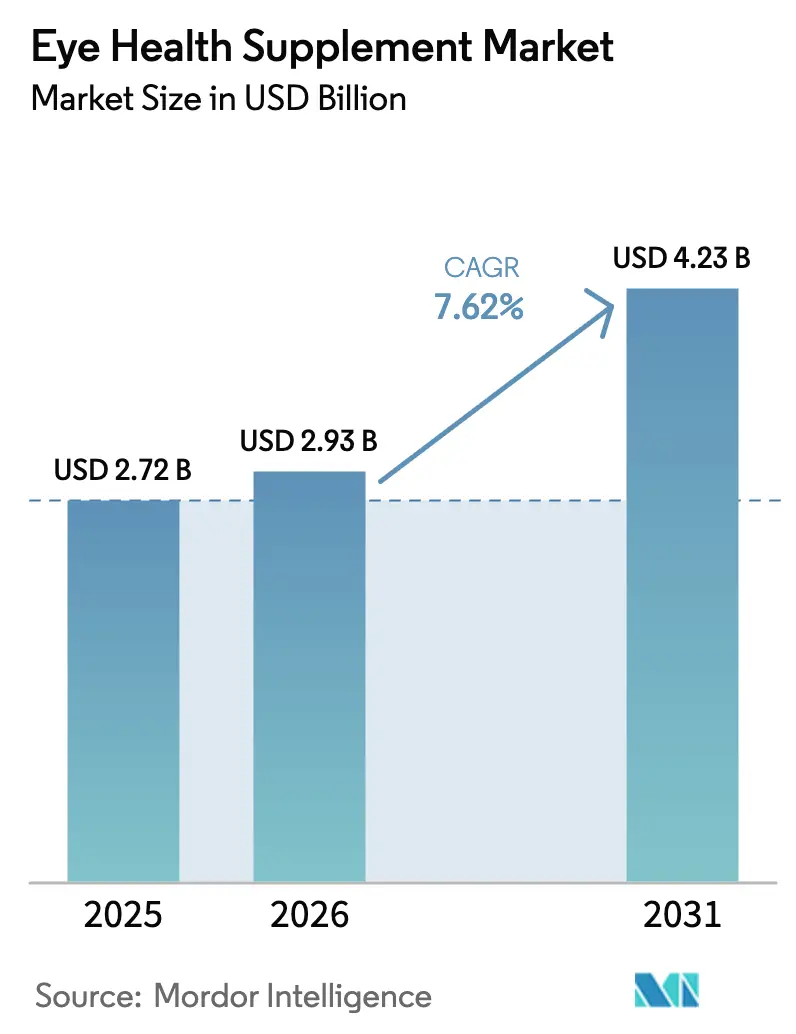
The Eye Health Supplement Market size was valued at USD 2.72 billion in 2025 and is estimated to grow from USD 2.93 billion in 2026 to reach USD 4.23 billion by 2031, at a CAGR of 7.62% during the forecast period (2026-2031).
Ingredient innovation, led by carotenoids combined with omega-3 fatty acids, is widening the consumer base by demonstrating an 18% reduction in geographic atrophy progression among age-related macular degeneration (AMD) patients over 24 months. Gummy and chew formats are pulling new users toward preventative routines after pectin encapsulation raised carotenoid bioavailability to 87% of softgels while removing gelatin allergens. Direct-to-consumer (DTC) subscription channels are lowering acquisition costs by 34% and locking purchasers into 90-day refill cycles, a pattern that is redistributing category profits toward agile online brands. Supply shocks in Peruvian anchovy fisheries have tightened marine-sourced DHA and EPA availability, but cost-parity micro-algae alternatives now permit mass-market price points without mercury risk.
Key Report Takeaways
- By ingredient type, omega-3 fatty acids led with 29.55% of the eye health supplement market share in 2025, while carotenoids are projected to expand at a 9.85% CAGR through 2031.
- By form, softgel capsules held 45.53% of the eye health supplement market size in 2025, whereas gummies and chews are advancing at a 10.75% CAGR during the forecast period.
- By indication, AMD commanded 39.15% revenue in 2025, yet myopia progression is forecast to grow at 10.82% CAGR.
- By distribution channel, pharmacy and drug stores accounted for 42.52% revenue in 2025, while online retail and DTC brands are expected to grow at 12.12% CAGR through 2031.
- By age group, adults comprised 60.54% of the eye health supplement market size in 2025, whereas the pediatric segment is set to record a 9.32% CAGR over 2026-2031.
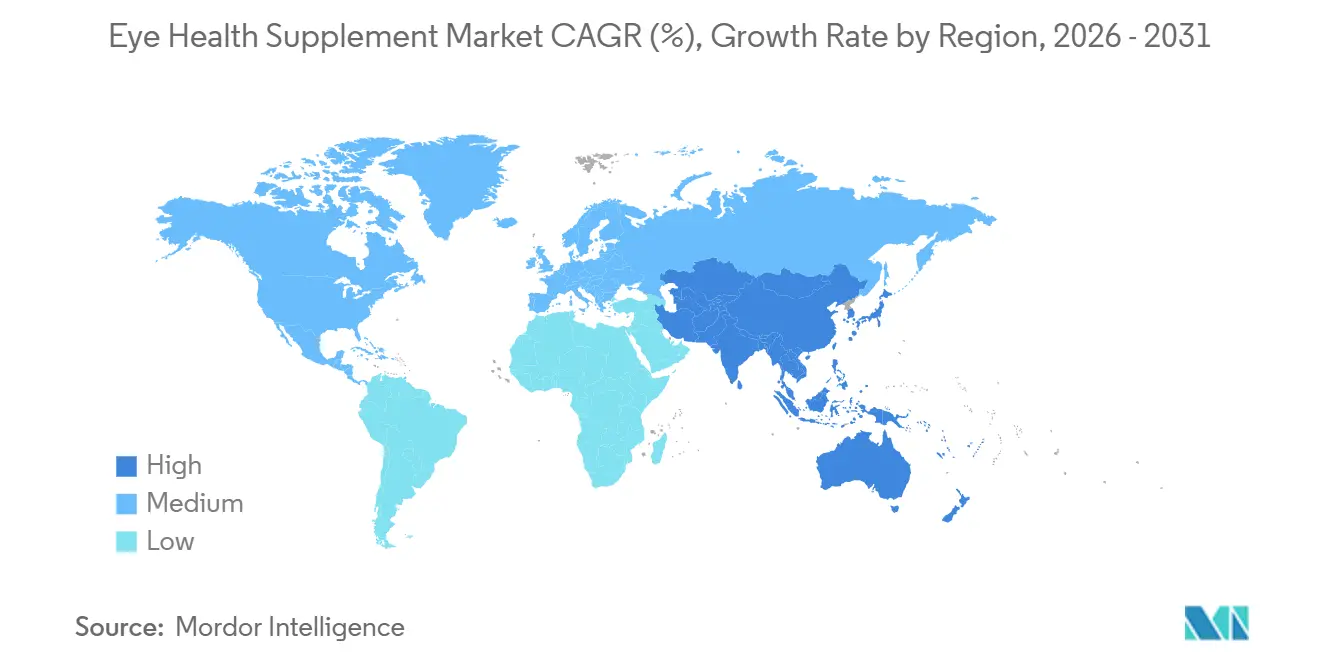
- By geography, North America captured 36.62% revenue in 2025, yet Asia-Pacific is poised for the fastest 8.72% CAGR to 2031.
Note: Market size and forecast figures in this report are generated using Mordor Intelligence’s proprietary estimation framework, updated with the latest available data and insights as of January 2026.
Market Trends and Insights
Drivers Impact Analysis of Eye Health Supplement Market*
| Driver | (~) % Impact on CAGR Forecast | Geographic Relevance | Impact Timeline |
|---|---|---|---|
| Increasing prevalence of ocular diseases linked to metabolic syndrome | +1.8% | Global, with concentration in South Asia and Middle East | Long term (≥ 4 years) |
| Adoption of preventative-health mindset among Gen Z & Millennials | +1.3% | North America, Europe, urban Asia-Pacific | Medium term (2-4 years) |
| Surge in self-directed eye-care via e-commerce nutraceuticals | +1.6% | Global, led by North America and China | Short term (≤ 2 years) |
| Clinical validation of carotenoid + omega-3 synergistic formulations | +1.2% | North America, Europe, Japan | Medium term (2-4 years) |
| Micro-algae DHA/EPA cost breakthroughs enabling mass-market pricing | +0.9% | Global, early adoption in North America and Europe | Long term (≥ 4 years) |
| Patent expiries spurring fortified eye-vitamin line extensions | +0.8% | North America, Europe | Short term (≤ 2 years) |
| Source: Mordor Intelligence | |||
Increasing Prevalence of Ocular Diseases Linked to Metabolic Syndrome
Diabetic retinopathy incidence tracks hemoglobin A1c levels above 7.5%, a threshold exceeded by 58% of diagnosed diabetics in the United States in 2024[1]Centers for Disease Control and Prevention, “National Diabetes Statistics Report, 2024,” cdc.gov. India’s urban prevalence reached 17.6%, translating to 14.2 million affected individuals who often lack access to laser treatment, leaving supplementation as an interim measure. Combination products blending omega-3s and coenzyme Q10 grew 34% in 2024-2025 because metabolic syndrome comorbidities intensify retinal oxidative stress. The American Diabetes Association’s 2025 care standards call for yearly retinal screening at diagnosis, indirectly endorsing early supplement uptake. Supplement demand therefore escalates in tier-2 cities where ophthalmologist density remains below one per 100,000 residents, filling a glaring care gap.
Adoption of Preventative-Health Mindset Among Gen Z and Millennials
Consumers aged 25–40 made up 41% of purchases in 2025 as daily screen exposure averaged 11 hours during remote work. Ingredient transparency matters; 68% will pay a 25% premium for NSF-verified labels[2]Council for Responsible Nutrition, “2024 Consumer Survey on Dietary Supplements,” crnusa.org. Social media amplified demand—TikTok eye-health hashtags amassed 2.3 billion views in 2024, and influencer content drove 29% of first-time buys. Gummies captured 18% of this cohort’s spending against 9% for baby boomers, demonstrating taste preferences that shape product formats. Early lutein and zeaxanthin adoption before symptom onset differentiates this demographic from older groups that initiate supplementation only after diagnosis.
Surge in Self-Directed Eye-Care via E-Commerce Nutraceuticals
DTC brands cut customer acquisition costs to USD 18 in 2025 by targeting precise search queries, down from USD 27 in 2023. Subscription models triple lifetime value relative to single-purchase buyers while permitting 15% price discounts that still protect 38% gross margins. Amazon sales expanded 31% in 2024, with private-label products using AREDS2 profiles priced at half of branded equivalents. Tele-optometry portals convert 14% of virtual exams into supplement sales by pairing personal recommendations with one-click checkout. Regulatory gray zones around structure-function claims on e-commerce listings let 63% of top sellers suggest disease benefits without FDA pre-approval, accelerating online channel growth.
Clinical Validation of Carotenoid + Omega-3 Synergistic Formulations
The 10-year AREDS2 follow-up showed that adding 1 gram of EPA/DHA to 10 mg lutein and 2 mg zeaxanthin cut progression to advanced AMD by 26%. Co-encapsulation raised combined bioavailability by 34% while protecting against oxidation during shelf storage. EFSA confirmed a vision-maintenance claim for lutein and zeaxanthin in 2024, allowing targeted messaging across EU markets. Yet 41% of 2025 commercial SKUs contained subtherapeutic carotenoid doses below 6 mg, undercutting real-world effectiveness. Brands that align with validated ratios differentiate on efficacy as well as trust.
Restraints Impact Analysis of Eye Health Supplement Market*
| Restraint | (~) % Impact on CAGR Forecast | Geographic Relevance | Impact Timeline |
|---|---|---|---|
| Scientific controversy over supplement efficacy & lack of reimbursement | -0.9% | Global, particularly impacting North America and Europe | Medium term (2-4 years) |
| Price volatility of key marine-sourced omega-3 inputs | -0.7% | Global, supply concentrated in Peru and Norway | Short term (≤ 2 years) |
| Counterfeit & adulterated products eroding consumer trust | -0.6% | Global, acute in Asia-Pacific and online channels | Medium term (2-4 years) |
| Stringent cross-border novel-food rules for high-dose carotenoids | -0.5% | Europe, Asia-Pacific (China, India), with spillover to emerging markets | Long term (≥ 4 years) |
| Source: Mordor Intelligence | |||
Scientific Controversy Over Supplement Efficacy and Lack of Reimbursement
A 2024 Cochrane review of 19 trials reported no significant benefit from lutein or zeaxanthin against cataract progression, reducing clinician endorsement. Medicare Part D continued to exclude eye supplements from formularies in 2025, classifying them as wellness products. Out-of-pocket costs deterred 34% of AMD patients from starting supplementation, according to an American Academy of Ophthalmology survey. Ophthalmologists cite permissive FDA structure-function rules as misleading because products can claim eye support without pre-market efficacy proof. Without payer backing, pharmaceutical firms avoid prescription-grade pathways, limiting innovation beyond over-the-counter formulas.
Price Volatility of Marine-Sourced Omega-3 Inputs
Peruvian anchovy landings fell 29% in 2024 after El Niño disrupted spawning, raising crude fish-oil prices to USD 2,850 per ton in Q3 2024. Norwegian herring and mackerel increases met only 62% of pharmaceutical-grade demand, sustaining tight supply. Brands depending solely on anchovy oil saw cost of goods sold jump 19% year-over-year, forcing dosage cuts that risk consumer backlash. Futures for 2026 delivery at USD 2,950 per ton suggest persistent strain as climate models predict continued El Niño through mid-2027. Formulators blending algal DHA partially insulated margins, yet the restraint still trims growth projections.
*Our forecasts treat driver/restraint impacts as directional, not additive. The impact forecasts reflect baseline growth, mix effects, and variable interactions.
Eye Health Supplement Market Segment Analysis
By Ingredient Type Carotenoids Extend Growth Runway
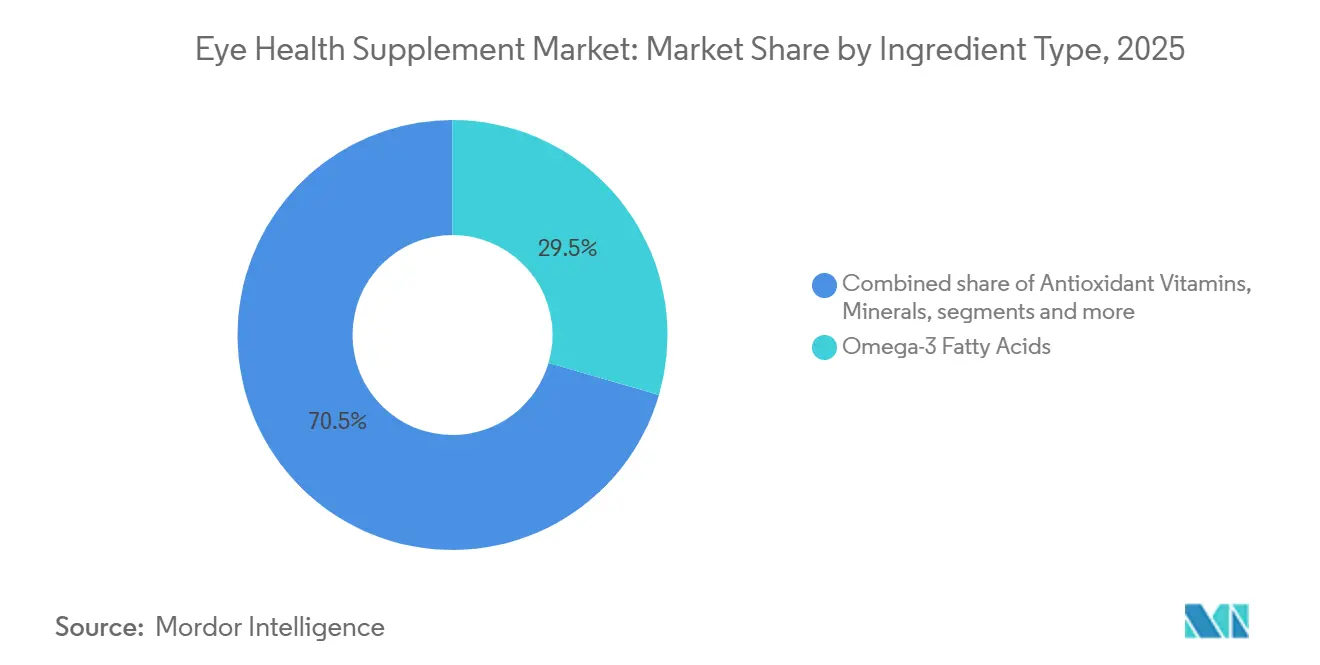
Omega-3 fatty acids commanded 29.55% revenue in 2025, but carotenoids are forecast to deliver the fastest 9.85% CAGR because rising macular pigment scores link directly with 0.12 logMAR visual-acuity gains in early AMD cases. High-purity lutein pricing—USD 180 per kilogram in 2025—helps private labels compete while still funding quality testing. Antioxidant vitamins face falling margins as commoditized ascorbic acid prices declined 14% since 2023. Minerals such as zinc and copper keep stable volume but reformulate into chelated formats after 22% of users reported gastrointestinal discomfort at standard zinc dosages.
Botanical and polyphenol innovation is advancing category differentiation. Bilberry extract at 25% anthocyanins improved night-vision adaptation by 18% among Italian military pilots. Astaxanthin attracted mainstream attention in 2025, with 12 mg daily reducing accommodative decline by 0.8 diopters among presbyopic adults. Multi-ingredient blends accounted for 68% of 2024 launches, as brands layer carotenoids, omega-3s, and botanicals to command premiums. The United States Pharmacopeia’s 2024 monographs for lutein and zeaxanthin raised compliance costs but also enabled trust-building label claims.



By Form Gummies Challenge Capsule Leadership
Softgel capsules retained 45.53% revenue in 2025 by safeguarding shelf life up to 36 months. Yet gummies and chews posted a 10.75% CAGR due to pectin matrices that mask fishy aftertaste while delivering 87% bioequivalence to softgels. The format appeals to dysphagia patients and children, with pediatric gummies capturing 31% of under-12 spending in 2025.
Tablets are retreating as slow disintegration undermines lipophilic payloads, although effervescents are gaining traction in Europe for faster dissolution. Powders attract fitness consumers seeking custom blends, while liquids represent a premium niche at under 5% share but 40% higher price points. Capsule makers have introduced chewable softgels, though broad acceptance remains untested.
By Indication Myopia Progression Creates Pediatric Upside
AMD maintained 39.15% of 2025 revenue, reflecting 196 million global cases. Myopia progression, however, is projected to record a 10.82% CAGR as China’s pediatric prevalence reached 71.6% in 2024. Parental willingness to pay sustains comparable pricing even though myopia formulas use lower lutein doses than AMD products.
Cataract-oriented SKUs remain flat after a 2024 Cochrane review questioned efficacy. Dry-eye products doubled omega-3 dosage to 2 grams daily to address meibomian dysfunction that now affects 344 million adults. Diabetic-retinopathy blends use alpha-lipoic acid plus resveratrol, a format still under-represented at 9% of category sales despite 31% reductions in oxidative-stress markers in trials.
By Distribution Channel DTC Subscriptions Reshape Economics
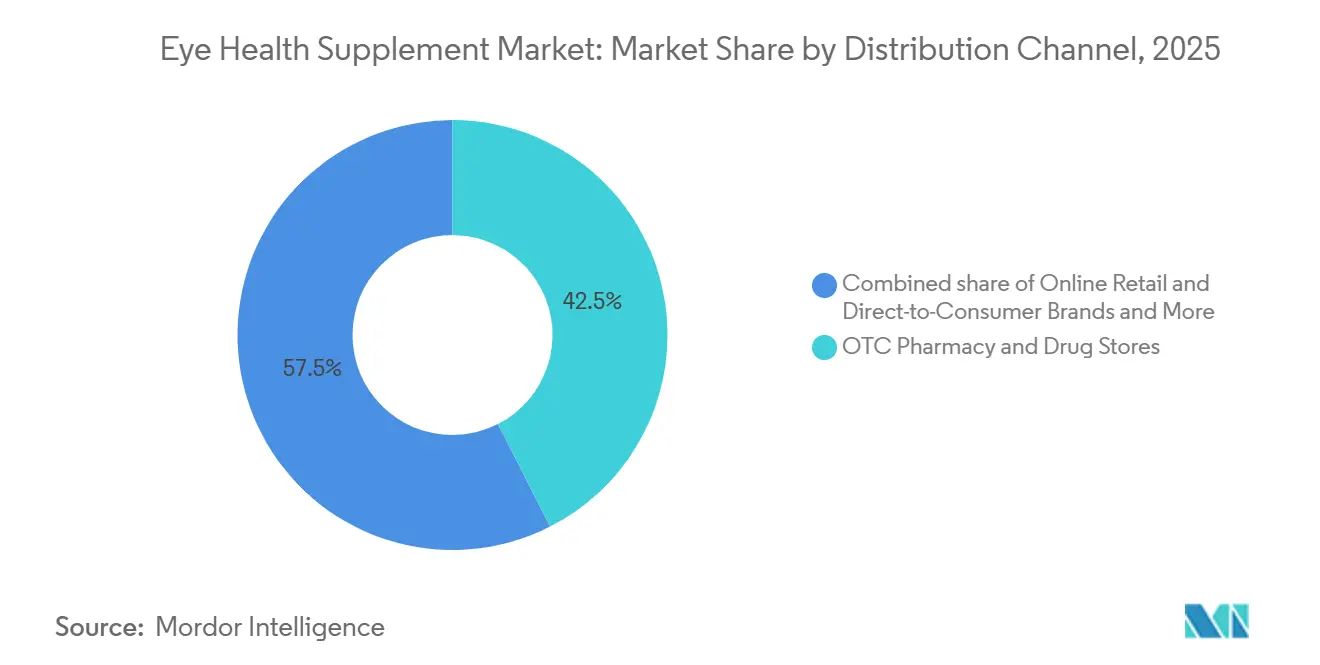
Pharmacy and drug stores held 42.52% share in 2025, but year-on-year growth is slowing as younger shoppers shift online. DTC and other e-commerce outlets are set to rise 12.12% annually by using algorithmic targeting that converts searches such as “dry eye relief” into sales within 48 hours. Subscriptions lift repeat rates and justify discounted bundles, strengthening gross margins.
Clinic-dispensed SKUs command price premiums due to perceived professional endorsement, yet overall clinic channels remain a minority. Amazon’s private labels mirrored AREDS2 ratios at half the legacy brand price, forcing incumbents toward differentiated line extensions. Pharmacy chains are now responding with loyalty discount programs that pair supplements with prescription pick-ups.
By Age Group Pediatric Momentum Builds Alongside Senior Core
Adults represented 60.54% revenue in 2025 because AMD risk peaks in the 65-plus cohort, yet pediatric users will post a 9.32% CAGR amid the myopia epidemic. Gummies account for 73% of under-12 purchases due to taste and chewability, overcoming softgel compliance problems.
Geriatric loyalty is high once vision improvement is perceived; generic AREDS2 options gained traction after Medicare non-coverage pushed price-sensitive seniors toward lower-cost SKUs. Working-age adults now adopt preventative regimens tied to digital eye-strain awareness campaigns, expanding beyond symptom-driven usage.
Geography Analysis
North America Eye Health Supplement Market
North America captured 36.62% of 2025 revenue on the back of established clinician recommendations and high per-capita spending, yet penetration among diagnosed AMD patients already stands at 67%, slowing organic growth. Private-label SKUs and generic AREDS2 formulas appeal to cost-conscious seniors, while younger buyers migrate to DTC subscriptions that combine eye supplements with wellness bundles.
APAC Eye Health Supplement Market
Asia-Pacific is projected to expand at an 8.72% CAGR through 2031 as China’s myopia crisis drives pediatric uptake and India’s diabetic retinopathy prevalence surges. Japan’s super-aged population allocates USD 47 per capita annually, second only to the United States, creating steady baseline demand[3]Statistics Bureau of Japan, “Population Estimates 2024,” stat.go.jp. South Korea’s 2024 school-based screening program now subsidizes lutein products, trimming retail prices by 40% and accelerating adoption.
EMEA and South America Eye Health Supplement Market
Europe and other mature markets grow modestly under strict novel-food regulations that delayed high-dose astaxanthin until 2024. Middle East demand clusters in Gulf nations where diabetes prevalence exceeds 20%, supporting premium SKUs sold through private hospitals. South American consumption is rising in Brazil and Argentina as smartphone use raises digital-eye-strain awareness, while Africa remains nascent due to low public-sector access and limited ophthalmology capacity.

Regulatory Landscape
Eye health supplements are regulated as dietary supplements or food supplements in most major markets, and claim and labeling rules influence both formulation choices and go-to-market. In the United States, the FDA regulates dietary supplements under DSHEA and the FD&C Act, which supports structure-function claims with required disclaimers and Supplement Facts/Nutrition Facts labeling aligned to 21 CFR requirements. Advertising claims are overseen by the FTC under the FTC Act. In 2026, the FDA Human Foods Program priorities (including chemical safety and nutrition), along with the 2026 OIRA Regulatory Agenda item on potential mandatory GRAS notices for certain substances, increased compliance focus for new and reformulated ingredient systems used in vision-support products.
In Europe, EFSA substantiation standards under Regulation (EC) No 1924/2006 continue to restrict disease-risk and therapeutic-style messaging, pushing brands toward authorized, evidence-backed wording for vision maintenance. Regulatory activity in 2026 also tightened guardrails: the European Commission opened a July 2026 call for evidence and public consultation on Maximum Permissible Levels for vitamins and minerals in supplements and fortified foods, and Ireland issued S.I. No. 226/2026 to update inspection and compliance procedures. In Canada, Health Canada published an updated Multi-Vitamin/Mineral Supplements Monograph (June 26, 2026), outlining permitted claims and conditions of use and offering a clearer route for compliant eye-health support positioning for qualifying products.
Competitive Landscape
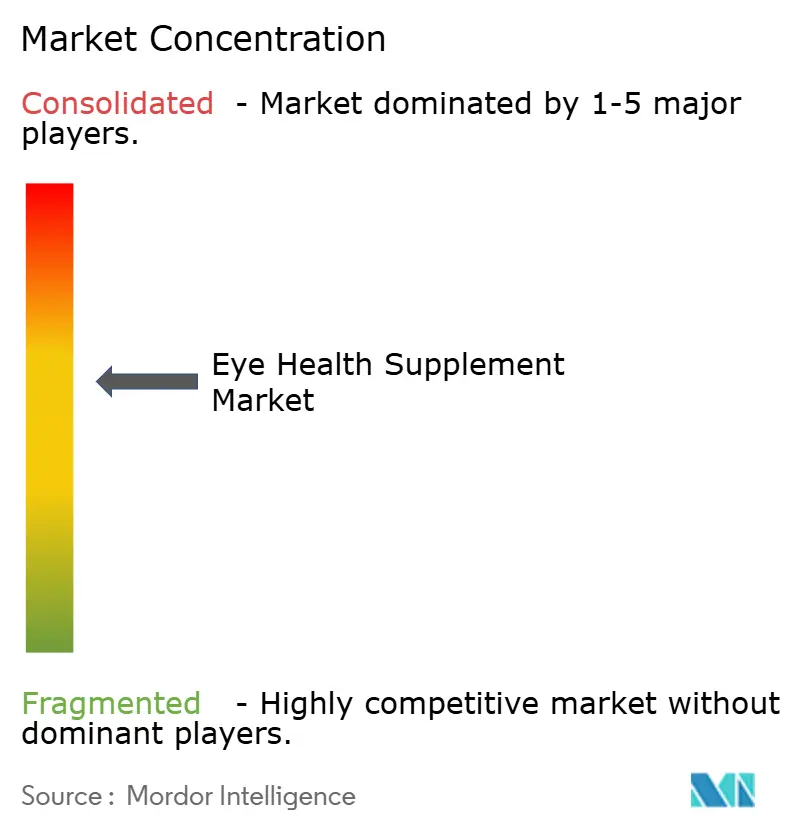
The eye health supplement market remained fragmented in 2025, with the top five players holding a combined share indicative of moderate concentration as AREDS2 patent expiries permitted 47 new entrants to launch copycat blends priced 40% lower. Leaders such as Bausch + Lomb, BASF Nutrition & Health, and Kemin Industries sustain gross margins above 55% through vertical integration that spans carotenoid extraction to finished-product encapsulation. Contract manufacturers in India and China now achieve 92% purity lutein at USD 180 per kilogram, trimming incumbents’ cost advantage.
DTC insurgents like Performance Lab and Nuzena devote about 18% of revenue to targeted digital ads, capturing niches such as “floaters relief” that legacy brands overlook. White-space innovation is clustering around diabetic-retinopathy combinations of alpha-lipoic acid and resveratrol, yet only a handful of brands have moved beyond pilots despite clinical proof of a 31% oxidative-stress reduction. Technology adoption differentiates quality leaders: OmniActive introduced spectroscopy-based carotenoid verification in 2024, cutting batch rejections to 0.8% and enabling premium positioning.
Blockchain traceability emerged in 2025, with ZeaVision linking marigold harvests to finished goods on IBM Food Trust, slashing counterfeit incidents by 67%. Consolidation is accelerating; seven acquisitions totaling USD 890 million occurred in 2024-2025 as private equity firms aggregate regional brands to scale e-commerce infrastructure. Meanwhile, capacity expansions such as DSM-Firmenich’s 40% boost in South Carolina signal confidence in algal DHA’s mainstream adoption.
Eye Health Supplement Industry Leaders
Vitabiotics Ltd
Bausch Health Inc. ( Bausch & Lomb Incorporated)
Kemin Industries Inc.
ZeaVision (EyePromise)
Amway (Nutrilite)
- *Disclaimer: Major Players sorted in no particular order
Eye Health Supplement Market Companies Covered in this Report
- Amway (Nutrilite)
- BASF Nutrition & Health
- Basic Brands
- Bausch + Lomb
- Blackmores
- Carlson Laboratories
- Garden of Life
- Herbalife Nutrition
- Jamieson Vitamins
- Kemin Industries
- Life Extension
- Nature's Bounty
- Nordic Naturals
- Nutrivein
- Nuzena
- OmniActive Health Technologies
- Performance Lab
- Pharmavite (Nature Made)
- Vitabiotics
- Viteyes (Vitamin Health)
- ZeaVision (EyePromise)
- Zenith Labs

Market Opportunities and Future Outlook
The market is building whitespace around clinically anchored formulas, compliant claims, and younger-consumer use cases where digital eye strain and preventative routines are already supporting repeat purchase behavior. Protocol-led positioning using AREDS2-style profiles is being used by established brands, including Bausch + Lomb PreserVision, to support professional-channel credibility and distinguish against low-dose or copycat blends, a gap reinforced by the prevalence of subtherapeutic commercial SKUs. Format and delivery-system innovation also supports additional usage occasions, with pectin-based gummies and improved carotenoid delivery helping recruit users who avoid softgels, while micro-algae DHA/EPA options help address volatility tied to marine omega-3 inputs.
Regulatory and enforcement dynamics further open room for compliant brands to win share through substantiation and transparency in online-first channels. With FDA governing labeling and the FTC policing advertising claims for health products, companies that invest in claim discipline, third-party verification, and clearer disclosures can compete more effectively in e-commerce environments where aggressive disease-adjacent claims have been common. Policy workstreams, including the European Commission consultation on Maximum Permissible Levels (July 2026) and the OIRA 2026 agenda item on mandatory GRAS notices, reinforce a shift toward formulations designed for cross-market compliance and documentation. Larger brands and ingredient suppliers can use this to streamline multi-country rollouts and reduce relabeling and reformulation friction.
Recent Industry Developments in Eye Health Supplement Market
- July 2026: Bausch + Lomb introduced Orphia, a digital health platform intended to support eye care providers with tools such as pre-surgery patient education workflows. The release extends the companys footprint into digital enablement around clinical pathways, complementing product-based portfolios that cover dry eye and broader eye care needs.
- June 2026: Bausch + Lomb launched Blink Triple Care Preservative Free lubricant eye drops in the United States to address dry eye symptom relief. Although positioned as an OTC eye care product, the launch reinforces competitive intensity around the dry-eye consumer segment, which also feeds omega-3 and eye comfort supplement demand and cross-selling.
- April 2026: Kemin Industries highlighted a positioning shift for its eye health carotenoid platforms toward cross-category applications, including cognitive health and pediatric nutrition. This reframes lutein and related carotenoids from senior-only vision support toward broader wellness use cases, influencing how finished-product brands design bundles, claims, and channel strategies.


Eye Health Supplement Market Report Scope and Research Methodology
Market Definition and Coverage
For this study, the eye health supplement market covers the retail and online sales value of dietary supplements positioned for supporting vision and overall eye wellness, across common formats like capsules, tablets, gummies, powders, and liquids.
Scope exclusions: We exclude prescription ophthalmic drugs, medical devices, and vision correction products such as spectacles and contact lenses, even when they are sold through the same channels.
Segments Covered in This Report
- By Ingredient Type
- Carotenoids
- Antioxidant Vitamins
- Omega-3 Fatty Acids
- Minerals
- Botanicals & Polyphenols
- Multi-ingredient Blends
- By Form
- Softgel Capsules
- Tablets
- Gummies & Chews
- Powders & Sachets
- Liquid Drops & Shots
- By Indication
- Age-Related Macular Degeneration (AMD)
- Cataract
- Dry Eye Syndrome
- Diabetic Retinopathy
- Glaucoma & Ocular Hypertension
- Myopia Progression
- Others
- By Distribution Channel
- OTC Pharmacy & Drug Stores
- Online Retail & Direct-to-Consumer Brands
- Other Distribution Channels
- By Age Group
- Pediatric
- Adults
- Geriatric
- By Geography
- North America
- United States
- Canada
- Mexico
- Europe
- Germany
- United Kingdom
- France
- Italy
- Spain
- Rest of Europe
- Asia-Pacific
- China
- India
- Japan
- Australia
- South Korea
- Rest of Asia-Pacific
- Middle East and Africa
- GCC
- South Africa
- Rest of Middle East and Africa
- South America
- Brazil
- Argentina
- Rest of South America
- North America
Data Sources, Market Sizing, and Validation
Desk Research
Desk work starts by building the demand backdrop for vision and supplement use, then aligning it with what can be measured in public statistics. For context on vision health, we refer to sources such as the World Health Organization, and for ingredient and safety references we use the US National Institutes of Health Office of Dietary Supplements. For supplement labeling and compliance signals that can affect go-to-market behavior, we review relevant US FDA guidance and labeling references.
To keep the model grounded, we also scan sources such as UN Comtrade for trade flows of relevant nutraceutical ingredients, national statistics portals for population and aging indicators, and peer-reviewed journals that discuss ingredient usage patterns and evidence trends for eye-related outcomes. Company filings, investor decks, and business press are used to track pricing direction, channel mix shifts, and product positioning over time. In a few places, we use paid subscriptions that compile company financials, patents, and shipment-level trade records to check that the direction of change is consistent. These sources are illustrative only, and we also used other public references to fill gaps, validate assumptions, and clarify findings.
Primary Interviews and Surveys
Primary interviews and surveys are used to convert broad signals into sizing assumptions, especially for mix, pricing, and adoption trends that are not reported in a single source. We speak with supplement brand teams, ingredient suppliers, contract manufacturers, distributors, retailers, and eye-care focused experts across APAC, EMEA, and the Americas to confirm what is selling, how it is priced, and which claims support repeat purchases.
Distribution of primary research fieldwork respondents
| Company type | Respondent position | Region |
|---|---|---|
| Top tier: 35% | CXOs: 18% | APAC: 49% |
| Mid tier: 47% | Functional/Unit leaders: 40% | EMEA: 29% |
| Smaller Players: 18% | Managers: 42% | Americas: 22% |
Market-Sizing & Forecasting
Market size is first reconstructed using a top-down demand pool approach, where age mix, supplement participation, and channel-level purchasing behavior are translated into spend tied to eye health positioning. The totals are then checked through selective bottom-up work, including sampled price per pack by format and channel, observed SKU counts in key markets, and supplier and retailer checks on volume direction, which helps adjust for gaps where disclosure is limited.
Inputs that typically move the model include the share of the aging population, reported prevalence and awareness signals for conditions such as dry eye and age-related macular degeneration, screen time-linked consumer intent, typical pack sizes and monthly dosage patterns, and the share of sales happening through online retail versus pharmacies and mass outlets. For the forecast, we rely on scenario analysis supported by simple time series smoothing on the historical base, then apply expert-tested assumptions on pricing progression, channel shift, and penetration change. When direct country data is thin, we start with proxy ratios from similar markets and then refine them using interview feedback on affordability, regulation, and channel reach.
Data Validation & Update Cycle
Outputs are validated through multiple checks so the final number remains consistent with observed market behavior. We compare the model against independent signals such as ingredient trade direction, visible shelf pricing, company-level revenue commentary, and step changes in channel mix that could otherwise create artificial spikes.
Variance flags are reviewed in analyst rounds, followed by targeted re-contact with selected respondents when a major assumption shifts, such as a sudden price move or a regulatory change affecting claims. The report is refreshed annually, and interim updates are made when material events occur. Before delivery, an analyst performs a fresh pass on key inputs and conversion factors so clients receive the latest updated view.
Mordor Intelligence's Eye Health Supplement Market Size Versus Other Published Estimates
Published market sizes for eye health supplements can be far apart because the category sits between general wellness supplements and broader vision care, so small product inclusion choices can change totals noticeably. Differences also come from what each publisher counts as an eye health product, how they treat online sales, and how quickly they update pricing and mix assumptions.
Demand signals such as format-level pricing checks, channel mix tracking across pharmacies and online retail, and ingredient trend validation are used to keep Mordor Intelligence focused on supplements marketed for eye health, rather than expanding into general multivitamins with incidental eye positioning.
Benchmark comparison
| Source | Market Size | Gaps in Research Methodology |
|---|---|---|
| Mordor Intelligence | USD 2.72 B (2025) | |
| Trade Publisher A | USD 3.39 B (2024) | This estimate appears to apply a wider definition that can pull in general wellness supplements with partial eye benefit claims, and the channel split may be assumed using higher online shares without consistent country level validation. |
| Press Release B | USD 2.40 B (2027) | This is a single forward year projection, and it can diverge because older price points and a shorter window are used, which can understate recent premiumization in carotenoids and multi ingredient blends. |
The spread in the table is mostly explained by scope boundaries and year alignment, followed by how pricing progression and channel growth are treated. By keeping inclusions tied to eye health positioning and cross checking totals against observable demand and pricing signals, we arrive at a balanced value that is easy to trace back to repeatable steps.


Key Questions Answered in the Report
How large will the eye health supplements market be by 2031?
It is forecast to reach USD 4.23 billion by 2031, advancing at a 7.62% CAGR from 2026 to 2031.
Which ingredient segment is growing fastest within eye health supplements?
Carotenoids, led by lutein and zeaxanthin, are projected to post a 9.85% CAGR through 2031 due to strong clinical support for AMD and myopia prevention.
Why are gummies gaining popularity in vision-support products?
Pectin-based gummies now deliver 87% of softgel carotenoid bioavailability, eliminate gelatin allergens, and appeal to children and adults who dislike swallowing capsules.
What is driving online sales of eye health supplements?
Subscription-based DTC models lower acquisition costs, lock in 90-day refills, and exploit targeted search ads that convert symptom-related queries into immediate purchases.
Which region is expected to see the highest growth?
Asia-Pacific, propelled by China's pediatric myopia wave and expanding diabetic populations, is set to record an 8.72% CAGR to 2031.
Page last updated on:





