
Glaucoma Treatment Market Size and Share
Market Overview
| Study Period | 2020 - 2031 |
|---|---|
| Market Size (2026) | USD 6.98 Billion |
| Market Size (2031) | USD 8.62 Billion |
| Growth Rate (2026 - 2031) | 4.32 % |
| Fastest Growing Market | Asia Pacific |
| Largest Market | North America |
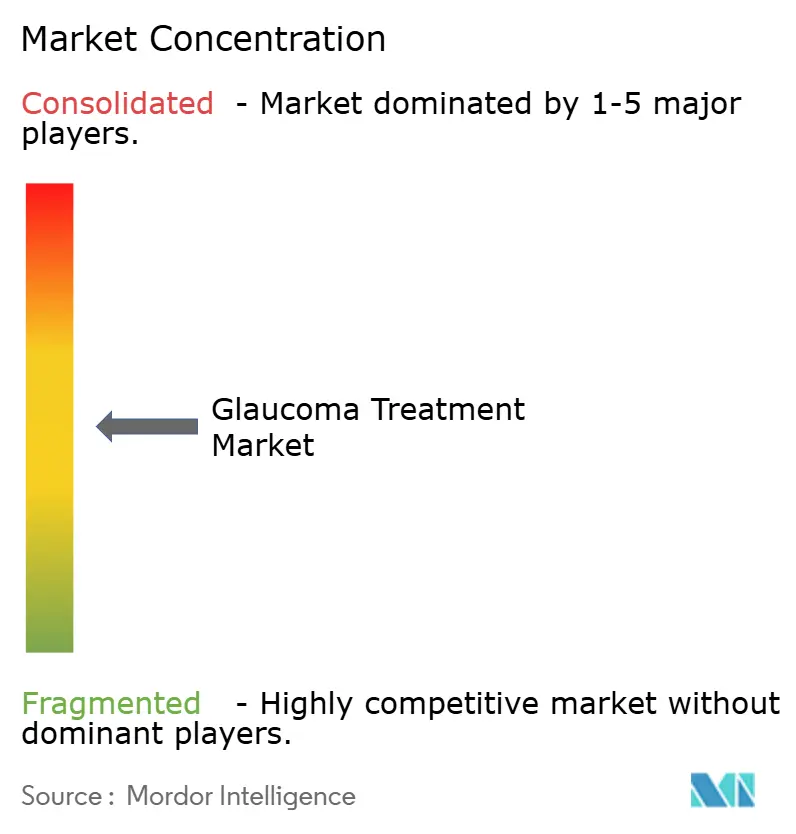
| Market Concentration | Medium |
Major Players *Disclaimer: Major Players sorted in no particular order Image © Mordor Intelligence. Reuse requires attribution under CC BY 4.0. | |
Glaucoma Treatment Market Analysis by Mordor Intelligence
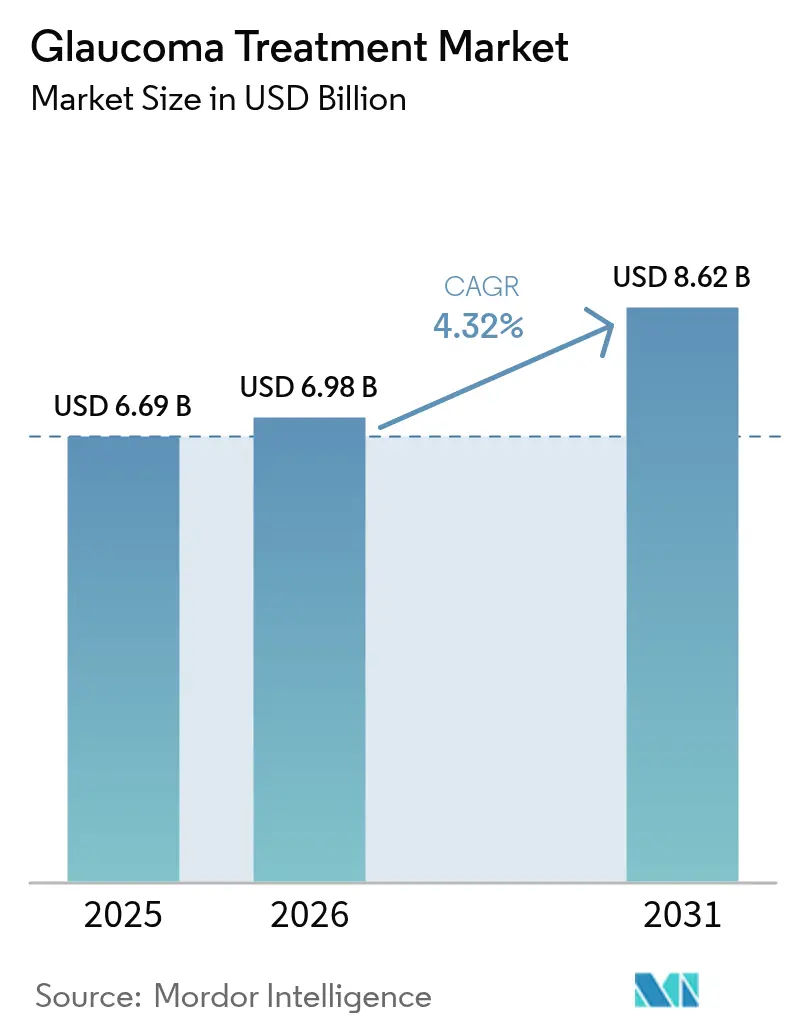
The glaucoma treatment market size was valued at USD 6.69 billion in 2025 and estimated to grow from USD 6.98 billion in 2026 to reach USD 8.62 billion by 2031, at a CAGR of 4.32% during the forecast period (2026-2031). The market is expanding because the aged share of the world’s population is rising rapidly, while earlier and more accurate diagnosis is becoming routine in both developed and emerging health systems. Selective laser trabeculoplasty (SLT) is shifting first-line practice patterns, and sustained-release implants are transforming adherence economics. Meanwhile, artificial-intelligence (AI) screening networks, minimally invasive glaucoma surgery (MIGS) devices and pharmacogenetic tools are creating additional adoption curves that reinforce demand for both procedural and pharmaceutical solutions.
Key Report Takeaways
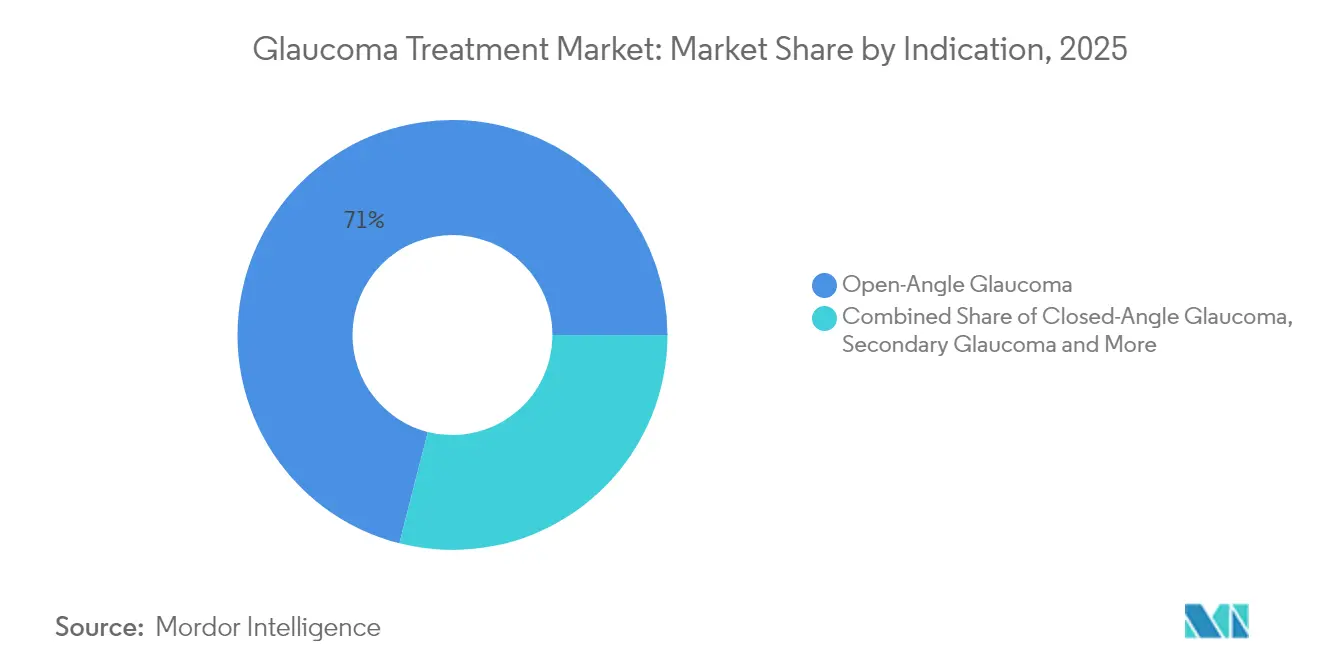
- By indication, open-angle glaucoma led with 71.03% revenue share in 2025; secondary glaucoma is forecast to expand at a 8.78% CAGR through 2031.
- By drug class, prostaglandin analogs accounted for 44.02% of the glaucoma treatment market share in 2025, while Rho-kinase/NO-donating prostaglandin analogs are projected to grow at a 10.26% CAGR to 2031.
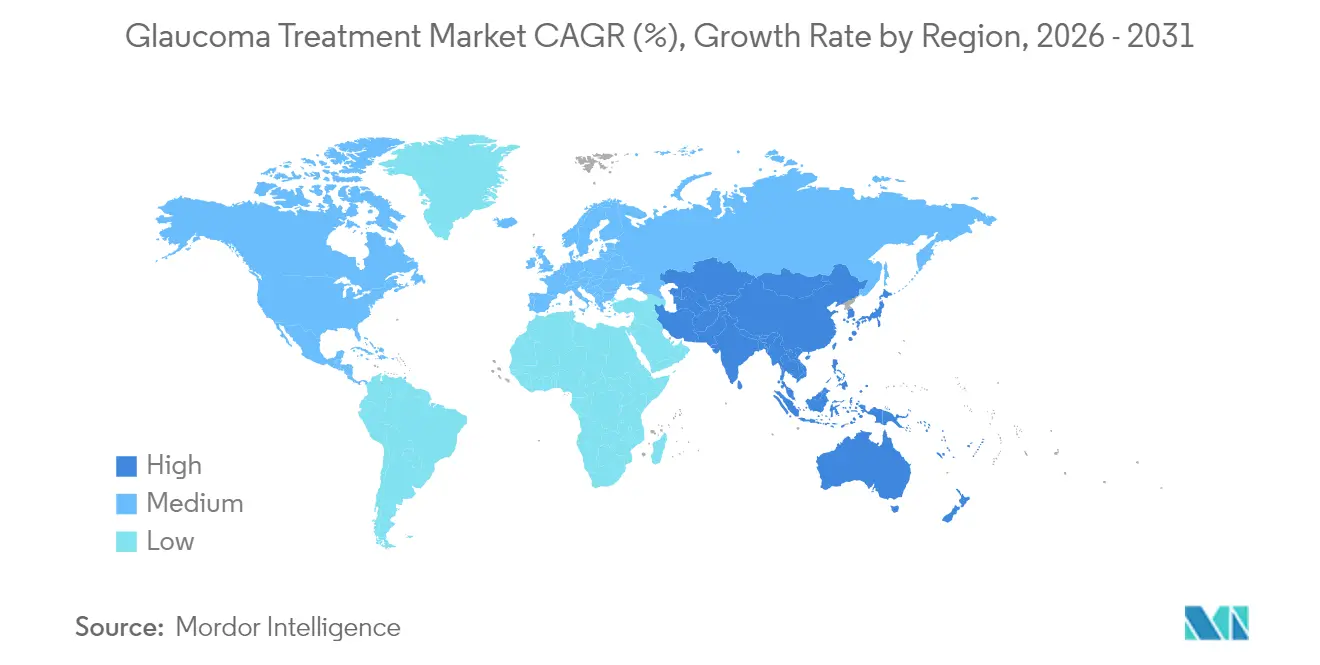
- By geography, North America captured 37.05% of the glaucoma treatment market size in 2025; Asia-Pacific is advancing at an 7.86% CAGR between 2026-2031 CMS.GOV.
Note: Market size and forecast figures in this report are generated using Mordor Intelligence’s proprietary estimation framework, updated with the latest available data and insights as of 2026.
Market Trends and Insights
Drivers Impact Analysis of Glaucoma Treatment Market*
| Driver | (~) % Impact on CAGR Forecast | Geographic Relevance | Impact Timeline |
|---|---|---|---|
| Increasing prevalence of glaucoma | +1.2% | Asia-Pacific and Africa | Long term (≥ 4 years) |
| Rising awareness & screening initiatives | +0.8% | Global, especially emerging markets | Medium term (2-4 years) |
| Technological advancements in ophthalmology | +1.0% | North America & EU | Medium term (2-4 years) |
| Sustained-release implants improve adherence | +0.7% | Early adoption in developed markets | Short term (≤ 2 years) |
| Adoption of MIGS devices | +0.6% | North America & EU, expanding to APAC | Medium term (2-4 years) |
| Pharmacogenetic-led precision therapy | +0.3% | North America & EU | Long term (≥ 4 years) |
| Source: Mordor Intelligence | |||
Increasing prevalence of glaucoma
Glaucoma incidence climbed to 23.46 per 10,000 person-years among adults aged 40-79 in 2024, with rates peaking at 64.36 in the 75-79 cohort. Urbanization-driven myopia now accelerates risk in Asia-Pacific, where projected case counts may reach 80 million by 2040. Sub-Saharan Africa continues to register the highest regional prevalence yet struggles with late-stage presentation that limits therapeutic effectiveness. Collectively, these demographic and epidemiological forces build a sustained demand floor for the glaucoma treatment market.
Rising awareness & screening initiatives
AI-enabled fundus image analysis achieves 93.52% sensitivity and 95% specificity, allowing reliable mass screening in settings where ophthalmologists are scarce. Smartphone-based cameras tethered to offline algorithms support rural outreach programs with minimal connectivity requirements. National tele-ophthalmology platforms aligned with WHO Vision 2020 extend diagnostic reach in low-resource geographies. These initiatives raise detection rates and funnel new patients into the glaucoma treatment market.
Technological advancements in ophthalmology
Deep-learning models now predict surgical conversion risk with 0.92 area-under-curve accuracy, enabling physicians to intervene before irreversible optic-nerve damage occurs[1]. Femtosecond-laser FLIGHT procedures deliver a 34.6% intraocular-pressure reduction at 24 months while preserving tissue integrity. Continuous IOP-monitoring contact lenses capture circadian fluctuations and feed real-time data into treatment algorithms. Gene-therapy approaches such as mitochondrial-targeted vectors are progressing toward first-in-human trials, opening a potential disease-modifying frontier. These developments are expanding both the procedural and pharmaceutical sides of the glaucoma treatment market.
Sustained-release implants improve adherence
Patient adherence deteriorates sharply—up to 50% of individuals stop topical therapy within 6 months—yet a single Durysta bimatoprost implant maintains therapeutic pressure control for 3 months and reduces IOP by 30%. The iDose TR travoprost system could extend dosing intervals to 3 years, shifting compliance responsibility from patients to providers. Drug-eluting contact lenses and punctal plugs are moving through clinical pipelines with early evidence of controlled release and preserved ocular-surface health. Together these innovations generate incremental growth for the glaucoma treatment market by addressing the long-standing adherence gap.
Restraints Impact Analysis of Glaucoma Treatment Market*
| Restraint | (~) % Impact on CAGR Forecast | Geographic Relevance | Impact Timeline |
|---|---|---|---|
| Adverse ocular & systemic side-effects | -0.9% | Global, stronger impact in older cohorts | Short term (≤ 2 years) |
| Stringent & lengthy regulatory approvals | -0.6% | North America & EU | Medium term (2-4 years) |
| Reimbursement gaps for premium implants & MIGS | -0.8% | Developed markets | Short term (≤ 2 years) |
| SLT & laser therapies cannibalizing drug demand | -0.7% | Early adoption in developed markets | Medium term (2-4 years) |
| Source: Mordor Intelligence | |||
Adverse ocular & systemic side-effects
Pharmacovigilance reviews of the FDA Adverse Event Reporting System show conjunctival hyperemia and periorbital pigmentary changes as prominent signals for prostaglandin analogs[2]. Netarsudil’s median onset of ocular inflammation occurs within 1 day, with incident rates skewing higher in the older population. Dry-eye disease prevalence among glaucoma patients ranges from 5% to 50% and is frequently aggravated by benzalkonium-chloride preservatives. Systemic beta-blocker exposure can trigger cardiovascular and respiratory complications in susceptible individuals. These safety issues exert downward pressure on the glaucoma treatment market CAGR by driving discontinuations and regulatory scrutiny.
Stringent & lengthy regulatory approvals
The FDA often mandates 2-3 years of post-implant safety data before approving sustained-release devices, stretching development timelines and capital requirements. Combination product classifications expose MIGS developers to dual pharmaceutical-device validation hurdles in both the United States and European Union. AI-based diagnostic software faces an evolving regulatory framework that currently lacks established predicates, adding uncertainty to investment decisions. These frictions moderate the forward momentum of the glaucoma treatment market.
*Our forecasts treat driver/restraint impacts as directional, not additive. The impact forecasts reflect baseline growth, mix effects, and variable interactions.
Glaucoma Treatment Market Segment Analysis
By Indication:
Chronic forms anchor revenue concentrationOpen-angle glaucoma commanded 71.03% of the 2025 glaucoma treatment market share, underpinning the dominant clinical focus because most screening programs identify this form earliest. Segment revenues benefit from a full continuum of care, including topical drugs, SLT, MIGS and sustained-release implants that escalate therapy in graduated steps. Over the forecast horizon, incremental uptake of neuroprotective agents is expected to reinforce value capture in this broad indication.
Secondary glaucoma is expanding at a 8.78% CAGR, driven by better recognition of steroid-induced, pseudoexfoliative and trauma-related etiologies. Higher disease complexity often necessitates combination therapy and specialist procedures, generating above-average revenue per patient and boosting the glaucoma treatment market size for advanced segments.

By Drug Class:
Legacy therapies confront innovationProstaglandin analogs retained 44.02% share of 2025 prescriptions thanks to once-daily convenience and sustained efficacy. However, preservative-free formulations and cosmetic-side-effect mitigation are increasingly essential to maintain loyalty. Rho-kinase/NO-donating analogs, growing at 10.26% CAGR, address dual outflow pathways and show early neuroprotection signals, positioning them for disproportionate uptake as evidence accumulates. Fixed-dose combinations counter adherence fatigue and preserve premium pricing, while sustained-release depots unlock procedural-based revenue streams that enlarge the glaucoma treatment market size for device-pharma hybrids.
Geography Analysis
North America Glaucoma Treatment Market
North America generated 37.05% of 2025 sales, reflecting universal insurance coverage for first-line pharmaceuticals and wide procedural reimbursement. SLT adoption is mainstream, and MIGS growth accelerates as Medicare coverage stabilizes, though branded drop volumes are plateauing amid generic erosion. Canada mirrors U.S. practice patterns but exercises tighter cost-effectiveness thresholds, while Mexico’s fast-growing private insurance market shifts demand toward premium implants. Overall, the region remains a high-value anchor for the glaucoma treatment market but is not the fastest-growth engine.
APAC Glaucoma Treatment Market
Asia-Pacific is projected to deliver an 7.86% CAGR, the highest regional pace, as China liberalizes drug-approval timelines and India scales AI-enabled screening infrastructure. Japan sustains MIGS uptake through robust post-marketing surveillance, whereas South Korea’s national-insurance reimbursement unlocks early adoption of sustained-release devices. Australia demonstrates the template for primary-care AI triage, which is expected to ripple through other health systems. The region’s mixture of high unmet need and accelerating technology adoption underpins its outsized contribution to future glaucoma treatment market growth.
EMEA and South America Glaucoma Treatment Market
Europe delivers steady growth through universal access and strong preference for preservative-free formulations. National payers encourage cost-effective SLT and generic options but also reimburse MIGS when incremental evidence supports long-term value. The Middle East is allocating oil-driven health budgets to expand ophthalmology centers, while Sub-Saharan Africa’s high prevalence collides with fiscal constraints, limiting penetration of premium implants despite international aid programs. South America advances selectively: Brazil’s public system validated SLT cost-effectiveness, and private chains are testing sustained-release implants.
Regulatory Landscape
Glaucoma therapies span drugs, devices, and combination products, so approvals remain closely tied to regulator-specific evidence requirements for ocular safety, local bioequivalence, and long-term performance. In the United States, sustained-release and implantable delivery systems face extended scrutiny, including multi-year safety follow-up expectations. In Japan, development pathways for more complex ophthalmic combinations are being formalized, as reflected in PMDA guidance published in January 2026 on development considerations for combination ophthalmic solutions for glaucoma.
Recent actions point to both opportunity and friction. In January 2026, the US FDA approved an NDA labeling supplement permitting re-administration of Glaukos iDose TR under a repeat treatment protocol, clarifying a regulatory route for sustained, repeatable implant-based dosing. In Europe, product-specific risk-benefit assessments can constrain implant protocols, highlighted by AbbVie withdrawing the EMA marketing authorization application for Durysta in September 2024 after regulators raised concerns around a two-implant protocol and incomplete biodegradation. On the generic and access side, the US FDA approved additional glaucoma-related ophthalmic products through 2025, including Gland Pharma (April 2025) for a generic latanoprostene bunod ophthalmic solution and FDC Limited (October 2025) for pilocarpine HCl ophthalmic solution via ANDA, supporting competitive intensity in topical categories.
Competitive Landscape
Market concentration is moderate. Large pharmaceutical houses hold entrenched topical franchises, yet device innovators capture fast-growing procedural niches. Alcon expanded its glaucoma portfolio by purchasing BELKIN Vision’s direct SLT platform for USD 81 million, reinforcing a strategy that favors office-based laser therapy over chronic drops. Bausch + Lomb acquired Elios Vision to enter the minimally invasive laser-channel, demonstrating incumbent appetite for technology convergence.
Sustained-release pioneers such as Glaukos’ iDose TR are translating FDA device-pharma hybrid approvals into recurring procedural revenues. AbbVie’s Durysta remains the first commercially available intracameral implant, but competition is rising from plug-based platforms and drug-eluting contact lenses. AI screening companies partner with hospital chains to capture pre-diagnosis funnel economics, while genetic-testing startups seek pharmaceutical alliances to monetize precision-therapy data. Neuroprotective therapeutics such as nicotinamide derivatives are in late-stage trials and could introduce an entirely new efficacy endpoint beyond pressure lowering.
Collectively, consolidation, vertical integration and new-entrant disruption will keep pricing power balanced, promoting a dynamic yet opportunity-rich glaucoma treatment market.
Glaucoma Treatment Industry Leaders
-
Novartis AG
-
Aerie Pharmaceuticals
-
Akorn, Inc.
-
AbbVie (Allergan)
-
Bausch + Lomb
- *Disclaimer: Major Players sorted in no particular order
Glaucoma Treatment Market Companies Covered in this Report
- Aerie Pharmaceutical
- Abbvie
- Akorn
- Alcon
- Bausch + Lomb
- Glaukos
- Inotek (Rocket)
- Ivantis
- Johnson & Johnson
- Merck
- New World Medical
- Nicox
- Novartis
- Pfizer
- Santen
- Sun Pharmaceuticals Industries
- Teva Pharmaceutical Industries
- Valeant (Bausch Health)
- Glenmark Pharmaceuticals
- Acadia Pharmaceuticals
Market Opportunities and Future Outlook
Sustained-release drug delivery and repeatable dosing protocols create a clearer commercialization pathway for procedural, provider-administered glaucoma therapy that directly addresses nonadherence, a persistent clinical and economic gap in topical drops. The January 2026 US FDA decision allowing re-administration of Glaukos iDose TR provides a tangible signal that multi-cycle implant regimens can be supported by labeling, which can support broader clinic adoption models, differentiated reimbursement strategies, and new competition among device-pharma hybrids.
A second whitespace is differentiation beyond intraocular pressure lowering, where neuroprotection and dual-action mechanisms are being explored through advanced formulations and pipelines. Academic and translational work reported in early 2026 on dual-action topical approaches (for example, nanoparticle-based concepts designed to combine IOP reduction with neuroprotection) reflects innovation toward efficacy endpoints that conventional drop classes do not fully address. Alongside this, updated clinical frameworks such as the European Glaucoma Society (EGS) 6th Edition guidelines (2025/2026) reinforce prostaglandin analogs as first-choice medical therapy for open-angle glaucoma while incorporating updated approaches around AI, genetics, and surgery, supporting opportunities for companies that can align new products and evidence packages to guideline-driven care pathways.
Recent Industry Developments in Glaucoma Treatment Market
- July 2026: Nicox announced that Kowa submitted a New Drug Application in the United States for NCX 470, a nitric oxide-donating bimatoprost candidate for glaucoma. The filing advances a late-stage program positioned to compete in prostaglandin-based therapy with a differentiated mechanism, and it strengthens the pipeline depth around next-generation pressure-lowering drops.
- January 2026: Glaukos announced US FDA approval of an NDA labeling supplement for iDose TR (travoprost intracameral implant) allowing re-administration under a repeat treatment protocol. This regulatory update supports longer-duration implant lifecycle management and expands how providers can plan sustained-release therapy over multiple treatment cycles.
- April 2025: Gland Pharma disclosed US FDA approval for its generic latanoprostene bunod ophthalmic solution, 0.024%, referencing bioequivalence to Vyzulta. The approval increases the pool of lower-cost options in a key topical segment, adding pricing pressure that can influence brand contracting and formulary decisions.
Glaucoma Treatment Market Report Scope and Research Methodology
Market Definition and Coverage
This market covers revenues generated from treating glaucoma, focusing on therapies used to manage intraocular pressure and slow disease progression across major care settings. It includes commonly prescribed anti-glaucoma drug classes and glaucoma procedures that are part of the treatment pathway.
Scope exclusions: Diagnostic screening tools and general ophthalmic exams are excluded unless they are bundled and billed as part of a glaucoma treatment episode.
Segments Covered in This Report
- By Indication
- Open-Angle Glaucoma
- Closed-Angle Glaucoma
- Secondary Glaucoma
- Congenital Glaucoma
- Others
- By Drug Class
- Prostaglandin Analogs
- Beta Blockers
- Alpha Agonists
- Carbonic Anhydrase Inhibitors
- Fixed-Dose Combinations
- Rho-Kinase / NO-Donating PGAs
- Geography
- North America
- United States
- Canada
- Mexico
- Europe
- Germany
- United Kingdom
- France
- Italy
- Spain
- Rest of Europe
- Asia-Pacific
- China
- Japan
- India
- South Korea
- Australia
- Rest of Asia-Pacific
- Middle East and Africa
- GCC
- South Africa
- Rest of Middle East and Africa
- South America
- Brazil
- Argentina
- Rest of South America
- North America
Data Sources, Market Sizing, and Validation
Desk Research
Desk work starts with building a clean view of the demand pool and treatment mix by country, then pressure-testing it against public health and utilization signals. We reference sources such as the World Health Organization (prevalence and aging context), the US CDC (care utilization context), and national health ministries to keep the patient pool realistic.
For treatment and clinical practice patterns, we rely on sources such as the US FDA labeling database, the National Institutes of Health (including PubMed-indexed studies), and professional ophthalmology associations for guideline shifts and therapy sequencing. Company annual reports, investor presentations, and reputable press support validation of product coverage and geographic exposure. Where needed, paid subscriptions for company financials and intelligence, patent databases, and an import and export shipment-level database help cross-check launches, manufacturing footprint, and trade-linked supply signals. This list is illustrative, and many other public sources were also used for collection, validation, and clarification.
Primary Interviews and Surveys
Primary work is used to confirm how often each therapy class is used, where procedure adoption is actually happening, and how pricing and access differ by market. We spoke with a mix of clinicians, distributors, payor-facing experts, and manufacturer-side roles across major regions, so assumptions on treated share, switching patterns, and pricing corridors could be adjusted before finalizing the model.
Distribution of primary research fieldwork respondents
| Company type | Respondent position | Region |
|---|---|---|
| Top tier: 37% | CXOs: 18% | APAC: 40% |
| Mid tier: 45% | Functional/Unit leaders: 32% | EMEA: 37% |
| Smaller Players: 18% | Managers: 50% | Americas: 23% |
Market-Sizing & Forecasting
Sizing is built using a top-down demand-pool approach where epidemiology is translated into a treated population, and then converted into annual therapy value using usage and pricing assumptions. In practice, glaucoma prevalence by age band is adjusted for diagnosis rate, treatment initiation, and persistence, and then split into medication and procedure pathways based on how care is delivered in each region.
Key inputs used in the model include the share of open-angle versus other glaucoma types, the average number of prescriptions per treated patient per year, typical mix of first-line and add-on drug classes, procedure penetration for SLT and MIGS within eligible patients, and regional pricing corridors with currency conversion timing aligned to the year being sized. Forecasting is run mainly through scenario analysis, where those inputs are stepped forward using adoption curves and expert-agreed ranges, and then the final trajectory is smoothed so short-term shocks do not distort the mid-term outlook.
Results are corroborated with selective bottom-up approximations, such as sampled price per pack times estimated volume, and channel checks on procedure throughput where data is fragmented. When country-level detail is thin, we fill gaps using proxy markets with similar reimbursement and care pathways, then revisit the assumptions during validation calls.
Data Validation & Update Cycle
Validation is done by triangulating the modeled totals against independent signals, then drilling into variances until the drivers are understood. We check for outliers in treated share, pricing steps, and procedure uptake, and those anomalies are reviewed across analysts before sign-off.
If a material mismatch appears, such as a sudden shift in guideline preference or reimbursement, we re-contact relevant experts and re-run the impacted parts of the model. The report is refreshed annually, and interim updates are made when major approvals, safety actions, or policy changes are likely to move adoption or pricing. Before delivery, a final pass is completed so the published numbers reflect the latest available public information and validated assumptions.
Mordor Intelligence's Glaucoma Treatment Market Size Measured Against Other Published Estimates
Published values for glaucoma treatment do not always line up because teams count different parts of the care pathway, choose different base years, and apply different rules for pricing and currency timing. The table helps illustrate how even a small scope change can move the number meaningfully.
The benchmark table shows a tight spread around the mid-single digit billions. In Mordor Intelligence's model, the 2025 value is aligned to treatment revenues that sit inside the glaucoma care pathway, with procedure adoption treated as part of the treatment continuum rather than a broad ophthalmic surgery bucket. When other estimates bundle wider device categories, apply longer forecast horizons, or use a different price-mix step-up assumption for drug classes, the market value can shift up or down even if the patient pool is similar.
Benchmark comparison
| Source | Market Size | Gaps in Research Methodology |
|---|---|---|
| Mordor Intelligence | USD 6.69 B (2025) | |
| Global Consultancy A | USD 6.51 B (2024) | Uses an earlier base year and a broader definition that can mix glaucoma drugs with a wider set of treatment devices and distribution assumptions, which shifts the starting value even before forecasting is applied. |
| Industry Publisher B | USD 6.20 B (2025) | Leans more heavily on drug-class segmentation and can undercount procedure-related treatment value when procedures are not explicitly modeled, which can pull the same-year estimate lower depending on regional adoption. |
Across the three figures, the differences mainly come from what is counted as treatment revenue, how procedure value is handled, and how base-year pricing is converted and stepped forward. By tying the model to a traceable treated population, therapy mix, and realistic price corridors, we keep the output easier to audit and repeat when new clinical or reimbursement changes occur.
Key Questions Answered in the Report
What is the projected glaucoma treatment market size by 2031?
The glaucoma treatment market size is forecast to reach USD 8.62 billion by 2031.
How fast is the glaucoma treatment market expected to grow?
The market is anticipated to expand at a 4.32% CAGR during 2026-2031.
Which glaucoma indication is growing the quickest?
Secondary glaucoma is the fastest-growing indication, advancing at a 8.78% CAGR through 2031.
Which region offers the highest growth potential for glaucoma treatments?
Asia-Pacific leads in growth potential with an expected 7.86% regional CAGR to 2031.
What technology trend is reshaping first-line glaucoma therapy?
Selective laser trabeculoplasty is replacing daily drops for many patients, keeping 70% medication-free six years post-procedure.