
China Pet Nutraceuticals Market Size and Share
Market Overview
| Study Period | 2021 - 2031 |
|---|---|
| Forecast Data Period | 2026 - 2031 |
| Base Year Market Size (2025) | USD 420 Million |
| Market Size (2026) | USD 470 Million |
| Market Size (2031) | USD 870 Million |
| Growth Rate (2026 - 2031) | 13.11 % |
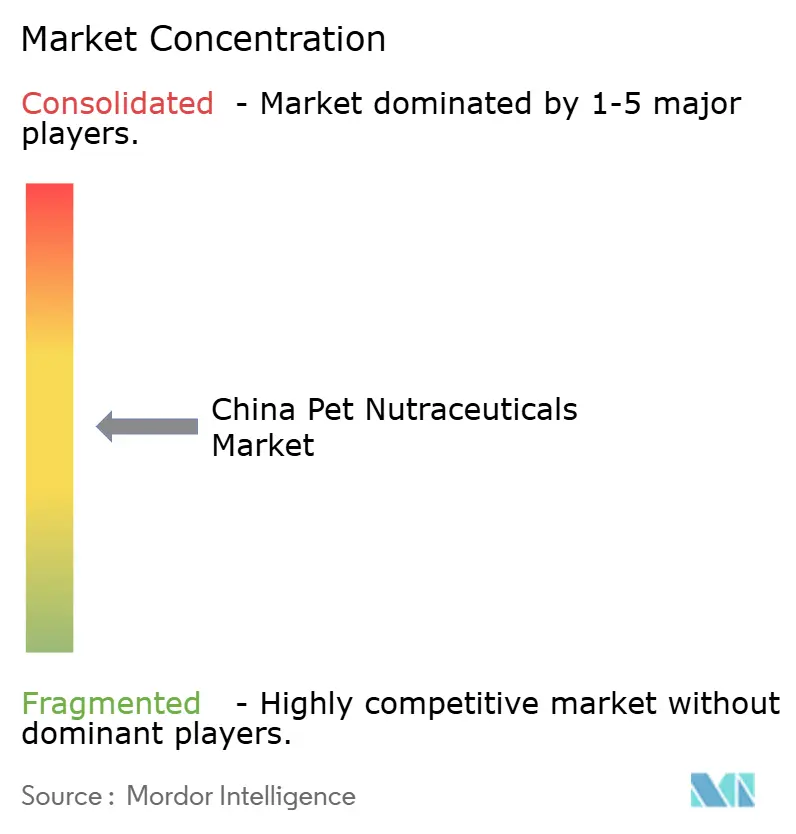
| Market Concentration | Medium |
Major Players *Disclaimer: Major Players sorted in no particular order Image © Mordor Intelligence. Reuse requires attribution under CC BY 4.0. | |
China Pet Nutraceuticals Market Analysis by Mordor Intelligence
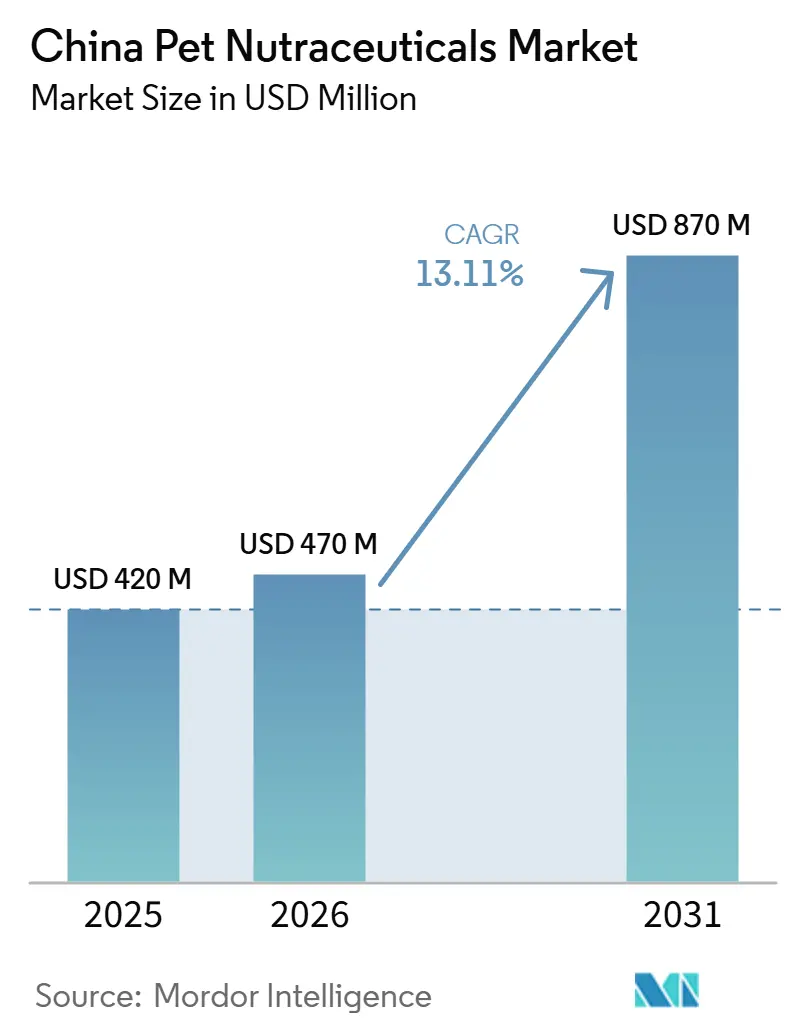
The China pet nutraceuticals market was USD 420.0 million in 2025, projected to reach USD 470.0 million in 2026 and USD 870.0 million by 2031, with a CAGR of 13.11% from 2026 to 2031. The market's growth is driven by pet owners increasingly incorporating supplements into regular pet care rather than treating them as occasional expenditures. Product development is becoming more science-focused, with companies introducing targeted probiotic, therapeutic, and condition-specific nutrition products for dogs and cats in 2025 and 2026. Regulatory policies are also evolving, as China implemented new standards for prescription pet food and freeze-dried pet food on May 1, 2026. These regulations are promoting improved labeling practices and stricter raw material standards. Additionally, market expansion is supported by investments in local research and manufacturing, such as Beijing’s pet economy industrial park and proprietary formulation initiatives by domestic brands in mainland China.
Key Report Takeaways
- By sub-product, probiotics accounted for 23% of China's pet nutraceuticals market size in 2025 and were also the fastest-growing segment, projected to expand at a 15.6% CAGR through 2031.
- By pets, dogs held 57% of the China pet nutraceuticals market share in 2025, while cats recorded the highest projected CAGR at 13.8% through 2031.
- By distribution channel, the online channel held 45% of revenue in 2025 and is also the fastest-growing segment, forecast to grow at a 16.4% CAGR through 2031.
Note: Market size and forecast figures in this report are generated using Mordor Intelligence’s proprietary estimation framework, updated with the latest available data and insights as of January 2026.
China Pet Nutraceuticals Market Trends and Insights
Drivers Impact Analysis*
| Driver | (~) % Impact on CAGR Forecast | Geographic Relevance | Impact Timeline |
|---|---|---|---|
| Premiumization of Pet Care and Humanization of Pets | +2.8% | National, highest intensity in Beijing, Shanghai, Guangzhou, and Shenzhen | Medium term (2-4 years) |
| Rising Veterinary Recommendation of Preventive Nutrition | +2.2% | National, early gains in tier 1 and select tier 2 cities | Medium term (2-4 years) |
| Growth of Digestive and Joint Health Formulations for Aging Pets | +2.0% | National, driven by urban pet owners with older companion animals | Long term (≥ 4 years) |
| Expansion of E-commerce Driven Repeat Purchases | +2.5% | National, with disproportionate growth on Douyin and Tmall platforms | Short term (≤ 2 years) |
| Demand for Breed Specific and Life Stage Formulations | +1.4% | National, concentrated in tier 1 and tier 2 cities initially | Medium term (2-4 years) |
| Better Palatability and Dosing Convenience Supporting Compliance | +1.2% | National, supports compliance in both veterinary and direct-to-consumer channels | Short term (≤ 2 years) |
| Source: Mordor Intelligence | |||
Premiumization of Pet Care and Humanization of Pets
The China pet nutraceuticals market is benefiting from a broader shift in how urban households care for companion animals, with spending patterns increasingly resembling those in family health and wellness categories. Average pet food prices on major Chinese e-commerce platforms increased, indicating that pet owners are willing to move beyond entry-level price bands and invest in higher-quality products. This trend is significant for the pet nutraceuticals market, as it demonstrates a growing acceptance of premium spending on pet nutrition and care. Cross-sector participation further highlights the market's potential, with companies such as Kweichow Moutai developing pet food from protein byproducts and dairy producers Mengniu and Yili introducing pet nutrition lines in China. This diversification suggests that the China pet nutraceuticals market is increasingly being regarded as a stable consumer category rather than a niche specialty. Additionally, the emphasis on formulation quality and documentation is becoming more critical, as premium buyers are more discerning, and the evolving MARA (China's Ministry of Agriculture and Rural Affairs) framework is anticipated to favor brands that can substantiate their product claims with robust evidence.
Rising Veterinary Recommendation of Preventive Nutrition
The shift from casual, owner-led supplement trials to more structured, veterinary-recommended use is anticipated to drive market growth. Royal Canin has supported this trend by investing in veterinary education and fostering relationships with breeding centers, thereby contributing to more consistent, repeat usage rather than impulse-driven purchases. In 2026, Royal Canin introduced therapeutic nutrition innovations aligned with vet-led care pathways, strengthening the link between clinical advice and nutrition-based management. Similarly, Purina Pro Plan’s AdvantEDGE line, launched in 2024, focuses on digestive and immune health, demonstrating how global suppliers are adapting products for easier integration into professional care settings[1]Source: Nestle Purina News Center, “Petfinder and Purina Celebrate National Pet Wellness Month with Donation of EverRoot Supplements to Greater Good Charities,” Purina, newscenter.purina.com. This development is significant for the China pet nutraceuticals market, as owner confidence increases when product selection is tied to a defined care routine rather than general wellness claims. Additionally, it benefits companies that can effectively combine product science, channel training, and compliance with regulatory requirements under China's licensed production rules for therapeutic pet supplements.
Growth of Digestive and Joint Health Formulations for Aging Pets
The market is experiencing increased demand for products supporting digestive and joint health, driven by the aging of companion animals. Sales of bone and joint supplements on Chinese platforms have high demand. This trend is prompting companies to develop more specialized solutions rather than relying solely on basic multivitamin formulations, particularly in areas where digestive health, mobility, and inflammation management intersect. Zoetis Inc's December 2025 approval of Portela in Canada and the European Union highlights the advancement of premium interventions for feline osteoarthritis through robust regulatory pathways, which may influence future developments targeting the Asian market. Similarly, ADM's March 2026 launch of PRIOME Joint Health demonstrates how ingredient suppliers are addressing this trend with microbiome-linked joint support solutions. Consequently, the China pet nutraceuticals market is anticipated to continue attracting investments in products designed to address aging-related health concerns, offering clearer daily use cases and improved compliance potential.
Expansion of E-commerce Driven Repeat Purchases
China's strong presence in digital retail is a key driver of growth in the China pet nutraceuticals market. Douyin’s pet industry market scale grew 88% year over year in 2025, far exceeding the 9% growth rate of the broader online pet food market. Subscription-based models on platforms like Tmall and JD.com are gaining popularity, particularly in categories such as probiotics and joint health, fostering higher repeat purchases and more consistent monthly revenue streams. Additionally, cross-border e-commerce (CBEC) enables international brands to enter markets more quickly than the lengthy domestic registration process, further supporting market expansion. H&H Group reported that premium pet food and supplements accounted for 35% of its total PNC (Pet Nutrition and Care) revenue in the second half of 2025, highlighting the commercial potential of digital and CBEC (Cross-border e-commerce) -driven growth. This underscores the importance of digital ecosystems, which not only enhance online discovery but also encourage repeat purchasing behavior, a critical factor for the sustained growth of the China pet nutraceuticals market.
Restraints Impact Analysis*
| Restraint | (~) % Impact on CAGR Forecast | Geographic Relevance | Impact Timeline |
|---|---|---|---|
| Limited Consumer Trust in Product Efficacy Claims | -1.2% | National, most acute in categories with weak clinical evidence | Medium term (2-4 years) |
| Price Sensitivity Outside Tier 1 and Tier 2 Cities | -1.5% | Tier 3 and tier 4 cities, rural and peri-urban markets | Long term (≥ 4 years) |
| Fragmented Quality Standards and Product Differentiation Challenges | -0.8% | National, with highest impact on online channel | Medium term (2-4 years) |
| Regulatory Scrutiny on Ingredient Claims and Import Dependency | -1.0% | National, highest impact on imported supplement brands | Medium term (2-4 years) |
| Source: Mordor Intelligence | |||
Limited Consumer Trust in Product Efficacy Claims
The China pet nutraceuticals market continues to face challenges related to consumer trust, as mandatory clinical evidence requirements for functional claims lag behind the expectations of a growing premium market segment. This discrepancy allows both well-supported and poorly substantiated products to appear similar on digital platforms, making it difficult for pet owners to assess product efficacy prior to purchase. The February 2026 class action settlement involving Nutramax Laboratories over alleged misrepresentation of the benefits of its Cosequin canine joint supplement highlights how global events can influence consumer skepticism in China, particularly among digitally savvy buyers. While the August 2025 MARA (China's Ministry of Agriculture and Rural Affairs) consultation on hygiene and labeling standards was a significant step, it did not fully address the credibility issues surrounding functional claims. Brands that commit to extended research efforts, such as H&H Group’s five-year development of the HHP003 probiotic strain, are better positioned to leverage this skepticism into a competitive advantage. However, the growth of the China pet nutraceuticals market is likely to remain slower than its potential if consumer confidence continues to rely more on brand reputation than on verified product efficacy.
Price Sensitivity Outside Tier 1 and Tier 2 Cities
The market shows disparities across city tiers, with premium supplement spending concentrated in China's major urban centers. Cities such as Beijing, Shanghai, Guangzhou, and Shenzhen account for a significant portion of premium demand. However, a larger segment of pet-owning households resides in lower-tier markets, where willingness to pay for premium products is comparatively lower. This trend is reflected in platform data, which shows mid-tier and smaller brands gaining market share in 2025, driven by heightened price competition outside top-tier cities. Nestle S.A. (Purina)’s Greater China pet care segment experienced negative organic growth in 2025, highlighting the challenges of maintaining a premium positioning across all city tiers. This dynamic acts as a constraint on the China pet nutraceuticals market, as brands often face a trade-off between achieving broader national reach and maintaining strict price discipline. Consequently, there is an increased focus on smaller pack sizes, simplified claims, and entry-level dosing formats to encourage product trials without significantly compromising premium brand identity.
*Our forecasts treat driver/restraint impacts as directional, not additive. The impact forecasts reflect baseline growth, mix effects, and variable interactions.
Segment Analysis
By Sub Product: Probiotics Lead Functional Nutrition Shift
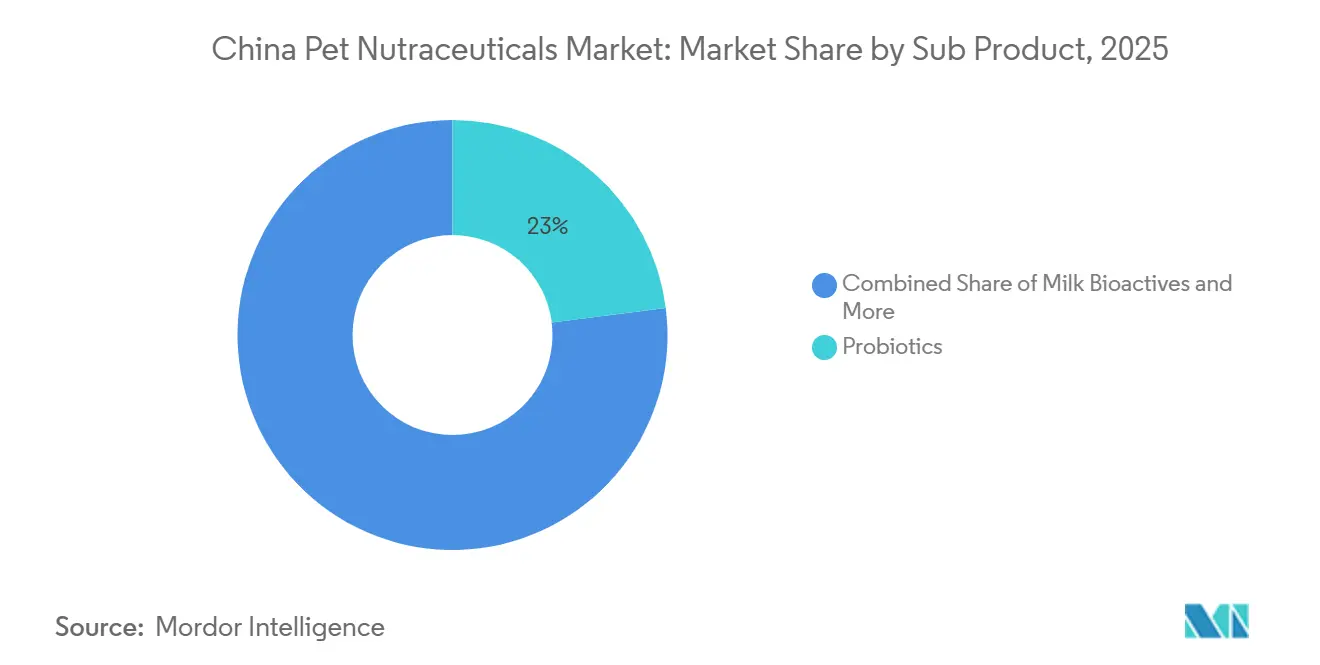
Probiotics accounted for 23% of revenue in 2025, making them the largest sub-product in the China pet nutraceuticals market. The market size for probiotics is projected to grow at a CAGR of 15.6% through 2031. This combination of significant market share and robust growth highlights that microbiome-focused products have transitioned from a niche segment to a key category within the China pet nutraceuticals industry. For instance, H&H Group’s Solid Gold brand invested five years in developing the HHP003 cat-derived probiotic strain, specifically designed for indoor cat metabolic management, which was launched commercially in April 2026. Such initiatives strengthen the market by tying category growth to research-driven differentiation rather than relying solely on generic wellness claims.
While probiotics dominate, other sub-products remain integral to the market, serving distinct roles within the category structure. Omega-3 fatty acids continue to hold a significant position in the China pet nutraceuticals market. DSM-Firmenich’s launch of microalgal oil in April 2026 marks a shift toward more stable, sustainable ingredient supply options. Vitamins and minerals, proteins and peptides, and milk bioactives serve as foundational nutrition platforms, though they are not the primary drivers of premium growth. Additionally, emerging categories such as postbiotics and novel bioactives are gaining traction. ADM’s PRIOME portfolio indicates that future growth in the China pet nutraceuticals market may stem from microbiome-linked innovations beyond traditional probiotics.The evolving sub-product mix reflects a market that is expanding in scientific sophistication while maintaining strong consumer demand for products associated with visible, everyday benefits. This balance between innovation and practicality underscores the dynamic nature of the China pet nutraceuticals industry.



By Pets: Dog Ownership Drives Market Demand
Dogs accounted for 57% of revenue in 2025, securing the largest share in the China pet nutraceuticals market by pet type. This dominance reflects the established prevalence of urban dog ownership and the higher average supplement dosing volumes per dog compared to cats. Additionally, dogs benefit from a more developed support system, including subscription purchasing, breed-specific care, and veterinary recommendations, which contribute to stable demand across various functional product formats. As a result, dogs continue to form the foundation of the revenue base in the China pet nutraceuticals market, even as product development expands into emerging niches.
Cats represent the fastest-growing segment, with a projected CAGR of 13.8% from 2026 to 2031. This growth is closely linked to the increasing trend of indoor cat ownership and the development of more tailored products. Examples include Purina’s Immune Protection series, designed for indoor cats in China, and H&H Group’s HHP003 launch, both of which highlight suppliers' efforts to develop China-specific cat nutrition solutions. While other pets remain a much smaller segment, the broader exotic pet economy is anticipated to grow during the forecast period, reflecting growing niche demand, though it remains significantly behind dogs and cats. Compliance remains a key challenge in the cat segment, making product formats such as medicated feed and lickable supplements critical for future growth. These formats address the unique needs of cats and are anticipated to shape the future trajectory of the China pet nutraceuticals market.
By Distribution Channel: Digital Commerce has Higher Growth than Traditional Retail
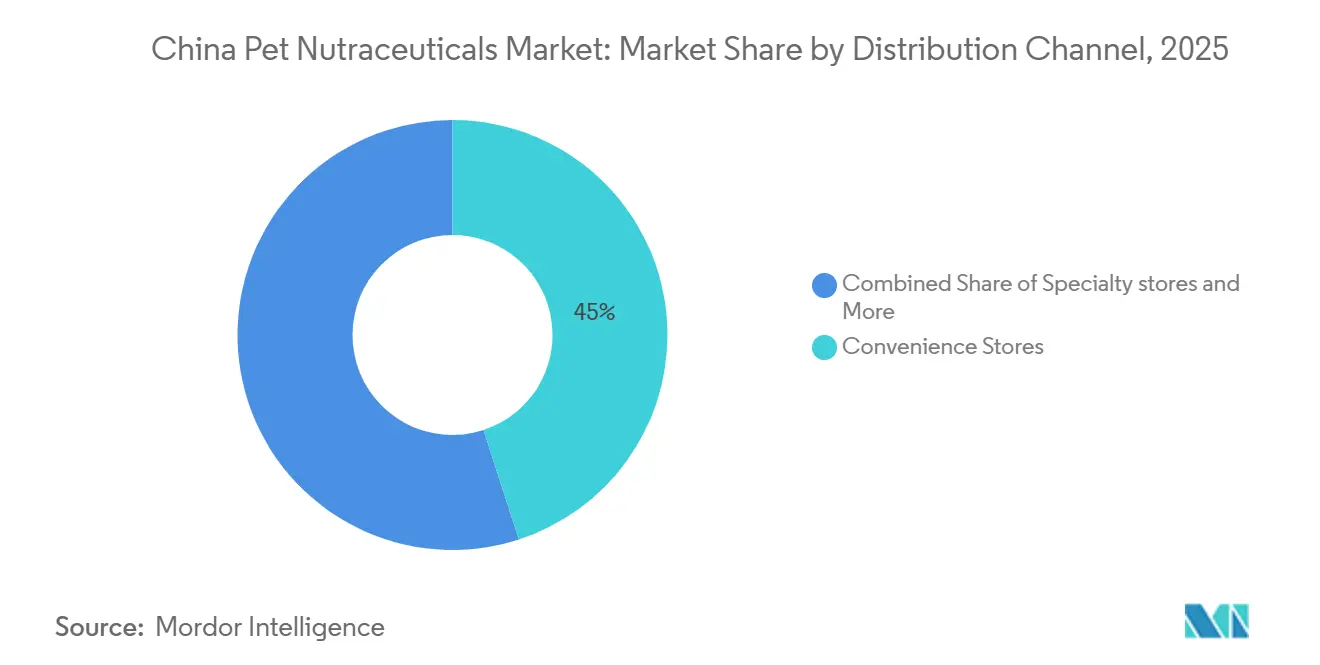
The online channel accounted for 45% of the China pet nutraceuticals market in 2025, with the online channel segment projected to grow at a CAGR of 16.4% through 2031. The significance of this channel lies in its ability to drive higher repeat orders and larger basket sizes than offline traffic. Platforms such as Tmall, Taobao, JD.com, and Douyin play distinct roles in discovery, conversion, and subscription, enabling the market to cater to both premium and mainstream buyers. Additionally, the online channel is well-suited for cross-border e-commerce, serving as a key entry point for international products seeking to test the Chinese market before committing to deeper localization.
Specialty stores remain important for their proximity to veterinary care and their role in educating premium pet owners. Supermarkets and hypermarkets remain significant in lower-tier cities, where physical browsing is still a common part of the purchasing process. Convenience stores and other smaller channels contribute steady volumes, particularly for lighter wellness products and impulse purchases. Despite this channel diversity, the China pet nutraceuticals market is increasingly influenced by digital infrastructure, as live commerce, algorithmic recommendations, and subscription models are advancing more rapidly than offline channel development.
Geography Analysis
Tier 1 cities hold the largest share of premium demand in the China pet nutraceuticals market, driven by higher incomes, a well-developed veterinary infrastructure, and a greater willingness to invest in preventive pet care. Cities such as Beijing, Shanghai, Guangzhou, and Shenzhen are key launch markets for science-backed and premium-positioned products. Pet owners in these cities are more receptive to clinical claims and specialized nutrition solutions. The 13th Beijing Pet Expo, held in March 2026, attracted over 1,500 exhibitors and 300,000 visitors, highlighting the concentrated demand in major urban centers. Additionally, Beijing reinforced its role in the market by opening its first pet economy industrial park in Pinggu District in March 2025, focusing on research, manufacturing, and consumer services[2]Source: Ministry of Commerce Beijing Bulletin, “Beijing's First Pet Economy Industrial Park Opens in Pinggu District,” MOFCOM, cif.mofcom.gov.cn.
Tier 2 cities, including Chengdu, Wuhan, Hangzhou, Chongqing, and Xi’an, represent the most promising expansion opportunities for the China pet nutraceuticals market during the forecast period. These cities offer a balance of increasing middle-class pet ownership, expanding clinic density, and lower premium market saturation compared to Tier 1 cities. Cross-border e-commerce (CBEC) plays a critical role in these markets, enabling brands to scale quickly without relying on an extensive physical retail presence[3]Source: United States Department of Agriculture, “Pet Food Market Update 2025, Shanghai ATO, China,” USDA GAIN Report, apps.fas.usda.gov. For instance, H&H Group attributed Solid Gold’s growth in mainland China to premiumization and CBEC (Cross-border e-commerce) optimization, aligning with the Tier 2 market profile. As the broader pet economy in China continues to grow, these cities are well-positioned to drive greater adoption of supplements as awareness and accessibility improve.
Tier 3 and Tier 4 cities, along with rural areas, constitute a significant but slower-developing segment of the China pet nutraceuticals market. Price sensitivity remains the primary challenge in these regions, with many pet owners prioritizing staple food over daily functional supplements. However, advancements in e-commerce logistics allow premium brands to reach lower-tier consumers without the need for an extensive physical store network, ensuring some level of national market coverage. As labeling and formulation standards under MARA (China's Ministry of Agriculture and Rural Affairs) become more defined, the market may achieve more uniform growth across city tiers. The growth of expansion will largely depend on affordability and increased owner education.
Competitive Landscape
The China pet nutraceuticals market is moderately concentrated, with the top five companies, Mars, Incorporated, Nestle S.A. (Purina), Colgate-Palmolive Company (Hill's Pet Nutrition Inc.), Virbac, and Zoetis Inc., playing a role in shaping the category. These companies leverage their product range, channel access, and brand recognition to maintain their market positions. In 2024, Mars, Incorporated, through its Royal Canin brand, has strengthened its presence with an investment of nearly USD 138 million in its Tianjin pet food factory, including pet nutraceuticals, signaling a long-term commitment to the Chinese market.
Colgate-Palmolive (Hill's Pet Nutrition Inc.) has enhanced its position in the China pet nutraceuticals market through regulatory approvals and product innovation. In May 2026, Hill's Pet Nutrition Inc. received an FDA Letter of No Objection for a precision-fermentation lamb protein ingredient developed in collaboration with Bond Pet Foods, supporting the development of future premium formulas. Domestic and Asia-Pacific competitors are intensifying pressure on the top-tier companies in the China pet nutraceuticals market. H&H Group’s Pet Nutrition and Care (PNC) segment reported an 8.7% growth, reaching USD 360 million in 2025. Notably, supplement products within its China PNC revenue grew by 122% in the second half of the year. This performance highlights the ability of local and regional companies to compete on premiumization, product innovation, and channel strategies, rather than relying solely on lower pricing.
The China pet nutraceuticals market remains dominated by global leaders with significant scale and resources. However, domestic challengers are gaining credibility through advancements in category design, local market insights, and premium product execution. This evolving competitive landscape suggests a shift toward more diverse and innovative offerings in the market.
China Pet Nutraceuticals Industry Leaders
Mars Incorporated
Virbac
Zoetis Inc.
Nestle S.A. (Purina)
Colgate-Palmolive Company (Hill's Pet Nutrition Inc.)
- *Disclaimer: Major Players sorted in no particular order

Recent Industry Developments
- June 2026: JD Health partnered with French animal health company Virbac and Shanghai Pharmaceuticals’ subsidiary Keyuan to launch Felacan, a new pet nutritional supplement in the market.
- March 2026: ADM launched PRIOME Joint Health, a postbiotic pet supplement targeting pet joint function and the gut-joint axis, backed by in vitro and model organism research showing potential for cartilage support and gut barrier function.
- September 2025: Virbac established a local manufacturing partnership in Changzhou, China, GMP-certified to Chinese standards, and produced its first locally manufactured generic drug, an oral suspension for pain and inflammation in cats, reducing import dependency and cost versus European sourcing


China Pet Nutraceuticals Market Report Scope
Pet nutraceuticals are non-drug substances produced from food or natural extracts. Administered orally, they bridge the gap between nutrition and medicine, offering health benefits such as disease prevention and support for normal body functions. The China pet nutraceuticals market report is segmented by sub-product (milk bioactives, omega-3 fatty acids, probiotics, proteins and peptides, vitamins and minerals, and other nutraceuticals), by pets (cats, dogs, and other pets), and by distribution channel (convenience stores, online channel, specialty stores, supermarkets and hypermarkets, and other channels). The market forecasts are provided in terms of value (USD) and volume (metric tons).
| Milk Bioactives |
| Omega-3 Fatty Acids |
| Probiotics |
| Proteins and Peptides |
| Vitamins and Minerals |
| Other Pet Nutraceuticals |
| Cats |
| Dogs |
| Other Pets |
| Convenience Stores |
| Online Channel |
| Specialty Stores |
| Supermarkets/Hypermarkets |
| Other Channels |
| By Sub Product | Milk Bioactives |
| Omega-3 Fatty Acids | |
| Probiotics | |
| Proteins and Peptides | |
| Vitamins and Minerals | |
| Other Pet Nutraceuticals | |
| By Pets | Cats |
| Dogs | |
| Other Pets | |
| By Distribution Channel | Convenience Stores |
| Online Channel | |
| Specialty Stores | |
| Supermarkets/Hypermarkets | |
| Other Channels |


Key Questions Answered in the Report
What is the forecast value of the China pet nutraceuticals market by 2031?
The China pet nutraceuticals market is forecast to reach USD 0.87 billion by 2031, up from USD 0.47 billion in 2026.
How fast is the China pet nutraceuticals market anticipated to grow?
The market is projected to grow at a 12.8% CAGR from 2026 to 2031, supported by premiumization, online repeat purchases, and more specialized formulations.
Which sub product leads revenue and growth in China?
Probiotics led with 23% share in 2025 and are also the fastest-growing sub product, with a projected 15.6% CAGR through 2031.
Which pet category contributes the most revenue in China?
Dogs accounted for 57% of revenue in 2025, making them the largest pet segment in the China pet nutraceuticals market.
Which distribution channel matters most for supplement brands in China?
The online channel is the most important route, with 45% share in 2025 and a projected 16.4% CAGR through 2031.
What is the main challenge for premium expansion across China?
Premium adoption is slower outside tier 1 and tier 2 cities because price sensitivity remains high and buyer trust still varies across product claims and quality signals.
Page last updated on:





